62.7 F
Chicago
Friday, August 21, 2026
Home Blog Page 3568

The Race To Regulate AI

The Race To Regulate AI

Last week, Senate Majority Leader Chuck Schumer announced the start of a series of lawmaker briefings on AI, focusing on

  1. the state of AI today,

  2. where AI is headed, and

  3. national security implications.

Other governments – including the EU and China – are also beginning to craft their own unique approach to AI regulation: which is understandable, after all Goldman recently forecast that up to 300 million jobs – one-fourth of current work tasks – are at risk as more companies adopt AI to boost profit margins, leading to mass layoffs among high-paying workers.

While regulatory efforts are still nascent and vary across geographies, once implemented, regulation will determine the development trajectory and importantly could mitigate some of the risk from the most disruptive AI use cases; in doing so it could also substantially shrink the potential demand for AI services and adversely impact the upside “use case” which currently is the next market bubble, and is effectively unlimited.

That said, Morgan Stanley strategist Ariana Salvator writes in a recent note (available to pro subscribers) that there is currently no consensus for how governments around the world should engage with AI “and perhaps most importantly how they should balance  fostering innovation with protecting users’ safety and privacy.” As a result, Morgan Stanley continues to watch this space carefully, “as  incremental newsflow on AI regulation might signal where markets may be ahead of themselves.”

In that vein, the bank highlights two key things investors need to know when it comes to AI regulation:

  1. The global regulatory path forward is uneven and uncertain. The European Union currently leads the United States in terms of regulatory efforts, as the EU Parliament has approved its draft AI Act, which seeks to sort AI use cases into a risk management framework and apply different levels of government oversight on the basis of risk level. In the US, thus far federal agencies have issued guidelines and pursued individual enforcement actions. Congress remains in learning mode, although a handful of senators have expressed their interest in clamping down on certain areas of the technology, like making sure Section 230 liability protections do not apply. Hence, governments are far away from aligning their regulatory approaches as AI continues to develop across borders.

  2. Government regulation – if implemented as proposed – can possibly mitigate some of the most severe risks associated with AI. MS thinks of government regulation as a filter that effectively screens out some of the most draconian scenarios imagined when it comes to new technology. For example, the EU AI Act as proposed implements a risk-management approach that applies stricter government oversight to certain AI uses cases while simply banning others that fall into the “unacceptable” risk category, like real-time biometric screening or predictive policing systems. As a result, regulation as proposed now could play an important role in determining which of the most disruptive use cases will actually come to fruition vs. those that will be sidelined as governments get involved. Investors, accordingly, should note these limitations when contemplating AI disruption across markets.

Much more in the Morgan Stanley AI Guidebook available to pro subscribers in the usual place.

Tyler Durden
Sun, 06/25/2023 – 21:00

BRICS Backlash: Huge Growth In China’s Aircraft Industry Is Flying Under The Radar

BRICS Backlash: Huge Growth In China’s Aircraft Industry Is Flying Under The Radar

Authored by Mike Shedlock via MishTalk.com,

Let’s discuss Lyn Alden’s thought provoking Tweets on China’s aircraft industry.

Under the Radar

Lyn’s Tweet got me thinking about US exports in general. 

United States Top 10 Exports

  1. [Petroleum Products] Mineral fuels including oil: US$378.6 billion (18.4% of total exports)

  2. Machinery including computers: $229.6 billion (11.1%)

  3. Electrical machinery, equipment: $197.7 billion (9.6%)

  4. Vehicles: $134.9 billion (6.5%)

  5. Aircraft, spacecraft: $102.8 billion (5%)

  6. Optical, technical, medical apparatus: $99.1 billion (4.8%)

  7. Gems, precious metals: $92.5 billion (4.5%)

  8. Pharmaceuticals: $83.5 billion (4%)

  9. Plastics, plastic articles: $83.3 billion (4%)

  10. Organic chemicals: $51.1 billion (2.5%)

The above list represents 2022, from United States Top 10 Exports

Biden Policy Impact

  • Biden energy policies would kill #1, and curtail # 9 and #10. 

  • Bidens restrictions on sensitive machinery and chips will reduce #2, #3, #5, and #6 exports to China and Russia.

China itself seeks to curtail #4 and #5. What remains are gems, precious metals, and pharmaceuticals.

I am surprised grain exports are not in the top 10. But as Biden has riled China on a number of fronts, it has increasingly turned to Brazil. 

That’s just a shift though. The US will just export elsewhere, but perhaps it creates some friction losses.

Airbus widens its lead over Boeing in China 

Meanwhile, please note Boeing’s China Orders Dry Up on US Tensions in Boost for Airbus

Boeing missed out on a 40-plane deal in September, following an even bigger hit in July, when China ordered nearly 300 Airbus aircraft worth about $37 billion at sticker prices. The misses reinforce how simmering US-Sino political tensions continue to complicate the dealmaking landscape for Boeing, which is also still waiting for its 737 Max to fly again in China.

Boeing, which hasn’t signed a major plane deal with China since 2017, took the unusual step of issuing a statement after the July Airbus order was announced. 

The above article is from October 2022. Here’s an article from April of 2023.

Airbus Widens its Lead Over Boeing in China With Plans for Second Finishing Line.

Airbus announced plans Thursday for a second final-assembly line in China, the latest sign that it has a lock on the key aviation market over rival Boeing.

The announcement came as part of a state visit by French President Emmanuel Macron to China. The signing of the agreement by Airbus CEO Guillaume Faury was witnessed by Chinese President Xi Jinping and by Macron.

It will add another line to the final-assembly facility that Airbus opened in Tianjin, China, in 2008, which has put the final touches on 600 A320 aircraft to date.

Airbus (EADSF) operates four assembly sites around the world but it forecasts that China’s air traffic in particular will grow 5.3% annually over the next 20 years, significantly faster than the world average of 3.6%.

This will lead to a demand for 8,420 passenger and freighter aircraft between now and 2041, representing more than 20% of the world’s total demand for new aircraft, Airbus predicts.

By 2041, if not much earlier, I side with Lyn Alden on aircraft. 

However, I don’t expect the BRICs idea will ever amount to much, quickly, if ever.

What About the BRICs?

Weaponizing the US Dollar

It’s easy to understand the BRIC backlash. What Does China Do With a Dollar That’s No Longer Risk Free? Buy Gold?

That’s the question I asked in 2022 and there is still no clear answer. 

Michael Pettis commented “As you know, the hard part of reducing the US dollar component of your reserves is figuring out what the alternative should be, and with such high and growing reserves (once you include the indirect reserves at the state-owned banks) that is a very difficult question to resolve.

Talk is cheap and there is plenty of talk. I see it every day on Twitter.

But Brazil, Russia, India, China and whatever countries have nothing in common. The Yuan does not float, and there is no grounds for any trust in any common currency.

The idea of a gold-backed yuan is laughable. China has capital controls and imprisons anyone who speaks out against its policies, hardly the foundation of a currency that inspires trust.

Brazil’s President Calls for End to US Dollar Trade Dominance, So What?

On April 1, I commented Brazil’s President Calls for End to US Dollar Trade Dominance, So What?

Dollar Weaponization Expands – FDIC Message to Foreign Depositors Is Don’t Trust the US

On May 13, I noted Dollar Weaponization Expands – FDIC Message to Foreign Depositors Is Don’t Trust the US

There is increasing reason to mistrust the dollar. But why anyone should trust a Russia-China sponsored currency.

There is no trust anywhere. If Russia or China offered a gold backed BRIC would you buy that or would you just buy gold?

Trade is Not Between Countries

Importantly, trade is between individuals, not countries. 

A Brazilian exporter to China needs the Brazilian Real or US dollars not a BRIC. 

The Brazilian government can call for the end of dollar dominance but so what? What is the incentive for a Brazilian soybean exporter to use a BRIC?

Weaponing the dollar was a huge mistake. But the path to when and how that matters is unclear. Why trust any fiat currency?

In Two Years, China More Than Doubles the US on Car Exports, Catches Germany

Meanwhile, please note In Two Years, China More Than Doubles the US on Car Exports, Catches Germany

Expect the same for aircraft. It’s only a matter of time.

*  *  *

Subscribe to MishTalk Email Alerts.

Tyler Durden
Sun, 06/25/2023 – 20:30

TikTok Admits Storing Some US User Data In China: Senators

TikTok Admits Storing Some US User Data In China: Senators

Authored by Aldgra Fredly via The Epoch Times (emphasis ours),

The TikTok app logo is seen in this illustration taken on Aug. 22, 2022. (Dado Ruvic/Reuters)

TikTok has admitted to storing some U.S. user data on China-based servers, which differs from its CEO’s previous testimony to Congress that “American data stored on American soil.”

The Chinese video-sharing platform confirmed this in a letter dated June 16 made in response to questions raised by Sens. Richard Blumenthal (D-Conn) and Marsha Blackburn (R-Tenn) to TikTok CEO Shou Zi Chew.

The senators had accused TikTok of making misleading claims to Congress regarding its storage of U.S. user data, citing a Forbes report that TikTok stored financial information—such as social security numbers and tax IDs—of U.S. content creators on Chinese servers.

In response, TikTok said that its previous testimony specifically pertained to the protected user data collected within the app and was not related to content creators’ data, which it said falls into two different categories.

“The Forbes reporter conflated two categories of data, and we stand by the statements made by our company executives to Congress,” it stated. “We are asked about, and our testimony focused on, the protected user data collected in the app—not creator data.

The company clarified that there are “limited exceptions to the definition of protected data.”

These exceptions include “public data, business metrics, interoperability data, and certain creator data, if a creator voluntarily signs up for a commercial program to be supported by TikTok in reaching new audiences and monetizing content.”

“TikTok believes that the Forbes article cited in your letter was referencing certain creator data such as signed contracts and related documents for U.S. creators who enter into a commercial relationship with TikTok—information that is collected outside of the standard app experience,” it stated.

Regarding the potential sharing of U.S. user data stored in China with the Chinese Communist Party (CCP) regime under China’s National Intelligence Law, TikTok said that it had not been asked by the CCP to provide such data.

TikTok said it has not been asked for U.S. user data by the Chinese regime, adding that TikTok has not provided such data to the regime, nor would TikTok do so the company said.

‘Misleading Public Relations Campaign’

However, the senators maintained their stance and said that TikTok’s response showed that its executives had repeatedly provided misleading information to Congress regarding the storage of U.S. user data.

Read more here…

Tyler Durden
Sun, 06/25/2023 – 19:30

‘Disgusted’ New Zealand Surgeons Now Required To Consider Ethnicity Of Patients

‘Disgusted’ New Zealand Surgeons Now Required To Consider Ethnicity Of Patients

Surgeons in Auckland, New Zealand are ‘disgusted’ over a new policy rolled out in February which requires them to address “historical disparities in healthcare access” for Māori and Pacific Island communities, which will be factored into a new ranking system that determines priority for surgical procedures.

According to leaked documents obtained by the NZ Herald, the new initative, implemented by Te Whatu Ora – Health New Zealand, uses an “Equity Adjustor Score” algorithm to assign priority based on clinical urgency, waitlist duration, geographic location, ethnicity and level of deprivation.

Patients of Māori and Pasifika backgrounds receive higher rankings, while European New Zealanders and other ethnicities are downranked.

Several surgeons spoke with the Herald, one of whom said he was “disgusted” by the new system.

It’s ethically challenging to treat anyone based on race, it’s their medical condition that must establish the urgency of the treatment,” said the surgeon, adding “There’s no place for elitism in medicine and the medical fraternity in this country is disturbed by these developments.”

A document on the equity adjustor which was leaked to Newstalk ZB shows two Māori patients, both aged 62 and who have been waiting more than a year, ranked above others on the list. A 36-year-old Middle Eastern patient who has been waiting almost two years has a much lower priority ranking.

An email by Te Whatu Ora business support manager Daniel Hayes in April said: “Hi team, Heads up. This is going to be the new criteria for outsourcing your patients going forward. Just putting this on your radar now so that you can begin to line up patients accordingly. Over 200 days for Māori and Pacific patients. Over 250 days for all other patients.” -NZ Herald

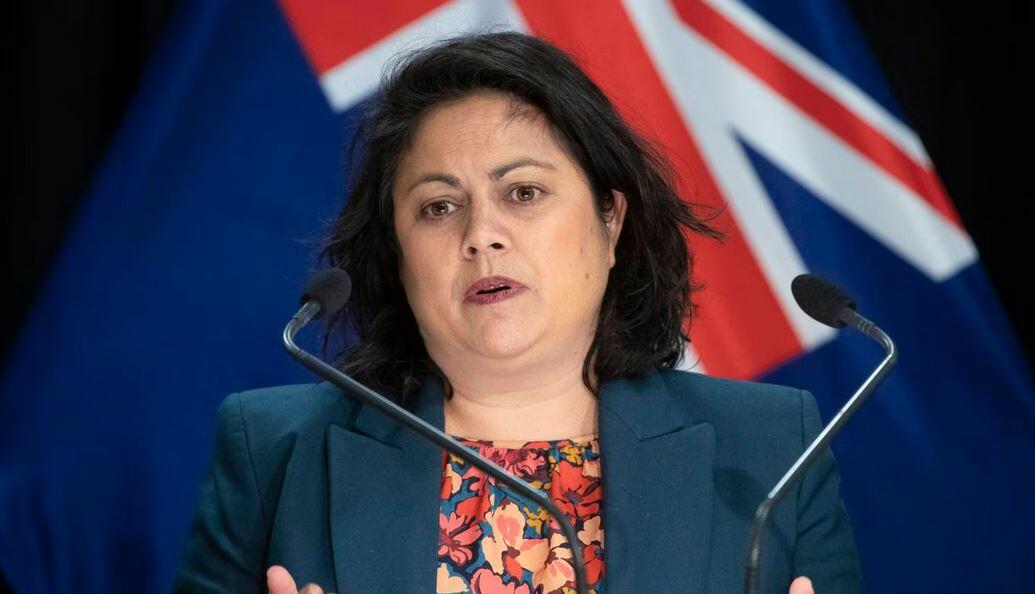
Health Minister Ayesha Verrall defended the move, pointing to a Government-commissioned, independent review of the health system conducted in 2018, which found that the system produced unequal outcomes, particularly for populations deemed vulnerable.

Health Minister Dr Ayesha Verrall. Photo / Mark Mitchell

“The reformed health system seeks to address inequities for Māori and Pacific people who historically have a lower life expectancy and poor health outcomes,” she said.

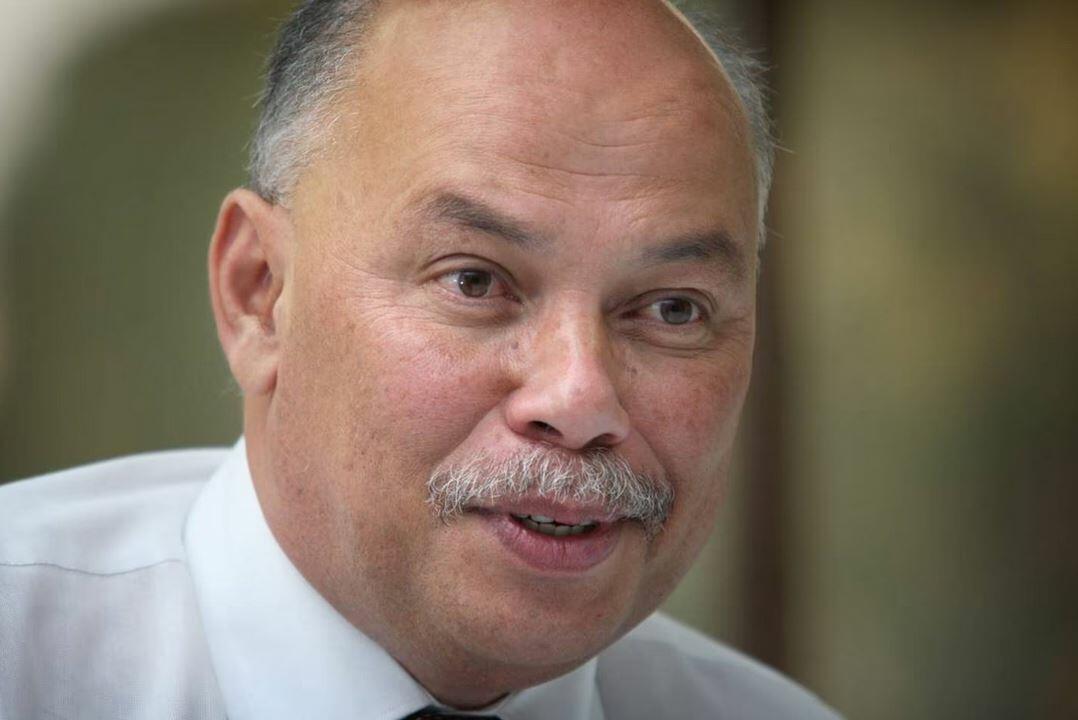
Sir Collin Tukuitonga, a leading expert in Pasifika health, echoed Verrall’s comments, saying Māori and Pasifika patients could be moved to the front of the line due to historical inequalities.

Sir Collin Tukuitonga. Photo / Alex Burton

“Māori and Pacific people tend to linger on the referral list… and inevitably, I think people will say that there’s also an institutional bias, possibly a racism that doesn’t put them where they need to be in order to get the surgery,” he said, adding “The referral pathways are not that straightforward.

Tyler Durden
Sun, 06/25/2023 – 19:00

This Period Of De-Globalization Is Temporary: ‘Global Money’ Is Coming

This Period Of De-Globalization Is Temporary: ‘Global Money’ Is Coming

Authored by Kane McGukin via BombThrower.com,

Where are we headed? It’s hard to say, but there’s one thing for sure. It’s a future that looks a lot different than the past we’ve known.

This is one of the foundations Ray Dalio discusses from time to time. People and societies tend to get accustomed to how things are. They get carried away with the good and the bad and expect them to continue into infinity which is exactly when we get change. The moment everyone is positioning for the current mood to continue, it switches. He further discusses some of the ramifications of this in his piece paradigm shifts.

Since roughly the early 1900s we’ve experienced globalization. Slowly bringing people and countries together and connecting them, even amidst the wars and protectionist periods. We globalized people in the early 1900s but after the wars (WWI & II), it was commonplace for people to travel internationally but for business to mainly remain localized. It wasn’t until the 1980s and 90s that businesses really started globalizing; once the digital infrastructure had been built out. For the period in between I can only imagine it felt a bit like de-globalization, much like we hear tossed around today. And in some regards, it’s true. We are seeing people begin to localize again. Lockdowns forced individuals to stay put. Supply chains broke and countries began to reconsider outsourcing everything. They all began to hunker down and bring work back within their borders to create protections and avoid obvious weaknesses.

However, I believe this period of de-globalization is temporary. It is just so we can add a third leg to the stool, global money.

It’s so we can figure out how to work in a world where people, business, and money are global. It’s a period where we can figure out new rulesets that are needed to run a world with a need for much more liquidity, new financial assets and networks like Bitcoin which all run on the internet. Much like the 1940s I assume consortiums are meeting in secret to rewrite and set new rules. Bretton Woods 2.0 type meetings, where parties on hand define how capital will flow and which countries will be operators of this new world.

For the first time in history people, business and money will all be truly global in nature. They will move from jurisdiction to jurisdiction with ease. Flow like water with little standing in any of their ways. The signs are there.

The Battle For the Future

It’s not just Bitcoin battling banks for power over the financial network. It’s users battling cloud platforms. Pulling out to operate their own nodes and messaging protocols. Subreddits are turning on Reddit. All over broken non-global money. Additionally, many other points of centralization are seemingly breaking down. Both online and offline, in our physical and digital worlds. Why? Because we’ve reached that point.

Years ago, we were approaching the top. Things were rosy and the perception was the party would continue on. Things could only get better. We were on top of the world and no one could fathom it not getting better. Just as Ray has pointed out, that’s when things change. That’s when paradigm shifts happen. When they are least expected. When the next decade(s) is drastically different than the previous. Diabolically different.

In retail, it was the rise of handcrafted. A move from the big box retailer to the small family business or non-chain restaurant. And now, almost a decade later, the movement is prevalent everywhere. Devs are creating messaging protocols to give freedoms back to the end user vs. corporate organizations. Nodes are holding files, managing money and data flows. People are taking a stand. Little by little we are seeking control and ownership of the things that are rightfully ours but have been stored and profited off of by unrightful owners; rent seekers.

A paradigm shift is and has been upon us. One that will feel like de-globalization until this mess around money is solved. And then we’ll move back to globalization which likely will look similar to when commercial planes and ships carried people across oceans in mass. Or, when the internet allowed business plans, agreements and factories to ship products globally.

It will create a new world. A more connected world. A more global world that offers more opportunities.

*  *  *

Subscribe to the Bombthrower mailing list to get these posts as they come out, and follow Kane McGukin via his Substack and Twitter.

Tyler Durden
Sun, 06/25/2023 – 18:30

CDC Director Concerned About ‘Breakthrough’ Cases Weeks After COVID Vaccine Rollout: Email

CDC Director Concerned About ‘Breakthrough’ Cases Weeks After COVID Vaccine Rollout: Email

Authored by Zachary Stieber via The Epoch Times (emphasis ours),

The director of the U.S. Centers for Disease Control and Prevention (CDC) and several other top officials knew in early 2021 that vaccinated people were becoming infected with COVID-19, according to an email obtained by The Epoch Times.

Dr. Rochelle Walensky, director of the Centers for Disease Control and Prevention, in Atlanta, Ga., on May 5, 2023. (Elijah Nouvelage/AFP via Getty Images)

CDC Director Dr. Rochelle Walensky told colleagues in the Jan. 30, 2021, missive that she had spoken with Dr. Francis Collins that morning “and one of the issues we discussed was that of vaccine breakthroughs.”

“Breakthrough” refers to vaccinated people becoming infected.

This is clearly and [sic] important area of study and was specifically called out this week here,” Walensky added, providing a link to an editorial in the Journal of the American Medical Association.

In the editorial, immunologist John Moore and vaccine inventor Dr. Paul Offit said that there was a “growing threat” of COVID-19 variants emerging that would “escape” the protection bestowed by COVID-19 vaccines, which had been authorized in December 2020.

Early testing, they noted, found that antibodies conferred by Moderna’s vaccine were less active against one of the new variants that had emerged.

Moore and Offit called for testing of vaccinated people who were hospitalized with COVID-19, the creation of a national sequencing program to quickly identify new variants, and the development of a repository of samples taken from vaccinated people.

Walensky said she’d discussed the matter a few weeks prior with Dr. Nancy Messonnier, another top CDC official. “I understand that [redacted],” Walensky wrote to Messonnier and three other CDC employees.

Should we discuss? What is the best next step forward?” she added.

Collins, at the time the director of the U.S. National Institutes of Health, was discussing the matter with Dr. Anthony Fauci, one of the chief architects of the U.S. response to the COVID-19 pandemic, according to Walensky.

The email was included in response to a Freedom of Information Act request. Requests for records from around the same time seeking what top U.S. officials were saying about breakthrough cases, hospitalizations, and deaths are pending.

Walensky did not respond to a request for comment that also asked for an unredacted version of the email. Collins did not return an inquiry. Fauci could not be reached. The CDC said it was looking into when it first became aware of breakthrough cases.

An email from Dr. Rochelle Walensky. (The Epoch Times)

Later Statements

Walensky a few months after the email went onto MSNBC and claimed that data from the CDC and clinical trials “suggests that vaccinated people do not carry the virus” and “don’t get sick.”

The CDC has been unable to provide citations supporting the claim. No vaccine is 100 percent effective, experts have told The Epoch Times. There were infections in both the Pfizer and Moderna clinical trials among the vaccinated, though the efficacy of the shots against symptomatic infection from seven days after dose two was estimated to be north of 90 percent. There were also severe cases in the trials among the vaccinated, including some not counted by Pfizer.

The trials were not designed to measure efficacy against transmission and did not provide evidence of such efficacy, according to the U.S. Food and Drug Administration (FDA).

“The paper that Walensky discussed with Francis Collins explicitly worried about the possibility of ‘breakthrough’ infections caused by variants. It even addressed a variant circulating outside the U.S. that the authors could not say was causing breakthrough cases in January 2021,” Dr. Jay Bhattacharya, a professor of health policy at Stanford University, told The Epoch Times in an email.

Given that uncertainty, the CDC director should never have endorsed the idea that the COVID vaccines could be used to stop COVID disease spread without definitive proof that they did—proof that she never had. And she should never have endorsed vaccine mandates for a non-sterilizing vaccine,” he added.

Fauci and other top officials had, in 2020 before the email, backed harsh measures during the Trump administration to try to curb the spread of COVID-19, including the forced closure of businesses and schools.

Read more here…

Tyler Durden
Sun, 06/25/2023 – 18:00

Here’s What Officially Caused Deadliest Barn Fire Involving Cattle In Texas History

Here’s What Officially Caused Deadliest Barn Fire Involving Cattle In Texas History

Authored by Darlene McCormick Sanchez via The Epoch Times (emphasis ours),

The official report on the deadliest barn fire involving cattle in Texas history, and in the last decade, has deemed it an accident.

A massive explosion at the South Fork Dairy in Castro County, Texas, sent billowing black smoke skyward, on April 10, 2023. (Courtesy of Castro County Sheriff’s Office)

While the 25-page report from the Texas State Fire Marshal said no foul play was involved in the record-setting fire in the state’s panhandle, questions about the cause linger.

The April 10 blaze at the South Fork Dairy in Demmitt, Texas, killed almost 18,000 dairy cows and critically injured one employee, who later recovered, according to the Castro County Sheriff’s Office.

South Fork Dairy was one of the largest dairy farms in the country, located about 75 miles northwest of Lubbock.

Barn fire at the Ely Fischer farm in Lancaster County, Pennsylvania, on Feb. 10, 2022. (Timothy Coover Maytown/East Donegal Township Fire Department Photographer)

The fire marshal report obtained through an open record request said the cause of the inferno that created a large black plume of smoke high over the Texas prairie was caused by an engine fire in a manure vacuum truck.

The fire was so hot that metal beams were warped in places. From the structure’s exterior, investigators found dead cattle “three to four deep.”

The fire was mentioned on “Tucker Carlson Tonight” before Fox News canceled this popular news host. Carlson began reporting on a slate of fires at food processing plants and livestock deaths by fire in 2022 and suggested the events might be connected as part of a conspiracy to damage the nation’s food supply.

Fires have killed many thousands of chickens and cattle across America, prompting widespread concerns about food security.

It looks like terrorism,” Carlson said on his show after the massive fire at the South Fork Dairy. “Maybe it is. Maybe it isn’t. But maybe someone should explain how it isn’t.”

A Mensch vacuum truck outside the South Fork Dairy in Texas is the same as another one that caught and caused the largest barn fire in Texas history, on April 10, 2023. (Courtesy of the Texas State Fire Marshal)

Not Eco-Terrorism

Several weeks later, the Texas Fire Marshal’s Office called the dairy blaze accidental. But the official report noted something unusual.

A second Mensch manure vacuum truck—the same make and model as the one used inside the barn at the time of the fire—had previously burned due to an engine fire.

The investigation report noted that the second truck was parked outside the east side of the barn near a generator, where it had remained undisturbed since its engine caught fire.

Local news reports cited a Texas State Fire Marshal’s news release saying that a third vacuum truck fire had occurred at another dairy. The statement gave no further detail.

The agency’s news release stressed that no foul play was indicated, and the incident was not a “terroristic attack, or any type of event caused to interrupt the milk supply.”

A farm is leveled by the South Obenchain Fire along Butte Falls Highway in Eagle Point, Oregon, on Sept. 10, 2020. (Adrees Latif/Reuters)

Yet the vacuum trucks have no history of malfunctioning, according to a written statement from Mensch Manufacturing in Hastings, Michigan, to The Epoch Times.

No one has identified any issue with the machine, and we are unaware of any issue with the machine that would have caused a fire,” the statement reads. “In our nearly four decades of operation, we have had no claims about defective equipment that led to a fire.”

Deadliest Barn Fire for Cattle

The Animal Welfare Institute (AWI), which keeps records of barn fires and farm animal deaths, ranked the South Fork Dairy fire the deadliest for cattle since the agency began tracking barn fires in 2013.

Livestock deaths from fires have been increasing, a recent AWI study shows. From 2018-2021, 539 fires killed nearly 3 million animals, researchers found.

Read more here…

Tyler Durden
Sun, 06/25/2023 – 17:30

From Merck To Microsoft: These Are The Companies That BlackRock ‘Controls’ The Most Of

From Merck To Microsoft: These Are The Companies That BlackRock ‘Controls’ The Most Of

A week after an employee of the world’s largest asset management company, BlackRock, described how the company attempts to stay out of the media spotlight while buying politicians and profiting off of war (according to undercover footage obtained by the O’Keefe Media Group), we thought it worth a look at just what companies does the 34-year-old company have the most control of.

As a reminder, in footage secretly recorded by undercover journalists in New York, a BlackRock recruiter named Serge Varlay explains how the investment company is able to “run the world.”

“They [BlackRock] don’t want to be in the news. They don’t want people to talk about them. They don’t want to be anywhere on the radar,” Varlay said.

Varlay told a OMG journalist in the footage that BlackRock manages $20 trillion worldwide (it’s actually around $9 trillion). “It’s incomprehensible numbers,” he said.

You can take this big f***ton of money and buy people, I work for a company called Black Rock… It’s not who is the president it’s who is controlling the wallet of the president.

You could buy your candidates. First, there is the senators these guys are f***in cheap. Got 10 grand you can buy a senator. I’ll give you 500k right now. It doesn’t matter who wins, they’re in my pocket.”

– Serge Varlay

Given this status, BlackRock’s equity portfolio may provide useful insights to investors. To learn more, Visual Capitalist’s Marcus Lu and Rosey Eason visualized the firm’s top 25 equity holdings as of Q1 2023. At that time, these 25 positions were worth over $1 trillion, and they represented about 30% of BlackRock’s overall equity portfolio.

Top 25 Data

The following table shows the data we used to create this infographic. These figures come from BlackRock’s latest 13F filing, which was released on May 12.

ℹ️ The 13F is a mandatory, quarterly report that is filed by institutional investment managers with over $100 million in AUM.

Rank Name Sector Value of Holdings (USD billions)
1 Apple Information Technology $171
2 Microsoft Information Technology $155
3 Amazon Consumer Discretionary $63
4 Nvidia Information Technology $51
5 Google (Class A) Communications $44
6 Google (Class C) Communications $38
7 Tesla Consumer Discretionary $37
8 UnitedHealth Group Health Care $35
9 Meta Communications $32
10 Berkshire Hathaway (Class B) Finance $32
11 Johnson & Johnson Health Care $31
12 Exxon Mobil Energy $30
13 iShares Core S&P 500 ETF ETF $29
14 Visa Finance $28
15 JPMorgan Chase & Co Finance $25
16 Procter & Gamble Co Consumer Staples $24
17 Mastercard Finance $24
18 Home Depot Consumer Discretionary $23
19 Eli Lilly And Co Health Care $23
20 Merck & Co Health Care $22
21 AbbVie Health Care $22
22 Chevron Energy $22
23 PepsiCo Consumer Staples $20
24 Coca-Cola Co Consumer Staples $19
25 Broadcom Information Technology $19

As expected, BlackRock’s top equity holdings include America’s most established tech companies: AppleMicrosoftAmazon, and Google.

BlackRock also has large positions in Nvidia and Broadcom, which happen to be America’s two largest semiconductor companies. Given Nvidia’s incredible YTD performance (198% as of June 19th), this position has likely grown even bigger.

Altogether, tech stocks make up 39% of this top 25 list. The next biggest sector would be healthcare, at 13% of the total value.

Ownership Stakes

How much of a controlling stake does BlackRock have in these companies? We answer this question in the following table, which again uses Q1 2023 data.

Name % Ownership Quarter 1st Owned
Merck & Co 8.24% Q3 2007
UnitedHealth Group 8.02% Q4 2008
Berkshire Hathaway (Class B) 7.98% Q3 2007
PepsiCo 7.96% Q3 2007
AbbVie 7.86% Q1 2013
Home Depot 7.60% Q3 2007
Nvidia 7.44% Q3 2007
Microsoft 7.22% Q3 2007
Coca-Cola Co 7.20% Q3 2007
Broadcom 7.16% Q3 2009
Google (Class A) 7.09% Q3 2007
Chevron 7.02% Q3 2007
Eli Lilly And Co 6.90% Q3 2007
Mastercard 6.89% Q3 2007
Procter & Gamble Co 6.86% Q3 2007
Exxon Mobil 6.83% Q3 2007
JPMorgan Chase & Co 6.59% Q3 2007
Visa 6.55% Q2 2008
Apple 6.54% Q3 2007
Johnson & Johnson 6.46% Q3 2007
Google (Class C) 6.13% Q2 2014
Amazon 5.93% Q4 2008
Tesla 5.70% Q3 2010
Meta 5.69% Q2 2012

When it comes to shareholder voting, BlackRock has historically voted on behalf of its clients to “advance their long-term economic interests.” Given its massive size, some people believe that BlackRock has too much influence on major corporations.

In 2021, it was reported that BlackRock would begin allowing some institutional clients to cast their own votes at shareholder meetings.

Tyler Durden
Sun, 06/25/2023 – 16:00

Turley: Who Is Lying – Merrick Garland Or The Whistleblowers?

Turley: Who Is Lying – Merrick Garland Or The Whistleblowers?

Authored by Jonathan Turley, op-ed via The Hill,

“I’m not the deciding official.”

Those five words, allegedly from Delaware U.S. Attorney David Weiss, shocked IRS and FBI investigators in a meeting on October 22, 2022. This is because, in refusing to appoint a special counsel, Attorney Garland Merrick Garland had repeatedly assured the public and Congress that Weiss had total authority over his investigation.

IRS supervisory agent Gary A. Shapley Jr. told Congress he was so dismayed by Weiss’s statement and other admissions that he memorialized them in a communication to other team members.

Shapley and another whistleblower detail what they describe as a pattern of interference with their investigation of Hunter Biden, including the denial of searches, lines of questioning, and even attempted indictments. 

The only thing abundantly clear is that someone is lying. Either these whistleblowers are lying to Congress, or these Justice Department officials (including Garland) are lying. 

The response from both Hunter Biden’s counsel and the attorney general himself only deepened the concerns.

Christopher Clark, an attorney for Hunter Biden, responded to a shocking Whatsapp message that the president’s son had allegedly sent to a Chinese official with foreign intelligence contacts who was funneling millions to him.

“I am sitting here with my father,” the younger Biden wrote, “and we would like to understand why the commitment made has not been fulfilled. Tell the director that I would like to resolve this now before it gets out of hand, and now means tonight. And, Z, if I get a call or text from anyone involved in this other than you, Zhang, or the chairman, I will make certain that between the man sitting next to me and every person he knows and my ability to forever hold a grudge that you will regret not following my direction. I am sitting here waiting for the call with my father.”

President Biden has repeatedly told the public that he had no knowledge or involvement in his son’s dealings. He maintained the denial despite audiotapes of him referring to business dealings, photos and meetings with his son’s business associates, as well as an eyewitness account of an in-person meeting.

Clark did not deny that the above-quoted message had been sent. He only said that it was “illegal” to release the text (he did not explain why) and then added that “[a]ny verifiable words or actions of my client in the midst of a horrible addiction are solely his own and have no connection to anyone in his family.”

Most of us expected a simple denial. Yet, after five years, Hunter has never even denied that the laptop was his. His team has continued with the same non-denial denials.

The transcript also details how investigators wanted to confirm the authenticity of the Whatsapp message through the company. The Justice Department reportedly shut down that effort.

If Hunter Biden was evasive, Garland was irate. He denounced the allegations as “an attack on an institution that is essential to American democracy, and essential to the safety of the American people.”

The statement bordered on delusion. Polls show that a majority of the public now views the Justice Department as politically compromised and even engaged in election interference. The level of trust in the department under Garland is now lower than it was under his predecessor, Bill Barr

These questions are not an attack on the institution, but on what some are doing with it. Garland’s reaction is akin to doctors responding to malpractice lawsuits as attacks on medicine itself.

As in the past, Garland continued to insist that the public must trust him and his department, because “You’ve all heard me say many times that we make our cases based on the facts and the law.”  Once again, he reminded citizens that “these are not just words. These are what we live by.” 

For those us who once supported Garland’s nomination as Attorney General, it was another maddening moment. Garland has done little to change the view of his department or to address  the political bias that has plagued it and the FBI for years. That record has resulted in blistering reports from the Inspector General and most recently Special Counsel John Durham. 

Garland does have a motto. Yet, as these allegations pile up it is becoming more and more of a meaningless mantra.

The attorney general has a growing problem. For years, many of us have criticized him for his inexplicable refusal to appoint a Special Counsel on the Biden influence peddling scandal. Indeed, I have written over a dozen columns on why such an appointment seemed unavoidable, given the references to the president under various code names as a possible recipient of money and other benefits from foreign deals.

Even after a respected FBI source detailed allegations of a bribery scheme involving Ukrainian figures, Garland still refused to make the appointment. Such an appointment would not only expose Joe Biden to high-risk interviews, but would also allow the Special Counsel to issue a report on influence peddling by his family.

Garland was willing to appoint a Special Counsel to look into classified records found in Biden’s various offices, yet he continues to bar an appointment on major corruption allegations implicating the president.

It was impossible to investigate these matters without tripping over the president and other family members. The whistleblowers detailed repeated occasions in which they were told to back off.

Even the narrow tax issues addressed in Hunter’s recent plea bargain relate to those broader issues, given the source of these funds. Influence peddling may be lawful, but it is also corrupt. Indeed, it is the favorite form of corruption in Washington and a virtual family legacy of the Bidens. 

It is the concealment of the corruption that often results in crimes, from false statements to tax evasion to unlawful financial transactions to unlawful work as an unregistered foreign agent.

The whistleblowers allege that the Justice Department consistently cut them off in seeking searches or answers related to President Biden. However, the line that stood out the most was this: “U.S. Attorney Weiss stated that he subsequently asked for special counsel authority from Main DOJ at that time and was denied that authority.”

If true, that means that Garland was not just hearing from experts and members of Congress calling for an appointment, but that Weiss himself also saw the need for such an appointment. Moreover, the report indicates that others in the investigation believed that there was a need to create such separation from the Justice Department in light of what they viewed as the special treatment given the president’s son.

These accounts could explain why the Justice Department took five years to secure a guilty plea to two misdemeanors that could have been established in the first month of the investigation.

It would explain why there is no evidence of serious investigation into the influence peddling or a charge under FARA.

It would explain why Hunter’s lawyer cannot recall ever being asked about the laptop.

It would explain why the problem is not the Justice Department’s motto, but the man who is tasked with fulfilling it.

Tyler Durden
Sun, 06/25/2023 – 15:30

US Intelligence Knew Of Wagner Plot Days In Advance, Briefed Congress

US Intelligence Knew Of Wagner Plot Days In Advance, Briefed Congress

US intelligence officials knew well in advance that Wagner head Yevgeny Prigozhin was planning to mount an armed rebellion against the Russian military’s top commanders.

Congressional leaders were even briefed days prior to Saturday’s events, after US intelligence reportedly observed the mercenary firm mustering forces and amassing weapons in preparation for possibly making a move against the defense ministry. 

Wagner members standing guard outside military HQ in Rostov-on-Don Saturday, via AP.

Describing the Congressional briefings, The New York Times reported late Saturday that “U.S. spy agencies had indications days earlier that Mr. Prigozhin was planning something and worked to refine that material into a finished assessment, officials said.”

“The information shows that the United States was aware of impending events in Russia, similar to how intelligence agencies had warned in late 2021 that Vladimir V. Putin was planning to invade Ukraine.”

But unlike in the case of those prior invasion warnings of February 2022, the US administration stayed silent ahead of the dramatic Wagner events, likely hoping that it would create destabilization in the Russian state, and negatively impact military operations in Ukraine. So far, there’s been little evidence to suggest the whole short-lived mutiny by Wagner led to significant Ukrainian gains along the frontlines.

The Times explains the rationale of its intel sources as follows

U.S. officials felt that if they said anything, Mr. Putin could accuse them of orchestrating a coup. And they clearly had little interest in helping Mr. Putin avoid a major, embarrassing fracturing of his support.

While it is not clear exactly when the United States first learned of the plot, intelligence officials conducted briefings on Wednesday with administration and defense officials. On Thursday, as additional confirmation of the plot came in, intelligence officials informed a narrow group of congressional leaders, according to officials familiar with the briefings who spoke on condition of anonymity because they were not authorized to speak publicly.

While over the past months Prigozhin has made his personal hatred for Defense Minister Sergei Shoigu and top general Valery Gerasimov well known, the intelligence that Washington supposedly had seems very specific and appears to have accurately predicted events, a mere few days before they unfolded.

While the Kremlin has thus far refrained from blaming the tumultuous events on US or NATO countries, it has indirectly hinted and warned that the West could exploit the situation.

“The attempted armed mutiny in our country has aroused strong disapproval in Russian society, which firmly supports President Vladimir Putin,” a Foreign Ministry statement said Saturday. “We warn the Western countries against the slightest attempts to use the internal situation in Russia for achieving their Russophobic aims. Such attempts are futile and evoke no support either in Russia or among soberly-minded political forces abroad.”

But soon after, Secretary of State Blinken did just that, in Sunday news shows pushing the talking point that the Wagner mutiny exposed “real cracks” in Putin’s government:

Secretary of State Antony Blinken on Sunday said the short-lived rebellion from Wagner Group head Yevgeny Prigozhin “shows real cracks” within Russia as it wages its war on Ukraine. 

“Prigozhin himself, in this entire incident, has raised profound questions about the very premises for Russian aggression against Ukraine in the first place, saying that Ukraine or NATO did not pose a threat to Russia, which is part of Putin’s narrative. And it was a direct challenge to Putin’s authority. So this raises profound questions. It shows real cracks,” Blinken said on CBS News’s “Face the Nation,” referring to Russian President Vladimir Putin.

A beefed up military presence in major cities and in the south of Russia has remained throughout the weekend. Moscow’s iconic Red Square has stayed closed throughout Sunday, with extra security measures still in place. 

Sky News and others have meanwhile commented on Putin not being willing to forgive “betrayal”:

Dmitry Kiselyov, in his Russian state TV programme, has claimed the swift resolution of the Wagner Group’s mutiny shows Russia is a united nation. Part of his show has been tweeted by Francis Scarr from BBC Monitoring. Mr Kiselyov also played an archive clip of Vladimir Putin saying he is able to forgive many things, but not “betrayal”.

There is considerable speculation about how Mr Putin will react to the mutiny. US Secretary of State Antony Blinken has said it could take weeks or months to play out.

On Saturday in Putin’s televised remarks to the nation which addressed the crisis as it was unfolding, the Russian president called the mutineers’ actions “a knife in the back of our people.”

Meanwhile, with Prigozhin headed into ‘exile’ in neighboring Belarus as part of the Lukashenko-mediated ceasefire deal, speculation still abounds over the confusing situation, and several dominant theories have emerged.

What’s clear is that President Putin took the matter very seriously. “Russian President Vladimir Putin said that he keeps the situation of the special operation under control around the clock,” a statement in TASS said. The president “has been staying up quite late lately,” the statement said.

Tyler Durden
Sun, 06/25/2023 – 15:00