

67.7 F
Chicago
Tuesday, August 18, 2026
Home Blog Page 3637

University Of Colorado Declares Misgendering An “Act Of Violence”

University Of Colorado Declares Misgendering An “Act Of Violence”

Authored by Jonathan Turley,

The University of Colorado Boulder (Boulder) is under fire this week for a statement on the “Pride Office” website stating that misgendering people can be considered an “act of violence.”

The guide on pronouns is reportedly the work of students associated with the office and states that “choosing to ignore or disrespect someone’s pronouns is not only an act of oppression but can also be considered an act of violence.”

It is a familiar position for many in higher education.

Opposing viewpoints are now routinely declared to be violence. That allows professors and students to rationalize their own act of violence or censorship.

The most vivid example was recently seen at Hunter College, which is part of the CUNY system. Professor Shellyne Rodríguez recently was fired after holding a machete to the neck of a New York Post reporter and threatened to “chop you up.” However, Hunter College decided not to fire her over a prior incident in which she trashed a pro-life table run by students.

Rodríguez spotted students with pro-life material at the college. She was captured on a videotape telling the students that “you’re not educating s–t […] This is f–king propaganda. What are you going to do, like, anti-trans next? This is bulls–t. This is violent. You’re triggering my students.” Even after a remarkably polite student said that he was “sorry,” Rodríguez would have nothing of it. After all, espousing pro-life views is now “violence.” Rodríguez rejected the apology and declared “No you’re not — because you can’t even have a f–king baby. So you don’t even know what that is. Get this s–t the f–k out of here.”

Just a week earlier, a professor stopped another “violent” display of pro-life views in New York. Professor Renee Overdyke of the State University of New York at Albany shut down a pro-life display and then resisted arrest.

At the University of California at Santa Barbara, feminist studies associate professor Mireille Miller Young criminally assaulted pro-life advocates on campus, and later pleaded guilty to the crime. She was defended by faculty and students, including many who said she was “triggered” by a pro-life display and that pro-life advocates were “terrorists” who did not deserve free speech.

It is that easy. You simply declare opposing views “violent” and then you can justify your own violence as a matter of self-defense.

The Colorado controversy does not involve acts of violence over misgendering. Moreover, the guide reflects a deep-felt concern that using someone’s pronouns incorrectly, even unintentionally, leads to “dysphoria, exclusion and alienation.” There are also some positive recommendations in dealing with these difficult situations.

However, this is a university site and there are countervailing free speech costs to characterizing of opposing views on pronouns as violence. As have previously discussed how other countries are prosecuting those who “misgender.” Schools in the United States have promised disciplinary action against any misgendering despite some court cases ruling for faculty with opposing views on pronouns. Even passing out “he/his” candies can result in a university investigation.

Conservative sites like Campus Reform have reported on the Colorado controversy and sought clarification.

Universities are often presented with difficult countervailing interests. On one hand, it must maintain a welcoming and tolerant environment. On the other hand, it must protect free speech values, including the right to express unpopular views or values.

Colorado students have every right to declare misgendering as violence in their eyes, even if many of us disagree. However, the university has an obligation to clearly establish that such views are not the policy or approach of the university itself.  The site states “This information was created by students, for students. The university supports an inclusive environment.” It should state that “while the university supports an inclusive environment, the statements on this site are not official statements or policies of the university.” Otherwise, the university should address the free speech implications of declaring misgendering as a violent act.

Tyler Durden
Wed, 05/31/2023 – 18:45
Major Grocery Chain Struggles To Survive Amid Wave Of Thefts

Major Grocery Chain Struggles To Survive Amid Wave Of Thefts

A grocery chain which operates primary on the East Coast says it’s taking measures to stay in business amid rampant retail theft and crime across the US.

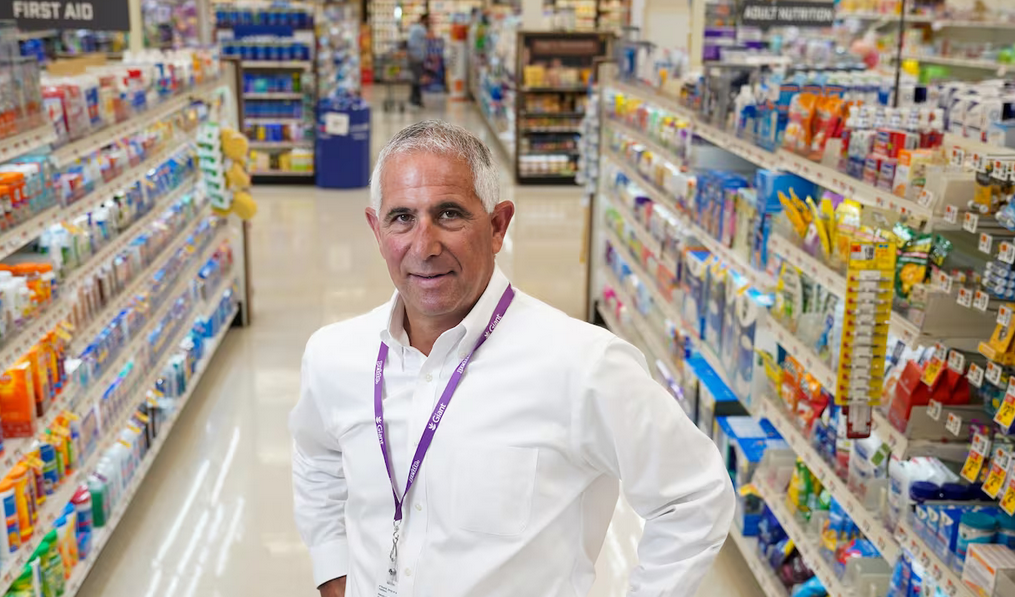
Giant Food, which operates over 160 locations across DC, Delaware, Maryland and Virginia, has begun restricting entry and exit points, beefing up store security (some armed), displaying fewer high-dollar items on shelves, and reducing the number of self-checkout items, company CEO Ira Kress told the Washington Post.

Ira Kress, president of Giant Food, says his company has taken some actions in an attempt to deter shoplifting. (Jahi Chikwendiu/The Washington Post)

According to Kress, retail theft has increased “tenfold in the last five years,” which is not “an understatement,” while violence has “increased exponentially.”

“The last thing I want to do is close stores,” Kress continued. “But I’ve got to be able to run them safely and profitably.”

According to Kress, the nature of shoplifting has changed such that more and more retailers are simply allowing it – like Lulu Lemon, which recently fired two employees for calling the police on repeat looters.

“We used to chase shoplifters,” said Kress. “And you’d get the product back, and nobody would ever fight you.”

“I didn’t worry about somebody pulling a knife or gun on me [40] years ago,” he said.

The trend, which industry experts say is in its beginning stages, could foreshadow a further emptying of downtowns already wounded by the pandemic. Although retail vacancy rates for dense urban centers have been declining over the past decade, figures from real estate data firm CoStar show the numbers inching up in some cities. -WaPo

“For the big box and the grocery [stores], which are trying to optimize a single-digit margin, it is very difficult to operate, and you will see more and more exits happening,” said Lakshman Lakshmanan, senior director in Alvarez & Marsal’s consumer and retail group. “We’re seeing the highest level of organized retail crime and theft ever.

According to Kres, thieves have moved from swiping cigarettes to other goods.

“It’s continued to escalate,” he said. “So now it’s Tide and Dove and razor blades and Olay, or roasts or shrimp or crab legs.

According to the retail federation, incidents of organized retail crime increased in 2021 by an average of 26.5% – with store owners blaming organized retail crime for around half of the $94.5 billion lost that year due to retail shrink (stolen merchandise).

Other retailers taking similar measures

According to the report, REI – which will close its Portland, OR location next year after nearly two decades, spent over $800,000 in 2022 on additional security at that location alone. This included new windows with security glass, around-the-clock patrols, better outdoor lighting and a new security camera system, per the Post.

While Foods has gone so far as to place fliers on shelves instructing customers to find an employee to retrieve alcohol and expensive supplements and other high-value merchandise from the back.

A shopping cart in a supermarket as inflation affected consumer prices in Manhattan, New York, on June 10, 2022. (Andrew Kelly/Reuters)

“I was kind of surprised at the amount of effort that went into trying to mitigate the situation,” said Chris Torossian, former manager in the bakery department at the company’s San Francisco location.

Theft occurred “pretty much daily,” Torossian added, and he frequently heard from co-workers who felt unsafe. Team members were instructed not to chase or accuse shoplifters. In one instance, someone threw a cup of hot coffee on an employee’s face after they confronted the individual for stealing the drink, Torossian said. He also heard of instances where thieves brandished knives.

In April, the company said it was closing the location “for the time being” to “ensure the safety of our Team Members.” -WaPo

“We have the police come to our stores … they’ll take the information, they’ll record it,” said Torossian. “But there’s really nothing being done with that, because they had two homicides that were a bank robbery and two shootings. So it’s like, where are they going to focus their time and attention?”

In May, Target CEO Brian Cornell told investors and analysts; “Beyond macroeconomic challenges, we continue to contend with significant headwinds caused by inventory shrink, building on a worsening trend that emerged last year. While shrink can be driven by multiple factors, theft and organized retail crime are increasingly urgent issues, impacting the team, and our guests and other retailers.”

“The problem affects all of us, limiting product availability, creating a less convenient shopping experience, and put[s] our team and guests in harm’s way. The unfortunate fact is, violent incidents are increasing at our stores and across the entire retail industry. And when products are stolen, simply put, they’re no longer available for guests who depend on them. And left unchecked, theft, and organized retail crime to grade the communities we call home,” he continued.

Maybe stop voting for those soft-on-crime Soros DAs?

Tyler Durden
Wed, 05/31/2023 – 18:25

How Flipping Colorado Blue Has Become Democrats’ Blueprint For The Rest Of America

How Flipping Colorado Blue Has Become Democrats’ Blueprint For The Rest Of America

Authored by Katie Spence via The Epoch Times (emphasis ours),

Colorado’s legislative session is 120 consecutive days long and during the 2023 session lawmakers introduced 617 bills. Of those, 218 passed and have been signed into law by Democratic Gov. Jared Polis. More are waiting to be signed.

Members of the Communist Party USA and other anti-fascist groups burn an American flag on the steps of the Colorado State Capitol in Denver, Colo., on Jan. 20, 2021. (Michael Ciaglo/Getty Images)

Democrats have a historic majority in the Colorado House, a supermajority in the Senate, and control the governorship. As such, all bills passed with Democrat support—and more often than not, over Republican’s vehement objections. It’s a marked change from 2002 when the GOP dominated politics in Colorado.

Colorado Republican Rep. Stephanie Luck is one of a handful of Colorado Representatives fighting back and trying to expose what she describes as Democrats’ Marxist agenda, where individual rights don’t matter, and the government controls every aspect of life.

“When I first got elected and sworn into office in 2021, Governor Polis gave his State-of-the-State Address shortly thereafter and stated that it was his goal and the goal of his Democratic majority to fundamentally transform Colorado,” Luck told The Epoch Times.

“So, the question becomes, what was the initial foundation they want to transform? And I would point us to the mission statement of the United States, which is the Declaration of Independence.

“And basically, we could go word by word in that most famous phrase starting with ‘We hold these truths.’ We can start with the word ‘We’ and demonstrate how they want not a ‘We,’ not a unified whole, not one nation, but different tribes, different groupings, different identities, and then just go every single word and recognize that they really are advancing the opposite of that mission statement.

“And that is what Governor Polis and the Democrats have been doing in Colorado.”

“The Declaration of Independence, July 4, 1776,” circa 1792, by John Trumbull. (Public Domain)

The Blueprint

Luck refers to the book, “The Blueprint: How the Democrats Won Colorado (and Why Republicans Everywhere Should Care),” by Adam Schrager and Rob Witwer.

It details how, in the summer of 2004, progressive organizations and a group of multimillionaires—including Colorado’s now governor Polis—devised a plan to elect a Democratic majority. The group called themselves the Roundtable.

Everyone had a common goal and it wasn’t to win friends. It was to win elections. That was the measure by which they would succeed or fail,” writes Schrager. He adds that the group’s main avenues to flip Colorado blue were extensive organization, a deep understanding of data, and, arguably the most impactful, taking advantage of campaign finance reform laws.

Dr. Joshua Dunn, a professor of political science at the University of Colorado in Colorado Springs, agrees.

There was a well-orchestrated democratic plan to take control of the state. … [The Roundtable] was smart,” Dunn told The Epoch Times. “They were smarter than the Republicans. I think the Republicans will tell you that they were outsmarted by them. I don’t think there’s any doubt about it.

“They were well organized, disciplined, and they imposed discipline on people who wanted their support. They had requirements for people—particularly in local races if you wanted to get support from them—you had to go and knock on a certain number of doors.”

In addition to organization and discipline, Schrager notes that the group understood that swaying state politics could have an outsized impact on politics at the federal level.

In hindsight, it’s remarkable how quickly members of the Roundtable adapted to the new campaign finance reality. While national political groups were beginning to use 527s [527 concerns a section of the Internal Revenue Code governing a type of tax-exempt political organization] … in 2004 it was unusual for state-based organizations to understand these exotic organizations and complex rules that governed them—much less master them to the point that they could be used effectively.”

By taking advantage of 527s, the Roundtable raised $3.6 million. In contrast, Republicans raised $845,000. With a significant war chest for state-level elections established, the group targeted Republican politicians. And they did so through targeted ads, leaflets, boots on the ground, automated calls, and a unified message that a Democratic majority was better for Colorado.

Schrager quotes Polis saying in The Blueprint: “We really didn’t truly know how big this would become. Clearly, when we started, we had no idea. I didn’t know this would have great historical significance, nor did anybody there that we would transform Colorado.”

But transform the Colorado political landscape they did.

Colorado Gov. Jared Polis speaks in Highlands Ranch, Colo., on May 8, 2019. (Michael Ciaglo/Getty Images)

From 1978 to 2002, Republicans controlled both the state House and state Senate. But in 2006, Democrats took control of both chambers.

Then, the 2010 election was the nail in the coffin, according to Dunn, and it came down to candidate quality, “This was an enormous lost opportunity for the Republican Party, and I think it’s very difficult to overstate the significance of that election or the decline of the Republican Party in Colorado.

That was the Tea Party election. By all rights, the Republican Party should have won both the governor’s office and what’s now Senator Michael Bennett’s Senate seat in that election, but they made two catastrophic mistakes. They nominated a Tea Party candidate for governor who was so ill-prepared that Tom Tancredo ran as a third-party candidate.

“Then on the Senate side with Michael Bennett, again, Republicans should have won that, but they nominated Ken Buck, and he was not prepared for primetime in that race and made several significant mistakes, but he almost won.

“If the Republicans had another good option, they easily would have won that race. So, there you have two statewide elections that Republicans should have won easily, and it was money that they just left on the table,” Dunn said.

A ‘Marxist’ Agenda

Colorado has since shifted to the left.

“We’ve obviously moved to the left. There’s no doubt because there’s been nothing to put the brakes on for [Democrats],” Dunn said.

“You saw that with this past legislative session. … There were a lot of really controversial pieces of legislation. … Even the stuff that didn’t make it through, the fact that it was being considered kind of tells you where they’re trying to go.”

“I wouldn’t be surprised if Polis wouldn’t have minded Republicans controlling one house of the state legislature just to limit the bills that made it to him where he had to make a difficult choice. Either support his own party, which would require him to sign some legislation that might undermine a general election campaign for president, or veto and anger his own caucus,” said Dunn.

Luck sees the Democrats as pushing a Marxist agenda.

Let’s just take the right to contract and the right to property,” she said. “These are alienable rights [meaning transferable] that our founders understood were necessary to a free people. So, the right to property is a derivative of our self.

“And unfortunately, many of my colleagues don’t understand that property is inherent to oneself. They see property and wealth building almost through a lens of evil. Those who have are somehow inherently bad because they ‘have.’

“So, what we have seen this last session is a pitting of employees against employers, tenants against landlords, any category of people that my colleagues think at some point have been oppressed or have been wronged, are now—through law—given extra rights and afforded extra protections that I believe are largely unjust.”

In the 2023 legislative session, Democrats passed Senate Bill 23-184, “Protections For Residential Tenants,” that, among other provisions, prohibits landlords from considering “certain information relating to a prospective tenant’s income or rental history.” That “information” includes income and credit scores. The new law also puts a cap on how much income a landlord can require to qualify a prospective tenant.

Read more here…

Tyler Durden
Wed, 05/31/2023 – 18:05

As Oil Plunges, OPEC Bans Mainstream Media Groups From Vienna Meeting

As Oil Plunges, OPEC Bans Mainstream Media Groups From Vienna Meeting

Update (1400ET): The Financial Times reports that OPEC has barred several media groups from attending its crucial production meeting in Vienna this weekend, in a move officials said was driven by Saudi Arabia

Reporters from Reuters, Bloomberg News and Dow Jones, the publisher of The Wall Street Journal, have been denied invites to Opec’s Vienna headquarters, according to people familiar with the matter.

The ban is unusual and no reason has been given for excluding the media groups, but people familiar with the decision said it had been instigated by Saudi Arabia’s energy minister, Prince Abdulaziz bin Salman.

Are they readying a surprise cut announcement and don’t want any leaks?

*  *  *

If it was Russia’s intention to send oil tumbling after its oil minister last week said that OPEC+ has no intentions of cutting production, in the process inviting another round of shorts and bearish CTAs, well… mission accomplished: on Wednesday oil tumbled more than 3% following the latest dismal Chinese PMI data, and followed a 4.4% drop on Tuesday the black gold is now on pace for its worst month since November 2021. But the real driver behind the latest dump is the reversal of last week’s speculation that an OPEC+ cut may be coming following a thinly veiled threat by the Saudi energy minister.

Still, many were surprised by the speed and ferocity of the latest drop and as Goldman trader John Flood writes overnight, “we were peppered with questions today on weakness in oil/broader commods complex.”

His retort: “sentiment around both muted Asia refining margins + European industrial recovery are headwinds. The potential US debt deal includes a resumption of US student loan repayments beginning in Sept which could weigh on discretionary spending and shows you how glass half empty the mkt has become.”

Then there are the technicals: Goldman’s futures strats estimate that CTAs are short $10 billion oil contracts, so positioning remains fairly, even though last week’s OPEC headline around warning speculators to “Watch Out” appears to have added some length early in the week , which this will is once again coming unwound after Novak’s comments.

As for this weekend’s OPEC meeting, Flood writes that “it feels like expectations are pretty low. If they cut, it helps the front but builds spare capacity, if they don’t, the mkt might wonder if $70 moves from a floor to a ceiling. All of this suggests any froth that might have been added last week has come out.”

A more in-depth take was published this morning by Goldman’s commodities team (available to pro subs in the usual place), in which Jeffrey Currie and Daan Struyven write that they “expect the nine major OPEC+ producers which announced voluntary production cuts in April to keep production unchanged, but utilize some partly offsetting hawkish rhetoric.”

One possibility, according to Goldman, is to officialize these voluntary cuts, and broaden the cuts to smaller producers. While constraints on production of these smaller producers imply only a modest hit from a broader announcement to actual output, the bank suspects the alliance will want to signal strong cohesion.

Meanwhile, Goldman forecasts a hold for major producers because they likely first want to observe the impact of fresh cuts which just started this month (actually, they haven’t as Russia has been cutting output only verbally, while its exports remain near record high). As an aside, OPEC has never cut within three months of a previous cut with stocks as low as today.

“Signs that the market remains on track for H2 deficits, incomplete Russia compliance, and several recent comments by OPEC+ and US energy policymakers also support a hold” according to Goldman., which lays out these four reasons why the major producers are likely to roll over output.

  • First, OPEC projections and inventories data suggest the market remains on track for large and sustained deficits in H2 with unchanged OPEC production. OPEC, the IEA, and our team all continue to predict that solid global oil demand growth will outpace non-OPEC supply growth this year (Exhibit 2).
  • Second, our Russia supply nowcast suggests that Russia production has fallen by less than the 500kb/d pledged. The Wall Street Journal also reports that “Saudi officials have complained to senior Russian officials and asked them to respect he agreed cuts”. We suspect that OPEC policymakers will likely first want to see stronger evidence of full Russia compliance before announcing any deeper cuts.
  • Third, several recent comments by OPEC+ policymakers also point to a hold. For instance, Iraq’s Energy Minister said that “there will be no additional reduction.”
  • Fourth, recent comments by US Energy Secretary Jennifer Granholm that the US could start repurchasing oil for the SPR after June, and the announcement of a modest SPR purchase of 3mb suggest that OPEC’s frustration with Western energy policies—which likely contributed to the surprise cut in April—may have edged down.

All that said, Goldman sees a “sizeable 35% subjective probability” that the major OPEC producers announce deeper cuts on Sunday because oil prices are clearly below our $80-85/bbl estimate of the OPEC put. Very low positioning, the Saudi determination not to give speculators free rein, and the decision to meet in person also suggest that deeper cuts will likely be discussed.

Looking further out beyond Sunday’s meeting, Goldman believe that elevated OPEC pricing power should allow the group to deliver additional cuts if oil prices were to remain below $80/bbl in H2.

Goldman is not the only one to assign non-trivial and rising odds of a rate cut: according to RBC, OPEC+ may agree to a “lean cut” to output when the group meets this weekend “given the softness in oil prices and the ongoing need for higher revenues in producer countries.”

In a note by RBC’s Helima Croft, he writes that “the decision to hold an in-person gathering in Vienna raises the prospect the group could implement a deeper cut to support prices” although maintaining current output levels is also on the table.

Croft notes that “OPEC+ doesn’t want to be overtaken by macro headwinds and souring market sentiment” and while there’s a corner of the market that thinks OPEC+ may return to a market share approach, “there’s no sign Saudi Arabia is seeking to repeat the March 2020 price war with Moscow.”

Finally, a third bank also chimed in overnight, when Standard Chartered said in a note that while “fundamentals in the global oil market do not provide a case for OPEC+ output cuts, the poor macroeconomic environment does.”

OPEC+ ministers could adopt a patient approach and keep current targets in expectation of higher prices as market tightens, wrote analysts including Emily Ashford and Suki Cooper who also note that if the group wants to be cautious, they could respond to concerns of macro-led shorts and make a further precautionary cut to signal that any likely macroeconomic downside has been covered.

“We think the decision is finely balanced; while we detect no strong appetite among ministers for further cuts, we also detect no appetite to allow macro-led investors free rein to open up the downside for oil prices.”

More in the full Goldman note available to pro subs.

Tyler Durden
Wed, 05/31/2023 – 14:15

Billionaire Jamie Dimon Hints At Run For Public Office; Bill Ackman Endorses Him For President

Billionaire Jamie Dimon Hints At Run For Public Office; Bill Ackman Endorses Him For President

JPMorgan’s CEO may be getting swept up in the Jeffrey Epstein scandal, but for a billionaire like Jamie Dimon, whose catch phrase is “that’s why I’m richer than you and may as well be “that’s why I will always be freer than you”, all that will be needed to avoid long-term “legal complications” will be a check with several zeroes on it… or maybe some political immunity. Which may be why the head of the largest US bank is already hinting that after he is done gobbling up all the small and regional banks and gets tired of running JPM, he is considering running for public office.

“I love my country, and maybe one day I’ll serve my country in one capacity or another,” he said in a Bloomberg Television interview, when asked if he’s ever considered a public office position. His comments, made at the bank’s annual Global China Summit in Shanghai on Wednesday, come as the US gears up for its 2024 presidential race.

For now, he’s focused on his job running the largest US bank, a role he’s “quite happy” in. “I love what I do,” he said. JPMorgan does “a great job for helping Americans, for helping countries around the world.”

Dimon also reiterated his view that “business can be a force for good,” and said he’s an American patriot who would follow the US government: “Everyone knows I am a patriot,” he said. “I am a red-blooded, full-throated, free enterprise capitalist.”

As BBG notes, the billionaire Wall Street banker is among a group of long-tenured Wall Street chiefs that also includes Brian Moynihan, 63, who’s led Bank of America Corp. since 2010, and Morgan Stanley’s James Gorman, 64, who became CEO at the start of 2010 and is stepping down within 12 months. Dimon, 67, who has been head of JPMorgan since 2005, has repeatedly said that he plans to remain atop the biggest US bank for five more years.

And while in the past, Dimon has been quick to publicly shut down speculation that he planned a presidential run, shortly after the story about Dimon’s “public run” broke, none other than weepy Bill Ackman, who one year ago sold his NFLX impulse buy locking in losses of $400 million when he would have broken even had he sold it yesterday, endorsed Dimon for president in one of his lengthy, trademark Twitter posts.

You will never believe just how long the post is…

Jamie Dimon is one of the world’s most respected business leaders. Politically he is a centrist. He is pro-business and pro-free enterprise, but also supportive of well-designed social programs and rational tax policies that can help the less fortunate. He is extremely smart, thoughtful, and pragmatic, and he knows how to bring opposing parties together. He is highly respected by the Right, the Left, and the Center.

Jamie is beloved by his 240,000+ employees, highly respected by our military as well as by the global political and business leaders that matter. He has superbly managed @jpmorgan  through every crisis, and has built the world’s best, large, global financial institution working for clients from startups and mom and pops, to global institutions and countries.

Our country is at risk with $32T of debt with no end to massive deficits in sight, heading into a recession at a time of great political uncertainty. We need an exemplary business, financial, and global leader to manage through what is likely to be a critically important decade for our country in determining our destiny.

Jamie Dimon is that leader.

Jamie is of exemplary and unimpeachable character. He is a no bullshit, straight-talking, charismatic leader with an enormous grasp of the world’s issues and how to address them. He is a great communicator that makes everyone who hears his words feel respected and inspired. He has enormous energy, vigor, and drive.

He is a wonderful father, friend, husband, and son. In sum, he is the kind of person our country deserves as our next leader. And clearly he is thinking about running:

I can’t imagine a better time for him to do so.

@POTUS is extremely weak and in cognitive decline. 70% of Democrats don’t want him to run. Biden’s weakness sets up a large opening for a qualified outsider to run as a Democrat.

Jamie can beat Biden in the primary and @realDonaldTrump in the general election, but he needs to start now and build name recognition among the broad electorate. He will easily raise billions of dollars from Democrats and Republicans to fund his campaign, and he knows how to build support.

Each year, Jamie gets on a bus and travels around the country meeting with tellers, branch managers, and other employees to spread the culture and inspire the JPM team; great preparation for a presidential run. He will also be incredible on the debate stage.

And there is nothing more for him to achieve at JPM. He has already been crowned the world’s best banker. JPM stock will go up even more when he becomes POTUS as he can do more for the bank and our economy as President than he can as Chairman and CEO of JPM.  The bank will be in great shape since he has built a deep succession bench that is more than ready to step up.

There is only one better job for Jamie than CEO of JPM and that’s POTUS.

Jamie just needs a push from people he respects and from the broader electorate. If you agree that he should be our next POTUS, give him a call, send him an email or go see him, and like and retweet this tweet.

This will be one of the most important elections in our country’s history. Jamie is more likely to run if we build a groundswell of support for him. Let’s do our civic duty and make it happen.

Our challenges as a nation are largely due to failures of leadership. America needs and deserves great leadership and we need it now.

Considering several years ago Jamie made headlines with his presidential cufflinks during Congressional testimony (that’s when being a recently bailed out Wall Street banker was still frowned upon), it appears that the CEO may just follow Bill’s advice.

Tyler Durden
Wed, 05/31/2023 – 14:00

Southwest Pilot Climbs Through Airplane Windshield After Being Locked Out Of Cockpit

Southwest Pilot Climbs Through Airplane Windshield After Being Locked Out Of Cockpit

This weekend, a pilot for Southwest got a taste of what can only be described as the true Southwest flying experience, when he was forced to board his plane through the cockpit window, after he wound up accidentally locked out of the cockpit. 

Passenger Matt Rexroad, who was flying to Sacramento from San Diego, told CBS: “It’s certainly something you don’t see every day and I fly a lot of miles and I’ve never seen anything like that.”

He said that while waiting at the gate, the gate agent announced there was “an issue with the flight deck door”, according to CBS. They told passengers that the plane would be delayed and that someone would need to open the cockpit from the inside.

He then says he looked out his gate’s window and saw that “this pilot, to his credit, crawled through the cockpit window and opened the door.”

Southwest offered the following statement to CBS: “During the boarding process, a Customer opened the forward lavatory door and inadvertently pushed the Flight Deck door closed (which locked) while the Pilots scheduled to operate the flight were preparing to board the aircraft. One of our Pilots unlocked the door from a Flight Deck window, and the flight departed as scheduled.”

Rexroad concluded: “From my point of view, credit to the pilot and the team for being able to make that happen.” 

No word on whether the pilot was truly locked out or if this is some new test pilot program for Southwest to reduce costs even further…

Tyler Durden
Wed, 05/31/2023 – 13:40

Watch Yield Curve For When Stocks Begin To Price Recession Risk

Watch Yield Curve For When Stocks Begin To Price Recession Risk

Authored by Simon White, Bloomberg macro strategist,

US large-cap indices are currently diverging from recessionary leading economic data. However, a decisive steepening in the yield curve leaves growth stocks and therefore the overall index facing lower prices.

Leading economic data has been signalling a recession for several months. Typically stocks closely follow the ratio between leading and coincident economic data.

As the chart below shows, equities have recently emphatically diverged from the ratio, indicating they are supremely indifferent to very high US recession risk.

What gives? Much of the recent outperformance of the S&P has been driven by a tiny number of tech stocks. The top five S&P stocks’ mean return this year is over 60% versus 0% for the average return of the remaining 498 stocks.

The belief that generative AI is imminently about to radically change the economy and that Nvidia especially is positioned to benefit from this has been behind much of this narrow leadership.

Regardless on your views whether this is overdone or not, it has re-established growth’s dominance over value. Energy had been spearheading the value trade up until around March, but since then tech –- the vessel for many of the largest growth stocks –- has been leading the S&P higher.

The yield curve’s behaviour will be key to watch for a reversion of this trend, and therefore a heightened risk of S&P 500 underperformance. Growth stocks tend to outperform value stocks when the curve flattens. This is because growth companies often have a relative advantage over typically smaller value firms by being able to borrow for longer terms. And vice-versa when the curve steepens, growth firms lose this relative advantage and tend to underperform.

The chart below shows the relationship, which was disrupted through the pandemic. Nonetheless, if it re-establishes itself then the curve beginning to durably re-steepen would be a sign growth stocks will start to underperform again, taking the index lower in the process.

Equivalently, a re-acceleration in US inflation (whose timing depends on China’s halting recovery) is more likely to put steepening pressure on the curve as the Fed has to balance economic growth more with inflation risks. Given the growth segment’s outperformance is an indication of the market’s intensely relaxed attitude to inflation, its resurgence would be a high risk for sending growth stocks lower.

Tyler Durden
Wed, 05/31/2023 – 13:20

Conservative Rappers Slam Target For “Targeting Your Kids”; Top iTunes Despite ‘Shadow Ban’ Claim

Conservative Rappers Slam Target For “Targeting Your Kids”; Top iTunes Despite ‘Shadow Ban’ Claim

Conservative rappers Forgiato Blow, Jimmy Levy, Nick Nittoli and ‘Stoney Dudebro’ have taken aim at Target for “targeting your kids” with controversial transgender-oriented merchandise for children.

The song, titled “Boycott Target” and filmed inside a Target store, has made it to the top spot on Apple’s iTunes.

The video comes as Target has lost roughly $13 billion in market value over backlash to the company’s LGBT-themed children’s merchandise, with the company’s shares suffering their longest losing streak in nearly five years.

Some of the clothing in question includes newborn onesies with pro-LGBT slogans, while others include a “tuck-friendly” swimsut, and “Trans people will always exist” clothing.

In a Monday interview with Fox News, Blow said: “We’re living in a culture right now where people need to speak out,” adding that there’s “no place” for this type of merchandise.

Somebody has to stand up for the kids,” he said.

Blow says that despite the song’s success, it’s been “shadow banned” on Apple’s music platform.

“I had my free speech ripped from me. A lifetime ban on Instagram, a lifetime ban on Facebook for speaking positivity. You know, when I was an artist before this, a degenerate rap artist, they didn’t care if I rapped about negativity and demonizing America,” he said, adding “We’re obviously shifting the culture.”

“We’re waking people up, letting them know that, hey, you don’t have just to follow the crowd. You can stand on your own and be a leader, not a follower.”

Target has also faced backlash from the LGBTQ+ community after pulling some of the controversial children’s apparel from its US stores and website, citing concerns over employee safety.

“For more than a decade, Target has offered an assortment of products aimed at celebrating Pride Month. Since introducing this year’s collection, we’ve experienced threats impacting our team members’ sense of safety and well-being while at work,” the company said in a May 24 statement. “Given these volatile circumstances, we are making adjustments to our plans, including removing items that have been at the center of the most significant confrontational behavior. Our focus now is on moving forward with our continuing commitment to the LGBTQIA+ community and standing with them as we celebrate Pride Month and throughout the year.”

Tyler Durden
Wed, 05/31/2023 – 13:00

Higher Unemployment Won’t Stop Wages From Rising

Higher Unemployment Won’t Stop Wages From Rising

Authored by Charles Hugh Smith via OfTwoMinds blog,

The net result of these dynamics is official unemployment can soar but employers will still be scrambling to find qualified, willing employees.

The labor market is viewed as a sea of fluid workers. When one industry shrinks and lays off workers, it’s presumed the workers will find employment in an expanding sector. So laid-off construction workers will transition to insurance sales, become waiters, go back to school to train for jobs in the healthcare sector, and so on.

It’s also presumed that young workers will automatically be hired and trained in whatever sectors are expanding. The fresh clay of high school / college graduates will be molded into whatever workers employers need.

This isn’t how the labor market actually works. People have constraints which limit their willingness and / or ability to transition to new kinds of work. These constraints may be physical–many are unable to do demanding physical work–intellectual–they lack the training or mindset needed for demanding knowledge-work–or emotional: high-stress jobs burn people out.

There are social, cultural and financial constraints as well. For example, young people will not take jobs in sectors they have no interest in. Trendy fields attract talent, staid fields are avoided. There may be an expectations gap between what young workers expect in pay and workload and what employers are offering.

Although few seem to have noticed, the pandemic lockdown pushed millions of people into discovering ways to survive without taking fulltime jobs. People get creative when they have to, and as a result of the lockdown, people found they could get by on much less than they once thought. People found nooks and crannies in the economy outside the conventional mainstream of full-time work in government or Corporate America. They have side hustles, work for cash, rent out rooms, live with Grandma and Grandpa (two Social Security checks, yowza), live in a rent-free micro-house and so on.

In other words, there is a vast spectrum of mismatches between what employers want and what the workforce is able to do and willing to do for the pay and work being offered. This has forced employers to loosen conventional demands–for example, offering flex-time for working parents, conceding to remote work, etc.–and offer higher pay and upsides (bonuses, stock options, etc.) to retain workers and poach experienced, willing workers from other employers.

As I noted in Here’s How We’ll Have Labor Shortages and High Unemployment at the Same Time (April 3, 2023), there are also demographic and generational forces in play. Retiring workers are in many cases taking irreplaceable work experience with them, and the replacement workers lack the requisite training and on-the-job problem-solving. Expectations and standards change with each generation.

As I explained in Wages Going Up for Good: Catch-Up and Blowback (May 24, 2023), wages must play catch-up after 45 years of declining purchasing power. A “living wage” in an era of relentlessly higher costs due not just to inflation but to credit-asset bubbles is much higher than it was in previous, lower-cost eras.

Many workers are still earning close to the same hourly rate I made in 1985 ($12/hour) while official inflation has tripled and the cost of housing has risen five or six-fold, along with higher education, childcare, health insurance, etc.

The net result of these dynamics is official unemployment can soar but employers will still be scrambling to find qualified, willing employees. Wages have to rise regardless of unemployment or recession, but few analysts seem to grasp the social and economic forces in play stretch back generations.

New Podcast: Charles Hugh Smith on Getting Ready for a Real Recession (38 min) (38 min)

*  *  *

My new book is now available at a 10% discount ($8.95 ebook, $18 print): Self-Reliance in the 21st Century. Read the first chapter for free (PDF)

Become a $1/month patron of my work via patreon.com.

Tyler Durden
Wed, 05/31/2023 – 08:30

ECB Rate-Hike Odds, Euro Tumble After German Inflation Slumps

ECB Rate-Hike Odds, Euro Tumble After German Inflation Slumps

 Germany joined its major euro-zone peers in reporting a dramatic slowdown in inflation as both regional and national CPIs all tumbled to 15-month lows with the headline (preliminary) May German CPI down to 6.1% (from 7.2% in April)

The retreat came as fuel and heating-oil costs tumbled, and a cheap, nationwide public-transport ticket was introduced.

This follows reports this week that already showed inflation rates dropped more than anticipated in France and Spain, with prices in the latter rising by just 2.9% – the weakest in almost two years. While easing too in Italy, the extent of the retreat there was smaller than analysts expected.

“I could not say that the victory is there so far,” ECB Vice President Luis de Guindos said earlier Wednesday in Frankfurt.

“I think that we are on the correct trajectory and we have to look very carefully at the evolution of core inflation.”

The euro fell to two-month lows on the inflation prints…

Source: Bloomberg

As rate-hike expectations from The ECB declined…

Source: Bloomberg

“There’s a fairly consistent line with the euro-area CPI numbers: it is coming down,” Paul Donovan, chief economist at UBS Global Wealth Management, said on Bloomberg TV. “This whole idea of stickiness, of inflation sticking around, is really being blown out of the water. Interestingly, we’re also getting this confirmed in the regional data in the US.”

Tyler Durden
Wed, 05/31/2023 – 08:21
