67.3 F
Chicago
Monday, August 17, 2026
Home Blog Page 3656

World’s Largest Real Estate Market On The Brink Of Collapse: Experts

World’s Largest Real Estate Market On The Brink Of Collapse: Experts

Authored by Kathleen Li and Ellen Wan via The Epoch Times (emphasis ours),

Recent statistics from China’s central bank show that home buyers’ enthusiasm has fallen drastically. Despite price cuts and incentives, the world’s largest housing market continues to slump, and China’s banking sector is taking a hit on two fronts, as both defaults and prepayments rise. Meanwhile, China’s developers are starting to show the strain, with real estate giant Wanda Group making headlines this week as the value of its dollar bonds plunged.

A building under construction is seen in Shanghai on Sept. 24, 2021. (Hector Retamal/AFP via Getty Images)

In early 2023, the Chinese real estate market had a short-lived rebound as local governments across the country issued policies to bail out the failing real estate sector, according to the China Index Academy, a real estate research institute. By the end of April, the mortgage rate for first-home buyers in more than 40 cities had been lowered to below 4 percent.

However, after an optimistic outlook in March, April’s sales failed to live up to analysts’ expectations.

According to the April 2023 Financial Statistics Report released by China’s central bank on May 11, mortgages decreased by 241.1 billion yuan ($33.8 billion) in April. Among those, medium- and long-term household loans, mostly mortgages, decreased by 115.6 billion yuan ($16.2 billion), while short-term mortgages decreased by 125.5 billion yuan ($17.6 billion).

Public statistics show that sales of previously owned homes in China’s largest cities all showed double-digit declines in April. Among them, Beijing fell 37.3 percent; Hangzhou fell 32.7 percent; Shanghai fell 26.71 percent; and Nanjing fell 13 percent. The worst decline was in Hefei, which plunged by 40 percent.

CCP Puts the Brakes on Price Cuts

The weak housing market forced developers to cut prices. However, two real estate developers in Kunshan, China were penalized by Chinese regulators for cutting prices by a large margin, so much so, according to regulators, that they “disrupted the normal order of the real estate market and caused social instability.”

Japan-based current affairs commentator Qu Kai told The Epoch Times on May 13: “The reason why the [Chinese] regime won’t let real estate developers lower prices is very simple. The chain reaction caused by price cuts will instantly burst the bubble of China’s property market, causing a series of economic crises that would be difficult for the CCP to manage.”

Qu believes that the current real estate crisis will sooner or later affect banks and eventually will impact the regime as a whole, as the CCP will be unable to maintain its revenue through the property market.

On the Brink

China is the world’s largest housing market. According to estimates from prominent economist Ren Zeping’s “China Housing Market Value Report 2021,” the country’s housing market value was $62.6 trillion in 2020, compared to $33.6 trillion in the United States, $10.8 trillion in Japan, and $31.5 trillion in the United Kingdom, France, and Germany combined. Ren is a former economist at China’s Development Research Center.

According to Ren’s “China Wealth Report 2022,” the market value of China’s housing market reached 476 trillion yuan (about $73.8 trillion) in 2021. This represents a 17.9 percent increase in total market value compared to 2020.

When considering the ratio of housing market value to GDP, China’s housing market value in 2020 was already 414 percent, higher than Japan’s 391 percent before its housing bubble burst in the 1990s.

As China’s economy weakens and the housing market shrinks, the number of foreclosed homes in China climbed to 606,000 in 2022, an increase of 35.7 percent year-over-year. At the same time, many cities have seen a huge increase in the number of second-handed real estate listings for sale.

Risk Will Be Passed to Banks

“The consequences of real estate declines and residential mortgage defaults will eventually be passed on to the banks,” Fang Qi, a veteran Chinese finance professional living in the UK, explained to The Epoch Times on May 13.

Fang said that for banks, there are two risk associated with residential mortgages. Both situations incur losses and directly weaken banks’ assets.

The first situation arises when homeowners default on mortgage payments. Among the reasons for rising defaults in China is an ongoing mortgage boycott, with many homeowners refusing to make payments on unfinished homes. An August 2022 New York Times article estimates that the boycott may affect as many as 4 percent of outstanding mortgages.

The second is when homeowners pay off their mortgages early, as many Chinese homeowners—saddled with higher rates—are doing. Mortgage holders are tapping their personal savings or taking out cheap loans under stimulus programs intended for big-ticket consumer purchases or for starting new businesses.

Analysts estimate that nearly $700 billion of mortgages—close to one-eighth China’s outstanding total—had been prepaid since early 2022 when banks started to lower borrowing rates.

Under normal conditions, this would free up cash for banks to finance other loans. However, given the current situation in which consumers are being very cautious about spending, it’s actually bad news for banks. Not only are they losing money on existing mortgages, there is a dearth of new loans to finance.

The result is tightened financing for real estate companies, Fang warned: “The banks’ tightening of finance to the real estate sector will further plunge them into chaos, thus causing a vicious cycle that will affect the banks’ asset quality and profitability. If the risk spreads to a certain extent, banks will incur a large number of bad debts, leading to bankruptcy.”

Real Estate Developers Feel the Strain

Amid China’s housing market downturn, many real estate developers are in turmoil. Chinese real estate giant KWG Property released an announcement (pdf) on April 28 saying it had failed to pay 212 million yuan ($31 million) of principal due on that date. The delinquency triggered another 31.2 billion yuan of debt (about $4.36 billion) becoming payable on demand. Two weeks later, the developer defaulted (pdf) on a $119 million redemption payment.

Even Wanda Group, one of China’s oldest and largest real estate giants, is rumored to be at risk for a debt meltdown. Yields on two U.S. dollar bonds sold by its subsidiary Wanda Properties Global rose above 35 percent in April. Market analysts called the surge a sign that borrowers were having trouble raising new funds, exacerbating the risk of debt crisis and default.

In late April, Fitch Ratings placed Wanda Commercial and Wanda Commercial Properties (Hong Kong) on its negative watch list.

Wanda Commercial made headlines with more troubling news on Tuesday as a $400 million dollar bond due for repayment in July fell to about 70 cents, “on the brink of distressed territory,” Bloomberg reported, under the headline “Real Estate Distress Deepens Again as China Woes Spread.”

Reuters contributed to this report.

Tyler Durden
Wed, 05/24/2023 – 22:50

MTA Proposes Hiking MetroCard Fares To $2.90 In Attempt To Boost Revenue

MTA Proposes Hiking MetroCard Fares To $2.90 In Attempt To Boost Revenue

It turns out the creative solution to help fix MTA quality, that no one has thought of yet is…wait for it…raising fares.

At least that is the latest proposed solution coming out of the brain trust known as the Metropolitan Transportation Authority, an organization that appears to us to be in a perpetual state of disrepair despite a neverending litany of rising toll prices and transit fares. 

The new changes will see prices for a MetroCard swipe rise to $2.90 and the hike applies to subway, bus and paratransit rides, according to Yahoo News. The report pointed out the obvious, noting that the purpose of the higher pries is to “boost revenue for the agency”. Ah, so that’s where the money comes from…

The goal of the MTA is to bolster its top line by 4%, the report says.

The price of 7 day MetroCards will rise by $1 to $34 and monthly passes will increase $5 to $132. The price of express bus tickets will go up to $7 and seven day express passes will rise in price from $62 to $64. 

New Yorkers, who have dealt with sporadic service since the pandemic, aggressive taxation and spiking inflation, aren’t thrilled about the change.

Home attendant Luz Ramirez told Yahoo: “How are working people going to do this? We already give up so much just to live. And then the subway costs more and more and more.”

62 year old Samuel Andrews commented: “We work hard, pay our taxes, and they still have their knee on our neck.”

One 23 year old from the Bronx said the hike wouldn’t matter much…because he copped to hopping the turnstile whenever possible. “To be honest, I don’t even pay the fee. It needs to be cheaper. I don’t like the amount it is right now. I pay it every now and then. But usually not. I might start paying it once I can’t hop over it, you know? [When] I get too old,” he said. 

“You’ve got mentally ill all folks all up and down the platforms. How can they still raise the fare?” said 35 year old Starr Riley. 

MTA Finance Committee chair Neal Zuckerman responded: “We haven’t had increases in a long time. This is a reasonable increase given inflation. It is in keeping with what we did for at least a decade, having predictable 4% every two year increases. Let us not forget, ladies and gentlemen, our ridership is 30 percentage points lower than pre-pandemic.”

Well, Neal, who do you have to blame for that?


Tyler Durden
Wed, 05/24/2023 – 22:30

The Graveyard Of Empires: The Top Investments As The World Order Collapses

The Graveyard Of Empires: The Top Investments As The World Order Collapses

Authored by Nick Giamburno via InternationalMan.com,.

“You have the watches, but we have the time.”

The Taliban often referred to this old Afghan saying when discussing their fight against the Americans.

Ultimately, they were proven correct.

After almost two decades of conflict, an insurgent army from one of the world’s poorest nations inflicted a decisive military defeat on the US, the global superpower that upholds the unipolar world order.

The US government’s total failure in Afghanistan—the longest war in American history—signifies a crucial moment and turning point in world history.

The Soviet Union collapsed about two years after the Red Army was defeated and withdrew from Afghanistan.

As we approach the second anniversary of the American retreat, could a similar fate be in store for the US?

While nobody knows the future, there is an excellent chance that the colossal failure in Afghanistan could accelerate the unraveling of the geopolitical power of the US and the shift to a multipolar world order.

Afghanistan’s strategic position has always made it a coveted prize in the Eurasian landscape.

As shown in the image below, Afghanistan is situated in the center of Eurasia, at the crossroads of China, Iran, and Russia—the three primary challengers to the US-led world order.

This central location is why Afghanistan has enormous geopolitical importance and why the US desired a strategic military presence there.

Source: Ontheworldmap.com

The US military’s presence in Afghanistan was a strategic roadblock to Russia, China, and Iran’s goal of creating a powerful geopolitical group in Eurasia that could challenge the US-led world order.

However, with the Taliban forcing the US military out of Afghanistan, the door to a more coherent geopolitical alliance in Eurasia is now wide open.

In short, failure in Afghanistan is a geopolitical disaster for the US.

For at least the past decade, China, Russia, and Iran have been working on an impressive plan to connect Eurasia—even while the US military was in Afghanistan. This trend will likely speed up now that the US military is no longer physically in their way.

Here’s what they have been working on…

China, Russia, and Iran are constructing a vast network of land-based transportation infrastructure, making the US Navy’s control of the oceans less significant.

China’s New Silk Road project is central to this new system. It aims to bypass the US financial system and the US Navy’s control of sea routes. The project, planned to be operational by 2025, includes high-speed railways, highways, fiber optic cables, energy pipelines, seaports, and airports.

These Eurasian powers are also establishing alternative international organizations for financial, political, and security cooperation, separate from those central to the US-led world order, institutions like NATO, the World Bank, SWIFT, and the IMF.

Some notable examples include the Asian Infrastructure Investment Bank (AIIB), launched by China in 2014 and is an alternative to the IMF and World Bank.

The Eurasian Economic Union (EEU), a Russian-led trading bloc created in 2015, allows for the free movement of goods, services, capital, and people among its member countries.

Lastly, the Shanghai Cooperation Organization (SCO) focuses on military and security collaboration between its members.

If current trends continue, it will result in greater economic, political, and security collaboration among the three main Eurasian nations—China, Russia, and Iran—at the expense of US geopolitical interests.

This scenario is exactly what Zbigniew Brzezinski worried would make the US “geopolitically peripheral.” It spells the end of the unipolar world order.

In short, we are on the path to the emergence of an alliance of powerful Eurasian countries and a multipolar world order.

As the world order changes, I think there are two prominent investment outcomes we can bet on.

Outcome #1: The US Dollar Will Lose Its Privileged Position

The decline of America’s geopolitical influence is another enormous headwind for the US dollar.

Suppose the world thinks the US military is the ultimate backstop of the US dollar. What does it mean for the US dollar’s credibility when a ragtag group of insurgents from one of the poorest countries can defeat the military which backs it?

If the mighty US military couldn’t secure its partners in Afghanistan, how can it protect its other allies?

Taiwan, South Korea, Japan, Western European countries, and the Gulf Arab states are likely pondering this.

It wouldn’t be surprising to see them make security arrangements with US adversaries—such as China, Russia, and Iran—that exclude the Americans.

In fact, this has already happened with Saudi Arabia, a crucial player in the US-led world order. Saudi Arabia is the linchpin of the petrodollar system, which has underpinned the US dollar since Nixon removed its last links to gold in 1971.

In a matter of weeks, Saudi Arabia has:

  1. Restored relations with Iran.

  2. Restored relations with Syria and welcomed it back to Arab League.

  3. Supported multiple OPEC+ oil production cuts against American wishes.

  4. Announced an end to the war in Yemen.

  5. Agreed to sell oil in other currencies.

  6. Decided to join the Shanghai Cooperation Organization (SCO).

The US recently sent its CIA director to Riyadh to tell the Saudis the Americans feel “blindsided” amid these seismic shifts in Saudi foreign policy.

In short, a paradigm shift in Saudi policies signifies a paradigm shift in the US dollar because of the petrodollar system.

However, Saudi Arabia is not the only US ally hedging its geopolitical bets recently. France, India, Japan, Mexico, Brazil, and others are making moves to cozy up to the Eurasian geopolitical block.

The big question is, how long will the world continue to hold the paper liabilities of a bankrupt and declining government?

While the US dollar is the leading global currency, it was already on a path of inevitable debasement and eventual collapse—even before considering the compounding effects of a multipolar world order.

The only reason the US government has managed to avoid severe consequences from its monetary policies is the US dollar’s status as the world’s premiere reserve currency, thanks to Washington’s military and economic dominance that has prevailed since the end of World War II. However, as this dominance wanes, so will the dollar’s purchasing power.

The US government’s ability to hide the effects of its rampant money printing by offloading trillions of dollars to foreigners is nearing its end.

That’s terrible news for the US dollar.

Now, that doesn’t mean I’m excited about the Chinese fiat currency—or whatever new monetary concoction the Eurasian block comes up with. Ultimately it will be nothing more than the liability of a new grouping of corrupt politicians and bureaucrats.

Money is simply something useful for storing and exchanging value. That’s it.

People have used stones, glass beads, salt, cattle, seashells, gold, silver, and other commodities as money at different times.

Think of money as a claim on human time. It’s like stored life or energy.

Unfortunately, today most of humanity thoughtlessly accepts whatever worthless digital and paper scrips their governments give them as money.

However, money does not need to come from the government. That’s a total misnomer that the average person has been hoodwinked into believing.

Fake money comes from government. Real money emerges from the market.

Government currencies are terrible money because they are easy to produce with a potentially unlimited supply.

The free market wouldn’t choose government confetti as money without laws forcing their use.

Here’s another way to think of it.

Imagine if Tony Soprano forced his neighborhood to use pieces of paper with his signature as money and threatened violence against anyone who disobeyed. That’s what governments are doing with their currencies.

Here’s the bottom line with money. Hardness is the most important characteristic of a good money.

Hardness does not mean something that is necessarily tangible or physically hard, like metal. Instead, it means “hard to produce.” By contrast, “easy money” is easy to produce.

The best way to think of hardness is “resistance to debasement,” which helps make it a good store of value—an essential function of money.

Would you want to put your savings into something somebody else can create without effort or cost?

Of course, you wouldn’t.

It would be like storing your life savings in Chuck E. Cheese arcade tokens, airline frequent flyer miles, or pieces of paper with Tony Soprano’s signature. Unfortunately, putting your savings into government currencies isn’t that much different.

What is desirable in a good money is something that someone else cannot make easily.

In short, as the US dollar loses its privileged position, I expect an ocean of capital to flow into apolitical, free-market, hard-to-produce monetary alternatives like gold and Bitcoin.

That’s why I think the end of the unipolar world order will boost two major investment trends—the re-monetization of gold and The Bitcoin Supremacy—as the world seeks alternatives to the US dollar.

Outcome #2: Commodity Supply Disruption

The end of the unipolar world order means transitioning to a multipolar global trade regime—with serious implications for commodities.

As I see it, there will be two main geopolitical blocks.

First, there are the countries part of or allied with the West. I’m reluctant to call this block “the West” because the people who control it have values antithetical to Western Civilization.

A more fitting label would be NATO & Friends.

The other block consists of Russia, China, Iran, and other countries favorable to a multipolar world order.

Let’s call them the BRICS+, which stands for Brazil, Russia, India, China, South Africa, and other interested countries.

Algeria, Argentina, Bahrain, Bangladesh, Belarus, Egypt, Indonesia, Iran, Mexico, Nigeria, Pakistan, Saudi Arabia, Sudan, Syria, Tunisia, Turkey, the UAE, Venezuela, Zimbabwe, and numerous others have expressed interest in membership of BRICS.

BRICS+ is not a perfect label, but it’s a decent representation of the countries favorable to the multipolar world order.

While there already is friction in free trade—sanctions, tariffs, export bans, nationalizations, embargoes, strategic competition, etc.—between NATO & Friends and BRICS+, I expect it to grow substantially as the multipolar world order emerges.

That will have serious consequences for commodities, which BRICS+ dominates.

Take Russia, for example.

Politicians and the media in the US often ridicule Russia as nothing more than “a gas station with nuclear weapons,” an inaccurate cartoonish depiction.

Here’s the reality…

Russia is the world’s largest exporter of natural gas, lumber, wheat, fertilizer, and palladium (a crucial car component).

It is the second-largest exporter of oil and aluminum and the third-largest exporter of nickel and coal.

Russia is a major producer and processor of uranium for nuclear power plants. Enriched uranium from Russia and its allies provides electricity to 20% of the homes in the US.

Aside from China, Russia produces more gold than any other country, accounting for more than 10% of global production.

These are just a handful of examples. There are many strategic commodities that Russia dominates.

In short, Russia is not just an oil and gas powerhouse but a commodity powerhouse.

As tensions between NATO & Friends and BRICS+ continue to rise, I expect it to disrupt commodity trade between the two further.

Supply disruptions mean higher prices. That’s an outcome I think we can bet on.

I expect countries in both geopolitical blocks will increasingly focus on securing critical commodities and ensuring access to stable supplies.

I think we can bet on geopolitical competition between the two blocks causing increased demand and unstable supplies.

That’s why obtaining exposure to strategic commodities as the world order changes could be a winning move.

Here’s the bottom line…

Unfortunately, most people have no idea what really happens when the world order changes, let alone how to prepare…

The coming crisis will be much worse, much longer, and very different than what we’ve seen since World War II.

Countless millions throughout history were wiped out financially—or worse—as the world order changed because they failed to see the correct Big Picture and take appropriate action.

Don’t be one of them.

That’s exactly why I just released an urgent new report with all the details, including what you must do to prepare.

It’s called, The Most Dangerous Economic Crisis in 100 Years… the Top 3 Strategies You Need Right Now.

Click here to download the PDF now.

Tyler Durden
Wed, 05/24/2023 – 22:10

3 Arrested Russian Scientists Accused Of Handing Hypersonic Missile Secrets To China

3 Arrested Russian Scientists Accused Of Handing Hypersonic Missile Secrets To China

A week ago, just as Ukraine was claiming to have shot down Russian hypersonic Kinzhal missiles, three top Russian scientists who’ve reportedly worked on the country’s hypersonic program were arrested on suspicion of treason.

The Kremlin had said the three face “very serious accusations”. They were identified as Anatoly Maslov, Alexander Shiplyuk and Valery Zvegintsev – and worked at the Khristianovich Institute of Theoretical and Applied Mechanics in the Siberian city of Novosibirsk. Shiplyuk was actually director of the institute, thus the highly visible case has sent shockwaves through the Russian ruling establishment and academic community.

A Kh-47M2 Kinzhal ALBM being carried by a Mikoyan MiG-31K in 2018. Kremlin Photo

The arrests were under mysterious circumstances, given the Kremlin didn’t spell out the details of the allegations against them, and immediately set off rare public outcry from other scientists angered over their detention. 

When pressed on the nature and specifics of the case, Kremlin spokesman Dmitry Peskov only said that security services are being extra watchful concerning potential cases of “betrayal of the motherland” at this sensitive time of the war in Ukraine. 

Now, on Wednesday, Reuters in an exclusive has cited sources saying the scientists are accused of betraying classified hypersonic program secrets to China. Director Shiplyuk in particular “is suspected of handing over classified material at a scientific conference in China in 2017, the sources said,” according to the report.

“The 56-year-old maintains his innocence and insists the information in question wasn’t classified and was freely available online, according to the people, whom Reuters has chosen not to identify to safeguard their security.”

He and his supporters in the academic and scientific community in Russia say that the information in question which may have been shared with Chinese counterparts was not at all secret. Per Reuters

“He is convinced of the fact that the information was not secret, and of his own innocence,” one of the people said.

The nature of the allegations against the ITAM director, who was arrested last August, has not been previously reported. The Chinese connection would make Shiplyuk the latest in a string of Russian scientists who have been arrested in recent years for allegedly betraying secrets to Beijing.

Indeed such recent arrests of top officials have had a chilling effect inside Russia, particularly among circles which are critical of recent Kremlin decision-making regarding the Ukraine war and tactics utilized. 

Did an information breach make the “unstoppable” hypersonic missiles more vulnerable to shootdown?

The Reuters report has further speculated on just which top Chines officials may be on the other side of the suspected breach of classified technology and information: 

ITAM, sited at the Academgorodok science campus near the city of Novosibirsk, says on its website that it is registered as a part of Russia’s military-industrial complex. The institute has had extensive international links including contacts with companies, universities and research centres across the world, according to a 2020 online document that outlined its work.

Among the institutions listed was the China Aerodynamics Research and Development Center (CARDC), whose website includes several posts celebrating experimental breakthroughs relating to fighter jets and hypersonic missiles.

The CARDC site names the center’s director as Wang Xunnian. According to two official Chinese local government websites, Wang is a major general in China’s People’s Liberation Army (PLA).

One Russian colleague of the detained scientists has complained that handing off information to other allied international researchers should be seen as relatively benign. “It’s a long path. Just doing the basic research does not provide you with a missile,” the sources said.

Given recent updated laws in the wake of the Ukraine conflict, a conviction on treason in Russia could bring anywhere from 20 years to life in prison.

Tyler Durden
Wed, 05/24/2023 – 21:50

House Republican ‘Speechless’ After Senior FBI Official Admits Not Reading Durham Report

House Republican ‘Speechless’ After Senior FBI Official Admits Not Reading Durham Report

Authored by Frank Fang via The Epoch Times (emphasis ours),

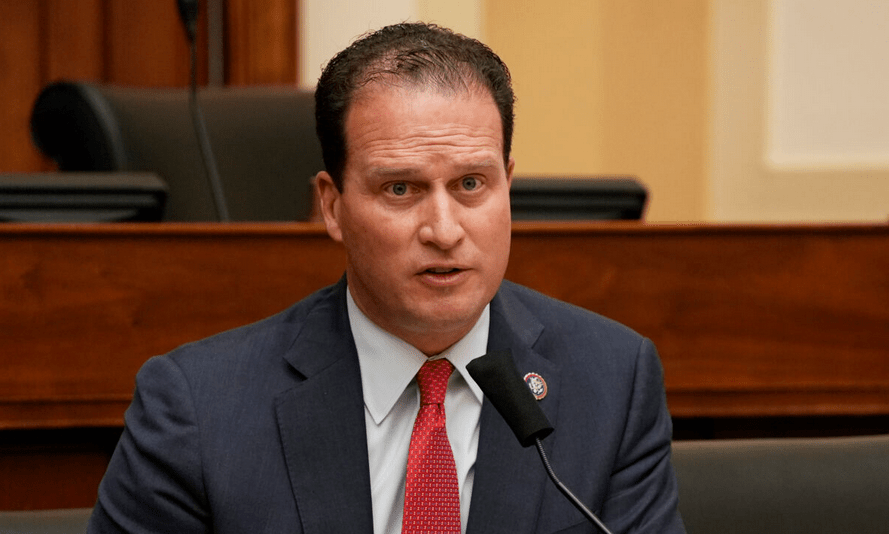
Rep. August Pfluger (R-Texas) said he was “speechless” when he learned that a senior FBI official had not read the Durham report, which was released more than a week ago.

Rep. August Pfluger (R-Texas) speaks remotely as U.S. Secretary of State Antony Blinken testifies before the House Committee on Foreign Affairs on The Biden Administration’s Priorities for U.S. Foreign Policy on Capitol Hill in Washington on March 10, 2021. (Ken Cedeno-Pool/Getty Images)

Pfluger, chairman of the Homeland Security Subcommittee on Counterterrorism, Law Enforcement, and Intelligence, questioned Jill Murphy, deputy assistant director of counterintelligence at the FBI, during a hearing on May 23.

“Special Counsel Durham assesses that neither U.S. law enforcement nor the Intelligence Community appears to have possessed any actual evidence of collusion in their holdings at the commencement of the Crossfire Hurricane investigation,” Pfluger said. Crossfire Hurricane is the FBI codename for the agency’s 2016–17 FBI investigation into the Trump campaign’s ties to Russia.

Pfluger continued, “The bureau subsequently discounted or willfully ignored material that did not support the narrative of a collusive relationship between [former President Donald] Trump and Russia.”

“As the deputy assistant director for the FBI Counterintelligence Division, are you familiar with this report?” Pfluger asked.

In response, Murphy said, “I have not read that report.”

“I’m honestly speechless at this point in time,” Pfluger said in reply.

When pressed on why she had not read the report, Murphy said, “I just haven’t had time.”

“This is a sincere question. Does election collusion worry you?” Pfluger asked Murphy, who said it “obviously” worried her.

“I would highly recommend reading that because we spent four years discussing that. There was uncorroborated evidence—the Durham report specifically outlines the outcome of that. It’s very disappointing to hear this.”

Special counsel John Durham arrives at federal court in Washington on May 18, 2022. (Teng Chen/The Epoch Times)

Durham Report

John Durham, appointed by then-Attorney General William Barr in October 2020 to review the 2016–17 FBI investigation of alleged ties between Trump and Russia, found that the FBI “relied on “raw, unanalyzed, and uncorroborated intelligence” for its investigation.

“The objective facts show that the FBI’s handling of important aspects of t

Following the report’s release, the FBI acknowledged mistakes in its investigation of the Trump campaign, while Trump said in a statement that “the American Public was scammed.”

“The Durham Report spells out in great detail the Democrat Hoax that was perpetrated upon me and the American people. This is 2020 Presidential Election Fraud, just like ‘stuffing’ the ballot boxes, only more so,” Trump added.

Other Republicans at the hearing shared Pfluger’s astonishment that Murphy had not read the report.

“I also was surprised at your answer—you haven’t read the Durham report,” said Rep. Dan Bishop (R-N.C.). “Why is that not a matter of such import that you would want urgently to understand what the special counsel concluded about the work of the counterintelligence division? In such a grave case?”

Murphy replied, “Sir, if you’d like a brief on the Durham report from the counterintelligence division, I’m happy to take that back.

Wow, that sounds almost contemptuous,” Bishop said in response. “Do you intend to read it?”

“I do intend to read it,” Murphy told Bishop.

Read more here…

he Crossfire Hurricane matter were seriously deficient,” Durham added in the report.

Tyler Durden
Wed, 05/24/2023 – 21:30

Post-Fukushima Shift: Japan Court Rejects Citizens’ Concerns, Paving Way For Nuclear Power Restart

Post-Fukushima Shift: Japan Court Rejects Citizens’ Concerns, Paving Way For Nuclear Power Restart

On Wednesday, a district court in Japan dismissed residents’ calls to halt the restart of a nuclear reactor. This represents a victory for the Pacific island nation, grappling with soaring energy costs fueled by the prolonged war in Ukraine. 

The Japan Times reports Sendai District Court in northeastern Japan has ruled Tohoku Electric Power can restart the No. 2 unit of the Onagawa plant early next year. It will become the first unit to restart since the nuclear power plant was idled after the devastating 2011 earthquake and tsunami that triggered the meltdown at Fukushima. 

Judge Mitsuhiro Saito rejected residents’ calls that claimed an evacuation plan was inadequate. Residents said if a nuclear accident occurred, many wouldn’t be able to escape outside an 18.5-mile radius of the plant because of traffic jams. They said they would be exposed to radiation. 

“It cannot be assumed that a specific danger of an accident exists that leads to the abnormal release of radioactive materials,” said Saito.

Tohoku Electric was seeking a dismissal of the lawsuit because evacuation plans had already been approved by the country’s nuclear disaster prevention council. 

“The court acknowledged our claim.

“We will continue to cooperate as much as possible to improve the effectiveness of the evacuation plans,” Tohoku wrote in a statement. 

In response to the ruling, Tohoku shares jumped nearly 8% in Tokyo trading on Wednesday. 

In the last nine months, Japan has reevaluated its energy policies following a decade of paralysis of nuclear power generation as fossil fuel energy costs soar. 

Here’s our reporting on the U-turn: 

Meanwhile, Asia is rapidly building nuclear power plants: because it’s the future of decarbonized power grids.

Infographic: Asia's Going Nuclear | Statista

The U-turn in Japan’s policy comes after we recommended uranium stocks in December 2020. We stated back then that nuclear would be accepted as one of the most stable “clean energy” sources to meet silly climate change targets. 

Tyler Durden
Wed, 05/24/2023 – 19:50

The FBI Has Crossed The Rubicon

The FBI Has Crossed The Rubicon

Authored by Sam Faddis via AND Magazine substack,

The expression “crossing the Rubicon” refers to the actions of Julius Caesar in crossing the Rubicon River and marching on Rome. Roman armies were forbidden to do so. The rule was very practical. The Romans understood the danger of allowing a large armed force to march on the capital city.  To allow this might spell the end of the republic. Best that popular conquering generals and their armies stay a safe distance away and respect the democratic institutions at the heart of Roman democracy.

Caesar broke the rule. He marched on Rome. He didn’t care what the Senators thought. The rest is history. Within a generation, there was no republic.

The FBI has now taken similar action. It has signaled in the clearest possible manner it does not care what the people or their elected representatives think. It will do what it pleasesand the consequences be damned.

The recently released Durham report paints a graphic picture of an agency out of control. The FBI did not blunder into an investigation of Donald Trump, his campaign, and his associates. The FBI undertook to deliberately destroy Trump and those around him including General Flynn. The FBI took unto itself the power to decide who could be President.

That fact has now been publicly exposed. The whole nation can see that the FBI acted in violation of law and every tradition we have had since the inception of the republic. The FBI has responded with remarkable clarity.

It did nothing wrong. It does not care what Durham (or countless whistleblowers) say(s). It does not care what Congress thinks. It will do as it pleases.

The Assistant Director of the FBI for Counterintelligence, Suzanne Turner, just testified before Congress. Asked about the Durham report, the one that said her agency had run amok and tried to stage what amounted to a coup, she responded by saying she had not bothered to read the report nor had she been briefed on it.

When pressed further she offered to take questions back to the FBI and see if she could get someone else to answer them. Contempt dripped from her every word and every mannerism. The concerns of the people’s elected representatives were clearly of no interest whatsoever to her.

The House Oversight Committee is investigating the possibility that the current President of the United States took money from foreign interests, including Communist China, in exchange for policy decisions. In other words, the House is pursuing evidence that suggests pretty strongly that Joe Biden works for Beijing. As part of that investigation, the House has demanded from the FBI copies of reports that apparently show the FBI knew about this some time ago.

The FBI has refused to provide the documents. Meanwhile, there are continuing reports that whistleblowers from within the federal workforce who provide information about the Bidens are being retaliated against and sidelined. In some cases, they have had their security clearances taken away and been suspended without pay. That’s what happens to FBI agents who think Congress is still in charge.

House Oversight Committee Chairman James Comer (R-KY) has blasted the FBI for impeding the investigation into the Biden family’s business dealings, calling the federal agency “very patronizing.” He has also said that the FBI does not “respect anyone.” All of that is crystal clear. The days when the FBI would scurry to take action and avoid Congressional disfavor are long gone. The Bureau is above all that now.

Meanwhile, the FBI has announced that it destroyed all of the evidence it gathered into the actions of Hillary Clinton, the Clinton Foundation, and the mountains of foreign money that flowed to the Clintons when Hillary was Secretary of State.  This comes after revelations that the FBI shut down four separate investigations into the Clinton campaign in the runup to the 2016 election.  While the FBI was manufacturing evidence of a non-existent Trump-Putin connection it was actively covering for Hillary – and it is continuing to do so.

Three years ago, the FBI was handed Hunter Biden’s laptop which literally drips with evidence not just of corruption but of Chinese intelligence connections to Joe Biden and his associates. As far as anyone can tell, the FBI continues to sit on that computer and intends to take no action of any kind to investigate its contents.

Information just surfacing indicates that the FBI routinely used FISA warrants to spy on domestic political opponents inside the United States.

The FBI no longer answers to the elected representatives of the American people nor does it care what they think. It did not get sloppy. It did not make some errors in judgment. Its leaders decided that they were entitled to do whatever they chose and to ignore our laws, our traditions, and the judgment of the nation’s citizens.

Most importantly, however, nothing that has happened has changed any of that. The FBI is not chastened. It is not scrambling to change course and make reforms. As an institution, it does not believe that it has done anything wrong.  It will continue to act in the future precisely as it has in the past.

The FBI has crossed the Rubicon. The consequences of that action, if not addressed immediately, will shake the foundations of the republic.

Tyler Durden
Wed, 05/24/2023 – 19:30

“There’s Poop Everywhere”: San Francisco’s Office District Not Only A Ghost Town, It’s Also Covered In Sh*t

“There’s Poop Everywhere”: San Francisco’s Office District Not Only A Ghost Town, It’s Also Covered In Sh*t

Urban Alchemy employees pick up trash while people gather belongings in the Tenderloin neighborhood. | Melina Mara/The Washington Post via Getty Images

Everyone knows that San Francisco is the nation’s largest public toilet – requiring the city to employ six-figure ‘poop patrol’ cleanup team, however a new report from the city Controller’s Office really puts things in poo-spective.

For starters, feces were found far more often in commercial sectors, covering “approximately 50% of street segments in Key Commercial Areas and 30% in the Citywide survey,” second only to broken glass as can be seen in the ‘illegal dumping’ section.

If you’re wondering about the city’s fecal methodology, look no further than a footnote on page 43;

Feces also includes bags filled with feces that are not inside trash receptacles. Feces that are spread or smeared on the street, sidewalk, or other objects along the evaluation route are counted. Stains that appear to be related to feces but have been cleaned are not counted. Bird droppings are excluded.

As far as where most of the poo is found, Nob Hill takes the top spot, followed by the Tenderloin and The Mission districts.

Via the San Francisco Standard

It’s terrible; this street is covered,” Tenderloin resident Joe Souza told The San Francisco Standard earlier this month. “There’s poop everywhere. You always see it along the wall and in front of the garage there.”

Meanwhile, nearly 2/3 of key commercial routes reported moderate to severe street litter, vs. 41% of the citywide streets struggling with the same problem.

Via the San Francisco Standard

As the San Francisco Standard reports;

San Francisco’s commercial and residential streets are also highly tagged up, with every neighborhood except one—Visitacion Valley—reporting high levels of graffiti last year. The issue is once again worse in commercial areas, of which 71% said they had severe or moderate graffiti.

A Clean City team in the Tenderloin power washes the sidewalk on Hyde Street in San Francisco. | Paul Chinn/The San Francisco Chronicle via Getty Images

“In terms of actual counts of graffiti observed, there were about 10 times (160,000 vs. 16,000 respectively) as many instances of graffiti reported in the Key Commercial Areas survey in comparison to the Citywide sample,” the report said.

And San Francisco’s favorite cleanliness fixation, human or animal feces, continues to be a sore spot for the city: Almost half of the surveyed commercial areas observed feces. Citywide, that figure was just 30%.

*  *  *

San Francisco’s poopocalypse comes amid a staggering commercial office vacancy rate as a combination of pandemic-era work-from-home policies, and people fleeing the city’s notorious violence and poo-covered streets have made the once-thriving city into a ghost town.

Tyler Durden
Wed, 05/24/2023 – 19:10

JP Morgan Bets Big On Carbon Removal

JP Morgan Bets Big On Carbon Removal

Authored by Charles Kennedy via OilPrice.com,

  • JP Morgan has committed to invest over $200 million in buying credits for carbon removal.

  • JP Morgan is also helping carbon capture businesses with financing.

  • JP Morgan is also one of the biggest financiers of fossil fuel projects.

JP Morgan is betting big on carbon removal and is buying credits from direct air capture developers to offset its environmental footprint, officials at the largest U.S. bank have told The Wall Street Journal.

JP Morgan has committed to invest over $200 million in buying credits for carbon removal and is also helping carbon capture businesses to take off.

“We’re jumping in the pool all in,” JP Morgan’s head of operational sustainability, Brian DiMarino, told the Journal an interview.  

“This is us putting our weight and our capital behind something we believe is truly important to bring to market now,” DiMarino added.  

Last year, JP Morgan Securities LLC served as sole placement agent for direct air capture (DAC) technology developer Climeworks as it raised $650 million in an equity round.

Last month, JP Morgan and several other companies announced that they had joined Frontier, an advance market commitment to accelerate carbon removal. The new members in Frontier – Autodesk, H&M Group, JP Morgan Chase, and Workday – will commit to purchase a combined $100 million of permanent, high-quality carbon removal over the next eight years, bringing Frontier’s total advance market commitment to over $1 billion. 

Commenting on the agreement, DiMarino said last month, “Scaling technological innovation, including around carbon removal, will play a critical role in the transition to a more sustainable future.”

Yet, JP Morgan is also one of the biggest financiers of fossil fuel projects.

For the first time since 2019, JP Morgan Chase dropped from the top spot of the biggest backer of fossil fuels.

JP Morgan is no longer the world’s biggest financier of fossil fuels.

Last year Royal Bank of Canada (RBC) became the top bank funding oil and gas, a report by environmental groups showed last month.

Overall, U.S. banks dominated fossil fuel financing, accounting for 28% of all fossil fuel financing in 2022. JP Morgan Chase remains the world’s biggest funder of fossil fuels since the Paris Agreement, while Citi, Wells Fargo, and Bank of America are still among the top 5 fossil financiers since 2016.

Tyler Durden
Wed, 05/24/2023 – 18:50

Fitch Places United States’ AAA Rating On Watch Negative, Blames “Political Partisanship”

Fitch Places United States’ AAA Rating On Watch Negative, Blames “Political Partisanship”

With its CDS trading like an emerging market, it is likely no surprise that Fitch Ratings has placed the United States’ ‘AAA’ Long-Term Foreign-Currency Issuer Default Rating (IDR) on Rating Watch Negative.

The T-Bill curve is not buying the calm picture being painted by Washington with the June 1st Bill yielding 7.00% today…

Key Rating Drivers:

Debt Ceiling Brinkmanship: The Rating Watch Negative reflects increased political partisanship that is hindering reaching a resolution to raise or suspend the debt limit despite the fast-approaching x date (when the U.S. Treasury exhausts its cash position and capacity for extraordinary measures without incurring new debt). Fitch still expects a resolution to the debt limit before the x-date. However, we believe risks have risen that the debt limit will not be raised or suspended before the x-date and consequently that the government could begin to miss payments on some of its obligations. The brinkmanship over the debt ceiling, failure of the U.S. authorities to meaningfully tackle medium-term fiscal challenges that will lead to rising budget deficits and a growing debt burden signal downside risks to U.S. creditworthiness.

Debt Limit Reached: The U.S. reached its $31.4 trillion debt limit on Jan. 19, 2023, and the Treasury began taking extraordinary measures in order to avoid breaching the ceiling. The Treasury has stated that these extraordinary measures could be exhausted as early as June 1, 2023. The cash balance of the Treasury reached USD76.5 billion as of May 23 and sizeable payments are due June 1-2, meaning that the x-date could arrive as the Treasury indicated and before an agreement is reached or finalized with votes in the House and Senate.

X-Date Approaching: The failure to reach a deal to raise or suspend the debt limit by the x-date would be a negative signal of the broader governance and willingness of the U.S. to honor its obligations in a timely fashion, which would be unlikely to be consistent with a ‘AAA’ rating, in Fitch’s view. Prioritization of debt securities over other due payments after the x-date would avoid a default. Similarly, avoiding default by non-conventional means such as minting a trillion-dollar coin or invoking the 14th amendment is unlikely to be consistent with a ‘AAA’ rating and could also be subject to legal challenges.

Debt Default Rating Implications: We believe that failing to make full and timely payments on debt securities is less likely than reaching the x-date and is a very low probability event. Such a failure would be a debt default under Fitch’s sovereign rating criteria and would lead us to downgrade the sovereign IDR to Restricted Default (RD). Affected debt securities would be downgraded to ‘D’. Additionally, other LT debt securities with payments due within the following 30 days would likely be downgraded to ‘CCC’, and ST treasury bills maturing within the following 30 days would likely be downgraded to ‘C’.

Potential Post-Default Ratings: Other debt securities with payments due beyond 30 days would likely be downgraded to the expected post-default rating of the IDR. A key consideration in determining the U.S. post-default rating would be Fitch’s Sovereign Rating Model (SRM) – the details of which are in the public domain. The SRM output for the U.S. stands at ‘AA+’. The model applies a two-notch reduction for a sovereign that has recently defaulted, suggesting that Fitch’s model-implied post-default rating would be ‘AA-‘. The final rating could be adjusted lower or higher via the Qualitative Overlay as per our criteria. Fitch would expect any debt default to be relatively short-lived. However, a more protracted default scenario could have more severe implications for the country’s post-default ratings.

Country Ceiling to Remain at ‘AAA’: Fitch would expect the U.S country ceiling to remain at ‘AAA’ even in the scenario of a debt default. The U.S. dollar is the preeminent world’s reserve currency, and we view the risk of exchange and capital controls as de minimis.

Governance Challenges: Governance is a weakness relative to ‘AAA’ rated peers, and the future direction of the rating is sensitive to the direction it takes. The contested 2020 presidential election, brinkmanship over the debt limit to advance political agendas, and failure to reach consensus on the country’s fiscal challenges are recent signs of the deterioration in governance. Additionally, the absence of a medium-term fiscal framework and a complex budgeting process has contributed to the failure to reverse successive debt increases caused by economic shocks and other fiscal accommodations. Political partisanship has brought about repeated debt-limit brinkmanship and led to near-default episodes that could erode confidence in the government’s repayment capacity.

Weakening Fiscal Outturns: Weaker-than-expected tax receipts and higher interest rates have led public finances to modestly underperform Fitch’s expectations at the last review. Fitch now forecasts a general government deficit at 6.5% of GDP in 2023 and 6.9% of GDP in 2024, up from 5.5% in 2022. State and local governments overall surpluses in 2021-22 have begun to move to deficits, which accounts for part of the expected general government deterioration. A rising interest burden and growing spending on entitlements over the coming decade will keep the deficits at above 7% of GDP on average. Between 2023 and 2033 the U.S. Congressional Budget Office (CBO) May 2023 baseline includes a 2.2pp of GDP rise in spending on interest, healthcare and social security that is linked to demographics, a rising interest burden and healthcare costs.

High and Rising Public Debt Burden: General government debt fell to 112.5% of GDP at year-end 2022 (compared to 36.1% for the ‘AAA’ median), a decline from its 2020 pandemic peak of 122.3%. However, the ratio remains over 12 pp above pre-pandemic levels in 2019. Fitch forecasts debt to increase to 117% by end-2024. Debt dynamics under the baseline Congressional Budget Office (CBO) assumptions project that the ratio of federal debt held by the public to GDP will approach 119% within a decade under the current policy setting, a rise of over 20 pp. Interest rates have risen significantly over the last year with the 10-year Treasury yield at close to 3.7% (compared to 2.8% a year ago).

Exceptional Strengths Support Ratings: The size of the country’s economy, high GDP per capita and dynamic business environment support the U.S. ratings. The U.S. dollar is the world’s preeminent reserve currency, which gives the government extraordinary financing flexibility.

ESG – Governance: The U.S. has an ESG Relevance Score (RS) of ‘5’ Political Stability and Rights and ‘5[+]’ for the Rule of Law, Institutional and Regulatory Quality and Control of Corruption. Theses scores reflect the high weight that the World Bank Governance Indicators (WBGI) have in our proprietary Sovereign Rating Model. The U.S. has a high WBGI ranking at 79, reflecting its well-established rights for participation in the political process, strong institutional capacity, effective rule of law and a low level of corruption.

Paging Mrs. Yellen…

Who could have seen this coming?

Tyler Durden
Wed, 05/24/2023 – 18:47