74.1 F
Chicago
Saturday, August 15, 2026
Home Blog Page 3707

‘Mad Panic’ As Towns Near Zaporizhzhia Nuclear Plant Evacuated Amid Stepped-Up Ukrainian Shelling

‘Mad Panic’ As Towns Near Zaporizhzhia Nuclear Plant Evacuated Amid Stepped-Up Ukrainian Shelling

The situation Zaporizhzhia Nuclear Power Plant has just gone from bad to worse as entire residential districts in the vicinity of the facility are being evacuated by Russian authorities. This includes at least 18 settlements in the Zaporizhzhia region who have been given emergency evacuation orders.

BBC has cited as Ukrainian official as saying this has sparked a “mad panic” – also given UN’s nuclear watchdog is warning that a “severe nuclear accident” could occurr. Hours-long waits and traffic jams have been observed as thousands of people pack up and head out of the city.

Director of the International Atomic Energy Agency (IAEA) Rafael Grossi described that the situation “becoming increasingly unpredictable and potentially dangerous.”

He called for stability and protection of Europe’s largest nuclear site. “I’m extremely concerned about the very real nuclear safety and security risks facing the plant. We must act now to prevent the threat of a severe nuclear accident and its associated consequences for the population and the environment,” Grossi said.

The issue is a Ukrainian counteroffensive may have started in the city, given the significantly ramped-up shelling. Regional Russian head Yevgeny Balitsk said Friday that “in the past few days, the enemy has stepped up shelling of settlements close to the front line.”

“I have therefore made a decision to evacuate first of all children and parents, elderly people, disabled people and hospital patients,” he said in a written statement.

The IAEA for its part said further that “while operating staff remain at the site” there was “deep concern about the increasingly tense, stressful, and challenging conditions for personnel and their families” – this given that families of staff members are being evacuated. The UN organization confirmed that–

It said IAEA experts at the plant had “received information that the announced evacuation of residents from the nearby town of Enerhodar – where most plant staff live – has started“.

The Russian military said noted in a statement that “The first to be evacuated are those who accepted Russian citizenship in the first months of the occupation.” Currently all reactors are said to be shut down and that operators are “doing everything to ensure nuclear safety” amid the heightened fighting.

Last week, broader evacuations of civilians near the front lines in southern regions began and have picked up pace…

While the plant has over the course of the war been subject to multiple power outages and seen external damage due to shelling (all of them ‘close-call’ incidents), it has layers of safety mechanisms such as power back-up generators and other ‘fail-safes’. However, due to the war it’s long been feared a Chernobyl-style nuclear fallout disaster could be on the horizon, given the extreme unpredictability of the situation on the ground. The power plant supplies 20% of Ukraine’s national electricity needs.

Tyler Durden
Sun, 05/07/2023 – 09:55

Parents More Likely To Question Routine Childhood Vaccinations Post-COVID: Research Report

Parents More Likely To Question Routine Childhood Vaccinations Post-COVID: Research Report

Authored by Marnie Cathcart via The Epoch Times (emphasis ours),

Canadian parents have become more likely to question routine childhood vaccinations since the pandemic, according to research.

A child receives a COVID-19 vaccine in a file photo. (Chip Somodevilla/Getty Images)

Immunization rates “have declined since COVID-19” according to research commissioned by the federal government and conducted by Ekos Research Associates. The resulting report, “Childhood Vaccination Marketing Campaign Survey 2022,” was delivered to Health Canada on Feb. 15, 2023, and was first obtained by Blacklock’s Reporter.

“This public opinion research will inform the development of the new multi-year Childhood Vaccination marketing strategy to promote the safety, effectiveness, and importance of vaccines,” the report said.

Only 39 percent of respondents said they accept all recommended childhood vaccines and have no doubts or concerns about vaccinating their child—a drop from 48 percent in 2017.

One in three parents (33 percent) indicated they accept government-recommended vaccines, but have “minor doubts and concerns.”

Another five percent of parents said they are going along with childhood vaccines but “have many doubts and concerns.”

Nearly 20 percent of parents said they have refused or delayed getting vaccines for their children, and another 3 percent have refused all vaccines. These two numbers combined have doubled from 12 percent in 2017 to 22 percent in 2022, said the research.

Those who had doubts and concerns about vaccinations cited side effects as the most prevalent concern (42 percent), followed by allergic reactions (29 percent), lack of testing (29 percent), and distrust of the pharmaceutical industry (28 percent).

Twenty percent of those surveyed indicated their concern about vaccines stemmed from a lack of trust in “the government” in general, while others had concerns about too many vaccines within a short period of time (17 percent), or objected to a general requirement for too many vaccines (12 percent).

The research results were derived from an online survey conducted in October 2022, with 1,228 Canadians, including 1,035 parents with children aged newborn to six years of age, and 193 women currently pregnant or planning a pregnancy within 12 months. The results were compared with research from 2017.

Uptake

The survey also asked parents if their children had received any COVID-19 vaccines.

Forty-two percent reported that their child had received two doses of the COVID-19 vaccines while 11 percent of parents said their child had three doses.

On average, and depending on the child’s age, approximately one in four indicated they would refuse COVID-19 vaccinations for their children (29% for children under six months; 30% for children six months to under five years; 26% for children five years and older),” said the report.

Post-COVID, when compared to pre-epidemic data from 2017,  72 percent of parents said they “accept all recommended vaccines” compared to 82 percent before COVID.

Forty-two percent of parents now said they fear that vaccines “cause side effects” compared to 24 percent before COVID. Pre-pandemic, 14 percent of parents were concerned about vaccines, which has now risen to 31 percent who said they are concerned.

While 10 percent of parents refused or delayed getting their child certain vaccines before the pandemic, that percentage has risen to 19 percent following COVID.

Data from Canada’s Public Health Agency data indicates just 40 percent of children under 12 are considered fully vaccinated against COVID. The government said the low uptake stemmed from parents feeling “not enough research on the vaccine has been done in children.”

Tyler Durden
Sun, 05/07/2023 – 09:20

8 Killed, 7 Wounded In Mass Shooting At Texas Mall – Cop Kills Gunman

8 Killed, 7 Wounded In Mass Shooting At Texas Mall – Cop Kills Gunman

A gunman in tactical gear exited his sedan in the parking lot of an Allen, Texas shopping outlet Saturday and started shooting at everyone in sight, killing eight people and wounding seven more. The wounded range in age from 5 to 61. A police officer who was already in the vicinity on another call shot and killed the murderer before he could take more lives. 

The shooting began shortly after 3:30 pm local time in the northeastern suburb of Dallas. Dashcam apparently taken by a civilian captured the shooter parking in the middle of a lane, exiting his car outside an H&M store and opening fire: 

The shooter was stopped by a “good guy with a gun.” The video will make some wonder if the shooter could have been stopped sooner by a good guy or gal with a 5,000-pound pickup truck complete with a brush-guard battering ram. As yet, there’s no telling if there was anyone else in the pickup truck who may have been put at grave risk if the driver had failed in an attempt to run the shooter over. 

Video is also circulating that purportedly shows the dead gunman lying in a large pool of his own blood outside a Fatburger restaurant at the outlet. An AR-pattern rifle lays near him, and his tactical vest is laden with extra magazines: 

The shooter’s murderous path started (1) outside an H&M store and ended (2) in front of a Fatburger 

Police haven’t released details about those killed, but graphic video shows approximately five of the murdered innocents — including at least one very young child — piled atop each other after they were gunned down. They were helplessly positioned against a long, door-less stretch of the outlet’s exterior wall.     

Police have yet to name the killer. Authorities searched a home in Northeast Dallas where the suspected shooter lived with his parents. Quoting police sources, WFAA reports the shooter is a man in his 30s. Neighbors say he frequently wore a security uniform or gothic attire, wasn’t talkative and exhibited unusual behavior. Investigators on the scene asked for a translator to assist with their questioning.

A police car outside the suspected shooter’s house in northeast Dallas (WFAA)

In another Dallas suburb — Frisco — Stonebriar Mall was evacuated Saturday after reports of gunfire. It hasn’t yet been confirmed if any shots were indeed fired there. Police believe the Allen shooter acted alone

A heavy police presence outside Allen Premium Outlets (WFAA)

Allen Premium Outlets is owned by Simon Property Group, which prohibits weapons of any kind at their centers. In July, a man who opened fire with a rifle at another Simon-owned mall in Indiana was promptly killed by a 22-year-old citizen carrying a pistol — contrary to Simon’s rules. 

Developing story…

Tyler Durden
Sun, 05/07/2023 – 08:45

The Bumpy Road Ahead For The World Economy

The Bumpy Road Ahead For The World Economy

Authored by Gail Tverberg via Our Finite World,

In the post-World War II era, the US has been known for its hegemony–in other words, its leadership role in the world economy. According to one definition, hegemony is the political, economic, and military predominance of one state over other states. I believe that the US is not far from losing its hegemony. The conflict over future hegemony could lead to a major war.

Hegemony is surprisingly closely tied to leadership in energy consumption. A country with a high share of the world’s energy consumption doesn’t have to depend on imported goods and services from around the world. It can manufacture weapons of war, if it chooses, in as large quantities as it chooses, without waiting for outside suppliers.

One part of today’s problem is the fact that the world’s fossil fuel supply, particularly oil, is becoming depleted. Extraction is not rising sufficiently to keep up with population growth. In fact, total fossil fuel extraction may begin to fall in the near future. In some sense, the fossil fuel supply is no longer adequate to go around. To relieve the stress of inadequate supply, some inefficient users of energy need to have their fossil fuel consumption greatly reduced.

My analysis suggests that the US and some of its “Affiliates” tend to be inefficient users of fossil fuels. These countries are at great risk of having their consumption cut back. The result could be war, even nuclear war, as the US loses its hegemony. After such a war, the US could mostly be cut off from trade with Asian nations. In this post, I will elaborate further on these ideas.

[1] Hegemony is closely related to energy consumption because energy is what allows an economy to manufacture goods of all kinds, including armaments needed for war. The energy consumption of the US as a percentage of the world’s has been falling since 1970.

Data on energy consumption by part of the world is readily available only back to 1965, rather than 1945. Based on this data, US energy consumption as a percentage of the world’s total energy consumption has been falling since 1965.

Figure 1. US Energy consumption as a percentage of world energy consumption, based on data from BP’s 2022 Statistical Review of World Energy.

Figure 1 shows that the US’s share of world energy consumption amounted to 33.3% of world’s energy supply in 1965, but only 15.6% in 2021. In other words, in 2021, the US’s share of world energy consumption in 2021 was less than half of its 1965 level.

There are some economies that have much in common with the US. The countries in this category are advanced economies that have democratic governments. I expect these countries would tend to follow the US’s lead, regardless of whether its actions really make sense. The selected economies are the EU, Japan, Canada, the UK, and Australia. For convenience, I call these countries Affiliates.

[2] Affiliates consumed over 35% of the world’s energy supply in the 1965 -1973 period, but this has fallen in recent years.

Figure 2. Energy consumption for selected advanced economies (referred to in this post as Affiliates) as a percentage of world energy consumption, based on data from BP’s 2022 Statistical Review of World Energy. The EU is based on 2021 membership.

Figure 2 shows that Affiliates consumed 35.5% of the world’s energy supply in 1965. By 2021, their consumption fell to 17.6% of the world’s supply. This, too, is less than half of the 1965 percentage.

[3] The energy consumption of US plus Affiliates as compared to the energy consumption of Rest of the World has shifted remarkably since 1965. The consumption of the Rest of the World has been soaring, while that of US plus Affiliates has shrunk.

In Figure 3, I add together the amounts in Figures 1 and 2 and compare them to the indicated energy consumption of what is left, which I call, “Rest of the World.” It is clear that there has been a huge shift in which grouping consumes the majority of the world’s energy supply.

Figure 3. Comparison of total energy consumption as a percentage of world energy consumption for US + Affiliates and Rest of the World. Amounts based on data from BP’s 2022 Statistical Review of World Energy.

We all know that if a political party has the support of almost 70% of voters, it is likely to be dominant. There is a similar issue with energy consumption. Energy consumption is used in every aspect of the economy. It is important for manufacturing goods and transporting them to their destinations. It is also important for creating jobs that pay well.

If world energy supply is growing, it encourages growth of the world economy. Growing energy supply indirectly allows debt to be paid back with interest. In general, the faster the world’s energy supply is growing, the higher the interest rate that can be supported.

Without growth in energy supply, an individual economy is forced to become a service economy. It is forced to import almost all of the manufactured goods that it needs, even armaments needed for war. Such an economy is forced to place an emphasis on growing debt and growing complexity. Unfortunately, both of these things are subject to diminishing returns. As growth in energy supply turns to shrinkage in energy supply, we should expect debt bubbles to pop.

A country is likely to stop making advances in the sciences as it shifts to a service economy. This linked chart by Visual Capitalist analyzes patents in 2021 by the country of the individuals listed on the patent applications. On this basis, China’s patent count was more than double that of the US. China is also the major producer of many clean energy technologies because it has both the resources and the technology.

As a service economy, the US has tended to specialize in healthcare, with spending in this sector accounting for 18.3% of GDP. Yet the US’s healthcare results are dismal. US life expectancies have fallen behind those of other advanced countries. The recent covid vaccines, which were strongly advocated by US health authorities, worked far less well than had been hoped. In February 2022, the New York Times published an article, US Has Far Higher Covid Death Rate Than Other Wealthy Countries.

[4] US data shows that its energy consumption was rising rapidly in the 1949 to 1973 period. Such rapid growth in energy consumption would make other countries envious. It would tend to expand America’s hegemony.

Figure 4. US energy consumption for the period 1949 to 2022 based on EIA data with fitted exponential growth indications for periods chosen by author.

Figure 4 shows how quickly US energy consumption was growing, starting in 1949, using EIA data. Energy consumption growth averaged 3.5% per year in the 1949 to 1973 period. This rapid growth is what we would expect of a country that was an energy leader for the rest of the world. Standards of living could rise. Parents could often afford to raise several children.

An article in the Oxford University Press says that the US’s proliferation of major military bases overseas was developed in the 1950s and 1960s to contain communism and to provide global defense of US interests. Such a huge build-out of bases during this period would not have been possible without the rapid ramp-up in US energy consumption.

Between 1960 and 1969, the number of miles of high-voltage long distance electricity transmission lines tripled. This was evidence of the rapid growth in electricity production that the US was achieving; it was a pattern that other countries would want to emulate. It added to the hegemony of the US.

Statista shows that between 1951 and 1973, the number of US automobile sales per year more than doubled, from 5.16 million to 11.42 million. With this increase came a need for more paved roads and more pipelines to carry oil products. With its growing energy consumption, the US was able to accomplish all this growth. Growing energy consumption also allowed the US to manufacture nearly all the vehicles sold in the US in this period.

[5] US hegemony faced a major challenge in 1970 when US oil production hit a peak and started to fall.

Figure 5. Monthly US oil production through February 2023. Chart by EIA, with notes by Gail Tverberg.

US crude oil production rose rapidly until 1970, when it suddenly started falling. Work was quickly begun on oil extraction from the North Slope of Alaska. This oil offset most of the decline in oil production from the lower 48 states through the mid-1980s.

US hegemony depends upon the quantity of energy products US businesses and citizens consume. When oil prices become unaffordable, citizens and businesses buy less. Figure 6 shows that oil prices had been amazingly low prior to 1973, averaging only $16.31 per barrel, even after adjusting for inflation to 2021 price levels.

Figure 6. Average annual Brent spot oil prices, together with average prices for the fitted growth periods shown on Figure 4. Based data from BP’s 2022 Statistical Review of World Energy.

Comparing Figure 6 to Figure 4, we see that once oil jumped up to an average of $73.14 per barrel in the 1973 to 1983 period, US energy consumption flattened out. At this high price, efficiency became more important. Smaller imported cars, often from Japan, became popular. The US and several other parts of the world started building nuclear power plants to replace electricity created by burning oil. Within a few years, oil production was ramped up in other parts of the world, such as the North Sea and Mexico, relieving the tightness in oil supply.

Once oil prices began to rise again in the 2005 to 2008 period, US oil from shale became available in response to higher prices. The catch was that at these higher prices, oil tended to be unaffordable by the American public. Oil was still affordable in most of the Rest of the World, however.

These “Rest of the World” countries tended to use oil much more sparingly in their energy mix. They often had other advantages as well: warmer climate, lower wage levels, recently built factories, and an energy mix that emphasized coal (which tended to be inexpensive). These advantages helped bring down costs of both manufacturing and resource extraction for the Rest of the World. The shift in energy consumption shown on Figure 3 could occur.

This shift in manufacturing and resource extraction away from the US and Affiliates creates problems, however. If the US and Affiliates are increasingly at odds with countries outside this group, it becomes much harder for the US to exert hegemony over these countries. The problem is that the US depends upon the countries it is at odds with for necessities. Even in making munitions for the Ukrainian conflict, the US needs to depend on China and other Asian countries for parts of its supply lines.

[6] The world economy is now headed for a bottleneck. The world economy is similar to a Ponzi Scheme, with growth in the output of goods and services necessary to fund financial promises of many kinds. There are limits to the amounts of fossil fuels available at affordable prices, and the world is hitting those limits now.

Because the world economy follows the laws of physics, the growth in the output of goods and services depends upon the continued growth in the production of energy products.

Figure 7. World Energy Consumption by Source, based on Vaclav Smil estimates from Energy Transitions: History, Requirements and Prospects and together with data from BP’s Statistical Review of World Energy for 1965 and subsequent. Wind and solar are included in “Biofuels.”

We have known for a very long time that fossil fuel output is limited. Back in 1957, Rear Admiral Hyman Rickover of the US Navy gave a speech warning that world-wide fossil fuel energy supplies were expected to become unaffordable between 2000 and 2050. High oil prices seem to have been a major factor underlying the Great Recession of 2008-2009. This especially affected the US, with its large amount of subprime housing debt. The problems experienced since late 2021 with spiking prices of oil and high prices of imported coal and natural gas are also evidence of the limits the world is reaching.

Figure 8 shows my view of where future world energy supply is headed. While this chart was originally prepared in 2020, the forecast still seems to be reasonable, especially if regulators get their way in mandating the reduction of (unaffordable) fossil fuel use.

Figure 8. Amounts for 1820 to 2020 similar to those from Figure 7, above. Amounts after 2020 assume an average reduction of 6.6% per year to 2050.

If energy consumption falls this rapidly, the world economy will have to adapt in many ways. Economies that cannot tolerate high oil and energy prices are likely to be squeezed out. Based on what already has been happening in Figures 1, 2, and 3, the United States and Europe are especially likely to be adversely affected. The countries that are likely to fare better are ones that don’t require as much energy per capita. These countries are likely to be in warm climates and have relatively poor populations, such as those in Southeast Asia.

As energy supplies fall, business failures and debt defaults can be expected to soar. Governments will be tempted to backstop every financial promise, including failed banks and pension plans. If they do this, other countries will be unwilling to trade using their debased currency. With too much money and few imports, the result is likely to be hyperinflation. If the governments simply allow bankruptcies to take place, the result is likely to be deflation as banks and businesses fail.

[7] The US has been having increasing difficulty in its hegemony role. Some countries have come to believe that the US is now acting unfairly.

Back when the US first attained hegemony, oil and other energy supplies were inexpensive and their supply was growing rapidly. The US was experiencing great economic growth, and other countries wanted the same sort of success. The US plus Affiliates were the ones using the majority of energy products, so the interests of almost all energy users were aligned.

Things have “gone downhill” since 1970 when the US oil supply first started to shrink (Figure 5). Suddenly, the US needed help from the financial system to work around the need to import more oil. One change (in August 1971) was making the dollar a fiat currency, rather than tied to a gold standard. This enabled greater use of debt in operating the economy.

Without the gold standard, the US dollar was able to become the world’s reserve currency. Instead of gold reserves, other countries began buying US Treasuries, which they considered to be a safe store of their money. The US dollar could also play a greater role in financing international transactions. A 2021 analysis by the Federal Reserve shows the dominance of the US dollar in many areas of trade.

This dominant role for the US dollar is now being questioned after the US froze the central bank assets of Russia, as part of the sanctions imposed in response to Russia’s invasion of Ukraine. Other countries are beginning to wonder if holding Treasuries is really a good idea, if the US can impose sanctions which make them unavailable. Countries are also figuring out that it is quite possible to arrange sales of commodities and other goods in currencies other than the US dollar.

Also, the US’s ability to win wars is not very clear. The US’s first big loss was the Vietnam War. After 20 years of fighting, that war ended in 1975, with communist forces seizing control of South Vietnam. The Afghanistan War did not go well either. After 20 years, the US abruptly pulled out. While the US claims the mission was accomplished, it is hard to see that the high cost was justified.

The Russia-Ukraine conflict does not appear to be going well for Ukraine and the allies supporting Ukraine. The US and NATO are having difficulty supplying as many armaments as quickly as President Zelensky would like. Ukraine seems to be using up its conventional weapons very rapidly. Neither the US nor other NATO countries can manufacture weapons very quickly, in part because supply lines from around the world are required. How helpful is the US’s hegemony, if the US can’t even easily win a “proxy war” in Ukraine?

There are sanctions, other than freezing assets, that are of concern to other countries. A recent list from a Chinese source lists the following types of hegemony that it considers to be problematic.

  • Political hegemony – Throwing the US’s weight around

  • Military hegemony – Wanton use of force

  • Economic hegemony – Looting and exploitation

  • Technological hegemony – Monopoly and suppression

  • Cultural hegemony – Spreading false narratives

Quite a few countries in my Rest of the World grouping are clearly getting fed up with America’s hegemony. Increasingly, Middle Eastern countries that were previously at odds with each other are setting aside their differences. They are also becoming much more closely aligned with China. Countries in this group, as well as the BRICS group of countries, are already taking steps toward trading in currencies other than the US dollar.

[8] The path ahead looks very bumpy. The US is likely to be kicked out of its role as global hegemon. Rival countries may choose to attack the US with nuclear weapons, or the US may lash out with nuclear weapons as it sees its hegemony fail.

As I analyze the world economy’s future trajectory, I see the following situations falling into place:

(a) The world economy is being stressed by inadequate energy supplies. When prices rise, it tends to cause inflation. Some countries are experiencing a second kind of stress, as well. Their central banks have raised interest rates. This is a dangerous thing to do because it tends to cause falling asset prices in addition to slowing the economy.

I expect that countries that have recently raised interest rates will have many bank failures. Partly, this will come from the falling value of long-term bonds. In time, it will also come from failing real estate mortgages and other loans, since asset prices will tend to fall with higher interest rates. Governments will be tempted conduct massive bailouts. The countries that have recently raised interest rates include the US, the UK, Eurozone countries, Switzerland, Canada, Australia, and Brazil.

Countries that did not raise interest rates, which seem to include China, India, and Iran, will find their economies less affected by bank failures. Russia temporarily raised interest rates, and then lowered them again, so Russia would also seem to be less affected by bank failures.

Countries that raised rates will be tempted to do bailouts of banks and of “too big to fail businesses.” These bailouts will greatly increase the monetary supply, making countries that didn’t raise interest rates unwilling to trade with them. This dynamic will tend to increase the trend toward two separate trading areas–one including much of Eurasia and one including the US, Canada, Europe and perhaps South America.

(b) If we think about it, cutting back greatly on trans-Atlantic and trans-Pacific shipping would save a great deal of oil if there is not enough oil to go around. This will be another impetus for “Rest of the World” countries, especially those in the Asia-Pacific area, to cut back on shipping across the major oceans.

(c) With failing banks and a cutback in trade between regions, the US dollar will cease to be used as a reserve currency for a large part of the world. The US dollar might still be the reserve currency for some trades, particularly with other countries in the Americas.

(d) I expect that a block of countries will eventually coalesce, centered in Asia, that will mostly trade among themselves. China will probably be the leader of this block.

(e) The US and Europe will mostly be pushed off to the side, to trade among themselves and some geographically close neighbors. These areas may need to set up new financial systems using much less debt. These countries will not be able to produce advanced goods, such as computers, by themselves. They will not be able to build new solar electricity generation or new wind turbines because too much of the supply chain will be out of reach. While these countries have been looking at digital currencies, it is not clear that there will be a stable enough electricity supply to make such currencies possible.

(f) There will probably be war at the time of the division into the two (or perhaps more) trading areas. Nuclear weapons may be involved since there are many countries with nuclear weapons. The supply of conventional weapons available for warfare is depleted, with the ongoing war in Ukraine. According to a study done at Harvard, involving 16 cases in which a major rising power challenged an existing major power over the past 500 years, 12 cases ended in war. This analysis would suggest a 75% likelihood of war.

(g) I don’t know what the timing of all these things will be. Bank failures are just beginning. Let’s keep our fingers crossed that the world economy holds together a while longer.


Tyler Durden
Sun, 05/07/2023 – 08:10

Majority Of Germans Say Migrants Bring More Problems Than Benefits, Want Limit On Refugees

Majority Of Germans Say Migrants Bring More Problems Than Benefits, Want Limit On Refugees

Authored by John Cody via Remix News,

A new poll shows that a slight majority of Germans are turning against mass immigration, with 52 percent saying that they believe Germany should “take in fewer refugees,” an increase of 12 points since January 2020.

The results come just a week before a long-awaited migration summit that will involve federal and state governments meeting in Chancellor Olaf Scholz’s office to discuss the ongoing crisis.

The poll, conducted for Infratest Dimap on behalf of ARD Tagesthemen and Die Welt, also asked respondents whether they see migrants as bringing more advantages or disadvantages. For 54 percent, they said the disadvantages of immigration outweigh the advantages, while only a third said that the advantages outweigh the disadvantages.

However, when it comes to skilled immigration, Germans are more supportive. For this type of immigration, 41 percent said they would like to recruit more of these workers, while 28 percent said the number should be kept at the current level. Only 23 percent wanted to recruit fewer of these workers.

Germans have clearly soured on refugees, with just 8 percent wanting to take more in, while 33 percent said the numbers should stay at their current levels. Another 52 percent want “fewer refugees.”

Alternative for Germany (AfD) voters are the least likely to support immigration, with 92 percent favoring restrictive policies. Meanwhile, 61 percent of FDP and 57 percent of CDU/CSU voters also want restrictions. Even one left-wing party takes a majority negative view on immigration, with supporters of Die Linke (Left Party) seeing more disadvantages than advantages (51 percent to 42 percent).

Polling on the topic of mass immigration has delivered similar results as of late, with a slight majority of Germans saying they do not want more immigration.

At the same time, the AfD party, most known for its stance against immigration, has hit a new high of 16.5 percent in national polls.

Tyler Durden
Sun, 05/07/2023 – 07:35

Escobar: Global De-Dollarization Nearing “Crossroads Moment”

Escobar: Global De-Dollarization Nearing “Crossroads Moment”

Authored by Ekaterina Blinova,

De-dollarization is heading for a breakthrough due to rising global discontent with US ‘casino capitalism’…

“It’s a gigantic snowball all over the world. We cannot even keep up with it,” Pepe Escobar said in an interview with the New Rules podcast.

“It’s very important what is going to be discussed at the BRICS summit in South Africa. This will probably be the crossroads moment where things are going to then go.”

Escobar explained that a growing number of countries in the Global South were doing the math and concluding that the US dollar was not a safe bet. The combination of aggressive US sanctions policy and reckless government spending have dramatically reduced the greenback’s international appeal.

“If you want to analyze the patterns these past two decades, you need to understand the fact that, if you are rich in commodities and if you are a productive capitalist nation and you decide to issue a currency, it will be internationally respected because people will know it’s based on facts, actual provenance, actual wealth,” he said. “That’s contrary to the system that we have now, which I have been calling it ‘casino capitalism’ for years. It’s futures, it’s bets, it’s suppositions. It may go right or wrong. If you lose, you lose it all. The house mostly always wins because the house is the one who prints the currency. It’s backed by nothing, literally, by a country that owes $30 trillion [in national debt] now and it will never be able to repay it.”

To make matters even worse, the US Federal Reserve’s aggressive interest rate hikes has made borrowing in dollars expensive for almost everyone in the world. Prior to the Fed’s move, Kristalina Georgieva, managing director of the International Monetary Fund, warned in January 2022 that the US raising interest rates could backfire on the global economy and especially on countries with higher levels of dollar-denominated debt.

The ongoing US banking crisis threatens to further destabilize international financial markets. No country in the world wants to “catch a cold” when the US economy “sneezes,” as memories of the 2008 financial crisis linger.

“They say, ‘look, why do we have to be subjected to this kind of arrangement?’ And of course, before, as we all know, it was ‘the Empire of bases’, over 800 military bases all over the world, ‘the power of the financial markets’, ‘the power of soft culture’, ‘the power of cancel culture’, but the Global South is not intimidated anymore. I think this is the first [time] in this new millennium. We never had this before in the past two and a half centuries, at least,” Escobar said.

BRICS Seeking to Establish New Currency

In January 2023, BRICS – an acronym for Brazil, Russia, India, China, and South Africa – made a splash by announcing that it may soon explore the possibility of creating its own currency to by-pass the US dollar. The idea was articulated on both sides of the Atlantic: Russian Foreign Minister Sergey Lavrov touched upon the plan during a presser after his meeting with Angolan President Joao Lourenco on January 25.

On the other side of the pond, President of Brazil Luiz Inacio Lula da Silva discussed the issue of the creation of a common currency for BRICS and the countries of Mercosur, a South American trade bloc, during his meeting with his Argentine counterpart Alberto Fernandez.

“Why can’t an institution like the BRICS bank have a currency to finance trade relations between Brazil and China, between Brazil and all the other BRICS countries? Who decided that the dollar was the (trade) currency after the end of gold parity?” Lula said during an April visit to the Shanghai-based New Development Bank.

According to Escobar, the formation and development of three organizations, namely BRICS, the Shanghai Cooperation Organization (SCO) and the Eurasian Economic Union predetermined the end of the greenback-centered world order. BRICS members are now discussing designing an alternative currency; similar discussions are being held in the Eurasian Economic Union; they should start coordinating and then this will spill over to the SCO, the writer projected.

The trend has already been engulfing other blocs, Escobar continued, referring to the Association of Southeast Asian Nations (ASEAN). On March 28, ASEAN finance ministers and central bank governors held a meeting in Indonesia to discuss how to move to settlements in local currencies by further enhancing an ASEAN cross-border digital payment system.

Initially, the agreement on such transactions was reached between Indonesia, Malaysia, Singapore, the Philippines, and Thailand in November 2022. The association is seeking to reduce dependence not only on the US dollar, but also on euros, yens, and British pounds in financial transactions.

“We have something that was absolutely unbelievable two months ago,” Escobar emphasized.

Why is De-Dollarization Gaining Steam?

De-dollarization has been discussed for decades. For instance, Mikhail Khazin, a Russian economist and publicist, who served in the Working Center for Economic Reforms under the Boris Yeltsin government in the 1990s, and his co-author Andrey Kobyakov predicted the demise of the US dollar dominance roughly 20 years ago in their book titled “The Decline of the Dollar Empire and the End of Pax Americana.” While the idea has been in the air for quite a while, why is it that this phenomenon has only now started to gain critical mass?

“We can even establish a date for it,” responded Escobar. “February last year, with that freezing, confiscation, stealing of Russian foreign reserves. And the Global South as practically as a whole started asking themselves from Latin America to Africa to South East Asia, ‘if they can do this with a nuclear superpower, they can do it with any one of us snapping their fingers’. So that’s why the coordination inside these multilateral organizations and in other forums picked up astronomic speed.”

To illustrate his point, the journalist referred to the swift development of BRICS with a staggering 19 countries currently on the list to join the organization. Among them the strongest candidates are Iran, Argentina, Algeria, as well as the United Arab Emirates, Turkiye, Egypt, Kazakhstan, and Indonesia, as per the geopolitical analyst.

“So these are all strong middle rank powers from anywhere,” Escobar said. “And they’re going to start discussing the now notorious BRICS alternative currency. So they have to speed up this conversation and let’s hope that they are going to start discussing it in conjunction with the Eurasian Economic Union, which is much more advanced, and the Shanghai Cooperation Organization.”

Escobar believes that nothing short of a breakthrough in this respect could occur as early as next year.

“It’s possible, it’s a feasible scenario,” he insisted. “Until a few months ago, this would be the ultra-far-fetched scenario. Not anymore, because now the speed is unbelievable. Literally every day – Bangladesh, Argentina, Algeria, countries in Southeast Asia.”

Last month, Russian Foreign Minister Sergey Lavrov met with his Bolivian counterpart Rogelio Mayta in the Venezuelan capital Caracas and introduced a new trade transaction system to drop the US dollar and the euro and switch to rubles and Bolivianos instead.

Together with Argentina and Chile, Bolivia forms the so-called “Lithium Triangle” which accounts for more than half of the world’s deposits of the silvery-white alkali metal. Bolivia’s Salar de Uyuni salt flat alone contains 21 million metric tons of lithium, widely used in rechargeable batteries for mobile phones, laptops, digital cameras and electric vehicles.

Petroyuan May Dethrone Petrodollar

The most important element is the coming of the petroyuan, as per Escobar. For decades, crude oil has been traded in US dollars. However, the petrodollar could be soon dethroned: last year, Beijing called on Gulf leaders to settle their gas and oil deals with China in yuan. The US and China remain the world’s top two consumers of crude, using 18.7 million and 15.4 million barrels per day, respectively. Energy settlements in yuan could deal a heavy blow to the greenback.

“We are on our way, which is something that even very good American financial analysts who have been following this story could never imagine that this would be literally around the corner,” the journalist said. “Now, the only thing that is missing, in fact, is the Chinese delegation going to Riyadh and saying, ‘okay, from now on everything is going to be in yuan, no more Western currencies anymore.’ And we already have a mechanism for it. I did a column about that, basically explaining that it’s a very simple mechanism.”

“You buy oil futures at the Shanghai Exchange priced in yuan. So from now on you have a new benchmark, an oil benchmark in yuan that you transact in Shanghai. The Chinese say, ‘look, it’s linked to gold as well. You want to change yuan into gold? Simple. We have a gold exchange here in Shanghai and we have another one here in Hong Kong. You can trade all you want for gold.’ This is the way. It’s extremely simple. But not many people are aware of it. Only a few economists, in fact. And I have not seen this discussion in American media, for that matter,” Escobar continued.

That doesn’t mean, however, that the dollar will be replaced by the yuan: instead, a whole set of currencies will be used wiping out the greenback’s hegemony, according to the geopolitical analyst.

“I think we’re going to start with having multiple replacements, and then maybe in the second stage, these multilateral organizations start thinking, okay, why don’t we think about a fusion? Because we have different priorities,” he said.

Tyler Durden
Sun, 05/07/2023 – 07:00

Digital Fentanyl: The CCP’s Cyber Campaign To Destroy America

Digital Fentanyl: The CCP’s Cyber Campaign To Destroy America

Authored by Kash Patel via The Epoch Times (emphasis ours),

The Chinese Communist Party (CCP) has always played the long game. It’s pivotal to their strength. They have a disciplined ability to think generationally rather than focus on the current political climate of the now. The CCP has zero respect for the rule of law, nor do they abide by any code of ethics. When you have the ability to rule without law, you become the world’s adversary.

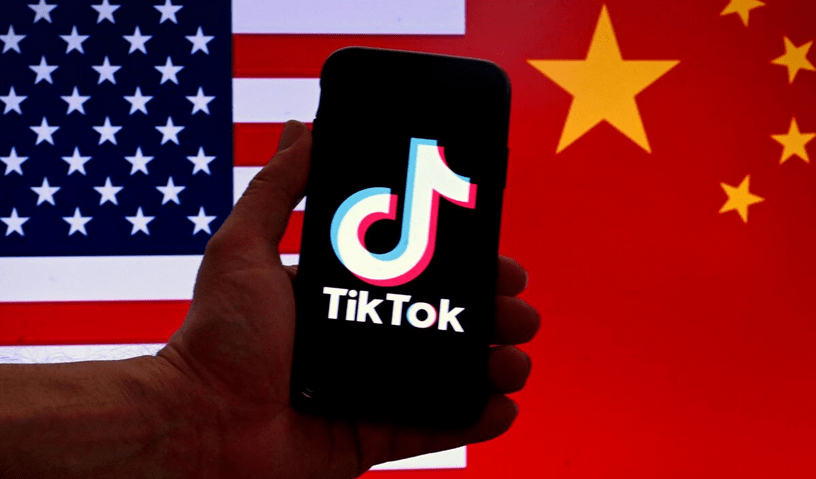
The social media application logo for TikTok is displayed on the screen of an iPhone in front of a U.S. flag and Chinese flag background in Washington, on March 16, 2023. (Olivier Douliery/AFP via Getty Images)

The CCP has poured their fentanyl onto our streets via their partners south of our border: the Mexican drug cartels. This has led to the untimely deaths of over 100,000 Americans last year alone due to fentanyl overdoses. Now, China has fashioned this death drug into the form of common candy to make it more appealing to our youth. This is the death train being operated by the CCP. It’s the one you can see and feel every day.

Tragically, for America, the CCP also have their silent killer in the form of digital fentanyl, and it’s called TikTok. This social media platform is a facet of CCP warfare that remains invisible to most.

The CCP has launched an information war on America that isn’t in the form of news. However, the means by which they’re doing so is now only being accurately reported in the mainstream media. After years of accepting CCP disinformation, our media is finally waking up to the cold hard fact of data theft. The CCP pirates are seizing troves of information daily through TikTok.

The nearly 150 million Americans that sign into the platform daily, nearly half our population, would do well to take a moment to give their thumb a rest and their eyes something to read. Unless, of course, they want the CCP to win.

Unfortunately, through the Biden administration’s disastrous foreign policy, we aren’t set up to win the information war head-on, let alone take on any aspect of it. Download TikTok onto your phone, and the CCP has a four-lane highway into your everyday life for free. Not only are we letting them, but by intentionally giving the CCP a massive money bin of data for free, Xi is laughing all the way from mainland China. How can we let this be in 2023 America?

What are they stealing? Your personal information, information on your family, your habits, hobbies, and your internet footprint for starters. They then collate this data and stack it for use against Americans based on their interests and vulnerabilities. How else do you think Chinese spies infiltrate American lives? It’s not Google.

For those wondering, “but Tik Tok is an American company,” that’s a false narrative, and it was entirely defeated when the CEO of ByteDance, the Chinese parent company of TikTok, testified before Congress recently. Immediately thereafter, you had Rep. Alexandria Ocasio-Cortez (D-N.Y.) demanding public support for TikTok.

President Donald Trump understood the CCP’s intention better than anyone: from their Belt and Road Initiative, the manipulation of their currency, and their desire to supplant America on the global stage. Trump responded resoundingly, taking steps to ban TikTok, implementing tariffs and trade sanctions, and expelling Chinese diplomats from the United States.

Biden and his administration have not only reversed every single one of these measures, but have also retracted from taking any position against Xi and the CCP. By doing so, we have seen the rise of the petro-yuan to replace the petro-dollar. We have seen Xi broker deals between Saudi Arabia and Iran, inching the world’s largest state sponsor of terror closer to a weapon’s grade nuclear program.

Read more here…

Tyler Durden
Sat, 05/06/2023 – 23:30

The Countries With The Most Satellites In Space

The Countries With The Most Satellites In Space

The race for space has started anew as a flurry of private and government projects are once again reaching for humanity’s last frontier. In April, Gen. Chance Saltzman of the U.S. Space Force said that the new level of activity seen in space exploration was also increasing the level of threat the United States faces in Earth’s orbit and beyond, as reported by CNBC.

As Statista’s Katharina Buchholz notes, Saltzman’s remarks – and as some may argue, the existence of the U.S. Space Force itself – stands in contrast to the notion of space as a place beyond national interests that has thrived on collaboration rather than confrontation.

When the branch of the U.S. military was founded under President Donald Trump in 2019, one of the first organizations to speak out against it was the Union of Concerned Scientists, a science advocacy nonprofit founded at the Massachusetts Institute of Technology.

Infographic: The Countries with the Most Satellites in Space | Statista

You will find more infographics at Statista

The organization urged the U.S. government to reconsider and to warm up to the idea of space as a place where different nations coexist peacefully instead of a place where war takes place. The group with an extensive satellite database pointed out that military activity was only a minor part of all things happening in space. The data backs up this claim. Out of the roughly 5,500 satellites listed as active, only 424 have military uses. While the U.S. is the country with most satellites in space (3,415), multinational cooperations come in fourth place.

Tyler Durden
Sat, 05/06/2023 – 23:00

America’s First Black President Left A Legacy Of Slavery

America’s First Black President Left A Legacy Of Slavery

Authored by Brian McGlinchey via starkrealities.substack.com 

Barack Obama was elected president some 143 years after the abolition of slavery in the United States. As teary-eyed African-Americans watched Obama’s 2008 election night speech in Chicago’s Grant Park, none could have imagined that America’s first black president would leave his own legacy of slavery — in Africa.

However, that’s exactly what he did, thanks to a combination of imperial hubris, disregard for constitutional restraints on executive war powers, and the use of false pretenses.

In 2011, egged on by Secretary of State Hillary Clinton and a handful of other advisors, Obama ordered a months-long series of air strikes that facilitated a NATO-backed regime change campaign that toppled Libyan leader Muammar Gaddafi.

In Feb. 2011, Obama announces he’s directed his administration to prepare a “full range of options” for a US response to Libyan unrest (Kevin Lamarque/Reuters) 

Rather than ushering in liberal democracy and prosperity, the ouster of Gaddafi left the country fractured, with two rival governments and various militias vying for power. Obama’s regime change marked the start of an ongoing era of chaos, with some of the greatest resulting evils inflicted on black Africans.

Those evils began during the war, as racism and Gaddafi’s use of sub-Saharan black mercenaries combined to spark widespread atrocities perpetrated against blacks who were seen as fair game for various atrocities including beatings, rapes and lynchings.

“We had 70-80 people from Chad working for our company,” a Turkish construction worker told BBC. “They were cut dead with pruning shears and axes, attackers saying: ‘You are providing troops for Gaddafi.’ The Sudanese were also massacred. We saw it for ourselves.”

One rebel group was glorified in roadside graffiti as “the brigade for purging slaves, black skin” — that being a reference to Libya’s black descendants of slaves, such as those who populated the town of Tawergha. Once home to 30,000 people, Tawergha was ransacked and its occupants assaulted to the point of turning it into an ethnically-cleansed ghost town.

In 2017 — six years after Gaddafi’s death — CNN captured a new and unthinkable dimension of misery being imposed on black people as a result of Obama’s regime change: The network aired video of two open-air slave auctions hosted in Libya. “Big strong boys for farm work,” said an auctioneer. One trio of blacks was purchased for $400 each.

Nigerian Sunday Iabarot shows the scar he says he received when he was branded by his captors (Lynsey Addario for TIME)

 It hasn’t stopped. Last month, the United Nations reported that a three-year investigation found “arbitrary detention, murder, rape, enslavement, sexual slavery, extrajudicial killing and enforced disappearance” have become a “widespread practice” in Libya.

Obama’s War Power Hypocrisy

As a candidate in 2007, Obama was clear-throated about the limits of presidential military authority, telling the Boston Globe, “The president does not have power under the Constitution to unilaterally authorize a military attack in a situation that does not involve stopping an actual or imminent threat to the nation.”

However, as president, Obama betrayed those assurances — and violated his oath of office — by ordering the Pentagon to carry out bombing attacks on Libya without congressional authorization.

In a frontal assault on common sense, Obama’s administration disingenuously asserted that, since the engagement was limited to bombing and Libya’s military was in no position to retaliate, the United States was not engaged in “hostilities” and thus the War Powers Act didn’t apply.

Not “hostilities,” according to Obama lawyers: A coalition bomb explodes in Libya in March 2011 (Reuters)

While the intervention was championed by the likes of Hillary Clinton and National Security Council “humanitarian hawk” Samantha Power, many others in Obama’s administration opposed it, including then-Vice President Biden, the secretary of defense, the chairman of the joint chiefs of staff, national security advisor and deputy national security advisor.

According to Secretary of Defense Robert Gates, Obama’s decision to plunge into war in Libya was essentially a toss-up. “The president told me that it was one of the closest decisions he’d ever made, sort of 51-49,” he told Yahoo News.

Or course, as Candidate Obama had unequivocally explained, it wasn’t his decision to make.

That Obama’s decision lacked conviction — and ended up being disastrous for so many innocent people — underscores why he should have adhered to the Constitution, which requires that the deliberative, representative bodies of the House and Senate make war decisions after public debate.

As James Madison wrote to Thomas Jefferson in 1798, “The constitution supposes, what the History of all Governments demonstrates, that the Executive is the branch of power most interested in war, and most prone to it. It has accordingly with studied care vested the question of war in the Legislature.”

In support of Obama’s unconstitutional regime change war in Libya, a US F-15 Strike Eagle prepares to taxi for takeoff from RAF Lakenheath on March 19, 2011 (Tech Sgt Lee A. Osberry Jr/ USAF

It’s doubtful that Congress would have given a green light. A Pew Research poll published a week before Obama ordered airstrikes found that 63% of Americans felt the US did not have “a responsibility to do something about fighting in Libya,” and 77% opposed “bombing Libyan air defenses.”

Obama’s “51-49” characterization of his Libya decision is damning in another way. “This is nothing less than a confession of a war crime,” argued Scott Horton in Enough Already: Time to End the War on Terrorism. “The president was admitting that he launched an unnecessary, aggressive war, a crime under American law as well as…international law.”

Another Intervention On False Pretenses

In addition to violating the Constitution, Obama’s Libya disaster was, like seemingly every U.S. intervention, advanced on false pretenses — in this case, the claim that Gaddafi was about to commit genocide in Benghazi, a rebel stronghold and Libya’s second-largest city.

“We knew that if we waited one more day, Benghazi—a city nearly the size of Charlotte—could suffer a massacre that would have reverberated across the region and stained the conscience of the world,” said Obama after US bombing began.

Administration officials’ claims that tens or hundreds of thousands of residents of Benghazi were about to be slaughtered rested on a purposefully distorted interpretation of a Gaddafi speech, in which he’d said “we will have no mercy on them.”

Gaddafi was clearly referring to armed rebels in the city. Indeed, he also said “whoever hands over his weapons, stays at home without any weapons, whatever he did previously, he will be pardoned, protected.”

Then-UN ambassador Susan Rice told the Security Council that Gaddafi was supplying soldiers with Viagra to enable mass rape (AP)

Via an intelligence asset, the Department of Defense had learned that Gaddafi had explicitly ordered civilians to be left unharmed. What’s more, at the time the Obama White House was spouting ghastly predictions about Benghazi, Gaddafi had already recaptured other towns from rebels without accompanying massacres of civilians.

Apparently unconvinced that visions of civilian massacres would sufficiently inflame public opinion, the Obama administration even trotted out the sensational claim that Gaddafi was supplying his soldiers with Viagra so they could carry out a campaign of mass rape.

Like Saddam Hussein’s nuclear weapon program, Gaddafi’s rape-enabling pharmaceutical supply chain was also nonexistent.

Five years later, put on the defensive about Libya on the 2016 presidential campaign trail, Clinton reiterated the patently false claim that “Gaddafi was threatening to massacre his population.” Days after she said that, the UK Parliament’s Foreign Affairs Committee published the report of an inquiry into the Libya intervention, which concluded Gaddafi had no intention of harming civilians.

Africans Pay A Steep Price For American Ambitions

Obama had decried George Bush’s invasion of Iraq as “based not on reason, but on passion; not on principle but on politics.” The same can be said of his administration’s own regime-change campaign in Libya, which set out to:

  • Generate positive publicity for the US government. The 2011 Arab Spring revolutions brought the embarrassing overthrow of US-backed regimes in Egypt and Tunisia. Clinton State Department official Anne-Marie Slaughter told Clinton that backing rebels in Libya would “change the image of the United States overnight” and “impress the young people across the Middle East.”

  • Bring a book’s thesis to life. Samantha Power, who’s currently Biden’s head of the US Agency for International Development and started 2011 on the National Security Council, had written A Problem from Hell, a book that urged the adoption of a humanitarian intervention doctrine called “Responsibility to Protect.” With Libya, Power saw the opportunity to showcase the concept — and advance her career. She was promoted to UN ambassador after US bombs started falling.

  • Aid Hillary Clinton’s presidential ambitions. State Department emails show Clinton’s advisors in and out of government enthusing over the utility of a successful Libyan intervention in a future Clinton presidential campaign. Sidney Blumenthal told Clinton that, when Gaddafi’s ouster came, “You must go on camera. You must establish yourself in the historical record at this moment.”

  • Protect Western economic dominance. Though Gaddafi had worked his way back into the good graces of the United States and its allies, he may have sealed his fate when he began pushing African countries to wean themselves from Western currencies by establishing a new pan-African currency, the gold dinar. In an April 2011 email, Blumenthal told Clinton that Gaddafi had already accumulated 143 tons of gold to back such a currency.

Referring to Libya, Hillary Clinton once boasted, “We did not lose a single American…in that action.” That’s no consolation for the families of civilians killed by US bombs, or the modern-day slaves and others in Libya who continue paying a steep price for Obama’s short-sighted, dishonestly-promoted and illegal regime change campaign.

Stark Realities undermines official narratives, demolishes conventional wisdom and exposes fundamental myths across the political spectrum. Read more and subscribe at starkrealities.substack.com

Tyler Durden
Sat, 05/06/2023 – 22:30

Berkeley Prof Admits Claimed Indian Heritage Was Heap Big Falsehood

Berkeley Prof Admits Claimed Indian Heritage Was Heap Big Falsehood

A Berkeley professor who’d long claimed she was a Native American admitted this week that she’s just a boring, plain ol’ white woman.  

“I am a white person who has incorrectly identified as Native my whole life, based on incomplete information,” Elizabeth Hoover confessed on her personal website. Resisting calls for her resignation, Hoover says she has “been working with restorative justice facilitators to better understand how members of the…community have felt harmed and betrayed, and ways I can work to meaningfully make amends.” 

This news would be amusing enough coming from any professor on the leftist campus. What gives it extra luster is that Hoover is a professor of anthropology — the study of human societies and cultures.  

Hoover (right) with an award she was given at the 2015 Indigenous Farming Conference (via her now-deleted Twitter account)

Hoover, who has a doctorate from Brown, claims her family led her to believe she was of Mohawk and Mi’kmaq descent, “but as an adult, as an academic, I should have done my due diligence to confirm that my ancestors were who I was told they were.”

Hoover’s status helped her land prestigious jobs, grants and fellowships and become a high-profile member of the “food sovereignty” movement, according to Indianz.com. 

In 2021, Hoover appeared on the “Alleged Pretendian List” compiled by Native American writer and activist Jacqueline Keeler. Her list, which has included Elizabeth Warren and Johnny Depp, targets people whom Keeler considers to be “monetizing their claims” of Indian heritage. 

“Ethnic fraud, particularly against native people is huge,” Keeler told the New York Post in January. “There is an element of narcissism. There is a lack of empathy because they will retaliate against native people who try to expose their fraud.”

Hoover says she’d been challenged on her claim of Indian ancestry since her first job as an assistant professor, and interpreted the questions as “petty jealousy or people just looking to interfere in my life.” By deflecting their inquiries rather than checking on her background, Hoover says she was “subverting the sovereignty of the Nations I was identifying with.” 

This is the second shoe moccasin that Hoover has dropped. In October, she disclosed that her genealogical research uncovered “no records of tribal citizenship for any of my family members in the tribal databases that were accessed.” 

With students and academics calling for her scalp, this gatherer may become hunter of new job

In the ensuing uproar, former students organized a letter demanding her resignation, and obtained hundreds of signatures from Berkeley and other university professors and students, and Native Americans too. The letter said “her claims of having lived experience as an Indigenous person by dancing at powwows [are] absolutely appalling.” 

Columbia Mohawk scholar Audra Simpson told The Mercury News that Hoover’s record demonstrates that she “lacks the requisite ethical and academic integrity to be a professor or a social scientist.”

Befitting her place on a hypersensitive outpost of leftist victimhood ideology, Hoover’s new confession is thoroughly peppered with the right jargon, such as eight uses of “hurt” and a whopping 14 uses of “harm” — including a perplexing reference to “activating historical harms.” A sampling: 

“I have brought hurt, harm, and broken trust to the Native community at large…

I caused harm. I hurt Native people who have been my friends, colleagues, students, and family, both directly through fractured trust and through activating historical harms. This hurt has also interrupted student and faculty life and careers. I acknowledge that I could have prevented all of this hurt by investigating and confirming my family stories sooner.

I betrayed and hurt my students, collaborators, and friends. I have negatively impacted people emotionally and culturally. For this hurt I have caused, I am deeply sorry.”

Responding to the new development, a Berkeley spokeswoman threw around some lefty blather too. “We…support ongoing efforts to achieve restorative justice in a way that acknowledges and addresses the extent to which this matter has caused harm and upset among members of our community,” said spokeswoman Janet Gilmore. 

Berkeley’s humiliation is just the latest in a long string of bogus claims of minority status, which seems to be dominated by white women, from black-wannabe Rachel Dolezal and Harvard Law’s “first woman of color” Elizabeth Warren to demoted former Dartmouth Native American Program Director Susan Taffe Reed, who’d faked membership in the Eastern Delaware Nations.   

Dartmouth’s Susan Taffe Reed was demoted from leading the school’s Native American Program but is still an assistant dean (Eli Burakian/Dartmouth) 

Tyler Durden
Sat, 05/06/2023 – 22:00