Here’s Where Millennials Are Buying The Most Expensive Homes
While we all sit back and wait for the housing market to wreck, likely led by commercial real estate, trust fund millennials and those who haven’t blown through all of their pandemic stimmy money yet are still out in the market, taking their shots at housing.
And a new study by Construction Coverage published this week has looked at where millennials are purchasing the most expensive homes relative to other homebuyers.
As the study notes: “The COVID-19 pandemic transformed how Americans work, popularizing remote work by necessity. This pivot to a work-from-anywhere mentality also created a shift in where Americans live, causing more and more people to move away from dense cities like New York, Los Angeles, and the Bay Area to smaller and more affordable cities, suburbs, and rural areas across the U.S.”
It found that existing home prices have risen 45% over pre-pandemic levels as a result. Since the millennial generation has finally reached peak age for homeownership, and working from home continues to be a growing trend, it’s fair to assume millennials could help drive the home buying boom for years to come.
“The millennial homebuyer price-to-income ratio, or the ratio between what millennials are spending on homes versus what they make in a year, has increased significantly from pre-pandemic levels, deepening the divide between what millennials must pay to own and what they actually make,” the report found.
“In 2018 and 2019, the millennial homebuyer price-to-income ratio was 2.6 and 3.0, respectively. By 2021, the millennial homebuyer price-to-income ratio increased to a striking 3.7, highlighting the mounting financial barriers for millennials when it comes to homeownership. While median millennial homebuyer income increased 24% from 2018 to 2021, it failed to keep pace with the median millennial home purchase price, which increased roughly 42% in the same time period.”
The report continued:
“In spite of the growing gap between millennial home prices and millennial incomes, millennials are entering their prime earning years, making it a pivotal time to buy a home. The median income for homebuyers between 35 and 44 was $120,000 in 2021, which is 30% more than the median income for homebuyers between 25 and 34 ($92,000), and 103% more than that for homebuyers under 25 ($59,000). Gen X was the only age group earning more than millennials, with a median homebuyer income of $124,000—which also means that millennials can expect some remaining growth in purchasing power in the years ahead.
This additional income will likely come in handy, because despite millennials earning less than Gen X, they have been spending more on home purchases than any other generation. The median home purchase price for individuals ages 35 to 44 was $425,000. That’s 23% higher than the median home purchase price of individuals ages 25 to 34, and approximately 5% more than individuals ages 45 to 54.”
Millennials are spending the most on homes than is typical of other buyers in states like Iowa, North Dakota, and Illinois, the study found. Meanwhile, the most expensive homes by price are being snapped up by millennials in states like California, Hawaii, Washington, and Massachusetts.
Here are the large U.S. metropolitan areas where millennials are buying the most expensive homes relative to other buyers.
The full report includes a table with data on more than 350 metros and all 50 states and can be found here.
About a decade ago, toddler son in tow, I found myself in a playground for the first time in 35 years. It was not what I remembered. The colors were far more vibrant. Plastic had replaced wood and metal. Sharp edges had been rounded, chains and hinges softened. Cushioned ground had replaced the asphalt.
What struck me most, however, was that it was full of adults. It seemed that every child had a minder within arms length. I was perplexed. I knew why I was there—my son was still a bit wobbly. Many of the kids appeared to be about 6-8 years old. Why did they need minders?
I soon learned the two cardinal rules of contemporary playgrounds (or at the very least, playgrounds on Manhattan’s Upper West Side): One, your child may not get hurt. Two, your child may not hurt another child. Violate the first rule, and you’re negligent. Violate the second and you’re antisocial—borderline criminal. Also, and just for good measure, “hurt” is given the broadest possible definition to include potentially hurtful language.
The stories about fragile college snowflakes crumbling in the face of microaggressions and provocative ideas suddenly made sense. Children raised in a cocoon will demand similar protection when they begin to think of themselves as adults.
That initial shock was hardly the end of my education. I soon learned the corollary to the playground rules: Today’s children never learn to engage in disintermediated play. The natural, if often rough, society of 3-to-5 years olds never gets to form. When my son hit that age, I was stunned to have other kids approach me to report that he was being annoying. When I was a child, running to a parent was the equivalent of a 911 call. We might have approached with a message like “your kid is bleeding” or “we think he broke something,” but annoying? That was like calling the Fire Department because you couldn’t find the remote.
It became clear to me that we had destroyed childhood. While the “advances” in parenting of the past fifty years undoubtedly contained some gems, the net effect was a disaster. As with so much else in life, human instincts honed over the millennia were far superior to decades of expert advice.
Then things got really bad. Though few recognized it as such at the time, the decision to shutter much of the world in March 2020 unraveled the entire socioeconomic fabric of modern life. As anyone who has ever studied or worked with any complex system can confirm, nothing ever restarts quite as it was before a shutdown.
American society was hardly the exception. The hibernation derailed every pre-existing positive trend and accelerated all the negative. The restart, unfolding in uneven fits-and-starts over the course of two years, introduced an entirely new sociology. Though its precise contours are still taking shape, a few things are clear: Woke reigns supreme and children are expendable.
While most Americans are still digesting the changes, a few brave souls flew into action. Bethany Mandel and Karol Markowicz moved quickly to chronicle the attacks on our children, ring the alarm, and call for action.
Stolen Youth is a disturbing read. Every page bristles with details of the attack on our children. The combined impact of these attacks is clear: There is a large, organized, well-funded movement, drawing together media, professional organizations, teachers unions, corporations, universities, and government officials committed to destroying and indoctrinating our children. Its methods are brutal and clear: It promotes psychological instability and fragility. It teaches children to ignore their emerging common sense, their parents, and timeless ethics in favor of expert pronouncements and trendy social constructs. It deconstructs language to detach negative words from their underlying concepts then reapplies them to entirely different concepts consistent with indoctrination.
The authors divvied up the chapters, perhaps each claiming the atrocities they dread the most. Markowicz, an émigré from the former Soviet Union, opens the book with a reminder of what it means to live in a totalitarian society. Spoiler alert: We’re heading there fast.
She then moves into the various ways that the woke weaponized Covid—both the virus and the shutdowns—to convince our children that they are little more than viral vectors safe only in isolation. Mandel picks up that baton a few chapters later in her broader consideration of woke pediatrics.
That discussion incorporates one of the book’s most chilling quotes. It comes courtesy of the Federation of State Medical Boards which, on July 29, 2021, threatened disciplinary action, “including the suspension or revocation of the medical licenses” of any physician who shared any information or opinion about Covid vaccines that was not “factual, scientifically grounded, and consensus-driven.”
Those first two qualifiers are unobjectionable. The third gives the game away. What does it mean for something to be “consensus-driven?” Consensus among who, and for how long? Those of us who’ve been paying attention know how it works. A few well-connected prestigious and/or governmental “experts” determine what they would like everyone to believe. They then condition funding, promotion, and even licensure on acceptance. Unsurprisingly, given the choice between: (a) Promoting the emerging consensus, keeping your job, and securing funding; or (b) Retaining integrity, getting fired, and becoming unemployable, most professionals choose (a). Voila! Instant overwhelming consensus, which must now be imposed, obeyed, and unquestioned.
The medical establishment, long known for its imperious nature, was unusually open in tipping its hand. As the authors show, however, its practice is hardly novel. Consensus-driven expertise emanating from schools, libraries, media, and entertainment teaches our colorblind children to develop a hyperfocus on race and sexualizes the pre-sexual. The woke teach our children to become racist and sexually confused, blame traditional American mores for racism and repression, and claim the mantle of expertise needed to “fix” the problem.
The entire process is designed to keep today’s kids off-balance. Covid taught them to fear normal social interactions. Critical Race Theory teaches them to distrust their neighbors. Gender theory teaches them to question their bodies. The woke package combines to externalize our children’s problems and teaches them to see themselves as victims. It preaches looking outward to assign blame rather than looking inward to find solutions.
As Markowicz and Mandel put the pieces together, it becomes clear that the woke juggernaut cannot be contained by critiquing its views of race and gender. Those are but two of the more prominent avenues of attack in an all-out assault. The woke are operating in a total moral inversion: compassion for some hypothetical, distant member of society and contempt for those closest to us. It’s a perfect prescription for totalitarian tyranny: Absolute trust in the emanations of disembodied expert authority and disrespect for parental authority. The woke are teaching our children to despise and disrespect family, God, nation, and even their own biology.
Why target the children?
First, as Markowicz notes in her chapter on “Child Soldiers,” because kids are useful. Put a disturbed child—say, Greta Thunberg—in front of your movement, and only the very callous will attack. That tactic is hardly new—there’s a reason we’ve long talked about “poster children”—though the woke do seem to have turned it into an art form.
Second, because childhood is when we shape our beliefs and our tastes. Convince a generation that it’s fragile, off-balance, angry, victimized, and oppressed, and very few of its members will ever break out.
Stolen Youth is one of the clearest articulations yet of the woke drive to destroy American society and Western Civilization. That it’s starting with our children is hardly novel for an ideological movement. The question we must now face is whether we can alert enough adults to the danger to repel it before it is truly too late. Stolen Youth rings the alarm bells. I only hope that they’re loud enough to have the desired—and necessary—effect.
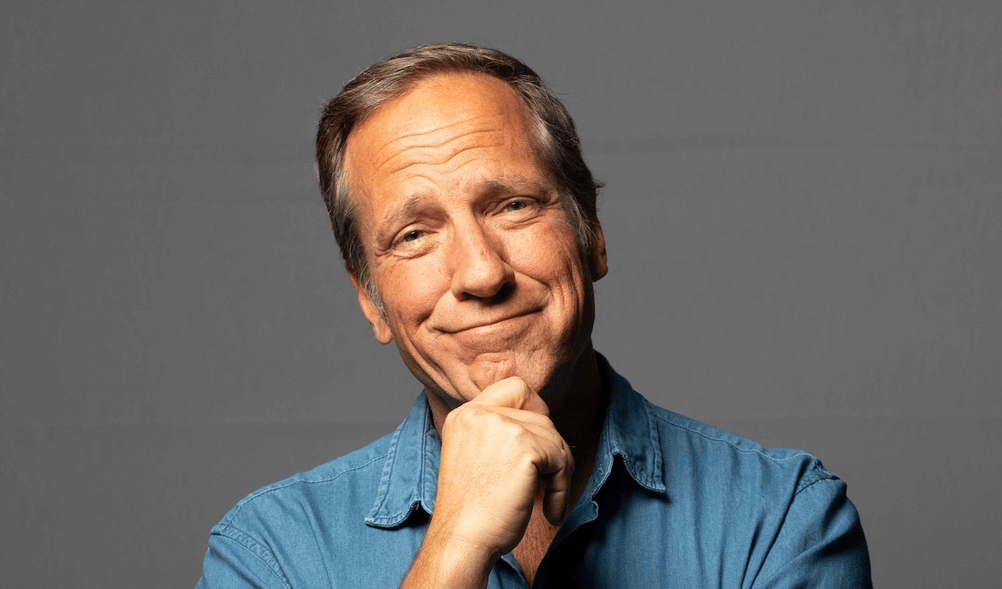
Mike Rowe, America’s perpetual apprentice, has been giving viewers a front-row seat to our country’s dirtiest jobs for nearly 20 years.
The episodes of his show, “Dirty Jobs,” are a veritable archive of the various icky substances in earthly existence—sludge, slime, gunk, and grime—that he’s either had to clean, wade through, extract, or pick away at, often in the dirtiest, hottest, and smelliest of conditions.
Encounters with the animal kingdom are a category unto themselves. Given the close degree of proximity, these engagements are unpredictable: Rowe has gotten bitten by some creatures—ostriches, catfish, snakes, sharks—and gotten up close and personal with others—such as beavers, which he’s had to sniff to determine their sex.
OK, there are clean jobs, too. The yuck factor may be absent, but cue in the petrifying situations, such as scuba diving to the ocean floor and releasing fish blood and guts for “Shark Week.” (Don’t worry, Rowe was wearing a stainless steel chain-mail suit—which helps, he found out, when you’re being shaken like a rag doll by a group of sharks.) Or what about when he walked up 24.5-inch-diameter cables on the “Mighty Mac” bridge in Michigan to change light bulbs atop its towers, 552 feet up, only to realize that he was no longer safely clipped in?
But the stunts are not the point. The premise of “Dirty Jobs,” with no actors, no scripts, and no second takes, is all about showing America what it’s like to do a job that’s needed, a job that’s hard, and often messing it up in the process. The show ran from 2003 to 2012 and returned for a season in 2022. In between, it has never stopped airing.
In all, Rowe has performed more than 350 jobs, learning under the tutelage of hardworking Americans and having fun in the process.
“Dirty Jobs,” as Rowe says, is ultimately a tribute to someone he was very close to: his grandfather, Carl Knobel.
Though he had only been schooled until the seventh grade, Knobel had built his own home and was a master electrician, plumber, steamfitter, pipe fitter, and welder—a master jack-of-all-trades.
“He saw great dignity in all jobs,” Rowe said. “He understood, intuitively I think, that we’re all connected to work, and the way we’re connected to where our food comes from, and where our energy comes from.”
Early on, Rowe was convinced he’d follow in his grandfather’s footsteps. He tried his hand at shop classes in high school, only to face an inconvenient reality: “I didn’t get the handy gene,” he explained.
His Pop gave him a dose of wisdom: “You can be a tradesman—just get a different toolbox, because what comes easily to me is not coming easily to you.”
So Rowe set off in a new direction—writing, singing, acting, and narrating. He belted out songs at the Baltimore Opera for years and worked the graveyard shift on the QVC home shopping network selling merchandise. He hosted an evening show on Channel 5 KPIX in San Francisco, a “cushy little job” that took him to downtown museums and Napa Valley wineries.
And then one day, his mom, Peggy Rowe, called.
She said, “Michael, your grandfather turned 90 years old today—and he’s not going to be around forever. And wouldn’t it be terrific if, before he died, he could turn on the television and see you doing something that looked like work?”
“It made me laugh because it was so true,” Rowe said.
Her message was delivered with love and humor, and Rowe, who was 42 at the time, decided to take it as a challenge.
The next day, with TV crew in tow, he was back in action—this time in the sewers of San Francisco, profiling a sewage worker. The footage, he said, was “inappropriate” for his show, but he put it on the air anyway.
Then, something interesting happened. Letters started pouring in, with messages like this: “Hey, if you think that’s dirty, wait ’til you meet my brother, or my cousin or my dad or my uncle or my grandfather or my mom. Wait ’til you see what they do!”
That launched a regular segment, “Somebody’s Gotta Do It.”
Rowe’s grandfather got to see one episode of it.
“He was very nearly blind by the time he died. He was 91. So, he knew I had gone into this direction … and I’d like to think he approved. I’m pretty sure he did,” Rowe said.
‘Groundhog Day’ in a Sewer
The segment eventually led to “Dirty Jobs.”
The Discovery Channel show meant being on the road for much of the year, lots of showers, and even a change of attitude.
“I’ll tell you, honestly, I had to humble myself when my mom made her off-the-cuff suggestion I’d been impersonating a host for 15 years,” he said. “I was pretty good at hitting my mark and saying my line and creating the illusion of knowledge where it didn’t really exist, pretending to be an expert.”
Looking back, Rowe says during those early days when “Dirty Jobs” was on the air, it was jarring for audiences to see a guy who didn’t have the answers but was willing to “look under the rock” and bring viewers along.
“I stopped being a host; I started to become a guest. I stopped being an expert and started to be a full-time dilettante,” he said.
“And so, to the extent people might trust me, or at least give me the benefit of the doubt, I think it comes from the fact that they’ve seen me try and fail for 20 years, they’ve seen me crawl through a sewer. And when you see a guy covered with other people’s crap, you know, that guy’s not gonna lie to you.”
For the longest time, Rowe’s dream job was to host “The Daily Show.” He worked long and hard, with his eyes on the prize.
“They hired me twice to do that job. And each time, something went wrong—comically it just went wrong and didn’t work out.” He contemplated how close he had come. “But the truth is, looking back, not getting that gig was the best thing that ever happened to me.”
Life had other plans for Rowe.
A few years into “Dirty Jobs,” the recession hit. People were asking where the good jobs had gone. And yet, Rowe knew, they were out there. On every job site where he set foot, he saw “Help Wanted” signs.
On Labor Day 2008, he launched the mikeroweWORKS Foundation, which was essentially a PR campaign for the millions of unfilled jobs desperate for skilled workers. Over the years, the foundation has given $6.7 million in scholarships to nearly 1,500 people with a strong work ethic and the desire to pursue a career in the skilled trades.
Through his show, Rowe was showing the public what it was like to be a skilled trade worker: that in between going to work clean and coming home dirty, they brought pride and passion to their work; kept America connected with good roads and infrastructure, happy with indoor plumbing, and warm or cool depending on the season; and in the process, made a pretty good living, too.
Still, there’s the perception that dirty jobs are not jobs worth doing. As to how to change it, “that’s the million-dollar question,” Rowe said, “and if there were an easy answer, we wouldn’t have 11 million open jobs right now, and 7 million able-bodied men between the ages of 25 and 54 not only not working, but affirmatively not looking for work.”
To some extent, Rowe knows what doesn’t work: “Lectures, sermons, scoldings. Men my age standing on their porch, shaking their fist at the heavens, and complaining about Gen Z and millennials.”
“The real way to challenge these stigmas and stereotypes and myths and misperceptions is to hit them squarely on the head. You need to show people that you really can make six figures. You need to show people that a good plumber today can make as much as he or she wants, and you can set your own schedule,” he said.
Now heading toward its 15th year, the foundation follows up with its scholarship recipients, documenting their successes, and Rowe shares their stories with nearly 6 million friends on social media.
“We can complain about the snowflake culture and the snowflake mentality, but we’re the clouds from which the snowflakes [came], and I think it’s incumbent on us baby boomers—the people who are my age—to hit the reset button. And we have to provide people with better examples of what success looks like.”
One example is Chloe Hudson, a welder at Joe Gibbs Aerospace in North Carolina. Her ambition in high school was to become a plastic surgeon, but a price tag of upwards of $350,000 was not appealing. Instead, she got a welding scholarship from mikeroweWORKS and now makes a six-figure salary.
“She’s living her best life,” Rowe said. “I talked to her the other day, and she’s like, ‘You know, I am kind of a plastic surgeon, except I’m not dealing with flesh and bone. I’m dealing with metal and steel and complicated compounds.’”
The road to prosperity doesn’t end at mastering a skill, either. For example, take a welder who hires an electrician, a plumber, and an HVAC worker. That becomes a $3 million mechanical contracting company—not bad for starting out with a $5,000 or $6,000 certificate.
Rowe added, “If you’ve mastered a useful skill, if you’re willing to think like an entrepreneur, and if you’re willing to go to where the work is—then I don’t think there’s ever been a better time in the history of the country to be looking for work, because the opportunities are everywhere.”
Years ago, Rowe wrote a Facebook post, which made the rounds online, about a good friend of his. This woman had been single her whole life and could not understand why. She was attractive and successful. Rowe suggested a dating service but she said no. He suggested she branch out across town, and try the museums, libraries, bars, and restaurants there. She declined again.
He said: “You’re not only looking for your soulmate; you’re looking for your soulmate in your own zip code. You’ve got a long list of qualifications: what they should look like, how much money they should make, how they should dress, where they should be from. So you just got all of these obstacles that you’ve put between yourself and the person who you believe can make you happy.
“And we do the same thing with work. We identify the job that’s going to make us happy, get the certification or degrees that we need, line up the interviews, etc., [but] we’ve got it backwards. We ask kids to imagine the job they want, long before they’re capable of doing that, and really, in many cases, before they have a good understanding of what their actual abilities are.”
Just as it happened to him, “you might realize that the thing you prepared yourself for is simply not the thing you’re going to do.”
“Everybody wants job satisfaction, and everybody wants happiness in their personal life, but if you start your quest with the notion that there’s a dream job, and you can’t be happy unless you get that job, it’s going to be a hard road—just as it’s going to be very difficult to find happiness in your personal life if you think there’s only one person on the planet walking around who’s capable of making you feel that way.”
Everyone Rowe met on “Dirty Jobs” was passionate, but few were doing the job they had in mind when they were young adults.
As Rowe says: “Don’t follow your passion—bring it with you.”
Foxconn’s Pro-China Billionaire Founder Launches Bid For Taiwan Presidency
Terry Gou is the billionaire founder of Foxconn, a main supplier of Apple, and this week he announced he’s seeking the presidential nomination of Taiwan’s China-friendly opposition party for the second time.
The Kuomintang (KMT) party favors close ties with China, and has long been seen as one of Beijing’s best hopes at achieving ‘peaceful reunification’ with the mainland, as Beijing’s official policy has long been articulated.
A 2019 bid by Gou, during which time he had stepped down as Foxconn CEO, failed to cinch the nomination. On Wednesday he weighed in forcefully concerning Taiwanese President Tsai Ing-wen’s visit with US House Speaker Kevin McCarthy in Simi Valley, California.
“We must honestly tell young people that it is dangerous to vote for the [Democratic Progressive Party], which ‘exalts Taiwan independence and hates and opposes China‘,” Gou said of the ruling party.
And further according to BBC, “He added that the only way to avoid war with China was to lessen tensions between Washington and Beijing and get Taiwan’s ruling Democratic Progressive Party (DPP) out of office.”
The KMT has actually been the ruling party for most of the last half-century, but its adherents attribute soaring tensions with China and regional instability of late to Tsai’s DPP and irresponsibly allowing Washington to make deeper inroads into Taiwan, through weapons sales and visits of officials.
Gou announced he’s running for president fresh off his own tour of the United States in an attempt to bolster external support:
The tycoon was likely to discuss the eight-day journey which took him to Washington, D.C., Boston, San Francisco, and Los Angeles, and to present his ideas for the future under the theme “Taiwan needs a fantastic CEO.” In speeches during his trip, he emphasized the role that technology and economic development should play in determining the future of the country.
Gou has been named as a contender for the Jan. 13, 2024 presidential election, with the hope he could return to the Kuomintang (KMT), the party he quit ahead of the previous election in 2020.
Billionaire founder of top Apple Inc AAPL.O supplier Foxconn https://t.co/hcI019FqpY to seek presidential nomination for Taiwan’s main opposition party, pro One China Kuomintang…
As LA hosts Taiwan leader Tsai Ing-wen meeting Speaker Kevin McCarthy.https://t.co/w1NLQxWEGb
He’s also clearly running on a platform that seeks peace and restoration of positive relations with Beijing, amid frequent PLA military drills which threaten the self-ruled island. “Peace is not taken for granted, and people need to make the correct choice,” he said at the Wednesday press conference, without taking questions.
Central bank digital currencies (CBDCs) pose a foundational threat to America’s economic systems with absolutely no upsides, according to a recent analysis from the Cato Institute, which stressed that a U.S. CBDC will threaten citizens’ “core freedoms” from financial privacy to personal liberty.
Even though there are no valid reasons for the U.S. government to issue a CBDC when “the costs are so high and the benefits are so low,” significant efforts are being made by government officials and central bankers to launch the digital currency “in a bid to solidify government control over payments systems,” said the institute’s assessment report published Tuesday.
“As entrenched as this effort may already be, a U.S. CBDC would ultimately usurp the private sector and endanger Americans’ core freedoms.
“Therefore, it should have no place in the American economy. Congress should explicitly prohibit the Federal Reserve and the Department of the Treasury from issuing a CBDC in any form.”
While the Federal Reserve has not made any definitive plans or fixed a timeline regarding the launch of a CBDC, the agency has not concealed its enthusiasm for the project. Purported features like “safer” and “faster” are heavily touted, whereas focus on cons are rather limited.
The Biden administration has also thrown its support behind the CBDC project, releasing a paper last September analyzing the possibilities of introducing a digital dollar.
“If the United States pursued a CBDC, there could be many possible benefits, such as facilitating efficient and low-cost transactions, fostering greater access to the financial system, boosting economic growth, and supporting the continued centrality of the United States within the international financial system,” said the White House Office of Science and Technology Policy detailing the technical framework possibilities for a U.S. CBDC.
Financial Freedom and Privacy
The public sentiment in the United States is in the majority against introducing a CBDC in the country, evidenced by over two‐thirds of the 2,052 comment letters written by concerned citizens to the Fed opposing its plans for a digital dollar. Based on CATO analysis, commenters were concerned about CBDCs posing “a substantial threat to financial privacy, financial freedom, and the very foundation of the banking system.”
As a CBDC gives “the federal government complete visibility into every financial transaction by establishing a direct link between the government and each citizen’s financial activity,” the project is a direct attack against basic privacies as protected by the U.S. Constitution.
Any buffer—currently provided by institutions like banks and payment services—between the average citizen’s financial activity and governmental intrusion would immediately cease to exist as “all financial data would be only a keystroke away.”
Such unrestrained access leads to the inevitable establishment of governmental control over such activities, and it could be “preemptive (prohibiting and limiting purchases), behavioral (spurring and curbing purchases), or punitive (freezing and seizing funds).”
For example, the government could limit purchases to “essential” goods during state-imposed lockdowns, impose gun control, or even freeze an individual’s ability to access their own money.
“Aside from the basic programmability that a CBDC would offer for social and political control, one of its most common features is the ability to pay both positive and negative interest rates to curb and spur purchases,” which is impossible with cash—one of the main reasons why CBDC proponents are calling for eliminating cash from the system.
Free Markets Endangerment and Cybersecurity
Federal Reserve vice chair Lael Brainard had said that if CBDCs were widely adopted, it would disrupt the entire banking system because people would make direct central bank deposits bypassing retail institutions.
Although Fed researchers claim CBDCs offer a “helpful competition to the banks,” CATO concludes that the most probable outcome will be people leaving traditional banks as “it is difficult (if not impossible) to compete with the government.”
In such a scenario, CBDCs will have a monopolistic hold over the market. CATO pointed out that this is one of the reasons why governments around the world have been keen on eliminating alternative payment avenues like cryptocurrencies.
Similar to crypto, a disadvantage of using CBDCs is that they are prone to cybersecurity breaches and malicious hacking. A centralized digital dollar makes a very “attractive target for cyberattacks by giving threat actors a prominent platform on which to focus their efforts.”
While attacks on banks are not uncommon, it pales in significance when a CBDC breach exposes financial details of 333 million Americans.
FedNow and CBDC
On March 15, the Federal Reserve announced the FedNow Service, which will start operating in July. FedNow offers a nationwide “instant payment solution” for participating financial institutions and their industry partners. Those using the service can “send and receive instant payments at any time of day” with full access to funds immediately.
Fed governor Michelle Bowman said last year that FedNow could weaken CBDC-resistance via offering some of the same basic services of a digital dollar—a first step toward full CBDC adoption.
“FedNow appears to be a prototype CBDC,” Jordan Schachtel, publisher of “The Dossier” on Substack stated in a tweet.
“While instant, 24/7 payments seems good, there’s implications to leaning into credit-based system. FedNow can quickly transform to a surveillance system.”
CATO concludes the report by recommending Congress to limit the Treasury Department’s authority to expand existing offerings and prohibit the agency from issuing a CBDC, and offering or maintaining accounts on behalf of individuals. This is done to prevent the agency from “further encroaching on the private sector” despite promises of financial inclusion and faster payments.
Massie Endorses DeSantis: “Respects The Constitution, Understands Policy”
Kentucky Republican Congressman Thomas Massie endorsed Ron DeSantis for president on Wednesday via an evening press release. DeSantis hasn’t announced his candidacy yet, but he’s expected to do so after the Florida legislature adjourns in mid-May.
“I’ve been honored to call Ron DeSantis a friend for over a decade,” said Massie, who’s particularly popular among libertarian-leaning Republicans. “During the six years we served together in Congress, I witnessed Ron fight for economic freedom, personal liberty, fiscal responsibility, and constitutionally limited government.”
Massie applauded DeSantis as someone who “has always surrounded himself with capable people who share his principles.”
The same can’t be said of Donald Trump, who campaigned against neocon foreign policy only to populate his administration with the likes of arch-neocon John Bolton…to say nothing of his retention of Covid-19 lockdown artists Anthony Fauci and Deborah Birx atop the federal public health apparatus, or putting his less-than-capable son-in-law in charge of Middle East peace.
Massie had endorsed Trump in past campaigns. Things briefly but intensely soured in March 2020, when Massie tried to thwart House leadership’s drive to pass the $2 trillion Covid stimulus package in March 2020 without a roll call vote. Trump torched Massie, calling him a “third-rate grandstander” who “just wants the publicity” and should be thrown out of the Republican party.
Trump did go on to endorse Massie in 2022, but it looks like Massie’s ready to move on. “America needs a leader who is decisive, respects the Constitution, understands policy, puts family first, and leads by inspiring,” said Massie.
Last month, Texas Republican Rep. Chip Roy became the first federal legislator to endorse DeSantis, calling him “a man of conviction” who “unequivocally has made Florida stronger and freer.”
The White House’s narrative on President Joe Biden’s handling of classified documents is being undermined by the congressional testimony of Biden’s former executive assistant, Kathy Chung, according to House Oversight Committee Chairman, James Comer (R-Ky.)
Comer released a statement on April 4, saying that Chung provided “startling information that undermines the Biden White House’s narrative on the matter” when she appeared before the panel for a transcribed interview.
“Today we learned that when Joe Biden left the vice presidency, boxes containing classified documents, vice presidential records, and other items were stored in three different locations around the Washington, D.C. area, including an office near the White House, an office in Chinatown, and eventually the Penn Biden Center,” Comer said.
Chung, who is now the Pentagon’s Deputy Director of Protocol, was one of the staffers who helped pack Biden’s materials at the end of his vice presidency, according to media reports. The materials Chung assisted in packing eventually ended up at the Penn Biden Center for Diplomacy and Global Engagement at the University of Pennsylvania.
Biden’s lawyers found a “small number” of records with classified markings in what was described as “a locked closet” at the Penn Biden Center on Nov. 2, 2022, according to Richard Sauber, special counsel to the president. The records were turned over to the National Archives and Records Administration (NARA) the next day.
On Jan. 10, one day after Sauber’s disclosure, Biden confirmed that documents were founded in the closet and added that he was “surprised to learn” that classified documents were found in his former private office.
Comer
However, Comer said Chung’s testimony disputed the locked-closet claim.
“At some point, the boxes containing classified materials were transported by personal vehicles to an office location,” Comer said. “The boxes were not in a ‘locked closet’ at the Penn Biden Center and remained accessible to Penn Biden employees as well as potentially others with access to the office space.”
Biden’s term as vice president ended in January 2017. A month later, he became an honorary professor at the University of Pennsylvania and was given the role of leading the school’s Penn Biden Center, which officially opened in February 2018. According to the university’s website, Biden also had an office on the school’s campus in Philadelphia.
Biden was placed on unpaid leave in April 2019, when he announced he was running for president.
There have been concerns about possible links between the center and the Chinese Communist Party (CCP), but a university spokesperson has denied that any Chinese money was funneled to the center.
Satoshi’s Original Bitcoin White Paper Is Hidden In Every Copy Of Mac OS
In yet another way Bitcoin is being tethered to modern day infrastructure, it was reported yesterday that the original Bitcoin whitepaper – authored by Satoshi Nakamoto and laying out the fundamentals of the world’s most well known cryptocurrency – has been included in every copy of Mac OS since 2018.
The revelation was made by blogger Andy Baio, who wrote yesterday that he had “discovered” the hidden gem while attempting to fix his printer. He then asked “over a dozen Mac-using friends to confirm” what he had found, and they did.
He wrote that the white paper was “found in every version of macOS from Mojave (10.14.0) to the current version, Ventura (13.3), but isn’t in High Sierra (10.13) or earlier.”
He then offered up directions on how Mac users could check for themselves:
“If you’re on a Mac, open a Terminal and type the following command:
open /System/Library/Image Capture/Devices/VirtualScanner.app/Contents/Resources/simpledoc.pdf”
He says that the white paper should “immediately open” for those using Mac OS 10.14 or later.
Baio also laid out how to find the paper for those that aren’t comfortable using Terminal:
“If you’re not comfortable with Terminal, open Finder and click on Macintosh HD, then open the System→Library→Image Capture→Devices folder. Control-click on VirtualScanner.app and Show Package Contents, open the Contents→Resources folder inside, then open simpledoc.pdf.”
He fails to arrive at exactly why the document was used, though one Mac user guessed that it may help power the “Import from iPhone” feature. Baio guesses that it could have been used simply because it’s “just a convenient, lightweight multipage PDF for testing purposes” and perhaps wasn’t meant to be seen by end users.
Though it hasn’t been confirmed as an official “Easter Egg” Apple was one of the original companies to include quaint secrets and hidden gems in its operating systems throughout the years.
I’m going to be interviewed on MSNBC today by Mehdi Hasan, the author of a book called Win Every Argument. I’m looking forward to it as one would a root canal or rectal.
I accepted the invitation because it would have been wrong to refuse, on the off chance he was planning a good-faith discussion. If you’re reading this, things have gone another way.
I last appeared on MSNBC six years ago, on January 13, 2017, to talk with Chris Hayes and of all people Malcolm Nance, about the then-burgeoning Trump-Russia scandal.
The Trump-Russia story was white-hot and still in its infancy. That same day, news leaked from Israel that Americans warned the Mossad not to share information with the incoming administration, because Russia had “leverages of pressure” on Trump. Asked by Chris about the scandal generally, I made what I thought was a boring-but-true observation, that we in the media didn’t “have any hard evidence” of a conspiracy, just not a lot to go on. This was the TV equivalent of a shrug.
Nance jumped on this in a way I remember feeling was unexpected and oddly personal. “Matt’s a journalist. I’m an intelligence officer,” he snapped. “There is no such thing as coincidence in my world.” Chris jumped in to note reporters have different standards, and I agreed, saying, “We haven’t seen anything that allows us to say unequivocally that x and y happened last year.”
“Unequivocally”seemed to trigger Nance. With regard to the DNC hack, he said, “That evidence is unequivocal. It’s on the Internet.” As for “these links possibly with the Trump team,” he proclaimed, “You’re probably never going to see the CIA’s report.” Nance went on to answer “no” to a question from Chris about whether leaks “were coming from the intelligence community,” Chris wrapped up with a sensible suggestion that we all not rely on a parade of “leaks and counter-leaks,” and the segment was done.
To this day I get hit probably a hundred times a day with the question, “What happened to you, man?” What happened? That segment happened, but to MSNBC, not me.
That exchange between Nance and me was symbolic of a choice the network faced. They could either keep doing what reporters had done since the beginning of time, confining themselves to saying things they could prove. Or, they could adopt a new approach, in which you can say anything is true or confirmed, so long as a politician or intelligence official told you it was.
We know how that worked out. I was never invited back, nor for a long time was any other traditionally skeptical reporter, while Nance — one of the most careless spewers of provable errors ever to appear on a major American news network — became one of the Peacock’s most familiar faces.
I don’t know Malcolm and don’t mean to get nasty about this, but: even before that January 2017 broadcast, he had an extraordinary record, one that should have scared away any retraction-averse producer. On August 20th, he went on with Joy Reid and said the Green Party’s Jill Stein “has a show on Russia Today.” This wasn’t true, as Stein quickly pointed out, but MSNBC refused to acknowledge the error. Media watchdog FAIR repeatedly askedfor a correction, as did friend Glenn Greenwald at The Intercept, but they refused to budge.
This may not seem a big deal, but at the time it was still weird and something of a pioneering move for a major news organization to just refuse to fix a clear error.
Nance went on to make a lot more, some I would classify as important. A tweet of his in late 2016 was a major source for the pre-election misconception that the Wikileaks-leaked emails of Clinton campaign chief John Podesta were “riddled with forgeries” and “#blackpropaganda.” He would regularly make all sorts of claims without evidence, like that the K.G.B. had “been surveilling Donald Trump since 1977,” and that “little” comes from Trump’s mouth that isn’t “carefully planned to benefit the Russian Republic,” and all sorts of other nonsense.
I was quiet until he said Glenn “shows his true colors as an agent of Trump and Moscow,” “reports in to his masters in Russia,” and is “deep in the Kremlin pocket.” This was outrageous. I was shocked MSNBC didn’t fire him on the spot. Still, I voiced objections in a measured way I hoped might get through, either to Nance or to someone at the network. “I’ve been on the air with Malcolm Nance and he seemed like a nice guy,” I tweeted, “but this awful practice of calling people traitors and foreign agents based on no evidence has really gotten out of hand.”
Nance’s response was “Ok, you’ve convinced me. You need to be blocked. #Bye.” He remained a regular guest on the network, which didn’t cool on booking him until the Russia story fell apart with the release of the Mueller report the next year.
The Nance situation was symbolic of what happened at the network from the beginning of Trump’s term, really beginning in early 2017. It went from being a place where you had to be at least in the ballpark of demonstrably true to being a place where the factual standard was, “Whatever dogshit drops out of the mouth of any hack or spook.”
Moreover the network didn’t just re-report this stuff, it became the favored launching pad for all the most blatant blue-Anon disinformation, like California congressman Adam Schiff saying he had “more than circumstantial” evidence of collusion, or former Obama defense official Evelyn Farkas suggesting the Trump administration would try to destroy evidence if they “found out how we knew what we knew about the Trump staff’s dealing with Russians.” Farkas later testified under oath that she “didn’t know anything” about collusion.
You’ll read about this (and see it, in an extraordinary video mashup our own Matt Orfalea prepared for a larger story series coming out in the next weeks), but we found MSNBC mentioned Hamilton 68, the infamous “dashboard” of accounts supposedly linked to “Russian influence activities” outed as a fraud in the Twitter Files, over 100 times in a period between the summer of 2017 and November of 2019.
One of those instances came in a typical MSNBC broadcast from that time, on January 19, 2018. It featured a quartet of security-state goblins — former Bush official Nicolle Wallace, Langley-sniffing Ken Dilanian, former U.S. Attorney Joyce Vance, and ex-CIA official Evan McMullin — gang-botching a story about the #ReleaseTheMemo hashtag:
Note how many things they get wrong in this segment. Vance says there’s nothing to accusations of FISA abuse later proven by Justice Inspector General Michael Horowitz (“A lot of hullabaloo about nothing at the end of the day”). The CIA’s McMullin touts the Steele Dossier (“Much of it has been validated”). Dilanian rushes at the end to squeeze in the Hamilton hoax (“This release…is the top hashtag among Russian bots and trolls, according to Hamilton 68”).
It’s extremely rare that a journalist who’s actually trying to avoid mistakes makes even one factual mistake as big as falling for the Hamilton hoax or the Steele Dossier, or dismissing the Nunes memo. These people managed all three at once. If I’d made even one error of that magnitude early in my career, I wouldn’t have had a career. This kind of thing was basically constant for years, when MSNBC was the staging ground for many lunatic conspiracy theories involving Trump, Russia, and their delicacy item, the Dossier.
As I was leaving the set of my last appearance on All In six years ago, Rachel was getting ready to go on and re-frame how the network did news. My shrugging take was that if journalists didn’t have confirmation, they couldn’t report. Rachel argued the opposite, that official silence meant you could assume things:
I mean, had the FBI looked into what was in that dossier and found that it was all patently false, they could tell us that now, right? I mean, the dossier has now been publicly released. If the FBI looked into it and they found it was all trash, there’s no reason they can’t tell us that now. They’re not telling us that now. They’re not saying that. They’re not saying anything.
As we later found out, among other things via Jeff Gerth’s gigantic piece in the Columbia Journalism Review, the FBI said nothing about many stories it knew to be wrong, including the influential New York Times exposé, “Trump Campaign Aides Had Repeated Contacts With Russian Intelligence.” The possibility that officials can lie to us in this way — leaking, asking that attribution be limited to uncheckable “sources familiar with the matter,” then saying nothing as stories start taking water — is exactly why we don’t stick our necks out for such people.
From that period in early 2017 through the crushing release of the Mueller report — forcing Rachel to cut a trout-fishing vacation in Tennessee short to stammer out, eyes welling with emotion, “This is the start of something, not the end of something” — I do not believe even one person expressing skepticism of the Trump-Russia story came on the channel. That streak ended with poor Chris’s post-Mueller bummer-cast with Michael Isikoff and David Corn, on March 25, 2019.
This video should be shown to every J-school student as a “Scared Straight” exercise. In it Yahoo!’s Isikoff, the first prominent journalist to quote Christopher Steele, said of his dossier, “It was endorsed multiple times on this network, people saying, It’s more and more proving to be true. And it wasn’t.”
The directors cut away as Hayes started nodding with energy. As blood visibly drained from the face of Isikoff’s unrepentant toad-faced co-author David Corn, the veteran reporter went on to add — you can almost hear MSNBC producers think-screaming, “Stop! Stop!” — that Mueller’s report “undercuts almost everything that was in the dossier”:
After this the network doubled down, seemingly hiring as contributors every unemployed prosecutor or natsec official they could find, especially from failed Russiagate probes. They’d already spent on names like ex-CIA head John O’Brennan, former assistant FBI counterintelligence chief Frank Figliuzzi, House Intel Director of Investigations and future congressman Dan Goldman (who met Adam Schiff in an MSNBC green room), and federal prosecutor Glenn Kirschner. Now, they added cadaverous Mueller sidekick Andrew Weissmann and, astonishingly, Weissmann’s deputy, the fired FBI lawyer Lisa Page. They also began bringing in Page’s lover, fellow FBI firee Peter Strzok, as a commentator.
America became familiar with Page and Strzok after their texts — referring to the Trump-Russia investigation as an “insurance policy,” and ripping “sandernistas,” among other things — became public. These were living monuments to press excesses of the Trump era. As Gerth wrote, Strzok quietly reported to bosses after the Times’s “repeated contacts” story came out, saying, “We are unaware of ANY Trump advisers engaging in conversations with Russian intelligence officials.” Strzok in other words was exactly the kind of person to whom Rachel might have been referring when she rhapsodized about FBI “not saying anything” to dissuade us from believing errors.
Page on April 10, 2017 got a text from Strzok, saying he wanted to talk to her “about [a] media leak strategy with DOJ.” This was a day before a Washington Post story that cited “law enforcement and other U.S. officials” in saying the secret FISA court found probable cause to believe former Trump aide Carter Page (no relation) was an “agent of a foreign power.” Whoever leaked this was sabotaging not just the Post, but every downstream media org picking up the story, because the story at its roots was wrong: Carter Page was not an “agent of a foreign power,” as the FISA court had been misled, by Steele and the FBI. MSNBC was one of the first outlets to regurgitate this thing.
When sources lie to you, you should be mad. At minimum, you should be ripping their names out of your Rolodex (or modern equivalent). MSNBC did the opposite, hiring seemingly everyone who’d helped them down this reputation-tarnishing path.
MSNBC bet everything on its switch in 2017, and though it paid handsomely at first — in spring of 2017 they became the first cable network in two decades to unseat Fox for the #1 spot, with Rachel owning the top-rated non-sports program on cable — the collapse of the Mueller investigation triggered a long, frankly earned, post-trout-fishing slide. No doubt the indictment of Donald Trump will reanimate things, but prior to that it was grim, as Fox was beating CNN and MSNBC combined by the end of January. The ratings picture for March showed that MSNBC’s top show was The Last Word with Lawrence O’Donnell, rated 11th, followed by The Beat With Ari Melber at 16th.
After all this, after throwing away all their standards, clowning themselves with years of wrong stories, doling out rice bowls to the procession of spooks who now clog their airwaves, and watching as their ratings predictably collapsed, now they want to give me a hard time. Not because I got anything wrong, but because they don’t like my opinions, or where things like the Twitter Files reports came from. After the first thread, Mehdi was one of 27 media figures to complain in virtually identical language: “Imagine volunteering to do PR work for the world’s richest man.”
I laughed about that, but couldn’t believe the reaction after Twitter Files #6, showing how Twitter communicated with the FBI and DHS through a “partner support channel,” and in response to state requests actioned accounts on both sides of the political aisle for harmless jokes. Mehdi’s take wasn’t that this information was wrong, or not newsworthy, but that it shouldn’t have been published because Elon Musk put Keith Olbermann in timeout for a day, or something. “Even Bari Weiss called him out, but Taibbi seems to want to tweet through it,” Mehdi tweeted.
If it sounds like my beef with MSNBC is personal, by now it is. Take the Twitter Files. When first presented with the opportunity to do that story, my first reaction was to be extremely excited, as any reporter would be, including anyone at MSNBC. In the next second however I was terrified, because I care about my job, and knew there would be a million eyes on this thing and a long way down if I got anything wrong. If you’ve ever wondered why I look 100 years old at 53 it’s because I embrace this part of the process. Audiences have a right to demand reporters lie awake nights in panic, and every good one I’ve ever met does.
But people who used to be my friends at MSNBC embraced a different model, leading to one of the biggest train wrecks in the history of our business. Now they have the stones to point at me with this “What happened to you?” routine. It’s rare that the following words are justified on every level, but really, MSNBC: Fuck you.
For years, central banks have been sounding the alarm on Bitcoin and cryptocurrencies, fear mongering on the threats that they posed to the financial system, the global climate – at one point predicting that Bitcoin’s electricity demand would literally consume all available energy in the world by 2020 .
(Fact check: it didn’t)
Nevermind that under the stewardship of the central banks, the financial system has lurched from one crisis to the next for decades on end, every one an order of magnitude worse than the prior.
The policy response to each crisis (expand credit, suppress interest rates, print money) simply incentivized moral hazard, perverse incentives, and an ever widening wealth gap – while providing the setup for the next crisis. With this unbroken string of failures under their belts, it’s always rich to listen to these insular technocrats, who have zero skin in the game, pontificating about the meltdowns they created. Especially when they get worked up around hazards of a phenomenon that has since emerged to obsolete them.
Now it’s Big Tech’s turn:
Warning us about the existential “risks to society” of AI and calling for a time-out. The very people who have benefitted the most from exploiting disruptive technology, regardless of the collateral damage, and in the process became literally the wealthiest people in history, now look at AI in the hands of the rabble, and there’s a flag on the play.
When these tech oligarchs blow out entire industries and replace them with quasi-monopolies in which they’re majority shareholders, it’s just creative destruction. #LearnToCode, baby.
But if a total game changer suddenly finds its way into the hands of the plebs, and the Big Tech incumbents realize it could be their turn to get their asses disrupted… by commoners at that…. then suddenly we’re looking at a crime against humanity.
The Future of Life open letter was signed by everybody from Elon (“self-driving robotaxis any minute now”) Musk, and Steve Wozniak to Yuval (“the plebs are hackable animals”) Harari and sundry other AI incumbents.
According to their About Page,
The Future of Life Institute is an independent non-profit organisation funded by a range of individuals and organisations who share our desire to reduce global catastrophic and existential risk from powerful technologies.
..is about 87% provided by the Musk Foundation. Speaking of risks from powerful technologies, let’s remember that 19 people have been killed by Tesla’s in self-driving mode and another 21 when their Tesla’s exploded as a result of various crashes (out of a total known pool of 373 Tesla deaths thus far).
Who is really threatened by AI?
When I first started playing with chatGPT, I never for a second believed it was any kind of magical artificial intelligence. I’ve always called AI “Algorithmic Imitation”.
However, it is a quantum leap forward in natural language interface. I instantly recognized who was most at risk by this: the search engines, namely Google, and the entire ecosystem of made-for-Adsense “content” websites whose raison d’être is to game search algos.
Hence, Google’s panicked ham-fisted rush job on Bard, and Microsoft’s debacle trying to incorporate chatGPT (in which they are a significant shareholder) into their own Bing. (Soon I’ll be releasing a serialized collection of pieces, working title “Infernal Algorithmica” which is a technological grimoire exploring the lower circles of the pay-per-click advertising model. Sign up for the list if you want that when it comes out.).
This is nothing new. This is the same dynamic that’s been played out with every disruptive tech innovation, ever – there are even accounts from the Decline of The Roman Empire on how the alchemist who discovered aluminum was beheaded when the Emperor suspected that this breakthrough innovation might devalue silver (the story was described by the Roman writer Petronius, circa 27AD, in his novel, Satyricon, although Pliny The Elder wrote that it could have been apocryphal).
Apocryphal or not, the tension between disruptive, rising technologies, and the elites who control the operations and markets of the incumbent ones is real and perennial.
“[Nearly all] debates over new technologies are framed in context of risks to moral values, human health and environmental safety. But behind these concerns often lie deeper, but unacknowledged, socioeconomic considerations”.
The face-off between the established technological order and new aspirants leads to controversies…perceptions about immediate risks and long-term distribution of benefits influence the intensity of concerns over new technologies”.
These calls for a moratorium on AI, the abolition or over-regulation of cryptos and Bitcoin and inevitable calls for technocratic control over your energy consumption and individual carbon footprint metering are all riffing on the same theme: you’re too stupid and infantile to use these technologies responsibly. Only The State can figure it out. (No wonder most governments of the world are on a mission to ban cash, privacy …and guns).
People like Musk, Harari and the ever increasingly batshit Eliezer Yudkowsky (who wants to forcefully curtail computing power to the point of advocating for the military bombardment of rogue data centers abroad) should know this.
I had a lawyer who liked to say “You can’t suck and blow at the same time”. Either you want to ride a tide of rapid technological change to unparalleled living standards, personal wealth and privilege (but which affords everybody else those same opportunities), or not so much. You can’t do both.