

54.3 F
Chicago
Tuesday, March 10, 2026
Home Blog Page 3818

“If You Believe…”

0
“If You Believe…”

Authored by Jim Quinn via The Burning Platform blog,

If you believed they put a man on the moon

Man on the moon

If you believe there’s nothing up his sleeve

Then nothing is cool

REM – Man on the Moon

The REM song Man on the Moon, released in 1992, is a haunting melancholy tune, with Andy Kaufmann and his life and death as the focal point. For me, the lyrics always bring me back to the simpler time of my youth, when our antenna TV could get about eight channels, we had one rotary phone, one old used station wagon, lived in a row home, and a family of five could be raised on a truck driver’s income, with a stay-at-home mom.

It’s the references to the Game of Life, Risk, Monopoly, Twister, checkers, and chess, which invoke what we did for fun when we weren’t out riding bikes, playing stick-ball, roller hockey, or touch football in the streets. Were bad things going on in the world? Sure. The Vietnam War, Watergate, gasoline shortages and rationing, stagflation, and a myriad of other damaging challenges confronted the country, just as they always have throughout history.

One of the supposed historic moments in human history was the moon landing in July 1969, when I was six years old. I remember sitting on the floor in front of the TV and thinking how cool it was and how cool that I was allowed up at 11:00 pm to watch it. Another 600 million people were also watching. At the time, no one questioned what they were watching live on their TVs. It was the penultimate human achievement, with the goal set by JFK during Camelot before he was murdered by his own government, proving our technological superiority to the evil Soviets. To fail in this mission would have been too embarrassing to the leaders of our empire, only two decades into its infancy. I believed the official narrative up until a few years ago.

I don’t know whether Stanley Kubrick staged the moon landing on a movie set, or some other scenario, but my skepticism is based on something rather mundane. TV technology in 1969 was poor. Picture quality from stations a few miles across town were bad. The moon is 239,000 miles from earth. How could they have landed on the moon and broadcast live video that was as clear as if you were watching a TV show, when surveillance camera video in 2022, 53 years later can’t even reveal who placed those pipe bombs around Washington DC on January 5th, 2020.

The government, their media mouthpieces, and most certainly the plethora of alphabet agencies wielding the real power (CIA, FBI, DHS, etc.) in D.C. created the term “conspiracy theorists” as a way to cover up their diabolical Deep State plots to rule the world from behind the curtain. The CIA coined the term in the wake of the JFK assassination as a method to discredit critical thinking Americans who questioned the validity of the Warren Report and the government cover-up of JFK’s murder by rogue elements of the U.S. government.

This was not the beginning of manipulation of the public mind by men we have never heard of. As expounded by the master of propaganda, Edward Bernays, the manipulation was already taking place during the 1920s. With the advent of mass media technology, the ability of these malevolent Svengalis to sway the masses towards believing whatever narrative they spin has expanded exponentially.

“The conscious and intelligent manipulation of the organized habits and opinions of the masses is an important element in democratic society. Those who manipulate this unseen mechanism of society constitute an invisible government which is the true ruling power of our country. We are governed, our minds are molded, our tastes formed, our ideas suggested, largely by men we have never heard of.” – Edward Bernays – Propaganda – 1928

Many of REM’s songs have a word salad feel to them, but bassist Mike Mills described how singer and lyricist Michael Stipe “came up this beautiful lyric that encompasses doubt, belief, transition, conspiracy and truth”. The title of the song and the lyric “if you believe” are ambiguous and can be interpreted by believers and non-believers. Those referred to as conspiracy theorists, the favorite term of the Deep State acolytes and their legacy media propaganda outlets, feel vindicated by the lyrics, while those who believe everything fed to them by their overlords believe the lyrics are making fun of conspiracy theorists.

I was twenty-nine years old in 1992, newly married, one year before the birth of our first child, working on getting my MBA at night, trying to move up the corporate ladder, and still ignorant of how the world was run by unseen men functioning as an invisible government.

I’ve always had a skeptical nature and knew in my teens that JFK was not killed by a lone gunman in the Book Depository building, but the hustle and bustle of life kept me from examining so called “conspiracy theories” on a deeper level. Through the 90s I was busy raising a family, working long hours, paying a mortgage, auto loans, tuition bills, and sports fees for my three boys. There was no time to breathe, let alone examine the truth behind how the world functioned.

9/11 changed all that. Something didn’t add up. Somehow the 341- page Patriot Act, creating a new agency and numerous new unlawful governmental powers, was supposedly written, and voted on within four weeks of 9/11. Only three Republicans voted against the bill – including Ron Paul, who I had never heard of at the time. The unwarranted invasion of Iraq in 2003 based on lies and propaganda, led by Cheney and Rumsfeld, was the straw that broke the camel’s back.

I began to read anti-establishment blogs and investigated the stories being peddled by the government, media, and Wall Street. I started reading articles and books by the likes of Ron Paul and other opponents of neocons, the Fed, the military industrial complex, the Wall Street cabal, propaganda spewing MSM, and the Deep State. I turned myself from a naïve member of the ignorant masses into an anti-government libertarian anarchist, who hasn’t believed a word uttered by any politician, MSM talking head, celebrity, or Wall Street beholden toady in the last sixteen years.

By early 2008 I was writing articles and sending Op-Eds to my local newspapers. During the summer of 2008 I was writing articles on Seeking Alpha and Financial Sense predicting a banking crisis, financial system meltdown and global recession. Shortly thereafter, Seeking Alpha and Financial Sense began censoring my articles and my “conspiracy theorist” credentials were minted.

I have believed less and less of what they have been selling as the years have progressed, opening my mind to the likelihood those who control the levers of society do not have my best interests at heart and are solely driven by a carnivorous desire for wealth, power, and control over the masses. I now approach life with an eyes wide open skepticism of everything and everyone. I’m not a pessimist, but a realist who only trusts data I can replicate, facts I can substantiate, and people who make cogent fact-based arguments without a bias influenced by money.

The world is a scary place and the men constituting the “invisible government”, pulling the strings, and using their limitless wealth to buy off politicians, the media, the entertainment industry, academia, the medical industry, and so called “experts”, are satanically driven by their seemingly insatiable thirst for ruling the world. They believe their ends always justify their means. These sociopathic bastards don’t care how many people they kill or how many lives they financially ruin in their relentless pursuit of mammon. They proclaim themselves to be gods, based on the power they can wield through their ill-gotten wealth. Their arrogance and hubris know no bounds.

We are currently living in an Age of Mass Deceit not seen before in human history. The advent of advanced technology and instant mass media messaging has provided these evil fiends with the means to spin their web of lies and essentially brain wash and /or terrify the ignorant masses into doing whatever they are told. The last few years have proven these psychological propaganda techniques, applied through the use of mass media, bought off politicians and “experts”, and a compliant sheep-like populace dumbed down by decades of government school indoctrination, has essentially destroyed western civilization, with the denouement of global war and depopulation of the planet still playing out.

As it turns out, “conspiracy theorists” like me and a slew of other critical thinking individuals, have turned out to be right on just about everything we have been saying for the last fourteen or so years. The Deep State acts as if disinformation, as defined by those engineering the false narratives, is a threat to the nation and has colluded with the MSM, Facebook, Twitter, and Google to suppress any alternative viewpoints, censor those who can disprove their narratives, and de-platform anyone who dares question their authority and approved storyline. DHS and the social media tyrants coordinated to throw a presidential election, which is a traitorous act and would be prosecuted in a law-abiding system.

During the Covid scamdemic, they achieved the goal set by CIA head William Casey in 1981. Everything the American public believed since March 2020 was false. Some people seem to be wakening from their mass psychosis formation stupor, but it may be too late. The damage is done, and the tens of millions of psychologically broken individuals are still malleable material for the Deep State.

We are nothing more than disposable pieces on a game board to those calling the shots and running the show. The game of Risk has taken on a new meaning from what I knew in my youth. There is now a new narrative being spun, where all the tyrants who demanded subservience to all government dictates, lockdowns, masking, social distancing, and being coerced into becoming guinea pigs for an untested, experimental, Big Pharma enriching gene altering therapy disguised and sold as a vaccine under threat of losing your livelihood, want dispensation and forgiveness for their crimes.

You weren’t allowed to say goodbye to your loved ones or attend their funerals, but the chosen ones dined at extravagant restaurants and allowed liquor stores and Wal-Mart to stay open. Your small business was destroyed, while Amazon made billions.

These murderous hypocrites killed thousands of seniors by knowingly putting infected patients into old age homes, killed thousands more by putting treatable patients on ventilators and Fauci’s remdesivir, killed thousands more by not allowing safe and effective treatments like ivermectin and hydroxychloroquine to be prescribed by doctors, and have killed and injured thousands more by forcing a dangerous Big Pharma toxic concoction on tens of millions through threats, mandates and a never ending stream of lies. All for a flu with a miniscule fatality rate for those under 85 years old and not morbidly obese. This was the biggest scam in human history, perpetrated by Gates, Fauci, Schwab and their willing co-conspirator minions in the media, medical industry, and government.

These “experts” seeking forgiveness because they were just caught up in the “hysteria” of the moment weren’t wrong. They were lying from the outset and need to pay dearly for their crimes against humanity. Nuremberg 2.0 is the only thing that will satisfy myself and all the other dissenters who risked their livelihoods by refusing to go along. We were scorned, ridiculed, ostracized, censored, fired, de-platformed, wished dead by the authoritarian minded sheep who demanded compliance, and treated like outcasts by family members who believed the narrative hook, line and sinker.

I don’t believe. I think. And I don’t forget or forgive these feckless tin pot dictators. They have shown their colors and now that the tide seems to be turning, we must channel our inner Conan the Barbarian. We need to crush our enemies, see them driven before us, and hear the lamentation of their women.

They pushed their agenda too far and too fast out of desperation, as the financial underpinnings of their fake world order began to strain and crumble. This desperation exposed their blatant lies to a vast array of critical thinkers across the world who have not been deterred in exposing the falsehoods on social media, blogs, and free speech websites. When the truth was censored and suppressed on Youtube, alternatives like Rumble, Bitchute, and Odysee sprung to life. When Facebook and Twitter banned truth tellers, new platforms like Gab and Truth Social were created.

Writers and doctors silenced by social media platforms, like Glenn Greenwald, Alex Berenson, Robert Malone, and many others gravitated to the free speech forum of Substack where they are free to speak the truth and earn money through voluntary subscriptions. If Elon Musk follows through on his promises, Twitter will once again become a free speech forum rather than the social media censorship arm of the Democratic Party and the Deep State.

I am under no illusions that the Republicans regaining the House and Senate next week will change the direction of the country. It would just be a speed bump temporarily slowing down our descent into the abyss. The Uniparty in DC, where both sides agree 80% of the time on frivolous spending, never ending wars, debasement of our currency, and limiting the rights of citizens, will continue to be funded and controlled by Soros, Gates, and other shady billionaires operating in smoky rooms where your opinions are not sought. The authoritarians will not yield without a fight. This sign in the upscale Capital section of D.C. on Halloween tells you everything you need to know about these brain damaged loons. They remain your enemy.

If you still believe JFK was assassinated by a lone gunman; the official story of what really happened on 9/11; that Epstein killed himself and numerous celebrities, politicians, and financiers aren’t pedophiles; the Federal Reserve isn’t controlled by Wall Street; Klaus Schwab and his WEF acolytes are not trying to Reset the world where you will eat bugs, own nothing, and be happy; Bill Gates is not creating viruses and investing in vaccine makers, while buying up farmland, as part of his dream to decrease the “surplus” population; Soros is not funding the election of communists whose sole purpose is to destroy the cities and states they are running; scientific experts like Fauci are not swayed by the vast amounts of money they are paid by Big Pharma to fake their research and ignore the deaths from these products; Covid was not the weaponization of the annual flu with a billion dollar marketing campaign used to implement government control of the population, which will be expanded during the next engineered crisis; January 6th was an armed insurrection; Putin is literally Hitler and the U.S. did not blow up the Nordstream pipelines while waging a proxy war against Russia; a drug addict nudist from Berkley with a pride flag and BLM flag hanging outside his dilapidated bus is a MAGA underwear terrorist and not a male prostitute picked up by Paul Pelosi; and the Democrats are not cheating again in these 2022 mid-term elections, you are the real conspiracy theorists.

The believers choose to willfully ignore the facts either because they are deliberately obtuse as a mechanism to combat their cognitive dissonance, or they are compensated to support and perpetuate the false narratives of their ruling overlords. I understand my opinions and writings are nothing but a drop in the ocean as this tsunami rush towards our shores. But I will continue to fight for what I believe and will not bend the knee to the malicious forces who hate me and everything I stand for. I urge everyone to heed the wisdom of two of the most brilliant minds of the 20th Century and do your utmost to keep the truth alive.

*  *  *
It is my sincere desire to provide readers of this site with the best unbiased information available, and a forum where it can be discussed openly, as our Founders intended. But it is not easy nor inexpensive to do so, especially when those who wish to prevent us from making the truth known, attack us without mercy on all fronts on a daily basis. So each time you visit the site, I would ask that you consider the value that you receive and have received from The Burning Platform and the community of which you are a vital part. I can’t do it all alone, and I need your help and support to keep it alive. Please consider contributing an amount commensurate to the value that you receive from this site and community, or even by becoming a sustaining supporter through periodic contributions. 

Tyler Durden
Thu, 11/03/2022 – 19:00
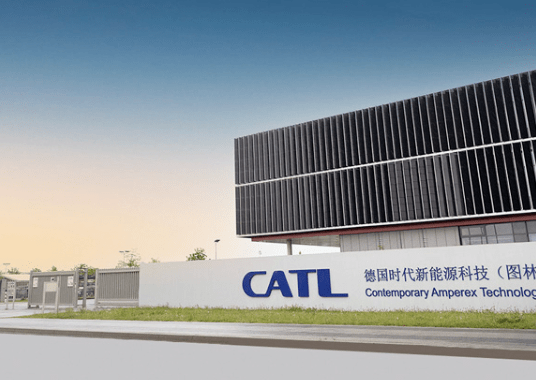
Chinese EV Battery Giant CATL Is Making A Global Expansion Push

0
Chinese EV Battery Giant CATL Is Making A Global Expansion Push

EV battery manufacturer Contemporary Amperex Technology Co. Ltd. (CATL) is growing its global expansion yet again.

The world’s largest EV battery producer, which had announced a $233 million factory in Germany back in 2018, has made several moves this year to increase its global footprint. Over the summer, it announced it would be building a $7.2 billion factory in Hungary. Now, plans for a factory in Mexico are also being finalized, according to Caixin. 

The report also says that the manufacturer could be looking to expand with plants in the U.S. and Indonesia. 

CATL was barely founded a decade ago, in 2011, but caught the tremendous wave of the EV industry in China (and its related subsidies). As the report notes, the company caught the government subsidy tailwind in 2015 and never looked back:

In 2015, CATL was included on a government list of EV-battery makers which carmakers had to source from to be eligible for subsidies. This narrowing of the field of competition helped the company hoover up the business from domestic and international carmakers riding the wave of growth. For example, CATL was chosen to be Volkswagen’s sole battery supplier in the country, CEO Matthias Muller told Caixin in early 2018.

CATL was able to seize this opportunity in part by achieving technological breakthroughs which made its products more competitive than its rivals. The company pioneered the use of lithium iron phosphate (LFP) batteries. Though these batteries are safer, they have lower energy density, meaning that EVs powered by such batteries have lower driving range compared to those using nickel-cobalt-manganese (NCM) batteries. But CATL managed to improve their density by redesigning the battery packs with fewer parts.

CATL’s lead among the Chinese EV market is starting to slip, dropping to 47% market share in the first 8 months of this year from 50% in 2020, the report noted. China Aviation Lithium Battery Co. Ltd. (CALB) and BYD are two major competitors in China. 

A source told Caixin that the company’s outlook on the industry is  “you either forge ahead or drift downstream.” The company will face substantial competitive forces in places like South Korea and Japan, and will have to navigate geopolitical crosswinds when attempting to enter markets like Germany and the U.S. The company is looking to upgrade its product lineup in Germany, the report says. 

Washington’s Inflation Reduction Act “includes provisions that stipulate EV-makers must source batteries domestically to enjoy subsidies” and in Europe, “stringent environmental rules could also present challenges”. 

But CATL has already started to make inroads with EV companies outside of China. For example, Tesla announced last October that it would use CATL’s batteries in its cars delivered to global consumers, not just for cars in China. Ford announced in July that it would “import LFP batteries from CATL for its North American electric pickup trucks and SUVs”, Caixin wrote. 

Liu Yanlong, general secretary at China Industrial Association of Power Sources, concluded: “By setting up production facilities, battery companies can better serve clients at their proximity by reducing costs of transportation and other logistics.”

Tyler Durden
Thu, 11/03/2022 – 18:40

US Stocks Remain At Risk While China Holds Tech Back

0
US Stocks Remain At Risk While China Holds Tech Back

By Simon White, macro strategist for Bloomberg’s Markets Live blog

Stocks in the US will remain mired in a bear market as long as China’s slowdown frustrates a strong rebound for the tech sector.

After a hiatus for most of this century, macro-driven markets, along with volatility, are back. To understand them, it’s now more essential than ever to have a joined-up, holistic view of the world. Butterflies are flapping their wings everywhere, and those reverberations are being felt in diverse, complex and constantly-changing ways.

One of the biggest butterflies in macro terms is China. Understanding the dynamics at play for the country’s economy is key to understanding when the equity bear market will end.

China faces economic pain on three fronts — from its policy of seeking to eradicate Covid, the collapse in its property sector and also the growing risk posed by debt deflation.

While hopes continue to be dashed for a definitive end to China’s Zero-Covid policy, the slump in the country’s property market is arguably a more serious problem. Home sales are plummeting, rents are falling, residential building activity is contracting and high-yield real-estate debt has cratered 80% from its peak.

Local governments in China often use land as collateral for the debt they issue. With $8 trillion of such liabilities outstanding, falling land values – unless they recover – threaten to condemn China to years of debt-deflation and economic malaise, akin to what Japan experienced after its property bubble burst in the late 1980s.

China’s growth slowdown is a serious problem and can be seen most starkly in increased capital outflows. This might seem counter-intuitive given that China has been running huge trade surpluses. But domestic policies ensuring the household sector subsidizes the export-facing state-owned-enterprise sector means running those surpluses comes at a cost to overall growth.

Capital votes with its feet, even in a country with a nominally-closed capital account. We can infer capital is leaving China at an increasing rate as FX reserves are not rising, despite the huge inflows from exports.

The yuan has been weakening to alleviate some of the domestic credit destruction that comes with capital outflow. But it has not been enough. Liquidity conditions in China are tepid at best, especially with policy makers still reluctant to resort to so-called “flood-like” stimulus so as to avoid re-inflating the shadow-banking sector.

This brings us back to US tech. Real M1 growth – one of the broadest and best indicators of China growth – tends to lead US tech earnings by one year. It therefore follows that its current inability to properly recover represents a formidable headwind to a turnaround for US tech stocks. 

It would be easy to make the case that US tech shouldn’t be too dependent on China. After all, three of the biggest tech firms – Amazon, Alphabet and Meta – do not have a significant presence in the country. But there are plenty of other US tech firms that do derive a significant amount of their revenue from China, such as Tesla, Nvidia and Apple.

In fact, altogether, almost an eighth of S&P 500 tech firms’ revenue comes from China, an amount substantially higher than any other sector. Tech firms’ revenue from China alone accounts for almost 1.5% of all of the S&P 500’s $15.7 trillion in revenues.

Risks to those sales streams look set to mount in the coming months and years as the US clamps down on the export of technology to China, most notably via the recent ban on semiconductors materials and know-how. Even so, the dial is unlikely to shift enough in the near term to make China unimportant to the performance of US tech firms.

Furthermore, capital controls make it difficult for foreign firms to get capital out of China when growth, and therefore revenues, are weak. That cash is often considered to be “stranded” and thus not able to boost earnings back in the company’s home country (even if it is considered a worthwhile risk to win the premium granted in one’s share price for having sales in such a huge market).

Stocks therefore are likely stuck in a bear market until tech – accounting for a quarter of the S&P’s market cap – makes a comeback. And that’s not likely until China emerges from its pandemic-induced growth stupor and manages to avoid a debt-deflation. Macro investing may be back, but no one said it would be easy.

Tyler Durden
Thu, 11/03/2022 – 18:20

Netanyahu & Far Right Coalition Win Big, PM Lapid Concedes Election

0
Netanyahu & Far Right Coalition Win Big, PM Lapid Concedes Election

It’s official: former Israeli Prime Minister Benjamin Netanyahu is returning to power after his alliance of far right parties won this week’s elections. 

The Times of Israel confirmed late in the day Thursday: “As the final thousands of votes were being tallied Thursday evening, Prime Minister Yair Lapid called opposition leader Benjamin Netanyahu to concede the race and congratulate him on his election victory.”

Bloomberg/Getty Images

Bibi’s conservative coalition is expected to take as many as 65 seats in the 120-member Knesset, a clear and sweeping victory. 

“The state of Israel comes before any political consideration,” Lapid announced. “I wish Netanyahu success, for the sake of the people of Israel and the State of Israel.”

Lapid had been caretaker prime minister since June. Four prior gridlocked elections over a period of three-and-a-half years had failed time and again to produce a final government. Netanyahu is expected to take the highest office once again.

For the Likud party chairman, this will likely result in his third stint as prime minister, after the led the country in the position from 1996 to 1999, and then more recently from 2009 to 2021. He’s the longest serving leader in the country’s history, having served for 15 years.

Via Haaretz

Fox News has cited former Israeli Ambassador to the United Nations and likely soon-to-be Knesset member in the new government, Danny Danon, as saying countering Iran will top the agenda for the new Netanyahu administration. 

“I think if we will win, if Netanyahu will return to his position as prime minister, we will be able to put the issue of Iran on the front lines and we will expect our colleagues in the U.S. also to address this threat,” Danon said.

Meanwhile, speaking of anti-Iran hawks…

It’s about to feel like 2018 all over again. But we’ll see what Netanyahu’s approach to the White House will look like with Biden at the helm, and fewer neocon Republican allies in high positions in Washington. 

And the new far-right governing coalition’s response to the Ukraine crisis will be interested, at a moment the Ukrainian government is essentially begging for Israeli weapons, especially the Iron Dome anti-air defense system…

Tyler Durden
Thu, 11/03/2022 – 16:39

The Profit Recession Is Now Here… And The Worst Is Yet to Come

0
The Profit Recession Is Now Here… And The Worst Is Yet to Come

Michael Msika and Farah Elbahrawy, Bloomberg Markets Live reporter and commentators

Let the economists debate all day long about whether a recession is coming: In corporate earnings, one has already arrived, if you set aside the oil and gas industry. And the worst may not be over.

Third-quarter earnings for companies in the S&P 500 excluding energy have fallen 3.5%, based on results so far and estimates for those still to come, according to data compiled by Bloomberg Intelligence. That’s after a 1.8% drop in the preceding period, marking the first consecutive declines since 2020, when the pandemic began.

Earnings for US energy companies have gotten a boost from elevated oil prices due to tighter supply caused by Russia’s invasion of Ukraine. But the broader corporate world is feeling the pinch of raging inflation, the resultant higher interest rates from the Federal Reserve, the surging dollar and slowing demand.

“We’re very clearly seeing a slowdown in earnings growth,” Madison Faller, global strategist at JPMorgan Private Bank, told Bloomberg Television. “That said, I don’t think earnings expectations are yet fully pricing in this probability of a recession.”

Investors largely have looked past the decline in profits this earnings season, lifting the S&P 500 by 2.5% since companies started reporting in mid-October. The thinking was that the Fed’s rate increases soon will have inflation under control, allowing the central bank to slow or even end its rate hike campaign, and the economy to avoid a recession.

The Fed dashed such optimism in its latest interest rate decision Wednesday, with Chair Jerome Powell leaving little doubt that he’s prepared to push rates as high as needed to stamp out inflation. If there’s a deeper economic downturn in the offing, earnings estimates may still be too high.

A consensus estimate for 12-month S&P 500 earnings per share of $210, down from the current $232, is a level which would reflect an economic slowdown, Faller said.

The next global earnings-per-share recession is about to begin, according to Citigroup Inc. strategists led by Robert Buckland. It would be the eighth in the past 50 years. The past seven lasted two years and saw earnings fall 31%, they wrote in a note.

“We remain concerned that interest-rate-obsessed equity markets have yet to price in the true earnings impact of a full-blown economic slowdown,” they said. Analyst consensus estimates are still too high, predicting 5% global earnings per share growth in 2023 when Citi strategists forecast a 5% to 10% contraction, they added.

To be sure, analysts are already slashing their forecasts for the next couple of years — projections for 2023 earnings have fallen six straight weeks while the consensus for 2024 has dropped for 19 consecutive weeks. 

The third-quarter results illustrate how bad it’s gotten. US companies typically steer analyst expectations lower in the weeks before earnings announcements, so that they then can manage to beat the lowered estimates. This quarter, though, earnings are coming in 1% below consensus, so this could be only the third time since the Great Financial Crisis that results miss expectations, according to Bank of America Corp. strategists including Savita Subramanian.

To further complicate matters, the S&P 500 is likely to lose the oil and gas earnings crutch moving into the coming quarters. Energy companies’ earnings growth will fade the next two quarters and will start to contract in the second quarter of 2023, according to analysis from Wendy Soong, a senior associate analyst at BI.

“We are still not yet at the sort of 20-30% earnings decline which usually comes with a recession,” said James Athey, investment director at Abrdn. “Recent recessions have been fleeting because of the speed with which the Fed has responded through easier policy. That’s less likely this time given the inflation backdrop.”

Tyler Durden
Thu, 11/03/2022 – 16:19

No Relief From Powell’s Hawkish Hangover: Tech Wrecks, VIX Vexed, Yield Curve Crushed

0
No Relief From Powell’s Hawkish Hangover: Tech Wrecks, VIX Vexed, Yield Curve Crushed

The day started with a hangover from Powell’s rug-pull; then the Bank of England hiked rates as expected, warned of a longer recession, and told the market its expectations were too hawkish; Challenger printed the highest number of job cuts since the pandemic lockdowns…

…then Services surveys showed the economic situation in the US is growing uglier at the same as unit labor costs grew at the fastest pace in over 40 years.

The result was stocks (mostly tech) and bonds lower in price, the dollar stronger, gold weaker, and Fed terminal rate expectations higher-er (to 5.20% in June 2023), as subsequent rate-cut expectations hawkishly declined (rates ‘higher for longer’ just as Powell wanted)…

Source: Bloomberg

On the day, The Dow and Small Caps desperately tried to stay unch, the S&P lost further ground, and Nasdaq was monkeyhammered (down 2%). Things traded sideways for much of the afternoon until the last 15-20 mins when everything went pear-shaped and puked…

The Nasdaq is down over 6% from the highs yesterday right before Powell started speaking (that’s over $800 billion in market cap)…

VIX closed lower today despite equity weakness…

…as hedges were monetized?…

As SpotGamma noted earlier, Powell seemingly didn’t give traders a reason to buy stock yesterday, but didn’t do enough to bring new levels of fear – there wasn’t enough hawkishness to lead traders to “pay up” for puts, as is clear from the fact that the S&P’s vol skew plunged to new record lows…

Source: Bloomberg

Treasuries extended their (price) losses today with the short-end dramatically underperforming (2Y +8bps, 30Y +1bps). We do note that bonds were bid during the US session however (until the EU close), having dumped overnight (during the EU session as Japan was closed)…

Source: Bloomberg

2Y yields at their highest since 2007

Source: Bloomberg

The 2s10s curve hit its most inverted level since 1982…

Source: Bloomberg

The dollar extended its surge off the dovish lows from yesterday…

Source: Bloomberg

As cable was pounded lower…

Source: Bloomberg

Gold extended yesterday’s losses today (ending down another 1%) but was bid during the US session…

Oil prices extended yesterday’s losses with WTI back down to $88…

And NatGas prices tumbled even more…

Finally, now that Powell has removed the hope once again, stocks have a long way to catch down to bonds’ reality…

Source: Bloomberg

And next week is chock-full of event risk with elections and CPI… and this should send a shiver of fear up market participants’ backs…

Source: Bloomberg

Something bad is going in the market’s pipes – as one wizened old credit trader remarked to us: “The thing about trying to break the economy is that you always break the market first…”

Tyler Durden
Thu, 11/03/2022 – 16:01

Gold Market Roiled As Mystery Buyer Waves In 300 Tonnes

0
Gold Market Roiled As Mystery Buyer Waves In 300 Tonnes

As The Fed has tightened monetary policy at its most aggressive pace in over 40 years, real rates in the US have soared (back into strong positive territory). Historically, that has reduced demand for gold (zero carry) but as the chart below, gold – while notably off its highs – has not cratered as much as some might have expected…

“With that weight of selling, I was a bit surprised gold wasn’t weaker,” said Ross Norman, chief executive officer of Metals Daily, an information portal focusing on precious metals.

But, thanks to a normally dry research report from The World Gold Council, perhaps we know why gold has not fallen as much…

First, as we noted recently, despite the recent price slide in paper precious metals markets, physical demand (and prices) remain extremely high

But, as we detailed earlier today, central banks bought 399 tons of bullion in the third quarter, almost double the previous record, according to the World Gold Council.

The tricky thing is though, as Bloomberg reports, just under a quarter went to publicly identified institutions, stoking speculation about who the mystery buyers were that waved in the other 300 tonnes of gold in Q3?

While most central banks inform the International Monetary Fund when they buy gold to supplement their foreign exchange coffers, others are more secretive.

Few have the capacity to undertake the third-quarter buying spree, enough to soften the blow from investors selling bullion as the Federal Reserve hiked interest rates.

Here are some possibilities as to who these mysterious bullion whales could be… (via Bloomberg)

China

The world’s No. 2 economy rarely discloses how much gold its central bank is buying. In 2015, the People’s Bank of China revealed a nearly 600-ton jump in its bullion reserves, shocking market watchers after six years of silence.

The country hasn’t reported any change in its gold hoard since 2019, fueling speculation it may have been buying under the radar.

Trade data show the country has been taking in vast amounts of bullion. China has imported 902 tons of gold so far this year, already surpassing last year’s total. That’s on top of the more than 300 tons the country’s mines typically produce each year.

And while domestic demand has been strong, with citizens buying some 601 tons through the third quarter, it’s on track to fall short of 2021 levels. Earlier in the year, Covid-19 lockdowns hampered purchases of jewelry and bullion in one of the world’s top consumers.

For China, the need to find an alternative to dollars, which dominate its reserves, has rarely been stronger. Tensions with the US are high following measures taken against its semiconductor firms, while Russia’s invasion of Ukraine has demonstrated Washington’s willingness to sanction central bank reserves.

Russia

Russia is the world’s second-biggest gold mining nation, typically producing more than 300 tons a year. Before February 2022, it exported metal to trade centers like London and New York, but also to nations in Asia.

Since the invasion of Ukraine, Russia’s gold has no longer been welcome in the West, while China and India have been reluctant to import huge quantities. That raises the possibility the central bank could step in to buy those supplies, but Russia’s overall foreign exchange reserves, including gold, have declined this year.

Russia’s reserves of dollars and euros were frozen by sanctions, making it less attractive for the central bank to add to them. Moreover, it doesn’t break out its holdings of gold separately.

The nation has been a massive buyer of gold in the past, spending six years accumulating bullion before stopping at the onset of the pandemic. Russia said in February, after the invasion of Ukraine, that it was ready to buy gold at a certain price, but Deputy Governor Alexei Zabotkin said last month that purchases were no longer practical as they would push up money supply and inflation.

Oil Exporters

Few nations have done better out of this year’s energy crisis than Gulf oil exporters. Saudi Arabia, the United Arab Emirates and Kuwait have all reaped a windfall, and some have been plowing cash into foreign assets through sovereign wealth funds.

They may have looked to gold to diversify. Saudi Arabia has the biggest gold hoard in the Arab world, but hasn’t reported a change in its holdings since 2010.

Back then a “difference in accounting” led to its reserves doubling to 323 tons.

India

India’s central bank has made large gold purchases before, buying 200 tons from the International Monetary Fund in 2009. Since then it’s tended to buy more gradually, while providing timely updates to the market.

It may have shied away from splashing out on gold this year, given the pressure on its currency. That’s been exacerbated by strong imports of precious metals for its consumer sector in recent months.

So, was it China, Russia, The Saudis, or India? And why?

Perhaps they realize where this all leads and are taking action, as we detailed previously, gold is the most resilient asset to own if the Federal Reserve continues to raise rates, while stocks are the worst place to be, with non-dollar currencies falling between the two.

Gold has had an empirical duration of just over three years in the current Fed cycle, compared with stocks at 7.1 years. The non-dollar currencies that make up the G-10 have seen a duration of 5.3 years.

Duration measures the percentage change of an asset in reaction to a 1 percentage point shift in interest rates.

Gold is still hovering near its low for this cycle of $1,615 an ounce, a 12% decline since the start of the year that has come as the Fed raised its benchmark interest rate by 300 basis points, with another 75 basis points priced in from this week’s policy review.

Non-dollar G-10 currencies have seen an average duration of 5.3 years in the current cycle, highlighting their sensitivity to any perceptible shift in interest-rate differentials.

Simply put, the analysis on duration shows that gold is a relatively safe place to be in the currency cycle… and maybe the whales are moving

Or, more ominously, perhaps the mystery whales know something (or fear something) that western nations prefer not to consider about the new world order?

Tyler Durden
Thu, 11/03/2022 – 15:45

Watch: Alleged Iran-Linked Telegram Post Simulates Attack On Saudi Oil

0
Watch: Alleged Iran-Linked Telegram Post Simulates Attack On Saudi Oil

Authored by Alex Kimani via OilPrice.com,

An article published on the blog of international Arabic news television channel Al Arabiya on Thursday claims that an Iran state-linked Telegram channel has posted a video purportedly showing a simulated attack on Saudi Arabia

Al Arabiya says the video was posted by an IRGC-affiliated Telegram channel with over 350,000 subscribers, and shows a simulated drone attack against Saudi Arabia national oil company, Saudi Aramco’s, oil facilities.

On Tuesday, the Wall Street Journal reported that Saudi Arabia had shared intelligence with Washington warning of an imminent attack from Iran against the Kingdom. Iran has rubbished these claims, terming reports of Iranian threats against Saudi Arabia as “baseless accusations.

If true, the alleged imminent attacks have a recent precedent. 

Three years ago, Yemen’s Iran-backed Houthis launched a drone attack on Aramco oil facilities in Eastern Saudi Arabia, cutting Saudi oil production in half and taking off a good 5% of global supply off the market. The claims add a fresh twist to the Russian war on Ukraine considering that Russia has been using Iranian drones in Ukraine. Just a day ago, CNN reported that Iran is getting ready to send ~1,000 additional weapons, including more attack drones and surface-to-surface short range ballistic missiles, to Russia.

The new alleged intelligence of a potential Iranian attack on Saudi oil facilities comes as the U.S. is in the middle of a heated debate about defense provisions for Saudi Arabia. Earlier in October, Democrats were calling for the suspension of transfers of Patriot missiles to Saudi Arabia, as relations continued to sour. 

Shortly afterwards, U.S. President Joe Biden condemned the decision by OPEC+ to cut oil production by 2 million barrels per day, lambasting Saudi Arabia and the cartel for taking sides with Russia. Biden vowed to “consult with Congress” on ways to “reduce OPEC’s control over energy prices,” bringing the specter of  the NOPEC bill, once again, to the forefront.

Tyler Durden
Thu, 11/03/2022 – 15:26

Lira Hits Record Low As Turkey’s Annual Inflation Soars To Two-Decade High Of 85%

0
Lira Hits Record Low As Turkey’s Annual Inflation Soars To Two-Decade High Of 85%

Turkey’s annual inflation has hit its highest level in 24 years, worsening the cost-of-living crisis facing the country, even as political opposition parties claim that real numbers are worse than official figures.

The 12-month Consumer Price Index (CPI), which measures inflation on an annual basis, hit 85.51 percent in October, according to a press release from the Turkish Statistical Institute on Nov. 3. This is the seventeenth consecutive month that inflation has risen in Turkey. It is up by 3.54 percent from the previous month. The lowest inflation rate was in the communication and education sectors, which both rose by over 30 percent.

The transportation sector saw the highest annual inflation, at 117.15 percent; followed by food and non-alcoholic beverages at 99.05 percent; furnishings and household equipment at 93.63 percent; and housing at 85.17 percent.

Source: Bloomberg

But, as Naveen Anthrapully reports at The Epoch Times,  despite the high numbers, opposition members and many citizens question the accuracy of the data, and insist that the actual inflation rate is even higher.

Istanbul city annual retail inflation accelerates to 108.77% in October from 107.42% in September, according to data published by the Istanbul Chamber of Commerce (thats basically 10% every month!).

According to independent economists from Turkey’s ENAG research institute, the 12-month CPI was at 185.34 percent in October. On a monthly basis, CPI is calculated to have risen by 7.18 percent for the month.

Opposition leader Kemal Kilicdaroglu insists that the Turkish government is hiding real inflation data due to the salary it owes to public employees.

“Why does the TUIK [statistics agency] disguise the real figure?” he asked last month, according to RFI.

“Because when it gives the real figure, the pensions will be determined accordingly. Workers’ wages will be determined accordingly. Civil servants’ salaries will be determined accordingly. If you show it low, it will give a low raise.”

Erdogan’s Contradictory Policies

Many economists blame Turkish President Recep Tayyip Erdogan’s policies for having pushed the country into an inflation crisis. While traditional economic thought posits that raising interest rates will help control inflation, Erdogan believes that higher rates will result in higher prices.

As such, the Turkish president has been pushing to lower interest rates. In October, the country’s central bank slashed interest rates to 10.5 percent, the third straight monthly reduction. Erdogan has also indicated that he plans to implement more rate cuts and bring down rates to single digits.

Economists point out that the policy of lowering interest rates is hurting the national currency lira and adding upward pressure on inflation.

Liam Peach, senior emerging markets economist at London-based Capital Economics, wrote in an analyst note that the Turkish central bank will continue to remain under pressure from the president to follow a “looser policy,” according to CNBC.

“Although the CBRT [Central Bank of the Republic of Turkey] said it will deliver one more 150 basis-point interest rate cut at its meeting later this month, there is a risk of further easing beyond that, adding more downward pressure onto the lira,” he said.

…new record lows.

Tyler Durden
Thu, 11/03/2022 – 13:26

“Intolerable”: Continued N.Korea Missile Launches, Including ICBM, Put Japan On Edge

0
“Intolerable”: Continued N.Korea Missile Launches, Including ICBM, Put Japan On Edge

On Thursday North Korea fired several more ballistic missiles, including a likely ICBM – according to international reports, which sent Japanese citizens into bomb shelters. 

This comes after the north fired off 23 missiles of different types on Wednesday, which marks the most in a single day. By some estimates, at least 27 missiles have been launched in the last 24 hours. All of this brings the total missiles fired so far this year to at least 60

Illustrative image, via KNCA

“The projectiles, including a suspected intercontinental ballistic missile, have triggered alerts, prompting some residents to seek shelter in two countries — South Korea and Japan — on both days,” according to one US media report.

Japan’s Prime Minister Fumio Kishida has condemned the launches as “intolerable.” Inbound projectile alerts had been issued for three regions of Japan on fears the ICBM was headed toward or over Japan.

However, the ICBM launch may have failed:

The largest of Thursday’s launches, however, “is presumed to have ended in failure,” the South Korean military said.

NPR has cited a South Korean former defense official to say that Pyongyang’s strategy seems to be to sow confusion and put US allies on edge over how to defend against a potential attack

“North Korea staged a very threatening provocation at a magnitude we’ve never seen before,” says Kim Jeong-dae, a former defense official and visiting professor at Yonsei University in Seoul.

“First, they launched missiles from all around the country — east, west, south, north,” he explains. “This seems intended to negate our strategy of striking the source of attack.”

The US is seeking for allies and other regional major powers to increase pressure on Pyongyang: “This action underscores the need for all countries to fully implement DPRK-related UN Security Council resolutions,” said State Department spokesman Ned Price in the wake of the fresh launches.

North Korea has warned against ongoing joint US-South Korea war games taking place this week, calling the US military presence a threat to regional security and stability.

Tyler Durden
Thu, 11/03/2022 – 13:04