New York Most Expensive State To Retire In, New Study Finds
Surprisingly, out of the 10 most expensive states to retire in the United States, California is conspicuously absent from the list.
That is according to a new WalletHub piece that dove into the most affordable places for U.S. citizens to settle down in once their work lives are over – which, nowadays, is somewhere between age 90 and 120.
The study “used data from various agencies such as the U.S. Census Bureau and the Council for Community and Economic Research” and its rankings “looked at adjusted cost of living, general tax-friendliness and annual cost of in-home services, as well as other factors,” CNBC wrote.
Topping the list, likely without much surprise, was New York, which ranked dead last in affordability, despite coming in 10th in quality of life and 16th in healthcare. It has the 3rd highest tax rate, the article noted.
$1 million in savings would only cover living costs for about 14 years in New York, the article wrote. Retirement is generally thought to last about 25 years.
Not in the top 10 most expensive was California, which came in 32nd in affordability.
Alan Castel, a professor at the University of California, Los Angeles, and author of “Better with Age: The Psychology of Successful Aging,” is quoted in the report as saying: “Sometimes our spending habits need to be re-evaluated, and many senior discounts can be utilized to lower bills. It may also be useful to consider downsizing or minimizing certain costs that are no longer needed.”
Or, you can work until you’re 95.
The full list of the 10 most expensive states to retire in is:
Kolanovic Sees Growing Odds Of A “Minsky Moment In Markets”
It seems like it was a lifetime ago when, frazzled with the market’s rangebound trade, Wall Street’s biggest bears were coming up with fictitious narratives seeing bogeymen anywhere and everywhere, if it meant convincing their clients to sell. A distant one month ago – because during bank crises time moves in Inception terms – JPMorgan’s permabull-turned-permabear Marko Kolanovic was warning that Wall Street’s trading black box du jour, 0DTE or Zero Days to Expiration options, would somehow lead to “$30 billion in intraday selling” and crash the market. Such fearmongering was, of course, ridiculous – after all if 0DTE didn’t spark a liquidity cascade in the past week when we have seen the worst banking crisis since Lehman it never will – but it highlights a familiar trope among Wall Street strategists: take the latest market-moving bogeyman and make it into a monster, then goalseek the narrative for the highest employer benefit (almost as if the deposit-sucking JPMorgan has had an agenda to freak everyone out in recent weeks… and certainly small bank depositors).
And sure enough, one month later everyone has forgotten about 0DTE (which “shockingly” did not lead to a massive selloff) and instead attention is now occupied with what is a far bigger crisis – the collapse of small and medium regional US banks, and not so small Swiss banks… and until the Fed pivots, cuts rates and reintroduces QE, the contagion will continue because once lost, depositors confidence needs a reboot to the system, one which only a Fed capitulation can provide (the Fed came close by announcing USD swap lines yesterday but much more will be needed to safeguard $18 trillion in US deposits, and the latest step – a proposed guarantee of all US deposits is slowly but surely getting us there).
Enter Marko Kolanovic again, who in his latest note not only quotes Lenin (the infamous “There are-decades where nothing happens; and there are weeks where decades happen” which pops out like clockwork every time the FRA-OIS spread hits 50bps), but – having completely forgotten about his 0DTE doomsday thesis from just 4 weeks back – has now escalated the doom and gloom rhetoric to conclude that virtually everything that is now happening is bearish and that “the possibility of a Minsky moment in markets and geopolitics has increased.”
Translation: having tried to pinpoint the market’s weakest link one month ago – and failing – and having had nothing at all to say about what would have a fare more devastating impact on market psychology and the economy, the cascading failure of major banks (as described here weeks ago), Marko is now just shotgunning it and hoping that something sticks to the wall, so that he can then point to it and say: “look, I was right.” Here is the choice excerpt from his latest note:
A lot has happened in the past week. The bailout of several US banks did not manage to calm markets, which consumed another large bank in Europe. In a Trichet-like moment, the ECB increased rates by 50bps. The Fed is facing a difficult task on Wednesday, but it is likely already past the point of no return – a soft landing now looks unlikely, with the airplane in a tailspin (lack of market confidence) and engines about to turn off (bank lending). China brokered a Middle East deal, and there is a presidential visit to Russia this week. “There are decades where nothing happens; and there are weeks where decades happen”— Lenin.
The possibility of a Minsky moment in markets and geopolitics has increased. Even if central bankers successfully contain contagion, credit conditions look set to tighten more rapidly because of pressure from both markets and regulators. We stay neutral duration in the US and Europe amid cross-winds, favoring 10s/30s steepeners as an asymmetric way to position for an eventual Fed pause.
Cracks are beginning to emerge in US credit fundamentals, and Euro credit spreads will likely continue to widen unless we see meaningful policy intervention. The historical template for FX during widening credit spreads is for USD strength, coupled with relative safe-FX (USD, CHF, JPY) strength vs. highbeta. We see little change in oil fundamentals and keep our price forecasts unchanged for now, while financial stress and macro uncertainty have boosted safe haven demand for gold and silver.
There is a famous saying about a broken clock that is right twice a day… and yet, when it comes to Marko’s track record the past two years don’t even show that: starting in January for all of 2022, the JPM strategist was telling clients to buy the dip, yet every time a new and bigger dip emerged. Marko then flip-flopped in late September, and turned bullish which as we said at the time, marked the market bottom…
… which it has been to this day. Meanwhile, stocks have continued to grind upward, reaching as high as 4,200 all the while Kolanovic kept invoking the latest and greatest bogeyman du jour in hopes of convincing JPM’s remaining clients to sell… to JPM of course.
And speaking of clocks, broken or otherwise, JPM is one of the banks that still expects the Fed to hike 25bps even though moments ago Bloomberg reported that the Treasury is now studying how to backstop all $18 trillion in US deposits. Needless to say, trying to destroy your banking system with one hand (small banks can’t match anywhere near 4.75% in deposit rates, surely 5.00% will be a slam dunk) while saving it with the other (and $18 trillion in deposits) is something the US government will excel at… unless of course the Fed isn’t actually advised by Hunter Biden and the Fed does not hike 25bps on Wednesday. Then again, if Powell does go ahead and tighten financial conditions further, the only thing that will follow is an even bigger and faster rate cut, just as Elon Musk suggested on Monday evening.
Fed needs to drop the rate by at least 50bps on Wednesday
What is remarkable is that instead of discounting the future, one where the Fed is about to unleash all liquidity spigots and making it rain sending risk assets to the moon, Marko is doubling down on what has been a wrong call for the past 6 months.
“Use relief bounces to reduce beta and Value factors further. We stick to our call that Q1 will likely end up the high point for stocks this year. This call is predicated on the view that bond yields will move lower along with a likely end of PMI rebound soon, as the impact of past policy tightening starts to take full effect, and the positive offsets (e.g. the cushion of COVID savings and pricing power for corporates) erode,” he said.
Translation: Marko believes that even though the Fed is about to unleash a liquidity bazooka at the relentless bank crisis, the S&P has already seen its highs for the year and will soon take out 2022 lows. We’ll take the other side of that bet.
Ludwig von Mises wroteSocialism: An Economic and Sociological Analysis, a smallbookpublished in 1922, which demonstrated that economic calculation in a socialist commonwealth is impossible. Of course, Mises assumed that the purpose of an economy, even a socialist one, was supposed to produce goods and services, which determined its success or failure.
Alain Besançon wasn’t an Austrian or a Misesian, but he wroteAnatomie d’un spectre: l’Économie politique du socialisme réel, also a smallbookthe size of Mises’s ownSocialism, in which he also observed that the Soviet economy couldn’t perform economic calculation; thus, the Soviet economy performed poorly, very poorly by Western standards.
The Soviet economy was wasteful and chaotic.
Besançon believed that economic planning induced irrationality in the system.
Terrified managers couldn’t report failing the plan, and consequently any subsequent economic planning would be even more divorced from reality than previous planning had been.
Both Besançon and Mises knew that socialism could not discover market prices. Both knew that this would lead to widespread corruption. However, Besançon realized that the state not only tolerated but also used the black market for price discovery in economic sectors critical to the regime, like defense and certain prestigious cultural and sport endeavors (Bolshoi Theatre, gymnastics, eventually hockey, etc.).
However, there is a critical difference between Mises and Besançon. While Mises believed that the goal of the Soviet economy was to produce usable goods and services, Besançon believed otherwise. The Soviet economy, he posited, was never about producing goods and services for consumers, but rather had other goals.
The Soviet economy existed to keep the Communist Party in power, and that was the sole criteria party leaders used to evaluate its performance. The “production” of political power was supreme, and anything else was secondary, subordinated to the main goal for the Soviet economy.
Soviet political leaders did not want an economy that produced goods abundantly because abundance separates the citizen from the state. The state would lose its power over its subjects if they became wealthier. Homo sovieticus—the Soviet man—had to be dependent on the state, barely living from one day to the next on state-issued ration cards.
If a Soviet manager managed by some miracle to produce well-being, despite absurd planning orders and a lack of market prices, he might well have been punished for failing to produce what he really needed to produce: state power over simple people. Abundance and well-being always were and still are the true enemies of socialism; people cannot be able to ignore or to forget the power of the state.
While the Soviet economy is not something people wish to revisit, nonetheless, influential elites are calling for governments to assert power over individuals to restrict consumer choice to achieve political goals benefitting those in power. For example, the World Economic Forumdeclaresthat people should start eating insects in the name of “sustainability.” Likewise, in the name of fighting climate change, progressive elites in government and business are attempting to force people tobuyelectric cars despite their serious drawbacks. While social media outlets like Facebook and Twitter are private companies, they have done the bidding of governments in the name of “fightingdisinformation” or trying to preserve a narrative that reflects the governmental message, something especially seen during the government-imposed covid restrictions, by restricting online speech.
For decades Western governments have been spendingmore than 45 percentof the gross domestic product. Rothbard warned us that every government-owned entity is an island of calculational chaos in the economy. In countries like Finland, France, Germany, Austria, and Belgium the government represents the majority of the economy. In the United States, governmentspendingis nearly 40 percent of GDP and in 2020, it was almost half of GDP.
Hence, we cannot any longer speak of islands of calculational chaos induced by the government. In our day the rule of Western economies is chaos, the exception being the continued existence of market prices. The presence and influence of theenvironmental, social, and governance (ESG) movementin US corporations and especially financial and capital markets enables socialists to have a huge influence over the US economy, and ordinary people are helpless to stop it. Many economic sectors are enabling socialists to gain political power, and the production of real goods and services has become secondary to the promotion of leftist ideology.
Alain Besançon was right about the real goals of socialists, and while both he and Mises understood the inherent dysfunctionality of a socialist economy, Besançon went one step further in realizing that the chaos the socialism produces worked to the advantage of those in power. The goal of socialists is not a better economy through socialism, but rather the full establishment of socialist power.
US Studies How To Guarantee All $18 Trillion In US Bank Deposits
After repeated laments by the likes of Bill Ackman, who most recently said that “I continue to believe that the best course of action is a temporary @FDICgov deposit guarantee until an updated insurance regime is introduced” (and who just flip-flopped on his “Fed must hike with shock and awe“ call from 2022 and is now urging for a Fed hiking pause), and following a Bloomberg weekend report that US mid-sized banks demanded a two-year total deposit insurance scheme from the FDIC, and warned if it doesn’t arrive, there may lots more shotgun weddings (or shotguns), moments ago Bloomberg reported that “US officials are studying ways they might temporarily expand Federal Deposit Insurance Corp. coverage to all deposits, a move sought by a coalition of banks arguing that it’s needed to head off a potential financial crisis.” Guess our March 12 tweet was ahead of its time yet again.
The BBG report explains that “Treasury Department staff are reviewing whether federal regulators have enough emergency authority to temporarily insure deposits greater than the current $250,000 cap on most accounts” without formal consent from a deeply divided Congress, and goes on to note that “authorities don’t yet view such a move as necessary, especially after regulators took steps this month to help banks keep up with any demands for withdrawals” which is an important caveat, and is the same one that hawks are using to justify why a Fed pause would be self-defeating (“why is the Fed blowing up their last bit of inflation-fighting credibility; what do they know that we don’t): the same question can be applied to the Treasury: “what does the Treasury know that we don’t.”
Most likely nothing – after all bank crises are non-linear, but as Bloomberg notes, “still, they are developing a strategy out of due diligence in case the situation worsens.”
“We will use the tools we have to support community banks,” White House spokesman Michael Kikukawa said, without directly addressing whether the measure is being studied. “Since our administration and the regulators took decisive action last weekend, we have seen deposits stabilize at regional banks throughout the country and, in some cases, outflows have modestly reversed.”
Still, the report notes, the behind-the-scenes deliberations show there are concerns in Washington’s corridors of power as midsize banks call for broader government intervention after three lenders collapsed this month when uninsured depositors pulled their money, and as a fourth firm strives to avoid a similar fate. Shares of that one, First Republic Bank, tumbled an additional 47% on Monday as industry leaders tried to find a way to bolster the company’s finances.
Ok, that’s the theory. What about the practice? After all, as regular readers know there are $18 trillion in total deposits, all of which will have to be insured…
… and just $125 billion in the FDIC’s Deposit Insurance Fund, which makes an outright guarantee of all deposits just a small mathematical impossibility.
Well, there’s always printing. According to Bloomberg, one legal framework under discussion for expanding FDIC insurance would use the Treasury Department’s authority to take emergency action and lean on the Exchange Stabilization Fund. The same magical Exchange Stabilization Fund which the Treasury is already using to backstop its latest bank bailout facility, the Bank Term Funding Program, or BTFP.
Here too there is a small problem: that ESF pot of money is used to buy or sell currencies and to provide financing to foreign governments. A bigger problem: the ESF only has $25 billion currently in it as parts of its BTFP backstop…. but it has to do, as it is the only pot of money under the full authority of Janet Yellen, with other spending and financing under the jurisdiction of Congress.
Any mechanism using the ESF as a bailout mechanism uses the cash from the fund as a first-loss equity tranche to which the Fed then applies leverage. LOTS of leverage, because if authorities plan on backstopping the $18 trillion in total US deposits, the Fed will need to cover the difference… of some $17.975 trillion (unless Congress reaches a bipartisan deal to infuse more capital in the ESF, the same way the ESF was expanded to $500BN during the covid crisis
Meanwhile, in keeping with the tradition of saying the polar opposite of what it is doing, a Treasury spokeswoman said in a statement that “due to decisive recent actions, the situation has stabilized, deposit flows are improving and Americans can have confidence in the safety of their deposits”
Which of course explains why First Republic is about to join the collapse contagion and why Treasury is planning a full deposit backstop.
Finally, such a program will likely have to also be the result of an executive order since it has little hope of passing in Congress where members of both the left and right will be vehemently against it.
“Any universal guarantee on all bank deposits, whether implicit or explicit, enshrines a dangerous precedent that simply encourages future irresponsible behavior to be paid for by those not involved who followed the rules,” the House Freedom Caucus said in a statement, and we are confident most of the progressive wing will not be too excited about bailing out billionaires and corporations with orders of magnitude more in the bank than the FDIC limit.
As The Chicago Fed wrote in a paper in 1986 – after the deposit runs at Penn Square National Bank and Continental Illinois Bank – uninsured deposits are a source of market discipline for banks. Herbert Baer and Elijah Brewer go further, warning that doing away with insured deposits (i.e. by insuring every deposit as is being considered currently) would actually increase risk in the banking system.
“While such proposals might reduce the likelihood of bank runs, they would at the same time reduce banks’ incentives to control risk.”
Will US bank regulators learn from the mistakes of the past?
Biden Signs Bill To Declassify COVID Origins Intel
Having earlier issued his first veto since taking office, rejecting a bill that would have reversed a Labor Department rule on ESG investing, President Biden signed a bipartisan bill late on Monday that directs the federal government to declassify as much intelligence as possible about the origins of COVID-19.
His signature follows both the House and Senate unanimously approving of the measure, a rare moment of overwhelming bipartisan consensus.
The vote tallies meant that the measure would likely have survived a presidential veto had Biden opted to withhold his signature.
Biden, in a statement, said he was pleased to sign the legislation.
“My Administration will continue to review all classified information relating to COVID–19’s origins, including potential links to the Wuhan Institute of Virology,” he said.
“In implementing this legislation, my administration will declassify and share as much of that information as possible, consistent with my constitutional authority to protect against the disclosure of information that would harm national security.”
Of particular interest to freedom-loving Americans who were tyrannized, censored, banned, and deplatformed for even daring to mention it, is the small matter of whether the virus leaked from the Level 4 Virus Lab at the Wuhan Institute of Virology (or instead, as The Atlantic proclaimed recently, a sick pangolin fucked a raccoon dog and coughed in someone’s bat soup in a wet market.
The Department of Energy and other federal agents such as the FBI have increasingly backed a lab leak as the likely origin of the virus, while some lawmakers have even suggested Beijing may have deliberately allowed it to spread.
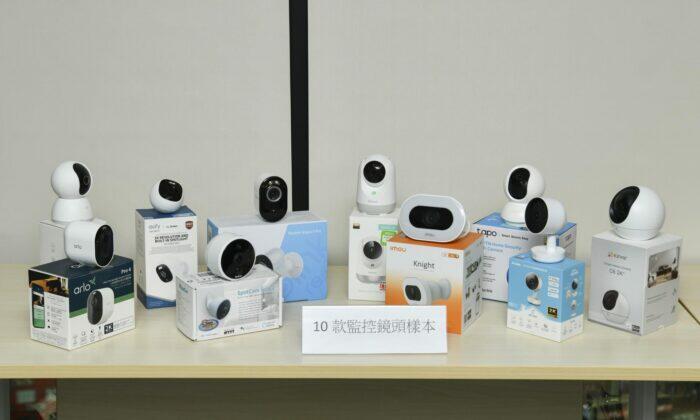
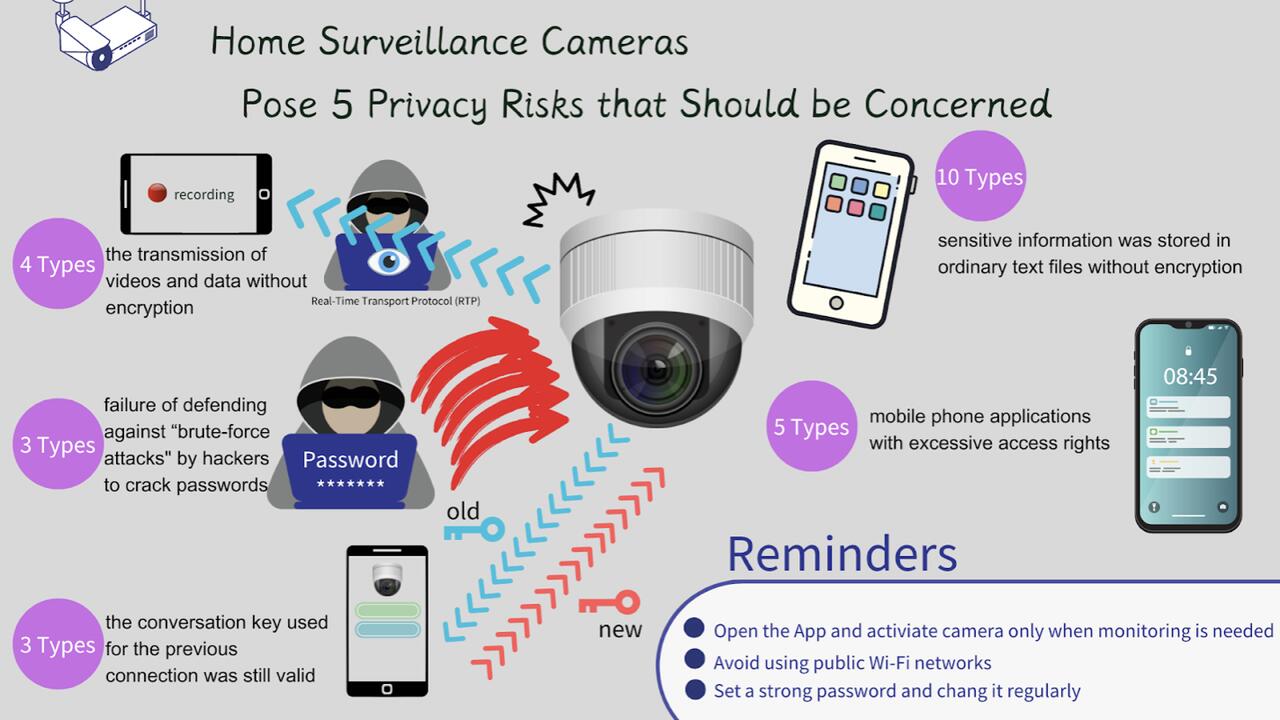
The Hong Kong Consumer Council tested the cyber security of ten home surveillance cameras on the market and found that only one model complied with the European cyber security standard. At the same time, the other nine posed various cyber security concerns, including the transmission of videos and data without encryption and failure to defend against “brute-force attacks” by hackers to crack passwords.
In addition, the security of user data storage could have been improved in many apps, with half of the tested models able to access the user files stored in intelligent devices through Android apps. Some apps even requested excessive permission.
The Council urges manufacturers to improve the cyber security of products, such as introducing anti-brute-force attack designs and data encryption of video and data.
Consumers should also set strong passwords for their surveillance cameras and change them regularly and make good use of firewalls and network monitoring functions.
The ten models of home surveillance cameras tested were priced between $269 and $1,888, all providing two-way audio, motion detection, night vision, Amazon Alexa, and Google Assistant voice control. The models tested were from Arlo, Xiaomi, Imou, TP-Link, BotsLab, Eufy, EZVIZ, SpotCam, D-Link, and Reolink.
In addition, the Council commissioned an independent laboratory to test the cyber security and hardware design of these ten models with reference to the European Standards ETSI EN 303 645 and the industry-standard OWASP MASVS.
Among the ten surveillance cameras, Arlo has the highest total score of four out of five, with five marks for protection against attack, security of data transmission and apps, and hardware design, but three marks for the security of data storage and the highest price of $1,888 in the sample.
The other nine models have a micro-SD memory card slot, which can be inserted to save videos.
5 Models Do Not Have Encrypted Data Transmission
The Council said that live video streaming to mobile devices through the app allows users to keep track of the real-time status.
Four models tested did not use Secure Real-Time Transport Protocol (SRTP) in live streaming, which could provide data encryption and message authentication. Instead, they used the less secure and unencrypted Real-Time Transport Protocol (RTP).
The four models are Imou (Model: IPC-F88FIP-V2), TP-Link (Model: Tapo C210), EZVIZ (Model: CS-C6), and D-Link (Model: DCS-8350LH).
In addition, the Reolink (model: Argus 3 Pro) uses Hypertext Transfer Protocol (HTTP) to transmit data when connecting to the user’s Wi-Fi network without encrypting sensitive data so that hackers can find the router’s account information from ordinary text files.
The Consumer Council recommends manufacturers switch to the more secure Hypertext Transfer Security Protocol (HTTPS) to provide excellent user protection.
4 Failed to Defend Against Brute-force Attacks
The test found that three samples could be cracked using automated tools and programs that repeatedly (Brute Force attacks) tested all possible password combinations during live motion picture streaming.
The default passwords of EZVIZ and D-Link are only six digits or letters, which are very low in strength and are easily cracked. The Eufy (model: T8441X) could also be cracked.
The Council mentioned that the sample of SpotCam (model: Solo 2) has no limit on how many times a hacker can log in with a mobile phone application to obtain account information.
The Council recommends that the manufacturers of these four products incorporate anti-brute-force designs, such as multi-factor authentication and limiting the number of password attempts.
Temporary Passwords are Valid When Logging Back Into the Account on 3 Models
Each time the user logged in to connect to the camera, a conversation key equivalent to a temporary password would be used. The conversation key should expire after disconnection, and the user would use a new conversation key when logging in again.
However, the test results showed that when the samples of BootsLab (model: P4 Pro), SpotCam, and Reolink were logged in to connect to the camera again, the conversation key used for the previous connection was still valid. If the hacker steals the old conversation key, he can connect to the camera and see the image.
After logging out of an account or logging in to another account in the same mobile phone application, live images of the surveillance camera can still be seen on Reolink when connecting to the logged-out account, a security vulnerability.
Insufficient Data Security for All Sample Applications Storage
Sensitive information such as email addresses, account names, or passwords was stored in ordinary text files without encryption. The relevant information would only be removed after a certain time, posing risks.
In addition, the embedded browser of the Android version of five samples did not block access to files, including Imou, TP-Link, Eufy, EZVIZ, and D-Link, which allowed hackers to access files in the device by implanting the code. In addition, there are five samples of mobile phone applications with excessive access rights, and the data inside the device may be leaked, including Xiaomi Mi (model: MJSXJ09CM), Imou, BotsLab, Eufy, and EZVIZ.
The Council also pointed out that the Android version of BootsLab uses the obsolete Data Encryption Standard (DES) with a shorter key length of 56 bits.
City University Scholar: Only Rely on Manufacturers to Improve Product Quality
Mr. Tsang Kim Fung, Associate Professor of the Department of Electronic Engineering City the University of Hong Kong, believes that some samples have greater network security issues, such as unauthorized server access, insecure data transmission, and insecure data encryption, which may pose risks such as privacy leakage and mobile phone data leakage.
However, the product design and application of the home surveillance cameras are the manufacturer’s responsibility, and consumers can only rely on the manufacturer to improve the quality of the product.
The Council reminds consumers to be vigilant of the following when choosing and using home surveillance cameras.
Consumers should avoid purchasing products without a brand name or from unknown sources. They should open the app and activate the camera only when monitoring is needed. Also, they should set a strong password with no fewer than eight characters. The password should also contain a combination of upper- and lower-case letters, numbers, and special symbols.
The password should be changed regularly, and if the surveillance camera is installed and set up by someone providing door-to-door service, change the password immediately after installation.
In addition, consumers should never use public devices and those without administrator permission to log into an account and avoid using public Wi-Fi networks for monitoring to prevent account data from being recorded and stolen.
Kim Jong Un Oversees ‘Simulated Nuclear Attack’ On South Korea
After days of repeat smaller missile tests aimed at sending a message to Washington amid joint US-South Korea military drills, which are the largest in years, North Korea on Monday said it launched a ballistic missile over the weekend as part of a simulated nuclear attack on the south.
State media indicated that Kim Jong Un oversaw the drill which sought to push back “aggression” from enemies. Notably it came the same day that US B-1B strategic bombers joined the aerial exercises with the south’s military.
Pyongyang said of Sunday launch that it was “carried out under the tense situation in which a large-scale war drill is being frantically scaled up by the U.S.-South Korean allied forces to invade the DPRK and U.S. nuclear strategic assets are massively brought to South Korea.”
This appears a reference to the US strategic bombers joining the drills. While there were reports that the north’s provocative Sunday launch involved a projectile tipped with a mock nuclear warhead, Pyongyang still claimed it had “no adverse effect on the security of the neighboring countries.”
It reportedly exploded about 800 meters above targeted waters. According to further details of the launch:
The suspected ballistic missile launched by North Korea on Sunday reached a maximum altitude of approximately 50km (31 miles) and flew a distance of approximately 800km (497 miles), according to Japan’s defense ministry. It was fired from the Dongchang-ri area of North Pyongan province in North Korea and landed in the sea between the Korean Peninsula and Japan, according to the South Korean military.
South Korea’s Joint Chiefs of Staff (JCS) has meanwhile emphasized is remaining vigilant and prepared for more launches coming out of the north, “while maintaining a full readiness posture through close cooperation with the US.”
Other regional powers are closely monitoring too, especially Japan. Its defense ministry said in a statement that these launches “threaten the peace and security of Japan, the region and the international community.”
The ongoing 11-day Freedom Shield exercises between the United States and South Korea are being widely described as the largest war games among the allies in a half-decade. North Korea earlier warned it is ready to initiate the “toughest counteraction against the most vicious plots of the US and its followers.”
For her efforts to report injuries to the Vaccine Adverse Events Reporting System (VAERS) and to educate others in her hospital system on doing the same, Physician Assistant Deborah Conrad said she was labeled an anti-vaxxer and fired from her job.
Today, the New York-based Conrad tells her story at medical freedom conferences throughout the country, the most recent being one in Mississippi where physicians, scientists, and the vaccine injured warned state lawmakers to pull the COVID-19 vaccines from the market.
Conrad told The Epoch Times she began to see early danger signals in 2021 upon the vaccine rollout, and with that, resistance among her colleagues to report on them.
“After the vaccines came out, there was this uptick in unusual symptoms, some of which I had never seen in my 20-year career,” Conrad said. “In every case, it was in somebody who had received the COVID-19 vaccine.”
Conrad said she had never admitted an adult patient with RSV (respiratory syncytial virus) until the COVID-19 vaccines.
“And every patient who came in with RSV was vaccinated for COVID,” Conrad said. “It wasn’t normal.”
Then, there were the adolescents with no previous medical conditions who had gotten the COVID-19 vaccine a week prior and, suddenly, they were struck with pneumonia and not able to function, she said.
“They weren’t able to walk or eat, and they were completely and totally fatigued,” Conrad said.
This was in 2021 before myocarditis was being discussed, so many of those early cases that were probably myocarditis were diagnosed as pneumonia, she said.
“A lot of these myocarditis cases came in with fevers because of this massive inflammatory response that was taking place in the body, so they would be labeled as septic, treated as if we were treating pneumonia or fevers of unknown origin,” Conrad said. “We’d treat them with antibiotics and all sorts of other things, not realizing that they were having heart failure.”
Conrad began reporting to VAERS, which she said was an overwhelming task not made easy by its multiple user-interface complications.
“My entire life had been taken over by doing these VAERS reports by myself,” she said.
In meetings with leadership, she would propose implementing a reporting system and hiring someone to manage the reports, she said.
‘A Hostile Environment’
“They kept telling me we’re looking into it and we’ll get back to you,” Conrad said. “Around April 2021, leadership came back and said no one else is reporting injuries—implying that I was crazy and there was nothing really going on with the vaccines.”
Leadership then audited her reports, she said and concluded that she was overreporting.
“I was then told that by doing VAERS reports and even discussing VAERS that it was an admission that the vaccines were unsafe, so it’s contributing to vaccine hesitancy,” Conrad said.
From there, it became a “very hostile environment” that compelled her to seek legal counsel, who wrote letters to the Department of Health, the CDC, and the FDA.
“No one cared,” Conrad said. “Finally, I had had it. It was so unethical; I couldn’t take it anymore. These VAERS reports are critical to assuring these vaccines are safe for us all. I could no longer be a part of a system that is lying to the American people.”
Conrad decided to become a whistleblower, telling her story on Del Bigtree’s The Highwire, knowing, she said, that it would cost her job.
“I couldn’t remain silent, even if it meant losing my career and everything I worked for,” she said. “I was fired a few weeks later and walked out like a criminal in front of all my peers.”
The initiative and education she had brought forth to report to VAERS were squashed that day, she said.
According to Barbara Loe Fisher, co-founder and president of the National Vaccine Information Center (NVIC), under the National Vaccine Injury Act of 1986, it’s a federal requirement for health care workers to report vaccine-related adverse events to VAERS.
Fisher, whose son was harmed by the DTP vaccine in 1980, worked with other parents of vaccine-injured children in establishing the NVIC in 1982.
“The 1986 Act was driven by parents of DPT vaccine injured children asking the government to pass legislation to secure vaccine safety informing, recording, reporting, and research provisions in the vaccination system to make it safer, and to create a federal compensation system alternative to a lawsuit against manufacturers of vaccines that injure or kill children,” Fisher told The Epoch Times.
In addition to NVIC arguing that physicians and vaccine manufacturers should be giving informed consent and report injuries, the organization maintained they should also continue to be held accountable in a civil court to serve as an incentive for physicians to administer vaccines responsibly, for manufacturers to produce safer vaccines, and for adequate federal compensation to vaccine-injured children.
US Unveils $350M More Defense Aid For Ukraine, Condemns Xi-Putin Meeting
On Monday US Secretary of State Antony Blinken once again emphasized that the Biden administration remains ready to support Ukraine “for as long as it takes.”
He also unveiled the latest defense aid package – at $350 million including more missiles and air defense missiles, listed among these more High Mobility Artillery Rocket Systems (HIMARS) and howitzers, ammo for Bradley Infantry Fighting Vehicles, high-speed anti-radiation missiles, anti-tank weapons as well as and riverine boats, according to The Hill.
“This week, as Russia’s unconscionable war of aggression against Ukraine continues at great human cost, we are again reminded of the boundless courage and steadfast resolve of the Ukrainian people, and the strong support for Ukraine across the international community,” Blinken said.
The Hillreviews concerning total defense aid pledged thus far, “With Monday’s announcement, the United States has now committed more than $32 billion in lethal aid to Ukraine through presidential drawdown since Russia first attacked the country more than a year ago.”
Blinken also on Monday condemned the visit of China’s President Xi to Putin to talk Ukraine peace…
“That President Xi is traveling to Russia days after the International Criminal Court issued an arrest warrant for President Putin suggests that China feels no responsibility to hold the Kremlin accountable for the atrocities committed in Ukraine, and instead of even condemning them, it would rather provide diplomatic cover for Russia to continue to commit those very crimes,” Blinken said.
Xi Jinping’s visit “suggests that China feels no responsibility to hold the president accountable for the atrocities committed in Ukraine,” the US top diplomat stated.
#China may not deliver weapons to #Russia but is committed to supporting the Russian economy, which is all that Moscow needs to face US-led (40) nations in #Ukraine.
Today, President Xi Jinping began a 3-day state visit to Russia to meet his “old friend” President Vladimir Putin. pic.twitter.com/Wr2xMWoVcc
Blinken described China’s 12-point Ukraine peace plan as essentially nothing but a scheme to provide diplomatic cover to Russia’s war crimes. Despite all of this, Zelensky himself has maintained some degree of openness, and is likely to hold a phone call with Xi in the coming days to explore potential ceasefire options.
Since she went on kidney dialysis two years ago, she’s had a heart attack and a cardiac episode associated with her thrice-weekly treatments.
Her energy is low as her other vital organs slowly fail. Her blood pressure is out of control—hovering at around 200 systolic over “100-something”diastolic whenever she undergoes dialysis.
Garinger feels it’s only a matter of time before her next heart attack, which could prove fatal unless she gets a new kidney.
“The dialysis is very stressful on me. My vision is going. My hair is falling out. I’ve got skin cancer,” said Garinger, 68. “They said it’s from the dialysis not filtering out all the bad stuff.
“My biggest fear is I’ll have a heart attack during dialysis. I’m just going downhill right now.”
In 2022, Garinger was eagerly waiting for a kidney transplant at Sharp Memorial Hospital in San Diego, having found a good organ match in her daughter, the doctors told her.
But, “I needed [the transplant] like two years ago,” Garinger said.
Early last May, Garinger received an unexpected letter from the hospital saying she was no longer on the United Network for Organ Sharing (UNOS) waitlist for a kidney transplant.
“The reason for this status change is you have not had your COVID vaccines,” read the May 6, 2022, letter Garinger shared with The Epoch Times.
“Once this situation is remedied, you will be evaluated for re-activation on the transplant waitlist.”
Garinger did not appeal the hospital’s decision. She knew “in her gut” her unvaccinated status would always be a problem.
Still, she put her faith in Sharp Memorial, only to be put through tests, medical procedures, and consultations at a substantial cost to Medicare.
“The whole time, they knew I wasn’t vaccinated and that [my daughter] wasn’t vaccinated. They would always ask me, ‘Why don’t you want to get a vaccine?’”
“I was pretty adamant,” said Garinger. “I didn’t want to take anything that was still experimental.”
She remembered her good friend who died two weeks after receiving a COVID shot. “She lived right over here, on the other side [of the street],” Garinger said.
Garinger said she was fortunate to find another hospital nearby that would operate without her taking the vaccine.
Starting All Over
The challenge now is the time it will take to complete all the required paperwork and preliminary procedures, the time it will take to get on a waitlist for a kidney donor, and the time it will take to find a donor.
She fears her time will run out before then.
One sympathetic doctor said, ‘Linda, you could drop over dead. Your heart could stop.’ So, I have to watch what I eat, and on the days I don’t do dialysis, I take this powder that tastes like gritty sand” to remove the excess potassium from her body.
Garinger finds herself among many people who need an organ transplant but are up against a medical system still adhering to vaccine protocols in many facilities.
In a 2021 Healio transplantation survey, 60 percent of the 141 transplant centers that responded did not require a COVID-19 injection before surgery. The survey sample represented just over 56 percent of the transplant centers in the United States.
Jeffrey Childers, a commercial attorney based in Gainesville, Florida, served clients facing COVID-19 mandates at hospitals and medical clinics during the pandemic.
He said Garinger’s case reflects the “COVID mania” that permeated the medical establishment beginning in 2020.
“This was an ugly manifestation of the COVID management regime that popped up,” Childers said. “All the cases get a lot of attention because people are horrified. But the transplant people will say they have limited resources, only get so many organs each year, and we have to give them to people with the best survival chances. They’ll hide behind that forever.”
Life-and-Death Decisions
Childers said health care facilities still have tremendous discretionary power to make critical decisions concerning COVID-19 vaccines.
“To see these kinds of life-and-death bureaucratic powers wielded by people who are not motivated by the science but—something else—is horrifying,” Childers said.
“I’ve run into it a handful of times in Florida. The law that applies is state dependent. The folks who manage those donor lists and the assignments have a lot of discretion.
“It’s even more appalling it’s happening now so late in the pandemic when the mandates are gone. You can’t find a single person who says they regret not taking the vaccine. But you can find tons going the other way.”
Childers said pro-vaccine advocates argue that an unvaccinated recipient is much more likely to die from COVID-19 following transplant surgery than a vaccinated patient.
“I don’t know the official line anymore,” he told The Epoch Times. “[The vaccine] doesn’t stop you from dying. It doesn’t stop you from getting sick.”
One study in the November 2022 MDPI, a Switzerland-based publisher of open-access scientific journals, claimed that over 60 days, the death rate among unvaccinated kidney transplant patients was 11.2 percent at the time of COVID-19 infection.
The study found the death rate among the vaccinated was 2.2 percent. More than two-thirds of the 144 patients in the study received a kidney transplant.
By contrast, a study published in the Journal of Clinical Medicine in September 2022 found that some cornea transplant patients rejected the grafts after receiving a COVID-19 vaccine.
In some cases, the rejection took place 20 years after the procedure.
Childers believes the science generally does not support the notion that unvaccinated transplant recipients are at an increased risk of dying from COVID-19.
“The argument is always don’t give an organ to a person who is living some kind of lifestyle that is risky or increases the risk of dying from something else,” Childers told The Epoch Times.
“That’s the logic they’re applying to this. They’re essentially saying by not taking the vaccine, [transplant patients] are at higher risk of dying from COVID. So they don’t want to give an organ to somebody at high risk voluntarily.”
Ohio attorney Warner Mendenhall, representing clients in vaccine mandate cases, said he knows at least 60 organ transplant denial suits working through the medical freedom group Liberty Counsel.
Each case involves a client refusing to take the COVID-19 vaccine required for transplant surgery.
“We’re seeing [transplant denials] at many hospitals across the country,” Mendenhall said.
And while the medical establishment remains split on the safety and effectiveness of COVID-19 injections, some “medical people are concerned about clotting and other issues that occur with the vaccinated.”
“Especially if you’ve got liver and kidney problems and need that type of transfer, you don’t want to be vaccinated before the transplant. That’s my understanding,” Mendenhall said.
A ‘Fiduciary Responsibility’ to Patients
Often, the unvaccinated transplant patient has maintained a longstanding medical relationship with the hospital or clinic without issue before the COVID-19 vaccine rollouts.
For this reason, Mendenhall believes there is a “fiduciary relationship that the hospitals engage in with a transplant patient.” To break that obligation would be “a real breach of that fiduciary responsibility to them.”
According to the Chronic Disease Research Group, an estimated 37 million people in the United States have kidney disease in varying stages.
About 1 million Americans are in the end stages of the disease. At the same time, 550,000 undergo kidney dialysis to remove excess toxins from the blood because their kidneys cannot perform this function.
The average wait time for a kidney transplant in the United States is three to five years at most health facilities, but it’s longer in some parts of the country, according to kidney.org.
“It is best to explore transplant before you need to start dialysis. This way, you might be able to get a transplant ‘preemptively,’ before you need dialysis,” the organization’s website states.
“It takes time to find the right transplant center for you, to complete the transplant evaluation, to get on the transplant waitlist for a deceased donor, or to find a living kidney donor if you can.”
Garinger said she is in terminal Stage 5 of her kidney disease and needs dialysis almost every other day to stay alive.
“I’m pissed off,” said Garinger, who gets short of breath just walking to the kitchen.
“I can’t walk to Costco or a grocery store now. My muscles—I get out of wind so easily. I can’t walk down to my chickens anymore.”
Her daughter Emily Lewis, 35, is a recent medical assistant program graduate and is now her mother’s live-in caretaker as she waits for a kidney transplant.
“I put my life on hold because [of my mother],” Lewis said, although she has no regrets.
With her career in limbo, Lewis said she is angry at the injustice of the COVID-19 mandates while doubting the shots even work.
“Everyone I know who’s COVID vaccinated has had it four or five times. I’ve had it zero,” Lewis told The Epoch Times.
Denied access to the kidney wait list at Sharp Memorial, Garinger found that the University of California San Diego Medical Center was willing to perform the kidney transplant surgery.
But the longer it takes to find a kidney donor, the more likely it is that she won’t make it back to a more normal life.
She characterized her relationship with her doctors at Sharp Memorial as adversarial since she opposed taking the COVID-19 vaccine under any circumstances.
She remembered one doctor in Ramona who kept “pressuring me” about the vaccine.
He said, “What will you do if you get COVID? What if you catch COVID and you have to go to the hospital?’
“Well,” she told him. “I have this protocol on my fridge—vitamins C and D. I have ivermectin. Number one: I won’t go to the hospital. It’s a death sentence there.”
“I guess you know more than me,’” the doctor said as he stood up and left the room.
“I didn’t know I had an adversary” or that “I was an evil person. I just had a gut feeling they would deny me [a kidney] because they kept pressuring me about the shot.”
“They did the same thing with me,” Emily said.
‘Why Aren’t You Vaccinated?’
At one point, Garinger demanded data showing the vaccine’s side effects.
“There was none,” she said. “It came down to the last final interview with the surgeon. All he could ask me was, ‘Why aren’t you vaccinated? Why don’t you want to get vaccinated?’”
“I don’t have COVID,” Garinger said. “[Emily] doesn’t have COVID. Another thing they told me was we were a [donor] match. And then I got to UCSD, and the bloodwork showed she was not a match.”
Sharp Memorial did not respond to a request for comment from The Epoch Times. UCSD Medical Center did not return an email seeking comment.
New Orleans attorney David Dalia said Garinger’s case seems to be medical “discrimination.”
“They are discriminating against her based on her vaccination status,” he said.
During the pandemic, Dalia worked on vaccine mandate cases with Frontline doctors, filing amicus briefs on behalf of 1.5 million federal employees who refused to take a COVID-19 vaccine by order of President Joe Biden.
“The truth is [Garinger] has a lot better chance of living than a vaccinated person. We can back that up. They’re viewing it as sort of a disability.
“Well, that’s a violation of the Americans with Disabilities Act. And federal law specifically says all experimental use authorization drugs are strictly voluntary and subject to informed consent.”
Dalia said informed consent is “never coerced.”
As Garinger works through the intake process at UCSD Medical Center, she has good, bad, and “hell” days.
“I sit in a chair all day,” said Garinger, who ran a successful foreclosure business before she retired due to her illness. “[Emily] helps me do cooking. She does all the chopping and stuff. I have a chair in the kitchen. I walk to the kitchen and start cooking. I don’t do much. My gardening is on hold—everything is on hold. My muscles are gone. I use electric carts to go to Costco. I can’t do anything. I’m out of breath. It sucks.”
“Every part of my body is deteriorating. So, I’m on hold until I get a kidney.”
Just as painful are the times people call her “evil ” because she refuses to take an mRNA vaccine for COVID-19.
“You’re going to give [COVID] to everybody,” they tell her. “You’re evil for not getting vaccinated.”
“That’s how I felt,” Garinger told The Epoch Times.
She said another fear is receiving a kidney from a vaccinated donor, with unknown health effects, since there is no way to determine which donor is vaccinated and which one is not.
Feeling her time is growing short, Garinger said she is still determined to keep fighting in the time she has left.
“I’ve got to get this done. Every day there’s something else going wrong with me because my kidneys are gone,” Garinger said.