65.5 F
Chicago
Saturday, August 1, 2026
Home Blog Page 4001

Peter Schiff: Easing Price Inflation Is Transitory

0
Peter Schiff: Easing Price Inflation Is Transitory

Via SchiffGold.com,

Last week, the Producer Price Index data finally showed some cooling of wholesale prices. That coupled with better-than-expected CPI data further buoyed hope that the Fed is winning the war on inflation. But in his podcast, Peter Schiff emphasized that easing inflation is transitory. And a weakening dollar will be a big part of the story.

Markets rallied after the PPI data came out last week.

The markets liked this number and that was part of the reason for a rally that day — the reaction to this better-than-expected news on inflation. But you have to remember that all of this better-than-expected news on inflation is transitory. So, it wasn’t the increase in inflation that was transitory. That’s permanent. What is transitory is this slight decrease that we’re enjoying now.”

It’s important to remember that even though the rate of increase is slowing down, prices are still going up.

They’re just not going up as fast as they were. But all of that is temporary because the reason that we saw a decline in the rate of increase in prices was because we got a correction in commodities, in particular oil prices. We’ve also got a decline in longer-term interest rates. That has affected mortgage rates and probably other debt payments that are being made. That is helping to reduce somewhat the rate of increase in costs businesses are experiencing. But all these factors are temporary.”

Peter noted that commodity prices have already reversed their decline.

One of the reasons commodity prices fell was the strength of the dollar. But the dollar completely reversed in the fourth quarter. On Sept. 27, just before the start of Q4, the dollar index reached 114.11. That was the highest level of the year. From there the dollar index fell by nearly 8%. Today, the DIX is hovering just above 101.

Peter said he expects this dollar weakness to continue for the balance of the year.

I still think that 2023 could end up being one of the worst years ever, and maybe the worst year ever for the US dollar, and that weakness is going to help propel consumer prices much higher. So, I believe that after this transitory reduction in the acceleration of the inflation rate, I think we’re going to head higher again and that before the year is over, we’re going to be printing year-over-year increases in the CPI that will eclipse the high from last year.”

Peter also covered some of the most recent economic data that came out last week. For instance, the Philadelphia Fed Manufacturing Index for January came in weak. And existing home sales also underscored the growing weakness in the housing market. In 2022, existing home sales fell by 34%. That was the single biggest drop in home sales ever.

That means the drop is bigger than it was during COVID. It’s bigger than it was at any point during the 2008-2009 financial crisis.”

Peter said this has very ominous implications for the economy in 2023 because a lot of economic activity that shows up in GDP is related to home sales.

So, all those people who are still clinging to the false hope that the economy is going to experience a soft landing are not reading any of the very bold upper-case letters clearly written on this collapsing wall.”

In this podcast, Peter also talks about the rollover in growth stocks, gold making a 9-month high last week, job losses in the tech sector, the wasteful meeting in Davos, and how a Netflix documentary on Bernie Madoff proves more regulations won’t help us.

Tyler Durden
Tue, 01/24/2023 – 08:42

Musk Tells Jury He Believed Had “Funding Secured” Before Tweeting Tesla Could Go Private In 2018

0
Musk Tells Jury He Believed Had “Funding Secured” Before Tweeting Tesla Could Go Private In 2018

Elon Musk is once again standing by his story that he thought he had “funding secured” at the time he Tweeted it out, mid-trading day, back in 2018.

This time Musk is recounting the events while testifying at a trial in an investor lawsuit that claims Musk’s Tweets cost shareholders millions of dollars. The suit says Musk “artificially boosted Tesla’s stock price” with his August 2018 “funding secured” Tweet and that the ensuing whipsaws of the share price cost them money.

Yesterday was Musk’s second day of testimony in federal court in San Francisco, FT reported. During his appearance, he said that he thought a deal for the company with the Saudis was a “done deal” and that Saudi Arabia’s Public Investment Fund would support taking Tesla private at $420 per share. 

But Musk also acknowledged there was no contract at the time, and that “many details” had not been worked out. 

“It’s important for the jury to know that,” Musk said, telling the jury that his shares in SpaceX would have made up for any shortfall, if the Saudis had not been able to commit what was needed to purchase the company. He testified that the PIF had “many multiples” of what was needed to take Tesla private at the time. 

Musk testified it was “difficult to say” whether or not he thought shares would rise or fall in reaction to his Tweet. The proposed takeover price, meanwhile, was about 20% higher than Tesla’s stock price at the time. 

He said his Tweet was made on a “split second” decision after he found out FT was preparing a report about the Saudi PIF taking a $2 billion stake in Tesla. 

“I expected that there (would) probably be some increase in the stock price — seems likely. If you say that you’re considering taking a company private or acquiring a company . . . there is going to be some premium . . . In this case, I’m clear about what the premium would be,” he said, according to FT. 

When questioned about the nonsensical-looking $420 per share proposed price, Musk answered: “There is some karma around 420, although I’d question (whether it) is good or bad karma, at this point.”

When questioned about why he didn’t consult the board about the offer, Musk responded: “I, as the bidder, am not allowed to have detailed discussions with the board because it represents the counterparty. So, it would be collusion if I discussed in detail with the board.”

So far, Musk has been able to dodge a litany of courtroom bullets during his tenure as Tesla’s CEO. Let’s see if that pattern continues…

Tyler Durden
Tue, 01/24/2023 – 08:24

Over 90% Of Firms Have Remained In Russia

0
Over 90% Of Firms Have Remained In Russia

Authored by Grzegorz Adamczyk via Remix News,

Only 8.5 percent of all EU and G7 companies have actually left Russia, according to research from the University of St. Gallen and the IMD business school in Lausanne, Switzerland.

Before the outbreak of war, there were more than 2,400 company branches and 1,400 companies from the EU and G7 operating in Russia. By the end of November last year, only 120 companies had left Russia or sold their company there. 

The research indicates that the news of a mass exodus of Western firms from Russia has been largely exaggerated.

In fact, businesses have resisted calls from governments, media, and civil society, according to the Belgian daily newspaper Het Laatste Nieuws.

Companies remain skeptical and reluctant about leaving Russia over fears of losing their business and staff.

Those who have left have ended up transferring assets into Russian hands, even for a single symbolic ruble or euro, as was the case with Renault and Nissan. 

According to Forbes, the biggest beneficiary was oligarch Wladimir Potanin, whose Interros company bought Rosbank from Societe Generale, making nearly 50 billion rubles (€667 million) in the process.

The second-biggest earner was Vladyslav Sviblov, whose Highland Gold Mining bought the assets of Canada’s Kinross corporation, which netted him almost 40 billion rubles.

Not far behind was Ivan Tirishkin from SPB, who bought 49.5 percent of the shares in HKF-Bank LLC, making over 35 billion rubles.

Fourth on the list was the state research center FSUE NAMI, which took over the plants owned by Renault and Nissan, gaining assets worth just under 35 billion rubles. 

Tyler Durden
Tue, 01/24/2023 – 06:30

‘Lockdown Orgy’ At St. Mary’s Cathedral Sparks Vatican Investigation

0
‘Lockdown Orgy’ At St. Mary’s Cathedral Sparks Vatican Investigation

When it comes to sexual deviancy among priests who are supposed to be celebrate, it’s not just about the kids – although pedophilia does come up in this report.

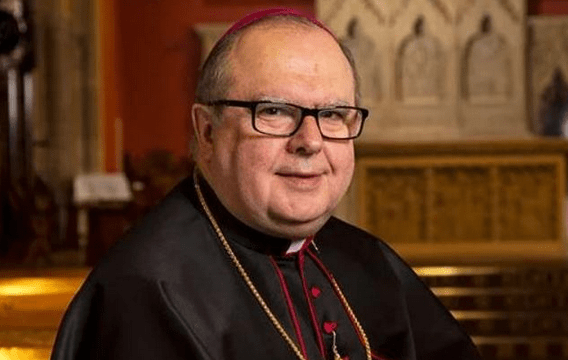
Michael McCoy allegedly invited worshippers at St Mary’s Cathedral, Newcastle to a sex party (photo via The Times)

According to The Sunday Times, the Vatican is now investigating allegations of a lockdown ‘sex party’ in the priest’s quarters at St. Mary’s Cathedral in Newcastle, UK.

“A number of complaints were made by individuals within the diocese after information came to light about a sex party taking place in the priests’ living quarters attached to Newcastle cathedral,” a diocese source told the outlet. A second source said: “The cathedral had become a laughing stock.”

And in a letter seen by the Times, the investigation has been assigned to the Archbishop of Liverpool, who’s been ordered to produce “an in-depth report into the events leading up to Bishop Byrne’s resignation.”

There is no suggestion that Byrne, who served both Hexham and Newcastle, participated in the alleged party inside a property adjoining St. Mary’s Cathedral, Newcastle, curing the Covid-19 lockdowns, nor whether he was aware of it.

Robert Byrne was bishop when the sex party is alleged to have taken place

The churches had remained closed for much of the pandemic lockdowns, with only religious funerals allowed. But Father Micael McCoy, who Byrne installed in 2019, is said to have approached several worshippers, asking if they would like to attend “a party” at the cathedral, according to a source close to the investigation.

McCoy notably committed suicide in April 2021 after finding out that he was under investigation by Northumbria police’s child and adult protection department over a historical child sex abuse allegation made against him (there it is).

And in another related pedo investigation, the Catholic Safeguarding Standards Agency (CSSA) will focus on convicted sex offender, Father Tim Gardner, and his relationship with the diocese. Gardner admitted in a London court to making and/or possessing thousands of indecent images of children.

He was caught with more than 500 pictures of children and more than 5,000 prohibited images downloaded on to his computer. Gardner, aged 42 at the time, who was teaching religious education at a Catholic school in north London, also pleaded guilty to ten counts of making indecent images of children and one count of possession of prohibited images. He was sentenced to eight months in prison, suspended for two years. -The Times

Gardner was allegedly offered an opportunity to stay at the ‘orgy’ accommodation within the Newcastle diocese after his conviction, a move which senior figures within the diocese stepped in to block, according to allegations contained in the report.

The party allegedly took place in the priests’ living quarters attached to Newcastle cathedral ALAMY

A letter from the Liverpool Archbishop has put priests on noticed that the CSSA  review will include “clergy former and present, staff former and present, lay volunteers former and present, victims as appropriate.”

The investigation is a rare move by the Dicastery for Bishops – the department within the Vatican tasked with nominating bishops and overseeing their performance worldwide, and which answers directly to the pope. Last week the CSSA confirmed that it had begun an “unscheduled safeguarding audit” in the Hexham and Newcastle diocese.

“The scope of the investigatory work will cover any reported abuses, alleged abuses, safeguarding concerns and the culture of safeguarding in the diocese as a whole,” said Steve Ashley, CSSA CEO, adding that their work was “independent” and had “full autonomy over our findings.”

“There should be no doubt that we will leave no stone unturned when it comes to keeping people safe, and this includes investigating the safeguarding culture in Hexham and Newcastle,” said Nazir Afzal, chairman of the CSSA and former chief prosecutor for the northwest of England.

Tyler Durden
Tue, 01/24/2023 – 05:45

German Intelligence “Alarmed” Ukraine Losing Hundreds Of Soldiers Every Day

0
German Intelligence “Alarmed” Ukraine Losing Hundreds Of Soldiers Every Day

Authored by Kyle Anzalone via AntiWar.com,

The German foreign intelligence service assesses that Kiev is losing a “three-digit number” of soldiers daily, according to a report in Der Spiegel. Berlin informed politicians of the assessment during a secret meeting this week.

Germany’s Federal Intelligence Service (BND) is “alarmed” by the high number of losses Ukraine is suffering. The report says Berlin believes Ukraine was losing a three-digit number of soldiers every day during the battle of Bakhmut with Russian forces. The BND informed German politicians of the high number of injured and killed Ukrainian forces during a covert Bundestag meeting last week.

Ukrainian soldiers prepare barricades in Bakhmut, via AP.

The BND believes the Ukrainian casualties will have severe consequences during future battles. The German intelligence service also believes that Russia is suffering high casualties and using its soldiers as “cannon fodder.”

Reuters reported officials in Washington believe Kiev spent significant resources attempting to defend Bakhmut. The White House is currently advising Ukraine not to launch any major counteroffensives to recapture the city.

The Joe Biden administration is additionally advising Kiev that continuing to pour soldiers into defending Bakhmut is preventing Ukrainian forces from attacking Russians defending other cities.

Ukraine is seeking tanks from its NATO partners. However, many countries, including the US and Germany have resisted sending their modern tanks to Ukraine.

Bakhmut is located in the Donetsk region. The BND believes if Russia takes the city, it will open the door for additional gains. Bakhmut has seen fierce fighting for several months, but the intensity picked up last week. Russian forces have made some gains in the city.

Tyler Durden
Tue, 01/24/2023 – 05:00

“Now Or Never”: Japan PM Warns Of Dire Consequences Over Plummeting Birth Rate

0
“Now Or Never”: Japan PM Warns Of Dire Consequences Over Plummeting Birth Rate

The Prime Minister of Japan says the country is in a precarious position as a society over its plummeting birth rate.

“Japan is standing on the verge of whether we can continue to function as a society,” said Fumio Kishida, saying that the situation was a case of “now or never.

“Focusing attention on policies regarding children and child-rearing is an issue that cannot wait and cannot be postponed,” he added.

The island nation currently has a population of 125 million, and had just 800,000 births last year. For comparison, that figure was north of 2 million in the 1970s.

And while other Asian nations have experienced similar slowing birth rates, Japan’s issue is particularly acute as life expectancy has risen at the same time – meaning there are a larger of older people, with a declining pool of working-age people to support them.

In fact, Japan has the world’s 2nd highest percentage of people over the age of 65, after the tiny state of Monaco, the BBC reports, citing data from the World Bank.

The comments come as Kishida’s cabinet approval rating has dropped another 2.7% from last month to 26.5% – the lowest since he took office in Oct. 2021, according to Jiji, citing its latest poll conducted Jan. 13-16. The poll also found that just 40.9% of people approve of the government’s response to coronavirus, while 31.2% say they disapproved.

Kishida added that eventually he wants the Japanese government to double its spending on child-related programs, and wants a new government agency set up by April to focus on the issue. That said, previous strategies to lift the birth rate have been met with limited success.

Falling birth rates are driven by a range of factors, including rising living costs, more women in education and work, as well as greater access to contraception, leading to women choosing to have fewer children.

By 2050, it could lose a fifth of its current population.

Yet its hostility to immigration has not wavered. Only about 3% of Japan’s population is foreign-born, compared to 15% in the UK. In Europe and America, right-wing movements point to it as a shining example of racial purity and social harmony. -BBC

Meanwhile, real wages in Japan haven’t grown in 30 years, while incomes in South Korea and Taiwan have caught up and overtaken the country.

Tyler Durden
Tue, 01/24/2023 – 04:15

Extremely Tight Market Could Push Copper Prices To Record Highs

0
Extremely Tight Market Could Push Copper Prices To Record Highs

By Tsvetana Paraskova of OilPrice.com

Retail and professional investors expect copper to be the top-performing commodity this year, outperforming gold, corn, and crude oil, according to Bloomberg’s MLIV Pulse survey published on Monday.

A total of 45% of retail investors and 36% of professional investors see copper as the best-performing commodity asset this year, compared to 26% of professional and 21% of retail investors who picked crude oil as most likely to be the top commodity performer in 2023. 

Copper prices have strongly rebounded in recent weeks, thanks to the reopening in China, which is expected to spur additional demand, and to the long-term bullishness of the market for metals necessary for the energy transition.

Copper prices are set for a new record-high in 2023 amid an “extremely” tight market, Goldman Sachs said last month.

“The sequential increase in policy targets and commitments to green transition, alongside a minimal supply response so far… have resulted in earlier and larger open-ended deficit conditions that essentially are already here, not beginning at some point in the future,” Nicholas Snowdon, metals strategist at Goldman Sachs, said in December, as carried by Financial Review.

Moreover, mining and commodities giant Glencore said in an investor update last month that a huge shortage of copper is looming, reiterating warnings from other industry players and analysts that a supply crunch could slow the energy transition.

According to Glencore’s estimates, under the net-zero emissions pathway of the International Energy Agency (IEA), the world will be more than 50 million tons short of copper between 2022 and 2030.

“But increasing mine supply is challenging given heightened country and operational risks and the industry remains wary of multi-billion dollar investment decisions,” Glencore said.

In the latest reporting week to January 17, copper, one of the best-performing commodities this month, attracted more bullish positions, and the net long position—the difference between bullish and bearish bets—jumped to a nine-month high, Ole Hansen, Head of Commodity Strategy at Saxo Bank, said on Monday.

Tyler Durden
Tue, 01/24/2023 – 03:30

Germany’s Leopard 2: Where The Tank Is In Use

0
Germany’s Leopard 2: Where The Tank Is In Use

The German government continues its hesitancy to allow buyers of its Leopard 2 battle tank to pass their stock on to Ukraine.

While it is usual that producers of defense goods keep the final say in resales, the Germans’ stance has been met with puzzlement given the interest of major buyer Poland as well as Denmark and Finland to supply the tanks.

As Statista’s Katharina Buchholz reports, new German defense minister Boris Pistorius has merely ordered a tally of available stock of the Leopard 2. The country also said earlier that refurbished Leopard 2 tanks could only be supplied from Germany itself by 2024. Since the start of the Russian invasion of Ukraine, much has been written about Germany’s reluctance to appear too involved in the military side of the conflict, but an even more sinister reason could be at play in the country’s latest snub. The resupply of tanks to European countries who passed their Leopards on could be snapped up by U.S. companies, German-language newspapers have been theorizing, as Germany’s own defense industry would not be up to the task of a quick restocking.

The U.S. meanwhile said it didn’t plan to supply a comparable tank, the M1 Abrams, since its engine that runs on jet fuel instead of diesel would not fit well into existing Ukrainian resupply operations. If the U.S. would supply tanks as well, this would reportedly set German officials more at ease, but as things are, a meeting at U.S. airbase Ramstein in Germany ended without a resolution on the deliveries Friday.

Leopard 2 tanks would be the first Western-made tanks supplied to Ukraine, potentially together with the British Challenger II.

Downing Street said on January 14 that it would send the weapons but didn’t provide a timeline. So far, European countries have merely passed on their older stock of Soviet-era tanks to Ukraine.

Poland has suggested it might break its agreement with Germany and supply the tanks nevertheless. German foreign minister Annalena Baerbock to more puzzlement from observers said she would let the move slide.

According to the United Nations Register of Conventional Arms, around 1,900 Leopard 2s have been exported from Germany since 1992, including refurbished ones.

Infographic: Germany's Leopard 2: Where the Tank Is in Use | Statista

You will find more infographics at Statista

Germany sold a particularly large number of tanks in the 2000s, but recently only a few Leopards were exported abroad as its production has wound down and concentrated on countries outside of Europe.

The largest buyer over the past 20 years have been Turkey, Poland, Chile, Greece and Singapore.

Despite Turkey’s and Greece’s membership in NATO, exports to Ukraine are less likely from these countries as they are in an (inactive) conflict with one another.

Tyler Durden
Tue, 01/24/2023 – 02:45

Netherlands To Shut Down Europe’s Largest Gas Field

0
Netherlands To Shut Down Europe’s Largest Gas Field

By Irina Slav of OilPrice.com

The Dutch government plans to close the Groningen gas field this year despite Europe’s precarious supply position. Groningen is the largest gas field in Europe.

The field is dangerous, a government official from the Hague told the Financial Times, and the government has no plans to boost production from it.

“We won’t open up more because of the safety issues,” Hans Vijbrief told the FT.

It is politically totally unviable. But apart from that, I’m not going to do it because it means that you increase the chances of earthquakes, which I don’t want to be responsible for.”

Production from Groningen has been curtailed substantially, and there were plans in place to phase out production altogether because of increased seismic activity in the vicinity of the field even before the energy crisis began in 2021.

As gas prices began to climb in the autumn of 2021 and then took off in the spring of 2022, some began speculating that the Netherlands could keep the field operating to contribute to filling the gap in gas supply left by Russian pipeline deliveries.

The Dutch government was skeptical about that from the start and instead suggested production be extended, although at a minimum rate of some 2.8 billion cu m. Now, this, too, is being reconsidered.

“It’s very, very simple: everybody who has some knowledge of earthquake danger tells me that it’s really very dangerous to keep on producing there. I’m quite convinced it’s wise to close it down,” Vijbrief told the FT.

Since the 1980s, the FT notes, there have been some 100 earthquakes annually around Groningen, resulting in more than 150,000 claims for property damage. The operator of the field, a Shell-Exxon joint venture, was ordered to start reducing output in 2013 with a view to shutting the field down eventually.

Tyler Durden
Tue, 01/24/2023 – 02:00

They Won’t Leave Us Alone: The Invasion Of Politics

0
They Won’t Leave Us Alone: The Invasion Of Politics

Authored by Joakim Book via The Mises Institute,

The temptation and crucial flaw of a totalitarian mind are that everyone must play a part in a superstructural battle between good and evil. Standing on the sidelines or taking a neutral position on present topics is not allowed; one may not merely observe or ignore the madness played out among the power hungry.

As a not-so-proud carrier of a Swedish passport, I last year lost track of how many times I was asked about Sweden’s membership in the North Atlantic Treaty Organization (NATO), the overreaching military alliance among Western nations. Apparently, there was a war going on somewhere. NATO countries were scrambling, and Finland and Sweden (thoroughly Western social democratic countries) were decades-old NATO holdouts. I did not know; I took pride in not knowing.

The chattering classes and the corporate press were full-on politicking. An insider-diplomacy battle raged between Stockholm, Helsinki, and Washington, DC. At some point even, Ankara, Turkey, was involved. I did not know; I had no opinion. My friends, my colleagues, my neighbor, my barber, my friends’ friends, and various other acquaintances all wanted in on the sordid business of political commentating.

I did not know. That was exactly it. I had no position to offer, which I quickly realized was a social mistake in this brave new world of symbolic wars for all that is “good.” I did not know anything about military matters, defense capabilities, international relations, or threat assessments regarding the various countries involved. I did not live in any of the places previously mentioned. I had no interest in their nation-state status. I did not know what the implications of NATO membership were or why it concerned me. Politicians politick with or without my input.

Everyone needs a take; everyone needs to “be informed” on the grand, irrelevant events of our broken times. Everyone needs a flag in their profile picture—a not-so-grand gesture indicating that they support the “latest thing.”

Paraphrasing Murray Rothbard’s quote on economic ignorance, why should I politick “a loud and vociferous position” on the diplomatic/military questions that so many of my fellow humans keep asking me for?

On most current affairs, I imagine I am a little bit like most people; we have our own lives and our own interests to pay attention to. Everything else takes a backseat. Rather than play the hot-take-on-everything game, I just want to be a good libertarian and be left alone. Unfortunately, that does not fly in a politicized society flirting with totalitarianism. Society has lost its shared values and its unifying religious frameworks and instead elevated politics (as Friedrich Nietzsche’s old quote goes, “God is dead. . . . And we have killed him”).

F.A. Hayek taught us in his famous 1945 “The Use of Knowledge in Society” that market prices carry information. I do not need to know anything about faraway affairs. I am perfectly capable of reading gasoline prices, suffering electricity price shocks, or paying elevated prices at the grocery store. That is the beauty of a capitalist division of labor and a market system. We do not need top-down control. We do not need the chattering classes opining about what one owes, deserves, or ought to know. All we need is the reality of what we experience as market actors.

Like a good libertarian, I instead try to purge politics from my life; no watching the news. I only read slow news in quality magazines by authors I trust, and I routinely skip every topic that does not belong to my core interests. Life is too short. And as I have said in the past, the sum of “humanity’s current (and future) literary, statistic and economic treasure” is more valuable than the unexciting, outdated information that is tumbled, diluted, and filled with omissions, via my propaganda machine (sorry, TV news).

In what political scientists would consider apex “political ignorance,” I take pride in not being able to name the prime minister of my native Sweden or the rulers of the other lands in which I reside. I do not know, care, or want to elevate their theater into my cognitive space.

At a recent party, my team lost a trivia competition, partly because we could not name the United Kingdom’s last three prime ministers (They change so often that it is not worth learning their names.). When my father called on an eventful Sunday last fall, and in passing, mentioned that he had met an acquaintance at the voting booths, I learned for the first time that it was Election Day. Epic!

Twenty-five years ago, James Dale Davidson and William Rees wrote about the public’s relationship to politics and corrupt institutions in their long-lived treatise The Sovereign Individual:

Moral outrage against corrupt leaders is not an isolated historical phenomenon but a common precursor of change. It happens again and again whenever one era gives way to another. . . . This widespread revulsion comes into evidence well before people develop a new coherent ideology of change. As we write, there is as yet little evidence of an articulate rejection of politics. That will come later. It has not yet occurred to most of your contemporaries that a life without politics is possible. (emphasis added)

Foreshadowing the rise of internet dominance, remote work, financial revolutions, and Bitcoin, the authors precociously reasoned about big-picture societal shifts of power. When technology allows, new societal constellations become available. Whether or not we grab onto them is up to us.

And all meaningful changes begin at home: fix that which you can fix, clean your room, etc. A flourishing future without politics requires us to purge from our lives the corrupting features of politics, which only enrage us and separate us from our fellow humans.

Politics is cancer, and the best you can do is to exit from it in every way you can.

Tyler Durden
Tue, 01/24/2023 – 00:00