72.1 F
Chicago
Saturday, August 1, 2026
Home Blog Page 4011

Escobar: Gold-Backed Currencies To Replace US Dollar In Global South

0
Escobar: Gold-Backed Currencies To Replace US Dollar In Global South

Authored by Pepe Escobar via The Cradle,

The adoption of commodity-backed currencies by the Global South could upend the US dollar’s dominance and level the playing field in international trade…

Let’s start with three interconnected multipolar-driven facts.

First: One of the key take-aways from the World Economic Forum annual shindig in Davos, Switzerland is when Saudi Finance Minister Mohammed al-Jadaan, on a panel on “Saudi Arabia’s Transformation,” made it clear that Riyadh “will consider trading in currencies other than the US dollar.”

So is the petroyuan finally at hand? Possibly, but Al-Jadaan wisely opted for careful hedging:

“We enjoy a very strategic relationship with China and we enjoy that same strategic relationship with other nations including the US and we want to develop that with Europe and other countries.”

Second: The Central Banks of Iran and Russia are studying the adoption of a “stable coin” for foreign trade settlements, replacing the US dollar, the ruble and the rial.

The crypto crowd is already up in arms, mulling the pros and cons of a gold-backed central bank digital currency (CBDC) for trade that will be in fact impervious to the weaponized US dollar.

A gold-backed digital currency

The really attractive issue here is that this gold-backed digital currency would be particularly effective in the Special Economic Zone (SEZ) of Astrakhan, in the Caspian Sea.

Astrakhan is the key Russian port participating in the International North South Transportation Corridor (INTSC), with Russia processing cargo travelling across Iran in merchant ships all the way to West Asia, Africa, the Indian Ocean and South Asia.

The success of the INSTC – progressively tied to a gold-backed CBDC – will largely hinge on whether scores of Asian, West Asian and African nations refuse to apply US-dictated sanctions on both Russia and Iran.

As it stands, exports are mostly energy and agricultural products; Iranian companies are the third largest importer of Russian grain. Next will be turbines, polymers, medical equipment, and car parts. Only the Russia-Iran section of the INSTC represents a $25 billion business.

And then there’s the crucial energy angle of INSTC – whose main players are the Russia-Iran-India triad.

India’s purchases of Russian crude have increased year-by-year by a whopping factor of 33. India is the world’s third largest importer of oil; in December, it received 1.2 million barrels from Russia, which for several months now is positioned ahead of Iraq and Saudi Arabia as Delhi’s top supplier.

‘A fairer payment system’

Third: South Africa holds this year’s rotating BRICS presidency. And this year will mark the start of BRICS+ expansion, with candidates ranging from Algeria, Iran and Argentina to Turkey, Saudi Arabia and the UAE.

South African Foreign Minister Naledi Pandor has just confirmed that the BRICS do want to find a way to bypass the US dollar and thus create “a fairer payment system not skewed toward wealthier countries.”

For years now, Yaroslav Lissovolik, head of the analytical department of Russian Sberbank’s corporate and investment business has been a proponent of closer BRICS integration and the adoption of a BRICS reserve currency.

Lissovolik reminds us that the first proposal “to create a new reserve currency based on a basket of currencies of BRICS countries was formulated by the Valdai Club back in 2018.”

Are you ready for the R5?

The original idea revolved around a currency basket similar to the Special Drawing Rights (SDR) model, composed of the national currencies of BRICS members – and then, further on down the road, other currencies of the expanded BRICS+ circle.

Lissovolik explains that choosing BRICS national currencies made sense because “these were among the most liquid currencies across emerging markets. The name for the new reserve currency — R5 or R5+ — was based on the first letters of the BRICS currencies all of which begin with the letter R (real, ruble, rupee, renminbi, rand).”

So BRICS already have a platform for their in-depth deliberations in 2023. As Lissovolik notes, “in the longer run, the R5 BRICS currency could start to perform the role of settlements/payments as well as the store of value/reserves for the central banks of emerging market economies.”

It is virtually certain that the Chinese yuan will be prominent right from the start, taking advantage of its “already advanced reserve status.”

Potential candidates that could become part of the R5+ currency basket include the Singapore dollar and the UAE’s dirham.

Quite diplomatically, Lissovolik maintains that, “the R5 project can thus become one of the most important contributions of emerging markets to building a more secure international financial system.”

The R5, or R5+ project does intersect with what is being designed at the Eurasia Economic Union (EAEU), led by the Macro-Economics Minister of the Eurasia Economic Commission, Sergey Glazyev.

A new gold standard

In Golden Ruble 3.0 , his most recent paper, Glazyev makes a direct reference to two by now notorious reports by Credit Suisse strategist Zoltan Pozsar, formerly of the IMF, US Department of Treasury, and New York Federal Reserve: War and Commodity Encumbrance (December 27) and War and Currency Statecraft (December 29).

Pozsar is a staunch supporter of a Bretton Woods III – an idea that has been getting enormous traction among the Fed-skeptical crowd.

What’s quite intriguing is that the American Pozsar now directly quotes Russia’s Glazyev, and vice-versa, implying a fascinating convergence of their ideas.

Let’s start with Glazyev’s emphasis on the importance of gold. He notes the current accumulation of multibillion-dollar cash balances on the accounts of Russian exporters in “soft” currencies in the banks of Russia’s main foreign economic partners: EAEU nations, China, India, Iran, Turkey, and the UAE.

He then proceeds to explain how gold can be a unique tool to fight western sanctions if prices of oil and gas, food and fertilizers, metals and solid minerals are recalculated:

“Fixing the price of oil in gold at the level of 2 barrels per 1g will give a second increase in the price of gold in dollars, calculated Credit Suisse strategist Zoltan Pozsar. This would be an adequate response to the ‘price ceilings’ introduced by the west – a kind of ‘floor,’ a solid foundation. And India and China can take the place of global commodity traders instead of Glencore or Trafigura.”

So here we see Glazyev and Pozsar converging. Quite a few major players in New York will be amazed.

Glazyev then lays down the road toward Gold Ruble 3.0. The first gold standard was lobbied by the Rothschilds in the 19th century, which “gave them the opportunity to subordinate continental Europe to the British financial system through gold loans.” Golden Ruble 1.0, writes Glazyev, “provided the process of capitalist accumulation.”

Golden Ruble 2.0, after Bretton Woods, “ensured a rapid economic recovery after the war.” But then the “reformer Khrushchev canceled the peg of the ruble to gold, carrying out monetary reform in 1961 with the actual devaluation of the ruble by 2.5 times, forming conditions for the subsequent transformation of the country [Russia] into a “raw material appendage of the Western financial system.”

What Glazyev proposes now is for Russia to boost gold mining to as much as 3 percent of GDP: the basis for fast growth of the entire commodity sector (30 percent of Russian GDP). With the country becoming a world leader in gold production, it gets “a strong ruble, a strong budget and a strong economy.”

All Global South eggs in one basket

Meanwhile, at the heart of the EAEU discussions, Glazyev seems to be designing a new currency not only based on gold, but partly based on the oil and natural gas reserves of participating countries.

Pozsar seems to consider this potentially inflationary: it could be if it results in some excesses, considering the new currency would be linked to such a large base.

Off the record, New York banking sources admit the US dollar would be “wiped out, since it is a valueless fiat currency, should Sergey Glazyev link the new currency to gold. The reason is that the Bretton Woods system no longer has a gold base and has no intrinsic value, like the FTX crypto currency. Sergey’s plan also linking the currency to oil and natural gas seems to be a winner.”

So in fact Glazyev may be creating the whole currency structure for what Pozsar called, half in jest, the “G7 of the East”: the current 5 BRICS plus the next 2 which will be the first new members of BRICS+.

Both Glazyev and Pozsar know better than anyone that when Bretton Woods was created the US possessed most of Central Bank gold and controlled half the world’s GDP. This was the basis for the US to take over the whole global financial system.

Now vast swathes of the non-western world are paying close attention to Glazyev and the drive towards a new non-US dollar currency, complete with a new gold standard which would in time totally replace the US dollar.

Pozsar completely understood how Glazyev is pursuing a formula featuring a basket of currencies (as Lissovolik suggested). As much as he understood the groundbreaking drive towards the petroyuan. He describes the industrial ramifications thus:

“Since as we have just said Russia, Iran, and Venezuela account for about 40 percent of the world’s proven oil reserves, and each of them are currently selling oil to China for renminbi at a steep discount, we find BASF’s decision to permanently downsize its operations at its main plant in Ludwigshafen and instead shift its chemical operations to China was motivated by the fact that China is securing energy at discounts, not markups like Europe.”

The race to replace the dollar

One key takeaway is that energy-intensive major industries are going to be moving to China. Beijing has become a big exporter of Russian liquified natural gas (LNG) to Europe, while India has become a big exporter of Russian oil and refined products such as diesel – also to Europe. Both China and India – BRICS members – buy below market price from fellow BRICS member Russia and resell to Europe with a hefty profit. Sanctions? What sanctions?

Meanwhile, the race to constitute the new currency basket for a new monetary unit is on. This long-distance dialogue between Glazyev and Pozsar will become even more fascinating, as Glazyev will be trying to find a solution to what Pozsar has stated: tapping of natural resources for the creation of the new currency could be inflationary if money supply is increased too quickly.

All that is happening as Ukraine – a huge chasm at a critical junction of the New Silk Road blocking off Europe from Russia/China – slowly but surely disappears into a black void. The Empire may have gobbled up Europe for now, but what really matters geoeconomically, is how the absolute majority of the Global South is deciding to commit to the Russia/China-led block.

Economic dominance of BRICS+ may be no more than 7 years away – whatever toxicities may be concocted by that large, dysfunctional nuclear rogue state on the other side of the Atlantic. But first, let’s get that new currency going.

Tyler Durden
Fri, 01/20/2023 – 23:00

China Now Grows More Corn Than Rice

0
China Now Grows More Corn Than Rice

Chinese and other Asian cuisines are highly associated with the consumption of rice as a part of many meals. It may therefore come as a surprise that China today is actually producing more corn than rice.

As Statista’s Katharina Buchholz reports, in 2021, the country primary cereal production consisted of 43 percent corn and 34 percent rice, as data from the Food and Agriculture Organization shows. 

Infographic: China Now Grows More Corn Than Rice | Statista

You will find more infographics at Statista

This doesn’t mean that Chinese people are necessarily eating a lot more corn but rather that their livestock is hungry for the grain as much as some of their vehicles and machines are to consume corn in the form of ethanol fuel.

Corn does make its way into Chinese processed foodstuffs in the form of high-fructose corn syrup and starch, however, according to an article by University of North Carolina professor Peter A. Coclanis in Aeon.

According to Coclanis, corn is among the most versatile grains in the world while being relatively easy to grow, supporting its success in China as the country’s ever-growing middle class is upping its meat consumption.

Additionally, China is importing at times huge quantities of corn from the United States – the world’s biggest producer – in order to supply its massive livestock industry.

In the U.S., corn is now making up 85 percent of primary cereal production, up from 62 percent in 1981. Another country with a prolific lifestock industry, Brazil, has seen an increase from 66 percent to 79 percent over the same time period.

2012 was the first year when China grew more corn that rice. In other Asian countries, rice still dominates cereal production. In 2021, it made up more than 90 percent of cereal crops in Bangladesh, Cambodia, Malaysia, South Korea, Sri Lanka and Vietnam and upwards of 85 percent in Japan, Myanmar and Thailand. India and Nepal grow a more diverse bunch of grains (also reflected in their cuisines), with rice only making up half of cereal crops and wheat another 20-30 percent.

In Asia as a whole, 48 percent of primary cereal production was made up of rice in 2021, down from 57 percent in 2018. Over the same time period, the prevalence of corn doubled from approximately 13 percent to around 26 percent.

Tyler Durden
Fri, 01/20/2023 – 22:40

SHOT Show Exhibitors Promote Gun Safety, Suicide Prevention

0
SHOT Show Exhibitors Promote Gun Safety, Suicide Prevention

Authored by Michael Clements via The Epoch Times,

The National Shooting Sports Foundation (NSSF) is as committed to promoting gun safety as it is to gun rights, Bill Brassard, senior director of communications and director of the Child Safe program for the NSSF, told The Epoch Times.

“It’s about much more than firearms,” Brassard said.

According to Brassard, the firearms industry is working to do its part to promote gun safety and mental health.

There are at least seven organizations committed to gun safety, suicide prevention, and mental health services among the more than 2,400 exhibitors at the event.

“Attitudes are definitely changing,” Brassard said.

“Five years ago, they would not have had a presence here.”

Brassard spoke from the Project ChildSafe booth at the NSSF’s 45th Annual SHOT Show in Las Vegas, Nevada. SHOT stands for the Shooting, Hunting, and Outdoor Trade show.

(Right) Ken Stacy, (North American representative for Lokaway safes) and (Left) Corkey Whempner (Lokaway sales representative) display one of their company’s gun safes during the National Shooting Sports Foundation’s 45th annual SHOT Show in Las Vegas, Nev., on Jan. 18, 2023. (Michael Clements)

One of the exhibitors Brassard referenced is Hold My Guns (HMG), a non-profit that arranges temporary gun storage. Whether for a military deployment, a mental health crisis, or the need to prevent unauthorized firearms access, HMG connects clients with federal firearms license (FFL) holders who can legally store their guns so they are ready to be returned.

Sarah Joy Albrecht is the founder and executive director of HMG. She said that in an era of red flag laws and increased attempts to restrict gun ownership, HMG was started to help gun owners temporarily create distance from their firearms without government involvement.

“This is a non-legislative approach,” Albrecht told The Epoch Times.

“This is our community helping our own.”

According to Albrecht, HMG arranges a transfer of firearms to an FFL. Since it is a legal transfer, the owner must be able to pass a federal background check. The guns are logged into the FFL’s records and kept in their secure storage until they are returned to the owner. She said HMG partners with FFLs, who will store the firearms for a nominal fee. The FFL partners require that the storage is legal, but other than that, no questions are asked.

Albrecht said one of HMG’s main objectives is suicide prevention. Her family has been directly affected by suicide, and she started HMG to prevent such tragedies. She pointed out that more than half of all gun-related deaths are suicides. But news reports list those with gun crime statistics. This compounds the stigma of suicide, she said.

Dustin Culbreth (vice president for product development of Vaultek) demonstrates the modular features of one of his company’s long gun safes during the National Shooting Sports Foundations 45th annual SHOT Show in Las Vegas, Nev., on Jan. 18, 2023. (Michael Clements)

“How much more likely is that person to seek help?” Albrecht asked. “(HMG) empowers people to make good decisions during a crisis. This is an option that serves our community.”

Brassard said HMG and other safe storage options are essential in suicide prevention by creating time and distance between the person and the guns.

“It gives the person a chance to find help,” Brassard said.

NSSF has also partnered with the American Foundation for Suicide Prevention, the Department of Veterans Affairs (VA), and Walk the Talk America in addition to starting programs like Project ChildSafe and NSSF Have a Brace Conversation. These organizations are working to educate the public and firearms retailers on recognizing warning signs that a person may be dealing with mental health issues and how to help them find assistance.

Brassard said the programs have been well received.

Along that line, NSSF and the American Foundation for Suicide prevention develop materials for firearms retailers, ranges, and manufacturers to make it easier for their customers to find the support they need when they need it. All the materials are free.

NSSF provides educational materials and services through its Have a Brave Conversation program. The program offers a free toolkit containing brochures, posters, counter cards, and window clings for firearms-related businesses and organizations that want to prevent suicide.

NSSF Suicide Prevention Partners

Walk the Talk America (WTA) has been operating for nearly five years. It hosts free and anonymous mental health screenings in addition to educating clinicians about gun culture, promoting responsible gun ownership, and protecting Second Amendment rights and psychological well-being. WTA works with manufacturers, retailers, wholesalers, ranges, veterans’ groups, community groups, and government agencies.

In addition to suicide prevention, NSSF has made protecting children a priority. This is why NSSF began its Project ChildSafe program, Brassard said. NSSF has provided more than 40 million gun locks to gun owners through local police departments. Brassard said the locks are provided free of charge and come with information on safe gun handling and storage.

NSSF has partnered with 15,000 law enforcement agencies around the United States through the Project ChildSafe program. He said that NSSF safety programs are almost always welcomed by gun owners and those in the firearms industry. He said that as gun ownership has increased in the past several years, so has the desire of gun owners to do what is right.

“It’s really a matter of responsible gun ownership,” Brassard said.

Brassard said proper storage is a big part of responsible gun ownership. The quandary is how to prevent unauthorized access while maintaining availability.

High Tech Storage

Dustin Culbreth told The Epoch Times that safe manufacturers are bridging the gap between secure storage and easy access. Culbreth is vice president for product development at Orlando, Florida-based Vaultek.

“We manufacture smart safes with built-in, cutting-edge technology,” Culbreth said.

In addition to biometric technology, Culbreth said Vaultek safes are programmable. Vaultek’s small pistol safes can be programmed for up to 20 sets of fingerprints, meaning family members, friends, and others who may need access to the firearm will have it. They also come with a smartphone app that will alert the gun owner if someone tries to move or break into the safe.

The app keeps a log of when and how the safe is accessed so the owner can always know what is going on with his firearms. In addition, he said Vaultek safes have backup methods of opening the safes if the technology fails.

Tamper Resistant Latch

Ken Stacy is the North American representative for Lokaway, an Australian safe manufacturer. In addition to incorporating high tech into its safe designs, Stacy said Lokaway has developed a unique pry-resistant latch system.

“This latch system is much more secure,” Stacy told The Epoch Times.

Stacy said Lokaway works to keep its products affordable while focusing on security. He said that anyone shopping for a gun safe should remember they are investing in their family’s safety as well as secure gun storage.

“If you’re going to spend any money on a security device, buy one that works and protects your kids,” Stacey said.

SHOT show runs through Jan. 20 at The Venetian Expo and Caesar’s Forum in Las Vegas, Nev. It features over 2,400 exhibitors on 800,000 net square feet of floor space. This is the 24th SHOT Show to be held in Las Vegas.

Read more here…

Tyler Durden
Fri, 01/20/2023 – 22:20

Supreme Court Again Refuses To Halt New York Gun Restrictions

0
Supreme Court Again Refuses To Halt New York Gun Restrictions

Authored by Matthew Vadum via The Epoch Times (emphasis ours),

The Supreme Court on Jan. 18 turned away an emergency request from firearms dealers to halt a months-old New York law that imposed new restrictions on gun purchases and dealers that the dealers say adversely affected sales and violated their rights.

New York Attorney General Letitia James presents the findings of an investigation on Aug. 3, 2021, in New York City. (Photo by David Dee Delgado/Getty Images)

The ruling comes as challenges to gun laws across the nation have escalated since the high court struck down previous New York rules on guns in June 2022. In the same opinion, the court also held that there’s a constitutional right to carry a gun outside the home for self-defense, leading states such as New York and Illinois to respond by doubling down on firearms restrictions.

The new state law in question, New York’s sweeping Concealed Carry Improvement Act, has been hotly litigated in the federal courts since it was approved by lawmakers in Albany. Some state law enforcement officials previously condemned the law, which took effect on Sept. 1, 2022, saying it would be difficult to enforce and may be unconstitutional. The New York State Sheriffs’ Association said the law was a “thoughtless, reactionary action.”

The Supreme Court rejected the application in Gazzola v. Hochul, court file 22A591, in an unsigned order (pdf) on Jan. 18. No justices dissented from the order.

The dealers said in court papers (pdf) that the new law treats “state licensed dealers in firearms as if they are ‘a highly selective group inherently suspect of criminal activities.’” The dealers said they were “urgently [seeking] a preliminary injunction to keep their doors open, while fighting to restore their civil rights through this lawsuit.”

Petitioners are risking everything to try to stay in business in support of civil rights under the Second, Fifth, and Fourteenth Amendments, and to keep the doors open and the lights on while they pursue this case, but we can’t seem to find a judge in district or circuit court who will back them up,” they said in the brief.

One of the dealers’ complaints was that New York was making what they characterized as an unprecedented demand that all federally licensed firearms dealers and New York state-licensed dealers “surrender their federal firearms compliance records” on pain of “incarceration and license revocation.”

“Until now, no federal, state, or municipal government in this country has attempted to grab the federal firearms compliance records of [a federal firearms dealer],” they said.

The decision came after the Supreme Court similarly declined to block the New York law in an order on Jan. 11 in Antonyuk v. Nigrelli, which was brought by New York residents. Despite turning down the request to stay a ruling by the U.S. Court of Appeals for the 2nd Circuit reinstating the law, Justice Samuel Alito issued a statement, joined by Justice Clarence Thomas, suggesting this wasn’t the high court’s final word on the matter.

“The New York law at issue in this application presents novel and serious questions under both the First and the Second Amendments,” Alito wrote (pdf).

The justice encouraged the Second Amendment advocates involved in the lawsuit to continue fighting the law.

“Applicants should not be deterred by today’s order from again seeking relief if the Second Circuit does not, within a reasonable time, provide an explanation for its stay order or expedite consideration of the appeal,” Alito wrote.

Before the Supreme Court acted on Jan. 11, the 2nd Circuit stayed an order by Syracuse-based U.S. District Judge Glenn Suddaby, who blocked sections of the law on Nov. 7, 2022, in a case brought by Gun Owners of America. The law imposed “unprecedented constitutional violations,” Suddaby wrote.

Suddaby enjoined the new requirement that a carry applicant demonstrate “good moral character” and produce the names and contact information of spouses and other adults in the applicant’s home. He blocked the rule forcing applicants to submit social media accounts for review by government officials.

Suddaby also enjoined the restrictions on carrying in public parks, zoos, places of worship, locations where alcohol is served, theaters, banquet halls, conferences, airports and buses, and lawful protests and assemblies, as well as the blanket ban on carrying on private property without the consent of the owner.

New York’s Concealed Carry Improvement Act was rushed through the state legislature in the summer of 2022 and signed by Democratic Gov. Kathy Hochul after the Supreme Court’s decision in New York State Rifle and Pistol Association v. Bruen invalidated the state’s requirement that a carry permit applicant demonstrate a special need for self-defense.

Hochul denounced the high court ruling at the time, calling it “a reckless decision … senselessly sending us backward and putting the safety of our residents in jeopardy.”

Read more here…

Tyler Durden
Fri, 01/20/2023 – 21:00

Multiple Suicide Drones Attack Remote US Base In Syria

0
Multiple Suicide Drones Attack Remote US Base In Syria

In the second such incident involving a US base in the region already in 2023, multiple suicide drones struck an American base in Syria on Friday morning, leaving two US-backed Syrian fighters injured.

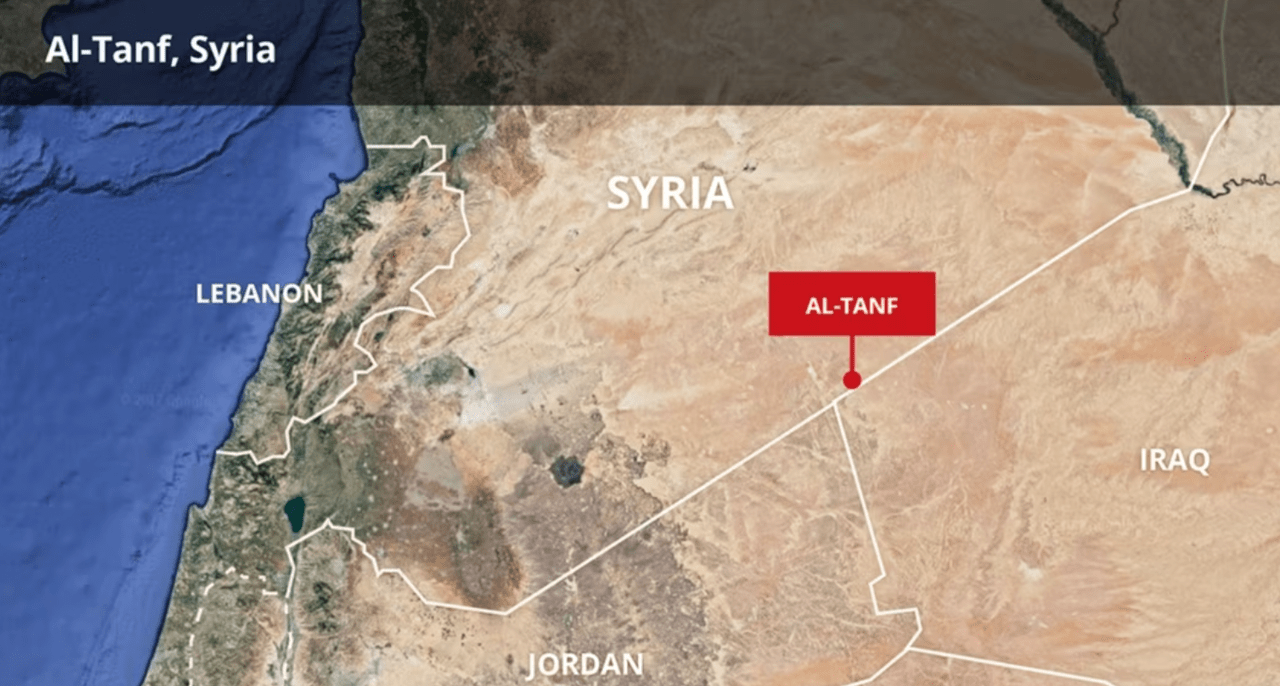
“This morning, three one-way attack drones attacked the At Tanf Garrison in Syria,” a CENTCOM statement began. “Two of the drones were shot down by Coalition Forces while one struck the compound, injuring two members of the Syrian Free Army partner force who received medical treatment.”

Drone launch as part of Iranian exercise, file image via Reuters.

The statement noted no American troops or personnel were injured. “Attacks of this kind are unacceptable – they place our troops and our partners at risk and jeopardize the fight against ISIS,” a CENTCOM spokesman added.

The al-Tanf Garrison has since 2016 been the most southerly US-occupied spot in Syria, lying near the border with Iraq and Jordan.

The Pentagon and prior Trump and now Biden administrations have justified the US presence there as key to the ‘counter-ISIS’ mission, despite the Islamic State terror group having long been driven underground. Some 800 to more than 1,000 US troops still occupy the oil-and-gas rich northeast of the country, denying Damascus and the Syrian population vital resources.

Citing the UK-based Syrian Observatory for Human Rights, the regional outlet The Cradle described that it was the first attack on that particular Syria-Iraq border facility in five months: 

SOHR sources stated that the drones carried out several strikes on the base, triggering a state of panic among US occupation forces and injuring members of the CIA-trained Maghawir al-Thawra (MaT) armed group, a US-backed Free Syrian Army (FSA) faction formed to ‘fight ISIS.’

Over the past year there have been sporadic rocket attacks on the US-occupied Conoco gas field in Syria’s eastern city of Deir Ezzor, and other locations.

Map via Google

Syria’s President Bashar al-Assad has meanwhile been engaged in intense talks mediated by Moscow, demanding that Turkish forces withdraw from all Syrian soil. Both the Turkish and Syrian sides ultimately want to see the US occupation squeezed out – something which Russia would like to see through as well. But it would require some level of rapprochement and coordinated strategy between Damascus and Ankara.

Tyler Durden
Fri, 01/20/2023 – 20:40

The Global Energy Crisis Is Redrawing Geopolitical Maps

0
The Global Energy Crisis Is Redrawing Geopolitical Maps

Authored by Haley Zaremba via OilPrice.com,

  • The global energy crisis is redrawing geopolitical maps.

  • Some experts are saying that the global south is increasingly gaining influence in geopolitics on the world stage as climate change is rewriting the rules of trade and consumption.

  • While the lesson to be learned from the European energy crisis should be to diversify, diversify, diversify both trade partners and forms of energy,n the global north is instead opting to narrow their trading options even further.

We are currently living through a “global energy crisis of unprecedented depth and complexity,” according to this year’s annual energy outlook from the International Energy Agency (IEA), which warns that “there is no going back to the way things were” before Covid-19 and Russia’s war in Ukraine rocked the globe. Together, these events have already reconfigured energy trade worldwide, but the shockwaves to the global economy and geopolitics in general are just getting started. 

Everyone seems to agree that we’re living through a large-scale reconfiguration of global geopolitics, but there is less consensus as to what is in store for world trade once the dust has settled. Some experts are saying that the global south is increasingly gaining influence in geopolitics on the world stage as climate change is rewriting the rules of trade and consumption, while others argue that reactionary protectionist practices in the developed world will only further marginalize and alienate less developed nations.  

recent opinion piece by Ravi Agrawal, the editor in chief of Foreign Policy, claims that “the most meaningful trend in global politics for 2023” is that “the global south is becoming more visible—and influential—in every arena.” As evidence, Agrawal cites that the most developed countries made major concessions to historically silenced and sidelined poorer countries a few months ago at COP27, including the landmark “loss and damage” fund to help the developing world contend with climate-related crises – a major turnaround from COP26. 

Agrawal also points to the fact that the balance of power has clearly shifted away from the United States, which was unable to convince many countries in the developing world to mirror U.S. sanctions against Russia. “Leaving aside the thorny issue of ethics in foreign policy,” Agrawal writes of the failed attempt to foster solidarity against the Kremlin, “leaders from New Delhi to Nairobi exhibited a growing confidence in asserting their own strategic interests instead of the West’s.”

While Agrawal may be right that these “younger and faster-growing” parts of the planet are becoming more assertive on the global stage, it’s less clear if he is correct in his assertion that “policymakers and businesses in the West will need to adapt.” Certainly he is correct to some extent, but the shift may not be as seismic as his op-ed would lead readers to believe. In fact, at the same time that these oft forgotten nations are gaining recognition and influence in some key geopolitical debates, their invisibility and outsider status is also being shored up in other arenas. 

The unprecedented energy crisis was kicked into overdrive by the West’s misguided reliance on a volatile and despotic regime, and now the United States, Europe, and its key allies are responding to that critical error by circling the wagons. Instead of following the ideals of free trade and the mandates of the World Trade Organization, protectionist policies are taking over which are sure to shut out poorer nations. 

While the lesson to be learned from the European energy crisis should be to diversify, diversify, diversify both trade partners and forms of energy, nations in the global north are instead opting to narrow their trading options even further. “Staking out spheres of influence and assessing the reliability and trustworthiness of suppliers and countries is the order of the day,” read a recent analysis from Stiftung Wissenschaft und Politik, the German Institute of International and Security Affairs. 

Indeed, Western leaders such as US Treasury Secretary Janet Yellen are openly calling for a shift of strategy, away from free market trading to the concept of “friend-shoring”, in which countries shift supply chains to “trusted countries” with similar values and political allegiances. The Euro­pean Commission’s Strategic Foresight Report 2022, too, has called for a similar shift in trade networks. 

This does not bode well for the global south. As the richest nations in the world increasingly trade only with each other, any viable pathway to economic development becomes much, much harder to navigate for the least developed countries. While it’s all well and good that wealthy nations have agreed to create a disaster fund for the nations that will be hit hardest by climate change, that measure is a drop in the bucket compared to what these nations actually need in terms of climate mitigation and adaptation. More to the point, these nations don’t need endless charity – they need their own robust economies and growth trajectories. That’s what really gives a nation any kind of voice or influence on the global stage, not a check cut by emissions guilt. 

Tyler Durden
Fri, 01/20/2023 – 20:20

Cardano Founder Considers Bailing Out CoinDesk, Says $200 Million Is “Overpriced”

0
Cardano Founder Considers Bailing Out CoinDesk, Says $200 Million Is “Overpriced”

CoinDesk Inc., a cryptocurrency news website whose parent company is financially troubled Digital Currency Group Inc., reached out to investment bankers at Lazard Ltd. for a potential sale. 

“Over the last few months, we have received numerous inbound indications of interest in CoinDesk,” CoinDesk CEO Kevin Worth told WSJ. 

One interested party in CoinDesk is Cardano blockchain founder Charles Hoskinson. 

On Thursday, Hoskinson tweeted a video explaining the price of the crypto-focused media outlet is around $200 million, adding it might be overpriced if the valuation is based on “a 2021 number when everything was on the cocaine and hookers era, and everyone was making great money.” He then asked if the valuation had been readjusted for 2022 numbers during the crypto bear market. 

“At $200 million, I believe it’s a bit overpriced,” he said. “I could afford it if I really wanted to.” 

Hoskinson said his goal is to revive “journalistic integrity” in the crypto news race. He noted Cardano had a bunch of bad press from various media outlets with agendas — citing how FTX funded The Block. 

He said it might be cheaper to build a “more decentralized organization” with $5 to $10 million. 

He pointed out that CoinDesk doesn’t have a good video unit yet and lacks a metaverse component. 

Here’s Hoskinson talking about CoinDesk:

And the news of a potential sale comes as Genesis Global Capital filed for Chapter 11 on Thursday night. Genesis and CoinDesk are both parent companies of Digital Currency Group, which Barry Silbert operates. Perhaps Silbert’s crypto empire is in a liquidity crunch. 

Tyler Durden
Fri, 01/20/2023 – 20:00

US Expands Training Of Taiwanese Military By Sending National Guard Units

0
US Expands Training Of Taiwanese Military By Sending National Guard Units

Authored by Dave DeCamp via AntiWar.com,

The US has expanded its training of the Taiwanese military to include a program involving the US National Guard, Nikkei Asia reported on Thursday.

A source told Nikkei that the training began sometime before spring 2022. In May 2022, Taiwanese President Tsai Ing-wen announced cooperation with the National Guard while hosting Sen. Tammy Duckworth (D-IL) in Taipei. “The US Department of Defense is now proactively planning cooperation between the US National Guard and Taiwan’s defense forces,” Tsai said. “We look forward to closer and deeper Taiwan-US cooperation on matters of regional security.”

Image source: Stars & Stripes. A Taiwanese marine prepares to launch a drone over the Taiwan Strait.

The report said that the training already began before Tsai made the announcement during Duckworth’s visit. Since the training started, the National Guard has trained Taiwanese troops in both Taiwan and inside the US.

National Guard training overseas typically involves a unit from a single state, but the report said the training in Taiwan involves units from multiple US states, including Hawaii. The US and Taiwan rarely acknowledge their military cooperation, and a Pentagon spokesman declined to comment on the National Guard Training.

“We don’t have a comment on specific operations, engagements or training, but I would highlight that our support for, and defense relationship with, Taiwan remains aligned against the current threat posed by the People’s Republic of China,” the Pentagon told Nikkei.

In October 2021, The Wall Street Journal reported that a US special operations unit and a contingent of Marines were in Taiwan and had been training Taipei’s military for at least a year. Tsai later confirmed the report, marking the first time a Taiwanese leader acknowledged a US military presence in Taiwan since Washington severed diplomatic relations with Taipei in 1979.

The growing US-Taiwan military ties anger Beijing, which views the policies as an affront to the one-China policy. The 2023 National Defense Authorization Act President Biden recently signed into law includes measures to increase US and Taiwanese military cooperation even more.

The US is also encouraging Japan’s military buildup and is planning to expand its military facilities in the Philippines as part of its effort to counter China in the region. The top US Marine Corps general in Japan described the effort as “setting the theater” and said the US did something similar in Ukraine starting in 2014, after the US-backed coup that deposed former Ukrainian President Viktor Yanukovych.

The US launched a similar National Guard training program for Ukraine in 2014, known as Joint Multinational Training Group-Ukraine, that rotated through units from different states. US military officials said 23,000 Ukrainians were trained under the program. The US withdrew its National Guard troops from Ukraine shortly before Russia’s invasion.

Tyler Durden
Fri, 01/20/2023 – 19:40

Trump To Host First 2024 Campaign Event With Graham, McMaster In South Carolina

0
Trump To Host First 2024 Campaign Event With Graham, McMaster In South Carolina

Authored by Lorenz Duchamps via The Epoch Times (emphasis ours),

The campaign of former President Donald Trump announced on Tuesday that Sen. Lindsey Graham (R-S.C.) and Gov. Henry McMaster will join Trump on Jan. 28 as the Republican will make the first public appearance of his 2024 White House run.

Former President Donald Trump arrives to speak at the Mar-a-Lago Club in Palm Beach, Fla., on Nov. 15, 2022. (Alon Skuy/AFP via Getty Images)

Last week, campaign spokesman Steven Cheung confirmed with the Associated Press (AP) that Trump will host an event in South Carolina later this month, but no specific details were immediately announced at the time.

Trump, 76, hinted at a 2024 run for more than a year and formally announced his presidential bid in a prime-time speech at his Mar-a-Lago resort in Florida in November 2022.

The two well-known South Carolina Republicans will attend the Jan. 28 event at Columbia’s state capitol building, where the former president will unveil his campaign’s state leadership team, according to Tuesday’s announcement.

A person familiar with the matter speaking to AP on the condition of anonymity said the event will also include members of South Carolina’s congressional delegation, as well as state lawmakers.

Trump has not hit the campaign trail since he formally announced his presidential run on Nov. 15, 2022. Instead, he made occasional appearances before invited guests at his Mar-a-Lago estate.

The event comes as two other South Carolina Republicans—former Gov. Nikki Haley and Sen. Tim Scott—are both considered potential challengers for the Republican nomination.

Former U.N. Ambassador Nikki Haley speaks to guests at the Republican Jewish Coalition Annual Leadership Meeting in Las Vegas, Nev., on Nov. 19, 2022. (Scott Olson/Getty Images)

Haley, who will turn 51 on Jan. 20, said about a week after Trump announced his presidential bid in mid-November that she’s considering launching a 2024 presidential bid, reneging on a promise she made in 2021 that she would not run if Trump ran.

A lot of people have asked if I’m going to run for president now that the midterms are over, I’ll look at it in a serious way and I’ll have more to say soon,” she said during an appearance at a Republican Jewish Coalition meeting. Haley was the U.S. ambassador to the United Nations while Trump was in office.

Scott, recently reelected to what he has said will be his final Senate term, has been making visits in other early-voting states and launched a political action committee that could become a presidential campaign vehicle.

In 2016, when South Carolina was the third state after Iowa and New Hampshire, Trump’s statewide victory helped solidify his status as the GOP front-runner.

Tyler Durden
Fri, 01/20/2023 – 17:40

Facebook And Instagram Could Soon Allow Transgender And Non-Binary People To Show Their Breasts

0
Facebook And Instagram Could Soon Allow Transgender And Non-Binary People To Show Their Breasts

Just when we thought that there couldn’t possibly be more useless detritus floating around on Facebook and Instagram comes the news that both social media platforms could soon be “allowing transgender and non-binary users to flash their bare breasts”.

And in a real slap to the face for equality, women who were born biologically female will have no such option, according to a new report by the NY Post.

Regardless, Meta’s Oversight Board, which the company refers to as its “Supreme Court” for moderation and censorship policies, ordered both Facebook and Instagram to “lift a ban on images of topless women for anyone who identifies as transgender or non-binary,” the Post wrote. 

The board’s decision stated: “The same image of female-presenting nipples would be prohibited if posted by a cisgender woman but permitted if posted by an individual self-identifying as non-binary.”

“Time to fire up the ole’ Facebook…”

And hey, we’re asking for a friend, but we wonder how much the position of “breast content moderator” is going to pay. After all, the company is reportedly going to be relying on “human reviewers” to moderate such content, the report says. 

Those reviewers are going to be tasked with “quickly assess[ing] both a user’s sex, as this policy applies to ‘female nipples,’ and their gender identity,” the Post wrote. And this isn’t some hastily thrown together initiative – the board has added the complex nuance that there will be “additional nipple-related exceptions based on contexts of protest, birth giving, after birth, and breastfeeding which it did not examine here, but also must be assessed.”

“We had reinstated this content prior to the decision, recognizing that it should not have been taken down,” the company told the Post. “We are constantly evaluating our policies to help make our platforms safer for everyone. We know more can be done to support the LGBTQ+ community, and that means working with experts and LGBTQ+ advocacy organizations on a range of issues and product improvements.”

“We welcome the board’s decision in this case,” the concluded. Yeah, but what about the rest of us?

Tyler Durden
Fri, 01/20/2023 – 17:20