73.1 F
Chicago
Saturday, August 1, 2026
Home Blog Page 4013

Contrarian Thoughts On The Petro-Yuan And Gold-Backed Currencies

0
Contrarian Thoughts On The Petro-Yuan And Gold-Backed Currencies

Authored by Charles Hugh Smith via OfTwoMinds blog,

Rather than cheer the concept of a new currency, we’re better served to look at the velocity of that currency and the cycles of investing that currency in assets denominated in that currency for a low-risk return.

Longtime readers know not to expect me to rubber-stamp anything, be it the status quo or proposed alternatives. Our interests are best served by screening everything through the mesh of independent analysis, a.k.a. contrarianism. Which brings us to the two sources of alt-media excitement in the currency space, the petro-yuan and another wave of proposed gold-backed currencies.

I’m all for competing currencies. The more transparent and open the market for currencies, the better. In my view, everyone should be able to buy and trade whatever currencies they feel best suits their goals and purposes.

In all the excitement over de-dollarization, some basics tend to get overlooked.

1. The yuan remains pegged to the US dollar, so it remains a proxy for the USD. It will only become a true reserve currency when China lets the yuan float freely on the global FX market and yuan-denominated bonds also float freely on global bond markets. In other words, a currency can only be a reserve currency rather than a proxy if the price and risk of the currency is discovered by global markets, not centralized monetary/state authorities.

2. Most commentators stop on first base of the oil-currency cycle: China buys oil from exporting nations by exchanging yuan for oil. So far so good. But what can the oil exporters do with the yuan? That’s the tricky part: the petro-yuan has to work not just for China but for the oil exporters who will be accumulating billions of yuan.

The oil exporters can hold some yuan as reserves, but the global market for yuan is not very large. What assets can they buy with yuan? Again, the global market of assets denominated in yuan is limited. The oil exporters can buy assets in China, of course, but with China’s property bubble finally popping, deglobalization sapping its export sector and Xi’s widespread disruption of private capital, the bloom is off the China Story in fundamental ways.

Why would oil exporters invest billions of yuan while Chinese wealth is leaving China?

3. The net result of these dynamics is that oil exporters’ yuan will end up in China’s central bank, exchanged for euros and US dollars which will then circulate in the global economy. The money velocity of the petro-yuan will be near-zero if there’s limited markets for investing hundreds of billions of yuan in low-risk assets, with low-risk being defined as diversified.

The world isn’t just multipolar; it’s fragmented, and there are lots of places to invest. Being limited to places where the yuan can be exchanged for low-risk assets isn’t low-risk because it isn’t diversified.

4. The problem is never the issuance of currency, it’s what to do with that currency once you’ve traded oil for it. Scale, ubiquity and transparency are what owners of capital value. China’s financial system has neither the scale, ubiquity or transparency necessary to circulate hundreds of billions of yuan globally without exchanging them for euros, dollars or yen.

If that’s the case, then what’s actually changed, other than the introduction of an intermediary currency that’s still pegged to the US dollar?

As for gold-backed currencies, there are two fundamentals that are often overlooked.

1. “Backed by gold” means nothing. It’s the exchange rate of the currency to gold that counts. 

The problem here is the issuing central bank / state can change the exchange rate at their whim, i.e. by fiat. Should the issuing entity decide it needs more currency, it devalues the currency by increasing the number of units exchanged for an ounce of gold. This is entirely arbitrary and not within the control of those holding the currency.

So if the issuing entity starts out saying that 100 units of currency equal one ounce of gold, and then later changes that to 200 units of currency equal one ounce of gold, those who own the currency “backed by gold” have just lost half their purchasing power.

Central banks and states always seem to need more currency, and the temptation is always to devalue the currency by issuing more units. “Backed by gold” doesn’t change this.

2. “Backed by gold” means nothing unless the currency can be converted to gold. 

If there is no conversion mechanism, “backed by gold” has no actual financial value. It’s just nice-sounding verbiage.

3. “Backed by gold” means the currency isn’t supported by bonds paying interest. 

Bonds paying interest provide income, which is attractive, and the interest paid acts as a governor on risk and other financial fundamentals of the economy that’s ultimately supporting the currency.

If the nation issuing the “gold-backed currency” won’t allow conversion of the currency to gold, the currency is actually a proxy for that nation’s economy and governance. If the government arbitrarily intervenes in the private-capital economy as a matter of policy, if governance is opaque and shadow-banking dominates, then the currency will be at risk regardless of claims to the contrary.

Rather than cheer the concept of a new currency, we’re better served to look at the velocity of that currency and the cycles of investing that currency in assets denominated in that currency for a low-risk return. The entire point of a currency is to circulate to the benefit of the owners of the currency. Currencies don’t become useful simply by being issued. Creating an entire transparent ecosystem for the currency is trickier than introducing a currency with much fanfare.

*  *  *

My new book is now available at a 10% discount ($8.95 ebook, $18 print): Self-Reliance in the 21st CenturyRead the first chapter for free (PDF)

Become a $1/month patron of my work via patreon.com.

Tyler Durden
Fri, 01/20/2023 – 07:45

10% Of All Auto Sales Last Year Were EVs

0
10% Of All Auto Sales Last Year Were EVs

While it may have taken trillions of dollars in government subsidies and the suspension of most logic and critical thinking about how EV batteries are made and the power used to charge such vehicles, EVs have still hit a milestone.

Sales globally now make up 10% about the global market of auto sales, according to a new report from the Wall Street Journal. The global growth has been helped along by massive adoption in places like China and Europe, while sales in the U.S. still lag.

Data from LMC Automotive and EV-Volumes.com confirms that global sales of EVs were about 7.8 million units last year, up 68% from the year prior. 

Ralf Brandstätter, the head of Volkswagen AG’s China business, told the WSJ that China has really helped drive the change: “Last year, every fourth vehicle we sold in China was a plug-in, and this year it will be every third auto. We haven’t reached the tipping point yet, but we’re expecting to get there between 2025 and 2030.”

EVs made up 11% of total sales in Europe and 19% of total sales in China, the report says. 807,180 fully electric vehicles were sold in the U.S. last year, accounting for 5.8% of all vehicles sold. This number is up from 3.2% the year prior and was helped along by Tesla being the world’s most dominant EV maker, WSJ notes.

Electric vehicles accounted for 25% of new vehicle production in Germany last year and, in December, the country sold more EVs than conventional vehicles as customers rushed to cash in on government incentives before they were cut heading into 2023. BMW even saw sales of EVs rise when overall vehicles sales were down last year. EV sales “more than doubled” despite total sales being down 5%. 

VW saw a similar trend: new car sales fell 7% to 8.3 million on the year, but electric vehicle sales were up 26% over the same period. Ford and Mercedes also saw their EV sales “more than double” last year. 

BMW sales chief Pieter Nota commented: “We are confident that we can repeat this success next year, because we have a continued high order backlog for fully electric models.”

But just because some subsidies are ending doesn’t mean that EV pricing is going to move higher in the new year. A lot of the pricing power that auto companies had due to the robust economy and supply chain holdups has now worked its way out of the system. This, combined with continued advancements in EV technology, may help to keep prices steady – or in the case of Tesla, maybe even move them lower than last year. 

Peter Fuss, an auto analyst with Ernst & Young, concluded: “Demand is likely to weaken in the coming year. The weak economy will cause retail and business consumers to be more reluctant. And it is possible that supply will outpace demand and we will begin to see discounts again.”

Tyler Durden
Fri, 01/20/2023 – 07:20

“I Have Difficult News To Share”: Google CEO Tells Employees 12,000 Jobs Will Be Cut

0
“I Have Difficult News To Share”: Google CEO Tells Employees 12,000 Jobs Will Be Cut

Google parent Alphabet Inc. on Friday became the latest addition to an increasing list of technology companies that have announced plans to reduce headcount because of overhiring during the last several years and fears of recession. 

The company plans to fire 12,000 employees or reduce headcount by about 6% — the largest-ever round of layoffs for the tech firm.

Chief Executive Officer Sundar Pichai wrote an email to employees about the layoffs on Friday, posted on the company’s blog, titled “A difficult decision to set us up for the future.” 

“I have some difficult news to share,” Pichai wrote at the start of the email. He cut right into it, telling employees:

We’ve decided to reduce our workforce by approximately 12,000 roles. We’ve already sent a separate email to employees in the US who are affected. In other countries, this process will take longer due to local laws and practices.

He explained the business environment a few years ago had dramatically changed, explaining:

Over the past two years we’ve seen periods of dramatic growth. To match and fuel that growth, we hired for a different economic reality than the one we face today.

The reductions will be across Alphabet units and geographies: 

So, we’ve undertaken a rigorous review across product areas and functions to ensure that our people and roles are aligned with our highest priorities as a company. The roles we’re eliminating reflect the outcome of that review. They cut across Alphabet, product areas, functions, levels, and regions

Following the news, Alphabet’s shares are up nearly 2% in premarket trading. 

The cuts mark the latest high-profile layoffs from some of the biggest tech names. Days ago, rival Microsoft Corp said it would slash its headcount by 10,000 workers. Amazon, Meta, and others have also announced job cuts as macroeconomic headwinds continue to mount. 

Here’s Pichai’s full letter to employees:

Sundar sent the following email to Google employees earlier today.

Googlers,

I have some difficult news to share. We’ve decided to reduce our workforce by approximately 12,000 roles. We’ve already sent a separate email to employees in the US who are affected. In other countries, this process will take longer due to local laws and practices.

This will mean saying goodbye to some incredibly talented people we worked hard to hire and have loved working with. I’m deeply sorry for that. The fact that these changes will impact the lives of Googlers weighs heavily on me, and I take full responsibility for the decisions that led us here.

Over the past two years we’ve seen periods of dramatic growth. To match and fuel that growth, we hired for a different economic reality than the one we face today.

I am confident about the huge opportunity in front of us thanks to the strength of our mission, the value of our products and services, and our early investments in AI. To fully capture it, we’ll need to make tough choices. So, we’ve undertaken a rigorous review across product areas and functions to ensure that our people and roles are aligned with our highest priorities as a company. The roles we’re eliminating reflect the outcome of that review. They cut across Alphabet, product areas, functions, levels and regions.

To the Googlers who are leaving us: Thank you for working so hard to help people and businesses everywhere. Your contributions have been invaluable and we are grateful for them.

While this transition won’t be easy, we’re going to support employees as they look for their next opportunity.

In the US:

  • We’ll pay employees during the full notification period (minimum 60 days).
  • We’ll also offer a severance package starting at 16 weeks salary plus two weeks for every additional year at Google, and accelerate at least 16 weeks of GSU vesting.
  • We’ll pay 2022 bonuses and remaining vacation time.
  • We’ll be offering 6 months of healthcare, job placement services, and immigration support for those affected.
  • Outside the US, we’ll support employees in line with local practices.

As an almost 25-year-old company, we’re bound to go through difficult economic cycles. These are important moments to sharpen our focus, reengineer our cost base, and direct our talent and capital to our highest priorities.

Being constrained in some areas allows us to bet big on others. Pivoting the company to be AI-first years ago led to groundbreaking advances across our businesses and the whole industry.

Thanks to those early investments, Google’s products are better than ever. And we’re getting ready to share some entirely new experiences for users, developers and businesses, too. We have a substantial opportunity in front of us with AI across our products and are prepared to approach it boldly and responsibly.

All this work is a continuation of the “healthy disregard for the impossible” that’s been core to our culture from the beginning. When I look around Google today, I see that same spirit and energy driving our efforts. That’s why I remain optimistic about our ability to deliver on our mission, even on our toughest days. Today is certainly one of them.

I’m sure you have many questions about how we’ll move forward. We’ll be organizing a town hall on Monday. Check your calendar for details. Until then, please take good care of yourselves as you absorb this difficult news. As part of that, if you are just starting your work day, please feel free to work from home today.

-Sundar

Tyler Durden
Fri, 01/20/2023 – 06:25

Men Live Longer (Happier?) Lives Taking ‘Little Blue Pill’; New Study Finds

0
Men Live Longer (Happier?) Lives Taking ‘Little Blue Pill’; New Study Finds

The second study in two years shows Viagra might reduce the risk of heart disease in men. 

Researchers from the University of Southern California (USC) found that men who took the little blue pill experienced a 39% reduction in heart disease. 

USC researchers gathered data from 70,000 men with an average age of 52 who were diagnosed with erectile dysfunction within the last decade. They believe Viagra increases blood flow and oxygen into the heart and throughout the body. 

Viagra users also were 17% less likely to suffer heart failure and had a 22% reduction in developing unstable angina. All of those conditions are fatal if untreated. Men who used the drug achieved longer life and decreased the risk of early death by 25%. 

“Viagra was associated with lower incidence of [heart complications], cardiovascular death, and overall mortality risk compared to non-exposure,” the researchers wrote.

The last study, published in the American College journal of Cardiology and titled “Association of Phosphodiesterase-5 Inhibitors Versus Alprostadil With Survival in Men With Coronary Artery Disease,” showed older men with cardiovascular disease who took the erectile dysfunction pill lived a healthier life. 

According to the American Heart Association, erectile dysfunction could be an early warning sign of heart disease in otherwise healthy men.

Tyler Durden
Fri, 01/20/2023 – 05:45

Russia Remains Top Seaborne Oil Supplier To Europe Despite Sanctions

0
Russia Remains Top Seaborne Oil Supplier To Europe Despite Sanctions

By Charles Kennedy of Oilprice.com,

While the European Union’s seaborne imports of Russian crude oil declined by just over 12% last year, Russia still enjoyed status as the top seaborne oil supplier to the bloc, despite sanctions…

According to data from maritime sector brokerage firm Banchero Costa, last year saw the EU import 98.8 million tonnes of Russian crude via sea, down from 112.5 million tonnes in 2021 and 128.5 million tonnes in 2019.

For 2022, Russia still accounted for 21.9% of European seaborne imports of Russian crude, followed by the North Sea, which accounted for 17% and North Africa, at 15.4%.

North Sea shipments of oil to Europe were up by 19.2% year-on year, and well above 2019 numbers, while North African shipments of oil to Europe increased by 6%. Shipments from West Africa to Europe were up by 27.5% for 2022. The United States saw a 43.1% increase of crude oil exports to Europe for a record 51.4 million tonnes.

But the biggest surge came from the Arabian Gulf, registering a 76.4% increase year-on-year in 2022, though this is still down from the levels of 2019, while the U.S. exports to Europe were record-breaking.

Overall, Banchero said, citing Refinitiv data, “2022 has turned out to be a very positive year for crude oil trade, despite the surging oil prices and risks of economic recession”.

Globally, the data shows an 8.5% increase in total crude oil loadings, year-on-year. Total loadings came in at 2,047.3 million compared to 1,886.3 million for 2021 and 2,110.5 million tonnes for 2019.

Though Russia has seen its exports to the EU decline by over 12% last year, the data shows that overall it saw an increase in exports by 10.3% to 2018.5 million tonnes. That figure is only slightly below 2019 levels.

Likewise, the United States also experienced a surge in exports of crude oil, gaining over 22% in the twelve months of 2022, as did Saudi Arabia, showing an over 17% increase.

This compares to West Africa and the North Sea, both of which saw a decline in oil exports for 2022.

On the demand side of the equation, China’s intake of seaborne crude oil overall dropped by 3.6% last year, while India saw the reverse: an 11.7% increase in imports.

Tyler Durden
Fri, 01/20/2023 – 05:00

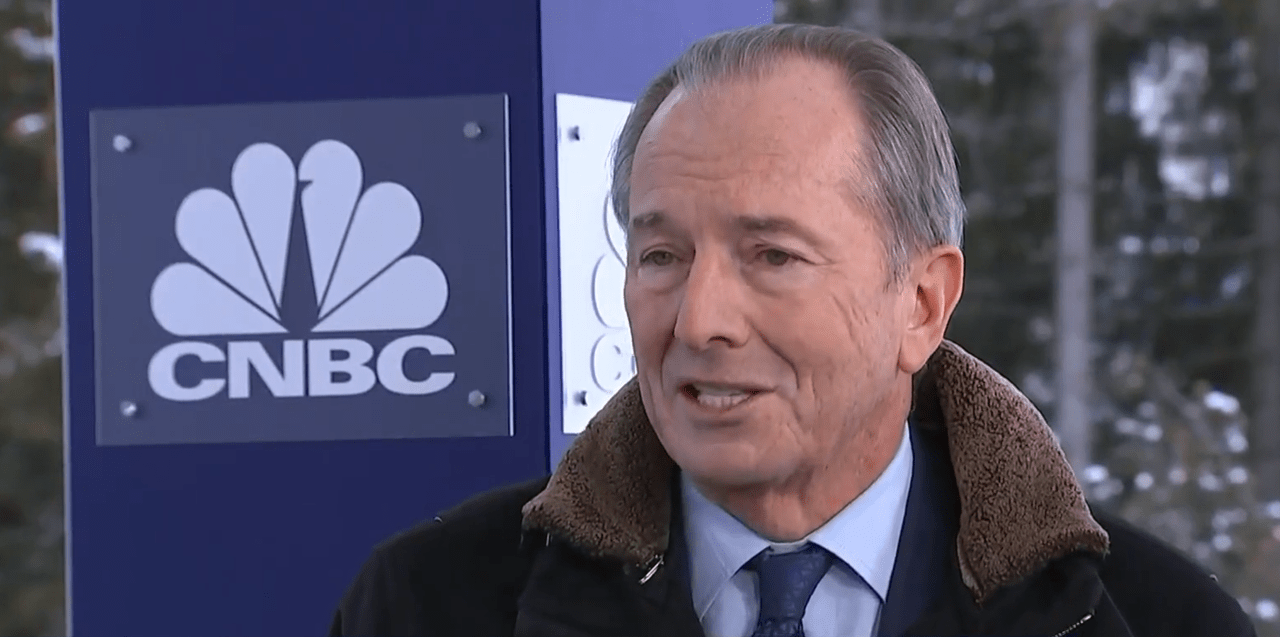
Morgan Stanley CEO: ‘Let’s Be Honest, Davos Is An Echo Chamber’

0
Morgan Stanley CEO: ‘Let’s Be Honest, Davos Is An Echo Chamber’

Morgan Stanley CEO James Gorman said on Thursday that the World Economic Forum at Davos is an “echo chamber,” telling Bloomberg “…this echo chamber we live in here in Davos where everybody’s basically repeating back to each other what they’ve heard from the last person. Let’s be honest.

Gorman echoed Tuesday comments by Semafor‘s Liz Hoffman, who in an article titled “Don’t bet on the Davos consensus,” writes that the annual meeting of the elites was “the world’s most expensive echo chamber, where nobody makes friends by being a bummer.”

The Davos consensus is shaped and refined as the weeklong conference goes on, passed among attendees alongside the plates of toothpicked olives and Gruyère cubes. By Friday it approaches canon.

And it is almost always wrong. An investor could do well boiling it down to a few investment theses and building a basket of assets to match — then wagering against it.

I’m hardly the first person to have pointed this out. Glenn Hutchins, the veteran investor who delights in needling his peers, says it nearly every year he’s there. -Semafor

“There’s nothing wrong with consensus views, but the key is to ask yourselves, where might we be wrong? Where are the blinders? And Davos isn’t conducive to that. You’re in an intense environment with very little time and very thin air,” said veteran investor Glenn Hutchins, who added that the right people are being asked the wrong question.

“What a potash CEO in Canada can tell me about his next 12 months of production and what that might mean for agricultural production is way more valuable than asking for his views on globalization.”

The WEF itself in 2017 actually asked two psychology professors why Davos Man is always wrong. One of them replied: “That’s actually not true…Whether the Davos Man is more accurate than the dart-throwing chimpanzee is another question.”

Gorman opines on inflation, Twitter

Giving some time to CNBC, Gorman said “Clearly inflation peaked. That’s no longer a question, it’s a fact,” adding, “The question is can they get to 2% and how hard will they try to get to 2% versus stabilizing around 3-4.”

He also spoke to China’s “major, major pivot.”

Gorman, 64, also said he isn’t worried about the debt ceiling impasse in Washington.

I’m confident that politics will finally get to the right place,” he said. “The other option is not an option.”

And just today, the Treasury announced extraordinary measures to grapple with the $31.4 trillion debt ceiling.

He also decried the “echo chamber” at Davos, saying “..this echo chamber we live in here in Davos where everybody’s basically repeating back to each other what they’ve heard from the last person. Let’s be honest.”

When asked if Morgan Stanley might end up owning Twitter – given that roughly $3.4 billion of its balance sheet is tied up with loans it made as part of Elon Musk’s acquisition, Gorman said it “could not.”

“Twitter’s a great company,” said Gorman, adding “Elon Musk is one of the greatest entrepreneurs and business people in the last century.”

On Tuesday Gorman expressed optimism over the markets – saying on an earnings call, “I’m highly confident that when the Fed pauses, deal activity and underwriting activity will go up. I would bet the year on that, in fact,” adding “We’re not of the view that we’re heading into a dark period. Whatever negativity in the world is out there. That’s not our house view.”

“There’s a lot of money sitting around waiting to be put to work. Our job is to be the flow of capital between those who have it and those who need it. So I’m pretty confident actually about the outlook.

Tyler Durden
Fri, 01/20/2023 – 04:15

Europeans Lowered Heating Temperatures Amid The Energy Crisis

0
Europeans Lowered Heating Temperatures Amid The Energy Crisis

By Charles Kennedy of Oilprice.com,

Households in Europe have lowered the target temperatures in their smart thermostats this winter amid high energy bills and calls from governments to conserve energy, according to data from smart thermostats installed by German firm Tado and cited by Reuters.

Authorities in many European countries last autumn called on households and small businesses to conserve energy this winter as the continent was facing a possible shortage of gas supply after the Russian pipeline deliveries were slashed and after electricity prices surged, also due to low availability of the French nuclear power-generating fleet. In many countries, the thermostats in public buildings shouldn’t exceed 19 degrees Celsius (66.2 F) this winter.

Based on data for the last four winters – including this winter – households in Europe with installed Tado smart thermostats have lowered their target temperature so far this winter.

Households in northwestern Europe lowered the target temperatures by the most—by nearly 1 degree Celsius in the UK, the Netherlands, and Belgium.

In the UK, where the cost-of-living crisis has been acutely felt by households, a total of 79.6% of Tado-linked homes have dialed down their temperature settings, while only 47% of such homes in Norway did, per the data quoted by Reuters.  

It remains to be seen whether the warm start to the year in most of Europe and still ample gas levels in storage in mid-January will break the resolve of the Europeans to save energy.

In Germany, the situation with gas supply looks much better now compared to the bleak expectations of authorities before the heating season began.

Still, the German Federal Network Agency, Bundesnetzagentur, continues to call for energy and gas conservation.

Klaus Müller, the president of the agency, said on Tuesday, “Even if we can be optimistic about avoiding a gas shortage for the winter of 22/23, we have to start thinking about 23/24 now. To do this, we must continue to save gas, become more energy-efficient, expand renewables, connect LNG terminals and fill storage facilities.”   

Tyler Durden
Fri, 01/20/2023 – 03:30

Over 1 Million Workers Hit French Streets Against Macron’s Pension Reform

0
Over 1 Million Workers Hit French Streets Against Macron’s Pension Reform

President Macron’s retirement and pension reform program has unleashed the expected mass demonstrations, strikes, and likely soon to be riots on the streets of France. 

The much anticipated reform bill headed through parliament will see the official retirement age rise by two years, from the age of 62 to 64. And just like that, it’s popping off… as French authorities brace for more chaos in the coming weeks. Previously, the unions promised the “mother of all battles”.

As a result, public transport has seen significant disruptions in service, while many schools are already closed, amid some 200+ well-attended protests all across France on Thursday. 

Various forms of public transport were brought to a standstill in Paris, Toulouse, Marseille, Nantes and Nice, due to the strikes, and the Eiffel Tower was closed to visitors as well as the protests spread.

Eight major unions had designated Thursday the “first day of strikes and protests” – with promises of many more to come.

France’s education ministry said that over 40% of primary school teachers, as well as one-third of high school teachers are participating in the strikes, forcing many to close their doors for the day, and possibly weeks ahead.

French rail authority SNCF reported a “severe disruption” across the country, with metro lines in the capital having to implement partial closures. “On some rail lines, as few as one in 10 services were operating, while the Paris metro was running a skeleton service,” BBC reported.

A reported over one million people total are believed to have participated in Thursday’s protests and strikes, according to the unions, which plan to keep up the intense pressure until Macron’s bill is defeated.

Likely the demonstrations will get more and more radical and violent, as French protests tend to go

All the country’s unions – including so-called “reformist” unions that the government had hoped to win to its side – have condemned the measure, as have the left-wing and far-right oppositions in the National Assembly.

“On Thursday the walls of the Élysée palace must tremble,” Communist Party leader Fabien Roussel said on Tuesday.

In many places, crowds clashed with police, who deployed riot control measures including tear gas and batons, as they struggled to clear streets against vastly superior numbers.

Pleased with the huge turnout, the major unions are planning another nationwide strike and demonstration for January 31st.

Tyler Durden
Fri, 01/20/2023 – 02:45

Left-Wing German Politicians Furious At Appointment Of New Defense Minister… Because He’s A Man

0
Left-Wing German Politicians Furious At Appointment Of New Defense Minister… Because He’s A Man

Authored by Thomas Brooke via Remix News,

Boris Pistorius’ appointment to the German Ministry of Defense contravenes Chancellor Scholz’s pledge for a gender-equal cabinet…

With Boris Pistorius set to be sworn in as Germany’s latest defense minister on Thursday, several politicians, including some within Chancellor Olaf Scholz’s own party, expressed their fury that the federal government will once again be a majority-male cabinet.

With Pistorius set to replace the outgoing Christine Lambrecht, whose reign at the German Ministry of Defense was littered with PR disasters and incompetence, the make-up of the federal government will be male-orientated — 9 males to 7 females.

The move temporarily contravenes a pledge made by then-Vice Chancellor Scholz in 2020, who tweeted:

“I am making the promise here today: At least half of the cabinet that I lead as Federal Chancellor is made up of women!”

Common sense suggests that competence should take precedence over gender quotas, particularly at a time of crisis, and Scholz believes his new man for defense has the “experience, competence, and assertiveness” needed to be “the right person for the Bundeswehr at this pivotal time.”

Other politicians, however, disagree, saying Scholz’s decision to appoint a man to the job is a dereliction of his electoral pledge for gender equality.

Maria Noichl, the chair of the Working Group of Social Democratic Women (ASF) and a member of Scholz’ SPD, demanded:

“Fifty-fifty must continue to apply. That is what the SPD stands for.”

Left-wing MP Emilia Fester, of the German Greens, tweeted on Tuesday:

“Is the Chancellor afraid of more competent women at his cabinet table? Pity!”

Transgender Greens MP Nyke Slawik blasted the fact that “several extremely qualified women were interviewed” for the role, but Scholz opted for Pistorius, adding:

“It’s a shame that the chancellor and the SPD gave up the goal they had set for themselves: parity in the cabinet.”

Sven-Christian Kindler, also of the Greens, quipped that “parity in management positions is not a ‘nice thing to have.’ It should be a matter of course in 2023.” Meanwhile, his party’s co-leader, Omid Nouripour, added, “We Greens will always make our contribution to parity — also in the cabinet.”

On Wednesday, government spokesperson Wolfgang Büchner was cited in the German tabloid Bild, insisting a “good and effective” personnel decision had been made. But he also alluded to the idea that gender parity in the cabinet may have to be restored.

The German tabloid highlighted, however, that not a single male minister in the cabinet had wanted to go on record to reveal they would be willing to make their position available to an equally qualified woman.

Pistorius will soon have the unenviable task of attempting to repair his country’s image among its Western allies as he takes charge of an ailing Bundeswehr. His challenges include overhauling the country’s security policy, but he must also face international calls to approve the sending of heavy-armored battle tanks to Kyiv, a move the Chancellor has so far refrained from making.

Tyler Durden
Fri, 01/20/2023 – 02:00

360-Degree Surveillance: How Police Use Public-Private Partnerships To Spy On Americans

0
360-Degree Surveillance: How Police Use Public-Private Partnerships To Spy On Americans

Authored by John and Nisha Whitehead via The Rutherford Institute,

We live in a surveillance state founded on a partnership between government and the technology industry.

– Law Professor Avidan Y. Cover

In this age of ubiquitous surveillance, there are no private lives: everything is public.

Surveillance cameras mounted on utility poles, traffic lights, businesses, and homes. License plate readers. Ring doorbells. GPS devices. Dash cameras. Drones. Store security cameras. Geofencing and geotracking. FitBits. Alexa. Internet-connected devices.  

There are roughly one billion surveillance cameras worldwide and that number continues to grow, thanks to their wholehearted adoption by governments (especially law enforcement and military agencies), businesses, and individual consumers.

With every new surveillance device we welcome into our lives, the government gains yet another toehold into our private worlds.

Indeed, empowered by advances in surveillance technology and emboldened by rapidly expanding public-private partnerships between law enforcement, the Intelligence Community, and the private sector, police have become particularly adept at sidestepping the Fourth Amendment.

As law professor Avidan Y. Cover explains:

A key feature of the surveillance state is the cooperative relationship between the private sector and the government. The private sector’s role is vital to the surveillance both practically and legally. The private sector, of course, provides the infrastructure and tools for the surveillance… The private sector is also critical to the surveillance state’s legality. Under the third-party doctrine, the Fourth Amendment is not implicated when the government acquires information that people provide to corporations, because they voluntarily provide their information to another entity and assume the risk that the entity will disclose the information to the government. Therefore, people do not have a reasonable expectation of privacy in their calling data, or potentially even their emails. As a result, the government does not normally need a warrant to obtain information transmitted electronically. But the Fourth Amendment is not only a source of protection for individual privacy; it also limits government excess and abuse through challenges by the people. The third-party doctrine removes this vital and populist check on government overreach.

Critical to this end run around the Fourth Amendment’s prohibitions against unreasonable searches and seizures by government agents is a pass play that allows police to avoid public transparency requirements (open bids, public meetings, installation protocols) by having private companies and individuals do the upfront heavy lifting, leaving police to harvest the intel on the back end.

Stingray devices, facial recognition technology, body cameras, automated license plate readers, gunshot detection, predictive policing software, AI-enhanced video analytics, real-time crime centers, fusion centers: all of these technologies and surveillance programs rely on public-private partnerships that together create a sticky spiderweb from which there is no escape.

As the cost of these technologies becomes more affordable for the average consumer, an effort underwritten by the tech industry and encouraged by law enforcement agencies and local governing boards, which in turn benefit from access to surveillance they don’t need to include in their budgets, big cities, small towns, urban, suburban and rural communities alike are adding themselves to the surveillance state’s interconnected grid.

What this adds up to for government agencies (that is, FBI, NSA, DHS agents, etc., as well as local police) is a surveillance map that allows them to track someone’s movements over time and space, hopscotching from doorbell camera feeds and business security cameras to public cameras on utility poles, license plate readers, traffic cameras, drones, etc.

It has all but eliminated the notion of privacy and radically re-drawn the line of demarcation between our public and private selves.

Over the past 50 years, surveillance has brought about a series of revolutions in how governments govern and populations are policed to the detriment of us all. Cybersecurity expert Adam Scott Wandt has identified three such revolutions.

The first surveillance revolution came about as a result of government video cameras being installed in public areas. There were a reported 51 million surveillance cameras blanketing the United States in 2022. It’s estimated that Americans are caught on camera an average of 238 times every week (160 times per week while driving; 40 times per week at work; 24 times per week while out running errands and shopping; and 14 times per week through various other channels and activities). That doesn’t even touch on the coverage by surveillance drones, which remain a relatively covert part of police spying operations.

The second revolution occurred when law enforcement agencies started forging public-private partnerships with commercial establishments like banks and drug stores and parking lots in order to gain access to their live surveillance feeds. The use of automatic license plate readers (manufactured and distributed by the likes of Flock Safety), once deployed exclusively by police and now spreading to home owners associations and gated communities, extends the reach of the surveillance state that much further afield. It’s a win-win for police budgets and local legislatures when they can persuade businesses and residential communities to shoulder the costs of the equipment and share the footage, and they can conscript the citizenry to spy on each other through crowdsourced surveillance.

The third revolution was ushered in with the growing popularity of doorbell cameras such as Ring, Amazon’s video surveillance doorbell, and Google’s Nest Cam.

Amazon has been particularly aggressive in its pursuit of a relationship with police, enlisting them in its marketing efforts, and going so far as to hosting parties for police, providing free Ring doorbells and deep discounts, sharing “active camera” maps of Ring owners, allowing access to the Law Enforcement Neighborhood Portal, which enables police to directly contact owners for access to their footage, and coaching police on how to obtain footage without a warrant.

Ring currently partners with upwards of 2,161 law enforcement agencies and 455 fire departments, and that number grows exponentially every year. As Vice reports, “Ring has also heavily pursued city discount programs and private alliances with neighborhood watch groups. When cities provide free or discounted Ring cameras, they sometimes create camera registries, and police sometimes order people to aim Ring cameras at their neighbors, or only give cameras to people surveilled by neighborhood watches.”

In November 2022, San Francisco police gained access to the live footage of privately owned internet cameras as opposed to merely being able to access recorded footage. No longer do police even have to request permission of homeowners for such access: increasingly, corporations have given police access to footage as part of their so-called criminal investigations with or without court orders.

We would suggest a fourth revolutionary shift to be the use of facial recognition software and artificial intelligence-powered programs that can track people by their biometrics, clothing, behavior and car, thereby synthesizing the many strands of surveillance video footage into one cohesive narrative, which privacy advocates refer to as 360 degree surveillance.

Finally, Wandt sees autonomous cars equipped with cameras that record everything around them as yet another revolutionary expansion of surveillance to be tapped by police.

Yet in the present moment, it’s those public-private partnerships that signify a watershed moment in the transition from a police state to a surveillance state and sound a death knoll for our privacy rights. This fusion of government power and private power is also at the heart of the surveillance state’s growing stranglehold on the populace.

As always, these intrusions into our personal lives are justified in the name of national security and fighting crime. Yet while the price to be paid for having the government’s so-called protection is nothing less than our right to privacy, the guarantee of safety remains dubious, at best.

As a study on camera surveillance by researchers at City University of New York concluded, the presence of cameras were somewhat effective as a deterrent for crimes such as car burglaries and property theft, but they had no significant effect on violent crimes.

On the other hand, when you combine overcriminalization with wall-to-wall surveillance monitored by police in pursuit of crimes, the resulting suspect society inevitably gives way to a nation of criminals. In such a society, we are all guilty of some crime or other.

The predatory effect of these surveillance cameras has also yet to be fully addressed, but they are vulnerable to being hacked by third parties and abused by corporate and government employees.

After all, power corrupts. We’ve seen this abuse of power recur time and time again throughout history. For instance, as an in-depth investigative report by the Associated Press concludes, the very same mass surveillance technologies that were supposedly so necessary to fight the spread of COVID-19 are now being used to stifle dissent, persecute activists, harass marginalized communities, and link people’s health information to other surveillance and law enforcement tools. As the AP reports, federal officials have also been looking into how to add “‘identifiable patient data,’ such as mental health, substance use and behavioral health information from group homes, shelters, jails, detox facilities and schools,” to its surveillance toolkit.

These cameras—and the public-private eyes peering at us through them—are re-engineering a society structured around the aesthetic of fear and, in the process, empowering “people to not just watch their neighborhood, but to organize as watchers,” creating not just digital neighborhood watches but digital gated communities.

Finally, there is a repressive, suppressive effect to surveillance that not only acts as a potentially small deterrent on crime but serves to monitor and chill lawful First Amendment activity. As Matthew Feeney warns in the New York Times, “In the past, Communists, civil rights leaders, feminists, Quakers, folk singers, war protesters and others have been on the receiving end of law enforcement surveillance. No one knows who the next target will be.

No one knows, but it’s a pretty good bet that the surveillance state will be keeping a close watch on anyone seen as a threat to the government’s chokehold on power.

It’s George Orwell’s 1984 on a global scale.

As I make clear in my book Battlefield America: The War on the American People and in its fictional counterpart The Erik Blair Diaries, Orwell’s dystopian nightmare has become our looming reality.

Tyler Durden
Fri, 01/20/2023 – 00:00