59.1 F
Chicago
Monday, June 22, 2026
Home Blog Page 4098

Australia’s Rail Network Paralyzed After Train Derailment, Flooding, May Cause Supply Chain Chaos

0
Australia’s Rail Network Paralyzed After Train Derailment, Flooding, May Cause Supply Chain Chaos

A freight train derailment and flooding have paralyzed vital transportation networks, completely cutting off Perth and Adelaide from Melbourne, Sydney, and Brisbane. 

Australian Broadcasting Corporation reported dozens of shipping containers scattered across the tracks when a freight train derailed in Victoria’s west on Monday. 

Footage from the incident area shows at least 20 shipping containers piled on top of each other and water beneath the tracks. The location of the crash was about 56 miles from Melbourne. There’s reason to believe months of heavy might have led to track failure. 

The crash has broader implications for the country’s transportation network, as ABC explained:

“It is now blocking the rail line between Melbourne and Adelaide, cutting off Adelaide from the Port of Melbourne.” 

The national broadcaster then pointed out on a map that another critical rail line called Broken Hill was out of order due to heavy flooding, which means: 

“No trains are able to go east to west in the whole country. We were hanging by a single thread, which has now been severed.” 

Here’s a map showing the east-west train connection severed. 

ABC suggests supply chain misery could move even higher as the east-west train lines were already congested before the weather-related disasters. 

The east-west train lines are, according to government statistics, the busiest freight lines in the country. They carry all sorts of goods from Adelaide and Perth to Sydney and Melbourne.

The link between Adelaide and the Port of Melbourne is especially important. Many container ships are extremely large and don’t stop in Adelaide. So South Australia relies on goods being unloaded in Melbourne and brought along the rails. It is a 12-hour journey, usually.

The Australian Transport Safety Bureau said it would take time to rebuild the rail line, a possible indication that supply chain disruptions are imminent. 

Despite ABC blaming “climate change,” we must note the heavy rains are due to an oceanic and atmospheric phenomenon called La Nina. And remember, the UN Office for the Coordination of Humanitarian Affairs has stated: 

“El Nino and La Nina are naturally occurring climate patterns and humans have no direct ability to influence their onset, intensity or duration.” 

What’s likely to happen is all freight that would typically be hauled on rail networks will have to switch to the road, and even then, there will be logistical issues due to a limited supply of trucking availabilities. 

Tyler Durden
Tue, 11/15/2022 – 11:50

UN Calls For Russia To Pay War Reparations: A Breakdown Of The Vote

0
UN Calls For Russia To Pay War Reparations: A Breakdown Of The Vote

On Monday the United Nations General Assembly adopted a resolution calling for Russia to pay war reparations for its invasion of Ukraine, now nine months in. This is to include the billions of dollars in damage and destruction, as well as reparations for loss of life

The UN resolution states that the Russian Federation “must bear the legal consequences of all its internationally wrongful acts, including making reparation for injury, including any damage, caused by such acts.”

It further seeks to establish “an international mechanism for reparation for damage, loss or injury” as a result of the war, and further calls for an “international register” to document evidence and claims of “damage, loss or injury” to Ukrainians and public buildings and entities.

Via AFP

In a Monday night video address, Ukrainian President Volodymyr Zelensky hailed the UN measure, saying: “The reparations that Russia will have to pay… are now part of the international legal reality.”

Western officials have from near the start of the invasion floated the idea of using seized Russian assets abroad due to sanctions enforcement to create a reparations fund for rebuilding Ukraine. 

The Kremlin was quick to condemn the UN resolution

But Kremlin spokesman Dmitry Peskov on Tuesday said Russia stands “categorically against” the proposal, adding that Moscow would do “everything possible” to stop the West from seizing its frozen international reserves or “plundering” them to pay for reparations to Ukraine.

The draft resolution passed in the UNGA with a clear majority and will now proceed to the next stage (a Generally Assembly plenary, likely next month). 

Out of 193 members…

  • 94 countries voted in favor
  • 14 against 
  • 73 nations abstained

The breakdown of how countries voted is along familiar geopolitical fault lines…

Member states voting “no” (or a position seen by the West as “in favor of Russia”) …

  • The Bahamas
  • Belarus
  • Central African Republic
  • China
  • Cuba
  • North Korea
  • Eritrea
  • Ethiopia
  • Islamic Republic of Iran
  • Mali
  • Nicaragua
  • Russian Federation
  • Syrian Arab Republic
  • Zimbabwe

Below: the majority of countries (in green) voted “yes” – while many abstained…

Notably India was an absention.

The UN website described the words of Ukrainian Ambassador Sergiy Kyslytsya as follows, “The Ambassador outlined the impact of the Russian war on his country, including bombings targeting residential buildings and infrastructure, the demolition of nearly half of the power grid and utilities, massive displacement, and atrocities such as murder, rape, torture and forced deportations.”

In considering all of the above war atrocities, one wonders, where was the big Western push at the UN to make Washington pay war reparations over the 2003 “shock and awe” regime change invasion of Iraq, which by some estimates killed up to one million people? 

Tyler Durden
Tue, 11/15/2022 – 11:30

Bankman-Fried Trying To Raise Fresh Capital As Bankruptcy Lawyers Reveal More Than One Million Creditors

0
Bankman-Fried Trying To Raise Fresh Capital As Bankruptcy Lawyers Reveal More Than One Million Creditors

We have been waiting for the FTX bankruptcy docket to add anything more than merely procedural filings (or any filings for that matter), and certainly the so-called First Day filings which should lay out what really happened at the now bankrupt exchange-cum-hedge fund, but the only thing we have gotten so far is this: just two entries in the docket for a case which the entire world is closely following.

And while the criminal mastermind behind FTX, Bankman-Fried, should at least be doing everything he can to explain where the billion in client funds vaporized to, as he promised…

… at least until such time as he is finally arrested (which Elon Musk said will never happen because he is such a prominent Democratic donor), he appears to have little desire to do the right thing, and instead has been trying to salvage an unfixable situation and according to the WSJ, the 2nd largest democrat donor still thinks that he can raise enough money to make users whole.

Bankman-Fried, alongside a few remaining employees, spent the past weekend calling around in search of commitments from investors to plug a shortfall of up to $8 billion in the hopes of repaying FTX’s customers, the WSJ sources said. It wasn’t clear if any proceeds from such fundraising would go into his personal bank account, nor was it clear if he was merely calling other fugitive criminals such as Jho Low who made billions by robbing Malaysia blind with the help of Goldman Sachs, or is simply hoping to find even bigger idiots than his current roster of “erudite” investors.

The WSJ goes on to redundantly notes that the “efforts to cover that shortfall have so far been unsuccessful.” The paper also couldn’t determine what SBF is offering in return for any potential cash infusion, or whether any investors have committed. To be sure, the last thing on SBF’s mind is to transfer some of his well-hidden offshore funds to make those customers who trusted him whole.

Before the chapter 11 filing, Bankman-Fried had spoken to companies including rival crypto exchanges Coinbase and Kraken, plus hedge funds and venture capital investors in the hope of a bailout, according to people familiar with those talks. His largest rival, Binance, agreed briefly to buy FTX, before backing out.

The amount needed to make FTX solvent would likely be multiples of the $1.9 billion the company raised during its existence. FTX’s most recent funding round was in January, when it raised $400 million from a long list of Silicon Valley and Wall Street names, including Tiger Global and SoftBank Group Corp.

In separate news, FTX’s bankruptcy lawyers said the case could involve more than one million creditors: that means there will be a lot of angry people when the Democrat-controlled DOJ announces it has no plans to press charges against one of the most generous (and criminal of course) Democrat donors in history. Because the last thing anyone wants is to tie the money laundering loose ends between Democrats, Ukraine and crypto fund flows over the past year.

Tyler Durden
Tue, 11/15/2022 – 11:10

Doug Mastriano: A Case Study In Not Building A Coalition

0
Doug Mastriano: A Case Study In Not Building A Coalition

Authored by Albert Eisenberg via RealClear Wire,

It was shortly after viewing the clip of the wife of Doug Mastriano – Pennsylvania’s ill-fated Republican nominee for governor – jumping in front of a press conference microphone to tell reporters that they “probably love Israel more than a lot of Jews do” that I thought to myself: Are these people intent on offending the entire electorate before losing?

This moment was emblematic of the Mastriano campaign, one that sincerely aimed to address only the Donald Trump MAGA faithful while competing in the blue-ish state of Pennsylvania. After all, Mastriano had been photographed dressing up as a Confederate soldier while serving as a state senator and had called attempts to ban conversion therapy for LGBT youth “disgusting” – moments practically designed to turn off the large numbers of independent, moderate, and former Republican voters in Pennsylvania crucial to a successful statewide bid.

Jenna Ellis, a national Trump alum advising Mastriano’s campaign, thought it wise to echo this sentiment on Twitter, calling Democratic gubernatorial nominee Josh Shapiro, who has deep ties to the Southeast Pennsylvania Jewish community, “at best a secular Jew.” How on earth could she know that, and why on earth would she say it?

Advice for future candidates: don’t tell minority groups – or any groups – that you are better stewards of their interests than they are.

Maybe there was some explanation behind these moments — but as they say in politics, if you’re explaining, you’re losing. What most voters saw of Mastriano was a picture of a bizarre and unlikeable political figure.

I was struck by the odd tone and presence from Mastriano when I moderated a Republican candidates’ forum in Harrisburg in April. With a number of candidates on stage, the dynamic between Mastriano and his sizable cohort of supporters felt oddly like the call-and-response of a preacher to his congregation. It was strange to witness.

This helps explain why Mastriano significantly underperformed the more moderate Mehmet Oz – the Republican U.S. Senate candidate – in Philadelphia’s vote-rich suburbs, where voters lean Democratic but have shown a willingness to split their tickets for Republicans like Rep. Brian Fitzpatrick and U.S. Sen. Pat Toomey.

Mastriano trailed Dr. Oz by more than 250,000 votes statewide, losing to Josh Shapiro by 14% and likely bringing multiple state house and congressional races down with him. Just north of Pennsylvania, the opposite occurred, with New York Republican Lee Zeldin putting up an impressive showing in his losing bid for governor, helping the GOP flip at least four congressional seats.

The biggest victims of Mastriano’s candidacy were Republicans running down-ballot for Congress and the state house, which is likely to revert to Democratic control for the first time in years. Incumbent Republican legislators like Todd Stephens in Montgomery County and Todd Polinchock in Bucks County were already facing a more Democratic map with redistricting; though they both outran Mastriano and Oz by significant margins, they appear to have been swallowed up in a mini Blue Wave.

Meanwhile, congressional hopeful Lisa Scheller nearly closed the gap to defeat Democrat Susan Wild in a rematch in Pennsylvania’s swingy Lehigh Valley-based Seventh Congressional District. Scheller outran Mastriano by tens of thousands of votes combined in the key counties of Northampton, Lehigh, and Carbon, but ultimately lost her race by 4,700 votes. Even a middling Republican candidate in the governor’s race would have likely helped her win it, delivering Pennsylvania Republicans a needed victory in an otherwise abysmal cycle. Only so many voters are willing to split their tickets.

Mastriano shared all of Trump’s bad qualities and none of his good ones. He showed bombast and an ability to offend, often needlessly, but notoriously avoided the media, including what should have been friendly outlets like conservative talk radio. He called one Southeast Pennsylvania conservative outlet “left-wing media” and accused it of resorting to “East German” tactics before ending an interview over a question about QAnon, which should have been a lay-up for a competent Republican candidate. He appealed to many of Trump’s diehards, but unlike the former president he made no effort to find new voters in Pennsylvania’s diverse, working-class communities that have moved rightward in recent election cycles. He embraced a Christian conservative playbook on a number of social issues, not just ignoring but angering the gay community. This contrasts with Trump, who waived a Pride flag in 2016.

Mastriano campaigned as an evangelist, not a candidate. His closing message was heartfelt and biblical – an image of a rainbow emerging over a Pennsylvania Trump rally – but not effective for the goal of winning a statewide election here. His message did not translate beyond his core supporters. 

Mastriano’s moment is up, but Pennsylvania Republicans will need to figure out how to field candidates with wider appeal if they wish to avoid another spectacular loss in 2024.

Tyler Durden
Tue, 11/15/2022 – 10:50

HelloFresh Accused Of Using Monkey Labor To Obtain Coconut Milk

0
HelloFresh Accused Of Using Monkey Labor To Obtain Coconut Milk

Meal kit delivery service HelloFresh has been accused of using monkey labor to obtain coconut milk in Thailand, according to allegations from the People for the Ethical Treatment of Animals (PETA), which has called for a boycott of the company.

According to a Monday report detailing findings of a PETA investigation into 57 operations across nine Thai provinces, monkeys are chained, whipped, beaten and forced to spend long hours picking coconuts, CBS News reports.

Monkeys are chained around the neck and forced to toil day in and day out, all for HelloFresh and other companies that lack a conscience,” said PETA Executive VP, Tracy Reiman, in an emailed statement to CBS. “PETA is calling on everyone, including HelloFresh, to stop buying canned coconut milk from Thailand until moneys are no longer used and abused for profit.”

HelloFresh told CBS MoneyWatch that the company receives written assurances from suppliers that monkey labor isn’t used to procure coconuts.

Monkey picking coconuts. PETA

HelloFresh strictly condemns any use of monkey labor in its supply chain, and we take a hard position of not procuring from suppliers or selling coconut products which have been found to use monkey labor. We have written confirmation from all of our suppliers — in the U.S. and globally — that they do not engage in these practices.”

Brokers to HelloFresh’s coconut milk suppliers showed PETA the monkeys, who were chained on trash-strewn patches of dirt and flooded areas with car tires as their only shelter, according to the animal rights group, which published photos from its investigation as well as video footage.

Most of the monkeys are kidnapped from their families in nature, even though the species exploited by the coconut trade are threatened or endangered, according to the animal-welfare group. -CBS News

Based in Berlin, HelloFresh operates in Australia, Austria, Belgium, Canada, France, Germany, Ireland, Italy, Japan, Luxembourg, the Netherlands, New Zealand, Norway, Sweden, Switzerland, the U.K. and the U.S., and had 7.5 million active customers in the third quarter.

Tyler Durden
Tue, 11/15/2022 – 10:30

Deep Division At G20 In Bid To Produce Statement Condemning Russian Invasion

0
Deep Division At G20 In Bid To Produce Statement Condemning Russian Invasion

Palpable divisions over the war in Ukraine have become apparent at the G20 summit in Bali as the US tries to make the case that Russian aggression is to blame for the global rise in food and fuel, and cost-of-living crisis generally.

Reuters has seen a 16-page draft declaration which the countries have failed to achieve unity on, which stated, “Most members strongly condemned the war in Ukraine and stressed it is causing immense human suffering and aggravating existing fragilities in the global economy.” The US went into the Bali summit announcing that it expects the G20 to condemn Russia’s war in Ukraine and the resultant disastrous consequences for the global economy.

And FT says there will be a communique later in the week. “The use or threat of use of nuclear weapons is inadmissible. The peaceful resolution of conflicts, efforts to address crises, as well as diplomacy and dialogue, are vital,” the draft reads. “Today’s era must not be of war.”

Getty Images

However, despite a generally positive assessment from both sides concerning Monday’s Xi-Biden meeting, which lasted over three hours and was described as frank and straightforward, China has stuck by its “friendship without limits” declaration with Russia, which has seen Beijing maintain previously that sanctions are “counterproductive” and are being threatened on an “illegal and unilateral” basis. 

It remains that other G20 members, among them summit host Indonesia, as well as Turkey, Saudi Arabia and Argentina have also refused to fall in line on imposing anti-Russia sanctions.

While German Chancellor Olaf Scholz joined the US push to condemn Russia’s actions in Ukraine, it remains as Reuters observes that

G20 ministers’ gatherings have failed to produce joint declarations due to disagreement between Russia and other members on language, including how to describe the war in Ukraine.

Earlier, Ukrainian President Volodymyr Zelensky told the summit in a virtual address that now was the time to stop Russia’s war in his country under a plan he has proposed “justly and on the basis of the UN Charter and international law.”

So this year the “joint G20 communique” will perhaps only serve to highlight the deep division on how to assess the nature of the war in Ukraine. As for the Russian side, Foreign Minister Sergei Lavrov blasted the attempts at “politicization” of the G20 meeting by Western countries, underscoring their failed attempts to manipulate the communique. 

“Mr Lavrov said Russia had put forward an alternative view, and the draft would be completed on Wednesday,” Reuters reports.

The UK’s prime minister Rishi Sunak joined his US and German counterparts in saying consensus was building toward open condemnation of Russia’s war in Ukraine. 

As for Chinese leader Xi Jinping, in his address to the body he referenced global supply and food and energy problems without any direct reference to the war, saying according to The New York Times

“All countries should replace division with unity,” he said, according to a transcript from the Chinese Foreign Ministry. China, which has an increasingly strong partnership with Russia, has not condemned Moscow’s invasion, but this month Mr. Xi cautioned against “the threat or use of nuclear weapons” in the conflict.

Despite the evident division in approaches, summit host President Joko Widodo of Indonesia urged the nations to “set aside our differences” and find a peaceful solution to the Ukraine conflict. “Being responsible means creating win-win, not zero-sum situations,” he said. “Being responsible here also means that we must end the war.”

Meanwhile, Western officials are still calling the draft communique to be issued a “win”, per the FT:

The communiqué was agreed by country delegates on Monday night after days of wrangling between western officials and those from Russia and China. It will be formally adopted by G20 leaders on Wednesday.

The document’s language “represents quite a diplomatic victory for us”, said a western official involved in the negotiations.

Lavrov told Russian state news agencies that western countries had attempted to “politicise” the communiqué by including an explicit condemnation of Moscow. “But let’s do this in a fair way and let’s make it clear that, on this topic, we have differences,” Lavrov said of the discussions.

Moscow, meanwhile, has charged the US and UK in particular with actively thwarting the possibility of peace by pushing President Zelensky at every turn away from the negotiating table and to double down on the battlefield, also by flooding weapons into the conflict, heightening the potential for direct escalation with NATO.

Tyler Durden
Tue, 11/15/2022 – 09:10

Futures Soar After PPI Misses Across The Board, Drops To Lowest In Over A Year As Service PPI Now Deflating

0
Futures Soar After PPI Misses Across The Board, Drops To Lowest In Over A Year As Service PPI Now Deflating

Just days after the CPI missed across the board sparking a record surge in stocks, moments ago the PPI followed suit when the BLS reported that in October wholesale inflation not only eased across the board but missed every single forecast, with the highlight being the unchanged print in core PPI, a sharp drop from last month’s 0.2% increase and far below the 0.3% forecast. Here is the breadown:

  • PPI 0.2% M/M, Exp. 0.4%, Last 0.2% (revised from 0.4%)
  • PPI 8.0% M/M, Exp. 8.3%, Last 8.4% (revised from 8.5%)
     
  • PPI Core 0.0% M/M, Exp. 0.3%, Last 0.2% (revised from 0.3%)
  • PPI Core 6.7% Y/Y, Exp. 7.2%, Last 7.1% (revised from 7.2%)

The YoY increase in headline PPI of 8.0% was the lowest since July 2021, the lowest in over a year.

The energy contribution to PPI continues to shrink, and while services was clearly a major contributor on q YoY basis…

… the services PPI actually posted its first decline since Nov 2020, even as final demand goods rose sequentially.

The index for final demand goods moved up 0.6% in October, the largest advance since a 2.2% rise in June. Most of the October increase can be traced to a 2.7-percent jump in prices for final demand energy. The index for final demand foods advanced 0.5 percent. Conversely, prices for final demand goods less foods and energy decreased 0.1 percent.

According to the report, more than 60% of the increase in prices for final demand goods is attributable to the index for gasoline, which rose 5.7%. Prices for diesel fuel, fresh and dry vegetables, residential electric power, chicken eggs, and oil field and gas field machinery also advanced. In contrast, the index for passenger cars declined 1.5 percent, while prices for gas fuels and for processed young chickens also fell.

But the big surprise in today’s report was the drop in final demand services fell 0.1% in October, the first decline since moving down 0.2 percent in November 2020. Leading the October decrease, margins for final demand trade services fell 0.5 percent. (Trade indexes measure changes in margins received by wholesalers and retailers.) Prices for final demand transportation and warehousing services moved down 0.2 percent. Conversely, the index for final demand services less trade, transportation, and warehousing increased 0.2 percent.

According to the report, a major factor in the October decrease in prices for final demand services was the index for fuels and lubricants retailing, which fell 7.7%. The indexes for portfolio management, long-distance motor carrying, automobile retailing (partial), and professional and commercial equipment wholesaling also moved lower. In contrast, prices for hospital inpatient care increased 0.8 percent. The indexes for services related to securities brokerage and dealing (partial), apparel wholesaling, and airline passenger services also rose. 

Finally, we note that the pipeline of PPI pain is easing further as intermediate goods inflation eased further, and is about to overtake final demand PPI to the downside, a clear indicator of much more weakness to come.

The data was so bad that, when combined with last week’s CPI, traders are increasingly wondering if after December’s 50bps rate hike (and upcoming dismal NFP report) that will be it from the Fed. Naturally, futures soared on the big PPI miss.

Tyler Durden
Tue, 11/15/2022 – 08:54

Walmart Surges After Beating Expectations, Boosts Forecast, Unveils New $20BN Buyback

0
Walmart Surges After Beating Expectations, Boosts Forecast, Unveils New $20BN Buyback

Walmart Surges After Beating Expectations, Boosts Forecast, Unveils New $20BN Buyback

Q3 Earnings season unofficially closed with a bang this morning when retailing giant Walmart reported blowout results, beating across the board, and boosting sales and EPS forecast; specifically, Walmart forecast a smaller then previously forecast fall in annual profit  – it now sees adjusted EPS for the year down 6%-7% versus its prior view of down 9%-11% – as demand for groceries holds up despite higher prices, while discounts on clothing and electronics attract more inflation-hit shoppers to the top U.S. retailer’s stores. The company also demonstrated improved inventory management, and raised its full-year net sales expectations and announced a new $20 billion share buyback plan, pushing its shares up more than 7% in premarket trading.

A quick look at what WMT reported for Q3, which saw beats across virtually every category:

  • Revenue $152.81 billion, +8.7% y/y, beating estimates of $147.88 billion
  • Adjusted EPS $1.50, beating estimates of  $1.32 (excludes $1.05/Shr from opioid settlements)
    • Total US comparable sales ex-gas +8.5%
    • Walmart-only US stores comparable sales ex-gas +8.2%, beating estimates of +3.46%
    • Sam’s Club US comparable sales ex-gas +10%, beating estimates of +7.03%
    • 2-year same store sales stack +17.4%, beating estimates of +13%
    • Walmart-only US comparable ticket +6%, beating estimates of +2.5%
    • Walmart-only US comparable transactions +2.1%
    • Change in US E-Commerce sales +16%, estimate +1.05%

Digging into the details of Walmart’s sparkling comparable sales number, The average ticket was up 6% in the third quarter — no big surprise at a time of high inflation. But transactions rose 2.1%, which is twice the gain from the previous quarter. Wall Street will like that — it’s a sign that shoppers are seeking Walmart out.

Sales of food and other essentials that fill much of Walmart’s shelf space have proved resilient, even as shoppers cut back on discretionary spending amid decades-high inflation. The company’s heavy discounting and focus on keeping prices lower than rivals have also helped it take market share from smaller players. However, those moves have hit the company’s gross profit margins, which tumbled 89 basis points in the third quarter ended Oct. 31.

Some more details on the quarter:

  • 3Q Intl Net Sales Hit by $1.5B FX Headwinds
  • U.S. 3Q Inventory Increase Relates to Inflation
  • Raises Year Outlook on Strong Results for Q3
  • New York AG Secured a $3.1B Settlement From Walmart to Combat Opioid Crisis
  • The Quarter Included $3.3 Billion Related to Opioid Settlements

Walmart also showed improved inventory positioning vs prior quarters, and reported that 3Q inventory increased 12.4% Y/Y, a sharp improvement from the 25.6% Y/Y at the end of Q2. Walmart enters the holiday quarter with inventories valued at nearly $65 billion, up from about $60 billion three months ago. Speaking on the earnings call, CFO John Rainey said that about 70% of the increase in inventory is due to inflation, not unit volumes. That’s a sign he’s confident that the company is getting a handle on the inventory problem that hammered profit earlier this year as Walmart was forced to offer discounts to move goods such as apparel, electronics and home goods.

Looking ahead, the company’s 2023 forecast was also solid, if a little weaker at the Q4 point:

  • The company said it expects fiscal 2023 adjusted earnings per share to fall 6% to 7%, compared to its previous forecast of a 9% to 11% decline.
  • Walmart said it expects fiscal 2023 net sales to increase 5.5%, compared to its previous forecast of a 4.5% increase, and above the consensus estimate of 4.19%
  • Walmart forecast holiday quarter U.S. same-store sales, excluding fuel, to increase about 3%, below estimates of a 3.4% increase.
  • Fourth-quarter adjusted earnings per share are expected to decline 3% to 5%, compared to analysts’ estimates of a 4.5% fall.

Here are the five key take homes from WMT’s results according to Bloomberg:

  • Raising the forecast: Walmart improved its full-year profit outlook after a big beat on adjusted EPS during the third quarter. The company now expects EPS to fall only 6% to 7%, compared with the previous forecast that called for a decline of as much as 11%. Shares are up more than 6% in pre-market trading.
  • Consumers: Walmart said its forecast “assumes a generally stable consumer in the US, continued pressure from inflation and mix of products and formats globally.” Emphasis on “generally stable consumer”: In other words, the nation’s largest retailer says shoppers are still hanging in there despite inflation.
  • Grocery: The retailer says it’s gaining market share, according to third-party data, and comparable sales in the US soared 8.2%. Notably, Walmart said unit volumes in food rose after a slight decline in the previous quarter. The takeaway: More and more US shoppers are going to Walmart for its low prices. The company said last quarter that it was getting more business from higher-income customers, and that seems to be continuing.
  • Inventory: Walmart is reining in the surge in stockpiles that has forced it to cut prices on an array of goods this year. Inventory rose only 13% in the quarter compared with last year, a much slower pace than in the last two quarters. And gross margin, a broad measure of profitability, was in line with estimates, signaling that markdowns weren’t worse than expected.
  • International: CEO Doug McMillon had particularly kind words for Flipkart, the company’s majority-owned business in India, and Walmex, its operation in Mexico and Central America. Walmart has been paring its international portfolio but those two regions along with China and Canada are still key markets.

As for what Walmart’s results suggest about the broader US economy, on one hand, the sales beat could point to consumer resilience despite growing concerns about recession. But on the other hand, it may indicate that Americans who typically shop at higher-end brands are trading down to Walmart as they seek lower prices.

To ensure the market reaction to its earnings was favorable, the company approved a new $20 billion share buyback authorization, replacing existing program, which had about $1.9 billion remaining at the end of 3Q.

Walmart stock rose more than 7%…

… with the solid results and guidance from WMT also helping push peer retailers higher: Target, Costco and Dollar Tree all climb, with TGT up as much as 3.9%, COST +2.4%, DLTR +2.7%, Macy’s +1.3%.

Tyler Durden
Tue, 11/15/2022 – 08:27

Futures Surge Over 4,000 As Yields And Dollar Slide On Positive US-China Sentiment, Solid Earnings

0
Futures Surge Over 4,000 As Yields And Dollar Slide On Positive US-China Sentiment, Solid Earnings

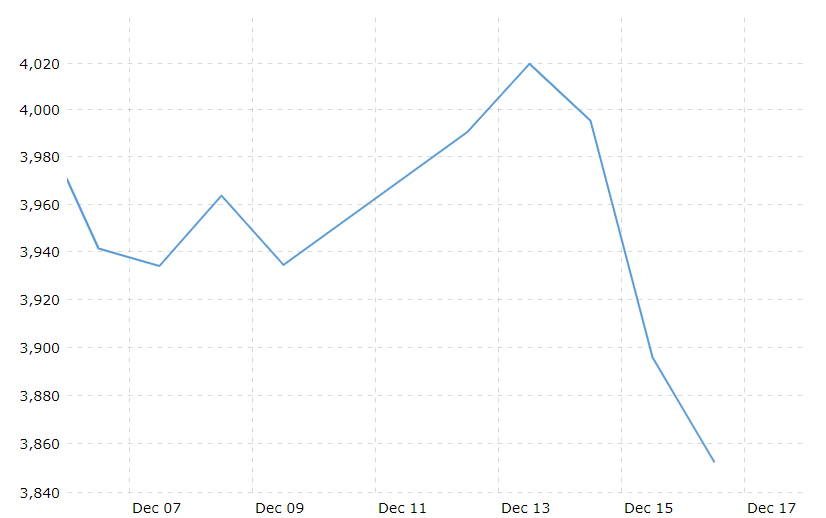
US futures jumped from Monday’s shallow dip, which in turn followed the S&P 500’s best week since June, boosted by a triple-whammy of positive news out of China, including the Xi-Biden meeting which pointed to easing tensions between Washington and Beijing, China’s Covid pivot and property measures, and solid earnings from Walmart which boosted guidance and announced a new $20BN buyback. Contracts on the Nasdaq 100 extended earlier gains and were up 1.1% as of 7:1 a.m. ET while S&P 500 futures surged above 4000, rising almost 1.0%. Treasury yields and the dollar slipped while bitcoin resumed its modest rise. At 8:30am we get another inflation read in the form of the latest PPI Print, which is also expected to ease modestly.

In premarket trading, chipmakers AMD, Nvidia and Intel Corp. rose between 1.3%-2% while Tesla Inc., Amazon.com Inc., Apple Inc., and Alphabet Inc. all added about 1% each. Coinbase and Marathon Digital led cryptocurrency-linked stocks higher as Bitcoin extended gains with investors waiting for more details about an industry-recovery fund promised by Binance Holdings Chief Executive Officer Changpeng ‘CZ’ Zhao. Chinese stocks listed in the US were set to rise for a fourth day, after a triple-whammy of positive news including Xi-Biden meeting, Covid pivot and property measures. Alibaba (BABA US) soared 11% in premarket trading. Lithium-exposed stocks edged lower following a selloff in Asian peers amid worries over potentially weaker demand from Chinese firms. Here are the other notable premarket movers:

  • Getty Images (GETY US) falls 12% in US premarket trading, after the media company reported third quarter earnings that missed the average analyst estimate.
  • Ginkgo Bioworks (DNA US) shares slip as much as 2.6% in US premarket trading as the cell-programming platform provider’s revenue beat was eclipsed by worries over how a tougher economic environment could impact prospects.
  • Harley-Davidson (HOG US) is initiated with an underperform rating, its only sell-equivalent recommendation, and a $39 PT at Jefferies, which says the strength in the motorcycle maker’s shares is overdone.
  • Lithium-exposed stocks edged lower in US premarket trading following a selloff in Asian peers amid worries over potentially weaker demand from Chinese firms.
  • Nubank (NU US) shares jump 15% in premarket trading after the Brazilian digital bank’s third-quarter results. Morgan Stanley said the lender delivered a strong print, showing beats for client net adds, revenue, gross profit and adjusted net income.
  • Shoals Technologies (SHLS US) shares soar as much as 22% in US premarket trading, on track for its biggest rise in five months, as analysts nudged their price targets higher after the solar energy products supplier narrowed its revenue forecast for the full year. Brokers said that the firm’s rising backlog and awarded orders bode well for the future and increase visibility for next year

Markets have turned risk-on in recent days, trading off a softer-than-expected US data print that many reckon will allow the Fed to raise rates in 50 basis-point increment, after consecutive 75 basis-point hikes. That view was encouraged by dovish comments from Vice Chair Lael Brainard who said on Monday it would probably be “appropriate soon to move to a slower pace of increases.”

“The issue the market has to wrestle with is how long is the Fed going to keep rates at that level and I think there is some positive sentiment out there that the Fed is going to pivot sometime in 2023,” Peter Kraus, Chairman and CEO at Aperture Investors, told Bloomberg Television.

Sentiment also got a solid boost overnight following signs of easing tensions between the US and China (even if Xi probably does not see it that way, and instead he delivered a speech at the G20 summit in Bali, Indonesia, in which he urged against politicizing food and energy issues, and called for scrapping unilateral sanctions and restrictions on technology cooperation in this area, something which won’t happen). In any case, after the meeting between Joe Biden and Xi Jinping on Monday, Washington said the two sides would resume cooperation on issues including climate change and food security, and that Biden and Xi jointly chastised the Kremlin for loose talk of nuclear war over Ukraine.

Investors also remain focused on central banks: Swissquote analyst Ipek Ozkardeskaya said equity markets are in “a vicious circle” as “investors want to feel better, but the Fed can’t let them feel much better as a market rally would play against its inflation fight.” Last week’s rebound was a “flash in the pan, but the downside risks have certainly eased,” she said.

Meanwhile, markets are watching growing risks to earnings following corporate America’s weakest reporting season since the first quarter of 2020, and the outlook for stock markets in 2023. “The equity market will continue to rally until the end of the year with some volatility, but once you get to 2023 there will be some realization that interest rates will actually start to slow economic activity,” said Peter Kraus, chief executive officer at Aperture Investors. “In 2023, you will have more volatility and you’ll have a decline in equity markets,” Kraus said on Bloomberg TV.

The latest Bank of America’s global fund manager survey for November showed sentiment remains “uber-bearish,” with investors still crowded into the dollar and cash, while tech stocks remain unpopular. “My biggest concern is the market gets ahead of itself and we get into a situation where the Fed feels it needs to rein in, and tighten more than it otherwise would have, as markets became too frothy,” Kristina Hooper, chief global strategist at Invesco said on Bloomberg Radio.

In Europe the Stoxx 600 index swung between losses and gains, though the market is close to a three-month high and Germany’s Dax index is on the cusp of a technical bull-market, having narrowly missed that milestone on Monday. The Euro Stoxx 50 rises 0.1%. CAC 40 outperforms peers, adding 0.3%, FTSE MIB lags, dropping 0.3%. Utilities, food & beverages outperformed while retail and telecoms underperform as more sectors turn negative on the day. Here are some of the biggest European movers today:

  • Teleperformance shares rise as much as 9.4%, the third session of gains in a recovery from a recent drop suffered by the customer relationship management services firm following a report related to its content moderation business in Colombia.
  • UK utilities and energy firms advance after reports that UK’s Chancellor Jeremy Hunt is considering a new 40% windfall tax on the “excess returns” of electricity generators.
  • Drax rises 4.0%, Centrica +5.0%
  • BAE Systems shares gain as much as 4.1% after a trading update from the defense contractor that analysts said shows trading momentum remains solid.
  • Ambu falls as much as 16%, the most since May, after the Danish medical technology firm’s latest earnings and outlook disappointed, according to analysts.
  • Ocado shares plunge as much as 13% in Tuesday morning trading, paring the 30% rally in the previous two sessions after last week’s softer-than-expected US inflation data provided a boost to growth stocks.
  • Nexi shares fall as much as 11%, the most intraday since March 2020, after holder Intesa Sanpaolo sold its stake in the payment services firm.
  • Vodafone shares slump as much as 9.2% and are on track for their lowest close in 25 years after the telecom operator trimmed its outlook for Ebitda after- leases to the lower end of its previous range, citing higher energy costs.
  • Cellnex slides as much as 6.5% after a share placement of 25.6m shares at EU33.50/share.

Earlier in the session, Asian stocks rallied as China led the region higher, buoyed by more property easing measures and signs of reduced US-China tensions. The MSCI Asia Pacific Index rose as much as 1.9% to a two-month high, lifted by technology shares. Chinese stocks in the sector helped pace the benchmark’s gain as investors bet the worst may be over for some of the major players. Meanwhile, Taiwan’s TSMC surged after a filing showed Warren Buffett recently bought a stake of about $5 billion in the chipmaker. China and Hong Kong benchmarks extended their recent rebounds, with the Hang Seng Index entering a bull market, gaining as much as 4.2% as regulators moved to further ease a liquidity crunch faced by real estate developers. Sentiment was also lifted by Monday’s meeting between Joe Biden and Xi Jinping that generated hopes of warmer ties between the two superpowers. That encounter offset the weak retail sales data that underscored the impact of Covid lockdowns on China’s economy. There’s “some easing of bilateral tensions from the Xi-Biden meeting,” said Marvin Chen, a Bloomberg Intelligence analyst, who added that China’s macro data, which came in below expectations, could “boost the probability of more easing measures in the near term.” 

Japanese equities erased earlier losses, as investors weighed Fed comments for clues on where rate hikes might go and as improvement in US-China ties lifted sentiment across Asia.  The Topix Index rose 0.4% to 1,964.22 as of market close Tokyo time, while the Nikkei advanced 0.1% to 27,990.17. Sumitomo Mitsui Financial Group Inc. contributed the most to the Topix Index gain, increasing 4.2% as the company raised its key profit forecast and announced a share buyback plan. Out of 2,165 stocks in the index, 1,308 rose and 766 fell, while 91 were unchanged. “The financial results are almost all done as of yesterday and the stock market is running out of materials,” said Hideyuki Suzuki, general manager at SBI Securities. “All the important indicators from the FOMC, US CPI data, and earnings are over. The question is what the future holds from here.”

Stocks in India advanced as easing inflation boosted investors’ sentiment while the country’s corporate earnings season ended. A rally in lenders boosted the benchmark Sensex to a new high while pushing the NSE Nifty 50 Index near its record level. The S&P BSE Sensex rose 0.4% to 61,872.99 in Mumbai, while the NSE Nifty 50 Index advanced by an similar measure. Thirteen of the 19 sector sub-indexes advanced, led by oil and gas and telecom companies.    ICICI Bank contributed the most to the index gain, increasing 1.9%. Out of 30 shares in the Sensex index, 19 rose and 10 fell, while 1 was unchanged. The consumer-price index for October rose 6.77%, easing from the 7.4% rise in September, which was the highest level in nearly two years, while the pace of wholesale inflation slowed to 8.4%, its first single digit reading in 19 months.

In FX, the dollar resumed its decline, giving G-10 FX some relief. The yen trades at around the level of 139/USD, while pound rises to $1.18.  The Bloomberg Dollar Spot Index swung to a loss early in the European session as the greenback weakened against all of its Group-of-10 peers. Treasury yields fell, led by the belly of the curve. The five-year yield was down around 5bps.

  • The euro rose to a four-month high of $1.0437. Most European bond yields fell, led by the long end of the curve; Italy’s 10-year yield fell by 10bps and Germany’s by 4bps. Germany Nov. ZEW investor expectations rise to -36.7; est. -51.0
  • The pound rose against both the dollar and the euro after UK wages grew at the fastest pace in more than a year. Investors will also be watching inflation data Wednesday and the UK’s fiscal announcement Thursday
  • UK investors are facing the biggest glut of gilts in nearly a decade. Government bond sales will hit £185 billion ($217 billion) for this fiscal year to April, according to the median estimate of 10 banks surveyed by Bloomberg. The bid-to- cover on a UK 10-year gilt sale fell to its lowest level since Oct. 2019 at 2.11, according to data compiled by Bloomberg
  • The Aussie and Kiwi touched fresh two-month highs. RBA minutes showed policy makers were prepared to return to larger rate hikes if needed. Australia’s bond curve twist-flattened.
  • The yen rebounded on broad-based dollar weakness. The Japanese currency earlier dropped after data showed Japan’s economy unexpectedly shrank in the third quarter.

In rates, Treasury and bunds 10-year yields are about 1.5bps lower, gilts 10-year yield little changed. Treasury futures topped Monday’s highs in early US trading, led by bunds after ECB’s Villeroy said a slower pace of hikes is likely after next month’s meeting. Into the move 10-year yields drop below 50-DMA for the first time since August.  The US Treasuries’ advance was led by the belly, with 5-year yields richer by nearly 6bp on the day, steepening 5s30s spread by ~3bp; 10-year, lower by 4.5bp at ~3.81%, trails bunds by more than 2bp.US auctions resume Wednesday with $15b 20-year bonds, followed by $15b 10-year TIPS Thursday.

In commodities, WTI crude futures ease to below $85; as benchmarks are pressured with the overarching COVID headwind weighing on the demand side and overshadowing any potential upside from the USD & G20. Currently, WTI Dec’22 and Brent Jan’23 are lower by just over USD 1/bbl and have printed fresh November troughs of USD 84.06/bbl and USD 91.52/bbl respectively. Precious metals have lost their initial shine but spot gold remains in proximity to yesterday’s USD 1775/oz high. Ags. are in focus on the above reports, though initial pressure has eased a touch as Russia says it will make a decision at an appropriate time.

To the day ahead now, and data releases from the US include October’s PPI reading and the Empire state manufacturing survey for November, while in Europe there’s UK employment data for October and the German ZEW survey for November. Central bank speakers include the Fed’s Harker, Cook, Barr and the ECB’s Elderson. Finally, earnings releases include Walmart and Home Depot.

Market Snapshot

  • S&P 500 futures up 0.6% to 3,990.50
  • STOXX Europe 600 little changed at 432.94
  • MXAP up 1.9% to 154.34
  • MXAPJ up 2.3% to 500.95
  • Nikkei little changed at 27,990.17
  • Topix up 0.4% to 1,964.22
  • Hang Seng Index up 4.1% to 18,343.12
  • Shanghai Composite up 1.6% to 3,134.08
  • Sensex up 0.3% to 61,785.91
  • Australia S&P/ASX 200 little changed at 7,141.63
  • Kospi up 0.2% to 2,480.33
  • German 10Y yield down 2.1% to 2.13%
  • Euro up 0.6% to $1.0394
  • Brent Futures down 1.3% to $91.89/bbl
  • Gold spot up 0.2% to $1,774.81
  • U.S. Dollar Index down 0.35% to 106.29

Top Overnight News from Bloomberg

  • Signs of inflation peaking in the US are a relief for policy makers around the world who’ve been raising interest rates at a record pace to combat price pressures, ECB Governing Council member Francois Villeroy de Galhau said
  • UK Chancellor Jeremy Hunt is considering a new 40% windfall tax on the “excess returns” of electricity generators as part of his sprawling package of tax rises and spending cuts this week, according to a person familiar with the proposal
  • Oil inventories in developed nations have sunk to the lowest since 2004, leaving global markets vulnerable as sanctions on Russian exports take effect, according to the International Energy Agency
  • Global investors reduced their holdings of China government bonds in the onshore market for a ninth-month running in October amid concerns over policy uncertainty spurred by President Xi Jinping’s consolidation of power

A more detailed look at global markets courtesy of Newsquawk

APAC stocks traded mixed following a weak lead from Wall Street with newsflow also quiet overnight. ASX 200 saw pressure from its Metals & Mining sector, whilst the RBA minutes provided little in terms of hints for the upcoming meeting and left all options open. Nikkei 225 saw some downside after Q3 Japanese GDP unexpectedly fell into contraction, but losses were trimmed as the JPY weakened. KOSPI was contained whilst Taiwan’s Taiex outperformed as TSMC was boosted by a Berkshire Hathaway stake in the name. Hang Seng and Shanghai Comp cheered the meeting between US President Biden and Chinese President Xi, which was telegraphed as candid, whilst Chinese stocks saw little action to the Retail Sales contraction and sub-forecast IP metrics.

Top Asian News

  • China reports 1,661 new confirmed COVID cases in mainland (prev. 1,794 a day earlier), via Reuters.
  • PBoC injected CNY 850bln via 1yr MLF at a maintained rate of 2.75%; PBoC injected CNY 172bln via 7-day reverse repos with the rate at 2.00% for a CNY 170bln net injection.
  • PBoC said longer-term fund injection exceeds Nov MLF maturities, according to Bloomberg.
  • Chinese Vice President Wang said China will maintain strong policy continuity, according to Bloomberg.
  • China’s Stats Bureau said will actively expand demand, stabilise employment and prices; will consolidate the foundation of economic recovery; economic recovery slows due to COVID flare-ups, via Reuters.
  • China’s stats bureau spokesman said the property market shows some positive changes but the downward trend continues; expects China’s CPI to remain benign, via Reuters.

European bourses are mixed overall, Euro Stoxx 50 +0.2%, as opening gains scale back after a mostly constructive APAC session. Stateside, US futures are firmer across the board with Tech leading after strong APAC tech trade and in wake of Fed’s Brainard, ES +0.7%. Home Depot Inc (HD) Q1 2023 (USD): EPS 4.24 (exp. 4.12), Revenue38.9bln (exp. 37.95bln); Comps sales +4.3% (exp. 3.1%); reaffirms FY22 guidance.

Top European News

  • UK PM Sunak will accept an official recommendation to increase the living wage from GBP 9.50 an hour to about GBP 10.40 an hour — a rise of nearly 10%, according to The Times.
  • UK Chancellor Hunt is considering a 40% windfall tax on “excess returns” made by electricity generators as part of his Autumn Statement, according to Bloomberg sources.
  • ECB’s Villeroy said ECB will probably continue to hike rates but may do so in a more flexible and less rapid manner; jumbo hikes will not become a new habit. We are clearly approaching the normalisation range of around 2%, via Reuters.
  • EU Parliament and member states agreed on an EU budget for 2023, according to dpa.
  • G20 draft declaration noted that central banks will continue to appropriately calibrate the pace of monetary policy tightening, via Reuters.

FX

  • DXY continues to slip after a pronounced move which occurred prior to the European cash open, currently near sub-106.00 lows to the broad benefit of peers.
  • USD/JPY has been touted by some as a key driver of the above move given its quick move from above-140.00 to sub 139.00.
  • GBP benefits from the USD weakness and perhaps firm wage metrics though this was accompanied by an unexpected unemployment uptick, ahead of Wednesday’s CPI and Thursday’s fiscal update.
  • Yuan remains in keen focus as it moves comparatively closer to the 7.00 handle, though proved resilient to soft overnight data with focus firmly on the broader USD move.
  • SEK was unfased by soft-headline but hot-core vs exp. CPIF metrics, though this has prompted SEB to raise the risk of a 100bp Riksbank hike.

Fixed Income

  • BTPs are leading the fixed income complex with upside in excess of a point to a session peak of 117.26 vs trough 116.04 on supply-side dynamics.
  • Bunds are similarly bid though to a lesser extent than periphery counterparts, having incrementally surpassed yesterday’s 139.26 peak.
  • Well-received German 7yr supply sparked limited upside while a softer UK outing caused Gilts to temporarily pullback to near-unchanged.
  • USTs move in tandem with EGBs with yields lower as such in wake of Fed’s Brainard, who backed the FOMC downshifting to a lower increment of rate hikes in December.
  • Retail orders for the November 2028 BTP Italia reach EUR 4bln, via Reuters citing Bourse data.

Commodities

  • Crude benchmarks are pressured with the overarching COVID headwind weighing on the demand side and overshadowing any potential upside from the USD & G20.
  • Currently, WTI Dec’22 and Brent Jan’23 are lower by just over USD 1/bbl and have printed fresh November troughs of USD 84.06/bbl and USD 91.52/bbl respectively.
  • IEA Monthly Oil Market Report: 2023 global oil output is to grow 740k BPD to 100.7mln BPD. Demand growth will slow to 1.6 mb/d in 2023, down from 2.1 mb/d this year, as mounting economic headwinds impede gains.
  • Russia is reportedly expected to agree to extend the Black Sea grain-export deal, via Bloomberg. Subsequently, Russia says it will announce its decision on extension of Black Sea grains deal in an appropriate time, TASS reports.
  • Precious metals have lost their initial shine but spot gold remains in proximity to yesterday’s USD 1775/oz high.
  • Ags. are in focus on the above reports, though initial pressure has eased a touch as Russia says it will make a decision at an appropriate time.

G20

  • Australian PM says there were positive discussions on trade embargoes levelled on Australia by China. Adds, the meeting with Chinese President Xi was another important step towards stabilising the relationship, will cooperate where possible with China. Many steps yet to take.
  • Chinese President Xi says Sino-Australian relations have encountered difficulties in recent years and this is not what we wanted to see, according to State Media
  • Russian Foreign Minister Lavrov says he has proposed to the G20 the removal of discriminatory barriers on energy markets; UN will deal with the removal of barriers for Russian grain and fertilizers; the G20 draft declaration has reference to an exchange of views re. Ukraine, West added phrase that many delegations condemned Russia. Russia highlighted alterative points of view.

Geopolitics

  • Chinese President Xi said China advocates a ceasefire in the Ukraine crisis and calls for peace talks, via state media.
  • Chinese President Xi told US President Biden that China will make all efforts for peaceful “reunification” with Taiwan, according to the Chinese Foreign Minister. China upholds the “one country, two systems” proposal for Taiwan, according to Reuters
  • Chinese President Xi told French President Macron that China and Europe should expand two-way trade and investments, via state media.

US Event Calendar

  • 08:30: Oct. PPI Final Demand YoY, est. 8.3%, prior 8.5%
    • Oct. PPI Final Demand MoM, est. 0.4%, prior 0.4%
    • Oct. PPI Ex Food and Energy YoY, est. 7.2%, prior 7.2%
    • Oct. PPI Ex Food and Energy MoM, est. 0.3%, prior 0.3%
    • Oct. PPI Ex Food, Energy, Trade YoY, est. 5.6%, prior 5.6%
    • Oct. PPI Ex Food, Energy, Trade MoM, est. 0.3%, prior 0.4%
  • 08:30: Nov. Empire Manufacturing, est. -6.0, prior -9.1

Central Banks

  • 09:00: Fed’s Harker Discusses the Economic Outlook
  • 09:00: Fed’s Cook Discusses Post-Covid Challenges Facing Women
  • 10:00: Fed Vice Chair for Supervision Barr Speaks Before Senate Panel

DB’s Jim Reid concludes the overnight wrap

I appreciate the EMR is often a medical bulletin as well as a market report and today’s there’s a new entry on the former. It looks like I’m going to have a back operation in the next few weeks. My sciatic nerve has no room to move and while I’m not in pain at the moment (unlike earlier this year) due to two injections in recent months, I have constant tingling and pins and needles down my leg. All conservative approaches have hit the end of the road and the worry is that if I leave it too long I’ll do permanent damage to the nerve. If anyone wants to make a late intervention to help sway me one way or the other in terms of back surgery feel free to do so. I think my mind is made up though as I don’t see an alternative. All a bit scary but all with the aim of getting me 30 more years (minimum) on the golf course and the chance to reach my goal of getting to scratch before the ageing process prevents that!!

The injection of optimism inserted into the limbs of the financial market after last week’s US CPI report showed some signs of fading yesterday although there’s been a recovery in Asia as China continues to support the economy and the interpretation of Biden/Xi meeting yesterday is spun a bit more positively in Asia.

Yields have risen across the Treasury curve to start the week as investors moved to dial back some of their more dovish post-CPI expectations for next year. In part, that was prompted by some pretty hawkish comments from Fed Governor Waller on Sunday night that we mentioned in yesterday’s edition. But that trade was then given further momentum by the New York Fed’s latest Survey of Consumer Expectations, which showed inflation expectations moving higher across all horizons, and echoes the uptick we saw in the University of Michigan’s reading last Friday as well. Consistent with that, our US economist’s composite measure of inflation expectations has increased. They’ve published their latest series in a full update, available here.

Diving into those inflation expectations from yesterday, the New York Fed’s latest survey showed the 1yr expectation moving up half a point to 5.9%, 3yr expectations rising two-tenths to 3.1%, and 5yr expectations up two-tenths as well to 2.4%. To be fair, all those measures are still below their levels as recently as Q2, but the upticks over the last couple of months will raise some fears that the longer inflation remains elevated, the more difficult it’ll be to keep expectations anchored around target levels. For now you would have to say that long-run expectations have held in remarkably well in the face of 40-yr highs in actual inflation. October’s US PPI will be an important release today, especially the health care component that feeds directly into core PCE – the Fed’s preferred gauge.

A notable push back on the slightly more hawkish momentum to start the week were comments as Europe closed from Fed Vice Chair Brainard, who struck a far less hawkish tone than Governor Waller had the previous day. For instance, Brainard said that it would “probably be appropriate soon to move to a slower pace of increases”, which gave further support to the idea the Fed will slow down its hikes to a 50bp pace next month (fully priced now though). That wasn’t too out of line with the rest of Fed speakers since the November meeting, but where the Vice Chair did separate herself was by noting the step down in pace need not be explicitly tied to a higher terminal rate, something Chair Powell argued during his Press Conference, and she did not explicitly rule out interest rate cuts next year, which would be more of a ‘pivot’ rather than the recently communicated ‘pause’ for the Fed. That gave risk assets a bit of support, but it appears she is out of consensus from the rest of the Committee, so the gains were not sustained.

With all said and done, investors ended the day expecting a slightly more aggressive Fed, with the rate priced in by Fed funds futures for end-2023 up +6.2bps to 4.46%. As a result, US Treasury yields rose across the board as trading resumed after Friday’s Veterans’ Day holiday. The 10yr yield was up +4.1bps to 3.85% (3.87% in Asia), and the more policy-sensitive 2yr yield saw an even larger move of +5.7bps to 4.39%. Those moves were driven by real yields, with the 10yr real yield up +8.4bps on the day to 1.49%. As you’ll see from my CoTD yesterday, 10yr US real yields had their second largest fall since the GFC on Thursday (link here). Only the intitial covid related fall in March 2020 beats it.

Against that backdrop, US equities struggled for momentum too, with the S&P 500 (-0.89%) losing ground after its massive +6.52% surge over the previous two sessions. The more cyclical sectors led the declines, and the NASDAQ (-1.12%) lost even more ground on the day. However in Europe there was a much more positive story, with the STOXX 600 up +0.14% to its highest level in over two months, alongside gains for the FTSE 100 (+0.92%), the CAC 40 (+0.22%) and the DAX (+0.62%). This European strength was evident in sovereign bond markets too, where yields on 10yr bunds (-1.5bps), OATs (-1.2bps) and BTPs (-3.0bps) all ended the day lower.

Asian equity markets are mostly trading higher this morning with the Hang Seng (+3.62%) sharply higher lifted by the outperformance of the Hang Seng Tech index (+6.81%) as Chinese listed tech stocks rose significantly. Stocks in mainland China are also up with the CSI (+1.47%) and the Shanghai Composite (+1.27%) extending their previous session gains despite a slew of disappointing economic data. As discussed at the top, the Asian interpretation is that we saw a slight easing of China-US tensions following the Biden-Xi meeting on the sidelines of the G20 summit in Indonesia (more below). Elsewhere, the Nikkei (+0.10%) is modestly higher with the KOSPI (-0.11%) bucking the trend in early trade.

In overnight trading, US stock futures are pointing to a positive start with contracts on the S&P 500 (+0.52%) and the NASDAQ 100 (+0.74%) both rising.

Coming back to China, early morning data revealed that industrial production rose +5.0% y/y in October, lower than the market expected rise of +5.3% and much slower than September’s +6.3% increase indicating a further loss of momentum in the world’s second biggest economy. At the same time, retail sales unexpectedly contracted -0.5% y/y (v/s +0.7% expected), down from +2.5% growth in September as strict Covid restrictions along with a downturn in property markets pushed consumers to tighten their belts. Markets are largely ignoring this data as covid and property restrictions have subsequently been eased so the direction of travel should get more positive from here.

Elsewhere, Japan’s economy unexpectedly shrank for the first time in four quarters as Q3 GDP fell -0.3% q/q (v/s +0.3% expected) compared to an upwardly revised growth of +1.1% in the prior quarter as inflation and the weak yen hit the country.

In the geopolitical sphere, let’s now recap US President Biden and Chinese President Xi’s first meeting in person as the leaders of their respective countries yesterday. That took place on the sidelines of the G20 summit in Indonesia, and the White House said afterwards that US Secretary of State Blinken would visit China to follow up on the discussions, which was taken by many as a positive sign towards de-escalating tensions. However, there were some points of tension, with the White House statement saying that Biden had “raised U.S. objections to the PRC’s coercive and increasingly aggressive actions towards Taiwan, and China’s statement said that “anyone that seeks to split Taiwan from China will be violating the fundamental interests of the Chinese nation”. So something for the hawks and doves but the conclusion might be that the summit beat low expectations coming into it.

Staying on politics, it’s now been a week since the midterm elections and we still don’t know which party will control the House of Representatives following the weekend confirmation that the Democrats took the Senate. It’s looking increasingly likely it will go to the Republicans, who currently have a lead in the vote count across enough of the outstanding districts to win a majority, and NBC’s forecast points to a narrow 220-215 Republican majority based on what we currently have as well. As we go to press, the current tally stands at 217 Republicans and 204 Democrats with Republicans just 1 win away from taking the House.

Tonight however, attention will turn towards the 2024 presidential contest, since former President Trump has said he’ll be making an announcement at 9pm EST, and speculation has centred around a potential 2024 announcement. Normally, the presidential announcements from the top-tier contenders happen around Q1 or Q2 of the year after the midterms. But if today does mark an announcement, the rationale for going early will be to clear the field of other potential contenders, with Trump hoping that the Republican primary is effectively uncontested like normally happens for sitting presidents. As it stands, Trump’s biggest rival for the nomination is widely considered to be Florida Governor Ron DeSantis, who was re-elected Governor last week with lead of almost 20 points over his Democratic opponent. He was seen to be the Republican’s big success story of the night.

The crypto saga continues, but there was some stabilisation in Bitcoin prices, which retreated just -0.57% after bouncing around all day. There’s certainly still more to come on the story as it becomes clear who was exposed to failed exchanges and funds, but Marion Laboure on my team has already contextualised the episode and looks ahead about what it implies in her piece out yesterday. Link here

To the day ahead now, and data releases from the US include October’s PPI reading and the Empire state manufacturing survey for November, while in Europe there’s UK employment data for October and the German ZEW survey for November. Central bank speakers include the Fed’s Harker, Cook, Barr and the ECB’s Elderson. Finally, earnings releases include Walmart and Home Depot.

Tyler Durden
Tue, 11/15/2022 – 07:47

Graham Joins Chorus Of Republicans Demanding Delay In Senate Leadership Vote

0
Graham Joins Chorus Of Republicans Demanding Delay In Senate Leadership Vote

Authored by Tom Ozimek via The Epoch Times (emphasis ours),

Sen. Lindsey Graham (R-S.C.) speaks during a press conference on Capitol Hill, in Washington, on April 7, 2022. (Elizabeth Frantz/Reuters)

Sen. Lindsey Graham (R-S.C.) has joined a growing list of Republicans demanding a delay in the soon-to-be-held vote on who will lead the party in the upper chamber as current Senate Minority Leader Mitch McConnell (R-Ky.) faces pressure over the GOP’s under-performance in the midterm elections.

Graham said in a post on Twitter on Sunday that the vote, currently scheduled for Nov. 16, should be postponed until after the Georgia Senate race runoff pitting incumbent Sen. Raphael Warnock (D-Ga.) against Republican challenger Herschel Walker.

In light of [the Georgia Senate] runoff, it would be appropriate to delay Senate leadership elections until we know who is in the Senate Republican Conference,” Graham wrote in the post, adding that he “totally” agrees with Sen. Ted Cruz (R-Texas) that not postponing the vote would be “disrespectful” to Walker.

“All Republicans should be focused on winning in Georgia and trying to understand the midterm elections before Senate leadership elections or moving on to the 2024 presidential race,” he added.

With his remarks, Graham joins the chorus of Republicans calling for the Senate leadership vote to be delayed until after the Georgia runoff.

Besides Cruz, Republican Sens. Josh Hawley (R-Mo.), Marco Rubio (R-Fla.), and Mike Lee (R-Utah), have all called for the Nov. 16 leadership vote to be postponed.

Cruz, who reacted with support to Graham’s post, said in an earlier post on social media that, besides Walker deserving “a say in our leadership,” it’s critical for any Senate leadership candidate to put forward a “specific plan” for the GOP for the next two years.

The Texas senator also retweeted a post by Lee who questioned why Republicans were in a rush to hold the vote, given that the GOP “won’t be in the majority” in the Senate after The Associated Press and other media outlets projected a narrow Democrat win in Nevada, putting them over threshold needed to maintain control of the upper chamber.

Good [question],” Cruz wrote.

‘Build Something New’

It comes as McConnell has faced criticism from other Republicans, including former President Donald Trump, for what they say are questionable decisions.

McConnell’s critics have argued that he did not allocate enough campaign funding into Republican candidates such as Blake Masters in Arizona and Don Bolduc in New Hampshire.

Trump has blamed McConnell for the GOP’s poor performance in the midterm elections.

“It’s Mitch McConnell’s fault,” Trump wrote on his Truth Social platform. “Spending money to defeat great Republican candidates instead of backing Blake Masters and others was a big mistake. Giving 4 Trillion Dollars to the Radical Left for the Green New Deal, not Infrastructure, was an even bigger mistake.”

The Epoch Times has reached out to McConnell’s press secretary with a request for comment.

Over the weekend, the Nevada Senate race was called in favor of Sen. Catherine Cortez Masto (D-Nev.) against Republican challenger Adam Laxalt, giving Democrats a projected 50 seats in the upper chamber. A 50–50 split would, as now, give Democrats a working majority since Vice President Kamala Harris can cast a tie-breaking vote.

Sen. Josh Hawley (R-Mo.) reacted to the Nevada race being called in favor of Cortez Masto by saying that the it’s time for change in the GOP.

“The old party is dead. Time to bury it. Build something new,” Hawley wrote on Twitter on Nov. 13 following Cortez Masto’s victory.

In an interview with RealClearPolitics, Hawley said the reason Republicans didn’t do well in the midterms comes down to failure to offer voters an actionable alternative to the Democrat agenda.

Read more here…

Tyler Durden
Tue, 11/15/2022 – 07:00