79.3 F
Chicago
Monday, July 27, 2026
Home Blog Page 4137

Judge Dismisses Lawsuit Against Saudi Prince Over Khashoggi Killing Citing Biden Immunity

0
Judge Dismisses Lawsuit Against Saudi Prince Over Khashoggi Killing Citing Biden Immunity

Authored by Caden Pearson via The Epoch Times,

A federal judge in Washington dismissed a lawsuit against Saudi Crown Prince Mohammed bin Salman on Tuesday for the 2018 murder of Washington Post columnist Jamal Khashoggi, citing President Joe Biden’s grant of immunity.

U.S. District Judge John Bates decided to defer to the Biden administration’s mid-November decision to grant immunity to the Saudi crown prince, despite his hesitation.

According to Bates, any other option would “unduly interfere” with the executive branch’s power to make foreign policy.

“Despite the Court’s uneasiness, then, with both the circumstances of bin Salman’s appointment and the credible allegations of his involvement in Khashoggi’s murder, the United States has informed the Court that he is immune, and bin Salman is therefore ‘entitled to head of state immunity … while he remains in office,’” Bates wrote in his 25-page ruling (pdf).

Bates was referring to the fact that Saudi King Salman bin Abdulaziz Al Saud only officially designated the crown prince as prime minister in September, four years after Khashoggi’s murder and after the lawsuit against the crown prince was filed.

A picture of slain Saudi journalist Jamal Kashoggi is displayed during a ceremony near the Saudi Arabia consulate in Istanbul on Oct. 2, 2019. (Lefteris Pitarakis/AP)

Plaintiff Considering ‘All Options’

Khashoggi’s widow Hatice Cengiz and Democracy for the Arab World Now (DAWN), an advocacy organization founded by Khashoggi, filed the legal action against the Saudi crown prince and other defendants in 2020.

“While we are disappointed in the decision, we will consider all options to continue our legal challenges to MBS’s criminal behavior,” DAWN Executive Director Sarah Leah Whitson said in a statement referring to the crown prince by his initials.

DAWN noted that the Saudi king’s royal decree appointed bin Salman prime minister six days before the Oct. 3 deadline for the Biden administration to intervene in the lawsuit, characterizing it as “a last ditch effort to escape the jurisdiction of the court.”

The organization also disputed the court’s ruling to dismiss DAWN’s case against two other defendants, Saud al-Qahtani and Ahmed al-Assiri, on jurisdictional grounds.

U.S. intelligence officials believe Khashoggi was tortured, killed, and dismembered at the Saudi consulate in Instanbul on Oct. 2, 2018, at the order of the crown prince, who has been the kingdom’s de facto ruler for several years.

Khashoggi had attended the consulate to obtain the papers required to wed Cengiz, a Turkish national. She waited outside the consulate for more than 12 hours “in a desperate and tormented state” for her fiance to return, the judge noted.

Although the prince has denied ordering Khashoggi’s murder, he later admitted that it happened “under my watch.”

Hatice Cengiz, fiancee of the murdered Saudi journalist Jamal Khashoggi, talks to Reuters outside Justice Palace, the Caglayan Courthouse, after attending a trial on the killing of Khashoggi at the Saudi Arabian Consulate, in Istanbul, on April 7, 2022. (Murad Sezer/Reuters)

Unduly Interfering

Bates noted in his ruling that the judicial branch believes it appropriate to defer to the executive branch’s foreign immunity determinations “when the conduct of foreign affairs is involved.”

“As the branch of government primarily responsible for international affairs and diplomacy, the Executive Branch may be hindered or embarrassed should the judiciary second-guess its foreign immunity decisions,” Bates wrote.

According to Bates, it is well-established in the “chess game that is diplomacy” that “judicial interference” is not advisable in such a situation where the executive branch may grant immunity “as a bargaining counter in complex diplomatic negotiations” and where denials could “preclude a significant diplomatic advance.”

“These considerations are no less present when the circumstances of a head of state’s appointment are suspect: the Executive Branch remains responsible for foreign affairs, including with Saudi Arabia, and a contrary decision on bin Salman’s immunity by this Court would unduly interfere with those responsibilities all the same,” Bates wrote.

“If the immunity determination was in front of the Court without input from the Executive Branch, the Court certainly would consider plaintiffs’ arguments about whether, as a substantive matter, bin Salman was entitled to head-of-state immunity,” the judge added.

“But because the United States has determined that bin Salman is so entitled, ‘the doctrine of the separation of powers under our Constitution requires us to assume that all pertinent considerations have been taken into account by the [Executive Branch] in reaching [its] conclusion.’”

Bates, therefore, dismissed the claims against bin Salman based on head-of-state immunity.

Tyler Durden
Wed, 12/07/2022 – 11:28

China Faces ‘Winter Wave’ Of Deaths As Beijing Eases Zero-COVID Policies Despite Infection Surge

0
China Faces ‘Winter Wave’ Of Deaths As Beijing Eases Zero-COVID Policies Despite Infection Surge

China relaxed its zero Covid strategies to prevent further public unrest and boost waning economic growth. The new measures allowing for home quarantines and entry into public areas without testing were announced after a meeting of the Chinese Communist party’s politburo. They outlined the importance of stabilizing the economy than combating Covid. 

“We will protect people’s safety and health to the greatest [extent] and keep the impact on social and economic development to a minimum,” the State Council Prevention and Control Mechanism said on Wednesday, which was quoted by South China Morning Post

The new measures from the communist government call for isolating asymptomatic or mild Covid cases at home rather than in quarantine camps or hospitals for seven days. Anyone in contact with the infected would have to quarantine at home for five days instead of eight days at a camp and then at home.

The State Council disbanded the rule for people to show negative Covid tests before entering public places. 

“People no longer need to show a negative PCR [polymerase chain reaction] result or a health code to enter public venues or to travel, except when entering hospitals, schools and homes for the elderly,” SCMP wrote. 

SCMP added: “The new policy stressed that basic social and medical services need to be provided. People’s movements, work and production should not be restricted in low-risk areas.” 

Today’s announcement is the most significant move to ease Covid policies since the Council announced a 20-point playbook for relaxing measures last month. 

Liang Wannian, an epidemiologist, now a health official who once led China’s initial pandemic response, told Bloomberg that Beijing is more “proactive, rather than reactive” and would “ensure resources are utilized more efficiently and better coordinate outbreak control and economic development.”

In Hong Kong, the benchmark Hang Seng initially surged on the news, then sold through most of the session, closing down 3%. There was also trade data for November that showed Chinese exports were hit by weak global demand and Covid disruptions at factories. 

“Although the measures announced today are positive steps towards reopening, it appears some of the reopening exuberance is fading. Disappointing trade data is also a reminder of the slowing external demand heading into next year,” said Marvin Chen, an analyst at Bloomberg Intelligence.

“Though the market is still trading on the positive expectations we are not entirely out of the woods, as we still have to get past the panic that might come with the first wave of infections,” Ma Xuzhen, fund manager at Longquan Investment Management, said. 

China’s Covid outbreak is worsening as infections soar: 

One million Chinese people are at risk of dying from Covid-19 during the coming winter months if President Xi Jinping pursues his pivot to remove strict pandemic controls, new modeling shows. — Financial Times 

“The current propaganda messaging is that a reopening will be costless,” said Rodney Jones, principal at Wigram.

“The risk is that they are underestimating just how much work — and cost — the rest of the world has done and borne to get to the point of living with Covid.

“China has done nothing to prepare for this step, and Xi appears to be doing so on impulse as a reaction to the protests, rather than as part of a careful policy programme,” Jones said.

Deteriorating global economic growth will worsen into early 2023. China’s shift from zero Covid policies is a move to boost domestic demand over the medium term to stabilize its faltering economy. The next few months could be turbulent as the reopening process could be met with a wave of infections and deaths. 

Tyler Durden
Wed, 12/07/2022 – 11:05

Most Americans Support Musk’s Efforts To Make Twitter “More Free And Transparent”: Poll

0
Most Americans Support Musk’s Efforts To Make Twitter “More Free And Transparent”: Poll

Authored by Naveen Anthrapully via The Epoch Times,

A significant portion of American citizens are supportive of industrialist Elon Musk’s efforts to ensure freedom of speech on Twitter, according to a poll by Trafalgar Group.

The poll asked respondents whether they support Musk seeking to make Twitter a “more free and transparent platform.” According to the survey, 52.3 percent responded positively, while 31.3 percent were not supportive of Musk’s actions at Twitter. The remaining 16.3 percent were “not sure.” Without the “not sure” option, support for Musk jumped to 62.6 percent, while those against such changes only made up 37.4 percent.

Among Democrats, 59.3 percent were against Musk, 23.5 percent were unsure, and just 17.1 percent extended support. Among Republicans, support for Musk’s actions was 84.8 percent, which is the highest in the survey. Only 10.2 percent were unsure about the matter, while just 5 percent rejected Musk’s attempts.

As to respondents who are not associated with any party, 54.2 percent extended support to Musk strengthening free speech and transparency on Twitter, while only 30.5 percent rejected such developments.

The survey, which saw the participation of 1,085 likely general election voters, was conducted between Nov. 30 and Dec. 3.

The Trafalgar Group poll comes as Musk had admitted last month that Twitter used to have an anti-conservative bias before he took over.

“It is objectively the case that ‘conservative’ political candidates were more negatively affected than ‘progressive’ candidates. Anyone using Twitter knows this. Question is simply one of magnitude,” Musk commented in a tweet on Nov. 24.

Conservative Suppression

Musk had recently shared a Twitter threat by independent journalist Matt Taibbi who detailed a series of internal communications at the social media platform that provided insight into the actions taken by the staff to suppress the controversy surrounding Hunter Biden’s laptop.

Musk later responded to the issue, suggesting that the suppression is a violation of the First Amendment. In an interview with Fox, Rep. James Comer (R-Ky.), the GOP ranking member on the House Oversight Committee, called for an official look into the matter.

“Every employee at Twitter who was involved in suppressing the Hunter Biden laptop story will have an opportunity to come before Congress and explain their actions to the American people,” Comer said.

In November, Musk reinstated the undercover journalism organization Project Veritas, which was banned last year after it did a series of exposes on major companies like Twitter and CNN.

In 2018, an exposé by Veritas using undercover reporters caught several Twitter employees admitting on camera that the platform had an anti-conservative bias. One employee revealed that discussions on topics like America, guns, and God were classified as bot-like behavior.

Tyler Durden
Wed, 12/07/2022 – 10:54

Putin: Risk Of Nuclear War “Rising”, Ukraine Operation To Be “Long Process”

0
Putin: Risk Of Nuclear War “Rising”, Ukraine Operation To Be “Long Process”

On Wednesday Russian President Vladimir Putin gave a wide-ranging public war update during a televised session of his Human Rights Council, which at least one independent regional outlet said was tightly controlled in terms of the kind of questions Kremlin officials could ask.

Among the more important topics he addressed related to the now 10-month long “special military operation” in Ukraine was future plans for broader mobilization and the prospect of deployment of nuclear assets. On the latter point, Putin lashed out at the United States and NATO, saying “Russia does not have tactical nuclear weapons in other countries, unlike the US.”

This was in reference to the fact that some NATO members in Europe, including extending as far east as Turkey, do act as host countries to many of the US’ tactical nukes under the NATO defense umbrella. “Our nuclear forces are in a more advanced state than any other country in the world,” he boasted at one point.

“We don’t want to wave it around”: Putin

Importantly, given the ratcheting US-NATO arms pipeline to Ukraine’s forces, which has lately involved transfer of increasingly sophisticated and longer range missiles, Putin warned that the “risk of nuclear war in the world is rising.” 

He further took the opportunity to restate Russia’s ‘defensive’ nuclear doctrine, stressing that nuclear weapons would be considered as a response to an attack on Russian territory, while also stating that he stands ready to defend Russian territory “using all available means”. 

According to a translation of Putin’s remarks in Sky News:

“We didn’t speak about usage of nuclear weapons.” Then, he said: “Russia has not gone mad.”

“We have the most advanced weapons, but we do not want to wave it around.”

But in taking a swipe at Washington’s nuclear deployments in Europe, he seemed to suggest that it’s precisely the US side doing the nuclear saber-rattling. 

“Yes, we will do this by various ways and means. First of all, of course, we will focus on peaceful means, but if nothing else remains, we will defend ourselves with all the means at our disposal,” Putin said.

Western mainstream media will more than likely run with the comments as a fresh “threat” that Russia stands ready to conduct a nuclear attack if cornered in Ukraine, and yet just like the previous time he made similar statements, the Russian leader was in fact articulating the defensive nature of the country’s official nuclear policy against ‘existential’ threats to Russian territory.

Among the more important new commentary from Putin, however, was the following

In rare comments on the status of the war, Mr Putin admitted it would likely be a “long process” – suggesting Russia has no plans to abandon the conflict any time soon.

Last month into this month has already seen some ambiguous signals from Washington that the Biden administration could be ready to at least contemplate pushing Kiev to the negotiating table. Moscow too has said it remains “open” to talks – however, Putin’s projection of a “long” conflict strongly suggests the warring sides are nowhere close to establishing a process for ceasefire dialogue.

Elsewhere in the Human Rights Council meeting with top officials, Putin sought to quash persistent rumors of a second military mobilization across society next year. He expressed there was no need, after the prior 300,000 reservists which were called up for Ukraine operations. 

He emphasized determination to see the operation through to achieve previously stated goals: “Russia could be the only guarantor of Ukraine’s territorial integrity. But it’s up to the new leaders of Ukraine,” Putin said.

Tyler Durden
Wed, 12/07/2022 – 10:40

WTI Slides After Huge Product Builds, Crude Production Rise

0
WTI Slides After Huge Product Builds, Crude Production Rise

After an ugly slide as Europe opened, oil prices have rebounded as China’s rollback of some COVID-19 measures boosted the outlook for energy demand and traders are optimistic that the official inventory data this morning matches API’s big crude draw.

“Traders have been looking for more positive news when it comes to China’s zero-tolerance COVID policies,” said Naeem Aslam, chief market analyst at AvaTrade, in a market update. And now “we have heard from the officials about a further easing of those measures,” providing support to investor sentiment.

Oil’s swings overnight have left WTI trading right where it was before the API data.

API

  • Crude -6.246mm (-3.884mm)

  • Cushing +30k – first build in 5 weeks

  • Gasoline +5.93mm

  • Distillates +3.55mm

DOE

  • Crude -5.186mm (-3.884mm)

  • Cushing -373k

  • Gasoline +5.319mm (+2.9mm exp) – biggest build since July 2022

  • Distillates +5.159mm (+1.9mm exp) – biggest build since May 2020

The official data confirmed API’s reporting with a fourth straight week of sizable crude draws and fourth straight week of significant and growing product builds

Source: Bloomberg

Gasoline inventories continue to soar amid weak demand heading into the holidays. The four-week moving average of product supplied has plunged by 400,000 barrels a day over the last three weeks. Coupling that with ultra-high refinery utilization has finally given fuelmakers the chance to restock crude product inventories.

Source: Bloomberg

The four-week rolling average of distillates demand fell to its lowest seasonal level since 2015.

US Crude production rose to cycle highs at 12.2mm b/d…

Source: Bloomberg

WTI was hovering around $74.50 ahead of the official data and slipped lower on the big product builds…

Concerns about the global growth outlook, alongside a soft physical market and falling liquidity have weighed on prices, but  Francisco Blanch, head of commodity and derivatives research at Bank of America said in a Bloomberg TV interview that “inventories remain quite low, spare capacity is tight,”

“All the demand growth that we forecast for next year is coming from emerging markets.”

Traders are “fleeing the market” because of the “absurd” price actions oil has recently experienced, Ed Morse, global head of commodity research at Citigroup Inc., said in a Bloomberg Television interview.

“We are getting toward the end of the year, and those who made money this year did not want to lose any.”

The oil market’s structure has also been in freefall, with one gauge of US trading at its weakest level in two years, pointing to ample near-term supply.

Finally, we note that gasoline pump prices have largely fallen to parity with where they were a year ago, yet demand has continued to lag.

This shows that it’s higher consumer inflation overall that’s curbing fuel consumption, as well as improving fuel efficiencies in vehicle fleets. 

Tyler Durden
Wed, 12/07/2022 – 10:36

Futures Slide As Recession Fears Trump China Reopening

0
Futures Slide As Recession Fears Trump China Reopening

US futures slumped for a fifth day as investors faded the latest China reopening news – which saw Beijing move definitively away from its long-held Covid Zero approach as it eased a range of restrictions – as the latest dismal Chinese trade data reaffirmed the risk of a global recession. Contracts on S&P 500 futures dumped 0.7% at 7:20 a.m. ET with selling picking up US traders came to their desks after trading unchanged for much of the overnight session, and after the underlying gauge fell Tuesday for a fourth straight day and closed at the lowest level in nearly a month. Nasdaq 100 futures were down 0.8% 

US futures are weaker as part of a global risk-off tone; MegaCap tech is again driving weakness, with Apple sliding after a key supplier warned of weaker demand. US/Global recession concerns seemingly outweighing the positivity surrounding China’s growth prospects. US lawmakers proposing an easing of restrictions on Chinese-made chips. SPX sits at its 100dma after falling below its 200dma this week; do we see follow-on selling from CTAs? Oil weakness continues and WTI sits ~11% above its 52-week low. EIA increased its 2023 oil production forecast. In politics, Warnock defeated Walker, giving Dems a 51-49 Senate majority; no immediate market impact. Today’s macro data include mortgage applications (-1.9%, vs -0.8% last week), labor costs, nonfarm productivity, and consumer credit.

In premarket trading, Apple dropped more than 1% as mobile industry bellwether Murata Manufacturing expects the firm to reduce iPhone 14 production plans further in the coming months because of weak demand with the company’s president saying that handset stock in stores suggests slow demand. Last month, Bloomberg reported that Apple expects to make at least 3 million fewer iPhone 14 handsets than originally expected. Here are the most notable premarket movers:

  • Chinese stocks listed in the US fall in Wednesday’s premarket trading, as Beijing’s new measures to ease Covid restrictions presented an opportunity for traders to lock in profit after recent rallies. Alibaba (BABA US) -4.5%, Baidu (BIDU US) -3.4%, Pinduoduo (PDD US) -4.1%, Bilibili (BILI US) -5.2%, Nio (NIO US) -4.5%, XPeng (XPEV US) -5.9%
  • MongoDB (MDB US) shares rallied 28% after the database software company reported third-quarter results that beat expectations and gave a fourth-quarter revenue forecast that analysts see as strong.
  • Toll Brothers (TOL US) shares advance 1.2% after the luxury home builder’s adjusted home sales gross margin forecast for 2023 beat estimates, with Citi positive on the better visibility for next year amid a difficult housing market.
  • Pinterest gains 1.8% after the social media company added a board seat for Elliott Investment Management as part of a cooperation agreement with the activist investor.
  • Carvana shares rise as much as 3% before paring gains after Bloomberg reported that some of its largest creditors, including Apollo and Pimco, signed a cooperation agreement to prevent the creditor fights that have complicated other debt restructurings in recent years.
  • Summit Therapeutics fell, reversing earlier gains in premarket trading. On Tuesday, the shares soared 194% following the announcement of a partnership deal with Akeso to in-license ivonescimab, its breakthrough bispecific antibody.
  • Watch Illumina stock as it was initiated at RBC with a recommendation of outperform, with the brokerage citing the biotech company’s competitive advantage in the next generation sequencing market.
  • Keep an eye on Autoliv stock after UBS downgraded it to neutral, saying that the shares now offer limited valuation upside, while the airbag maker’s medium-term profitability targets look ambitious.
  • Watch shares in US oil explorers as Citi says it does not foresee a further re-rating for the sector in 2023 for a number of reasons, in a note double-downgrading its rating on Comstock to sell, cutting Coterra to sell and moving EQT and Southwestern Energy down to neutral.

Traders are also monitoring developments in China. The Asian country eased a range of Covid restrictions Wednesday in a sharp change in national strategy to quell public discontent and fire up the economy again. Meanwhile, statistics showed that the nation’s exports and imports both contracted at steeper paces in November – and absent the covid crash in early 2020, the fastest pace since 2016 – as external demand weakened and a worsening Covid outbreak disrupted production and cut demand at home.

US stocks have started unwinding recent gains after strong jobs data and an unexpected increase in a US service-sector gauge stoked concerns the Fed will remain aggressive in tightening policy. Investors are growing wary that higher-for-longer interest rates will curb growth and corporate earnings.

“We’re still in for a fairly rough period,” Shane Oliver, head of investment strategy and economics at AMP Services Ltd told Bloomberg Television. “Monetary conditions have gone from super easy to super tight. That is going to have economic consequences, with a sharp slowing in growth and possibly a mild recession.” Oliver expects a year-end rally after next week’s Fed meeting is out of the way before stocks test new lows in the first half of 2023. A recovery is likely to take place in the second half as monetary policy starts to ease again, he said, echoing Michael Wilson almost verbatim.

The S&P 500’s worst selloff in a month was sharp enough to reverse the rally that followed Fed Chair Jerome Powell’s comments on a possible downshift in the pace of tightening, leaving the benchmark where it was a week ago just before he spoke.

“Recent economic data has highlighted the uncertainty over the economic outlook and the Fed’s response,” Mark Haefele, UBS Global Wealth Management’s chief investment officer wrote in a Wednesday note. “We expect further volatility and maintain our defensive exposure.”

European stocks fell for a fourth consecutive day, the longest run in almost two months. Energy, miners and telecoms are the worst-performing sectors, dragging most European stocks lower. Euro Stoxx 50 falls 0.4%. FTSE MIB outperforms peers. Here are the biggest European movers:

  • Russia is considering either imposing a fixed price for its oil or stipulating maximum discounts to international benchmarks at which it can be sold, according to two officials familiar with the plan, as a response to a cap that the G-7 nations set out last week.
  • France’s Engie (ENGI FP +0.1%) agreed to a 15-year contract to buy liquefied natural gas from Sempra Infrastructure as companies increasingly look for long-term supply from the US to avoid shortages.
  • Salzgitter and Engie have concluded a power purchase agreement with volumes of about 250 GWh of electricity per year.
  • ERG gains in Milan to be among the best performers on the FTSE MIB index, which it joined on Nov. 29. Intesa Sanpaolo notes positive stance on the stock is backed by “solid” fundamentals and a dividend yield above the sector average.
  • French renewable- energy company Voltalia drops after an offering of 35.8m shares priced at €13.70 apiece, representing a discount of about ~26% to Monday’s close.
  • Oil and gas firm Mol has restarted its Danube refinery in Hungary and is gradually ramping up capacity, though won’t be able to meet market demand as the supply situation has become “critical,” Gyorgy Bacsa, managing director of Mol Hungary says in emailed statement
  • Credit Agricole SA said it would stop new financing for oil extraction immediately, as part of bank’s efforts to cut the carbon emissions caused by its lending to fossil-fuel companies by a third by the end of the decade.

European equities have been outperforming their US counterparts since the lows of late September. As Bloomberg notes, the Stoxx Europe 600 moved beyond its 2022 downtrend and crossed the much-watched 200-day moving average a month ago, while its US counterpart is struggling to overcome that resistance level. The difference in technical setups might further widen the performance gap as it suggests a bearish view for the US and a bullish one for Europe.

Earlier in the session, Asian stocks widened losses in the late afternoon as renewed concerns about China’s growth were revived by weak trade data, offsetting optimism as the nation moves away from its Covid-Zero policy.     The MSCI Asia Pacific Index slumped as much as 1.4% on Wednesday, its biggest drop in more than a week, led lower by consumer discretionary and information technology shares.  Benchmarks in Hong Kong plunged more than 3% in volatile trading as a selloff deepened following reports that mainland authorities are set to allow home quarantine and relax testing requirements. Weak trade data underscoring sluggish demand at home and abroad also hurt sentiment.  The market has already priced in the easing of Covid policy announced today, “so investors are selling on news,” said Banny Lam, head of research at CEB International.  The Philippine stock benchmark was among notable losers in the region, dropping 2.2% amid profit taking.

Japanese stocks also declined, following US shares lower as downbeat warnings from bank chiefs deepened concerns over the global economy.  The Topix fell 0.1% to close at 1,948.31, while the Nikkei declined 0.7% to 27,686.40. Tokyo Electron Ltd. contributed the most to the Topix decline, decreasing 3.8%. Out of 2,164 stocks in the index, 1,202 rose and 816 fell, while 146 were unchanged. “With the comments from U.S. banks, there is increasing negative sentiment toward the global economy, and market participants are watching the shift of economic trends closely,” said Hirokazu Kabeya, chief global strategist at Daiwa Securities.

Shares in Australia, Taiwan, Singapore and Indonesia also declined.  Asian stocks have been relatively shielded from recession woes that hurt US stocks this week as investors expected China’s reopening moves could bolster its recovery. Wednesday’s selloff highlighted how volatile the path for recovery could be.   The key Asian stock benchmark has risen more than 15% from its October low amid expectations for China’s full reopening and the Fed’s pivot from its aggressive tightening. The gauge’s rally has paused in recent days, stopping short of entering a technical bull market.

India’s benchmark stock gauge declined after the central bank raised borrowing costs in line with expectations but surprised investors with a trimmed outlook for growth. The S&P BSE Sensex fell 0.3% to 62,410.68 in Mumbai, its lowest level since Nov. 25. The NSE Nifty 50 Index dropped 0.4%. Both initially rose after the Reserve Bank of India raised its key rate by 35 basis points to 6.25%. Reliance Industries and mortgage lender HDFC dragged the Sensex the most, as 22 out of its 30 stocks traded lower while the rest advanced. All but four of the BSE’s 19 sector sub-indexes declined, led by utilities.  “For stocks, it’s important to note that the RBI continues to take out liquidity,” said Amit Kumar Gupta, a chief investment officer at New Delhi-based Fintrekk Capital. Stocks will face pressure on the RBI’s comments about consumption and commodity prices, he added.  India is Asia’s best-performing stock market so far this year. Foreign investors have resumed buying on expectations that corporate earnings will improve despite inflationary pressures. In the five months through November, they have bought more than $11 billion in local shares, lifting benchmarks to a record. Some investors are concerned that economic growth is peaking. The “growth narrative looks rather weak,” Kotak Institutional Equities analysts led by Sanjeev Prasad wrote earlier this month

In FX, the Bloomberg Dollar Spot Index steadied after earlier rising to a one-week high as the greenback traded mixed against its Group- of-10 peers. JPY underperforms G-10 FX, trading around 137.46/USD. The term structures in the major currencies retained inversion mode as next week’s US CPI print and meetings by the Fed, the BOE, the SNB and the ECB are in focus.

  • The euro snapped a two-day drop against the dollar after recovering in the European session. The common currency neared $1.05 after earlier touching a low of $1.0443. Bunds and Italian bonds twist-steepened as yields inched lower through the 10-year tenor while rising further out on the curve.
  • The pound inched up against the dollar to trade at around $1.2150. Gilt yields crept higher. Concern over a protracted downturn in the housing market persisted after data showed that UK house prices fell at the sharpest pace in 14 years in November.
  • The Norwegian krone and the Canadian dollar were among the worst G-10 performers amid a decline in oil prices. The yen also fell as a Bank of Japan board member said a wage hike alone may not lead to an immediate change in policy. The yield curve twist-flattened.

Recession fears were palpable in the bond market, where demand for longer-dated bonds drove a yield inversion to a four-decade extreme, sending 10-year rates below those on 2-year notes by the most since the early 1980s. The Federal Reserve rate decision and inflation data due next week loom as pressure points for a market governed by central banks. Bunds, USTs and gilts 10-year yields fairly muted with less than a basis point move within Tuesday’s range. The US Treasury curve bull steepened slightly. The two-year yield fell 2bps to 4.35% while the 10-year yield shed one 1bp to 3.52%. Gilts lag with the UK curve bear-steepening while Treasuries 5s30s spread extends flattening, dropping as low as -22.7bp, tightest since start of November. The UK 10-year cheaper by 1.6bp; 2s10s steeper by ~2.5bp on the day with front- end yields richer by 1bp on outright basis while 5s30s spread is flatter by ~1.5bp

In commodities, oil fluctuated after touching the lowest level since last December on Tuesday as investors pared back crude positions amid a broader market sell-off. The decline for West Texas Intermediate, which settled near $74 on Tuesday, erased all of this year’s gains as sentiment remaining fragile on signs that tighter interest rates could be needed for longer. WTI rebounded back into the green, trading at $74.37 last after earlier dropping as low as $72.75. A Russian price cap coalition official said nearly all 20 tankers waiting to cross Turkey’s straits are loaded with Kazakh oil and not subject to the G7’s Russian oil price cap, while the delays in tanker traffic from Russia’s Black Sea ports to the Mediterranean stem from the Turkish insurance rule and not the price cap, according to Reuters.  Chinese nickel buyers are seeking to use Shanghai Future Exchange contracts not London Metal Exchange for 2023 pricing, according to Reuters sources; participants write this is due to the decline in liquidity and low stocks which has resulted in persistently high prices within London this year, which have not reflected market fundamentals. Spot gold is contained around USD 1775/oz, while base metals are mixed but with an underlying downward bias.

Looking to the day ahead, from central banks we’ll get the Bank of Canada’s latest policy decision, along with remarks from the ECB’s Lane and Panetta. Otherwise, data releases include German industrial production and Italian retail sales for October.


Market Snapshot

  • S&P 500 futures down 0.2% to 3,937.00
  • STOXX Europe 600 down 0.5% to 436.56
  • MXAP down 1.3% to 155.60
  • MXAPJ down 1.5% to 506.31
  • Nikkei down 0.7% to 27,686.40
  • Topix little changed at 1,948.31
  • Hang Seng Index down 3.2% to 18,814.82
  • Shanghai Composite down 0.4% to 3,199.62
  • Sensex down 0.1% to 62,535.48
  • Australia S&P/ASX 200 down 0.8% to 7,229.39
  • Kospi down 0.4% to 2,382.81
  • German 10Y yield down 0.7% to 1.79%
  • Euro up 0.1% to $1.0481
  • Brent Futures down 1.7% to $78.02/bbl
  • Gold spot up 0.1% to $1,772.93
  • U.S. Dollar Index little changed at 105.56

Top overnight news from Bloomberg

  • Senator Raphael Warnock defeated Republican challenger Herschel Walker in their hotly contested runoff for Georgia’s US Senate seat, giving Democrats a 51-49 edge in the upper chamber
  • Mexico’s central bank may start to slow the pace of interest-rate increases, Reuters reported
  • A sense of calm that has narrowed the gap between German and Italian debt yields will embolden policymakers next week as they announce principles for so-called quantitative tightening. But whatever they devise under such placid conditions must accommodate the danger of renewed volatility
  • Foreign investors are positioning for Japan’s sovereign yields to rise as quickening inflation increases the pressure on the BOJ to alter its accommodative stance. Overseas funds are sticking to their guns even as central bank chief Haruhiko Kuroda has vowed repeatedly to keep easing to spur price gains
  • China moved definitively away from its long-held Covid Zero approach Wednesday, easing a range of restrictions that it has persisted with long after the rest of the world moved on to living with the virus
  • Senior Chinese officials are debating an economic growth target for next year of around 5%, according to people familiar with the discussion, as Beijing shifts gears toward bolstering the recovery
  • The EU will proceed with two cases against China at the World Trade Organization on Wednesday after talks to resolve the issues with its largest trading partner failed to yield results

A More detailed look at global markets courtesy of Newsquawk

Asia-Pacific stocks were mostly subdued after the losses on Wall St where risk sentiment was dampened by tech sector woes and recession concerns, while participants also digested weak trade data and an easing of restrictions in China. ASX 200 was pressured after Australian GDP data for Q3 missed forecasts and with the declines in the index led by tech and energy following similar weakness in US counterparts. Nikkei 225 was lacklustre but with downside limited by a lack of domestic catalysts and with BoJ’s Nakamura reiterating that the central bank must patiently maintain monetary easing. Hang Seng and Shanghai Comp were indecisive as the announcement of an easing of COVID restrictions was offset by the dismal trade data from China.

Top Asian News

  • China’s Politburo said China will maintain its prudent monetary policy and that monetary policy should be targeted and forceful, while it urged coordinating COVID controls and economic development. China will also fine-tune COVID control measures and allow home quarantine, as well as ease testing, according to Xinhua.
  • China’s Health Commission said asymptomatic patients and cases with mild symptoms can undergo home quarantine, while it will accelerate vaccination of the elderly against new coronaviruses. Furthermore, China bans COVID movement restrictions in non-high-risk zones and scraps COVID test rules in most public venues nationwide, according to Reuters and Bloomberg.
  • “Latest optimized measures against COVID do not represent a full re-opening or relaxation, but rather show that the country’s anti-epidemic measures are becoming more scientific, more active and more accurately targeted”, according to Global Time
  • China is said to be considering a 5.0% GDP target for next year, according to Bloomberg.
  • Shanghai Disneyland (DIS) to reopen on Thursday, December 8th.
  • US Senators scaled back a proposal that placed new curbs on the use of Chinese-made chips by the US government and its contractors, according to a draft seen by Reuters.
  • EU will proceed with two cases against China at the World Trade Organization on Wednesday after talks to resolve the issues with its largest trading partner failed to yield results, according to Bloomberg.
  • RBI hiked the Repurchase Rate by 35bps to 6.25%, as expected, through 5-1 vote, while the Standing Deposit Facility was raised by 35bps to 6.00% and the Marginal Standing Facility was raised to 6.5%. RBI Governor Das said that inflation remains high and broad-based, as well as noted that the MPC will remain focused on the withdrawal of accommodation with 4 out of 6 in the MPC voting in favour of retaining the policy stance. Das added that further calibrated monetary policy is warranted to anchor inflation expectations and that they stand ready to act as necessary from time to time, while the focus on inflation continues and there will be no let-up in efforts to bring inflation to more manageable levels.

European bourses are somewhat mixed after a predominantly soft cash open, Euro Stoxx 50 -0.5%; though, the breadth of the market remains narrow. Stateside, futures are in relative proximity to the unchanged mark and are yet to meaningfully deviate from overnight ranges, ES -0.2% at circa. 3935. In Europe, Health Care outperforms following Zantac updates for GSK (9.0%) & Sanofi (+5.5%) while Energy & Basic Resources lag given benchmark pricing. Key Apple (AAPL) supplier expects iPhone orders to drop on weak demand, via Bloomberg; “Mobile industry bellwether Murata Manufacturing Co. expects Apple Inc. to reduce iPhone 14 production plans further in the coming months because of weak demand, which would force the supplier to again cut its outlook for its handset-component business.”

Top European news

  • UK PM Sunak is reportedly under pressure from Tory MPs to speed up anti-strike legislation, according to FT.
  • ECB Consumer Expectations Survey (October): Consumer expectations for inflation 12 months ahead increased further, while expectations for inflation three years ahead remained unchanged.
  • Europe Gas Rises as Cold Weather and China Shift Fuel Demand
  • Prosus Valued at $31 Billion Excluding Tencent Stake
  • Credit Agricole Stops New Oil Extraction Financing
  • ECB Says 12-Month Consumer Inflation Expectations Rose Further
  • Saxo Bank Shelves $2 Billion IPO After Dutch SPAC Deal Dropped
  • UK Tones Down ‘Big Bang’ Finance Plan to Avoid Backlash

FX

  • USD is mixed vs G10 peers, though the DXY itself remains underpinned above 105.50.
  • Overall, peers are narrowly mixed with EUR modestly outpacing and testing 1.05 while JPY lags as USD/JPY rebounds to near 138.00
  • CAD remains pressured given benchmark crude pricing with attention turning to the BoC with expectations split between 25bp and 50bp.
  • NOK knocked on crude and domestic data, SEK gleaned limited traction from significantly better than forecast GDP.
  • PBoC set USD/CNY mid-point at 6.9975 vs exp. 6.9941 (prev. 6.9746)

Fixed income

  • Overall, fundamentals little changed for the complex. Core benchmarks have drifted slightly down from intraday peaks.
  • Bunds holding around 142.00 vs 142.65 peak, with USTs similarly at the bottom of a 114.03 to 114.13+ band yields marginally firmer, as such.

Commodities

  • Crude benchmarks are softer intraday given the cautious tone and resilient USD impacting the complex, despite further constructive China COVID updates.
  • WTI has dipped under USD 73/bbl (vs USD 74.82/bbl high) while Brent Feb had lost the USD 78/bbl handle (vs USD 79.93/bbl high).
  • US Energy Inventory Data (bbls): Crude -6.4mln (exp. -3.3mln), Cushing +0.0mln, Gasoline +5.9mln (exp. +2.7mln), Distillate +3.6mln (exp. +2.2mln)
  • Price cap coalition official said nearly all 20 tankers waiting to cross Turkey’s straits are loaded with Kazakh oil and not subject to the G7’s Russian oil price cap, while the delays in tanker traffic from Russia’s Black Sea ports to the Mediterranean stem from the Turkish insurance rule and not the price cap, according to Reuters.
  • Hungarian government is to scrap its fuel price cap, according to PM Orban’s chief of staff cited by Reuters.
  • Chinese nickel buyers are seeking to use Shanghai Future Exchange contracts not London Metal Exchange for 2023 pricing, according to Reuters sources; participants write this is due to the decline in liquidity and low stocks which has resulted in persistently high prices within London this year, which have not reflected market fundamentals.
  • Spot gold is contained around USD 1775/oz, while base metals are mixed but with an underlying downward bias.

Crypto

  • A new proposed amendment under National Defense Authorization Act (NDAA) could require the US Department of State to justify crypto rewards and disclose any crypto payouts within 15 days of making it, according to a document via CoinTelegraph.

Geopolitics

  • US Secretary of State Blinken said the US has neither encouraged nor enabled Ukraine to strike within Russia, according to Reuters.
  • US Defense Secretary said the US military will increase the rotational presence of bomber task forces and other forces in Australia, according to Reuters.
  • US State Department approved the sale of aircraft spare parts worth around USD 300mln to Taiwan and the sale of non-standard spare parts worth an estimated USD 98mln, according to the Pentagon, while Taiwan’s Defence Ministry said the aircraft parts sale will help air force operations in the face of China’s military activities, according to Reuters.

US Event Calendar

  • 07:00: Dec. MBA Mortgage Applications, prior -0.8%
  • 08:30: 3Q Unit Labor Costs, est. 3.0%, prior 3.5%; Nonfarm Productivity, est. 0.6%, prior 0.3%
  • 15:00: Oct. Consumer Credit, est. $28b, prior $25b

DB’s Jim Reid concludes the overnight wrap

It’s all crept up fast but today I’m taking an hour away from my desk to hobble to watch my 5-year-old twins in their nativity play. One of the twins has the lead role of Joseph and the other has just one line which is “I’m not a cow, I’m an Ox”! Ironically, I’m equally worried about both as although the latter has far less to do, he’s shown little evidence at home that he understands his cue or how to say his line properly. With regard to the former, I will wince when he tells the innkeeper that “My wife is pregnant”, and hope it’s not a line he uses again for at least 20 years. Assuming we get over this, tomorrow it’s Maisie’s turn for her play.

As thoughts turn to Xmas and year-end, today we’re launching our final EMR survey of 2022 aimed at market participants (link here). This December edition is a special 2023 one with lots of easy-to-answer questions about the year ahead, with a few longer-term ones thrown in for consistency with prior surveys. It’ll close on Friday and will only take a few minutes to complete. Many of the questions look forward to the year ahead, including where you see the biggest market risks, the likelihood of stagflation, and where central banks will take their policy rates to. We have some seasonal ones as well, such as what’s your favourite Christmas song, and who you expect to win the football World Cup. All responses are very gratefully received, and everything is anonymous.

Last year we had over 750 responses for our year-end survey, and it’s revealing what readers did and didn’t get right. A good call was that the two biggest risks were “Higher than expected inflation” and “an aggressive Fed tightening cycle”, both of which surprised well to the upside of consensus. But even then, very few saw quite how aggressive it would prove in the base case, with just 2% of respondents thinking US CPI would be above 7% by 2022 year-end, whilst the median estimate on Fed hikes was for 50bps this year. In reality, we’ll end up with 425bps if they go ahead with a 50bps move next week. Other interesting snippets were that just 19% thought the S&P 500 would post a negative return in 2022, and the average estimate for the 10yr Treasury yield by year-end was 1.9% with just 0.54% thinking they’d end this year above 3.5%. If you were any of those 4 people out of 750 please email me to tell me your predictions for the next 12 months.

Before we get to 2023 we still have to survive 2022. The Santa Claus rally has struggled of late with last night continuing a streak of four successive losses for the S&P 500 (-1.44%) and seven down sessions out of eight. In fact, the latest moves for the S&P mean it’s now unwound the entirety of the rally following Fed Chair Powell’s speech last week, which makes sense on one level given he didn’t actually say anything particularly new. That said however, there hasn’t been a great deal of newsflow coming through, with markets still in something of a holding pattern ahead of next week’s bumper calendar of events, which includes the US CPI print as well as the Fed and ECB decisions.

This gloomy outlook was evident from a number of indicators, not least the 2s10s Treasury curve which closed at its most inverted of this cycle yet, after falling -2.1bps on the day to -84.1bps, something we haven’t seen in over four decades. In the meantime, the prospect of weakening global demand led to a further slump in oil prices, with Brent Crude falling -4.03% on the day to $79.35/bbl. That’s its lowest closing level since January, and means that Brent Crude is now up by just +2.24% on a YTD basis, whilst WTI is actually now down -1.27%. One upside for policymakers is this is continuing to filter through to consumers, with average US gasoline prices now down to $3.38 per gallon, having been just above $5 back in mid-June.

Elsewhere yesterday, the combination of moves made it a classic risk-off performance, with equities and HY credit struggling, whereas safe havens such as sovereign bonds and gold both advanced. For equities, the losses were led by the more cyclical sectors, with few strong performers as nearly 80% of the S&P 500 moved lower on the day. Tech stocks struggled in particular, with larger declines for the NASDAQ (-2.00%) and the FANG+ index (-2.33%). And over in Europe there were also broad-based declines, with losses for the STOXX 600 (-0.58%), the DAX (-0.72%) and the CAC 40 (-0.14%).

In spite of the equity declines, the 60/40 portfolio didn’t have such a bad day yesterday thanks to a sovereign bond rally on both sides of the Atlantic. The moves were particularly pronounced in Europe, with yields on 10yr bunds (-8.4bps), OATs (-6.7bps) and BTPs (-10.0bps) all seeing sharp moves lower, including the lowest 10yr bund yield in a couple of months. That comes as market pricing continues to inch towards expecting a 50bps ECB hike next week, with the 53.6bps priced in for the December meeting being the lowest in nearly three months now. Meanwhile in the US, the moves were somewhat smaller and yields on the 10yr Treasury fell -4.2bps to 3.53%.

Asian equity markets are mixed this morning. The Hang Seng (+1.38%) and CSI (+0.78%) jumped after China announced a significant loosening of Covid restrictions, saying it would allow home quarantine for some Covid patients and close contacts and would ditch Covid testing requirements in most public venues. This came hot on the heels of reports that officials are considering a growth target of around 5% for next year and offset disappointing early morning data showing that exports and imports in November fell to the lowest since early 2020. Exports dropped -8.7% y/y (v/s -3.9% expected) following a decline of -0.3% in the previous month while imports contracted -10.6% (v/s -7.1% expected) against October’s decline of -0.7%.

Meanwhile, the Nikkei (-0.54%) and the KOSPI (-0.14%) are trading in negative territory. Outside of Asia, US stock futures are indicating a rebound with contracts tied to the S&P 500 and the NASDAQ 100 (+0.19%) edging higher.

Elsewhere in the States, Democrat Raphael Warnock beat his Republican challenger in Georgia’s runoff to determine who they will send to the Senate. The outcome gives the Democrats a narrow 51-49 seat majority in the upper house.

There wasn’t much in the way of data yesterday, although we did get the US trade balance for October, which showed a $78.2bn deficit (vs. $80.0bn expected). Elsewhere, the German construction PMI came in at a 20-month low of 41.5 in Germany, whilst the UK construction PMI just about remained in expansionary territory with a decline to 50.4 (vs. 52.0 expected).

To the day ahead now, and from central banks we’ll get the Bank of Canada’s latest policy decision, along with remarks from the ECB’s Lane and Panetta. Otherwise, data releases include German industrial production and Italian retail sales for October.

Tyler Durden
Wed, 12/07/2022 – 08:06

Central Banks Start Q4 Buying More Gold

0
Central Banks Start Q4 Buying More Gold

Via SchiffGold.com,

After adding a historically high amount of gold to reserves in the third quarter, central banks kicked off Q4 buying more gold.

According to data compiled by the World Gold Council, central banks globally added another 31 tons of gold to official reserves in October.

Total central bank gold holdings are now at the highest level since 1974.

The Central Bank of the UAE was the largest gold buyer in October. It added just over 9 tons to its gold reserves. So far this year, the UAE  has increased its reserves by 18 tons.

Turkey also bought roughly 9 tons of gold in October. The Central Bank of Türkiye has been the biggest purchaser of gold in 2022, adding 103 tons to its reserves so far.

Uzbekistan has also been adding gold to its holdings on a consistent basis. It also increased its reserves by 9 tons in October. It was the seventh straight month of gold purchases for the nation. This brings its y-t-d net purchases to 37 tons despite beginning the year by selling almost 25 tons in the first quarter.  Gold reserves account for just over 60% of Uzbek’s total reserves.

The National Bank of Kazakhstan added 3 tons to its official gold reserves in October. This lowers its net sales to 18 tons this year.

It is not uncommon for banks that buy from domestic production – such as Uzbekistan and Kazakhstan – to switch between buying and selling.

Qatar added 1 ton of gold to its holdings.

Updated IMF data shows that the National Bank of Cambodia bought a net of 2 tons of gold as of the end of September. Purchases were made between July-September, lifting the country’s total gold reserves to 52 tons.

India’s lack of gold purchases in August was notable. India had been buying gold consistently for months. India now owns 781 tons of gold, ranking it as the ninth largest gold-holding country in the world. Since resuming buying in late 2017, the Reserve Bank of India has purchased over 200 tons of gold. In August 2020, there were reports that the RBI was considering significantly raising its gold reserves.

These numbers reflect officially reported gold purchases, but there were large unreported increases in gold holdings in the third quarter. Central banks that often fail to report purchases include China and Russia. Many analysts believe China is the mystery buyer stockpiling gold to minimize exposure to the dollar.

There has always been speculation that China holds far more gold than it officially reveals. As Jim Rickards pointed out on Mises Daily back in 2015, many people speculate that China keeps several thousand tons of gold “off the books” in a separate entity called the State Administration for Foreign Exchange (SAFE).

Why are central banks stocking up on gold? Bloomberg offers one explanation.

Bullion does have one crucial advantage: unlike bonds, it doesn’t bind you into a relationship with an unreliable counterparty. … In a world where you can trust no one, it makes sense to bulletproof yourself with metal.”

Central banks added nearly 400 tons of gold in the third quarter, according to data compiled by the World Gold Council.

This was 300% higher than Q3 2021 and came in as the largest quarterly increase in central bank gold reserves since the World Gold Council started keeping records in 2000.

Including the mystery purchases, central banks globally added 393.3 tons of gold (net) in Q3 alone. With Octobers purchases, the total for 2022 stands at roughly 704 tons. That’s higher than any annual increase in central bank gold purchases since 1967 with two months remaining.

Central banks added 463 tons of gold to global reserves in 2021. That was 82% higher than in 2020.

A WGC survey found that “gold’s performance during a time of crisis and its role as a long-term store of value/inflation hedge are key determinants in the decisions of central banks to hold it.”

Last year was the 12th consecutive year of net purchases. Over that time, central banks have bought a net total of 5,692 tons of gold.

After record years in 2018 and 2019, central bank gold-buying slowed in 2020 with net purchases totaling about 273 tons. The lower rate of purchases in 2020 was expected given the strength of central bank buying both in 2018 and 2019. The economic chaos caused by the coronavirus pandemic has also impacted the market.

Central bank demand came in at 650.3 tons in 2019. That was the second-highest level of annual purchases for 50 years, just slightly below the 2018 net purchases of 656.2 tons. According to the WGC, 2018 marked the highest level of annual net central bank gold purchases since the suspension of dollar convertibility into gold in 1971, and the second-highest annual total on record.

Tyler Durden
Wed, 12/07/2022 – 07:20

US Approves Sale Of $3.75BN In M1 Abrams Tanks To Poland

0
US Approves Sale Of $3.75BN In M1 Abrams Tanks To Poland

On Tuesday the US State Department approved potential sale of M1A1 Abrams tanks along with associated ordinance and equipment for an estimated $3.75 billion, the US Department of Defense has announced

Negotiations are likely ongoing, and a final contract has yet to be signed, but the impending deal appears to be in response to heightened Russian military action in Ukraine, particularly after the “close call” missile strike on Polish territory along the border, at the village of Przewodów on November 15. 

That strike was initially widely blamed on Russian forces, as they were in the midst of a large-scale aerial attack on Ukrainian infrastructure at the time, but that later proved to be false. The Ukrainian government tried to use the incident, which actually was caused by an errant anti-air missile fired by Ukraine forces, to argue in favor of NATO Article 5 – potentially unleashing a WW3 scenario. 

General Dynamics M1A2 SEPv3 Abrams tank. Image source: Breaking Defense/GDLS

But Washington is now moving to bolster both the US troop presence in NATO-member Poland, which shares a lengthy border with Ukraine to its southeast, and defense equipment transferred to Polish armed forces. 

The Pentagon is actually in the middle of a current build-up in Poland as part of ‘Operation Atlantic Resolve’ in response to the Ukraine war

Eight hundred pieces of American military equipment, including cars and tanks, arrived in Poland over the weekend and were unloaded at the port of Gdynia.

As part of the Atlantic Resolve operation, the equipment and American soldiers from the 1st Infantry Division will be stationed in the country and Europe for the next nine months, after which they will be replaced with other soldiers, Polish News reports.

This is the 20th transhipment of American equipment carried out at the terminal, said the commercial director of the BCT terminal, Michał Kużajczyk. “Equipment transshipments have been taking place since 2018. So far, exports have been the most common, but now the equipment that will be used in Poland has arrived,” he said.

As for the impending deal to sell $3.75 billion in M1A1 Abrams to Warsaw, Reuters has listed the below primary contractors involved in the negotiations, per a DOD notification…

“The principal contractors will be AAR of Wood Dale, Illinois; Allison Transmissions of Birmingham, Alabama; Anniston Army Depot of Anniston, Alabama; BAE Systems of Sterling Heights, Michigan; General Dynamics Land Systems (GD.N) of Sterling Heights, Michigan; Honeywell (HON.O) of Phoenix; L3Harris of Melbourne, Florida; Leonardo DRS of West Plains, Missouri; Lockheed Martin of Bethesda, Maryland; Palomar of Rancho Santa Margarita, California; Pearson Engineering of Phoenix and US Ordnance of McCarran, Nevada,” the Pentagon detailed.

Tyler Durden
Wed, 12/07/2022 – 06:55

Against Backdrop Of War, Rolling Blackouts, & Internet Outages, Ukraine Is Trying To Digitize Everything

0
Against Backdrop Of War, Rolling Blackouts, & Internet Outages, Ukraine Is Trying To Digitize Everything

Authored by Nick Corbishley via NakedCapitalism.com,

“The Government needs to become as flexible and mobile as an IT company, to automate all functions and services,… reduce 60% of officials, introduce large-scale privatization and outsourcing of government functions”: Ukraine’s Minister of Digital Transformation 

Ukraine may be suffering a rising wave of rolling power blackouts and internet outages as the proxy war between Russia and NATO intensifies, but that doesn’t seem to have crimped the Zelensky government’s ambitions to transform the country into a digital wonderland. In the past week alone, Ukraine’s central bank unveiled plans for a digital E-hryvnia and Kiev signed a digital trade agreement (yep, they do exist) with the United Kingdom.

The newly signed “DTA” is ostensibly aimed at helping the Ukrainian economy recover from its current malaise while also boosting both countries’ digital output. And guess what it includes? A provision for collaborating on digital identity. From a UK government press release:

“[T]there is a critical need for people to be able to use digital solutions to prove they are who they say they are, despite the loss of critical documentation or displacement across borders. The agreement provides a framework for the UK and Ukraine to cooperate to promote compatibility between their respective digital identity systems to help address this.”

While it is true that identifying citizens in the midst of war is both a challenging and vital task, digital identity is an area in which Ukraine already excels. In fact, as the digital rights group Reclaim the Net notes, it has a great deal to teach the UK on the matter:

Ukraine’s highly-sophisticated digital ID, Diia, is used to grant the public access to most government services online. It has nine digital credentials: the ID card, the identity provider (IDP) certificate for network access, birth certificate, passport, driving license, tax number, student card, and vehicle registration certificate.

Diia was first launched in February 2020 by the Ministry of Digital Transformation, which itself was created in late 2019. The platform is partly funded by the European Union’s eu4digital initiative, which in its own words “aims to extend the benefits of the European Union’s Digital Single Market to the Eastern Partner States, channelling EU support to develop the potential of the digital economy and society, in order to bring economic growth, generate more jobs, improve people’s lives and businesses.”

The EU’s support of Ukraine’s digital transformation is also a means of bringing Ukraine closer to the EU Digital Single Market, according to Ambassador Matti Maasikas, the head of delegation of the European Union to Ukraine. Like Ukraine, the EU is determined to launch a The ultimate goal of Diia, which means “action” in Ukrainian, is to digitize and automate all government services as part of President Volodymyr Zelenskyy’s “State in a Smartphone” concept.

“For citizens, the government should be just a service – simple, but more notably comprehensible,” Mr. Zelenskyy said at the beginning of the Diia presentation. “In general, our goal is to make sure that all relations with the state can be carried out with the help of a regular smartphone and the Internet. In particular, voting.* This is our dream, and we will make it real during presidential, parliamentary or local elections. It is a challenge. Ambitious yet achievable.”

Using War as a Catalyst

Ukraine’s digitization of government services predates the conflict with Russia, but in the eternal spirit of never letting a good crisis go to waste it has been significantly expanded and accelerated in the succeeding months. In early March, Simon Johnson, a former chief economist at the IMF, and Oleg Ustenko, an economic advisor to Ukrainian President Volodymyr Zelenskyy, floated the idea of creating a universal basic income, paid for with the billions of euros of frozen Russian assets.

While the idea didn’t quite take off, due largely to fears about the potential blow back from expropriating Russian funds, Ukraine has experimented with digital financial handouts. On March 6, Ukraine PM Denis Shmyhal announced a “War-Time Economy” with a one-off payment of 6500 UAH (roughly $200) to employed, self employed, and other entrepreneurs who lost employment in some of the worst effected areas of hostilities. Given how desperate people in the country are, the offer of free government assistance is particularly alluring. Registration for the funds is only possible through the Diia app.

As Ukraine’s Minister of Digital Transformation and Deputy Prime Minister Mykhailo Fedorov told participants of the 2021 edition of the World Economic Forum’s Young Global Leaders program, the government’s goal is to create a digital ID system that within three years would make Ukraine the most convenient State in the world by operating like a digital service provider. “We are shaping a vision of a post-war Government,” he said. And in that vision, government will be predominantly digitized, privatized, automated and outsourced:

The Government needs to become as flexible and mobile as an IT company, to automate all functions and services, significantly change the structure, reduce 60% of officials, introduce large-scale privatization and outsourcing of government functions. Even in the customs. Only such a Government will be able to bring about quick and bold reforms to rebuild the country and ensure rapid development.

According to a September 2022 article for the IT solutions-for-development website, ICT works, by Washington-based Troy Etulain, a former adviser to the Ukrainian Minister of Infrastructure, the popularity of Diia is exploding at the same time that Kiev’s ambitions for the platform continue to grow:

In 2021 there were 12 million Diia users. By August 2022, the number had grown to 18 million, with 50,000-70,000 users joining daily. Vice Prime Minister and Minister of Digital Transformation (and friend of Zelensky) Mykhailo Fedorov has many remaining ambitions for Diia, his signature achievement…

Diia is quickly expanding its services. In August, Diia launched a service for people to register property damaged or lost due to Russian aggression in Ukraine, including as far back as 2014, when Russian began occupying Crimea. While citizens can apply now, a commission will be formed at a later date to assess damage claims. Soon the government will use it to make pension payments.

Minister Fedorov has the noble ambition of tackling petty corruption by moving small official transactions, such as applying for a building permit or obtaining any kind of license, to Diia as well. And in August, he announced integration of Diia with Poland’s myObywatel digital governance platform.

Next Up: A Ukranian CBDC

Etulain, who by his own account “has experience designing and implementing” media and technology development programs, “including strategies for the UN and USAID”, highlighted one of the next key steps in Ukraine’s digital transformation (which should come as no surprise to NC readers): establishing a central bank digital currency. As I have contended in previous articles as well as in my book Scanned, a central bank digital currency would be all but impossible to pull off without first installing a centrally controlled digital identity system. Which, as luck would have it, Ukraine already has. Back to Etulain (emphasis my own):

Each digital hryvnia would have its own unique identification number, just as each physical US dollar has a unique serial number and can be tracked along its journey through transaction after transaction. This would help tremendously with tracking how reconstruction funds were spent. And with increased international trust will come increased support.

The idea of a national digital currency (also called a central bank digital currency, or CBDC) is not new. The US Federal Reserve is considering a digital dollar. And in 2021 Ukraine’s friends across the Black Sea in Georgia launched their own digital currency, in large part to stem corruption (and to allow enable instant payments and, eventually, smart contracts). And in 2020 the National Bank of Ukraine considered the idea.

Obviously digitizing payments across the entire reconstruction value chain will make things more efficient, particularly if integrated with a digital hryvnia. And, in addition to digital currencies’ promise to lower the cost of capital (printing money, stocking ATMs, transporting it in bulletproof vehicles), just imagine the challenging, expensive logistics of providing cash in areas with decimated infrastructure.

A Digital Economy Without Electricity

But what about the logistics of running an increasingly digitized society, government and economy in a country with a decimated electrical infrastructure? As NC readers well know, the Russian army has spent the past couple of months executing a surgical destruction of Ukraine’s electrical grid. As John Helmer reported in October, Russia’s main goal is to hamper Ukraine’s ability to transport (as opposed to producing) electricity. And as Yves noted in her Nov 3. piece, Has Russia Already Pwnd Ukraine?, it would seem that “the most efficient way for Ukraine to restore the grid (and remember no rebuild will be terribly efficient) would be to get the needed equipment from Russia.”

That ain’t gonna happen, at least not any time soon. In the meantime, Ukraine is having to deal with ever longer and more widespread rolling blackouts. As Aljazeera reported a few days ago, each time power is restored in a local area, it is quickly disrupted again by Russian cruise missile attacks:

Engineers work double or triple shifts to repair or replace fried circuits and blackened transformers. After a few days, the power is fixed.

Then, Russia does it again.

Yet ironically, even as Russia escalates its attacks on Ukraine’s electricity grid, plunging huge swathes of the country into darkness and an offline existence, the mission to digitize Ukraine’s economy is, if anything, intensifying. Last week, the National Bank of Ukraine (NBU) revealed its draft concept for developing a CBDC known as the digital hryvnia or the e-hryvnia.

“The development and implementation of the e-hryvnia can be the next step in the evolution of the payment infrastructure of Ukraine, advance the digitalization of the economy, further promote cashless settlements and reduce their price, improve transparency of settlements, and boost overall confidence in the national currency. ” said Oleksiy Shaban, Deputy Chairman of the NBU.

The NBU outlined three possible forms the CBDC might take:

  • “For retail non-cash payments with the possible functionality of programmed [or programmable] money.”

  • In the circulation of digital assets. Under this option, the e-hyrvnia “can become one of the key elements of qualitative infrastructure development for the virtual assets market in Ukraine.”

  • To facilitate cross-border payments.

It is far from clear how long it may take for the NBU to launch an e-hyrvnia. It is one thing to launch a draft proof of concept; it’s quite another to actually launch a CBDC that is: a) functional; and b) widely adopted. As readers may recall, the first CBDC to go fully live in a largish economy, Nigeria’s e-Naira, has so far been a damp squib.

As with digital identity, CBDCs could offer a range of public benefits, including ease and convenience of use as well the possibility of targeting government benefits more precisely. And governments can come up with myriad pretexts for implementing one, from a public health crisis to climate change, to cyber security, to supplementing a CBDC.

But in this blogger’s humble opinion those benefits are significantly outweighed by the potential costs, risks and pitfalls. They include the total loss of privacy and anonymity in our payment behavior. As the DC-based blogger and analyst NS Lyons warns, CBDCs, “if not deliberately and carefully constrained in advance by law,… have the potential to become even more than a technocratic central planner’s dream. They could represent the single greatest expansion of totalitarian power in history.”

While most of the talk, at least in public, is about CBDCs supplementing, as opposed to supplanting, cash, the mid to long-term goal is to drive the final nail in cash’s coffin, as Etulain candidly admits:

“The aim here is also behavior change all the way down to the most remote village, to lay a foundation that over the long term moves the society and economy towards the benefits of a cashless economy.”

Unprecedented Power

Like CBDCs, digital identity schemes offer gains in efficiency, transparency and convenience but they also have the potential to grant governments and corporations unprecedented power to coerce or incentivize changes in human behavior while at the same time eroding individual agency and autonomy. Fedorov himself believes that if you offer people an overwhelming amount of convenience that is accompanied by strong cybersecurity, they will have no choice but to trust the technology.

There is an ominous air of TINA (Margaret Thatcher’s “there is no alternative”) to the rapidly accelerating developments around digital identity and CBDCs, both in Ukraine and around the world. As mentioned at the start of this article, the governments of Ukraine and the UK have agreed to collaborate on digital identity, just as the UK has already done with Singapore. That agreement follows a similar collaboration on digital ID between Ukraine and Estonia, which has also digitized many of its government services.

In the EU, the European Council has just adopted a common position on proposed legislation regarding the framework for a European digital identity (eID). Russia is also planning to roll out a digital ID and is scheduled to pilot a digital rouble next year. Meanwhile, in the US ten advocacy organizations, including the Better Identity Coalition, have called on Congress to pass the Improving Digital Identity Act of 2022, which mandates the government to develop federal digital ID infrastructure. All of this is taking place with virtually no public awareness let alone input.

Tyler Durden
Wed, 12/07/2022 – 06:30

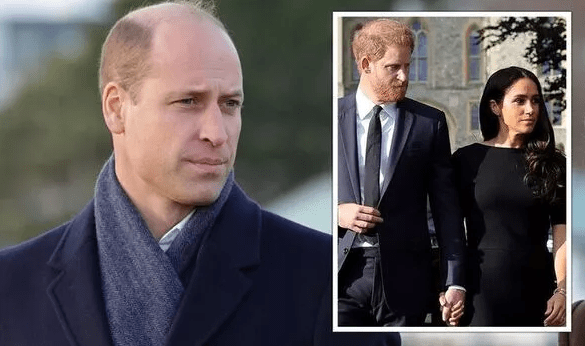
Prince William Says He’ll ‘Fight Back’ If Harry And Meghan Keep Talking Rubbish

0
Prince William Says He’ll ‘Fight Back’ If Harry And Meghan Keep Talking Rubbish

Prince William says he’ll “fight back” if his brother Harry continues to besmirch the royal family with woke accusations of racism and other misdeeds.

According to the Express, Harry and Meghan – who has a ‘tell-all’ Netflix documentary about to hit – has been put on notice that William and Kate would respond if they feel there are ‘inaccurate claims.’

“The Prince and Princesses’ team will wait to see what’s in the Netflix series before deciding what to do, but you can see the direction of travel,” said a well placed source.

The final straw came after Harry was accused of attempts to “sabotage” the Prince and Princess of Wales’s high-profile visit to the USA.

His decision to issue a trailer to the show on the second day of their tour of Boston was seen as a “declaration of war”.

And yesterday he almost stole the limelight again when a charity video of him dressed as Spider-Man was released and went viral. -Express

The spat intensified after a photo of Harry and Meghan inside Buckingham Palace appeared in the trailer for their new show.

Harry and Meghan brought extra shame onto the royal family (on top of Prince Andrew’s scandalous friendship with Jeffrey Epstein) when they told Oprah Winfrey in March of 2021 that the Royal Family was racist. Two days later, the Royals responded with a statement that included: “Some recollections may vary.”

On the Netflix trailer which focused heavily on Meghan, Ms Levin told Philip Davies and Esther McVey: “She’s an actress. She’s been trying to get Harry to be a bit of an actor but not very successfully.”

The new series is due to begin airing on Thursday, exactly three months after Queen Elizabeth’s death.

It promises to tell, in their own words, the story of the Sussexes’ love and their battles with the Royal Family. -Express

Kensington Palace officials, meanwhile, have adopted a strategy of direct confrontation when it comes to new revelations in the Netflix special, while William and Kate are expected to discuss the matter with King Charles (friend of Jimmy Savile) in the coming days.

Tyler Durden
Wed, 12/07/2022 – 05:45