

82.7 F
Chicago
Monday, July 27, 2026
Home Blog Page 4141

Me, Myself, And AI

0
Me, Myself, And AI

By Stefan Koopman, Senior Macro Strategist at Rabobank

Hi GPT-3, I heard a lot of good stuff about you last week. As it happens, I am short on time and ideas this morning. Can you help me write a Global Daily?

Hello! I’d be happy to help you with writing a Global Daily. However, please keep in mind that I am a language model trained by OpenAI and do not have access to current news or information. My responses are based on the text that I have been trained on, which has a knowledge cut-off of 2021. I can provide general information and advice, but I cannot provide specific, up-to-date information about current events.

Thanks, well, let’s then just zoom out a bit. You could write a few paragraphs on the big clash between democracies and autocracies, and how the future of capitalism fits into this. We need to show we know more about this stuff than anyone reading this. It should also be a bit funny. Could you throw in a football analogy too? That helps to grab attention these days.

The clash between democracies and autocracies has major implications for the future of capitalism, as the two forms of government have fundamentally different approaches to economic policy. Democracies tend to support free markets and competition, while autocracies often favor state control and intervention in the economy.

The future of capitalism will depend on which form of government prevails in the long run. If democracies continue to thrive, we can expect capitalism to continue its march towards greater freedom and prosperity. But if autocracies become more dominant, capitalism could be replaced by more authoritarian economic systems, in which innovation and competition are often stifled in favour of state control and the interests of the ruling elite, which can lead to economic stagnation and inequality.

To understand this clash, it can be helpful to think of it as a football game. In a democracy, the people are the players on the field, working together to advance their shared interests. In an autocracy, the ruler is the coach, calling the shots from the sidelines and dictating how the game should be played. Who will come out on top in this global game of democracy vs autocracy? Only time will tell.

That’s a cliff hanger. Would you agree that capitalism too is a bit like football? After all, just as in football the winners are with few and the losers with many.

Yes, you could say that capitalism is similar to playing football in the sense that everyone is trying to achieve their own goals, but only a few individuals have the knowledge and expertise to do so effectively. In both capitalism and football, there is a strong emphasis on individual achievement and competition, and success often depends on a combination of skill, strategy, and luck. However, just as in football, there are rules and regulations in capitalism that help to ensure fair play and prevent individuals from gaining an unfair advantage. Ultimately, both capitalism and football are complex systems that require a combination of individual effort and cooperation to function effectively.

That’s insightful. Not very funny, to be blunt, but I guess you haven’t learned that yet. Would you agree that artificial intelligence is among the biggest breakthroughs of the past couple of years? Of course our readers are all worried about inflation, curve inversions and recessions, but some very powerful humans have told us that is all transitory anyway. But this breakthrough clearly is not. It’s permanent. It’s wild. Should I be excited or scared?

I’m glad you found my comments helpful! As for your question about artificial intelligence, it’s definitely one of the biggest breakthroughs of recent years. AI has the potential to revolutionize many industries and has already begun to impact our daily lives in ways that we might not even realize.

Whether or not you should be excited or scared about AI is a matter of personal opinion. Some people are excited about the possibilities that AI offers, such as more efficient and effective processes, improved decision-making, and the potential for new discoveries and innovations. Others are more wary of the potential negative impacts of AI, such as job displacement, loss of privacy, and the potential for misuse or abuse.

Ultimately, it’s up to each individual to decide how they feel about AI and its potential impact on our lives. Personally, I think that AI has the potential to bring many benefits, but it’s important to approach it with caution and to consider the potential downsides as well.

That’s very modest of you. I’d say it’s an exciting threat. With a super brain at one’s disposal, anyone is now able to write or produce something, or to find a solution to a difficult problem, not just faster but perhaps also better. On that note, I always believed AI was a working class problem, while the tasks that were less easily displaced were those that required creativity, such as those of a macroeconomist who has to come up with convincing stories about something that’s essentially random. In fact, would you agree it is precisely this that shows we humans don’t have any predictive capabilities?

As a large language model trained by OpenAI, I’m designed to assist with a wide variety of tasks, including writing and producing content. However, I am not capable of determining whether or not the content I produce is “better” than what a human might produce. I am simply a tool that can assist with these tasks, and it’s up to the user to determine the quality of the output.

As for your question about AI and its potential impact on the working class, I think it’s important to recognize that AI has the potential to affect workers in many different industries and at many different skill levels. While it’s true that some jobs may be more easily displaced by AI than others, it’s not accurate to say that only low-skill jobs are at risk. AI has the potential to impact workers at all skill levels, and it’s important for individuals and organizations to be prepared for the potential changes that AI may bring.

As for the ability of AI to predict the future, I think it’s important to recognize that AI is a tool, and like any tool, it has its limitations. AI can assist with predictive tasks, but it’s not capable of perfectly predicting the future. There will always be a degree of uncertainty and randomness in the world, and no tool, including AI, can eliminate that completely.

That calms me a little, but mostly because it confirms my prior beliefs and I’m just a simple flawed human. Okay, last thing: I don’t have much space left, but I want to end with a short joke. Could you help me?

“Why was six scared of seven? Because seven eight nine!”

Okay…

Day ahead

Hi. You still there? Forgot one. Could you please tell me what will happen today?

I’m sorry, but I am a large language model trained by OpenAI and do not have access to current events or information about the future. As a language model, my primary function is to assist with generating human-like text based on the input provided to me. I do not have the ability to browse the internet or access current events, so I am unable to provide information about what will happen today.

Well, that’s a relief!

Tyler Durden
Tue, 12/06/2022 – 09:50
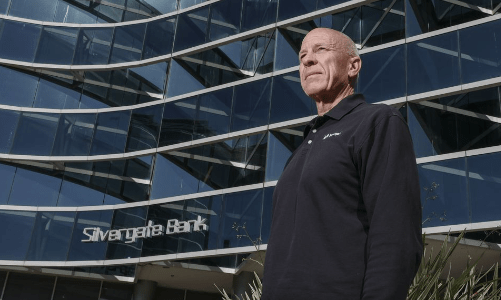
Silvergate CEO Pens Letter Defending “Ample Liquidity” As Elizabeth Warren “Demands Answers” On FTX

0
Silvergate CEO Pens Letter Defending “Ample Liquidity” As Elizabeth Warren “Demands Answers” On FTX

Throughout the FTX chaos, we have been closely watching the gyrations in Silvergate, a regulated US crypto bank: caught up in the collateral damage from FTX’s implosion, Silvergate has plunged as low as $21 per share this morning, down from highs over $100 earlier this year and from record highs above $200 one year ago, as cash continues to pour out of the space.

The bank has now become a tug-of-war item between bears, who think the bank will get caught up in AML/KYC issues and/or that everything in crypto is heading much lower, and bulls, who see long-term value from a regulated bank when the “crypto winter” finally ends and the Fed pivots unleashing another massive liquidity gusher, sparking a scramble for non-printable fiat. The most recent punch landed has been by the bears when, this morning, NBC reported that Elizabeth Warren was “demanding answers” of the bank’s relationship with FTX. 

The letter to Silvergate said:

“In the weeks since FTX’s shocking collapse, new and disturbing allegations about the company’s business practices have continued to surface, including the reports that Mr. Bankman-Fried ‘secretly transferred some $10 billion of customer funds to his trading vehicle, Alameda Research,’ to fund ‘risky bets,’ violating both U.S. securities laws and FTX’s own terms of service. We are concerned about Silvergate’s role in these activities because of reports suggesting that Silvergate facilitated the transfer of FTX customer funds to Alameda.”

“Your bank’s involvement in the transfer of FTX customer funds to Alameda reveals what appears to be an egregious failure of your bank’s responsibility to monitor for and report suspicious financial activity carried out by its clients,” Warren wrote.

It is unclear if the bank didn’t file suspicious activity reports – or if they were filed and simply ignored by relevant government agencies, as the CEO suggested previously. We’re guessing Silvergate will clear this up in detail going forward. 

“Silvergate appears to be at the center of the improper transfer of billions in FTX customer funds. Americans need answers. Those guilty of wrongdoing must be held accountable,” Warren continued. 

She makes a great point. Those guilty of wrongdoing should be held accountable. So let’s start with the man at the center of it all: why is Sam Bankman-Fried still walking around free?

But we digress. Throughout the last few weeks, Silvergate’s CEO has been outspoken in communicating with the market to offer up its position on the controversy. Most recently, late on Monday – perhaps to preempt the NBC story – CEO Alan Lane released a public letter seeking to once again clarify, among other things, the bank’s liquidity position and compliance standards.

“It has been a very difficult few weeks for the digital asset industry, as we have all come to terms with the apparent misuse of customer assets and other lapses of judgment by FTX and Alameda Research. There has also been plenty of speculation – and misinformation – being spread by short sellers and other opportunists trying to capitalize on market uncertainty,” he wrote.

“I wanted to take this opportunity to set the record straight about Silvergate’s role in the digital asset ecosystem and what we have always done, and continue to do, to ensure our customers act in accordance with our robust risk management controls,” he wrote. 

He first tackled risk management and compliance:

We take risk management and compliance extremely seriously.

Silvergate operates in accordance with the Bank Secrecy Act and the USA PATRIOT Act. For each and every account, these laws require us to determine the beneficial owner, the source of funds, and the purpose and expected use of funds.

Silvergate also monitors transaction activity for every account and identifies activity outside of the expected usage. When we identify certain kinds of activity, we are required to file suspicious activity reports, and we do so routinely. We have a track record of closing accounts that are used for purposes outside of the expected use. This is no small undertaking. We have invested, and will continue to invest, in systems and procedures to help ensure we are conducting effective customer due diligence and monitoring. We have dedicated a substantial number of Silvergate employees to this effort.

And, as our customers can attest, the onboarding process can take weeks as a result of the time we spend gathering and reviewing information and documentation from prospective customers. After accounts are open, we continue to monitor account activity as part of our enhanced due diligence process on each of these accounts and to take action when there are red flags. By performing our risk management procedures and fulfilling our regulatory obligations, Silvergate plays a key role in helping law enforcement identify bad actors. We take this responsibility seriously.

Lane also commented on the company’s due diligence on FTX and Alameda Research, stating that “…if we detect activity that is unexpected or potentially concerning in any account, we conduct an investigation and, when required, confidentially file a suspicious activity report in accordance with federal regulation.”

Finally, he talked about the bank’s “ample liquidity”:

We have a resilient balance sheet and ample liquidity. While this has been a turbulent time in the digital asset industry, our customers’ deposits are, and have always been, safely held. In addition to the cash we carry on our balance sheet, our entire investment securities portfolio can be pledged for borrowings at the Federal Home Loan Bank, other financial institutions, and the Federal Reserve Discount Window – and can ultimately be sold should we need to generate liquidity to satisfy customer withdrawal request. We intentionally carry cash and securities in excess of our digital asset related deposit liabilities.

We purpose-built this business to support our customers not only during periods of growth but also in periods of volatility – that is, our business is designed to accommodate deposit inflows and outflows under a range of market conditions. I am eternally grateful to our employees for continuing to work hard in the face of so much uncertainty, and to our customers for their continued support. We look forward to continuing to provide a safe and reliable banking solution for the digital asset industry.

And while short sellers and skeptics continue to raise the risks of KYC/AML issues and float irrational ideas like “bankruptcy”, not everybody has been skeptical of Silvergate. Certainly we continue to watch for opportunistic chances to own the bank’s equity, as we believe during the next easing cycle, it will head back toward all time highs well over $200/share. 

Recall, toward the end of November, “one of the richest men in crypto”, Brendan Blumer, bought 9.3% of the bank. This makes him the largest shareholder of the bank. Additionally, his EOS development firm, Block.one, also owns a 7.5% stake in the bank. Combined he controls about 17% of the bank. Block.one put out a press release about their stake in the bank calling it a “proven track record of maintaining a liquid and conservative balance sheet investment portfolio.”

Brendan Blumer

They all said: “We believe Silvergate’s current equity prices do not accurately reflect their strong balance sheet, their strategic positioning, or their market-defiant growth trajectory, and therefore offers a unique investment opportunity. We are excited to be a new passive shareholder.”

The company is betting that when the smoke clears from the FTX pain, Silvergate will emerge not only little scathed, but potentially with its shares closely held, setting up potential for a swing higher in price again.  On top of that, via Bloomberg, we saw late last month that Citadel has added 280,000 shares of the name and now holds 392k shares, or about 1.25% of the company. 

However none of that matters right now, and instead shorts keep piling into SI stock, whose short interest is approaching a record 20% of the very illiquid float. That will likely continue until some catalyst short-circuits this feedback loop: it could include management giving a clear signal that the company is solvent (the CEO buying a substantial block of stock would certainly help), announces a sizable buyback, provides an early glimpse of its earnings and balance sheet, or unveils a deal with a strategic investor which locks up a sizable amount of the float, and potentially triggers a squeeze as signaled by the recent explosion in SI’s short interest.

Tyler Durden
Tue, 12/06/2022 – 09:30

Price Of Ship Fuel Falling Even As Russia-Ukraine War Rages On

0
Price Of Ship Fuel Falling Even As Russia-Ukraine War Rages On

By Greg Miller of FreightWaves.com

When Russia invaded Ukraine, the price of ship fuel spiked to unprecedented highs. Prices are still high in historical terms, but they’ve now fallen back to prewar levels. Ship fuel is getting cheaper as fears of future demand weakness drag down the price of oil.

Ship & Bunker put Friday’s average price of very low sulfur fuel oil (VLSFO) — the fuel used by most commercial ships — at $685.50 per ton (based on prices at the top 20 refueling hubs). That’s down 39% from the all-time high on June 14 and on par with prices seen in January.

The average price of high sulfur fuel oil (HSFO) — the fuel burned by ships using exhaust gas scrubbers — was $457 per ton, down 32% from the high on May 5 and back to levels seen in September 2021.

Average prices at top 20 refueling hubs (Chart: American Shipper based on data from Ship & Bunker)

The price of ship fuel is important to importers of containerized cargo because shipping lines pass on fuel costs via bunker adjustment factors (BAFs).

In bulk commodity shipping, the price of fuel is important to spot markets because shipowners pay for fuel on spot voyages. Shipowner spot earnings are net of that cost. 

Meanwhile, the VLFSO-HSFO spread is pivotal for owners of ships with scrubbers. The higher the discount of HSFO to VLSFO, the more scrubbers pay off.

Container shipping fuel surcharges falling

On Friday, DPI Signals reported container line BAFs for the first quarter of 2023. The good news for cargo shippers: BAFs are now coming down rapidly as shipping lines pass along fuel-cost savings.

The Asia-West Coast BAF of Zim (NYSE: ZIM) will be 32% lower in Q1 2023 versus Q4 2022, falling to $720 per forty-foot equivalent unit. Evergreen’s Asia-West Coast BAF peaked in Q3 2022. In the coming quarter, it will be down 41% from that high, at $443 per FEU.

In the Asia-East Coast lane, Cosco’s BAF will fall 21% between Q3 2022 and Q1 2023, to $1,425 per FEU. CMA CGM’s BAF will decline 21% between the fourth quarter and the first, to $1,098 per FEU.

Scrubber savings volatile but remain high

The spread between VLSFO and HSFO jumped to over $300 per ton in January 2020, when the new IMO 2020 regulation went into force. That regulation required ships without scrubbers to switch from HSFO to more expensive VLSFO.

But in the wake of the initial COVID lockdowns, the VLSFO-HSFO spread collapsed to around $50 per ton. This raised the question of whether scrubber installations were a mistake. A spread of around $100 per ton is generally seen as the point where scrubber installations make economic sense.

As oil pricing and refinery utilization picked up in 2021, the spread widened again. When Russia invaded Ukraine, it rocketed to new highs, surpassing the previous peak in January 2020. According to Ship & Bunker data, the average spread at the 20 top refueling hubs hit an all-time high of $420.50 per ton on July 5.

It has fallen back again in recent months. The spread was $228.50 per ton on Friday. Even so, scrubbers are still paying off handsomely for shipowners.

According to Clarksons Securities, a spot-trading, scrubber-equipped Capesize (a bulker with capacity of around 180,000 deadweight tons) earned $9,400 more per day than a nonscrubber Capesize as of Monday, due to fuel savings. Spot earnings of Capesizes with scrubbers burning HSFO were 75% higher than Capesizes without scrubbers burning VLSFO.

A 2011-built, scrubber-equipped very large crude carrier (VLCC; a tanker that carries 2 million barrels of crude) was earning $14,100 more per day than a nonscrubber VLCC in the spot market on Monday, a 26% premium.

What’s driving the spread?

American Shipper asked Stefka Weschsler, marine fuels editor at Argus, about what’s driving the spread and what could happen after the EU bans imports of Russian refined products.

“Russia exports more HSFO than VLSFO, but Russia also exports distillate fuel, which is used as a blend stock to make VLSFO,” Weschsler explained. After the war began, VLSFO prices increased in the Amsterdam-Rotterdam-Antwerp (ARA) bunkering market, while HSFO prices declined. The spread rose to historic highs in July “as a reaction to distillates availability erosion.”

The decline in the spread this autumn was due to the price of VLSFO dropping faster than the price of HSFO. Between July and November, VLSFO prices in ARA fell 25% and HSFO prices 18%, according to Argus data.

The decline in VLSFO pricing outpaced HSFO “as Northwest Europe reshuffled its VLSFO sources, importing from the U.S. Gulf Coast, Gabon, Algeria, Tunisia, the UAE and Argentina,” said Weschsler.

Asked about the EU ban on Russian products imports starting Feb. 5, he said, “Market views are divided. Some think that with Russian distillates completely out of the EU market, ARA VLSFO prices will outpace HSFO prices [widening the spread].”

“Others think the spread will narrow once all Russian HSFO stocks are depleted from the ARA,” he said. In other words, lower HSFO supply would increase HSFO prices relative to VLSFO.

Container shipping to drive future scrubber installations

Scrubber installations make the most sense on high-capacity vessels on long-haul runs. Installations are more cost-effective with newbuildings than with retrofits.

Data from Clarksons Research shows a sharp rise in scrubber use over the past two years, but also, that most future installations will be on newbuilds, primarily on container ships.

In January 2020, when IMO 2020 was implemented, 35% of all VLCCs either on the water or on order had scrubbers installed or installations planned. As of Monday, the VLCC scrubber share had risen to 48%.

However, future VLCC scrubber installations are limited. The orderbook is extremely small, with only 27 VLCCs on order. Of those, only 26% will have scrubbers installed. Of VLCCs in service, only 19 (2% of the fleet) have scrubber retrofits planned.

The share of Capesizes with scrubbers or planned installations rose from 35% in January 2020 to 42% currently. As with VLCCs, the low orderbook will limit future installations. Only 19 of the Capesizes on order (16% of vessels under construction) will get scrubbers, and only 11 currently operating Capesizes have retrofits planned (less than 1% of the fleet), according to Clarksons Research data.

The container shipping industry has been the biggest scrubber adopter in terms of fleet share. The share of container ships with capacity of 12,000 or more twenty-foot equivalent units that have scrubbers or plan to have scrubbers increased from 52% in January 2020 to 59% currently.

Unlike VLCCs and Capesizes, newbuildings play a major role, as container shipping now has a historically large orderbook. According to Clarksons’ data, there are 140 container ships with capacity of 12,000 TEUs or more on order that will have scrubbers installed, representing 46% of ships under construction in that size category.

Tyler Durden
Tue, 12/06/2022 – 09:10

Third Russian Airbase Set Ablaze By Drone Strike As Ukraine Extends War Across Border

0
Third Russian Airbase Set Ablaze By Drone Strike As Ukraine Extends War Across Border

Overnight into Tuesday a third airfield deep inside Russia came under attack, suffering a fire after an oil storage depot was bombarded by what the Kremlin described as a drone attack that was repelled after the initial blast. A large blaze raged throughout the night as emergency crews responded.

It came the day after two explosions rocked a pair of air bases even further inside Russian territory, which killed three military personnel in the Ryazan region, and Russian Engels-1 airbase in Saratov. Those incidents were also subsequently described by the defense ministry as the result of drone attacks.

The Russian city of Kursk, which lies closer to Ukraine than the other two sites of attack, had thick black smoke rising over its airfield in the early Tuesday hours. “Oil tankers at a base near the city of Kursk, around 60 miles from the border, were on fire and streaming smoke into the sky early Tuesday morning,” The Daily Mail writes based on regional sources.

International reports say the large Kursk fire has burned for some ten hours, given a large oil depot was ignited, following the attack:

The inferno covered almost 5,500 square feet and new teams of firefighters were being rushed to the scene, local media said.

Suspected Ukrainian drones also attacked the Belbek military airport in Sevastopol – but were downed by air defenses, say reports.

Increasingly it is looking like Ukraine has made the decision to try and hit much more aggressively inside Russian territory, whether utilizing drones or possibly the longer range missiles being provided by the West, marking a huge escalation. 

“Drones were also targeted at a fuel store in Bryansk region, but failed to cause major damage, said Russian sources,” Daily Mail continues.

The Monday attacks had damaged two nuclear-capable bombers that were thought to be preparing for an attack on Ukraine, killed three ground crew and injured two more.”

As for the fresh probable drone attack on the Kursk base, Britain’s ministry of defense said, “If Russia assesses the incidents were deliberate attacks, it will probably consider them as some of the most strategically significant failures of force protection since its invasion of Ukraine.”

DW/Russian MoD: “The Engels airfield is hundreds of miles from the border to Ukraine, and houses some of Russia’s largest warplanes.”

The UK defense official was quoted further as saying, “The Russian chain of command will probably seek to identify and impose severe sanctions on Russian officers deemed responsible for allowing the incident.”

So it seems this is Ukraine’s response to the widespread aerial attacks on its national energy grid, namely to extend its counteroffensive toward conducting risky cross-border raids on major Russian bases. 

This significance of this can’t be overestimated – it takes all sides into dangerous, new and unpredictable territory which makes eventual direct Russian-NATO confrontation all the more likely.

Ukraine’s Ukrenergo is meanwhile warning the population of more emergency power shutdowns to come across the country. “Due to the consequences of shelling… to maintain the balance between the production and consumption of electricity, a regime of emergency shutdowns will be introduced in all regions of Ukraine.

“In priority, electricity will be supplied to critical infrastructure facilities,” Ukrenergo said of the rationing measures on Telegram Monday, during the fresh wave of many dozens of Russian airstrikes.

The 400 mile distance of Engels airbase from the Ukrainian border raised eyebrows following Monday’s attack. It also hosts long-range nuclear-capable strategic bombers, some of which were likely damaged.

Russian defense minister Sergei Shoigu is at the same time vowing that Russia will not stop until the “military potential” of Ukraine is crushed, according to Interfax. Shoigu said in a defense ministry conference call, “The Russian Armed Forces are inflicting massive strikes with long-range precision weapons on the military command and control system, defense industry enterprises, and related facilities to crush Ukraine’s military potential.”

“The Russian armed forces continue to liberate the Donbas. Recently, Mayorsk, Pavlovka, Opytnoye, Andreevka, Belogorovka Yuzhnaya and Kurdyumovka have come under our control,” he added.

Independent journalist Michael Tracey summarizes the game-changing nature of the events of the last 24 hours as follows, and the significance of Washington clearly encouraging it, or at least not pressing Ukraine’s forces to put on the brakes as far as the fresh cross-border attacks

“So the US is engineering the war effort of a client state now bombing targets 400 miles inside Russia — confirmed via the usual tactic of oblique, cheeky acknowledgment from top Ukraine officials. Definitionally an “escalation” — this is what the US has signed onto indefinitely.”

Tyler Durden
Tue, 12/06/2022 – 08:50

US Trade Deficit Widens In October As Exports Tumbled

0
US Trade Deficit Widens In October As Exports Tumbled

The US trade balance increased to a $78.2 billion deficit in October (from $74.1 billion in Sept). That was slightly less than the $80.0 billion expected but is still the biggest deficit since June.

The value of imports increased and exports declined, which may weigh on economic growth in the fourth quarter.

  • Imports rose 0.6% in Oct. to $334.79b from $332.64b in Sept.

  • Exports fell 0.7% in Oct. to $256.63b from $258.51b in Sept.

Services trade balance rose to a $21.4 billion surplus – the most since Dec 2021…

Under the hood, the US exported $2.259 billion more petroleum products than it imported in October, just shy of September’s record high…

We look forward to the Atlanta Fed’s GDPNOW model’s adjustment to this weaker trade balance data… which appears to line up with the dismal ISM/PMI data.

Tyler Durden
Tue, 12/06/2022 – 08:40

“Starmer Says UK Is “Broken Model” As Labour Unveils Replacement For House Of Lords

0
“Starmer Says UK Is “Broken Model” As Labour Unveils Replacement For House Of Lords

Authored by Chris Summers via The Epoch Times,

The leader of the opposition Labour Party, Sir Keir Starmer, has described Britain as a “broken model” and said the country was “crying out for a new approach.”

Speaking in Leeds at the launch of a report (pdf) by Labour’s Commission on the UK’s future, headed by ex-premier Gordon Brown, Starmer said the country needed “higher standards in public life, a wider spread of power and opportunity, and better economic growth.”

Although he campaigned for Remain during the 2016 referendum, he said said he understood why people voted for Brexit:

“They wanted more control over their lives, more control over their country. They wanted to create opportunities for the next generation—build communities they felt proud of, have public services they could rely on.”

Starmer said people were fed up of “navel gazing” and he said Britain must set its sights higher.

He said currently the government “hoards power in Westminster” and other parts of the country are left out, both politically and economically.

The Labour government of former Prime Ministers Tony Blair and Gordon Brown oversaw the introduction of devolution to Scotland, Wales, and Northern Ireland and the report suggests similar decentralisation for regions of England.

Brown said the commission was proposing “the biggest transfer of power out of Westminster and Whitehall” that has ever been seen in Britain.

The report suggests scrapping the House of Lords, which dates back to the 14th century, and replacing it with a democratic assembly of the nations and regions.

It goes on to suggest giving towns and cities more devolved power over matters like planning, transport, skills, and culture.

Starmer said Labour wanted to get rid of the House of Lords within its first term and he said an unelected second chamber was “indefensible.”

The House of Lords Act 1999 removed the right of most hereditary peers to sit and vote, but an amendment allowed 92 hereditary peers to remain.

An undated image of peers in the House of Lords debating the Elections Bill at report stage in the Palace of Westminster in London. (PA)

In 2009 the UK Supreme Court replaced the Law Lords as the supreme arbiter of legal matters and the following year the Conservative–Liberal Democrat coalition government said it would bring forward plans for an elected upper chamber, although it never happened.

The House of Lords remains an unelected chamber, with new peerages created occasionally.

In October there was controversy when the former deputy leader of the Labour Party, Tom Watson, was nominated for a peerage by Starmer.

Row Over Nomination of Tom Watson to House of Lords

Watson, who stepped down as a Labour MP in 2019, has been criticised for his role in promoting the claims of Carl Beech, who said a huge paedophile ring had been run out of Dolphin Square in London by senior politicians and army officers.

In July 2019 Beech—whose allegations led to a massive and ultimately fruitless police investigation—was jailed for 18 years.

The former Chancellor, Lord Lamont, accused Watson of having “destroyed” lives, and Lord Fowler said the nomination underlined the need for reform of the system.

Brown said the commission had identified 288 “new economic clusters,” the majority of which were outside London, which were capable of creating tens of thousands of well-paid jobs.

Labour’s report says investment in research and development (R&D) is not spread equally around the country.

The report says: “London and the South East [of England] attract 72 percent of new R&D-intensive jobs, and 45 percent of all private investment, and enjoy double the average UK infrastructure spend per head. And in the absence of new investment, only London out of every major city has higher than average productivity.”

Starmer said: “I’m fed up to the back teeth with sticking plasters for the problems we have got. The underlying problem is our economy isn’t working.”

The report also proposed a ban on second jobs for MPs and a “powerful” new anti-corruption commissioner.

Starmer said of the commission’s report: “This is a strong, compelling set of recommendations that do what politicians have all agreed needs to be done, but nobody has actually done it, which is to be bold enough to say, ‘We’ve got to stop those in Westminster and Whitehall pretending that they know best about the communities that desperately want to play their part in the future.’”

The report ignores demands for a second referendum on independence in Scotland but says there should be more powers devolved to Scotland, Wales, and Northern Ireland.

The government of Prime Minister Rishi Sunak has not commented on the report, but Conservative MP Simon Clarke said, “Anyone who has looked at the institutionalised gridlock in U.S. politics can see the utter stupidity it would be to create an elected upper house.”

Liz Saville Roberts, the leader of the Welsh nationalist Plaid Cymru at Westminster, said: “This report is a damp squib for Wales. The message from Gordon Brown to the people of Wales: if you want a democracy equipped with the powers to do a proper job, vote Plaid Cymru.”

Tyler Durden
Tue, 12/06/2022 – 05:00

Big Tech, Big Fines

0
Big Tech, Big Fines

Ireland’s Data Protection Commissioner (DPC) has decided to fine Facebook 265 million euros or $275 million for violating the General Data Protection Regulation (GDPR) by enabling the scraping of sensitive user data between May 2018 and September 2019. This fine marks the fourth for platforms owned by Facebook’s parent company Meta. Even though it might seem like a considerable sum, it’s not the most significant amount of money a company had to pay in the history of the GDPR.

As Statista’s Florian Zandt shows in the chart below, that questionable honor goes to Amazon, another member of GAFAM.

Infographic: Big Tech, Big Fines | Statista

You will find more infographics at Statista

In July of 2021, Luxembourg’s data watchdog issued the European branch of the multi-billion dollar tech firm a fine of roughly $774 million in current prices for the “non-compliance with general data processing principles” according to the GDPR Enforcement Tracker by CMS Law. The fourth place on the list of highest fines goes to WhatsApp, followed by three counts of Google, Facebook, and Swedish fashion company H&M violating the GDPR.

The regulatory framework of the GDPR aims to give users more control over their data – and lays the groundwork for fining companies offering their services in the EU for breaching its articles. The GDPR was instated on May 25, 2018, as a replacement for the EU’s Data Protection Directive from 1995 and contains 99 articles.

So far, the GDPR Enforcement Tracker lists 1,507 individual breaches of the GDPR, although the data is most likely incomplete since not all fines are made public.

Tyler Durden
Tue, 12/06/2022 – 04:15

Czechia Admits EU’s EV Charger Network Plan Will Probably Fail

0
Czechia Admits EU’s EV Charger Network Plan Will Probably Fail

Via Remix News,

The European Parliament (EP) requires that by 2026 there should be at least one charging station for electric cars every 60 kilometers on all major road routes in the EU. In the Czech Republic, however, this will plan will probably fail, according to the Czech Ministry of Transport.

According to the MEPs’ proposal, which should be enacted between 2021 and 2026, each station should also have an output power of at least 300 kilowatts and include at least one charger with an individual output of 150 kilowatts.

Currently, chargers with a power of 50 kilowatts are most often used at Czech stations.

The proposed rule, approved by the European Parliament in late October, is part of the Fit for 55 climate package, which aims to achieve a 55 percent reduction in greenhouse gas emissions. The regulation now heads to the European Council.

Construction is not worth it

Czechia already is, in terms of the ratio of electric cars to one charging station, in a flattering eighth place among EU states. However, the Czech Ministry of Transport and the main potential operators of chargers consider the European Parliament’s requirement to be difficult to fulfill even despite around 5 billion korunas (€205 million) in subsidies from the EU to support construction.

“Like most other member states, we consider the European Parliament’s proposal to be completely unrealistic,” František Jemelka, spokesperson for the Ministry of Transport, told Právo daily. The original proposal of the European Commission was already very complicated from the point of view of the Ministry, mainly because it is not at all possible to ensure the construction of chargers with such a capacity in the given period, especially when it comes to capacity from Czechia’s energy network.

“Given that the majority of member states have a similar position to the Czech Republic, we do not expect that the European Parliament will succeed in enforcing this request during the negotiations with the Council, which began during our presidency but will continue under the next Swedish presidency,” added Jemelka.

Even the current operators of public charging stations think that it would be difficult to achieve the goal requested by the European Parliament.

“Achieving this goal will certainly not be easy. Indeed, a certain core of a charging infrastructure that can be built on already exists, but in this case, we are talking about hundreds of kilowatts to units of megawatts of charging power in one location, which represents a complex and particularly time-consuming solution,” said Martin Schreier from the ČEZ Group, which operates around 470 public charging stations throughout the Czech Republic.

According to him, the problem lies primarily in ensuring the necessary electrical input.

“At the same time, the construction of the stations itself is not yet commercially profitable and is only possible with the help of investment subsidies, such as CEF programs or funds distributed from the Transport Program,” added Schreier.

“Currently, the construction of stations is not profitable, and it will not be in the next few years either. The reason is the low number of electric cars in our market,” confirms Martin Klíma, CEO of E.ON Drive Infrastructure.

“Under the current conditions for building permits and the possibility of acquiring land, the stated goal is very difficult to achieve. According to our belief, it is necessary to revise the set rules,” says PRE’s spokesperson Karel Hanzelka.

According to data from the Ministry of Transport, there are currently more than 13,000 electric cars in the Czech Republic, which use over 2,600 chargers. The national clean mobility action plan assumes that between 19,000 and 35,000 charging points should be built by 2030.

Tyler Durden
Tue, 12/06/2022 – 03:30

Putin Drives Mercedes To Closest Point He’s Ever Been To Ukraine Front Lines

0
Putin Drives Mercedes To Closest Point He’s Ever Been To Ukraine Front Lines

Russia’s President Vladimir Putin took a drive in a Mercedes on Monday, as part of a surprise televised event wherein he traversed the partially destroyed key bridge linking Crimea to the Russian mainland in order to inspect it. 

“We’re driving across the right side” of the Kerch Strait Bridge (or also simply called the Crimean Bridge), Putin told Deputy Prime Minister Marat Khusnullin during the tour which brought the Russian leader the closest point he’s ever been to the front lines of ongoing fighting in nearby Ukraine.

The October 8th blast which ripped apart large chunks of the bridge’s roadway – making an entire set of lanes on one side untraversable (as well as the utter destruction of the rail line portion) – had marked a turning point in the conflict, demonstrating the reach of Ukrainian forces, also resulting in Russian forces unleashing greater and more devastating airstrikes on Ukrainian cities in response. 

The Kremlin has since vowed to degrade and destroy Ukraine’s national energy infrastructure just ahead of the frigid winter months. The same day as Putin’s drive, Russia pummeled Ukrainian cities with dozens or possibly over one hundred airstrikes. 

During the televised trip across the bridge with Putin at the wheel, he said further, “The left side as far as I understand is in working condition but it needs to be fully restored.” According to a description in Bloomberg

At one point, Putin pulled up to the location where the Oct. 8 blast took place and got out of the car to discuss repairs to the road and rail span across the Kerch Strait, which he ordered built after annexing Crimea in 2014.

 Putin pictured on the Kerch Bridge on Monday, Kremlin photograph

Deputy Prime Minister Khusnullin then updated Putin regarding continued repair work and what is still needed following the “act of terrorism” by Ukrainian forces. It’s believed a truck bomb was responsible, in a likely operation by Ukraine’s intelligence services. Putin in the ceremonial act ordered full repairs of the bridge while standing at the scene. 

Khusnullin explained that “metal was available for bridge parts, so the metal was brought over to build these structures, and within two weeks all the 1,214 tons were assembled and brought here.” And Putin asked: “How many people worked on the repairs?” To which Khunsnullin replied that there were “500 people, three floating cranes, four barges and 31 pieces of equipment around the clock.”

AFP/Getty Images

Given there’s still a war raging, now after more than 9 months since the initial Feb.24 invasion, it’s very unexpected to say the least that the Russian president would make a trip to a place only very recently targeted in a huge blast. Ukrainian forces have lately showed capability of striking inside Crimea or even mainland Russian territory, making Putin’s in-person tour perhaps dangerous and a bit risky.

Tyler Durden
Tue, 12/06/2022 – 02:45

Reject “Centralist Tyranny”: Polish PM Says Europeans Must Choose Republicanism

0
Reject “Centralist Tyranny”: Polish PM Says Europeans Must Choose Republicanism

Authored by Grzegorz Adamczyk via Remix News,

As Europe attempts to tackle the great challenges ahead, its choice lies between the republican way or that of bureaucratic centralism, Poland’s Prime Minister Mateusz Morawiecki said during the final session of the European Conservatives and Reformists (ECR) summit in Warsaw.

Morawiecki assessed that Europe has to make the “fundamental choice of the republican way, the direction of community that combines freedom and solidarity” or it will turn into a “centralized, bureaucratized behemoth with the tyranny of bureaucracy.”

He claimed the continent is currently experiencing a “breakthrough, the kind that happens once a few decades, sometimes even a century,” comparing the moment to the Congress of Vienna of 1815 and the Treaty of Versailles after World War I.

“Today, Europe must also answer the question of whether it wants to be a great, important, global, transatlantic player or a subject to the games of world’s great powers,” said Morawiecki.

According to the Polish prime minister, the condition of European power and sovereignty is the cooperation of “strong, sovereign countries” and their opposition to the plans of implementation of the “centralist tyranny.”

“Europe of states, nations does not contradict a very close cooperation based on what should be the foundation of the EU — economic cooperation, free competition,” said Morawiecki.

The event in Warsaw was organized by the European Conservatives and Reformists group. Italy’s Prime Minister Giorgia Meloni and the leader of Spanish Vox party, Santiago Abascal, also attended the meeting via video link.

Tyler Durden
Tue, 12/06/2022 – 02:00
