The global energy crisis brought about by Russia’s invasion of Ukraine has increased interest in alternative energy sources, including nuclear, around the world.
However, as Statista’s Katharina Buchholz explains below, the age of nuclear infrastructure, the fact that the technology had entered a phase-out mode in many nations, and the continued resistance to new nuclear projects complicates a quick u-turn for many nuclear programs.
As seen in data by the World Nuclear Industry Status Report, most nuclear energy programs were started in the 1970s, a fact that reflects in the age of nuclear reactors today. Despite some nuclear programs having ended (and many more scheduled for phase-out), the number of nuclear programs in the world has plateaued for many decades as some nations still take up the technology, most recently the United Arab Emirates and Belarus in 2020. Poland at the end of October announced that it is looking to start using nuclear energy in 2033. Around that time, six other nuclear programs – among them the ones in Belgium, Germany, Switzerland and Spain – will be scheduled to have shut down, even though this could now be subject to change. Balancing out a dip in nuclear programs could be Italy, which is discussing taking up the technology again under its new right-wing government despite abandoning and even outlawing it after the 1986 Chernobyl disaster. More u-turns are possible in Sweden and the Netherlands.
Some small steps towards nuclear extension are happening in countries known for die-hard opposition to nuclear energy, but they are facing the expected roadblocks. Germany recently extended the ability to use its remaining three reactors until April 2023 among a lively public debate. Originally, the country had planned to shut off all reactors by the end of this year. In Japan, which reduced the number of operating reactors significantly since the Fukushima disaster in 2011, some reactors are approaching 60 years of age – the former lifespan cap that the country might now do away with due to the current circumstances. In Belgium, where mean reactor age is above 40 years, a petition to postpone the September shut-off of one reactor failed, while the government extended the end-of-life of three others from 2023 to 2025 after the invasion of Ukraine and might even run some until 2035.
Despite the plateau in nuclear energy programs, the relative importance of the technology has still decreased as the capacity of other energy types outgrew nuclear. In 2021, the technology produced less than 10 percent of global electricity, down from a high of 17.4 percent in 1995 and 1996. Looking at all of the world’s energy needs, not just electricity, nuclear contributed just 4.3 percent.
Florida Gov. Ron DeSantis on Nov. 19 acknowledged “underwhelming performances” by Republicans in the midterm elections and contrasted the losses elsewhere with what he called a “true Republican landslide” in Florida.
“We added four new Republican Congressmen to the U.S. House of Representatives from the state of Florida,” DeSantis told attendees at the Republican Jewish Coalition in Las Vegas on Saturday.
“We secured supermajorities in the Florida legislature—the most Republicans we have ever had in Florida’s history.”
At a time when Republicans are questioning what happened to the promised midterm elections’ “red wave” and what to do going forward, DeSantis clearly and elegantly stated that in Florida, Republicans are appealing to freedom, fighting against the “woke mind virus,” and implementing common-sense legislation. As a result, Republicans, Independents, and Democrats voted for a red wave in Florida.
“We won, by double digits, Miami-Dade County!” DeSantis said of his Republican win in the previously Democrat stronghold.
He added that if Republicans want to win future elections, they must follow his example in Florida.
Blueprint to Win
According to DeSantis, Republicans were successful in Florida’s midterm elections because “Florida really has a blueprint for success.” Specifically, he explained that his “blueprint” includes exercising authentic leadership that doesn’t bend to the shifting whims of society.
“The job of a leader is not to stick your finger in the wind and try to contort yourself to wherever public opinion may be trending at any given moment. No, the job of a leader is to set out a vision. To execute that vision. To show people that it’s the right vision, and to deliver concrete results. And when you do that, the people respond,” DeSantis stated.
He continued by giving the example that Florida has millions more people than New York, but New York’s budget is “over twice the size of our budget in Florida.” Despite that, DeSantis claimed that when New Yorkers move to Florida, they remark on Florida’s much better roads, services, and infrastructure.
DeSantis added that in Florida, K-12 schools are performing better than in New York, Florida has a record budget surplus—and it does all of that without a state income tax and one of the lowest tax burdens in the country. He said that the government wants people to succeed in Florida, and they adopt legislation to make that possible and attract people to the state.
Plus, DeSantis said, in Florida they don’t let red tape and bureaucracy prevent them from getting the job done.
A Return to Sanity
Expanding on why he thinks Republicans in his state did well in the midterms, DeSantis said Florida “stood out as the free state” over the past few years. He stated that during the height of the COVID-19 lockdowns, his administration refused to “descend into some type of Faucian dystopia” and instead respected people’s rights.
That included refusing to force people to close their businesses, keeping schools open, and standing against vaccine mandates. DeSantis added that those decisions resulted in attacks from the mainstream media and government officials worldwide, but his administration stood firm.
DeSantis went on to say that leadership requires standing against such attacks and said he was happy to take those “arrows” to protect his constituents. He said when people witnessed that, it drew them to Florida because it was a “refuge of sanity.”
As part of that “refuge of sanity,” DeSantis said Florida chose law and order over rioting and disorder. He said that when riots broke out in 2020, he immediately called out the National Guard to quash them. Then he moved to enact legislation protecting the police and their funding and said that anyone who riots in Florida isn’t getting a “slap on the wrist” but instead gets the “inside of a jail cell.”
DeSantis added that if any prosecutors try to pick and choose which laws to enforce, he immediately removes them from their posts.
Further, DeSantis said to resounding applause that Florida has chosen “education over indoctrination” and noted that Florida protects parental rights over their children. He said his administration believes parents have a fundamental role in raising their children and, as a result, he’s expanded school scholarships, so parents have more choices in education.
Pointedly, DeSantis stated that schools are not a place for “ideology” and said Florida banned Critical Race Theory in K-12 schools. He added that in Florida, they don’t teach children to hate themselves or each other and instead teach the history of the United States and what it means to “be an American.” The governor said he wouldn’t allow inappropriate content in elementary school, referencing the gender ideology curriculum.
All of this, DeSantis said in conclusion, is his administration’s willingness to stand against the “woke mind virus” that’s destroying society. He said people see the insanity of “woke ideology,” his administration’s appeal and return to common sense, and his “courage to lead,” and that’s why Florida experienced a red wave.
“Guess what? When you stand up for what’s right, when you show people you’re willing to fight for them, they will walk over broken glass barefoot to come vote for you. And that’s exactly what they did for me on Nov. 8 in record numbers,” DeSantis said.
He finished by saying that people respond to “strong leadership,” and if Republicans want to win going forward, they need to remember that to attract voters from across the political sphere.
Lost Red Wave
Before the Nov. 8 election, many political models estimated a red wave of up to 45 House seats because of President Joe Biden’s unpopularity, the struggling economy, and the past precedent of the majority party losing seats in a midterm. That didn’t pan out, however.
Instead, while Republicans managed to eke out a slim majority in the House, they lost at least one seat in the Senate—the Senate runoff results in Georgia could exacerbate that or return the Senate to a 50-50 split. Consequently, the 2022 midterms were considered a decisive win for Biden and his administration.
Michael Bloomberg, chair of the Pentagon’s advisory panel, apologized to attendees at an economic forum hosted by his company after former UK Prime Minister Boris Johnson’s speech that singled out the communist Chinese regime.
Bloomberg issued the apology on Nov. 17 at the Bloomberg New Economy Forum hosted by his corporation in partnership with the Singapore government.
“Some may have been insulted or offended last night by parts of the speaker’s remarks referencing certain countries and their duly elected leaders,” Reuters reported Bloomberg said.
“Those were his thoughts and his thoughts alone, not cleared in advance by anyone or shared with me personally,” Bloomberg told the conference, referring to Johnson’s remarks.
“To those of you who were upset and concerned by what the speaker said, you have my apologies,” he added.
According to the version released by Johnson’s spokesperson, the former prime minister described China and Russia as “two former communist tyrannies” to the gathering of business leaders, academics, and government officials from dozens of countries.
“Let’s look at Russia and China. The two former communist tyrannies in which power has once again been concentrated in the hands of a single rule, two monocultural states that have been traditionally hostile to immigration and that are becoming increasingly nationalist in their attitudes,” Johnson said, according to his spokesman.
Johnson said China and Russia “are willing to show a candid disregard for the rule of international law, and two countries that in the last year have demonstrated the immense limitations of their political systems by the disastrous mistakes they have made.”
The spokesperson said Johnson’s criticism was only against the Chinese authorities, not the country or Chinese people.
The Epoch Times reached out to Bloomberg LP for comment.
Bloomberg, founder of Bloomberg LP, the parent of Bloomberg News, didn’t specify whether his apologies were for the Chinese people or the communist regime.
The billionaire has previously landed in the headlines for defending the Chinese Communist Party (CCP). In 2019, the entrepreneur said the party’s top leader Xi Jinping “is not a dictator.”
“The Communist Party wants to stay in power in China, and they listen to the public … Xi Jinping is not a dictator. He has to satisfy his constituents, or he’s not going to survive,” Bloomberg said in a television interview with Firing Line in September 2019.
Bloomberg was asked several times about his comment when he ran for U.S. president in 2020, and the former New York mayor avoided pinning the label of “dictator” on Xi.
Xi has become the country’s most powerful leader since the first ruler Mao Zedong. Last month, Xi secured a record-breaking third term in office and installed allies in the Party’s top decision-making body during the 20th National Congress, further tightening his grip over the party and the country.
In the opening remarks at the conference last Thursday, Bloomberg praised China’s vice chairman Wang Qishan, who attended via video link, as a “troubleshooter” and “problem solver.” The billionaire noted he met Wang almost two decades ago, when Bloomberg served as mayor of New York and Wang was mayor of Beijing.
Bloomberg’s apology raised concern among activists who pointed to his position in the U.S. Department of Defense.
While spending time with family and friends at Thanksgiving remains important for many Americans, the cost of that indulgence has never been higher, up a stunning 20% from last year to $64.05 for the classic feast.
The cost for the classic meal was the most affordable in the South – $58.42, followed by the Northeast – $64.02, Midwest – $64.26 and West – $71.37.
“General inflation slashing the purchasing power of consumers is a significant factor contributing to the increase in average cost of this year’s Thanksgiving dinner,” said AFBF Chief Economist Roger Cryan.
“Farmers are working hard to meet growing demands for food – both here in the U.S. and globally – while facing rising prices for fuel, fertilizer and other inputs,” said Cryan.
Over the past two years, the grocery bill for a traditional Thanksgiving dinner has risen by 36.6%. All these changes are illustrated in the following chart from PoliticalCalculations blog:
In the chart, we’ve ranked the cost of the individual items and groupings used by the Farm Bureau for their traditional turkey dinner menu from high to low according to their 2021 cost as you read from left to right. We’ve also tallied the cumulative cost of the meal, with the totals for each shown on the far right side of the chart.
Ranking the data this way lets us see that the increase in the cost of turkey is once again responsible for most of the year-over-year increase in the cost of the meal. Here we see the cost of a 16-pound bird rose by 20.7% to $28.96 in 2022. This single item alone accounts for over 46% of the year-over-year increase in the total cost for the meal. Since 2020, the cost of turkey has increased by $9.57, making up 56% of the realized increase in Thanksgiving dinner ingredient costs over that time.
Meanwhile, only the price of cranberries fell compared to last year, dropping by 13.8%. Every other Thanksgiving dinner items increased in cost during 2022.
Among those items, a 1-pound veggie tray of carrots and celery registered the smallest year-over-year price increase of 7.3%. Every other item’s cost was up significantly, recording double-digit year-over-year price increases ranging from a low of 11.2% for sweet potatoes to a high of 69.4% for a 14-ounce package of cubed bread stuffing.
During the last ten years, the cost of a traditional Thanksgiving dinner held steady within a relatively narrow range between $46.90 (2020) and $50.11 (2015). Thanks to the cumulative effect of President Biden’s inflation, celebrating Thanksgiving with a traditional turkey dinner has never been more costly for Americans.
A USDA memo this month said turkey prices will be higher because of this year’s outbreak of highly pathogenic avian influenza (HPAI), which led to the death of 8 million turkeys in 2022. But USDA also said “Russia’s war on Ukraine and drought across the United States” are other factors that are “pushing up the price of Thanksgiving staples.”
USDA told Fox News Digital that both the COVID pandemic and “Putin’s Price Hike” have boosted food prices around the world, and said Russia’s move against Ukraine cut off a “critical supply” of wheat, corn, barley and other grain. Russia’s war in Ukraine plus the pandemic have putt “pressure on food prices,” USDA said.
As of the third quarter of 2021, a hearty Thanksgiving dinner serving of turkey costs $1.42.
A tofurkey (soybean) dinner serving with the same amount of calories costs $0.66 and provides almost twice as much protein.
Keep in mind that this plant-based meal would be almost 3 times larger by weight than the poultry-based meal and may either keep you at the dinner table longer or provide you with more leftovers.
Remind us again who was responsible for soaring poultry and soybean prices back then?
To be honest, it’s kind of hard to try and entertain the innuendo and rumors that Democrats and the media are working to do damage control on behalf of Sam Bankman-Fried, the founder of now-bankrupt crypto exchange FTX, because the idea is just so reprehensible.
But they sure do keep giving us ammunition to make that suggestion, don’t they?
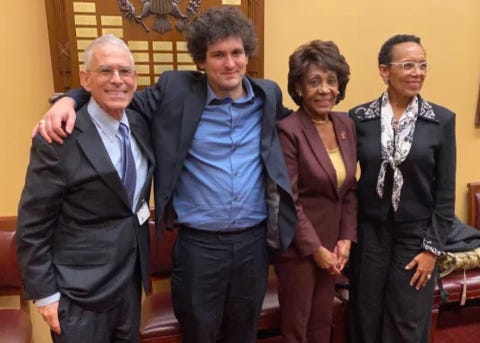
Bankman-Fried and House Financial Services Committee Chair Maxine Waters
Bankman-Fried – the second biggest donor to Democrats behind George Soros – has all but admitted that he squandered billions of dollars of other people’s money carelessly, writing “I fucked up” on Twitter in a mea culpa about two weeks ago, days after a run on his exchange exposed it to be a shell of what many perceived it to be.
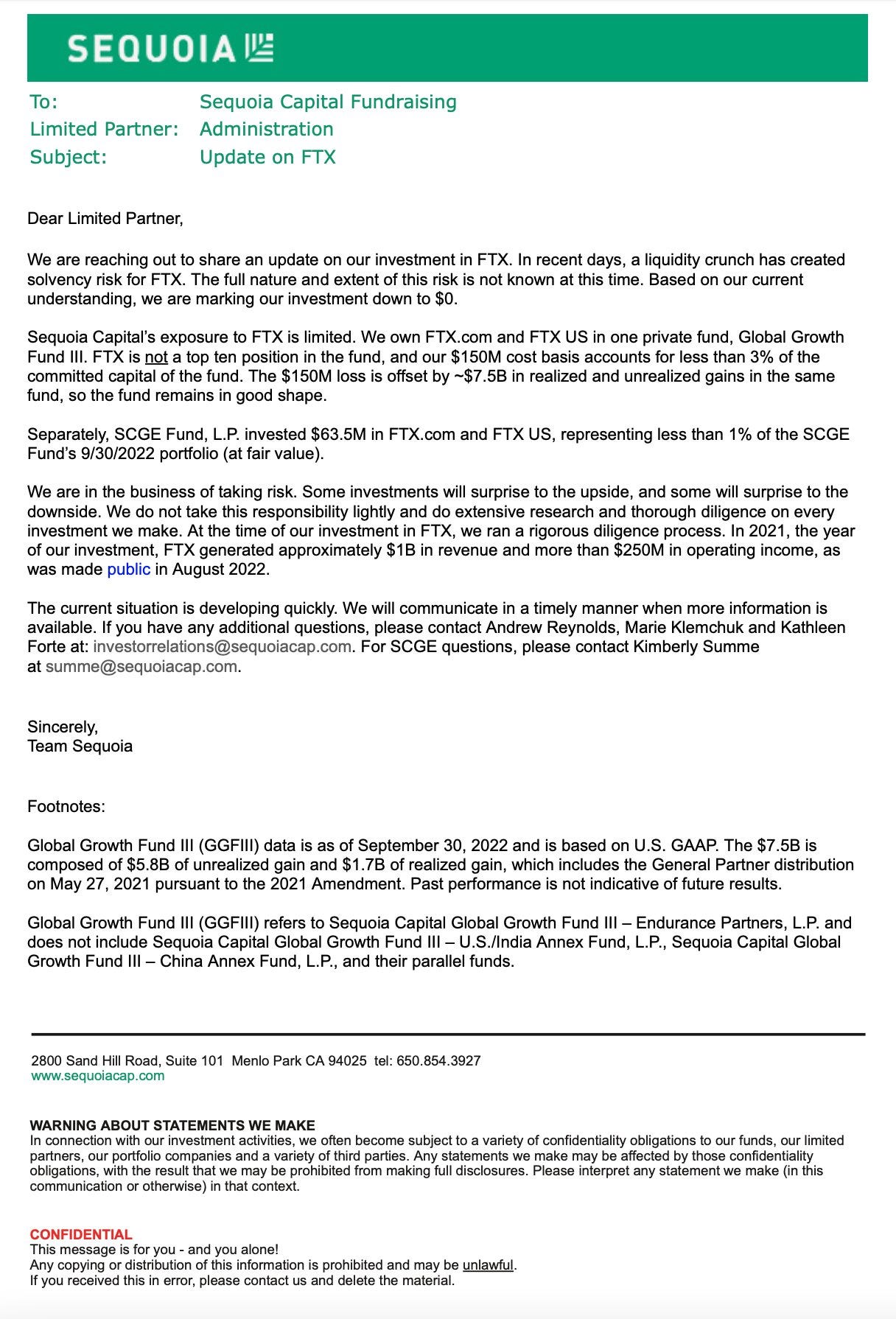
Institutional investors in FTX have written their stakes in the firm to $0.
The $5 billion bank-run on FTX that started it all has many everyday crypto investors worried that their “investments” with FTX are total losses. For many, it was their life savings.
Since then, Bankman-Fried’s former company continues to be at the center of extremely shady circumstances. It has seen a “substantial amount” of its assets go missing in the days after its blowup.
The lawyer hired to oversee the liquidation of FTX, who also was in charge of the same task for Enron, has said “he’s never seen a company in worse shape than FTX.”
“I have over 40 years of legal and restructuring experience. I have been the chief restructuring officer or chief executive officer in several of the largest corporate failures in history. . . . Never in my career have I seen such a complete failure of corporate controls and such a complete absence of trustworthy financial information as occurred here.”
Get 50% off: If you enjoy this article, would like to support my work, I would love to have you as a subscriber and can offer you 50% off for life: Get 50% off forever
To add insult to injury, Bankman-Fried has also admitted that his entire persona of being an altruist was a ruse, calling it a “dumb game we woke westerners play.”
Now widely accepted by the public and most in the financial industry to have committed a massive $30 billion fraud that has spawned innumerable comparisons to Madoff and Enron, it’s unclear to me what more of an admission of guilt is needed to extradite Bankman-Fried to the United States and place him under arrest.
I know I’m not the only one who can hear the drumbeat of potentially covering up for Bankman-Fried beating a little louder with every day that goes by and he isn’t shown being paraded off somewhere in handcuffs.
Instead, the only photo I have seen of Bankman-Fried since his firm’s blowup has been one of him meandering around a grocery store in the Bahamas.
For historical reference, Bernie Madoff was arrested on December 11, 2008.
On December 11, 2008, financier Bernard Madoff is arrested at his New York City apartment and charged with masterminding a long-running Ponzi scheme later estimated to involve around $65 billion, making it one of the biggest investment frauds in Wall Street history.
His arrest came two daysafter he admitted to his brother that he was running a fraud.
“On December 3, he told longtime assistant Frank DiPascali, who had overseen the fraudulent advisory business, that he was finished. On December 9, he told his brother Peter about the fraud.”
Between the beginning of December and his arrest on the 11th, he also confessed to his sons, who “turned him in”.
This means, at the maximum, it was 11 days between Madoff being “turned in” and being arrested.
For reference, FTX collapsed around November 8, 2022 and Binance turned down the company’s bailout on November 9, 2022. Bankman-Fried admitted to “fucking up” on November 10, 2022 and FTX filed for bankruptcy on November 11, 2022, which means it has already been 11 days since the bankruptcy filing – and nearly 2 weeks since the firm’s collapse.
In the interim, instead of Bankman-Fried being brought to justice in the United States, we find out that “members of the House are requesting testimonies from Bankman-Fried, top executives from FTX and Alameda at a hearing in December.”
“The fall of FTX has posed tremendous harm to over one million users, many of whom were everyday people who invested their hard-earned savings into the FTX cryptocurrency exchange, only to watch it all disappear within a matter of seconds.
Unfortunately, this event is just one out of many examples of cryptocurrency platforms that have collapsed just this past year. That’s why it is with great urgency that I, along with my colleague ranking member McHenry, announce the Committee’s intention to hold a hearing to investigate the collapse of FTX.”
Rep. Maxine Waters
Not at a criminal court – at a congressional hearing. Not anytime soon – in December.
In the interim, we are being treated to a cushy response from the media, who has hailed Bankman-Fried as anything other than a criminal. The New York Times wrote a widely criticized puff piece on Bankman-Fried 3 days after FTX filed for bankruptcy.
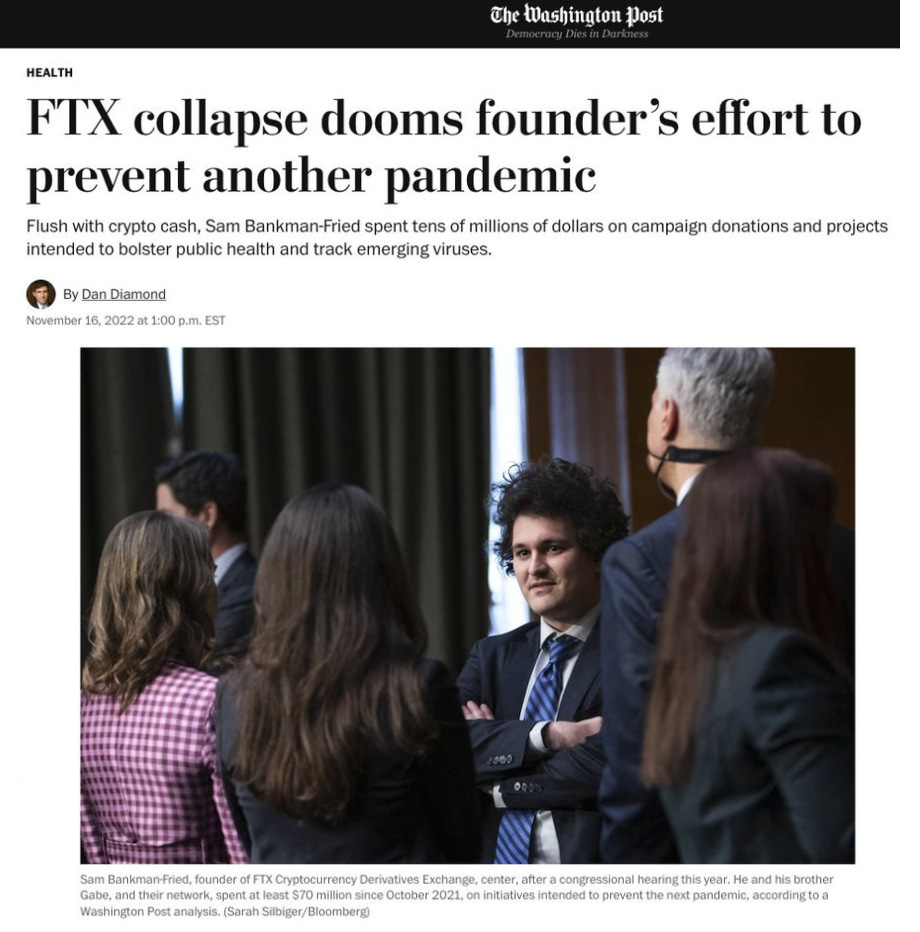
The Washington Post’s take was that he was a pandemic fighter:
For a party that seems to absolutely loathe billionaires, Democrats and their friends in the media sure are taking it soft on Bankman-Fried.
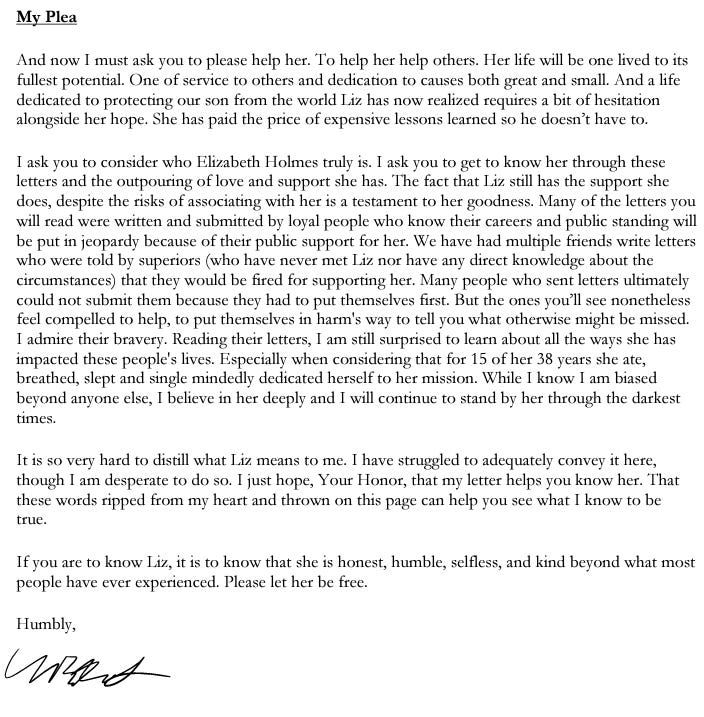
Key democrats also took it soft on Theranos founder and former billionaire Elizabeth Holmes. After she drove an $8 billion fraud into the ground and was found guilty in a court of law, Democrat Cory Booker even wrote a letter pleading for a light sentence for her. Try to keep your lunch down while reading this:
Now, what do these two frauds have in common?
—
Thank you for reading QTR’s Fringe Finance. This post is public so feel free to share it.: Share
US Unveils $400M More In Weapons, Generators For Ukraine
The White House has unveiled another $400 million in defense aid to Ukraine, which is also to include urgently needed generators as the national energy grid has been severely degraded by Russian airstrikes, leaving at least 10 million people without power.
This brings military aid committed thus far to more than $19 billion in weapons. Secretary of State Antony Blinken announced Wednesday in a statement, “Pursuant to a delegation of authority from the President, today I am authorizing our twenty-sixth drawdown of U.S. arms and equipment for Ukraine since August 2021. This $400 million drawdown includes additional arms, munitions, and air defense equipment from U.S. Department of Defense inventories.”
“This drawdown will bring the total U.S. military assistance for Ukraine to an unprecedented level of approximately $19.7 billion, since the beginning of the Administration,” the statement continued.
Blinken underscored that the US coordinated the new aid with partner nations, “including the £50 million in air defense systems offered by UK Prime Minister Sunak,” according to the State Dept. readout.
Meanwhile, there remain growing concerns over the US and Western partners greatly depleting their own stockpiles, as The Independent observes:
The continued push of weapons to Kyiv is raising questions about how long the U.S. and partner nations can continue to sustain the fight without an impact to military readiness. Many European nations have already expressed that they have pushed forward all the excess they can afford to send.
The White House push for more defense aid comes as the administration grows nervous about GOP objections. “The flow of weapons comes as the Biden administrations seeks to pass an additional $37 billion in military and humanitarian aid for Ukraine during the post-election session of Congress, before Republicans take over control of the House in January,” The Independent writes.
The Pentagon has lately emphasized it is prioritizing getting the Ukrainians ready for the harsh winter months. There’s also a push to keep providing advanced anti-air systems to protect against attacks on the electricity stations and facilities…
Defense Secretary Lloyd Austin says the 2 NASAMS air-defense systems provided to Ukraine by the US have “a 100% success rate” against Russian missiles thus far. Delivery was this month. (Remarks from the start of another meeting of Ukraine’s partners to source arms for the war.) pic.twitter.com/rhIgXIRzIk
Currently an estimated half the national electricity grid has been degraded or destroyed due to repeat waves of Russian airstrikes. Parts of the capital on Wednesday were even said to lack water, which emergency services are working hard to restore.
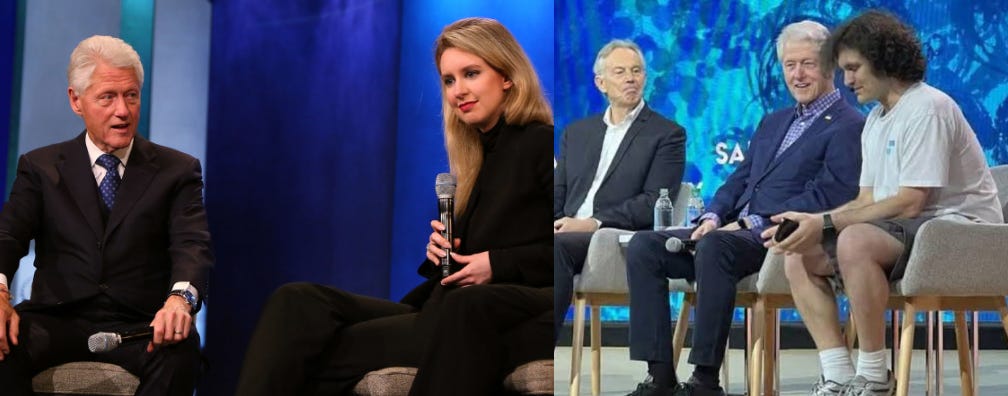
Howls Of Outrage After New York Times Confirms SBF To Speak Alongside Zelenskyy, Yellen
As we discussed last night, Sam Bankman-Fried has now demonstrated that he is both a pathological liar and a sociopath, the kind who in “explaining” to his employees how he stole billions (over $4 billion according to new FTX CEO John J. Ray) from the now bankrupt FTX, an act which left it insolvent and without liquidity, called it “loans” which were “generally” not used for “large amounts of personal consumption” (just “small amounts” used for such trivial items as $40 million penthouses and private jets).
And the only reason we don’t officially call him a criminal just yet, is because he has not yet confirmed he used client money from his exchange to fund his personal hedge fund, an act which would cost any other individual decades in jail… but not prominent democrats like SBF or Jon Corzine, of course. Plus it’s the US legal system’s job to do that, not ours. Although we are growing increasingly skeptical this prominent Democratic donor will ever see the inside of a courtroom.
It’s not just us: with much of the entire world demanding to know how this corpulent 30-year-old still has not been thrown in prison, or at least charged with a variety of crimes, the NYT just confirmed to the entire world what a farce the one-time paper of record has become, and how it is willing to whore itself out for clicks – not to mention prominent Democrat donors – because moments after SBF tweeted that he will be speaking with Andrew Ross-Sorkin moderated NYT “summit” on Nov 30…
And so, instead of being under arrest, SBF will instead be treated like a luminary alongside other such other Democrat icons as Zelenskyy (who according to some may have been intimately familiar with FTX fund flows in the past year) and of course the woman who along with Ben Bernanke and Jerome Powell, made it all possible by blowing the biggest asset bubble of all time: Janet Yellen.
And while we are certain that the NYT – which we assume is done writing puff pieces on behalf of SBF after it became a laughing stock last week – would be quick to mercilessly cancel and expel from its “prestigious” conference anyone who had misgendered some post-op transsexual, it is willing to give this thieving pathological liar and sociopath a forum in which to profess his innocence to the entire world, and by association with other Democrat “celebrities” such as this one…
… to boost his standing within a legal system that is clearly as much as joke as the venue that he will be sharing with the following individuals:
Here are all the other “top business and policy leaders” at the NYT whitewashing summit:
Eric Adams, New York City mayor
Ben Affleck, Artists Equity C.E.O.
Sam Bankman-Fried, FTX founder
Gerry Cardinale, RedBird Capital Partners founder, managing partner and C.I.O.
Shou Chew, TikTok C.E.O.
Larry Fink, BlackRock chairman and C.E.O.
Reed Hastings, Netflix founder and co-C.E.O.
Andy Jassy, Amazon president and C.E.O.
Van Jones, CNN host, author and Dream.Org founder
Scarlett Lewis, Jesse Lewis Choose Love Movement founder and mother of Sandy Hook shooting victim, Jesse
Mike Pence, 48th vice president of the United States and author of “So Help Me God”
Benjamin Netanyahu, former Prime Minister of Israel, current leader of the Likud party
Priscilla Sims Brown, Amalgamated Bank president and C.E.O.
Secretary Janet L. Yellen, U.S. Department of the Treasury
President Volodymyr Zelensky of Ukraine
Mark Zuckerberg, Meta founder, chairman and C.E.O.
The shocked, stunned and simply disgusted reactions are still coming in:
I’ll be speaking with @SBF_FTX at the @dealbook summit next Wednesday (11/30) by hiding in one of the bathroom stalls and surprising him while he’s using the urinal.
That CNBC, the NY Times and far-left extremist Andrew Sorkin would be protecting, apologizing for and promoting this guy is zero surprise. https://t.co/xhGh0gePV0
FTX SBF is scheduled to speak at a @nytimes business summit with Andrew Sorkin, after defrauding clients billions of dollars. More proof that paid off politicians grant you amnesty.
SORKIN: “Internet trolls are scapegoating Sam, but we should celebrate entrepreneurs even when they fail. There’s nothing illegal about taking big risks.” https://t.co/mB9KkFsRdtpic.twitter.com/FKyTtdsfl9
My theory is that Andrew Sorkin is a sensible guy disgusted by the ruling class who tries to insult it by showing how bad it’s leading figures are. He’s surprised no one gets it but at least he makes a lot of money until that happens. https://t.co/ii9pGTz3R0
“The Statement Comes Across As Dovish” – Wall Street Reacts To FOMC Minutes
While prevailing consensus was that the Fed didn’t really say anything unexpected, or anything that wasn’t already telegraphed both in the Nov 2 statement and subsequent Fed speak, Wall Street commentators agreed that “the statement overall comes across as dovish” as BBG Economics chief Anna Wong put it, With Integrity Asset Management’s Joe Gilbert adding that “it is constructive that Fed participants were becoming increasingly aware of the lagged impact of all the rate hikes this year. Generally, this is bullish for equities and fixed income because there is now a slight change in consensus at the Fed which means that significantly more rate hikes are now less likely.”
Wong added that “there’s widespread agreement within the committee to slow the pace of rate hikes soon, with only ‘a few’ preferring to wait until the policy stance is more clearly in restrictive territory. We think Powell belongs to this latter group.“
The market agrees with the dovish take and stocks have jumped to session highs while the market implied Fed Funds curve has dipped on the outer end,
Here are some of the initial reactions to the FOMC Minutes:
Chris Low, FHN Financial
“The two big headlines are most Fed officials favor slower tightening pace soon and various Fed officials see higher peak rates. Both of these confirm post-meeting press conference guidance from Powell.”
Interactive Brokers’ Chief Strategist Steve Sosnick:
“With pivot off the table, and with no pause coming yet, slower pacing seems to be enough for stock traders now.”
Lara Rhame of FS Investments:
“This rate-hike cycle has been “fast and furious” and the Fed has to slow down eventually. But the central bank can’t afford to let markets just rip higher.”
Doug Fincher, hedge fund manager of Ionic Capital Management:
“Amazed at the magnitude of tightening in credit spreads over the weeks since the CPI print. Curve is inverted, all kinds of risks (including recession) yet credit spreads tightened by 30% and signal all clear…. A slowdown is not a cut and many hurdles remain — like strong employment. It’s good, but a lot already priced in, I think, and many risks need to be solved for soft landing to play out.”
Childe-Freeman of Bloomberg Intelligence:
“The reference to slowing rate hikes will grab headlines. This will add to the bearish-dollar view for now, with $1.04 euro-dollar in sight again.”
Dan Suzuki, deputy chief investment officer at Richard Bernstein Advisors LLC.
“There isn’t much to glean from the minutes. From what I’ve seen, it’s exactly the same message we heard at the press conference: slower and possibly higher peak Fed funds rate. Any major reaction off of the minutes is probably an overreaction.”
Joe Gilbert, portfolio manager at Integrity Asset Management
“Keeping in mind that these minutes are before the October CPI print, it is constructive that Fed participants were becoming increasingly aware of the lagged impact of all the rate hikes this year. Generally, this is bullish for equities and fixed income because there is now a slight change in consensus at the Fed which means that significantly more rate hikes are now less likely.”
Anna Wong, head of Bloomberg Economics
“We think the statement overall comes across as dovish. There’s widespread agreement within the committee to slow the pace of rate hikes soon, with only ‘a few’ preferring to wait until the policy stance is more clearly in restrictive territory. We think Powell belongs to this latter group.”
“US Flips Into Withdrawal Season” As NatGas Prices Surge
US natural gas prices jumped Wednesday on a combination of thin holiday trading ahead of Thanksgiving, colder weather forecasts, and a bigger-than-expected draw in inventories.
Futures in New York for December jumped as high as $7.60/mmbtu, or about 82 cents, on cooler forecasts, peaking around 0900 ET. Prices slid from the high but gained slightly after EIA reported a bigger-than-expected draw in inventories at 1030 ET. As of 1400 ET, prices were up 59 cents to $7.37.
“The United States has officially flipped over to withdrawal season as the cold set across the East and Midwest in the last week, driving gas burns higher and ramping industrial and residential plus commercial (ResComm) demand. The cold was coupled with weak production in Appalachia, but strong production in South Central and Canada helped meet that rising demand,” Houston-based energy firm Criterion Research said.
They added: “The current weather outlook is setting up for another burst of cold in early December, which will stack on top of the partial return of Freeport LNG in mid-December. We likely roll into January and February with record-high LNG demand to help supply Europe, so if the US winter is colder than average, it sets up a very interesting March equations of state (EOS) storage picture.”
Month-ahead forecasts for the Lower 48 show what could possibly be a colder December than what the 30-year trend calls for. This would mean ResComm demand would spike due to increased heating demand and add to more significant declines in inventories.
The flip has begun as the withdrawal season from NatGas storage is underway.
For this time of year, NatGas storage is around normal levels compared to a 25-year trend. But what can happen from here, as Criterion Research explained, is colder weather and LNG exports ramping up could draw down inventories down much quicker.
Besides fundamentals, Dennis Kissler, senior vice president of Bok Financial Securities, told Bloomberg the move today was due to technical short covering as prices climbed above the 50-day and 100-day moving averages.
The U.S. energy policy is clear about its intention to phase out fossil fuels.
This has forced refiners to exercise caution in order to stay afloat.
It has also resulted in a loss of U.S. refining capacity.
One of the under-reported factors behind the ongoing diesel shortage is the loss of U.S. refining capacity since the start of the Covid-19 pandemic. Today I will discuss the factors that led to this loss.
According to the Energy Information Administration (EIA), at the beginning of the pandemic U.S. refiners had 19.0 million barrels per day (BPD) of operable refining capacity (Source). This was the highest number ever reported by the EIA.
By December 2021, that number had fallen to 17.9 million BPD — a loss of 1.1 million BPD of capacity in less than two years.
Here is the thing many need help understanding about refining. It is a boom-and-bust business, and these refiners do not have crystal balls. It is widely reported when they make huge profits, but they also regularly endure huge losses.
U.S. energy policy has been clear about the intent to phase out fossil fuels. If you are a refiner forecasting billions in losses — and you require massive investments in order to keep your refinery operating safely and in compliance with the laws — you may very well simply make the decision to close down.
There are two excellent sources of information detailing which refineries closed, and why they closed. The first is the EIA.
But I stumbled upon a more detailed look recently. In a Twitter thread, Laura Sanicola, an oil and energy reporter at Reuters, highlighted the individual refinery closures from the start of the pandemic through June 2022:
She reports on nine refinery closures, but the theme is consistent. Most of the refineries were closed due to demand loss as a result of the Covid-19 pandemic.
But, aren’t these companies earning billions of dollars? Isn’t that an argument for keeping these refineries open? There are two points to make on that argument.
First, it is possible to make billions of dollars as a company, but to lose money consistently in an individual refinery.
We have seen this happen a lot with East Coast refiners that didn’t have access to cheaper oil from the U.S. shale boom. They had to continue to procure crude oil on the international markets, and that put them at a competitive disadvantage.
Second, current refiner profits are a snapshot in time. Today, U.S. demand for petroleum has largely recovered. In fact, distillate demand has recovered to pre-pandemic levels. But, these companies are projecting the future.
They are looking at long-term demand forecasts for petroleum products. Those projections indicate declining fuel demand over time. Thus, they do not want to invest billions of dollars that could take a decade or more to pay off.
Imagine that you are running a chain of stores. Overall, your company is highly profitable, but you have stores that are consistently unprofitable. Further, those stores are outdated, the outlook for demand in these areas is weak, and it will cost a lot of money to upgrade them. You would probably close those locations.
That, in a nutshell, is why we have lost refining capacity in the U.S. It’s going to take some changes in our energy policy to address this.