79.6 F
Chicago
Sunday, July 26, 2026
Home Blog Page 4181

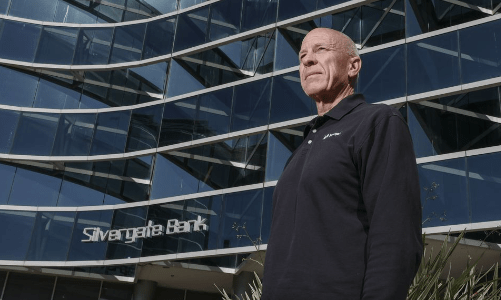
“Concerns Have Abated”: FalconX Resumes Use Of Silvergate Network As Crypto Bank Amasses Large Short Interest

0
“Concerns Have Abated”: FalconX Resumes Use Of Silvergate Network As Crypto Bank Amasses Large Short Interest

Like almost every other equity related to crypto this month, Silvergate Capital has been punished badly. 

As we noted last week, the stock has had a triumphant fall from grace, plunging from highs of $160 per share in early 2022 to lows near $24 over the last few trading sessions, as each day new ugly crypto-related headlines cross the wires.

But for Silvergate, which is known as the largest and most well known regulated crypto bank in the United States that also can allow customers to send cash in real time, it looks as though business may be returning to normal…somewhat.

This morning it was announced that institutional cryptocurrency platform FalconX would be resuming its use of the Silvergate payment network. It had suspended use of the network last week. 

“Concerns have abated,” the platform told its clients in a memo. The halting of use of Silvergate was consistent “with our standard process to pause and reassess operations in these scenarios,” the company wrote, according to a Tuesday morning Bloomberg note. 

Meanwhile, Silvergate Chief Executive Officer Alan Lane said earlier this year that the bank “remains committed to supporting customers during a challenging period for the digital-asset industry,” Bloomberg reported. 

On his LinkedIn page Monday, Lane wrote: “I’ve said before that our business was built to support our customers during growth and market transformation. And we remain steadfast in that commitment to you, our customers.”

In the interim, as Silvergate continues to weather the storm, its stock has amassed a massive 12% of its float short, even despite the plunge in shares, according to S3.

Recall, about a week ago Silvergate confirmed it had little exposure to the FTX blowup. 

Lane, Chief Executive Officer of Silvergate, said:

“In light of recent developments, I want to provide an update on Silvergate’s exposure to FTX. As of September 30, 2022, Silvergate’s total deposits from all digital asset customers totaled $11.9 billion, of which FTX represented less than 10%. Silvergate has no outstanding loans to nor investments in FTX, and FTX is not a custodian for Silvergate’s bitcoin-collateralized SEN Leverage loans. To be clear, our relationship with FTX is limited to deposits.

The company then confirmed that the rest of its leveraged loans and banking infrastructure was safe: 

“To date, all SEN Leverage loans have continued to perform as expected with zero losses and no forced liquidations. As a reminder, all SEN Leverage loans are collateralized by Bitcoin, and we do not make unsecured loans or collateralize SEN Leverage loans with other digital assets.”

Tyler Durden
Tue, 11/22/2022 – 19:20

Joe Biden & The “Transformational” Presidency

0
Joe Biden & The “Transformational” Presidency

Authored by William Anderson via The Mises Institute,

Much is made of the failure of Republicans to make predicted gains in the recent midterm elections, but, as Ryan McMaken has pointed out, Congress plays a much-diminished role in national governance to the point that even had the so-called red wave actually occurred, it is doubtful that much would have changed regarding Joe Biden’s presidency. In fact, most of what Biden has done in his two years in office has been outside of congressional legislative matters.

McMaken points out:

This all combines to mean we should expect very little change on policies at the federal level. For example, we can expect to keep hearing plenty about the evil of fossil fuels. The administration will continue to press for less drilling for oil and gas, and the war on coal will continue. The administration will continue to issue new edicts for “fighting global warming.” 

As McMaken notes, Biden has used executive orders liberally, sometimes using a twisted interpretation of federal law, and then unleashing his regulatory and law enforcement agencies to get his desired results. For example, federal banking regulators and the Securities and Exchange Commission have pressured banks and other lenders not to led to the oil and gas industry, citing the fealty to fighting climate change as the reason.

Note that the administration is doing this not via congressional authorization, but rather through its own self-serving “interpretation” of existing federal law. Likewise, Biden’s infamous student loan forgiveness order was not through such relief passed by Congress, but rather using a 2003 federal law that permits the US secretary of education to employ “expansive authority to alleviate the hardship that federal student loan recipients may suffer as a result of national emergencies.” What constitutes a “national emergency” must be in the eyes of the beholder, as any reason will do—and, so far, the courts have signed off on this vast expansion of executive power. This is reminiscent of Franklin Roosevelt’s perverse interpretation of the 1917 Trading with the Enemy Act to undergird his gold seizure from Americans and devaluate the dollar.

(Biden has not been the only recent president to liberally employ executive orders for questionable reasons. Donald Trump used existing law to raise tariffs against Chinese products, claiming that his actions meant that the Chinese were now helping to pay for their exports to the USA. Once upon a time—before turning over some of its authority to the executive branch—Congress had sole authority to set tax rates.)

Biden’s reckless actions have come in part because progressives in the 1930s convinced Congress to give away much of its authority to the executive branch, the action well described by Paul Craig Roberts and Lawrence Stratton in their book, The Tyranny of Good Intentions. The authors described a scene in which Congress was passing bills not even yet written and acceding their authority to the president as a response to the economic calamity of the early 1930s.

The New Deal, which was Franklin Roosevelt’s set of policies ostensibly to combat the Great Depression (although one easily can argue that the New Deal was the main reason the depression lasted for a decade), made FDR a “transformational” president, a title that Biden actively is seeking for himself. Encouraged by historical writers such as Jon Meacham and Doris Kearns Goodwin, Biden wants to become an icon like Roosevelt, although the “hook” today is not economic depression (yet) but rather the so-called climate emergency.

Unfortunately, becoming a presidential icon requires that the executive branch impose severe economic damage to the country. Roosevelt’s New Deal, far from pulling the USA out of the Great Depression, left it mired it in what economist Robert Higgs called “regime uncertainty,” which resulted in high unemployment and a dearth of capital investment. Biden’s version of the so-called Green New Deal points the economy in the same direction. Writes Thomas Woods:

In the old days, progressives claimed to be trying to improve the standard of living of the ordinary person. Everything they advocated would have had the opposite effect, but at least they claimed to be making his life better.

Now they’re not even claiming that.

You will be poorer, they’re telling you. Your electricity bills will be higher. The price of your car will be higher. And according to them, higher prices are in fact a good thing, because they’re supposedly a sign of a strong economy.

His claims notwithstanding, Biden’s objective to have a “transformational” presidency is to make Americans worse off now in exchange for the remote possibility that the Green New Deal will allow for future generations to have better weather. Biden’s grandiose view of himself and his policies are egged on in part by Meacham’s flattery:

He has been described as Joe Biden’s “historical muse”, an occasional informal adviser to the US president and contributor to some of his major speeches including the inaugural address.

In March, Jon Meacham put together a meeting between Biden and a group of fellow historians at the White House that lasted more than two hours. What did he learn about the 46th president?

“He’s like an upside down iceberg,” the Pulitzer prize-winning historian says by phone. “You see most of it and that’s not spin: there’s just not a lot of mystery to Joe Biden. The last four or five minutes of his press conference in the East Room [on 25 March] when he talked about democracy and autocracy, that was pretty much it.”

As the average American family struggles to keep up with inflation and the Biden administration deliberately makes it more difficult for them to live a semblance of normal lives, historians such as Meacham are telling Biden to expand his reach and his authority in fundamentally changing how Americans live. Indeed, in Biden’s first two years, he has brought about fundamental change to American life, but that change has been harmful.

Robert Higgs in his article “No More Great Presidents” lays out the modern historians’ standard for “greatness”:

The lesson seems obvious. Any president who craves a high place in the annals of history should hasten to thrust the American people into an orgy of death and destruction. It does not matter how ill-conceived the war may be. 

So far, Biden has not launched the USA into a foreign war, although he has almost single-handedly financed (with US tax dollars, of course) the proxy war between Ukraine and Russia, using the Russian invasion as his justification for doing everything he can to prolong the fighting. However, by shackling the energy industries, blaming businesses for the inflation his government created, and doing whatever he can to make daily life difficult for ordinary people, one can say that Biden is at war with people who have no means by which to fight back.

Even had the red wave passed over the electorate earlier this month, it would have changed the Biden presidency very little, if at all. That is how powerful the executive branch under Biden has become. And Biden will continue to listen to the “historians” who fawn over his every word and tell him that he, too, can be a “great” president.

Tyler Durden
Tue, 11/22/2022 – 19:00

China Pauses Purchases Of Some Russian Oils Ahead Of Price Cap

0
China Pauses Purchases Of Some Russian Oils Ahead Of Price Cap

While we wait for the US and EU to unveil details of the Russian oil price caps which will be implemented in two weeks (we may have a lot to to wait after John Kirby said that “It’s not just about the dollar figure. It’s about the implementation, of course, making sure as many countries as possible can sign on to that,” he tells reporters, clearly stalling as nobody in the west knows just how badly such a price cap could backfire and send prices soaring), China is not taking any risks as its crude buyers – who have emerged as the biggest buyers of Russian oil in 2022 taking advantage of western sanctions and buying up Russian oil with discounts as large as $30 below spot – have paused purchases of some Russian oil as they too wait for details of a US-led cap to see if it presents a better price.

As Bloomberg reports citing “traders with knowledge of the matter”, several cargoes of Russian ESPO crude for December-loading remain unsold and there’s hesitation among sellers and Chinese buyers to close deals before more clarity on the exact price cap level is known, according to traders with knowledge of the matter.

The Russian oil price cap is set to be implemented alongside European Union sanctions on Russian crude on Dec. 5, with those adhering to the measure gaining access to insurance, banking and shipping services from the bloc. The cap is designed to keep crude flowing from the OPEC+ producer to prevent a global supply shock but crimp the Kremlin’s revenues as it wages war in Ukraine.

However, Russia has reiterated that it won’t sell to nations that implement the cap, potentially sending oil sharply higher (back in July JPMorgan said that “Oil Price Could Hit “Stratospheric” $380 If Russia Retaliates To G7 Oil Price Cap“). Instead, Moscow will redirect supply to “market-oriented partners” or reduce production, according to Deputy Prime Minister Alexander Novak. In other words, the status quo will continue, since to this day Russian oil makes its way to European markets, only instead of being bought directly from Russia, it comes by way of China or India instead, with Europe paying a substantial premium to where oil would trade if all these artificial trade barriers did not exist.

ESPO, or Eastern Siberia-Pacific Ocean oil is popular with China’s independent refiners due to the high diesel yield and short shipping distance. Traders said many market participants appear open to referencing the price cap — even if they don’t officially support it — provided the level isn’t too dislocated from current prices.

Should the level be set too low, however, the party responsible for shipping and insurance coverage — which can be the seller or buyer, depending on contract terms — may need to seek services from non-EU providers, thereby complicating the process and drastically changing the economics of the deal.

At the same time, and as Zoltan Pozsar explained back in March, adding to buyers’ concerns is that banks that finance crude purchases are wary of the looming sanctions and soaring freight rates. Service providers are weighing their possible exposure to the EU penalties and how best to navigate restrictions when they take effect in less than two weeks.

Ahead of the price cap, Russian seaborne fuel exports soared to the highest since at least 2017 as the nation’s refiners rushed to do deals before EU restrictions on imports and shipping come into force. The nation’s average daily exports of oil products from Nov. 1 to 10 jumped 22% from the prior month to around 3.17 million barrels, according to estimates from data and analytics firm Kpler.

Ironically, Bloomberg also reported previously that the largest oil companies in China – whose dependence on cheap Russian oil has soared this year – are seeking help from Beijing to keep Russian imports flowing after new sanctions on Moscow that are set to kick in next month. State-owned oil refiners are worried about their ability to work out the payment channels, logistics and insurance needed to keep buying from the OPEC+ producer after Dec. 5.

China and India have become key outlets for Russian crude after most other buyers shunned the OPEC+ producer following its invasion of Ukraine. Both China and India have, in turn, become major sources of Russian oil to Europe, only instead of calling it Russian oil they sell it as – drumroll – China and Indian oil. And that allows Europe’s virtue signalers to sleep at night.

Tyler Durden
Tue, 11/22/2022 – 18:40

How Money From Gates And FTX Bought Scientific Silence

0
How Money From Gates And FTX Bought Scientific Silence

Authored by Jeffrey Tucker via The Epoch Times,

Looking back, it’s utterly bizarre how the world of science could have gone so silent even as the world locked down and lives were shattered by the billions by governments the world over. The silence was deafening. We went from a March 2, 2020, letter signed by 800 public health experts associated with Yale University—which warned against quarantines and closures—to a strange disappearance of nearly all clear voices a few weeks later. And so things stood for the better part of two years.

Governments were allowed to create vast carnage based on a novel experiment with absolutely no precedent in history and no scientific literature that backed it. Even the World Health Organization’s pandemic plan included nothing like lockdowns as a solution to a widespread pathogen. At the time, it was obvious to me and others that the silence was due not to broad agreement with the policies but to something else.

That something, sad to say, was money.

We are more and more discovering the heightened role that the crypto exchange FTX played in funneling money to major public health outposts and academics at Johns Hopkins and Stanford University, as well as its family connections to the Columbia University department of public health. And before that funding spigot opened up, there was the Gates Foundation which had clearly pivoted from seemingly nonpartisan research to full support for the lockdowns.

To be sure, there is no one explanation for the disaster. The whole profession had already been infected by the intellectual virus of mechanistic rationalism and modeling. The idea was that if you slap some math and equations together and let the computer take over, you can gain a picture of disease outcomes under various scenarios. Such models are easily manipulated with small changes in variables.

Deborah Birx relied on these entirely in her push to get the Trump administration to greenlight the lockdowns. And there can be no doubt about that history now that Trump’s Twitter account is alive again. The end of the censorship allows us to see how he was pressured to throw out his best instincts and instead adopt a lockdown policy, not just for two weeks but for months after, even to the point of criticizing Governor Brian Kemp of Georgia for opening up that Trump considered to be “too soon.”

(As an aside, the restoration of Trump’s account also allows us to see that his last two tweets urged all Jan. 6, 2021, protesters on Capitol to stay peaceful and respect the blue. It’s no wonder the ancien régime at Twitter wanted his account blocked and blasted away.)

Having studied this trajectory closely, it seems impossible to overlook the political motives here. No question that many elites in many places had whipped themselves up into a frenzy to the point that they were willing to crush the whole of society and even give up two years of education for kids in order to drive Trump from office. The plot was to get him to make the initial call himself based on telling him lies about virus severity and the effectiveness of lockdowns. No question that he was hornswoggled.

However, in addition to these factors, one cannot neglect financial factors. Quite plainly, the grant money at the time and for two years later was clearly on the side of lockdowns and the Democrat Party, plus the elite media and their narrative line that openness equals death and lockdowns/masking/mandates were public-spirited.

Vast numbers of scientists who could have and should have spoken out remained silent, or, worse, lent their voices in support of the outrage. Much of the reason has to do with how science is funded at the university level. It’s all about getting the next grant. It’s tragic but there is a strong motivation here to curate one’s opinions in a way that paves the way for future funding sources.

This is why it is not necessary that every sellout scientist be in receipt of direct funds from Gates, FTX, or the pharmaceutical industry. All that needs to happen to control a whole sector of opinion is for the word to get out on the streets that a funding source is there with countless millions and is ready to fork over.

As a result, even the smartest and most credentialled people can be easily made to fall in line. And no question that FTX quickly picked up the reputation of somehow being concerned about “pandemic planning” and so the whole of the industry lined up with their palms out. After all, FTX promised $100 million in grants!

This is why, the Washington Post reports, “The shock waves from FTX’s free fall have rippled across the public health world, where numerous leaders in pandemic-preparedness had received funds from FTX funders or were seeking donations.”

The seeking part is key here. But so is the money trail. FTX funded the later stages of the single biggest trials for repurposed therapeutics for COVID. Countless lives hung in the balance on these trials. Many physicians the world over had experienced great outcomes in dire circumstances from generic drugs such as HCQ, Ivermectin, fluvoxamine, and others, especially when used with other vitamins and zinc. Testing them was crucial.

The results were backed by a predictable media blitz: such therapeutics don’t work. Meanwhile, the study has been severely criticized not only for poor study construction but also for the conflicts of interests of top researchers who also consulted with pharmaceutical companies.

This is all very significant because there is a strong sense that the reason for the neglect of therapeutics—by the National Institutes of Health, Gates Foundation, and also major media, which smeared anyone who suggested there might be a better way—might all trace to the economic motive of shutting down cheap alternatives to vaccines.

Independent journalist Alexandros Marinos has mapped out the timeline of the study:

The Gates Foundation was first in, followed by Rainwater and FastGrants. FastGrants is a program established by the Charles G. Koch Foundation that also ended up giving money to Imperial College modeler Neil Ferguson, who first drove lockdown propaganda in the UK and United States. FTX modeled its own grant-giving program on FastGrants and then picked up the funding burden later in the process. (There is supreme irony here: the lie all over the internet was that the Great Barrington Declaration was funded by Koch, whereas in fact that money stream was going to the opposition!)

In addition, the Post notes, FTX “awarded $1.5 million to Stanford University’s Center for Innovation in Global Health in July for seed grants intended ‘to catalyze research and innovations that prepare for and help prevent the next pandemic.’”

Also: “The Future Fund’s commitments included $10 million to HelixNano, a biotech start-up seeking to develop a next-generation coronavirus vaccine; $250,000 to a University of Ottawa scientist researching how to eradicate viruses from plastic surfaces; and $175,000 to support a recent law school graduate’s job at the Johns Hopkins Center for Health Security.”

We don’t know how much money Gates/FTX gave to JHU’s Center for Health Security (which had sponsored Event 201) but it was enough to cause the Center’s head Tom Inglesby to completely reverse his earlier position against lockdowns to become a leading champion of them.

“Overall, the [FTX] Future Fund was a force for good,” Inglesby told the Post. “The work they were doing was really trying to get people to think long-term … to build pandemic preparedness, to diminish the risks of biological threats.”

Following the money trail from FTX to the public health establishment will undoubtedly reveal more in the way of information, especially considering that Sam Bankman-Fried’s brother Gabe ran a lobbying organization entirely devoted to “pandemic planning.”

No question that this whole machine became an industrial behemoth over two years. When I first started Brownstone Institute, my phone and email began to blow up with offers of money and funding, but always with a proviso. I had to connect our scientists with their network of scientists in an already established system.

There was no question in my mind what was going on: I was being told to play ball in exchange for large checks to make this fledgling nonprofit work. In some way, this astonished me: I was being offered a path to riches provided I would gut the whole mission! And this was happening even before we had published any of our research!

So, yes, I saw how this system works firsthand. Of course I completely rejected the idea simply because going along would defeat the whole point of founding an institute in the first place. And yet the presumption on the part of the contacts was that surely this was just another racket in a space full of them and I would be happy to give up all principles for generous funding. I never considered it even for one instant.

There is a grotesque tragedy to all of this. Great people gave up all their principles and integrity in exchange for grants and grease from big shots who used their money and power to wreck the world over two years, and they were able to do it with very little professional opposition. And yet here we are today. Who are the real stars in the world of science today? Not those on the Gates/FTX gravy train. It is the men and women who stuck their necks out to do the right thing.


Tyler Durden
Tue, 11/22/2022 – 18:20

Humans Could Live On The Moon “This Decade”: NASA Official

0
Humans Could Live On The Moon “This Decade”: NASA Official

The NASA official in charge of the Orion lunar spacecraft program says humans could live on the moon for lengthy periods this decade.

Speaking with the BBC, Howard Hu told host Laura Kuenssberg that Wednesday’s launch of the Artemis rocket, which carries Orion, was a “historic day for human space flight,” according to the BBC.

Orion is currently about 134,000km (83,300 miles) from the Moon.

The 100m-tall Artemis rocket blasted off from the Kennedy Space Center as part of Nasa’s mission to take astronauts back to Earth’s satellite.

Sitting atop the rocket is the Orion spacecraft which, for this first mission, is uncrewed but is equipped with a ‘manikin’ which will register the impacts of the flight on the human body.

Wednesday’s flight followed two previous launch attempts in August and September that were aborted during the countdown because of technical woes. -BBC

“It’s the first step we’re taking to long-term deep space exploration, for not just the United States but for the world,” said Hu, adding “And I think this is an historic day for Nasa, but it’s also an historic day for all the people who love human space flight and deep space exploration. “

I mean, we are going back to the Moon, we’re working towards a sustainable program and this is the vehicle that will carry the people that will land us back on the Moon again.”

According to Hu, if the current Artemis flight was successful, the next one will be manned, while a third would be where astronauts could actually land on the Moon.

The current mission was proceeding well, he told the BBC, with all systems working and the mission team preparing for the next firing of Orion’s engines (what is known as a burn) at lunchtime on Monday to put the spacecraft into a distant orbit of the Moon.

Mr Hu admitted that watching the mission from Earth was not unlike being an anxious parent, but he said seeing the images and the videos coming back from Orion “really gives that excitement and feeling of, ‘wow, we are headed back to the Moon'”. -BBC

Recommended reading for life on the moon…

Tyler Durden
Tue, 11/22/2022 – 18:00

California Workers Win $125,000 After Vaccine Discrimination Lawsuit

0
California Workers Win $125,000 After Vaccine Discrimination Lawsuit

Authored by Juliette Fairley via The Epoch Times (emphasis ours),

Five months after filing a lawsuit against the Goleta Water District in Santa Barbara, attorneys have secured a six-figure award in favor of five plaintiffs resulting from the utility’s restrictive COVID-19 employee vaccine mandate.

“This was fairly early on that they offered this judgment that the plaintiffs were the prevailing parties, which means they did not want to litigate this case clearly and go to discovery,” said Mariah Gondeiro, an Advocates for Faith & Freedom lawyer.

“I believe that we can use it in other cases as a precedent.”

A Pfizer-BioNTech COVID-19 vaccine is administered to a person in Los Angeles, Calif., on Jan. 29, 2022. (Shannon Stapleton/Reuters)

Advocates for Faith & Freedom, a nonprofit law firm, filed their lawsuit in June alleging that the mandate discriminated against their clients who have religious beliefs that prevented them from submitting to the injection.

The settlement resulted not only in Goleta Water District paying $125,000 to five plaintiffs, plus attorney’s fees, but also in agreeing to a judgment in which the plaintiffs prevailed.

Attorney Mariah Gondeiro worked with the plaintiffs

It’s not really surprising because the reality is we’re starting to see this across the country,” Gondeiro told The Epoch Times. “Government officials are being held accountable for their discriminatory policies and I am hopeful that we’re going to continue to see these types of decisions because what they did was wrong, and they hurt a lot of people’s lives.”

Two of the employees remain water district workers. Three have moved on.

“They didn’t want to have to pay for testing and the ones that have already left don’t want their jobs back,” Gondeiro said.

Because they requested and were granted religious exemptions, the five plaintiffs had to choose between unpaid leaves of absence or paying for bi-weekly COVID-19 tests on their own time.

Read more here…

Tyler Durden
Tue, 11/22/2022 – 17:40

Biden Extends Student Loan Repayment Freeze Until June 30

0
Biden Extends Student Loan Repayment Freeze Until June 30

The Biden administration has extended the payment pause on student loan bills yet again. The relief has been in place since the start of the Covid pandemic and was set to expire at the end of the year. 

Bloomberg reported the White House extended the student loan repayment freeze until June 30, 2023. This allows tens of millions of borrowers to skip out on payments, as restarting repayments early next year would’ve been messy for the administration, which has promised forgiveness. 

Any restart of repayments would’ve unleashed a student debt default wave for millions of borrowers. 

“Unless the [Education] Department is allowed to provide debt relief, we anticipate there could be a historically large increase in the amount of federal student loan delinquency and defaults as a result of the COVID-19 pandemic,” James Richard Kvaal, Department of Education undersecretary of education, said in a recent court filing.

Biden’s student loan forgiveness program calls for $10,000 cancellation of federal loans per borrower who made less than $125,000 in 2020 or 2021, which is now at the mercy of the courts.

Around 16 million people have been approved for federal student loan forgiveness — and some have already been emailed – though no debt cancellation has been completed due to litigation. Biden has asked for the Supreme Court to intervene.  

Currently, tens of millions of borrowers don’t have to make a payment until June of next year while the Biden administration is trying to fulfill its promise to cancel debt and avert a massive default wave that would surely hurt the president’s ratings ahead of the 2024 elections. 

Tyler Durden
Tue, 11/22/2022 – 17:20

Corporate Defaults Would More Than Double Even In Mild Recession, S&P Global Warns

0
Corporate Defaults Would More Than Double Even In Mild Recession, S&P Global Warns

Authored by Katabella Roberts via The Epoch Times,

The rate of corporate defaults for companies in the United States could soar if the economy tips into a “shallow recession,” S&P Global analysts warned on Monday.

According to S&P Global Ratings, the default rate for American companies could reach 3.75 percent by September 2023 if the Federal Reserve’s hawkish policy of raising interest rates prompts a shallow or mild economic downturn.

In a far worse scenario in which a more serious economic downturn occurs, default rates could reach 6 percent, the highest since March 2021, analysts said.

“Much will depend on the length, breadth, and depth of a recession should one occur, and if the Fed will continue to raise rates through a recession,” the S&P analysts wrote on Monday.

“The current pace of widening yields in secondary markets would continue, while consumption would contract, forcing businesses to dig into their cash holdings to ride out a deeper recession.”

Elsewhere on Monday, Deutsche Bank said that default rates on U.S. leveraged loans – those made by banks to companies or individuals who have considerable amounts of debt  – will hit a near-record high of 11.3 percent in 2024, while defaults on euro-leveraged loans will reach 7.1 percent.

Analysts at the bank said that the U.S. economy will likely slip into a recession in the second half of 2023, and companies will take a significant hit to their profit margins resulting in missed interest payments, and prompting increased default rates.

However, Deutsche Bank does not anticipate default rates to soar in 2023.

Fed May Have to Raise Interest Rates Higher

The warnings come shortly after James Bullard, president of the Federal Reserve Bank of St. Louis, warned that the Fed may have to raise interest rates as high as 7 percent in order to cool off red-hot inflation.

Doing so increases the cost of debt for Americans, including credit card debt, mortgages, and automobile financing, among others.

Speaking at an event in Louisville, Kentucky, on Nov. 17, Bullard noted that the central bank’s monetary tightening policy has so far had “only limited effects on observed inflation, but market pricing suggests disinflation is expected in 2023.”

Ultimately, though, Bullard said the final decision regarding interest rates was down to Fed Chairman Jerome Powell.

“If you do more now, you have less to do in the first quarter [of 2023]. If you do less now, then you have more to do in the first quarter. Generally speaking, it probably does not make a lot of difference in terms of macroeconomics,” he added.

In November, fed officials voted unanimously to initiate another 75-basis-point hike, to a target range of 3.75–4.00 percent, marking the sixth rate increase this year and the fourth consecutive 75-point increase in 2022.

The committee is scheduled to meet again on Dec. 13–14 for its final meeting of 2022, and analysts widely anticipate between a 0.50–0.75 percentage point hike.

Tyler Durden
Tue, 11/22/2022 – 15:24

Supreme Court Clears Way For House Dems To Obtain Trump’s Taxes

0
Supreme Court Clears Way For House Dems To Obtain Trump’s Taxes

The Supreme Court on Tuesday cleared the way for House Democrats to obtain former President Trump’s tax return – denying a request to block an order that he surrender his tax returns.

The move by the Supreme Court, which offered no explanation in terms of dissent or even a vote breakdown, follows an urging by the Biden administration to grant Democrats access to the documents.

In a 30-page brief filed Nov. 10, Solicitor General Elizabeth Prelogar said that earlier rulings finding House Democrats’ request had legitimate legislative intent were correct, and that the nation’s top court should not diverge from them, the Epoch Times reported earlier this month.

The brief had the stamp of approval a lower court, after US District Judge Trevor McFadden, a Trump appointee, who said the request from House Ways and Means Chairman Rep. Richard Neal served a valid legislative purpose since Neal would use the returns to examine whether new or adjusted legislation would be required by the IRS program that audits presidents.

An appeals court agreed with McFadden – after which Trump lodged an emergency application for a stay to the Supreme Court, which triggered a temporary block on Neal’s panel obtaining the documents.

The move appears to mark the end of the road for Trump’s efforts to block a House subpoena for his tax records.

Tyler Durden
Tue, 11/22/2022 – 15:05

VP Harris Warns An Attack On The Philippines In South China Sea Would Trigger US Response

0
VP Harris Warns An Attack On The Philippines In South China Sea Would Trigger US Response

Authored by Dave DeCamp via AntiWar.com,

Vice President Kamala Harris on Monday reaffirmed that an attack on Philippine vessels in the South China Sea would trigger a US response under the 1951 Mutual Defense Treaty between the US and the Philippines. The warning to Beijing came as she was visiting Manila.

“An armed attack on the Philippines Armed Forces, public vessels, or aircraft in the South China Sea would invoke US mutual defense commitments. And that is an unwavering commitment that we have to the Philippines,” Harris said while meeting with Philippine President Ferdinand Marcos Jr.

US Vice President Kamala Harris with Philippine President Ferdinand Marcos Jr. on Monday, via AP.

Harris’ warning came amid reports of a tense encounter between Chinese and Philippine vessels in the South China Sea. The Philippine Navy said a Chinese vessel blocked a Philippine naval boat on Sunday and forcibly seized what appeared to be Chinese rocket debris that the Philippine boat was towing.

For their part, China denied it was a forcible seizure and said its vessel took the debris after having a “friendly negotiation at the scene.” The incident happened near Thitu Island, a feature of a disputed archipelago in the South China Sea known as the Spratly Islands.

China, the Philippines, and several other Southeast Asian nations all have overlapping claims to the South China Sea. The US has inserted itself into the dispute by sailing warships near Chinese-controlled islands to challenge Beijing’s claims. The US has also formally rejected most of China’s claims to the waters while not picking a side between other claimants.

On Tuesday, Harris visited the Philippine province of Palawan, an island province on the South China Sea just outside of waters claimed by Beijing. There, she delivered a speech aboard a Philippine Coast Guard vessel. The visit is unusual and is clearly meant as a message to Beijing as Harris will be the highest-level US official to ever visit Palawan.

One purpose of Harris’ visit is to work to expand the US military presence in the Philippines under the 2014 Enhanced Defense Cooperation Agreement (EDCA). The agreement allows the US to build military facilities for US and Philippine forces, and Washington is looking to expand construction.

The work to strengthen the US-Philippine military alliance is part of the US effort to expand its presence in the region to counter China, as outlined by the Biden administration’s Indo-Pacific Strategy. Over in Indonesia, Secretary of Defense Lloyd Austin met with his counterpart to push for stronger military ties.

The Pentagon said that Austin and his Indonesian counterparts agreed “to expand bilateral military training and education, including through hosting new language training courses, expanding cooperation for emerging defense leaders, and enhancing combined exercises.”

Tyler Durden
Tue, 11/22/2022 – 14:49