Ashraf Al Safoo from Chicago has been sentenced to 25 years in federal prison for conspiring to provide material support to ISIS, which involved recruiting members into the terror group and encouraging attacks on its enemies.
Al Safoo, 41, was a leader of online organization Khattab Media Foundation, which pledged allegiance to ISIS, the Department of Justice (DOJ) said in an April 17 press release. The foundation created and spread threats and ISIS propaganda online, with Al Safoo and other members posting pro-ISIS articles, videos, infographics, and essays in coordination with the terrorist outfit.
Most of the propaganda spread by Khattab promoted violent jihad on behalf of ISIS.
The organization’s posts celebrated mass shootings and terror attacks in the United States and encouraged people to engage in “lone wolf” attacks in Western nations.
In one post, Al Safoo asked Khattab members to “cause confusion and spread terror within the hearts of those who disbelieved,”according to the DOJ press release.
In another post, Al Safoo wrote, “Work hard, brothers, edit the issue into short clips, take the pictures out of it and publish the efforts of your brothers in the pages of the apostates. Participate in the war, and spread terror, the [Islamic] State does not want you to watch it only, rather, it incites you, and if you are unable to, use it to incite others.”
Al Safoo immigrated to the United States in 2008 and was naturalized in 2013. In 2018, he was arrested and has since been in federal custody.
A bench trial was conducted last year, after which U.S. District Judge John Robert Blakey found Al Safoo guilty of various charges.
On April 16, Blakey imposed a 25-year prison term for Al Safoo, followed by 10 years of court-supervised release.
The State Department designated ISIS’s predecessor group, al-Qaeda in Iraq, as a foreign terrorist organization in December 2004 under the George W. Bush administration. When ISIS was formed in 2013, the designation carried over.
Over the past several months, multiple individuals have been detained for their support of ISIS.
In December 2025, a Texas man alleged to be an ISIS sympathizer was charged with an international terrorism offense. The man allegedly provided funding and bomb making equipment to people he believed were acting on behalf of ISIS.
Earlier in November, a dual American Albanian national was arrested and charged in New York for allegedly providing support to ISIS and distributing instructions for homemade bombs.
During a testimony before the U.S. House Committee on Homeland Security on Dec. 11, Michael Glasheen, operations director at the FBI, highlighted how ISIS continues to pose a threat to American interests, both domestically and abroad.
The terror outfit is able to “direct, enable, and inspire attacks through their successful use of social media and messaging applications to attract individuals. ISIS seeks direct confrontation with the United States, and almost certainly would exploit any opportunity to attack the U.S. or Western interests,” Glasheen said.
Like other foreign terrorist organizations, he said, “ISIS advocates for lone-offender attacks in the U.S. and Western countries via videos and other English-language propaganda that have specifically advocated for attacks against civilians, the military, law enforcement, and intelligence community personnel.”
The 2025 Worldwide Threat Assessment report from the Defense Intelligence Agency said that ISIS and al-Qaeda have implemented a decentralized plotting approach toward Western nations.
Story continues below advertisement
Both groups are referencing Israel’s operations in Gaza to generate revenue, hire new members, and inspire attacks against U.S., Jewish, Israeli, and European interests internationally.
“The groups are also seeking to improve their weapons capabilities, including with commercial technologies such as UAVs and artificial intelligence,” the report said, referring to unmanned aerial vehicles.
In December, U.S. Central Command (CENTCOM) said it had initiated Operation Hawkeye Strike in Syria following an attack that killed two Army soldiers and a civilian interpreter.
CENTCOM said in a Feb. 14 update that since the launch of Operation Hawkeye Strike, “more than 50 ISIS terrorists have been killed or captured and over 100 ISIS infrastructure targets have been struck with hundreds of precision munitions during two months of targeted operations.”
Populism Is Not Dead Yet: Bulgaria’s Pro-Russia Ex-President Radev Wins In Landslide Victory
Despite Orban’s loss in Hungary earlier this month, Europe’s populist right is not dead by a longshot. Official results released Monday show former President Rumen Radev’s Progressive Bulgaria coalition capturing roughly 44.6-44.7% of the vote in Sunday’s snap parliamentary elections, delivering an absolute majority of approximately 130-135 seats in the 240-seat parliament. It marks the first time since 1997 that a single political force in Bulgaria will be able to govern without coalition horse-trading.
Radev, who stepped down from the presidency in January to lead the new party, wasted no time celebrating outside his headquarters. “This is a victory of hope over distrust, a victory of freedom over fear, and finally a victory of morality,” he declared, adding that voters had rejected “the arrogance of old parties and didn’t bend to their lies and manipulations.”
The rout was total for the old guard. GERB, led by veteran ex-Prime Minister Boyko Borissov, was left in the dust at roughly 12-15%, while the pro-European reformist We Continue the Change-Democratic Bulgaria (PP-DB) coalition trailed even further behind. Turnout climbed modestly to around 47%, reflecting voter fatigue after eight elections in five years but still signaling a clear mandate for change amid widespread frustration with corruption, graft, and economic stagnation.
Radev, a eurosceptic former fighter pilot, built his campaign around calls for pragmatic ties with Moscow, resumption of Russian energy supplies and an end to military aid for Ukraine. He has repeatedly criticized EU overreach on green-energy mandates, sanctions policies and what he describes as moral posturing in a “world without rules.” While analysts note he is unlikely to jeopardize the flow of EU funds that sustain Bulgaria’s economy, the result installs a distinctly Russia-friendly government at the heart of the EU’s southeastern flank – a shift that will draw close scrutiny in Brussels, Washington and Kyiv.
As we highlighted ahead of the vote, Radev’s campaign leaned heavily into criticism of EU overreach – particularly its green-energy obsession, sanctions regime, and moral posturing in a “world without rules.” He has repeatedly called for improved relations with Moscow, resumption of Russian energy flows, and an end to military aid for Ukraine. While analysts stress he is unlikely to risk the flow of EU funds that have propped up Bulgaria’s economy, his victory installs a distinctly Russia-friendly voice at the heart of the EU’s southeastern flank – a development that will be watched closely in Brussels, Washington, and Kyiv
The result hands Radev the chance to form a stable government on his own terms – something Bulgarian voters have craved after repeated rounds of political paralysis. Whether he delivers the “pragmatism” he promised or whether entrenched interests and EU pressure blunt his agenda remains to be seen. For now, though, the message from Sofia is unmistakable: the old system has been decisively rejected, and Bulgaria is charting a new course under its former pro-Russian president.
* * * Earlier
Just as Europe’s neoliberal establishment was celebrating the downfall of Hungary’s Orban and his replacement with… another hard-line ant- immigrationist, it got some bad news on Sunday, as Bulgaria’s pro-Russian former President Rumen Radev was set for a runaway victory in the election and may even secure a parliamentary majority in the poorest EU state, exit polls showed, potentially ending years of weak coalition governments and altering the European Union member’s foreign policy.
An updated exit poll conducted by Sofia-based Alpha Research showed Radev’s Progressive Bulgaria with 44%, far ahead of the long-dominant GERB party, led by former Prime Minister Boyko Borissov, at 12.5%.
If confirmed, the performance, which outstripped opinion polls, would mark one of the strongest results by a single party in a generation, sideline a party that has ruled on and off for decades, and may see an end to the instability that has resulted in eight elections in five years.
“Progressive Bulgaria won decisively. This is a victory of hope over distrust, a victory of freedom over fear, and finally, if you will, a victory of morality,” Radev said of the exit poll results during a press conference.
Radev, a eurosceptic and former fighter pilot who opposes military support for Ukraine’s war effort against Moscow, stepped down from the presidency in January to run in the parliamentary election, which comes after mass protests forced out the previous government in December.
According to Reuters, Radev rode a wave of frustration with political instability in the Balkan country of 6.5 million people, where voters are sick of corruption and veteran parties that have dominated politics for decades. Alpha Research put turnout at 47% with one hour of voting to go, up from the 39% total in the last election in October 2024.
“There is now an opportunity for the things people have been hoping to see change to actually become visible,” Evelina Koleva, a manager at digital marketing company in Sofia, told Reuters.
Final election results are expected on Monday.
In his campaign, Radev drew comparisons with Hungary’s pro-Kremlin former Prime Minister Viktor Orban when he talked about improving relations with Moscow and resuming the free flow of Russian oil and gas into Europe. He also criticized the EU for relying too heavily on renewable energy.
It is not clear how much his views will impact the foreign policy of Bulgaria, a NATO member on the EU’s southeastern flank which joined the euro zone in January – a move Radev has criticised.
He said he would be willing to work on judicial reform with the pro-European reformist We Continue the Change-Democratic Bulgaria (PP-DB) coalition, which came third in the Alpha Research exit polls with 11.3%. A minority government was also an option in the 240-seat parliament, Radev said.
“Bulgaria will make efforts to continue its European path,” he said. “But a strong Bulgaria and strong Europe… needs pragmatism because Europe has fallen victim to its own ambition to be a moral leader in a world without rules.”
GERB’s Borissov appeared to concede in a post on Facebook, but added a note of caution: “To win the elections is one thing; to govern is quite another. Elections decide who comes first, but negotiations will decide who governs.”
Bulgaria has developed rapidly since the fall of communism in 1989 and joined the European Union in 2007. Life expectancy has risen sharply, unemployment is the lowest in the EU, and the economy has greater safeguards since joining the euro zone in January. But it lags behind other EU countries in many metrics, and graft remains endemic, including in elections, where vote-buying is rife.
The cost of living has become a particular issue since Bulgaria adopted the euro. The previous government fell amid protests against a new budget proposing tax increases and higher social security contributions.
FBI Director Kash Patel Files $250 Million Defamation Lawsuit Against The Atlantic, Reporter
FBI Director Kash Patel filed a $250 million defamation lawsuit Monday against The Atlantic magazine and its national-security reporter Sarah Fitzpatrick, escalating a high-profile clash over a Friday article that alleged Patel’s “erratic behavior,” excessive drinking, and unexplained absences have alarmed colleagues and raised national-security concerns.
In the complaint, filed in U.S. District Court for the District of Columbia, Patel accuses the publication and Fitzpatrick of publishing the story “with actual malice” despite being “expressly warned, hours before publication, that the central allegations were categorically false,” having access to “abundant publicly available information contradicting those allegations,” and ignoring “obvious and fatal defects in their own sourcing,” CNNreports.
The Atlantic article, titled “The FBI Director Is MIA,” relied on more than two dozen anonymous sources – including current and former FBI officials, members of Congress, and hospitality-industry workers – to portray Patel’s leadership as a “management failure” and his personal conduct as a potential vulnerability. It detailed claims of “bouts of excessive drinking” at venues such as the private club Ned’s in Washington, D.C., and the Poodle Room in Las Vegas, rescheduled meetings due to late-night drinking, and incidents in which Patel’s security detail allegedly struggled to wake him and once requested breaching equipment to access a locked room. The piece also suggested Patel is deeply paranoid about being fired and that President Trump has privately expressed displeasure over his behavior, including a viral video of him chugging beer with the U.S. men’s hockey team.
Patel’s attorney, Jesse R. Binnall, sent a detailed pre-publication letter to The Atlantic and Fitzpatrick on April 17, disputing the claims point-by-point and demanding the outlet refrain from publishing. Binnall later posted the letter publicly on X, writing: “They were on notice that the claims were categorically false and defamatory. They published anyway. See you in court.”
This is the letter we sent to The Atlantic and Sarah Fitzpatrick BEFORE they published their hit piece on FBI Director @FBIDirectorKash. They were on notice that the claims were categorically false and defamatory. They published anyway.
Patel himself responded defiantly on Fox News Sunday, calling the story “fake news” and promising legal action the next day. “We HAVE to fight back against the fake news,” he said. “If the fake news mafia isn’t hitting you with baseless info, you’re not doing your job!”
🚨 WOW! FBI Director Kash Patel is SUING The Atlantic after they reported he gets drunk all the time and constantly has “unexplained absences”
“You want to attack my character? Come at me. I’LL SEE YOU IN COURT!”
The suit seeks $250 million in damages, a figure Patel’s team described as necessary to hold the outlet accountable for what they call a “sweeping, malicious, and defamatory hit piece.”
‘Highly Unlikely’ US Will Extend Iran Ceasefire, ‘Lots Of Bombs Will Go Off’ If No Deal: Trump
Summary
Trump says ‘highly unlikely’ will extend ceasefire if deal not signed in Pakistan.
Iran’s military after Sunday’s US seizure of Iran-flagged cargo ship: will “take the necessary action against the US military”
Vance intends to depart Tuesday to Pakistan, though still unclear whether Iranians will join – Pakistanis say yes, but timeline is fluid. Trump warns “nobody’s playing games” & “lots of bombs will go off” if no deal (PBS)
Xi to Saudi crown prince important phone call: “the first time the Chinese leader had called for the reopening of the strategically vital waterway.“
The NYT now says the Iranians are soon expected in Pakistan, despite that for the past 12-hours they issued denials that they are ready and willing to enter a second round of talks.
“An Iranian delegation is making plans to travel to Islamabad on Tuesday for negotiations with the United States, according to two senior Iranian officials familiar with the plans. Mohammad Bagher Ghalibaf, the influential political and military figure leading the talks,” the publication writes.
Yet, talk about of Tehran is still firm and tough, signaling the two sides are in reality far away from agreeing on anything, particularly the nuclear issue. While Iranian President Pezeshkian has newly stated that “honoring commitments is the basis of meaningful dialogue” – it remains there is “historical distrust”. He has stated on X: “they seek Iran’s surrender. Iranians do not submit to force.”
Trump: ‘Highly Unlikely’ He Extends Ceasefire
Lots of contradictory messaging this morning from Washington, Tehran, and Islamabad. Trump has said he will note open the Strait of Hormuz until a deal is signed (as both sides inside they in effect control the waterway).
Trump has also asserted that it remains ‘highly unlikely’ that he extends the ceasefire with Iran, at a moment Tasnim reports that “Iran’s decision not to participate in the negotiations has not changed until this moment.”
‘Lots of Bombs Will Go Off’ If Ceasefire Ends With No Deal: Trump
President Trump says bombs will go off if the ceasefire expires (set to end by Wed April 22), PBS reports. But he also said he doesn’t know if Iran is doing the next round of talks but says it is fine if Iran is not at the Pakistan talks. So who does Washington, led by VP Vance’s team, plan to talk to… itself? Or it might just plan to keep sending messages to the Pakistanis. The US could also be seeking to ‘demonstrate’ that the Iranians have simply refused negotiations, and so this will ‘justify’ bombs away again. Here are the latest Monday statements from Trump given to PBS:
If no deal “then lots of bombs start going off.”
Nuclear weapons will be discussed with Iran at the talks.
“No nuclear weapons. Very simple. Iran cannot have a nuclear weapon. Very simple.”
“…we’re not negotiating anything other than the fact that they will not have a nuclear weapon”
On the remarks from Secretary Wright that gas may not go below USD 3 until late-2026 or early-2027, Trump says: “I disagree with him totally. I think it’ll come roaring down if it ends. If we end it, if Iran does what they should do, it will come roaring down.”
His latest Monday morning Truth Social post, which appears very on the defensive:
Fresh Pentagon data indicates the US blockade has thus far directed 27 vessels to turn back.
Contradictory Reports of Vance Travel
So it seems the second round of talks are actually on, after several recent contradictory headlines concerning Tehran’s intent to send a team. As of Monday morning the Iranians have been signaling the cold shoulder, even as Pakistani officials quietly leak that their arrival is expected.
The NY Post freshly reports: “Vice President JD Vance and the US delegation to the peace talks here with Iran are en route to Pakistan and expected to land within hours, President Trump on Monday told The Post — adding that he was willing to meet with senior Iranian leaders if a breakthrough is reached.” However, CNN is saying he has not actually departed yet, and may not till Tuesday, as the talks are reportedly being planned for Wednesday.
“We’re supposed to have the talks,” Trump said in an interview when asked whether talks or still happening of if they are falling apart. He added: “So I would assume at this point nobody’s playing games.” According to more:
The president confirmed that a high-level US delegation — including Vice President JD Vance, special envoy Steve Witkoff and adviser Jared Kushner — is already en route to Islamabad for the next round of negotiations.
“They’re heading over now,” Trump said shortly after 9 a.m. EST. “They’ll be there tonight, [Islamabad] time.”
NBC notes that, “Further complicating the picture, different Iranian leaders are sending contradictory messages. The IRGC vowed revenge for the seizing of an Iranian cargo ship yesterday, even as Iranian President Masoud Pezeshkian continued to emphasize diplomacy.”
Shipping Traffic Halt Latest
Al Jazeera and others have written the strait is at a virtual standstill currently, after the major Sunday incident which saw the US Navy intercept, fire upon, and board an uncooperative ship which was trying to pass the US-imposed blockade. It was an Iranian-flagged ship which was forcibly stopped in the Gulf of Oman, where some dozen US warships have been patrolling.
Just three ships have crossed in the past 12 hours, shipping data indicates. The same publication records that “Oil products tanker Nero, which is under UK sanctions, has left the Gulf and is sailing through the strait, according to satellite analysis from data analytics specialists SynMax and tracking data from the Kpler platform.” And: “Two other ships – a chemical tanker and a liquefied natural gas tanker – have also sailed into the Gulf through the critical waterway separately, the data showed.”
Reuters: Senior Iranian official says positive efforts have been started by Pakistan to end the US blockade and ensure Iran’s participation in talks.
On Monday a spokesman for Iran’s military reiterated a threat to “take the necessary action against the US military” after the Sunday US interdiction. He described that that Iran’s military exercised restraint over the incident, not taking immediate action, in order to protect the ship’s crew, but will act “once it is ensured that the lives of the families and crew of the vessel attacked by the United States are safeguarded.” Apparently the crew’s family members are accompanying them aboard the vessel, the statement suggests.
⚡️ US military releases footage of “seizure of Iranian ship Touska in Strait of Hormuz” pic.twitter.com/d7qk7G5oeC
China’s President Xi Jinping on Monday demanded the uninterrupted passage of vessels through the Strait of Hormuz in a phone call with Saudi Arabia’s Crown Prince Mohammed bin Salman, state news agency Xinhua reports. He urged the normalization of shipping traffic after about 50 days of disruption which obviously and significantly impacts Chinese oil imports.
“Normal navigation through the Strait of Hormuz should be maintained, this is in the shared interests of regional countries and the international community,” Xi said. He called for an immediate, comprehensive ceasefire and insisted disputes be resolved through political and diplomatic means.
South China Morning Postobserves that it was “the first time the Chinese leader had called for the reopening of the strategically vital waterway, which has been repeatedly blockaded since US-Israeli strikes on Iran began on February 28.” China imported 5.86 million tons of crude oil from Saudi Arabia, down 10% from February, according to customs data released Monday.
Second Pakistan Talks Imminent?
After the Sunday dramatic US seizure of the Iranian-flagged ship, Iran’s Foreign Ministry has said the country currently no plans regarding a new round of talks, however, it also said it is reviewing the latest Washington proposal related to a second round of Pakistan-hosted talks. With that, by Monday it reasserted that the transfer of enriched uranium out of the country or into US custody has never been on the table. Tehran is insisting that it won’t be transferred anywhere.
This firm stance is after President dramatically shifted his tone over the weekend from strangely and surprisingly somewhat praising Iran’s leadership (with statements such as the US could work with them and possibly trust them) to once up again ramping up threats, posting “No more Mr. Nice Guy” on social media.
Currently there are conflicting reports on whether the Iranian side will actually be there for reported possible Tuesday talks. Pakistan officials say the timing of the talks remains fluid. According to the latest via Associated Press Iranian authorities have expressed willingness to send a delegation to Islamabad, citing two Pakistan officials. The officials reports “cautious optimism that delegations from both Iran and the United States could travel to Islamabad.”
Some confused and conflicting signaling, likely purposely so…
The NY Times has declared that JD Vance will try again:
The vice president is scheduled to lead an American delegation back to Islamabad, Pakistan, this week for another round of in-person negotiations with Iran after failing to secure a deal just over a week ago.
Whether the talks even occur seems in dispute. Hours after President Trump announced the trip on Sunday, Iranian state media said that Tehran had not yet agreed to any such meeting. Later, Mr. Trump announced that a Naval destroyer had attacked an Iranian-flagged cargo ship that tried to skirt the U.S. blockade on Iranian ports in the Strait of Hormuz.
President Trump has been threatening major escalation should there be no negotiated settlement, at a moment the two sides’ position are very distant especially on the nuclear issue.
Zero Sum Positions on Nuclear Issue
The problem, according to University of Chicago Professor Robert Pape is the zero sum logic of it all. “In a matter of a day, the system snapped back to escalation,” he wrote over the weekend. “This is not a story about fragile diplomacy or poor sequencing. It is a story about zero-sum conflict, where the core issues cannot be divided, traded, or deferred without forcing one side to accept a strategic loss—a direct contest over relative power.”
“At the center of the war is a fact that cannot be negotiated away: Iran either retains a nuclear capability on the threshold of weapons, or it does not,” Pape continues. “There is no stable middle ground that satisfies both sides.”
POTUS is laying out two courses of action—a negotiated settlement, or a major escalation.
There is a third option, and he should take it: recognize there is no way to force a positive outcome and simply leave.
And more from the analysis: “The same zero-sum logic applies—more visibly and more immediately—to the Strait of Hormuz. Before the war, Hormuz functioned as a global commons, carrying roughly one-fifth of the world’s oil supply. That assumption is now broken. Iran has demonstrated that it can shift from disruption to conditional control, allowing passage under its terms while restricting or denying access when it chooses. The United States, in response, is attempting to preserve open navigation through blockade and interdiction. But these positions cannot be reconciled.”
US aluminium giant Alcoa is reportedly nearing a deal to offload its long-idle Massena East smelter in upstate New York to Bitcoin mining firm New York Digital Investment Group (NYDIG).
The company is in advanced discussions and expects the transaction to close “in the middle part of this year,” CEO Bill Oplinger told Bloomberg on Friday. The site, located along the St. Lawrence River, has been inactive since 2014 after Alcoa shut it down amid rising energy costs and global competition.
Built for 24/7 heavy industrial operations, aluminum smelters come with pre-existing substations, transmission lines and high-capacity grid connections. That makes them attractive targets for Bitcoin miners and data center operators, who often spend years securing similar infrastructure approvals from scratch.
Massena East also benefits from hydropower supplied by the New York Power Authority, a key draw for energy-intensive computing firms seeking low-cost and lower-carbon power sources.
US smelters reborn as crypto, AI data centers
The potential sale comes amid a broader trend across the US, where retired industrial sites are being repurposed for digital infrastructure. Earlier this year, Century Aluminum sold its Hawesville smelter in Kentucky to TeraWulf for $200 million, with plans to convert it into a high-performance computing and AI facility rather than traditional industrial use.
TeraWulf shares are up 80% YTD. Source Bloomberg
Meanwhile, NYDIG has been growing its footprint in Bitcoin mining infrastructure. The firm, owned by Stone Ridge, already holds a stake in Coinmint, which operates mining hardware at the same campus under a long-term lease.
Last year, Crusoe Energy also agreed to sell its Bitcoin mining business, including its digital flare mitigation operations, to NYDIG.
Bitcoin miners pivot to AI
NYDIG’s renewed push into Bitcoin mining comes as other miners are increasingly pivoting toward AI and cloud computing as shrinking margins in mining push them to diversify revenue streams.
Earleir this year, MARA Holdings acquired a 64% stake in French infrastructure company Exaion, giving the company a foothold in AI services. Other miners, including Hive, Hut 8, TeraWulf and Iren, are also repurposing mining facilities into data centers, while some, such as CoreWeave, have fully transitioned into AI-focused infrastructure.
UK PM Starmer Faces “Judgment Day” Over Epstein Pal Mandelson’s Appointment
UK Prime Minister Keir Starmer is preparing for a showdown with the senior official he fired over the appointment of Peter Mandelson as US ambassador, as calls for the prime minister to resign grow.
The controversy stems from Starmer’s decision to appoint veteran Labour politician Peter Mandelson (Lord Mandelson) as Britain’s ambassador to the United States in late 2024/early 2025, despite Mandelson’s well-known past associations with the late convicted sex offender Jeffrey Epstein.
The scandal has escalated dramatically in recent days due to revelations about security vetting failures, leading to intense political pressure on Starmer.
As a reminder, Mandelson, a senior New Labour figure and former EU Trade Commissioner, has long faced questions over his friendship with sex-offender Epstein, and these ties were public knowledge when Starmer nominated him for the prestigious Washington role.
Starmer has said he was aware of the basic relationship but claims Mandelson “lied repeatedly” about the extent of contact.
He later sacked Mandelson in September 2025 after further details emerged about the depth of those links, including allegations of sharing sensitive information.
Starmer apologized to Epstein victims and accused Mandelson of betraying the country.
The appointment was always controversial, with critics questioning the judgment in placing someone with such baggage in a top diplomatic post involving close US-UK relations.
However, things have heated up recently after new reports emerged last week revealing that Mandelson failed his security vetting for the ambassador role.
Security officials recommended against clearance due to reputational and other risks, but Foreign Office officials overruled this and approved him anyway.
Starmer is facing widespread calls to resign from opposition parties and some within Labour circles.
“He is taking the public for fools,” Kemi Badenoch, leader of the Conservatives, said on Friday. “We know that No 10 was told that Mandelson had failed his vetting because journalists told them in September last year. This leaves us with two possibilities: either the Prime Minister is lying or he is so incompetent that he is unfit to run the country.”
“Either way his position is untenable,” she said.
Ed Davey, who heads the Liberal Democrats, also said on Sky News that Starmer had shown “catastrophic misjudgment and that’s why we have said he needs to go.”
Allies are standing by Starmer.. for now…
“Peter Mandelson shouldn’t have been appointed the ambassador,” Scottish Secretary Douglas Alexander said on Sky News on Monday.
“The prime minister, never mind myself, accepts that was a mistake.”
“I have absolutely no doubt at all, knowing the PM as I do, that had he known that Peter Mandelson had not passed the vetting, he would never, ever have appointed him ambassador,” Lammy, who was foreign secretary at the time, told the Guardian.
Starmer is due to make a statement and face grilling from MPs in the House of Commons today (Monday), which many are calling his “judgment day.”
Starmer has repeatedly told Parliament and the public that “full due process” and proper vetting were followed.
He now claims he was not informed that Mandelson had failed the checks – describing it as “staggering” and “unforgivable.”
He says he only learned this in the past few days and is “absolutely furious.”
Within hours of the story breaking, Starmer reportedly forced out the top Foreign Office civil servant, Sir Olly Robbins, who is expected to appear before a parliamentary committee soon (potentially clashing with the government’s narrative).
Allies of Robbins have told British media including the Sunday Times that the former civil servant was being scapegoated.
Officials speaking to Bloomberg argue that Starmer had signaled privately that he was relaxed about Mandelson’s previously known links to Epstein, Russia and China, leading Robbins and his team to feel they were doing the prime minister’s bidding by disregarding concerns and approving his clearance regardless.
The outcry over the Mandelson appointment is leaving Starmer in a vulnerable position.
Losses at the May 7 elections could open the premier up to leadership challenges, with the Sun reporting that Manchester Mayor Andy Burnham and former Deputy Prime Minister Angela Rayner held a “secret meeting” on Friday
Xi Urges Immediate Opening Of Hormuz Strait For First Time, In Call With Saudi Crown Prince
China’s President Xi Jinping on Monday demanded the uninterrupted passage of vessels through the Strait of Hormuz in a phone call with Saudi Arabia’s Crown Prince Mohammed bin Salman, state news agency Xinhua reports. He urged the normalization of shipping traffic after about 50 days of disruption which obviously and significantly impacts Chinese oil imports.
“Normal navigation through the Strait of Hormuz should be maintained, this is in the shared interests of regional countries and the international community,” Xi said, in the statement also carried by AFP. He called for an immediate, comprehensive ceasefire and insisted disputes be resolved through political and diplomatic means.
He added that China will deepen strategic mutual trust with Saudi Arabia and expand practical cooperation.
South China Morning Postobserves that it was “the first time the Chinese leader had called for the reopening of the strategically vital waterway, which has been repeatedly blockaded since US-Israeli strikes on Iran began on February 28.”
China imported 5.86 million tons of crude oil from Saudi Arabia, down 10% from February, according to customs data released Monday.
As for where things stand on the negotiations front, Iran hesitated over sending diplomats to Pakistan for a second round of peace talks after the US maintained a blockade of the Strait of Hormuz and seized an Iranian vessel, after apparently firing on it, undermining prospects for a breakthrough to end the war. Initially it appeared to shut the door on second talks, however per Associated Press Monday morning:
Iranian authorities have expressed willingness to send a delegation for a second round of talks in Islamabad this week, two Pakistani officials said Monday.
The officials, who spoke on condition of anonymity because they were not authorized to brief the media, said there is cautious optimism that delegations from both Iran and the United States could travel to Islamabad.
The US side would reportedly once again be headed up by Vice President JD Vance – who during the first round cut out early after a serious impasse was reached on the nuclear issue.
The tumultuous weekend events followed Iranian Foreign Minister Abbas Araghchi having posted on X on Friday that the Strait of Hormuz was “completely open”. By Sunday morning, Bloomberg ship tracking data had showed tanker traffic through the Strait of Hormuz was largely ground to a halt. Also, the prior 24 hours had seen multiple incidents of tankers making U-turns, and added to all this a senior Iranian official renewed threats to close the Bab al-Mandeb Strait.
According to a quick review of some other developments Monday morning and per emerging market data, China will import a record volume of US ethane this month as petrochemical producers switch feedstocks after the Middle East war disrupted critical supplies.
Recall that by mid-March Trump was actually asking for China’s help to get the blocked Strait of Hormuz reopened…
Trump said China should help reopen the Strait of Hormuz, arguing Beijing depends heavily on oil flowing through the waterway.
“I think China should help too because China gets 90 per cent of its oil from the Straits.”
And in the broader region, Singapore is securing additional liquefied natural gas from outside the Middle East as the conflict in Iran constrains regional supply, according to a government body. India authorized more Russian insurers to cover vessels calling at its ports and extended permits for others as the closure of the Strait of Hormuz disrupts energy shipments from the Persian Gulf.
The International Energy Agency has meanwhile said that global power consumption rose 3% last year, driven in part by rapid demand growth from electric vehicles and data centers, according to the International Energy Agency.
Psychedelic Stocks Soar After Trump Order; RBC Says Commercialization Path Could Accelerate
Psychedelic drug stocks soared in premarket trading in New York after President Trump signed an executive order aimed at accelerating research and expanding access to therapies used for post-traumatic stress disorder (PTSD).
“The executive order I’m signing, we’re actually signing the executive order today, is really a moment,” Trump said at the signing event. “These treatments are currently in the advanced stages of clinical trials to ensure that they’re both safe and effective for the American patients.”
President Trump signed an executive order directing the FDA to expedite review of psychedelic drugs like ibogaine, which advocates say could treat PTSD and other mental health conditions https://t.co/vBk8EoguVFpic.twitter.com/AEW6V2merr
Trump’s order, signed on Saturday, directs the FDA to prioritize review of certain breakthrough-designated psychedelic therapies, expands potential access under the Right to Try Act, commits at least $50 million in federal funding for state partnerships, and encourages closer coordination among HHS, the FDA, the VA, and private-sector researchers.
“In many cases, these experimental treatments have shown life-changing potential for those suffering from severe mental illness and depression, including our cherished veterans,” Trump said, citing the veteran suicide rate.
The order also instructs the Justice Department to move quickly on rescheduling any psychedelic-based product that successfully completes Phase 3 trials and receives FDA approval.
Trump continued, “And the nice part is we’re actually doing this early, but it has been going on. Research has been going on for quite some time. But, you know, usually with things like this, nothing ever happens, no matter how the research ends up, but we’re changing that. This order will clear away unnecessary bureaucratic hurdles, improve data sharing among the FDA and the Department of Veterans Affairs, and facilitate fast rescheduling of any psychedelic drugs that become FDA-approved.”
Accelerating Medical Treatments for Serious Mental Illness🇺🇸@JoeRogan: “For 56 years we’ve lived under those terrible conditions. We’re free of that now. Thanks to all these people… and thanks to President Trump.” https://t.co/j1tkGACSM7pic.twitter.com/aQmZl3z4PG
Oppenheimer analyst Jay Olson told clients that Trump’s weekend executive order “represents a structural inflection point for the U.S. psychedelics sector by facilitating research, regulatory timelines, and patient access, which reinforces our positive outlook.”
In response, psychedelic drug stocks in premarket trading, such as Compass Pathways jumped 24.5%, Atai Beckley gained 28%, Definium Therapeutics rose 13%, and GH Research added 17%.
“The path to commercialization could be even faster now,” RBC analyst Brian Abrahams told clients, adding that the executive order “accelerates psychedelics as the key next wave of mental health treatments.”
Abrahams’ research covers Definium Therapeutics, Compass Pathways, and GH Research. He said those stocks are likely to benefit the most.
Jefferies analyst Andrew pointed out that with the federal government increasingly aligned on psychedelics, “investor mindshare should rise meaningfully ahead of potential approvals in 2027-30.”
This marks another big win for the psychedelic space.
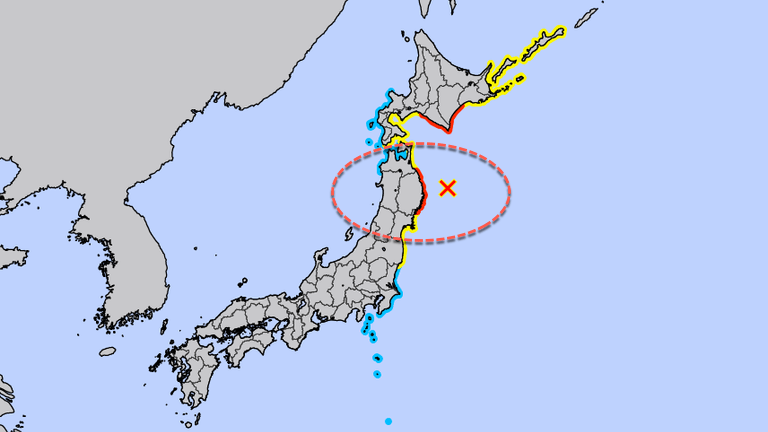
A powerful and shallow 7.5-magnitude earthquake struck off Japan’s northeast coast, triggering a tsunami at Kuji Port in Iwate Prefecture.
Public broadcaster NHK initially warned that a tsunami up to 10 feet high was expected to hit the Iwate area on Honshu’s main island. However, so far, it has been reported to be about 31 inches high.
The quake was reported shortly before 17:00 local time, rattled towers as far away as Tokyo, and forced the suspension of Shinkansen high-speed rail services in Iwate, NHK said.
Prime Minister Sanae Takaichi said the government had mobilized an emergency task force and urged citizens in affected areas to evacuate.
“Possible damage and casualties are now being looked into,” Takaichi told reporters in Tokyo.
Japan sits on the Pacific “Ring of Fire,” one of the world’s most seismically active zones, where multiple tectonic plates collide and generate earthquakes.
Since the 2011 Fukushima disaster, when a 9.0-magnitude quake and tsunami sparked triple reactor meltdowns, Japan has overhauled its response and evacuation systems to improve disaster readiness.
NHK cited the Tokyo Electric Power Company as saying that no issues were reported at the Fukushima Daiichi and Fukushima Daini nuclear power plants.
The Japan Meteorological Agency warned that aftershocks are possible over the next week and could be similar in size to the quake recorded earlier today.
For half a century, the Strait of Hormuz was Iran’s weapon. Today, it is its noose.
The mathematics of energy have flipped, and with them the balance of coercive power in the Persian Gulf.
Iran’s implicit deterrent was geographic, spanning from the tanker wars of the 1980s to the sanctions standoffs of the 2010s. Almost 20% of global seaborne oil, and a similar share of liquefied natural gas, passes through the Strait. The formula was simple: any military confrontation that threatened the Tehran regime risked a closure that would halt trade supplies, spike crude prices, bleed Western consumers, and, above all, inflict pain on the United States, who was the world’s largest oil importer.
The strait served as Tehran’s insurance policy and its most powerful bargaining tool. The threat was predicated on the regime’s belief that it could block everyone except its exports. The Iranian regime revealed its biggest weakness by constantly threatening to damage the global economy through a shutdown of the Strait. In reality, a total shutdown has the most severe impact on Iran.
Almost 90 per cent of Iran’s crude exports, and about 80 per cent of its total exports, depend on the transit through Hormuz. Around 25 per cent of Iranian GDP and 60 per cent of government revenues depend completely on having the Strait open.
Before the war, Iran was exporting roughly 1.7 million barrels per day, receiving around $160 million in daily revenue from exports via the Strait. Thus, Trump’s full closure of the Strait costs Tehran hundreds of millions of dollars a day in losses, not accounting for the additional fiscal and currency consequences in a country already facing an economic disaster with 40–50% inflation. The complete dependence on the Strait of Hormuz also adds to another weakness: 95% of Iranian crude at sea is sold to a single buyer, China. Tehran is not selling into a diversified and open market. Its exports are sold to a monopsony that demands large discounts, between 10 and 11 dollars per barrel.
These weaknesses were visible long before the war. Capital flight reached $15 billion in the first half of 2025 alone; the rial collapsed against the dollar, and the government’s budget, which allocates 51 per cent of oil revenues to the Islamic Revolutionary Guard Corps, became even more dependent on a single export route it could not afford to close. When the war began, Iranian crude shipments collapsed by 94%. Then, the United States’ decision to block all Iran export vessels showed that Iran’s chokepoint had become self-choking.
In the past 30 days, 80% of the essential volumes that moved through the Strait have been rerouted or offset by other oil producers, including US record exports.
The world is very different from what the Iran regime thought. In 2025, U.S. crude oil production hit a new annual record of 13.6 million barrels per day, making the United States the world’s largest producer but also the biggest exporter. The United States shipped 5.2 million barrels per day of crude and 7.2 million barrels per day of petroleum products in March 2026, both global records. For the first time, America exported more petroleum than it imported, by a net margin of almost 2.8 million barrels per day, according to the EIA. Total US liquids production now exceeds that of Saudi Arabia and Russia combined. On the natural gas side, U.S. LNG exports reached well over 15 billion cubic feet per day, surpassing Qatar and Australia to make the United States the world’s largest liquefied natural gas exporter, while U.S. dry gas production exceeds the combined output of Russia, Iran, and China. Furthermore, the United States is also the world’s largest producer of nuclear electricity, at roughly 30 per cent of global generation, and a global leader in renewable energy.
When President Trump could say in April 2026 that the United States was “clearing the Strait as a favour to countries around the world, including China, Japan, Korea, and Germany,” the framing was an accurate description of who needs Hormuz open and who does not. Only 4% of the traffic through the Strait goes to the United States, according to SP Global.
According to the International Energy Agency, throughput at Hormuz collapsed from its long-run average of about 20 million barrels per day to 3.8 million since the beginning of the war through the second week of April. Daily ship transits fell roughly 95 per cent. The Tehran regime, in a gesture more theatrical than realistic, attempted to levy a $2 million toll on each vessel crossing the strait, without understanding that the move showed desperation instead of leverage.
The US response has been the most important measure deployed against Iran in two decades of standoffs. Operation Economic Fury established a full naval blockade of Iranian ports. Iranian naval losses in the first 38 days of combat exceeded 150 vessels. The ceasefire framework under negotiation requires Iran to reopen Hormuz, but the US maintains control. Thus, negotiations revolve around Iranian dismantlement, not American concessions.
The lesson is not just that Iran miscalculated but that it massively underestimated its obvious weaknesses. The United States is not a hostage of the Gulf; it is the guarantee of its safe sea lanes. Europe is tied to U.S. LNG while keeping a substantial Russian dependence, which complicates its energy security and makes it vulnerable to fluctuations in supply and price from both sources. Asia’s largest economies, particularly China, are suffering the marginal cost of a Hormuz disruption, which has led to increased energy prices and supply chain uncertainties that further exacerbate their economic challenges. Iran’s economic nightmare has only started.
Three important factors must be considered.
First, the traditional Hormuz risk premium in Brent, which refers to the additional cost added to oil prices due to geopolitical tensions in the Strait of Hormuz, is structurally smaller than in the 2010s because U.S. supply can absorb shocks that previously had no substitute. The Brent price is lower in real and nominal terms than in the 2008, 2018, or 2022 peaks.
Second, the strength of American energy, including economics, export infrastructure, and LNG capacity, has become a key global geopolitical variable, influencing global energy prices and the strategic decisions of other nations.
Third, Iran’s economy has not only suffered damage; it has also been demolished, and its extremely weak fiscal position indicates that it cannot sustain the threat posture in Hormuz.
The Strait of Hormuz remains the world’s most important chokepoint. However, a chokepoint hurts whoever depends on it most, and Iran relies on it completely. The United States does not.
The geopolitical advantage that Tehran once held has now become its greatest weakness, likely leading to the disappearance of the regime’s effective bargaining power.