81.4 F
Chicago
Monday, August 17, 2026
Home Blog Page 582

The Idiocracy That Is California Politics

0
The Idiocracy That Is California Politics

Authored by William Andersen via The Mises Institute,

After having lived in California the past four years, I can attest to the near-insanity of progressive politics in this state, yet California’s very progressive governor, Gavin Newsom, is considered a front-runner for the Democratic Party’s nomination for president in 2028.

Given how the Trump administration has helped to tank the economy through its tariffs, inflation, and outright regime uncertainty, there is a real possibility that Newsom can make California governance a reality for the entire country.

In other words, politically speaking, there seems to be no ceiling for the damage that progressive politicians in California can do with no objections from their constituents.

Thanks to the state’s governance, the cost of living here is well above the national average, even though there is no reason as to why that should be the case.

The highly-abstract worldview from which progressives draw their governing ethos continues to claim victims, but Democrats — who make up the overwhelming voter bloc in this state—do not care about the damage being done, since they can always blame Republicans and capitalism just like Big Brother blamed Goldstein.

The latest legislative caper is a wealth tax on the state’s 200 or so billionaires that is so onerous that, should voters approve it in November of this year, will drive businesses and their owners out of the state altogether.

However, California’s mostly-Democratic voters have signaled they are more than willing to approve the tax even though they know it will cause economic harm. 

While I wrote the following piece more than four years ago, it still holds true and there is no chance that the political and legislative balances in this state will change — except for moving further to the left. 

*  *  *

My colleague from the philosophy department at my former employer, Frostburg State University, was becoming increasingly angry. He was trying to be polite, but it was clear that he was raging inside. After a few minutes, he smiled a very strained smile and excused himself.

Our conversation was about California, or to be more specific, California governance. As readers can imagine, he was bullish on how the Democratic Party governs the state, California being perhaps the most one-party state in the USA. Every statewide election has gone to a Democrat in the last decade, and Democrats have a supermajority in the state legislature, which means that there is no meaningful Republican opposition and whatever the Democrats want, they get.

Not surprisingly, California governance is squarely progressive. The unions representing government employees effectively run the legislature, and as a result, pay, benefits, and pensions for those workers increasingly are straining the state budgets. (Steven Greenhut, a libertarian journalist based in California, has documented the unsustainable growth of government in that state for nearly two decades.) Yet, the state continues to march politically and economically in the progressive direction as though the laws of economics didn’t matter.

For the most part I have observed progressive California from far away, but my life took a different turn a few years ago, and the state is becoming my new home. I married a retired nurse from Sacramento in 2018, and because of health issues with her adult daughter, she has to remain in that city, something not in our original plans. Because my school’s campus either was closed or severely restricted during the covid-19 lockdowns, I spent most of the 2020 working from my wife’s home.

Living and working in California has offered me the opportunity to observe California progressivism up close, and it has been an interesting experience. Yes, the state where I officially reside, Maryland, is famously one-party and progressive, but the progressivism of California makes Maryland’s legislature look almost red state by comparison and surreal in some ways.

For example, the California legislature in its progressive wisdom effectively decriminalized theft as long as thieves take less than $950 worth of merchandise, officially reducing such theft to a misdemeanor but in effect making it legal, since progressive California prosecutors don’t like to be bothered by petty criminals. In practice, that means consumer goods are much harder to find in California stores than one might experience elsewhere. For me, the difference was quite revealing, as I recently returned to Maryland after spending close to nine months in Sacramento.

When I go to the Walmart near my wife’s home, I find many things openly are on display in Maryland are behind locked cases in California. Furthermore, California’s draconian labor laws mean Walmart has fewer employees, so if I wish to purchase something I easily could buy in Maryland, I have to wait for a long time and often I just walk away because no one is available to open the glass case. Yet, even with these provisions, shoplifting losses for California retailers are enormous, and the state’s pro-theft laws have encouraged organized grab-and-run rings.

My progressive colleagues, like my philosophy professor friend, see no problem with such developments. To them, the real thieves are the capitalists, the retailers like Walmart which refuse to pay “living wages” to their employees, and, according to Senator Bernie Sanders, the capitalists have “been looting” Americans for years. Thus, the wave of theft in that state is a positive development, according to progressives.

I can go on, but it isn’t difficult to expose the vast array of sins (economic and otherwise) committed by the California political classes, and I liken this kind of punditry to swinging a bat in a room full of pinatas—one simply cannot miss. Steven Greenhut has been exposing California’s follies for years. However, perhaps the best recent commentary I have read on the progressive mentality that governs the state comes from blogger Mike Solana, who deftly skewers progressive politicians from the Golden State who now accuse the tech industry of having “extracted wealth” from California before leaving for the greener pastures of lower-tax havens such as Texas and Florida.

Solana’s rip is worth the read if for no other reason than that he exposes the cluelessness of progressive politicians and pundits, and one can be assured that progressive politicians will fit Tallyrand’s description of the Bourbons: “They had learned nothing, and had forgotten nothing.” Yet, Solana also is puzzled as to why Bay Area politicians who fail spectacularly also win landslide elections:

Nothing in San Francisco can be set on a path to slow correction until at least six of the eleven district board seats along with the mayorship belong to sane, goal-oriented leaders cognizant of our city’s many problems, and single-mindedly focused on solving them. These politicians will likewise need to be extremely well-funded. This is to say we need a political class, funded by a political machine, neither of which currently exist. Even were both the class and the funding apparatus to rapidly emerge, and even were the new political coalition to win an undefeated string of miracle elections, it would take four years to seize meaningful political power from the resident psychotics in charge, who, as per the last election, appear to be very popular among close to ninety percent of voters (a curiosity for another wire). This is to say nothing of the broader Bay Area political toxicity, nor the state political dynamics, which are poised to exacerbate every one of our problems. It is a multi-front political catastrophe.

During the covid-19 pandemic, which California politicians—and especially Governor Gavin Newsom—mismanaged spectacularly, California voters overwhelmingly chose the progressive status quo. While writers go on and on about the mind-boggling politics of California, the voters continue to send the left-wing progressives into office at all levels of government. While some might believe that “education” is the key to the so-called self-governance of democracy, voters in California clearly are choosing their candidates for reasons other than demonstrating wisdom in office. Indeed, why voters insist on putting the worst on top is perhaps the most intriguing question one asks about California politics.

Typical wisdom says that voters “vote for their pocketbooks,” but the progressives whom the lower-income voters overwhelmingly choose to elect are responsible for California having the nation’s highest poverty rates. Furthermore, for all the antiwealth rhetoric that California’s progressive candidates spew out, the very poor and the very rich voters in California tend to choose and support the same candidates, and the Democratic Party is the party of choice of the state’s large number of billionaires.

There is little or nothing that the current progressive state government has done that promotes the promotion of real wealth in California, yet even as state authorities actively destroy economic opportunities, the voters respond by demanding more of the same. That would seem to be a mystery, but maybe not. Let me explain.

In the past few years, wildfires have ravaged huge tracts of mostly public land in California (and in much of the West, although California has been hit the hardest). There are many reasons for the fires, the most obvious being that most of California receives little rainfall and many fires occur in mountainous terrain, where it is difficult to fight them. But there is much more, and most of it has to do with progressive policies. Even the George Soros–funded Pro Publica recognizes the role of fire suppression-based land management practices in making the fires worse:

The pattern is a form of insanity: We keep doing overzealous fire suppression across California landscapes where the fire poses little risk to people and structures. As a result, wildland fuels keep building up. At the same time, the climate grows hotter and drier. Then, boom: the inevitable. The wind blows down a power line, or lightning strikes dry grass, and an inferno ensues. This week we’ve seen both the second- and third-largest fires in California history. “The fire community, the progressives, are almost in a state of panic,” (Tim) Ingalsbee said. There’s only one solution, the one we know yet still avoid. “We need to get good fire on the ground and whittle down some of that fuel load.”

Yet, the progressivist religion that defines the Democratic Party in California cannot acknowledge that the leave-nature-alone policies could have anything to do with the scope and intensity of the wildfires. Instead, the powers that be have decided that climate change—and only climate change—is responsible, and the way to deal with the problem is to impose draconian rules that make life difficult for most people living there, from outlawing new natural gas residential hookups to its infamous “road diets” imposed to discourage people from driving cars. Despite the fact that California politicians, such as Gov. Gavin Newsom, claim that these policies will significantly reduce global temperatures and make wildfires less intense, the reality is quite different, as California accounts for less than 1 percent of so-called greenhouse gases in the world.

Perhaps the most symbolic action by California’s government of progressive arrogance is the continued development of the “bullet train,” an ambitious (to be charitable) project to build high-speed rail from San Francisco to Los Angeles. Under urging from then governor Jerry Brown, voters in the Golden State in 2008 agreed to permit a bond issue to begin funding what Brown claimed would require a maximum of $33 billion. California’s mountainous terrain forced design and route changes, turning the LA-SF “dream” into a train that would run between Bakersfield and Merced, two cities in the flat Central Valley. To make matters even worse, passenger rail service via Amtrak already exists in the valley, and even if everything were to go to plan (a heroic assumption, one might add), the bullet train would save only forty-five minutes in travel from the existing route.

As the proposed length of the bullet train becomes shorter, the costs continue to skyrocket. The original $33 billion estimate now has ballooned to more than $100 billion—if the project even is completed. Yet the project continues to live. Last year I spoke to a former coworker of my wife who enthusiastically supports the rail project. When I asked her about the cost and the fact that there really is no demand for this service, her response was instructive: “But we NEED trains!” Never mind that this is a boondoggle that dwarfs almost anything else we know as government waste; never mind that California taxpayers are being forced to fund a massive wealth transfer to politically connected contractors in which there are all costs and no benefits. The state “needs” trains.

My faculty colleague also became angry at my panning the California bullet train, and I have wondered why progressives are so defensive about this project. There is no doubt that it is a huge waste of money and that the passenger-mile costs are well above anything else that exists in public transportation, but that doesn’t seem to matter. One would think that “good government” progressives would see the disconnect here.

One possible explanation comes from Murray Rothbard, who recognized that progressives ultimately are at “war with nature.” While Rothbard was writing about egalitarianism, nonetheless one can argue that progressive policies are aimed at producing very different outcomes than what would happen if people were free to make their own choices, and especially choices with their own money.

Because of the rise of the tech industry, California has seen an increase in wealth that probably is unprecedented in the history of this country—and maybe the world. Not surprisingly, the state’s tax take has massively increased in the past two decades, with the percentage of income tax revenues rising dramatically as tech entrepreneurship has created a new billionaire class. While one can think of these new billionaires as a new class of wealthy, in many ways their outlooks (at least after they become wealthy) often reflect the outlooks of the wave of entrepreneurs such as Andrew Carnegie who developed new technologies, put them to economic use, created vast amounts of wealth, and then created the foundations that ultimately would be governed by a wealth-destroying philosophy of progressivism.

In part, the wealth created permits foundation-financed “visionaries” to demand that resources be directed in a different way than would be done in a market economy, with “serve the people” and “make a difference” as mantras. We see that time and again in California, where tax-engorged “visionary” progressive politicians seize wealth created by private enterprise in order to pursue their own causes such as environmentalism.

Of course, as we already have pointed out, progressive policies tend to make the original problems worse. Not only have progressives made mass wildfires more likely, but they also have been behind the rise in homelessness in California. In the late 1970s, the San Francisco city government instituted rent controls. Not surprisingly, housing shortages followed, and the real price of housing skyrocketed. As shortages became worse, progressive politicians doubled down on the controls. Today, more than five thousand people live on the streets in San Francisco, and the government—bound by its own progressive ideals—is helpless to do anything but hand out money and defend its policies. And this in the city with the most billionaires per capita in the world.

There are three reasons why California governance will not change even as it heads toward a fiscal cliff.

First, and most important, progressive ideology is intractable and does not yield to the laws of economics. Progressive politicians are feted in the mainstream media and in California’s left-wing education institutions, and voters don’t seem to want any alternatives. (After all, California “needs” trains.) Politicians who raise questions as to this model of governance can expect to be demonized in the media and will face violent protests if they show up in public venues—and especially on college campuses.

The second reason is that California voters are drawn to progressive Democrats no matter what disasters these politicians might inflict. The highly educated voters do not support progressive Democrats just on economic issues, but also on the highly contentious social issues, and with the 2020 “revolt of the rich” dominating Democratic Party politics at the present, it is doubtful that this current wave of progressive-favoring voters will change direction.

Democrats also have the immigrant vote in their back pockets, and California has seen a wave of immigrants help turn it into a one-party state. For now, the numbers are just overwhelming, and we can expect California to move even further to the left as its housing and poverty problems become worse and Democrats successfully convince voters that free markets are cause.

The third reason things won’t change in California is that progressive government creates its own sets of monopoly rents that are distributed to politically connected interest groups. In the case of the Golden State, state-employee and municipal labor unions are by far the most powerful political entity, and they control vast blocs of voters. Their power was recently demonstrated by their support of the covid-19 lockdowns in the state—during which public employees continued to draw full pay even as the lockdown policies ravaged the state’s tax base.

Should one doubt the power of California’s government-employee unions, witness the “success” of what was called AB 5, the law that almost killed the “gig” industries in the state, putting thousands of freelance writers and musicians out of work. Written by the AFL-CIO (American Federation of Labor and Congress of Industrial Organizations) as a means of ending the Uber and Lyft rideshare services (and protect unionized taxi and public transportation workers), the fallout was so bad that even the legislature had to back off some of the restrictions. Voters did the rest last November when they beat back most of the most onerous provisions of the law. (One doubts that the musicians and writers that lost their jobs changed their progressive voting patterns in the most recent election. Such is the staying power of progressive ideology.)

If one believes that perhaps the wave of progressive voters will become “converted” to a “free minds and free markets” approach (the “left libertarian” position), the experience of New York City should be instructive. In 1975, the economy was in recession, businesses were fleeing the city’s onerous tax rates and antibusiness climate, and city officials were fraudulently selling capital bonds to pay for previously issued capital bonds. (William E. Simon, the US secretary of the Treasury in 1975, laid out the entire scenario in his blockbuster A Time for Truth.)

New York’s problem was obvious—except in the minds of progressives. Where most of us would understand that having unions running away with the budgets while suppressing productive private enterprises is a losing proposition, progressives see a nefarious capitalist plot. That New York City had a relatively brief renaissance in large part because of the deregulation of banking and finance (which was begun by President Jimmy Carter) plays no role in progressive thinking at all.

Unlike New York City, California does not have an economic ace in its pocket. Even though much of the tech industry has prospered during the state’s draconian pandemic shutdowns, the state government (not to mention cities and counties) is facing the worst financial crisis perhaps in its history. Not surprisingly, the progressive response is to increase incendiary rhetoric toward wealth creators and demand even higher taxes and more business regulations.

Progressivism is a utopian philosophy of governance that will never find nor create its utopia. If California voters and politicians do not understand the current crisis and how it came about, they probably never will understand. Instead, we will see the continuous march to perdition as California politicians refuse to acknowledge that they are killing the geese laying the golden eggs.

Tyler Durden
Sun, 02/08/2026 – 20:15

Trump Lifts Biden-Era Restrictions On Commercial Fishing In Atlantic Marine Monument

0
Trump Lifts Biden-Era Restrictions On Commercial Fishing In Atlantic Marine Monument

Authored by Kimberly Hayek via The Epoch Times (emphasis ours),

President Donald Trump revoked a prohibition on commercial fishing in the Northeast Canyons and Seamounts Marine National Monument on Friday, restoring rules that allow regulated harvesting in the protected Atlantic waters while citing existing federal laws as adequate safeguards for the area’s ecosystems.

A commercial scallop fishing boat enters the Manasquan Inlet in Point Pleasant, N.J., on May 4, 2012. Wayne Parry/AP Photo

The move reverses a 2021 decision by President Joe Biden that reinstated fishing restrictions in the roughly 4,913-square-mile monument, located where the continental shelf meets the Atlantic Ocean off New England. The monument was created by President Barack Obama’s Proclamation 9496 in 2016.

In Trump’s proclamation, he said that well-regulated commercial fishing is in the public interest.

The president’s proclamation argues that laws such as the Magnuson-Stevens Fishery Conservation and Management Act ensure sustainable fishing practices and protect marine species, making a total ban unnecessary.

“Following further consideration of the nature of the objects identified in Proclamation 9496 and the protection of those objects already provided by Federal law, I find that appropriately managed commercial fishing would not put the objects of historic and scientific interest that the monument protects at risk,” the new proclamation states.

Trump’s action comes after his 2020 modification of the monument, which removed fishing restrictions imposed by Obama’s 2016 proclamation under the Antiquities Act. Obama designated the area as a monument to preserve deep-sea canyons, seamounts, and associated marine life, including highly migratory fish species and rare corals.

In his proclamation, Trump noted that many fish in the monument are not unique to the area and are managed by regional fishery councils using scientific data. Other statutes, such as the Endangered Species Act, Marine Mammal Protection Act, and Clean Water Act, provide additional protections for wildlife, habitats, and water quality.

Trump’s latest action revokes Biden’s Proclamation 10287 in 2021, which restored protections for the monument, and reinstates the terms of Proclamation 10049, issued in 2020, which removed restrictions.

The monument’s boundaries remain the same, but management will align with Trump’s 2020 proclamation, allowing commercial activities under existing regulations.

Trump’s proclamation notes the Antiquities Act requires monuments’ boundaries to be the “smallest area compatible with the proper care and management of the objects to be protected.”

Environmental groups have long supported the monument’s protections, arguing they shield vulnerable species from industrial impacts. A 2019 federal appeals court ruling upheld Obama’s designation against challenges from fishing interests, affirming the ban on commercial fishing and resource extraction to protect whales, turtles, fish, and deep-sea corals.

Tyler Durden
Sun, 02/08/2026 – 18:40

America’s Record Health Spending Explained In 5 Charts

0
America’s Record Health Spending Explained In 5 Charts

Authored by Lawrence Wilson via The Epoch Times,

U.S. health care spending reached $5.3 trillion in 2024, according to recently released data from the Department of Health and Human Services.

That includes all health spending through federal and state health programs like Medicare and Medicaid, money paid by individuals to health insurers and providers, spending by employers, and payments made by insurance companies.

Here’s a look at the overall picture of America’s health spending and what that means for consumers and taxpayers.

The United States spends more on health care than any nation in the world.

That’s true whether as a gross amount, a per-capita average of $15,474, or a share of the national economy, 18 percent.

And the amount keeps growing. Per capita health care spending has grown every year since 2000, rising at 77 percent higher than inflation.

Health care is the largest industry in the United States by total spending and employment.

Health care, grouped with social services by the Bureau of Labor Statistics, employed more people than any other industry and was one of the fastest growing U.S. industries.

About $18 of every $100 spent in the United States went to pay for health care in 2024. That’s more than was spent on housing ($12), groceries ($5), national defense ($4), or cars ($3).

Health care spending rose 7.2 percent in 2024, but health care prices accounted for less than half of the increase.

Those prices rose 2.5 percent, which was below the overall inflation rate of 2.9 percent that year.

Most of the increase was due to increased cost or use of other goods and services, the increased demand for medical services, and changes in the population.

The overall demand for medical services increased and was the most significant reason for increased spending, according to the Department of Health and Human Services.

Americans spent $768 billion on non-medical expenses in 2024, about 15 percent of health care spending.

Most health care funding is provided by individuals through out-of-pocket payments, health insurance premiums, taxes used to fund government health care programs, or money paid by employers to health insurers in lieu of employee wages.

Most of the money flows through other hands, which include the federal government, state governments, and employers.

President Donald Trump and some Republicans in Congress have proposed placing more discretion for health care spending in the hands of consumers, for example by providing funded health savings accounts to individuals rather than paying subsidies directly to insurance companies.

Democrats, whose legislative and policy proposals generally favor controlling costs through increased regulation and subsidies, have so far opposed that idea.

Health care spending accounted for more than a quarter (27 percent) of all federal spending in 2024 and was the largest spending category.

The cost of health care is the greatest financial worry for Americans, according to recent polling from health policy research group KFF.

Two-thirds of Americans (66 percent) said they worried about being able to afford insurance premiums and medical bills. Health expenses were a greater concern than paying for utilities, food, housing, and gas.

More than half (55 percent), said their health care costs had increased in the past year.

Tyler Durden
Sun, 02/08/2026 – 17:30

ICE Urges Newsom Not To Release 33,179 Criminal Illegal Immigrants Into Communities

0
ICE Urges Newsom Not To Release 33,179 Criminal Illegal Immigrants Into Communities

Authored by Naveen Athrappully via The Epoch Times,

The Immigration and Customs Enforcement (ICE) and the Department of Homeland Security (DHS) have requested the state of California and Gov. Gavin Newsom not to release over 33,000 criminal illegal immigrants with ICE detainers back into the streets, ICE said in a Feb. 6 statement.

ICE detainers are requests to state, local, or federal law enforcement to notify ICE before releasing a removable immigrant. A detainer can also request that an immigrant be held for 48 more hours beyond their scheduled release date to allow DHS time to take custody. The request is sent to prisons and other confinement facilities.

California’s failure to honor ICE detainers has resulted in the release of 4,561 criminal illegal immigrants since Jan. 20, ICE said in its statement.

“There are currently 33,179 aliens in the custody of a California jurisdiction with active detainers. The crimes of these aliens include 399 homicides, 3,313 assaults, 3,171 burglaries, 1,011 robberies, 8,380 dangerous drugs offenses, 1,984 weapons offenses, and 1,293 sexual predatory offenses.”

Some of the illegal immigrants already released from California jails into communities include a Mexican national arrested for lewd or lascivious acts with a child under 14 years of age, a Chinese national arrested for sexual battery, a Mexican national who has been arrested for a sex offender violation, and a Guatemalan convicted of first-degree murder.

DHS Assistant Secretary for Public Affairs Tricia McLaughlin accused Newsom and other “sanctuary politicians” in the state of putting American lives at risk by releasing criminals into neighborhoods.

“Criminal illegal aliens should not be released from jails back onto our streets to terrorize more innocent Americans. If we work together, we can make America safe again. 7 of the 10 safest cities in the U.S. cooperate with ICE law enforcement,” McLaughlin said.

Newsom has defended California’s sanctuary policies. California’s Senate Bill 54 prohibits state and local law enforcement from using their money or personnel to investigate, detain, or arrest people for immigration enforcement purposes, the governor told conservative commentator Ben Shapiro in a Jan. 16 podcast.

However, California cooperates with federal immigration enforcement under certain circumstances, Newsom said.

“We have over 10,000 that I’ve cooperated with since I’ve been governor of California,” he said. “California has cooperated with more ICE transfers probably than any other state in the country. And I vetoed multiple pieces of legislation that have come from my legislature to stop the ability for the state of California to do that.”

ICE Administrative Warrants

ICE acting Director Todd Lyons sent a letter to California Attorney General Rob Bonta on Feb. 4 regarding the arrest of immigrants in their homes in the state. The letter focused on administrative warrants used by ICE to arrest aliens.

Administrative warrants, also known as ICE warrants, allow immigration officers to arrest and detain a foreign national. Unlike judicial warrants issued in criminal cases, administrative warrants do not require a neutral magistrate. Instead, an officer must establish probable cause to believe the illegal immigrant is removable from the United States.

A 2024 ruling from a California district court held that entering the land surrounding a home to arrest the occupant violated the Fourth Amendment to the U.S. Constitution and the Administrative Procedure Act.

In the letter, Lyons highlighted a 2007 judgment from the Court of Appeals for the Eighth Circuit that supported the use of administrative warrants to arrest “aliens with final orders of removal in their place of residence.”

“An alien subject to a final order of removal has a diminished reasonable expectation of privacy when federal officers arrive with a valid administrative warrant and reasonable cause to believe he or she is in a residence,” the ICE acting director wrote.

Lyons highlighted that an alien with a final order for removal has generally undergone proceedings in which an immigration judge has determined that the individual is removable from the United States. This neutral immigration judge also ensures the foreign national receives all necessary protections under the U.S. Constitution.

As such, “ICE officers may enter an alien’s residence with a final order of removal and an administrative warrant. No community serious about keeping its residents safe will tolerate a clear aberration of the law,” Lyons wrote.

“ICE and the American people once again demand California honor ICE detainers to take the worst of the worst off the streets and make America safe again.”

The Epoch Times reached out to Gov. Gavin Newsom and California Attorney General Rob Bonta for comment, but did not receive a response by publication time.

Tyler Durden
Sun, 02/08/2026 – 16:20

Gambling Stocks Slide Ahead Of Super Bowl As Prediction Markets Shine

0
Gambling Stocks Slide Ahead Of Super Bowl As Prediction Markets Shine

The rise of prediction markets ahead of Super Bowl weekend has become a major overhang for legacy sportsbooks, prompting investors to de-risk their equity positions and sending shares of Flutter Entertainment (owner of FanDuel) and rival DraftKings sharply lower year to date.

Today’s matchup between Seattle and New England at Levi’s Stadium in Santa Clara is expected to drive record trading volumes on prediction markets, according to Jordan Bender, a senior equity analyst at Citizens.

A big piece of why we think Super Bowl handle will be down is that prediction markets are taking a bite out of that,” Bender said.

Since the 2024 presidential election cycle, prediction markets such as Kalshi and Polymarket have attracted growing trading volumes that would have traditionally flowed to sportsbook apps.

Professional sports gambler Rufus Peabody told Bloomberg, “It really feels like everything’s prediction markets, prediction markets, prediction markets.”

Peabody, who began trading on Kalshi in September, noted, “Maybe not for the average recreational bettor, but certainly in the sharp community.”

Kalshi and other federally regulated exchanges have opened prediction markets to millions of Americans living in states where sportsbooks remain illegal, sparking a fierce legal battle with federal and local gaming regulators.

These event contracts are not just for sports but also offer bets across markets, elections, and geopolitics. The fastest growth, however, is in sports betting.

According to the Dune data dashboard, Kalshi saw nearly $10 billion in contracts traded in January, with the vast majority tied to sports betting (about $8.5 billion).

Traders on Kalshi and rival Polymarket have swapped $800 million worth of contracts tied to the Super Bowl so far, the American Gaming Association wrote in a report. This compares with $1.8 billion Americans are expected to bet on the game through traditional regulated sportsbooks.

In November, Polymarket received regulatory approval from the Commodity Futures Trading Commission to return to the US markets.

“Polymarket is back. Polymarket’s U.S. app is now being rolled out to those on the waitlist,” Polymarket states on its platform.

Despite the rise of prediction markets, several Wall Street analysts still expect the existing US sportsbook companies to take in a record Super Bowl haul this weekend.

H2 Gambling Capital senior analyst Ed Birkin forecasted that total wagers – before prediction markets are taken into account – will soar 9% this year to $1.78 billion. He pointed out that prediction markets will attract $630 million in bets for the Super Bowl and account for 80% year-over-year growth in wagering activity for the event.

Polymarket’s latest Super Bowl bets:

More bets 

Let the games begin. 

Tyler Durden
Sun, 02/08/2026 – 15:45

Molotov Cocktails, Volatility, Stability, And Faux Liquidity

0
Molotov Cocktails, Volatility, Stability, And Faux Liquidity

By Peter Tchir of Academy Securities

Markets have experienced high levels of volatility over the past few weeks. From silver, to software stocks, to cryptocurrency, we have seen violent price swings on almost a daily basis. We have political risks, geopolitical risks, as well as the implications of a rapidly evolving technological shift. We touched on Non-Standard Deviations last week, and are going to expand on that today.

We will attempt to examine the bigger picture of the potential volatility from transitioning from one world economic order to another. We also highlight how liquidity, or in our view, the lack of a true depth of liquidity, plays in this world.

Molotov Cocktails

Gasoline, in a tank (or a bottle) at room temperature, is stable. Apply a catalyst (a rag lit on fire) and we enter the “volatility” phase. An explosive, hot, and unpredictable phase.

Once the heat has dissipated, we are left with CO2 and H2O (carbon dioxide and water). Both are very stable. And in our example, there is some broken glass from the bottle, which isn’t as stable as when it was in the form of a bottle, but it isn’t doing much of anything.

There are all sorts of examples of these transitions from one form of stability to another form of stability, with some sort of volatility in between. A rock near the edge of a cliff that is pushed over. Nuclear fission may also fit. I think we could even apply the word entropy here, but we went with the Molotov Cocktail since it implies an intentional act of destruction.

The Global Economic System

We had settled into a multilateral, trade-based global economic system. The complexity of supply chains grew over time. Dependent on trade, but optimized by companies to serve their purpose.

Companies grew and became increasingly global in their scope. For many, the concept of national boundaries was vastly diminished.

While global tensions existed, the big, richer nations were all free to trade. Many resource rich nations prospered (or at least their leaders did).

Then China, quietly, and barely noticed by anyone, tossed out the first Molotov Cocktail. That may sound provocative (and may even be provocative), but it is a good place to start this discussion. It fits with our work under Trump 1.0, when so many were lamenting that the U.S. was “starting” a trade war, and we argued that we had been in a trade war for years, if not decades, and were “finally” firing a shot.

In the past decades, China has quietly, though overtly:

  • Taken Intellectual Property. There is no question that the IP theft occurred. We can argue about the size of the theft, but it did occur. This was as much on “us” for letting it go on and continuing to believe that we could trade “normally” with China.
  • Cornered the Market on Processed and Refined Rare Earths and Critical Minerals. This is largely on “us.” We didn’t want the “dirty” aspects of this industry in our own backyards. NIMBY (Not In My Backyard) played a key role in allowing this development to occur. It was almost as though the “lack of greenness” was “hidden” if “we” let China do all the “dirty” work. Clearly the latest round of trade negotiations (and viable threats from China) have highlighted this.
  • Subsidies and unfair trade practices. Long after the Chinese economy developed into a high- powered, industrialized, and sophisticated manufacturing hub, the world gave it many trade advantages (on “us”). The flipside was that China was very good at subsidizing businesses by keeping prices of certain things at a level where China could then squeeze competitors out of the market. That was largely on “China” but “we” were more enamored with the cheaper prices than we were concerned about the repercussions of being de-industrialized. Heck, less industry (and carbon) was a “feature” not a “bug.”

Without a doubt, this administration has tossed a Molotov Cocktail, or two (or even a hundred), and this is reshaping the global economic system.

The administration’s policies have set off a chain reaction that is re-shaping the global economy, but much of it is in response to (or in an effort to change the path of) China, which had been steering for the world.

A ProSec System Can Be Stable As Well

As you know (and might be sick of hearing about), we think a ProSec Economy is the direction we are headed. That production for security and resiliency will dominate policy for governments (across the globe), corporations, and asset managers. We could also describe this as a “Me First” or “Me Mostly First” world order, but I think that has more negative connotations than it really should have.

In this ProSec world countries will:

  • Produce a significant “amount” of “things” they NEED domestically. There will be levels of “NEED” that apply. Just like humans need air more than water, and in turn, need water more than food to live, countries will identify their true “NEEDS” and develop businesses around those “things.” “Things” like electricity and energy will be high on that list. For advanced countries, semiconductors will fit into that. The need for processed, refined, and smelted materials will be addressed. Ultimately, healthcare and pharmaceuticals will be prioritized. See ProSec 2026 for a more detailed list of “things.”
  • The “amount” that a country can produce domestically will vary by the “thing” that it is producing. Some things, like energy and electricity, can be done fully domestically by almost any advanced country (if they adopt an array of products). Though even there, they may be dependent on others for some level of supply. There will be things that are not economically feasible to produce at scale in some countries. Countries will need to rely on close relationships (by proximity and values) to ensure a robust and resilient economy. One that cannot easily be threatened by another country’s economic policies.
  • There is still plenty of scope for “regular” trade. Not every good or product will be important enough for security and resilience to deserve focused efforts from governments (which will play an outsized role at the start of this changing mindset). And even on some “things” there is opportunity to trade – just not at a level where the trading partner can hold you hostage.

It is easy (at least for me) to see a STABLE global economy, based on the principles of ProSec.

It is the TRANSITION from the existing global economic state of play to this increasingly self-sufficient world that will be difficult and volatile.

Faux Liquidity Adding to The Volatility

When you look at your screens and see bids and offers lined up, the market looks quite liquid. There is some truth to it. Never has the market been more liquid for small trades. I would completely agree with that statement.

Having said that, I think we have an “illusion of liquidity” or what I prefer to call Faux Liquidity. When I “imagine” the state of liquidity, here is what I see:

  • Hundreds if not thousands of algos (because no human can do this) trying to compete to “scalp” the next tick or fraction of a penny on any trade. Generating bids and offers, trying to capture some portion of the flow profitably.
  • Some portion of these algos (the more sophisticated and presumably more profitable ones) rely heavily on correlation. Commodities might be the easiest example of this to see. Different exchanges list different contracts. There are futures, but there are also ETFs. In some cases, you have those who can participate in the “physical” space. They can try to capture what they see as “arbitrages” between markets. As you move to equities and fixed income, the ETFs (and the create/redeem process for those) can play an even larger role. There are all sorts of opportunities to manage risk (and market making) profitably.
  • When functioning well, this creates orderly markets that seem incredibly liquid.

The downside is:

  • Correlations changing rapidly. Maybe there are margin calls in one specific product on some exchange creating issues. Maybe two things that are generally correlated break apart due to a political announcement, or even a geopolitical event.
  • Bid/offer spreads widen as algos drop out. The beauty of thousands of algos chasing a trade means the “inside market” (best bid and offer) can be tight. If algos start losing money (using a function of increased volatility and shifting correlations), they drop out, or don’t chase as aggressively. The bid/offer spread can widen. The size that can be executed on the bid or offer decreases.

That is when we get “air pockets” or what I call “faux liquidity.”

Large trades can no longer be absorbed “easily” by the system, causing prices to lurch to and fro. One minute we are at 100. The next minute at 105. Now the bid/offers start filling back in around 105, but how the heck did we jump from 100 to 105 in seconds? Nobody knows (well, we do, it is the symptom of faux liquidity). Just like the school of fish avoids the shark (images by Grok), only to congregate moments later in another location, the algos adjust to the new level and get back to their job of making small increments while avoiding being eaten by the big move.

I didn’t even mention:

  • Passive investing. In a world dominated by the market cap of a handful of stocks, passive looks a lot more like momentum, where inflows (and believe it or not outflows) reinforce momentum as the flow is concentrated in so few names.
  • Leveraged ETFs. I have no idea why the SEC approves 2x or 3x leverage on single stocks. I barely understand it on indices, where the path dependent nature takes a toll on the investor, but I cannot begin to understand the need to have it on single stocks. These amplify movements.
  • 0DTE. I haven’t forgotten about zero day to expiration options. Daily and weekly options dominate options trading. VIX is increasingly like the DOW – fun for old timers to talk about wistfully, but far less relevant than it once was to market discussions. As what started the day as a far out of the money option becomes an at the money option, the delta hedging needs the market to continue to move in that direction.

We live in a world where the trading instruments and the market making functionality, on any given day, have the risk of amplifying moves, creating bigger gains or losses, than might otherwise have occurred

Bottom Line

We are transitioning:

  • From a more global system of trading, to one where countries are more conscious of the risks of being overly dependent on others for “things” that are necessary.
  • From a “deterministic” world of compute, to one where probability-based AI is reshaping industries and investment at a record pace.
  • A shift from a U.S. dollar denominated world, where dollars were needed to trade, to provide reserves, and could play a prominent role in sanctions and other mechanisms to influence behavior, to a world where the dollar may not be as important.
    • Some would argue that maybe we are even shifting from a “fiat” currency world, to a “digital” or cryptocurrency world. I do think we will see more digitization, but it will be digitization of existing currencies and instruments, more than the dominance of Bitcoin (as an example). I won’t discount the idea out of hand, but it is far from my base case.

The mix of Molotov Cocktails and Faux Liquidity make for a challenging environment.

On the other hand, I think the market is underpricing the number of cuts and timing (I think at least 3 by September with a 50/50 chance that Powell cuts once before his term as Chair is over). I am worried about jobs and the “working” poor. See The Fed, Affordability, and Electricity for more on this view.

Stay warm and enjoy the Super Bowl.

Tyler Durden
Sun, 02/08/2026 – 15:10

Trump Admin Refuses To Comply With Immigration Court Order

0
Trump Admin Refuses To Comply With Immigration Court Order

The Trump administration has drawn a line in the sand.

It will not comply with a federal court order demanding due process for 252 Venezuelan migrants deported to a maximum-security prison in El Salvador last March under the 1798 Alien Enemies Act.

The Justice Department made that position clear in a new filing, setting up a collision course with U.S. District Judge James Boasberg and a near-certain return to the Supreme Court.

The case has emerged as a defining test of judicial power in Trump’s second term, pitting the executive branch’s immigration authority against the federal courts and their ability to enforce constitutional protections for illegal immigrant gang members.

The Venezuelans were flown to El Salvador in March 2025 despite an emergency order from Boasberg instructing the administration to halt the deportations and turn the planes around mid-flight. That decision triggered an eleven-month legal battle that reached the Supreme Court in April after months of wrangling in the lower courts. 

The justices ruled in the government’s favor on its authority to invoke the Alien Enemies Act, but Boasberg, an Obama appointee, doubled down in December, issuing another order directing the government to “facilitate” due process for the migrants who had already been deported. He presented two options: bring the men back to the United States for in-person hearings or facilitate hearings abroad that meet constitutional standards.

The Justice Department rejected both options in its Monday filing.

“In its filing Monday, the Justice Department argued again that the administration is powerless to return the Venezuelan migrants who were summarily deported last year,” reports Fox News. “The department rejected the notion that the U.S. could ‘facilitate’ due process proceedings for the migrants in question as previously ordered by the court, describing the options to do so as either legally impossible or practically unworkable due to national security concerns and the fragile political situation in Venezuela after the U.S. capture of Venezuelan strongman Nicolás Maduro during a raid in Caracas last month.”

Justice Department lawyers argued that returning the migrants is legally impossible and presents national security risks. They cited strained diplomatic relations with Venezuela and the alleged gang ties of the deportees. The filing also dismissed the idea of holding hearings at the U.S. embassy in Caracas, citing the recent capture of Nicolás Maduro and the resulting political instability. The department further contended that the United States lacks jurisdiction to conduct habeas proceedings abroad and that attempting to do so would interfere with delicate diplomatic efforts.

The filing made clear that the administration believes it owes the migrants no additional due process. If Boasberg orders otherwise, Justice Department lawyers said they would immediately appeal and seek a stay from higher courts.

The department maintained that the president’s use of the Alien Enemies Act represents a national security decision outside the proper reach of judicial review.

“If, over defendants’ vehement legal and practical objections, the Court issues an injunction, defendants intend to immediately appeal, and will seek a stay pending appeal from this Court (and, if necessary, from the D.C. Circuit),” the Justice Department said in a statement.

Boasberg has attempted to dictate what the executive branch can do on immigration policy, an area where presidential authority is broad and judicial deference is typically the norm. Similar demands for court-mandated due process protocols were absent during the Obama administration, which deported immigrants in record numbers. During those years, the federal government shifted sharply from judicial removals to fast-track, nonjudicial proceedings. By 2012, 75 percent of illegals removed did not see a judge before being deported from the United States, amounting to 313,000 nonjudicial removals in a single fiscal year.

The Trump administration views the current legal fight as an extension of that same presidential authority enjoyed by Barack Obama. It sees Boasberg and other judges issuing immigration orders as rogue actors seeking to seize control of enforcement policy from the executive branch.

Tyler Durden
Sun, 02/08/2026 – 14:35

NIH Allocates $10 Million For Research In East Palestine Three Years After Toxic Train Crash

0
NIH Allocates $10 Million For Research In East Palestine Three Years After Toxic Train Crash

Authored by Jeff Louderback via The Epoch Times (emphasis ours),

Three years have passed since a Norfolk Southern freight train carrying hazardous chemicals derailed in East Palestine, an eastern Ohio village near the Pennsylvania border.

A neighborhood near the train wreck where vinyl chloride from derailed tank cars was vented and burnt in East Palestine, Ohio, on Feb. 6, 2023. Gene J. Puskar/AP Photo

On Feb. 3, the disaster’s third anniversary, The National Institutes of Health (NIH) held a grand opening ceremony for the East Palestine Train Derailment Health Research Program Office.

The office will serve as the home to a five-year, $10 million research initiative to assess and address the long-term health outcomes stemming from the derailment.

NIH’s research hub offers the people of East Palestine a pathway to clear answers about their health they deserve,” said Health Secretary Robert F. Kennedy Jr.

“Everyone affected by this environmental disaster deserves access to independent, gold-standard science that puts their well-being first.”

Life in East Palestine abruptly changed around 9 p.m. on Feb. 3, 2023.

The crew of a Norfolk Southern Railway freight train carrying 151 cars saw smoke and fire, and realized that 38 cars had derailed.

The flammable, toxic chemicals in 11 derailed cars had ignited, with flames spreading to an additional 12 cars.

According to the National Transportation Safety Board, nine cars were carrying hazardous materials in addition to the 11 that derailed.

The hazardous chemicals, including vinyl chloride in some of the rail cars, began to spill onto the ground and into the air.

Vinyl chloride is used to make PVC pipes and other products.

The National Cancer Institute notes that the toxic chemical has been linked to cancers of the brain, lungs, blood, lymphatic system, and liver.

Vinyl chloride creates carbon monoxide and hydrogen chloride when it burns.

When the latter mixes with water, it generates hydrochloric acid, a corrosive substance that can burn the skin and eyes, and is toxic if inhaled.

Burning vinyl chloride also produces a small amount of phosgene gas, which was used as a chemical weapon on World War I battlefields.

As the fire continued, authorities on Feb. 6—fearing shrapnel from a major explosion—decided on a controlled detonation of five cars, which sent a massive cloud of black smoke into the sky.

Visible for miles, it was likened to the mushroom cloud caused by a nuclear weapon.

The government characterized it as a “controlled burn,” but residents said it was anything but controlled.

A dark cloud of chemical-filled smoke could be seen for miles, and debris landed on properties several miles away.

The train cars were ruptured in the detonation, and spilled the rest of their contents into a drainage ditch connecting to Sulphur Run, a stream that flows through the heart of East Palestine.

Before the burn, Ohio Gov. Mike DeWine urged residents to evacuate a one-by-two-mile area surrounding East Palestine, which included parts of Ohio and Pennsylvania.

DeWine described the urgent evacuation as a “matter of life and death.”

Fire from a burning train is seen from a farm in East Palestine, Ohio, on Feb. 3, 2023. Melissa Smith via AP

Three days later, DeWine held a press conference announcing that the evacuation order had been lifted and residents could return to their homes.

Norfolk Southern trains resumed their routes through East Palestine, and federal and state officials said testing showed that the air and water were safe.

Fear and uncertainty remain among East Palestine residents.

Many locals complained about a toxic smell in the air, burning eyes, rashes, headaches, and other health issues.

These reports prompted concerns about potential long-term health effects, including “maternal and child health, as well as psychological, immunological, respiratory and cardiovascular health,” according to the NIH.

“This research program is designed to bring rigorous, independent science directly to the community,” NIH Director Dr. Jay Bhattacharya said.

“By establishing a local presence, we can better engage residents, support enrollment in studies, and ensure the research reflects the real experiences and concerns of the people affected.”

After the grand opening, a community meeting was held to outline the research program, explain how residents can enroll in studies, and provide people a chance to ask questions and share their experiences directly with researchers.

Jami Wallace was a lifelong East Palestine resident until the derailment.

She no longer lives in the community but has served as an outspoken advocate for people who have experienced health consequences from the disaster.

“I was diagnosed after the derailment with hypothyroidism. I’ve been diagnosed with asthma, I’ve been diagnosed with an adult chronic cough, I have a cyst on my right ovary that I have to have an operation on,” said Wallace, who is co-founder of the Chemically Impacted Communities Coalition.

I get phone calls every day from people who are seeing cancers and thyroid disease, respiratory and neurological issues. You can’t tell me it’s not from those chemicals.

“I’ll fight Norfolk Southern, and I will fight my own government until we get accountability and we get justice.”

The Feb. 3 event included researchers and representatives from NIH’s National Institute of Environmental Health Sciences, the University of Kentucky, the University of Pittsburgh, and Yale University.

“Since the beginning, we have seen the public experience respiratory issues, we’ve seen and heard about rashes, nose bleeds in children, eczema, reproductive health questions and concerns, so now we have a team of about sixteen scientists on our team that can help answer those questions for the public,” Dr. Erin Haynes of the University of Kentucky said.

“We have learned that the community is experiencing health conditions from the derailment, and we want to be able to give them answers to know if it is a true direct association.

“A lot of things are unanswered, but this large-scale study that we now have funding to do will really help answer those questions.”

Tyler Durden
Sun, 02/08/2026 – 14:00

Raskin: Voter ID Law Violates The 19th Amendment In Denying The Vote To Women

0
Raskin: Voter ID Law Violates The 19th Amendment In Denying The Vote To Women

Authored by Jonathan Turley,

With polling showing over 80 percent of Americans in favor of voter ID laws, it is hard to come up with reasons why you need an ID to board a plane but not vote in a federal election. That was particularly glaring this week when Sen. Jon Ossoff (D-Ga.) required people to show an ID to attend his campaign events after opposing an ID requirement to vote. So if you want to hear Ossoff speak against voter ID, you will have to show your ID. Now Rep. Jamie Raskin (D-MD) has a rather bizarre argument: the Safeguard American Voter Eligibility (SAVE) Act, if passed, would likely violate the 19th Amendment to the Constitution.

CNN Host Kasie Hunt told Raskin that “Voter ID is supported by the majority of Americans. But there are Democrats on the Hill and you voted against this? Why not support voter ID?”

Raskin then had this curious response:

“… what’s wrong with the Save act? What’s wrong with it is that it might violate the 19th Amendment, which gives women the right to vote, because you’ve got to show that all of your different IDs match.

So if you’re a woman who’s gotten married and you’ve changed your name to your husband’s name, but you’re so now your current name is different from your name at birth.

Now you’ve got to go ahead and document that you need an affidavit explaining why. And why would we go to all of these, troubles in order to keep people from voting when none of the states that are actually running the elections are telling us that there’s any problem.”

In fact, under various voter ID laws, states can create systems to address issues such as different maiden names or name changes following a divorce, including requiring a standard attestation provided by the state.

Nothing in the SAVE Act requires birth certificates be brought to polling places. 

It allows for the use of a signed attestation supplied by the state.

As for identification, various forms are allowed:

The legislation would require documentation that shows an individual was born in the U.S., including either:

  • An ID that complies with the REAL ID Act and indicates the holder is a citizen;

  • A passport;

  • A military ID card and military record of service that shows a person was born in the U.S.;

  • A government-issued photo ID that shows the person’s place of birth was in the U.S.;

  • Other forms of government-issued photo ID, if they’re accompanied by a birth certificate, comparable document or naturalization certificate.

Now, on the 19th Amendment, Raskin’s argument is simply ridiculous. Indeed, if this were credible, why has it not been used successfully against prior state voting ID laws? Rather than making this claim on CNN, it would be interesting for Raskin to try it in court once the SAVE Act passes.

It is unlikely to succeed because the 19th Amendment guarantees the right to vote, but, like all citizens, women can be asked to prove their eligibility to vote. The suggestion that requiring a signature on an attestation form is a barrier to voting is simply incredible.

The Nineteenth Amendment provides:

The right of citizens of the United States to vote shall not be denied or abridged by the United States or by any State on account of sex.

Congress shall have power to enforce this article by appropriate legislation.

Requiring proof of your identity neither denies nor abridges the right to vote. Indeed, for supporters of voter ID laws, it protects the right to vote by ensuring that only eligible voters are counted in elections.

Would requiring the REAL ID also violate constitutional rights like the right to travel or association for those with name changes? Of course not. The government may require basic identification for such transactions while creating reasonable methods of addressing name or address changes.

The claim of a 19th Amendment violation is spurious but par for the course in our current political environment. As with claims that democracy is about to die, these inflammatory claims are designed to distract voters who overwhelmingly support Voter ID. Democratic members are unified in opposing such laws. That is a debate that should be resolved on the merits, not meritless constitutional claims.

Jonathan Turley is a law professor and the best-selling author of “Rage and the Republic: The Unfinished Story of the American Revolution.”

Tyler Durden
Sun, 02/08/2026 – 12:50

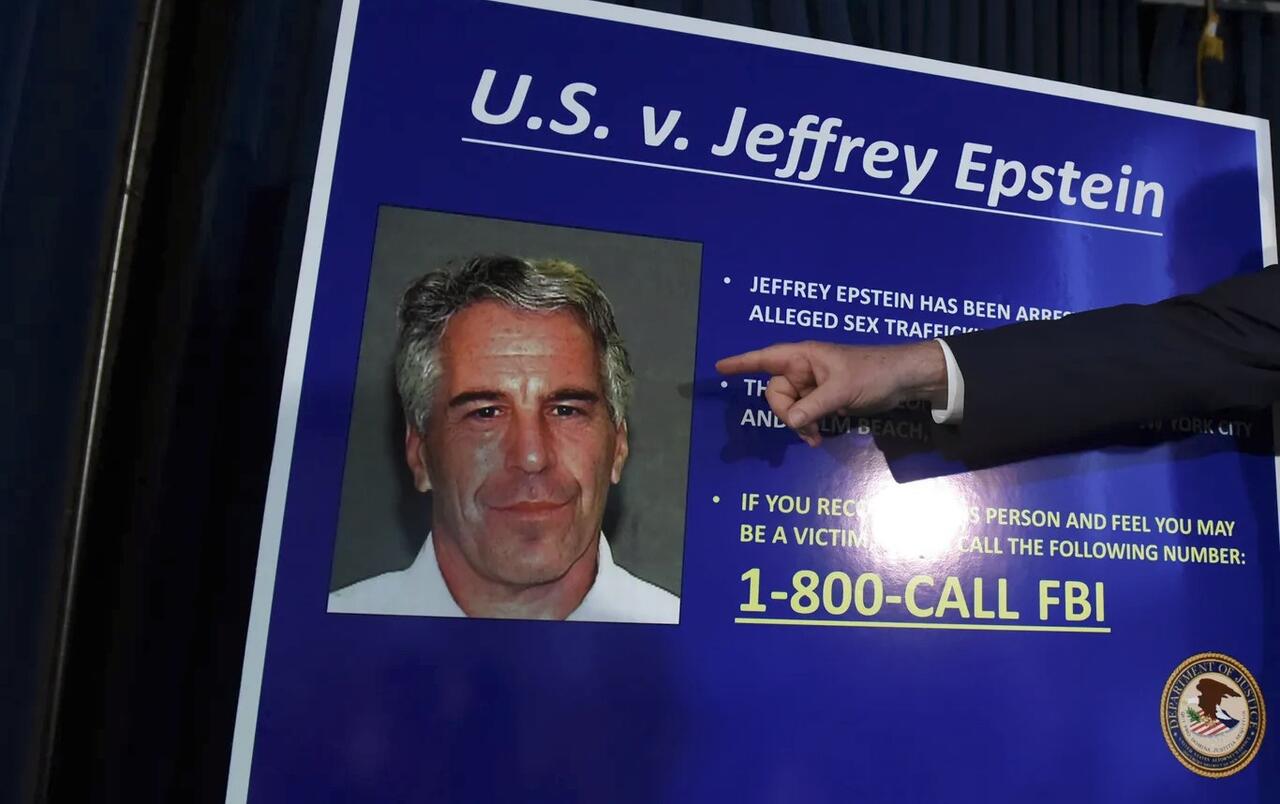
David Sacks Exposes New York Times For Shielding Reid Hoffman In Epstein Files

0
David Sacks Exposes New York Times For Shielding Reid Hoffman In Epstein Files

Authored by Steve Watson via Modernity.news,

Venture capitalist David Sacks has slammed The New York Times for its glaring failure to scrutinize Reid Hoffman, the LinkedIn co-founder emerging as the top Silicon Valley figure in the explosive Jeffrey Epstein files.

In a scathing segment on the All-In Podcast, Sacks highlighted how the establishment media targets right-leaning tech moguls while giving a free pass to left-wing donors deeply entangled with Epstein.

“Brad, you speak about the corruption of power centers. I think a major one has to be The New York Times,” Sacks urged.

“The number-one person in the Epstein files from Silicon Valley which is Reid Hoffman mentioned 2,600 times had a multiyear relationship with Epstein and they call each other very good friends. They did deals together,” Sacks explained.

He continued, “Reid stayed at the trifecta which is not just the island but the townhouse and the New Mexico ranch. And if you’re gonna write about Mark Zuckerberg organize that famous dinner how can you not mention that as the root of Epstein’s involvement in Silicon Valley?”

“And yet Reid just gets a mentioned in one sentence of article along with several other people,” Sacks stressed.

He accused the Times of selective outrage, noting “It is crazy. I mean The New York Times clearly has a list people they consider approved targets. They are all right coded people like Elon or Peter Thiel.”

“And they become targets but the people who have donated hundreds millions dollars to the Democrat Party and have paid for dirty tricks against Trump, they basically are spared. Honestly this is just emblematic of the whole institutional rot in a distrust in the country right there,” Sacks explained.

“Part of the cabal, it’s part of the institutions that people are losing faith in, and you know Epstein was a scumbag and the fact of matter is we’re not seeing equal play on both sides,” Sacks further urged.

The remarks come amid fresh revelations from the Justice Department’s massive Epstein document dump, which includes emails showing Hoffman’s ongoing interactions with the convicted sex offender long after his 2008 plea deal.

Newly unsealed emails reveal Hoffman discussing visits to Epstein’s notorious private island, his New Mexico ranch, and his New York apartment. One 2015 message has Epstein boasting about a “wild dinner” with Hoffman, Mark Zuckerberg, and others.

The Free Beacon detailed how Hoffman maintained the relationship years after claiming it ended, including Skype calls, sushi meetings, and phone dates—all while Epstein name-dropped tech elites to lure investments.

Hoffman denies any wrongdoing.

This selective media coverage underscores a broader pattern where globalist insiders and Democrat funders evade accountability, while critics of the establishment face relentless attacks.

The following thread (click through) details the extent of the relationship between Epstein and Hoffman.

As the Epstein saga unravels, it exposes how power protects its own, fueling public distrust in institutions that prioritize partisan loyalty over truth.

Our earlier report detailed House Oversight Chairman James Comer’s push to question Bill Gates on his Epstein ties, amid bipartisan demands for answers. This aligns with Sacks’ critique of uneven scrutiny on elite figures.

We also covered Hillary Clinton’s attempt to turn her deposition into a public spectacle, dodging private grilling.

A further chilling email we covered hinted at depopulation discussions between Epstein and Gates, interpreted by some as elite scheming.

And then there are the tunnels. What was going on with the tunnels?

Your support is crucial in helping us defeat mass censorship. Please consider donating via Locals or check out our unique merch. Follow us on X @ModernityNews.

Tyler Durden
Sun, 02/08/2026 – 11:40