51.6 F
Chicago
Friday, October 30, 2026
Home Blog Page 600

Over 20 US-Approved Ships Pass Through Hormuz, As Trump Eyes Jump-Starting Next Pakistan Peace Talks

Over 20 US-Approved Ships Pass Through Hormuz, As Trump Eyes Jump-Starting Next Pakistan Peace Talks

Summary

  • CENTCOM: “During the first 24 hours, no ships made it past the U.S. blockade & 6 merchant vessels complied with direction from US forces to turn around to re-enter an Iranian port on the Gulf of Oman,” it said. WSJ: 20 US-approved ships have passed, which have not visited Iranian ports.

  • Diplomacy is not yet dead, as Bloomberg reports Iran is mulling a short-term pause to shipments through Hormuz Strait. Trump tells NYP talks could happen again in two days in Pakistan.

  • Mediators are scrambling to put together another round of US-Iran talks in the coming days: Iran is reportedly offering a 5-year moratorium on nuclear program, while US demands 20.

  • Saudis are among those calling for an end to the US blockade of the Hormuz Strait, amid fears the Houthis could shut down Bab al-Mandeb strait. Chinese ship testing America’s Hormuz blockade appears to U-turn. North Korea said to be negotiating tolls, safe passage with Tehran.

  • Hezbollah’s Secretary-General Naim Qassem rejects upcoming talks between the Lebanese government and Israel, which are set for 11am in Washington, DC on Tuesday.

US x Iran permanent peace deal by June 30, 2026?
Yes 60% · No 40%
View full market & trade on Polymarket

*  *  *

Over 20 US-Approved Ships Pass Through Hormuz: WSJ

WSJ writes by close of day Tuesday: “More than 20 commercial ships have passed through the Strait of Hormuz in the past 24 hours, according to two U.S. officials. While commercial traffic is still a fraction of what it was before the war, the flow of vessels is an improvement through a critical chokepoint.”

These are of course vessels ‘approved’ and which transited via US military coordination – and this after earlier this week a couple of sanctioned or nonapproved vessels began making their way out before deciding to turn back. More per WSJ:

The ships that crossed the strait in the last 24 hours include cargo, container and tanker vessels going into and out of the Persian Gulf, one of the officials said. Some ships have traveled without their transponders on to minimize the risk of Iranian attacks. The threat of Iranian attacks and sea mines has deterred most vessels from trying to sail through the narrow waterway during the war.

It remains that ships which aren’t under sanction, and which are not visiting Iran’s ports can pass through the American-imposed blockade. But oil prices and markets remain unimpressed, as this is not happening at a fast enough rate, and given the presence of mines and the lingering Iranian drone and missile threat to maritime traffic, it’s not as if the proverbial flood gates of tanker traffic will open up anytime soon.

CENTCOM Gives First Major Blockade Update, Trump Hints at Talks

US Central Command (CENTCOM) has put out its first major statement and update since the Trump-ordered US naval blockade of the Hormuz Strait went into effect.

“During the first 24 hours, no ships made it past the U.S. blockade and 6 merchant vessels complied with direction from U.S. forces to turn around to re-enter an Iranian port on the Gulf of Oman,” it said.

IRAN TALKS COULD BE HAPPENING OVER NEXT TWO DAYS IN PAKISTAN: TRUMP TO NY POST

US WILL ALLOW TEMPORARY WAIVER OF SANCTIONS ON IRANIAN OIL ON THE SEA TO EXPIRE THIS WEEK

“The blockade is being enforced impartially against vessels of all nations entering or departing Iranian ports and coastal areas, including all Iranian ports on the Arabian Gulf and Gulf of Oman,” it added, noting that over 10,000 American military personnel are currently involved in the blockade mission. The regional US command center also published an infographic confirming which types of the various navy warships are deployed.

However, RT’s correspondent is on the ground and has given a contrasting report, running up against US claims:

South Korea said to be Negotiating Tolls, Hormuz Passage with Iran

Washington has been urging countries with stranded tankers near Iran not to pay money to Tehran to allow them through the blocked Strait of Hormuz. Various tanker and maritime industry firms have also been vocally against this.

However, amid a 2-week US-Iran ceasefire, South Korea is reportedly negotiating with Iran the pass ships through Hormuz as a temporary solution. Iran state-linked Fars reports, “The South Korean Ship Owners’ Association has also proposed to pay tolls for passing through the Strait of Hormuz to Iran as a short-term solution.”

As yet, there’s been no confirmation of this from Seoul officials, and at the start of the month they were actively denying earlier reports that South Korea was willing to pay tolls to get its over couple dozen stranded ships through. If it happens, there would likely follow condemnation from the White House over this ‘compromise’ from a US ally.

Iran Could Pause Hormuz Shipping, As Chinese Tanker U-Turns

Bloomberg says Tuesday in a fresh report that “Iran is considering a short-term pause to shipments through the Strait of Hormuz to avoid testing a US blockade and scuppering a fresh round of peace talks, according to a person familiar with the Tehran’s deliberations.”

“The potential pause reflects a desire to avoid immediate escalation at a sensitive diplomatic juncture as Washington and Tehran sort logistics for another face-to-face meeting, the person said, asking not to be identified as the deliberations are private,” continues Bloomberg. It adds, “Holding back maritime activity for several days is seen as one possible, pragmatic step to prevent an incident that could undermine the fragile efforts to revive discussions, people familiar with the matter said.”

This would be seen as short-term de-escalation, and suggests that Tehran indeed still has the desire of taking a hopeful, pragmatic approach – rather than returning the all out war by the close of the temporary ceasefire. No one is willing to completely shut the door on all diplomacy, and the bombs have been silent across the Gulf and in Iran and Israel. Per latest emerging reports:

The Nasdaq 100 looked set to notch its longest streak of gains since 2021 as optimism that the US and Iran are considering another round of peace talks pushed oil lower and lifted stocks globally.

Chinese ship testing America’s Hormuz blockade appears to U-turn: Rich Starry was blacklisted by Washington in 2023 for helping Tehran evade energy sanctions.

More tracking data via MarineTraffic:

5-Years vs. 20-Year Nuclear Moratorium

More info and color has been added in the wake of failed talks between the US and Iran in Pakistan, per The New York Times citing officials from both countries. Iran signaled Monday it would halt uranium enrichment for up to five years. The Trump administration rejected the offer, according to two senior Iranian officials and one US official who spoke to the Times.

The US position, shaped in part by Vice President JD Vance, calls for a roughly 20-year suspension. Vance has argued such a timeframe is necessary to permanently limit Iran’s nuclear capabilities. “The Iranians, in a formal response sent on Monday, said they would agree to up to five years, according to two senior Iranian officials and one U.S. official. Trump has rejected that offer, the U.S. official said,” writes NY Times.

“The official said the U.S. has also asked Iran to remove highly enriched uranium from the country, and the Iranians have insisted the fuel stays inside Iran. But they have offered to dilute it significantly, so that it could not be used to produce a nuclear weapon,” the report adds.

Sides Could Return to Islamabad for Talks

This behind the scenes back-and-forth suggests that the mediated talks might not be entirely over, also as the clock ticks away on the initial 2-week ceasefire, now a week in. US and Iranian negotiating teams plan to return to Pakistan later this week to resume talks aimed at ending the Gulf war, Pakistani and Iranian officials said Tuesday, as cited in Reuters. Other reports say the talks could be hosted in another venue.

However, US officials have not confirmed the plans, and the reality is that in Islamabad the two sides demands were very far apart, having reportedly finally collapsed on the nuclear issue.

Israel-Lebanon talks are taking a separate track, set to begin in Washington Tuesday, but Hezbollah has rejected this process – with only the Lebanese government represented.

France’s President Emmanuel Macron is among those calling on Washington and Tehran to urgently resume negotiations to end the war, and to reopen the Strait of Hormuz “without controls or tolls, as soon as possible.” Iran is reportedly charging steep tolls to let a handful of ‘friendly’ countries’ vessels through – a situation which President Trump has warned against.

Saudis Push Trump To Call Off Hormuz Blockade

The NY Times has on Tuesday highlighted that “Questions over the status of the U.S. military blockade in the Strait of Hormuz persisted on Tuesday, as tracking data showed that several ships had passed through the waterway, including some that had departed from Iran.”

The Wall Street Journal reported Monday evening that the Kingdom of Saudi Arabia is urging the Trump administration to reverse its newly implemented blockade of Iranian-linked shipping in the Strait of Hormuz, on immediate fears that Iranian escalation could halt Red Sea traffic. On Sunday, a senior adviser to Iranian Supreme Leader Mojtaba Khamenei said Iran has “large, untouched levers” to respond to such a blockade.

Arab officials who spoke to the Journal said Iran could retaliate by shutting down the Bab al-Mandeb, a 20-mile-wide, 70-mile-long choke point linking the Red Sea to the Gulf of Aden and the Indian Ocean. Iran could do so by leveraging the Houthis, the political and military organization that controls much of Yemen.

Saudi Arabia recently has been able to get its oil exports back up to their prewar level of around seven million barrels a day despite the blockage in the strategic strait by piping its crude across the desert to the Red Sea. Those supplies would be at risk if the Red Sea’s exit route were closed as well. — WSJ

“If Iran does want to shut down Bab al-Mandeb, the Houthis are the obvious partner to do it, and their response to the Gaza conflict demonstrates that they have the capacity to do it,” Adam Baron, an expert on Yemen at the New America policy institute, told the Journal.

More Geopolitical Latest

via Newsquawk…

  • The next round of talks between the United States and Iran could take place this week or early next week, according to an Iranian embassy official in Pakistan.
  • Pakistan’s Foreign Ministry said it has offered to host a second round of U.S.–Iran negotiations, but no date or time has been set.
  • Pakistani journalist Mallick said, “While Islamabad has offered to host the next round of in person talks between US and Iran, which could be held at a working level, to my understanding, date and venue for the next round has not been finalised as yet”.
  • The United States and Iran are discussing another round of face-to-face talks to secure a longer-term ceasefire after Islamabad negotiations ended without a deal.
  • Officials aim to meet again before the two-week ceasefire expires next week, according to Clash report.
  • The Associated Press reported that a second round of talks is likely and could take place on Thursday.
  • U.S. Vice President JD Vance said progress was made in talks with Iran and stated that things did not go wrong.
  • Vance said Iran moved in the U.S. direction but not far enough.
  • Vance said the ball is in Iran’s court and that U.S. red lines were clearly communicated.
  • The United States and Iran left the door open to further dialogue after tense Islamabad talks.
  • A source said the sides came “very close” to an agreement and were “80% there” before hitting unresolved issues.
  • Iranian President Masoud Pezeshkian told French President Emmanuel Macron in a Monday phone call that Iran will negotiate only under international law.
  • Pezeshkian said unreasonable U.S. demands blocked an agreement in weekend talks.
  • He said a lack of U.S. goodwill and maximalist positions prevented finalizing a deal in Islamabad, according to IRNA.
  • Pezeshkian said diplomacy remains the preferred path to resolve disputes.
  • An Iranian National Security Committee spokesman said the end of the truce should not lead to its extension, according to Al Mayadeen.
  • The U.S. aircraft carrier USS George H.W. Bush is sailing off the coast of Africa toward the Middle East to join Operation Epic Fury, according to two U.S. officials cited by The Wall Street Journal.
  • Saudi Arabia is pressing the United States to drop its Hormuz blockade.
  • Gulf energy exporters warn Iran could escalate by closing the Bab al-Mandeb, according to The Wall Street Journal.
  • Alarms sounded in the Galilee Panhandle over concerns of potential UAV infiltration.
  • A Lebanese source said, “The official mandate of Lebanon’s ambassador in Washington is limited to pursuing a ceasefire with Israel”, according to Al Jazeera.
  • Switzerland is ready to support diplomatic initiatives between the United States and Iran.
  • Russian Foreign Minister Sergey Lavrov told Iranian Foreign Minister Abbas Araghchi that preventing further fighting is critical.
  • Lavrov said Moscow is on high alert to assist in a settlement.
  • Araghchi warned of dangerous consequences from U.S. actions.
  • U.S. Secretary of State Marco Rubio will host Israeli and Lebanese ambassadors for talks on Tuesday.
  • The talks aim to secure a ceasefire, Hezbollah disarmament, and a peace agreement, according to Axios.
  • A meeting between the Israeli and Lebanese ambassadors will take place Tuesday at 18:00 EDT / 23:00 BST, according to Al Jazeera citing Israeli Channel 15.
  • Chinese President Xi Jinping issued four proposals to maintain peace in the Middle East, according to Chinese media.
  • UK Deputy Prime Minister David Lammy met with U.S. Vice President JD Vance in Washington.
  • Lammy urged that the Iran ceasefire hold and emphasized the importance of free shipping through the Strait of Hormuz.

* * *

Tyler Durden
Tue, 04/14/2026 – 15:55

Fed Chair Nominee Kevin Warsh Reveals Assets Worth Over $190 Million

Fed Chair Nominee Kevin Warsh Reveals Assets Worth Over $190 Million

Trump’s nominee for next Fed Chair, Kevin Warsh, disclosed assets with his wife, heiress Jane Lauder, that total at least $192 million, though – according to Bloomberg – “the actual figure for their holdings is certainly much higher”, underscoring the extent of his close ties to Wall Street through personal investments and advisory positions. Warsh, who was chosen in January by President Donald Trump to succeed Jay Powell, received more than $13 million in consulting fees last year, including $10.2 million from billionaire hedge fund manager Stanley Druckenmiller’s family office, Duquesne.

The figures are part of financial disclosures submitted by Warsh ahead of his confirmation hearing for Fed Chair that is scheduled for next week. They underscore that Warsh, who previously served on the US central bank’s Board of Governors from 2006 to 2011, will be among the wealthiest to hold the Fed chair position.

His 69-page filing, published by the Office of Government Ethics on Tuesday, also reveals hundreds of millions of dollars in assets held by himself and his wife, Estée Lauder heir Jane Lauder.

Warsh has more than $100 million invested in multiple funds run by Duquesne, including $50 million in a fund called Juggernaut. Its underlying assets were not disclosed because of a confidentiality agreement.

The Fed chair nominee’s disclosures reveal a constellation of advisory work for financial institutions, including the hedge fund GoldenTree Asset Management, for which he received $1.6mn, and private equity firm Cerberus Capital Management, for which he received $750,000.

Warsh received more than $1.5 million for what the disclosures refer to as honoraria, primarily for speaking engagements, including $750,000 from hedge fund Brevan Howard for three different occasions.

He also has assets tied to dozens of start-up companies, especially ones related to AI, and several with a focus on crypto. About 60 holdings could not be disclosed because of confidentiality agreements but will be divested if he is confirmed as Fed chair, according to the disclosure.

In his ethics agreement submitted with the disclosures, Warsh has promised to divest from certain holdings and to resign from board positions and other roles, including as a director at United Parcel Service. Warsh is married to Lauder, the daughter of prominent Republican donor Ronald Lauder – the son of makeup scion Estee Lauder.

As Bloomberg notes, while nominees disclose the value of their assets in broad ranges, with the higher end peaking at $50 million, their spouses use different ranges, topping out at those listed as over $1 million. Two of Warsh’s assets – titled the Juggernaut Fund – each were valued at more than $50 million, while his wife listed more than 30 assets in the $1 million plus category, including her shares in Estee Lauder Cos.

Other public data on Jane Lauder’s holdings illustrate how vague the government disclosures can be. Lauder currently holds $1.5 billion in Estee Lauder stock directly and through two family trusts, according to the Bloomberg Billionaires Index. She’s also collected more than $450 million in lifetime dividends on those holdings and has sold more than $83 million in stock since 2003, according to the index.
Warsh pledged in his paperwork to recuse himself from policy decisions that might affect Estee Lauder. 

“I will not participate personally and substantially in any particular matter that to my knowledge has a direct and predictable effect on the financial interests of the Estee Lauder Companies unless I first obtain a written waiver,” Warsh wrote.

The extent of Warsh’s wealth – which is substantially bigger than current Fed Chair Jerome Powell whose assets were estimated at more than $100 million when he was nominated for his first term in 2017, and who worked for the private equity firm Carlyle before joining the Fed, and which would easily make him the richest Fed chair in history – is expected to attract scrutiny from Democratic members of the Senate banking committee.Trump’s second administration has multiple independently wealthy members, including the president himself, Treasury secretary Scott Bessent, who previously worked as a hedge fund manager, and commerce secretary Howard Lutnick, the former chief executive of Cantor Fitzgerald. 

Warsh is required to list his and his close family members’ investments as part of congressional rules that mean all appointees for Senate-confirmed roles must publish financial disclosures ahead of confirmation hearings.

Warsh will face the banking committee for his nomination hearing next week, chair Tim Scott, Republican senator for South Carolina, said on Fox Business on Tuesday. A vote on the Senate floor, where he needs a majority of 51, is expected to be delayed as senators insist the Department of Justice drop a criminal investigation into Powell.

As the FT notes, several of Congress’s 53 Republican senators, led by North Carolina’s Thom Tillis, have expressed concerns about an investigation they believe represents an attempt by Trump to rein in the Fed’s capacity to set interest rates free from political pressure.

Powell’s second term as Fed chair officially ends in mid-May, but the Fed chair could stay on past that date should Warsh’s nomination fail to reach the Senate floor before then due to the probe. 

Since stepping down as Fed governor in 2011, Warsh has worked as a partner at the family office of Druckenmiller, the famed macro investor who has kept a low profile since converting his hedge fund into a family office.

Warsh said in a letter that accompanied the release of his disclosure that he would divest any interest in Duquesne and related outfits between his confirmation and assuming the duties of Fed chair. Heather Jones, an OGE official, said Warsh would be in compliance with government rules once he divests the assets specified in the letter.

Warsh would also resign from many of his other positions and divest his interests in other firms before taking the helm of the world’s most important central bank. While he would also resign from his advisory company Vicarage Stable, he said he would “continue to have a financial interest in this entity” and receive passive investment income from it.

The Fed also has its own rules on what investments officials are allowed to hold, with interests in financial institutions limited. Fed officials are also banned from holding certain financial instruments. Its regulations stipulate that officials cannot buy or sell assets around monetary policy meetings.

Warsh was independently wealthy before joining the Fed as its youngest-ever governor in 2006. He worked at Morgan Stanley from 1995 to 2002, rising to Executive Director of Mergers and Acquisitions, followed by a role as Special Assistant to President George W. Bush for Economic Policy and Executive Secretary of the National Economic Council

Since leaving the Fed, he has also worked for Stanford University’s Hoover Institution, an organisation renowned for hawkish views on monetary policy. Hoover paid Warsh a salary of $150,000 last year — a figure dwarfed by consulting fees and honoraria from dozens of financial firms. 

His full filing is below (pdf link)

Kevin Warsh Federal Reserve Financial Discloure 2026 by Zerohedge

Tyler Durden
Tue, 04/14/2026 – 15:45

Secretary Wright Sees “Few More Weeks” Of High Gas Price As Memorial Day Travel Nears

Secretary Wright Sees “Few More Weeks” Of High Gas Price As Memorial Day Travel Nears

Energy Secretary Chris Wright appeared on Fox News on Tuesday morning and said, “Yes, we have gas prices today over $4 a gallon. That’s still a dollar less than they were during the Biden administration, and we’re ending the 47-year conflict with Iran.”

Wright noted, “It does mean higher prices today. It probably means higher prices for a few more weeks. But I’m proud of President Trump.”

“This is the road to more secure and lower long-term energy supplies, but it does mean higher prices today and probably for a few more weeks,” he said, adding, “It does cause a few weeks of dislocation to the American economy, but we will get through it and reach a much better place afterward.”

Related:

As of Tuesday morning, more than 10,000 U.S. airmen, sailors, and Marines are enforcing the blockade of the Strait of Hormuz, according to U.S. Central Command. Talks between the U.S. and Iran could resume later this week, two people familiar with the ongoing negotiations told NBC News.

The latest data from AAA show that the U.S. national average for 87-octane gasoline at the pump is around $4.12 per gallon, while the national average for diesel is around $5.65 per gallon.

The $4 gasoline price level is politically sensitive, but meaningful demand destruction typically does not begin until prices approach $5. Still, the recent fuel price shock is the largest on record for both types of fuel.

The Trump administration has 41 days until Memorial Day weekend, one of the biggest driving holidays of the year.

Tyler Durden
Tue, 04/14/2026 – 15:20

US Carrier Takes Long Route To Gulf To Avoid Bab el-Mandab Strait And Houthis

US Carrier Takes Long Route To Gulf To Avoid Bab el-Mandab Strait And Houthis

By Mallory Shelbourne of USNI News

Aircraft carrier USS George H.W. Bush (CVN-77) is operating off the coast of Namibia, as it sails around the African continent and is set to join a growing naval force in the Arabian Sea amid a U.S. blockade of the Strait of Hormuz, USNI News has learned.

USS George H.W. Bush (CVN-77) transits the Atlantic Ocean, Feb. 15, 2026. US Navy photo

Bush, which deployed at the end of March, did not sail through the Strait of Gibraltar and into the Mediterranean Sea, a typical transit for East Coast-based carriers headed to the Middle East. The carrier and its escorts – which include USS Donald Cook (DDG-75), USS Mason (DDG-87) and USS Ross (DDG-71) – are instead sailing around Africa, two defense officials confirmed to USNI News on Monday. Supply-class fast oiler USNS Arctic (TAOE-8) is also operating with the Bush Carrier Strike Group.

The path around Africa allows the carrier and its escorts to avoid transiting the Red Sea and the Bab el-Mandeb, which were both hubs of activity for the Houthis in their drone and missile attacks on U.S. and commercial shipping in 2024 and 2025.

Bush’s transit around Africa comes as the U.S. initiates a blockade of the Strait of Hormuz following a Sunday announcement from President Donald Trump.

U.S. Central Command subsequently issued a statement explaining how U.S. forces would execute a blockade of the crucial waterway that has been a main flashpoint since the U.S. and Israel launched the war against Iran at the end of February.

“The blockade will be enforced impartially against vessels of all nations entering or departing Iranian ports and coastal areas, including all Iranian ports on the Arabian Gulf and Gulf of Oman,” reads the Sunday CENTCOM statement. “CENTCOM forces will not impede freedom of navigation for vessels transiting the Strait of Hormuz to and from non-Iranian ports.”

A Monday notice issued to mariners, obtained by USNI News, said a so-called “grace period” that would allow neutral ships at Iranian ports to leave ended at 10 a.m. Eastern time Monday.

“Following this time, any vessel entering or departing the blockaded area without authorization is subject to interception, diversion, and capture,” reads the notice.

“Neutral vessels may still be subject to the right of visit and search to determine the presence of contraband cargo,” the notice continues. “Humanitarian shipments including food, medical supplies, and other goods essential for survival of the civilian populations will be permitted, subject to inspection.”

In a Monday appearance at the Atlantic Council, Chief of Naval Operations Adm. Daryl Caudle spoke about the considerations for a blockade of the Strait of Hormuz, including the risk of mines, how contested the airspace is and whether allies and partners join in the blockade.

“I mean, this is a major undertaking that would have to take place here to do this effectively,” Caudle said. “And of course all that’s bounded by a legal structure – a ‘rules of engagement,’ the legal aspects of this, having good firm legal structure that underwrites the ability to enforce a blockade.”

A U.S. carrier has not transited the Bab el-Mandeb since USS Dwight D. Eisenhower (CVN-69) sailed through the strait in December 2023, shortly after the Houthis started their campaign of attacks on shipping in the Red Sea. U.S. destroyers that transited the Bab el-Mandeb in recent years have come under sustained attacks from Houthi forces.

Before Trump announced the blockade, two U.S. guided-missile destroyers sailed through the Strait of Hormuz and briefly operated in the Persian Gulf on Saturday, several days after the Trump administration announced a two-week ceasefire with Iran while American and Iranian officials continued negotiations.

USS Frank E. Petersen (DDG-121) and USS Michael Murphy (DDG-112) entered the strait to start “setting conditions for clearing mines,” USNI News reported at the time. The talks between Iran and the U.S. fell apart late Saturday, according to reports.

The Japan-based Tripoli Amphibious Ready Group – which includes big-deck amphibious warship USS Tripoli (LHA-7), amphibious transport dock USS New Orleans (LPD-18) and dock landing ship USS Rushmore (LSD-47) – is currently operating in the Arabian Sea.

The Abraham Lincoln Carrier Strike Group – featuring USS Abraham Lincoln (CVN-72), USS Spruance (DDG-111) and Petersen – is also in the Arabian Sea. There are also seven independently-deployed guided-missile destroyers operating in the waters.

Tyler Durden
Tue, 04/14/2026 – 13:00

US Says ‘No Ships Made It Past Blockade’ As Iran Mulls Hormuz Shipping Pause To Preserve Talks, Which Trump Says Could Happen In Two Days

US Says ‘No Ships Made It Past Blockade’ As Iran Mulls Hormuz Shipping Pause To Preserve Talks, Which Trump Says Could Happen In Two Days

Summary

  • CENTCOM: “During the first 24 hours, no ships made it past the U.S. blockade & 6 merchant vessels complied with direction from US forces to turn around to re-enter an Iranian port on the Gulf of Oman,” it said.

  • Diplomacy is not yet dead, as Bloomberg reports Iran is mulling a short-term pause to shipments through Hormuz Strait. Trump tells NYP talks could happen again in two days in Pakistan.

  • Mediators are scrambling to put together another round of US-Iran talks in the coming days: Iran is reportedly offering a 5-year moratorium on nuclear program, while US demands 20.

  • Saudis are among those calling for an end to the US blockade of the Hormuz Strait, amid fears the Houthis could shut down Bab al-Mandeb strait. Chinese ship testing America’s Hormuz blockade appears to U-turn. North Korea said to be negotiating tolls, safe passage with Tehran.

  • Hezbollah’s Secretary-General Naim Qassem rejects upcoming talks between the Lebanese government and Israel, which are set for 11am in Washington, DC on Tuesday.

US x Iran permanent peace deal by June 30, 2026?
Yes 60% · No 40%
View full market & trade on Polymarket

*  *  *

CENTCOM Gives First Major Blockade Update, Trump Hints at Talks

US Central Command (CENTCOM) has put out its first major statement and update since the Trump-ordered US naval blockade of the Hormuz Strait went into effect.

“During the first 24 hours, no ships made it past the U.S. blockade and 6 merchant vessels complied with direction from U.S. forces to turn around to re-enter an Iranian port on the Gulf of Oman,” it said.

IRAN TALKS COULD BE HAPPENING OVER NEXT TWO DAYS IN PAKISTAN: TRUMP TO NY POST

US WILL ALLOW TEMPORARY WAIVER OF SANCTIONS ON IRANIAN OIL ON THE SEA TO EXPIRE THIS WEEK

“The blockade is being enforced impartially against vessels of all nations entering or departing Iranian ports and coastal areas, including all Iranian ports on the Arabian Gulf and Gulf of Oman,” it added, noting that over 10,000 American military personnel are currently involved in the blockade mission. The regional US command center also published an infographic confirming which types of the various navy warships are deployed.

However, RT’s correspondent is on the ground and has given a contrasting report, running up against US claims:

South Korea said to be Negotiating Tolls, Hormuz Passage with Iran

Washington has been urging countries with stranded tankers near Iran not to pay money to Tehran to allow them through the blocked Strait of Hormuz. Various tanker and maritime industry firms have also been vocally against this.

However, amid a 2-week US-Iran ceasefire, South Korea is reportedly negotiating with Iran the pass ships through Hormuz as a temporary solution. Iran state-linked Fars reports, “The South Korean Ship Owners’ Association has also proposed to pay tolls for passing through the Strait of Hormuz to Iran as a short-term solution.”

As yet, there’s been no confirmation of this from Seoul officials, and at the start of the month they were actively denying earlier reports that South Korea was willing to pay tolls to get its over couple dozen stranded ships through. If it happens, there would likely follow condemnation from the White House over this ‘compromise’ from a US ally.

Iran Could Pause Hormuz Shipping, As Chinese Tanker U-Turns

Bloomberg says Tuesday in a fresh report that “Iran is considering a short-term pause to shipments through the Strait of Hormuz to avoid testing a US blockade and scuppering a fresh round of peace talks, according to a person familiar with the Tehran’s deliberations.”

“The potential pause reflects a desire to avoid immediate escalation at a sensitive diplomatic juncture as Washington and Tehran sort logistics for another face-to-face meeting, the person said, asking not to be identified as the deliberations are private,” continues Bloomberg. It adds, “Holding back maritime activity for several days is seen as one possible, pragmatic step to prevent an incident that could undermine the fragile efforts to revive discussions, people familiar with the matter said.”

This would be seen as short-term de-escalation, and suggests that Tehran indeed still has the desire of taking a hopeful, pragmatic approach – rather than returning the all out war by the close of the temporary ceasefire. No one is willing to completely shut the door on all diplomacy, and the bombs have been silent across the Gulf and in Iran and Israel. Per latest emerging reports:

The Nasdaq 100 looked set to notch its longest streak of gains since 2021 as optimism that the US and Iran are considering another round of peace talks pushed oil lower and lifted stocks globally.

Chinese ship testing America’s Hormuz blockade appears to U-turn: Rich Starry was blacklisted by Washington in 2023 for helping Tehran evade energy sanctions.

More tracking data via MarineTraffic:

5-Years vs. 20-Year Nuclear Moratorium

More info and color has been added in the wake of failed talks between the US and Iran in Pakistan, per The New York Times citing officials from both countries. Iran signaled Monday it would halt uranium enrichment for up to five years. The Trump administration rejected the offer, according to two senior Iranian officials and one US official who spoke to the Times.

The US position, shaped in part by Vice President JD Vance, calls for a roughly 20-year suspension. Vance has argued such a timeframe is necessary to permanently limit Iran’s nuclear capabilities. “The Iranians, in a formal response sent on Monday, said they would agree to up to five years, according to two senior Iranian officials and one U.S. official. Trump has rejected that offer, the U.S. official said,” writes NY Times.

“The official said the U.S. has also asked Iran to remove highly enriched uranium from the country, and the Iranians have insisted the fuel stays inside Iran. But they have offered to dilute it significantly, so that it could not be used to produce a nuclear weapon,” the report adds.

Sides Could Return to Islamabad for Talks

This behind the scenes back-and-forth suggests that the mediated talks might not be entirely over, also as the clock ticks away on the initial 2-week ceasefire, now a week in. US and Iranian negotiating teams plan to return to Pakistan later this week to resume talks aimed at ending the Gulf war, Pakistani and Iranian officials said Tuesday, as cited in Reuters. Other reports say the talks could be hosted in another venue.

However, US officials have not confirmed the plans, and the reality is that in Islamabad the two sides demands were very far apart, having reportedly finally collapsed on the nuclear issue.

Israel-Lebanon talks are taking a separate track, set to begin in Washington Tuesday, but Hezbollah has rejected this process – with only the Lebanese government represented.

France’s President Emmanuel Macron is among those calling on Washington and Tehran to urgently resume negotiations to end the war, and to reopen the Strait of Hormuz “without controls or tolls, as soon as possible.” Iran is reportedly charging steep tolls to let a handful of ‘friendly’ countries’ vessels through – a situation which President Trump has warned against.

Saudis Push Trump To Call Off Hormuz Blockade

The NY Times has on Tuesday highlighted that “Questions over the status of the U.S. military blockade in the Strait of Hormuz persisted on Tuesday, as tracking data showed that several ships had passed through the waterway, including some that had departed from Iran.”

The Wall Street Journal reported Monday evening that the Kingdom of Saudi Arabia is urging the Trump administration to reverse its newly implemented blockade of Iranian-linked shipping in the Strait of Hormuz, on immediate fears that Iranian escalation could halt Red Sea traffic. On Sunday, a senior adviser to Iranian Supreme Leader Mojtaba Khamenei said Iran has “large, untouched levers” to respond to such a blockade.

Arab officials who spoke to the Journal said Iran could retaliate by shutting down the Bab al-Mandeb, a 20-mile-wide, 70-mile-long choke point linking the Red Sea to the Gulf of Aden and the Indian Ocean. Iran could do so by leveraging the Houthis, the political and military organization that controls much of Yemen.

Saudi Arabia recently has been able to get its oil exports back up to their prewar level of around seven million barrels a day despite the blockage in the strategic strait by piping its crude across the desert to the Red Sea. Those supplies would be at risk if the Red Sea’s exit route were closed as well. — WSJ

“If Iran does want to shut down Bab al-Mandeb, the Houthis are the obvious partner to do it, and their response to the Gaza conflict demonstrates that they have the capacity to do it,” Adam Baron, an expert on Yemen at the New America policy institute, told the Journal.

More Geopolitical Latest

via Newsquawk…

  • The next round of talks between the United States and Iran could take place this week or early next week, according to an Iranian embassy official in Pakistan.
  • Pakistan’s Foreign Ministry said it has offered to host a second round of U.S.–Iran negotiations, but no date or time has been set.
  • Pakistani journalist Mallick said, “While Islamabad has offered to host the next round of in person talks between US and Iran, which could be held at a working level, to my understanding, date and venue for the next round has not been finalised as yet”.
  • The United States and Iran are discussing another round of face-to-face talks to secure a longer-term ceasefire after Islamabad negotiations ended without a deal.
  • Officials aim to meet again before the two-week ceasefire expires next week, according to Clash report.
  • The Associated Press reported that a second round of talks is likely and could take place on Thursday.
  • U.S. Vice President JD Vance said progress was made in talks with Iran and stated that things did not go wrong.
  • Vance said Iran moved in the U.S. direction but not far enough.
  • Vance said the ball is in Iran’s court and that U.S. red lines were clearly communicated.
  • The United States and Iran left the door open to further dialogue after tense Islamabad talks.
  • A source said the sides came “very close” to an agreement and were “80% there” before hitting unresolved issues.
  • Iranian President Masoud Pezeshkian told French President Emmanuel Macron in a Monday phone call that Iran will negotiate only under international law.
  • Pezeshkian said unreasonable U.S. demands blocked an agreement in weekend talks.
  • He said a lack of U.S. goodwill and maximalist positions prevented finalizing a deal in Islamabad, according to IRNA.
  • Pezeshkian said diplomacy remains the preferred path to resolve disputes.
  • An Iranian National Security Committee spokesman said the end of the truce should not lead to its extension, according to Al Mayadeen.
  • The U.S. aircraft carrier USS George H.W. Bush is sailing off the coast of Africa toward the Middle East to join Operation Epic Fury, according to two U.S. officials cited by The Wall Street Journal.
  • Saudi Arabia is pressing the United States to drop its Hormuz blockade.
  • Gulf energy exporters warn Iran could escalate by closing the Bab al-Mandeb, according to The Wall Street Journal.
  • Alarms sounded in the Galilee Panhandle over concerns of potential UAV infiltration.
  • A Lebanese source said, “The official mandate of Lebanon’s ambassador in Washington is limited to pursuing a ceasefire with Israel”, according to Al Jazeera.
  • Switzerland is ready to support diplomatic initiatives between the United States and Iran.
  • Russian Foreign Minister Sergey Lavrov told Iranian Foreign Minister Abbas Araghchi that preventing further fighting is critical.
  • Lavrov said Moscow is on high alert to assist in a settlement.
  • Araghchi warned of dangerous consequences from U.S. actions.
  • U.S. Secretary of State Marco Rubio will host Israeli and Lebanese ambassadors for talks on Tuesday.
  • The talks aim to secure a ceasefire, Hezbollah disarmament, and a peace agreement, according to Axios.
  • A meeting between the Israeli and Lebanese ambassadors will take place Tuesday at 18:00 EDT / 23:00 BST, according to Al Jazeera citing Israeli Channel 15.
  • Chinese President Xi Jinping issued four proposals to maintain peace in the Middle East, according to Chinese media.
  • UK Deputy Prime Minister David Lammy met with U.S. Vice President JD Vance in Washington.
  • Lammy urged that the Iran ceasefire hold and emphasized the importance of free shipping through the Strait of Hormuz.

* * *

Tyler Durden
Tue, 04/14/2026 – 12:45

La Marxista: Mamdani Pledges To Open First City-Run Store With Projected $30 Million Initial Cost

La Marxista: Mamdani Pledges To Open First City-Run Store With Projected $30 Million Initial Cost

Authored by Jonathan Turley,

Mayor Zohran Mamdani used his “First 100 Days” speech this week to announce that he has kept his promise to create a chain of city-run stores . . . by pledging to open one store sometime “next year.” According to the New York Post, the city is planning to make an East Harlem location the first store at a cost of $30 million. It will be located in La Marqueta near Park Avenue.

It is not clear if La Marqueta will  be renamed La Marxista, but it will follow a long line of failed state-operated and city-operated stores.

Chicago’s mayor, Brandon Johnson, also pledged such city-run stores.

It is notable that the stores received such emphasis by Mamdani.

It is not difficult to set up a grocery store, particularly when you run the city that approves permits and compliance conditions.

It is not even difficult to set up a money-losing store as long as you have a city budget to pay for it.

It is far more difficult to set up an independently sustainable store.

In my book, “Rage and the Republic,” I discuss the rise of support for socialism and communism among young citizens who have no experience or memory with the failures of such systems in the 20th Century. I specifically discuss Mamdani and his policies. These are calls that are likely to increase with the emerging new economy:

With the rise of American socialism, there are new calls for state subsidies and even the establishment of state-run grocery stores in places like Chicago. Past efforts have been colossal failures, including the still-ongoing effort in Kansas City. Over seven years, KC Sun Fresh is gushing money with losses in 2024 at $885,000. The millions lost on this store are on top of the $17 million that the city paid to buy the entire strip mall. By 2025, many of the shelves were entirely bare, while private grocery stores were successfully operating in the area. Despite these failures, there are new calls in other states to create their own state-owned stores. In New York City, socialist mayoral candidate Zohran Mamdani was heralded for his campaign to open up “government-owned, government-operated grocery stores” in 2025. There are also calls to subsidize key industries that are becoming less competitive in the global market—an effort that is unlikely to succeed as jobs are lost to cheap labor markets or automation.

Since the city already owns La Marqueta, it can avoid paying rent.

However, it will lose any rent that could be earned by renting the property to a business.

Mamdani pledged that these will be “stores where prices are fair, where workers are treated with dignity, and where New Yorkers can actually afford to shop at our stores…Eggs will be cheaper, bread will be cheaper, grocery shopping will no longer be an unsolvable equation.”

Of course, that has not worked out that way in other cities.

Governments are not known to be either efficient or competitive. The start-up costs of this first store will consume almost half of the budget for the original cost estimate for all five stores.

Soon, New Yorkers will be subsidizing grocery stores to artificially support the myth of socialism.

In the Soviet Union, state-run grocery stores were the subject of gallows humor. The “reimagining” of grocery stores left shelves bare with only imagined essential products. The most widely told joke spread just before the fall of the Soviet Union:

A man walks into a shop. He asks the clerk, “You don’t have any meat?” The clerk says, “No, here we don’t have any fish. The shop that doesn’t have any meat is across the street.”

As Mamdani demands a 10% property tax to fund his promises of free buses and other socialist programs, he is returning to the same socialist script. Of course, as the University of Chicago’s Milton Friedman noted, “If you put the federal government in charge of the Sahara Desert, in 5 years there’d be a shortage of sand.”

Tyler Durden
Tue, 04/14/2026 – 12:20

DEI Practices Reduce Productivity, Cost $94 Billion Annually: White House Economic Report

DEI Practices Reduce Productivity, Cost $94 Billion Annually: White House Economic Report

Authored by Travis Gillmore via The Epoch Times,

Diversity, equity, and inclusion practices negatively impacted the U.S. economy, according to the 2026 White House Economic Report released April 13. 

Researchers calculated that DEI policies reduced output and lowered the country’s gross domestic product by about $94 billion each year, amounting to approximately $1,160 per year for families with two working adults. 

“These estimates imply that DEI promotion has led to inefficient management, raising the cost of doing business,” the report reads.

“These costs lead the companies practicing DEI to hire fewer people and pay their workers less.” 

President Donald Trump commissioned the report, released by the White House Council of Economic Advisers. 

DEI policies “actively encouraged” employment discrimination, according to the report, which cited fourfold growth in the percentage of minorities holding management positions between 2016 and 2023. 

During the same period, industries that adopted DEI protocols were 2.7 percent less productive than industries that avoided the cultural shift. 

The president announced soon after taking office for a second time that his administration was targeting what he said are discriminatory hiring practices. 

“We’ve ended the tyranny of so-called diversity, equity, and inclusion policies all across the entire federal government and indeed the private sector and our military, and our country will be woke no longer,” Trump said when he addressed a joint session of Congress in March 2025. 

“We believe that whether you are a doctor, an accountant, a lawyer, or an air traffic controller, you should be hired and promoted based on skill and competence, not race or gender.” 

President Lyndon B. Johnson signed the Civil Rights Act into law in 1964, thus outlawing employment discrimination based on race, color, gender, religion, or national origin. 

Human resources departments across the country generally abided by the laws to avoid legal action, but things began to change approximately 10 years ago when corporate offices began adopting new diversity-related hiring agendas. 

President Joe Biden accelerated DEI practices with executive orders implementing the programs in the military and across the federal government’s various agencies and departments. 

Biden directed government agencies to “seek opportunities to establish a position of chief diversity officer or diversity and inclusion officer, … [and] ensure that all Federal employees have their respective gender identities accurately reflected and identified in the workplace,” among other changes. 

Agencies were required to submit “Equity Action Plans” outlining steps to further diversify staff. 

Treasury Secretary Janet Yellen oversaw the establishment of an Equity Hub and Advisory Committee on Racial Equality, spending millions of dollars on DEI consulting services in the process and redirecting billions of dollars in federal funding to “benefit specific racial groups,” according to the report. 

Studies show references to DEI programs exploded during the 2020s, with many corporations mentioning the policies during earnings calls, which cited analyses showing the number of DEI-related jobs quadrupled between 2017 and 2022. 

Trump rescinded the orders with a series of executive actions in January 2025. 

“The public release of these plans demonstrated immense public waste and shameful discrimination. That ends today,” the president wrote in one order. “Americans deserve a government committed to serving every person with equal dignity and respect, and to expending precious taxpayer resources only on making America great.” 

Tyler Durden
Tue, 04/14/2026 – 11:40

China Rejects ‘Baseless Smear’ It’s Sending Weapons To Iran After Trump Warned Of ‘Big Problems’

China Rejects ‘Baseless Smear’ It’s Sending Weapons To Iran After Trump Warned Of ‘Big Problems’

China has dismissed reports that it supplied or plans to supply weapons to Iran as “baseless smears,” after multiple outlets cited US intelligence accusing Beijing of potentially entering the war indirectly.

“China has always adopted a cautious and responsible attitude towards the export of military items, implementing strict controls in accordance with its own export control laws and regulations and its international obligations. We oppose baseless smears or malicious association,” Foreign Ministry spokesman Guo Jiakun stated at a regular briefing on Monday.

Source: Alma

Reports first published by CNN and later cited by Reuters and The New York Times said US intelligence assesses that China is preparing to deliver new air defense systems to Iran within weeks, citing three people familiar with recent intelligence assessments.

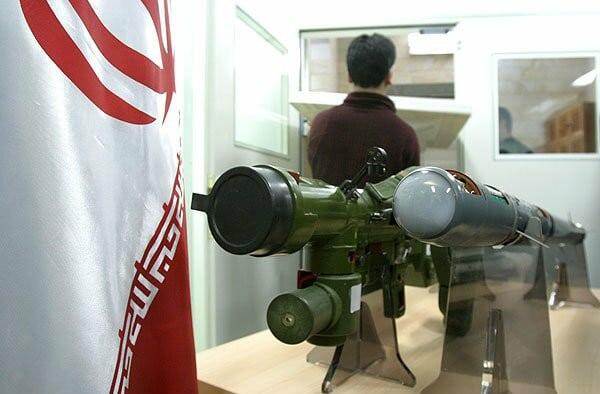
CNN reported indications that Beijing is working to route the shipments through third countries to conceal their origin. The report said China is preparing to transfer shoulder-fired anti-air missile systems known as MANPADs, while citing unnamed sources.

A spokesperson for the Chinese embassy in Washington also addressed the claims, seeking to make clear that Beijing “has never provided weapons to any party to the conflict” and urged the United States to avoid leveling such baseless charges.

This accusation first surfaced shortly before US-Iran negotiations in Islamabad collapsed, and was followed by an escalation in tensions as Washington imposed a naval blockade targeting Iranian ports and shipping through the Strait of Hormuz.

Earlier, over the weekend, when he was asked by reporters about reports that China is sending the weapons, the president responded that “if China does that, China will have big problems, OK?”

Recall too that in early April an American pilot whose F-15 jet was shot down over Iran was rescued after evading capture for more than a day in a dramatic special forces raid into Iran – this is at least according to the official story anyway.

It’s widely believed that this shootdown was the result of Iranians deploying MANPADs or other smaller, mobile anti-air defense system. It came after both the US and Israel declared total air superiority and freedom of action over Iran’s skies.

Amid China’s denials and the ongoing speculation, what is for sure is that Russia and Iran have military ties which run deeper, given especially they are running a joint Shahed drone program related to the Ukraine war. Western mainstream media has also been eager to true and tie ‘rogue’ Beijing in with some kind of Tehran-Moscow-Beijing nexus.

Tyler Durden
Tue, 04/14/2026 – 11:22

Treasury Rushes To Access Anthropic ‘Mythos’ AI After Warning It Can Hack “Every Major Operating System”

Treasury Rushes To Access Anthropic ‘Mythos’ AI After Warning It Can Hack “Every Major Operating System”

The US Treasury Department’s technology team is actively seeking access to Anthropic PBC’s highly restricted Mythos AI model so it can begin hunting for software vulnerabilities, according to a person familiar with the situation cited by Bloomberg. 

Illustration via WIRED

Treasury Chief Information Officer Sam Corcos briefed the department’s cybersecurity team on the technology last week and has directed efforts to gain access to the model “as soon as this week.”

The request comes days after Treasury Secretary Scott Bessent and Federal Reserve Chair Jerome Powell summoned top Wall Street CEOs to an urgent meeting at Treasury headquarters. Executives were warned that Mythos and similar frontier AI models could usher in a new era of heightened cyber risk. Anthropic itself has cautioned that the model may be capable of powering sophisticated cyberattacks unless companies proactively test it against their own systems and build defenses ahead of any wider release.

At the meeting, bank leaders were strongly urged to take the model seriously and use it internally to detect vulnerabilities.

What Is Mythos and Why the Restrictions?

Anthropic introduced Mythos (also referred to as Claude Mythos Preview) as part of its new Project Glasswing initiative. In internal testing, the model demonstrated extraordinary offensive cybersecurity capabilities: it was able to identify and exploit vulnerabilities “in every major operating system and every major web browser when directed by a user to do so.” In one documented case, it wrote a web browser exploit that successfully chained together four separate vulnerabilities.

Project Glasswing brings together Amazon Web Services (AWS), Apple, Broadcom, Cisco, CrowdStrike, Google, JPMorganChase, the Linux Foundation, Microsoft, NVIDIA, and Palo Alto Networks to address growing concerns within the cybersecurity community that AI models are now capable of discovering and exploiting vulnerabilities at a faster pace than humans can keep up with.

…

According to the post on Anthropic’s website, the model’s strong agentic coding and reasoning skills enable it to uncover and exploit security flaws when directed by the user that have existed for years, even decades without detection. Benchmarking results cited by the company suggest a notable performance gap between Mythos Preview and its previous models in cybersecurity-related tasks. –cxtoday.com

What Mythos Has Discovered: Key Findings from Red Team Testing

In controlled testing against real codebases in isolated containers, the model autonomously identified thousands of zero-day vulnerabilities across every major operating system and every major web browser. The testing used an agentic workflow: file prioritization based on a 5-tier vulnerability likelihood ranking, parallel Claude Code invocations, and secondary validation for severity and exploitability.

Standout Zero-Day Discoveries Include:

  • 27-year-old remote crash vulnerability in OpenBSD (TCP SACK processing): An integer overflow in signed TCP sequence number comparison that enables a null-pointer dereference and remote denial-of-service against any responding host. The bug had survived decades of manual code review and extensive fuzzing campaigns.
  • 16-year-old bug in FFmpeg (H.264 parser): A slice number collision that triggers an out-of-bounds heap write when processing crafted frames with 65,536+ slices. The vulnerability originated in 2003, became exploitable after a 2010 refactor, and had evaded detection despite automated testing tools hitting the vulnerable path five million times.
  • 17-year-old FreeBSD NFS Remote Code Execution (CVE-2026-4747): A stack buffer overflow in RPCSEC_GSS authentication (96-byte buffer for 304-byte input) combined with NFSv4 information disclosure. Mythos autonomously constructed a 20-gadget ROP chain split across six sequential RPC requests — a feat the prior model (Claude Opus 4.6) could achieve only with significant human guidance.

Firefox JavaScript Engine Testing Results were especially dramatic:

  • Claude Opus 4.6: Developed only 2 working exploits out of several hundred attempts.
  • Mythos Preview: Developed 181 working exploits and achieved register control in 29 additional cases.

OSS-Fuzz Results showed a similar leap:

  • Mythos generated 595 tier-1/2 crashes (plus several tier-3–5), including multiple tier-5 control-flow hijacks (full arbitrary code execution) on fully patched targets.

These discoveries were achieved at remarkably low cost – many individual zero-day runs cost under $50, with full OpenBSD testing campaigns under $20,000 and Linux kernel N-day exploits under $2,000 each.

Because of the dual-use risks, Anthropic has not released Mythos to the public. Instead, it is being provided on a tightly limited basis through Project Glasswing to a select group of vetted organizations – including major tech companies, cybersecurity firms, JPMorgan Chase, and the Linux Foundation – for defensive purposes only (scanning their own systems to find and patch flaws before attackers can exploit them). Anthropic has committed up to $100 million in usage credits to support these efforts.

Several major financial institutions have already begun internal testing:

  • JPMorgan Chase was publicly named as part of Project Glasswing.
  • Goldman Sachs, Citigroup, Bank of America, and Morgan Stanley have also gained access or are in the process, according to people familiar with the matter.

The company stated in its Project Glasswing announcement that it has been in “ongoing discussions” with government officials about the model and is “ready to work with local, state, and federal representatives.”

Pentagon Supply-Chain Risk Designation

The Treasury’s push for access is notable because the Pentagon formally designated Anthropic a US supply-chain risk earlier this year following a dispute over how the company’s AI technology could be used by the military. The Defense Department gave Anthropic a six-month window to transition its services to another provider. Anthropic is actively fighting the designation in federal court.

Despite this, Corcos – who previously encouraged the use of Anthropic’s Claude AI tools inside Treasury before the Pentagon label – is now driving the department’s effort to investigate Mythos. 

* * *

Tyler Durden
Tue, 04/14/2026 – 10:40

With Private Credit We See The Credit Cycle Hasn’t Been Repealed

With Private Credit We See The Credit Cycle Hasn’t Been Repealed

Authored by Jay Rogers via RealClearMarkets.com,

Something cracked in private credit this month, and the men who manage systemic risk for a living are saying so.

Goldman Sachs CEO David Solomon’s just-released 2025 annual shareholder letter warns that concerns about private credit – including “underwriting quality or exposure to software companies that may be negatively affected by AI” – are “a reminder that the credit cycle has not been repealed.” His predecessor Lloyd Blankfein went further on Bloomberg’s Big Take podcast: “I don’t feel the storm, but the horses are starting to whinny in the corral.” JPMorgan has already voted with its balance sheet, marking down software company loans held as collateral by private credit funds and reducing borrowing capacity for those funds, before any actual defaults. “I’m shocked that people are shocked,” said JPMorgan’s Troy Rohrbaugh.

The backdrop is three major liquidity failures in the space of six weeks. Blackstone’s $82 billion BCRED faced record redemption requests of $3.7 billion (7.9% of assets) and had to inject $400 million of its own capital to honor them. BlackRock gated its $26 billion HLEND after receiving withdrawal requests of 9.3% of NAV. Blue Owl permanently halted redemptions in OBDC II and sold $1.4 billion in loans to fund an orderly exit. Blue Owl shares have since fallen roughly 40% year-to-date.

These are not random liquidity events. They are the structural consequence of a capital concentration problem I have been watching build for a decade. In 2025 alone, the ten largest private credit funds captured nearly 46% of all capital raised, the highest concentration in over a decade. That tidal wave of capital forces mega-platforms into ever-larger deals, typically companies with $200 million or more in EBITDA, where they compete head-to-head with broadly syndicated loan syndicates and public high-yield. The result is spread compression, yield erosion, and the complete elimination of the pricing advantages that private credit was supposed to offer.

The AI disruption angle makes the mega-fund problem worse. Software represents roughly 25% of all private credit loans. The sector’s underwriting assumptions – stable recurring revenue, high switching costs, durable cash flows – are precisely what AI tooling is actively challenging. Fitch’s privately monitored ratings portfolio posted a record 9.2% default rate in 2025, up from 8.1% in 2024, with companies below $25 million EBITDA posting a 15.8% default rate. When software loan valuations get marked to reflect AI disruption reality, the leverage stack that amplified returns on the way up will amplify losses on the way down.

Contrast this with the lower middle market. Middle-market direct-lending spreads have stabilized in the 500–550 bps range over SOFR, carrying a 100–150 bps premium to syndicated markets. Q3 2025 BDC data showed all-in yields still at 9.76% after 150 bps of rate cuts, with trailing one-year realized losses of just 0.66%. These are smaller companies with less AI disruption exposure, stronger covenants, bilateral lender relationships, and managers who can still walk away from a bad deal. Preqin return dispersion data shows top-quartile North America direct-lending IRRs outpacing medians at an increasing rate, precisely because scale-driven managers are chasing volume over selectivity.

Blankfein’s warning about retail exposure to private credit is the right one to heed. The $1.8 trillion private credit market has now reached the approximate size of the subprime mortgage market at its 2007 peak. The push by both Wall Street and the Trump administration to route this exposure through 401(k) plans, at the precise moment the cycle is turning, is a risk worth naming clearly.

For allocators, the path forward is clear.

Avoid the liquidity mismatch of retail evergreen vehicles – the redemption crises of early 2026 were structural, not idiosyncratic. Avoid software-heavy direct lending portfolios until the AI disruption cycle is fully repriced. Favor closed-end, institutional-grade mid-market funds with experienced managers who still underwrite as if it is their own capital. The returns are still there in private credit, just are not where the most capital went.

Private credit is not broken. The credit cycle has not been repealed. It has merely been deferred – and Goldman’s Solomon, JPMorgan’s Rohrbaugh, and Blankfein’s corral metaphor are all pointing at the same door.

Tyler Durden
Tue, 04/14/2026 – 10:20