73.1 F
Chicago
Saturday, August 22, 2026
Home Blog Page 697

“We Don’t Want Your Culture Of Dominance” – Denmark To Ramp Up Deportations Of Criminal Foreigners

0
“We Don’t Want Your Culture Of Dominance” – Denmark To Ramp Up Deportations Of Criminal Foreigners

Authored by Thomas Brooke via Remix News,

Danish Prime Minister Mette Frederiksen has announced plans for deportation reform aimed at expelling more foreign nationals convicted of serious crimes, using her New Year’s address to argue that Denmark must put public safety and victims first, even if doing so pushes the boundaries of international conventions.

“The government will soon present a comprehensive deportation reform,” Frederiksen said.

“This will mean that even more criminal foreigners will have to be sent out of Denmark.”

She drew a clear distinction between immigrants who, in her words, had embraced Denmark and those who commit crimes.

“You can be Danish even if your favorite dish isn’t meatballs or mackerel sandwiches, for that matter. We Danes, don’t look the same. Nor should we. But we should love each other.

Frederiksen’s tone hardened when addressing the current issues regarding criminality and integration.

“In Denmark, when democracy and religion collide, it is God who has the right of way,” she said, before adding:

“Therefore, to the people who have come here and are committing crimes: You shouldn’t be here. We don’t want your madness and culture of dominance. You are destroying the most beautiful country in the world, and you should not be allowed to do that.”

She cited specific cases to underline what she described as systemic failures.

“No one can understand why an Iraqi man convicted of brutally assaulting an innocent person with a golf club cannot be deported,” Frederiksen said.

“Nor why a previously convicted man from Kosovo, convicted of abusing his children and spouse for several years, can be allowed to stay here.”

Under the government’s proposal, foreigners would be deported if they commit serious crimes and receive a prison sentence of at least one year, regardless of their length of stay or personal ties to Denmark.

“This makes it a very clear starting point,” Frederiksen said.

“If you are convicted of, for example, rape, aggravated assault, or other serious crime, then your stay in Denmark is over.”

Frederiksen said Denmark already deports many criminal foreigners due to what she described as a strict immigration policy that goes “to the edge of conventions.” She argued that the government could now go further because Denmark, together with Italy, had succeeded before Christmas in gathering support from 27 countries for a new interpretation of the European Convention on Human Rights. “Now, first and foremost, it must be the populations – and the victims – who are protected. And not the perpetrator,” she said. “Instead of waiting several years for it to take effect in court practice, we are taking the lead and implementing legislation before the summer.”

In October last year, a government report revealed that nearly three-quarters of those convicted under Denmark’s so-called gang clause have immigrant backgrounds from non-Western countries. Data released by the Ministry of Justice showed that between 2018 and 2025, 213 people were convicted under Section 81a of the Criminal Code, which allows courts to double sentences for crimes likely to provoke gang violence. Of those convicted, 54 were of Danish origin, 36 were immigrants from non-Western countries, and 117 were descendants of non-Western immigrants, meaning 72 percent had non-Western roots. Conservative immigration spokesman Frederik Bloch Münster described the figure as “remarkably high.”

Denmark has already moved to tighten deportation rules. In December 2024, the government announced plans to abolish the so-called ladder system, which limits deportation based on the severity of a crime and the offender’s length of stay in the country. The proposed reform would allow the deportation of any foreign national sentenced to an unconditional prison term, unless doing so would breach Denmark’s international obligations.

“Unfortunately, foreigners in Denmark are overrepresented in the crime statistics and too often commit serious crimes — such as those related to gang activity. We don’t have to deal with that. The hammer must fall even harder,” said Immigration and Integration Minister Kaare Dybvad Bek at the time.

“Therefore, we want to tighten the rules so that we can get even more criminal aliens deported. Every criminal alien who is deported by Denmark is a victory for the legal community and a victory for our country.”

The deportation push is part of a broader tightening of Denmark’s approach to immigration and national identity. Since Jan. 1, 2025, it has been illegal to raise foreign flags without special permission, following new legislation passed by the Folketing after a Supreme Court ruling struck down a 1915 ban. The new rule restored restrictions while allowing exceptions for Nordic flags, Germany, Greenland, the Faroe Islands, and specific contexts such as sporting events, demonstrations, or special permits granted by police or the justice minister.

Justice Minister Peter Hummelgaard defended the measure last December, saying, “The Dannebrog is the most important national symbol we have in Denmark. A symbol that binds the Danes together as a people, and which should enjoy a very special status in Denmark.”

Read more here…

Tyler Durden
Wed, 01/07/2026 – 02:00

Perhaps We Should Actually Be Focusing On Fixing America

0
Perhaps We Should Actually Be Focusing On Fixing America

Authored by Michael Snyder via TheMostImportantNews.com,

After years of heading in the wrong direction, nobody can deny that the United States is facing overwhelming problems. So why don’t we focus on fixing those problems first? The truth is that we can’t do everything because our resources are very limited. U.S. households are more than 18 trillion dollars in debt, and the federal government is more than 38 trillion dollars in debt.

Even though we have literally stolen trillions upon trillions of dollars from future generations, our major cities are rapidly decaying, our infrastructure is crumbling, corruption is rampant, the middle class is shrinking, most of the population is struggling to even afford the basics each month, mass layoffs are happening all over the nation, our streets are teeming with hordes of drug addicts and homeless people, large numbers of Americans are selling images of themselves online just to make ends meet, and millions of others are living in their vehicles.

So why don’t we use what limited resources we have to fix our own problems?

If you don’t understand the point that I am trying to make, just go take a stroll through downtown Seattle.

The new mayor has decided that it will be her policy to allow people to openly do drugs in the streets

Seattle’s new ultra-woke mayor has triggered chaos by ordering police not to arrest people doing drugs on the streets of the city plagued by crime and homelessness.

Democratic socialist Katie Wilson, 43, was sworn in as the city’s 58th mayor on Friday.

The progressive politician who co-founded the Transit Riders Union has already taken steps that concerned residents and law enforcement officials say will destroy Seattle.

The president of the Seattle Police Officers Guild, Mike Solan, is warning that this will make the lawlessness in the streets of Seattle even worse

‘We’ve all seen how our streets can be filled with death, decay, blight and crime when ideology like this infects our city, Solan continued in his statement.

‘Now with this resurrected insane direction, death, destruction and more human suffering will be supercharged.’

Lawmakers and residents have reacted to this news in horror, as the city already has a raging homelessness epidemic that they believe this lax drug policy will only amplify.

Once upon a time, Seattle was one of the most beautiful cities on the entire planet.

So what in the world happened?

Of course it isn’t just Seattle that has been transformed into a crime-ridden, drug-infested hellhole.

All over the nation, chaos reigns in the streets of major American cities.

In fact, last night a “hammer-wielding maniac” destroyed a bunch of windows at the Cincinnati home of Vice President J.D. Vance…

A hammer-wielding maniac who smashed four windows at JD Vance’s Cincinnati home has been arrested by the Secret Service after an overnight break-in.

William DeFoor, 26, was charged early Monday morning with one count each of obstructing official business, criminal damaging or endangering, criminal trespass and vandalism.

Secret Service agents heard a loud noise at the home around midnight and spotted DeFoor running from the home, which is the secondary residence for Vance, his wife Usha and their three young children, who were out of town at the time.

Meanwhile, lawlessness also continues to run rampant in high places all over the country.

So what is being done about it?

After all this time, how many corrupt members of past administrations have been arrested and put in prison?

After all this time, how many corrupt corporate executives have been arrested and put in prison?

After all this time, how many of Jeffrey Epstein’s associates that also sexually abused young girls have been arrested and put in prison?

How can we tell the rest of the world how they should be doing things when we can’t even get our own house in order?

We have been getting hit by crisis after crisis, and economic conditions are steadily deteriorating.

In fact, we just learned that U.S. manufacturing activity has contracted for a 10th consecutive month

US manufacturing activity contracted for a 10th straight month in December, a survey indicated Monday, pointing to a continued drag in sentiment from tariffs and trade policy uncertainty.

The Institute for Supply Management’s (ISM) manufacturing index fell to 47.9 from November’s 48.2 reading, the lowest of 2025 despite modest improvements in employment and some other categories.

Our artificially-inflated stock market continues to hover near record highs, but at the same time the number of large corporations that are going bankrupt just continues to rise

Between January and November 2025, at least 717 companies filed for Chapter 7 or Chapter 11 bankruptcy, according to data from S&P reviewed by The Washington Post.

That marks a 14% jump compared to the same period in 2024, and the most filings seen since 2010, the tail end of the Great Recession.

According to the Daily Mail, we are also seeing a very alarming surge in bankruptcies among small businesses too…

A frightening recession indicator is flashing red — and Americans can see it all over Main Street.

Experts told the Daily Mail that a sudden surge in bankruptcies and store closures — hitting mom-and-pop shops, small restaurants, and local retailers — could be an early warning sign that the economy is starting to crack.

One expert that was interviewed by the Daily Mail is warning that this surge in bankruptcies is a clear indication that a recession is coming

‘The little guys are going to start falling first,’ Joe Barsalona, a Delaware-based bankruptcy lawyer at Pashman Stein Walder Hayden, said.

‘A recession is coming. I agree with economists that the increase in small business bankruptcies is a canary in a coal mine.’

Of course many would argue that a recession is already here.

In recent months, I have written a lot about the mass layoffs that have been occurring all over the country.

Well, now Newsweek is reporting that over 100 companies have filed WARN notices for mass layoffs that will be taking place in January…

More than 100 companies have filed WARN notices indicating plans to lay off workers in January 2026, according to WARNTracker.com. The following companies have filed a notice.

I tried to warn my readers that a tsunami of layoffs was coming.

Now it is here.

The following is the full list of 119 companies that have filed WARN notices for this month…

  • AARP
  • AbbVie
  • Adams County Public Hospital
  • AeroFarms1526 Cane Creek
  • Amazon
  • Amentum
  • American Signature, Inc.
  • Apogee Architectural Metals
  • Archer Daniels Midland Company
  • Atkore Plastics Southeast
  • Augusta Sportswear, Inc.
  • Bechtel National Inc.
  • Best Dressed Chicken, Inc.
  • Blue Plate Oysterette LLC
  • Blue Shield of California
  • Bond 45 National Harbor Restaurant
  • Braga Fresh Foods, LLC
  • Building Materials Manufacturing LLC
  • BWW Law Group, LLC
  • Catalent, Maryland, Inc.
  • Charles River Laboratories
  • Clari Inc.
  • CNO Financial Group
  • Colonial Savings, F.A.
  • ColWyo Coal Company LP
  • CommUnify
  • Consolidated Hospitality Supplies
  • Corteva
  • CoStar Group
  • Couchbase, Inc.
  • CRST Expedited, Inc.
  • Dental Benefit Management, Inc.
  • Dillard’s Inc.
  • Dometic Corporation
  • DRT, LLC
  • DSV Air & Sea Inc.
  • enDevelopment Logistics, LLC
  • FedEx
  • FreshRealm
  • Fresno Economic Opportunities Commission
  • Galleher LLC
  • General Motors
  • Giesecke + Devrient ePayments America Inc
  • Gilead Sciences
  • Grand Lux Café, LLC
  • Great Floors
  • H&M Fashion USA, Inc.
  • HD Supply
  • Heibar Installations Inc.
  • Henkel Corporation
  • HRL Laboratories
  • Hudson
  • Huntington National Bank
  • Illumina
  • ImmunityBio
  • Inline Plastics
  • Institute of International Education
  • International Paper
  • Invincible Boat Company
  • Kloeckner Meals
  • Lakeshore Learning Materials, LLC
  • Louis Vuitton USA Inc.
  • Lumileds
  • Maritime Applied Physics Corporation
  • Marshalls of CA, LLC
  • Mattel
  • McDonald’s
  • MDWise
  • Meteorcomm LLC
  • Mettler-Toledo Rainin, LLC
  • Michigan Sugar Company
  • Middlebury Institute of International Studies at Monterey
  • Nationstar Mortgage, LLC
  • NIKE Retail Services, Inc.
  • Nordstrom Portland Rack
  • Ojai Valley Inn
  • Palo Verde Hospital
  • Panasonic Well LLC
  • Peraton’s Environmental Integration Services III
  • Post Consumer Brands, LLC
  • Presbyterian Home for Central New York, Inc.
  • Providence Health & Services
  • Rad Power Bikes, Inc.
  • RATP Dev and Midtown Group
  • Raytheon Technologies
  • Rebel Restaurants, Inc.
  • Red Run Corporation T/A Food Depot
  • Regional Medical Center of Central Alabama
  • Retail Services WIS Corporation
  • Revity, Inc.
  • Roads Express, LLC
  • Saddle Creek Logistics Service
  • SC Industrial Holdings, LLC
  • SDH Education West, LLC
  • SDH Service East, LLC
  • Shell Recharge Solutions
  • SLO Brewing Co. LLC
  • Smokin Bear LLC
  • Smurfit Westrock
  • Sodexo
  • Spirit Airlines, LLC.
  • Synopsys, Inc.
  • Takeda Development Center Americas Inc.
  • Terzo Enterprises Incorporated
  • The Cheesecake Factory
  • The French Gourmet, Inc.
  • The Taubman Company
  • TJX Companies, Inc.
  • TransAlta
  • United Supermarkets
  • Van Law Food Products, Inc.
  • Verizon
  • Virginia Mason Franciscan
  • Warner Music Group
  • Wells Fargo
  • West Fraser, Inc.
  • White Coffee Corporation
  • WIS International
  • WWL Vehicle Services America, Inc.

That is quite a long list, isn’t it?

The American people are not stupid.

They can see what is happening, and one recent survey found that 52 percent of U.S. adults actually believe that a recession has already started…

According to the ARG data, 52% of Americans believe the economy is already in a recession, and 64% say it’s getting worse.

These numbers suggest that many Americans are feeling the squeeze, even if official metrics don’t yet reflect a recession.

Only 11% think the economy is improving. Just 22% rate it as excellent, very good, or good, while 73% call it bad, very bad, or terrible, showing a clear gap between public sentiment and political narratives about economic strength.

Looking ahead, 60% believe the national economy will be worse a year from now, and just 16% say it will be better.

Yes, things are certainly bad now.

But they are not even worth comparing to what is further down the road.

So why don’t we use our limited resources to address the historic challenges that we are facing in our own nation?

If we love this country, we should try to fix it.

*  *  *

Michael’s new book entitled “10 Prophetic Events That Are Coming Next” is available in paperback and for the Kindle on Amazon.com, and you can subscribe to his Substack newsletter at michaeltsnyder.substack.com.

Tyler Durden
Tue, 01/06/2026 – 23:25

Chevron Contracts 11 Tankers For Venezuela Port Calls As Don-Roe Doctrine Begins

0
Chevron Contracts 11 Tankers For Venezuela Port Calls As Don-Roe Doctrine Begins

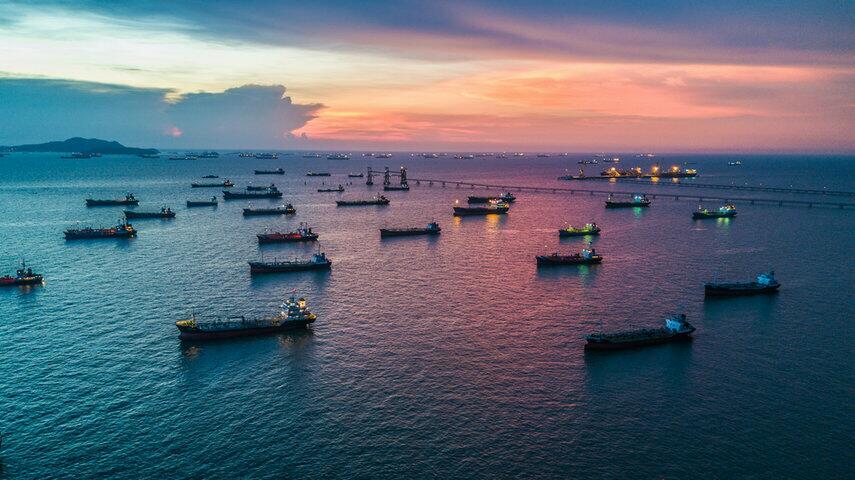
Chevron stands out as the clear winner among U.S. oil majors, given its unique positioning already in Venezuela. The company already produces a quarter of the country’s oil output under a U.S. sanctions waiver and exports crude, giving it an operational and regulatory moat no other oil major can match.

With the Monroe Doctrine effectively rebranded as the “Don-Roe Doctrine,” reflecting the Trump administration’s new approach to exerting control and influence across the Western Hemisphere and rooting out China and Russia, the developments this past weekend involving U.S. Delta Force operators capturing Maduro do not come as much of a surprise.

Consistent with the Don-Roe Doctrine, Chevron has contracted a fleet of tankers scheduled to arrive in Venezuela later this month, reinforcing its role as the dominant player, for now, a critical conduit for Venezuelan crude into US refineries along the Gulf of America.

Key highlights from the Bloomberg report that first pointed out Chevron’s 11 tankers headed to Venezuela:

  • Number of Chevron-chartered ships is the highest since October and up from nine in December, with arrivals planned at the Jose and Bajo Grande ports.

  • Of the 11 Chevron vessels, one has already loaded crude and two are currently docked; the oil is bound for U.S. refiners including Valero Energy, Phillips 66, and Marathon Petroleum.

  • Chevron operates under a U.S. Treasury license and remains the only Western firm permitted to produce and export Venezuelan crude under U.S. sanctions.

On Monday, shares of Chevron, ConocoPhillips, and ExxonMobil jumped on news of regime change in Venezuela. However, Chevron shares had given up most of those gains by late trading on Tuesday.

Here’s more color on the Venezuelan crude industry from UBS and Goldman:

UBS analyst Henri Patricot

US captures Venezuelan leader, references oil investments, higher exports The US government announced on Saturday the capture of Venezuelan leader Nicolas Maduro following a military operation in Caracas (link). US President Donald Trump said that the U.S. “will oversee Venezuela until a safe transition to a legitimate replacement” and oil was mentioned several times. He said in a press conference that US oil companies would “go in, spend billions of dollars, fix the badly broken infrastructure, oil infrastructure” and that it would be “selling oil, probably in much larger doses” (link).

Could drive faster production rebound near-term if sanctions are lifted We see this weekend’s developments as slightly negative for the oil price in the near-term. While the US President said that the US embargo on Venezuelan oil remains in full effect, the events likely reduce risk of a further sustained drop in Venezuelan production and there is potential for a sharper rebound in our view. This could be partially offset by a higher geopolitical risk premium. Venezuela has been producing ~0.9Mb/d in 2025, <1% of global supply. Latest reports suggest that production dropped ~150kb/d m/m in December because of US sanctions (link), from ~850kb/d in November (IEA). It had reached 1Mb/d as recently as October 2025 (see Figure 1) and the US strikes reportedly did not impact oil infrastructure (link). Hence, we believe production could return to 1Mb/d fairly quickly, if US restrictions are lifted, a small upside of 150kb/d vs. our 850kb/d base case for 2026. There may be potential to push it slightly further to 1.2-1.3Mb/d. This would be an additional headwind for the oil market in 2026, but would not completely change the picture (1.9Mb/d surplus is our base case).

Greater long-term potential but that requires material investments, stability There would be a greater impact if production returns to the level of 2.5Mb/d from 10 years ago but this would take time and require many things to go right. Unlike for Iran, Venezuela’s oil infrastructure has indeed been impacted by years of underinvestment. As we discussed in our expert call on Venezuela back in 2022, raising production by ~0.5Mb/d could be done relatively quickly but getting back to 2.5Mb/d could take as much as 10 years. It would require major investments and for companies to do so, this would require political stability, which remains uncertain at this stage. Precedents of US-led or US-supported regime changes in oil-producing countries show how challenging this can be (see Figure 2). Iraq managed to grow production but we note this was during a different period for oil demand growth, $60 Brent doesn’t support significant growth investment and the US producer landscape and business model are significantly different. Meanwhile Libya has yet to return to pre-2011 production levels…OPEC+ partners maintain policy at monthly meeting, as expected Separately, the eight OPEC+ countries carrying out the voluntary cuts confirmed on Sunday their plans to pause production increments in February and March 2026 due to seasonality (link). This was in line with OPEC+ delegates’ comments (link) and expectations, and so neutral for oil in our view. The statement is similar to the previous one and made no reference to Venezuela. The eight countries will next meet on 1 February but we believe the next important meeting is more likely to be the one in early March, when the group should decide whether or not to raise production in April. Our base case is that they will return to production increases, so as to fully unwind the cuts by year-end, in time to agree on a new framework for the whole group. The alternative would be for the pause to go on, more likely if we see signs of Venezuelan production rebounding, Russia continuing to produce below target and/or prices moving lower.

Goldman analysts led by Daan Struyven

  • Following the US deposing of President Maduro, we assess the risks to our unchanged oil price forecast (Brent/WTI 2026 averages of $56/52) from Venezuela.

  • We see ambiguous but modest risks to oil prices in the short-run from Venezuela depending on how US sanctions policy evolves. We estimate 2026 Brent averages of $58/54 in scenarios where Venezuela crude production declines/rises by 0.4mb/d by end-2026 (vs. our $56 baseline which assumes flat production of 0.9mb/d).

  • Along with recent Russia and US production beats, potentially higher long-run Venezuela production further increases the downside risks to our oil price forecast for 2027 and beyond. Although Venezuela produced ~3mb/d at its peak in the mid-2000s and holds ~1/5 of global proven oil reserves, any recovery in production would likely be gradual and require substantial investment. We estimate $4/bbl of downside to 2030 oil prices in a scenario where Venezuela crude production rises to 2mb/d in 2030 (vs. our 0.9mb/d base case).

About 20% of all global oil tankers are used to smuggle crude oil from countries under international sanctions, with 10% of these ships carrying Venezuelan oil. With Maduro out and the U.S. taking control of the Western Hemisphere, we suspect the dark fleet tanker industry will be dramatically hit – bad news for China’s “teapot” refineries.

Tyler Durden
Tue, 01/06/2026 – 23:00

Israeli FM Travels To Somaliland In First, Unprecedented Visit Since Recognition

0
Israeli FM Travels To Somaliland In First, Unprecedented Visit Since Recognition

Via The Cradle

Israeli Foreign Minister Gideon Saar visited the Republic of Somaliland on Tuesday and is meeting the breakaway state’s president, according to multiple media reports. Reuters cited sources as saying that Saar is currently in Somaliland and will meet the president of the state, Abdirahman Mohamed Abdullahi, in the capital Hargeisa.

Somaliland media reports also confirmed the Israeli foreign minister’s visit. The Israeli Foreign Ministry did not respond to requests for comment. According to Somaliland’s Information Ministry, Saar was received by senior Somaliland officials at the airport.  Last month, Israel became the first state to formally recognize Somaliland, which broke away from Somalia in 1991 but had never been recognized by any UN member state.

Israeli Foreign Ministry/Anadolu Agency

Somali officials and several Arab, Islamic, and African states have condemned the Israeli move – which was rejected by most members of the UN Security Council at an emergency meeting in New York.

The Israeli government has been aiming for Somaliland to serve as a potential destination for Palestinians that Tel Aviv aims to forcibly displace from Gaza, according to multiple reports over the past year.

After US President Donald Trump announced plans to expel the strip’s population and transform Gaza into a “Riviera,” talks to relocate large numbers of Palestinians reportedly began with several African states, including Somaliland and Morocco. Trump walked back his comments earlier this year, but efforts to expel Palestinians have continued.

Somalia’s president said in a recent interview that Israel has demanded from Somaliland, as part of its terms, that the breakaway state receive displaced Palestinians from Gaza and allow the establishment of Israeli military sites. He added that intelligence confirms Somaliland accepted these terms.

“The Government of the Republic of Somaliland firmly rejects false claims made by the president of Somalia alleging the resettlement of Palestinians or the establishment of military bases in Somaliland,” Somaliland’s Foreign Ministry said in a statement in response.

“Somaliland’s engagement with the State of Israel is purely diplomatic, conducted in full respect of international law and the mutual sovereign interests of both countries,” it added. 

Ummmm…

The Foreign Ministry went on to say that the “baseless allegations are intended to mislead the international community and undermine Somaliland’s diplomatic progress,” adding that “Somaliland remains committed to regional stability, and peaceful international cooperation.”

Tyler Durden
Tue, 01/06/2026 – 22:35

At CES, A Chinese Two-Legged Vacuum Signals The Next Phase Of Home Robotics

0
At CES, A Chinese Two-Legged Vacuum Signals The Next Phase Of Home Robotics

At CES in Las Vegas, where robotics is a dominant theme this year, Roborock introduced a striking new home robot meant to persuade consumers that household automation is ready for everyday life, according to Bloomberg.

The Chinese company — formally called Beijing Roborock Technology Co. — revealed the Saros Rover, a robotic vacuum concept equipped with two independent wheel-legs that allow it to climb stairs and traverse uneven terrain. According to the firm, it is “the first robot vacuum cleaner with two wheel-legs.” The device uses artificial intelligence, motion sensors, and 3D spatial mapping, and in a media demonstration it climbed stairs, descended a ramp, and performed a small jump, which a company spokesperson said could help it handle obstacles.

Bloomberg writes that the Rover replaces last year’s headline-grabbing Saros Z70, which featured a mechanical arm capable of picking up objects such as socks. While that model drew crowds at CES, it later disappointed reviewers when it launched for $2,599 in the U.S., partly because it recognized only a limited range of items. Learning from that experience, Roborock is now taking a more cautious approach: the Rover does not yet have a confirmed release date.

Like its predecessor, the new robot moves slowly when operating on its legs, and the company declined to disclose battery performance. During the presentation, it also remained unclear how well the Rover can recover from a fall, though the spokesperson said that in such cases the robot will attempt to right itself without human help.

Robotics’ growing presence at CES has become so prominent that the event’s organizer, the Consumer Technology Association, created a dedicated exhibition area for the category. Alongside home devices like Roborock’s, companies are showcasing humanoid robots that claim to handle complex tasks such as folding laundry. Still, widespread consumer adoption faces major hurdles, including high costs, limited battery life, and the need for more reliable mobility.

Tyler Durden
Tue, 01/06/2026 – 22:10

Your Cholesterol May Look Normal… But This Hidden Particle Could Still Be Raising Your Heart Risk

0
Your Cholesterol May Look Normal… But This Hidden Particle Could Still Be Raising Your Heart Risk

Authored by Brendon Fallon & Lynn Xu via The Epoch Times (emphasis ours),

For decades, cholesterol screening has focused on a familiar set of numbers—LDL (“bad” cholesterol), HDL (“good” cholesterol), and triglycerides. When these values fall within the “normal” range, many people are reassured that their heart risk is low.

An LDL particle with its apo-B protein (blue). Apo-B particle count may offer a more accurate indication of atherosclerotic risk.JUAN GAERTNER/SCIENCE PHOTO LIBRARY/Getty Images

However, according to leading preventive cardiologist Dr. Seth J. Baum, that reassurance can sometimes be misleading.

In a recent episode of “Vital Signs,” Baum explained that a largely inherited cholesterol-related particle—lipoprotein(a), or Lp(a)—can quietly raise the risk of heart attack, stroke, and aortic valve disease, even in people whose standard cholesterol tests look perfectly fine.

“Lp(a) explains a lot of heart disease we used to call bad luck,” Baum said. “It’s not bad luck—it’s biology we weren’t measuring.”

What Is Lipoprotein(a)?

Lipoprotein(a) is structurally similar to LDL cholesterol, but with an added protein called apolipoprotein(a). This extra component makes the particle particularly harmful because it promotes plaque buildup, inflammation, and abnormal clot formation within blood vessels.

Unlike LDL cholesterol—which is strongly influenced by diet, exercise, and medications—Lp(a) levels are determined primarily by genetics. They remain relatively stable throughout life and are largely unaffected by lifestyle changes.

Because of this, Baum and other preventive cardiologists often refer to Lp(a) as “genetic cholesterol.” It is inherited, invisible on routine lipid panels, and easily overlooked—yet clinically powerful.

How Common Is High Lp(a)?

Elevated Lp(a) is not rare. Large population studies and expert consensus estimate that more than 20 percent of people worldwide—roughly one in five adults—have Lp(a) levels high enough to increase cardiovascular risk. In the United States, this translates to approximately 64 million adults.

That prevalence rivals or exceeds that of many conditions routinely screened for in primary care. Yet most Americans have never had their Lp(a) measured.

Baum said that this gap in testing helps explain why some people develop heart disease at young ages or despite healthy lifestyles.

I see patients who’ve been told for years their cholesterol is fine,” he said. “Then they have a heart attack at 45. When we finally check Lp(a), the story suddenly makes sense.”

Normal Cholesterol Doesn’t Always Mean Low Risk

One of Baum’s central messages is that cholesterol numbers must be interpreted in context, not in isolation.

Lp(a) acts as a risk amplifier. When it is elevated, other risk factors—such as mildly high LDL, borderline blood pressure, insulin resistance, or smoking—become more dangerous in combination. The artery is not only accumulating plaque faster, but plaque is also more inflamed and more prone to forming clots. Two people with identical LDL levels may have very different outcomes, depending on their Lp(a) levels.

This helps explain why traditional risk calculators sometimes fail, particularly in people with heart attacks or strokes at unusually young ages, strong family histories of cardiovascular disease, or heart disease that seems disproportionate to lifestyle.

In Baum’s view, overlooking Lp(a) in these situations represents a major blind spot in prevention.

The Test Most People Never Get–But Probably Should

Because Lp(a) rarely changes over time, testing is usually only needed once. The result can meaningfully alter how clinicians assess risk and guide prevention—even before Lp(a)-specific drugs become widely available.

Lp(a) results may be reported in different units, but many experts consider levels greater than or equal to 50 mg/dL (or approximately 100 to 125 nmol/L, depending on the assay) to be clinically significant.

Importantly, high Lp(a) is not a diagnosis. It does not mean a heart attack is inevitable. Rather, it signals that cardiovascular prevention should be more proactive and individualized. “Lp(a) doesn’t act alone—it stacks on top of everything else,” Baum said.

He describes Lp(a) as a “triple threat” because it promotes plaque formation, enhances blood clotting, and intensifies vascular inflammation. “Inflammation is clearly involved in plaque progression and heart attacks,” he noted, explaining why Lp(a) carries risk beyond LDL alone.

Despite this, Baum estimates that only about 1 percent of the population has ever been tested for Lp(a). “The reason most doctors cite for not testing is that we don’t yet have an approved therapy to lower it,” he said. “But that’s not a good reason not to know the risk.”

Plaque builds silently over decades. “In the vast majority of patients with high cholesterol or Lp(a), you don’t see anything on physical exam,” he said. “You usually don’t see anything until there’s a heart attack or stroke.”

A Practical Prevention Plan

A common misconception is that high Lp(a) leaves patients powerless. Baum strongly disagrees. “You can’t change your genes, but you can absolutely change how aggressively you manage everything else.”

Lower LDL More Than Average

When Lp(a) is elevated, Baum often targets lower LDL or apoB levels than standard recommendations. Even modest LDL elevations can be more harmful in the presence of high Lp(a), so tolerance for “borderline” values is reduced.

Treat Risk Factors as Additive

Rather than viewing blood pressure, cholesterol, glucose, and lifestyle habits separately, Baum said that they compound one another.

With high Lp(a):

  • Mild hypertension matters more
  • Smoking carries greater danger
  • Poor sleep, inactivity, and metabolic dysfunction become more consequential

This cumulative perspective explains why clinicians may recommend earlier or more intensive intervention—even when no single risk factor appears extreme.

Use Imaging to Clarify Risk

Baum highlighted the value of coronary artery calcium (CAC) scoring, a specialized CT scan that detects and measures calcified plaque in the coronary arteries—the arteries that supply blood to the heart muscle.

Unlike blood tests, which estimate risk indirectly, CAC scoring provides direct visual evidence of atherosclerosis. A higher calcium score reflects a greater plaque burden and a higher likelihood of future cardiovascular events.

In people with elevated Lp(a) but otherwise uncertain risk, CAC can help determine whether genetic risk has already translated into physical disease. A positive CAC score suggests that plaque has begun to form, strengthening the case for earlier and more aggressive prevention. A CAC score of zero indicates no detectable calcified plaque at the time of testing and may allow for a more individualized approach, particularly in younger patients.

CAC does not replace blood testing, Baum said, but adds clarity when lab results and clinical history leave risk uncertain—helping tailor prevention to the person, not just the numbers.

Screen Your Family

Because Lp(a) is inherited, Baum strongly encourages cascade screening—testing close relatives once an elevated level is identified. “The youngest person in the family is often the one who shows up first with an event.”

Family-wide screening—including siblings, parents, and children—can improve early detection and prevention.

Advanced Options and Emerging Therapies

For patients with prior cardiovascular events and very high Lp(a), lipoprotein apheresis may be an option in specialized centers.

Lipoprotein apheresis is a blood-filtering procedure that removes atherogenic lipoproteins—particles that promote artery-clogging plaque. These include LDL cholesterol and Lp(a), the structural protein found on particles most responsible for atherosclerosis. It is currently available at about 50 centers in the United States.

“We can literally remove these particles from the blood every two weeks, and hopefully reduce the risk of another event.”

Several Lp(a)-lowering drugs are now in late-stage clinical trials, some showing 80 percent to 90 percent reductions in Lp(a) levels. Baum expects FDA-approved therapies in the coming years, though he cautions that outcome data—not just lab results—will determine their ultimate value.

Baum’s Top 3 Recommendations

After decades of treating patients with both typical and unexplained heart disease, Baum said that effective prevention begins not with fear, but with awareness, engagement, and early action. His top recommendations are practical steps anyone can take to better understand—and reduce—their cardiovascular risk.

1. Be Your Own Advocate

“The most important aspect of cardiovascular prevention is taking it seriously and advocating for yourself.”

That starts with asking questions, understanding your family history, and requesting appropriate testing—especially when something doesn’t add up. Knowing whether Lp(a) or apoB is elevated can reveal risks that routine cholesterol panels miss.

2. Work With a Knowledgeable Physician

Even with a trusted doctor, it’s reasonable to have a proactive conversation about cardiovascular risk. Baum encourages patients to ask about Lp(a) and apoB testing, particularly if there is a family history of early heart disease or unexplained events.

Patients with similar LDL levels may require very different treatment intensity depending on their genetic risk, imaging results, and overall clinical picture.

3. Talk to Your Family

When genetic risk is involved, one test result can help protect an entire family. Because Lp(a) is inherited, identifying it in one person often leads to early detection—and prevention—in siblings, parents, or children.

Lp(a) helps explain why heart disease sometimes strikes people who seem to be doing everything right. It is common, inherited, and invisible on standard tests—but no longer ignorable.

A single blood test can uncover hidden risk and reshape prevention for decades.

“You can’t manage what you don’t measure,” Baum said. “Lp(a) is one of the most important things we’ve been missing.”

Tyler Durden
Tue, 01/06/2026 – 21:45

The Death Row Priest

0
The Death Row Priest

Authored by Randy Tatano via The Epoch Times (emphasis ours),

“Bless me, Father, for I have sinned.”

It’s what Catholics say at the beginning of confession.

But few priests have listened to the kind of sins like those Father Pat Madden has heard.

That’s because his “parish” (if you want to call it that), consists of the men on Alabama’s death row.

Father Pat, as he’s known in the area, recently retired after 42 years from St. Maurice Church in Brewton, Alabama. But he continues to preach the gospel, celebrate Mass, and minister to those facing execution at Holman Correctional Facility in Atmore, Alabama.

Father Pat Madden. Randy Tatano

He’s been visiting the Catholics in prison as a volunteer at Holman and nearby Fountain Correctional since 2002, but in September he had a new experience. “I’ve been doing the regular ministry for a long time, but it’s only been about a year now that I’ve really dealt with a prisoner who had an execution date and wanted me to be there in the execution chamber.”

In this case, Geoffrey Todd West was the inmate who wanted spiritual guidance. He was convicted in the 1997 capital murder of Margaret Parrish Berry, a store clerk who was the mother of two sons. At the time, prosecutors called this an execution-style killing as Berry was shot in the back of the head while lying on the floor. West was 21 at the time.

And, at the age of 50, he turned to God.

Though it is common for prisoners to claim they’ve found religion in an effort to get parole or a reduced sentence, Father Pat says this wasn’t the case for West. “There were no appeals left. He had no incentive, legally, to develop a deeper spiritual life. This was personal, a way in which to be reconciled with the family that he had committed that murder to and also to his family and himself.”

West started coming to Father Pat’s services about a year ago.

“He was interested in getting more deeply spiritual in his life and helping him to survive the experience of death row life. Later on, after I met him, that’s when he received his date to be executed. During that time, he had become Catholic, studied about the church, and joined the church.” While the specifics of confessions are sealed by the Catholic Church, Father Pat says West showed remorse for his actions. He baptized West this spring.

In Alabama, the condemned prisoner has a choice as to the method of execution: electrocution, lethal injection, or nitrogen hypoxia. West chose the latter. He would breathe pure nitrogen which would deprive his body of oxygen.

And, on Sept. 25, 2025, Father Pat Madden would be with him until the end.

11 a.m.: Father Pat arrives at the prison and meets with West and family members. They talk and pray until lunch arrives. The prisoner’s last meal request: quesadillas from Taco Bell. They all have lunch and continue their visit.

3:30 p.m.: West says goodbye to his parents and family members who leave. Father Pat and West’s lawyers remain.

4:20 p.m.: West is taken to his death row cell.

4:30 p.m.: Father Pat is taken to West’s cell. They spend the next hour talking and praying. “And that was a good time together of prayer, and he was able to really be in a better place.” He administers the Last Rites to West.

Approximately 6 p.m.: Father Pat is taken to a place few members of the clergy have been. “I was brought into the execution chamber. And we had talked earlier about the process of how the gas works and how this is his choice to be gassed and to die.” The priest and prison guards are the only ones in the chamber along with West. “We had eye contact during that time. And I often made a motion of pointing to heaven. He’s all strapped in, with each arm out, his legs together and wrapped with a sheet. He was very secure, and they had the gas mask on when I was brought in.”

While family members and media are allowed to witness the execution from an adjoining room, West could not see them through the one-way glass in the chamber. So he locked eyes with Father Pat. “He could see me through the whole thing. And I think that, for me, that’s what my job was. To be a prayer partner and somebody who was in the chamber that he could look at and know I represented his family. I think that gave him some peace and some comfort.”

The execution took about 20 minutes. Father Pat says West remained calm through it all. He didn’t cry, didn’t look scared. “There was no fighting or thrashing. He allowed it to happen, and he just went to sleep. So he would be taking some breaths, as he was unconscious, and that would slow down and slow down, and eventually, nothing.”

After the execution, Father Pat went home and watched a little TV to take his mind off what he had just seen. But the memory of what he experienced will linger. “I’ve got that image of him there, laying dead on the gurney with his arms out, and that’ll stay with me. But having that other experience of providing comfort to him, that’s where I’m going to put all my energy.”

So, is West in paradise or condemned to eternal damnation after breaking the commandment “Thou shalt not kill”? Father Pat has some thoughts on that. “I’d say that there’s two kinds of experiences when somebody commits murder. There’s a person who is caught up in drugs or whatever, some addiction. And then there’s those that really have evil and selfish intent to harm others and to kill others. That’s a whole different thing. But everything lays in God’s heart and hand. At one point, Geoffrey was talking about how he looked forward going to heaven and just sitting in the lap of God, being alone with God and letting God take care of his sins, his crimes, and all the things he’s regretting over through his life. And, you know, that healed him, and he was looking forward to that.”

Opinions on capital punishment have always been strong and divided. As it turns out, the son of the victim did not want to see West executed. Depending on your point of view, this story has elements of justice or compassion, remorse or closure, confession or forgiveness. But from Father Pat’s perspective, he’s simply fulfilling his duty as a priest, and leaving the final judgment up to God.

Tyler Durden
Tue, 01/06/2026 – 20:05

Luxury Ritz-Carlton Condos Aren’t Selling In “Liberal Cesspool” Portland

0
Luxury Ritz-Carlton Condos Aren’t Selling In “Liberal Cesspool” Portland

Luxury units at the Ritz-Carlton Residences in downtown Portland are now being marketed at discounts of up to 50%, according to local reporting from KGW and the Portland Business Journal.

What stands out to us is that developers believed Portland was a luxury market to begin with and, more ambitiously, one capable of supporting a high-end mixed-use skyscraper that includes a Ritz-Carlton hotel and retail space.

Now Christie’s International Real Estate Evergreen has been brought in to sell the mostly vacant luxury residences at Block 216 tower, which begin on the 21st floor.

Only 11 of the 132 luxury units have sold since the building opened in 2024. As part of the brokerage’s strategy, pricing has been aggressively discounted.

One-bedroom units previously listed between $1.2 million and $1.7 million are now starting at $600,000. Two-bedroom units that once sold for $2.1 million to $2.6 million are now listed at $1 million. Three-bedroom units are now listed at $1.6 million, down from as much as $3.3 million, according to KGW.

The new listing broker was engaged by Ready Capital, which assumed ownership of the tower last summer after the property fell into foreclosure. The building is Portland’s tallest residential tower at 460 feet and 35 stories, and was hyped up in the early Covid era as a symbol of downtown revival.

However, Portland is full of political dysfunction under Democratic control and is home to radical left groups, such as Rose City Antifa.

Why would buyers commit to ultra-luxury living in a city with the left wing running City Hall?

Furthermore, who at Ritz was like, “Yes, let’s build a tower in Portland”?

Tyler Durden
Tue, 01/06/2026 – 19:40

Dollar Supremacy Strategy Or All-Time Grift? American AI Imperialism’s Reliance On The Middle East

0
Dollar Supremacy Strategy Or All-Time Grift? American AI Imperialism’s Reliance On The Middle East

Authored by Conor Gallagher via NakedCapitalism.com,

The AI “revolution” needed capital, land, and loads of power. The rulers of Saudi Arabia, Qatar, and the United Arab Emirates were happy to provide all three.

In 2024 before the arrival of Trump 2.0 the big American AI players began deepening their relationships with Persian Gulf capital, which began to invest heavily in data centers and other AI infrastructure. But the relationship has really taken off under the current administration that saw a path to reward its Silicon Valley and Zionist backers, immense personal enrichment, and a Hail Mary pass for an empire on its last legs.

The US is now all in on a Persian Gulf partnership that envisions a new stablecoin dollar supremacy and brings with it off-the-charts corruption and genocides, but everyone in on the game is getting fabulously wealthy and they believe the partnership will lead to a never-ending winning streak.

Will it work, and what does it mean for the future of West Asia, as well as the American political economy? Let’s take a look.

The Wedding of Silicon Valley and the Persian Gulf

In November, the US and Saudi Arabia signed their Strategic Artificial Intelligence Partnership, the latest in an ever-deepening AI relationship with the Gulf states. A similar agreement was reached with the UAE in May. And so the US has now agreed to export up to 70,000 advanced Nvidia chips to the two countries.

The deals marked an abrupt shift from previous American efforts to restrict export of such tech out of fear it would end up in China. The Trump administration instead argues that the arrangement will “promote continued American AI dominance and global technological leadership.”

The agreements with Saudi Arabia and the UAE also involve them supposedly investing trillions in the US, but I wouldn’t bank on any upgrades to your local infrastructure. Mostly we’ve seen lists of partnerships with the likes of OpenAI, Anthropic, Adobe, Qualcomm, Microsoft, AMD, Cisco, GlobalAI, Groq, Luma, and xAI. And there are investments for US data centers and accompanying liquefied natural gas facilities and specialty chemical plants for cooling. Swell. So in reality, these investments damage the environment, use up scarce water resources, and strengthen the oligarchic forces in the US that strangle any hint of social policy intended to benefit the working class or check billionaire power. But I digress.

Let’s take in the sheer scale of the efforts taking place in the Gulf itself. Here’s Guy Laron writing at American Affairs Journal:

Already, over 3.3 gigawatts of AI-oriented compute power is in the pipeline across the Gulf, a staggering figure that signals a structural reordering of global digital infrastructure. The UAE alone is building a vast five gigawatt AI campus under the Stargate UAE banner, with the first two hundred megawatts of capacity going live in 2026. Saudi Arabia, for its part, has secured a parallel five hundred megawatts in buildouts through its sovereign AI firm, Humain, via partnerships with Nvidia and AMD. Additional projects, including Qualcomm’s codevelopment agreement and Amazon’s “AI Zone,” are expected to add another three hundred to five hundred megawatts. Thus, the Gulf is emerging as a sovereign compute corridor: a region where energy systems, capital flows, chip diplomacy, and model training capacity are boldly tied together. Indeed, the United States, for all its tech innovation, lacks the power and space to train models at planetary scale without choking its grid. The Gulf provides the chassis. What began as a workaround for limited domestic grid flexibility has become a geopolitical pivot, one that redefines the geopolitics of artificial intelligence.

Here’s more on what the Middle East can offer, courtesy of Edward Ongweso, Jr.:

Europe pays $0.29 per kWh, the U.S. averages $0.17, but the Gulf’s unsubsidized power costs average $0.10 per kWh. Through “centralized planning and execution” the GCC might be able to build out power infrastructure rapidly: the Kingdom plans to add 42 GW of gas capacity by 2030, outpacing the United States by 40 percent.

Second is by a geographical advantage. The Gulf sits at the crossroads of three continents and an extensive submarine cable network, meaning it can service four billion internet users within 100 millisecond latency—the threshold that lets AI interactions feel “instantaneous.” If that is not enough, the region has the world’s largest desalination infrastructure (40 percent of global desalinated water). Geographically, it’s well suited to serve the world’s inference workloads and provide more than enough water to cool power-intensive A.I. data centers as the overbuild continues along.

There’s also a financial advantage: a nearly $5 trillion sovereign wealth fund war chest that is a bit more patient than ravenous Western financiers.

In light of the US bombing of Venezuela and kidnapping of its president, it should be noted there are similar designs for Latin America. Spearheaded by Secretary of State Marco Rubio, Washington is eyeing the region’s energy, mineral, and water resources to power AI infrastructure and box out Beijing.

Dollar Supremacy and Accelerationists’ Vision of the Future

Chip restrictions were widely believed to be ineffective. They were still getting to China, and regardless, the Chinese were going to catch up at some point anyways. So the US calculus changed to a strategy to get more nations—and especially Middle East capital rich ones—locked into the American tech. Why is that?

According to Navin Girishankar, president of the Economic Security and Technology Department at the Center for Strategic and International Studies (CSIS), it has to do with a vision for dollar/stablecoin supremacy.

This is above my pay grade, but Girishankar is funded by the likes of  the Smith Richardson Foundation, Gordon and Betty Moore Foundation, Charles Koch Foundation, Bank of America Corporation, Northrop Grumman Corporation, BP, Citigroup, Meta, Johnson & Johnson, Microsoft, Raytheon Company, Amazon, Apple, IBM, and Disney, so he’s probably more in the know. He writes:

Access to American compute power will enable both Gulf countries to export AI-enabled goods and services in sectors such as autonomous logistics, precision agriculture, medical diagnostics, and finance.

The Trump administration aims to ensure that “American AI technology continues to be the gold standard worldwide,” according to Vice President JD Vance. But these agreements miss an essential ingredient of American power: a guarantee that AI-enabled exports generated using American chips will be invoiced and settled in dollars.

…the United States should condition access to leading-edge chips on binding commitments to settle AI-enabled exports in dollars…the United States should use dollar-backed stablecoins as the settlement mechanism.

And the vision for a future dollar is accompanied by Silicon Valley enthusiasm for the philosophy of political economy present in the Gulf.

As the UAE takes the crown of crypto capital, it’s become something of a model for how American oligarchs would like to see the US rearranged: regulation-free, virtually unlimited sovereign capital, low tax, and governed by a techno monarchy.

Think more dismantled nations, plundered for human and natural resources, and then reconstructing profitable segments of them under the oversight of financial, real estate, energy, and tech barons. Think about what the post-genocide vision of Gaza looks like: 

CGI image from ‘Gaza 2035’—a post-genocide vision for the Strip unveiled by Israel PM Netanyahu’s office in May 2024.

Grifting While the Grifting Is Good 

The wonderful thing about the Middle East is there’s always boatloads of money to spread around for the military-industrial-tech complex, the professional managerial class, and with the monarchs vying for control of the AI pipelines, plenty of opportunity for crypto corruption.

So we see spooky grifters like Brett McGurk who used to lead the global “fight” against ISIS now helping companies—and getting fabulously wealthy doing it— strike billion-dollar AI deals with Saudi Arabia and the UAE.

We see the PMC thrown some coins with investments like Mohamed bin Zayed University of Artificial Intelligence, which now has a satellite lab in Sunnyvale, California.

And we see corruption on a whole new scale, exemplified by the Commander in Chief and his family. “Digital assets” are now reportedly  “one of the single biggest, if not the single biggest,” money streams for the Trump family. Eric Trump’s World Liberty Financial has a $2 billion deal with the UAE state-owned AI investment firm MGX, which has rights to the Trump stablecoin USD1. MGX uses it for billions in transactions on Binance, the exchange constantly on the wrong side of what used to be the law and whose founder, Changpeng Zhao, received a pardon from Trump in October after pleading guilty to failing to prevent money laundering in 2023.

It’s quite the racket, and as George Carlin would it’s quite the big club. To Girishankar’s above suggestion that this stablecoin corruption becomes the new model for dollar supremacy, it would seem there’s quite a bit of work to do in order to make it semi-legitimate, but what do I know? Here’s more from Guy Laron:

The Trump-MGX stablecoin deal wasn’t a side hustle; it was a business model. On the surface, USD1 was a digital token designed to maintain a 1:1 peg to the U.S. dollar—and “backed” by short-term Treasuries and cash equivalents.31 But there was no federal oversight, no public mandate, and no guarantee that each token actually corresponded to a redeemable dollar. It was legal only because no one had yet made it illegal. Moreover, Trump has become both the chief crypto policymaker and the single largest political beneficiary of crypto’s rise. His executive orders, such as the January 23 directive establishing a pro-stablecoin regulatory framework, have directly benefited World Liberty’s valuation and business model. Trump’s Securities and Exchange Com­mission (SEC) has rolled back enforcement, while the Department of Justice (DOJ) has quietly abandoned investigations into Trump allies like Binance.

This legal twilight zone enabled USD1 to function as a privatized monetary instrument: issued offshore, collateralized with U.S. public debt, and controlled not by a central bank—but by a Trump family firm, a Gulf monarchy, and a cartel of crypto-based oligarchs. Like Tether and Circle before them, the Trump Organization had cracked the ultimate arbitrage: mint private dollars, collect real ones from investors, park the proceeds in Treasuries, and pocket the yield. The public backed the debt; the oligarchs harvested the returns. This wasn’t just deregulation; it was financial sovereignty, sold off and tokenized.

What could be better for the American ruling class than a dollar supremacy brainchild that also turbocharges personal enrichment for elected officials and imperial aparatchiks?

There are just, well, a lot of problems with this plan, including the AI bubble, environmental limitations, the fact that all this AI infrastructure will be in the Middle East tinderbox—which includes the UAE and Saudi Arabia increasingly at one another’s throats—and more.

We’ll take a look at those issues on Wednesday, as well as examining what exactly Israel’s role is in this grand scheme.

Views expressed in this article are opinions of the author and do not necessarily reflect the views of ZeroHedge.

Tyler Durden
Tue, 01/06/2026 – 19:15

US May Subsidize Oil Giants To Rebuild Venezuela’s Energy Sector, Trump Says

0
US May Subsidize Oil Giants To Rebuild Venezuela’s Energy Sector, Trump Says

President Donald Trump said the US may subsidize American oil companies to help rebuild Venezuela’s energy sector, arguing the plan would strengthen Venezuela’s recovery and protect US economic interests after the removal of Nicolás Maduro, according to Bloomberg.

In an interview with NBC News on Monday, Trump said US firms could have expanded operations in the country “up and running” in less than 18 months — a timeline that sharply conflicts with expert estimates that reconstruction could take a decade and cost more than $100 billion.

“I think we can do it in less time than that, but it’ll be a lot of money,” Trump said. “A tremendous amount of money will have to be spent and the oil companies will spend it, and then they’ll get reimbursed by us or through revenue.”

Trump declined to say whether he has spoken with executives from Exxon Mobil, Chevron or ConocoPhillips, adding only: “I speak to everybody.”

US Energy Secretary Chris Wright is expected to meet oil executives this week at the Goldman Sachs Energy, Clean Tech & Utilities Conference in Miami, where senior leaders from major firms will be in attendance.

Venezuela’s oil system has been crippled by corruption, fires, theft and years of underinvestment. Chevron remains the only oil supermajor still operating in the country, and most companies have been hesitant to commit to large-scale reinvestment.

Bloomberg writes that Trump said greater Venezuelan output would help ease global oil prices. “Having a Venezuela that’s an oil producer is good for the United States because it keeps the price of oil down,” he said.

The comments come amid criticism of Trump’s military operation that led to Maduro’s capture. Supporters say the move disrupted drug trafficking and reclaimed oil assets, while opponents argue the US risks violating international law and lacks approval for a long-term nation-building effort.

House Speaker Mike Johnson said the seizure of Venezuela’s oil exports gives Washington leverage over the political transition.

“Now we have a way of persuasion, because their oil exports, as you know, have been seized,” Johnson said, adding the pressure would produce “new governance in very short order.”

Maduro pleaded not guilty Monday in New York to drug and weapons charges, calling himself an “innocent” and “decent man.”

Trump said acting president Delcy Rodriguez has been cooperating with his administration and ruled out rapid elections, saying the country must be stabilized first.

Opposition leader and 2025 Nobel Peace Prize laureate María Corina Machado said she has not spoken with Trump since “Oct. 10, the same day the prize was announced, not since then.”

Tyler Durden
Tue, 01/06/2026 – 18:50