The war has entered its seventh day, but there could be a glimmer of hope for some kind of diplomatic-led offramp as Iranian President Masoud Pezeshkian indicated Friday that several countries have begun mediation efforts to end the war with the United States and Israel, but insists negotiations must confront those who started the conflict. “Some countries have begun mediation efforts. Let’s be clear: we are committed to lasting peace in the region, yet we have no hesitation in defending our nation’s dignity and sovereignty,” Pezeshkian wrote on X.
“Mediation should address those who underestimated the Iranian people and ignited this conflict,” he added. The mood over at the White House seems one of trying to get the unanticipated after-effects and especially the ongoing fierce Iranian retaliation on Gulf targets under control. Tehran overnight and into Friday saw the heaviest bombardment yet of the Iranian capital.
Massive explosions rocked residential neighborhoods and areas near Tehran University, as US and Israeli strikes targeted sites linked to Iran’s military and political leadership, with Al Jazeera’s correspondent reporting that the intensity of the bombardment exceeded anything seen earlier in the war. “I can say that compared to previous days, we saw heavier bombardment overnight, at least in the capital,” the report said. CNN also now belatedly has a war correspondent on the ground in Iran.
Notably, some of the latest strikes hit areas near Pasteur Street, a heavily secured district that houses key government institutions and where Iran’s supreme leader and several family members were killed in the opening hours of the conflict. Israel is vowing attacks marked a “new phase” of the war.
According to the Israeli military, about 50 fighter jets struck an “underground bunker” in Tehran that had been constructed for the late supreme leader, which allegedly extended beneath entire streets in central Tehran and contained meeting facilities used by senior officials even after the leader’s death.
Iranian FM and IRGC defiant…
Plan A for a clean rapid military victory failed, Mr. President. Your Plan B will be even bigger failure.
The truth: Chance for unique deal burned after the ‘America Last’ cabal obscured “significant progress” we made in negotiations.
‘Israel First’ always means ‘America Last’
— Seyed Abbas Araghchi (@araghchi) March 5, 2026
Israeli officials further claim the campaign is beginning to expose fractures inside Iran’s military chain of command; however, some reports have said various units could be acting autonomously under emergency orders to unleash full retaliation.
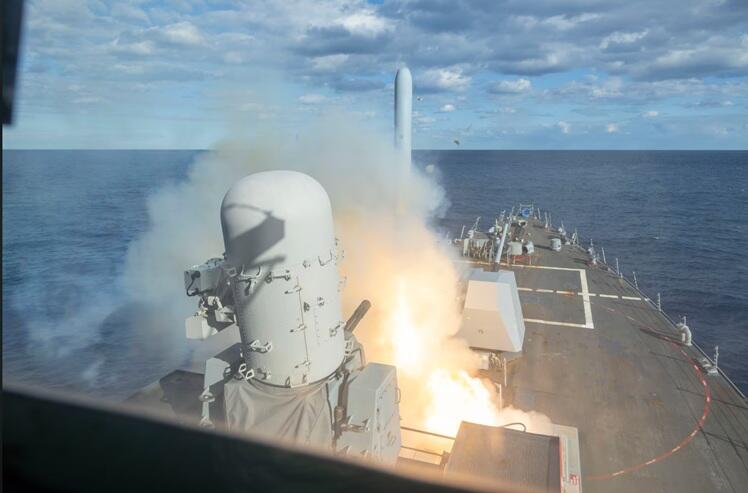
The United States has also made clear it is escalating its operations, with B-2 bombers having dropped dozens of bunker-busting “penetrator” bombs on deeply buried ballistic-missile launch sites across Iran. War Secretary Pete Hegseth has warned that the air campaign is “about to surge dramatically” – with President Trump also not showing signs of backing down, describing that the military operation is advancing faster than expected.
Iran is being demolished “ahead of schedule and at levels people have never seen before,” Trump asserted, claiming the country now has “no air force, no air defense” and that its air power is “gone.”
Since last Saturday at least 1,332 Iranians have been killed, but the death toll could be much higher amid ongoing rescue efforts of people under the rubble in heavily hit areas. Iranian media has reported that missiles struck two schools in the town of Parand southwest of Tehran, in the latest.
But Iran does continue to retaliate across the region. In Israel, by all appearances the number of inbound ballistic missiles has slowed significantly compared with the opening days of the war. Israeli officials say roughly 90 missiles were fired on the first day, about 60 the following day, and around 20 per day since Monday. In total, Iranian media claim roughly 500 ballistic missiles have been launched during the conflict – possibly most of them intercepted, but a significant amount making impact and causing severe damage.
NEW: US-Israeli jets struck Ilam hard. pic.twitter.com/aHQqPaRi3f
— Levent Kemal (@leventkemaI) March 6, 2026
Late Thursday night Tel Aviv came under combined missile and drone attacks, though medics reported no injuries following the latest barrage in southern Israel. Still, the Islamic Revolutionary Guard Corps (IRGC) says its “new-generation missiles struck American bases in Gulf countries” and Israeli targets including “Ben Gurion Airport, Haifa and Tel Aviv.”
Iranian forces also claim to have attacked a “US-owned” oil tanker off the coast of Kuwait, leaving the vessel on fire, according to Iranian state radio. Iranian state television reported that large numbers of drones launched by the army targeted American military bases in Kuwait.
“These attacks will continue in the coming hours,” the military said. Iranian drones have targeted countries across the Gulf from the United Arab Emirates to Qatar and Bahrain. Azerbaijani officials said Iranian drones crossed their border and injured four people in the Nakhchivan exclave, prompting Baku to withdraw diplomatic staff from Iran for safety.
⚡️ Iranian drones target two hotels and a residential building in Bahrain’s capital, Manama. pic.twitter.com/MASF5PQJQd
— War Monitor (@WarMonitors) March 5, 2026
In Lebanon, Israeli airstrikes pounded towns in the south and east of the country as well as Beirut’s southern suburbs after the Israeli military issued mass evacuation orders for large sections of the capital. The United Nations says nearly 100,000 people have been displaced in Lebanon and thousands of Syrian refugees have fled back across the border.
The conflict is further drawing in outside powers, with the most significant development being The Washington Post reporting that Russia has been providing Iran with intelligence on the locations of US military assets in the Middle East, including warships and aircraft. US officials described the effort as “a pretty comprehensive effort” by Moscow, though the accuracy of the intelligence remains unclear.
This is also when the ‘fog of war’ and propaganda is very heavy – and so such allegations especially from an ultra-heart-of-the-establishment D.C. beltway publication should be treated with caution and skepticism. However, it would make perfect sense that Russia is helping its Mideast ally, given that Russia and Iran signed a strategic partnership agreement earlier this year expanding military and defense cooperation. Despite that, Hegseth said earlier in the week that Russia is “not really a factor” in the conflict.
So you’re telling me that the US supplying Ukraine with intelligence, weapons and missiles to hit Russia has consequences? https://t.co/hrkwtyGhQK
— Mark Ames (@MarkAmesExiled) March 6, 2026
Meanwhile in the ultimate irony of ironies, Financial Times is reporting US officials are discussing the purchase of Ukrainian-made drone interceptors to counter Iranian drones, which some analysts say have proven harder to stop than expected. Patriot missile interceptors used by US allies cost more than $4 million each, while the Ukrainian systems are significantly cheaper and designed to defeat the same Shahed-type drones used by Russia.
Back in Iran, ‘Pro-regime’ sentiment making itself known, with across the country large crowds gathering for the first Friday prayers since the war began. Tens of thousands of worshippers carrying portraits of the slain supreme leader chanted anti-US and anti-Israel slogans despite the ongoing bombardment. There have also been “death to the Shah” type chants heard, amid reports that Trump wants to have a hand in directly choosing a puppet leader for Iranians.
First Friday prayers since massive attacks started:
Friday prayers under Trump missiles in the city of Tabriz.
Iranians are not intimidated. pic.twitter.com/WXcwlz1Ixi
— Seyed Mohammad Marandi (@s_m_marandi) March 6, 2026
Meanwhile the conflict continues disrupting global energy flows. But as we’ve been highlighting, that means: “We are seeing a significant increase in demand for Russian energy resources in connection with the war in Iran,” Kremlin spokesman Dmitry Peskov said. Russia remains “a reliable supplier of oil and gas,” he added.
Western MSM has tended not to show the large pro-government demonstrations which had been on and off since January, in tandem with the anti-Tehran protests and clashes:
⚡️⭕️ Massive continuous demonstrations in various Iranian cities in support of the armed forces demanding revenge, for the 6th day in a row
It’s an uprising pic.twitter.com/BxuvKwxi4d
— Middle East Observer (@ME_Observer_) March 6, 2026
International Energy Agency director Fatih Birol says global markets still have ample supply. “We have no oil shortage … there is a huge surplus,” he said. But Qatar’s energy minister Saad al-Kaabi offered a far more pessimistic outlook, warning it could take “weeks to months” for energy exports to normalize even if the war stopped immediately.
“Everybody’s energy price is going to go higher,” he said. “There will be shortages of some products and there will be a chain reaction of factories that cannot supply.”
On the airspace closure and travel front, the widening war is also triggering evacuations and security concerns far beyond the battlefield, with thousands of travelers still stranded across the region as airlines cancel flights, though Emirates says it transported roughly 30,000 passengers out of Dubai in a single day and expects to restore its full flight network soon. Limited commercial flights have resumed from Israel.
Footage circulating online shows people chanting ‘death to Pahlavi’ in the Khuzestan province in southwest Iran
Protesters were referring to Reza Pahlavi, the son of the last shah living in exile in the US, who has spearheaded a movement advocating for the monarchy’s restoration pic.twitter.com/i4OxP90VtK
— Middle East Eye (@MiddleEastEye) March 5, 2026
In Britain, counterterrorism police arrested four men on allegedly suspicion of spying on the Jewish community for Iran. The Metropolitan Police said the suspects – one Iranian national and three dual British-Iranian citizens – were detained early Friday morning in Barnet and Watford. Meanwhile, international pressure continues mounting over civilian casualties – while at the Pentagon there has not been any new casualty update since six American troops were confirmed killed in the opening days of Operation Epic Fury.
Tyler Durden
Fri, 03/06/2026 – 08:35