Summary:
-
US strikes on Kharg Island escalate war as Trump claims allies sending warships to Hormuz: Trump said US forces “obliterated” military targets on Kharg Island but warned Iran’s critical oil infrastructure could be the.
-
Iran vows bigger regional retaliation: IRGC warned the UAE that US “hideouts” there are now “legitimate targets”; UAE oil port hit, and US Embassy in Baghdad catches fire after apparent drone strike.
-
Heavy casualties and explosions in Iran ongoing: US-Israeli strikes have killed about 1,450 people in Iran since February 28, while “huge blasts” were reported in central Tehran after mass rallies where some Iranian leaders walked the streets in defiance.
-
Oil war and extreme risk unfolds, US gas prices up: disrupted Hormuz shipping and ongoing chaos has driven US gasoline prices up 23%
-
Lebanon ground and air Israel-Hezbollah war: Major Israeli strikes in Lebanon, especially on Beirut have killed at least 826 people.
-
Trump rejected efforts by Middle Eastern allies to hold talks aimed at ending the war in Iran, according to Reuters.
-
Oman attempted several times to open a line of communication, but the US administration has made clear it’s not interested.
-
Iran rejects the possibility of a ceasefire until strikes end.
-
UAE suspended loading operations at a key energy export hub after a drone strike and fire on Saturday.
-
Iran threatened to reduce US-linked oil facilities to a pile of ashes.
* * *
Update(1358ET):
The semi-official Tasnim News Agency reported that U.S.-based Citibank branches in Dubai, United Arab Emirates, and Bahrain’s capital, Manama, were targeted by drones overnight, suggesting that civilian infrastructure has not been spared in the U.S.-Iran conflict.
From data centers to skyscrapers to water desalination plants, it now appears that IRGC drone strikes are spilling over into Gulf financial infrastructure. Tasnim reported that some banks pulled staff from buildings, shifted operations remotely, and that Citibank temporarily suspended certain in-person activities in the UAE.
A Missile/drone has reportedly struck the Dubai office of Citibank, one of the largest US financial institutions operating in the Persian Gulf
Follow https://t.co/B3zXG73Jym pic.twitter.com/6xyzhUvNW9
— Press TV 🔻 (@PressTV) March 14, 2026
Tasnim noted that Citi is a major node in the dollar system, especially in the Gulf region, where it handles oil trade finance, dollar settlements, and services for sovereign wealth funds and multinational corporations.
* * *
Update(1255ET): While it’s unclear whether this is born of desperation or it’s “all part of the plan”…President Trump said Saturday he wants other countries to send warships to the Strait of Hormuz alongside the United States to break Iran’s chokehold on one of the globe’s most critical oil arteries.
Posting on Truth Social Saturday, he claimed that other countries “will be sending War Ships” to the region – then added he “hopefully” expects major economies to step in; however, there doesn’t appear to be any ‘help’ on the horizon. In fact it could be the opposite, after Italy’s Meloni declared her country “won’t be part of an illegal war”.
“Hopefully China, France, Japan, South Korea, the UK, and others, that are affected by this artificial constraint, will send Ships to the area so that the Hormuz Strait will no longer be a threat by a Nation that has been totally decapitated,” Trump wrote. But he also simultaneously made clear the US is not waiting around:
“In the meantime, the United States will be bombing the hell out of the shoreline, and continually shooting Iranian Boats and Ships out of the water,” he said. “One way or the other, we will soon get the Hormuz Strait OPEN, SAFE, and FREE!”
Despite declaring that “100% of Iran’s Military capability” has been destroyed, Trump warned Tehran could still create chaos in the narrow passage – as is indeed still playing out Saturday. This after overnight the key oil export hub of Kharg Island was heavily bombed (see below).
“It would be easy for them to send a drone or two, drop a mine, or deliver a close range missile somewhere along, or in, this Waterway, no matter how badly defeated they are,” Trump stated further. He’s also claimed the US Navy will begin escorting oil tankers through the Strait of Hormuz “very soon” – at a moment a Marine Expeditionary Force is en route from Japan, which could take a week or less.
I would say burning ports and refineries in the Gulf today suggest that 100% of Iran’s military capability has not been destroyed. https://t.co/7CG7WGIdzh
— Yaroslav Trofimov (@yarotrof) March 14, 2026
And the below was only from a day prior…
Guys, relax, the only risk in transiting the Strait of Hormuz is that Iran will shoot a missile at your ship. Otherwise it’s open for transit.
An all-time quote from our Secretary of War. pic.twitter.com/kwQ5Ij84KT
— Ryan Petersen (@typesfast) March 13, 2026
* * *
In what could prove to be a major step up the escalation ladder in the two-week-old US-Israeli war on Iran, President Trump on Friday evening (notably after US market closure) announced that US Central Command had carried out a major bombing raid on Kharg Island, which handles upwards of 90% of Iran’s crude oil exports. Importantly, Iran has previously warned that an attack on the island would cross a red line, and precipitate Iranian attacks on energy infrastructure up and down the Persian Gulf.
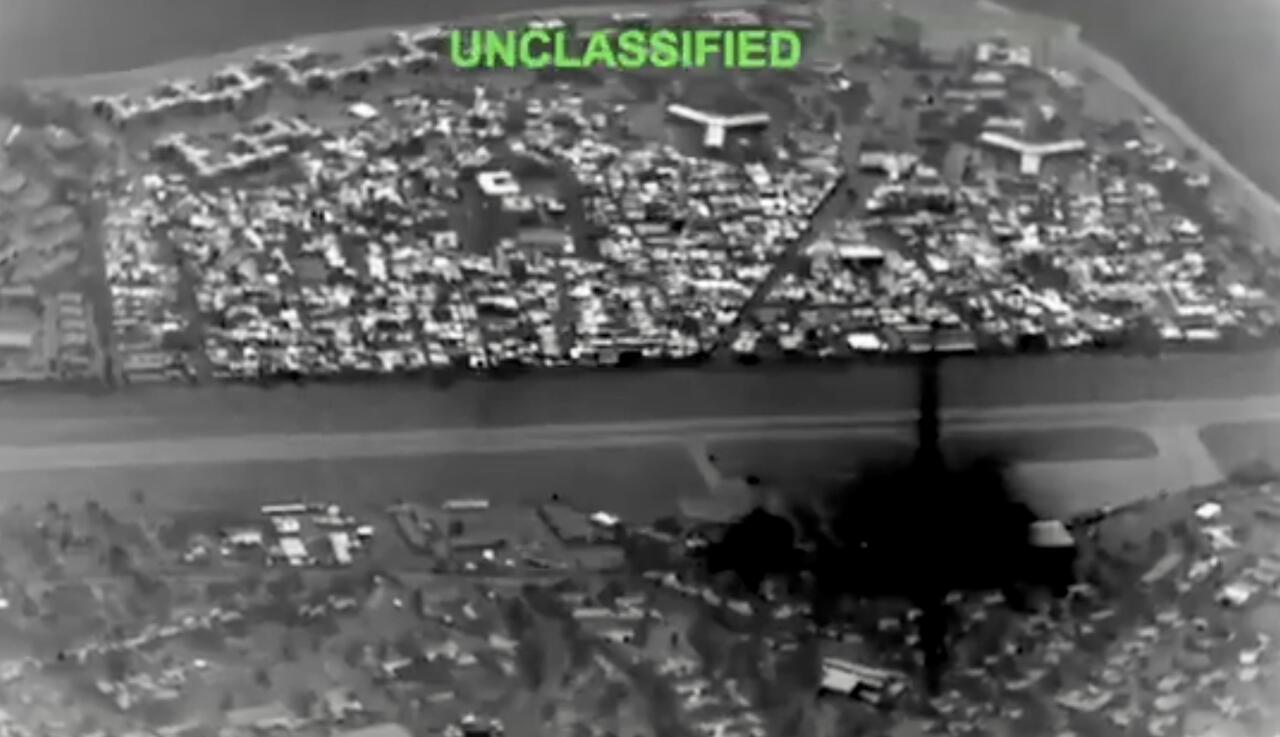
Perhaps with that previous Iran warning in mind — and to allay the fears of US allies in the region who don’t want to see their energy facilities go up in smoke — Trump emphasized that the attack was focused on military assets:
“Moments ago, at my direction, the United States Central Command executed one of the most powerful bombing raids in the History of the Middle East, and totally obliterated every MILITARY target in Iran’s crown jewel, Kharg Island.
Our Weapons are the most powerful and sophisticated that the World has ever known but, for reasons of decency, I have chosen NOT to wipe out the Oil Infrastructure on the Island. However, should Iran, or anyone else, do anything to interfere with the Free and Safe Passage of Ships through the Strait of Hormuz, I will immediately reconsider this decision.”
Iran’s FARS news agency confirmed the attack, saying at least 15 explosions were heard as it unfolded. FARS reports that targets included air defense assets, a naval base, an airport control tower and a helicopter hangar associated with Iranian Offshore Oil Company. The Trump administration released video highlights from the bombing raid:
Footage has now been published by President Donald J. Trump showing today’s strikes against Iranian military targets on Kharg Island in the Northern Persian Gulf, which acts as a port hub for the export of up to 90% of oil products leaving Iran. In the footage, strikes can be… pic.twitter.com/WH3iWw74sE
— OSINTdefender (@sentdefender) March 14, 2026
Trump’s threat to “reconsider” the decision not to damage the energy infrastructure on the island if Iran continues to shut down the Strait of Hormuz will surely cause deep concern among Gulf allies and everyone else who’s wary of the looming global economic catastrophe that will unfold if the Persian Gulf energy shutdown persists.
* * *
Please consider supporting ZeroHedge with the purchase of a hat, t-shirt, or multitool. Thank you.
* * *
With Iran apparently bent on imposing a devastating cost for the US-Israeli war — one that will deter future attacks — there’s little reason to think Tehran is going signal “all clear” on the strait anytime soon.
Five miles long and situated 15 to 20 miles off the mainland-Iranian coast, Kharg Island is essential to Iran’s export of petroleum. Facilities there have continued to operate throughout the war, with at least 10 tankers hauling off nearly 19 million barrels since the US-Israeli surprise attack on Feb 28. Iran has, however, sought to add a small measure of export-facility diversification, by reopening energy exports at the Jask terminal, which is southeast of the Straight of Hormuz, in the Gulf of Oman.

Earlier on Friday, Trump said the US Navy would shortly begin escorting oil tankers through the Strait of Hormuz, telling reporters, “It will happen soon, very soon.” A few hours after his Kharg Island announcement, Trump reiterated his latest war-justification that centers on Iran’s supposed schemes for regional conquest, posting that “Iran had plans of taking over the entire Middle East, and completely obliterating Israel. JUST LIKE IRAN ITSELF, THOSE PLANS ARE NOW DEAD!”
The administration has reportedly contemplated seizing Kharg Island. Given its close proximity to the Iranian mainland — which is teeming with drones, cruise missiles and weapon-bearing speedboats — landing a strike force on the island and then occupying it could come at a high casualty rate.
On Friday, Defense Secretary Pete Hegseth approved a CENTCOM request for a Marine expeditionary unit to be deployed to the theater of operations. This would typically comprise some 5,000 Marines and sailors on several ships.
Iranian armed forces statement in response to Trump’s threat to attack oil infrastructure on Kharg Island (published by Iranian state media) pic.twitter.com/8J40dzIE7C
— Steve Lookner (@lookner) March 14, 2026
Some speculation on Trump White House’s thinking regarding this ultra-risky Kharg Island gambit (or what might eventually prove a point of no return) via Jim Bianco:
Recognizing that this could freak out oil markets, they announced it on Friday evening to give markets 48 hours to digest the news. Trump also made it explicit that oil infrastructure would be next if Iran did not allow ships to pass freely through the Strait of Hormuz.
In football terms, they’re throwing a Hail Mary pass now, hoping it works. They don’t have any more time on the clock. Oil markets and the world economy cannot wait weeks or months for the military to open the Strait. Further, I could envision political advisors suggesting that if oil prices are destined to hit $200 without this action, it might as well happen next week, giving six months to bring them down before the midterm elections.
For now, though, all eyes are on Iran, and whether its leaders view a Kharg Island attack that was confined to military targets as within the red-line boundary — or if energy assets across the region will soon be beset by drone swarms and ballistic-missile barrages, sending oil and gas prices rocketing higher.
Tyler Durden
Sat, 03/14/2026 – 13:58