The United Nations Food and Agriculture Organization’s global food-commodity index climbed in August to its highest level since 2022, with the index now gaining momentum to the upside. The upside reinforces warnings from several major Wall Street desks, which we have covered extensively, that global food shortages could materialize next year.
The United Nations Food and Agriculture Organization’s (FAO) Food Price Index, which tracks monthly changes in the international prices of a basket of globally traded food commodities, averaged 133.3 in August, up 1.9% from July, with every major category advancing. Sugar prices surged 11.9%, while wheat gained 2.6% and now stands 15% above year-ago levels.
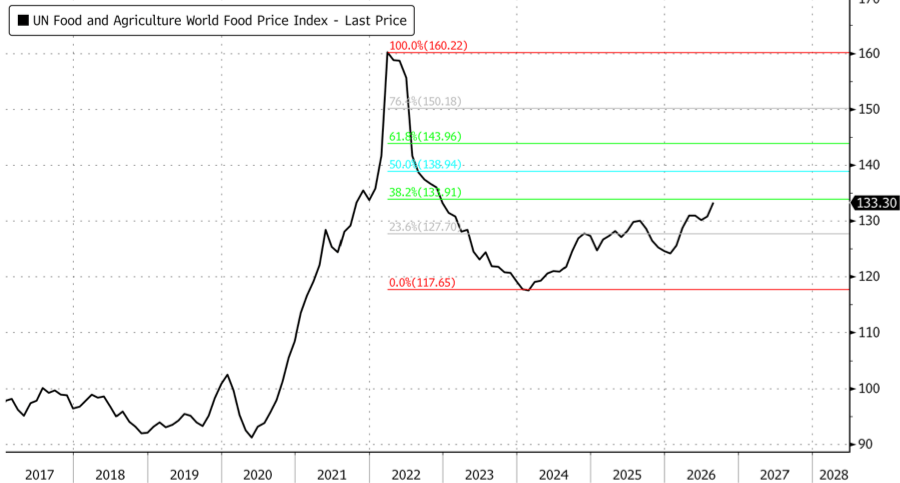
The surge in global food prices comes as a perfect storm of factors emerges, from El Niño and higher fertilizer and diesel prices to disruptions in the Black Sea and the Strait of Hormuz, all of which could push the global food system toward another crisis.
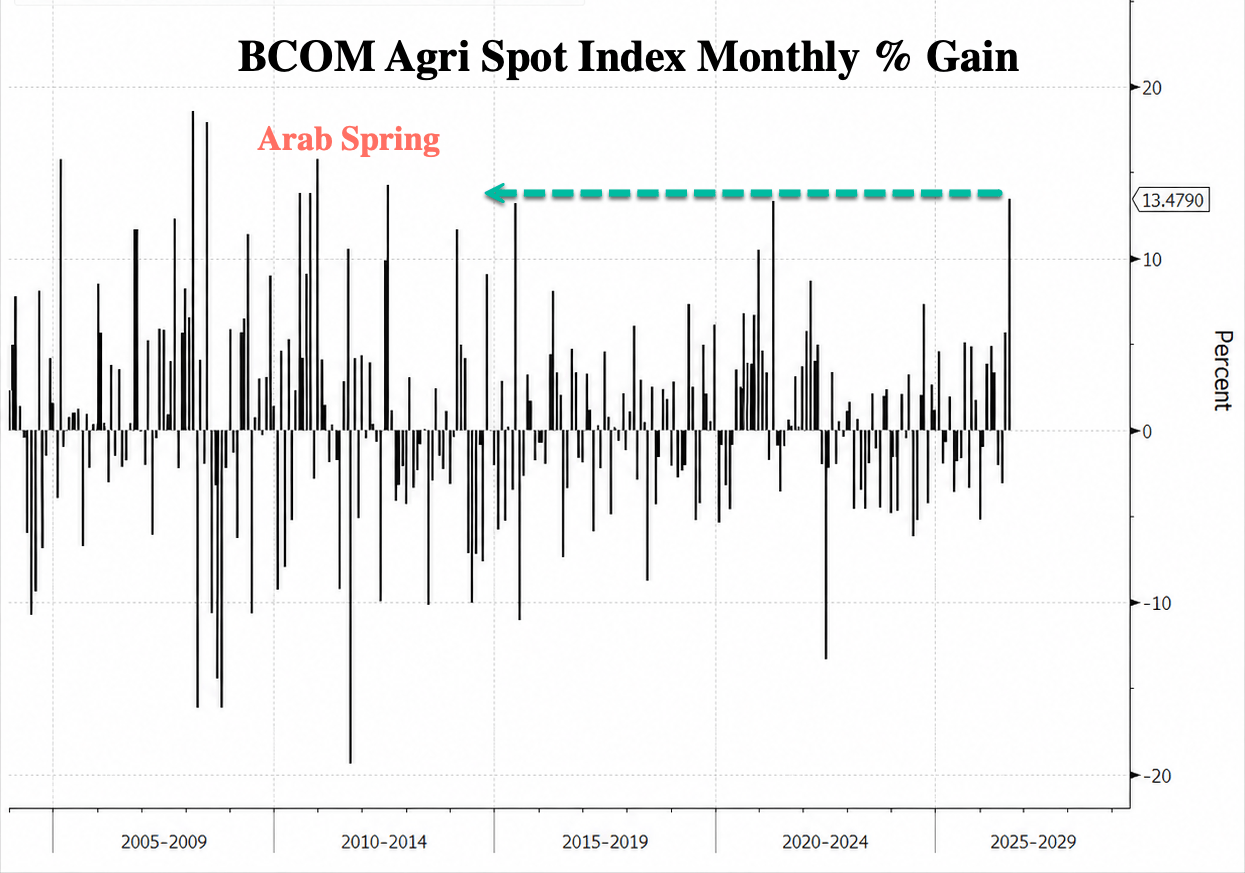
Earlier this week, the Bloomberg Agriculture Spot Index (BCOMAGSP) posted its largest monthly gain since the chaotic days of the Arab Spring riots and is nearing a breakout above its 2023 highs, signaling a broad-based acceleration in agricultural commodity prices.
Latest coverage:
- Barclays Warns Next Commodity Shock Is Taking Shape: What You Need To Know
- Agricultural Commodity Prices Break Out As JPMorgan’s Food Crisis Warning Gets Louder
With diesel at record highs to end the week, agricultural markets tightening, and global food prices accelerating, another inflationary impulse is quickly moving through global supply chains just as central banks decide whether interest rates are restrictive enough.
Tyler Durden
Sat, 09/05/2026 – 08:45