For three years the gold story was about who was buying. In 2026 it has become a story about where the metal sleeps at night.
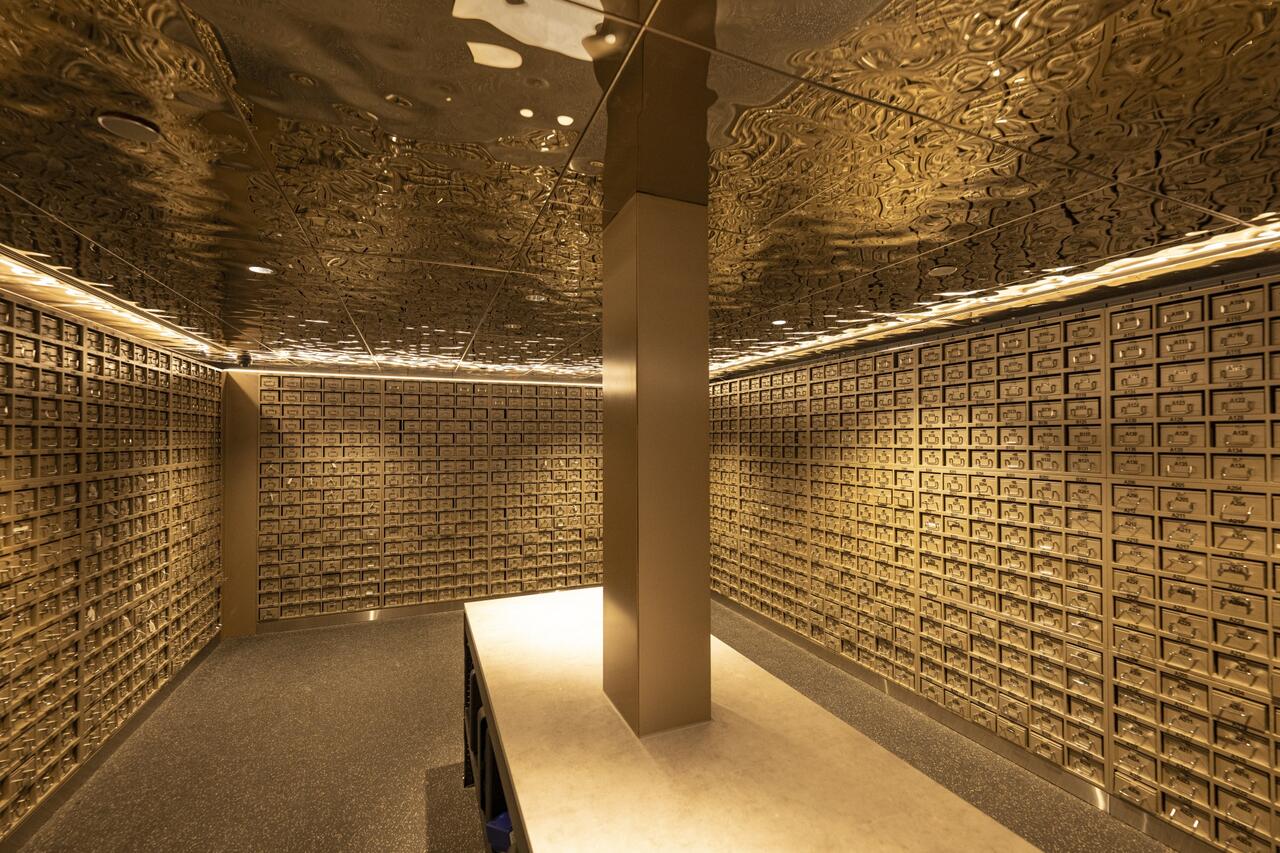
On Tuesday the Monetary Authority of Singapore opened its national currency vault, with room for 500 tons of bullion, to foreign central banks and sovereign entities, and threw in a tax break for the wholesale gold trade to sweeten the deal. The launch lands three weeks after Bloomberg reported that wealthy American, European and Middle Eastern investors are already shipping their bars to the city-state, where privately held gold has grown 16-fold since 2014 to more than 800 tons!
None of this will surprise regular readers. We first wrote that Singapore was taking steps to become a global gold hub back in July 2014, when the grand total stored there was a rounding error, and we have spent much of this year documenting the great custody migration out of New York:
Well, some of it is now diffusing a lot further east than London.
The Rich Got There First
The Bloomberg piece is built around Gregor Gregersen, a German-born former bank data architect whose bullion business started under his bed and now occupies The Reserve, a six-story, 180,000-square-foot vault near Changi Airport with room for roughly 10% of the world’s annual gold supply and 30% of its silver. His pitch to foreigners is simple: store it far from home.
The numbers suggest the pitch is working. According to estimates from bullion dealer J. Rotbart & Co. cited by Bloomberg, private gold holdings in Singapore topped 800 tons last year, with most of the increase coming from Europe, and the dealer expects more this year and next.

Who is sending it? Pretty much everyone who has read a newspaper lately:
- J. Rotbart says web inquiries from Western clients have tripled in a year, led by the US, then Canada, the UK and Australia, with the US fiscal deficit and political uncertainty the most cited worries.
- Indigo Precious Metals says demand from European and American high-net-worth clients is up about 25%.
- Precious-metals platform Gauld says about 40% of its European clients have either moved some gold from Switzerland to Singapore or picked Singapore for new purchases, with some rethinking Swiss neutrality after the freeze of sanctioned Russian assets.
- Nomura now offers physical custody in Singapore after requests from clients, including in the Middle East, while OCBC says holdings at its private bank are up more than 40% since the end of 2025, and that clients increasingly want to deal with Singapore entities instead of the US-based companies they used before.
What does a client who plans to leave gold untouched for 30 or 40 years look for in a country? Gregersen has a checklist:
People who want to store gold long-term – 30 or 40 years – usually like to find a country that is wealthy, has no impending pension system crisis, and a country which is defended. Singapore is like that.
Translation: the rich are now pricing in the possibility that Switzerland and the US are less safe than advertised. Singapore’s two big private vaults can hold at least 2,200 tons between them, 500 at The Reserve and at least 1,700 at Le Freeport, whose basement vault was nearly full as of May.
One bit of napkin math before anyone gets carried away. Client gold in Gregersen’s storage program has tripled since early 2020 to 8.6 tons, about 90% of it foreign-owned. Against 500 tons of gold capacity, that makes The Reserve less than 2% full. He told Bloomberg he built it to fill over decades. He was probably not kidding.
Now Comes The Sovereign Vault
Which brings us to this week. As CNBC reports, the new facility differs from The Reserve and Le Freeport in one key respect: it is run by the central bank itself, giving foreign monetary authorities a sovereign custodian in Asia to set alongside the Bank of England and the New York Fed. The World Gold Council’s Shaokai Fan told CNBC a move like this is rare in the central banking world.

Reuters and the MAS fill in the details:
- The vault will hold reserves for foreign central banks, international financial institutions and sovereign entities, and the MAS will open gold custody accounts for selected Singapore-based bullion banks so the metal can actually be put to work.
- Some central banks have already expressed interest. Deputy Prime Minister (and MAS chairman) Gan Kim Yong would not say which, since the talks are confidential. (We have a few guesses.)
- From April 2027, tax relief on gold gets extended to wholesale services between institutions: vaulting, refining, recasting, assaying and broking.
- An SGX over-the-counter clearing system is due by year-end, with DBS, Deutsche Bank, ICBC Standard, JPMorgan, OCBC and UOB as clearing members. Live trading is expected by March 2027 and deliverable kilobar futures in the second quarter.
Here is how Gan framed it:
Developing our gold market is an extension of Singapore’s role as a trusted financial centre.
He also stressed, as he did when he first unveiled the plan in June, that Singapore has no intention of replacing existing gold centers, which is exactly what one says while building the infrastructure to compete with them. Asia already accounts for roughly 70% of annual consumer gold demand, and the MAS was itself leading the record central bank buying spree in early 2023, so it knows the customer.

How big is 500 tons? At roughly $4,050 an ounce it is about $65BN of gold, or (napkin math again) some six months of global central bank buying at the pace Goldman currently estimates.
Goldman Saw The Storage Problem Coming
The timing is no accident. Back in August, Goldman’s commodity team led by Lina Thomas published a note titled “Gold and Central Banks: Storage Dilemma; Buying Trend Picks Up” (available to pro subs), which we covered in “Goldman Asks: Where Will Central Banks Store Their Gold?” and again when the Dutch moved billions in gold out of the US in early September. The World Gold Council’s survey still had the Bank of England as the preferred custodian for 57% of reserve managers, but Goldman found them increasingly spreading their bars around. The bank laid out why London and New York won in the first place, and what the catch is:
Gold held at the Bank of England or the Federal Reserve Bank of New York sits within the world’s main gold settlement networks, providing immediate market access, access to dollar liquidity through swaps, and the ability to generate income through leasing. The drawback is that gold held abroad is not free from political risk, including the risk of freezing or restricted access (as in the case of Venezuela’s gold reserves held at the Bank of England in 2018).
By October, in its “Central Bank Gold Purchasing Trend Remains Strong Through August” comment, Goldman said the official-sector debate was shifting “from whether to own gold to where to store it“, and that the worry about reserve security and cross-country trust was spreading from emerging-market central banks to developed ones, a shift we discussed at the time. The evidence: foreign central bank gold at the New York Fed fell by 40 tonnes in August while custody holdings at the Bank of England rose by 46 tonnes, or as we put it, faith in Fed custody is in freefall.

Meanwhile, the buying that creates the storage problem has not slowed. Goldman’s nowcast has central banks purchasing 79 tonnes in August, with China the largest identifiable buyer at 25 tonnes, and 85 tonnes a month on a three-month basis versus 17 before 2022.

And it is a concentrated club. SocGen’s tally of the top five official buyers each year shows Poland, China, Kazakhstan and the Czechs turning up year after year, with the top five accounting for 88% of purchases so far in 2026. Every one of them has to put the metal somewhere.

Singapore is hardly the only one who noticed. China is building its own global vault network to promote the yuan and has already signed up Cambodia, Hong Kong’s government is pushing hard to become a bullion storage and trading center, and Asia’s producers have started keeping their metal at home. For a reserve manager who wants to be in Asia but maybe not inside China’s legal system, the MAS vault is the obvious third option.
A Vault Is Not Yet A Market
CNBC’s piece wonders whether Singapore has shown up late, and on raw numbers it is easy to see why. Singapore imported 171 tons of gold through August, up 44% on the year according to Trade Data Monitor. London, Bloomberg notes, has nearly 60 times that in storage, and Comex warehouses hold around 730 tons.

Metals Focus managing director Nikolas Kavalis made the point to CNBC: the sovereign vault is an important addition, but storage alone does not make a bullion market. What makes one is liquidity, meaning gold that can be lent, swapped and traded where it sits, which is the reason the custody accounts for bullion banks and the SGX clearing system matter more than the vault door.
The launch also comes at an awkward moment for the price. Gold is trading around $4,050, a long way below January’s record just under $5,600, after speculators dumped $19.5BN of futures in five weeks and Goldman cut its target again last week, to $4,150 for year-end and $4,800 for end-2027, while keeping its assumption of 60 tonnes a month of central bank buying. Goldman’s Rich Privorotsky has a theory for the weakness that ties straight back to the custody theme, as laid out in the desk’s latest weekly commodity note (available to pro subs) and in our “Gold Has Become An Inverse Oil Trade” post:
My take is that gold has become an inverse oil trade. Central banks, particularly EM, have spent years accumulating gold as the new de-facto reserve currency. Higher energy bills forced reserve holders to tap that piggy bank or at minimum stop buying. As oil reverses, funding pressure eases and gold catches a bid.
In other words, the same reserve managers Singapore is courting were forced sellers when oil spiked, and should be buyers again as it fades. The Goldman commodity desk adds that its CTA model is close to max short, so the pain trade is probably higher, while materials specialist James McGeoch says most clients still have gold at the top of the list of things they want to own, only not today. The next test comes Friday, with October central bank buying data.
Trust Is The One Thing That Doesn’t Fit In A Vault
So, is Singapore late? For trading, maybe. Loco London has a few centuries’ head start and nobody at the LBMA is losing sleep over a clearing system that goes live in March.
For storage, we think the timing is close to perfect. The world’s gold is being re-domiciled in real time: out of New York, around Switzerland, toward anywhere that has not frozen someone’s reserves lately. A 500-ton vault holds about six months of central bank buying. The New York Fed is still sitting on roughly eleven of them in foreign-owned gold, and that pile shrinks every month.
Beating London was never the requirement. A small slice of what is leaving Manhattan, plus whatever nervous European money no longer trusts Zurich, would fill these vaults several times over. On current trends Singapore will get both, and with gold more than 25% below January’s peak.
Gold, as always, goes where it is treated best. Right now that looks like a windowless building next to Changi Airport.
Much more in the full Goldman “Storage Dilemma“, “Central Bank Gold Purchasing Trend Remains Strong Through August” and “Long-Term Constructive Gold, But Just Not Today” notes, all available to pro subs.