Following the USDA’s announcement that it will begin lifting the year-long ban on Mexican live cattle imports on Aug. 24, BMO Capital Markets senior equity research analyst Andrew Strelzik called the decision a “key positive” for publicly traded meatpackers Tyson Foods and JBS.
The restrictions were imposed to combat the New World screwworm, a flesh-eating parasite that threatens livestock. Restoring Mexican cattle flows should gradually ease tight U.S. supplies, improve slaughterhouse utilization, and support beef-processing margins.
“A combination of recent beef plant closures and the recovery of Mexican cattle imports should create a path to U.S. beef packer margin improvement,” Strelzik wrote in a Monday morning note, identifying a potential new tailwind for Tyson Foods and JBS.
Strelzik outlined more color:
Combination of recent beef plant closures and recovery of Mexico cattle imports should create a path to U.S. beef packer margin improvement.
Specifically, TSN’s/ JBS’s previously announced beef plant closures remove ~6% of industry slaughter capacity, while a full Mexico border re-opening would add an incremental ~5% of cattle supply. The 10%-11% improvement in cattle supply/slaughter-capacity balance would raise industry plant utilization closer to normal historical levels, though Mexican imports will take time to flow through the supply chain to slaughter, especially given the USDA’s phased reopening strategy.
Notably, we estimate Douglas, AZ typically accounts for ~15% of Mexican cattle imports to the U.S. (note the closest active screwworm case is over 300 miles from the port).
There are uncertainties that will impact the pace and magnitude of beef margin recovery, including the rate at which cattle imports ramp and the type of cattle imported (e.g., fat cattle, feeder cattle). That said, the pace of imported Mexican cattle could materially accelerate with the reopening of New Mexico port of entries. In fact, we estimate the two New Mexico ports of entry combined account for just over half of all cattle imports from Mexico to the U.S. While timing is unconfirmed and hurdles will need to be cleared, we would not be surprised if New Mexico ports of entry were to re-open by early fall if the Arizona reopening is successful. Re-opening can be paused if the USDA identifies increased risk via post-opening audits or other observations/ information.
Border re-opening is a clear positive for Outperform-rated TSN and JBS, as meaningful inflection in U.S. beef margins could finally be on the horizon. Every $100mm change in TSN’s beef performance has an ~$0.20 EPS impact (~5% of our FY27 EPS estimate), while every $100mm change in JBS’s beef EBITDA is equivalent to ~2% of our 2027 EBITDA estimate. While heifer retention has been slow, the combination of plant closures and Mexico re-opening can create a bridge to underlying herd rebuilding. We note that heifers as a percent of slaughter decreased to 36% in June (from 40% previously), falling below the historical average.
Shares of both meatpackers have been pressured in recent months as New World screwworm detections in Texas and elsewhere have intensified concerns about already tight cattle supplies.
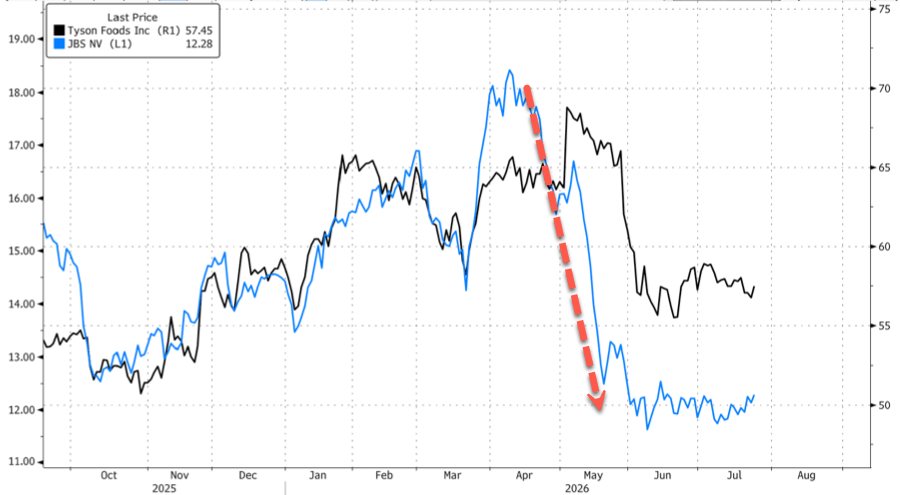
Mexican cattle represented about two-thirds of U.S. live cattle imports between 2020 and 2024, but most are lightweight feeder animals that require additional feeding before slaughter. The Aug. 24 reopening will begin at only one Arizona border crossing, meaning additional supply will enter gradually.
The immediate benefit should be lower cattle procurement pressure and improved margins for the meatpackers.
Related:
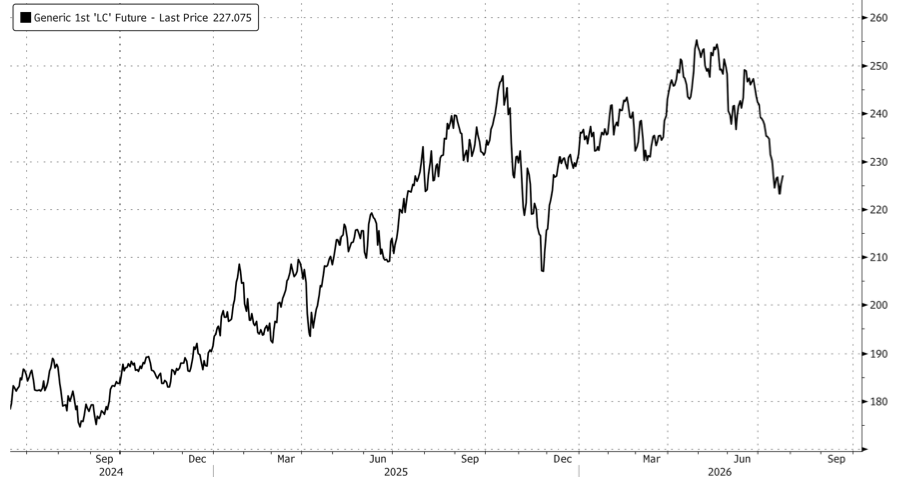
Yet beef prices are likely to stay elevated rather than enter a bear market. The U.S. herd remains near multidecade lows, and Bank of America’s recent interview with a cattle expert suggested that elevated retail prices could persist for several years. Read the report.
We suspect the Trump administration’s decision to restore live cattle imports from Mexico is part of a broader effort to ease food inflation and improve affordability ahead of the midterm elections.
Tyler Durden
Mon, 07/27/2026 – 15:45