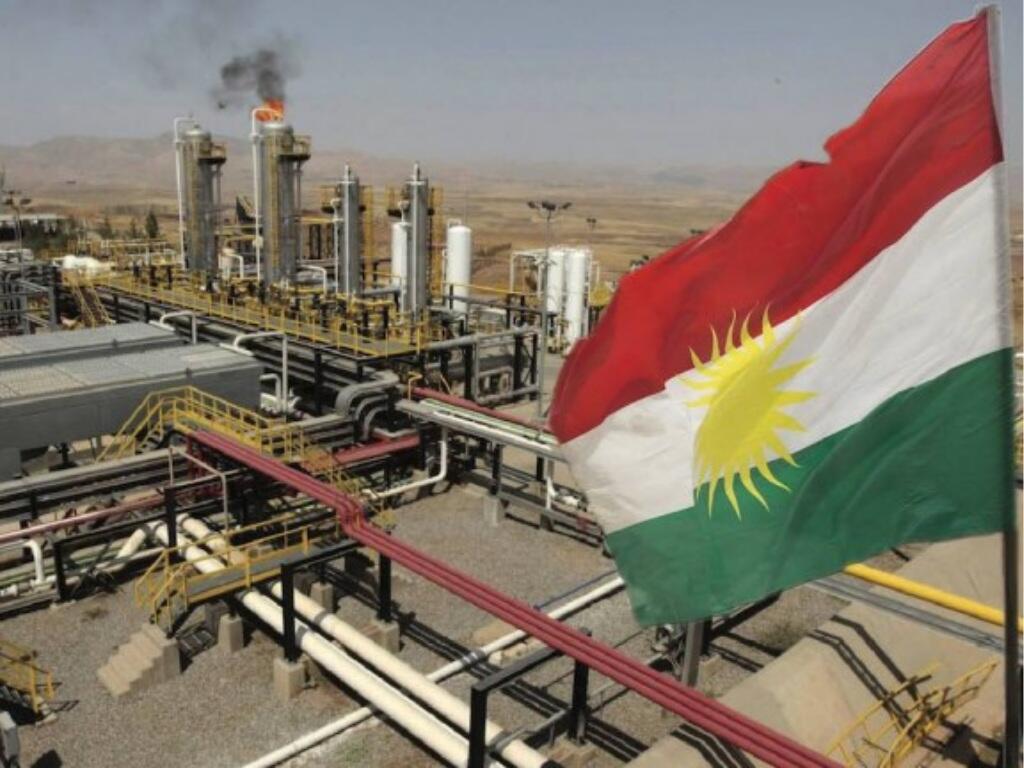
A drone attack on the sprawling Khor Mor gasfield in the Kurdish region of northern Iraq has resulted in a large fire, suspending production at the site, while plunging much of semi-autonomous Iraqi Kurdistan into darkness.
Huge amounts of smoke and flames have been seen rising from the vicinity of the gasfield in the Sulaimaniyah governorate. Regional reports Sunday night indicated over 70% of the region’s power generation has been knocked offline.
Khor More is the region’s largest natural gas field, which is a major source of fuel for local power stations. The whole region essentially runs off of one gas field.

Omid Ahmed, spokesperson for the Kurdistan Regional Government’s Ministry of Electricity, was cited in Al Jazeera as saying the attack “suspended gas supply to power plants in the cities of Erbil, Sulaimaniyah, Bazian, Chamchamal and Duhok.”
The explosive-laden drone had an uknown origin. No group or nation-state has claimed responsibility as yet.
US Presidential Envoy to Iraq and Syria Tom Barrack has described the strike as an attack on the Iraqi people and expressed support to uncover and hunt down the attackers
“We condemn the attack on Khor Mor, which was an attack on the Iraqi people. We support Prime Minister Zaidi and the Kurdistan Regional Government in finding those responsible and holding them to account,” Barrack wrote on X.
According to some of the emerging investigative details:
Kurdistan24 correspondent Harem Jaff reported that the attack struck the liquefied petroleum gas (LPG) production unit in the facility’s “Old Field” section, causing substantial material damage. An emergency alarm sounded before the impact, allowing workers to take shelter. No casualties were reported among employees or security personnel.
Several Iraqi security sources have suggested that the drone approached from the direction of Khurmatu, southwest of the field. A military intelligence officer, field guards and personnel at a Khurmatu checkpoint described hearing an aircraft in that direction.
While it is anything but clear that it was Iran, the IRGC has in the recent past been known to launch attacks on Kurdish opposition groups with headquarters in northern Iraq.
It could be connected with the ongoing Iran and Yemen conflcits, but there’s also the possibility of Iran-affiliated Iraq paramilitary units, or else possibly remnant ISIS cells. The United States has recently wound down its ‘counter-ISIL’ mission and has pulled remaining troops from Iraq this year.
The whole region remains on edge, awaiting either a possible US-Iran peace deal, or else a return to major fighting which would put Gulf region oil and gas fields in Iran’s retaliatory crosshairs.