“With diesel at $6.57 in Iowa, why doesn’t Pres. Trump put an embargo on diesel exports like presidents in the 70s put embargoes on ag products bc food prices were inflated,” Iowa Sen. Chuck Grassley wrote on X late Saturday night.

Grassley warned, “High diesel prices ARE KILLING FARMERS’ INCOME.”
W diesel $6.57 in Iowa why doesn’t Pres Trump put an embargo on diesel exports like presidents in the 70s put embargoes on ag products bc food prices were inflated. High diesel prices ARE KILLING FARMERS INCOME #cornwatch #soybeanwatch
— Chuck Grassley (@ChuckGrassley) September 20, 2026
Grassley is not wrong about the global refining crisis that is squeezing farmers and anyone else who uses the industrial fuel that powers the economy, from truck drivers and freight operators to businesses across virtually every industry.
The risk now is that an economic shock could materialize if fuel costs stay elevated, with the latest AAA data showing the nationwide average diesel price set to cross $6.50 a gallon.
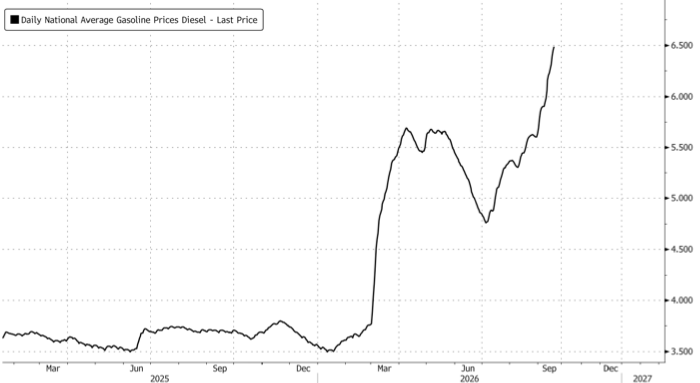
Chatter on Capitol Hill about a diesel export ban has increased, with Senate Majority Leader John Thune telling reporters last Tuesday that he is “open to exploring” the idea.
Any ban on refined petroleum product exports would escalate resource nationalism and could initially boost domestic availability and lower U.S. wholesale prices, particularly near export terminals. The problem is that domestic relief would be uneven because shifting barrels to the Northeast or West Coast would be difficult.

Barclays refining and midstream analyst Theresa Chen warned last week, “We continue to view the possibility of an export ban as both detrimental to the US refining complex and unlikely to provide the intended price relief.”
The ban could weaken production incentives. If retained fuel overwhelms domestic storage and distribution capacity, weaker refinery margins could eventually encourage lower refinery runs.
On top of that, foreign buyers of the industrial fuel would need replacement cargoes, which could exacerbate the global shortage and accelerate resource nationalism as other governments tighten control over fuels. Those restrictions could also extend beyond energy products to critical materials.
Grassley’s call for an export ban faces resistance within the Trump administration. Interior Secretary Doug Burgum said last week that restricting oil or fuel exports would be unlikely to lower consumer prices and could provoke retaliation from trading partners.
The risk now, as Bloomberg Intelligence senior commodity strategist Mike McGlone warned last week, is that a diesel crisis could trigger an economic shock similar to what happened during the 2008 energy crisis.
Tyler Durden
Sun, 09/20/2026 – 15:00