60.9 F
Chicago
Monday, September 21, 2026
Home Blog Page 1578

Socialist AoC & Bernie Sanders Caught Using Private Jets On “Fighting Oligarchy” Tour

Socialist AoC & Bernie Sanders Caught Using Private Jets On “Fighting Oligarchy” Tour

Socialists Bernie Sanders and Alexandria Ocasio-Cortez have been spotted flying around the country on private jets—costing upwards of $15,000 per hour—while making stops on their “Fighting Oligarchy” tour to rile up deranged leftists against Elon Musk, who also enjoys the luxury of private jet travel. Ironically, AOC, Bernie, and Musk seem to have more in common than they’d like to admit.

Fox News provided new details about the so-called “champagne socialists”… 

Sanders boarded the luxury Bombardier Challenger private jet at the Meadows Field Airport in Bakersfield, California, on Tuesday afternoon, according to a photo captured by a source on the ground and shared exclusively with Fox News Digital. Sanders and Ocasio-Cortez, whom the source also spotted boarding the private jet, spoke at their “Fighting Oligarchy” event in Bakersfield just hours earlier.

Flight records reveal the jet landed at Sacramento Mather Airport on Tuesday evening, which is about a 20-minute drive to Folsom, California, where the self-identified Democratic socialists hosted their second rally of the day. After publication Thursday, Fox News Digital obtained new footage of Sanders and AOC exiting the private jet in Sacramento Tuesday evening from California resident Matvei Levchenko.

The jet Sanders and Ocasio-Cortez were seen boarding and deplaning made stops in Salt Lake City and Boise prior to landing in Bakersfield, according to flight records. The arrival dates match the duo’s “Fighting Oligarchy” events in Salt Lake City and Nampa, which is about a 25-minute drive from Boise Airport.

Also, let’s not forget: when AOC and Sanders aren’t trying to destroy Elon Musk’s US companies – some of which are critical to national security – the leftists are telling Americans to give up their Cummins-powered Dodge Rams, two-stroke weedwhackers, air conditioning, gas stoves, meat, and more.

Footage:

Sanders is a three-decade broken socialist record

While pretending to be anti-corporation and anti-establishment, Sanders has fallen into the Big Pharma honeytrap

People demand genuineness from Democrats – something the socialist cannot do as their polling data has plummeted to record lows… 

Whoops!

Meanwhile, on tour, AoC developed a new accent

Socialist Democrats are clowns. They’ve become history’s big joke as the clown show has been exposed to the masses, yet these radical politicians continue doubling down on insanity. 

Tyler Durden
Sat, 04/19/2025 – 18:05

US And Iran Conclude Second Round Of Nuclear Talks, Agree To Third

US And Iran Conclude Second Round Of Nuclear Talks, Agree To Third

Authored by Andrew Thornebrooke via The Epoch Times,

Iran and the United States have ended their second round of talks aimed at curbing Iran’s nuclear weapons development and agreed to hold a third next week.

Iran’s Foreign Minister Abbas Araghchi and presidential envoy Steve Witkoff held the second round of talks in Rome on April 19.

As with the first round of talks, which were held in the Omani capital of Muscat last week, the pair negotiated indirectly through an Omani official who shuttled messages between the two sides.

Witkoff and Araghchi interacted with one another briefly at the end of the first round of talks, but officials from the two countries have not held direct negotiations since 2015 under President Barack Obama.

The pair agreed on Saturday to meet again in Oman on April 26. Additional experts from both sides will also meet between now and that time, suggesting that there has been some movement in the second round of talks between the two countries.

The experts will discuss details of a possible deal on a technical level, according to Iran.

“The talks were held in a constructive environment and I can say that is moving forward,” Araghchi told Iranian state television. “I hope that we will be in a better position after the technical talks.”

The high-stakes talks largely hinge on Witkoff and Araghchi’s ability to find common ground on Iran’s nuclear program and regional security issues.

Araghchi said ahead of the talks that Tehran was committed to diplomacy and called on “all parties involved in the talks to seize the opportunity to reach a reasonable and logical nuclear deal.”

“Such an agreement should respect Iran’s legitimate rights and lead to the lifting of unjust sanctions on the country while addressing any doubts about its nuclear work,” Araghchi said, according to Iranian state media.

Tehran has sought to tamp down expectations of a quick deal, however, and Iranian Supreme Leader Ayatollah Ali Khamenei said this week he was “neither overly optimistic nor pessimistic” that a deal would be reached.

Iran’s Nuclear Weapons Capability in Focus

It is unclear what the current contours of negotiations hinge on. Iranian officials last week said the initial rounds of talks would be focused on laying out each party’s position and any red lines.

To that end, U.S. President Donald Trump has made preventing Tehran’s acquisition of a nuclear weapon a priority of his foreign policy platform. He appears willing to allow the Middle Eastern country to maintain its nuclear power facilities, provided its uranium enrichment is brought to lower thresholds.

“I’m for stopping Iran, very simply, from having a nuclear weapon,” Trump told reporters at the White House on Friday. “They can’t have a nuclear weapon. [But] I want Iran to be great and prosperous and terrific.”

Trump first sent a letter to Khamenei in March, suggesting a new deal to curb Iran’s nuclear program, which Tehran refused at the time.

Since then, Trump has doubled down on his stance that the United States “can’t let [Iran] have a nuclear weapon” and has threatened to use military action against Iran if a deal is not reached.

“If they don’t make a deal, there will be bombing, and it will be bombing the likes of which they have never seen before,” Trump wrote in a March 30 social media post.

Trump also restored a “maximum pressure” campaign on Tehran in February, reimposing sanctions on Tehran as part of the wider effort to push Iran to the negotiating table.

Tehran does not have nuclear weapons and has continued to enrich uranium at near weapons-grade levels since Trump unilaterally terminated a bilateral nuclear agreement in 2018 that had placed limits on such activities. At the time, Trump criticized the deal as “one of the worst and most one-sided transactions the United States has ever entered into” and said it “gave the Iranian regime too much in exchange for too little.”

A report by the United Nations’ nuclear watchdog released early in the year suggested that Iran had accelerated its production of near-weapons-grade uranium to such an extent that Tehran could likely produce about a half dozen warheads if it so chose.

Tehran maintains that its nuclear program is peaceful and that it is willing to negotiate some curbs in return for the lifting of sanctions, but wants watertight guarantees that Washington will not renege again.

46 Years of Enmity

Overcoming the historical enmity between Washington and Tehran is no easy feat. Relations between the two powers have been antagonistic for nearly half a century.

Iran was once one of the United States’ top allies in the Middle East. The Iranian monarchy purchased American-made weapons and was seen by U.S. leaders as an authoritarian but modernizing force that provided a bulwark against the spread of communism.

That relationship came to an end in 1979, when Iran’s last ruling monarch fled the nation amid popular uprisings, and power was seized by Islamist forces. Since that time, the Islamic Republic of Iran has opposed the secular modernism associated with the United States and called for the destruction of the nation of Israel.

Tensions between Washington and Tehran have reached a near breaking point in recent years, however, owing in part to Iran’s financial and military support of terror groups including Hamas in the Gaza Strip, Hezbollah in Lebanon, and the Houthis in Yemen.

Tehran has also signed extensive military technology agreements with Russia in recent years and conducted oil-for-services deals with China that skirt international sanctions. Though it is unclear to what extent, if any, those issues will weigh on current talks.

Tyler Durden
Sat, 04/19/2025 – 17:30

Ukraine Agrees To Putin’s Easter Truce, But Zelensky Says He ‘Cannot Be Trusted’

Ukraine Agrees To Putin’s Easter Truce, But Zelensky Says He ‘Cannot Be Trusted’

Russian President Vladimir Putin announced Saturday that he has ordered his forces to “stop all military activity” in Ukraine, declaring an “Easter truce” out of “humanitarian considerations” until the end of Sunday.

Putin said that all hostilities would halt between 6 pm Moscow time on Saturday (11 a.m. ET) and midnight on Monday (5 pm Sunday ET), and stated: “We assume that the Ukrainian side will follow our example.” The truce if held to will total 30 hours.

Getty Images

Both countries have majority Orthodox Christian populations, and in Orthodox tradition Pascha (Easter) services in churches begin around midnight and continue for several hours, followed by more celebrations later into Sunday.

Ukrainian President Volodymyr Zelensky signaled willingness to abide by the Easter truce, but quickly after accused Moscow of already violating it. “If Russia is now suddenly ready to truly engage in a format of full and unconditional silence, Ukraine will act accordingly – mirroring Russia’s actions,” he said.

Just after 22:30 local time in Kiev the AFP news agency reported air-raid sirens, suggesting that Russia is breaking the ceasefire, though this doesn’t necessarily mean that projectiles have been inbound:

AFP says its journalists in the Ukrainian capital received an air-raid alert message and were told to proceed to shelters by sirens shortly before 22:00 local time due to a “missile threat” in the region.

Within hours after Putin’s announcement, Zelensky in a Saturday night address said, “According to the report of the commander-in-chief, Russian assault operations continue in some parts of the frontline and Russian artillery continues to fire.”

PUTIN: WE DECLARE AN EASTER TRUCE

“I order for this period to stop all the hostilities from 6:00 PM until midnight, and we expect the Ukraine to follow this example.”

Zelensky further pressed Putin to “give peace a chance” amid the reports that fighting continued in several frontline areas. According to BBC, one senior Ukrainian military official said that “his unit and others received orders to stop firing at Russian positions minutes after the truce was due to start.”

The Ukrainian leader followed by asserting that if Putin is serious about peace, he would be willing to extend the impromptu Easter ceasefire through the end of the month:

“If Russia is now suddenly ready to actually join the format of complete and unconditional silence, Ukraine will act in a mirror image, as it will on the Russian side. Silence in response to silence, strikes in defense of strikes,” Zelensky said, calling for the Easter truce to be extended to 30 days.

“This will show Russia’s true intentions, because 30 hours is enough for headlines, but not for real confidence-building measures. Thirty days can give peace a chance,” he said.

According to reporting in CNN as of Saturday evening local time:

The head of Kherson’s regional military administration, Oleksandr Prokudin, said on Saturday evening local time that a high-rise building in the Dniprovskyi district of Kherson had caught fire after being struck by drones. Russian drones also attacked the villages of Urozhayne and Stanislav, he said.

“Unfortunately, we do not observe any ceasefire. The shelling continues and civilians are under attack again,” Prokudin said. “This is another confirmation that Russia has nothing sacred.”

But it’s hard to assess the degree that this special ceasefire is holding elsewhere. There as of yet are no significant or widespread reports of fighting or attacks across various Ukrainian towns and cities, suggesting it could be effective.

One confirmed bright point is that the two warring sides did conclude another major prisoner swap on the occasion of the Easter holiday weekend. The Russian Defense Ministry announced the military swapped 246 captured Ukrainian soldiers for the same number of Russian troops.

The “gesture of good will” further included the freeing of 31 wounded Ukrainian troops for 15 wounded Russian servicemen. All of this comes after the White House has said its patience is wearing thin, and wants to see the two sides quickly come to the negotiating table, and expects this to happen in days or within at least weeks.

Tyler Durden
Sat, 04/19/2025 – 16:55

Is Risk-Off Positioning Signaling A Market Low?

Is Risk-Off Positioning Signaling A Market Low?

Authored by Lance Roberts via RealInvestmentAdvice.com,

Last week, we discussed the “tariff reprieve” that sent stocks ripping higher in the 3rd largest one-day advance on record.

“As we said last week, any good news would cause the market to rally sharply. On Wednesday, President Trump announced a 90-day pause on the full effect of new tariffs. Interestingly, the same headline sent stocks surging on Monday but was quickly deemed “fake news” by the White House. I suspect that Monday was a “leak” by the White House to test the market response, and President Trump kept that announcement handy to stave off a further decline in the markets. Whatever the reason, the markets needed the break.”

However, this week, the market was hit following a speech by Fed Chair Jerome Powell, in which he stated that the administration’s tariffs could spark “higher inflation and lower growth.” If that sounds familiar, it should. In 2021, Powell noted that inflation would be transitory as the money supply exploded by 42%. He was wrong then and is likely wrong again by fixating on hypothetical tariff shocks while ignoring the deflationary “red flags” from falling oil prices, slowing consumption, declining savings rates, and rising delinquencies.

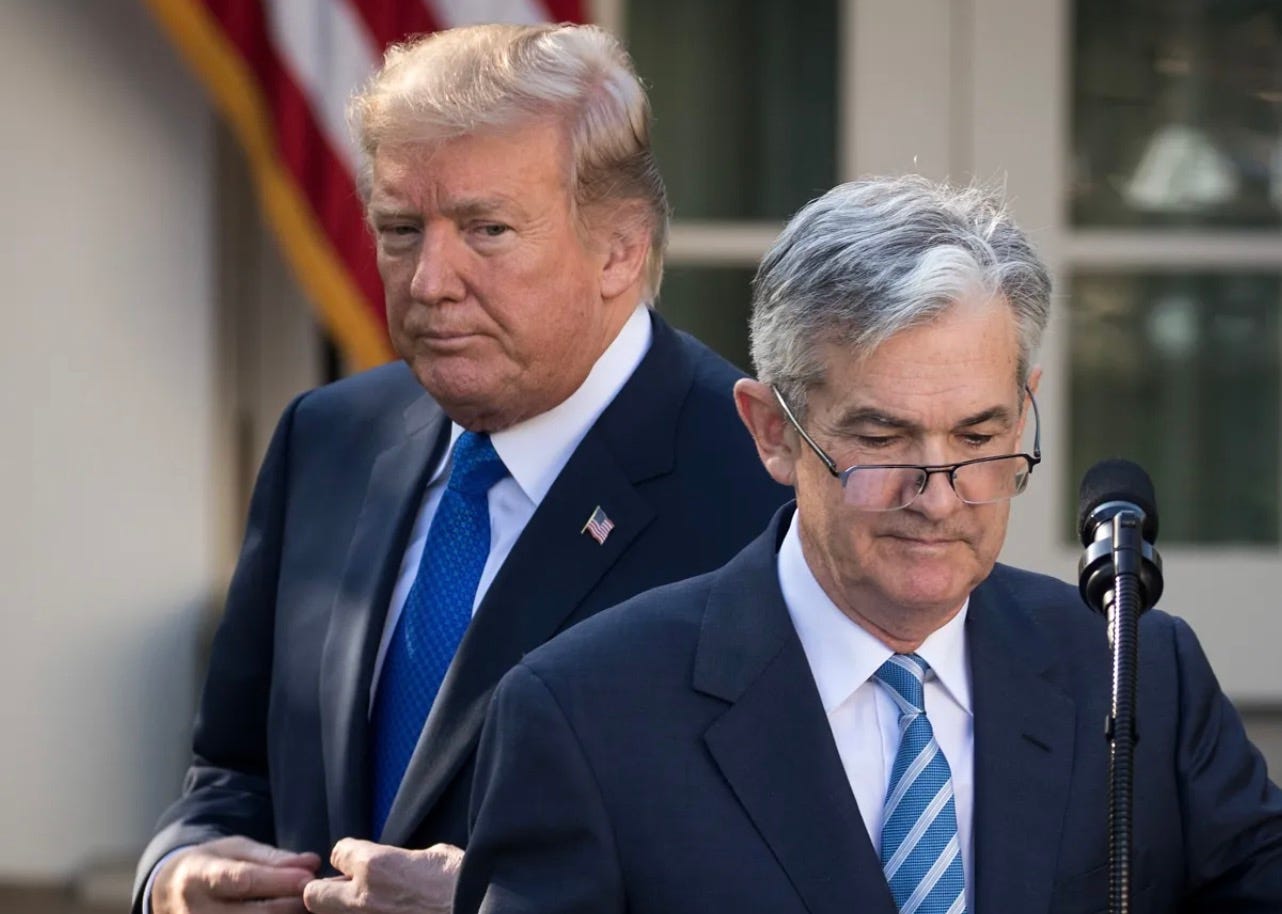
Unsurprisingly, President Trump responded to Powell’s comments very quickly, reminiscent of the feud between the two during 2018. In a post on Truth Social, President Trump wrote:

Trump is correct in his statement. The ECB’s decision to cut rates for the seventh time was unanimous. Regardless of Powell’s reason for his position, the stress on the financial system is increasing. As we noted last week, credit spreads are rising, and there is clear evidence that the economy is weakening as consumer demand softens. The Federal Reserve remains overly concerned about missing the inflation push in 2021 by not recognizing the impact of shuttering economic production and sending checks to households. As such, the Fed will likely be late once again in identifying the deflationary pressure of tariffs on economic growth. Of course, just as in 2018, the Fed began cutting rates quickly during 2019 to stem the “repo crisis”. The Fed may be wrong again.

Technical Update

While the markets await the next Federal Reserve meeting, the uncertainty over monetary policy weighs on markets as much as the uncertainty about tariffs. This past week, the market reversed some of its gains from the massive “tariff reprieve” surge. With the MACD back on a buy signal and money flows turning positive, buyers are tepidly stepping back into the market. The 20-DMA continues to act as overhead resistance, defining the current downtrend. While there is undoubtedly a risk of another test of recent lows, which should be expected and why caution remains advisable, a break above the 20-DMA would lead to a rally to the 50-DMA. (Monday’s article will address the “Death Cross” and what it means for investors.)

As is always the case, the market prices in current events and looks forward with more optimistic expectations. While there are many media headline-driven narratives, the tariffs are now a well-known factor, and markets have priced most of the impact into current prices and valuations. Furthermore, the bond market appears to have started resolving the recent basis trade” blow-up, with bond yields and volatility declining.

Does that mean that the market is now devoid of risk? No. But, as we will discuss further in today’s commentary, we may be closing in on a near-term market low.

Let’s focus on a primary question: Is the market close to a bottom?

The Art Of Contrarianism

You have likely heard the media stat that “bears are like a ‘broken clock,’ they are right twice a day.” While it may seem true during a rising bull market, the statement exposes the ignorance of those making such a claim. If you invert the logic, such things become more evident.

“If ‘bears’ are right twice a day, then ‘bulls’ must be wrong twice a day.”

The biggest problem for investors, and the “broken clock syndrome,” is the emotional biases of being either “bullish” or “bearish.” Effectively, when individuals pick a side, they become oblivious to the risks. One of the most significant factors is “confirmation bias,” where individuals seek confirmation and ignore non-confirming data.

As investors, we should be open to all the data, weigh incoming data accordingly, and assess the risk inherent in our portfolios. That risk assessment should be an open analysis of our current positioning relative to the market environment. Being underweight equities in a rising bull market can be as harmful as being overweight in a bear market.

We believe you should not be “bullish” or “bearish.” While being “right” during the first half of the cycle is essential, it is far more critical not to be “wrong” during the second half.

Howard Marks once stated that being a “contrarian” is tough, lonely, and generally right. To wit:

“Resisting – and thereby achieving success as a contrarian – isn’t easy. Things combine to make it difficult; including natural herd tendencies and the pain imposed by being out of step, particularly when momentum invariably makes pro-cyclical actions look correct for a while. (That’s why it’s essential to remember that ‘being too far ahead of your time is indistinguishable from being wrong.’)

Given the uncertain nature of the future, and thus the difficulty of being confident your position is the right one – especially as price moves against you – it’s challenging to be a lonely contrarian.”

Emotions and volatility make us want to avoid the risk of loss. The increased price volatility and subsequent price decline created a substantially higher level of instability. That instability creates “fear” and drives investors to the behavioral bias of “loss aversion,” ultimately leading to poor outcomes.

The fundamentally bearish arguments of valuations, earnings, a Fed policy mistake, and a recession are certainly viable outcomes. However, if “everyone” already expects those outcomes, what happens if something else occurs?

As Bob Farrell’s Rule Number 9 states:

When all the experts and forecasts agree – something else is going to happen.

Here is some food for thought.

“The most fundamental premise of investing is to ‘buy when everyone is fearful.’ If excesses are built when everyone is on the same side of the trade, what should you do now?”

Risk Off Positioning Hits Extremes

We must evaluate the prevailing sentiment in the overall market to answer that question. Currently, market sentiment is extremely negative based on various measures, from investment positioning (what investors are doing in the market) to overall investor sentiment (how they feel about the market.}

For example, net bullish sentiment among retail and institutional investors is at some of the lowest levels on record, including during the “Financial Crisis.” The extreme negativity is interesting because the recent decline was orderly and mild compared to the chaos during the financial crisis. Yet, investors are as bearish on the current market as they were then. However, it is worth noting that during previous instances when sentiment was as negative as it is currently, such readings were near market bottoms.

Furthermore, the sharp spike in the volatility index, which is considered a “market fear gauge,” spiked to the highest levels seen since the COVID pandemic. If we combine the sentiment measures with the volatility index, we again see more extreme negative readings that often coincide with market lows rather than the beginning of larger reversions.

Other Measures Of Extremes

However, while our measures of fear and greed suggest that negative sentiment is reaching more extreme levels, other measures confirm the same. For example, the BofA survey of global investors intending to cut U.S. equities has been at its highest since the turn of the century. Such previous levels of negative sentiment on U.S. stocks have been a strong contrarian indicator for investors.

The same is shown by the rapid rotation out of U.S. stocks into foreign stocks. While many headlines are being written about that rotation, those duplicate headlines were written almost annually over the last 15 years. Due to strong economic and earnings forecasts, that rotation reverted into U.S. equities each time. In other words, the extremes in “sentiment” away from the U.S. were close to periods when investors should have been buying domestic equities.

However, the current levels are generally consistent with market lows, even when we return our focus to just U.S. equity positioning.

We see the same issue with professional funds that employ trading algorithms to manage equity exposure, which has also been reduced to levels more consistent with market lows rather than continued corrections.

Lastly, institutional funds based on volatility control have also cut exposures sharply.

With equity exposures very low, if there is any “good news” forthcoming, either economically, politically, or earnings-wise, the chase by these fund managers to increase equity exposure will fuel a significant rise in the market. For most investors, by the time they realize the correction is over, it will be far too late to take advantage of the opportunity.

Risk-Off Technical Indicators Also Suggest A Potential Low

When overall risk-off sentiment and positioning are at levels normally coincident with market bottoming processes, the technical indicators have also become so risk-off that they signal risk-on behavior. As we discussed earlier this week, Sentimentrader.com had a great breakdown of various technical indicators, all hitting extremely low levels. Those indicators run the relative strength, breadth, and market momentum gamut.

Sentimentrader tracks 21 indicators in total, which are then combined into a single indicator, giving readings of when markets are trading at more extreme bullish or bearish levels. As shown, the market is currently trading at more extreme risk-off levels. While this does not mean the market is about to rise, historically, such extreme readings have been close to market bottoms.

As Sentimentrader.com notes:

“Declines in the Risk On/Risk Off indicator below 35 have been associated with volatile periods in the market involving significant declines. “Playing defense” during these periods can, at times, help investors avoid some of the financial and psychological pain of riding significant drawdowns to the bottom fully invested. However, this indicator has gone so far to the unfavorable extreme that it might be “so bad that it’s good.”

Historically, when indicators reach such extreme levels, most previous advances or declines are likely complete. However, it does not mean that markets can not go even further into extremes before reaching a bottom. As Sentimentrader.com concluded:

“The good news is that – on a standalone basis – the signal and performance highlighted above make a compelling favorable case for stocks. The bad news is that we would never advise basing portfolio decisions on any one indicator or indicator signal. The proper message from the results above is NOT “All clear for stocks, and happy days are here again.” The proper message is “Ignore the bearish noise, manage risk, and keep an open mind to the potential for better results moving forward – but especially manage risk.”

We agree. Investors usually make psychological investment decisions during market declines to avoid further losses. That is entirely understandable, but as discussed previously, it is one of the leading causes of long-term underperformance.

We Are The Enemy, And The Enemy Is Me

The lesson is that headlines drive sentiment, and rallies can form when sentiment becomes too negative, as may be the case today. Does this mean the next major bull market rally is set to begin? No. But it does suggest that there are such high levels of negative sentiment that selling today will likely be a mistake.

The most significant problems for individuals are the “herding effect” and “loss aversion.” Notably, “loss aversion” is one of the leading factors influencing investment decisions, according to a survey from the CFA Institute.

“Loss aversion is a tendency in behavioral finance where investors are so fearful of losses that they focus on trying to avoid a loss more so than on making gains. The more one experiences losses, the more likely they are to become prone to loss aversion.” – Corporate Finance Institute

Unsurprisingly, investor psychology is one of the most significant reasons individuals consistently fail to achieve their investment goals. Our behavioral traits plague our investment decision-making.

Here is one last example. Price volatility, particularly when prices are declining rapidly, elicits our emotional response of panic. However, while rising volatility from low levels is a risk-off warning, high levels of volatility have often been a risk-on indicator. When the VIX closes above 45, which signals extreme investor fear, it has historically marked strong long-term buying opportunities. Following such spikes, the S&P 500 has more than doubled on average over five years, significantly outperforming periods of lower volatility. Opportunistic rebalancing during these dislocations can enhance long-term portfolio resilience.

George Dvorsky once wrote that:

“The human brain is capable of 1016 processes per second, which makes it far more powerful than any computer currently in existence. But that doesn’t mean our brains don’t have major limitations. The lowly calculator can do math thousands of times better than we can, and our memories are often less than useless — plus, we’re subject to cognitive biases, those annoying glitches in our thinking that cause us to make questionable decisions and reach erroneous conclusions.

In other words:

“The most dangerous element to our success as investors…is ourselves.”

As a contrarian investor, excesses get built when everyone is on the same side of the trade.

From that basis, while it is easy to be very negative about the market currently, everyone is so bearish that the markets could respond in a manner no one expects.

We are not saying it will be the case, but we should be very open to the possibility.

Tyler Durden
Sat, 04/19/2025 – 16:20

US Tariffs Rate Return To FDR-Era Levels, But Goldman Says Economy Far Stronger Than In 1930s

US Tariffs Rate Return To FDR-Era Levels, But Goldman Says Economy Far Stronger Than In 1930s

The last time the U.S. faced an average tariff rate this high was in March 1933, during the first inauguration of President Franklin D. Roosevelt. At the time, the country was in the depths of the Great Depression, and the Dust Bowl was devastating agricultural lands.

Fast forward 80 years, and Goldman analysts don’t see history repeating itself (yet)—despite Democrats hoping for “Great Depression 2.0.” As the analysts told clients:

Around about the last time the U.S. had import tariff rates as high as we have today, the President then declared that “the only fear we have is fear itself.”

A bold statement from FDR who remained in office until the tail end of World War II, suggesting perhaps that we actually had a lot of fear back then.

Fast forward 80 years or so, and the U.S. economy is in far better shape than it was back in the 1930s. The post-pandemic echo-boom has ushered in a string of years with above-trend growth, much of which has been driven by the U.S. consumer.

Goldman analysts Chris Hussey and Sarah Herr provided clients with more color on tariffs:

Patrick Creuset sizes the potential impact of tariffs and de-globalization on trade volumes in an Apr-15 note, “Global Transportation: De-globalization: Trade Recession Roadmap.” If the effective U.S. tariff rate were to return to levels seen in the 1930s, we could see a significant drop in U.S. trade volumes. However, our economists, including Elsie Peng, Alec Phillips, and David Mericle, do note that shifts in trade flows are likely to substantially reduce the increase in the effective tariff rate in an Apr-15 US Economics Analyst, “How Much Will the Effective Tariff Rate Rise?” However, if U.S. import demand shifts away from China toward countries with higher production costs but lower U.S. tariff rates, the impact on prices of imported goods will be larger than implied by the increase in the effective tariff rate.

The U.S. average tariff rate based on recent announcements would be the highest since the 1930s

The Smoot-Hawley Tariff Act contributed to a c.60% drop in U.S. trade in 1931/32

Separately, the Atlanta Fed GDPNow forecast adjusted away from US GDP Q1 in ‘Great Depression’ mode last week.

Democrats have been mounting an info war with their MSM cheerleaders in their attempt to convince consumers that economic armageddon is imminent.

The analysts’ takeaway is that today’s U.S. economy is on far stronger footing than it was eight decades ago. However, what could derail the party is what Trump said last week: Jerome Powell is “playing politics” with interest rates.

Tyler Durden
Sat, 04/19/2025 – 15:45

Dr. Oz Declares All-Out War On America’s Corrupt Healthcare System

Dr. Oz Declares All-Out War On America’s Corrupt Healthcare System

Via The Vigilant Fox,

This week, Dr. Mehmet Oz was sworn in as the new Administrator of the Centers for Medicare and Medicaid Services (CMS) during a high-stakes ceremony at the White House.

Wasting no time, Dr. Oz laid out the brutal truth: America is sick—and it’s bankrupting us. “70% of the healthcare expenditures of this country are driven by chronic disease,” he said. His message wasn’t about throwing more money at the problem or prescribing more pills. It was about fixing the root cause—our collapsing health.

He didn’t mince words. “It is your patriotic duty—I’ll say it again—the patriotic duty of all Americans to take care of themselves because it’s important for serving in the military, but it’s also important because healthy people don’t consume healthcare resources.

The payoff, he said, is both personal and national: “The best way to reduce drug spend is use less drugs—because you don’t need them—because you’re healthy.”

Dr. Oz is calling on Americans to rise up and take charge of their health—not just for themselves, but for the future of the country.

After diagnosing the problem, Dr. Oz explained that he wanted to overhaul Medicare and Medicaid from top to bottom—ripping off the mask and exposing the dysfunction that’s held the system back for decades. Transparency, he said, is the key to everything.

“The president is showing that he actually does love and cherish Medicare, with all of these executive orders—like the one on transparency—that really helps us.”

By pulling back the curtain, he believes we can finally tackle the rot that’s been festering behind closed doors. “You shine a light in the dark shadows where so much of the problems happen with the healthcare system,” he said. Because, as he put it plainly, “The most expensive care is bad quality care.”

This isn’t about more red tape. It’s about trust—and results.

Then came the fire. Dr. Oz declared war on the fraudsters looting the system. And he meant it.

We want to crush fraud, waste, abuse,” he said. But the gloves were off now. “I’ve got a message for all the bad guys from me, the secretary and the president: we are going to stop people from stealing from our most vulnerable, from stealing with the taxpayers of America, who are honestly trying to support these programs and we’re going to be able to do in quite a few ways.”

Then came the warning shot: “We are coming for you!

Dr. Oz made it clear this wasn’t just tough talk. It’s a full-scale overhaul of a broken system—and the fraudsters have officially been put on notice.

And that’s when the bombs started to fall. Dr. Oz didn’t just talk about corruption—he brought the receipts. And what he revealed is outrageous.

“Almost a quarter million people, American citizens were fraudulently enrolled, without their knowledge, in exchange programs by brokers.”

“Tens of millions of dollars… are being spent on illegal immigrants receiving Medicaid in California and pushing the bill to us.”

“We are spending about a billion dollars on Medicaid programs for dual state eligible patients… we’re paying all three states for services you’re not getting because you don’t live in three states all at once.”

But it gets worse. Medicaid is being drained for perks that have nothing to do with medicine.

“Public labor unions are getting childcare through some of this money—Housekeeping! I wish I could get that for my home.”

“There’s a big problem with student loan repayments taking place with Medicaid dollars. That’s not where it should be used,” Dr. Oz stressed. “And we are paying for DEI programs.”

Enough was enough.

“We have created a war room at CMS to go after, to catch the fraud in real time before the money leaves the federal coffers,” Dr. Oz said.

But before stepping away, Dr. Oz ended with a vision.

After exposing the rot, he looked forward—with hope and resolve. He turned to President Trump, shook his hand, and made a promise.

“Together we’re going to make the care better, we’re going to make the outcomes improve, and we are going to make sure America can actually be the healthiest country that could have possibly be.”

And then he ended with this important line: “We will ‘Make America Healthy Again.’ God bless you both, sir.”

Tyler Durden
Sat, 04/19/2025 – 15:10

Tesla-Terror Freak-Show Grows: Trans-Looking Collegian, MN Govt Employee Busted

Tesla-Terror Freak-Show Grows: Trans-Looking Collegian, MN Govt Employee Busted

Police have made two more arrests after a wave of vandalism and all-out destruction directed against Tesla facilities and private Tesla owners by leftist lunatics whipped into an anti-Elon Musk frenzy. With each arrest, police flip over a new rock and let us gaze at the latest strange creature that lies beneath — and this week’s arrests will not disappoint the morbidly curious

Under the first rock, we find 19-year-old UMass Boston student Owen McIntire, who is universally described by police and journalists as a man, but who presents a decidedly feminine appearance — seemingly extending the disproportionate representation of gender-bending criminals in the Tesla-Terror Freak Show.

While there’s no confirmation of trans status, Owen McIntire is said to be a man, but projects a decidedly feminine appearance (US Dept of Justice)

McIntire, whose parents are both musicians, was arrested in Boston on Friday and faces federal charges of malicious destruction of property and unlawful possession of an unregistered firearm or destructive device. Police say McIntire, while home on spring break, firebombed a Kansas City Tesla dealership with Molotov cocktails at 11:15pm on March 17. The blaze destroyed two Cybertrucks with a combined retail price of more than $212,000, and damaged two charging stations priced at $550 each. 

Patrolling police spotted the initial smoke and, while they were unable to extinguish the fire, they managed to isolate one of the Molotov cocktails, which failed to break and fully ignite, and “preserve its evidentiary value,” authorities said. The bottle originally held Braggs Organic Apple Cider Vinegar — had to be organic, right?  

Police were able to preserve this Molotov cocktail bottle which failed to break and fully ignite (US District Court – Western Missouri) 

The purportedly male McIntire appears to have opted for a girly look on the night of the crime: The police affidavit describes the perpetrator recorded on security video as exiting a vehicle “wearing dark flowy clothing and a large, white-colored hat.” ( FABULOUS! )

The New York Post reports that, in March 2023, a post on a social media account believed to be McIntire’s overflowed with angst and pent-up rage over various leftist hot buttons (hyperlinks ours): 

“I am having a panic attack right now and have a painful urge to scream at the world right now and I love it all. I don’t know how to think I can’t think about it every time I look at the news it’s something new and awful and this goddammed school bill has broken me and the labor laws and the cop city and project willow and roe v wade and I just need to spill out here so I don’t go insane with rage and fear I need to know someone sees this everything that is happening,” 

Given the timing, “goddammed school bill” appears to refer to Florida’s legislation that curtailed instruction on sexual orientation and gender identity; the bill was labelled by critics as the “Don’t Say Gay” law. McIntire’s outcry about the law “breaking” him may serve as another possible indicator of a trans identity. If that’s the case, McIntire would be the latest in a string of gender-benders charged with Tesla attacks. Previous such arrestees include Lucy Grace Nelson, aka Justin Thomas Nelson, whom police accuse of firebombing a Loveland Colorado dealership, and Adam Matthew Lansky, charged with throwing Molotov cocktails at a car dealership in Salem, Oregon and — a month later — shooting up the same facility. 

The freak parade grows longer: McIntire joins previous Tesla-terror arrestee Adam Lansky, likewise charged with firebombing a Tesla facility 

Under this week’s second rock, we find 33-year-old Dylan Bryan Adams, a fiscal policy analyst employed by the state of Minnesota’s Department of Human Services. He allegedly caused $20,000 in damages as he keyed several privately-owned Teslas innocently parked on Minneapolis streets and parking lots, according to a Friday report by the X account CrimeWatchMpls. Arrested of suspicion of damaging the vehicles, his formal charges are still pending.

After Gov Tim Walz wallowed in Tesla’s falling stock price, Minnesota government employee Dylan Adams was recorded vandalizing privately-owned Tesla cars, police say (Crime Watch Mpls via NY Post)

While he’s not quite as “exotic” as McIntire and similar specimens, Adams is weird in his own way — a white color employee so insanely obsessed with Elon Musk that he would repeatedly victimize innocent people, some of whom surely share his leftist world view, and risk derailing his entire life in the process. According to the X account CrimeWatchMpls, Adams 2024 state government salary was $85,883, and his job title was Human Services Program Consultant. Minnesota’s Department of Human Services manages an array of welfare-state programs, spanning food, housing, income, health care, child care and mental wellness. A member of a government employee union, Adams’ leftist worldview is confirmed by his reposting of social media commentary by Joe Biden, Occupy Democrats and Kamala Harris husband Doug Emhoff. 

Again and again, Adams’ alleged acts of vandalism were recorded by the Teslas’ onboard video monitoring system, which show him casually vandalizing vehicles with a key as he’s in the midst of walking his dog or out shopping:  

As the CrimeWatchMpls points out, Adams’ vandalism spree came just a few weeks after failed Democratic vice presidential candidate and Gov. Tim Walz spoke of the glee he felt as Tesla stock dropped amid the leftist backlash against the company owned by the godfather of the Department Of Government Efficiency. The same account also said Minnesota taxpayers “have a right to know” if Adams was “working from home” at the time of his multiple crimes. 

According to a LinkedIn profile that appears to be Adams, he’s a 2014 graduate of Johns Hopkins, where he studied international and global studies. He later received a masters in public policy from the University of Minnesota’s Humphrey School of Public Service. The profile says he’s currently engaged in “tutoring and mentoring elementary school students twice a week.”  

We wouldn’t want this guy around our kids — but we’re sure there are plenty of leftist freaks who would.

*  *  *

Anza Knives are made in the USA! They’re selling like hotcakes.

Satisfaction guaranteed or your money back, lifetime guarantee. And if you’re looking for a great daily carry, check this one out.

Tyler Durden
Sat, 04/19/2025 – 14:35

It Really Feels Like We’re Out Of Time

It Really Feels Like We’re Out Of Time

Submitted by QTR’s Fringe Finance

I don’t really like talking about trying to time the market with specifics, as most of my readers know. For the better part of the last two years, I’ve been eating crow on my predictions that higher interest rates would grind the economy to a halt.

While I still think that’s going to be the case — that positive real rates and slowing economic activity are a mathematical certainty — I severely underestimated the lag with which those rates make their way through the economy.

And so, here we are, years after the Fed started raising rates, and for the most part, things appear relatively status quo — with the exception of some slight volatility over the last week or two due to President Trump’s tariffs.

Yesterday, I spent an hour of my afternoon listening to Peter Schiff’s November 2006 speech at the Western Regional Mortgage Bankers Conference in Las Vegas, in front of 2,000 mortgage bankers. Schiff predicted, with excruciating detail, exactly what was wrong in the housing market and how it would collapse.

If you think the guys from The Big Short were prescient, give this video an hour of your time. Try to pick out one single solitary thing Schiff says that didn’t come to fruition.

His financial forecast wasn’t just surgical — it was delivered straight to the main vein of the very people helping perpetuate the crisis. It’s a stunning, hour-long proclamation that, in and of itself, should have been made into a documentary.

As I listened to Schiff rattle off exactly how the economy would collapse, one perfect detail at a time, it made me think critically about where we are today for the first time in a long time.

For those who read my analysis of the market crash after Trump announced his tariffs, you probably gathered two things. First, I thought cooler heads would prevail and the storm would pass — which seems to have happened with the U.S. rolling back tariffs and active negotiations taking place. And second, either tacitly or through veiled language, I hinted that the market might continue status quo for a while.

It was great to be proven right on the first, but the second, I’m now not so sure about.

Listening to Schiff’s speech yesterday was a well-timed reminder that no matter how much modern monetary bullshit and shuffling of Titanic deck chairs we employ, the natural laws of economics and free markets are eventually going to have their way.

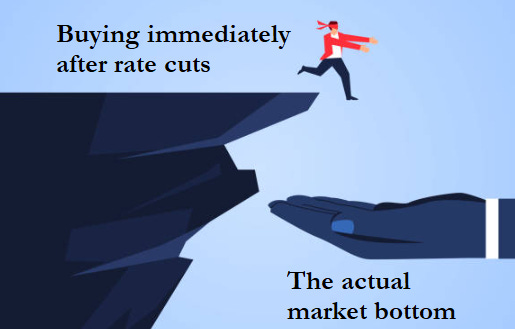
The line in his speech that stood out to me was when Schiff described how the Fed lowering interest rates wouldn’t prevent a market crash. It hearkened back to multiple pieces I’ve written over the last 2 years, explaining that this is usually the case: the market doesn’t bottom until after the Fed starts cutting. As an example, I always cite that Lehman Brothers went bankrupt after the Fed had cut rates.

Put another way, if the Fed is rushing to cut due to a crisis, it’s already too late — the plane has crashed into the mountain.

Or as they say in London, mind the gap between rate cuts and a market bottom.

Now, more than ever, rate cuts are being discussed. President Trump used the ECB’s decision to lower rates this week as leverage to argue that Jerome Powell should follow suit. When he got the impression Powell wouldn’t budge, he started talking about firing him — until reports later in the week suggested that Treasury Secretary Scott Bessent talked him out of it.

As resolute as Powell says he is, as the rhetoric about rate cuts gets louder, it’s just human nature that the Fed will be quicker to pull the trigger in the event of continued volatility.

Powell also made comments last week that the Fed’s dual mandate — maintaining price stability and maximum employment — may soon see both objectives slipping the wrong way.

“We may find ourselves in the challenging scenario in which our dual-mandate goals are in tension,” he said. He acknowledged, somewhat underhandedly, that the Fed may have to prioritize one goal over the other, which in my opinion would allow the other to run wild. This aligns with a view I and others have had for a while: that the Fed will have no choice but to run inflation hot to give the appearance that all is fine elsewhere in the economy and to protect financial assets, especially if the bond market starts to crack up any further.

This shouldn’t surprise my readers. I’ve been saying for years that the Fed is going to get stuck between a deflationary depression rock and a hyperinflationary hard place.

That point now seems just around the corner. You can say it my way, or you can say it in econ-speak: “dual-mandate goals are in tension”.

The Trump team has ostensibly made progress with trade deals, saying this week that they’re talking to countries like Japan and clearly offering rhetoric that acts as olive branches to China — hoping to advance, or even just begin, constructive dialogue.

But as with the seizure of Russia’s FX reserves during the war in Ukraine, the macroeconomic landscape has already shifted — and can’t be easily reversed. The shock of seizing Russia’s reserves prompted countries globally to consider getting out of the US dollar. While recalibrating the global trade picture is a worthwhile goal, there’s no denying that it’s again served as a clarion call to the rest of the world to look beyond the dollar.

And this isn’t just my opinion — it’s what the market has shown us over the last two weeks: gold skyrocketing, US financial assets floundering, the dollar falling, and notable volatility in the Treasury market. For those seeking a deeper macro view of where the US stands right now, I suggest watching this other Schiff video, a 40-minute interview from last week— in my opinion, it explains it perfectly.

The question becomes: what kind of economic foundation does the country have to fall back on? Or put differently — if people want out of the US dollar, what will serve as the bottom for investors selling dollar-denominated assets?

First, people need to realize this is a decades-long trade now beginning to unwind, as Larry McDonald explained perfectly on a podcast a day or two ago. This kind of dollar-denominated unwind hasn’t happened often, precisely because of the US’s reserve currency status. Economic commentators have noted that this kind of behavior is usually seen in emerging markets — so why is it happening here? Could it be the beginning of a prolonged global shift away from the dollar and the U.S.?

And, if so, we have to start looking inward. I’ve been arguing for years that the US is on an unsustainable fiscal trajectory — $37 trillion in debt, and debt-to-GDP over 120%. That used to be a fringe concern. But now, just a year or two after the Biden administration redlined the spending machine with zero care for the nation’s fiscal trajectory, it’s something the rest of the world is starting to focus on. DOGE is making progress with government cuts with the March deficit tumbling, but will it be enough?

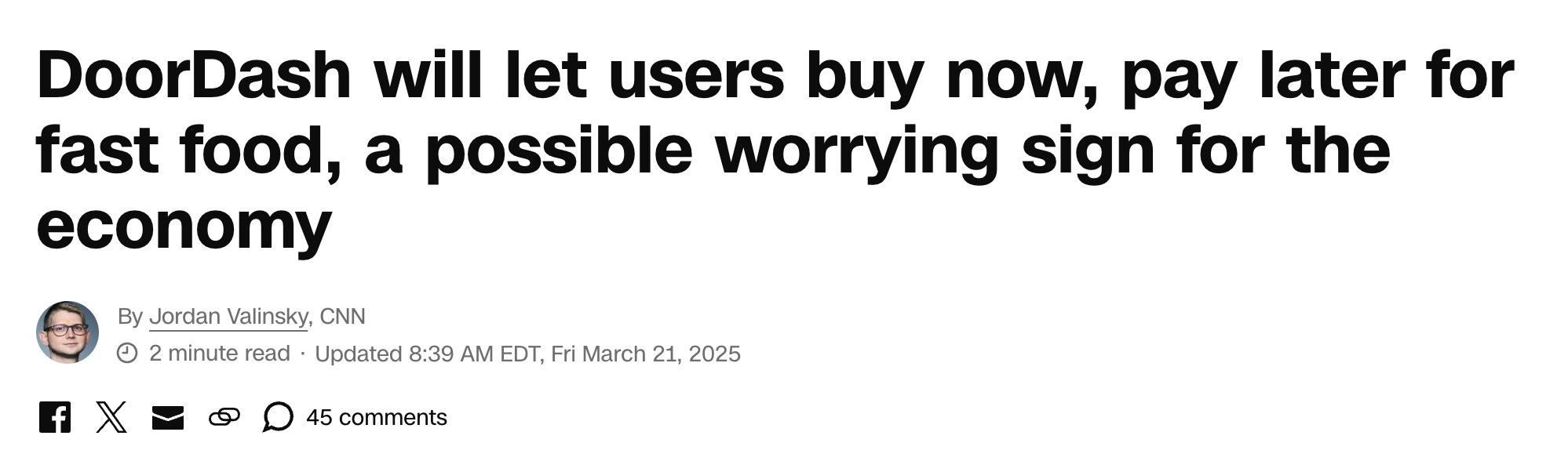
And the more people dig into the U.S. economic data, the worse things may look. Economists I follow have long argued that the US has exported dollars and lived a higher-than-earned quality of life thanks to the privilege of printing the world’s reserve currency. To me, when I see people using “buy now, pay later” services for fast food, I get the message loud and clear: we’ve passed peak decadence — and we’re on the downhill side of the bell curve. Said another way, we’re f*cking broke.

While housing may not tank the global economy this time, I do think it’s going to fall significantly. A realtor friend recently forwarded a note from their CEO saying the market is turning into a “buyer’s market.” This is code for “shit is going to hit the fan soon”.

Even Zillow is now predicting a housing bear market. Zillow now expects home values to fall by 1.9% in 2025, reversing its earlier prediction of a slight gain. Despite the market’s unpredictability, mortgage rates are projected to settle around 6.5% by year-end, assuming no major disruptions. The forecast also anticipates a rise in existing home sales, driven by more listings and motivated sellers. As inventory increases and borrowing remains costly, buyers are gaining leverage, and sellers are slashing prices at record levels to stay competitive.

Credit card debt and delinquencies are climbing toward Great Recession highs. Private credit in many industries hasn’t been marked down properly and is being questioned. Regional banks, touted on CNBC as high-yield dividend plays, are tied up in all sorts of illiquid, backward positions. And the auto market? Look into the subprime lenders and tell me this thing isn’t about to blow.


🔥 50% OFF FOR LIFE: Using this coupon entitles you to 50% off an annual subscription to Fringe Finance for life: Get 50% off forever


Wherever you look, the US economy looks shaky — not euphoric. And that’s the danger: once we’re on shaky ground, sentiment shifts. Investors move to cash and de-leverage at the first sign of trouble. Every full-blown panic in the last hundred years started with a spark. I can’t help but think that trying to recalibrate global trade — especially while running the largest trade deficits in our history — could be that spark.

It feels like we’ve run out of runway. The same axioms Schiff laid out in his speech apply now. Just like one plus one will always equal two, these economic truths will bear out. And while I’ve been wrong on timing, I no longer feel these outcomes are far off in the future.

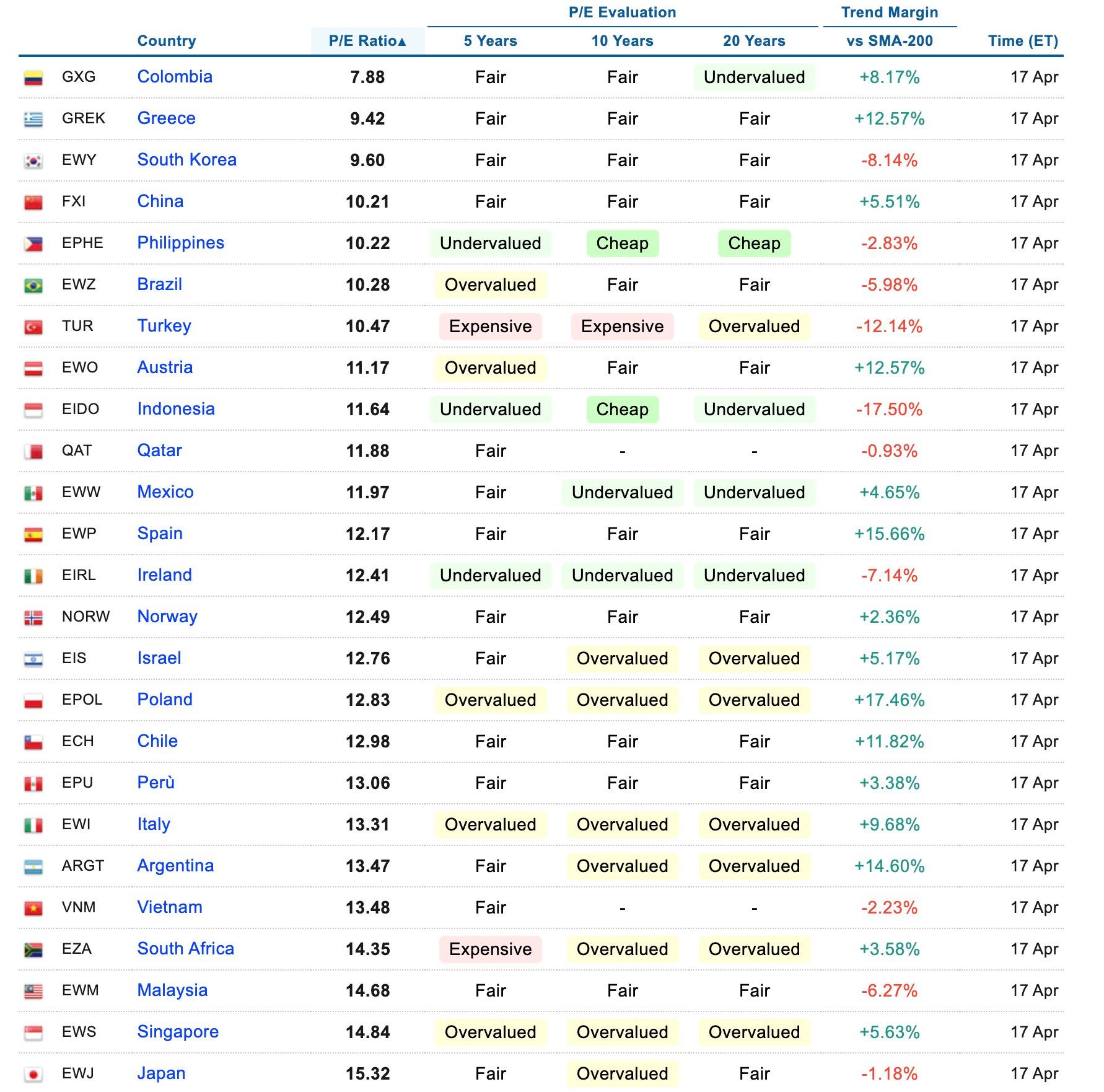
To be clear, I don’t think we’re facing another global financial crisis. I think the pain will be contained to the United States, while much of the world sees improving quality of life. Our markets still trade at ~25x earnings, while countries with better fiscal positions — and who supply us with goods — trade in the low teens. I expect those valuations to meet in the middle.

It wouldn’t surprise me if US multiple contraction does most of the heavy lifting in that reversion, either.

With the Fed in place, I don’t think people’s money is at risk in the banking system, per se. But I do believe we’re going to see wild distortions that degrade people’s quality of life and realign America’s position in the global order. Such shifts are tricky — nominal prices can rise, but inflation, shrinkflation, and the outperformance of sound money assets and emerging markets will tell the real story.

That was my thesis picking my 25 stocks to watch for the year, and it still is.

For years, people like me have been dismissed as “perma-bears” or “fearmongers.” We’ve countered that we’re just playing a longer game — one that exists outside the dopamine loop of financial media. If I’m right now, we could be witnessing the start of a years-long transformation so profound that most economists will be forced to admit they never saw it coming.

To be frank, for everyone’s sake, I hope I’m wrong. But sadly, I don’t think I am. The 25 stocks I’m watching this year continue to validate my thesis and reassure me that I was right — but I’ve been wrong before and will be again. This feels like a good time to remind you to read my full disclaimer, located below.

And now, in the words of Bruce Buffer: “It’s time…”

Thanks for reading QTR’s Fringe Finance! This post is public so feel free to share it: Share

QTR’s Disclaimer: Please read my full legal disclaimer on my About page hereThis post represents my opinions only. In addition, please understand I am an idiot and often get things wrong and lose money. I may own or transact in any names mentioned in this piece at any time without warning. Contributor posts and aggregated posts have been hand selected by me, have not been fact checked and are the opinions of their authors. They are either submitted to QTR by their author, reprinted under a Creative Commons license with my best effort to uphold what the license asks, or with the permission of the author.

This is not a recommendation to buy or sell any stocks or securities, just my opinions. I often lose money on positions I trade/invest in. I may add any name mentioned in this article and sell any name mentioned in this piece at any time, without further warning. None of this is a solicitation to buy or sell securities. I may or may not own names I write about and are watching. Sometimes I’m bullish without owning things, sometimes I’m bearish and do own things. Just assume my positions could be exactly the opposite of what you think they are just in case. If I’m long I could quickly be short and vice versa. I won’t update my positions. All positions can change immediately as soon as I publish this, with or without notice and at any point I can be long, short or neutral on any position. You are on your own. Do not make decisions based on my blog. I exist on the fringe. The publisher does not guarantee the accuracy or completeness of the information provided in this page. These are not the opinions of any of my employers, partners, or associates. I did my best to be honest about my disclosures but can’t guarantee I am right; I write these posts after a couple beers sometimes. I edit after my posts are published because I’m impatient and lazy, so if you see a typo, check back in a half hour. Also, I just straight up get shit wrong a lot. I mention it twice because it’s that important.

Tyler Durden
Sat, 04/19/2025 – 14:00

Palantir Building ICE “ImmigrationOS” To Track Migrants

Palantir Building ICE “ImmigrationOS” To Track Migrants

Palantir CEO Alex Karp might soon be receiving similar ‘Tesla Takedown‘ treatment from unhinged Democrats after news broke late this week that Immigration and Customs Enforcement has partnered with the defense contractor to deploy new “near real-time visibility” software to facilitate the deportation of illegal immigrants.

A contract first reviewed by Business Insider stated that ICE and Palantir are working to deploy the Immigration Lifecycle Operating System — or ImmigrationOS — to support ICE’s Enforcement and Removal Operations (ERO) in response to urgent deportation national security goals outlined in President Trump’s Executive Orders (EO 14159 and EO 13773). 

Palantir will deliver a prototype of ImmigrationOS by September 25. The contract sets the deadline for a fully operational ImmigrationOS by September 2027. 

Here’s a description of ImmigrationOS’ capabilities: 

  • Targeting and Enforcement Prioritization: Streamlining operations to apprehend illegal aliens, focusing on transnational criminal organizations (TCOs), violent criminals, and visa overstays.

  • Self-Deportation Tracking: Real-time visibility into self-deportation instances to inform policy and resource allocation.

  • Immigration Lifecycle Process: End-to-end management from identification to removal, optimizing deportation logistics

  • Services include software licenses, configuration, engineering, and hosting to deliver a prototype by September 25, 2025.

Federal data shows Palantir has been an ICE contractor since 2011.

According to the contract, the ImmigrationOS award is expected to cost taxpayers $29.8 million. 

Separately, Palantir has been working with Elon Musk’s Department of Government Efficiency (DOGE) to build a “mega API” for the Internal Revenue Service, which would allow better record searching across the agency’s databases.  

ICE justifies ImmigrationOS as a way for the federal government to meet the critical national security objectives outlined in the president’s executive orders

Tyler Durden
Sat, 04/19/2025 – 13:25

Will AI Make Us Smarter?

Will AI Make Us Smarter?

Authored by Jeffrey Tucker via The Epoch Times,

Aspects of artificial intelligence have been absolutely delightful, even astonishing. We have a greater number of facts at our fingertips than ever before, plus the best tools out there draw your attention to a vast amount of literature too.

It seems to have happened so suddenly and incredibly. I find myself still adjusting to this new world. No question that it has enhanced my life. I’m developing a habit of Groking every question.

Not every answer is perfect—I’ve spent quite some time arguing with this fake brain on occasion—but it gives the mind a boost in the right direction, providing hints for anyone curious about nearly every topic.

Ten years ago, I would have had an easy time predicting a vastly smarter world to emerge from this technology. It does indeed make me feel smarter. Perhaps the best part of AI is how it has bested and will probably dislodge the multitudes of fake experts out there ensconced in academia, nonprofits, and corporate life.

They have long been paid to be repositories of information. They surely must sense that they have probably been replaced or, at the very least, their primacy in intellectual leadership faces a severe challenge. Consider too that we are just at the beginning of this. The gap between elite knowledge and that which can be known instantly by anyone will shrink ever further.

There are some mighty implications to this. It will surely lead to a restructuring of many industries, among them those that specialize in knowledge dissemination.

I think back to what we know about Saint Isidore of Seville from the 7th century, who worked with a large team of scribes to write the “Etymologiae.” It was an attempt to record all known knowledge, the first real encyclopedia. It was a project that consumed his life and that of the entire monastery too.

The ambition to accumulate, assemble, and disseminate the corpus of human knowledge has been a driving ambition of many literary projects. 

After printing became more affordable and paper too, the market for home libraries opened up in the United States in the 1890s and following. Once the province of the rich only, it became the dream of many middle-class families to have large libraries.

Publishers were ready to accommodate the demand. In 1917, the “World Book” encyclopedia was published. An industry was born with door-to-door sales and subscription services. Countless other publishers got involved in the great task of beefing up the American knowledge base. It was a major part of the Progressive agenda, a means of lifting up the population, educating people in higher things, promoting literacy, and civilized living.

Americans were all in, and books were arriving by mail on a constant basis. Particularly attractive were these large multi-volume sets, not just encyclopedias but novels, speeches, presidential papers, extensive histories, and, of course, the Great Books. Even now, these books are wonderful and form the basis of a great education. You can buy sets of them on eBay for very low prices.

When the Internet came along, the highest hope was that it would become the modern equivalent of all human knowledge. My father was a skeptic. Early on, I showed him some nice new tools, and he instantly outsmarted them with his highly specialized knowledge on a range of particular topics. He did that to demonstrate to me that while these tools can be valuable, they will never be a replacement for serious intellectual work, research, mental discipline, focus, and rich understanding.

At the time, I thought he was just being old-fashioned. But here we are, a quarter-century following the mass distribution of knowledge via the Internet through every imaginable portal, and we have to ask a fundamental question. Are we, as a culture, nation, and world, smarter now than we were 25 years ago?

There are many ways to answer the question. Yes, we have more access, but that has also reduced the incentive to learn and recall. This feature acts in insidious ways. For example, I have an absolutely awful sense of direction. It’s debilitating. In a new city, I’m hopeless. The advent of GPS completely changed my life, freeing me from a lifetime of direction anxiety and enabling me to move about like a normal person.

That said, GPS has absolutely made my sense of direction even worse. Without it, I’m more hopeless than I was in the past. This is how it works. The more dependent we are on external sources of information, the less training we give our own brains to find the answers on our own.

It is precisely for this reason that I suspect the Internet in general has not made us smarter but, in many ways, just the opposite. It gives us more data but drains us of the need to learn how to find information on our own.

It’s strange how much I treasure those days long ago when I would spend endless hours, day after day, in an old-fashioned library, digging through the stacks, discovering new ideas, reading incessantly on history, philosophy, theology, economics, or anything else I could find. I felt overwhelmed and thrilled at the information and ideas at my fingertips and devoured as much as I could in the time I had.

Do people feel that or experience that today? I’m not so sure. I often read of professors who despair at even getting their students to read a single book. They have invented all sorts of clever tricks to incentivize them and test them to make sure they are not using shortcuts. It seems almost futile.

Is this the world that the Internet was supposed to build? Not really. It reminds me of how the early cheerleaders for television predicted that most of the programming would consist of college professors giving lectures since they believed that would be what the market demanded.

Leading communication scholar Wilbur Schramm said in 1964: “Television can bring education to the doorstep of every home, and it can do so with a power and vividness no textbook can match.”

The opposite happened, and very quickly.

If you want to know how young people use their smartphones, look over the shoulder of anyone under 30 at train stations or airports. You will see despairing scrolling through popular apps that offer absolutely nothing by way of higher edification or education. Really, it’s a disaster.

Explain that to a member of this cohort, and they will respond with some version of: Why should I learn things that are readily available to me if the need ever arises?

It is precisely this attitude that has made us much more stupid. You can tell it from the vocabulary of podcasters and other commentators on the Internet today. Even 30 years ago, whatever language they spoke would not be recognized as English. Something else has replaced it. And it is not just in the United States. It is true all over the world. The French language has declined, and so have German and Spanish.

Vocabulary is a telling sign. It reveals what is in our heads, top of mind. If what comes out is pidgin English, that tells you all you need to know about the lack of thought behind the words.

If this is true of television and the Internet, how much more true will it be of AI and Large Language Models? As information storage and retrieval tools, they make all that came before look shabby by comparison. I’ve stopped using any search engines but for specific tasks. In 10 years, I doubt search engines will even hold much market share at all.

I don’t want to leave you despairing. There are ways in which AI is remarkable, and I would never go back. That said, there is genuine reason to worry that this new tool will only accelerate the decline of language, culture, and learning generally. 

Such are the paradoxes of technology: sometimes that which is designed to save us actually destroys us.

Views expressed in this article are opinions of the author and do not necessarily reflect the views of The Epoch Times or ZeroHedge.

Tyler Durden
Sat, 04/19/2025 – 12:50