House Fiscal Conservatives Blast “Unserious And Disappointing” Senate GOP Budget Blueprint
Hours after Senate Republicans approved their latest budget plan Saturday morning, at least three GOP deficit hawks in the House – the maximum number of R’s Speaker Mike Johnson can lose – blasted the package over a lack of spending cuts.
“If the Senate’s ‘Jekyll and Hyde’ budget is put on the House floor, I will vote no,” Rep. Chip Roy (R-TX) posted to X on Saturday, adding “Failure is not an option. And the Senate’s budget is a path to failure.”
If the Senate’s “Jekyll and Hyde” budget is put on the House floor, I will vote no.
In the classic ways of Washington, the Senate’s budget presents a fantastic top-line message – that we should return spending back to the pre-COVID trajectory (modified for higher interest, Medicare, and Social Security) of $6.5 Trillion, rather than the current trajectory of over $7 Trillion – but has ZERO enforcement to achieve it, and plenty of signals it is designed purposefully NOT to achieve it.
The House Budget is seemingly more modest in its objectives – perhaps OVERLY modest – in laying out a floor of $200B in reductions in spending increases (not cuts). But that “floor” establishes important guardrails to force Congress to pump the brakes on runaway spending and to achieve critical reforms to badly broken Medicaid, food stamp, and welfare programs currently being abused to subsidize illegals, the able-bodied, and blue states.
The America First agenda requires boldness from Congress, not timidity. President Trump’s leadership – and risk taking – requires the same from Republicans in Congress, not more of the same selfish vote-buying, big-spending pork that got us into this debt crisis. We can and must cut BOTH the statutory taxes Americans pay AND the inflation tax they increasingly pay because of Congressional failure.
Failure is not an option. And the Senate’s budget is a path to failure. Instead, we should get busy drafting a reconciliation package that will work – that will ACTUALLY produce spending reductions that will, as a start, return to the pre-COVID spending path – and deliver on the promises we campaigned upon.
Maryland Republican Rep. Andy Harris also chimed in, saying he “can’t support House passage of the Senate changes to our budget resolution until I see the actual spending and deficit reduction plans to enact President Trump’s America First agenda.”
Rep. Lloyd Smucker (R-PA) said he “certainly can’t support it as written” Thursday night.
We all agree: keep taxes low for individuals & small businesses, drive economic growth. But we must reduce the deficit as well.
House Budget Chair Jodey Arrington (R-TX) called the plan “unserious and disappointing” Saturday morning, but didn’t go so far as to explicitly say he would oppose it.
As noted above, Johnson cannot lose more than three Republicans on a party-line vote with his 220-213 majority, which doesn’t bode well considering that several other House Republicans have characterized the Senate’s plan as fiscally irresponsible, and insist that any budget plan should at least be deficit-neutral, while any tax cuts should also be tied to tax cuts. The Senate’s plan, however, essentially kicks the can down the road once again on these issues by providing different targets to critical committees in the House and Senate, Politico reports.
For instance, while the Senate plan sets a modest $4 billion floor for spending reductions, the budget blueprint that House Republicans passed in February calls for $2 trillion in spending cuts.
There are also significant differences in the tax portion of the plan. The House budget provides its tax writing committee $4.5 trillion for spending on tax cuts. Meanwhile, the Senate budget uses an accounting tactic that zeroes out the cost of extending trillions in expiring tax cuts. It allows for potentially up to $800 billion more in tax cuts than the House plan.
In a Saturday letter to their members, Johnson and the other top three House GOP leaders said that approving the Senate budget would “allow us to finally begin the most important phase of this process: drafting the reconciliation bill that will deliver on President Trump’s agenda and our promises to the American people.”
“With the debt limit X-date approaching, border security resources diminishing, markets unsettled, and the largest tax increase on working families looming, time is of the essence,” they wrote.
The wildcard here is of course, President Trump, who has previously leaned on key holdouts to muscle through an earlier House budget vote. This week Trump demanded that “[e]very Republican, House and Senate, must UNIFY” behind the Senate plan.”
“Big business is not worried about the Tariffs, because they know they are here to stay, but they are focused on the BIG, BEAUTIFUL DEAL, which will SUPERCHARGE our Economy,” he wrote on Friday, referring to the reconciliation bill.
A federal judge ruled Friday the U.S. government acted illegally when it deported an MS-13 gang member to El Salvador and ordered that he must be returned to the United States.
“This was an illegal act,” said U.S. District Judge Paula Xinis of Maryland, an Obama appointee. She gave the administration until 11:59 p.m. Monday to free Kilmar Abrego Garcia, a citizen of El Salvador, from the El Salvadoran prison where he is being held, and return him to the United States where he is not a citizen.
Abrego Garcia, 29, was among the hundreds of illegal immigrants—a large percentage of them MS-13 and Venezuela’s Tren de Aragua gang members —expelled from the U.S. to El Salvador last month.
Although the Trump administration acknowledged in court records earlier this week it made an “administrative error” when it deported Garcia without an interview, the fact remains that he has no legal status in the United States.
Garcia crossed the border illegally in 2012 by his own admission, and claimed he had to flee El Salvador as a teenager to escape gang violence when he was detained in 2019. Both the original immigration judge and the Board of Immigration Appeals found there was sufficient evidence that Garcia was a member of MS-13 and, as such, a danger to the public.
According to USA Today,“Garcia was pulled over by federal immigration agents near his home in Beltsville, Maryland, on March 12 and arrested.”
Three days later, he was expelled and sent back to El Salvador even though he had won a court order six years earlier barring his removal.
Abrego Garcia’s wife, Jennifer Vasquez Sura, and their 5-year-old son, who are both U.S. citizens, sued the government demanding his return.
During a hearing on Friday, Xinis ripped into Justice Department lawyers over Abrego Garcia’s arrest and questioned the government’s claim it could not get him back. If federal authorities were able to strike terms and conditions for his placement in El Salvador, “then certainly they have the functional control to unwind the decision – the wrong decision,” she said.
The judge questioned the government’s claim that Abrego Garcia is a member of MS-13.
“In a court of law, when someone is accused in such a violent and predatory organization, it comes in the form of an indictment, complaint, a criminal proceeding that has then a robust process so that we can assess the facts,” she said. “I haven’t heard that from the government.”
In response to the ruling, White House Press Secretary Karoline Leavitt suggested on X that the judge take it up with the president of El Salvador.
“We suggest the Judge contact President @nayibbukele because we are unaware of the judge having jurisdiction or authority over the country of El Salvador,” she wrote.
Bukele, meanwhile, responded to the judge’s order on X with a gif of a confused bunny.
Department of Homeland Security Spokeswoman Tricia Ohio told Fox News’ Martha MacCallum Friday that Garcia was “involved in human trafficking.”
“He’s actually a member of MS-13 and was involved in human trafficking,” Ohio insisted, arguing that he needed to be “locked up” either in the U.S. or in El Salvador.
She added that MS-13 “is a gang that rapes, maims, and kills Americans for sport” who “should not be on U.S. soil.”
DHS Secretary Kristi Noem also told Newsmax Friday that Garcia was a “gang member and violent criminal” who didn’t belong in the United States.
Nearly two months after a top Department of Government Efficiency (DOGE) official and support team arrived at IRS headquarters to investigate waste and fraud—aiming to streamline a bloated and corrupt federal bureaucracy—the Trump administration has begun a sizeable workforce reduction across the federal agency.
Fox News reported late Friday evening that the IRS will begin laying off about 20,000 staffers — up to 25% of the workforce — on Friday and through next week.
Most job cuts will center around the IRS Office of Civil Rights and Compliance, which protects taxpayers from discrimination, audits, and investigations.
White House spokesperson Liz Huston told Fox News, “In a stark contrast to the previous administration’s wildly unpopular plan to hire thousands of additional IRS agents, President Trump is focused on saving tax dollars, eliminating bloat, axing useless DEI offices, and increasing the agency’s efficiency.”
Here’s more from Fox:
In addition to the layoffs, the agency said in a letter to employees that it is eliminating its Office of Civil Rights and Compliance, which is responsible for protecting taxpayers from discrimination, audits and investigations.
. . .
“This action is being taken to increase the efficiency and effectiveness of the IRS in accordance with agency priorities and the Workforce Optimization Initiative outlined in a recent Executive Order,” the letter states, referring to President Donald Trump’s executive order directing the Department of Government Efficiency to get rid of wasteful spending.
The agency said it was approved to offer Voluntary Early Retirement Authority (VERA) and Voluntary Separation Incentive Payment (VSIP). Information about those programs will be shared with employees at a later date, the message said.
“This calendar year to date, approximately 5% of this office left through the Deferred Resignation Program and attrition,” the message said. “An additional 75% of the office will be reduced through a RIF (Reduction in Force).”
A Treasury Department spokesperson told Fox News, “The rollback of wasteful Biden-era hiring surges and consolidation of critical support functions are vital to improving both efficiency and quality of service. ” The spokesperson added, “The Secretary is committed to ensuring that efficiency is realized while providing the collections, privacy, and customer service the American people deserve.”
Meet the largest individual taxpayer in IRS history…
DOGE is now auditing the IRS to identify waste, abuse, and fraud.
The IRS will now explain how it spent over $10 billion in taxes paid by Elon Musk, making him the largest individual taxpayer in history. pic.twitter.com/lBx4Uo7tqi
In the 1980s, peanut allergies were almost entirely unheard-of. Today, the United States has one of the highest peanut-allergy rates in the world. Disturbingly, this epidemic was precipitated by institutions that exist to promote public health. The story of their malpractice illuminates the fallibility of respected institutions, and confirms that public health’s catastrophically incorrect guidance during the Covid-19 pandemic wasn’t an isolated anomaly.
The roots of this particular example of expert-inflicted mass suffering can be found in the early 1990s, when the existence of peanut allergies — still a very rare and mostly low-risk phenomenon at the time — first came to public notice. Their entry into public consciousness began with studies published by medical researchers. By the mid-1990s, however, major media outlets were running attention-grabbing stories of hospitalized children and terrified parents. The Great Parental Peanut Panic was on.
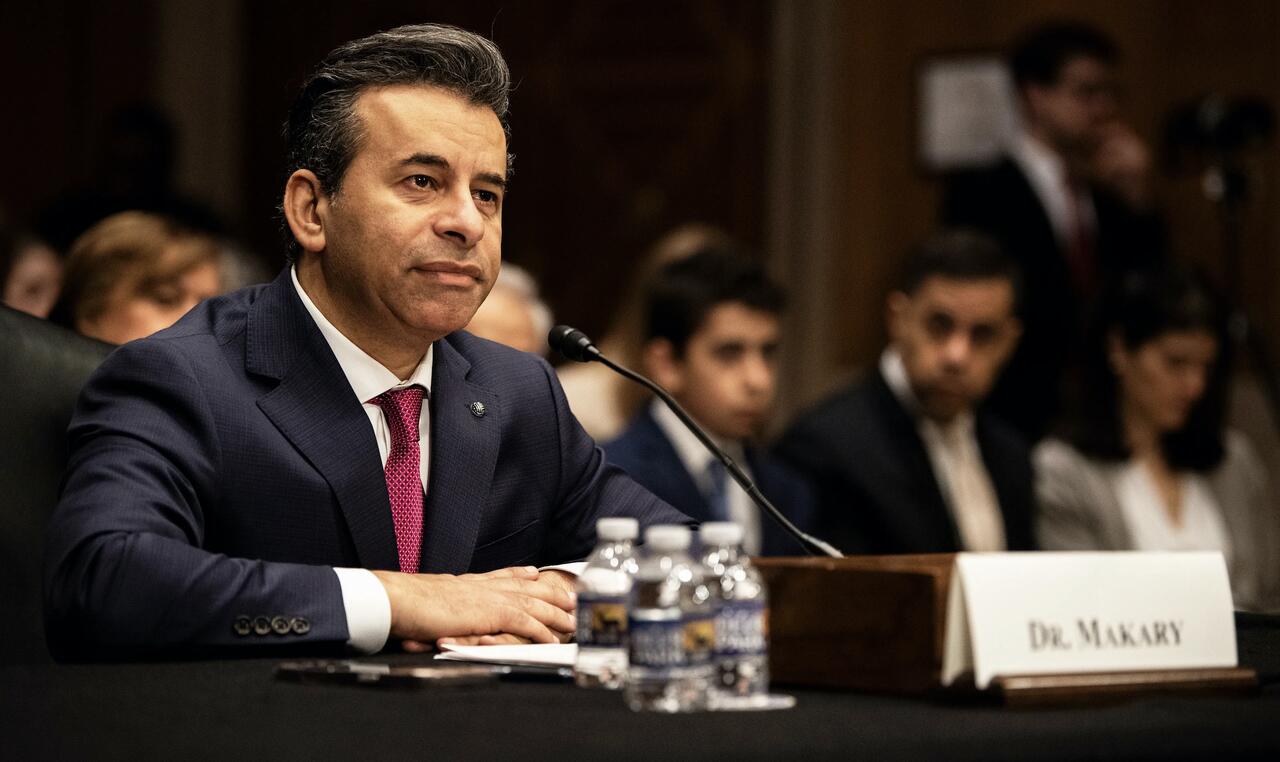
As fear and dread mounted, the American Academy of Pediatrics (AAP), a professional association of tens of thousands of US pediatricians, felt compelled to tell parents how to prevent their children from becoming the latest victims. “There was just one problem: They didn’t know what precautions, if any, parents should take,” wrote then-Johns Hopkins surgeon and now-FDA Commissioner Marty Makary in his 2024 book, Blind Spots: When Medicine Gets It Wrong, and What It Means for Our Health.
Ignorance proved no obstacle. Lacking humility and seeking to bolster its reputation as an authoritative organization, the AAP in 2000 handed down definitive instructions: Parents should avoid feeding any peanut product to children under 3 years old who were believed to have a high risk of developing a peanut allergy; pregnant and lactating mothers were likewise cautioned against consuming peanuts.
The AAP noted that “the ability to determine which infants are at high risk is imperfect.” Indeed, simply having a relative with any kind of allergy could land a child or mother in the “high risk” category. Believing they were erring on the side of caution, pediatricians across the country started giving blanket instructions that children shouldn’t be fed any peanut food until age 3; pregnant and breastfeeding mothers were told to steer clear too.
What was the basis of the AAP’s pronouncement? The organization was simply parroting guidance that the UK Department of Health had put forth in 1998. Makary scoured that guidance for a scientific rationale, and found a declaration that mothers who eat peanuts were more likely to have children with allergies, with the claim attributed to a 1996 study. When he checked the study, however, he was shocked to find the data demonstrated no such correlation. The study’s author, Irish pediatric professor Jonathan Hourihane, was himself shocked to see his study used to justify the policy. “It’s ridiculous,” he told Makary. “It’s not what I wanted people to believe.”
Despite the policy’s lack of scientific foundation, the US government’s National Institute of Allergy and Infectious Diseases (NIAID) fully endorsed the AAP guidance. In time, it would be all too apparent that — as with public health’s later response to Covid-19 — the experts weren’t erring on the side of caution, they were erring on the side of catastrophe.
It didn’t take long. By 2003, a study found that the rate of peanut allergies being self-reported by US children and their parents had doubled from 1998 levels. Critically, it wasn’t only the frequency that was soaring, but also the severity. “We saw a new type of allergy, which is the severe anaphylactic reaction, the ultra-allergy where, if someone used the same ice cream scooper…even though they rinsed it, that kid could end up in the emergency room,” Makary explained in a September podcast appearance.
All along, the right thing to do was the opposite of what the AAP and NIAID had instructed: The best means of avoiding peanut allergies wasn’t to shield young children from peanuts, but rather to intentionally feed them peanuts. That was consistent with established principles of immunological tolerance — specifically, the knowledge that early-life contact with various substances can promote tolerance of would-be allergens.
Rather than decreasing peanut allergies, AAP and NIAID created an all-out epidemic, and then prolonged it by fiercely resisting the stark reality of what they’d done. Instead of re-examining the rationale for the peanut-avoidance instruction, the public health establishment only became more emphatic in pushing its bad medicine, assuming noncompliant parents must be to blame. In reality, as the allergy rate soared, parents were growing even more dedicated to keeping children away from peanuts. The vicious circle of the growing epidemic prompting even more peanut avoidance brought disaster, with ER trips for peanut allergy attacks tripling from 2005 to 2014.
There were dissident voices in medicine from the very start of the UK-led madness. One of them, London pediatric allergist and immunologist Gideon Lack, set out to prove the guidance was wrong. His initial, 2008 study showing that genetically similar populations with vastly different exposures to peanuts in infancy had correspondingly divergent peanut allergy rates wasn’t enough to overcome the entrenched dogma.
It was only after he created a randomized controlled trial — comparing the effects of peanut exposure on children between 4 and 11 months old — that he proved that, as is the case with so many other allergies, peanut exposure is preventative, not causative. Specifically, he observed that the group of children who were exposed to peanuts in their infancy had 86% fewer peanut allergies than children who’d been shielded from peanuts.
Lack’s study was published in 2015, but the AAP and NIAID held tight to their 2000 stance for another two years. Their final surrender to reality was just the beginning of the end, as they and the broader public health apparatus now faced the daunting task of undoing a 17-year campaign that chiseled the no-peanut approach into the minds of parents and medical practitioners. A 2017 USA Today headline about the reversal summed it up bluntly: “Peanut Allergy: Everything They Told You Was Wrong.”
Of course, the greatest burden fell on the many children and young adults condemned to living with peanut allergies because their parents followed the 180-degree-wrong instructions of federal public health authorities and the country’s largest pediatric association. That means living in fear of accidental exposure, which, depending on the patient and the exposure, can result in itchiness, hives, eczema, swelling of the face, lips and eyes, nausea, vomiting, diarrhea, difficulty breathing, cardiac arrest or even death. For some, having a peanut allergy means carrying an expensive EpiPen, and making concessions like avoiding social events and restaurants.
With an eye on eliminating these allergies or at least reducing their severity, various therapies are being honed; unsurprisingly, they typically center on some form of controlled exposure to peanuts. Last month, a new study brought welcome news for children with milder versions of peanut allergies. By consuming increasing amounts of peanut butter over an 18-month period, all 32 children in the study were ultimately able to eat three tablespoons — comparable to the content of a peanut butter and jelly sandwich — without a reaction.
Beyond patients, others in our society have faced different kinds of consequences of the expert-inflicted epidemic. Families and insurers have had to shell out money for treatments — and for those expensive EpiPens, which come with expiration dates. Schools have created peanut-free zones or banned peanuts altogether. Food manufacturers and restaurants faced new labelling requirements. Some airlines have stopped serving the widely-loved snacks. Spurred on by specialty law firms, people who’ve suffered allergic reactions to peanuts have filed suits against schools, restaurants, grocery stores and amusement parks. Then there’s the guilt, regret and resentment that hangs heavy on parents who heeded bad advice to the detriment of their children’s health.
Those parents might feel a little better if they received the apologies they’re due from AAP and NIAID. It’s unlikely one will ever come, and it’s clear that nobody should expect one from Anthony Fauci, who was NIAID director during the entire 17-year span covering the both bad advice and its reversal. In a 2019 interview on CBS Sunday Morning, Fauci put on a truly grotesque display of arrogant indifference to the suffering his organization had inflicted. Attempting to distance himself from his own agency’s flawed guidance, Fauci shared a hearty laugh with CBS’s Tony Dokoupil, telling him, “I didn’t make the recommendation, that’s for sure!!”
A few years later, Fauci would make similar obfuscating statements about his hand in pushing the Covid-era lockdown regime. “Show me a school that I shut down and show me a factory that I shut down,” he told the New York Times. “I gave a public-health recommendation that echoed the CDC’s recommendation, and [other] people made a decision based on that. The CBS interview aired almost exactly a year before the Covid pandemic exploded. To look at the interview now is to appreciate that Fauci has always been the slippery, turf-guarding bureaucrat in a lab coat we witnessed as he and the public health establishment mismanaged Covid with truly devastating consequences.
Much as we’d see when the Covid era unfolded, in 2019 Fauci refused to acknowledge that public health had made a mistake regarding peanut allergies. “I wouldn’t say it was an error,” he said. “I think…it was a judgement call that in retrospect was the wrong call…It was a recommendation based on this intuitive feeling that if you withhold, therefore you’re going to protect the children.” The man who later claimed that “attacks on me, quite frankly, are attacks on science” wouldn’t even volunteer that AAP and NIAID were dead-wrong to rely on “intuitive feelings.”
Beyond Fauci’s self-aggrandizing arrogance, there are other similarities between the disastrous public health responses to peanut allergies and Covid-19. In both crises, public health:
Disregarded knowledge that suggested a different approach. Much as knowledge of immune response suggested peanut avoidance could be a counterproductive avenue, public health “experts” disregarded pre-Covid studies that rejected the notions of quarantines, widespread school, restaurant and workplace closures, and the use of surgical masks to mitigate contagious respiratory ailments.
Mindlessly followed the bad example of the first country to react to the crisis. For peanuts, that meant copying and pasting the guidance of the UK Department of Health. With Covid, Western public health took its cues from Communist China.
Blamed poor outcomes on noncompliant citizens. In the face of soaring allergy rates, health officials pinned the blame on parents failing to heed their advice. In the Covid era, public health was likewise prone to pushing failed health interventions ever-harder.
Marginalized and demonized dissidents. Adherents to the standing peanut dogma attacked Lack for even initiating his pivotal study. “I was accused of unethical behavior. There was huge pressure to stop the study,” he told Makary. “Testing the hypothesis was seen as unethical because it seemed preposterous.” Of course, the Covid era saw even the best-credentialed questioners of the lockdown, mask and hyper-testing regime treated far worse.
None of this is to say that prominent health organizations and officials are always wrong. However, what’s true at the individual healthcare level is true at the societal level: When the stakes are high, one should always be eager to hear dissenting second opinions.
Stark Realities undermines official narratives, demolishes conventional wisdom and exposes fundamental myths across the political spectrum. Read more and subscribe for free at starkrealities.substack.com
Views expressed in this article are opinions of the author and do not necessarily reflect the views of ZeroHedge.
U.S. District Judge James Boasberg seemed inclined during a hearing on April 3 to find there was probable cause that President Donald Trump’s administration was in contempt of court by disobeying his order prohibiting deportations of suspected Venezuelan gang members under the Alien Enemies Act.
The Trump administration has said it didn’t violate two of Boasberg’s orders, which prohibited illegal immigrants from being deported under that particular law but allowed deportations under other authorities.
During the April 3 hearing, Boasberg seemed incredulous while asking Department of Justice (DOJ) Attorney Drew Ensign about his knowledge of deportations of suspected and confirmed foreign gang members on March 15. He also told Ensign it seemed likely that the administration didn’t follow his directions and acted in “bad faith.”
Toward the end of their exchange, Boasberg said he thought he could make a finding of probable cause and could do so without related information that the administration said was protected by a legal doctrine known as the state secrets privilege. Both Ensign and American Civil Liberties Union attorney Lee Gelernt, who represented the Venezuelan plaintiffs suing Trump, fielded questions from Boasberg about the best way to proceed if he did find probable cause.
A ruling is not expected until next week when the court will hear arguments over whether Boasberg should issue a firmer block—known as a preliminary injunction—on the administration’s activities. It’s unclear how Boasberg will proceed with potential contempt. He asked about the possibility of the administration submitting declarations or the court having a hearing on the issue.
The hearing was the latest in a series of tense confrontations between the Trump administration and a federal judge overseeing multiple cases against the government. Trump is currently seeking the Supreme Court’s intervention to halt Boasberg’s orders after the U.S. Court of Appeals for the D.C. Circuit rejected a similar request before three other judges.
The case—J.G.G., et al. v. Trump, et al.—has raised questions about where executive authority ends and judicial authority begins. Trump has called for Boasberg’s impeachment while the administration has more generally told appeals courts that the judge encroached on the president’s powers.
In a March 19 filing, the administration told Boasberg that “what began as a dispute between litigants over the President’s authority to protect the national security and manage the foreign relations of the United States pursuant to both a longstanding Congressional authorization and the President’s core constitutional authorities has devolved into a picayune dispute over the micromanagement of immaterial fact-finding.”
In a subsequent March hearing, Boasberg said from the bench that the language he saw in the case was “disrespectful” and “intemperate.” At one point, he advised Ensign to ensure that his team at the DOJ retained a lesson he taught his clerks about their reputation and credibility being the most valuable treasure they possess.
On March 15, the Trump administration deported more than 250 Venezuelan nationals accused of being members of either the Tren de Aragua gang or the MS-13 gang, both U.S.-designated terrorist organizations. That same day, Boasberg ordered that the flights cease after several anonymous Venezuelans filed an emergency bid to block their deportations. Officials have said the flights already took off when the judge issued his written order.
In a March 27 TruthSocial post, Trump cast doubt on the likelihood of Boasberg being randomly assigned to a fourth case against him. That was the same day that Boasberg, in another case, ordered government officials to preserve messages transmitted via the Signal app after a watchdog group sued Defense Secretary Pete Hegseth and other top officials in the administration.
During the April 3 hearing, Boasberg seemed to indirectly respond to suspicions that he wasn’t randomly assigned to the deportation case. At one point, he said he was alerted around 7 a.m. ET on March 15 and suggested that because he was available to review the plaintiffs’ pseudonymous filing, they were able to get relief. The case was assigned to him after he was initially alerted, Boasberg said.
April 3, President Donald Trump announced it as “Liberation Day.” And by that he meant we were going to be liberated from asymmetrical tariffs of the last 50 years. And it was going to inaugurate a new what he called “golden age” of trade parity, greater investment in the United States, but mostly, greater job opportunities and higher-paying jobs for Americans.
And yet, the world seemed to erupt in anger. It was very strange.
Even people on the libertarian right and, of course, the left were very angry. The Wall Street Journal pilloried Donald Trump.
But here’s my question.
China has prohibitive tariffs, so does Vietnam, so does Mexico, so does Europe.
So do a lot of countries.
So does India.
But if tariffs are so destructive of their economies, why is China booming?
How did India become an economic powerhouse when it has these exorbitant tariffs on American imports?
How did Vietnam, of all places, become such a different country even though it has these prohibitive tariffs?
Why isn’t Germany, before its energy problems, why wasn’t it a wreck? It’s got tariffs on almost everything that we send them.
How is the EU even functioning with these tariffs?
I thought tariffs destroyed an economy, but they seem to like them. And they’re angry that they’re no longer asymmetrical.
Apparently, people who are tariffing us think tariffs improve their economy. Maybe they’re right. I don’t know.
The second thing is, why would you get angry at the person who is reacting to the asymmetrical tariff and not the people who inaugurated the tariff?
Why is Canada mad at us when it’s running a $63 billion surplus and it has tariffs on some American products at 250%. Doesn’t it seem like the people who started this asymmetrical—if I could use the word—trade war should be the culpable people, not the people who are reluctantly reacting to it?
Sort of like Ukraine and Russia. Russia invaded Ukraine. Do we blame Ukraine for defending itself and trying to reciprocate? No, we don’t. We don’t blame America because it finally woke up and said, “Whatever they tariff us we’re gonna tariff them.”
Which brings up another question: Are our tariffs really tariffs?
That is, were they preemptive? Were they leveled against countries that had no tariffs against us? Were they punitive? No. They’re almost leveled on autopilot. Whatever a particular country tariffs us, we reciprocate and just mirror image them. And they go off anytime that country says, “It was a mistake. We’re sorry. You’re an ally. You’re a neutral. We’re not going to tariff this American product.” And we say, “Fine.” Then the autopilot ceases and the automatic tariff ends. In other words, it’s their choice, not ours. We’re just reacting to what they did, not what we did.
Couple of other questions that I’ve had. We haven’t run a trade surplus since 1975—50 years. So, it wasn’t suddenly we woke up and said, “It’s unfair. We want commercial justice.” No. We’ve been watching this happen. For 50 years it’s been going on. And no president, no administration, no Congress in the past has done anything about it. Done anything about what? Leveling tariffs on our products that we don’t level on theirs.
It was all predicated in the postwar period. We were so affluent, so powerful—Europe, China, Russia were in shambles—that we had to take up the burdens of reviving the economy by taking great trade deficits. Fifty years later, we have been deindustrialized. And the countries who did this to us, by these unfair and asymmetrical tariffs, did not fall apart. They did not self-destruct. They apparently thought it was in their self-interest. And if anybody calibrates the recent gross domestic product growth of India or Taiwan or South Korea or Japan, they seem to have some logic to it.
There’s a final irony.
The people who are warning us most vehemently about this tariff quote the Smoot-Hawley Act of 1930. But remember something, that came after the onset of the Depression—after. The stock market crashed in 1929. That law was not passed until 1930. It was not really amplified until ’31.
And here’s the other thing that they were, conveniently, not reminded of: We were running a surplus. That was a preemptive punitive tariff, on our part, against other countries. We had a trade surplus. And it was not 10% or 20%. Some of the tariffs were 40% and 50%. And again, it happened after the collapse of the stock market.
In conclusion, don’t you find it very ironic that Wall Street is blaming the Trump tariffs for heading us into a recession, if not depression, when the only great depression we’ve ever had was not caused by tariffs but by Wall Street?
As a follow up to Victor Davis Hanson’s brief essay, hedge fund billionaire Bill Ackman commented on X that while Hanson made a compelling case for the Trump tariff strategy, he gets one issue incorrect. He describes the Trump tariffs as reciprocal and proportional to those other nations have assessed on us.
In actuality, the Trump tariffs were set at levels substantially above, and in many cases, at a multiple of the counterparty country’s tariff levels.
Initially, the market responded favorably, up more than one percent when Trump referred to ‘reciprocal tariffs’ in his Rose Garden speech. It was only when he put up a chart showing the actual tariffs that the markets plunged.
We can divine from this response that market participants are supportive of the administration using tariffs as a tool to lower the asymmetrical tariffs of our trading partners, but are highly concerned with tariff levels set well in excess of a corresponding country’s levels.
So why did Trump take this approach?
The answer goes back to ‘The Art of the Deal.’ Trump’s negotiating style is to ask for the moon and then settle somewhere in between. It has worked well for him in the past so he is using the same approach here.
The market’s response is due to the fear that if this strategy fails and the tariffs stay in place, they will plunge our economy into a recession. And we don’t need to wait for failure as it doesn’t take long for a high degree of uncertainty to cause economic activity to slow.
Press reports today have said that all deals are now on hold. This is not surprising. Capitalism is a confidence game. Uncertainty is the enemy of business confidence.
The good news is that a number of countries have already approached the negotiating table to make tariff deals, which suggests that Trump’s strategy is beginning to work.
Whether this is enough to settle markets next week is unknowable, but we will find out soon.
The idea that Wall Street and investors are opposed to the President’s efforts to bring back our industrial base by leveling the tariff playing field is false.
Our trading partners have taken advantage of us for decades after tariffs were no longer needed to help them rebuild their economies after WWII.
The market is simply responding to Trump’s shock and awe negotiating strategy and factoring in some probability that it will fail or otherwise lead to an extended period of uncertainty that will sink us into a recession.
The market decline has been compounded by losses incurred at so-called pod shops and other highly levered market participants that have been forced to liquidate positions as markets have declined.
Stocks of even the best companies are now trading at the cheapest valuations we have seen since Covid. If the President makes continued progress on tariff deals, uncertainty will be reduced, and the market will begin to recover.
As more countries come to the table, those that have held out or have reciprocated with higher tariffs will have growing concerns about being left behind. This should cause more countries to negotiate deals until we reach a tipping point where it is clear that the strategy will succeed. When this occurs, stocks will soar.
Trump’s strategy is not without risk, but I wouldn’t bet against him.
The more that markets support the President and his strategy, the higher the probability that he succeeds, so a stable hand on the trading wheel is a patriotic one.
An important characteristic of a great leader is a willingness to change course when the facts change or when the initial strategy is not working. We have seen Trump do this before. Two days in, however, it is much too early to form a view about his tariff strategy.
Trump cares enormously about our economy and the stock market as a measure of his performance. If the current strategy works, he will continue to execute on it. If it needs to be tweaked or changed, I expect he will make the necessary changes. Based on the early read, his strategy appears to be working.
PLA Blasts US ‘Dangerous’ Actions Near China Which Can Lead To ‘Misjudgment’
A rare cooperative security meeting was held between the US and Chinese militaries this week. Called the China-US Military Maritime Consultative Agreement (MMCA), it just wrapped up its annual working group summit held Wednesday through Thursday.
During the proceedings the Chinese People’s Liberation Army (PLA) made clear it will respond to any “dangerous provocations” by the US military in the waters and airspace near China. The strong statement came at the end of the meetings.
“The reconnaissance, survey, and high-intensity drills conducted by US warships and aircraft in the sea and airspace near China are highly likely to cause misjudgment, jeopardizing China’s sovereignty and military security,” the PLA Navy said.
The Chinese military delegation made clear that “the safety of vessels and aircraft is closely related to national security.” But ironically these words were issued just after huge PLA ‘live fire’ drills around Taiwan were just wrapped up. The PLA had specifically denounced the ‘separatist’ rhetoric of Taiwan’s leadership.
Already several US warships have traversed the contested Taiwan Strait under President Trump. Still, the PLA Navy overall assessed that two sides had “candid and constructive” exchanges in Shanghai.
This after a series of ‘close encounters’ between the two rivals in recent years. China has also had clashes with Japanese and Philippine coast guard assets and fishing vessels as jockeying over regional waters continues.
This past week’s PLA drills near Taiwan appeared to be based on invasion plans, including simulated strikes on Taiwan’s key ports, and military and energy infrastructure.
Taiwan’s Ministry of National Defense listed out the following Chinese military weaponry which was moved near Taiwan on Tuesday into Wednesday: 71 sorties by military aircraft and drones, 21 navy ships ranged around the island, and the aforementioned Shandong carrier which was spotted about 220 nautical miles east of Taiwan.
A PLA spokesman had at the start of the week described drills which “test the troops’ capabilities” in areas such as “blockade and control, and precision strikes on key targets.”
The Trump administration’s rhetoric has of late reflected the ‘strategic ambiguity’ which has long defined US policy on the question of defending Taiwan from a mainland attack. But the White House has been largely focused on achieving peace in Ukraine, though the Pentagon still considers China the ‘top pacing threat’.
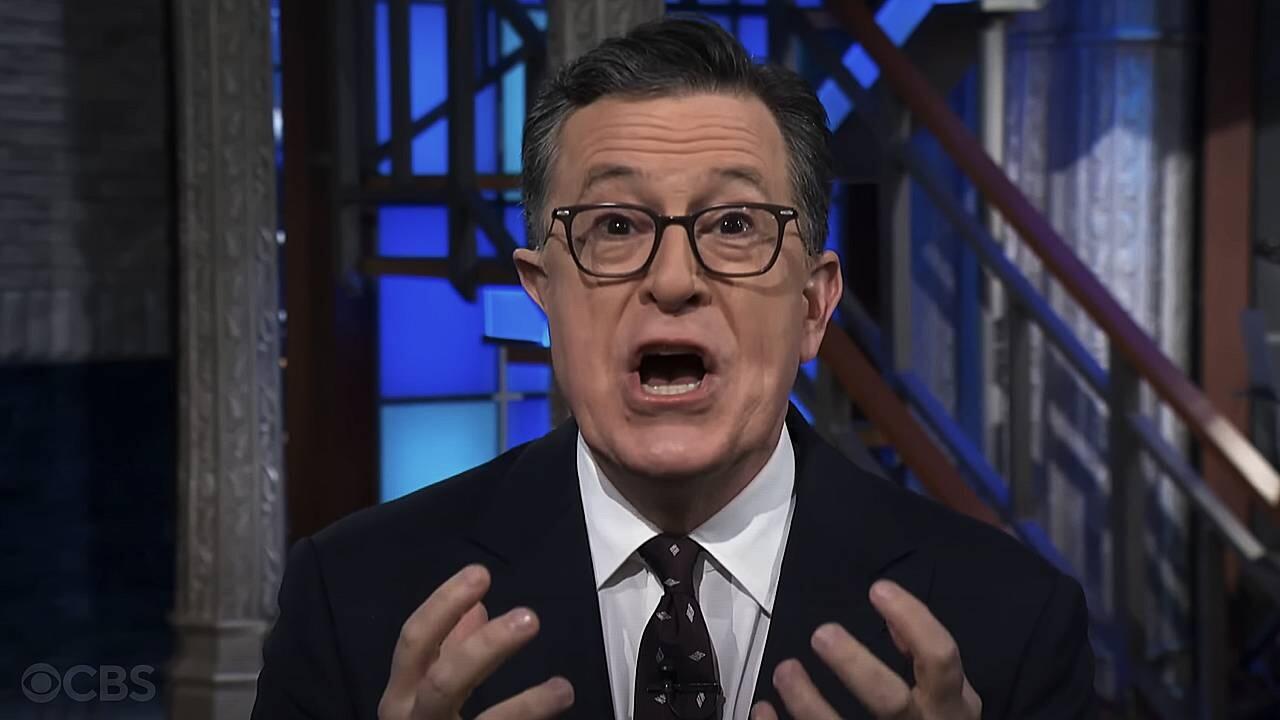
Late Show host Stephen Colbert called for the “deep state” to step in and stop President Trump enacting his tariff policy, pleading “we’re f*cking dying.”
The ‘comedian’ packaged the plea as a comedy skit, but its not comedy when you don’t even have to scratch the surface to tell he’s deadly serious.
As we highlighted yesterday, the stock markets plunged when it was reported that China would put retaliatory tariffs on US goods of 34%.
However, that plunge started to reverse on news of Trump being open to deals with countries to reduce the tariffs.
It’s part of a long term economic strategy to bring manufacturing back to the US after years of globalist ‘free trade’ agreements such as NAFTA eroded away millions of jobs and businesses.
Trump announced “our Declaration of Economic Independence” Wednesday at a “Liberation Day” event to mark the introduction of reciprocal tariffs on other countries.
Trump said American taxpayers have been “ripped off for more than 50 years, but it’s not going to happen anymore.”
“They watched in anguish as foreign leaders have stolen our jobs, foreign cheaters have ransacked our factories, and foreign scavengers have torn apart our once-beautiful American dream,” he further stated.
“For years, hardworking American citizens were forced to sit on the sidelines as other nations got rich and powerful, much of it at our expense,” Trump urged, adding “But now, it’s our turn to prosper, and in so doing, use trillions and trillions of dollars to reduce our taxes and pay down our national debt and it will all happen very quickly.”
“With today’s action, we are finally going to be able to Make America Great Again — greater than ever before,” he added.
Trump displayed charts showing how much other countries are charging the US in tariffs, noting they are “Reciprocal — that means they do it to us, and we do it to them. Very simple, can’t get any simpler than that.”
Commenting on the development, Colbert asked “Anyone feeling liberated?” telling viewers it is the “Worst day for our economy since COVID. Just a little reminder: This time, he’s the disease.”
Colbert suggested that the stock market plunge must mean the “deep state” isn’t really the all-powerful entity its made out to be.
“Because if there was, they would’ve stopped this shit,” he continued, adding “But if they do exist, I just want to say to the cabal of financial and governmental elites who pull all the strings behind the scenes: Maybe put a pause on your 5G chip JFK Jr. adrenochrome chemtrail orgy and jump in here cuz we’re f*cking dying.”
The only thing dying is his ratings and consequently his advertising revenue.
* * *
Your support is crucial in helping us defeat mass censorship. Please consider donating via Locals or check out our unique merch. Follow us on X @ModernityNews.
Topline: Back in 2010, local officials in the City of Lynn, Massachusetts bragged to The Daily Item about an “inexpensive” way to beautify their own city: use federal grants to send the cost to taxpayers in other cities.
The city spent $2.8 million renovating a goldfish pond, a Mexican restaurant and more, using multiple grants and no-bid contracts.
That’s according to the “Wastebook” reporting published by the late U.S. Senator Dr. Tom Coburn. For years, these reports shined a white-hot spotlight on federal frauds and taxpayer abuses.
Coburn, the legendary U.S. Senator from Oklahoma, earned the nickname “Dr. No” by stopping thousands of pork-barrel projects using the Senate rules. Projects that he couldn’t stop, Coburn included in his oversight reports.
Coburn’s Wastebook 2010 included 100 examples of outrageous spending worth more than $11.5 billion, including the City of Lynn’s spending spree — which would be worth $4.2 million today.
Key facts: Lynn’s funding came out of Community Development Block Grants from the Department of Housing and Urban Development.
The city had already renovated its heart-shaped goldfish pond in 2005, but apparently residents were still unhappy with the stone walls on the island in the pond’s center. Lynn officials solicited bids for renovations and hired a nonprofit instead of private companies that offered a cheaper price.
Businesses in downtown Lynn, just north of Boston, were reimbursed up to $4,000 each to redecorate their storefronts. A vacuum cleaner store, a video rental store and more took advantage.
One local official explained: “It‘s an inexpensive way to fix up a storefront, especially for the business owner.” It was yet another example of a city treating federal grants like free money.
Other projects included a new gazebo, a water play area and a boat dock.
Today, Lynn is using its own taxpayers’ money to pay out generous local salaries. Twenty-six public employees earned more than $200,000 in 2023, according to payroll records obtained by OpenTheBooks.com.
Reports That Trump Will Pull Out Of NATO Are Pure ‘Hysteria’: Rubio
One of the most interesting moments from US Secretary of State Marco Rubio’s trip to Brussels this week where he met with NATO leaders for a security summit was when he reassured allies that Washington is committed to NATO, and will without doubt remain a member of the military alliance.
He dismissed as “hysteria” recent Western media reports and headlines which suggest President Trump could bail on NATO altogether. Rubio stressed that Trump has been clear that America will remain in NATO.
“The United States is in NATO … As we speak right now, the United States is as active in NATO as it has ever been,” Rubio told reporters in Brussels late this week.
“And some of this hysteria and hyperbole that I see in the global media and some domestic media in the United States about NATO is unwarranted. President Trump has made clear he supports NATO. We’re gonna remain in NATO. He’s made clear,” Rubio added.
He emphasized that Trump was “not against NATO” but rather against a bloc “that does not have the capabilities that it needs to fulfil the obligations” under its founding treaty. He then called for “every single” NATO state to forge a “realistic pathway” to eventually commit 5% of its GDP to defense.
In reality this could take years or even decades, but ‘eastern flank’ countries like Poland are the most out front in nearing the goal. Warsaw is aiming to commit 4.7% of GDP by year’s end, and tiny Estonia is already at 3.7%. Many Western European allies are lagging far behind this.
NATO Secretary-General Mark Rutte stood alongside Rubio and offered the same assurances of America’s lead role in the alliance:
NATO Secretary-General Mark Rutte insisted Friday that “we are united in our commitment to each other in this alliance,” and that the “transatlantic relationship remains the cornerstone of European security and of global stability.”
“I know there has been some tough language. I know that there have been allies, for example, this side of the pond being worried about the long-term commitment of the U.S. to NATO,” said Rutte, adding: “The Americans have stated again and again, ‘We are committed to NATO. We are committed to Article 5.'”
In the recent past Trump has made some provocative comments telling Europe it can forget about Article 5 if it can’t shoulder more of the burden long taken on by the United States.
Watch: America’s top diplomat blasts media claims that US is pulling out of NATO…
Secretary of State Rubio slams media hysteria over claims that Trump wants to pull the US out of NATO
In early March he pondered somewhat sarcastically the scenario in which America came under attack. He said of NATO allies, “Do you think they’re going to come and protect us? Hmm. They’re supposed to. I’m not so sure.”
Since then speculation has grown that Trump could grow weary of dealing with NATO partners, also as Washington has dialed down its Ukraine support, and sought to forge peace with Putin’s Russia.