62.2 F
Chicago
Thursday, June 25, 2026
Home Blog Page 181

First Loaded Crude Supertanker Clears Hormuz Without Using Larak Channel

First Loaded Crude Supertanker Clears Hormuz Without Using Larak Channel

Summary: 

  • Idemitsu Maru did not use Larak Channel

  • Loaded Idemitsu Maru crude supertanker exited Hormuz this afternoon, marking the first such crude transit since the conflict began.

  • Loaded Mubaraz LNG tanker exited Hormuz earlier this month, also marking the first such LNG transit since the conflict began.

Polymarket


First Crude Supertanker Exits Hormuz

Following the Mubaraz LNG tanker’s exit from the Hormuz chokepoint in recent weeks, the first such transit since the conflict began, new ship-tracking data from Bloomberg late Tuesday afternoon show that the first crude supertanker, Idemitsu Maru, is also exiting the critical waterway.

Idemitsu Maru, operated by the tanker unit of Japan’s Idemitsu Kosan, marks yet another positive signal for Gulf energy flows, but activity in the waterway remains deeply depressed.

Two key things we must point out: first, the tanker is through; second, the tanker did not transit the Larak Channel, the northern passage through the critical waterway near Iran’s Larak Island, close to Qeshm Island.

First Loaded LNG Tanker Clears Hormuz; First Crude Supertanker Attempts Exit

While all the attention has been focused on President Trump’s national security team reviewing an Iranian peace deal that would end the two-month war and reopen the Hormuz chokepoint, while deferring nuclear negotiations to a later date, new vessel-tracking data show that the first loaded LNG tanker has exited the critical waterway since the conflict began, while the first loaded crude supertanker is also attempting to exit.

“The first LNG shipment since the war in Iran began two months ago appears to have slipped through Hormuz,” Bloomberg’s Stephen Stapczynski wrote in an overnight post on X.

Stapczynski also noted that the Mubaraz LNG tanker was loaded at ADNOC’s Das Island facility in Abu Dhabi in early March and turned off its transponder around March 31, only reappearing west of India on Monday.

The latest ship-tracking data from Bloomberg shows that Mubaraz is approaching the southern tip of Sri Lanka, with the vessel signaling China as its port of call.

A separate report from Bloomberg’s Weilun Soon identified yet another tanker, this time a Japan-linked supertanker loaded with crude, attempting to become the first crude-laden vessel to exit Hormuz since the war began.

The Idemitsu Maru, operated by the tanker unit of Japan’s Idemitsu Kosan, left its holding position near Abu Dhabi late Monday and appears to be exiting the Hormuz chokepoint early Tuesday, according to Bloomberg ship-tracking data.

Both transits are significant. Taken together, they may indicate that a U.S.-Iran framework to end the war and reopen the critical waterway is nearing execution, or that countries such as China and Japan are beginning to see a pathway toward de-escalation.

The latest Polymarket odds of Hormuz traffic returning to normal by May 15 stand at around 15%.

Strait of Hormuz traffic returns to normal by May 15?
Yes 14% · No 86%
View full market & trade on Polymarket

Latest Hormuz flows via UBS:

Oil & gas tankers passing through Hormuz

Oil & gas tankers exiting Hormuz

All great news. 

Tyler Durden
Tue, 04/28/2026 – 14:35

Iran To Send Revised Proposal To US In ‘Days’ As ‘Tank Tops’ Loom, Trump Claims Iran “Informed Us They Are In State Of Collapse”

Iran To Send Revised Proposal To US In ‘Days’ As ‘Tank Tops’ Loom, Trump Claims Iran “Informed Us They Are In State Of Collapse”

Summary

  • Trump TS claim: Tehran has informed Washington they are in a “state of collapse” and that the Iranians want the US to “open the Hormuz Strait” – as ‘tank tops’ loom.

  • Trump doesn’t appear open to Iran’s proposal which hinges on US naval blockade ending & nuclear issue being pushed to future negotiations (CNN). Tehran working on revised plan to be sent in ‘few days’.

  • First crude-laden Japanese tanker from Saudi port exits Hormuz Strait successfully without Iranian interference.

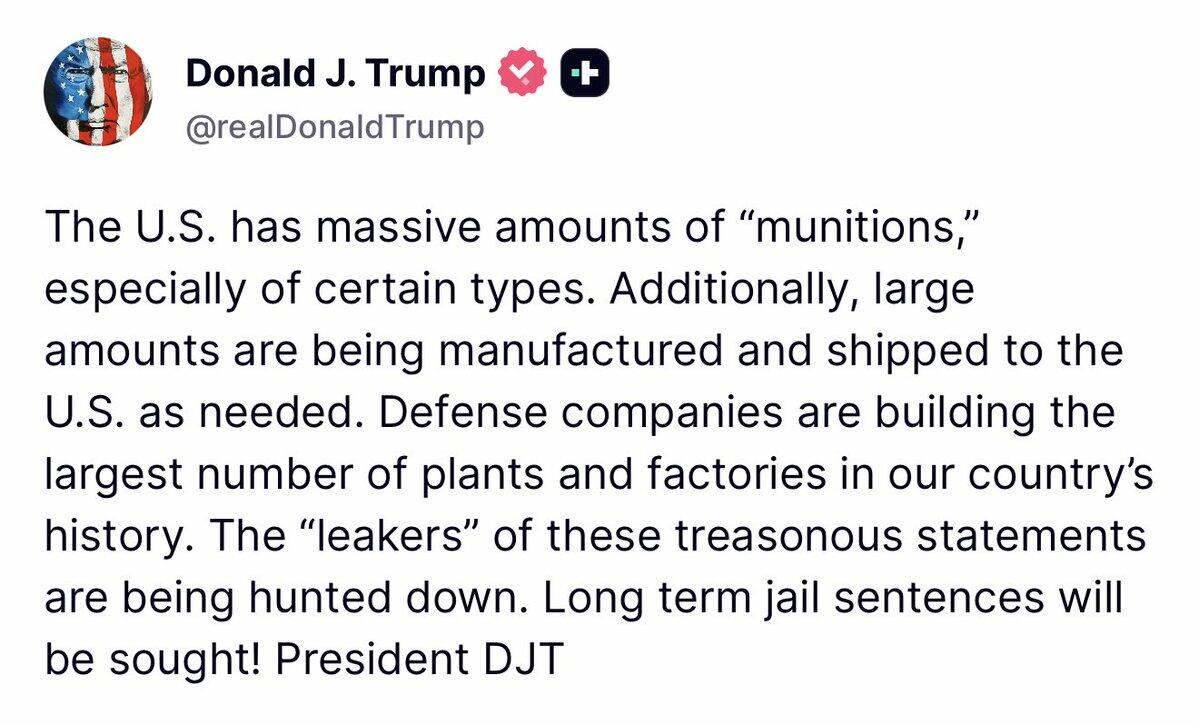
  • Iranian analyst describes that Tehran believes it can outlast Trump & the standoff with US in Hormuz, citing “munitions, markets, and the midterms.”

Will Donald Trump announce that the United States blockade of the Strait of Hormuz has been lifted by May 31, 2026?
Yes 66% · No 34%
View full market & trade on Polymarket

*  *  *

Revised Plan Coming in ‘Next Few Days’

So at least there is some back-and-forth. Trump is said to have rejected an initial proposal from Iran, which centered on the US opening up the strait, but pushes the nuclear issue to future talks – and only after an end to the war. Tehran is reportedly revising, and is expected to submit a revised draft deal in the coming days. CNN has the latest in the following:

Mediators in Pakistan expect to receive a revised proposal from Iran in the next few days to end the war, after US President Donald Trump indicated that he would not accept an earlier version, sources close to the mediation process told CNN. The sources say Iranian Foreign Minister Abbas Aragchi was due back in Tehran today after a visit to Russia, adding that he is expected to consult with regime leaders. That process is slow, the sources say, because of the difficulty in communicating with Supreme Leader Mojtaba Khamenei, whose location is being kept secret.

Currently there’s much speculation and armchair quarterbacking regarding ‘hardliners’ vs ‘moderates’ in Iran and who is actually in charge, amid reports the IRGC doesn’t want engagement with untrustworthy Washington at all. Meanwhile there’s no question Iran is using the extended ceasefire interim to rearm and regroup militarily.

Trump claims Iranians in ‘State of Collapse’

Literally one minute before market-open, and President Trump issues the following big claim: he says that Tehran has informed Washington they are in a “state of collapse” and that the Iranians want the US to “open the Hormuz Strait”. Of course, even if it were true, why would the Iranians admit such a thing to their enemy during a state of war?

There have been some signs of political fracture – especially tensions between IRGC and civilian leadership – but so far the evidence has been anecdotal at best. Currently the internal Iranian government debate seems to be on whether to talk to the US or not – but again, amid the fog of war… all Western MSM can do is speculate, aside from the rare Iranian ‘anonymous’ source that might whisper in a reporter’s ear.

Oil Rises to 3-week High as Trump Doesn’t Appear Open To Iran Proposal

Reporting from Monday evening and overnight says President Trump doesn’t appear open to Iran’s latest proposal to end the war, which hinges on the US naval blockade being lifted but pushes the nuclear issue off to later negotiations. As a result, oil prices have continued to rise, climbing above $110 a barrel Tuesday morning – a first in three weeks, amid concerns of a prolonged strait closure. As for the latest tankers to actually make it through, CBS describes:

Four civilian ships appeared to leave the Persian Gulf through the Strait of Hormuz on Tuesday without Iranian interference, including a Japanese oil tanker carrying some two million barrels of crude from Saudi Arabia

The Panama-flagged crude oil tanker Idemitsu Maru called at Saudi Arabia’s Juamyah industrial port in early March, according to open source data from the MarineTraffic ship tracking website. For the past week it had remained anchored off the coast of Abu Dhabi in the Persian Gulf, until late Monday, when it sailed toward Iran’s Larak island in the Strait of Hormuz. 

On Tuesday morning, tracking data showed the vessel passing south of Iran’s Larak island, which analysts say the regime had used as a “toll booth” to collect fees from some ships before military authorities declared the strait entirely closed again last week.  

The White House has insisted that there would be no scheme for Iran collecting tolls as part of any future deal, but the Iranians appear to be forcing the issue, and have said the funds will help with the country’s reconstruction after the devastation wrought by US-Israeli bombing raids.

via Reuters

Three M’s

Independent news organization Drop Site says that Iran is now setting its own terms for ending the war as President Trump’s narrative on negotiations flails. One Iranian analyst has said that Tehran believes it has the three M’s on its side: “munitions, markets, and the midterms.”

The report cites Hassan Ahmadian, a well-known Iranian analyst and associate professor at the University of Tehran, who explains: “The Iranians are saying time is working in our favor for the three Ms: munitions, markets, and the midterms. These three Ms help Iran in its position and weaken US positions.”

“Obviously in the U.S., they want something to say, ‘We squeezed Iran and we got this.’ My perception is that the Iranians are keen to deny the United States that – they wouldn’t give what Trump wants as a victory,” he added.

A separate Iranian official, privy to negotiations and so remaining anonymous, stated: “We’re currently moving forward with our own design, and we feel continuing negotiations doesn’t make sense until the U.S. government lifts the maritime blockade.”

“The scope of the conflict has expanded, and naturally the issue is no longer purely nuclear,” the official added. Indeed, the latest proposal for ceasefire out of Tehran focuses on the US Navy ending its blockade, and leaves the nuclear issue for future consideration, given it has proven an impasse in the prior Islamabad talks.

But Washington as been asserting its own leverage:

‘Tank Tops’ Loom

President Trump explained – in his own inimitable manner – what we described last week: time is running out for Tehran… as oil blockade stalls the flow state of Iran’s economy permanently… 

Trump told Fox News on Sunday that the US blockade on traffic to and from Iranian ports is putting major pressure on the country’s export infrastructure: 

“When you have, you know, lines of vast amounts of oil pouring through your system, if for any reason that line is closed because you can’t continue to put it into containers or ships, which has happened to them — they have no ships because of the blockade — what happens is that line explodes from within, both mechanically and in the earth.”

“It’s something that happens where it just explodes. And they say they only have about three days left before that happens. And when it explodes, you can never, regardless, you can never rebuild it the way it was.”

As Hugh Hendry noted, time is running out for Iran:

Iran’s oil system is not built to pause. It’s built to flow. It’s a flow system.

Oil cannot simply sit in the ground while strategists argue over maps and how much uranium dust to give over. It has to move. Iran and its system has to move continuously from the rock underground to the tanker in the harbor to the Chinese buyer in Asia.

Pause long enough, and the whole machine breaks.

Interrupt that flow. And the problem isn’t just lost revenues of like forty, fifty, sixty billion dollars. It’s the least of your concerns. The problem is physical and is irreversible.

Because when you suddenly shut the well, remember there’s no physical storage. They pump, they load, they ship.

If they can’t load, if they can’t ship, they can’t pump. And when you suddenly shut the wells, the pressure underground drops fucking fast. 

Do you know what happens?

The heavy, sticky crap in the oil, it gums up, gums up in the tiny holes within the rocks and becomes like glue. It traps the oil. It makes it really fucking hard to extract. And once that damage is done, it’s permanent. You lose a big chunk of the oil. 

The more Iran is actively either through theater or through bluff, the more that it sits in a standoff, the more it is actively destroying the one thing that it actually depends upon. 

That’s the trap. And you’re not reading in in the press, but you’re damn well reading it on your screens.

Because this is where the gap between the narrative of the media and the price stops being subtle and irrelevant, and it’s why stock markets have priced something entirely differently.

The Iranian system, the adversary, cannot afford to stay disrupted without hurting itself. That’s what’s in the equity market’s price.”

We covered the timeline for ‘tank tops’ here in detail – less than 15 days before shut-ins begin.

Tehran Won’t Talk Without JD Vance Present

The failed second round of Pakistan talks, which fell apart before they even began, was supposed to see Vice President JD Vance heading up the US side. This was reportedly something the Iranian side desired to see, and is likely still what its negotiating team would rather be dealing with. On the other hand, per Drop Site, “Iran has total disdain for Trump’s Special Envoy Steve Witkoff and views him as both oblivious of diplomatic processes and totally ignorant of technical issues.”

This is because “Kushner is viewed by Iran as Israel’s man at the table.” This has led to the following view and alleged conclusion: “Iran, the senior official said, does not see any reason to deal with these two without a figure like Vice President JD Vance present.”

Bombs have grown quiet across the Gulf amid the extended ceasefire, with the exception that fighting in southern Lebanon still rages, despite the US-mediated ‘Lebanon ceasefire’:

Last week as an avalanche of headlines said that a second round of talks were imminent, and after the Iranian foreign minister had already landed in Islamabad for bilateral discussions with Pakistani mediators, there were premature reports that Vance was en route to Islamabad. The mainstream media claimed that it was Iran essentially begging Washington for negotiations. “But Vance, it turned out, was not on a plane, and Iran continued to deny it had any intention of meeting with U.S. officials in Pakistan,” Drop Site underscores.

Tyler Durden
Tue, 04/28/2026 – 13:25

Tailing 7Y Auction Sees Lukewarm Foreign Demand, Jump In Direct Buyers

Tailing 7Y Auction Sees Lukewarm Foreign Demand, Jump In Direct Buyers

The week’s final coupon auction per the truncated pre-FOMC schedule has come and gone, and like yesterday’s 2Y and 5Y, was also mediocre at best.

The sale of $44BN in 7Y paper stopped at a high yield of 4.175%, down from 4.255% in March; and like the week’s previous auctions, the 7Y also tailed the 4.170% When Issued by 0.5bps, which makes it 4 auctions that have not stopped through in a row.

The bid to cover was better, rising to 2.513 from 2.432; this was the highest bid to cover since last June, and obviously well above the 2.46 six auction average.

The internals, on the other hand, were softer, with Indirects awarded 58.35%, down from 62.35% and below the 61.28% recent average. And with Directs taking a surprisingly high 30.0%, up from 25.0% and the highest since December, Dealers were left with 11.6%, right on top of the recent average.

Overall, this was another medicore auction which in light of the recent move higher in rates could have been worse. 

As with the week’s previous auctions there was no notable reaction to today’s sale with markets far more focused on the price of oil and developments in Iran.

Tyler Durden
Tue, 04/28/2026 – 13:20

Appeals Court Temporarily Allows Pentagon To Require Escorts For Reporters

Appeals Court Temporarily Allows Pentagon To Require Escorts For Reporters

Authored by Aldgra Fredly via The Epoch Times (emphasis ours),

A U.S. appeals court on April 27 temporarily allowed the Department of War to require reporters entering Pentagon grounds to be escorted while the government appeals a lower court ruling.

The Pentagon is seen from a flight taking off from Ronald Reagan Washington National Airport in Arlington, Va., on Nov. 29, 2022. Alex Wong/Getty Images/TNS

In a 2–1 decision, a three-judge panel from the U.S. Court of Appeals for the District of Columbia Circuit stayed an April 9 order issued by U.S. District Judge Paul Friedman, which found the department’s revised press access policy violated his previous order by mandating escorts for reporters entering the Pentagon.

The panel said the department has shown that it is likely to succeed on the merits of its case. According to the ruling, the department argued that allowing journalists to enter the Pentagon unescorted could increase the risk of sensitive information being disseminated.

The Department has thus supported its claim that this aspect of its policy furthers important national security interests,” the ruling stated.

Pentagon spokesman Sean Parnell welcomed the appeals court’s decision and emphasized that journalists continue to hold valid press credentials and access to Pentagon briefings, press conferences, and interviews.

“Despite what many in the media have told you, the Department’s policy has never been about limiting journalism—it is about safeguarding classified information that protects American lives,” Parnell said on X.

The New York Times challenged the Pentagon’s rules in December 2025, arguing that its press access policy violated the U.S. Constitution’s First Amendment by restricting journalists’ ability to “ask questions of government employees and gather information to report stories that take the public beyond official pronouncements.” Friedman subsequently blocked the rules and ordered the Pentagon to reinstate the credentials of New York Times reporters.

This story is developing and will be updated.

Tyler Durden
Tue, 04/28/2026 – 13:00

Vegas Casino Stocks Hit A Cold Streak As Visitor Growth Muted

Vegas Casino Stocks Hit A Cold Streak As Visitor Growth Muted

Las Vegas casino stocks have been largely mixed year to date on New York exchanges, as soaring costs for alcohol, parking, food, hotel rooms, bottled water, and other basic items have deterred cash-strapped visitors from the Strip.

Visitor volumes have been under pressure for more than a year, with Canadian travel down sharply in 2025. Major operators such as MGM and Caesars have reported revenue declines in Sin City, according to Bloomberg.

The latest data from the Las Vegas Convention and Visitors Authority show that visitor volumes increased marginally by 2.1% in February, but this was from a depressed level, as foot traffic remains below late-2024 levels.

Foot-traffic data from Placer.ai indicate that quarterly visits across the top casino operators remain soft, with Las Vegas-exclusive Red Rock Resorts being the only one showing growth.

Vegas foot traffic is expected to remain muted this year: “I wouldn’t expect a major upswing,” Bloomberg Intelligence gaming and lodging senior analyst Brian Egger said.

Citizens analyst Jordan Bender noted that Vegas is more like a “vacation,” with visitors going there “not necessarily to gamble more.”

If “you just want a fun weekend for two days, it’s not a bad place to go,” Suter told clients.

We have detailed for years how unaffordable Vegas has become. Even MGM CEO William Hornbuckle acknowledged this reality on an October earnings call: “Whether it’s the infamous bottle of water or Starbucks coffee at Excalibur that costs $12, shame on us.”

Vegas must become affordable again – or risk yet another year of muted traffic, which would impact the local economy because the leisure and hospitality industry made up about a quarter of all jobs in the metro area.


Tyler Durden
Tue, 04/28/2026 – 12:40

More Than 1,000 TSA Officers Have Quit Amid Shutdown

More Than 1,000 TSA Officers Have Quit Amid Shutdown

Authored by Troy Myers via The Epoch Times (emphasis ours),

The Department of Homeland Security (DHS) said Monday that more than 1,000 Transportation Security Administration (TSA) officers have left the agency since the partial shutdown began on Feb. 14.

An employee with the Transportation Security Administration (TSA) checks the documents of a traveler at Reagan National Airport in Washington, Jan. 6, 2019. Joshua Roberts/Reuters

Amid the record-breaking lapse in funding, DHS said that with summer months approaching and the FIFA World Cup kicking off in June, impacts to travelers could be significant.

The department announced the drastic drop in staffing in a post on X, blaming Democrats in Congress for the prolonged shutdown.

This loss has SIGNIFICANTLY decreased TSA’s ability to meet passenger demand and left critical gaps in staffing, as each new recruit requires 4-6 MONTHS of training,” DHS wrote.

Fliers at airports across the United States experienced hours-long security lines earlier in the spending lapse.

To ease travel pains, President Donald Trump on March 23 deployed Immigration and Customs Enforcement (ICE) officers to 14 U.S. airports.

“[The American public is] going through a big struggle right now, and we just put ICE in charge, and they’re helping TSA—the agents—and they’re working together so far very well,” Trump said at the time.

If longer wait times persisted, Trump pitched the idea of also deploying the National Guard.

Lauren Bis, acting assistant secretary for public affairs at DHS, told The Epoch Times that from the start of the shutdown through March 24, 450 TSA agents had quit. Thousands more were calling out sick and could not afford gas, childcare, food, or rent, she added.

“As Democrats continue to put the safety, reliability, and efficiency of our air travel system at risk, [President] Donald Trump is taking decisive action—deploying hundreds of ICE officers, already funded by Congress, to the airports under the greatest strain,” Bis said.

TSA acting Administrator Ha Nguyen McNeill told Congress on March 25 that airports might be forced to close if the partial shutdown continued.

“At this point, we have to look at all options on the table. We don’t have the luxury of picking and choosing how we maintain our operations,” McNeill told lawmakers.

“And that does require us to, at some point, make very difficult choices as to which airports we might try to keep open and which ones we might have to shut down as our callout rates increase.”

Only days after McNeil testified on Capitol Hill, Trump signed a presidential memorandum to pay TSA agents with DHS emergency funds.

More than 50,000 TSA employees had been working without pay for weeks.

Wait times at airports eased as TSA agents began receiving paychecks and backpay. Security lines that were taking multiple hours to pass through were down to 10 minutes or less.

But there’s still no long-term plan from Congress to fully fund DHS.

Republicans and Democrats are blaming each other for the spending standstill. An array of funding proposals have come from both sides, but none have successfully advanced.

GOP lawmakers are criticizing their counterparts for not passing their proposals, as Democrats demand a guaranteed overhaul of immigration operations in exchange for a funding agreement.

On March 27, the House passed a stopgap plan to fund DHS for 60 days. The bill was sent to the Senate, which had already left for a two-week recess.

Homeland Security Secretary Markwayne Mullin warned on April 21 that DHS will soon run out of its emergency funds to pay TSA if Congress cannot reach a deal. The money would run dry by the first week in May, he said in a “Fox and Friends” interview.

“My payroll at DHS is just over $1.6 billion every two weeks,” Mullin said. “There is no more emergency fund, so the president can’t do another executive order for us to use money, because there’s no more money there.”

The Senate, using the budget reconciliation process, advanced on April 23 a $70 billion funding plan for ICE and Customs and Border Protection through 2029. The process allows passage by a simple majority, bypassing the Senate’s 60-vote threshold.

If brought up by the House, the resolution would allow congressional committees to write detailed legislation on allocation of the funds, which would then require Trump’s signature to take effect.

Trump praised the Senate’s effort and urged Republicans to unify to achieve full funding for DHS.

Tyler Durden
Tue, 04/28/2026 – 12:20

Collateral Damage

Collateral Damage

By Molly Schwartz, Cross-ASset Macro Strategist at Rabobank

Negotiations between the US and Iran are going nowhere. In fact, they’re not really even happening at all. Over the weekend, Axios reported that Iran gave the US a proposal to reopen the Strait — not to end the war. The proposal includes extending the ceasefire and an assertion that any conversations about Iran’s nuclear program are off the table until the Strait is open and the US blockade is lifted. The US has not indicated whether it will accept or reject the proposal at the time of writing.

Assuming the US does agree to extend its indefinite ceasefire, a flimsy ceasefire extension, even if agreed to by both parties, holds little water. Remember, keeping the Strait open was a condition of the current ceasefire as agreed to on April 8, and we can all see how well that held up. Just take a look at the prices at the pump.

While conversations between the US and Iran stall, Iran is making friends elsewhere. Iranian Foreign Minister Araghchi met with Putin yesterday, as Bloomberg reported that Araghchi told Putin he is “committed to strengthening the country’s partnership with Russia” and that “the Iranian people are able to ‘resist US aggression and will be able to overcome it.’”

As Iran and Russia are making nice, the US and Germany are not. During a visit to a school in western Germany, German Chancellor Friedrich Merz said that the Trump Administration was being “humiliated” by Iran: “The Iranians are clearly stronger than expected and the Americans clearly have no truly convincing strategy in the negotiations either. A whole nation is being humiliated by the Iranian leadership.” Trump has not commented on Merz’ claims at the time of writing.

The longer the Strait remains closed, the longer the European economy, and energy complex, is squeezed. Germany has rejected Trump’s calls to join the war under NATO, despite German leaders softly echoing support of US military efforts. Europe has drafted a plan to re-open the Strait after the war has ended, that is not enough to appease Trump, who has made his demands for NATO participation in the Iran war clear. But the question remains just how much collateral damage Europe is willing to be subject to in the pursuit of keeping its hands clean.

Europe’s reliance on energy from the Middle East and direct flows through the Strait of Hormuz suggest that they are in for more pain than the US under a prolonged closure. At the same time, they don’t have a fanatic obduracy to tolerate it like the Iran (or rather, the IRGC at the expense of the Iranian people). If negotiations fail to result in a somewhat peaceful re-opening of the Strait and conclusion of the US naval blockade, Europe may have no choice but to get involved.

It’s probable that the Trump Administration is aware of this. Trump has lambasted European leaders for refusing to support the US and in some cases, outright refusing to cooperate. If the US keeps the Strait closed and inflicts enough second-hand damage on Europe, Trump may be able to achieve the NATO military “cooperation” he has been asking for.

Crude oil futures have continued to grind higher, trading up to highs of $109/bbl yesterday. Futures prices have started to converge with the physical market, which is currently pricing crude at $113/bbl, narrowing the spread from highs of $35.9 earlier this month to only $4, which would be more consistent with levels seen pre-war.

Meanwhile, the Fed drama saga continues. The path to Warsh’s confirmation as Fed chair seems to have cleared as the US Department of Justice (DOJ) has dropped its criminal probe into Powell with regard to the Federal Reserve’s renovation budget. However, whether Powell will stay on the Board is not yet certain. While Powell’s term as Chair ends in May, he is allowed to stay on the Board of Governors until January 2028.

Despite it being a highly popular question from reporters during the Fed decision press conference, Powell had been tight lipped about his plans for a while, until confirming more recently that he would stay on the Board until the DOJ investigation levied against him was concluded.

However, while the DOJ has dismissed the case, that doesn’t mean that Powell’s troubles are over. Rather, this means that the case has now landed on the desk of the Fed’s Office of Inspector General (OIG), though according to the Fed’s own article about the renovation, the OIG has had full access to all financial records and information throughout the duration of the project.

Given the dropped charges against Powell, that has opened up Senator Thom Tillis to vote to officially confirm Warsh as Fed Chair. Whether or not the Fed meeting tomorrow will be Powell’s last is still TBD. Read more from our Fed whisperer, Philip Marey, here.

A little farther north, Canadian Prime Minister, Mark Carney, announced the creation of a Canadian sovereign wealth fund, called the “Canada Strong Fund.” The fund is designed to further lower barriers to business and investment in Canada—something the Carney has spoken about extensively as a part of his mission—by “investing in strategic Canadian projects and companies.”

A more financially-savvy Canadian government does not come without drawbacks. Carney has recently come under scrutiny by some after his ethics disclosure, which has led some to question the dissonance in Carney’s insistence that Canada needs to diversify away from the US, while he himself is heavily invested there.

Tyler Durden
Tue, 04/28/2026 – 10:15

Conference Board Confidence Unexpectedly Jumps To Highest In 2026

Conference Board Confidence Unexpectedly Jumps To Highest In 2026

Despite war (and rising gas prices) now fully embedded in respondents’ minds, it is perhaps surprising that The Conference Board’s Consumer Confidence rose considerably more than expected to 92.8 in April (89.0 exp) from an upwardly revised 92.2.

Present Situation dipped very modestly from 124.1 to 123.8 (120.1 exp) while Expectations rose from 71.0 to 72.2 (69.2 exp)

Source: Bloomberg

That is the highest headline print in 2026.

“Consumer appraisals of current and expected business conditions declined moderately compared to last month,” said Dana M Peterson, Chief Economist, The Conference Board.

“This was offset by modest improvements in consumers’ perceptions of the labor market, both current and expected, as well as income expectations, which were slightly more optimistic in April.”

While the overall trend is still lower, The Board’s indicator signaled a pick up in the labor market…

Source: Bloomberg

A two-week ceasefire and a rebound in stock market indices within the survey-sample period (April 1–22) likely helped ease concerns about financial indicators somewhat in April after spiking in March.

Still, consumers remained wary.

Consumers’ average and median 12-month inflation expectations ticked downward but continued to be elevated. The percentage of consumers saying interest rates over the next 12 months will be higher on net rose to nearly 50%. Expectations for higher stock prices a year from now ticked up.


Among demographic groups, confidence continued to trend downward on a six-month moving average basis for consumers aged 35 and up while younger consumers were a tad more confident in April. Respondents under 35 remained the most optimistic and those 55 and over the least.

On a six-month moving average basis, confidence improved among Millennials and Gen Z but declined among older generations. By income, confidence on a six-month moving average basis varied, but most income groups expressed less optimism.

By political affiliation, Republicans remained the most optimistic, while confidence fell for Independents and improved slightly for Democrats.

Tyler Durden
Tue, 04/28/2026 – 10:11

‘Quality Learing Center’ And 20 Other Somali-Linked Businesses Raided By FBI, Homeland Security In Minnesota

‘Quality Learing Center’ And 20 Other Somali-Linked Businesses Raided By FBI, Homeland Security In Minnesota

Federal agents from the FBI and Homeland Security Investigations (HSI) executed court-authorized search warrants at more than 20 locations across the Minneapolis area early Tuesday morning, targeting businesses primarily linked to the Somali-American community as part of an ongoing criminal fraud investigation.

Fox News congressional correspondent Bill Melugin reported that the Department of Justice confirmed the operation to the network, stating it involves “court-authorized law enforcement activity as part of an ongoing fraud investigation.” A separate DHS statement emphasized that HSI, working with federal, state, and local partners, carried out the warrants “relating to the rampant fraud of U.S. taxpayers dollars.” Sources indicated approximately 22 warrants were served, explicitly tied to fraud schemes rather than immigration enforcement.

One prominent target was the Quality Learning Center (aka “Quality Learing Center”) on Nicollet Avenue. The site, which previously operated as Salama Child Care Center, received roughly $1.9 million in Minnesota Child Care Assistance Program funds in fiscal year 2025 alone. It gained national attention in late December 2025 after independent journalist Nick Shirley released a video showing the center appearing largely empty during business hours, with a prominently misspelled sign. Shirley alleged widespread “ghost” operations billing government programs for nonexistent services and children.

The center voluntarily surrendered its state license in early January amid heightened scrutiny. It had a prior federal footprint: in May 2015, the same location was raided by the FBI and Minnesota DHS over allegations of billing state programs for non-existent children, leading to license revocation actions for safety violations.

A Pattern of Massive Fraud

Today’s raids continue a months-long federal surge into Minnesota’s social-services programs, which have been plagued by some of the largest fraud cases in recent U.S. history. The most notorious remains Feeding Our Future, a nonprofit that prosecutors say orchestrated a $250+ million scheme to steal federal child nutrition funds during the COVID-19 pandemic through fake meal sites, inflated attendance rosters, and money laundering. Dozens of defendants—predominantly Somali-American—have been charged, with multiple convictions and sentencings continuing into 2026.

Other active investigations include:

  • Autism and early intervention (EIDBI) services fraud
  • Housing Stabilization Services
  • Integrated Community Supports
  • Medicaid personal-care assistance schemes
  • SNAP benefit trafficking (including “Operation Cold SNAP” raids in April 2026)

In January, Federal authorities reported issuing over 1,750 subpoenas, executing more than 130 search warrants, and interviewing over 1,000 witnesses across these cases.

FBI Director Kash Patel publicly described the Minnesota situation as “the tip of a very large iceberg,” prompting a surge of bureau resources to the state. DHS has conducted hundreds of door-to-door inspections under initiatives such as Operation Twin Shield.

Political and Community Context

Minnesota Governor Tim Walz and Attorney General Keith Ellison have faced sharp criticism from congressional Republicans and House Oversight committees for what critics call inadequate oversight of high-risk providers and slow state-level responses. State officials have countered that many centers serve legitimate low-income families (including large Somali-American populations) and that enforcement actions predate viral videos.

Rep. Ilhan Omar, whose district encompasses much of the affected Minneapolis area, has condemned the fraud as “reprehensible” while warning against broad stigmatization of the Somali community.

Her office has distanced itself from charged individuals, though some Republican lawmakers have pointed to past legislative efforts (such as expansions of child nutrition programs) and constituent ties as areas of scrutiny. No charges have been filed against Omar or her immediate family in these matters.

Somali community leaders have expressed concerns about economic fallout and reputational harm to legitimate businesses, while federal prosecutors stress that the investigations target criminal conduct and protect funds intended for vulnerable populations.

As of early Tuesday, no arrests or specific new charges from today’s warrants have been publicly detailed. More information is expected from the U.S. Attorney’s Office for the District of Minnesota, the FBI’s Minneapolis Field Office, and DHS. 

Tyler Durden
Tue, 04/28/2026 – 09:50

Trump Not Open To Tehran’s Latest Proposal As ‘Tank Tops’ Loom, Claims Iran “Informed Us They Are In State Of Collapse”

Trump Not Open To Tehran’s Latest Proposal As ‘Tank Tops’ Loom, Claims Iran “Informed Us They Are In State Of Collapse”

Summary

  • Trump TS claim: Tehran has informed Washington they are in a “state of collapse” and that the Iranians want the US to “open the Hormuz Strait” – as ‘tank tops’ loom.

  • Trump doesn’t appear open to Iran’s proposal which hinges on US naval blockade ending & nuclear issue being pushed to future negotiations (CNN).

  • First crude-laden Japanese tanker from Saudi port exits Hormuz Strait successfully without Iranian interference.

  • Iranian analyst describes that Tehran believes it can outlast Trump & the standoff with US in Hormuz, citing “munitions, markets, and the midterms.”

Will Donald Trump announce that the United States blockade of the Strait of Hormuz has been lifted by May 31, 2026?
Yes 66% · No 34%
View full market & trade on Polymarket

*  *  *

Trump claims Iranians in ‘State of Collapse’

Literally one minute before market-open, and President Trump issues the following big claim: he says that Tehran has informed Washington they are in a “state of collapse” and that the Iranians want the US to “open the Hormuz Strait”. Of course, even if it were true, why would the Iranians admit such a thing to their enemy during a state of war?

There have been some signs of political fracture – especially tensions between IRGC and civilian leadership – but so far the evidence has been anecdotal at best. Currently the internal Iranian government debate seems to be on whether to talk to the US or not – but again, amid the fog of war… all Western MSM can do is speculate, aside from the rare Iranian ‘anonymous’ source that might whisper in a reporter’s ear.

Oil Rises to 3-week High as Trump Doesn’t Appear Open To Iran Proposal

Reporting from Monday evening and overnight says President Trump doesn’t appear open to Iran’s latest proposal to end the war, which hinges on the US naval blockade being lifted but pushes the nuclear issue off to later negotiations. As a result, oil prices have continued to rise, climbing above $110 a barrel Tuesday morning – a first in three weeks, amid concerns of a prolonged strait closure. As for the latest tankers to actually make it through, CBS describes:

Four civilian ships appeared to leave the Persian Gulf through the Strait of Hormuz on Tuesday without Iranian interference, including a Japanese oil tanker carrying some two million barrels of crude from Saudi Arabia

The Panama-flagged crude oil tanker Idemitsu Maru called at Saudi Arabia’s Juamyah industrial port in early March, according to open source data from the MarineTraffic ship tracking website. For the past week it had remained anchored off the coast of Abu Dhabi in the Persian Gulf, until late Monday, when it sailed toward Iran’s Larak island in the Strait of Hormuz. 

On Tuesday morning, tracking data showed the vessel passing south of Iran’s Larak island, which analysts say the regime had used as a “toll booth” to collect fees from some ships before military authorities declared the strait entirely closed again last week.  

The White House has insisted that there would be no scheme for Iran collecting tolls as part of any future deal, but the Iranians appear to be forcing the issue, and have said the funds will help with the country’s reconstruction after the devastation wrought by US-Israeli bombing raids.

via Reuters

Three M’s

Independent news organization Drop Site says that Iran is now setting its own terms for ending the war as President Trump’s narrative on negotiations flails. One Iranian analyst has said that Tehran believes it has the three M’s on its side: “munitions, markets, and the midterms.”

The report cites Hassan Ahmadian, a well-known Iranian analyst and associate professor at the University of Tehran, who explains: “The Iranians are saying time is working in our favor for the three Ms: munitions, markets, and the midterms. These three Ms help Iran in its position and weaken US positions.”

“Obviously in the U.S., they want something to say, ‘We squeezed Iran and we got this.’ My perception is that the Iranians are keen to deny the United States that – they wouldn’t give what Trump wants as a victory,” he added.

A separate Iranian official, privy to negotiations and so remaining anonymous, stated: “We’re currently moving forward with our own design, and we feel continuing negotiations doesn’t make sense until the U.S. government lifts the maritime blockade.”

“The scope of the conflict has expanded, and naturally the issue is no longer purely nuclear,” the official added. Indeed, the latest proposal for ceasefire out of Tehran focuses on the US Navy ending its blockade, and leaves the nuclear issue for future consideration, given it has proven an impasse in the prior Islamabad talks.

But Washington as been asserting its own leverage:

‘Tank Tops’ Loom

President Trump explained – in his own inimitable manner – what we described last week: time is running out for Tehran… as oil blockade stalls the flow state of Iran’s economy permanently… 

Trump told Fox News on Sunday that the US blockade on traffic to and from Iranian ports is putting major pressure on the country’s export infrastructure: 

“When you have, you know, lines of vast amounts of oil pouring through your system, if for any reason that line is closed because you can’t continue to put it into containers or ships, which has happened to them — they have no ships because of the blockade — what happens is that line explodes from within, both mechanically and in the earth.”

“It’s something that happens where it just explodes. And they say they only have about three days left before that happens. And when it explodes, you can never, regardless, you can never rebuild it the way it was.”

As Hugh Hendry noted, time is running out for Iran:

Iran’s oil system is not built to pause. It’s built to flow. It’s a flow system.

Oil cannot simply sit in the ground while strategists argue over maps and how much uranium dust to give over. It has to move. Iran and its system has to move continuously from the rock underground to the tanker in the harbor to the Chinese buyer in Asia.

Pause long enough, and the whole machine breaks.

Interrupt that flow. And the problem isn’t just lost revenues of like forty, fifty, sixty billion dollars. It’s the least of your concerns. The problem is physical and is irreversible.

Because when you suddenly shut the well, remember there’s no physical storage. They pump, they load, they ship.

If they can’t load, if they can’t ship, they can’t pump. And when you suddenly shut the wells, the pressure underground drops fucking fast. 

Do you know what happens?

The heavy, sticky crap in the oil, it gums up, gums up in the tiny holes within the rocks and becomes like glue. It traps the oil. It makes it really fucking hard to extract. And once that damage is done, it’s permanent. You lose a big chunk of the oil. 

The more Iran is actively either through theater or through bluff, the more that it sits in a standoff, the more it is actively destroying the one thing that it actually depends upon. 

That’s the trap. And you’re not reading in in the press, but you’re damn well reading it on your screens.

Because this is where the gap between the narrative of the media and the price stops being subtle and irrelevant, and it’s why stock markets have priced something entirely differently.

The Iranian system, the adversary, cannot afford to stay disrupted without hurting itself. That’s what’s in the equity market’s price.”

We covered the timeline for ‘tank tops’ here in detail – less than 15 days before shut-ins begin.

Tehran Won’t Talk Without JD Vance Present

The failed second round of Pakistan talks, which fell apart before they even began, was supposed to see Vice President JD Vance heading up the US side. This was reportedly something the Iranian side desired to see, and is likely still what its negotiating team would rather be dealing with. On the other hand, per Drop Site, “Iran has total disdain for Trump’s Special Envoy Steve Witkoff and views him as both oblivious of diplomatic processes and totally ignorant of technical issues.”

This is because “Kushner is viewed by Iran as Israel’s man at the table.” This has led to the following view and alleged conclusion: “Iran, the senior official said, does not see any reason to deal with these two without a figure like Vice President JD Vance present.”

Bombs have grown quiet across the Gulf amid the extended ceasefire, with the exception that fighting in southern Lebanon still rages, despite the US-mediated ‘Lebanon ceasefire’:

Last week as an avalanche of headlines said that a second round of talks were imminent, and after the Iranian foreign minister had already landed in Islamabad for bilateral discussions with Pakistani mediators, there were premature reports that Vance was en route to Islamabad. The mainstream media claimed that it was Iran essentially begging Washington for negotiations. “But Vance, it turned out, was not on a plane, and Iran continued to deny it had any intention of meeting with U.S. officials in Pakistan,” Drop Site underscores.

Tyler Durden
Tue, 04/28/2026 – 09:45