The Chinese Trust Their Institutions The Most, Japanese Not So Much…
Now in its 25th edition, the 2025 Edelman Trust Barometer, a global survey on trust, reveals a world increasingly divided by grievance, institutional distrust, and a zero-sum mindset.
The Trust Index is the average percent trust in NGOs, businesses, government, and media based on a survey of over 33,000 respondents from 28 different countries conducted by Edelman Trust Institute.
Which Countries Trust Gov’t, NGOs, and Business the Most?
Below, we show each of the 28 countries’ Trust Index score for 2025 and their change from 2024.
Country
Election/change in government leadership in past year
Trust Index 2025
Change in percentage points from 2024
🇨🇳 China
N
77
-2
🇮🇩 Indonesia
Y
76
3
🇮🇳 India
Y
75
0
🇦🇪 United Arab Emirates
N
72
-2
🇸🇦 Saudi Arabia
N
71
-1
🇹🇭 Thailand
Y
66
-4
🇲🇾 Malaysia
N
66
-2
🇸🇬 Singapore
N
65
-1
🇳🇬 Nigeria
N
65
4
🇰🇪 Kenya
N
63
-1
🇲🇽 Mexico
Y
57
-2
🇳🇱 Netherlands
Y
57
1
🇿🇦 South Africa
Y
53
4
🇨🇦 Canada
N
52
-1
🇧🇷 Brazil
N
51
-2
🇮🇹 Italy
N
50
0
🇸🇪 Sweden
N
50
1
🇦🇺 Australia
N
49
-2
🇨🇴 Colombia
N
49
2
🇦🇷 Argentina
Y
48
9
🇫🇷 France
Y
48
1
🇮🇪 Ireland
N
48
1
🇺🇸 U.S.
Y
47
1
🇪🇸 Spain
N
44
-2
🇬🇧 UK
Y
43
4
🇩🇪 Germany
Y
41
-4
🇰🇷 South Korea
Y
41
-2
🇯🇵 Japan
Y
37
-2
The global average saw no change from 2024, remaining steady at 56. However, a slight majority (54%) of the countries saw a drop in their trust index compared to last year.
Among the world’s 10 largest economies, five rank among the least trusting nations on the Trust Index: Japan (the lowest at 37), Germany (41), the UK (43), the U.S. (47), and France (48).
Argentina saw the largest increase in trust from 2024 at +9, following the election of Javier Milei, who campaigned on radical economic reforms amid the country’s ongoing financial crisis.
Only 4 of the 13 countries that had a national election or leadership change in the past year saw an increase in trust (Indonesia, Nigeria, South Africa, and Argentina)
The Edelman Trust Barometer also found that 61% of respondents had a moderate or high sense of grievance, which is defined by a belief that government and business make their lives harder and serve narrow interests, and wealthy people benefit unfairly from the system.
The survey highlights a rising willingness to justify extreme actions, such as violence and disinformation, as economic fears, deepening grievance, and institutional distrust continue to escalate.
To learn about global trust in various institutions, check out this graphic that visualizes the level of trust the public in 28 countries have in the United Nations.
‘Worse Than World War II’ – Visualizing US National Debt (As A Percent Of GDP) Since 1900
This year, U.S. national debt is set to approach 100% of GDP, up from 36% in 2005.
By 2035, the tab is projected to reach 118.5% of GDP as higher debt costs steepen the deficit, fueling further government borrowing. Today, the deficit stands at $1.9 trillion with net interest and mandatory spending outpacing revenues.
Below, we show how national debt held by the public is set to mushroom over the next decade:
Year
U.S. Federal Debt as a % of GDP
2035P
118.5
2034P
117.1
2033P
115.3
2032P
113.0
2031P
111.1
2030P
109.2
2029P
107.2
2028P
105.4
2027P
103.4
2026P
101.7
2025P
99.9
2024
97.8
2023
96.0
2022
95.0
2021
96.9
2020
98.6
2019
78.9
2018
77.1
2017
75.7
2016
76.0
2015
72.2
2014
73.3
2013
71.8
2012
70.0
2011
65.5
2010
60.6
2009
52.2
2008
39.2
2007
35.2
2006
35.4
2005
35.8
2004
35.7
2003
34.7
2002
32.7
2001
31.5
2000
33.7
1999
38.3
1998
41.7
1997
44.6
1996
47.0
1995
47.7
1994
47.8
1993
47.9
1992
46.8
1991
44.1
1990
40.9
1989
39.4
1988
39.9
1987
39.6
1986
38.5
1985
35.3
1984
33.1
1983
32.2
1982
27.9
1981
25.2
1980
25.5
1979
25.0
1978
26.7
1977
27.1
1976
26.7
1975
24.6
1974
23.2
1973
25.2
1972
26.5
1971
27.1
1970
27.1
1969
28.4
1968
32.3
1967
31.9
1966
33.8
1965
36.8
1964
38.8
1963
41.1
1962
42.3
1961
43.6
1960
44.3
1959
46.5
1958
47.8
1957
47.3
1956
50.7
1955
55.8
1954
58.0
1953
57.2
1952
60.1
1951
65.5
1950
78.6
1949
77.4
1948
82.4
1947
93.9
1946
106.1
1945
103.9
1944
86.4
1943
69.2
1942
45.9
1941
41.5
1940
43.6
1939
42.4
1938
42.2
1937
39.6
1936
42.5
1935
42.4
1934
43.5
1933
38.6
1932
34.0
1931
22.0
1930
16.3
1929
14.8
1928
17.0
1927
18.0
1926
19.0
1925
21.6
1924
23.5
1923
25.2
1922
31.1
1921
31.6
1920
27.3
1919
33.4
1918
30.2
1917
13.3
1916
2.7
1915
3.3
1914
3.5
1913
3.2
1912
3.4
1911
3.6
1910
3.7
1909
3.8
1908
4.3
1907
4.0
1906
4.0
1905
4.3
1904
4.7
1903
5
1902
5.4
1901
5.7
1900
6.6
By 2029, federal debt is forecast to exceed the post-WWII record based on an outlook that doesn’t factor in recessions.
This comes amid a widening deficit during a period of low unemployment and a growing U.S. economy. In many ways, this counters the theory of shrinking the deficit during economic expansion and increasing the deficit during downturns.
Looking ahead, net interest on the federal debt is expected to nearly double from 2024 levels, reaching $1.8 trillion by 2035. To put it in perspective, interest costs will be 1.7 times higher than defense spending that year.
While Modern Monetary Theory suggests that countries that have control over their currencies will never face default since they can print more money, evidence from history suggests a different outcome.
From the British Empire and Habsburg Spain to the Ottoman Empire, historian Niall Ferguson finds that superpowers that have spent more on debt servicing costs than defense have not held onto power for very long.
To learn more about this topic amid swelling debt, check out this graphic on the top holders of U.S. debt.
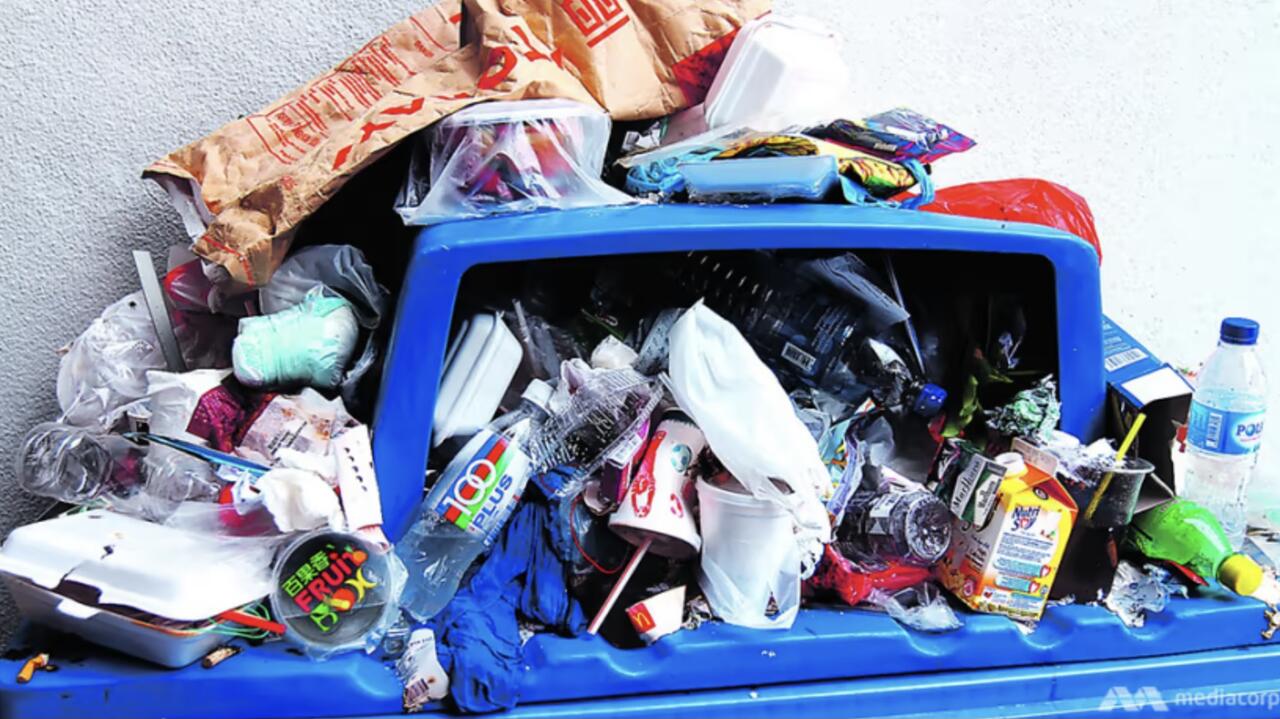
If you’re like many people, you’ve always thought a numbered-triangle symbol on the bottom of a plastic container tells you it’s recyclable — giving you peace of mind that when you toss it into a blue bin, it will be turned into something else.
That’s not true. Those symbols are Resin Identification Codes (RICs). Numbered 1 through 7, they only identify the kind of plastic an item is made of. Far from giving a sweeping assurance that RIC-stamped items are recyclable, the symbol frequently indicates a particular item absolutely cannot be recycled.
Reluctant to burden citizens with figuring out which plastics are recyclable — a chore that could dampen participation and cause confusion as recyclability of various plastics changes over time — many municipal recycling programs simply encourage people to toss all their RIC-stamped plastics in the bin and let the recyclers sort it out.
Which ones do recyclers actually want? The most-recycled plastic in America is stamped with a “1,” identifying the item as polyethylene terephthalate (PET). You’ll find it on beverage bottles, cooking oil containers, and many other liquid-containing bottles. A “2” tells you it’s high-density polyethylene (HDPE). Another generally recycling-suitable plastic, it’s used for milk jugs and laundry detergent jugs, and spray-cleaner bottles.
It’s all downhill from there. Chances are your bin has plenty of #5 — polypropylene (PP) — which is frequently used for single-serve coffee-maker pods; yogurt, butter, prescription pill and soft tofu containers; and the lids on paperboard raisin cartons. Unfortunately, while there’s been a modest recent uptick in recyclers’ interest, polypropylene generally isn’t being recycled in the United States.
As for the rest of the RIC spectrum, feel free to make pointed inquiries with your city government, but chances are extremely slim that any #3, #4, #6 or #7 items you throw in your curbside blue bin will be made into anything else. That heap includes lots of packaging, such as non-cardboard egg cartons, fast-food clamshells, styrofoam cups and to-go containers, flexible 6-pack rings and bread bags.
Feeling a little demoralized? Brace yourself: This blue-bin buzzkill is just getting started.
Let’s circle back to recyclers’ favorite: #1 PET. Even for this most-favored plastic, much of what’s placed in blue bins isn’t recycled. It’s a question of configuration: Recyclers love clear PET bottles, but most of them don’t want PET when it’s in the form of clamshell containers, cups and tubs. In these formats, PET reacts differently to the heat of recycling. For example, if they’re combined with bottles, those PET tubs used to package your blueberries and strawberries create ash that contaminates the whole batch.
“This is a perfect example of why we don’t go by plastic numbers,” explains Millenium Recycling. “A #1 clamshell container is NOT the same as a #1 bottle and they cannot be recycled the same way.”
Size matters too. No matter the type of plastic, if it’s smaller than three inches, most recycling processors don’t want it cluttering up their works. Given that, the Washington Post recently advised simply throwing away any plastic that doesn’t fit in the palm of your hand. Thinness is another liability — which means your plastic forks, spoons and straws are also a no-go.
Then there’s color discrimination — any kind of black plastic is pretty much guaranteed not to be recycled, because infrared scanners in automated sorting machines aren’t able to “see” most black plastic. And while clear #1 PET bottles are at the top of the recyclability list, colored PET bottles are less favored.
The public’s falsely favorable perception of plastic recycling has been deliberately cultivated. Knowing consumers are increasingly concerned about the environmental impact of their purchase decisions, plastic manufacturers and product-packagers are quick to say a package is recyclable — failing to differentiate between plastics that are technically recyclable and those that are actually being recycled in practice.
Three plastics — #1 PET, #2 HDPE and #5 PP —have been granted the designation of “widely recyclable” by How2Recycle, a consortium founded by Exxon Mobil and other plastics producers. However, only about 2.7% of #5 PP is being recycled today. Regardless, you may see “widely recyclable” printed on a yogurt tub that has a slim chance of being recycled. Environmentalists have cried foul, urging the EPA to take control of such designations to prevent consumers from being misled.
However, governments get in on the deception too. Many cities, states and countries calculate their recycling rate based merely on what’s diverted from landfills — even if that plastic is incinerated or shipped off to another country where its fate is far from certain. More on that in a moment.
Mythology surrounding plastic recycling is also reinforced by a decades-long stream of public service ads. While they ostensibly encourage recycling, critics say their real purpose is divert the public from challenging plastic’s domination of packaging, by cultivating a falsely rosy view of what recycling is accomplishing.
The most famous such ad was the “crying Indian” commercial that debuted in 1971. More recently, you’ve surely seen the ad that shows a plastic bottle — personified with a vulnerable yet determined female voice — blowing down streets, roads and highways before finally being placed in a recycling bin by a passer-by, and then happily turned into a park bench overlooking the sea.
Neither the crying Indian nor the talking bottle are brought to you by environmentalists. They were underwritten by chemical and consumer product companies. While the ads are attributed to Keep America Beautiful, that entity is itself the creation of major packaging and beverage companies.
“The marketing of it, for decades, has been ‘You’re saving the Earth. That’s all you need to do, public. Keep consuming. You can do all this disposability and all you have to do is simply put it in that blue bin — your job as a citizen is done’,” the Burbank Recycling Center’s Amy Hammes told NPR. “So it led to more disposability, really, because we had that Get Out Of Jail Free card to ease our guilt.”
To a great extent, America’s entire recycling regime is the creation of the companies that profit from plastics. Staring down the barrel of proposed plastic bans in the late 1980s, big oil and chemical companies created The Council for Solid Waste Solutions, which funded municipal-recycling pilot programs.
“The industry attitude was, we’ll set this up and get it going, but if the public wants it, they are going to have to pay for it,” Ronald Liesemer, who was tasked with setting the wheels in motion told PBS. “Making recycling work was a way to keep their products in the marketplace.”
Today, it’s increasingly clear that plastic recycling isn’t working, and the most emphatic criticism is coming from environmentalists. “Plastic recycling is a dead-end street,” Greenpeace bluntly declared in a 2022 report that concisely summed up plastic recycling’s empty environmental promise:
“Mechanical and chemical recycling of plastic waste has largely failed and will always fail because plastic waste is: extremely difficult to collect, virtually impossible to sort for recycling, environmentally harmful to reprocess, often made of and contaminated by toxic materials, and not economical to recycle.”
It’s important to note that, unlike infinitely-recyclable aluminum, plastic can only be recycled two or three times before it degrades beyond usefulness. And unlike the aluminum, recycled plastic costs a lot more than new plastic.
Despite more than a generation of effort, only 8.7% of plastic waste is being recycled in the United States, according to the EPA’s most recent data, compared to 68.2% of paper and cardboard and 50.4% of aluminum — materials you can put in your blue bin with relative contentment.
What happens to all the plastic that’s rejected by recyclers? It may be incinerated or sent to a landfill. That’s the good news. Believe it or not, some of plastic that Americans diligently “recycle” is dumped into rivers, fields or oceans halfway around the Earth.
America has long shipped much of its unwanted plastic overseas. For years, China was the largest importer by far, using cheap labor to pick by hand through millions of tons of plastic. Irresponsible handling of all that material — from toxic open-air burn-piles to illegal dumping of undesirable plastic— meant China was also importing pollution on an enormous scale.
In 2018, China effectively slammed the door shut on the import of plastic trash. However, other developing countries stepped up; among them, Malaysia, Vietnam and Indonesia. Predictably, the same terrible practices that caused China to change course are being observed in these countries too, with processors extracting the “good stuff” from piles of unsorted plastic and putting the rest wherever they feel like it.
Just as the road to Hell is paved with good intentions, it turns out the plastic “recycling” stream may ultimately deposit your #5 yogurt tub or #1 blueberry carton into an Asian river, and then the Pacific Ocean.
Delusions about plastic recycling contribute to collateral harms at home too. “If you rinse a plastic bottle in hot water, the net result is more carbon dioxide in the atmosphere than if you threw it in the garbage,” former New York Times science writer John Tierney told John Stossel.
That’s tough enough to hear in the context of a bottle that actually gets recycled. Now imagine the incalculable volume of hot water that’s been pointlessly poured on plastics that never had a prayer of being recycled — because local governments didn’t want to burden citizens with the truth about recycling’s viability.
Even at its best moments, plastic recycling is itself a source of waste and pollution. In processing a batch of those relatively-prized #1 PET bottles, about 30% of the material is typically wasted and must be disposed of. Meanwhile, the processing of plastic trash consumes energy, with much of the energy consumed by processing plastic that won’t be recycled. All that processing also generates microplastics, and the release of toxins associated with the thousands of chemicals that are added to plastics in the original manufacturing process.
“Americans support recycling. We do too,” wrote former EPA administrator Judith Enck and Last Beach Cleanup founder Jan Dell at The Atlantic. “But although some materials can be effectively recycled and safely made from recycled content, plastics cannot. Plastic recycling does not work and will never work.”
Since the 1970s, environmentalists have used the slogan “Reduce, Reuse, Recycle.” To some, the biggest collateral harm of plastic recycling is that it shifts attention away from the “Reduce” component — reducing the production of plastic in the first place, by replacing it with an alternative.
While it’s universally resented, plastic dominates packaging because of its many beneficial attributes — which include being lightweight, inexpensive and durable. Amid broad yearning for plastic to be replaced — perhaps via government dictates — we should all keep in mind economist Thomas Sowell’s invaluable caution about any policy question: “There are no solutions, only trade-offs.”
If you replace plastic with something heavier, transporting it will consume more energy. More weight on truck tires means they wear faster — and tires are themselves a major generator of microplastics.
If you replace plastic with something more expensive, you make food and other products less affordable — especially for poor people.
If you replace plastic with something less durable and sealable, you’ll increase contamination, spoilage, and maybe even sickness.
That’s not to say we should throw in the towel on seeking viable plastic alternatives that have a better end-to-end environmental profile. In the meantime, however, a case can be made that the best way to handle our plastic trash is to send it straight to landfills, rather than continuing to embrace a fiction plastered over the hard truth of plastic recycling. After all, much of your “recycled” plastic is going to landfills already.
Instinct may tell you that putting an empty blueberry carton in a landfill is nearly as bad as throwing it in a river. If so, it may be because your vision of a landfill doesn’t match the reality of today’s modern, regulated facilities. As civil engineer and hydrologist BJ Campbell explains:
[Modern landfills] are sealed on the bottom with geotechnical fabric to prevent leachate from entering the groundwater. They burn off, or sometimes even harvest, the methane produced from decomposition. Landfill cells are capped off with clay or bentonite to protect the environment. And then often they’re turned into parks or golf courses at the end.
What about decomposition and seepage into the soil? Modern landfills have an ongoing mechanism for collecting that liquid waste — or “leachate” — the collects at the bottom. Researchers from the University of Illinois who scoured the leachate flowing from four landfills were pleasantly surprised by the low volume of microplastics they found. In a 2024 study published in Science of the Total Environment, they reported that landfills “retain most of the plastic waste that is dumped there, and wastewater treatment plants remove 99% of the microplastics…from the wastewater and leachate” that comes from the landfills.
Lest this sound like a landfill PR piece, note that researchers found higher levels of a different type of contaminant — PFAS, aka “forever chemicals” — than they expected. We should also acknowledge that, despite the promising findings regarding plastic retention in the examined landfills, no man-made system is immune to failures.
It’s often said that we’re going to run out of space for all our trash. In turns out that widely-held assumption is, well, rubbish. “If you think of the United States as a football field, all the garbage that we will generate in the next one thousand years would fit inside a tiny fraction of the one-inch line,”notes science writer Tierney.
Eliminating largely fictional plastic “recycling” and sending plastic straight to landfills isn’t an appealing choice, but it bears repeating: There are no solutions, only trade-offs.
Where environmental issues are concerned, the sheer volume of trade-offs is dizzying. Amid that daunting cloud of variables, one thing is certain: From the question of what to do with today’s plastic to the pursuit of viable plastic alternatives, rational evaluation of trade-offs is impeded by mythology that masks the stark realities of plastic-recycling.
Stark Realities undermines official narratives, demolishes conventional wisdom and exposes fundamental myths across the political spectrum. Read more and subscribe for free at starkrealities.substack.com
Views expressed in this article are opinions of the author and do not necessarily reflect the views of ZeroHedge.
Trump Envoy Demands Hezbollah Be Booted From Lebanese Govt In ‘Red Line’
Trump’s newly appointed regional diplomat, United States deputy envoy to the Middle East, Morgan Ortagus, is in Lebanon where she’s bringing serious pressure to bear on the Lebanese government.
She’s demanding that Hezbollah be swiftly booted from Lebanon’s government. “We have set clear red lines … that [Hezbollah] won’t be able to terrorize the Lebanese people, and that includes by being a part of the government,” Ortagus told reporters.
Ortagus issued the words after meeting with Lebanon’s new president Joseph Aoun. She declared in a news conference that Hezbollah has been “defeated” by Israel after a multi-month bombing campaign where Israeli jets obliterated many buildings in central and southern Beirut.
This included the killing of longtime Secretary-General Hassan Nasrallah and his top officials in a Sept. 27 Israeli strike on Dahieh. The covert pager attacks during the middle of that month also killed and wounded dozens of Hezbollah commanders, but also killed children who were innocent bystanders.
Ortagus, who replaced Biden’s envoy Amos Hochstein, expressed that “We are grateful to our ally Israel for defeating Hezbollah.” Many Lebanese civilians were also killed in the Israeli bombing raids, but Ortagus did not emphasize this, which is unlikely to make her many friends among the Lebanese population.
“It is thanks to the Lebanese President Aoun and the Prime Minister-designate Nawaf Salam and everyone in this government who is committed to an end of corruption, who is committed to reforms and who is committed to making sure that Hezbollah is not a part of the new government in any form,” she continued.
The reality is that this is not something practically achievable, given Hezbollah maintains widespread support across various parts of the Lebanese population, and any attempt to force it out of parliament would likely trigger another civil war.
Lebanon’s government has been traditionally apportioned along the lines of sectarian representation, based on a census which happened many decades ago earlier in the 20th century. The country hasn’t dared attempted a census since, given fears that fighting would break out between Maronite Christians, Shia and Sunni Muslims, and Druze. Demographics have shifted in favor of the Muslim population, and likely the offices of prime minister and the presidency would be taken from the Christians in this scenario.
The NY Times has observed further of the precarious situation the government finds itself in:
Her remarks came after she met with Mr. Aoun, whose election by Lebanese lawmakers last month ended years of political gridlock.
Mr. Aoun has appointed a new prime minister, Nawaf Salam, but the new leadership has so far not formed a government. Senior government posts in Lebanon have traditionally been divided up among the country’s sectarian communities under a decades-old power sharing agreement.
The diplomatic pressure comes at a delicate time for Lebanon. Under the terms of a 60-day cease-fire that ended the war between Israel and Hezbollah in November, Israeli troops were supposed to have withdrawn by now from Lebanon.
Another practical difficulty regarding US demands is that the Lebanese Army is weak, under-trained, and most importantly under-equipped. Washington has sanctioned and limited how much military equipment Lebanon can receive.
Many Lebanese commentators were outraged over Ortagus’ visit and stance:
⚠️ Donald Trump’s Middle East envoy Morgan Ortagus, infringing on Lebanese sovereignty straight from the Lebanese Presidential Palace in Baabda, while wearing the Star of David on her finger.
Intentionally provocative on all levels.
Lebanon’s tiny air force is not even allowed to have jets, but has only been given what are essentially armed crop-dusting planes. The US in one breath demands the Lebanese Army boot Hezbollah from power, but in the next prevents it from having the arms necessary to do so. So these Trump demands of a Hezbollah exit from the country will remain but empty posturing.
Death and taxes. They are often called the only two certainties in life. Yet for countless family-held businesses, these inevitabilities collide when the owner passes away. There are millions of family-held businesses across this country. Many are at risk: when transferring ownership from one generation to the next, financial obligations often threaten the family business’s very existence.
Take, for example, the case of Courtney Silver and Ketchie, Inc., a third-generation machine shop based in Concord, North Carolina. Tragically, Courtney lost her husband to brain cancer, and at the same time had to focus on keeping the family business afloat. She was worried, as she testified before Congress just this month, about the “looming tax bill” that could have shut down the company. Her story mirrors many others who encounter unexpected tax liabilities following deaths in the family.
This year, Congress is set to debate on and legislate countless tax proposals, which will have far reaching impacts on communities, industries, and families across the country.
While debates over income taxes dominate headlines, comparatively little attention is given to federal estate taxes. In fiscal year 2023, the tax generated $33.7 billion—just 0.8% of federal revenue and 0.1% of GDP,according to the Joint Committee on Taxation. While it’s a drop in the bucket in terms of federal revenue, its impacts are far reaching.
According to Cerulli Associates, the “Great Wealth Transfer” underway will amount to as much as $124 trillion in inheritance through 2048. The Baby Boomer generation has started passing on its wealth to subsequent generations, and the sums involved only grow larger with every passing year. Much of this wealth is held in family businesses, whose valuations have soared due to inflation, asset appreciation, and robust market performance. A business worth $20 million a decade ago might now be worth $50 million – a figure that can trigger significant estate tax liabilities upon the founder’s death. For context, the Dow Jones Industrial Average was 17,832 in January 2015 and reached 41,938 in January 2025.
When a founder dies and the next generation inherits a thriving enterprise, the tax bill can be enormous. If the business’s heirs don’t have the liquidity to cover the tax, they may be forced to sell off assets, take on crushing debt, or, as is often the case: liquidate entirely.
Compounding matters, a dozen states and the District of Columbia impose estate taxes, and six others levy inheritance taxes. Maryland uniquely enforces both. Top state estate tax rates reach 20% in Hawaii and Washington, while seven states, including New York, Illinois, and Massachusetts, impose a 16% rate. Combined with the federal tax, these rates can exceed 50% of an estate’s value, jeopardizing the survival of family businesses.
This burden exists despite the immense contribution family businesses make to the economy. Representing nearly 65% of U.S. GDP and serving as the largest employer, these enterprises often lack the lobbying power of other industries. Pharmaceuticals, transportation, oil and gas, and agriculture all have advocates in Washington, ensuring legislation doesn’t cripple their industries. Family businesses, by contrast, must often fend for themselves.
Many are woefully unprepared. Although estimates vary, there are a minimum of five million family-held businesses in the United States; and, according to a 2021 Family Business Survey by PWC, only one-third have a documented succession plan in place. Confidentiality—valued by many families—often leads to secrecy about a business’s worth, even among family members. Add to this mix the complications of divorce or inter-family grievances, and the result is widespread unpreparedness for the inevitable.
When these businesses are forced to sell or liquidate simply to pay estate taxes, it is not just the families who lose. Employees lose jobs, communities lose vital institutions, and the economy loses key contributors to growth and innovation.
The Great Wealth Transfer presents an urgent call to action. Family businesses should prioritize planning long before a founder’s death to ensure they have enough liquidity to pay these estate taxes. Death is inevitable, but its timing is unknowable. Preparation is therefore critical.
Several proactive steps can mitigate the financial burden of estate taxes. These measures must be implemented while the founders are alive and well. From strategic estate planning to utilizing specific financial tools, families can ensure their businesses—and legacies—survive. The process requires education, commitment, and a deep respect for the sacrifices and hard work that built these enterprises.
By taking steps now, family businesses can secure their futures, protect employees, and guarantee thriving communities. Nothing is more vital than securing your family’s destiny and safeguarding the cornerstone of your shared future.
With proper planning, founders of family-held businesses can create a “new take on an old problem.”
Robert F. Mancuso was the first President and Chief Executive Officer of Merrill Lynch Capital Partners, the private equity arm of Merrill, and was an attorney with the Securities and Exchange Commission earlier in his career. He is the founder of White Knight Capital, which through its Capri Capital Partners Fund focuses exclusively on helping mid-sized family held businesses preserve their legacies.
More Government Workers Accept Trump Admin Buyout Offer, Official Says
The number of workers who have decided to accept the buyout offer from the Trump administration has risen by about 25,000, according to a White House official, with some 65,000 government employees now having signed up for the offer.
One worker, based in the Pacific Northwest, speaking on condition of anonymity, said that she took the offer on Thursday. She hopes to use the opportunity to move overseas but said that even if the money never comes, she still wants out. She says she is unwilling to comply with the new administration’s policies, including the elimination of diversity initiatives, and worries that the situation will only get worse for people who stay.
After entering office in January, President Donald Trump ordered federal employees back to the office and directed officials to impose stricter performance standards.
The Trump administration says that those and other changes mean that the majority of federal agencies will likely see a reduction in employees.
“If you choose to remain in your current position, we thank you for your renewed focus on serving the American people to the best of your abilities and look forward to working together as part of an improved federal workforce. At this time, we cannot give you full assurance regarding the certainty of your position or agency but should your position be eliminated you will be treated with dignity and will be afforded the protections in place for such positions,” a message from the U.S. Office of Personnel Management told government workers.
“If you choose not to continue in your current role in the federal workforce, we thank you for your service to your country and you will be provided with a dignified, fair departure from the federal government utilizing a deferred resignation program.”
Workers could start resigning on Jan. 28. The original deadline was Feb. 6, but a judge ordered the government to push it back until Feb. 10.
One worker, also speaking on condition of anonymity, said that the judge’s decision bolstered suspicions that the deferred resignation program was legally questionable.
The new deadline is Monday, Feb. 10, at 11:59 p.m. ET, the government told workers in a letter after the order was handed down.
“Should you wish to pursue Deferred Resignation please reply to this email from your government email with the word ’resign,’” the email reads.
A hearing will take place that day in a case brought by unions that could result in the deadline being delayed further.
Unions said in court filings that they don’t know whether the government can honor the buyout offer since congressional appropriations don’t currently run until the fall. They said the offer is illegal because it’s arbitrary and capricious in part due to “run[ning] counter to long-standing rules and requirements for federal employees.”
Government lawyers said in response that the offer is legal because it is, rather than being a final agency action, “a matter of pure internal governmental administration and, in all events, imposes no legal right or obligation on anyone, let alone Plaintiffs.”
A recent report from the North American Electric Reliability Corporation (NERC) sounds the alarm: America’s power grid is becoming dangerously unreliable. The nation is hurtling toward a future where rolling blackouts and power shortages will be the norm rather than the exception. At the heart of this crisis is the closure of baseload coal plants, a move that is leaving our electric system vulnerable to demand surges and extreme weather events, and our people subject to skyrocketing electric bills.
NERC’s latest assessment reveals an unsettling reality: the rapid shift away from coal and other reliable baseload power sources is pushing our electric grid to the brink. More than half of the U.S. faces an elevated risk of power shortages, particularly during peak demand periods in summer and winter. The root cause? The aggressive push to retire coal-fired power plants without ensuring an adequate and reliable replacement.
While renewable energy sources like wind and solar are expanding, they are not yet capable of providing the always-available, on-demand power that coal and other baseload sources deliver. When the sun isn’t shining, and the wind isn’t blowing, grid operators must scramble to fill the gap. Too often, they are left with insufficient options, leading to potential shortfalls that can cripple homes, businesses, and critical infrastructure.
The Reliability Crisis
NERC’s findings make one thing clear: reliability is at stake. Energy demand is increasing exponentially, driven by factors such as electrification, population growth, and the rise of energy-intensive technologies like data centers. At the same time, dispatchable generation—power that can be turned on or off as needed—are disappearing.
This gap leaves the grid exposed to extreme weather events. In recent years, we have seen where coal has been there to keep our power flowing:
Winter Storm Uri (2021): Texas experienced widespread blackouts, leaving millions without power and causing over 200 deaths. The cold temperatures experienced in Texas during Uri led to natural gas supply issues and frozen wind turbines creating an insufficient base-load of power.
California’s Rolling Blackouts (2020): A combination of heat waves and inadequate power supply forced California to implement rolling blackouts, impacting millions.
Christmas 2022 Outages: Severe cold across the Eastern U.S. led to power shortages as demand surged, highlighting the dangers of relying too heavily on intermittent energy sources.
January 2024: During a cold snap MISO showed that 38,508 MW of energy from coal led the energy mix, keeping the heat on.
January 2025: The country saw an extended cold snap and coal power production was the highest since 2019 reported LSEG.
NERC warns that immediate action needs to be taken to shore up the grid with reliable, baseload power.
Why Coal Remains Essential
Coal has long served as the backbone of America’s electric grid, providing a stable and affordable power source that can be counted on during peak demand. Unlike wind and solar, coal generation is not subject to weather variability. Unlike natural gas, coal is stored on site and in the short term is not susceptible to supply chain disruptions or price volatility.
Despite this, policymakers continue to prioritize the rapid transition away from coal, often without considering the consequences. The closure of coal plants is driven by regulatory pressures, market distortions favoring renewables, and misguided environmental policies that fail to account for the grid reliability crisis.
The loss of coal-fired generation doesn’t just threaten reliability; it also drives up electricity costs for consumers. Without coal’s stabilizing effect on the market, electricity prices become more volatile, hitting households and businesses with higher bills.
Moreover, shifting too quickly to an over-reliance on renewables requires massive investments in energy storage, transmission upgrades, and backup power sources. These costs ultimately fall on ratepayers, making electricity less affordable for millions of Americans.
To avoid a full-blown reliability crisis, we must take a balanced approach to energy policy. This means:
Halt Premature Coal Plant Retirements: Policymakers should pause the closure of existing coal plants until replacement generation with equal reliability is available.
Invest in Advanced Coal Technology: High-efficiency, low-emission (HELE) coal plants and carbon capture technologies can ensure coal remains a viable part of a cleaner energy future.
Restore Market Fairness: Energy markets should recognize the value of baseload power and compensate coal plants for their role in ensuring grid stability.
Reevaluate Renewable Integration:Renewables have a role to play, they must be integrated in a way that does not jeopardize reliable affordable power supply This means investing in firm, dispatchable power sources alongside renewables.
NERC’s report should serve as a wake-up call. The U.S. cannot afford to gamble with its electric grid. Reliable and affordable power supply is not just a convenience—it’s a necessity for economic stability, public safety, and national security. Coal has been and should continue to be a key part of our energy mix, ensuring that the American citizen has access to reliable energy , even in the toughest conditions. Policymakers must act now to protect America’s energy future before it is too late. If not, the simple fact is that lives will be needlessly endangered.
“Pattern Locked” For “Non-Stop Storms” To Pepper Lower 48, “Snowmaggedon” Risks For Northeast
A series of winter storms is set to traverse the central and eastern United States through mid-February, bringing a mix of snow, ice, and rain. The next big round of winter precipitation could occur as early as next week.
Weather Channel’s Jim Cantore provided more color on the active storm pattern on X:
This pattern is locked and loaded right now. Non-stop storms will pepper the USA through mid-month and likely beyond.
Of course the devil is always in the details, but 3 impact events are likely Monday through Sunday of next week which will carry all hazards to some extent. Again not crippling, but impactful.
ECMWF below (out through the 18th) is locked into mean trough in the west with large-scale, Gulf moisture loving systems ejecting east. Still looking at potential for first upper end AR (atmospheric river) for southern CA next Thursday.
Cantore’s map, showing the active storm pattern, suggests that residents in the Mid-Atlantic and Northeast should be on alert for potential adverse weather conditions next week.
This pattern is locked and loaded right now. Non-stop storms will pepper the USA through mid-month and likely beyond.
Of course the devil is always in the details, but 3 impact events are likely Monday through Sunday of next week which will carry all hazards to some extent.… pic.twitter.com/zY80QG94ve
“It’s like déjà vu all over again!” Yogi Berra. Another round of Snow/Sleet and Freezing Rain (Ice) is likely again Saturday Afternoon into Saturday Night. And it still looks like the Snow Train is on track for Tuesday next week. 👇 Whew! Stay tuned… ❄️🚂 pic.twitter.com/Dg79FKzwNR
The latest Lower 48 average temperature forecast, combined with a two-week outlook, shows that the next round of cold will be less severe than last month’s.
Last Sunday, Punxsutawney Phil saw his shadow, signaling six more weeks of winter. Let’s hope this extreme cold comes to an end. Meanwhile, global warming alarmists in the far-left corporate media, along with Al Gore, the Democrats, and Greta, have been unusually quiet about the cold—or perhaps their USAID ‘climate change’ funds have run dry.
A recent uptick in the arrival of smuggled migrants landing on Southern California shores in fishing boats has prompted one coastal city to explore installing infrared cameras and possibly allowing the public to monitor the beaches at night.
San Clemente, home to more than 62,000 residents and located on the coast about halfway between Los Angeles and San Diego, decided unanimously Feb. 4 to ask federal immigration authorities if they want to partner with the city to install a coastal surveillance system.
Mayor Steven Knoblock discussed the idea with city councilors Tuesday and called for City Manager Andy Hall to reach out to the U.S. Department of Homeland Security.
While the land border crossings have dropped since President Donald Trump took office last month, the number of boats arriving on San Clemente’s shores has increased because of the city’s location just north of a federal border checkpoint on Interstate 5, according to Councilman Rick Loeffler.
“It’s very obvious why they come in there,” Loeffler said. “It seems like [federal immigration enforcement agencies] would want to have cameras here.”
The boats used—usually unlicensed pangas, which are small, outboard-powered boats often used for fishing—are frequently left behind as the people scatter into the community, Knoblock said.
“More and more people are coming up by pangas,” he said. “I think it’s important that they be identified. This is a public safety issue.”
Migrants in the boats risk drowning if the craft overturns, especially in the last 50 feet of arrival, according to the city manager.
Hall said Imperial Beach, Calif., located on the U.S. border in San Diego, had a similar surveillance program when he managed that city.
During his time there, one panga overturned and all 15 passengers drowned in waist-deep water, he said.
Knoblock floated the idea of installing three thermal imaging cameras, placed on the city pier and at north and south neighborhood locations.
He also wanted the public to be able to access the live cameras at night after the city’s lifeguards leave for the day.
“I just think it would be a good thing for our community to have and take an opportunity to keep an eye on their own backyard,” he said.
The Rip Curl WSL Finals of Lower Trestles surf spot in San Clemente, Calif., on Sept. 8, 2023. City officials are exploring the idea of installing infrared cameras for the public to watch out for nighttime Migrant boat arrivals. John Fredricks/The Epoch Times
Councilman Zhen Wu said the city didn’t have the money to buy the cameras, but he approved of the idea.
If U.S. Immigration and Customs Enforcement, or ICE, has the money or the U.S. Customs and Border Protection (CBP) wanted to install cameras on city property, “I would be open to that,” Wu said.
Councilors also voted to place contact numbers on the city’s website so that people can call federal agencies if they see the boats arrive.
Some residents were concerned about giving the public access to the live camera feed, but the mayor stressed the program would operate like a neighborhood watch.
About an hour south along the San Diego County coastline, officials have reported several boats landing at area beaches to drop off smuggled immigrants in the past year.
On Jan. 25, a boat filled with migrants capsized near a San Diego beach, sending about 20 people into the sea as lifeguards and surfers rushed to rescue them.
It was the second boat found to be smuggling migrants into the county that day, according to the city.
The Border Patrol did not return a request for comment about the city’s plan.
Watch: Maxine Waters Flips Her Wig As Dept. Of Education Employee Blocks Path
Sanpaku-eyed lawmaker Rep. Maxine Waters (D-CA)was beside herself on Friday, after several Democratic lawmakers attempted to enter the Department of Education headquarters, only to be turned away by security official identified on social media as Jim Hairfield.
Dozens of Democratic representatives traveled to the DoE building in Washington DC, demanding to be allowed inside to meet with acting Education Secretary Denise Carter. Hairfield, giving zero fucks, calmly denied their request as their performative outrage grew.
Rep. Mark Takano (D-Calif.) and 95 of his fellow partisans had demanded an “urgent meeting” Thursday with acting secretary Denise Carter before taking matters into their own hands Friday — only to be halted by security who “locked” the building doors, a congressional aide told The Post. -NY Post
Watch:
Maxine Waters (D) is currently accosting random federal employees outside the Department of Education pic.twitter.com/5L8RviQ9rH
Needless to say, we’re getting sick of your shit, Karens…
President Trump has vowed to abolish the Department of Education, which was signed into legislation as a cabinet-level agency by President Jimmy Carter in 1979.
“I told Linda — ‘Linda, I hope you do a great job and put yourself out of a job,” Trump told reporters on Tuesday, referring to Education Secretary-designee, Linda McMahon. “I want her to put herself out of a job [in the] Education Department.”
Elon Musk, meanwhile, posted a meme on X in which Jimmy Carter states “In 1979, I created the Department of Education. Since then, America went from 1st to 24th in education.”