

69.4 F
Chicago
Wednesday, September 30, 2026
Home Blog Page 1828

Here’s What To Know About US Withdrawal From The WHO

0
Here’s What To Know About US Withdrawal From The WHO

Authored by Savannah Hulsey Pointer via The Epoch Times (emphasis ours),

On the first day in office of his second term, President Donald Trump signed an executive order to withdraw the United States from the World Health Organization (WHO), making good on a project from his first administration.

Trump’s Jan. 20 order halted U.S. funding to the United Nations body, citing the WHO’s “mishandling of the COVID-19 pandemic that arose out of Wuhan, China,” as well as other global health concerns.

Negotiations with the group about a pandemic agreement and the International Health Regulations will be suspended while the withdrawal is taking place.

Because of the 1948 joint resolution by Congress, the United States has the right to withdraw from the WHO, but it must give a one-year notice. The resolution also requires the United States to fulfill “financial obligations” to the WHO for the current fiscal year.

The Largest WHO Funder

The United States is currently the largest WHO funder, contributing about $1.28 billion during 2022–2023, the last reported year on the organization’s website. That equates to almost half of the WHO’s joint external evaluation missions for the last fiscal year.

The 2024–2025 fiscal year is shaping up similarly, with the United States serving as the largest donor by far, contributing an estimated $988 million, or roughly 14 percent of the WHO’s $6.9 billion budget.

Documents obtained by The Associated Press show that the United States covers about 95 percent of the WHO’s work on tuberculosis in Europe and about 60 percent in Africa and the Western Pacific, and that the WHO’s Europe office is more than 8 percent reliant on U.S. contributions.

Additionally, U.S. funding provides “the backbone of many of WHO’s large-scale emergency operations,” covering up to 40 percent of that funding.

WHO Response

WHO Director General Tedros Adhanom Ghebreyesus described relations with the United States as “a good model partnership” during a press briefing in Geneva in December 2024.

“[We] have been partnering for many years, and we believe that will be the case. And I believe the U.S. leaders understand that the United States cannot be safe unless the rest of the world is safe,” he told reporters.

Following the announcement of Trump’s decision to remove the United States from the organization, Ghebreyesus spoke out, asking world leaders to push the White House to reverse the decision.

The WHO chief said during a closed-door meeting with diplomats that the United States would miss out on critical information about disease outbreaks, The Associated Press reported.

George Kyriacou, the agency’s finance director, said if the WHO’s spending continues at its current level without funding from the United States, the organization would be “very much in a hand-to-mouth type situation” regarding cash flow for at least portions of 2026.

CDC Response

Officials at the U.S. Centers for Disease Control and Prevention (CDC) have ordered agency employees to stop working with the WHO, effective immediately.

John Nkengasong, the CDC’s deputy director for global health, sent a memo to agency leadership on Jan. 26 calling on staff to cease collaborating with the WHO immediately and wait for further guidance. CDC staff also are not allowed to engage with the WHO, virtually or in person, and staff members are not allowed to visit the WHO offices.

Some public health experts, including Dr. Jeffrey Klausner, a professor of medicine and global health at UCLA who works with the WHO on sexually transmitted infections, have voiced concern about halting the collaboration.

“Stopping communications and meetings with WHO is a big problem,” Klausner said. “People thought there would be a slow withdrawal. This has really caught everyone with their pants down.”

Behind the Withdrawal

The Trump administration said the WHO was not able to demonstrate independence from the “inappropriate political influence” of member states and had failed to “adopt urgently needed reforms.”

The president’s executive order also cites “unfairly onerous payments” by the United States that Trump said are “far out of proportion with other countries’ assessed payments.”

“China, with a population of 1.4 billion, has 300 percent of the population of the United States, yet contributes nearly 90 percent less to the WHO,” the order stated.

This is Trump’s second attempt to withdraw from the WHO. The president began the process in 2020 because of frustration over the WHO’s reaction to China’s coverup of details surrounding the transmission of SARS-CoV-2 at the start of the COVID-19 pandemic.

The House Oversight and Select Subcommittee on the Coronavirus Pandemic released a report in December 2024 on the WHO’s response to the COVID-19 pandemic, calling it “an abject failure.”

According to the report, the WHO is accused of bending to pressure from the Chinese Communist Party and placing “China’s political interests ahead of its international duties.”

As part of the alleged failure, the WHO reportedly ignored warnings by Taiwan on Dec. 31, 2019, about “atypical pneumonia cases” in Wuhan, which it asked the WHO to investigate.

“The initial mismanagement of the COVID-19 pandemic not only potentially caused the further spread of the virus, but it created a situation where people lost trust in the global public health organization,” the report stated.

The Associated Press and Aldgra Fredly contributed to this report. 

Tyler Durden
Fri, 02/07/2025 – 03:30
Ukraine Launches New Offensive In Kursk, Marks 6 Months Of Holding Russian Territory

0
Ukraine Launches New Offensive In Kursk, Marks 6 Months Of Holding Russian Territory

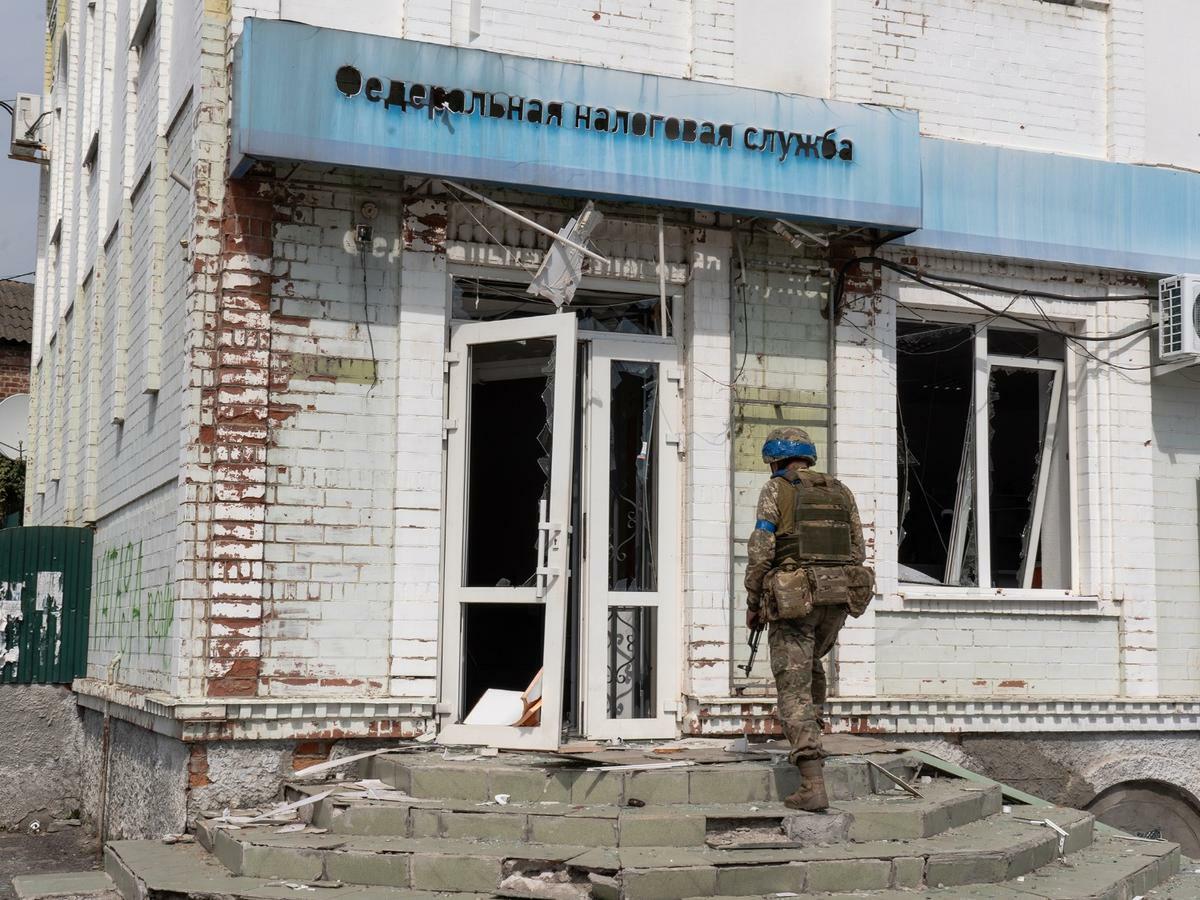
Ukraine launched a fresh offensive on Russian territory in the Kursk region, Russia’s military confirmed Thursday, which marks six months since Kiev forces first crossed the border in a risky gambit to take and control territory inside Russian borders.

The defense ministry announced Russian troops had “foiled an attempted counter-offensive by the Ukrainian armed forces.” Kremlin officials have condemned the Ukrainian operation as a big distraction from the front lines in the Donbass, where Moscow is clearly winning.

What’s clear is that Zelensky sees Kursk as a big (and perhaps lone) bargaining chip. Ukraine has little leverage in what’s expected to be an upcoming negotiated peace settlement, so it looks to be trying to grab on to all it can, amid Trump pressure to engage in discussions with Moscow.

SOPA Images via Reuters

Zelensky in a Thursday social media post urged his forces to keep up the fight in Kursk. “The occupier can and should be beaten on its territory,” he wrote. “The Kursk operation clearly explains the meaning of the principle of ‘peace through strength’” – in what was also a clear appeal for external Western backers to step up support.

Kiev has also touted that its forces captured 909 Russian soldiers during the six-month offensive there. This as there was just another successful POW swap involving 300 troops (with each side releasing 150 of the imprisoned).

Zelensky said of captured Russians, “We have significantly replenished our exchange fund — hundreds and hundreds of Russian soldiers whom we are exchanging to bring Ukrainians back from captivity” in the context of the Kursk offensive.

But again, the Kremlin has emphasized that it stopped the new offensive. According to the AFP:

It said the new fighting was around the villages of Ulanok and Cherkasskaya Konopelka, southeast of the regional hub of Sudzha, which is under Ukrainian control. The area is about 10 kilometers (six miles) from the Ukrainian border.

Russia said Ukraine had deployed two mechanized battalions, tanks and armored vehicles in the attempted attack. There has been no comment on the fresh offensive from officials in Kyiv.

Russia has further claimed that Ukraine’s losses in the new assaulted totaled over 200 service members and about 50 combat and support vehicles, including eight tanks, five infantry fighting vehicles, one armored personnel carrier and 30 armored fighting vehicles, and other equipment, as cited in TASS.

But there are competing narratives on who ultimately has the upper-hand in Kursk region…

Still, given six months have past since the August Kursk offensive began, regaining territory has been a struggle for Russa. But President Putin has likely not made it a top priority enough to transfer forces from the Donbass, which what Kiev has hoping he would do. The Kremlin didn’t take the bait of dividing the bulk of its forces, it appears.

Tyler Durden
Fri, 02/07/2025 – 02:45

Decades-Long Chinese Influence In Panama Begins To Unravel

0
Decades-Long Chinese Influence In Panama Begins To Unravel

Authored by Darlene McCormick Sanchez via The Epoch Times (emphasis ours),

About 10 years ago, Louis Sola’s family maritime business was given a concession to build a marina and cruise port on Amador, a causeway located at the Pacific entrance to the Panama Canal.

Illustration by The Epoch Times, Google Earth, Shutterstock

“This would have been the very first cruise port in the Pacific,” Sola, who now serves as the U.S. Federal Maritime Commission chairman, said.

Everything changed in 2017 when Panama signed on with the Chinese regime’s Belt and Road Initiative. The initiative required the Panamanian government to recognize Taiwan as part of China—much to the surprise and concern of the United States, which has positioned itself as an ally of Taiwan.

Panama then rescinded the concession on the land where the Sola family had planned to spend $30 million on a cruise port.

Instead, Panama nationalized the project, gave a concession to a Chinese company, and paid it $300 million to build the cruise port.

Additionally, the land that would have been used to build a marina was designated as an embassy of the People’s Republic of China.

Eventually, the Solas got the land back, and U.S. and domestic pressure ended the Chinese regime’s plans of building an embassy at Amador.

In the most recent blow to China, Panama’s president announced on Feb. 2 that it will not renew its Belt and Road agreement with the Chinese Communist Party (CCP)—a significant win for President Donald Trump’s pressure campaign.

Beijing’s Influence

Sola’s personal story, told during a Jan. 28 Senate Committee on Commerce, Science, and Transportation hearing, underscores what has become a hot-button topic—Chinese influence at the Panama Canal.

The 100-year-old strategic waterway, largely ignored in U.S. policy for decades, has taken center stage in growing tensions between Beijing and Washington.

(Top) A map and a satellite image show the Cristobal port in Panama. (Bottom) A map and a satellite image show the Balboa port in Panama. Illustration by The Epoch Times, Google Earth, Shutterstock

Chinese infrastructure and ports on both the Atlantic and Pacific ends of the Panama Canal have some experts concerned that Beijing has de facto control of the strategic waterway, a potential violation of the U.S.–Panama Neutrality Treaty, which places U.S. national security at risk.

While military leaders have raised the alarm over the Chinese regime’s rising influence at the Panama Canal and throughout Latin America, the issue came to the forefront when incoming President Donald Trump announced on social media in December 2024 that the canal was “solely for Panama to manage, not China.”

Trump also complained that U.S. ships, which are the top users of the canal, were being “ripped off” with high fees, another potential violation of the treaty to deal with all nations fairly.

After taking office in January, Trump said the canal was being operated by the Chinese regime and vowed to intervene, prompting denials from Beijing and Panama.

“China is operating the Panama Canal,” Trump said during his inaugural speech. “And we didn’t give it to China. We gave it to Panama, and we’re taking it back.”

National Security Risk

Chinese soldiers don’t have to be on the ground for the CCP to disrupt the canal and jeopardize U.S. national security should the United States be drawn into a conflict with the Chinese regime over Taiwan, according to Andrés Martínez-Fernández, a senior policy analyst for Latin America at the Heritage Foundation.

The fact that two of Panama’s five principal ports are controlled by Hong Kong-based CK Hutchison Holdings—at Balboa on the Pacific side and at Cristóbal on the Atlantic side—is a significant concern for some analysts.

Equally worrisome, in 2018 a Chinese consortium headed by China’s state-owned China Harbour Engineering Company and China Communications Construction Company was awarded a $1.4 billion contract for the canal’s fourth bridge.

(Top) Members of Chinese security service escort the car of Chinese leader Xi Jinping as he leaves the Cocoli docks in the expanded Panama Canal in Panama City, Panama, on Dec. 3, 2018. (Bottom) Panama President Juan Carlos Varela (L) and Chinese Foreign Minister Wang Yi (R) attend the inauguration of the Panama embassy in Beijing on Nov. 16, 2017. Luis Acosta/AFP via Getty Images, Jason Lee/AFP via Getty Images

“The canal is very vulnerable to any kind of sabotage,” Martínez-Fernández told The Epoch Times. “We’re not talking a [Chinese] warship in order to do that.”

The canal has both economic and military significance for the United States because it represents a strategic chokepoint, making it a critical pathway for U.S. warships in the Atlantic and Pacific oceans in the case of military conflict with the Chinese regime.

Some $270 billion of cargo passes through the canal each year, amounting to 5 percent of global maritime trade volume. More than 70 percent of that transits to or from U.S. ports.

The United States handed sovereignty of the Panama Canal to Panama on Dec. 31, 1999, under a treaty signed in 1977 by President Jimmy Carter.

The agreement included the Neutrality Treaty, in which the United States retained the right to use military force to secure the canal from foreign aggression or threats to its neutrality.

For Panama, the canal is part of its national identity and its biggest moneymaker, generating some $28 billion for the country over the past 25 years, according to Panama.

Panamanian President José Raúl Mulino said on Jan. 30 that it would be “impossible” to return the canal to U.S. control and that Panama could not arbitrarily remove concessions from companies linked to China, referring to the Hutchison ports.

However, Panama announced in January that it is auditing the Chinese port concessions.

Marshall Islands’ Celsius Nicosia cargo ship at the Manzanillo International Terminal in Colon, Panama, on Jan. 29, 2025. Martin Bernetti/AFP via Getty Images

Panama Ports Co., controlled by CK Hutchison Holdings, was notified of an audit shortly after Trump’s accusations that the CCP controls the waterway, according to the Panama Maritime Authority.

Martínez-Fernández said he believes the most likely diplomatic solution to the U.S. concern over national security will be to reduce Chinese presence along the canal and ports.

“These investments in this infrastructure from China, around the canal, around other parts of the region, the Caribbean, and South America just raise a lot of red flags,” he said.

Meanwhile, the Chinese regime has publicly supported Panama’s ownership and control of the canal, playing on Panama’s national identity and sovereignty to strengthen its political foothold.

Wang Yi, Chinese state councilor and CCP foreign minister, called Panama a “friend and good partner” during a 2021 phone call with Erika Mouynes, the Panamanian foreign minister.

Yi stated that China would “continue to support Panama’s efforts to defend its legitimate rights and interests on the international stage, including Panama’s sovereignty over the canal.”

Neutrality Issue

When flying into Panama, billboards advertising the Bank of China greeted visitors until recently.

According to residents in Panama who spoke with The Epoch Times, the billboards were taken down right before U.S. Secretary of State Marco Rubio met with Panama’s president on Feb. 2.

The billboards highlight Beijing’s influence in Panama, and Trump, in a post on social media shortly before Rubio’s visit, said Panama was attempting to take down 64 percent of signs written in Chinese.

“They are all over the [Panama Canal] Zone because China controls the Panama Canal,” Trump stated on Jan. 28. “Panama is not going to get away with this!”

Although Panama decided not to renew its Belt and Road agreement with China directly after Rubio’s visit, the fact remains that two of Panama’s key ports are controlled by a Hong Kong-based company.

CK Hutchison Holdings first won a bid to operate those two ports in 1997, but since then, Beijing has cracked down on the city’s independence and brought it firmly under the communist regime’s control.

Read the rest here…

Tyler Durden
Fri, 02/07/2025 – 02:00

USAID Is A Premier Weapon Of US Hybrid Warfare In The Southern Hemisphere

0
USAID Is A Premier Weapon Of US Hybrid Warfare In The Southern Hemisphere

Authored by Andrew Korybko via substack,

Here’s the full interview that I gave to Sputnik Brasil about USAID, excerpts of which were published in their report titled “’Arma principal da guerra híbrida’: o que muda na política externa dos EUA com o fim da USAID?”

1. How has USAID been used by the government of United States through the years to meddle in other countries, mainly Brazil and other countries from Latin America?

USAID is infamous for funding political programs under the cover of human rights and democracy to meddle in the recipient country’s domestic affairs. This popularly takes the form of funding movements, including media projects, for exposing alleged corruption in Latin American states. The purpose is to artificially generate a groundswell of grassroots opposition to incumbent governments that manifests itself through street protests and/or surprise election showings in order to bring about political change.

Some of the locals who collaborate with these foreign-funded political projects sometimes go on to become advisors or even figures in the more pro-American governments that replace the targeted ones. Therefore, USAID doesn’t just work to remove Latin American governments, it also sometimes provides trained advisors and personnel for the next governments. This makes it a premier weapon of US Hybrid Warfare in the hemisphere.

2. Does the end of USAID mean the end of US interference in other countries’ domestic affairs? Will they just change their method instead?

New Secretary of State Marco Rubio declared that he’s the acting administrator of USAID as it goes through radical reforms.

Per Trump’s Executive Order suspending foreign aid for 90 days, with the exception of emergency humanitarian aid, an assessment is taking place to determine their efficiency and consistency with policy. Accordingly, many programs dealing with socio-cultural issues like LGBT will likely be cut, while foreign media funding and the training of foreign political cadres will likely continue.

3. How do you evaluate Trump’s decision to end USAID?

USAID made sense from the perspective of older American interests back when it was first founded, but it was hijacked by liberal-globalist ideologues to proselytize radical socio-cultural policies that don’t objectively align with the US’ national interests. Examples of the most ridiculous programs are being shared all across X right now. Many Americans are enraged to discover what they were funding and surprised that a lot of the money also went to domestic “NGOs” for implementing these projects.

Ending USAID was necessary since that’s the only way to implement the radical reforms that the Trump Administration envisages, which are most immediately reducing government expenditures via the Elon Musk-led “Department Of Government Efficiency” (DOGE) and then realigning those that remain with policy. Many employees are also diehard ideological opponents of Trump and all that he represents so keeping them around runs the risk that they’d try to sabotage his second term like they did his first one.

What’s essentially happening is that Trump 2.0 entered power with a detailed plan for purging hostile elements of the US’ “deep state”, which refers in this context to its permanent military, intelligence, and diplomatic bureaucracies, with some also including its administrative and other ones too. USAID was a major component of the US’ power structure for decades prior to Trump’s second term so dismantling it is considered crucial for the success of his team’s foreign policy.

4. Some US politicians have criticized the Trump Administration’s reforms of federal agencies, fearing that confidential information might leak out and even describing the overall gist of what’s going on as a “serious threat to national security”. What do they fear? Is this a sign of USAID’s connection with the CIA like Musk recently talked about?

Not every USAID employee and project is connected to the CIA, but the CIA does indeed sometimes employ the aforesaid in advance of its goals due to the relative ease with which their democracy and human rights covers enable US spies to infiltrate and/or destabilize foreign countries. Those who are criticizing Trump’s reforms are elements of the US’ power structure who stand to lose from his and Musk’s campaign to expose irresponsible government spending and political meddling abroad.

Some of them do have a point, namely that innocent USAID employees might be suspected of being spies and this could lead to credible threats against them, but the Trump Administration is willing to risk those consequences in pursuit of its ambitious reform campaign. Purging USAID, the State Department, and the “deep state” more broadly is the only way to prevent them from sabotaging Trump’s foreign policy the second time around, which he envisages revolutionizing the US’ relations with the world.

Excerpts from this interview were published in Sputnik Brasil’s report titled “‘Arma principal da guerra híbrida’: o que muda na política externa dos EUA com o fim da USAID?”

Tyler Durden
Thu, 02/06/2025 – 23:25

US “De Minimis” Exemption (Was) One Of The Highest In The World

0
US “De Minimis” Exemption (Was) One Of The Highest In The World

As a part of the tariffs imposed by the Trump administration Saturday on Canada, Mexico and China, so-called “de minimis” rules on small imports from the countries were suspended.

“De minimis” rules say that incoming goods under a certain value are not subject to import duties (and sometimes tax). As a result, the U.S. temporarily stopped accepting parcel from China and Hong Kong as many popular retailers send scores of “de minimis” shipments from these locations, including the likes of Temu or Shein. On Wednesday, the U.S. resumed the import of the packages. USPS said it was working on a solution of implementation of the new rules that would cause the least disruptions to parcel delivery.

While the rule change was explained in the case of China, but also Canada, with stopping the unregistered import of fentanyl or its ingredients to the U.S., Statista’s Katharina Buchholz points out that most of the parcels affected will come from e-commerce platforms, with Chinese imports taking up the bulk of “de minimis” shipments. Checking the parcels to impose Trump’s new additional 10 percent tariff on Chinese goods as well as any other tariffs that might apply per product category would cause a lot of extra work. However, the ability of Chinese e-commerce sellers to create large business footprints overseas while skirting many of the dues of a traditional export business has also caused discontent in the U.S. and elsewhere.

The Biden administration in September had announced steps like protecting certain industries and keeping out certain questionable products by exempting them from “de minimis” while at the same time increasing reporting requirements, citing concerns about high parcel volumes concealing illicit substances as well as trade fairness in the light of China’s burgeoning e-commerce-by-international-shipment sector. The EU is also mulling to do away with its “de minimis” rule in order to fairly charge Chinese direct sellers. Recent reporting also points out how many of the products shipped from the likes of Shein et al. are not up to quality standards, which caused complaints from consumer protection bodies.

Data republished by the Department of Commerce shows that more than 100 countries around the world employ “de minimis” in order to speed up international shipping. However, the maximum value such parcels can have varies widely.

Infographic: U.S.

You will find more infographics at Statista

The U.S.’ $800 threshold is one of the highest in the world while EU countries impose charges on imports of much lower value (above €150 – approximately $156).

China’s “de minimis” rules are also more strict, with any tax or duty under 50 Yuan Renminbi (approximately $7) considered void – this would for most products be in line with a value of $99 or less.

The country also already has a more refined approach to “de minimis” with a pre-registration and approval system for e-commerce traders in place that allows for higher exemptions at the discretion of the government.

Other countries have also posed additional hurdles to “de minimis”, for example exempting B2B shipments or specific goods. Others allow neighbors or certain major trade partner to take advantage of a bigger “de minimis” allowance.

Tyler Durden
Thu, 02/06/2025 – 23:00

FBI Turned Blind Eye While Its Informant Stole $190K From Jan. 6 Protestor: Court Filing

0
FBI Turned Blind Eye While Its Informant Stole $190K From Jan. 6 Protestor: Court Filing

Authored by Ken Silva via Headline USA,

A bombshell court filing alleges that an FBI informant stole some $190,000 from a Jan. 6 protestor, and that the bureau turned a blind eye to the crime to protect its source.

Former FBI agent Jared Wise was arrested for illegally entering the Capitol on J6. Photo: DOJ

The court filing comes from former FBI agent and Project Veritas contractor Jared Wise, who was arrested in 2023 for his own involvement with Jan. 6. Wise had his charges dropped last month, and provided an exclusive interview to Headline USA to respond to accusations from Project Veritas founder James O’Keefe that he tried to “ensnare” O’Keefe in a plot to secretly record FBI agents.

During his interview with this publication, Wise declined to go into detail about what he did and saw on Jan. 6—saying that he intends to reveal that information soon to reporter Julie Kelly.

However, Wise publicized the information about the thieving FBI informant this week on this Twitter/X account, and he referred this reporter to a motion for vindictive prosecution, which he filed in December. That motion contains stunning details about how the FBI informant allegedly stole from him with impunity.

According to Wise’s motion, in 2020 he invested in a French real estate property with a U.S. citizen residing in France. Wise identified the man only as “GED,” but Headline USA was able to track down his identity as Gregory Edmont de la Doucette by looking up a separate civil lawsuit filed in December.

The two men closed their real estate deal in September 2021. But soon thereafter, Wise began to have serious concerns about the status of his investment.

Over the next few months, Wise questioned Doucette about his investment, and accused him of running a scam.

That was when Doucette reported Wise to the FBI, he said.

“In January 2022, GED provided information to the FBI that Wise was present in Washington, D.C. on January 6, 2021. GED provided information about Wise to the FBI to protect himself from consequences of his own crime against Wise, as he began to realize that Wise was uncovering GED’s fraud,” Wise said in his December motion.

“GED correctly believed that providing information to the FBI about Wise (GED’s own victim) and J6 would help inoculate himself from any liability related to his own scheme to defraud Wise.”

Wise was arrested in May 2023, but that didn’t dissuade him from trying to report Doucette’s alleged real estate scam to the FBI. However, the FBI refused to investigate Doucette, he said.

The FBI even went as far as investigate Wise for trying to contact Doucette, he said.

“In August 2024, the government sought new charges against Wise related to him contacting GED about GED’s fraud, but those efforts were not successful. In response to failing to secure a new indictment, the government then obtained revised release conditions which prevented Wise from having any direct or indirect contact with GED,” his motion said.

Wise’s motion said he believes the FBI protected Doucette specifically because he was informing for the bureau.

“If the FBI were to meet with Wise and accept the information implicating GED in a complex international fraud scheme of at least $190,000 (and possibly up to $700,000 with an additional victim as alleged by a third party with direct knowledge), it would create a complicated situation in which it would need to account for criminal activity by one of its sources, and the information might also impact the prosecution of Wise,” he said.

“Hence, the easiest strategy to prevent the dilemma is to simply refuse to meet with Wise and never learn of the claims,” he said. “Wise avers that the FBI is knowingly protecting one of its sources who has conducted criminal activity, which is reminiscent of the FBI protecting mob boss Whitey Bulger for many years.”

Wise’s December motion was unsuccessful, but that became a moot point when the DOJ dropped all charges against him last month.

Wise continues to seek accountability for Doucette, who could not be reached for comment.

Wise’s December motion said he won a civil judgment against Doucette in France last September. Headline USA was unable to find that judgment, but did find a separate civil lawsuit Wise filed in federal court, also in December.

No attorney was listed for Doucette, and he does not seem to have been served with the U.S. lawsuit yet.

Ken Silva is a staff writer at Headline USA. Follow him at x.com/jd_cashless.

Tyler Durden
Thu, 02/06/2025 – 22:35

Tomorrow’s Jobs Report Will Finally Capture The Surge In Illegal Aliens, Lead To Another Big Negative Payrolls Revision

0
Tomorrow’s Jobs Report Will Finally Capture The Surge In Illegal Aliens, Lead To Another Big Negative Payrolls Revision

Remember last August when the Biden admin finally admitted it had been rigging the jobs number, when as part of its preliminary revision it vaporized 818K jobs in the past year that were never actually added, a historical negative revision (the second biggest on record) which the Fed used as justification for its panicked jumbo 50bps rate cut just a few weeks later?

Well, tomorrow that revision – along with a dramatic increase in the US population estimate by 3.5 million primarily to reflect the surge in illegal immigration – will finally flow through fully into the jobs report, as part of a bigger overhaul of the labor market by the now-Trumpian Bureau of Labor Statistics, and the results could be dramatic.

First, some background.

Each year the US Census Bureau adjusts the weights in the Current Population Survey – the source data for labor-force statistics like the unemployment rate – incorporating updated estimates of the population’s size and composition. In the latest vintage, the Census modified its approach to estimating net international migration – for obvious reasons, the main of which being that for the past 4 years the US effectively had no southern border – which had the effect of substantially boosting its estimate of the US population since 2020.

Bureau of Labor Statistics employment data for January (due for release Feb. 7) will reflect these adjustments, capturing the cumulative undercounting of the population relative to the last vintage of Census estimates. 

That, according to Bloomberg, could lead to a large population adjustment this year which could raise the aggregate unemployment rate by raising the weight of recent immigrants, who tend to have higher unemployment rates than the general population. Overall, Bloomberg expects population adjustments to lift January’s unemployment rate by 5 basis points (which as everyone not named Matt Yglesias knows, is not percent but rather one hundredth of a percent).

Here are the details according to Bloomberg:

  • The latest vintage of the Census Bureau’s population estimates raised the level of the civilian noninstitutional population for December 2024 by around 3.6 million relative to the prior vintage a year earlier.
    • The main reason was changes to the methodology for estimating net immigration. Historically, Census has relied on American Community Survey (ACS) data for its estimates of net international migration. But this approach posed two challenges:

      • First, the ACS data is lagged. For each vintage of population estimates, Census had ACS immigration information only for the previous year, so the data failed to capture very recent trends.

      • Second, ACS misses some migrants. This is supported by the divergence in recent years between the ACS immigration estimates and immigration totals from administrative data from other parts of the government.

    • To address this, Census adjusted its methodology to incorporate 75% of the difference between the sum of immigration totals from the administrative data and the ACS data. That resulted in a higher estimate for net immigration, lifting the estimate of the total population from 2020-2024.

  • Of that 3.6 million, roughly 3 million are 16 and older – the relevant population for the BLS unemployment statistics.

  • Historically, adjustments to the population — even relatively large ones — haven’t had much impact on the unemployment rate.In some cases the adjustments have resulted in significant changes to labor-force participation or employment rates, but usually there have been offsetting effects that dampen any change.

  • But for tomorrow’s report there is a risk that the updated immigration estimates could lift the unemployment rate more visibly because the adjustment could increase the survey weight of workers with a higher unemployment rate.

Bottom line: Adjustments to the population controls in January’s household survey to boost the unemployment rate by ~5 bps. Together with Bloomberg’s forecast of a decline in government jobs, the unemployment rate is expected to edge up to 4.16% in January from 4.09% a month earlier.

There’s more: since the increase in the population will also raise the level of the labor force and employment, the updated employment level will imply average monthly job growth of around 150k-170k last year — narrowing the gap between the employment figures from the household survey and the estimates from the BLS’ establishment survey. 

And indeed, Bloomberg cautions that the separate, benchmarking process in the establishment survey is likely to result in significant downward revisions to nonfarm-payrolls data, bringing average monthly job growth last year down to about 150k, from around 180k before revisions. 

As Standard Chartered’s Steve Englander writes (full note available to pro subs), according to the abovementioned BLS estimates as of August 2024, March 2024 NFP is likely to be revised down by 818k after benchmarking to the Quarterly Census of Employment and Wages (QCEW). However, further QCEW revisions since August make a 670k downward NFP revision more likely, so the overall gap between NFP and CPS (as of end-2024) will be reduced to about 2mn from 4.3mn.

The adjustment supports Englander’s – and our – view that the surge in illegal aliens is more likely to be captured in NFP than CPS, as many of these workers were able to obtain employment authorization and work “legally” in the country. The household survey has likely understated annual employment growth by c.0.5mn during the past three years.

One problem the BLS will face is that participation rates and employment-to-population ratios for undocumented immigrants are highly uncertain. The BLS uses administrative data from other sources to bulk up population underestimates from standard Census and American Community Survey sources. However, no survey is likely to capture labor-force participation and employment among undocumented immigrants, so the BLS will probably have to make some assumptions based on legal immigrants and native-born labor-market participants. In addition, according to BLS methodology undocumented immigrants who have not been in contact with US Customs and Border Protection agents are unlikely to show up in either census population counts or BLS household employment. While these fully under-the-radar immigrants are a minority, CBO estimated them at c.800k for 2024.

An additional quirk is that the BLS puts most of its population revisions into each year’s January release (data to be released on 7 February). Its practice has been to introduce an abrupt upward or downward jump in January levels to capture the new population controls. This is arbitrary and does not align with monthly census population estimates. In practice, this means that m/m changes in population, employment, unemployment and labor-force numbers are largely meaningless, as they miss the big January shift. The 12M, 24M and 36M changes embed the population changes so they are relevant to the analysis. Ratios such as the unemployment rate, participation rate and employment to population remain meaningful on a m/m basis.

More to the point, as we first correctly reported and  as the BLS subsequently admitted in August 2024, the March 2024 NFP would be revised down by 818k after benchmarking to the QCEW. However, subsequent QCEW revisions suggest a benchmark NFP reduction of around 670k. The overall gap between NFP and CPS will be reduced to 2.0mn from 4.3mn. 

Of course, that’s not the full story. As we also reported in December, the subsequent QCEW release pointed to en even much weaker Q2-2024 employment growth than signalled by NFP. (see “Biden Lied About Everything: Philly Fed Finds All Jobs “Created” In Q2 Were Fake“). However, the benchmark revision will not correct for the overstatement of payrolls in Q2-2024 until the second quarter of 2026, or more than a year into the future, leaving us with another year of NFP distortions! 

Yes, dear readers, the full extent of the labor market devastation under Biden – and just how fabricated the jobs report truly has been – will continue to be unveiled for years to come, long after Biden himself is gone.

More in the Standard Chartered report available to pro subscribers.

Tyler Durden
Thu, 02/06/2025 – 22:10

Rubio To Skip G20 In Protest Against South Africa’s DEI And Climate Policies

0
Rubio To Skip G20 In Protest Against South Africa’s DEI And Climate Policies

Authored by Andrew Thornebrooke via The Epoch Times,

Secretary of State Marco Rubio will not attend the G20 in protest against the hosting nation South Africa’s policies regarding land expropriation and climate.

In a post on social media platform X, Rubio accused South Africa of promoting “DEI and climate change,” which he suggested was a form of “anti-Americanism.”

“South Africa is doing very bad things,” Rubio said. “Expropriating private property. Using G20 to promote ‘solidarity, equality, and sustainability.’”

Rubio’s absence means that the United States may not be represented when leaders of the G20 meet in Johannesburg later in the year to coordinate on international economic issues.

Rubio’s comments echo similar remarks made by President Donald Trump over the weekend, in which the president accused South Africa of engaging in “a massive Human Rights violation” by allowing the government to expropriate private land for public use and vowed to cut U.S. funding to South Africa.

Those remarks targeted two South African laws: the 2024 Expropriation Act and the 2025 Expropriation Bill, which updated the circumstances under which the government could reclaim private property for public use.

The 2024 act repeals an Apartheid-era law that allowed the government to seize private land and was previously widely used against black South Africans.

The new law forbids individuals from being arbitrarily divested from their property, orders the government to pay fair market value for any property taken, and directs that expropriation be conducted equitably.

Some critics of the law, including billionaire and Trump ally Elon Musk, who emigrated from South Africa, say that the law unfairly targets white South Africans.

No race is explicitly targeted by the law, but it does require that previous land seizures based on race, such as those made during Apartheid, be taken into account when determining the appropriateness of land expropriations.

There is also the issue that more than 70 percent of private farmland in South Africa is owned by the white population, which accounts for only about 7 percent of South Africa’s overall population.

As such, the law may disproportionately impact them.

The 2025 bill, meanwhile, established that there are circumstances in which the government can seize private property without compensation.

Such circumstances include when the land has been abandoned, when the land is worth less than state investments in it, or when the property poses a direct health or safety risk.

The bill also requires that the government seek to negotiate compensation and the other terms of acquiring private property from the owner before it can resort to expropriation.

Tyler Durden
Thu, 02/06/2025 – 21:45

DOJ Sues Chicago, The Entire State Of Illinois, And Local Officials Over ‘Sanctuary City’ Laws

0
DOJ Sues Chicago, The Entire State Of Illinois, And Local Officials Over ‘Sanctuary City’ Laws

It’s no secret that Chicago has forsaken its own low-income residents to virtue signal as a so-called ‘sanctuary city’ for illegal immigrants – to the point where local residents have been excoriating city officials during official meetings, and major businesses such as Ken Griffin’s Citadel moved to Miami due to the city devolving into “Afghanistan.”

Now, the Trump DOJ is suing Chicago, the state of Illinois, local officials over laws creating said ‘sanctuary,’ and have accused the defendants of impeding federal immigration enforcement efforts. In their complaint, the DOJ has asked a judge to declare the state and local measures unconstitutional due to the federal government’s supremacy.

One of the laws challenged by the Wednesday lawsuit prohibits officials from complying with federal immigration detainers and providing certain information about noncitizens.

“The challenged provisions of Illinois, Chicago, and Cook County law reflect their intentional effort to obstruct the Federal Government’s enforcement of federal immigration law and to impede consultation and communication between federal, state, and local law enforcement officials that is necessary for federal officials to carry out federal immigration law and keep Americans safe,” reads the lawsuit.

Named in the case are Illinois Gov. JB Pritzker (D), Chicago Mayor Brandon Johnson (D), as well as the city’s police superintendent and other city officials.

The case, filed in federal court in Chicago, marks one of the first major cases brought by the Trump administration in such a case, and comes after the Wednesday confirmation of Attorney General Pam Bondi, who issued a same-day memo restricting sanctuary cities from accessing DOJ funds.

It’s also the latest in a series of moves by the new administration to halt illegal immigration and punish leftist cities and states who encourage and shelter illegal migrants – including orders to restrict birthright citizenship and declaring an invasion at the southern border. Homeland Security, meanwhile, has focused its deportation efforts on sanctuary cities.

The Wednesday lawsuit builds on a previously filed suit brought by several Chicago-based organizations, which seeks to block the Trump administration from conducting raids in the Windy City.

“Unlike Donald Trump, Illinois follows the law. The bipartisan Illinois TRUST Act, signed into law by a Republican governor, has always been compliant with federal law and still is today,” Pritzker’s office said in a statement.

“Illinois will defend our laws that prioritize police resources for fighting crime while enabling state law enforcement to assist with arresting violent criminals. Instead of working with us to support law enforcement, the Trump Administration is making it more difficult to protect the public, just like they did when Trump pardoned the convicted January 6 violent criminals. We look forward to seeing them in court,” the statement continues.

The DOJ lawsuit cites Prizker’s comments on CNN late last month, during which he said he’s eager to cooperate with the Trump administration to “get rid” of criminals, but questioned whether “law-abiding” migrants should be targeted.

Tyler Durden
Thu, 02/06/2025 – 20:30

Is ATF Using AI-Powered Facial Recognition To ID Gun Owners?

0
Is ATF Using AI-Powered Facial Recognition To ID Gun Owners?

Submitted by Gun Owners of America,

Several reports now indicate that ATF has access to and utilizes facial recognition technology to identify gun owners. In fact, two Government Accountability Office reports confirm that ATF does have access to various facial recognition systems, including Clearview AI, Vigilant Solutions, and other systems owned by other federal, state, local, tribal, or territorial law enforcement agencies.

The Government Accountability Office described the Clearview AI database as: 

“A web-based facial recognition service using 30+ billion facial images sourced from publicly available websites, including news media, mugshot, and social media websites, among others.”

A 2021 GAO report found that ATF did not have sufficient accountability mechanisms “to track what non-federal systems with facial recognition technology are used by employees.”

According to testimony given to the U.S. Commission on Civil Rights, ATF:

“Initially used these services without requiring their staff to take training on topics such as how the technology works, what photos are appropriate to use, and how to interpret the results.”

GAO scolded federal agencies, stating that they “must consider the potential impact of its use on civil rights and civil liberties because the potential for error and the potential to misidentify someone could lead to the arrest and prosecution of an innocent person.”

GAO was also concerned that government use of facial recognition technology can have “a chilling effect on an individual’s exercise of their First Amendment rights.”

Similarly, ATF’s use of Facial Recognition Technology could have a chilling effect on the People’s exercise of their Second Amendment rights.

According to GAO, ATF is reported to have conducted at least 549 facial recognition searches on gun owners between October 2019 and March 2022.

GAO indicates that “as of April 2023, ATF… reported that they had halted their use of such services.”

However, the most recent reports suggest otherwise.

On July 21, 2024, Senator Ron Johnson released a report detailing the attempted assassination of President Trump in Butler, PA. In the report, it is revealed that:

“Photos… were sent to the Bureau of Alcohol, Tobacco and Firearms (ATF) for facial recognition… The ATF was apparently requesting the photos… for facial recognition purposes. It is unclear… why ATF would be the agency responsible for conducting facial recognition.”

We agree. It is unclear why ATF, the agency tasked with enforcing federal alcohol, tobacco, and firearms laws, should have access to a facial recognition system in the first place.

New Jersey Police Used Clearview AI to Identify Gun Owners

In New Jersey (a state with a firearm purchaser database, handgun registration, and universal registration checks) the government utilized Clearview AI to identify whether suspects owned guns prior to arrest.

In an interview, Attorney General Grewal said that:

“The Clearview app was used to get the name of the individual… we wanted to find out, does this person have firearms?”

Ultimately, the Attorney General ordered all New Jersey police to cease using the software because it was “racist and inaccurate.”

ATF Could Use Facial Recognition Software in Conjunction with National Gun Registry

In recent years, ATF has admitted to Congress that it possesses nearly one billion gun and gun owner records. A 2022 report by Gun Owners of America details that this registry is both digital and searchable.

By ATF’s own admission this registry is “not searchable by name” because “ATF is the only agency that pays Adobe” to disable search functionality of ATF’s PDF gun registry.

However, ATF could simply re-enable the functionality to search its digital registry by name.

Additionally, Senate appropriators are already advocating for “Law Enforcement Advanced Analytics” funding “to implement software using advanced analytics to correlate open source, commercial, and native agency data.”

Translation: the gun control lobby wants to fund facial recognition technology for agencies like ATF, to monitor law-abiding citizens.

Apparently, ATF is “increasingly relying on the analysis of huge volumes of information, including open-source information” during its enforcement of gun control on the American people.

It seems as if ATF is preparing to use Clearview AI in conjunction with its illegal gun registry to identify gun owners and what firearms they own—just like the New Jersey police have already done.

And clearly, there are questions remaining as to the extent of ATF’s facial recognition technology usage.

With anti-gun politicians in Congress attempting to pass legislation that removes restrictions on ATF, like the AIM Act, the stage is set for ATF to have a registry of guns and gun owners, with their facial data as well.

Gun Owners of America will fight this overreach tooth and nail in both Congress and in the courts. ATF can never be allowed to maintain a registry of guns, or gun owners. As the saying goes, registration always precedes confiscation.

More on the report from GOA’s Benjamin Sanderson: 

. . . 

Tyler Durden
Thu, 02/06/2025 – 20:05
