Druckenmiller Declares: U.S. Going From ‘The Most Anti-Business Administration In History To The Opposite’
Duquesne Family Office Chairman Stanley Druckenmiller stated Monday that “animal spirits” have returned to the market, fueled by “giddy” CEOs anticipating Trump’s return to the White House. Speaking to CNBC, the billionaire investor argued that the U.S. economy is shifting from “the most anti-business administration” in history to the most business-friendly administration.
REBECCA QUICK: A lot of people have been wondering how you’re feeling about things, just from a market’s perspective, from an economy perspective. What do you have to say today?
STANLEY DRUCKENMILLER: The economy is very interesting. We’re at a very low unemployment rate, essentially 4%, with 3% GDP growth. I’ve been doing this for 49 years, and we’re probably moving from the most anti-business administration to the opposite. We do a lot of talking to CEOs and companies on the ground, and I’d say CEOs are somewhere between relieved and giddy. We’re believers in animal spirits. Paul Ryan was on your show last week talking about a 32% increase in business confidence over the last 12 months, which is probably a record in terms of change.
So the economy looks very strong, at least for the next six months, which is about as far out as one can see with any degree of confidence.
In terms of the markets, I would say it’s complicated. Despite what I just said about all the wonderful things about the economy, we have an earnings yield to bond yield ratio that’s probably the most unattractive level in 30 years.
So you’ll have this push of a strong economy versus rising bond yields in response to that strong economy, and that makes it hard to have a strong opinion one way or the other on the market.
I will say this: in my business, every change creates change in security prices, and having this kind of radical shift from one administration to another, in addition to what’s going on in the private sector with innovation, then you’ve got deregulation from the government, disruption. I think there’s going to be plenty of chance, plenty for your viewers to do. I wouldn’t worry about the market, I would focus on individual stocks.
A petition calling for clemency for Ulbricht on freeross.org has gathered over 600,000 signatures since his incarceration.
The petition has garnered support from those who argue his life sentence is excessive and unjust, and from some bitcoiners that uphold Silk Road’s libertarian ideals.
Ulbricht was sentenced to life in prison without the possibility of parole in 2015 for his role in the operation of the Silk Road marketplace, which pioneered the use of the dark web.
Elsewhere on the Polymarket pardon list is Roger Ver, an early bitcoin investor and bitcoin cash (BCH) advocate, who was indicted for tax fraud last April, and the market is giving a 32% chance of a pardon taking place in the first 100 days.
Despite crypto playing a prominent part of Trump’s campaign, Polymarket bettors are only giving a 43% of a crypto executive order, regarding the use, trading, or legal status of digital assets, happening in the first week.
“A Fork In The Road Of Human Civilization” – Trump Caps Political Comeback, Fulfills Day One Promises
President Donald Trump wrapped up the greatest political comeback in modern American history on Jan. 20 by taking the oath of office at the Capitol in front of some of his most prominent supporters and opponents.
In the inaugural address, the president envisioned a bold agenda and announced a spree of executive actions to set it in motion the same day. He declared national emergencies regarding energy and the southern border, designated Mexican drug cartels as global terrorist groups, and declared that it is the policy of the United States that there are two genders.
The president recalled the unprecedented challenges he overcame during the campaign, including prosecutions by state and federal authorities, the raid of his home in Mar-a-Lago in Florida, and two attempts on his life.
“I was saved by God to make America great again,” he said.
President Donald Trump delivers his inaugural address after being sworn in as the 47th president of the United States inside the Rotunda of the US Capitol in Washington, DC, on Jan. 20, 2025. SHAWN THEW/POOL/AFP via Getty Images
Long before the assassination attempts and the prosecutions, Trump was banned from Twitter, Facebook, and other platforms when he announced his run for office in November 2022. As an illustration of the acuteness of the reversal of his fortunes, the CEOs of the same companies that barred him from their social media sat alongside Trump’s family and Cabinet members as the president delivered his address.
In contrast to his first inauguration, Ivan Pentchoukov writes below for The Epoch Times,Trump takes power having reshaped the Republican Party in the image of his America-first worldview. The comeback isn’t limited to politics. With Trump at the front line of the culture war in and out of office, conservatives appear to have turned the tide long-dominated by progressive values. Corporations and governments are increasingly shedding departments and policies under the ideological umbrella of diversity, equity, and inclusion (DEI) and environmental, social, and governance (ESG) principles. The two abbreviations have come to be associated with the encroachment of progressive politics into business and government.
“Many people thought it was impossible for me to stage such a historic political comeback. But as you see today, here I am,” Trump said. “The American people have spoken.”
In his address, Trump previewed some of the executive actions that he would roll out the same day.
Border policies topped the list, with the president announcing he’ll declare an emergency on the southern border, reinstate his remain-in-Mexico policy, end catch-and-release, deploy the military and National Guard to the border, designate drug cartels as terrorist organizations, and invoke the Alien Enemies Act of 1798 to remove cartel members from the United States. Incoming White House officials confirmed earlier in the day that Trump will be signing executive actions the same day to address each of the items.
The president also declared a national emergency on energy, describing it as a necessary countermeasure to what he called an intentional policy by the previous administration. The orders include a measure freeing up drilling in Alaska, ending the Biden administration’s so-called electric vehicle mandate, and filling up the strategic oil reserve. The president will end federal leasing to wind farms, withdraw again from the Paris Agreement on climate change, and end some of the Biden-era regulations on washing machines, lightbulbs, and dishwashers.
President Donald Trump delivers his inaugural address after being sworn in as the 47th president of the United States inside the Rotunda of the US Capitol in Washington, DC, on Jan. 20, 2025. SHAWN THEW/POOL/AFP via Getty Images
Trump signed the first nine executive actions immediately after delivering a speech at the Capital One Arena on the night of the inauguration. The orders included the rescission of 78 Biden-administration executive actions, requiring federal employees to show up to work in person, a freeze on hiring and regulations, and the withdrawal from the Paris climate accord. Trump also signed all-of-government directives to address inflation, prohibiting government from restricting speech, and prohibiting the weaponization of federal agencies against political opponents.
The president said he would act on some foreign policy positions that he unveiled during the transition period, including his intention to reclaim the Panama Canal, rename the Gulf of Mexico the Gulf of America, and establish the External Revenue Service to oversee the collection of tariffs from other nations.
Although Trump threatened to levy tariffs on Canada, Mexico, and China, those actions will come after the first day. Instead, he will sign a memorandum directing federal agencies to investigate unfair trade practices by foreign countries and recommend associated trade policies.
Speaker Mike Johnson listens as President-elect Donald J. Trump speaks after being sworn in during the inauguration of Donald Trump as the 47th president of the United States takes place inside the Capitol Rotunda of the U.S. Capitol building on Jan. 20, 2025. Kenny Holston / AFP
Describing the state of the nation in broader strokes, Trump returned to themes from the campaign trail, saying that the United States was in decline due to the policies of the preceding administration. The president positioned his speech as a turning point, opening and closing the address by saying that the “golden age” of America has begun.
“From this day forward, our country will flourish and be respected again all over the world. We will be the envy of every nation, and we will not allow ourselves to be taken advantage of any longer,” Trump said. “During every single day of the Trump administration, I will, very simply, put America first.”
One of Trump’s signature plans was challenged not long after he took the oath of office. Four groups filed lawsuits on Jan. 20 against the Department of Government Efficiency (DOGE), headed by Elon Musk. Earlier in the day, an administration official confirmed that Vivek Ramaswamy, who co-headed the DOGE effort, has resigned from that role.
President Donald Trump and First Lady Melania Trump embrace after he was sworn in inside the Rotunda of the US Capitol in Washington, DC, on Jan. 20, 2025. KEVIN LAMARQUE/POOL/AFP via Getty Images
Some of the president’s directives were put into action even as he attended the ceremonies. U.S. Customs and Border Protection announced the termination of the CBP One app, which the Biden administration used to help 1,450 immigrants per day enter the country under humanitarian parole. At the Department of Defense, the portrait of former U.S. Army General and Chairman of the Joint Chiefs of Staff Mark Milley was removed from view.
Milley was among several people who received preemptive pardons from President Joe Biden in the final hours of his term. Biden also preemptively pardoned Dr. Anthony Fauci, former director of the National Institute of Allergy and Infectious Diseases, the members and witnesses of the Jan. 6 committee, and several members of the Biden family.
After the ceremonies at the Capitol, Trump and First Lady Melania Trump bid farewell to Biden and former First Lady Jill Biden. In his 2021 inaugural address, Biden set a course to root out the cultural and political forces championed by Trump. Four years later, Biden boarded a helicopter to depart the capital, with Trump’s approval ratings higher than when he left office on Jan. 20, 2021.
President Donald Trump signs executive orders in the Oval Office on Jan. 20, 2025 in Washington, DC. Anna Moneymaker/Getty Images
In a second speech, which did not appear on some of the inaugural schedules distributed to the press, Trump spoke to a different group of supporters who had watched the formal address on a screen at the Capitol. The president broached some of the more controversial topics he did not bring up in the formal address. The speech, which ran for some time, took place at the same time as Biden’s farewell address. As a result, the major TV networks didn’t air Biden’s final remarks.
The former president, speaking before an audience gathered at Joint Base Andrews, thanked his Cabinet and staff, calling them “the best damn team ever.”
“If you heard from the inaugural address today, we got more to do,” Biden said, crossing himself to laughter from the audience. “I know from many years of experience, there are ups and downs, but we have to stay with it.”
President Joe Biden and Vice President Kamala Harris listen during the inauguration of Donald Trump as the 47th president of the United States takes place inside the Capitol Rotunda of the U.S. Capitol on Jan. 20, 2025. Kenny Holston / AFP
Trump’s second speech appeared to be impromptu, sprinkled with jokes, and more akin to the speeches at his campaign rallies. The president said the first lady persuaded him not to mention the pardoning of Jan. 6 prisoners during the inaugural address but added that an order on the matter is forthcoming and that people would be happy about it.
At a signing ceremony at the White House on Monday night, Trump granted full and unconditional pardons to all Jan. 6 prisoners with the exception of 14 people, who received commutations.
The inauguration ceremony was moved indoors days before the event because of the bitter cold, with Trump delivering his speech inside the Capitol and the inaugural parade moving to the Capital One Arena. Several speakers—including Musk, Virginia Gov. Glenn Youngkin, and FBI Director nominee Kash Patel—addressed the crowd at the arena before Trump arrived.
(L-R) CEO of Meta Mark Zuckerberg, Lauren Sanchez, US businessman Jeff Bezos, CEO of Alphabet Inc and Google Sundar Pichai and Teska and SpaceX CEO Elon Musk attend the inauguration ceremony where Donald Trump will sworn in as the 47th US President in the US Capitol Rotunda in Washington, DC, on Jan. 20, 2025. Julia Demaree Nikhinson / POOL / AFP
In his speech, Patel said the number of murders, rapes, and drug overdoses was unacceptable. Patel referred to fentanyl—the synthetic opioid responsible for the biggest portion of drug overdose deaths—as “CCP fentanyl,” using the acronym for the Chinese Communist Party. The bulk of the chemical precursors for fentanyl manufacturing originate in China.
“We are not prioritized to go after the threats that face this country and most of all that face our future generations,” Patel said. “But, thank God, we will be, starting right now.”
Musk spoke briefly about his excitement for what’s to come.
“This was no ordinary victory,” Musk said. “This was a fork in the road of human civilization.”
Congratulations poured in from world leaders, including those of Russia, Ukraine, Canada, the UK, and the European Union. Chinese communist regime leader Xi Jinping—who was invited to the inauguration but sent an envoy in his place—did not send a greeting.
Europe’s wind energy and renewable companies were pressured after President Trump signed an executive order on Monday to halt US offshore wind lease sales in federal waters temporarily. Adding to the industry-wide gloom, Danish offshore wind developer Orsted revealed impairment charges that exceeded Wall Street analyst expectations.
Shares of Orsted plunged as much as 18% in Copenhagen – the most since November 2023 – after the company revealed an impairment charge worth 12.1 billion Danish kroner ($1.68 billion) at its troubled US unit.
“The impairments announced today, and especially the continued construction challenges, are very disappointing,” CEO Mads Nipper wrote in a statement.
Nipper continued, “We remain committed to the US market in the long term with its potential for renewables to meet the growing electricity demand and create thousands of industrial jobs across the US. We continue to navigate the complexities and uncertainties we face in a nascent offshore industry in the new US market.”
Orsted pointed to the “interest rate increase, seabed leases, and the execution of Sunrise Wind” project, which will, in aggregate, result in the $1.68 billion impairment charge in the fourth quarter of 2024. The Sunrise Wind project is located off the coast of Montauk, New York.
Goldman’s Alberto Gandolfi, Mafalda Pombeiro, and Dhwani Khenwar called Orsted’s announcement a “surprise” and warned “potentially more to come”:
In a surprise announcement, Orsted has pre-announced 2024 results; crucially, the company has disclosed impairments for DKK 12 bn (DKK 29/share), related to: (i) higher interest rates in the US (DKK 4.3 bn), (ii) US seabeds (DKK 3.5 bn), and (iii) further delays in the construction of Sunrise, now expected in the second half of 2027 (DKK 4.3 bn). Despite “in line” 2024 EBITDA (DKK 24.8 bn ex gains), we believe these impairments are a negative for the share price. From here, we also flag that the risk of not receiving any ITC bonus, coupled with potential introduction of import-tariffs on offshore activities, could lead to incremental impairments.
The analysts maintained a “Neutral” rating on Orsted with a 12-month price target of 445 Danish kroner.
Storm clouds continued to gather for the Danish company after Trump’s executive order on Monday, which suspended new offshore wind lease sales in federal waters and halted the issuance of approvals, permits, and loans for both onshore and offshore wind projects.
Trump’s announcement weighed on renewable shares, sending iShares Global Clean Energy ETF (ICLN) slightly lower in premarket trading. ICLN shares have slid for 3.5 months on the anticipation that Trump will dial back green energy spending. Shares are now trading near 2020 lows.
Across Wall Street, analysts expressed grave concern following Orsted’s impairment announcement, compounded by Trump’s executive order, which signals elevated risks across the US offshore wind and renewable energy industries (courtesy of Bloomberg):
Citi (neutral)
Jenny Ping says pre-released impairment numbers were larger than previously indicated
Expects Sunrise Wind delays/cost escalation impairment of DKK4.3b to particularly negatively impact shares
Orsted’s further impairments come at a time when the sector is facing political risk, and are unlikely to bolster confidence
RBC (sector perform)
Management’s assertion that it remains committed to the US and continues to see value in US projects is unlikely to reassure the market, writes analyst Alexander Wheeler
Co. continues to experience significant challenges in its US business and the execution of US projects
Jefferies (hold)
Ahmed Farman notes impairment of DKK12.1b is 9% of Orsted’s market capitalization at last close, though some of this is already partly priced in, especially on the interest-rate impairment
Sunrise Wind impairment is particularly disappointing as it further exemplifies the execution risks within US offshore wind
Barclays (equal weight)
The scale and nature of the remaining impairments is larger than expected, analyst Dominic Nash writes in a note
Says this is at least Orsted’s third major profit warning/impairment update since January 2023
Sees higher risks for US offshore wind given Trump’s policies against the industry, including the risk of no further US offshore wind development over the medium term and the values of seabed leases potentially going to zero
Trump on Monday: “We’re not going to do the wind thing.”
WATCH: President Trump calls out the destructive and costly over-reliance on wind energy:
“We’re gonna use it. We’re not going to do the wind thing.”
US Futures Jump Even As Trump Pledges 25% Tariffs On Mexico, Canada
US equity futures are higher even as president Trump pledged to impose tariffs up to 25% on Canadian and Mexican imports as soon as Feb. 1, but held off imposing an immediate China tariff, which according to JPMorgan points “to a more cautious view from Trump on tariff implementation”, helping push the USD/CNY lower by -0.7%. The possibility of tariffs on Canada and Mexico on Feb. 1 weighed on futures yesterday evening, if not so much Tuesday morning when S&P futures are near session highs, up 0.4% to 6,060 with Nasdaq futures rising by a similar amount as a more serene mood settled over markets after a rollercoaster session on Donald Trump’s first day in office, with investors looking past the threat of tariffs to the potential boost from fiscal stimulus and tax cuts. Trump also threatened Europe with tariffs unless it buys more American oil, and gave TikTok a 75 day reprieve to sell itself. Other moves included declaring national emergencies on migration and energy, withdrawing from the Paris agreement and WHO, rolling back EV policies, and boosting oil and gas drilling. Elsewhere in markets, the is FTSE flat/DAX -10bps/CAC +5bps/Shanghai -5bps/Hang Seng +91bps/Nikkei +32bps. 10Y yields dropped from their Friday close to trade at 4.58%, down 4bps, as the dollar gained. This week, key macro focus will be Q4 earnings (9% of SPX mkt cap reports) and headlines from Washington. Crude oil dropped after Houthi rebels said they would no longer target tankers transiting the Red Sea. Bitcoin slumped on Monday after Trump failed to mention it even once in his various speeches and addresses. Today, we will hear from KEY, DHI, PLD, SCHW, MMM, FITB pre-open while NFLX, STX, UAL, COF, IBKR, HWC report after the bell.
In premarket trading, US-listed Chinese stocks rise, following gains in Hong Kong peers, as President Donald Trump refrained from announcing any tariffs on Chinese goods on his first day in office. 3M rose 4% as management expects profit to grow this year. Apple falls 2% as sales of iPhones dived 18.2% in China during the December quarter, according to independent research; Jefferies, Loop downgrade on Weak iPhone Demand. D.R. Horton gained 3% after affirming its forecasts for full-year revenue and deliveries. General Motors rose 1% after Deutsche Bank upgraded the automaker to buy on expectations that the automaker will report to the high-end of its guidance range in the fourth quarter.
US stock futures, Treasuries and the dollar all gained as traders chose to focus on the prospects for economic growth and corporate profits under Trump’s second four-year term. Still, the lack of an overall narrative on trade restrictions so far underscores the risk of higher volatility across financial markets.
Trump threatened tariffs of as much as 25% on Canadian and Mexican imports as soon as Feb. 1, triggering sharp declines in the Mexican peso and Canadian dollar. The currencies were among the worst-performing of 30 major currencies on Tuesday, with the peso trading 1.2% lower and the loonie down 0.9%. Their declines stood out as the worst market fallout from a raft of executive orders signed by Trump, including one that declares a national emergency at the US-Mexico border. However, the yuan jumped almost 1% after Trump refrained from announcing immediate tariffs against China.
Investors had been on edge over the first executive orders to be announced by the White House after Trump vowed to quickly implement his “America First” agenda. In the runup to inauguration day, traders had driven up yields and stoked the dollar to a 13-month high, expecting that sweeping trade tariffs will crimp global growth, lift US inflation and potentially cause the Federal Reserve to refrain from interest-rate cuts this year.
“The fears are sometimes greater than reality,” said Robert Dishner, senior portfolio manager at Neuberger Berman. “The market is going to settle to a cadence of the domestic agenda. For now there is an evaluation.”
Here is a recap of all the main events on Monday:
Donald Trump was sworn in as the 47th US President, while President Trump said in the Inaugural Address that the golden age of America begins now and he will sign a series of executive orders as widely expected. Trump said he will direct his Cabinet to defeat record inflation and will launch astronauts to Mars, while he added that all illegal entry will be halted and he will reinstate ‘Remain in Mexico’ policy, as well as send troops to the southern border. Furthermore, Trump said he will declare a national energy emergency and reiterated his ‘drill baby, drill’ catchphrase, while he will begin an overhaul of the trade system, will tariff and tax foreign countries to enrich US citizens, as well as establish an ‘External Revenue Service’.
US President Trump signed rescissions of 78 Biden-era actions orders and memoranda, while he also signed documents on a federal hiring freeze, mandating workers to return to in-person full-time immediately and the withdrawal from the Paris Climate Treaty. Trump also revoked Biden’s 2023 Executive Order on AI policy and Biden’s Executive Order that set a target of 50% of new vehicle sales by 2030 as EVs.
Trump said they will straighten out the deficit with the EU through tariffs or by them buying US oil and gas.
Thinking in terms of 25% tariffs on Mexico and Canada and thinks that they will do it on February 1st.
Trump signed the order related to delaying the TikTok ban and said he may do a TikTok deal or may not, but if he does a TikTok deal, the US should be entitled to half of TikTok and if he doesn’t sign, then TikTok is worthless. Furthermore, Trump said they could put tariffs on China if they make a TikTok deal and China doesn’t approve it, while he floated the idea of universal tariffs on anyone doing business with the US but said they are not there yet.
A draft Trump trade memo directed federal agencies to investigate and remedy persistent US trade deficits that harm the US economy and seeks to address unfair trade practices and currency manipulation by foreign countries. The trade memo also seeks to ensure trade deals including USMCA prioritise American workers, farmers and businesses, while it seeks to combat the import of counterfeit products and contraband that threaten public health and erode tariff revenues. President Trump is to assess China’s adherence to the US-China trade agreement to determine if enforcement or changes are required.
Trump’s administration sent a new document to Republican lawmakers detailing immediate priorities and it was stated that Trump will announce the America First Trade Policy. It was also announced that Trump will take bold action to secure the border and protect American communities, while he will unleash American energy by ending Biden’s policies of “extremism” and all agencies will take emergency measures to reduce the cost of living.
Meanwhile, fourth-quarter earnings season resumes, with 3M Co., Netflix Inc. and United Airlines Holdings Inc. among US companies set to report on Tuesday. Traders will also also keep an eye on comments from the World Economic Forum meeting in Davos.
Europe’s Stoxx 600 shook off early weakness to rise 0.2% as Trump repeated his call on the European Union to buy more American oil and gas if the bloc wants to avoid tariffs. Tariff and policy concerns still weighed on the region’s mining, automotive and renewable stocks. Here are the biggest movers Tuesday:
Avanza shares rise as much as 11%, hitting a three-year high, after full-year results topped expectations at the Swedish retail-trading platform. The report should help drive upgrades, Citi says
Abrdn shares rise as much as 9.6%, the most since April 2020, after the investment company posted assets under management and net inflows ahead of expectations
Truecaller gains as much as 12% to trade at the highest since Sept. 2022, after Carnegie raised its price target on the Swedish caller ID platform by a fifth, highlighting several major catalysts ahead
Komax shares soar as much as 12%, the most in almost three years, after the Swiss machinery manufacturer posted better-than-expected order intake and sales figures
Alphawave IP shares soar as much as 16% after the semiconductor firm reported a surge in orders in the final quarter of 2024, while raising expectations for FY adj. Ebitda
Shares in lenders with UK motor finance exposure jump following a report that Chancellor Rachel Reeves could intervene in a car finance mis-selling case in order to protect car loan providers
Orsted shares fall as much as 18%, hitting their lowest in more than a year, after the Danish offshore wind developer pre-released impairments that were greater than analysts estimated
Schott Pharma falls as much as 8.8%, the most since December, after Bank of America downgrades the German drug delivery systems manufacturer to underperform from buy
The Stoxx 600 basic resources index is among Tuesday’s biggest decliners as base metals fell after US President Donald Trump said he would likely enact tariffs on Mexico and Canada by Feb. 1
European automakers decline on Tuesday after US President Donald Trump ended his first day in office saying he would put 25% tariffs on goods from Mexico and Canada by the beginning of next month
Greggs shares drop as much as 4.2% after Panmure Liberum downgraded the UK baker and slashed its price target to a new Street-low. Analysts trimmed their profit estimates after becoming more cautious
DocMorris shares drop as much as 6.9%, reversing an earlier gain of 3.2%, after analysts highlighted the Swiss pharmaceutical products retailer’s lower-than-expected sales in the fourth quarter
Earlier in the session, Asian stocks whipsawed early on Tuesday as traders parsed comments from newly sworn-in US President Donald Trump to gauge impact on markets in the region. The MSCI Asia Pacific Index was up 0.2% after swinging between gains and losses earlier. While Trump said he planned to enact previously threatened tariffs of as much as 25% on Mexico and Canada by Feb. 1, he avoided committing to a plan for additional levies on China and said he would be having “meetings and calls” with President Xi Jinping. Chinese stocks rose more than 1% in Hong Kong as Trump avoided committing to a plan for tariffs on goods from China. But Trump also indicated that he could impose taxes on Chinese goods if Beijing blocked the sale of the social media app TikTok to a US entity.
“There is a lot to digest. But one thing to flag here is that I think at the moment, the equity market is not too concerned about US-China tensions,” Kinger Lau, chief China equity strategists at Goldman Sachs, said in a Bloomberg TV interview. China should be able to digest 20% tariffs, “so from markets standpoint we are still forecasting 20% rise in Chinese equities over next 12 months.”
Elsewhere, Indian stocks dropped amid slowing corporte earnings. The stock market correction may have room to run as weak earnings and high valuations will likely weigh on sentiment in the near-term.
In fx, the Bloomberg Dollar Spot Index climbs 0.6% while the Mexican peso fell and along with the Canadian dollar, was among the worst-performing major currencies after US President Trump threatened both countries with tariffs on his first day in office. US 10-year yields fall 6 bps to 4.57%. Cable is down 0.6% against the greenback following weak job numbers, matching a fall in the euro.
In rates, treasuries rally as fears that Trump’s policies will fuel inflation eased. The 10-year TSY around 4.58% is more than 4bp richer on the day after falling to 4.528% during Asia session; long-end-led gains flatten 2s10s, 5s30s spreads by 2.5bp and 1bp vs Friday’s close. Gilts are steady after mixed UK jobs data did little to shift bets on interest-rate cuts by the Bank of England. Bunds outperform Gilts with German 10-year yields falling 1 bps.
In commodities, oil prices decline, with WTI falling more than 2% to $76.40. Spot gold climbs $14 to $2,722/oz. Bitcoin trades near $103,000.
Looking at today’s calendar, US economic data calendar includes January Philadelphia Fed non-manufacturing activity (8:30am). Fed officials are in communications blackout ahead of Jan. 29 policy announcement; swaps market prices in around 6bp of combined easing over the January and March meetings and 37bp over the course of this year.
Market Snapshot
S&P 500 futures up 0.4% to 6,055.25
STOXX Europe 600 little changed at 524.20
MXAP little changed at 181.03
MXAPJ little changed at 571.20
Nikkei up 0.3% to 39,027.98
Topix little changed at 2,713.50
Hang Seng Index up 0.9% to 20,106.55
Shanghai Composite little changed at 3,242.62
Sensex down 1.6% to 75,823.52
Australia S&P/ASX 200 up 0.7% to 8,402.39
Kospi little changed at 2,518.03
German 10Y yield little changed at 2.51%
Euro down 0.6% to $1.0355
Brent Futures down 0.9% to $79.41/bbl
Gold spot up 0.5% to $2,722.98
US Dollar Index down 0.62% to 108.67
Top Overnight News
The dollar rebounded after President Trump touted plans to impose 25% tariffs on Canada and Mexico by Feb. 1, while the Hang Seng rallied as he delayed a reckoning with China. The loonie and peso slumped, and some hedge funds re-entered bullish dollar option trades. BBG
President Donald Trump did not immediately impose tariffs on Monday as previously promised but said he was thinking about imposing 25% duties on imports from Canada and Mexico as soon as Feb 1. He directed federal agencies to investigate persistent U.S. trade deficits and unfair trade practices and alleged currency manipulation by other countries. RTRS
US President Trump said they will straighten out the deficit with the EU through tariffs or by them buying US oil and gas: AP
Trump revoked offshore oil and gas leasing bans that had effectively blocked drilling in most US coastal waters. He expects the US to stop buying oil from Venezuela, and reiterated a call for the EU to buy more American oil and gas to avoid tariffs. BBG
US Speaker Mike Johnson’s tax adviser Derek Theurer is expected to take a job in the Treasury Department – he would play a “key role” in shaping Republican tax plans: Punchbowl.
China indicated that sanctions on US Secretary of State Marco Rubio wouldn’t impact official exchanges, a sign that Beijing seeks to negotiate with the Trump administration. BBG
South Korean President Yoon Suk Yeol denied wrongdoing as he branded himself as a firm believer in democracy in his first appearance at an impeachment trial. BBG
UK wage growth beat in the three months through November from a year earlier. December employment fell more than expected, reinforcing the case for more BOE rate cuts. BBG
The ECB will probably cut rates 3-4 times in a row, with the first reduction all but certain next week, Governing Council member Peter Kazimir said. Francois Villeroy said it’s plausible the central bank will act at each meeting, bringing the deposit rate down to 2% by summer. BBG
In Germany the expectations component of the ZEW survey slumped to 10.3 in Jan, down from 15.7 in Dec and below the Street consensus of 15.1. BBG
BofA January Global Fund Manager Survey states investors are bullish on the USD and equities, bearish everything else (most underweight bonds since October 2022).
JPMorgan executive Erdoes says US banks under President Trump are “in the beginning of go-mode” and “animal spirits are alive”, via FT citing Davos remarks; adding, it is “hopeful” that his regulatory approach would boost the US economy.
Tariffs: Goldman is lowering its odds of a universal tariff this year to 25%. If President Trump ultimately implements a tariff affecting all countries, the bank believes it is more likely to be targeted at “critical imports” (between 10-20% of total US imports) or otherwise narrower than the “universal” tariff Trump proposed during the campaign. However, while this as a risk, for now Goldman does not include it in its base case.
A more detailed look at global markets courtesy of Newsquawk
APAC stocks were mixed as the initial broad-based risk-on sentiment after US President Trump refrained from imposing tariffs on the first day of his return to the White House, was ultimately soured after he later flagged potential 25% tariffs on Canada and Mexico which could be imposed from the start of February. ASX 200 was led higher as outperformance in the top-weighted financials sector and gold miners helped pick up the slack from the weakness in energy and defensive stocks. Nikkei 225 briefly wiped out its opening gains with price action largely influenced by tariff rhetoric and a firmer currency. Hang Seng and Shanghai Comp were mixed after the recent tariff-related fluctuations in asset classes, while President Trump also floated the idea of universal tariffs on anyone doing business with the US but added that they are not there yet.
Top Asian News
China’s Vice Premier says China’s stable economic growth will provide strong impetus for global economic development. “China does not pursue a trade surplus”. “China’s door of opening up will not close”. “Sincerely welcome more foreign companies to invest into China”
European bourses (Stoxx 600 +0.1%) opened with a strong negative bias, with only a couple of indices remaining afloat. As the morning progressed, sentiment in the complex gradually improved, to currently display a mixed picture in Europe. European sectors are mixed vs initially opening mostly in the red. Trump’s inauguration has sparked some considerable moves across sectors in Europe; Autos, Basic Resources and Utilities have all been hampered thus far. The latter is in focus after Trump said he will end leasing to some wind farms.
Top European News
EU is to reportedly raise concerns with the US over its decision to restrict exports of AI chips from the likes of NVIDIA (NVDA) to some member states, according to Bloomberg sources.
ECB’s Villeroy says “if the pace of rate cuts is steady, there is no need to make them bigger”, via Bloomberg TV; in terms of easing, it will be entirely data dependent. No question on the neutral rate; if ECB carries on, can be at 2% neutral rate by summer. Perspective of inflation is quite assured. On growth, is slightly positive thus far but not enough.
UK Chancellor Reeves backs plans for looser limits on mortgage lending and favours proposals by the financial regulator for banks to take more risks to boost home ownership, according to FT.
UK Chancellor Reeves reportedly intervenes in a car finance mis-selling case to protect lenders in which she launched an effort to shield car loan providers from multibillion-pound payouts, according to FT.
ECB’s Kazimir said a rate cut next week is all but certain and two to three more will probably follow, while he added that recent data suggest 25bps back-to-back rate cuts should continue although heightened uncertainty means the ECB must remain nimble in case things change, according to Bloomberg.
EU’s Commissioner Dombrovskis said the EU and US are strategic allies, while he added they need to preserve the EU-US trade relationship and they are ready to defend the EU’s economic interests.
EU finance ministers agreed to stay united in the approach to the new US administration and stated that a more competitive EU economy is the best answer to potential economic challenges from the US, while they also agreed it is in the EU and US interests to develop a strong economic relationship.
German Car Association VDA says in discussion with the new US President, it is clear that showing economic strength is the best answer
FX
The dollar is showing a resurgence after yesterday’s heavy selling pressure which was triggered by news that President Trump refrained from imposing tariffs on day one of his Presidency. That being said, optimism on the trade front was dashed overnight after Trump remarked that he is thinking of 25% tariffs on Mexico and Canada and thinks that they will do it on February 1st. DXY made an incremental new low overnight at 107.86 before returning to a 108 handle and rising as high as 108.79.
EUR is notably weaker vs. the USD following a particularly strong showing yesterday amid relief that Trump refrained from enacting tariff action on day one of his Presidency. That optimism has faded somewhat following Trump’s threats on Canada and Mexico overnight as well as him stating that the US will straighten out the deficit with the EU through tariffs or by them buying US oil and gas.
JPY is softer vs. the USD but to a lesser extent than peers given that more cyclically exposed currencies were hit overnight following Trump’s tariff threat. USD/JPY delved as low as 154.79 overnight, finding support just above its 50DMA at 154.77.
GBP is on the backfoot vs. the broadly firmer USD and marginally softer vs. the EUR. This morning’s UK jobs data saw the unemployment rate tick higher to 4.4% from 4.3% as expected (usual data caveats apply), whilst headline wage growth picked up to 5.6% from 5.2% as expected. Cable currently sits towards the middle of yesterday’s 1.2161-1.2345 range.
Antipodeans are both on the backfoot as some of yesterday’s trade optimism faded overnight following the aforementioned report of Trump considering tariffs on Mexico and Canada. AUD/USD yesterday was able to propel itself from a 0.6189 base to a 0.6286 peak (highest since 7th Jan). However, a bulk of this move was pared during the APAC session with the pair delving as low as 0.6209.
After some reprieve yesterday, both the Loonie and Mexican Peso are notably lower vs. the USD following comments from US President Trump that he is thinking of 25% tariffs on Mexico and Canada and thinks that they will do it on February 1st. ING notes that “at this point, there is more downside room for CAD and MXN to fall should Trump follow through with the tariff threat”.
PBoC set USD/CNY mid-point at 7.1703 vs exp. 7.2888 (prev. 7.1886).
Fixed Income
USTs have been gradually fading from best throughout the morning as we prepare for Trump’s first full day back in office. As it stands, USTs are holding around Monday’s 108-24+ best. Monday price action was fairly contained up until the WSJ piece (re. tariffs) drove USTs to a 108-24+ peak.
Gilts are trading in-line with European peers, specifics for the Gilt market focused on the UK labour report which saw the wage metrics increase but largely as expected while the unemployment and payroll measures both point to the market loosening. Metrics which helped Gilts gap higher by 21 ticks at the open, however the overnight rally in USTs was likely the main driver behind this with Gilts playing catch up this morning. Gilts currently in 91.51-79 parameters.
Bunds began the morning modestly in the green with yields slightly softer by extension but largely contained with newsflow light so far. German ZEW came in mixed with a significant miss in the Economic Sentiment metric while Current Conditions eclipsed the forecast range, but remained at very low levels; accompanying commentary was, unsurprisingly, downbeat. Action which leaves Bunds towards the lower-end of 131.82 to 132.15 parameters.
France saw over EUR 100bln of demand for its syndicated bond sale, via Reuters citing lead manager.
Spain has mandated a 10yr benchmark bond, via Reuters citing lead manager.
Germany sells EUR 0.945bln vs exp. EUR 1bln 2.10% 2029 and EUR 908mln vs exp. EUR 1bln 2.30% 2033 Green Bund.
UK gets record of GBP 119bln in orders for 2040 gilt syndication, via Bloomberg TV.
Commodities
Softer trade across the crude complex this morning as markets digest Trump’s executive orders alongside implications of the new administration for the oil market over the next four years, with the Dollar also on a firmer footing following yesterday’s slide. On energy, Trump said he would declare a national energy emergency and reiterated his ‘drill baby, drill’ catchphrase. Furthermore, US President Trump signed an order on unleashing energy production and repealed Biden’s 2023 memo barring oil drilling in some 16mln acres in the Arctic, according to the White House. Brent trades in and at the bottom of a USD 78.90-80.46/bbl range.
Mixed trade across precious metals amid the tentative mood around markets as Trump was sworn in as the 47th President yesterday. Spot gold steadily extended on yesterday’s gains and currently trades in a USD 2,702.81-2,733.06/oz range after topping the peak set last Thursday (USD 2,724.78/oz).
Base metals lower across the board following Trump’s latest tariff-related rhetoric dampening demand in the base metal space.
Saudi Aramco’s Chief says he still sees a healthy oil market, when asked about US President Trump’s energy comments, via Reuters. Will wait and see how sanctions on Russia translate into tightness in the market, still at an early stage. Expecting additional oil demand this year of around 1.3mln/bpd. On LNG, we are working with our partners and looking at expanding our position.
Uniper (UN0 GY) CEO says it is positive if US President Trump sends more gas to Europe.
Geopolitics: Middle East
Israeli Military says forces have begun an operation in the West Bank city of Jenin.
Hamas said a second batch of hostages will be released on Saturday as planned.
Geopolitics: Russia-Ukraine
Ukraine’s Military says it hit Russian oil depot in Voronezh region for the second time in a week
Ukrainian President Zelenskiy said US President Trump’s peace through strength policy is an opportunity to achieve just peace and he looks forward to active and mutually beneficial cooperation with Trump.
Falling Ukrainian drone triggered a new fire at an oil storage depot in southern Russia’s Voronezh region, according to the regional governor.
Geopolitics: Other
Russian President Putin tells Chinese President Xi that he “thinks last year was a very fruitful year for us”. Putin says China ties are “self sufficient”
South Korea said the denuclearisation of North Korea must still be the goal for world peace, following a report US President Trump said that Pyongyang is a nuclear power.
US Event Calendar
08:30: Jan. Philadelphia Fed Non-Manufactu, prior -6.0, revised -3.4
DB’s Jim Reid concludes the overnight wrap
It was Blue Monday here in the UK yesterday as it is deemed to be the most depressing day of the year (always third Monday in January). My kids have just been taught about it and were asked to add some colour to their school uniform for the day to battle the blues. One of my twins wore one of my red work ties and I now know exactly what he had for lunch as a result!
Meanwhile it was red Monday in Washington DC as Trump’s inauguration ceremony took place. The subsequent speech didn’t really contain any substantive surprises, and in fact was probably more traditional than many of his previous speeches. He did detail a list of executive orders and policy reversals that are imminent across immigration, ending green incentives, promoting the oil and gas sector and pushing back against the DEI movement. A lack of immediate moves on tariffs supported the market mood yesterday, but this has partially reversed overnight as late in the day Trump renewed an immediate threat of 25% tariffs on Canada and Mexico, which could be announced as soon as February 1st.
In my chart of the day yesterday we pointed out how Trump signed Executive Orders at the fastest rate of any President since Jimmy Carter, who left office in 1981. But if we look further back in history, it’s still well below that seen in the first half of the 20th century, peaking under Franklin Roosevelt who had to deal with the Great Depression and WWII. Given Trump’s recent rhetoric we could go back to the first half of the twentieth century levels of executive orders in his second term.
US markets were closed for a public holiday yesterday as the inauguration took place, but the biggest moves of the day came after the WSJ reported that Trump wouldn’t impose new tariffs on his first day in office. The story said that Trump would issue a memorandum on trade, but not impose tariffs yet. So that raised hopes that Trump would initially try and reach a deal with US trade partners, with tariffs as a potential point of leverage, rather than something to be used immediately.
That report led to a clear rally for bond and equity futures, whilst the US dollar index weakened -1.16% on the day, marking its biggest move lower since the very bad jobs report in August. US Treasuries were closed yesterday for the holiday, but overnight the 10yr yield has come down -8.9bps.
However, the more positive take on trade risks has reversed overnight after Trump commented to reporters that he’s thinking of imposing 25% tariffs on Canada and Mexico on February 1st, again citing the flow of undocumented migrants and drugs into the US. He also commented the he is considering a universal tariff but that he’s “not ready for that yet.” The Canadian dollar and Mexican peso slumped by as much as -1.5% following the comments before partially recovering, while the broad dollar has recovered around a third of yesterday’s losses. S&P 500 futures have also given up more than half of yesterday’s gains (+0.36% at Europe’s close yesterday). See our economists’ piece here from late November where they said a 25% increase in tariffs on Mexican and Canadian imports would increase inflation by up to 1 percentage point in 2025. So although at this stage this was an off the cuff comment to reporters last night, markets should be pretty concerned about the headlines.
Before all this, in European trading markets had been earlier buoyed by the tariff news (or lack of), with a clear advance for those sectors most exposed to trade. As an example one of the biggest sectoral advances came for Automobiles & Parts (+1.08%). That helped the German DAX (+0.42%) to outperform and hit another all-time high, with BMW (+2.80%) as the top-performer in the index. And given the weakness in the US Dollar, that meant the Euro strengthened +1.39% on the day, marking its biggest daily advance since November 2023. This move will be under threat this morning with the Euro already giving up around a quarter of its gains in Asia from yesterday. Let’s see how European autos react.
The WSJ story also led to a clear rally for European sovereign bonds, with 10yr bund yields paring back their earlier increase to close -0.5bps lower. That pattern was echoed across the continent, with yields on 10yr OATs (-1.0bps) and BTPs (-2.7bps) moving lower as well. There was a bit of hawkishness from the ECB’s Holzmann in a Politico interview, who said that a January rate cut was “not a foregone conclusion for me at all”, but Holzmann is one of the most hawkish members of the Governing Council, so investors remained confident that the ECB were still on course to cut rates next week.
Asian equity markets are volatile this morning albeit within a relatively small range as the tariff yo-yo story has impacted sentiment. The Hang Seng (+0.83%) remains higher but is off the highs while Chinese and Japanese equities have dipped lower as I type.
To the day ahead now, and data releases include UK unemployment for November, the German ZEW survey for January, and Canada’s CPI for December. From central banks, we’ll hear from the ECB’s Centeno. Finally, earnings releases include Netflix.
Goldman Views Trump’s Day One Trade Policy: “A More Benign Tone On Tariffs”
President Donald Trump said Monday evening that he plans to impose trade tariffs of as much as 25% on Mexico and Canada by the start of February.
“We’re thinking in terms of 25% (tariffs) on Mexico and Canada because they’re allowing a vast number of people” over the southern and northern borders, Trump told reporters in the Oval Office on Monday night. He noted that Canada is “a very bad abuser” and said the target date for levies would be, “I think, Feb. 1.”
Earlier in the day, during the inaugural address, Trump told the American people inside the US Capitol Rotunda, “Instead of taxing our citizens to enrich other countries, we will tariff and tax foreign countries to enrich our citizens.” He stopped just short of pointing out which countries would be targeted in the first round of the trade war.
It’s no secret that Trump’s ‘America First’ agenda includes imposing across-the-board tariffs on top trading partners. However, the timing and extent of these measures remain uncertain. Speculation suggests that the rollout of tariffs could proceed more gradually than initially anticipated, particularly since the president chose not to unveil China-specific tariffs on his first day in office.
Goldman Sachs Chief Economist Jan Hatzius, alongside Alec Phillips, David Mericle, and others, told clients that Trump’s first day of trade announcements was “more benign than expected,” adding, “Trump’s comments on China were notably less hawkish than during the presidential campaign or even his more recent comments since the election.”
Hatzius said, “And while we viewed a “universal tariff” as a clear risk, his comments suggest that, for now, it is a lower priority than we would have expected.”
Trump avoided committing to a China tariff plan at the inaugural address, victory rally, and in the Oval Office. He told reporters yesterday evening that he would be having “meetings and calls” with Chinese President Xi Jinping. Trump appears to be in the ‘Art of Deal’ negotiating phase with Beijing.
As a result, the team of analysts led by Hatzius said, “We are lowering our odds of a roughly 20pp tariff hike on imports from China from 90% to 70% but maintain it as the base case.”
Here’s more color on the trade situation from the analysts:
In light of the April 1 deadline for recommendations in yesterday’s presidential memorandum on trade policy, we assume implementation in Q2 but the risk leans toward later implementation. We continue to expect tariffs on EU autos, with a 55% probability. Despite Trump’s comments, we continue to believe the odds of a 25% tariff on Canada and Mexico are low (20%).
We are lowering our odds of a universal tariff this year to 25%. If President Trump ultimately implements a tariff affecting all countries, we believe it is more likely to be targeted at “critical imports” (between 10-20% of total US imports) or otherwise narrower than the “universal” tariff Trump proposed during the campaign. However, while we view this as a risk, for now we do not include it in our base case.
Hatzius noted that Trump’s Inauguration Day tariff comments and his presidential memorandum on trade policy were “net dovish” but included surprises in both directions. The analysts revised their tariff probability forecasts:
Based on Trump’s comments and memo, Hatzius does not believe universal tariffs “are likely in the near term.”
“While it is still early days, we are lowering our odds of a universal tariff this year to 25%,” he said, adding that the president’s comments and memo also show that planned China tariffs “carried a more benign tone.”
However, the analysts noted, “Trump’s comments on Canada and Mexico were much more hawkish than the presidential memo on trade but we do not expect tariffs on Canada or Mexico in the near term.”
Trump has been known to change his mind very abruptly, leaving the possibility of a sudden shift back to focusing on China. He appears to be in the negotiation phase with Beijing and moving closer to the implementation phase of his trade agenda in North America.
Hamas Emerges From Tunnels Still Intact, Starts ‘Policing’ Gaza Again
Since the Gaza ceasefire deal took effect Sunday morning, there’s been clear evidence that Hamas is still intact and operating in various parts of the Gaza Strip even after some 470 days of war.
Among Prime Minister Netanyahu’s goals was the complete eradication of Hamas in the wake of the Oct.7 terror attack and taking of hostages. But Hamas commanders have been emerging from the tunnels and parading openly on streets as the ceasefire holds.
Over the past year-plus of fighting both the political leader of Hamas Ismail Haniyeh, and its Gaza commander, Yahya Sinwar, have been killed – so certainly Hamas has taken serious blows, but it still has many thousands of fighters ready to carry on.
“Hamas appears to be emerging from tunnels and rubble in Gaza to show that it never lost control of most of the area despite fifteen months of war,”The Jerusalem Post acknowledges in a fresh report. “While Hamas suffered many blows from the IDF, it was able to recruit new members, and it even kept trucks and vans ready to return to the streets and show its presence.”
“Videos purported to be from Gaza show the group in white pickup trucks driving around,” the report continues. “The videos show large groups of armed men waving to crowds or standing and sitting on vehicles that are parading them through the streets.
Additionally, “Hamas police, an arm of the terrorist group, are also reappearing. They have been around throughout the war, but their presence has not been as clearly felt in some areas.”
An Al Jazeera regional correspondent has also witnessed evidence of Hamas being organizationally intact:
What happened earlier in Gaza City’s Saraya Square is that the military wing of Hamas handed over three female Israeli captives in a scene that felt beyond imagination.
The military wing of Hamas – which has been engaging in battles with the Israeli occupation forces across many areas in the Gaza Strip – appeared today, organising the implementation of the deal and the exchange of the Israeli captives.
We saw crowds of Palestinians gathering in the area around the fighters of the military wing of Hamas, chanting for liberation and freedom.
So, apparently, despite the significant blows that the military wing of Hamas has endured, they appeared today as an organized force on the ground.
This could indicate that in the foreseeable future, they will still exist as a military force despite the Israeli claims that they managed to degrade their military capabilities and eradicate their military governance of the territory.
Gaza emerges from ceasefire with HAMAS still in control https://t.co/CyDEL512Yd The futility of this War is evident for both sides. The Oslo accords are buried within the decimated landscapes of Gaza. The peace makers are silent or dead, while Israel drifts into the wilderness
Israeli society is witnessing this too, and it is likely creating some dissonance. After all, if the Israeli military has been engaged in a lengthy, full and systematic air and ground campaign in Gaza – and Netanyahu government leaders have faced skepticism in claiming they can finally destroy Hamas.
But the US experience in Iraq and Afghanistan has already demonstrated that an Islamist insurgency is extremely hard to fully root out. This trend is also now on display in Gaza as Hamas militants appear in public.
Below are some further updates on the last 24 hours via Al Jazeera:
A Red Cross delegation is in Ofer Prison, verifying the identity of the 90 Palestinian prisoners set to be released tonight.
Hamas handed three Israeli captives to the Red Cross, which transferred them to Israeli forces who took them out of the Gaza Strip.
Hamas’s military spokesperson, Abu Obeida, has given a televised speech, saying that Hamas is committed to the ceasefire deal, which he said could have been reached over a year ago if it had not been for Netanyahu’s “malicious ambitions”.
Gaza’s Interior Ministry says in a statement that local security forces were reintroduced to the main streets of Gaza following the start of the ceasefire agreement today.
When Trump returns to office on Jan. 20, he will face a much-changed political landscape in Europe, where countries including France, Germany, Austria, and Sweden have shifted toward right-wing parties and policies.
With polling in many nations suggesting an accompanying shift in younger generations, many political analysts and pollsters believe this trend is set to continue well into the second Trump presidency.
Progressives, Centrists
When Trump first entered the White House in January 2017 Europe’s political landscape was dominated by centrist and progressive leaders.
France was led by President François Hollande, a member of the Socialist Party; Chancellor Angela Merkel, leader of the center-right Christian Democratic Union (CDU), was serving her third term in Germany; and Sweden’s Prime Minister Stefan Löfven, head of the Social Democrats, had been in power since 2014.
Italy was governed by a center-left coalition led by Paolo Gentiloni, a member of the social democratic political party Democratic Party (Partito Democratico).
Spain was ran by Mariano Rajoy, the leader of the People’s Party (Partido Popular, PP), a center-right political party, however, Rajoy was ousted by Pedro Sánchez, the leader of the Spanish Socialist Workers’ Party in 2018 after he lost a no-confidence vote.
Attitudes
Although attitudes towards immigration were generally liberal, they had begun to shift.
In a 2016 European Union report, the EU said that immigration of people from non-EU countries evoked a “negative feeling” for a clear majority of Europeans in 24 member states.
A year earlier, the 2015 European migrant crisis took place, a period of significantly increased movement of refugees and migrants into Europe, namely from the Middle East.
Merkel in 2015 accepted more than a million Syrian refugees into Germany.
Bucking the trend at the time, the UK with its conservative and liberal democrat coalition government under Tory PM David Cameron, refused in 2015 to accept any further refugees from the Middle East. Cameron also called a referendum in 2016 which resulted in the UK leaving the European Union, known as Brexit, though as a key part of the Remain camp, he subsequently resigned in 2016.
2025: Populists and Change
Eight years on, the Overton window has shifted Trump’s way. In Europe, Trump will find few of the familiar centrists and socialists he battled with in his first presidency.
Last year, The European Council on Foreign Relations predicted that 2024 European Parliament elections would see saw a major shift to the right in many countries, with populist right-wing parties gaining votes and seats across the EU, and center-left and green parties losing votes and seats.
The trend in Western Europe also suggested that the taboo of voting for populist, anti-immigration parties is fading.
Under the leader of the right-wing Brothers of Italy party and Prime Minister Giorgia Meloni, Italy has prevented the flow of migrants crossing the Mediterranean by implementing a program that diverts migrants to Albania while asylum claims are processed. The program is the first of its kind operated by a European Union nation.
Meloni has also banned the production and use of lab-manufactured food to preserve Italian food heritage and has criminalized Italians from seeking a surrogate mother abroad.
The populist Elon Musk-backed Alternative for Germany (AfD), which made an unprecedented breakthrough in state elections last November, is now hoping, as second place in the polls, to make gains in national elections next month.
The right-wing anti-immigration and euroskeptic Freedom Party, led by Herbert Kickl, won the country’s parliamentary election last September, taking 28.8 percent of the vote, knocking Chancellor Karl Nehammer’s conservative Austrian People’s Party into second place. Kickl is currently being tasked with forming a new government.
France’s National Rally performed beyond expectations in the European election last June, garnering 31.5 percent of the votes cast, prompting centrist President Emmanuel Macron to call a snap election, a decision he has expressed regret over.
The veteran Dutch politician Geert Wilders and his Freedom party doubled its seats in the Netherlands parliament in 2023 and is currently part of a coalition. Wilders, a right-wing populist widely known for his anti-Islam views, has pledged to curb “the asylum tsunami” and immigration to the Netherlands.
Due to the influence of The Sweden Democrats, the largest member of Sweden’s right-wing bloc and now the second-largest party in the Riksdag, Sweden has radically tightened its once-liberal migration policies. The country has taken in vast numbers of immigrants over the past two decades, which the government says has led to parallel societies and gang violence.
According to the Spanish polling company 40dB, in Spain, right-wing parties Partido Popular, Vox, and SALF are snapping at the heels of Prime Minister Pedro Sanchez’s ruling socialist PSOE.
There have also been right-wing triumphs in Romania, albeit short-lived. Romania’s top court annulled the first round of the country’s presidential election, which was won by a populist, Calin Georgescu, who campaigned largely on TikTok.
EU officials issued a “retention order” under the Digital Services Act after declassified documents showed Georgescu had been promoted on TikTok through a series of coordinated accounts, recommendation algorithms, and paid promotion.
The UK, with a democratic socialist government under Labour, is again bucking the current trend. However, Brexit campaigner and Trump ally Nigel Farage’s right-wing Reform UK is riding high in the polls. YouGov polling from Jan. 14 showed that if a general election were held tomorrow, 26 percent of British voters would choose Labour and 25 percent would vote Reform UK.
In a November speech, UK Prime Minister Keir Starmer accused conservative governments before him of conducting an experiment with open borders and allowing record-high migration.
“This happened by design, not accident. Policies were reformed, deliberately, to liberalize immigration. Brexit was used for that purpose to turn Britain into a one-nation experiment in open borders,” said Starmer.
‘Antithetical to Our Way of Life’
Frank Furedi, the executive director of MCC Brussels and a sociologist, told The Epoch Times that voters are turning their backs on the established order, putting mainstream conservative and centrist left-wing parties on the defensive.
“And this has created a space for parties to basically say that, look, ’the problem is not only that these parties have not represented us, they’ve agreed and promoted policies that are antithetical to our way of life,’” he said.
Furedi noted that populism is on the rise across Europe, even in Portugal, which has been one of the few countries to resist a significant right-wing shift. He added that many people now believe it’s time to embrace new political alternatives.
He also pointed out a shift among younger generations, who once leaned left, are increasingly now aligning with right-wing movements.
According to an exit poll by the polling company Infratest dimap in June, support for Germany’s AfD was up 11 percentage points to 16 percent among under-25-year-olds, more than double the 5-point rise among the broader population.
In France, National Rally took a 25 percent share of the vote among 18–24-year-olds, according to pollster Ipsos in June.
Furedi said that what unites all of these different parties is the sense that “somebody or something has pulled a carpet under their feet and their way of life has sort of been called into question.”
Furedi added that many people feel alienated by the language and policies promoted by the political elites, policies that often make them feel disrespected. He cited mass migration as a key issue, which challenges national cultural identities.
“For very long time, that you couldn’t be a patriot or feel a strong sense of identity with your nation, the flag, because it was suggested that that’s somehow wrong and it’s xenophobic, whereas other people want to feel that their identity, as Spaniards or as Germans or anybody else, is worthwhile,” he said.
Professor of Politics at The University of Buckingham and Director of the Centre for Heterodox Social Science, Eric Kaufmann told The Epoch Times that attitudes to “woke” policies are key drivers to populist movement.
Kaufmann recently wrote the book “Taboo: How Making Race Sacred Produced a Cultural Revolution” and has previously called “cultural socialism” a religious form of wokeness and an ideology has taken precedence over free speech, due process, equal treatment, and other Enlightenment values.
“My view is that populism on the right comes from the same underlying drivers as the populist moment of 2014–16, namely immigration and ethnic change,” said Kaufmann.
“But anti-woke is a compounding factor,” he added.
He said that he didn’t believe that the data show that net-zero climate goals are much of a significant factor for most populist voters, though it is important for populist elites.
“In reaction to the populist surge of 2014–16 we got the cultural left deplorables/‘racist’ pushback narrative, which contributed to the cultural madness of the Great Awokening of 2013/14–2022,” he said.
He said that this produced the “moral panic” of Black Lives Matter in 2020 and the excesses of the MeToo movement, along with cancel culture and a focus on diversity, equity, and inclusion (DEI).
He said that “the cultural left is on the ropes in the U.S., a bit less so in Europe.”
“But the direction of travel in both places (don’t forget Canada) is anti-woke and anti-immigration,” said Kaufmann, adding that Trump will find allies in Europe who agree with some of his agenda, especially on immigration.
“They won’t buy his ’might makes right’ agenda, however, of tariffs and threats of annexation, so much depends on whether Trump’s America First is focused on internal cultural threats and China, or whether it broadens out to Europe and Canada as well. If the latter he will antagonize and lose global support,” Kaufmann said.
“So much depends on which ideas are prioritized: the good cultural ones or the often bad foreign policy ones,” he added.
Which Countries Think The War In Ukraine Will End In 2025?
February 2025 marks three years since Russia launched a full-scale invasion of Ukraine, escalating the largest conflict in Europe since World War II.
At least 10,000 civilians, including more than 560 children, have been killed, and over 18,500 have been injured since the invasion began.
This graphic, via Visual Capitalist’s Bruno Venditti, presents the results of a survey conducted by Ipsos, which asked people in different countries whether they believe the conflict in Ukraine will end in 2025.
Methodology: Ipsos surveyed 33 countries between Friday, October 25, and Friday, November 8, 2024. The survey included 23,721 adults aged 18 and older.
Most Are Pessimistic About Ukraine
The majority of respondents and countries chose “Unlikely”, meaning that they do not believe the war will end in 2025.
Country
Likely (%)
Unsure (%)
Unlikely (%)
🇨🇳 China
59
12
29
🇮🇩 Indonesia
56
12
32
🇮🇳 India
51
14
35
🇲🇾 Malaysia
48
20
32
🇵🇭 Philippines
47
15
38
🇹🇭 Thailand
36
17
47
🇹🇷 Türkiye
34
11
55
🇿🇦 South Africa
30
24
46
🇰🇷 South Korea
29
19
52
🇲🇽 Mexico
29
19
52
🇮🇪 Ireland
27
15
58
🇵🇪 Peru
26
28
46
🇧🇷 Brazil
26
24
50
🇵🇱 Poland
26
17
57
🇨🇱 Chile
26
25
49
🇺🇸 United States
26
22
52
🇸🇬 Singapore
25
20
55
🇷🇴 Romania
24
17
59
🇮🇹 Italy
23
22
55
🇪🇸 Spain
23
21
56
🇭🇺 Hungary
23
25
52
🇸🇪 Sweden
22
13
65
🇨🇭 Switzerland
22
14
64
🇨🇴 Colombia
21
28
51
🇨🇦 Canada
19
22
59
🇦🇷 Argentina
19
35
46
🇩🇪 Germany
17
14
69
🇦🇺 Australia
17
18
65
🇬🇧 Great Britain
15
17
68
🇫🇷 France
15
18
67
People in Belgium and the Netherlands are the most pessimistic about the war’s resolution.
Meanwhile, China and Indonesia have the highest share of respondents who believe the war will end this year.
In the United States, 52% said it is unlikely the war will end this year, while 26% believe in a resolution, and 22% remain unsure. President-elect Donald Trump has stated during his campaign that he would take the necessary steps to restore peace and limit the cost of U.S. involvement in foreign wars.
If you enjoyed this topic, check out this graphic that visualizes the top 10 donors to Ukraine between Jan 24, 2022, and July 31, 2023.
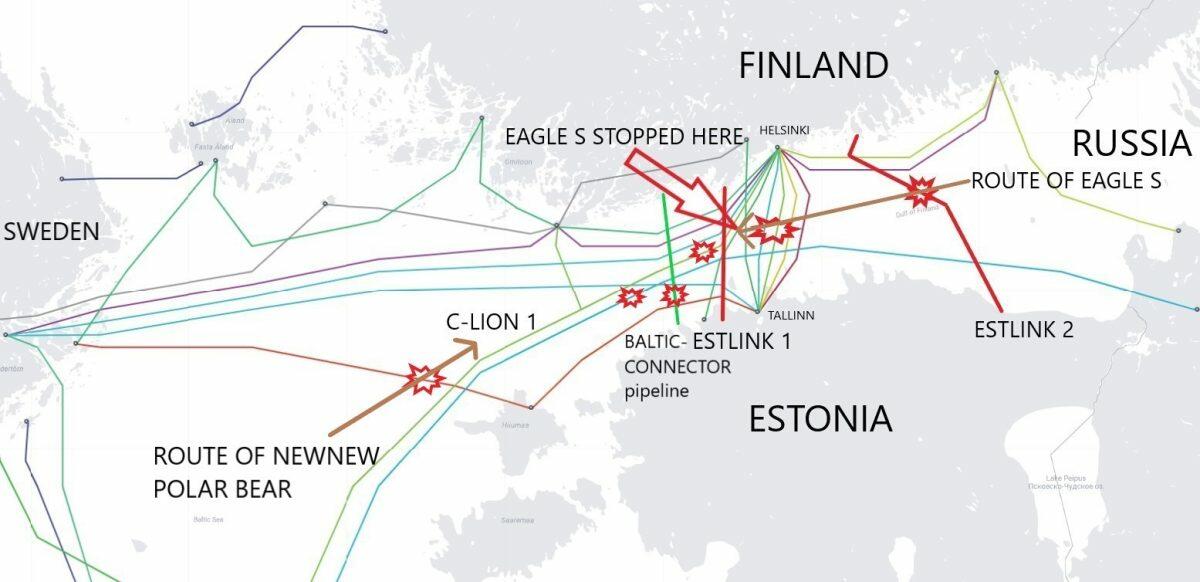
Recent damage to undersea cables in the Baltic Sea was likely caused by maritime accidents, not by Russian sabotage as many Western officials have alleged, The Washington Post reported on Sunday.
NATO has used recent incidents to justify an increase in its military presence in the Baltic Sea and launched a new mission called “Baltic Sentry” just last week, a move that ratchets up tensions with Russia. The Guardianreported on Sunday that a NATO naval flotilla has assembled off the coast of Estonia to “protect” undersea infrastructure.
The Post report, which cited US and European intelligence officials, said that “investigations involving the United States and a half-dozen European security services have turned up no indication that commercial ships suspected of dragging anchors across seabed systems did so intentionally or at the direction of Moscow.”
US officials said “clear explanations” in each case indicated the incidents were likely accidents, and no evidence suggested that Russia was involved. In some cases, ships dragging their anchors damaged cables underwater.
The Washington Post report cites American and European intelligence officials who have ultimately rejected the official Western media narrative:
Ruptures of undersea cables that have rattled European security officials in recent months were likely the result of maritime accidents rather than Russian sabotage, according to several U.S. and European intelligence officials.
The determination reflects an emerging consensus among U.S. and European security services, according to senior officials from three countries involved in ongoing investigations of a string of incidents in which critical seabed energy and communications lines have been severed.
The Eagle S, a tanker suspected of damaging a power cable connecting Finland and Estonia, was recently boarded by the Finnish Coast Guard, and its crew has been detained indefinitely while the ship is being investigated. Finnish officials have accused the Eagle S of being part of a “ghost fleet” that carries Russian oil and avoids Western sanctions.
Instead, U.S. and European officials said that the evidence gathered to date — including intercepted communications and other classified intelligence — points to accidents caused by inexperienced crews serving aboard poorly maintained vessels.
A lawyer representing the ship’s owner acknowledged that it was carrying Russian oil but said it was not a violation of international law and denied the tanker purposely damaged the undersea cable.
Western officials have said the incidents in the Baltic were part of a broader Russian sabotage campaign in Europe, and some officials quoted in the Post report said they were not convinced the damage was caused by accident, but they have produced no evidence for their claims.