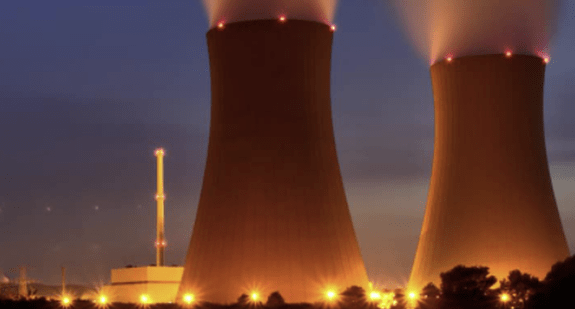
Japan Set To Restart Shimane Nuclear Reactor For First Time Since Fukushima Disaster
The world continues to “warm” back up to nuclear, with the latest example coming out of Japan, where its Shimane nuclear power station in western Japan has been restarted for the first time since the 2011 Fukushima meltdown.
Japan’s long-delayed restart of the 820 MW No. 2 reactor at the Shimane plant, shut down since January 2012, raises the number of operational reactors to 14, with a total capacity of 13,253 MW, according to Reuters.
Tohoku Electric Power also recently resumed operations of its 825 MW No. 2 reactor at the Onagawa plant, reducing Japan’s reliance on liquefied natural gas and thermal coal.
Reuters writes that the expanded use of nuclear energy is expected to support Japan’s growing power needs, particularly for semiconductor plants and AI-driven data centers.
The government projects power demand will rise from 1 trillion kWh this decade to 1.35–1.5 trillion kWh by 2050, fueled by the expansion of energy-intensive industries like chip manufacturing.
For Chugoku Electric, restarting the Shimane reactor, after investing 900 billion yen ($6 billion) in post-Fukushima safety upgrades, is set to improve profitability. The utility expects a recurring profit increase of 11 billion yen for the fiscal year ending March, driven by reduced fossil fuel costs, the report says.
About a week ago, Meta became the latest tech giant to embrace nuclear power with open arms.
We noted that the tech giant had issued a sweeping “request for proposals” (RFP) aimed at identifying developers capable of bringing nuclear reactors online by the early 2030s to support its energy-intensive data centers and surrounding communities.
Axios wrote that Meta’s RFP targets an ambitious pipeline of new generation capacity ranging from one to four gigawatts. The company seeks partnerships with entities that can streamline the entire lifecycle of nuclear projects—from site selection and permitting to design, construction, and operation.
And just days ago we published a note from OilPrice.com asking whether or not the world has finally overcome the Chernobyl Disaster. It noted what we have been predicting for years: despite past challenges, there is a growing global interest in nuclear power as a key component of a sustainable energy future.
And as we have continued to report, accelerating power demand growth from AI data centers has sparked a nuclear power revival in the US:
For those who missed it, in our note “The Next AI Trade” from April of this year, we outlined various investment opportunities for powering up America, most of which have dramatically outperformed the market.
Extremist armed factions across Syria are carrying out executions of civilians and soldiers amid the chaos following the fall of deposed Syrian president Bashar al-Assad’s government.
Al-Mayadeenreports on Tuesday that a video circulating on social media shows armed militants from Hayat Tahrir al-Sham (HTS), the Al-Qaeda offshoot that took control of Damascus on Saturday, carrying out field executions of unarmed men in the village of al-Rabia in the countryside of Latakia.
The militants referred to the men as ‘Shabiha’, a derogatory term long used to describe pro-government Syrian soldiers and civilians.
The HTS military operations administration reported ongoing clashes in Al-Rabia, including the encirclement of a group of officers inside a fortified farm in the village, Al-Mayadeen stated.
The Syrian Observatory for Human Rights (SOHR) reported on Tuesday that, according to its sources, the Turkish-backed Syrian National Army (SNA) carried out executions and assaulted properties of nearly 30,000 Kurdish families in Manbij City.
In the Nawaha and Al-Asadiya neighborhoods, SNA militants burned houses of civilians, stole their property, and executed at least three people, including a woman, SOHR added.
On Monday, ISIS militants killed 54 Syrian army soldiers who were fleeing an attack by the terror group in the central province of Homs.
(Warning: Graphic)
🚨🇸🇾 Even more suspected SAA members are currently being EXECUTED by ISIS forces! pic.twitter.com/sKUsBWQGlS
ISIS militants captured “personnel fleeing military service in the desert … during the collapse of the regime” of president Bashar al-Assad and “executed 54” of them in the Sukhna area in the Homs desert, SOHR stated.
Syrian sources reported the assassination on Tuesday of Sheikh Tawfiq al-Bhouti by unknown attackers. Bhouti was the son of the world-renowned Sunni Muslim scholar Sheikh Muhammad Saeed Ramadan al-Bhouti, who was assassinated along with 40 others in a mosque in 2013 by members of the Nusra Front, now known as HTS.
More ughly killings appearing in Syria.
Here is the Turkish-backed militia called Maghawir al-Sham as it combs through an Alawite village in the Homs countryside and carries out liquidation operations. https://t.co/finsaaf1r8
The elder Bhouti was an advocate of Sufism, and an opponent of Salafi interpretations of Islam that teach hatred against non-Muslims. Bhouti was a strong supporter of Bashar al-Assad’s government and spoke against the extremist armed groups attacking Syrian civilians, police, and soldiers during the war that began in 2011.
In October of 2024, Russia hosted the annual BRICS Summit in the city of Kazan with the intent to show unity among developing nations and general eastern interests. The Kremlin, a target of severe NATO sanctions since the start of the war in Ukraine, has been effective in solidifying economic guarantees from BRICS partners and circumventing western economic controls.
Despite being removed from the SWIFT banking network and being cut off from a large percentage of global trade, Russia has continued to garner solid export revenues.We certainly aren’t seeing the total collapse of the Russian economy that so many media “experts” predicted. The reason? Russia is resource rich and in an inflationary environment countries that are heavy in commodities sold at lower prices are always sought after. The BRICS event this year was a reminder that the west’s financial influence is in decline.
At that same meeting, Putin called for an alternative international payment system and passed around a mock-up of what he called a BRICS “bank note”. The paper note was purely symbolic, but it’s presence at the summit started an uproar within the establishment media. Pundits were quick to “fact check” the story and declare that this was not a real unified currency announcement. As far as I know, no one said it was. What we did say, however, is that a real multilateral currency system cutting out the dollar is MUCH CLOSER than most people realize.
Putin flashed that banknote around because this is something the BRICS have been working on for well over a decade. Those cynics that think such a thing is impossible are living in denial, or, they have an agenda to peddle.
Donald Trump in particular seems to understand quite well that the BRICS currency concept is not a bluff or a joke. In a recent social media post, Trump threatened to increase tariffs for any nation that tries to diminish or replace the dollar’s world reserve status (the dollar is the premier currency used in the vast majority of international transactions). Putin responded with a warning that Trump’s efforts to reinforce the dollar would backfire.
Overall, Putin is right. Any move to force the dollar onto developing nations as a reserve currency will only result in them dumping it faster. Tariffs act as leverage for short term adjustments to trade imbalances, but they aren’t going to be effective in preventing other countries from using alternative currencies.
The problem with the dollar reserve system is its foundation. Officially established with the Bretton Woods Agreement in 1944 as we neared the end of WWII, the unspoken deal underlying the dollar was that the US would get the economic benefits of reserve status, but in exchange America would be required to carry the bulk of military defense obligations for allies around the globe.
Five years later in 1949 NATO would be founded, the dollar was made the common currency denominator for all members and the US would end up paying 60% or more of all funding for the alliance for decades to come. The economic trade off was established – The US dollar gets the advantages of reserve status and the rest of the western world gets military protection from the US.
However, as far as eastern nations and the BRICS are concerned today, NATO is not an ally. There’s no agreement or unspoken doctrine which convinces the developing nations to maintain the dollar’s reserve status; only precarious import/export arrangements that can fall apart quickly if conflict arises.
And let’s be honest, the sparks of wider conflict are everywhere. At my current count, there are at least three regional proxy wars going on simultaneously that have the potential to kick off WWIII – Ukraine, Israel and Syria. Then there’s Taiwan, North Korea, and Georgia (Eastern Europe); regions that are constantly on the verge of going hot.
On top of that, there’s the steady decline of Western Europe, with Germany and France now in governmental limbo, not to mention the UK turning into an Orwellian police state. Americans are so insulated from the global crisis that’s unfolding that I worry millions will be caught completely off guard when it finally arrives on our doorstep.
To be sure, the US has its share of instability. The stagflation crisis is in its third year (officially) and prices don’t look like they will be coming down on most necessities any time soon. The illegal immigration crisis is about to come to a crescendo and we’re all waiting to see if the Trump Administration follows through on his promise of mass deportations. Then there’s the incredible debt crisis – Our government has added $6 trillion to the national debt in the past two years alone. We are creating over $1 trillion in new debt every 3-4 months and our debt to GDP ratio is 124%. This is unsustainable.
That said, we haven’t experienced any catastrophic economic disruptions yet. The loss of the dollar’s reserve status would bring historically devastating consequences, at least in the short term, and that’s only if our country devises a plan to weather the storm.
Conflicts between east and west are only going to grow given the existing conditions, and the calls for a dollar alternative are going to continue. There’s not much Trump can do about that. We also have to keep in mind that there are globalist institutions like the IMF and BIS that are, as I write this, getting ready to introduce CBDCs and cashless systems that would limit the dollar’s global influence by default.
When globalists pontificated endlessly about a “Great Reset” during the pandemic era, what they were talking about was primarily an economic reset and a currency reset. Klaus Schwab of the WEF stated ‘Now is the time for a great reset of capitalism’, and this event was supposed to precede a global shift into a cashless system.
There can’t be a global currency reset without the dollar being demoted. There can’t be a reset without a reversal of the old Bretton Woods system. They know it, and they aren’t going to warn the rest of the public about the consequences.
Everything is working against the dollar right now, and there’s a lot of people out there that question if it’s even worth saving. The Federal Reserve has been the source of considerable corruption within our government and I have often referred to central bankers as economic suicide bombers. But, the dollar is all we have until a tangible safety net can be established.
Instead of focusing on trying to intimidate the BRICS into sticking with the dollar, Trump should be drafting a plan to backstop our currency system with hard commodities to prevent greater inflation and ensuring that the US has the capacity to manufacture all our necessities domestically.
There is a chance this could be done under Trump; there was zero chance it would have been done under Kamala Harris. So, at least there’s hope.
At bottom, it’s impossible to keep the dollar in a position of global dominance when every element of geopolitics is working against it and the very globalist organizations that helped create the Bretton Woods system are now trying to dismantle it. It’s time to localize, build redundancies and get ready for the greater crisis at hand., because one way or another difficult changes are coming.
* * *
The foundation of our economy has endured decades of debt, inflation, and financial mismanagement. And nothing can reverse this damage. Which is why protecting your 401(k) or IRA has never been more essential. With a physical Gold IRA, you can secure your savings with a tangible asset that stands the test of time. Want to find out more? Click here to get your FREE info kit on Gold IRAs from Birch Gold Group and discover how a Gold IRA can be your financial safe haven.
Website Finder.com cited data from the National Christmas Tree Association showing that 43% of American households are expected to purchase a real tree this holiday season, with the average tree costing around $79.31—around $4 more than in 2023.
2020 marked a critical point in which artificial tree sales surpassed real tree sales for the first time.
Separately, data from point-of-sale company Square shows that Christmas tree prices typically peak and are most expensive immediately after Black Friday and during the first half of December. Square noted that 50% deals occur in the days leading up to Christmas.
Square Research Lead Ara Kharazian wrote in a note: “The cheapest time to buy a Christmas tree is right before Christmas. The best time is whichever day maximizes joy in your household.”
Over the past decade, Christmas tree supplies have been squeezed by a supplier bust originating back to the Global Financial Crisis, compounded by continued adverse weather conditions in the country’s top tree-growing regions.
“The root of the tight supply issue goes back to 2008 when an oversupply led growers to scale back planting,” Jill Sidebottom, a National Christmas Tree Association spokesperson, told CBS MoneyWatch.
Sidebottom added that adverse weather conditions, including the 2021 heat dome that destroyed trees across the Pacific Northwest, have exacerbated supply constraints in recent years.
Meanwhile, PNC Bank’s annual Christmas Price Index, which calculates the cost of “True Love’s” gifts from the classic holiday carol The Twelve Days of Christmas, rose by 5.4% compared to last year.
Data from Bankrate shows persistent inflation and high interest rates are expected to weigh on low/mid-tier consumers this holiday season. According to the financial services company, about one-third of holiday shoppers plan to spend less this year than last year.
“Fascism should rightly be called Corporatism, as it is the merger of corporate and government power.”
– Benito Mussolini, Fascist Dictator of Italy for 26 Years
Marc Andreessen speaks with Joe Rogan – [warning – disturbing in the extreme] – the US government under Biden was planning total control — they can and will de-bank you!
Marc Andreessen is an American businessman and Silicon Valley stalwart. He is the co-author of Mosaic, the first widely used web browser with a graphical user interface (GUI). He co-founded Netscape and the Silicon Valley venture capital firm Andreessen Horowitz. He is clearly one of the Fathers of the Internet. In 2012, Andreessen was named in the Times 100, an annual list of the 100 most influential people in the world.
Last week, he was interviewed by Joe Rogan and revealed some startling facts of life in present day USA. He essentially revealed that America is already in the grip of Fascist ideology, The US Government seeks Total Control in partnership with a US Corporatocracy. They also seek total control of Artificial Intelligence and Technology companies. It would be foolish to ignore what he had to say.
Marc Andreessen explained the secret de-banking of 30 technology company founders and anyone who dared to oppose the Biden Government politically. After being a lifelong supporter of the Democrat Party, he switched to being a supporter of Donald Trump after attending some meetings with unnamed US Government officials. “I ATTENDED ALARMING MEETINGS WITH THE US GOVERNMENT” — “THEY SEEK FULL GOVERNMENT CONTROL”
In the interview, he deals with the subject of de-banking (the closing of bank accounts). BOOM’s transcripts of the video excerpts here are paraphrased as far as possible. It is sometimes hard to hear (exactly) every word he says in the recording. Andreessen is also speaking conversationally. Thus, to paraphrase what he said:
Andreessen on Government Control of AI (Artificial Intelligence):
“The AI thing was very alarming. We had meetings in the Spring that are the most alarming meetings I have ever been in where they were taking us through their plans”. “Basically – full government, full government control. There will be a small number of large companies controlled by the Government. They told us not to launch Start-ups. Don’t even bother. There is no way for those to succeed.”“They said this is already over. It’s going to be two or three companies, and we’re just going to. We’re going to. We’re going to control them. And that’s that.”
Rogan asks:
“When you leave a meeting like that, what do you go and do?”
Andreessen replies:
“You go and endorse Donald Trump”
🚨MARC ANDREESSEN: “We had meetings with the Biden admin where they told us to not even start AI companies because there’s no way they’ll let them succeed.”
JOR ROGAN: “What do you do after a meeting like that?”
“THEY CAN AND WILL DE-BANK YOU” – 30 TECH FOUNDERS DE-BANKED.
Andreessen:
“30 Founders of tech companies have been de-banked in the last 4 years. It’s been a big recurring pattern.” ……
“There is no due process, no written record, there are no rules, there is no court, there is no decision process, there is no appeal.”
“Who do you go to to get your bank account back?”
“This is one of the reasons why I ended up supporting Trump”.
NEW: Marc Andreessen explains to Joe Rogan how Operation Chokepoint 2.0 is being used to debank and sanction #Bitcoin companies with no due process pic.twitter.com/E9Fzc9cZ27
In another section of the interview, Andreessen says the Government will take your kids if you oppose them. This is chilling.
“Step one was they take away your driver’s license. Step two is they take away your insurance, and step three is to take away your kids. Right. And so, like, that was their version of this. And that was a very specific take away your kids. That was the threat at the end to the truckers at the Canada trucker strike.”
GOVERNMENT WORKERS STAY AT HOME
Andreessen:
After Covid,“most Federal workers never came back to work. They work from home. They still collect full Washington DC salaries. A very large percentage, like half. In one union agreement, workers only have to be in the office one day a month”.
“Under the DOGE (Department of Government Efficiency), they have already announced – you can work from home but not for the Federal Government”
MOUSE WIGGLERS.
Andreessen:
“Do you know about Mouse Wigglers? – They are physical devices that hold your mouse and they intermittently wiggle it”
🚨ANDREESSEN: “Have you heard of mouse wigglers? They’re physical devices that hold your mouse and intermittently wiggle it. A friend of mine runs a tech company and had a feeling his remote workers weren’t pulling their weight so he bought all the mouse wigglers from China you… pic.twitter.com/QFd2WHKfz0
“The Chinese own the Drone market. 90% of US military and police drones are. Chinese-made. That is a very bad idea. Each drone has the potential to be a weapon—or a spy platform.”
Rogan:
“That sounds like a terrible security risk.”
Our national security is hanging by a thread:
• 90% of US military drones are Chinese-made.
• FAA regulations wiped out American manufacturers.
“The Government directly put itself into the food system, specifically (in regard to) High Fructose Corn Syrup. There are 450 US Government Agencies, one is the US DA (the US Department of Agriculture) which does the Food Pyramid which is upside-down. They promoted High Fructose Corn Syrup (as opposed to Sugar) which was a poisonous decision.”
They’ve already tested this level of control on our food system:
• The USDA promoted high fructose corn syrup everywhere.
• Created the infamous upside-down food pyramid.
“I have always been a Democrat. However … there are now two kinds of dinner parties in Silicon Valley. There’s one where everyone there believes every thing in the New York Times on that day. I am no longer invited to those. Then there’s the other kind”.
CONTROL THROUGH BIASED ARTIFICIAL INTELLIGENCE — MOST AI IS PROGRAMMED IN A POLITICAL DIRECTION.
In regard to Artificial Intelligence (AI), Andreessen describes how the US Government is seeking to have a rigid control on AI. And he describes how (most) AI has been developed with a political bias.
Andreessen: In describing how Artificial Intelligence is (mostly) politically biased, he explains how the Artificial Intelligence Program called Gemini (by Google) responded to a request for an image of a Nazi.
“According to Gemini (Google AI), Hitler had an excellent DEI Policy. In reality, he did not and it is important to understand that. But Gemini happily threw up Black Nazis.”
“They programmed AI to be biased, in a political direction. The LLMs (Large Language Models) are politically biased – 9 out of 10 of them. There’s a handful that aren’t. The Government plans a censorship regime on Artificial Intelligence just as it did on social media. If you thought social media censorship was bad, AI control will be 1000x worse. It’s going to be the control layer for everything: Your kids’ education, your loans, your front door. Does your house open?”
“If that happens, we are in for a very bad future”.
“If you thought social media censorship was bad, AI control will be 1000x worse. It’s going to be the control layer for everything:
The United States is set to fall in worldwide life expectancy ranking by mid-century, with widespread obesity adversely affecting people’s health, according to a recent study.
The peer-reviewed study, published in The Lancet on Dec. 7, forecasted the life expectancy for Americans between 2022 and 2050 after taking into account the effect of more than 350 diseases and injuries.
Study authors said overall life expectancy is projected to increase from 78.3 years in 2022 to 79.9 years in 2035, and to 80.4 years in 2050. The study said the increase “is forecasted to be modest compared with that in other countries around the world.”
As a result, the United States’ global rank in terms of life expectancy is projected to decline from 49 in 2022 to 66 in 2050 among 204 nations and territories. In addition, ranking in terms of health-adjusted life expectancy, which estimates the average number of years a person lives in good health, is projected to fall from 80 to 108.
Despite the slight increase in life expectancy, health improvements are expected to slow down in the nation as a result of obesity issues, according to professor Christopher J.L. Murray, co-senior author of the study and director of the Institute for Health Metrics and Evaluation (IHME).
Rising obesity rates are a “serious risk factor to many chronic diseases and forecasted to leap to levels never before seen,” he said a Dec. 5 statement from the institute.
“The rise in obesity and overweight rates in the U.S., with IHME forecasting over 260 million people affected by 2050, signals a public health crisis of unimaginable scale,” he added.
Researchers estimated that if authorities succeed in eliminating risk factors such as obesity, high blood pressure, and high blood sugar by 2050, the United States will succeed in preventing the deaths of 12.4 million people.
Life expectancy ranking of American females is forecast to drop from 51 in 2022 to 74 in 2050. For men, the ranking is expected to fall from 51 to 65.
“These lower rankings put the U.S. below nearly all high-income and some middle-income countries,” the institute said.
Researchers pointed out that the findings “highlight the alarming trajectory of health challenges in the USA, which, if left unaddressed, could lead to a reversal of the health progress made over the past three decades for some US states and a decline in global health standing for all states.”
Between 1990 and 2021, mortality rates for several leading causes of death, such as stroke, cancer, and ischemic heart disease, declined nationwide, which caused life expectancy to improve during those three decades.
The study was funded by the Bill & Melinda Gates Foundation.
Chronic Obesity
The study’s categorization of excess weight as a key risk factor to good health comes as the United States is facing an obesity crisis.
More than two in five American adults are obese, according to the U.S. Centers for Disease Control and Prevention, which estimates that more than 100 million Americans are obese and more than 22 million have severe obesity.
Obesity rates have skyrocketed over the past decades, jumping from 30.5 percent in 1999–2000 to nearly 42 percent during 2017–2020, with rates of severe obesity almost doubling.
“Many adults with obesity have other serious chronic diseases. For example, 58 percent of U.S. adults with obesity have high blood pressure, a risk factor for heart disease. Also, approximately 23 percent of U.S. adults with obesity have diabetes,” the agency says.
During a hearing in December 2023, Sen. Bernie Sanders (I-Vt.) highlighted the issue of obesity among children, pointing out the link between having excess weight and getting diagnosed with type 2 diabetes.
The senator called for banning the advertising of junk food targeting children, saying that such a move could aid in reducing obesity rates among kids.
“For decades, we have allowed large corporations in the food and beverage industry to entice children to eat foods loaded with sugar, salt, and saturated fat,“ he said. ”This situation has led to an addiction crisis, with ultra-processed foods being as addictive as alcohol and cigarettes.”
In August, former President Donald Trump, now the president-elect, said that he plans on setting up a panel of experts to investigate the reasons for surging childhood health issues, including obesity.
In a video from September, Robert F. Kennedy Jr., Trump’s nominee to head the Department of Health and Human Services, said chemicals in the soil and ultra-processed foods as contributing factors to the country’s obesity situation.
The United States’ food supply is “loaded with high fructose corn syrup and seed oils and hundreds of artificial additives and flavors and processed carbohydrates that don’t exist in nature and that are banned in other countries,” Kennedy said.
US Cattle Crisis Worsens As Nation’s Herd Size Continues Alarming Side Into Abyss
America’s beef cow inventory has steadily declined over the last half-decade, reaching 64-year lows and signaling a deepening crisis across the cattle industry. As the cattle crisis worsens, consumers should brace for higher ground beef prices.
The shrinking beef supply has pushed the nation’s herd size to its smallest level since 1961. With severe droughts, high interest rates, costly feed prices, sliding farm income, surging farm debt, and a shifting consumer preference toward cheaper chicken, struggling ranchers have been culling heifers, preventing any meaningful recovery in the number of calves necessary to expand the nation’s herds.
As Bloomberg reports, the nation’s cattle crisis is set to worsen with new pressures: first, President-elect Trump’s anticipated tariff war 2.0, which is expected to tighten domestic beef supplies, and second, immigration reform.
“All of the things he is talking about have potentially negative consequences more so than anything positive,” Derrell Peel, a professor of agricultural economics at Oklahoma State University, told Bloomberg, adding, “Our fate’s pretty well determined in the cattle industry in the U.S. for the next two to four years” – and it’s not looking good.”
In February, the United States Department of Agriculture projected that the cattle herd could begin rebuilding by 2025. However, that timeline has since shifted to 2027. The reason is primarily because of high interest rates and poor pasture conditions in the Midwest.
“Even as the beef industry has experienced periods of growth over the past decades, the animal count has dropped almost 40% since a peak in 1975. During the current downcycle, which started in 2020, the herd has been shrinking at the fastest pace since the big farm crisis of the 1980s,” Bloomberg noted.
If Trump introduces new tariffs, it could disrupt the flow of imported beef, further tightening domestic supplies. However, as Bill Bullard, CEO of R-CALF USA—a group representing cow-calf producers nationwide—explained, this move will drive up beef prices while encouraging investment in rebuilding the nation’s cattle herd.
Bullard said, “Tariffs will provide our industry an opportunity to invest in expansion and to begin rebuilding the herd that has been shrinking at an alarming rate,” adding, “Over the long term, consumers are going to be better served because we will no longer have such a dependency on imported products.”
America’s beef supply relies heavily on small producers raising calves, but with herd levels at half-century lows—combined with new factors like tariffs and immigration reform that could drive prices even higher—consumers need to recognize that food inflation will likely remain sticky through the decade’s end.
In the vast, icy expanses of Greenland, a place more synonymous with desolate, arctic landscapes than with the shadows of human history, NASA scientists have stumbled upon an extraordinary anomaly. Buried beneath a hundred feet of ice lies a remnant of a bygone era, originally hidden from the world above and shrouded in Cold War secrecy.
What was initially just another radar scan over the frosty tundra turned into a discovery of an underground “city,” a relic of geopolitical strategies from a tension-filled past. This isn’t a tale of ancient civilizations, but rather a hidden chapter of recent history, now frozen in time, waiting to be uncovered. What secrets does this icy fortress hold?
The Discovery of Camp Century
In a groundbreaking exploration, NASA’s radar technology unveiled an extraordinary find beneath Greenland’s ice—a secret Cold War base known as Camp Century or “the city under the ice.” This discovery, made in April 2024 during a flight testing new radar equipment, revealed intricate underground structures that have not been seen so vividly until now.
While NASA scientists were testing the Uninhabited Aerial Vehicle Synthetic Aperture Radar (UAVSAR) mounted on a Gulfstream III aircraft, they captured a surprising image. Alex Gardner, a cryospheric scientist at NASA’s Jet Propulsion Laboratory, noted, “We were looking for the bed of the ice and out pops Camp Century. We didn’t know what it was at first.” This advanced radar system is not your typical radar; it’s designed to give a more dimensional view of what lies beneath the ice by not only looking downward but also to the sides.
The UAVSAR technology has proven pivotal in this discovery. It allowed the team to see the underground city in unprecedented detail, mapping out the camp’s layout against historical blueprints and revealing structures that conventional radar had missed. This novel imaging technique represents a significant leap in ice-penetrating radar technology, offering new ways to understand the geological and environmental history of icy regions.
Photo from NASA Earth Observatory
The rediscovery of Camp Century is not just a historical curiosity but also provides crucial data for understanding ice sheet dynamics and the potential environmental impact of the materials left behind. As the climate changes, the ice sheets’ response is a vital area of study, with UAVSAR contributing to predictions about sea levels and ice stability.
History of Camp Century
Camp Century, famously known as the “City Under the Ice,” was initially presented to the public as a pioneering Arctic research station. However, its true purpose was far more clandestine. Established in 1959 by the United States Army Corps of Engineers, this secretive base was part of “Project Iceworm,” intended to test the feasibility of deploying nuclear missiles from beneath Greenland’s vast ice sheet directly against the Soviet Union.
On the surface, Camp Century featured accommodations and amenities that supported scientific research and the daily needs of its inhabitants, including laboratories, a library, and living quarters. This facade supported its cover story as a hub for polar research, where significant scientific firsts occurred, such as drilling the first ice cores to provide data on the Earth’s past climate.
Beneath its scientific guise, the camp’s primary objective was far more militaristic. The U.S. planned to create a network of tunnels capable of housing and launching “Iceman” ballistic missiles. These facilities were meant to be part of a broader strategy to ensure the U.S. could respond to Soviet actions during the Cold War. The project was ambitious, aiming to house up to 600 nuclear missiles under the guise of Arctic scientific endeavors.
The base was constructed deep within the ice, with tunnels extending over several miles. Despite the innovative approach to Cold War military strategy, the project faced insurmountable challenges. The ice’s dynamic nature caused structural instabilities within the tunnels, leading to frequent maintenance issues and eventual abandonment of the missile plan. The shifting ice also posed significant risks to the structural integrity of the facility, leading to its decommission in 1967.
In the decades following its closure, concerns have grown over the environmental impact of the waste left behind, including low-level radioactive waste from the camp’s nuclear reactor. Studies suggest that as the climate warms and the ice melts, these contaminants could be released into the environment, posing new risks to the ecosystem.
Technological and Engineering Features of Camp Century
The construction of Camp Century was a remarkable feat of engineering, designed to test the feasibility of establishing military facilities under the harsh conditions of the Greenland Ice Cap. This project was not only ambitious but also showcased a range of innovative construction techniques that have informed cold region engineering practices to this day.
Camp Century was constructed using a “cut-and-cover” method where trenches were dug into the ice and then covered with arched steel structures. This method was crucial in creating the protective tunnels that formed the main structure of the base. The entire facility was then insulated to protect against the extreme cold and to ensure that the heat generated within the base did not cause the surrounding ice to melt.
To support its designation as a self-sustaining underground city, Camp Century included living quarters, a kitchen, a hospital, and even a movie theater, all powered by a groundbreaking portable nuclear reactor, the PM-2A. This reactor was a critical component of the base, providing a reliable power source in an environment where traditional fuel supplies would be logistically challenging to maintain.
The base’s design and construction required innovative solutions to numerous challenges, such as the structural integrity of buildings under ice and the management of thermal effects caused by the heat generated within the base. These innovations have left a lasting impact on polar construction techniques and have been studied for their potential applications in other remote and harsh environments.
Moreover, the data and experience gained from the construction and operation of Camp Century have been invaluable in the development of future designs for ice-cap camps. This project demonstrated that subsurface ice-cap camps are both feasible and practical, and that nuclear power can significantly reduce the logistical burdens of supporting isolated, remote military facilities.
Secrets Uncovered
The unveiling of Camp Century’s true purpose marked a significant chapter in Cold War history. For years, the world believed that Camp Century was solely a scientific research station focusing on Arctic studies and ice core sampling. In reality, it was a cover for a highly classified military operation known as Project Iceworm.
Initially portrayed as a peaceful research facility, Camp Century was publicly celebrated as a model of polar innovation and technological achievement. The facility was featured in documentaries and news articles, praising its advanced infrastructure and the potential scientific advancements it could bring.
The truth about Camp Century came to light in 1997 when the Danish Parliament published documents revealing that the base was intended to serve as an underground launch site for nuclear missiles targeted at the Soviet Union. This disclosure came as a shock to the international community, especially since Denmark had been assured that the operations at Camp Century were purely scientific.
This revelation not only strained U.S.-Danish relations but also raised significant ethical and legal questions about the sovereignty and territorial integrity of Greenland. The Danish government expressed deep concerns, as they had not consented to the militarization of their territory, which they were led to believe was being used for benign scientific purposes.
The declassification of Project Iceworm’s objectives prompted a broader discussion about the environmental impact of the military base, particularly concerning the nuclear reactor used to power the camp. Concerns were raised about the potential release of radioactive materials stored under the ice, which could emerge due to the accelerating ice melt caused by global warming.
Camp Century’s Effect on the Environment
The thawing of Greenland’s ice sheet is poised to reveal the remnants of Camp Century, including hazardous materials such as low-level radioactive waste and polychlorinated biphenyls (PCBs), which are known carcinogens. This potential exposure is a significant environmental threat, as the melting ice could release these contaminants into the surrounding ecosystem and beyond.
As the ice melts, estimated projections suggest that by as early as 2090, the base could become exposed, unveiling not only the physical structure but also the environmental hazards contained within. This includes an estimated 9,200 tons of physical materials, 53,000 gallons of diesel fuel, and other toxic wastes such as PCBs, which have long-term persistence in the environment and can bioaccumulate in wildlife and humans.
The exposure of these contaminants poses not only environmental risks but also political and diplomatic challenges. The cleanup and management of this waste will require coordinated international efforts, potentially straining relationships between the United States, Denmark, and Greenland. The situation underscores the broader impacts of climate change, where thawing ice is not just a physical change but a catalyst for emerging political conflicts over accountability and environmental stewardship.
Echoes from the Ice: Reflecting on Camp Century’s Legacy
The rediscovery and impending exposure of Camp Century not only unearths a relic of the Cold War but also reminds us of the lasting environmental impacts of human endeavors. This hidden base, once a symbol of military ingenuity, now poses significant environmental risks as the consequences of its hazardous wastes are set to re-emerge due to the warming climate. The challenges ahead are not only technical or environmental but also deeply political, involving negotiations and responsibilities that span across nations and generations.
Bean Mania: Arabica Coffee Hits New High, Cocoa Jumps To 7-Month High
Cash-strapped US consumers should be deeply concerned about rising food inflation. It’s ‘stickier’ than ever as coffee and cocoa prices surge.
Arabica coffee futures in New York hit a record high on Tuesday, driven by ongoing fears of a global supply crunch. Prices surged nearly 5% during the session, reaching their highest level in data dating back to 1972. At that time, coffee prices soared due to the disastrous Black Frost, which devastated Brazilian yields.
“Concerns over Brazil’s 2025-26 arabica crop grew this week,” said Steve Pollard, an analyst at Marex Group, as quoted by Bloomberg.
Pollard added, “Recent crop tours point to production in the mid-30 million bags,” which would result in yet another supply shortfall.
Major agricultural trader Volcafe Ltd. recently slashed Brazil’s arabica production outlook due to severe drought conditions. The trader projected that South America would produce just 34.4 million bags of arabica coffee in the next growing season, down 11 million bags from the prior September estimate, according to Bloomberg.
Volcafe also forecasted a global coffee production shortfall of 8.5 million bags for the 2025-26 season, marking the fifth consecutive year of deficits.
“We are currently experiencing a strong fundamental phase in the coffee market, which we expect to sustain the elevated price levels,” said Viktoria Kuszak, a research associate at Sucden Financial.
In the cocoa market, the most active contract in New York jumped to the highest level in seven months over West Africa’s dismal production outlook, yet another crop experiencing dwindling global supplies.
The most-active cocoa contract has jumped 58% to $10,500 per metric ton since late October, the highest since June. This comes as adverse weather dents supplies from top growers in Ivory Coast and Ghana.
“The outlook for the mid-crops have deteriorated in the past weeks,” said Steve Wateridge, head of research at TRS by Expana, adding, “The weather conditions in next three months will determine whether we see further deterioration.”
Broad food price trends via the Food and Agriculture Organization of the United Nations’ Food Price Index, which tracks international prices of a basket of globally traded foods, show that prices have alarmingly re-accelerated this year.
Back to the cocoa market: The new surge in bean prices certainly sits well with famed commodity trader Pierre Andurand’s bullish thesis earlier this year about worsening global supplies.
The big takeaway is that food inflation is very sticky despite the government saying otherwise.
New York City Mayor Eric Adams said he is working to bypass the New York City Council to change the city’s sanctuary city law ahead of a meeting with the incoming Trump administration’s border czar.
CBS News host Marcia Kramer asked Adams, a Democrat, about his pending meeting with President-elect Donald Trump’s border czar, Tom Homan, over illegal immigration in the city.
Adams stated that he wants criminal illegal aliens deported first, adding that he may try to bypass the City Council-passed sanctuary law, which in part bars the city’s police department from telling federal immigration officials about criminals’ immigration status.
“The City Council made it clear they don’t want to change that,” Adams told Kramer on Dec. 8, according to a transcript released by the mayor’s office.
“They stated they’re not willing to change the sanctuary city law. I think they’re wrong. I have my teams looking at my power as executive orders.”
He then said that he has “to protect the people of this city” and suggested that he may have “the power to do so.”
“Prior to the election, even when I communicated to the president and his team, the current president, I stated over and over again we have to deal with the small number of violent offenders who are making their way into our country,” Adams said in the interview.
“In particular, it’s a very dangerous Venezuelan gang. It is not the overwhelming number of migrants and asylum seekers. And many of these gang members are preying on migrants and asylum seekers also.”
However, Adams said that because the City Council “made it clear” that it isn’t changing the sanctuary city law to allow cooperation with federal immigration officials, he is now going to “plan B” and looking at his options and powers as mayor.
“I told the corporation counsel, give me what are my options,” the mayor said in the Dec. 8 interview.
“As I stated almost a year ago, I want to look at those who are committing serious violent felonies in our city. And I want to know what are my powers.”
The mayor earlier this year said he wanted the city’s immigration law changed, and he reiterated his stance after Trump’s win in November. He had publicly supported the sanctuary city designation during his mayoral campaign, writing on social media platform Twitter (now X) in October 2021 that New York City would “remain a sanctuary city” if he won.
Homan and Adams are scheduled to meet in the coming days, the mayor said earlier this month.
“I want to hear the actual plan, and how are we going to operationalize the plan,” Adams told MSNBC on Dec. 5, reiterating that he wants to target illegal immigrants who have committed violent crimes in the city.
Homan, a former acting director of the U.S. Immigration and Customs Enforcement, has issued multiple warnings to sanctuary cities ahead of Trump’s inauguration next month.
In November, Homan suggested that Denver Mayor Mike Johnston could face criminal charges following Johnston’s remarks to a local media outlet that he would direct police to block federal immigration officials from apprehending illegal aliens.
In multiple interviews, Homan has said that Trump wants to focus on deporting criminal illegal immigrants first but has also said that any unauthorized individual residing in the United States could face deportation.
Over the weekend, Trump told NBC News’s “Meet the Press” that he may deport families with mixed immigration statuses to avoid separating children from their parents and vowed that he will move to end birthright citizenship.