64.7 F
Chicago
Sunday, May 3, 2026
Home Blog Page 204

One Battle After Another

0
One Battle After Another

By Michael Every of Rabobank

One Battle After Another

US and Iranian negotiators meet in Geneva today to hear Tehran’s final offer but reports of what they have to say suggests we should prepare for the worst even if Iran sees a “good outlook” for today’s talks. The Kan news agency claims it will only agree to lower uranium enrichment from 60% to 3.67% for seven years, won’t hand over previously enriched material, dismantle the ballistic missile program President Trump just stated can already hit Europe and will soon be able to reach the US, and won’t stop its support for regional terror proxies.

US negotiator Witkoff, seen by critics as a soft touch, says a nuclear deal should last indefinitely while the above is a rehash of the JCPOA Trump spent years deriding (and whose backers often fail to note coincided with Iran processing uranium far beyond the agreed limits in secret underground bunkers). Indeed, VP Vance claimed there’s evidence Iran is trying to rebuild its nuclear program, which provides a US casus belli. It’s already imposed new sanctions on it.

In terms of the framing, Politico claims White House officials believe “the politics are a lot better” if Israel strikes Iran first, which would allow the admin to sell a defensive action in support of an ally. That’s unlikely to be an obstacle to action as soon as Indian PM Modi, who yesterday addressed the Knesset to stand firmly behind Israel “at this moment and beyond”, is wheels up to home later today. Also note the US Navy fleet in Bahrain has taken to sea to avoid a potential Pearl Harbor scenario, and another 12 F-22s are about to leave the UK heading east, joining 11 already there. Pay additional attention to Iran’s threat to escalate if attacked, breaking precedent not to do so regionally beyond Israel and/or token efforts: this is not the same playbook as the past.

This week also saw reported concerns an attack could involve US casualties and deplete munition stockpiles needed against contingencies in Asia. It would be a shocking error if either thought wasn’t front of mind before military pressure began: that points to underlying confidence in what the US has in store, and Iran doesn’t, or a gamble. Yet at this point the US cannot retreat without losing crucial global deterrence power: Iran is a military minnow compared to the States and any stand down would see supplies of Chinese weapons to Tehran step up so a repeat US exercise in years to come would be far more risky and/or unlikely.

In short, the US may be hoping to flip Iran into its camp via regime change. That would be a stunning geopolitical coup. Yet things could go wrong on multiple fronts, which could prove the coup de grace for much of what Trump is trying to achieve on them all.

One other thing needs to be underlined: US success would entrench Trumpism and demolish planned global alternatives; yet failure would do nothing to return ‘rules-based order’ or a benign free-trade backdrop for under-armed and over-dependent ‘middle powers’. It would instead open a Pandora’s Box of instability and volatility across geographies and sectors. As just one example, the IMEC (India-Middle East-Europe Economic Corridor) Modi fulsomely backed in Israel –which will initially involve Cyprus, Greece, and likely Italy, Bulgaria, and Romania– can hardly thrive with a destabilised or antagonised Iran at its centre. There’s a lot more for markets to think about than oil and gas, important and volatile as they are (as the Saudis boost oil output and exports for an Iran attack contingency, and Iran has ramped up oil tanker loadings for the same reason).

US-Ukraine discussions will also continue in Geneva today: it’s unclear if we will see any breakthrough there either given Russia also needs to sign off – and again note talks are happening in Europe, without Europe. Markets don’t seem to be focusing on that dynamic vs the so-called ‘Sell US’ trend, but in the long run it matters. Also note Hungary’s Orbán has deployed troops to guard energy sites over an alleged Ukraine threat to them.

It’s hardly quiet elsewhere: Cuba sunk a US vessel that had strayed into its waters, killing four Americans; Afghanistan threatened Pakistan and accused the latter of supporting ISIS; and UK PM Starmer’s controversial Chagos deal descended into chaos, with a minister telling MPs the process has been paused, then No 10 and the Foreign Office saying it’s still proceeding.

In geoeconomics, the USTR underlined that the US aims to keep China tariffs steady in a 35-50% range ahead of the Xi-Trump meeting, while the universal tariff will be hiked from 10% to 15% “where appropriate.” The USTR also underlined the US wants a deal with Canada where it imposes some sectoral tariffs –as Canada long has on the US– and Ottawa agrees to prevent transshipment from China and Vietnam, etc.; that’s as the Chinese press suggest threatening Canada with a USMCA exit may push it into Beijing’s arms “as a hedge.” Which would then threaten North American geopolitics/economics being dragged through a hedge backwards. Chancellor Merz called for rebalancing Germany’s “unhealthy” trade ties with China. ‘How?’ is the question, as some note that many of the German CEOs travelling with him are still keen on shifting their domestic manufacturing to China and exporting it home from there.

Crucially, Zimbabwe imposed a ban on all exports of all raw minerals and lithium concentrate, as it wants crucial midstream processing to be done domestically to help it move up the value-added ladder in our new resource-centric global great game. Who will respond to that faster – China or the US? (Europe is not yet being mentioned in the mix.) Unrelated, the CME had to halt trading on its flagship metals market for more than an hour again yesterday due to “technical” issues. That does speak to how what we once thought was the global architecture is rapidly breaking down.

In AI space, the Pentagon reportedly took its first step toward blacklisting Anthropic; China’s DeepSeek is to withhold its latest AI model from US chipmakers including Nvidia, an interesting reversal; Canada told OpenAI to boost safety measures or be forced to by the government; and further upstream, France and Sweden are pushing to kill the mechanism to pay for massive EU grid upgrades needed to run AI at scale, among other things.

In the background, higher defence spending helped lift global debt to a record $348 trillion in 2025, according to the IIF –what could go wrong there on either defence or debt?– as the IMF urged Trump to change course on economic policy and stop cutting government jobs. Do these two agencies talk much? And against that backdrop, the Australian financial press today reports: ‘‘Astounding’: No affordable houses for first home buyers in any city’. Let’s just say some of us aren’t astounded by it at all.

Let’s finish with some related Fed-speak. Outgoing Atlanta Fed President Bostic yesterday published his farewell essay, in which he noted, “…the legal and rhetorical battles raging around the central bank right now have caused people across a wide cross-section of our population to begin to doubt the Fed’s independence. This is a major concern…. I won’t be part of the Fed when we see resolutions of these battles. I will be watching closely and hoping that wisdom grounded in the profound success of the US economy over many years prevails.”

Indeed, may wisdom –and good luck— prevail on multiple fronts. I fear we are going to need it.

Tyler Durden
Thu, 02/26/2026 – 10:20

Biden’s FBI Secretly Obtained Kash Patel And Susie Wiles’ Phone Records, But NYT Says It’s Cool

0
Biden’s FBI Secretly Obtained Kash Patel And Susie Wiles’ Phone Records, But NYT Says It’s Cool

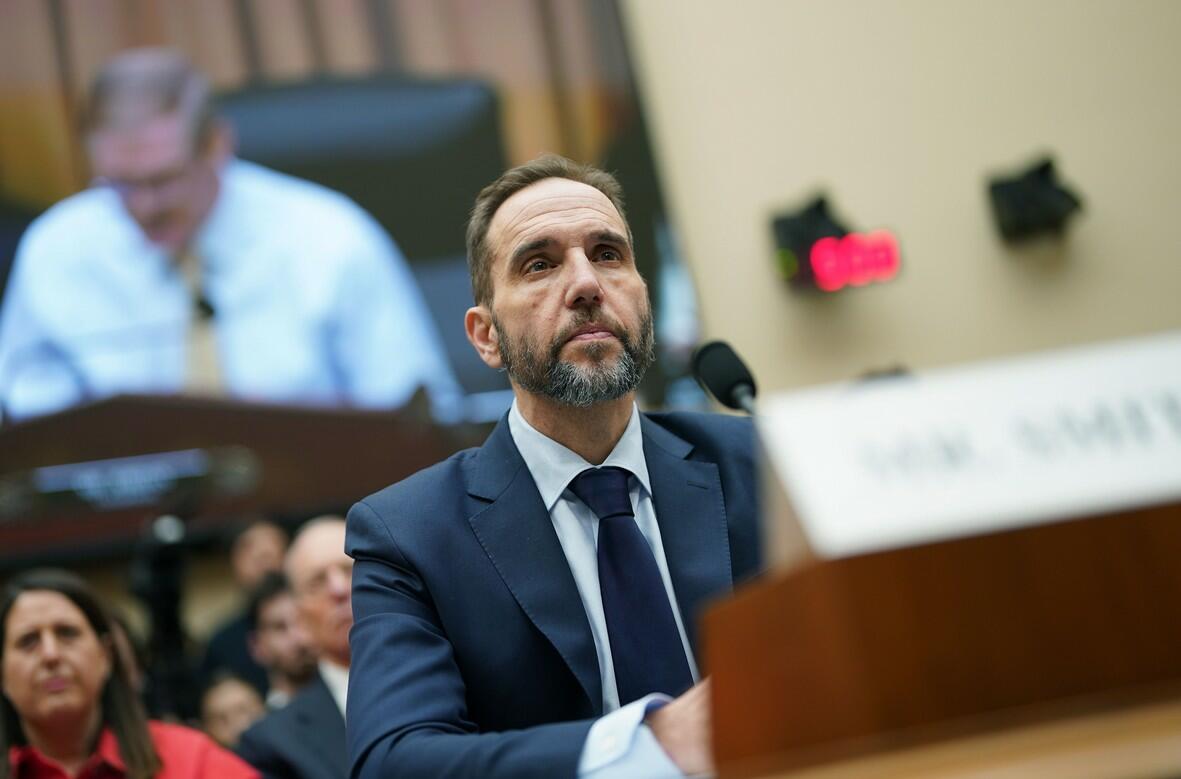
When Special Counsel Jack Smith was investigating Donald Trump and people in his orbit, he ended up surveilling then-private-citizen Kash Patel, and Trump Chief of Staff Susie Wiles during 2022 and 2003.

Patel, now head of the FBI, told Reuters on Wednesday that he found out about this, and the FBI buried the files in a “Prohibited” category deep within the bureau’s computer system so they would be extremely difficult to find.

Getting down to it – the subpoenas targeted metadata showing who called whom and when – called ‘toll records,’ as well as a recorded a call between Susie Wiles and her lawyer – which her lawyer knew about and didn’t tell her, according to Fox NewsTechnically, under federal law, the government can obtain toll records with just a subpoena and no warrant. Investigators insist they routinely pull toll records from prominent figures to establish timelines and verify involvement. Smith himself testified to Congress that records seized from Republican senators during the January 6 probe helped confirm the timeline of events, that no content was captured, and that his office followed all legal requirements. 

Hours after Kash told Reuters his side of the story, insiders on team blue ran to the NY Times to let them know that Patel has sacked ‘about 10 FBI employees, some veteran agents’ as part of a “rolling revenge” tour on members of Smith’s team. 

The boys jumped into action:

The firings are part of a rolling barrage of retribution aimed at those who worked on the two federal prosecutions of Mr. Trump after his first term in office. They came hours after Kash Patel, the F.B.I. director, told Reuters that as part of the documents inquiry, the bureau had subpoenaed phone metadata for himself and Susie Wiles, currently the White House chief of staff. -NYT

To summarize:  

Team Trump: The Biden FBI surveilled Kash and Susie, then tried to hide it. 

Team NYT leakers: That was perfectly normal, Kash is drunk on power and getting revenge. 

And of course, the NYT assures us: 

Requests for phone records are common in complex criminal investigations to establish timelines and provide proof of communication. It remains unclear if the F.B.I.’s Trump-appointed leaders have accused employees of wrongdoing. In the past, they have not. In some cases, firings have violated procedural safeguards created to protect agents from politically motivated dismissal, according to agents and their lawyers.

But, wait a sec – the Reuters story had the ‘prohibited’ category aspect front and center…

And yet, NYT:

Which is odd, because the ‘prohibited’ designation made them deliberately difficult to locate and effectively shielded them from oversight. He says he discovered the records only after taking over as FBI director and has since eliminated the bureau’s ability to classify files that way. 

The seizure of the phone records was essentially covered up, which is not something you tend to do if it was all above board.

It is outrageous and deeply alarming that the previous FBI leadership secretly subpoenaed my own phone records – along with those of now White House Chief of Staff Susie Wiles — using flimsy pretexts and burying the entire process in prohibited case files designed to evade all oversight,” Patel said.

Smith’s spokesperson declined to comment on Wednesday about Patel’s specific allegations. Neither Joe Biden, former Attorney General Merrick Garland, nor former FBI Director Christopher Wray offered any comment for the story.

Nevertheless, the timeline raises its own questions.

Patel was called before a grand jury in 2022 after receiving limited immunity, during which he told prosecutors that Trump had declassified the documents taken to Mar-a-Lago. Wiles, for her part, became a close Trump adviser after his 2021 departure from office and eventually co-managed his 2024 presidential campaign. The record collection stretched into that campaign period.

Reuters could not independently establish what records the FBI obtained or who approved the subpoenas. The news agency also couldn’t ascertain if Patel or Wiles themselves were under investigation and, if so, why. Both were close to Trump during this period, as he built toward and ultimately launched his campaign to reclaim the presidency in 2024.

Both Patel and Wiles were known to have been interviewed by investigators as part of Smith’s investigation into Trump’s retention of classified documents following his first term.

In 2023, the FBI recorded a phone call between Wiles and her attorney, according to two FBI officials. Wiles’ attorney was aware that the call was being recorded, and consented to it, but Susie Wiles was not.

Smith was appointed special counsel in November 2022 to lead two federal probes: one into Trump’s handling of classified documents at Mar-a-Lago, and another into alleged efforts to “overturn” the 2020 election. He charged Trump with felonies in 2023 on both fronts. A federal judge dismissed the case involving the documents. Smith dropped the election interference appeal after Trump won the November 2024 election.

This latest bombshell comes in the wake of another stunning disclosure: internal FBI emails from around the time of the August 2022 raid on Mar-a-Lago, which appear to directly contradict the Biden administration’s insistence that then-President Joe Biden had no prior knowledge of the search of President Donald Trump’s home. The records also revealed just how hard the Justice Department leaned into the push for a search of Trump’s Mar-a-Lago estate—despite concerns within the FBI about whether the evidence actually justified such an aggressive move.

Patel says he doesn’t know why investigators wanted his and Wiles’ records. That’s notable for someone who now sits atop the FBI. The bureau collected phone metadata on two of Trump’s closest allies — one of whom would go on to run his presidential campaign — and filed it away where it couldn’t easily be found.

Fox News reports that at least 10 FBI employees were fired on Wednesday in connection with this latest disclosure. 

Tyler Durden
Thu, 02/26/2026 – 09:25

Hindenburg Alarm: Another Rotation Or Worse?

0
Hindenburg Alarm: Another Rotation Or Worse?

Via RealInvestmentAdvice.com,

In early November, we sounded the alarm about a recent Hindenburg Omen. Per the Commentary’s summary:

Bottom line: market breadth is horrendous and will likely lead to a rotation favoring out-of-favor sectors and stocks.

Thus, it’s not surprising that the Hindenburg Omen was triggered. If we continue to see more of these Omens, the threat of a drawdown grows.

At the time, Mega-Cap stocks were grossly outperforming the market, while many sectors lagged the market.

Since that Hindenburg Alarm, our expectations have come to fruition. We have, in fact, seen a “rotation favoring out-of-favor sectors and stocks.”

The graphic below, courtesy of SimpleVisor, shows the significant change in fortunes between sectors.

The first column shows each sector’s excess returns (vs. the S&P 500) since the Hindenburg Omen on October 29th.

The second column shows the excess returns over the 50-day period preceding the alarm.

The Hindenburg Omen has sent 6 alarms over the last month.

The last batch of Hindenburg alarms signaled drawdowns in the leaders and strong performance in the laggards.

Is this Hindenburg Alarm signaling a rotation back to large-cap growth?

Or might it be more ominous for the entire market?

The last time this technical indicator triggered six times in a month was preceding the Pandemic crash of 2020.

Tyler Durden
Thu, 02/26/2026 – 09:05

Futures Flat Despite Blowout Nvidia Earnings

0
Futures Flat Despite Blowout Nvidia Earnings

US equity futures managed to erase overnight losses and were trading flat after Nvidia and Salesforce failed to assuage fears about an overheated AI economy while traders awaited color from today’s round of US / Iran talks. As of 8:00am S&P futures were unchanged and nasdaq futures were down 0.1%, with NVDA up 1% premarket but well off overnight highs after its earnings report and guidance smashed expectations while CEO Jensen Huang talked about “exponentially” growing computing demand and “skyrocketing” adoption of AI agents. It wasn’t enough, especially as software companies Salesforce and Snowflake both provided lukewarm sales guidance to an already-nervous market. “Aside from fireworks, champagne and dancing robots, we are not quite sure what more Nvidia could have done on the 4Q call to get the market re-excited,” said Jim Fontanelli, co-founder of Arete Research. Discretionary, Financials, and Industrials are outperforming with notable weakness in Energy and Materials. In premarket trading, Mag7 names were mostly weaker ex-NVDA though, as JPM says, bulls should not panic as we await Long Only demand once the market opens. AI-related plays are higher pre-mkt. Bond yields are flat, the USD is flat; in commodities lithium prices surged after Zimbabwe, one of the world’s top producers, suspended concentrate exports. Brent crude edged lower as nuclear talks take place between the US and Iran while silver stalled as it reached nearly $90/oz. Today’s macro data focus is on jobless claims, KC Fed, and several Fed speakers. 

In premarket trading Nvidia Corp. (NVDA) rises 1.3% after its latest sales forecast drew a muted response from investors. Other Magnificent Seven stocks are mixed (Amazon -0.1%, Apple -0.04%, Microsoft -0.06%, Alphabet -0.06%, Tesla -0.6%, Meta -0.6%)

  • Array (ARRY) drops 22% after the renewable energy company’s 2026 adjusted Ebitda guidance missed the average analyst estimate.
  • C3.ai (AI) slumps 25% after the AI company cut its revenue guidance for the full year, missing the average analyst estimate.
  • Celsius Holdings (CELH) rises 12% after posting sales which more than doubled from a year earlier following its acquisition of Alani Nu, allaying concerns that a change in distribution channels would disrupt sales.
  • FTAI Aviation (FTAI) falls 4% after the aerospace company reported total revenue for the fourth quarter that missed the average analyst estimate.
  • GoodRx Holdings (GDRX) falls 15% after the health-care platform forecast revenue for 2026 that fell short of Wall Street’s expectations. It also gave an estimate for the lower bound of 2026 Ebitda that would be below expectations. Multiple analysts said they were surprised by the scale of margin deterioration implied by the profit outlook.
  • IonQ (IONQ) rises 13% after the quantum computing company reported fourth-quarter results that beat expectations.
  • Janus Henderson Group (JHG) climbs 6% after Victory Capital offered to acquire the company for $57.04 per share.
  • Krispy Kreme Inc. (DNUT) climbs 15% as the company expects leverage to decline further this year as it advances its turnaround plan following the end of its US partnership with McDonald’s Corp.
  • Nubank (NU) slips 2% after the lender reported higher costs and provisions that analysts say offset net income increase in the fourth quarter.
  • Nutanix (NTNX) rises 18% after Advanced Micro Devices said it will buy $150 million in the software company’s stock as part of a new partnership. The news was seen as overshadowing a reduced full-year forecast.
  • Papa John’s (PZZA) falls 5% after the pizza chain reported weaker-than-expected sales results, which reflect a “weak consumer backdrop and elevated promotional environment.”
  • PROCEPT BioRobotics (PRCT) sinks 24% after the medical equipment maker forecast revenue for 2026 that fell short of Wall Street’s expectations. The firm also posted results for the fourth quarter that Leerink Partners called a “painful miss.”
  • Salesforce Inc. (CRM) falls 3% after the company gave a lukewarm outlook for sales growth in the new fiscal year, fueling investors’ worries that the software giant will lose out to new competitors in the age of AI.
  • Synopsys (SNPS) falls 3% after the electronic design automation software company’s Design IP revenue came in below expectations. The company also forecast weaker-than-expected free cash flow for the full-year.
  • Trade Desk (TTD) declines 14% after the advertising technology company gave a first-quarter forecast that was weaker than expected. The report is adding to concerns about competition from Amazon and AI-related disruption.

In corporate news, Apollo and BNP Paribas are said to be nearing a deal to partner up in Europe’s private credit market. Apple is in discussions with key Indian banks and global card networks in preparation to start Apple Pay in the world’s most populous country. American Airlines will invest $1 billion in a concourse expansion at Miami International Airport to bolster its position at its top international gateway.

Despite Nvidia’s estimate-busting guidance, and CEO Jensen Huang talking about “exponentially” growing computing demand and “skyrocketing” adoption of AI agents, it wasn’t enough, especially as software companies Salesforce and Snowflake both provided lukewarm sales guidance to an already-nervous market. Yet there is one group of winners: memory chipmakers Samsung and SK Hynix jumped in Asian trading. A huge jump in supply-related commitments by Nvidia “likely reflects a deliberate effort by Nvidia to tie up valuable components,” according to Vital Knowledge analyst Adam Crisafulli. 

Nvidia’s shares “not doing much was quite instructive, especially within the context of one of the other companies that reported — Salesforce,” said Gary Paulin, chief investment strategist at Northern Trust Asset Management. “The concern is that the more success Nvidia has, the more concern there is in the market that there is more disruption.”

For Mohit Kumar, chief strategist for Europe at Jefferies, markets are being “too sanguine” about risks of a limited strike by the US on Iran and an increase in short-term tensions. While a long-drawn war is unlikely, the issue could weigh on markets over the coming days.

“We have reduced our risk profile into the weekend,” Kumar wrote. “Our medium-term view remains bullish and we would be looking to add at better levels.”

Private credit continues to be rattled by the software selloff, with Marathon AM Chairman Bruce Richards saying the asset class is way too exposed to the sector, though he sees little risk of contagion to the wider market. The Fed’s Bowman, meanwhile, said banks need “flexibility” to compete with non-bank financial institutions, which continue to increase their share of the total lending market.

In tariffs, the US vowed to maintain high duties on China hours after Beijing warned against any future hikes. Canadian PM Mark Carney’s visit to India this week will cement a diplomatic reset and unlock a wave of new trade opportunities, including in nuclear power, oil and critical minerals, India’s top diplomat to Canada said.

In earnings, out of the 453 S&P 500 companies that have reported so far in the earnings season, 74% have managed to beat analyst forecasts, while 21% have missed. Royal Bank of Canada, Vistra and Warner Bros. Discovery are among companies expected to report results before the market open. Bloomberg Intelligence expect to see continuing wealth growth and sustained profitability in capital markets at RBC, offsetting muted personal and commercial loan growth. Earnings from Dell, Intuit and Monster Beverage follow later.

In Europe, the Stoxx 600 inches higher and is on course for a record close. Financial services stocks outperform while miners and construction shares lag. Here are the biggest movers Thursday

  • Rolls-Royce shares rise as much as 8.4%, hitting a record high, after the UK-based engine maker said it was planning a major share buyback and raised its mid-term earnings targets
  • Engie shares rose as much as 7.6% after it agreed to buy the UK’s largest power-distribution network for £10.5 billion ($14.2 billion) from Hong Kong billionaire Victor Li’s CK Group
  • Indra shares soar as much as 20%, to its highest intraday level on record, after the Spanish defense company’s fourth-quarter results “beat across the board,” according to Morgan Stanley
  • Howden Joinery shares surge as much as 11%, the most since July, on what Panmure Liberum analysts call “impressive” full-year results by the kitchen seller that beat the average analyst estimate for profit
  • Puma gains as much as 9.1% after the German sporting goods and apparel retailer posted results that showed early signs of a long-awaited recovery, particularly driven by a strong performance in its Asian market
  • Syensqo fell by a record after the chemicals maker reported fourth-quarter earnings that missed estimates with an outlook for this year that points to more struggles
  • Hikma Pharmaceuticals sinks as much as 18%, the most since February 2016, after the drugmaker’s 2026 core operating profit guidance came in below expectations
  • Freenet drops as much as 12%, most since May, after its fourth-quarter results missed expectations. Citi said this can be attributed to impact from a single mobile network operator agreement in which the firm fell short of a gross profit commitment
  • Scout24 drops as much as 7.8% amid disappointment over a lack of earnings upgrades as fears of AI-driven displacement continue to weigh

Asian stocks extended gains to a fourth-straight day as South Korean chipmakers extended their rally, offsetting investor caution in the wake of Nvidia’s results. The MSCI Asia Pacific Index climbed as much as 1.1%, on course to close at another record, with Samsung and SK Hynix among the biggest boosts. South Korea’s Kospi index jumped as much as 3.8% closing at an all-time high, buoyed by the chip heavyweights. Japan’s Topix and Australia’s S&P/ASX 200 also climbed, while benchmarks fell in Hong Kong and Singapore. Nvidia’s results and outlook failed to impress investors amid concerns about an overheated AI economy, and some analysts also flagged concerns over competition. While the Korean memory makers gained, most Asian chip-related stocks slipped. Beyond tech, Asian markets largely shrugged off a US threat to raise global tariffs to 15% “where appropriate” in the coming days. The region’s stocks have been resilient this year, with the key MSCI APAC index up about 15%, far outpacing global peers.

Emerging-market stocks continued their outperformance, with MSCI’s gauge of EM equities up 15% in dollar terms this year. Rallies in memory chipmakers such as Samsung Electronics Co. and SK Hynix Inc. fueled gains on Thursday, pushing South Korea’s Kospi index up more than 50% in dollar terms so far in 2026.

A report from Citigroup Inc. found that money managers had added to long positions in emerging markets across Asia, Latin America, as well as Europe, the Middle East and Africa. They also favor emerging currencies against the dollar.

In FX, the yen is the best-performing G-10 currency, rising 0.2% against the greenback after some hawkish BOJ remarks.

In rates, treasuries are steady, with US 10-year yields near flat at 4.05% as US trading day begins, after plying narrow ranges during Asia session and European morning. US 10-year yield is near 4.05% with curve spreads likewise little changed. Gilts outperform as the pound weakens, with UK yields 1bp-2bp richer across maturities. This week’s Treasury auctions conclude with $44 billion 7-year notes at 1pm New York time; Wednesday’s 5-year sale tailed by 0.7bp

The Bloomberg Dollar Spot Index is little changed.

In commodities, US crude futures fall 1.6% to their lowest level this week as the US and Iran start a third round of nuclear talks in Geneva. Some major Middle Eastern producers have also been boosting exports, as concerns about a potential conflict in the region create uncertainty about future supply. Precious metals are mixed with silver down nearly 2% while gold is slightly higher. Lithium prices surged after Zimbabwe, one of the world’s top producers, suspended concentrate exports. Brent crude edged lower as nuclear talks take place between the US and Iran. Bitcoin falls 1%.

US economic data slate includes weekly jobless claims (8:30am) and February Kansas City Fed manufacturing activity (11am). Fed speakers scheduled for the session include Miran (8:45am), Bowman (10am) and Goolsbee (2:30pm)

Market Snapshot

  • S&P 500 mini little changed
  • Nasdaq 100 mini little changed
  • Russell 2000 mini +0.2%
  • Stoxx Europe 600 little changed
  • DAX +0.1%, CAC 40 +0.8%
  • 10-year Treasury yield little changed at 4.05%
  • VIX +0.1 points at 18.01
  • Bloomberg Dollar Index little changed at 1187.55
  • euro -0.1% at $1.1796
  • WTI crude -1.3% at $64.55/barrel

Top Overnight News

  • The US and Iran kicked off nuclear talks in Geneva with days to go until Donald Trump’s deadline for a deal. Satellite images show Iran is already rebuilding nuclear facilities damaged by American and Israeli attacks last June. BBG
  • The Pentagon asked two major defense contractors on Wednesday to provide an assessment of their reliance on Anthropic’s AI model, Claude — a first step toward a potential designation of Anthropic as a “supply chain risk”: Axios 
  • Iran’s atomic program hasn’t advanced significantly since the U.S. and Israel struck its three main nuclear sites last June, according to experts and diplomats, despite Washington’s top negotiator saying Tehran could make fissile material for a bomb within days. WSJ
  • Pentagon officials and Hill lawmakers are increasingly warning that prolonged Iran strikes could stress U.S. military stockpiles to the brink and make the country more vulnerable. Politico
  • The US will maintain high tariffs on China, at a range of 35% to 50%, according to USTR Jamieson Greer. Beijing warned it would take “all necessary measures” if new levies are imposed. BBG
  • Suppliers to U.S. aerospace and semiconductor firms face worsening rare earth shortages, with two turning away some clients, industry insiders said, weeks before U.S. President Donald Trump is expected to meet his Chinese counterpart Xi Jinping for a summit in Beijing. RTRS
  • With deflation now firmly in the rearview mirror, the path is clear for the Bank of Japan to raise interest rates sooner rather than later, said policy board member Hajime Takata. WSJ
  • Christine Lagarde repeated that the ECB has succeeded in taming consumer prices, while cautioning that policymakers must watch elevated perceptions of inflation. BBG
  • The UK’s top banks are resisting a regulatory initiative to boost lending by lowering their capital levels, people familiar said. BBG
  • Nvidia CEO Jensen Huang said Wednesday markets have miscalculated the AI threat to software companies, hours after the chip behemoth issued an upbeat sales forecast on strong AI demand. Instead, he expects a broad swath of software firms to use agentic AI to develop their software and boost efficiency. CNBC

Trade/Tariffs

  • German Chancellor Merz on his conversation with Chinese President Xi, said there are many challenges to overcome; Economic Minister will conduct a follow up visit.
  • India’s Trade Minister after hosting US Commerce Secretary Lutnick, said both parties engaged in “very fruitful” discussions to expand trade and economic partnership

A more detailed look at global markets courtesy of Newsquawk

APAC stocks are mostly positive as the majority of the region took its cue from gains on Wall Street, where tech led the advances and NVIDIA posted stronger-than-expected earnings after hours. ASX 200 mildly gained as the outperformance in tech, telecoms and healthcare offset the losses in energy and industrials, while better-than-expected private capex data also provided some encouragement. Nikkei 225 initially rallied to a fresh all-time high north of the 59,000 level but then pulled back from record levels as the yen gradually strengthened and after BoJ hawkish dissenter Takata called for gradually hiking rates. Hang Seng and Shanghai Comp were ultimately mixed with the Hong Kong benchmark the laggard amid weakness in tech, consumer discretionary and insurers, while the mainland was indecisive as price action was contained with very little in the way of fresh catalysts.

Top Asian News

  • Japanese Coincident Index Final (Dec) 114.3 (Prev. 114.9).
  • Japanese Leading Economic Index Final (Dec) 111 vs. Exp. 110.2 (Prev. 109.9).
  • Australian Private Capital Expenditure for 2025-26 (AUD)(Estimate 5) 199.3B (Prev. 191.3B).
  • Australian Private Capital Expenditure for 2026-27 (AUD)(Estimate 1) 158.4B.
  • Australian Private Capital Expenditure QoQ (Q4) Q/Q 0.4% vs. Exp. 0.0% (Prev. 6.4%).
  • New Zealand ANZ Activity Outlook (Feb) 52.6 (Prev. 51.6).
  • New Zealand ANZ Business Confidence (Feb) 59.2 (Prev. 64.1).

European bourses (STOXX 600 +0.1%) are mixed, with France’s CAC 40 (+0.4%) leading its peers while the IBEX 35 (-0.3%) lags. European sectors do not offer any additional bias. Financial Services (+1.3%) and Retail (+1.0%) top the sector list, while Basic Resources (-2.0%) suffer as silver prices fall. LSEG (+6.7%) supports the Financial sector, as the Co. unveiled a new GBP 3bln share buyback programme. For Retailing, Howden Joinery (+7.5%) released a positive FY report, with pretax profit rising annually. However, the boost in the Co.’s shares comes from the announcement of a GBP 100mln share buyback.

Top European News

  • EU Consumer Confidence Final (Feb) -12.2 vs. Exp. -12.2 (Prev. -12.4).
  • EU Consumer Inflation Expectations (Feb) 25.8 (Prev. 24.2, Rev. From 24.1).
  • EU Economic Sentiment (Feb) 98.3 vs. Exp. 99.8 (Prev. 99.3, Rev. From 99.4, Low. 98.5, High. 100).
  • EU Selling Price Expectations (Feb) 11.5 (Prev. 10.0).
  • EU Services Sentiment (Feb) 5.0 vs. Exp. 7.5 (Prev. 7.2, Low. 6.8, High. 7.9).
  • Italian Consumer Confidence (Feb) 97.4 vs. Exp. 97.2 (Prev. 96.8).
  • Italian Business Confidence (Feb) 88.5 (Prev. 89.2).
  • Swiss Non Farm Payrolls (Q4) 5.544 (Prev. 5.532).
  • Swedish Consumer Confidence (Feb) 96.3 (Prev. 95.3).

FX

  • DXY is modestly firmer after finding support around the 97.50 mark overnight before attempting to recoup some of yesterday’s losses, with macro newsflow on the lighter side as US-Iran nuclear talks get underway. So far, Omani Foreign Minister said Iran and the US have welcomed proposals in the Geneva talks. On the data front, the Chicago Fed will release its labour market indicators; weekly jobless claims are seen at 215k from 206k; continuing claims (which coincide with the traditional BLS survey window for the February jobs report) are seen at 1.86mln from 1.869mln. DXY currently trades within a 97.49-97.72 range, vs Wednesday’s 97.62-98.00 parameter.
  • JPY is the current outperformer as USD/JPY continued to pull back overnight after climbing to its best levels in over two weeks, on Wednesday, following the Takaichi government’s reflationist picks for the BoJ board. The pair was not helped by the lack of fresh drivers and the absence of tier-1 data from Japan, while there were comments from BoJ Governor Ueda, who reiterated the hiking bias, and hawkish dissenter Takata also stated that they must conduct further rate hikes in a gradual manner.
  • GBP takes a breather after advancing in tandem with high-beta FX. Newsflow for the UK has been on the lighter side, with price action fitting with the subdued/cautious tone. UK focus will likely be on the Gorton and Denton by-election: analysts suggest that a heavy defeat for the ruling Labour Party could trigger volatility in Sterling. Some suggest a loss in what has been a safe Labour seat for nearly 100 years could re-ignite speculation regarding UK PM Starmer’s leadership.
  • Antipodeans are subdued following the recent outperformance that was facilitated by their high-beta statuses. Overnight, quarterly capex data from Australia topped forecasts, which feeds into next week’s GDP release.

Central Banks

  • ECB’s Lagarde said we continue to expect inflation to stabilise at the 2% target in the medium term, will continue to follow data-dependent and meeting-by-meeting approach.
  • BoJ’s Governor Ueda said basic stance is to continue hiking interest rates if the likelihood of our economic, price forecasts materialising heightens, according to Yomiuri. Underlying inflation has not yet fully reached 2% and policy will be guided to get underlying inflation to around 2%, while avoiding it exceeding 2% on a sustained basis.
  • BoJ’s Takata said no preset pace for rate hikes and future moves depend on economic environment and data.
  • BoJ Board Member Takata said fears of Japan’s economy returning to deflation have been dispelled and believes it’s necessary to move the BoJ’s focus more to upswing in prices. Proposed a rate hike in January on the view that BoJ must continue adjusting real interest rates, which remain significantly lower than the rates seen overseas.
  • Bank of Korea keeps base rate unchanged at 2.50%, as expected. Raises 2026 GDP growth forecast to 2.0% from 1.8% sees 2027 growth at 1.8%. Raises 2026 CPI forecast to 2.2% from 2.1% and sees 2027 CPI at 2%.
  • BoK said rate decision was unanimous and median projections show base rate is seen at 2.5% in six months. Said the Bank will make policy decisions supporting a recovery in economic growth. Growth momentum is to remain favourable. Strong chip exports supporting growth.
  • BoK Governor Rhee said no board member expects rates to be increased in three months time, also noted that US tariff ruling is to have a limited impact on exports for now.

Fixed Income

  • USTs are flat and currently holding within a 113-04+ to 113-09 range. Really not much driving things for US paper this morning, and this has been reflected by the lacklustre price action. After-market on Wednesday, saw the release of stronger-than-expected NVIDIA earnings, with the name a touch firmer pre-market – but had little follow through from a sentiment perspective. On the data front, the Chicago Fed will release its labour market indicators; weekly jobless claims are seen at 215k from 206k; continuing claims (which coincide with the traditional BLS survey window for the Feb jobs report) are seen at 1.86mln from 1.869mln. From a geopolitical perspective, US-Iran talks have reportedly begun in Geneva. A breakdown in talks could spur some haven inflows in USTs, given the increased likelihood of a US strike on Iran.
  • Bunds follow the sideways action across global peers, and hold within a 129.57 to 129.69 range. Lack of catalysts for German paper this morning, with commentary from ECB President Lagarde also failing to spur action. She reiterated the usual data-dependent and meeting-by-meeting approach.
  • Gilts ditto peers. Currently flat and within a narrow 92.82-92.90 range. Markets were expecting some remarks via BoE’s Lombardelli, though nothing thus far. UK focus will likely be on the Gorton and Denton by-election, with some analysts suggesting that a Labour loss, in what has been a safe seat for nearly 100 years, could re-ignite speculation regarding UK PM Starmer’s leadership. Hence, this could weigh on Gilts in the short-term.
  • Italy sells EUR 6.5bln vs exp. EUR 5.5-6.5bln 2.85% 2031 and 3.45% 2036 BTP & EUR 2.5bln vs exp. EUR 2.0-2.5bln 1.468% 2035 CCTeu.
  • Abu Dhabi is set to issue two benchmark USD bonds, Bloomberg reported. 5-year note offered at a spread +50bps over USTs. 10-year note offered at a spread +55bps over USTs.
  • UK government debt sales are anticipated to decline for the first time in four years as large banks forecast GBP 247bln of gilt issuances in the approaching fiscal year amid Chancellor Reeves seeks to rein in borrowing, according to FT.

Commodities

  • Crude benchmarks traded lower on the commencement of the US-Iran talks in Geneva. As updates from that meeting got announce, WTI and Brent dipped to fresh session lows and now trade off by around 1.5% and 1.3% respectively. Two main takeaways from the meeting, including the Omani Foreign Minister suggesting that Iran and the US have welcomed proposals in the Geneva talks. Elsewhere, Al Jazeera reported that the “Iranian negotiating delegation meets IAEA director” – this would be necessary for a market-friendly sustainable deal. Brent May’26 is now shy of USD 70.00/bbl, with the low currently a moving a target at the time of writing.
  • Precious metals are trading mixed this morning, with spot gold trading firmer and silver lower. XAU and XAG trades within a narrow range of USD 5155.59-5205.58/oz and USD 86.33-90.34/oz, respectively.
  • Base metals are lower this morning, tracking headwind from its largest buyer, China, which saw mixed to weak sentiment, pinning down price action for base metals. Sentiment in Europe has done little to shake off sentiment in the base metal complex, with European equities trading mixed this morning. 3M LME copper trades within the lower range of USD 13.23-13.35k/t.
  • Nordic countries investigate a threat to the region’s energy infrastructure, according to TV4 citing sources. “According to the threat, the actor may strike in the near future,” says an informant.

Geopolitics: Middle East

  • Omani Foreign Minister says Iran and the US have welcomed proposals in the Geneva talks.
  • “Iranian negotiating delegation meets IAEA director at the headquarters of the negotiations in Geneva”, via Al Jazeera.
  • Omani mediator in Geneva said that US and Iran are open to new and creative ideas, AFP reported.
  • Iran’s Foreign Ministry spokesperson said the country will move to the nuclear negotiation site in half an hour, our negotiating team has reasonable amount of flexibility in the US nuclear talks in Geneva.
  • “Reported in Iran that the Omani foreign minister, who is in Geneva, conveyed to the American side the Iranian proposal for an agreement.”, according to journalist Kais.
  • White House officials reportedly argue it would be best if Israel makes the first move regarding striking Iran, according to POLITICO.
  • US Secretary of State Rubio said Iran poses a grave threat and seeks nuclear capability, adds talks on Thursday will focus on the nuclear programme and that Iran also poses a conventional weapons threat designed to target the US.
  • US VP Vance said we see evidence that Iran is trying to build a nuclear weapon.

Geopolitics: Ukraine

  • Russian Foreign Minister says they do not have a deadline for reaching a Ukraine settlement, but does confirm they are working to resolving them.

Geopolitics: Other

  • South Korea’s presidential office states it will continue working towards peaceful coexistence with North Korea, according to News1.
  • US Secretary of State Rubio said the US will investigate a deadly speedboat shooting off Cuba after the Cuban Interior Ministry reported its forces killed four people who allegedly opened fire from a Florida-tagged vessel.

US Event Calendar

  • 8:30 am: United States Feb 21 Initial Jobless Claims, est. 216k, prior 206k
  • 8:30 am: United States Feb 14 Continuing Claims, est. 1858k, prior 1869k
  • 8:45 am: United States Fed’s Miran on Fox Business
  • 10:00 am: United States Fed’s Bowman Testifies Before Senate Banking on Regulation
  • 2:30 pm: United States Fed’s Goolsbee Appears on Fox News

DB’s Jim Reid concludes the overnight wrap

After 4 months of non-stop rain, we had a mini heatwave in London yesterday. I hope you’ve survived the highs of 16 degrees Celsius if you were in the UK and parts of Europe. Even before this “heatwave”, I’ve been on maximum strength hay fever tablets for weeks now as it’s unfortunately that time of year for me again. There were no streaming eyes for the markets yesterday though as we saw another decent session, with the S&P 500 (+0.81%) closing within half a percent of its record high last month, whilst the STOXX 600 (+0.69%) hit a new all-time high. That was primarily driven by easing fears around AI, which meant that software and other tech stocks continued their rebound from Monday’s sell-off. Indeed, software stocks in the S&P were up +3.05% on the day, and the VIX index (-1.62pts) fell to a two-week low of 17.93pts. But the recovery in risk appetite was clear more broadly, with Bitcoin (+7.65%) bouncing back to $68,945, whilst US IG and HY spreads tightened back in from their YTD highs.

The tech mood did fade a bit after the US close though even as Nvidia’s results delivered a stronger-than-expected revenue guidance for the current quarter ($78bn s $72.8bn est.). The initially positive reaction faded as the company’s conference call offered limited detail on the revenue outlook, leaving the chipmaker’s shares little changed by the end of extended trading. So perhaps a sign of investors’ increased anxiety over AI valuations, even as the world’s most valuable company delivered a remarkable 73% year-over-year revenue growth with 75% gross margins. Meanwhile, we saw mediocre results from Salesforce, whose guidance for $46bn of revenue in the current year just about met analysts’ expectations but failed to assuage lingering worries over the outlook for software revenues. The company’s shares fell by about -4.5 % in extended trading. This has left futures on the NASDAQ down -0.34% overnight, with those on the S&P 500 a more modest -0.20% lower.

Ahead of those results, it had been a decent session on both sides of the Atlantic, with Nvidia (+1.41%) itself up to a 3-month high. That came alongside a broader recovery in the tech space, with the NASDAQ (+1.26%) and the Magnificent 7 (+1.53%) both advancing, alongside Europe’s STOXX Technology index (+1.48%). There wasn’t a single headline driving that, but the rebound came amidst growing scepticism about the scenario painted by Citrini Research, which outlined a situation where US unemployment reached double digits by mid-2028. Indeed, as Adrian and I outlined in our Tuesday note (link here), even our own AI tool said it was “a work of persuasive, emotional rhetoric”, with a reliance on emotional framing to create a sense of alarm.                     

Yesterday’s equity gains were also helped by some of the other names that had slumped following the Citrini paper, such as Doordash (+5.28%) and Capital One (+4.70%). Blue Owl (+5.78%) recovered for a second day from Monday’s two-and-a-half year low, with an improved credit market mood also seeing US IG and HY credit spreads narrow by -1bp and -4bps from YTD highs. However, the breadth of equity gains was narrower than on Tuesday, with the equal-weighted S&P essentially unchanged (+0.03%). The S&P homebuilder index (-3.69%) was a notable laggard, weighed on by underwhelming earnings from home improvement retailer Lowe’s (-5.59%) and the absence of new housing measures in President Trump’s State of the Union address the previous evening.

Still, the growing optimism on the near-term outlook (and diminishing fears of mass unemployment) led to a clear risk-on move for several asset classes. A notable feature yesterday was that investors kept dialling back the likelihood of an H1 rate cut. The odds of a cut by the June meeting (the first with a new Chair) fell beneath 50% for the first time this year to end the day at 48%, suggesting more doubt about an immediate rate cut by Kevin Warsh, particularly now core PCE is back to 3.0%. And with investors pricing out rate cuts, that meant US Treasuries struggled across the curve. So the 2yr yield (+0.9bps) was up to 3.47%, whilst the 10yr yield (+2.3bps) rose to 4.05%. The moves in the belly and at the long-end also weren’t helped by a soft 5yr auction that saw $70bn of bonds issued +0.7bps above the pre-sale yield, with primary dealer take up rising to its highest since last March. So some signs of a softening in Treasury demand after the recent rally, with a 7yr auction today the next test. Having said that, yields have edged back down just shy of a basis point this morning across the curve.

Earlier in Europe, sovereign bonds had put in a stronger performance, with a fresh tightening in sovereign bond spreads too. So yields on 10yr Italian BTPs (-0.6bps) hit their lowest since December 2024, and those on French OATs (-1.2bps) fell to their lowest since July. By contrast, 10yr bund yields (+0.1bps) were steady, but that also meant France’s 10yr spread over Germany fell to just 55bps, the tightest since Macron called the snap legislative election back in June 2024.

Looking forward, UK politics will be back in the spotlight today, as a by-election is taking place in the Greater Manchester seat of Gorton and Denton. That’s a significant one, because the governing Labour Party won it convincingly at the general election in 2024 but opinion polls suggest they could lose it today, which would put Prime Minister Starmer’s position under growing pressure. That matters for gilt markets because of concerns about a new PM easing the fiscal rules and borrowing more. So there’s been a clear pattern of gilt sell-offs when questions around Starmer’s survival have resurfaced, and today’s vote represents another moment where that could happen.

Asian equity markets continue to rise overnight with the KOSPI (+3.11%) again leading the way, and again achieving another record high, primarily driven by chipmakers Samsung and SK Hynix. It’s just over a percentage point shy of +50% YTD before the end of February! Elsewhere, Japanese stocks are also at fresh record highs, with the Nikkei (+0.10%) and the Topix (+0.94%) continuing to build on gains from the previous session as investors have adjusted their expectations regarding further interest rate increases by the Bank of Japan. The S&P/ASX 200 (+0.50%) is also performing well, reaching a record high due to ongoing strength in mining and banking shares. Conversely, mainland Chinese equities are experiencing slight declines, with the CSI (-0.17%) and the Shanghai Composite (-0.08%) both dipping marginally, taking a moment to consolidate after significant rallies in the last two sessions. The Hang Seng (-0.81%) is also in negative territory as local technology stocks have retreated after gains earlier this week.

In monetary policy action, the Bank of Korea (BOK) kept its benchmark interest rate unchanged at 2.50% while signalling that policy would stay unchanged for the next six months as a chip boom in exports and steady inflation allow policymakers more time to assess financial stability risks. Meanwhile, the central bank raised its growth forecast for 2026 to 2.0% from a previous estimate of 1.8% citing stronger-than-expected chip exports. Following the decision, yields on the policy-sensitive 3yr government bonds fell -4.6bps to trade at 3.12% as we go to print.

Over on the tariff front, there hasn’t been much in the way of concrete news, but we did get a few comments from US Trade Representative Greer on the path forward yesterday. He said that President Trump would raise the current 10% rate to 15% “where appropriate”, and when it came to the deals already agreed, he said they wanted “to give continuity and be able to be in a position where we can honor the deals”. So that suggested that a country like the UK, which agreed a 10% tariff deal with the US last year, might not be affected by a rise in the global rate to 15%. That had been a concern earlier in the week, as the new global rate had raised fears of fresh retaliation, with the EU already having paused ratification of the deal they agreed with the US last year.

Looking at the day ahead now, data releases include the US weekly initial jobless claims, the Euro Area M3 money supply for January, and the European Commission’s economic sentiment indicator for the Euro Area in February. From central banks, we’ll hear from ECB President Lagarde and the ECB’s Dolenc, along with the Fed’s Bowman and the BoE’s Lombardelli. Finally in the UK, there’s a parliamentary by-election in Gorton and Denton.

Tyler Durden
Thu, 02/26/2026 – 08:40

Jobless Claims Continue To Show No Signs Of Labor Market Stress

0
Jobless Claims Continue To Show No Signs Of Labor Market Stress

Initial jobless claims continue to hover near multi-decade lows, refusing to show any signs of labor market stress.

Last week saw 212k American file for jobless benefits for the first time (below the 216k expected). Unadjusted claims tumbled to the lowest since September…

Source: Bloomberg

Michigan and New York saw the largest drop in initial jobless claims last week while Rhode Island and Oklahoma saw the bigger rise in claims…

The number of Americans filing for continuing jobless claims also dropped last week to 1.833 million (well below the 1.9mm Maginot Line)…

Source: Bloomberg

It seem the ‘no fire’ side of the ‘no fire-no hire’ economy continues to support trend growth.

Tyler Durden
Thu, 02/26/2026 – 08:37

Ten Cuban Nationals Aboard U.S.-Linked Speedboat Intended “Armed Infiltration For Terrorist Purposes,” Cuba Claims

0
Ten Cuban Nationals Aboard U.S.-Linked Speedboat Intended “Armed Infiltration For Terrorist Purposes,” Cuba Claims

The Cuban Embassy’s official X account says a Florida-registered speedboat carrying 10 Cuban nationals residing in the U.S. entered Cuban territorial waters armed with assault rifles, body armor, improvised explosive devices, camouflage uniforms, and telescopic sights, in what the government says was a “foiled armed infiltration” into the Caribbean island nation.

Late Wednesday afternoon, the embassy’s account reported that Cuban border guards aboard a vessel had fired on a U.S.-linked speedboat off Cuba’s north coast, killing four people and injuring six others.

By late Wednesday, the embassy provided additional details about what the group of “Cuban nationals residing in the United States” was allegedly attempting to do, describing it as an effort to “carry out an infiltration for terrorist purposes.”

Here’s what the embassy said:

Participants in Foiled Armed Infiltration in Villa Clara Identified

As part of the ongoing investigation into the armed attack against a patrol vessel of the Border Guard Troops of the Ministry of the Interior, in the northeastern area of the El Pino channel, at Cayo Falcones, municipality of Corralillo, Villa Clara province, the following update is provided:

Authorities have confirmed that the intercepted speedboat, registered in the State of Florida under number FL7726SH, was carrying 10 armed individuals who, according to preliminary statements by those detained, intended to carry out an infiltration for terrorist purposes.

The following items were seized: assault rifles, handguns, improvised explosive devices (Molotov cocktails), body armor, telescopic sights, and camouflage uniforms.

. . .

All participants are Cuban nationals residing in the United States. Most have prior records involving criminal and violent activity…

U.S. Secretary of State Marco Rubio commented on the incident, saying, “What I’m telling you is we’re going to find out exactly what happened and who was involved. We’re not going to just take what somebody else tells us. I’m very confident we will be able to know the story independently.”

The Trump administration’s current posture toward Cuba is geared toward increasing pressure on Havana and ridding the island of communism. As noted yesterday, the key question is how the administration frames the narrative around the maritime incident, whether it uses it to shape public opinion, and whether this marks the early stages of a new narrative that supports future intervention to topple the communists in Havana.

Tyler Durden
Thu, 02/26/2026 – 08:25

‘Nude Photos, Video Tapes & Sex-Slave Manuals’: Epstein Rushed Evidence Into Secret Storage Unit Before Raid

0
‘Nude Photos, Video Tapes & Sex-Slave Manuals’: Epstein Rushed Evidence Into Secret Storage Unit Before Raid

Jeffrey Epstein paid private detectives to remove items from his Palm Beach property and store them in a secret storage locker shortly before he was raided by police in 2005. The storage unit contained three computers, 29 address books, a three-page list of Florida masseuses.

The stash also included nude photographs believed to be of Epstein’s victims, VHS tapes, DVDs ‘eroticising teenagers’ and porno magsThe Telegraph reports.

An 8mm video cassette tape was also locked away in the storage unit, apparently containing footage of someone in the shower and a woman in lingerie, as well as a 2005 calendar, greeting cards, letters and laboratory results.

The investigators also hid sex toys, body massagers, lingerie, cash, a concealed weapon permit, and a Harvard ID card. The inventory was emailed to Epstein and his lawyers in August 2009, a month after he was released from jail for soliciting a minor for prostitution. 

Also interesting, some of the computer material ‘appeared to be missing,’ including ‘equipment that would have linked to surveillance cameras.’

That fuelled speculation that Epstein might have been recording explicit covert material without people’s knowledge, either for his own sexual gratification or for blackmail purposes.

And what do we have here? A guy who was installing recording equipment on Epstein’s island in 2014, and was named as a $1 million beneficiary in Epstein’s trust

According to the report, the FBI did have copies of the two computer drives.

The Palm Beach storage unit was just one of at least six such lockers across the United States that Epstein used to store files, computers and other items from his multiple properties – but search warrants reviewed by The Telegraph suggest that US authorities never raided these lockers, raising the possibility that they contained unseen evidence relating to Epstein and his associates.”

US authorities have long suspected that Epstein was tipped off before the October 2005 raid at his Palm Beach mansion, with former Palm Beach police chief Michael Reiter commenting that “the place had been cleaned up.”

Meanwhile, French Police have released previously unseen pictures from Epstein’s Paris apartment, including one featuring a massage table and pictures of naked women hanging on the wall.

Pictures released by police show Epstein’s Paris home

Many victims have long alleged that Epstein secretly recorded encounters inside his homes, possibly for blackmail.

Yet an internal FBI memo released in a later document tranche stated that investigators found no evidence supporting the theory that Epstein maintained video recordings of abuse involving other powerful figures.

We are aware of the theories circulated in the media and online that Epstein video recorded the abuse of his victims, including by other men, but we have found no evidence to support that theory,” the memo said.

The agency added that if such material had existed, it would have been used in criminal prosecutions.

Copies of two hard drives from the Palm Beach locker were eventually recovered at Epstein’s New York residence following his 2019 arrest, but the original computers are believed to have never been found. An FBI forensic analyst later testified that the drives contained photos of Epstein and Ghislaine Maxwell and a job advertisement written by “GMax” seeking a massage therapist – but no explicit recordings of abuse.

Meanwhile, emails show Epstein repeatedly ordered staff and associates to wipe computers and shred tapes in the years leading up to his death.

In a 2014 email, associates discussed destroying computer equipment housed in a server room at his Manhattan mansion. That same year, according to previously reported emails, Epstein allegedly directed staff to install hidden cameras inside Kleenex boxes – with one message noting, “The Russians may come in handy.”

Tyler Durden
Thu, 02/26/2026 – 05:45

Orban Deploys Troops To Guard Energy Sites After Accusing Ukraine Of Sabotage

0
Orban Deploys Troops To Guard Energy Sites After Accusing Ukraine Of Sabotage

Hungarian Prime Minister Viktor Orbán on Wednesday again accused Ukraine of plotting to sabotage Hungary’s energy infrastructure, following a Ukrainian drone attack on a key Transneft oil pumping station in the Russian republic of Tatarstan early Monday, which was further detrimental to the Druzhba oil pipeline.

But Orban has now upped the ante, sending a powerful message to Ukraine and its EU backers, having newly ordered troops to protect key energy sites. He has also been denouncing “blackmail” over Hungary’s Russian energy purchases and dependency, vowing “we will not give in”.

via Associated Press

“I have heard the briefings of the national security services and see that Ukraine is preparing further actions aimed at disrupting the operation of Hungary’s energy system,” Orbán stated in a video posted on X.

He then issued the following: “I have ordered the strengthening of the protection of critical energy infrastructure,” before articulating, “This means that soldiers and the equipment necessary to repel potential attacks will be deployed near key energy facilities.”

Politico has further detailed some the aspects of what this will look like, based on the Hungarian leader’s words:

Additional police will patrol designated power plants, distribution stations and control centers, Orbán said. A flight ban has also been imposed in Szabolcs-Szatmár-Bereg county in northeastern Hungary on the border with Ukraine.

The accusation adds fuel to a conflict Orbán has stoked with neighboring Ukraine as well as Brussels ahead of an April 12 parliamentary election in which he faces the prospect of defeat.

Slovakia has also leveled similar charges against Kiev of late, as the damaged Druzhba pipeline is also among its own key transit hubs of vital Russian oil.

The reality is that Ukrainian media and officials have positively boasted of recent actions which harm the two EU members Hungary and Slovakia.

For example, one Ukrainian official on Monday described, “Tonight, long-range SBU drones caused a ‘bavovna’ (explosion) at the main oil pumping station ‘Kaleykino’ near Almetyevsk in Tatarstan. It receives oil from Western Siberia and the Volga region and mixes it before sending it for export. The station is a key hub for supplying raw materials to the ‘Druzhba’ oil pipeline.”

Russian oil shipments to Hungary and Slovakia via Druzhba were first halted after a Jan. 27 airstrike on equipment in western Ukraine.

Ukraine blamed the attack on Moscow, while Hungary is blaming Kiev for deliberately not repairing the pipeline because it doesn’t want it to supply Budapest, or Slovakia, with Russian oil. A political firestorm has ensued ever since.

The controversy led the Orban government to early this week block the EU’s proposed €90 billion loan package for Ukraine and also it vetoed the 20th round of anti-Moscow sanctions. This has in turn infuriated EU leadership.

Tyler Durden
Thu, 02/26/2026 – 05:00

“Breakneck Production Growth”: Exxon Leverages Guyana Boom In Global Oil Talks

0
“Breakneck Production Growth”: Exxon Leverages Guyana Boom In Global Oil Talks

Exxon Mobil Corp. is using its rapid buildout in Guyana as a selling point in talks with other governments looking to develop oil and gas reserves, according to Bloomberg

The company says the speed and efficiency of its offshore projects there — which lifted production from zero to nearly 1 million barrels a day in just over six years — show it can execute complex developments better than rivals. Chief Executive Officer Darren Woods calls that a “unique value proposition” for host countries.

“We’re going to bring something unique to you that has great value to you, and then we expect to be compensated for that,” Woods said. “That’s the proposition that we’re making to basically all the resource owners and our customers.”

As major energy firms compete to secure new supplies, Exxon argues its steady focus on oil and gas, along with disciplined project delivery, sets it apart from peers pivoting strategies.

“We can see that in Guyana,” Woods said. “We’re delivering differentiated results. Importantly, our industry peers can see it, and the resource owners can see it.”

Bloomberg writes that oil has transformed Guyana’s economy, building a sovereign wealth fund of about $3 billion and making it one of the fastest-growing countries in the world. Still, inflation, inequality and reliance on Exxon remain concerns, and many high-level industry jobs are held by foreign workers.

To help close the skills gap, Exxon plans to invest $100 million over a decade in science and technology education, establishing STEM centers across Guyana modeled on facilities in Houston. President Irfaan Ali said building local expertise is critical.

“We want an upskilled workforce to be ready for high-paying jobs, to have more knowledge transfer, technology transfer and skill transfer to the local workforce,” Ali said. “We want the capacity to be built in-country.”

Ali has sharply increased public spending since 2021 and plans $7.5 billion in infrastructure investment this year as output is projected to rise 30% to 1.3 million barrels a day in the coming years.

Woods said community support is essential to long-term success. “People in the community have to see the benefits of you being there,” he said. “To think you’re going to go into a community or location and be at odds with the people that you’re living and working with, that equation will never work.”

In negotiations from Angola to Greece and Egypt, Exxon points to Guyana as proof it can deliver more value per dollar — benefiting both the company and resource owners.

Tyler Durden
Thu, 02/26/2026 – 04:15

Spain’s Government: Spinning Out Of Control

0
Spain’s Government: Spinning Out Of Control

Authored by Drieu Godefridi via The Gatestone Institute,

Between corruption and radicalization, Spain’s government seems to be spinning out of control.

In 1936, Spain plunged into civil war. A proud nation collapsed into violence, fire, and devastation. The Spanish Civil War, which set a communist-dominated Republican left against an authoritarian nationalist right, claimed roughly half a million lives. Priests were dragged through the streets, beaten, and mutilated — ears, noses, even genitals cut off — before being shot or having their throats slit. Nuns were raped prior to execution, in cases documented across several regions. Churches were set ablaze with priests still inside. In many towns, militiamen forced clergy to drink motor oil or gasoline before burning them alive. Spain’s right wing, not to be outdone, killed just as many.

Almost a century later, when one might have hoped that these wounds had finally healed, political and cultural fault lines are reopening. Polarization has reached levels rarely seen since Spain’s transition to democracy.

1. The original trauma of the Spanish left

The Spanish Civil War, in Spain’s collective memory, remains an open wound. For a significant portion of the Spanish “left” — standing for workers’ rights, a shorter work week, women’s and transgender rights, reducing carbon emissions — the dominant narrative remains that of a revolution betrayed, confiscated by fascism, and still pending, never repaired. This historical resentment has been transmitted from generation to generation like an act of faith. Today, under the government of Prime Minister Pedro Sánchez and his coalition, which governs with the support of the extreme-left, this resentment is resurfacing in the form of historical revisionism.

By constantly summoning the specters of the past — going so far as to exhume Francisco Franco’s remains, in a direct evocation of civil-war-era practices, when communists gleefully desecrated the graves of their so-called “class enemies” — is the left not in danger of reviving the hatreds and violence of the past?

2. A left without a compass: ideological orphanhood

Spain’s left is becoming more radical precisely because it has run out of ideas. Marxism, long the doctrinal backbone of the global left, lost all credibility with the implosion of the USSR, amid the stench of cabbage and corpses. Spain is no exception. Stripped of this ideological foundation, the Spanish left now finds itself without a compass.

Before the July 2023 elections, Sánchez promised a bold progressive agenda: mass public housing construction, reducing the working week to 37.5 hours, large minimum wage hikes, slashing healthcare waiting lists with binding maximum times, free public transport for youth, and expanded public education. Critically, delivery on these massive flagship promises has been dismal to date: virtually no new public housing built, prices soaring, the work-week reduction defeated in parliament, real wages eroded by inflation, and chronic healthcare waiting lists unchanged.

Sánchez’s Spanish Socialist Workers’ Party (PSOE), once anchored in moderate, reformist social democracy, has gradually shifted toward a strategy of sheer political survival. To remain in power, it allied itself first with Podemos and then with Sumar—two extreme left-wing parties obsessed with supporting Palestinians, against NATO, and soft on Russia — as well as with separatist movements. In doing so, the PSOE diluted its original moderate reformist vision through blatant opportunism, sacrificing doctrinal coherence in favor of questionable alliances.

3. A patchwork of incoherent dogmas

Deprived of Marxism, the Spanish left has sought refuge in a disparate ideological mosaic: radical environmentalism, complicit indulgence toward political Islam, the dismantling of borders, unconditional support for the Palestinians against Israel – all stacked together into an improbable and incoherent magma. Added to this are recurring undertones of anti-Semitism in left-wing discourse — one thinks in particular of Yolanda Díaz, seemingly a figure of clinical hysteria, whose face visibly contorts the moment she pronounces the word “Israeli.”

By radicalizing itself across every issue, the left fuels the anger of the right, the middle classes, and a growing segment of the population that feels marginalized, despised, and alienated within its own country.

4. A regime corrupt to the core?

The Sánchez government has another reason for aligning with jihadists: the corruption scandals that have engulfed even the prime minister’s immediate family.

First comes the Koldo-Ábalos scandal involving irregular public contracts, illegal commissions, and bribes linked to public-works contracts, totaling several hundred million euros. Several figures are particularly implicated. Former Minister of Transport José Luis Ábalos, a close ally of Sánchez, is in pre-trial detention for criminal organization, corruption, embezzlement, and influence peddling.

Koldo García, Ábalos’s former adviser, is a central figure in the scheme. He too is in pre-trial detention and under prosecution. Santos Cerdán, former secretary of organization of the PSOE and Ábalos’s successor, is under investigation and was detained for corruption in public-works contracts. The Civil Guard is examining 22 contracts, worth €355 million, that were allegedly manipulated by favoritism.

Added to this are the cases involving Sánchez’s own family. Begoña Gómez, his wife, was formally charged with influence peddling, corruption in business, embezzlement of public funds, misappropriation, and illegally practicing a regulated profession, in a case that was opened in April 2024. In August 2025, the probe was extended to include her advisor Cristina Álvarez.

The investigation into Gómez has been extended until at least April 2026 and continues with active measures, including February 2026 requests to the Interior Ministry for travel records of Gómez and Álvarez since 2018 (covering destinations such as the Dominican Republic, Congo, Guinea, and Russia), access to emails, and Civil Guard reports.

David Sánchez, the prime minister’s brother, is also being prosecuted, for influence peddling and malfeasance in connection with his employment at the Badajoz Provincial Council. “The prime minister faces multiple legal challenges this year that could lead to the downfall of his family, his party, and his government,” summarizes Spanish daily El Mundo.

5. An ideological junta radicalizing itself to survive

The high point of the Spanish left’s radicalization was reached with a January 2026 decree legalizing between 500,000 and a million illegal immigrants. Although presented as a humanitarian and economic measure, this slap-happy decision provoked widespread outrage among Spaniards. The Vox party has identified this as a massive “pull factor” that will inevitably attract millions of additional illegal immigrants. Public services, already under severe strain, are on the brink of collapse. Entire swathes of Spanish territory are, additionally, drifting toward an Islamic cultural environment.

Heading toward the point of no return?

The warning signs are multiplying. Traumatized by its history, cornered by the judiciary, and deprived of ideological reference points, the Spanish left appears to be locking itself into radical dogmas and adopting increasingly divisive policies simply to remain in power.

Tyler Durden
Thu, 02/26/2026 – 03:30