60.1 F
Chicago
Wednesday, June 24, 2026
Home Blog Page 203

USS Ford Carrier Returns To Mideast After Extensive Fire Repairs

USS Ford Carrier Returns To Mideast After Extensive Fire Repairs

Over the weekend it was confirmed by Pentagon statements that the USS Gerald R. Ford aircraft carrier strike group has belatedly redeployed to the Middle East after a month in port for repairs following a fire aboard the ship.

The world’s largest aircraft carrier returned to operations after what’s been officially described as a blaze in its laundry area, which headlines have presented as accidental. The incident injured sailors and forced significant maintenance work, and ever since it happened on March 12, there’s been an avalanche of public speculation that Iranian forces my have hit it in a missile or drone attack.

US Navy image

However, US and military officials have repeatedly rejected that the Ford was damaged as a result of Iranian attack, as Tehran has claimed.

The carrier is rejoining an expanding US military buildup in the region – with the USS Abraham Lincoln strike group already deployed, and the USS George H.W. Bush expected to soon join, which would bring the number of US carriers in the Middle East to three.

By comparison, the 2003 US invasion of Iraq was supported by a total of five US Navy aircraft carriers, with some in the Persian Gulf and some in the Mediterranean.

The Ford had been operating in the eastern Mediterranean when the US and Israel launched military operations against Iran. While transiting the Red Sea last month, a fire allegedly broke out in the ship’s main laundry facility, triggering a major damage-control response and forcing the vessel to divert for repairs.

After completing maintenance, the bulk of which was done at the Croatian port town and Split, the carrier has returned to active duty.

Before earlier this year returning to the Middle East, the Ford operated in the Caribbean, including missions targeting suspected drug trafficking, and it was heavily involved in the controversial US operation against Venezuelan leader Nicolás Maduro.

As a reminder on the Bush carrier’s route:

During its extended deployment, the carrier has also been subjecting of widespread reports of technical problems, including plumbing failures that caused sewage system backups, adding to the overall strain of its lengthy, extended deployment.

Tyler Durden
Mon, 04/20/2026 – 18:50

Chief Justice Roberts Faces Two Strikes After New Leak Rocks The Court

Chief Justice Roberts Faces Two Strikes After New Leak Rocks The Court

Authored by Jonathan Turley,

The legendary baseball player and manager Ted Williams once wrote a letter to the Angels outfielder Jay Johnstone on improving his hitting. Among his pieces of advice was that “with two strikes, you simply have to protect the plate.”

Williams’s advice on not striking out came to mind this week when another leak of confidential information rocked the Supreme Court. (The prior leak of the Dobbs decision went unsolved).

For Chief Justice John Roberts, the message is clear: it is a time like this when you have to protect the plate.

Roberts, of course, is famous for his own baseball analogies. In his confirmation, he declared that “judges are like umpires. Umpires don’t make the rules. They apply them…Nobody ever went to a ballgame to see the umpire.”

Yet, justices do make rules not only in new precedent, but in the operation of the court system. Those rules are being broken.

In the same week as the new leak, Justice Sonia Sotomayor attacked her colleague Brett Kavanaugh as essentially an out-of-touch prig who had never even met an hourly wage worker.

It was an unfair insult and a departure from the Court’s long-standing rules of civility.

(Sotomayor later apologized).

Additionally, a forthcoming book by Mollie Hemingway on Justice Samuel Alito contains an embarrassing account of how Justice Elena Kagan allegedly screamed at Justice Stephen Breyer so loudly before the Dobbs opinion that the “wall was shaking.”

(The book suggests that Kagan was upset with Breyer agreeing to spur along the dissents to get out the final opinions in light of rising threats against conservative colleagues after the leak).

For an institution that prides itself on its confidentiality and insularity, the Court is looking increasingly porous and partisan in these leaks. 

Worse yet, people are indeed coming to the Court “to see the umpires.”

The most recent leak was published by the New York Times, which was given internal memos from various Supreme Court justices on the use of what is known as the “shadow docket” to issue rulings without oral arguments.

Notably, the leaks occurred after a controversial speech by Justice Ketanji Brown Jackson at Yale Law School in which she denounced the use of the shadow docket by her conservative colleagues to release decisions that were sometimes “utterly irrational.”

The memos reveal the concern of the justices that the Environmental Protection Agency was effectively gaming the system, imposing unlawful regulatory burdens on electric utilities despite a countervailing earlier ruling in Michigan v. EPA.

Chief Justice Roberts noted that the EPA was using the ongoing litigation to force utilities to spend billions of dollars to comply with the new regulations: “In other words the absence of stay allowed the agency to effectively implement an important program we held to be contrary to law.”

The controversy over the use of the shadow docket is immaterial to this story. The most immediate concern for Roberts should be that this is strike two: another leak from within the Court that was clearly designed to wound some of its members.

Unlike the Dobbs leak (which appeared to be an effort to influence the final opinion), this is a leak about a decade-old case. It had a purely malicious purpose to embarrass or disrupt the Court.

The question, again, is the identity of the culprit. There is no reason to assume that the same person was involved in both leaks. Rather, the leaks appear to reflect a deteriorating culture at the Court.

After the Dobbs leak, Chief Justice Roberts launched a fruitless investigation through the federal marshals to find the responsible person. The use of the marshals as the lead investigators (rather than the FBI) was criticized at the time. Roberts may have been sensitive to an executive-branch agency rooting around in the highest court of a sister branch.

The result was the worst possible outcome. The culprit succeeded in both leaking the opinion and evading any accountability.

The fact is that the Court’s culture and institutional identity have always been its greatest protection of confidentiality. In a city that floats on a rolling sea of leaks, the Court was an island of integrity and civility. The “umpires” could call balls and strikes without playing the leak game.

That culture is fast becoming nothing but a relic in the wake of yet another major leak. For the future of the Court and the faith of the public, Roberts has to set his reservations aside and bring in the FBI to find the culprit. Most importantly, he has to guarantee total transparency in allowing the public to see the results wherever they may lead. In other words, with two strikes, Roberts needs to protect the plate.

Jonathan Turley is a law professor and the best-selling author of “Rage and the Republic: The Unfinished Story of the American Revolution

Tyler Durden
Mon, 04/20/2026 – 18:25

Kuwait Declares Force Majeure As US Seizure Of Iranian Ship Escalates Tensions

Kuwait Declares Force Majeure As US Seizure Of Iranian Ship Escalates Tensions

By Charles Kennedy of OilPrice.com

Kuwait has declared force majeure on shipments of crude oil and refined products after disruptions at the Strait of Hormuz prevented some vessels from entering the Persian Gulf.

The move comes as tensions in the Strait escalated again following the U.S. seizure of an Iranian-flagged cargo vessel in the waterway.

According to Reuters, Kuwait Petroleum Corporation has notified customers that it is invoking contractual clauses allowing it to withhold certain scheduled deliveries after the blockade hindered access to the Gulf. The measure is not expected to result in a complete halt to supply. 

The latest escalation follows a volatile weekend in which the Strait briefly reopened before closing again after Iran linked the reopening of the shipping lane to the lifting of the U.S. naval blockade targeting its oil exports.

Iran’s foreign ministry said it has no plans for a new round of talks following the U.S. seizure of the vessel. U.S. President Donald Trump said a delegation led by Vice President JD Vance is heading to Islamabad for talks. Pakistan has tightened security in the capital ahead of the potential negotiations.

Iran has warned that it cannot guarantee safe passage through the Strait of Hormuz if its oil exports continue to be restricted, saying that security for shipping in the waterway cannot be separated from pressure on its own crude flows.

Shipping activity in and around the Strait has been disrupted again, with vessels altering routes and operators reassessing transit risks through one of the world’s most important oil shipping lanes.

After plunging late last week, oil prices rebounded in early trading as markets reacted to the renewed disruption and the risk of further constraints on flows through the Strait of Hormuz.

The renewed pressure also comes as Iran-aligned Houthis have threatened to target the Bab el-Mandeb Strait, raising concerns about additional risks to alternative export routes for Middle East crude.

Tyler Durden
Mon, 04/20/2026 – 17:40

DOJ Shakeup In Florida Signals Major Escalation In Russiagate Criminal Probe

DOJ Shakeup In Florida Signals Major Escalation In Russiagate Criminal Probe

The Department of Justice appears to be gaining fresh momentum in its criminal investigation into the 2016 Trump-Russia collusion narrative, with a significant overhaul of the team handling the case in southern Florida.

According to investigative journalist Julie Kelly’s reporting at Declassified.live, longtime Trump legal advisor Joe diGenova – a former U.S. Attorney and prominent commentator – will be sworn in Monday as counsel to the attorney general. He will assume leadership of the ongoing grand jury probe based in Fort Pierce, the district overseen by U.S. District Judge Aileen Cannon. That same courthouse was the site of Cannon’s landmark July 2024 ruling dismissing Special Counsel Jack Smith’s classified documents case against President Trump after she found Smith’s appointment unconstitutional. The grand jury has been active in Fort Pierce since January, Kelly reports.

DiGenova’s wife, Victoria Toensing, has also served as a key Trump legal counselor for years. In a notable earlier move, the Biden Justice Department seized Toensing’s cellphone in April 2021 during a separate inquiry tied to Rudy Giuliani’s efforts to examine the Biden family’s overseas dealings.

But wait, there’s more…

The addition of DiGenova isn’t the only retooling. Earlier this week, acting Attorney General Todd Blanche removed the career prosecutor previously in charge of the investigation into former CIA Director John Brennan, who played a key role in concocting the Trump-Russia collusion scheme in 2016. According to CNN, assistant U.S. Attorney Maria Medetis Long was oustedafter she resisted pressure to quickly bring charges against the former CIA director and prominent critic of President Donald Trump.” Meditis Long notified lawyers representing several individuals who have received subpoenas or interview requests related to the investigation that she was off the case, the New York Times reported on Friday. -Declassified Live

Blanche has also sent one of his senior aides, Christopher-James DeLorenz – who clerked for Judge Cannon during the documents litigation – to the Fort Pierce team.

These changes come shortly after President Trump dismissed former Attorney General Pam Bondi earlier this month, citing dissatisfaction with the pace of the Russiagate accountability effort. In a pointed press conference days later, Blanche—whom Trump immediately named acting attorney general—made clear the department’s direction. “The president has said time and time again that he wants justice,” Blanche told reporters. “If you look at what happened to him, his family, his administration, the agents who protected him, people who just happened to walk by him on a given day, they got subjected to…massive investigations by this department.”

Blanche speaks from direct experience: he defended Trump in both the Florida documents case and the Manhattan hush-money prosecution brought by District Attorney Alvin Bragg.

Earlier this year the Justice Department did secure indictments against a small number of figures tied to the lawfare campaign, including former FBI Director James Comey and New York Attorney General Letitia James. Those cases were later dismissed, however, after a judge ruled that the appointment of the acting U.S. Attorney who filed them, Lindsey Halligan, was improper. That decision is now under appeal in the Fourth Circuit.

Still, many Trump supporters are demanding deeper accountability. While the initial charges brought some satisfaction, the expectation is for more significant action. A potential indictment of Brennan – who many view as a top target – now looks increasingly likely. He was recently subpoenaed in connection with his 2023 congressional testimony, in which he denied that the discredited Steele dossier influenced his 2017 Intelligence Community Assessment alleging Russian election interference on Trump’s behalf.

Brennan’s legal team has reacted with alarm. In a highly unusual letter sent last December to the chief judge of the 11th Circuit, his attorneys urged the court to block the probe from proceeding in Fort Pierce—viewed as a more conservative venue than Miami—and to bar Judge Cannon from any involvement. The letter claimed that Cannon’s prior rulings created the appearance of favoritism toward Trump and accused prosecutors of deliberately steering the case to her courtroom in line with what they called the president’s political retribution agenda.

If diGenova’s role expands beyond Brennan to encompass a wider “grand conspiracy” review – potentially covering everything from the roots of Russiagate through January 6, the Mar-a-Lago raid, and the conduct of the now-disqualified special counsel – additional high-profile targets could come into focus. Among them are individuals already the subject of criminal referrals sitting with the DOJ, including Thomas Windom (referred by House Judiciary Chairman James Jordan for alleged obstruction during congressional depositions) and January 6 committee witness Cassidy Hutchinson, accused of fabricating testimony about an incident in the presidential vehicle. This week, Director of National Intelligence Tulsi Gabbard also referred two former officials—Intelligence Community Inspector General Michael Atkinson and analyst Eric Ciaramella – for their roles in advancing the 2019 Ukraine-related impeachment allegations against Trump. Both men have documented connections to the original Russiagate players.

Even Jack Smith may not be fully in the clear. Recent reporting from CBS News indicates that Florida prosecutors are examining documents linked to Smith’s prior investigation of the president. Smith could additionally face scrutiny for allegedly continuing to hold himself out as special counsel in court filings long after Cannon disqualified him, raising questions of contempt and potential false statements to Congress.

As Julie Kelly observed in her Declassified.live piece, diGenova—still energetic and far from retirement age—may be exactly the experienced, no-nonsense figure needed to bring decisive momentum to the Florida investigation and deliver the accountability many have long awaited.

Tyler Durden
Mon, 04/20/2026 – 17:20

Charles Schwab, Citadel Securities Weigh Entering Prediction Markets

Charles Schwab, Citadel Securities Weigh Entering Prediction Markets

Authored by Jesse Coghlan via CoinTelegraph.com,

Traditional finance giants Charles Schwab and Citadel Securities are both considering entering prediction markets, with each separately weighing up how they wish to get involved in the fast-growing sector.

“I think at some point we likely will have prediction markets,” Rick Wurster, the CEO of the banking and investing titan Schwab, told investors during a call on Thursday.

He added that prediction markets weren’t “of tremendous interest” when he recently asked a group of Schwab clients about them, but it was an area the company would “take a hard look at, and it would be quite straightforward for us to offer.”

Charles Schwab CEO Rick Wurster speaking to CNBC after the company launched Bitcoin and Ether trading on Thursday. Source: CNBC

Prediction markets such as the popular Kalshi and Polymarket have exploded in use over the past few months, with both platforms seeing a record combined total monthly trading volume of $23.6 billion in March, according to Token Terminal.

However, Kalshi, Polymarket and other prediction market platforms have also caught the ire of some US state regulators, who have accused them in court of offering unlicensed sports betting.

Some federal lawmakers have also vowed to crack down on prediction markets, claiming the platforms weren’t doing enough to stamp out insider trading.

Wurster said Schwab’s potential offering would steer away from allowing bets on areas such as sports, politics and pop culture as it looks to position itself as a partner for building long-term wealth.

“Prediction markets that are not aligned to that are not something that we want to pursue,” he said.

“If you look at the stats on the success of gamblers, they’re not strong, and people generally lose money.”

Citadel “keeping an eye” on prediction markets

Meanwhile, Citadel Securities president Jim Esposito said at a Semafor conference in Washington, DC, on Thursday that the company is “absolutely keeping an eye on developments” in prediction markets. 

Citadel Securities president Jim Esposito speaking at the Semafor World Economy conference on Thursday. Source: YouTube

“We’re not there yet, there’s not that much liquidity,” he added, but said that the market is likely to “ramp and scale,” and it was “certainly possible” that the market-making firm would potentially look to get involved.

Esposito said Citadel was “not looking at sports at the moment at all, I don’t see us entering that market,” but did signal an interest in some event contracts.

He added that Citadel could see its retail and institutional clients use some event contracts as a hedge for risks to their investments, such as contracts for elections, which have been known to move markets.

“That’s going to be some of the biggest risks to investors’ portfolios that they’re going to have to grapple with,” Esposito said. “Having a clean and distinct way to hedge certain risks, I think there’s a good use case and industrial logic to it.”

Tyler Durden
Mon, 04/20/2026 – 15:40

Gunman Kills Canadian Tourist At Popular Mexican Pyramid Site

Gunman Kills Canadian Tourist At Popular Mexican Pyramid Site

Local Mexican outlet Milenio reports an “armed attack” at the Teotihuacan archaeological site, located in central Mexico about 25 miles (40 kilometers) northeast of Mexico City, in the State of Mexico.

Details are scant, but preliminary reports say the attacker climbed the Pyramid of the Moon and fired at tourists.

Confirmed that the fatality from the armed attack at the Teotihuacan Archaeological Zone is of Canadian nationality,” Milenio wrote on X around 1513 local time.

Live feed from the outlet:

Preliminary reports provided no further information on whether the attack was linked to drug cartels.

If you’re traveling to Mexico, it’s probably smart to get K&R insurance.

*Developing… 

Tyler Durden
Mon, 04/20/2026 – 15:37

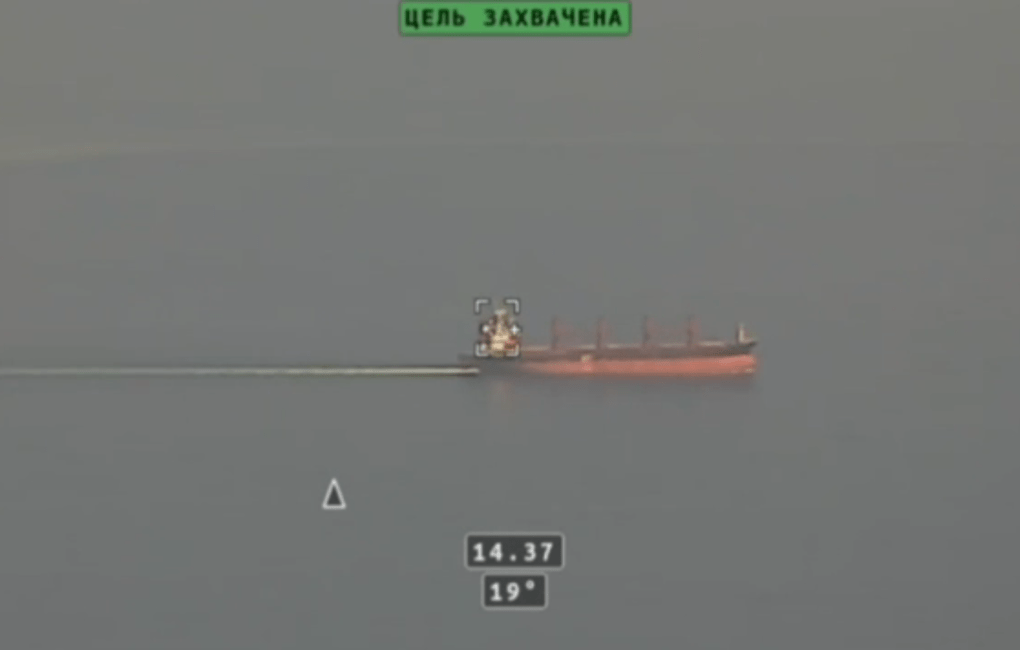
Hormuz Traffic At Standstill After US Ship Seizure

Hormuz Traffic At Standstill After US Ship Seizure

Confirming the Schrodinger nature of the notorious waterway, the Strait of Hormuz is now just closed even more than before Iran and the US said the vital oil channel had been reopened.

Traffic through the strait on Sunday and Monday was reduced to a trickle following a Saturday surge, after Tehran rejected a continuing US naval blockade and moved to seal the waterway again. The reduced movement underscores just how quickly hopes unraveled that cargoes could once again resume.

On Friday, Iran’s Foreign Minister Abbas Araghchi said the strait was “completely open” for commercial shipping, while US President Donald Trump said Iran was removing sea mines from the waterway. That prompted oil prices to plunge and dozens of tankers to race toward the strait at the mouth of the Persian Gulf. But Iran quickly declared that the passage was closed again as it emerged that the US operation in place since April 13 would not be lifted.

The Hormuz crisis flared again over the weekend after the US Navy seized an Iranian vessel, during a turbulent period marked by Iranian forces firing at ships and reimposing controls across the strait. The developments pushed oil and natural gas prices higher after Friday’s big declines, reflecting fears of prolonged supply constraints.

The chaotic, start-stop nature of ship traffic through the strait underscores just how difficult it will be to fully restore oil and gas flows that are vital to the global economy, where energy producers need to have visibility months in advance before restarting production.

According to Bloomberg, just two liquefied petroleum gas carriers and two oil product tankers moved through the strait in both directions on Monday. The previous day, two LPG vessels and a cruise liner sailed out of the gulf, while no inbound transits were seen.

The Gas Harmony, an LPG carrier, went dark inside the gulf on Saturday morning but reappeared off the coast of Oman on Monday, indicating that the vessel transited the strait in the interim. The Liberia-flagged ship is owned and managed by Athens-based Gas Harmony Shipping Ltd., according to maritime database Equasis.

Greek and Iranian LPG ships departed the gulf on Sunday along with the European passenger liner, not listed in the charts. Subsequent observations until Monday afternoon, London time, identified further outbound movement by an Iranian product tanker and a second LPG ship.

At least three Mediterranean Shipping Co. containerships and a MSC cruise liner, along with a handful of other passenger vessels, appeared to have exited the gulf on Saturday, hugging the Omani coastline. That was a deviation from the corridor approved by Iran during the short-lived opening of the waterway. Another MSC containership remains off-grid after it stopped signaling inside the gulf. The company didn’t respond to a request for comment.

Diplomatic momentum has wavered after Tehran signaled hesitation regarding a second round of talks in Pakistan, amid the ongoing American blockade of Iranian traffic and the vessel seizure.

The commercial vessels entering Hormuz with active AIS signals during the past day were confined to a narrow northern lane near the Iranian islands of Larak and Qeshm, the route approved by Tehran.

The inbound transits on Monday included an Iranian LPG ship and a fuel tanker.

Tyler Durden
Mon, 04/20/2026 – 15:20

‘Wright Is Wrong’: Trump Rejects Energy Secretary’s Comment That Gas Prices May Not Drop Under $3 Until 2027

‘Wright Is Wrong’: Trump Rejects Energy Secretary’s Comment That Gas Prices May Not Drop Under $3 Until 2027

Pain at the pump might not ease up for American consumers until 2027, according to Energy Secretary Chris Wright, who said on April 19 that the price of a regular gallon of gas could stay above $3 for the rest of the year.

Wright said a price of $3 per gallon of gas “could happen later this ​year, [but] that might not happen until next year” in an interview that aired on CNN’s ”State of the Union” ​program Sunday.

“But prices have ⁠likely peaked, and they’ll start going down certainly with a resolution of this conflict [in Iran],” Wright predicted while speaking about how the war has impacted energy prices.

As of April 19, the average price for a gallon of regular gas in the U.S. was $4.04, according to data from the American Automobile Association (AAA).

States on the West Coast and the Northeast have the highest prices, according to AAA.

Before the United States and Israel launched Operation Epic Fury against the Iranian regime on Feb. 28, the price for a regular gallon of gas in the U.S. was $2.98.

The Energy Information Administration’s short-term energy outlook, published on April 7, predicted the average retail price for a gallon of gasoline would be $4.30 per gallon in April.

The Energy Information Administration – designed as a nonpartisan agency within Wright’s Department of Energy – estimated the retail price for an average gallon of gasoline will be $3.46 in 2027, above the $3 level he predicted on CNN.

As the chart above shows, for pump prices to fall back to $3 a gallon, we would need to see crude oil prices back around $60 a barrel – a long way down given the disruptions from the Iran War are likely to ripple through the supply chain for months.

Finally, The Hill’s White House correspondent, Julia Manchester, reports that President Trump just told her over the phone that he disagrees with Energy Secretary Wright’s assessment that gas prices may not drop until next year. 

“No, I think he’s wrong on that. Totally wrong,” Trump said, adding that gas prices will drop “as soon as this ends.”

With the Midterms looming ever closer, Trump better hope he’s right and Wright is wrong.

Tyler Durden
Mon, 04/20/2026 – 14:40

Market Lesson: Why Panic Is A Costly Mistake

Market Lesson: Why Panic Is A Costly Mistake

Authored by Lance Roberts via RealInvestmentAdvice.com,

The Iran shock erased 18% from valuations and fully recovered in two weeks. Investors who panicked missed it all. Here’s what the market lesson is about: risk management, behavior, and what to do with your portfolio right now.

The stock market selloff between February 28 and April 14 produced one of the more instructive market lessons in recent memory. It isn’t because of what the market did, but because of what investors did in response. By April 2nd, the AAII Sentiment Survey showed bearish sentiment at 51.4%, the highest reading in years, well above the historical average of 31%. Put option volume surged, and the financial media ran daily coverage of worst-case oil scenarios, recession projections, and S&P 500 targets as low as 3,800.

However, when you have that combination of bearishness, as we discussed in 5-Consecutive Weekly Declines, markets tend to perform better.

What was surprising was that the S&P 500 recovered completely in two weeks and is now setting all-time highs.

That sequence is not a reason to relax, but it is a valuable market lesson. It is also a good reason to examine what happened to investors who panicked, why the pattern repeats with such regularity, and, most importantly, what a well-constructed portfolio actually looks like when the next stock market selloff arrives. Because it will arrive. The only uncertainty is the catalyst.

The Drill & The Failure

Every major market shock is a test, a market lesson to be learned from. Not a test of whether your thesis was right, or whether you picked the right stocks. A test of whether your portfolio was built to hold under pressure, and whether your instincts are an asset or a liability when it counts.

The Iran conflict delivered a real economic shock. U.S. and Israeli forces struck Iran’s nuclear facilities. Tehran retaliated against Gulf energy infrastructure and the Strait of Hormuz, the narrow waterway through which roughly 20% of the world’s oil supply flows daily, ground to a halt. Brent crude surged from $61 at year-end to over $114 a barrel, and that spike raised inflation expectations, hammered small caps, and sent Asian equity markets into a tailspin as energy costs threatened to consume the profit margins underpinning the region’s AI and manufacturing boom.

Then, at what seemed to be the darkest moment, the market repriced all of that in two weeks. Valuations declined roughly 18% as investors adjusted for the expected impact of higher oil prices on earnings and consumer spending. That repricing was rational, but the panic layered on top of it was not. In the middle of the selloff, predictions of a structural bear market were everywhere, but none of them materialized.

That pattern of maximum fear at the exact moment prices are lowest, followed by regret as they recover, is a market lesson that repeats itself regularly. The investors who liquidated near the recent lows, as sentiment turned negative, locked in losses. But two weeks later, they face an even more difficult decision: do I reenter at prices 10% higher than the ones I sold at? Most don’t. That gap between market returns and the average investor’s actual earnings is the most expensive line item in the typical portfolio.

What Risk Is, And Isn’t

The word “risk” gets used so loosely in financial media that it has lost most of its meaning. A falling stock price isn’t the definition of “risk.” Neither is a scary headline. Volatility isn’t risk either; it’s the price of admission for participating in markets over time.

As I’ve said previously, if you aren’t willing to watch your portfolio decline 10% to 15% without doing something rash, you aren’t really an investor; you are a speculator who happens to be holding stocks.

Risk, defined precisely, is the probability of a permanent impairment of capital. Not temporary losses, or a 10% drawdown that reverses in two weeks. Risk is the permanent impairment of capital, resulting in significantly diminished future outcomes. The distinction is enormous, separating investors who compound wealth over decades from those who don’t.

When the S&P 500 dropped during the Iran shock, the vast majority of that decline reflected a temporary repricing of earnings expectations under elevated oil prices. The underlying companies, their cash flows, their competitive advantages, and their earnings power didn’t change materially. The price changed, but the value didn’t. Investors who sold during that repricing didn’t escape risk; they converted a temporary paper loss into a realized one and then forfeited the recovery.

The market lesson is in the chart. Fear peaked at the moment prices were most attractive. By the time the market had recovered and all-time highs were being printed, fear had nearly returned to historical norms. The investors who acted on that peak in fear did exactly the wrong thing at exactly the wrong moment. The investors who recognized it as a contrarian signal, or who simply had the discipline to do nothing, participated in the full recovery.

The Behavior Gap: The Most Expensive Cost

Dalbar Inc. has published an annual study for over 30 years, measuring the difference between the return delivered by the stock market and the return actually earned by the average equity investor. The gap, which Dalbar calls the “behavior gap,” has consistently shown that the average investor earns two to three percentage points less per year than the indices they’re invested in. That shortfall isn’t explained by fees or bad stock selection. It’s explained entirely by timing decisions: buying after rallies and selling during selloffs.

Over 30 years, a two-percentage-point annual shortfall compounds into a staggering wealth gap. A $500,000 portfolio growing at 8% a year becomes roughly $5 million. The same portfolio growing at 6%, because the investor panicked during selloffs and missed recoveries, becomes roughly $2.9 million. That $2.1 million gap is the price of panic. And the investor who sold near the April 2nd sentiment extreme has already paid a portion of it.

After every major market shock, the “this time is different” argument gains traction. The Iran conflict gave that argument real support. It was a genuine exogenous shock with measurable economic consequences, not a technical correction or manufactured volatility. But the historical record on recovery from sharp, shock-driven selloffs is remarkably consistent, and favors the patient investor over the reactive one.

Since 1950, there have been 20 instances in which the S&P 500 rose more than 10% in a 10-day period, the kind of snapback recovery we saw in April. Over the following 12 months, the index was higher in 17 of those 20 cases, with an average gain of 19%. Nasdaq win streaks of comparable magnitude resolved higher 100% of the time over 12 months, with average gains near 26%. Those numbers don’t guarantee another selloff isn’t coming. That means the investors best positioned to capture those forward returns are the ones who stayed disciplined through the downturn. They rebalanced into weakness, and held enough cash to redeploy rather than liquidate.

Consider 2022. The Fed’s tightening cycle produced a 9-month bear market that erased ~25% from the S&P 500. The investors who sold in October 2022, when sentiment was just as dark as it was in early April 2026, missed a recovery that added nearly 60% over the next two years. The pattern repeats because human psychology repeats. The catalyst changes. The behavior doesn’t.

Build a Shock-Resistant Portfolio

Building a portfolio that survives market selloffs without requiring heroic decision-making isn’t complicated. It’s only unpopular because it involves accepting modest underperformance during the easy, low-volatility periods in exchange for not being the person who liquidates at the bottom during the hard ones.

The UBS analysis of the Iran shock made a point worth internalizing. The assets that acted as refuges during 2025’s tariff-driven selloff, such as gold, the Japanese yen, and Treasuries, provided meaningfully less protection this year. The assets that performed well in 2026, particularly the trade-weighted dollar, did little to offset losses during last year’s episode. In other words, building a portfolio to hedge against the last crisis is a losing strategy. The next one will look different.

The more durable approach focuses not on predicting which hedge will work, but on maintaining portfolio construction that allows you to hold through volatility without being forced to sell. That means genuine diversification across asset classes and geographies. It means a real cash buffer that functions as optionality. It also means rebalancing mechanically rather than emotionally, adding exposure when prices are low and trimming when they’ve run ahead of value.

The Iran conflict reframed a question many investors had avoided asking: Were they genuinely diversified? Investors with heavy commodity-linked exposure looked prescient during the decline. But that quickly fell out of favor as megacap technology stocks took center stage during the recovery. Having diversification means you had positions that performed during both the decline and the rally. Concentrated, one-sided portfolios rarely perform well over the long term.

Here are seven portfolio actions to think about today.

The six weeks between late February and mid-April gave every investor a real-world market lesson. That lesson was in both portfolio construction and behavioral discipline. It wasn’t about Iran, oil prices, or the Strait of Hormuz. The lesson was whether your portfolio was built to withstand a genuine shock. And whether you know the difference between a temporary price decline and a permanent impairment of value.

Those who held, rebalanced, and redeployed cash came out ahead. Those who sold near the lows are now deciding what to do with prices ~10% higher. Most won’t. That’s the behavior gap in real time, and it compounds across every market cycle over an investing lifetime.

After 30 years of watching this pattern repeat, I can tell you with confidence that no amount of market forecasting substitutes for a sound process. The S&P 500 is trading at roughly 20 times forward earnings, the ten-year Treasury yield is near 4.3%, and the geopolitical situation is improving, or at least markets are pricing it that way. What comes next is unknowable. What you do with your portfolio in the meantime is entirely within your control.

That’s always been the real market lesson. The Iran shock just delivered it again, free of charge and clearly labeled.

What you do with it is up to you.

Tyler Durden
Mon, 04/20/2026 – 14:20

Chicago Man Sentenced To 25 Years For Conspiring With ISIS

Chicago Man Sentenced To 25 Years For Conspiring With ISIS

Authored by Naveen Athrappully via The Epoch Times,

Ashraf Al Safoo from Chicago has been sentenced to 25 years in federal prison for conspiring to provide material support to ISIS, which involved recruiting members into the terror group and encouraging attacks on its enemies.

Al Safoo, 41, was a leader of online organization Khattab Media Foundation, which pledged allegiance to ISIS, the Department of Justice (DOJ) said in an April 17 press release. The foundation created and spread threats and ISIS propaganda online, with Al Safoo and other members posting pro-ISIS articles, videos, infographics, and essays in coordination with the terrorist outfit.

Most of the propaganda spread by Khattab promoted violent jihad on behalf of ISIS.

The organization’s posts celebrated mass shootings and terror attacks in the United States and encouraged people to engage in “lone wolf” attacks in Western nations.

In one post, Al Safoo asked Khattab members to “cause confusion and spread terror within the hearts of those who disbelieved,” according to the DOJ press release.

In another post, Al Safoo wrote, “Work hard, brothers, edit the issue into short clips, take the pictures out of it and publish the efforts of your brothers in the pages of the apostates. Participate in the war, and spread terror, the [Islamic] State does not want you to watch it only, rather, it incites you, and if you are unable to, use it to incite others.”

Al Safoo immigrated to the United States in 2008 and was naturalized in 2013. In 2018, he was arrested and has since been in federal custody.

A bench trial was conducted last year, after which U.S. District Judge John Robert Blakey found Al Safoo guilty of various charges.

On April 16, Blakey imposed a 25-year prison term for Al Safoo, followed by 10 years of court-supervised release.

The State Department designated ISIS’s predecessor group, al-Qaeda in Iraq, as a foreign terrorist organization in December 2004 under the George W. Bush administration. When ISIS was formed in 2013, the designation carried over.

Over the past several months, multiple individuals have been detained for their support of ISIS.

In December 2025, a Texas man alleged to be an ISIS sympathizer was charged with an international terrorism offense. The man allegedly provided funding and bomb making equipment to people he believed were acting on behalf of ISIS.

Earlier in November, a dual American Albanian national was arrested and charged in New York for allegedly providing support to ISIS and distributing instructions for homemade bombs.

During a testimony before the U.S. House Committee on Homeland Security on Dec. 11, Michael Glasheen, operations director at the FBI, highlighted how ISIS continues to pose a threat to American interests, both domestically and abroad.

The terror outfit is able to “direct, enable, and inspire attacks through their successful use of social media and messaging applications to attract individuals. ISIS seeks direct confrontation with the United States, and almost certainly would exploit any opportunity to attack the U.S. or Western interests,” Glasheen said.

Like other foreign terrorist organizations, he said, “ISIS advocates for lone-offender attacks in the U.S. and Western countries via videos and other English-language propaganda that have specifically advocated for attacks against civilians, the military, law enforcement, and intelligence community personnel.”

The 2025 Worldwide Threat Assessment report from the Defense Intelligence Agency said that ISIS and al-Qaeda have implemented a decentralized plotting approach toward Western nations.

Story continues below advertisement

Both groups are referencing Israel’s operations in Gaza to generate revenue, hire new members, and inspire attacks against U.S., Jewish, Israeli, and European interests internationally.

“The groups are also seeking to improve their weapons capabilities, including with commercial technologies such as UAVs and artificial intelligence,” the report said, referring to unmanned aerial vehicles.

In December, U.S. Central Command (CENTCOM) said it had initiated Operation Hawkeye Strike in Syria following an attack that killed two Army soldiers and a civilian interpreter.

CENTCOM said in a Feb. 14 update that since the launch of Operation Hawkeye Strike, “more than 50 ISIS terrorists have been killed or captured and over 100 ISIS infrastructure targets have been struck with hundreds of precision munitions during two months of targeted operations.”

Tyler Durden
Mon, 04/20/2026 – 12:32