74.8 F
Chicago
Tuesday, October 13, 2026
Home Blog Page 2140

Escobar: Putin Outlines The ‘Moment Of Truth’

0
Escobar: Putin Outlines The ‘Moment Of Truth’

Authored by Pepe Escobar,

President Putin’s plenary session performance (address + Q&A) at the annual Valdai Club meeting in Sochi felt like a high-speed train on cruise control.

Totally cool, calm, comfortable, in full command of a Himalaya of facts, no political leader anywhere – recent past and present – would even come close to delivering what amounts to an extensive, detailed world view deeply matured over a quarter of a century at the highest geopolitical level.

Putin began his address referring to the October 1917 revolution, drawing a direct parallel with our turbulent times: “The moment of truth is coming”. In a clear tribute to Gramsci, he stated how a “completely new world order” is “being formed before our eyes.”

The subtle reference to the recent BRICS summit in Kazan could not possibly escape critical minds across the Global Majority. Kazan was a living, breathing testimony that “the old order is irrevocably disappearing, one might say, has already disappeared, and a serious, irreconcilable struggle is unfolding for the formation of a new one. Irreconcilable, first of all, because this is not even a fight for power or geopolitical influence, this is a clash of the very principles on which relations between countries and peoples will be built at the next historical stage.”

As concisely as possible, that should be taken as the current Big Picture framework: we are not mired inside a reductionist clash of civilizations or the “end of History” – which Putin defined as “myopic” – but facing a make-or-break systemic clash of fundamental principles. The result will define this century – arguably the Eurasia Century, as “the dialectics of History continues.”

Putin himself quipped that he would drive into “philosophical asides” during his address. In fact that went much further than a mere refutation of unilateral conceptual fallacies, as “the Western elites thought that their monopoly is the final stop for humanity” and “modern neoliberalism degenerated into a totalitarian ideology.”

Referring to AI, he asked rhetorically, “will human remain human?” He praised the building of a new global architecture, moving towards a “polyphonic” and “polycentric” world where “maximum representation” is paramount and the BRICS are “coming up with a coordinated approach” based on “sovereign equality.”

Six Principles For Global Sustainable Development

Sovereignty had to be one of the predominant themes during the Valdai Q&A. Putin was adamant that Russia must “develop our own sovereign AI. As algorithms are biased and give massive power to a few big companies that control the internet, the need is imperative for “sovereign algorithms.”

Answering a question on Eurasian security and the US as the dominant maritime power v. a multipolar Eurasia, he stressed the “consensus and desire in Eurasia for an anti-hegemonic movement”, and not for Eurasia constituted “as a bloc”. That’s the appeal of Eurasia’s “multi-vector foreign policy”, implying “more political independence”. The key example of “harmonizing interests”, Putin stressed, is the Russia-China partnership, and that was also what “made BRICS successful.”

Compare it in contrast to “the inability in Europe to establish a system of “indivisibility of security” and to “overcome bloc politics”; Europe instead went for NATO expansion: “After the end of the Cold War there was an opportunity to overcome bloc politics. But the US had fear of losing Europe. The US installed almost a colonial dependence. Honestly I did not expect that.”

Putin introduced a fascinating personal experience tidbit referring to a conversation – in German – with former German chancellor Helmut Kohl in 1993, when Kohl said flat out that “the future of Europe” is linked to Russia.

Yet that ended up leading to “the most important problem on our Eurasian continent, the main problem between Russia and European countries: the trust deficit (…) When they tell us that ‘we signed the Minsk agreements on Ukraine only to give Ukraine an opportunity to rearm, and we had no intention of resolving this conflict peacefully,’ what kind of trust can we talk about? (…) You have directly publicly stated that you have cheated us! Lied to us and deceived us! What kind of trust is that? But we need to get back to that system of mutual trust.”

Putin then added that Europe should consider becoming part and parcel of a Chinese concept straight from Chinese philosophy (“they do not strive for domination”). With panache, he stressed that the Chinese uber-geoeconomic trade/connectivity project should be interpreted as One Belt, One Common Road.

And that extrapolates to Central Asia, with all those nations “very young in their statehood” interested in “stable development”. For Russia-China, there’s “no competition” in the Heartland: “we only have cooperation.”

Putin once again enumerated what he considers the 6 key principles for global sustainable development: openness of interaction (implying no “artificial barriers”); diversity (“a model of one country or a relatively small part of humanity should not be imposed as something universal”); maximum representativeness; security for all without exception; justice for all (erasing “the gap between the ‘golden billion’ and the rest of humanity); and equality.

“Make Civilizations, Not War”

On Ukraine, this was the money quote: “If there is no neutrality, then it’s difficult to imagine any kind of good neighborly relations between Russia and Ukraine.” In a nutshell: Moscow is ready for negotiations, but based on facts on the battlefield and what was agreed upon in Istanbul in April 2022.

That may be interpreted as a direct message to President Trump. To whom the door is open: “Russia has not damaged its relations with the US and is open to their restoration, but the ball is in the Americans’ court.”

Putin on US Presidents (he met quite a few): “All of them are interesting people.” On Trump: “His behavior when there was an attempt on his life, I was impressed. He is a courageous person. He acquitted himself valiantly.” On the open door: “Whatever he does it’s up to him to decide.” Then Putin offered his own congratulations for the re-election – on the record. The dialogue may be on: “We are willing to talk to Trump.”

Putin extolled Russia-China relations as part of their strategic partnership as being “at the highest level in modern history.” He also praised his own personal relation with Xi Jinping. That paved the way for the real killer, when it comes to US-Russia-China: “If the US had chosen a trilateral cooperation instead of double constraint – everyone would win.”

An excellent question by Brazilian economist Paulo Nogueira Batista Jr – a former vice-president of the NDB, the BRICS bank – led Putin to clarify his own position on de-dollarization. He stated flatly that “my role is to see ideas shaped that we then propose to our partners”.

The key target is “proposing to create a new investment platform using electronic payments.” That will address the “most promising markets” in the near future – South Asia, Africa, parts of Latin America: “They will need investment, technologies.” And “tools independent from inflation” – with regulation “through Central Banks and the NDB. We agreed to have a working group meeting regularly at government level. We are in no hurry.”

So that puts to rest any scenario of an immediate BRICS financial bombshell – even as “two-thirds of our trade is being serviced in national currencies” and among BRICS the figures are also high.

BRICS Bridge will be tested – soon. As for creating a single currency, that’s “premature. We need to achieve greater integration of economies, increase the quality of economies to a certain – compatible – level.”

Then, the bombshell: “We never wanted to abandon the dollar!” That goes a long way to explain Putin’s own view on de-dollarization: “They are undoing it with their own hand – the power of the dollar.”

All of the above is just a sample of the width and breath of themes addressed by the President during the Valdai Q&A. The forum itself offered precious nuggets all across the spectrum. Some participants – correctly – noted the absence of “the majority of the majority”: youth and women. Africans were impressed with “the sharp mind of Russian bureaucracy.”

A Chinese view noted how “the Chinese don’t swim against the current; they cross the river and reach the other bank.” There was a near consensus that development should be “based in different cultural values of civilizations” – actually Putin’s own view. Also imperative is the “need for aggregate authority” among the Global South.

A Greek insight was particularly powerful when it comes to the civilizational approach to politics: “Civilizations don’t clash. States do.” Thus the new – playful – motto that could guide not only BRICS but the whole Global Majority: “Make Civilizations, Not War.”

Tyler Durden
Sat, 11/09/2024 – 23:20

Americans Spend Big On Christmas Cheer… And Mums

0
Americans Spend Big On Christmas Cheer… And Mums

With an expected per-person spending of $875, no other holiday rooted in long-standing tradition comes close to the winter holiday season, which starts on November 1 and ends on December 31. 

Infographic: Americans Spend Big on Christmas Cheer - And Moms | Statista

You will find more infographics at Statista

As Statista’s Florian Zandt reports, data from the National Retail Federation (NRF) shows that spending for the runner-up, Mother’s Day, only amounts to one third of Thanksgiving and Christmas consumer spending, with no other seasonal event coming close.

While Mother’s Day spending stood at $274 per person in 2023, Father’s Day, Valentine’s Day and Easter ranged between $192 and $196 in the past year. 

Halloween, where money is mostly spent on costumes and decorations according to additional data from the NRF, comes in sixth with an expected per-person spend of $108. While most of the holidays featured on the list have roots in history reaching back hundreds to thousands of years, the Super Bowl is a relatively new phenomenon. This fact notwithstanding, U.S. Americans on average still spend $85 per person on arguably the most important U.S. sports event of the year.

When taking into account not just festivities connected to specific celebrations, two other occasions take the first and second spots in the ranking: Back-to-college and back-to-school. However, these two events are not comparable to the rest of the list, since the average expected spending of $1,367 and $890, respectively, is calculated by household and not per person. Having more than one individual per household in need of school supplies, clothing or electronics for the new school year can skew the results. Therefore, it’s likely that even while the per-household figures for back-to-college and back-to-school are higher, the winter holiday season still ranks first in individual spending.

Tyler Durden
Sat, 11/09/2024 – 22:45

What You Need To Know About Preparing For Emergencies, According To A Top Survivalist

0
What You Need To Know About Preparing For Emergencies, According To A Top Survivalist

Authored by Krista Thomas via The Epoch Times (emphasis ours),

The Expert

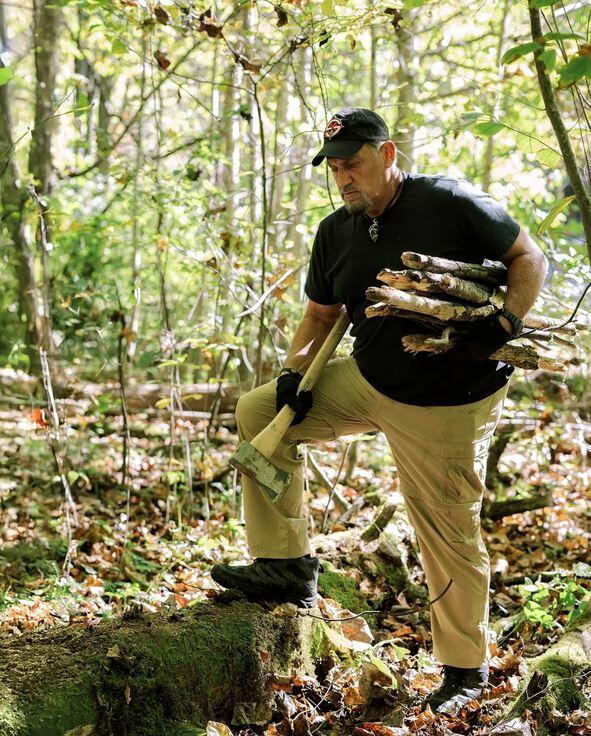
EJ Snyder knows a thing or two about survival. After 25 years in the U.S. Army, he emerged as the extreme survivalist “Skullcrusher” on television shows like “Naked and Afraid,” “Dual Survival,” and “First Man Out.”

EJ Snyder is an Army veteran and experienced survivalist who has appeared on survival shows like “Naked and Afraid.” Adhiraj Chakrabarti/American Essence

Today, in addition to teaching survival skills and speaking at events around the country, he also writes. His new book is “Emergency Home Preparedness: The Ultimate Guide for Bugging In During Natural Disasters, Civil Unrest, and More.” He’s also signed on as executive VP with SurvivalMastery.co, an online subscriber-based platform designed to teach self-sufficiency skills.

“It’s been God’s path for me. I love getting the word out about these things,” he said. “It’s a matter of confidence if you do plan for these things. It makes the situation a little bit easier.”

At the time of this interview, Snyder was putting his survivalist skills into practice in North Carolina, aiding other veterans with Hurricane Helene relief efforts.  We tapped the former Army Ranger for advice on how best to prepare for any kind of emergency with survival skills.

The Epoch Times: There are a lot of different approaches to prepping, and different personalities teaching about the subject. What’s different about you and your approach?

EJ Snyder: I try to approach teaching survival skills with skull-crushing common sense based on reality. I want you to be able to do the tasks when it matters most. I teach super simply … helping the everyday Joe or Joan to handle bad days and be sufficient.

The Epoch Times: How did you get interested in preparing for emergencies?

Mr. Snyder: When I was a little boy at 8 years old, I remember it was wintertime in the late afternoon, and we had been sitting in a tree stand. It was getting very cold. I followed the steps back a couple of miles to camp and it started snowing. I got distracted and I remember trying to follow my tracks, and I couldn’t see them because the snow covered them up.

I got lost and panicked. I saw a rock and thought I should get on the rock and call my dad. I was in the dark for an hour. My uncles and dad were looking for me and finally found me. My dad then taught me about a compass and it taught me to be prepared for any situation.

Later, I was a Ranger instructor and went to the U.S. Army SERE School. I became the primary survival and tracking expert for Ranger students. But Y2K was the real catalyst. I wanted myself and my family to be ready. So I started with a list of what I needed, like bug-out bags and stored foods such as rice. We had enough spaghetti for two years. If something would have happened, we would have been prepared. Several months later, we were able to help people survive a Category 3 storm.

That is how it all got started. It is critically important because we’ve got to save lives here. I’m passionate about survival to help people help themselves.

Snyder gathers wood in the forests of western North Carolina. Adhiraj Chakrabarti/American Essence

The Epoch Times: Can you tell us about emergencies that you may have been in, and how that went for you and yours?

Mr. Snyder: I remember there was a time when I was driving in the winter in upstate New York. I was big about preparedness by this point and made sure I had a winter survival kit in the vehicle: blankets, meals, extra coats, and dry clothing with gloves and hats. We were driving in a blizzard and the minivan slid off the road.

We were way out, like three miles to the main road. Cell service was down. At that time, cell towers were not that great, but I was hoping my text would have gone through to a neighbor. My son, who was 3, was nervous and scared.

We were there three hours and low on gas, so I wrapped us up in blankets and shut down the vehicle. I started a survival candle in a coffee can because it raises the temperature in the car by 5 to 10 degrees Fahrenheit. We sat there while I was keeping him calm, and we ate a little food and drank some water.

I decided to take action. I pulled out the sled and put my son in it, then got my winter boots and snow shoes on, and when we were bundled up we went hiking out three miles. Finally we got to an intersection and made it to a farmhouse, where I was able to make a landline phone call with my location. My neighbor with a four-wheel drive and skid plow picked us up and got us home. We had to wait a couple of days.

That’s being prepared and thinking through a plan. You want to be forward-thinking about having the basics and think about what might be missing. Murphy is always waiting to ambush you when things go wrong.

The Epoch Times: What kind of emergencies do you foresee the need to be prepared for, given the current state of the world?

Mr. Snyder: It’s pretty cut and dry because we’ve seen a lot. Man-made disasters, natural disasters, war, pandemic, and civil unrest are the main situations. Or we have to deal with active shooters who want to hurt people.

When you have these situations, you plan for them and always rehearse. Check your survival kit.

How about a fire in your home? Evacuate and make sure you know how to get out. If you’re bugging in, have you rehearsed your escape route? In emergency planning, you have to have a PACE plan, which stands for primary, alternative, contingency, and emergency. This is your action plan. To sum it up, survival is simple. Keep your planning simple.

The Epoch Times: How long should people be prepared to ride out an emergency?

Mr. Snyder: Seventy-two hours isn’t going to do squat! You should stock three meals per day for each person in your family, plus snacks and one gallon of water per day per person—enough to last for 90 days. Then, add enough for another person who might knock at your door. You can help your neighbor out. If you have to stretch it out, do one meal a day.

With 90 days down, start looking at six months for however many are in your family, rationing what you have plus supplies from fishing or hunting. You can stretch it out over a year.

Have heirloom seeds and freeze them up just in case the grocery stores aren’t available. When you freeze the seeds, you extend their shelf life. They will be ready when you need them.

Don’t be scared, be prepared. If you get some preparedness skills, it builds your confidence up. If you have prepared in an emergency situation, that’s power and confidence.

Fear cripples people. Not doing anything in an emergency situation can cost you your life. One of the big things is to remain calm. Then assess the situation, take care of the wounded and sick, and after that make a plan. What resources do you have? What equipment is available? Who is around you and what skills do they have? Make a detailed plan and share the details with everyone.

Rehearse and then execute. Have your situational awareness up. Adapt the plan as you go. Improvise if you have to and then, as they say, overcome. You’re a winner.

Don’t forget health and fitness. You should have on hand extra prescription glasses, prescription medications to last six months to a year, over-the-counter medicines, and first aid kits to handle cuts and bruises. Learn basic first aid. Learn how to suture.

Food and Water

The Epoch Times: What water storage and purification equipment do you have and recommend?

Mr. Snyder: I recommend getting five-gallon water jugs from a home improvement store. You can store water in an easy way. If you can’t afford it, buy water in jugs and refill them. Get 55-gallon drums to collect rainwater from your roof (to water plants or to wash).

Lastly, consider one of several types of water filtration systems, including the Lifesaver Water Purifier or the Grayl GeoPress, a bottle that gives you crystal clear drinking water. I can boil water right in it, as there’s a nesting cup and an actual stove sleeve. Sawyer is a good brand to consider, too.

Most of my systems are simplistic. Unless you have a backup generator, once you lose power, you won’t be able to power those sources. What can I have on hand that I don’t need electricity to generate? In emergency situations, have tradable items that you use, like gold and silver, because certain items will be important. It’s possible to be set back by 200 years.

The Epoch Times: Please walk us through the essential foods in your own long-term storage pantry. What makes each item a good choice?

Mr. Snyder: A good choice would be survival foods with nutritional value from My Patriot Supply. Store up on them, as they are packed with a lot of calories. MREs [meals, ready-to-eat] are good too because they have a long shelf life. After that, choose canned goods and dry goods like rice, black beans, pasta, dehydrated fruits, fruit snacks, and jerky.

Supplement by fishing and hunting and trapping. You don’t have to complicate it. Use snares. Learn how to process fish and game. Eventually, supplies will run out and you will need to go out and get your own food.

The Epoch Times: What essential emergency food storage and cooking equipment do you have and recommend?

Mr. Snyder: Always have multiple ways to cook. I recommend a BBQ grill. I do keep propane in a storage cage for my Blackstone grill. Another option is the RockPot, a pot that doesn’t require flame. It is amazing. You can throw it on your stone or in the fire to heat it up; it cooks your food in the case.

I have a ton of cast-iron frying pans and pots from The Lodge. Aluminum-type pans are good for backpacks. I have a fire pit with a cooking area with bricks for open fire. Backpack stoves are good for one person. I’ve had a Coleman 2 Burner Stove in my camping gear forever.

Read the rest here…


Tyler Durden
Sat, 11/09/2024 – 22:10

General Flynn Delivers Bone-Chilling Post-Election Warning

0
General Flynn Delivers Bone-Chilling Post-Election Warning

First, they tried to take Trump from the ballot.

Then, they tried to throw him behind bars.

And when that didn’t work, they went after his life.

But now, as The Burning Platform’s Jim Quinn details below, after two terrifying assassination attempts, General Flynn warns that it could happen again.

During an eye-opening conversation with Steve Bannon, Flynn told Trump’s inner circle to brace for another attempt on Trump’s life before he reaches the Oval Office in January.

Speaking with urgency, Flynn stated

“Number one, Trump needs to be very, very certain of the security around him… They have already tried it a couple of times. They’ll try it again between now and inauguration. That, to me, is job number one.”

He also told viewers that the real battle lies ahead, urging Trump to prepare for an all-out war against the Deep State.

“We can eliminate a lot of this nonsense by being prepared for what we know the enemy is going to do… Accountability must happen.”

This conversation is a must-listen…

Tyler Durden
Sat, 11/09/2024 – 21:35

Entrepreneurialism Isn’t A Choice, It’s A State Of Mind: The Genius Of Bernie Marcus

0
Entrepreneurialism Isn’t A Choice, It’s A State Of Mind: The Genius Of Bernie Marcus

Authored by John Tamny via RealClearMarkets,

“Get out of the car! Get the f**k out of my car.” That’s a paraphrase of the words of the recently passed, and incomparably GREAT Bernie Marcus. Marcus, along with Arthur Blank and Ken Langone, co-founded The Home Depot.

The individual Marcus ordered out of his car was a venture capitalist, and more crucially for Marcus and his colleagues, a venture capitalist who had agreed to invest $3 million in The Home Depot. As Marcus recalled in Built From Scratch, the 1999 business memoir he co-authored with Blank, “we needed that $3 million the way somebody dying of stab wounds needs blood in his veins.”

Yet the principled Marcus still wouldn’t take a cent from the investor precisely because the investor insulted Marcus and the team he’d put together with all sorts of demands. They would have to give up health insurance, and accept even less pay than the low pay they’d already accepted in return for risky employment at a business that was more a concept than a business.

Marcus’s actions from long ago raise an obvious question: With money extraordinarily tight for a concept that had attracted no interest from blue-chip investment banks (they went with the wonderful Ken Langone and his “no-name investment bank”), why didn’t Marcus accept the terms (any terms) necessary to keep things afloat?

The answer is that entrepreneurialism isn’t a choice, it’s a state of mind. It’s a powerful belief in a different way of not just meeting, but leading the needs of customers that’s so deeply ingrained that it’s near impossible to compromise one’s vision. Marcus’s vision wouldn’t be insulted by this nit-picking investor, only for Marcus and colleagues to have the last laugh. By the late 1990s, the $3 million would have been worth $12 billion.

About the gains the VC missed out on, they’re a happy story, but also realistically a distraction. The much bigger story is just how profoundly the market’s view of The Home Depot had changed. In the staggering return that the unnamed VC missed out on, it’s easier to see just how at odds the vision of Marcus, Blank and Langone was relative to conventional wisdom. As Marcus himself explained it, “no one believed we could do it.” The latter is regularly said by people from all walks of life, and is often said in self-serving fashion.

Marcus was speaking the truth, though in surely understated fashion. See the VC’s would-have-been returns yet again. No one passes up an investment like that unless the consensus is that they most certainly can’t do it. Yet Marcus et al did do it.

Better yet, they did it in decent fashion. About the bankers who helped finance and liquefy the eventual growth of The Home Depot, Marcus wrote that “they put their careers on the line for us, and we protect them.” So true. Banks make loans that need to be paid back, which means bankers that make errant loans won’t long be in the employ of banks.  

Customers were treated even better than bankers. They had to be handled with care, and more important, they were never to be sold what they didn’t need. Instead, they would be treated beautifully by The Home Depot’s expert associates on the assumption that if catered to, eventually they’d rely on The Home Depot for the big purchases required to execute big projects in the home.

Crucially, the cost of buying for big projects was very low. Marcus understood as the greats of business do that real wealth is created not via so-called “pricing power” and the margins that come with it, but through prices that are pushed down as much as possible in concert with shrinking margins. Marcus knew that low prices provided to customers would be made up for in much higher sales volume. He was correct.

Evidence supporting the previous claim can be found in the continued rise of Home Depot’s market cap. Notable about the latter is that the aforementioned VC’s missed investment opportunity of the $12 billion variety was calculated by Marcus in 1999 numbers. Stop and imagine what it would be now with The Home Depot valued at roughly $400 billion.

Which further speaks to the endless decency of Marcus. He recognized that “real money is equity,” and lived up to his aphorism. He developed an employee stock ownership plan that created thousands of millionaire associates at The Home Depot. More evidence of his greatness. His genius will be missed, but not forgotten.

John Tamny is editor of RealClearMarkets, President of the Parkview Institute, a senior fellow at the Market Institute, and a senior economic adviser to Applied Finance Advisors (www.appliedfinance.com). His latest book, released on April 16, 2024 and co-authored with Jack Ryan, is Bringing Adam Smith Into the American Home: A Case Against Homeownership. 

Tyler Durden
Sat, 11/09/2024 – 21:00

Even Shapiro Couldn’t Have Saved PA For The Democrats

0
Even Shapiro Couldn’t Have Saved PA For The Democrats

Authored by Oliver Bateman via RealClearPennsylvania,

Elections often tell you less about the winners than the losers. Victory has many fathers, as the saying goes, but defeat shows you exactly what went wrong. Pennsylvania’s 2024 results offer a master class in Democratic collapse: while Trump edged out Kamala Harris by 2 points in the presidential race, Republicans romped to victory in every down-ballot statewide contest. Dave McCormick pulled out a narrow victory over three-term Senator Bob Casey; Dave Sunday trounced Eugene DePasquale by 5 points in the attorney general race; and incumbent Tim DeFoor beat Malcolm Kenyatta by an even wider margin for auditor general.

The story of how Democrats fumbled Pennsylvania reveals itself in the campaign’s final weeks. Trump’s operation blanketed working-class neighborhoods with simple, direct messaging: “Trump: Safe Borders/Kamala: Open Borders,” “Trump: Low Inflation/Harris: High Inflation.” His team’s “Kamala is for they/them” ad sparked legal threats but achieved its intended effect — the Democrats are worried about boutique issues rather than kitchen-table concerns like inflation. Harris, meanwhile, released a series of slickly-produced but culturally tone-deaf ads attempting to portray Pennsylvania working-class life.

Harris’s response proved telling. Her team launched what they considered their October surprise: a series of joint appearances with unpopular former Republican Liz Cheney focused on “saving democracy.” The rallies, held primarily in affluent suburban enclaves, epitomized the campaign’s fundamental misread of the state’s political geography. Her campaign’s last notable attempt at working-class authenticity – a commercial featuring a supposed working-class local who seemed like an actor delivering focus-grouped lines about Trump being a “little silver spoon boy” – landed with my working-class relatives about as well as vegan bulgogi tacos at a union hall.

This messaging disconnect infected every Democratic campaign. DePasquale, running for attorney general, leaned heavily on his record as a fiscal watchdog and government reformer – but not as a prosecutor, because he never was one. A compelling pitch in theory, but it withered against career prosecutor Sunday’s relentless focus on fentanyl seizures and declining crime rates in York County. While DePasquale talked process and oversight, Sunday’s team plastered social media with bodycam footage of drug busts and arrests.

Kenyatta’s auditor general campaign highlighted the party’s deeper problems. The 34-year-old progressive rising star, known mainly for viral speeches and an unsuccessful Senate bid, campaigned on transforming the office into a vehicle for social change – which made sense when one realized he had no experience in the role. Against incumbent DeFoor’s straightforward non-partisan message about cutting waste and protecting taxpayers, Kenyatta’s ambitious agenda read like a DEI solution in search of a problem.

Even Casey, who built his career on careful moderation and labor support, couldn’t find enough votes to secure a fourth term in office. After decades positioning himself as a blue-collar, Blue-Dog Democrat, Casey’s recent selective embrace of progressive causes provided perfect fodder for McCormick’s advertising team. While Republican ads hammered Casey’s voting record and association with flip-flopping presidential candidate Harris, his campaign responded with a barrage of increasingly desperate fundraising emails, each one predicting imminent doom. The horrendously off-key messaging – subject lines included “To avoid a catastrophe” and “The worst news yet” – became a self-fulfilling prophecy. Who wants to vote for a loser?

The results expose the bankruptcy of Democrats’ coalition-building strategy. Harris’s team believed they could unite urban progressives and anti-Trump suburbanites while holding just enough working-class voters through careful messaging and strategic positioning. Instead, they achieved a rare political feat: speaking convincingly to absolutely no one.

Gov. Josh Shapiro, floated as Harris’s potential running mate, embodied these contradictions. His “Get Sh*t Done” gubernatorial slogan had promised pragmatic results but delivered historic inaction, as the Commonwealth Foundation has reported –d just 111 bills signed in 18 months, the fewest of any Pennsylvania governor in 50 years. For comparison, Virginia’s Glenn Youngkin pushed through 1,654 bills in the same period with a part-time (and divided) legislature.

The implications stretch beyond a single election cycle. Despite its slowly-dwindling population, Pennsylvania’s 19 electoral votes and competitive Senate seats make it essential to any future Democratic coalition. Yet Tuesday’s results suggest the party has lost its ability to communicate effectively with voters outside Philadelphia and Pittsburgh. The state office margins – larger than the presidential gap – indicate problems deeper than any individual candidate’s shortcomings.

Much as they have since 2016, Democrats continued to try to thread an impossible needle: mollifying progressives with substance-free identity politics while also wooing suburban Republicans and maintaining their working-class base in the absence of genuine working-class policy proposals. The result was messaging so carefully calibrated it became meaningless, every bit as insubstantial as Kamala Harris’ final cameo appearance on SNL.

Unless and until Democrats can craft a message that resonates beyond their urban strongholds – and find experienced, competent candidates capable of delivering said message without sounding like McKinsey consultants explaining steel manufacturing to career steelworkers – Tuesday’s results may augur a permanent realignment in a state they once considered to be winnable. Here in the Keystone State, as elsewhere in the country, the party’s obsession with building the perfect coalition has left them with hardly any coalition at all.

Oliver Bateman is a historian and journalist based in Pittsburgh. He blogs, vlogs, and podcasts at his Substack, Oliver Bateman Does the Work.

Tyler Durden
Sat, 11/09/2024 – 20:25

Can Trump Tame Resistance 2.0?

0
Can Trump Tame Resistance 2.0?

Authored by J. Peder Zane via RealClearPolitics.com,

Last Tuesday, we were all equal – one person, one vote. Against every effort by the liberal elites, a slim majority of Americans returned Donald Trump to the White House, investing him with vast authority through their 73 million votes.

On Wednesday, the normal order of inequality was restored. The potent forces in government, business, media, and academia that opposed Trump by hook or crook took back up their undemocratic reins of power and began to plot how, as Kamala Harris put it in her concession speech, they “will continue to keep fighting.”

This is not as bad as it sounds. America became a free and prosperous nation in large part because of the constraints our founders put on government – both in the checks and balances at the federal level and the federalism that invests states with great authority. This, along with the visionary Bill of Rights and the refusal to establish a national church, created vast opportunities for individuals and non-governmental organizations to shape our country.

This diffusion of power is a major reason why we have never come close to dictatorship. Even with the vast expansion of government since the New Deal and Great Society, there are still too many moving parts for a wannabe authoritarian to corral.

As it empowers the non-governmental actors, the American system depends on an implicit set of checks and balances – both vigilance and restraint – on the behavior of the people. One clear example concerns speech. The First Amendment’s broad protections are limited by the guardrails imposed by ever-evolving community standards regarding acceptable discourse. In theory, everybody can say the n-word, but you really can’t, along with a host of slurs that once filled our newspapers.

Another example involves accepting the results of elections. Even in Ronald Reagan’s 1984 landslide, about 42% of Americans did not vote for the Gipper. Still, the losing side is expected to accept defeat graciously, to respect the authority their adversary has gained in this zero-sum game of elections, and take up the mantle of the loyal opposition.

In the wake of Trump’s victory, this is another norm that conspicuous segments of the modern Democratic Party seem intent on breaking – not through a Jan. 6 episode of violence but through the legislative maneuvers, investigations, and lawfare that marked their resistance during his first term.

Before the election, the legacy media was filled with largely celebratory articles about efforts to Trump-proof government in case he won. This effort is now being turbocharged with reports that President Biden aims to use the lame-duck session to thwart his successor. Governor Gavin Newsom has called a special session of the California legislature to Trump-proof state laws. Governor Maura Healey has said Massachusetts state police will not support Trump’s mass immigration plans – a bedrock promise of his campaign, which is backed by a majority of Americans.

This opposition is only the tip of a long spear of Resistance 2.0. The liberal and leftist elites in the legacy media, academia, and various other power centers have made clear that they will do everything they can, not just to oppose but to undermine and delegitimize the democratically elected president. This is not business as usual, nor is it merely an echo of Mitch McConnell’s vow in 2010 to make Obama a one-term president. It is a rejection of the compact that has long ruled American politics in which the losing side gives the winner a chance to prove them wrong.

How could they? Their unhinged claims that Trump is an authoritarian fascist are not a political ploy but a deeply held belief, cultivated over decades of Manichean indoctrination. They have used similar language to describe every Republican president since Reagan. Trump is the culmination of this uncompromising worldview.

The concise paraphrase of the physicist Max Planck’s insight – that science proceeds one funeral at a time – captures what Trump is up against. Democrats and their allies are too invested in their own ideology to change. They will keep fighting, banking on a return to power in two or four years when they can continue their project to transform America. They are masters of the long game.

In response, Trump and his allies must first hope that the GOP retains control of the House of Representatives – votes are still being counted. This is crucial for limiting the Democrats’ ability to kneecap the new administration with spurious congressional investigations. More importantly, Trump must, as best he can, limit his love for battle, resist his instinct to take the bait. He should treat his opponents with the contempt they deserve, ignoring their provocations for the sake of effective governance.

He should be guided by the single best line of his campaign, “My revenge will be success.” He must focus on our problems rather than his enemies. The challenges we face – especially our unsustainable debt, an economy that is not working for ordinary Americans, and a world beset by conflict – have little to do with the opinions of Democrats and the New York Times.

Yes, his opponents enjoy great power, which they will brandish in an attempt to weaken and frustrate him. But if he can rise above their malice – and his own pettiness – he just might make America great again.

*  *  *

J. Peder Zane is an editor for RealClearInvestigations and a columnist for RealClearPolitics. Follow him on X (formerly Twitter) @jpederzane.

Tyler Durden
Sat, 11/09/2024 – 19:50

Visualizing The Rise Of Bitcoin’s Hashrate

0
Visualizing The Rise Of Bitcoin’s Hashrate

The computing power used to mine bitcoin is at all-time highs, rising by more than sixfold since November 2019.

Today, 94% of bitcoin’s supply has been mined out of the total cap of 21 million. To mine bitcoin, powerful computers solve complex math problems that validate and secure the network. The total computing power, or bitcoin hashrate, measures how many guesses per second are made to solve these calculations.

This graphic, via Visual Capitalist’s Dorothy Neufeld, shows bitcoin’s hashrate since 2016, based on data from Blockchain.com.

Bitcoin Hashrate Hits Record Highs

Below, we show how the total bitcoin hashrate hit a 693.1 million terahashes per second in late October, rising significantly over the past month:

Date Bitcoin Price (USD) Total Hashrate (Terahashes per second)
Oct 30 2024 $70,287 693.1M
Oct 2024 $62,051 641.4M
Sep 2024 $56,157 637.6M
Aug 2024 $60,675 615.9M
Jul 2024 $57,042 580.4M
Jun 2024 $70,542 599.4M
May 2024 $64,023 624.0M
Apr 2024 $67,857 604.8M
Mar 2024 $63,154 574.9M
Feb 2024 $42,658 524.7M
Jan 2024 $42,862 506.4M
Dec 2023 $44,084 476.6M
Nov 2023 $35,035 446.6M
Oct 2023 $27,429 407.4M
Sep 2023 $25,970 387.1M
Aug 2023 $29,076 380.4M
Jul 2023 $30,499 370.0M
Jun 2023 $25,742 358.1M
May 2023 $29,039 346.4M
Apr 2023 $27,812 331.0M
Mar 2023 $22,351 293.6M
Feb 2023 $22,936 273.5M
Jan 2023 $16,669 250.1M
Dec 2022 $16,966 256.0M
Nov 2022 $21,300 261.8M
Oct 2022 $19,633 232.6M
Sep 2022 $19,835 211.4M
Aug 2022 $22,624 200.0M
Jul 2022 $20,154 214.5M
Jun 2022 $29,902 216.5M
May 2022 $37,720 209.1M
Apr 2022 $46,422 199.9M
Mar 2022 $39,167 198.4M
Feb 2022 $41,405 187.3M
Jan 2022 $46,460 173.9M
Dec 2021 $49,484 161.2M
Nov 2021 $61,006 149.1M
Oct 2021 $48,234 136.6M
Sep 2021 $50,025 121.9M
Aug 2021 $39,722 101.3M
Jul 2021 $33,698 120.1M
Jun 2021 $35,539 159.7M
May 2021 $57,213 157.3M
Apr 2021 $57,094 160.6M
Mar 2021 $48,369 154.6M
Feb 2021 $38,311 149.4M
Jan 2021 $33,081 136.7M
Dec 2020 $18,658 129.0M
Nov 2020 $14,161 130.5M
Oct 2020 $10,795 135.2M
Sep 2020 $10,168 123.9M
Aug 2020 $11,233 121.3M
Jul 2020 $9,139 112.5M
Jun 2020 $9,788 103.1M
May 2020 $9,029 112.0M
Apr 2020 $6,778 105.9M
Mar 2020 $8,758 111.5M
Feb 2020 $9,614 109.1M
Jan 2020 $7,334 96.3M
Dec 2019 $7,394 91.7M
Nov 2019 $9,322 95.1M
Oct 2019 $8,240 89.5M
Sep 2019 $10,628 74.8M
Aug 2019 $10,978 67.0M
Jul 2019 $11,005 57.4M
Jun 2019 $7,789 50.4M
May 2019 $5,657 45.8M
Apr 2019 $4,976 45.0M
Mar 2019 $3,701 44.0M
Feb 2019 $3,428 41.9M
Jan 2019 $3,788 38.3M
Dec 2018 $3,694 42.9M
Nov 2018 $6,404 51.3M
Oct 2018 $6,466 51.3M
Sep 2018 $7,257 49.0M
Aug 2018 $7,005 40.0M
Jul 2018 $6,533 37.4M
Jun 2018 $7,613 31.7M
May 2018 $9,726 28.5M
Apr 2018 $7,425 25.2M
Mar 2018 $11,470 22.3M
Feb 2018 $6,905 18.2M
Jan 2018 $15,098 13.6M
Dec 2017 $11,718 9.9M
Nov 2017 $7,392 9.4M
Oct 2017 $4,308 7.9M
Sep 2017 $4,626 6.4M
Aug 2017 $2,857 6.1M
Jul 2017 $2,617 5.1M
Jun 2017 $2,698 4.5M
May 2017 $1,533 3.8M
Apr 2017 $1,152 3.5M
Mar 2017 $1,274 3.2M
Feb 2017 $1,016 2.8M
Jan 2017 $1,021 2.3M
Dec 2016 $768 2.0M
Nov 2016 $706 1.8M
Oct 2016 $613 1.7M
Sep 2016 $606 1.6M
Aug 2016 $573 1.5M
Jul 2016 $682 1.5M
Jun 2016 $576 1.4M
May 2016 $450 1.3M
Apr 2016 $422 1.2M

Since bitcoin’s fourth halving in April 2024, the hashrate has hit all-time highs, while bitcoin’s price has increased by roughly 4% as of November 4, 2024.

During each halving event, which occurs every four years, the reward for mining bitcoin is cut in half. In April, it dropped from 6.25 to 3.125 bitcoins, making it harder for miners to turn a profit with unchanged operating costs.

Despite this, rising hashrates indicate a rising number of active miners, signaling a bullish outlook. As bitcoin’s price rises, it incentivizes miners to join the network since it becomes more profitable, pushing up the hashrate.

Today, notable miners include publicly traded companies like Core Scientific, Riot Platforms, and Marathon Digital, which operate machines capable of trillions of hashes per second using specialized hardware. For instance, Core Scientific runs 169,000 miners, while Riot Platforms aims to fully deploy at least 100,000 miners by 2025.

Still, performance varies across major bitcoin mining companies this year. While Core Scientific stands as one of the top-performing miners year-to-date, with 267% returns as of November 4, both Riot Platforms and Marathon Digital have declined over 20%. By comparison, bitcoin has risen 53%, approaching record highs seen in March.

To learn more about this topic from a crypto ownership perspective, check out this graphic on the largest corporate holders of bitcoin.

Tyler Durden
Sat, 11/09/2024 – 19:15

Here’s Why These Geopolitical And Financial Chokepoints Need Your Attention…

0
Here’s Why These Geopolitical And Financial Chokepoints Need Your Attention…

Authored by Chris MacIntosh via InternationalMan.com,

  • The Houthis in Yemen tried to assassinate Israeli Prime Minister Netanyahu.

  • Then Hezbollah droned his house. Apparently, he was not at home at the time.

  • Iran launched an unprecedented missile attack on Israel. The part you probably didn’t hear about is that Iran says a “state of war” now exists between them and Israel.

  • France ended all arms exports to Israel, and the Israel’s pissed and subsequently bombed a French factory in Syria — an F you and no thanks for all the previous arms shipments and military aid.

  • Russia sent 33 tonnes of humanitarian aid to Lebanon.

  • Israel bombed Syria’s capital, Damascus.

  • Erdogan compared Israel with the Nazis.

I’ve probably missed a whole lot of things, but you get the picture. None of the above is good in any shape or form.

This last point I pay a lot of attention to, and here’s why.

  • Turkey has the second largest military in NATO, and it’s clearly going to leave or be kicked out.

  • Turkey also controls the Bosphorus, and Iran controls the strait of Hormuz.

  • The Houthis effectively now (to some extent at least) control the Suez.

That, my friends, is the holy trinity of supply disruption in oil shipments.

What else?

Well, an interesting little dilemma is opening up for NATO. What happens if Israel decides to have a go at Turkey — either inside Turkish territory or outside? That would, according to the NATO treaty, constitute an attack on a NATO partner and immediately mean that all NATO members were now at war with… Israel.

So should that actually happen, obviously NATO will side with Israel. Realise that the Mossad agent Epstein was not the only scumbag running such an operation, controlling influential US politicians and businessmen, and the idea that similar operations throughout NATO countries are not carried out is beyond naive. So all this means is that NATO will back Israel, despite Israel not being part of NATO. And when Turkey is kicked out of NATO, it will, I believe, be a nail in the coffin for NATO, at least as it stands today, which is to say kinda, sorta legitimate (if you bend your mind enough and watch enough CNBC, BBC and CNN). But this would put an end to that and NATO’s quickly fading veneer of credibility would fall away.

Then we’d have three of the most critical geopolitical choke points on the planet all controlled by members of the BRICS. I do hope you realise that this will never be allowed to happen by the Western powers. And because the world seems to be run by Satanic paedophiles who will never want to give up power, war it will be.

Speaking of geopolitical chokepoints…

Chairman Xi has reportedly ordered his military to “prepare for war.”

During a visit to the PLA Rocket Force, the elite unit overseeing China’s nuclear and conventional missiles, Xi gave a commanding speech demanding they “enhance their strategic deterrent and ensure combat readiness at all times.”

The PLA Rocket Force controls nukes and long-range missile capabilities crucial for any conflict, including a potential invasion of Taiwan.

Xi’s visit comes just days after Beijing deployed over 100 jets, drones, and warships around Taiwan, signalling an escalation in the ongoing standoff.

China has repeatedly stated it won’t rule out using force to bring Taiwan under its control.

I do hope you’re long hard assets.

Gold, despite being under-owned by both institutional and retail, keeps making new highs, and in all currencies!

Capital Controls by Another Name

When I made the claim that Europe would soon experience capital controls, folks looked at me like I’ve two heads. Lunacy, I tell you. Wild, crazy, conspiracy theories.

The blustering turns to huffing when I point out the following from the not so distant past:

  • Cyprus implemented capital controls in 2013 during its banking crisis, restricting bank withdrawals as well as transfers abroad.

  • Greece imposed capital controls in 2015 amid its debt crisis, limiting cash withdrawals and overseas transfers.

  • Iceland instituted capital controls in 2008 during the global financial crisis.

Furthermore, the International Monetary Fund (IMF) made policy changes in 2022 allowing nations to implement capital controls preemptively and for “national/international security reasons.” Conveniently, they don’t tell us what those might be.

Anyway, fast forward to today…

There is a very good reason for this. Here’s Tether’s market cap over time.

Try sending money across borders, and you’re increasingly facing mounting restrictions.

If you’re Russian, Chinese, Iranian, Palestinian, then things are even harder. But it is everywhere, and increasingly everyone is affected.

For instance, I just received a notification from a bank (I was moving money from one account to another) stating the following:

Regulations have changed regarding the justification of the origin of funds and transfers from abroad. Our institution is governed by these regulations.

In the past, statements of account were accepted, but now it does not apply. Therefore, now the origin of the funds must be justified by means of an attestation report, Cpa, or its equivalent abroad (in this case the document must be apostilled in the country of origin).

In order not to reject the incoming transfer, please justify it with one of the above mentioned documents.

This is to send a small (a few thousand dollars) sum of money simply to get some bills paid. Sheesh!

So you can see why Tether is so attractive. It allows you to still use the USD, since Tether is backed by treasuries (supposedly, I don’t really know and they’ve never passed an audit, so…), allowing for liquidity and, of course, subsequent lack of volatility. BUT importantly, it moves on rails outside of the Western-controlled banking system. It’s what has the technocrats getting their panties in a bunch and moving to block it.

Next up, actual ostensible capital controls in the traditional banking system. Watch! This is needed before they blow up the debt bubble.

*  *  *

The Western system is undergoing substantial changes, and the signs of moral decay, corruption, and increasing debt are impossible to ignore. With the Great Reset in motion, the United Nations, World Economic Forum, IMF, WHO, World Bank, and Davos man are all promoting a unified agenda that will affect us all. To get ahead of the chaos, download our free PDF report “Clash of the Systems: Thoughts on Investing at a Unique Point in Time” by clicking here.

Tyler Durden
Sat, 11/09/2024 – 18:40

Radical Left Activates Anti-Trump Protests In Midtown Manhattan

0
Radical Left Activates Anti-Trump Protests In Midtown Manhattan

Democrats have activated their network of social justice warriors for the second time in days following a Trump victory early Wednseday morning. The latest mobilization effort of far-left activists by mysterious and dark money-funded nonprofit groups is occurring on the streets of New York City on Saturday afternoon. 

X user Open Source Intel uploaded footage of what appears to be thousands of anti-Trump protesters in Midtown Manhattan. 

“Thousands march in Midtown Manhattan as New York City law enforcement monitors. Protesters rally against fascism, deportation, anti-trans hate, and systemic oppression, expressing concerns over Donald Trump’s election as the 47th President,” the X user said, adding, “Chants of “Racist, sexist, anti-gay” and signs highlight their solidarity for marginalized communities.” 

Here’s more footage of the protest, which appears well organized and funded—in other words, not organic.

On Wednseday night, hundreds—if not thousands—of protesters—many holding signs outside the Trump Hotel in Obama’s Chicago shouted into megaphones, “Trump is a fascist” and “racist,” echoing hate speech spewed by the defunct Harris-Walz campaign in the months leading up to November 5.

Remember this week, far-left activist Alexandria Ocasio-Cortez was on X, saying the quiet part out loud: “There are … mass movements of people that mobilize to protect one another in times of fascism and authoritarianism … and this is the era that we are poised to enter.”

In other words, AOC appears to be giving marching orders to her followers, whom some Marxists regard as “agents of change” or “agents of history.” These folks will be herded like cattle—or “useful idiots”—onto city streets by a mysterious web of nonprofits funded by dark money from leftist billionaires.

The Democrat’s playbook to potentially unleash another wave of social unrest through activism campaigns, with command-and-control centers operated by nonprofits, will likely not be tolerated under a Trump administration.

Under the Trump administration, if Elon Musk wants to cut wasteful government spending while increasing national security, then slash the government’s ability to hand out grants like candy to far-left activism groups, done with little oversight. 

The problem with radical leftist protests this time around is that Trump won the popular vote, and a majority of Americans won’t put up with this activist shit any longer. 

Tyler Durden
Sat, 11/09/2024 – 18:05