58.4 F
Chicago
Friday, October 16, 2026
Home Blog Page 2212

Interest Payments Top Defense Spending For First Time In History – Thank You Kamala

0
Interest Payments Top Defense Spending For First Time In History – Thank You Kamala

Authored by Issues & Insights Editorial Board,

SUNNY HOSTIN: Would you have done something differently than President Biden during the past four years?

KAMALA HARRIS: There is not a thing that comes to mind in terms of — and I’ve been a part of most of the decisions that have had impact.

Photo via Flickr by Kevin Krejci – Our National Debt – CC BY 2.0.

On Friday, the Treasury Department released a report showing the kind of impact Harris is talking about. If nothing else does, it should cost her the election.

The latest monthly Treasury report shows spending and revenues for the full fiscal year 2024, which ended in September.

Among the terrible results: The federal deficit topped $1.8 trillion in 2024 — the third highest in history and eclipsed only by the two COVID-19 panic spending years.

That’s not for lack of revenues, which were up by nearly half a trillion dollars this year. Spending under Biden-Harris this fiscal year climbed more than $617 billion – a 10% increase.

But the real shocker is the explosive growth in interest payments on the national debt.

These payments hit $882 billion in FY 2024, the Treasury report says. That’s a 35% jump from last year.

And it’s $8 billion more than we spent on National Defense.

Monthly Treasury Statement for Fiscal Year 2024

This marks the first time in our nation’s history that interest on the debt has exceeded defense spending. And the gap is on track to rapidly widen – with the government spending $200 billion more in interest than in protecting America from her enemies by 2029.

Why the massive run-up in interest costs? Blame Harris’ tie-breaking votes (something for which she routinely brags). Because of them, Biden-Harris added trillions in new spending at a time when the economy had already fully recovered from the COVID-19 panic. That sparked a huge increase in inflation, which in turn drove up interest rates.

More debt and higher interest rates meant a sharp increase in the cost of financing that debt.

How do we know Biden and Harris are to blame? Before they took office, the Congressional Budget Office (CBO) projected net interest payments for the next decade, based on the policies that Donald Trump had in place.

The CBO said that, had Biden not spent us to the poorhouse, interest payments on the national debt this year would have been only $284 billion. (See chart above.)

In other words, Harris and her tie-breaking votes are responsible for a 210% increase in interest costs this year alone.

What would Kamala Harris do about this terrible state of affairs if she were elected president? No one has bothered to ask her.

But we do know that she wants to do exactly what she and Biden have already done: add trillions of dollars of inflationary spending, impose economically ruinous tax hikes, and pile on still more growth-killing regulations.

Harris is right about one thing. It is time to turn the page — before it’s too late.

— Written by the I&I Editorial Board

Tyler Durden
Mon, 10/21/2024 – 12:25

Israel Expands Lebanon Strikes To Banks Helping Hezbollah

0
Israel Expands Lebanon Strikes To Banks Helping Hezbollah

Israel on Sunday night began fresh, heavy airstrikes on Beirut’s southern suburbs as well as in the Bekka Valley in the east of Lebanon, for the first time declaring it would target banks suspected of financing Hezbollah.

“The air force will launch extensive strikes on targets in the southern suburb of Beirut, targeting Hezbollah-linked economic assets,” IDF spokesman Daniel Hagari said as strikes were underway. Buildings that belong to al-Qard al-Hassan Association are at the top of the list, identified by the Israelis as long associated with the Shia paramilitary group backed by Iran.

Smoke rises from explosions near Beirut Rafic Hariri International Airport, Oct. 20, 2024 in Beirut. CBS/Getty Images

With at least 30 branches across Lebanon, and 15 Beirut locations in bustling neighborhood, al-Qard al-Hassan Association is also used by many Lebanese civilians.

The US-sanctioned bank has been around since the 1980’s and is focused on providing services to Lebanon’s Shiite community, which is mostly concentrated in the south.

“The purpose of the strike is to target the ability of Hezbollah to function both during the war but also afterwards to rebuild and to rearm the organization on the day after,” an Israeli military statement continued.

Some dozen large airstrikes rocked Beirut’s southern suburbs last night, including one or more which were very near Beirut International Airport, reportedly targeting the bank branches.

The bank has sought to assure its customers it has taken “all of the necessary procedures since the beginning of the war to safeguard your deposits and valuables and can confirm that you should not worry they are safe.”

A regional analyst was quoted in The Wall Street Journal as follows:

“The main loss for the people using its services will be the destruction of family gold they pawned in exchange for loans,” said Lina Khatib, director of the SOAS Middle East Institute and author of a study of Hezbollah’s influence networks.

“But for as long as Hezbollah’s external financial operations remain active, including its involvement in illicit finance internationally, and as long as Iran continues to fund it, Al-Qard Al-Hassan’s clients will expect Hezbollah to be able to compensate them for their losses,” she said.

The Lebanese Health Ministry said over the weekend that at least 2,464 Lebanese have been killed since hostilities began in Oct.2023; however, it remains unclear how many of that figure are combatants vs. civilians.

The whole region remains on edge awaiting Israel’s retaliation against Iran, which US intelligence has said is “almost certainly” going to happen. A Bloomberg note indicates:

Oil prices bounce back from last week’s steep fall with Brent crude futures climbing 1.3% to around $74 a barrel. Traders are likely monitoring tensions in the Middle East after Israeli PM Netanyahu held a series of meetings with top security aides to discuss the next attack on Iran. Israel is discussing its attack on Iran after a Hezbollah drone exploded near Prime Minister Benjamin Netanyahu’s private home at the weekend.

Below are more regional developments via Newsquawk…

  • Israeli PM Netanyahu said a drone attack which targeted his home in northern Israel was a “grave mistake”, while he and his family were not at their house when the drone attack struck on Saturday and there were no casualties.
  • Israeli PM Netanyahu spoke with former US President Trump and told him that Israel considers the issues the US administration raises but will make decisions based on its national interests.
  • Israel’s military said it attacked Hezbollah’s intelligence HQ and weapons storage facilities in the southern suburbs of Beirut on Saturday. It was also reported that Israel conducted a fresh raid on the southern suburbs of Beirut on Sunday, as well as targeted the city of Tyre and the towns of Bir al-Salasil and Homine al-Fawqa in southern Lebanon.
  • Israeli military spokesperson had warned on Sunday that they would conduct targeted strikes on sites belonging to Hezbollah’s financial arm across Lebanon and urged Lebanese residents to evacuate areas near those facilities, while it was later reported that Israeli strikes hit branches of Hezbollah-linked bank in Beirut and Beqaa Valley, according to Times of Israel.
  • Hezbollah announced it conducted a rocket barrage at Beit Hillel base, while it was separately reported that Iraqi armed factions announced the targeting of an Israeli military site in the Golan with drones.
  • Israel gave the White House its demands for ending the war in Lebanon, while US President Biden’s envoy Amos Hochstein will visit Beirut on Monday to discuss a possible diplomatic solution with Lebanese officials, according to Axios. The report noted one Israeli demand is that IDF be allowed to engage in “active enforcement” to ensure Hezbollah doesn’t rearm and Israel also demands its air force have freedom of operation in Lebanese airspace, although a US official said it is highly unlikely Lebanon and the international community would agree to Israel’s conditions.
  • Iran’s Supreme Leader said Hamas leader Sinwar’s death will not halt the axis of resistance and Hamas will live on.
  • Iranian Foreign Minister Araghchi alluded to the US and warned that anyone who knows how and when Israel will attack Iran will be held accountable, according to Reuters.
  • US House Speaker Johnson said on Sunday that there would be a classified briefing related to leaked US intelligence on Israel-Iran, according to Reuters.
  • US Defence Secretary Austin said he would like to see Israel scale back on some of its strikes in and around Beirut, while he raised the issue about UNIFIL security with Israel’s Defence Minister Gallant. Furthermore, Austin reviewed the US defence posture and said he is relieved that PM Netanyahu is safe, while he said he couldn’t confirm reports that North Korean troops are in Russia and readying for combat in the Ukraine war, according to Reuters.
  • UN peacekeeping force UNIFIL said an Israeli army bulldozer demolished a watchtower and fence surrounding the UN site in southern Lebanon on Sunday, according to Reuters.
  • G7 defence ministers reaffirmed the importance of supporting UNIFIL and the Lebanese armed forces in their role of ensuring the stability and security of Lebanon, while they called on Iran to refrain from providing support to Hamas, Hezbollah, Houthis and other non-state actors. Furthermore, they called on Houthis to immediately cease their escalatory measures that increase regional instability and immediately release the vessel Galaxy Leader and its crew.

Tyler Durden
Mon, 10/21/2024 – 12:05

Red Sweep Or Tariff Trouble

0
Red Sweep Or Tariff Trouble

By Stefan Koopman of Rabobank

The U.S. presidential election is increasingly becoming the main market focus as the date inches nearer. Polls still show no clear favorite, but market sentiment seems to be shifting in favor of Donald Trump. With the Harris honeymoon officially over, the Trump trade is gaining traction again. This view holds that a Trump win, and a Red Sweep in particular, would be bad for bonds, the euro, the yen, the yuan, and the peso, but a boon for stocks, especially in sectors like financial services, oil, and cryptocurrencies, where tax cuts and deregulation would boost profitability. The thinking goes that less regulation means higher margins, and lower taxes mean more money flowing back to investors.

Trump’s campaign highlights big ideas: tax cuts, deregulation, and tariffs. Investors are zeroing in on the first two, eagerly anticipating another corporate tax windfall against a backdrop of a U.S. economy that’s already doing well. Recent data has been stellar, and the S&P 500 has surged to a fresh high of 5,864, and on top of this traders are rotating into those sectors expected to gain from a potential Red Sweep. Yet this optimism assumes Trump will deliver only the market-friendly aspects of his agenda. In reality, that “most beautiful word in the dictionary” could create significant disruptions.

Back in 2018, trade policy primarily targeted China, with some collateral damage in Europe and Mexico. This time, his proposed tariffs are far more extreme than anything he did during his first term. Unless suppliers have significant profit margins to play with, it is highly likely inflate prices across the economy. We indeed do forecast a renewed rise in US inflation to above 4% at the end of 2025, which would stop the Fed from cutting rates much sooner than the market currently prices. Note too that we’ve kept it very modest with our tariff assumptions.

Moreover, Trump’s immigration plans, which involve the deportation of millions of workers, would create severe labor shortages. In industries already struggling with tight labor markets, this would fuel wage inflation and reduce productivity, pushing prices higher and reducing potential GDP growth. Any economic gains from tax cuts and deregulation would be offset by the broader damage caused by untargeted and indiscriminate tariffs and widespread labor shortages. Trump’s idea that his tariffs will fund his tax cuts is fundamentally flawed, as tariffs mainly transfer surplus from consumers to producers, but don’t generate sustainable long-term revenues.

The deficit is also a looming issue. Trump’s proposals could increase the federal debt by up to $7.5 trillion over a decade, at a time when the U.S. economy is already running a deficit of around 7% of GDP.

This would force the government to allocate a larger share of its budget to servicing debt. Although this debt is mostly held by U.S.-based investors, it would further strain the federal budget. It also limits options for countercyclical fiscal policy, particularly in a world where interest rates are no longer pinned to zero and each new dollar of debt tends to generate less growth.

Meanwhile, the contrast between the U.S. and Europe could not be starker. While the U.S. economy powers ahead, Europe is stagnating. Friday’s ECB Survey of Professional Forecasters shows that long-term growth expectations are at an all-time low of 1.3%, with structural issues such as poor productivity, demographic decline, and over-regulation holding back economic potential. This can’t be solved with a couple of rate cuts. Europe’s growth model is broken, and without at least part of the significant investment and reforms that Draghi suggested, it will be condemned to “slow agony”. The big question remains whether Europe has the leadership, money, and willpower to make the necessary changes. If Trump is indeed re-elected, we’ll find out soon enough.

Tyler Durden
Mon, 10/21/2024 – 11:45

Key Events This Week: PMIs, Durables, Fed Speakers And Earnings Galore

0
Key Events This Week: PMIs, Durables, Fed Speakers And Earnings Galore

In his preview of the next few days, DB’s Jim Reid has some good news for those who feel like it’s already Friday: “It doesn’t feel like its going to be the most exciting week ahead of us” although with earnings season now in full throttle and with a seemingly extremely tight US election just two weeks tomorrow there is undoubtedly plenty to think about and react to.

Having said the election is tight, Reid notes that over the last two weeks the probability markets have been shifting back towards Trump. At the start of October a Republicans sweep was a 28% probability on Polymarket.com but that’s now shifted to a 42% chance. A Democrats sweep has fallen from 21% to 14%.

Outside of the tax and spending implications, Trump last week said that “the most beautiful word in the dictionary is tariff”. So that should have reminded markets that he is serious on this matter if he gets elected. In terms of fiscal, Deutsche Bank economists believe that the deficit will be between around 7 to 9% from 2026-2028 whatever political configuration we have in the White House.

Staying on debt we do have the IMF and World Bank annual meetings in Washington from today and across the rest of the week. There is expected to be a focus on the unsustainability of global debt in these meetings but that is probably more of a medium-term concern rather than anything markets will latch on to this week. There are plenty of central bankers speaking at the various Washington events but in particular watch out for ECB President Lagarde and BoE’s Governor Bailey (both tomorrow). Ahead of that, today sees quite a bit of Fedspeak. There is also the BRICS summit held in Kazan, Russia from tomorrow to Thursday hosted by Putin. China’s President Xi and India’s Prime Minister Modi are expected to attend.

In terms of data, the main highlight is probably the round of global flash PMIs (Thursday). Walking through the data day-by-day, the other highlights are German PPI, French retail sales and the US leading index today, the US Phili Fed tomorrow, US existing home sales, the Beige book, Eurozone consumer confidence and the Bank of Canada meeting on Wednesday, US initial jobless claims on Thursday, and US durable goods, Tokyo CPI, and the German Ifo on Friday. Recent strikes and storms will likely distort US claims and durable goods so it will be tough to get a clean data read at the moment. The Beige book may give us a bit more insight into current economic momentum.

In corporate earnings, the main highlights are SAP (today), Texas Instruments, GE, and GM (tomorrow), and Tesla, IBM, and Boeing (Wednesday). We list others in the day-by-day calendar at the end.

Source: @eWhispers

Courtesy of DB, here is a Day-by-day calendar of events

Monday October 21

  • Data: US September leading index, China 1-yr and 5-yr loan prime rates, Germany September PPI, France September retail sales
  • Central banks: Fed’s Logan, Kashkari and Schmid speak, ECB’s Simkus speaks
  • Earnings: SAP

Tuesday October 22

  • Data: US October Philadelphia Fed non-manufacturing activity, Richmond Fed manufacturing index, business conditions, UK September public finances, EU27 September new car registrations, Canada September industrial product price index, raw materials price index
  • Central banks: Fed’s Harker speaks, ECB’s Centeno, Knot, Holzmann, Villeroy and Rehn speak, BoE’s Bailey, Greene and Breeden speak
  • Earnings: General Electric, Danaher, Texas Instruments, Philip Morris, Verizon, RTX, Lockheed Martin, Fiserv, Moody’s, Freeport-McMoRan, General Motors, Deutsche Boerse

Wednesday October 23

  • Data: US September existing home sales, Eurozone October consumer confidence
  • Central banks: Fed’s Beige Book, Bowman and Barkin speak, BoC decision, ECB’s Lagarde, Lane, Cipollone, Escriva, Knot and Centeno speak, BoE’s Bailey and Breeden speak
  • Earnings: Tesla, Coca-Cola, T-Mobile US, Thermo Fisher Scientific, IBM, ServiceNow, NextEra Energy, AT&T, Boston Scientific, Lam Research, Iberdrola, Boeing, Atlas Copco, Amphenol, CME, GE Vernova, Newmont, Hilton, Heineken
  • Auctions: US 20-yr Bond (reopening, $13bn)

Thursday October 24

  • Data: US, UK, Japan, Germany, France and Eurozone October flash PMIs, US September Chicago Fed national activity index, new home sales, October Kansas City Fed manufacturing activity, initial jobless claims, France October manufacturing confidence
  • Central banks: Fed’s Hammack speaks, ECB’s Kazaks and Lane speak, BoE’s Mann speaks
  • Earnings: S&P Global, Union Pacific, Honeywell, KKR, UPS, SK Hynix, Equinor, Dassault Systemes, Keurig Dr Pepper, Nasdaq, Dow, Evolution AB, Neste Oyj, Norsk Hydro
  • Auctions: US 5-yr TIPS ($24bn)

Friday October 25

  • Data: US September durable goods orders, October Kansas City Fed services activity, UK October GfK consumer confidence, Japan October Tokyo CPI, September PPI services, Germany October Ifo survey, France October consumer confidence, Q3 total job seekers, Italy October consumer confidence index, manufacturing confidence, economic sentiment, Eurozone September M3, Canada August retail sales
  • Central banks: ECB consumer expectations survey
  • Earnings: Sanofi, HCA Healthcare, Colgate-Palmolive, Mercedes-Benz, Eni, Sika, Centene

* * *

Finally, turning to the US, Goldman writes that the key economic data release this week is the durable goods report on Friday. There are several speaking engagements from Fed officials this week.

Monday, October 21

  • There are no major economic data releases scheduled.
  • 08:55 AM Dallas Fed President Logan (FOMC non-voter) speaks: Dallas Fed President Lorie Logan will deliver remarks at the 2024 Securities Industry and Financial Markets Association (SIFMA) Annual Meeting. Text and moderated Q&A are expected.
  • 01:00 PM Minneapolis Fed President Kashkari (FOMC non-voter) speaks: Minneapolis Fed President Neel Kashkari will take part in a townhall hosted by the Chippewa Falls Chamber of Commerce in Wisconsin. Audience and moderated Q&A are expected. On October 14th, Kashkari noted that “further modest reductions” in the fed funds rate were likely appropriate in coming quarters. Kashkari also said that “a rapid labor weakening does not appear to be imminent” and stressed that “the path ahead for policy will be driven by the actual economic, inflation, and labor market data.”
  • 05:05 PM Kansas City Fed President Schmid (FOMC non-voter) speaks: Kansas City Fed President Jeffrey Schmid will deliver remarks on the economic and monetary policy outlook to the Chartered Financial Analyst (CFA) Society in Kansas City. Text and audience Q&A are expected.
  • 06:40 PM San Francisco Fed President Daly (FOMC voter) speaks: San Francisco Fed President Mary Daly will take part in a moderated discussion at a Wall Street Journal Live event in California. Moderated and audience Q&A are expected. On October 15th, Daly said that “one or two cuts [this year] was a reasonable” baseline if the economy performs as expected and noted that “it’s clear … the direction of change is down.”

Tuesday, October 22

  • 10:00 AM Richmond Fed manufacturing index, October (consensus -17, last -21)
  • 10:00 AM Philadelphia Fed President Harker (FOMC non-voter) speaks: Philadelphia Fed President Patrick Harker will speak at the 8th Annual Fintech Conference, hosted by the Philly Fed. Text is expected.

Wednesday, October 23

  • 09:00 AM Fed Governor Bowman speaks: Fed Governor Michelle Bowman will deliver opening remarks at the Philly Fed’s Fintech Conference.
  • 10:00 AM Existing home sales, September (GS +2.1%, consensus +1.0%, last -2.5%)
  • 12:00 PM Richmond Fed President Barkin (FOMC voter) speaks: Richmond Fed President Thomas Barkin will deliver a speech about community colleges at the 2024 Virginia Education and Workforce Conference. Text is expected. On October 10th, Barkin noted that, while he “wouldn’t declare victory” on inflation, he thought it was “definitely headed in the right direction.” Barkin said that the FOMC’s 50bp cut in September was “a recalibration toward a somewhat less restrictive stance” and noted that he “didn’t have a lot of heartburn about whether you got there in three steps or four steps or two and then one.” Barkin noted that the recent labor market data “confirms what I’m hearing … We’re in a low hiring, low firing environment.”
  • 02:00 PM Beige Book, November meeting period

Thursday, October 24

  • 08:30 AM Initial jobless claims, week ended October 19 (GS 245k, consensus 240k, last 241k); Continuing jobless claims, week ended October 12 (consensus 1,876k, last 1,867k): We estimate that initial claims increased to 245k in the week ended October 19th, reflecting a 5-10k incremental boost from hurricane-related filings on the back of Hurricane Milton but a slight headwind from residual seasonality.
  • 08:45 AM Cleveland Fed President Hammack (FOMC non-voter) speaks: Cleveland Fed President Beth Hammack will deliver welcoming remarks at an event hosted by the Cleveland Fed’s Center for Inflation Research.
  • 09:45 AM S&P Global US manufacturing PMI, October preliminary (consensus 47.5, last 47.2); S&P Global US services PMI, October preliminary (consensus 55.0, last 55.2)
  • 10:00 AM New home sales, September (GS -0.5%, consensus +0.6%, last -4.7%)
  • 11:00 AM Kansas City Fed manufacturing index, October (consensus -5, last -8)

Friday, October 25

  • 08:30 AM Durable goods orders, September preliminary (GS -2.0%, consensus -1.0%, last flat); Durable goods orders ex-transportation, September preliminary (GS +0.1%, consensus -0.1%, last +0.5%); Core capital goods orders, September preliminary (GS +0.1%, consensus +0.1%, last +0.3%); Core capital goods shipments, September preliminary (GS +0.1%, consensus flat, last -0.1%): We estimate that durable goods orders declined 2.0% in the preliminary September report (month-over-month, seasonally adjusted), reflecting a decline in commercial aircraft orders. We forecast 0.1% increases in core capital goods orders and shipments, reflecting mixed global manufacturing data.
  • 10:00 AM University of Michigan consumer sentiment, October final (GS 68.8, consensus 69.5, last 68.9): University of Michigan 5-10-year inflation expectations, October final (GS 3.1%, last 3.0%)

Source: DB, Goldman


Tyler Durden
Mon, 10/21/2024 – 10:20

Spirit Air Squeezes Higher On Key Debt Deadline Extension & Cash Boost, Averting Bankruptcy

0
Spirit Air Squeezes Higher On Key Debt Deadline Extension & Cash Boost, Averting Bankruptcy

Shares of Spirit Airlines soared in premarket trading in New York after the carrier reached an agreement with the US Bank National Association to extend a debt-refinancing deadline to the end of 2024. The budget carrier also drained a revolving credit facility for hundreds of millions of dollars, shoring up its balance sheet while delaying an imminent threat of bankruptcy.

Spirit wrote in an 8-K filing that the deadline for refinancing $1.1 billion in debt had been pushed from Monday to Dec. 31. The refinancing is critical because it will determine if its credit-card-processing agreement will be extended into 2025. 

Also, in the filing, Spirit said it drained a $300 million revolving credit facility due September 2026. This will help the carrier cover short-term needs, such as payroll, jet operations, and emergency expenses, averting a near-term bankruptcy filing. 

“Consistent with its previously provided guidance, the Company expects to end the year 2024 with over $1.0 billion of liquidity, including unrestricted cash and cash equivalents, short-term investment securities and additional liquidity initiatives, assuming that the Company is able to close those initiatives that are currently in process,” Spirit said. 

Shares jumped as much as 71% in premarket trading on the news. On the year, shares are down 91% (as of Friday’s close) after the carrier’s deal with JetBlue airways stalled.

Bloomberg data shows 33% of the float is short, equivalent to about 35.7 million shares. This leaves about 7.8 days to cover. 

Just weeks ago, The Wall Street Journal revealed that the struggling airline has been in discussions with bondholders about the possibility of a bankruptcy filing following the collapse of its merger with JetBlue Airways in March. 

Today’s news delays an imminent bankruptcy filing while stoking a squeeze in shares.

Tyler Durden
Mon, 10/21/2024 – 10:05

Bitcoin Is A Lot More Than Digital Gold: A Rebuttal To The ECB’s Crypto-Critical Research Paper

0
Bitcoin Is A Lot More Than Digital Gold: A Rebuttal To The ECB’s Crypto-Critical Research Paper

Authored by Omid Malekan,

Bitcoin Has Plenty Of Utility

My co-author Ulrich Bindseil and his ECB colleague Jürgen Schaaf have written an intriguing paper on the distributional consequences of Bitcoin should it continue to appreciate in value. I disagree with their argument and want to hash out why.

In that paper, they make a creative argument that if Bitcoin was nothing more than a speculative asset with no other economic or social utility, then continued price appreciation will have negative consequences for the rest of society. I have no issue with their conclusion — it’s a thought out and robust argument. But their premise on the utility of Bitcoin is flawed, for two reasons.

First, they have an unnecessary focus on whether Bitcoin has lived up to the goals of its creator and early adopters. I think this observation is unimportant, even if true. The focus should be on whether Bitcoin has utility for society today. Second, they fall into the common trap of treating Bitcoin as just an asset, one that is independent of the novel infrastructure that powers it.

Put together, these mistakes lead Bindseil and Schaaf to miss Bitcoin’s appeal as a form of monetary insurance. Given the importance of savings and payments in society, this is the ultimate utility, financially and socially, and the simplest justification for Bitcoin having value.

Satoshi is Irrelevant

The best litmus test for any technology is whether it serves a useful purpose for society today or has the potential to do so in the future. The intentions of its creator are unimportant. A technology that finds utility beyond what its inventor envisioned is no less useful, or valuable.

The paper claims:

“The pseudonymous Satoshi Nakamoto published the whitepaper on Bitcoin in 2008, with the vision of a global digital currency by creating a structure for making payments without a trusted third party acting as intermediary. But Bitcoin’s conceptual design and technology appear to have prevented this vision to materialise”

Bindseil and Schaaf are correct in their observation that Bitcoin today is not used as “Peer to Peer” cash in the way some had hoped fifteen years ago. The cryptocurrency is seldom used for online purchases or simple peer to peer payments. But we shouldn’t read too much into the title and introduction of a (surprisingly) short white paper from an unknown author who disappeared over a decade ago or his adherents.

Whoever Satoshi Nakamoto was, they were a keen observer of the challenges of modern payment systems. Token money (in the form of coins and banknotes) has always offered desirable features like universal access, privacy, peer-to-peer payments, no fees, and instant settlement. But token money doesn’t work for large or long distance payments — and it certainly isn’t useful online — so society has migrated to ledger money, as intermediated by trusted third-parties like banks and FinTechs. Those intermediaries have their own flaws. They must charge fees to cover their costs, tend toward becoming a monopoly, and often discriminate against certain users, either for their own interest or because they are compelled to.

On this point, Bindseil and Schaaf focus too much on Nakamoto’s use of “mediating disputes” as a source of censorship in payment systems.

“The problem that Nakamoto (2008) believes to have identified seems however to start from a misunderstanding. In principle, financial institutions can avoid mediating disputes. Mediation is rather an optional service than a necessity. It is demanded by customers and charged by payment services providers. For example, PayPal does not offer any dispute mediation if payments are made in the “friend and family” mode; and these are free of charge. Likewise, credit transfers between bank accounts are not mediated, i.e. if an e-commerce delivery is paid in advance via credit transfer and the customer is unsatisfied with the good received, the bank will not mediate”

They are correct in pointing out that many payment systems don’t provide active mediation, but that argument misses the broader point that all trusted intermediaries are liable for every payment that they process. What if an aggrieved party to a fraudulent payment demands compensation? Or a government holds them responsible for illicit flows?

Traditional payment systems deal with these risks in three (non-exclusive) ways.

  • Some, like credit cards, actually mediate disputes, then pass the cost on to their users. They do this presumably because users want them to, and merchants (who pay for the implicit insurance) tolerate the cost.

  • Others, like bank-to-bank payments, actively censor customers and their activity via costly “know your customer” and “source of funds” compliance regimes. They do this due to a combination of laws (such as the Bank Secrecy Act in the US) and risk mitigation methods. At best, these regimes impose additional cost and friction on everyone. At worst they lead to discrimination against certain kinds of customers, customers who’ve done nothing wrong and should have access.

  • Yet others, such as central-banks who run RTGS systems, drastically restrict access to an exclusive set of wholesale payment providers, then demand those clients restrict their customers as well. In each instance a trusted intermediary has to protect itself, leading to risk aversion across the board and growing censorship.

Evidence of Nakamoto’s insight on the direction of travel for payment intermediaries is all around us. The phenomenon of “de-risking”, where financial institutions cut ties with other institutions, specific categories of clients, or even entire economies, to reduce risk and avoid compliance issues, is so prevalent that the US Treasury Department now has a program to combat it. Cross-border payments remain stubbornly expensive, particularly for remittances, with compliance often cited as a major reason why. There are frequent media mentions of debanking, and legal businesses in “undesirable” industries such as sex work or cannabis have a hard time getting basic banking, even in developed nations. Ironically, the crypto industry itself has become the victim of a notorious censorship campaign from banking and payments in recent years.

Bitcoin is the first ever non-intermediated form of ledger money. It offers some of the desirable features of token money, such as universal access, but doesn’t suffer from the censorship that’s part and parcel for intermediated payments. The downside of this design is that Bitcoin can also be used for illicit activity — something that skeptics love to point out. In their paper Bindseil and Schaaf reference the popular critique that only criminals use Bitcoin as a medium of exchange.

I have two issues with this argument. The first is that traditional payment systems are also used for illicit activity, despite the onerous compliance regimes imposed on them. Indeed, from a cost benefit analysis, I consider the current approach to preventing illicit use in banking a failed regime.

More importantly, illicit use is a political construct, not an economic one. For example, many countries impose capital controls, preventing their citizens from diversifying exposure to what is likely a weakening currency. Violating those controls is therefore illicit. But in practice, wealthy and connected citizens almost always have access to foreign bank accounts and means of getting their money out, leaving the underprivileged to suffer. Similar moral dilemmas exist for economic sanctions.

Is it wrong for a Venezuelan citizen to use black market funds to purchase medicine, or for an Iranian expat to violate economic sanctions to support family back home? The law says yes, basic decency says absolutely not. We don’t know if Nakamoto ever saw these types of applications — which I’d classify as illicit yet moral — for Bitcoin. But that doesn’t impact its utility in both cases, and there is anecdotal evidence that per-capita adoption is highest in the kinds of places where these problems persist.

Bitcoin Is a Lot More Than Digital Gold

The rest of the paper focuses on Bitcoin as a digital version of gold. In the authors’ defense, this narrative is now also popular with many crypto advocates, particularly now that newly approved ETFs in the US make owning it (however indirectly) easier. But Bitcoin is fundamentally different from gold because gold doesn’t come with its own payment system. Bitcoin’s payment system preserves both its scarcity and its transferability.

The “digital gold” narrative derives from the basic fact that both Bitcoin and gold are scarce and — at least for now — used more for savings than payment. Neither is a unit of account. (Some Bitcoin proponents even argue that Bitcoin is better than gold as a store of value because its supply is knowable and finite). Despite these similarities, the two assets are more different than alike, for three reasons.

  • First, the authenticity of bitcoins is cheaper and easier to verify. Anyone can keep their own copy of the bitcoin ledger on their computer and continuously verify both the “purity” of coins being sent to them and the current global stock, down to the smallest fraction of a unit. Gold requires expensive equipment to authenticate and the global stock can only be estimated.

  • Second, bitcoins can be stored by anyone, anywhere, for minimal cost. Ownership is represented by a cryptographic key that is nothing more than an alphanumeric string. In practice, the bearer nature of bitcoins forces owners to deploy more sophisticated methods of custody, but the starting point is simple, and even the most sophisticated ways to hold bitcoin are more economical than the cheapest ways to store gold. The cost of storing gold can scale linearly with the amount (bigger warehouses, etc) but the cost of storing bitcoin does not.

  • Third, bitcoins can be transferred quickly and easily, often at minimal cost for medium to high value payments. At the time of writing, the average cost of a Bitcoin payment is $6. Notable, this fee is independent of the amount being sent, and would be charged for a $1B transfer alongside a $100 one. Gold is one of the hardest and most expensive assets to transfer. And unlike bitcoins, the cost of transferring gold climbs with the amount being sent and the distance. Bitcoin, by virtue of being virtual, doesn’t have this problem. The cost of paying it across the world is the same as across the room.

Some skeptics argue that Bitcoin’s transaction costs are still too high when compared to other kinds of electronic payments using fiat money. The authors share this belief as stated in the paper’s introduction:

Even 16 years after its inception, real Bitcoin payments, i.e. effectively “on chain”, are still cumbersome, slow and expensive

This critique requires more context. Slow and expensive compared to what? The types of fiat payments that are supposedly cheaper than Bitcoin — cards, instant payments, e-money transfers, etc — are highly limited in scope. They are almost always domestic (thus not cross-border), usually have transfer limits, may rely on deferred net settlement (ACH payments can take days to settle, cards even longer), and have hidden costs such as interchange fees (to merchants) and lost remuneration (for everyone).

A fairer comparison to Bitcoin are other types of large-value, cross-border, and gross-settled payments, such as the kind of bank-based wire transfers used for business-to-business and capital market activity. Except for rare periods of high-congestion, Bitcoin payments are often cheaper and faster. Bitcoin payments don’t scale with the amount being sent, operate 24/7, and usually settle within an hour, saving users fees, time, and lost interest. It’s unlikely that bank-based payments will offer these features — the costs and delays are fundamental to bank profitability. Bitcoin transfers are also fully transparent from start to finish, a feature banks can’t physically offer.

Most of all, Bitcoin payments are available to anyone with a device and access to the internet, a far larger set of economic agents than those with bank accounts. The most expensive payment is the one you can never make.

To be fair, Bitcoin’s efficiency in payments can best be realized for economic activity that is also denominated in bitcoins. The authors are correct in pointing out that this is not the case, except for the small niche of Bitcoin foreign-exchange transactions. Actual business-to-business payments or capital market activity is likely to take place in other currencies. Thus, counterparties hoping to settle those types of payments via Bitcoin would have to deal with the cost and delays of purchasing bitcoins to make the payment then selling them to return to fiat. Doing so would add significant costs and complexity. For corridors where bank-based wires are readily available, it’s unlikely Bitcoin would be a superior option from start to finish.

All of that said, greater acceptance and adoption of Bitcoin, even if only as a store of value, can spur greater economic activity denominated in it.

Bitcoin is Monetary Insurance

Put together, the previously mentioned features give Bitcoin utility that Bindseil and Schaaf miss. Just because something isn’t used on a day-to-day basis doesn’t mean that it is not useful. Bitcoin is a type of monetary insurance. It offers protection from dilution, confiscation, and censorship.

Unlike any fiat currency, there is no risk of excess printing or borrowing by the sovereign in charge. This sort of hard money isn’t always desirable for everyday activity, and there are valid reasons why most economics moved away from the gold standard long ago. But hard money is highly desirable as a hedge.

Also unlike fiat currency, which exists mostly inside the ledgers of regulated financial institutions with close ties to the government, Bitcoin exists on a decentralized ledger that is highly secure and very difficult to co opt. This makes bitcoins difficult to confiscate. Even gold is harder to hide or transport during a crisis. This feature is also argued to incentivise illicit use, but that, once again, is an oversimplification. In the event of a violent revolution or invasion by foreign aggressor, something like Bitcoin could be invaluable for the innocent parties affected.

This is not a purely hypothetical risk. When Russia initially invaded Ukraine, it communicated a desire to topple the government and control the entire country. It’s not clear what would have happened to people’s bank accounts if it had succeeded.

Lastly, Bitcoin is free of censorship. Anyone can generate their own cryptographic key and send payments to anyone else. This feature is increasingly desirable given the growing weaponization of access to bank and payment systems as a geopolitical tool. America’s freezing of Russian and Afghani dollar foreign exchange reserves, along with aggressive sanctions on countries such as North Korea, Iran and Venezuela, create an incentive for nations to seek an alternative.

Not just those nations, but all nations. We are entering a period of growing geopolitical tension, trade wars, and polarization. Given the importance of foreign-exchange reserves — and the ability to actually use them — most countries, along with their largest corporations and even citizens, will look to diversify. The problem is that there is no clear alternative inside the fiat system. But there is Bitcoin.

Notably, Bitcoin does not need to be used on a regular basis for the insurance analogy to hold. People who buy fire insurance don’t expect their property to imminently burn down — if they did they’d invest the money in fire extinguishers. Insurance is the kind of product that is always needed but seldom used. The protection it offers smoothes out the risk curve for economic agents, allowing them to pursue other types of economic activity they otherwise would not.

With sovereign debt levels at historical highs around the world, incidents of hyperinflation are increasingly likely. Over a third of the global population lives under some kind of capital control, and de-dollarization is slowly fragmenting global liquidity. The cost of insurance climbs as the likelihood of negative events does — one explanation for Bitcoin’s price appreciation in recent years.

A common pushback to this argument is the fact that many Bitcoin investors hold it via an intermediary — such as a FinTech app, cryptocurrency exchange, or ETF issuer — and cannot benefit from the properties of direct ownership discussed above. While valid, this criticism misses a basic economic principle. Those who hold Bitcoin indirectly are simply betting others will want to hold it directly, now or in the future. This is a rational economic bet that is commonplace in many markets. Lots of people speculate in oil futures without the intent (or even means) to deliver, or take delivery of, a barrel of oil.

In Conclusion

Bitcoin is a unique type of money that doesn’t analogize well with fiat currency or gold. The cryptocurrency’s unique properties make it appealing as a form of insurance. The fact that holders aren’t actively transacting it doesn’t mean they are not finding utility beyond price appreciation. If current financial, regulatory, and geopolitical trends continue, then many more nations, corporations, and individuals will want to hold some to protect their monetary downside, from inflation, confiscation, and censorship. This outcome will likely drive the price higher. Given all of its utility, that appreciation will benefit society.


Tyler Durden
Mon, 10/21/2024 – 09:45

60 Minutes Defends ‘Deceitful’ Edit Of Kamala Interview, Still Won’t Release Transcript

0
60 Minutes Defends ‘Deceitful’ Edit Of Kamala Interview, Still Won’t Release Transcript

60 Minutes has released a defensive statement after being caught deceptively editing their interview with Vice President Kamala Harris in order to make her appear intelligent.

Trump Camp Calls for Transcript

“Why did 60 Minutes choose not to air Kamala’s full word salad, and what else did they choose not to air?” said Trump national press secretary Karoline Leavitt on Tuesday, adding “The American people deserve the full, unedited transcript.”

Now, nearly two weeks later, 60 Minutes has denied ‘deceitful’ editing of the interview in a new statement.

“Former President Donald Trump is accusing 60 Minutes of deceitful editing of our Oct. 7 interview with Vice President Kamala Harris. That is false. 60 Minutes gave an excerpt of our interview to Face the Nation that used a longer section of her answer than that on 60 Minutes. Same question. Same answer. But a different portion of the response,” the show said in a statement.

The Trump campaign released a statement responding to the denial, saying “60 Minutes just admitted to doing exactly what President Trump accused them of doing. They edited in a different response – from another part of her answer – to make Kamala Harris sound less incoherent than she really was. Their statement is not a denial, it is an admission that they did exactly what they were accused of,” adding “This is another reminder of how hopelessly biased 60 Minutes is, and how correct President Trump was to decline their invitation to be subjected to their fake news hackery. Release the Transcript!“

Pressure Mounts

Former CBS News correspondent Catherine Herridge said on X that “Releasing the full unedited transcript is consistent with journalistic transparency and it stands behind the integrity of the entire Kamala Harris edit, not just the clips under scrutiny,” adding “CBS has the ability to immediately settle these questions and address merits of FCC complaint alleging “news distortion.””

Herridge also notes that “there is ample precedent” for the network to release the full, unedited transcripts, citing interviews with both President Trump, former AG Bill Barr, and Fed Chair Jerome Powell.

We’re guessing that won’t see the light of day before the election. 

Tyler Durden
Mon, 10/21/2024 – 09:25

Gold, Kamala, Trump, Control, Cash, Murder, & Water…

0
Gold, Kamala, Trump, Control, Cash, Murder, & Water…

Via Greg Hunter’s USAWatchdog.com,

Catherine Austin Fitts (CAF), Publisher of The Solari Report, financial expert and former Assistant Secretary of Housing (Bush 41 Admin.), gives her take on gold, Kamala, Trump, control, cash, murder and water. 

On gold’s rocket rise, CAF says, “Gold is very important…”

“We divide gold into two positions:  Your ‘core’ position and your ‘investment’ position… Right now, gold looks phenomenally attractive as a core position.  It is also attractive as an investment position.”

Why the big move up now? 

CAF says, “Part of it is the incredible monetary policies and the monetary inflation coming from the central banks. “

“The other is too many people are watching government implode in a variety of different ways, and people are saying I want a core position in gold...

We are also seeing the BRICs . . . and seeing states in the US move to put gold and silver in a position to be used as a currency. 

So, we are watching people put monetary reserves in gold and monetary liquidity in gold. 

That is happening steadily, and more and more people are saying they need a percentage of their assets in gold. . . . We are in a long-term bull market in gold.”

On Kamala Harris, the operative word is “meltdown.”  CAF says:

“Kamala is in, what we call in a campaign, a ‘meltdown.’  If you look at the current meltdown, I am baffled because why would somebody with her characteristics be made the nominee? 

You are talking about major donors putting major money behind her.  Why would they spend that much money if there were serious holes in her vetting and she is inclined to melt down this way?  It’s kind of baffling.”

On Trump, what is the first thing he should do if re-elected?  CAF says:

“He should stop the poisoning of the American people. 

This is one of the reasons we did this issue on water.  The American people are being poisoned…I travel a lot by car.  I see deterioration in the air, in the water, in the food–they are being poisoned.  And, of course, the big one is the CV19 vaccines.  Vaccines are poisoning Americans. 

There was just a big ruling against putting fluoride poison being added to municipal water supplies.  One of the things you can do is to march down to your city or county and tell them to stop wasting money on putting poison in your water.  If you reverse that, it is one important action you can take.”

The Deep State and central bankers want total control of your money and your life.  Fitts says this is why she started pushing the use of cash instead of digital transactions. 

She calls it “Make Cash Great Again.”

“If we don’t fix the finances from an actuarial standpoint, they are going to continue to delay benefits or lower life expectancy, and that is what they are doing.  They are balancing the books by lowering life expectancy.”

One way to lower life expectancy is to inject people with a so-called vaccine that is really a bioweapon that murders and disables people. 

That is exactly what happened with the CV19 vax, and the deaths or murders are still piling up.  CAF says,

“You can cut back on the fraudulent rackets, or you can cut back on the people.” 

They are cutting back on the people by any measure.

There is much more in the 54-minute interview.

Join Greg Hunter of USAWatchdog.com as he goes One-on-One with the Publisher of The Solari Report, Catherine Austin Fitts, for 10.19.24.

*  *  *

To Donate to USAWatchdog.com Click Here

There is a lot of free information on Solari.com.

Tyler Durden
Mon, 10/21/2024 – 09:05

Moldova EU Referendum Vote Is A Near-Tie – President Blames Russian Interference

0
Moldova EU Referendum Vote Is A Near-Tie – President Blames Russian Interference

With 98.42% of votes counted as this is written, Moldova’s Sunday referendum on whether the country should join the European Union teeters at a near-tie, with 50.08% voting Yes and 49.92% voting No — a difference of just 2,285 votes out of 1.46 million cast. The exceedingly close count defies polling that raised expectations for a comfortable win for Yes, and has the incumbent president — who herself is headed for a surprise runoff for her own job — accusing Russia of interfering in the election.  

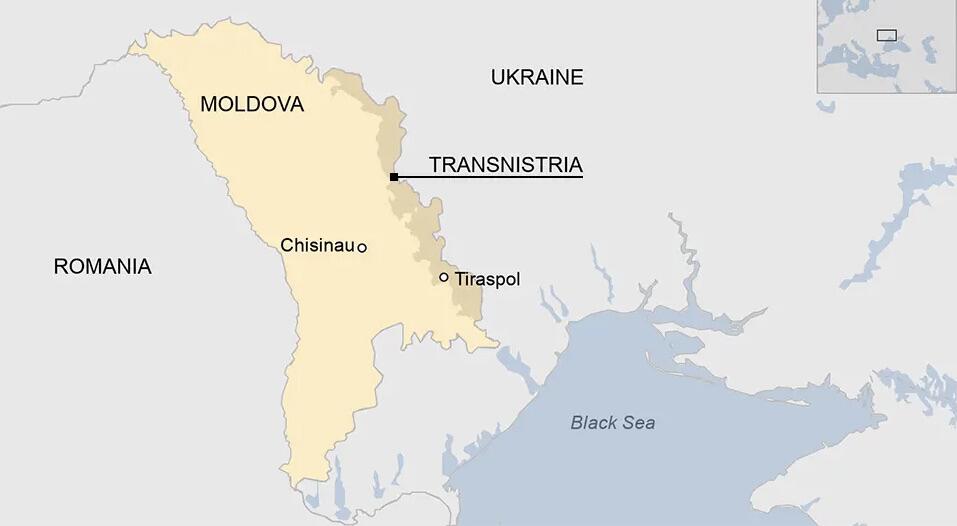
With a population of about 3 million, the republic of Moldova is wedged between Romania and Ukraine. Most citizens speak Romanian, but there’s a significant Russian-speaking minority. Consistent with that combination of location and demographics, the country’s sentiments and policies have swung back and forth between pro-Russian and pro-Western. Since 2020 — which brought the election of current President Maia Sandu — a decidedly pro-Western slant has prevailed. 

Complicating the geopolitical picture is the slender breakaway republic of Transnistria, which lies along the east bank of the Dniester River, wedged between Ukraine and Moldova. While not recognized by any other state, it enjoys the economic and political support of Russia, along with the presence of some 1,500 Russian soldiers.  

Russia has about 1,500 soldiers positioned in Transnistria, which broke away from Moldova in 1990 (via BBC)

Sunday’s razor-close EU referendum and lackluster showing by Sandu seemingly signal the country’s political pendulum is swinging again. Sandu only received 41% of the vote, while her principal opponent, former Prosecutor General Alexandr Stoianoglo, scored 27%. With opposition expected to consolidate in the Nov. 3 runoff, Sandu appears to be in serious jeopardy of losing the presidency.   

Sandu responded to the results with accusations of an “unprecedented assault on our country’s freedom and democracy,” blaming Russia for working to rally opposition to EU membership.  The also claimed there had been “a fraud of unprecedented scale,” in the form of an alleged scheme to buy 300,000 No votes.  

As the election approached, Sandu’s government accused Israeli-born, fugitive oligarch Ilan Shor of meddling in the election. Convicted of fraud and theft over a scam that drained $1 billion from Moldovan banks, Shor was sentenced to 7.5 years in prison in absentia. Moldova is now accusing the 37-year-old of funneling money from Russia into a vote-buying effort. When accused of his financial crimes, Shor first fled to and lived in Israel before moving to Russia.

Anti-government forces staged a series of demonstrations in fall 2023, calling for President Sandu’s resignation and relief from higher fuel costs (Vladislav Culiomza/Reuters)

The BBC said it had observed an apparent indication of just such a vote-buying effort: 

A BBC producer heard a woman who had just dropped her ballot in the transparent box ask an election monitor where she would get paid. Outside, we asked directly whether she had been offered cash to vote and she admitted it without qualms. She was angry that a man who had sent her to the polling station was no longer answering her calls. “He tricked me!” she said. She would not reply when asked who she had voted for.

A Yes victory on the referendum wouldn’t immediately put Moldova in the EU. Rather, it would amend the country’s constitution to declare EU membership is a goal of the republic, which declared its independence in 1991 in the wake of the Soviet Union’s collapse. Sandu has set 2030 as a goal for accession to the EU. 

The set of dynamics in play — election results that defy expectations of an establishment victory, followed by accusations of Russian interference — echoes what’s been repeatedly been observed both in the United States and Western Europe in recent years. On top of that, Moldovan authorities also censored online content that they characterized as disinformation.

That’s not the only similarity: The referendum count had No with a narrow lead down the stretch, only to see Yes pull ahead as absentee ballots were tallied — many cast by pro-EU “diaspora” Moldovans who don’t even live in the country. 

Tyler Durden
Mon, 10/21/2024 – 07:45

Isn’t It Obvious?

0
Isn’t It Obvious?

Authored by Charles Hugh Smith via OfTwoMinds blog,

And so here we are, exhausted by the divisions, the frustration, the rage and our loneliness in a sea of madness few even see.

Isn’t it obvious? Of course it is. So what’s obvious? That there are sharply different views on what’s obvious.

Psychiatrist-author R.D. Laing noted back in 1967 as the Vietnam War raged that what was obvious to President Lyndon Johnson–that the war had to be prosecuted lest the Democratic party lose congressional seats in the 1968 election for being “soft on Communism”–was not obvious to those paying the price of the war as the collateral damage for the all-important political jockeying in Washington D.C.

As historian Peter Turchin has documented, the cycle of socio-economic-political disintegration-integration runs around fifty years, and so here we are. Turchin caught some flak for predicting the handbasket would start its slide into Heck in 2020, and voila.

A great many things are obvious, yet equally obvious is the chasm separating what’s obvious to each of us. The chasm is literally bottomless, and there are no bridges across it, no common ground, and so friendships–the glue of sociability, the foundation of our well-being–are tossed into the chasm with infuriated abandon–how dare you!

Having lived through the last cycle of tumult, discord and disintegration, that we’re in another such cycle is obvious to me, but not to others. That the end of the Debt-Speculation Super-Cycle is upon us is obvious to many of us, but hotly denied by the multitudes counting on The Everything Bubble never popping.

That mass media and social media have merged is obvious to me, but not to others. The source of income for all media players / content creators is now the same, and so the competition for “engagement” (i.e. attention, eyeballs, emotional vesting) is Darwinian on a heretofore unimaginable scale, a power-law scale in which the few winners at the very apex collect the vast majority of the winnings and the 99% trail off in the long tail, collecting the coins that roll off the table of the few.

By way of example, data collected by the Department of Justice on the 58,000 books published in a year revealed that 96% of books sell less than 1,000 copies, and 50 percent of all titles sold less than a dozen copies. (Source.) That’s one heck of a long tail: 30,000 books–most infused with the hopes and dreams of the authors–each sold 12 or less copies.

This aligns with the Pareto Distribution, the 80/20 rule, which distills down (80% of 80% = 64% and 20% of 20% = 4%) to the 64/4 rule: the top 4% scoop up two-thirds of the winnings, and the 96% brawl over the remaining third.

In social media, as in the rest of the economy, the percentages are even less favorable: the top 0.1% amass the vast majority of the gains. The top influencers rake in millions, the selfie-posting multitudes pick up pennies–if they’re lucky.

So what are the tools needed to win this Darwinian competition? Addiction, clickbait, emotional lassos and echo chambers: make the devices and endless scrolling addictive: you’re a winner. Feature sensationalized clickbait headlines: you’re a winner. Snare the unwary with emotional lassos: you’re a winner. Espouse shared beliefs to fellow true believers with ecstatic enthusiasm: you’re a winner.

So isn’t it obvious where this is going? Put another way: is this savage arena a healthy environment? Or is it deranging to all who wander in and are lassoed with such ease? What happens to those lassoed, addicted, ensnared? This chart of loneliness illuminates the inevitable result of making derangement the most profitable activity under the sun.

As others have insightfully pointed out, every individual who tries to walk past the arena has 100,000 well-paid, smart, highly motivated hawkers cajoling them into enter the arena. Hey pal, craving a dopamine hit? Come on in, we got dopamine hits galore inside. You’re gonna love it.

And so here we are, exhausted by the divisions, the frustration, the rage and our loneliness in a sea of madness few even see. Fortunately, I have the perfect antidote for you: click here, and you’ll be delighted by an endless scroll of adorable kids playing with puppies and kittens. Your dopamine levels are going to low-Earth orbit, you’re gonna love it.

Or if you have super-human powers, walk past the arena and keep walking.

*  *  *

Become a $3/month patron of my work via patreon.com.

Subscribe to my Substack for free

Tyler Durden
Mon, 10/21/2024 – 07:20