53.5 F
Chicago
Friday, October 16, 2026
Home Blog Page 2225

Globalism And Freedom Do Not Mix

0
Globalism And Freedom Do Not Mix

Authored by Jeffrey Tucker via The Epoch Times,

Speaking with a friend about the migrant crisis in the United States, she made an interesting observation. Many of the most prosperous Western nations in the world today are facing the same problem. They are flooded with migrants who are overwhelming the system, infuriating the citizenry, adding fiscal burdens, disrupting public order, and leading to possible political instability.

Interesting question: Why after many multiple decades of only localized migrant issues, most having to do with border wars or other disruptions, have so many nations at once dealt with floods of people exploiting broken migration systems? In other words, how did a local problem become a global problem so quickly? How did all border systems break at once?

And consider the problem before this one. We had a globalized response to the COVID crisis. In most nations of the world, the policy response was eerily similar. There was masking, distancing, closures, travel restrictions, and capacity limits, while big business was allowed to stay open. The same methods, which have no modern precedent, were attempted in all countries in the world except a few.

The states that did not go along—Sweden, Tanzania, Nicaragua among others—face unrelenting attacks from world media.

The problem of migration plus pandemic planning are only two data points but they both suggest an ominous reality. The nation states that have dominated the political landscape since the Renaissance, and even back in some cases to the ancient world, are giving way to a new form of government, which we can call globalism. It doesn’t refer to trade across borders, which has been the norm for all human history. It is about political control, away from citizens in countries toward something else that citizens cannot control or influence.

From the time of the Treaty of Westphalia, signed in 1648, the idea of state sovereignty prevailed in politics. Not every nation needed the same policies. They would respect differences toward the goal of peace. This involved permitting religious diversity among nation states, a concession that led to an unfolding of freedom in other ways. The system worked but not everyone has been happy with it.

Some of the most brilliant intellectuals for centuries have dreamed of global government as a solution to the diversity of policies of nation states. It’s the go-to idea for scientists and ethicists who are so convinced of the correctness of their ideas that they dream up some worldwide imposition of their favored solution. Humanity has by-and-large been wise enough not to attempt such a thing beyond military alliances and mechanisms to improve trade flows.

But in the 21st century, we’ve seen the intensification of the power of globalist institutions. The World Health Organization (WHO) effectively scripted the pandemic response for the world. Globalist foundations and NGOs seem to be heavily involved in the migrant crisis. The International Monetary Fund (IMF) and World Bank, created as nascent institutions for a global system of money and finance, are exercising outsized influence on monetary and financial policy. The World Trade Organization is working to diminish the power of the nation state over trade policies.

I happened to be in New York City a few weeks ago when the United Nations met. No question that it was the biggest show on planet Earth. Vast swaths of the city were shut down to cars and buses, with diplomats and heavy-hitting financiers arriving via helicopter on the roofs of luxury hotels, all of which were full for the week of meetings. The prices of everything were jacked up in response since no one was spending his own money in any case.

The attendees were not only statesmen from all over the world but also the biggest financial firms and media outfits, along with representatives of the largest universities and nonprofits. All of these forces seem to be coalescing at once, as if they all want to be part of the future. And that future is one of global governance wherein the nation state is eventually reduced to pure cosmetics with no operational power.

The impression I had while there was that the experience of everyone in town that day, all swarming around the big United Nations meeting, was one of deep separation of their world from the world of the rest of us. They are “bubble people.” Their friends, source of financing, social groupings, career aspirations, and major influence are detached not only from normal people but from the nation state itself. The fashionable attitude among them all is to regard the nation state and its history of meaning as passe, fictional, and rather embarrassing.

Entrenched globalism of the sort that operates in the 21st century represents a shift against and repudiation of half a millennium of the way governance has worked in practice. All governance came to be organized around geographically restricted zones of control. The juridical boundaries restrained power. The king of France could govern France but required a war to influence England, and so too for Russia, Spain, Sweden, and so on.

The expansion of the juridical boundaries required conquering or some form of colonialism but such arrangements are temporary because they are ultimately subject to the consent of the governed. The idea of consent gradually came to dominate political affairs from the 18th through the 19th century until after the Great War which dismantled the last of the multinational empires. That left us with one model: the nation state in which citizens exercised ultimate sovereignty over the regimes under which they live.

The United States was initially established as a country of localized democracies that only came together under a loose confederation. The Articles of Confederation created no central government but rather deferred to the former colonies to set up (or continue) their own structures of governance. When the Constitution came along, it created a careful equilibrium of checks and balances to restrain the national state while preserving the rights of the states.

The idea here was not to overthrow citizen control over the nation state but institutionalize it.

All these years later, most people in most nations, the United States especially, believe that they should have final say over the structure of the regime. This is the essence of the democratic ideal, and not as an end in itself but as a guarantor of freedom, which is the principle that drives the rest. Freedom is inseparable from citizen control of government. When that link and that relationship are shattered, freedom itself is gravely damaged.

The world today is packed with wealthy institutions and individuals that stand in revolt against the ideas of freedom and democracy. They do not like the idea of geographically constrained states with zones of juridical power. They believe they have a global mission and want to empower global institutions against the sovereignty of people living in nation states.

They say that there are existential problems that require the overthrow of the nation-state model of governance. They have a list: infectious disease, pandemic threats, climate change, peacekeeping, cybercrime, and I’m sure there are others on the list that we’ve yet to see. The idea is that these are necessarily worldwide and evade the capacity of the nation state to deal with them.

We are all being acculturated to believe that the nation state is nothing but an anachronism that needs to be supplanted. Keep in mind, this necessarily means treating democracy and freedom as anachronisms too. In practice, the only means by which average people can restrain tyranny and despotism is through voting at the national level. None of us have any influence over the policies of the WHO, World Bank, IMF, much less over the Gates or Soros Foundations. The way politics is structured in the world today, we are all necessarily disenfranchised in a world governed by global institutions.

And that is precisely the point: to achieve universal disenfranchisement of average people so that the elites can have a free hand in regulating the planet as they see fit. This is why it becomes supremely urgent for every person who aspires to live in peace and freedom to regain national sovereignty and say no to the transfer of authority to institutions over which citizens have no control.

Let me conclude with this: I had not always understood this. When the United States pulled out of the WHO in 2020, I was genuinely puzzled. It seemed rather unsporting. These days, I get it.

Devolving power from the center is the only path by which we can restore the ideals of the great visionaries of the past like Thomas Jefferson.

In the end, governing institutions must be in citizen control, and pertain to the borders of particular states, or it necessarily becomes tyrannical over time.

Views expressed in this article are opinions of the author and do not necessarily reflect the views of The Epoch Times or ZeroHedge.

Tyler Durden
Thu, 10/17/2024 – 16:20
Gold Hits New Record High; Dollar & Bond Yields Soar On ‘Good’-Data, ‘Trump-Trade’

0
Gold Hits New Record High; Dollar & Bond Yields Soar On ‘Good’-Data, ‘Trump-Trade’

‘Soft’ (Philly Fed & NAHB) and ‘Hard’ data (Retail Sales, Initial Claims) improved today but manufacturing production shit the bed…

Source: Bloomberg

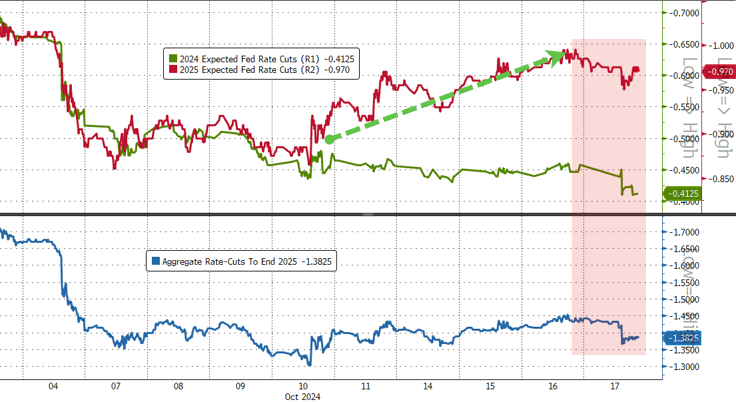
Ignoring the manufacturing slump, this data reinforced the ‘no landing’ narrative and pushed rate-cut expectations notably (hawkishly) lower…

Source: Bloomberg

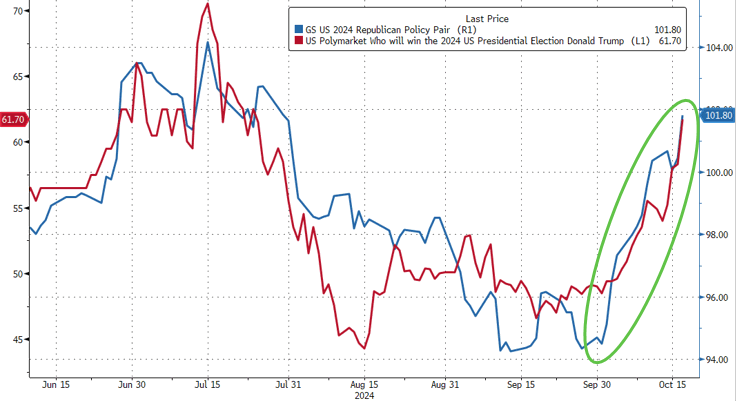
Additionally, The Trump Trade has taken hold of the narrative for now…

Source: Bloomberg

Goldman’s Chloe Garber told clients today that Polymarket is priced at 60/40, there is ~1.5% upside to 65/35 odds, and 4% downside to 50/50 odds.

“I think there is a possibility this pair could go to the July highs before the election, but it would require some terrible polls for Kamala Harris, whereas a lot of work has been done.

Clients are betting this direction because a 60/40 market going to 100 delta is still an enticing proposition whereas a coin flip is just hard.”

Importantly, she added that this local Trump trend hasn’t been driven by earnings revisions…revisions have been slightly negative since the end of July, so if 3Q earning season matters, these stocks could get affected. 

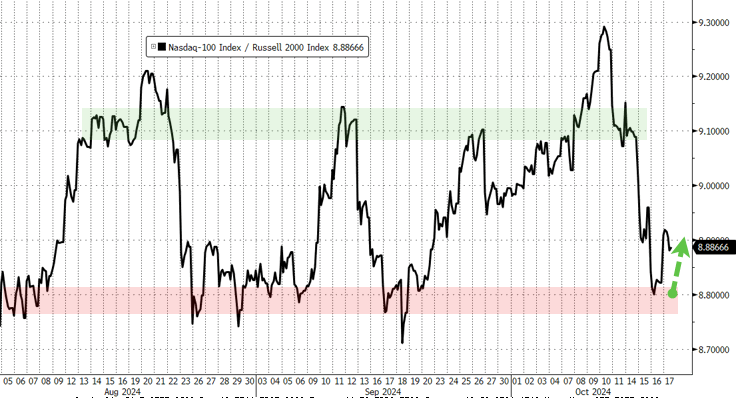
Small Caps underperformed today (for a change), but all the majors ended well off their highs of the day. The S&P ended unchanged and Nasdaq marginally higher as The Dow hit another record closing high….

…notably, the Nasdaq outperformance today comes at a key support level relative to Russell 2000…

Source: Bloomberg

…and at the same time, Polymarket sees the odds of a ‘Red Sweep” also soaring…

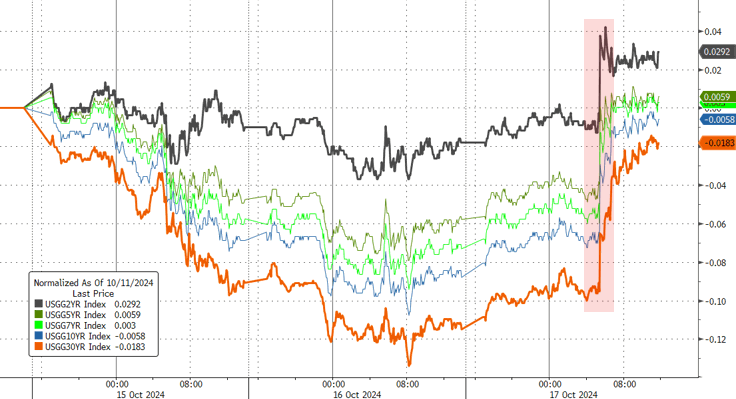
…which helped send yields soaring on the day, led by the long-end (30Y +10bps). On the week, the short-end remains the laggard…

Source: Bloomberg

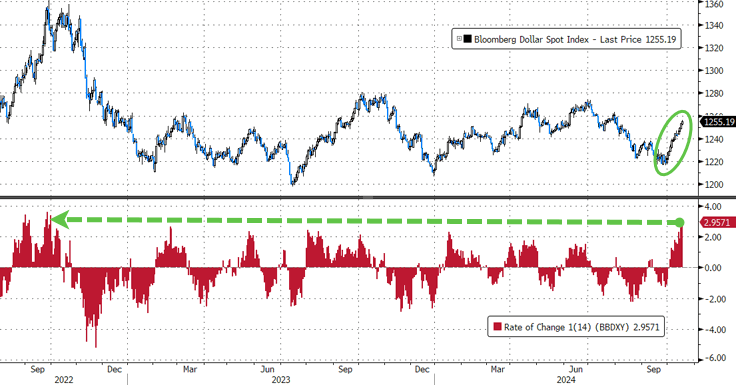
…the dollar index continued to charge higher (up 12 of the last 14 days)…

Source: Bloomberg

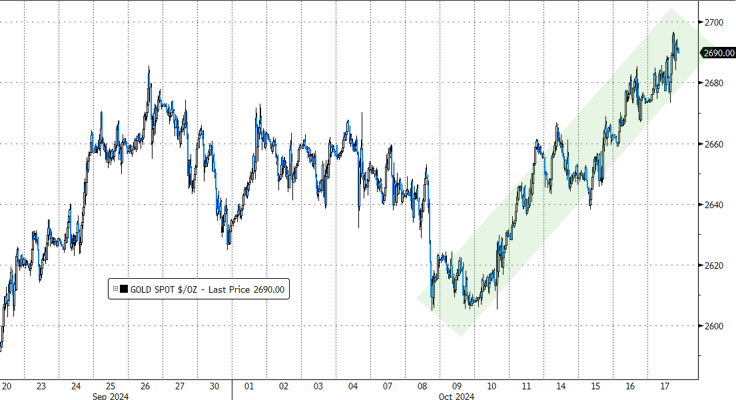
…and, rather oddly given the dollar’s move, gold surged to yet another new record high. just shy of $2700…

Source: Bloomberg

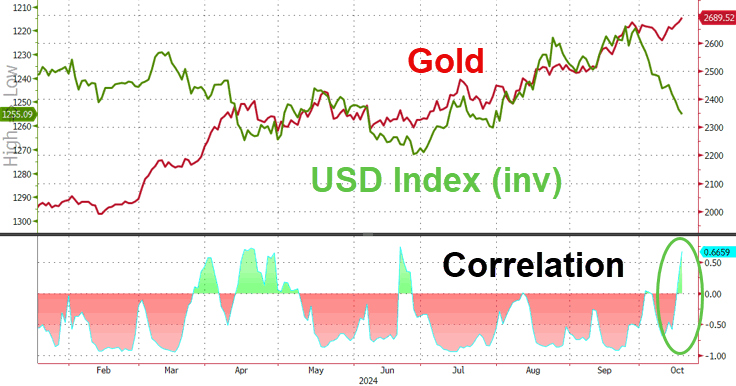
The last few weeks have been very unusual with the correlation between the dollar and gold spiking dramatically…

Source: Bloomberg

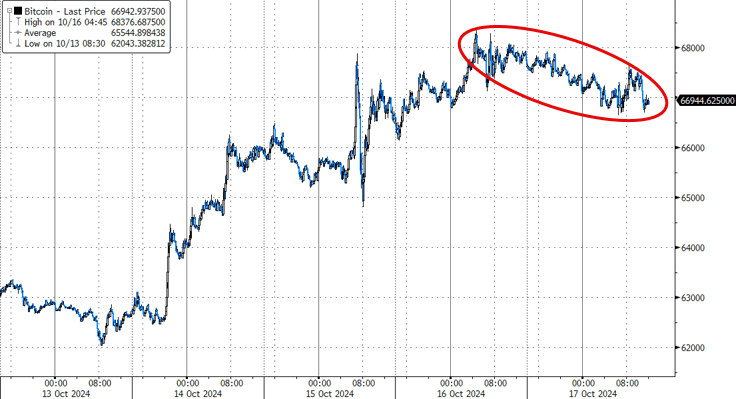
Bitcoin limped slightly lower on the day after topping $68,000…

Source: Bloomberg

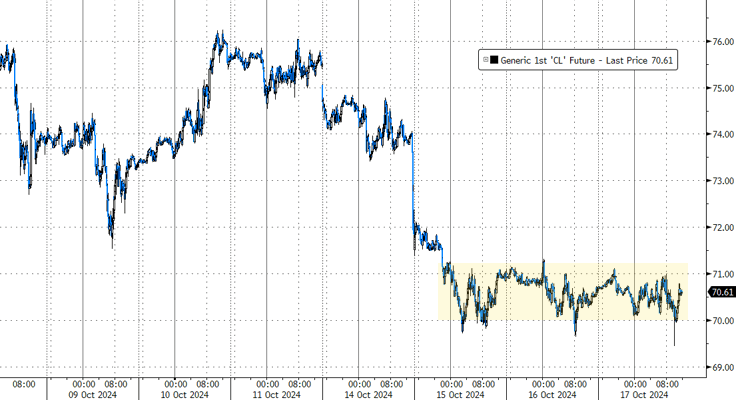
Oil prices went nowhere for the second day in a row with WTI trading in a very narrow $70-71 range…

Source: Bloomberg

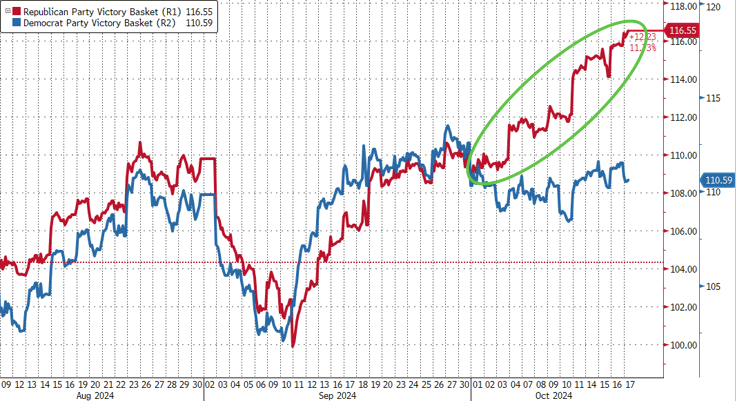
Finally, stocks are aggressively pricing in a ‘Trump victory’ versus a ‘Harris victory’…

Source: Bloomberg

While it is ‘easy’ to manipulate the noisy and game-able prediction markets (given their low liquidity), it is arguable that the various stocks in these baskets from Goldman Sachs are ‘game-able’, suggesting there is more than just a whale or two driving this sentiment narrative.

Tyler Durden
Thu, 10/17/2024 – 16:00

Kamala Harris Celebrates Hamas Chief’s Killing, After Loudly Opposing Operation That Got Him

0
Kamala Harris Celebrates Hamas Chief’s Killing, After Loudly Opposing Operation That Got Him

Update(1600): Kamala Harris is hailing Israel’s killing of Hamas Leader Yahya Sinwar. But last spring as the IDF was poised to expand its operations further south into Rafah, she was firmly against it. She had even warned of “consequences” (which of course never came). Throughout the more than year-long conflict the Biden-Harris administration has been speaking out of both sides of its mouth. The contradictions abound. Of course, the first and foremost contradiction is that the administration has admitted that large-scale massacres of civilians have taken place in Gaza, yet continues to arm America’s “closest Mideast ally” to the teeth and to the tune of billions.

And now for the latest glaring contradiction, here’s Harris back in March:

Israel could face “consequences” if it launches a ground assault on the city of Rafah in southern Gaza, the US vice president has warned.

Vice President Kamala Harris said in an interview that aired on Sunday that it would be a “huge mistake” for the Israeli military to move on the city. The comments appear to underscore the continued strain in relations between Washington and Israel as the latter’s war in Gaza continues.

Below: But here she is today, offering a celebratory congratulations to Israel on the Hamas chief’s death, while trying to appear ‘presidential’ as a potential future commander-in-chief…

“Justice has been served, and the United States, Israel and the entire world are better off…”

One online commenter noted, “All she ever did was shout for a ceasefire, now she’s practically giving the US credit for defeating Hamas.”

She during the remarks underscored that this “moment gives us an opportunity to finally end the war in Gaza.” So far it appears that Netanyahu sees it differently, having stated that he’ll pursue the return of the hostages by any means possible (while appearing to rule out negotiations or ceasefire).

* * *

Update(1250ET): Official confirmation is trickling in, ahead of a planned evening Netanyahu speech – where he’s expected to issue an official declaration of Hamas leader Yahya Sinwar’s death during fighting in southern Gaza:

ISRAEL FOREIGN MINISTER KATZ: HAMAS CHIEF SINWAR WAS KILLED IN GAZA

Katz’s message to foreign leaders likely means a DNA match was made:

In a message to dozens of foreign ministers around the world, Foreign Minister Israel Katz confirms that Hamas leader Yahya Sinwar was killed, becoming the first Israeli official to do so on the record.

“The mass murderer Yahya Sinwar, who is responsible for the massacre and atrocities of October 7, was killed today by IDF soldiers,” says Katz, according to his office. “This is a great military and moral achievement for Israel and a victory for the entire free world against the evil axis of radical Islam led by Iran,” he continues.

Katz says the killing “creates a possibility” for getting the hostages out immediately and for creating a Gaza free of Hamas and Iranian control.

The top diplomat concluded, “Israel needs your support and assistance now more than ever to advance these important goals together.” US Congressional leaders are hailing news of the Hamas chief’s death, as he was considered the mastermind of the Oct.7 terror attacks.

Axios correspondent Barak Ravid writes that “The IDF and Shin Bet confirm Sinwar’s body has been identified.”

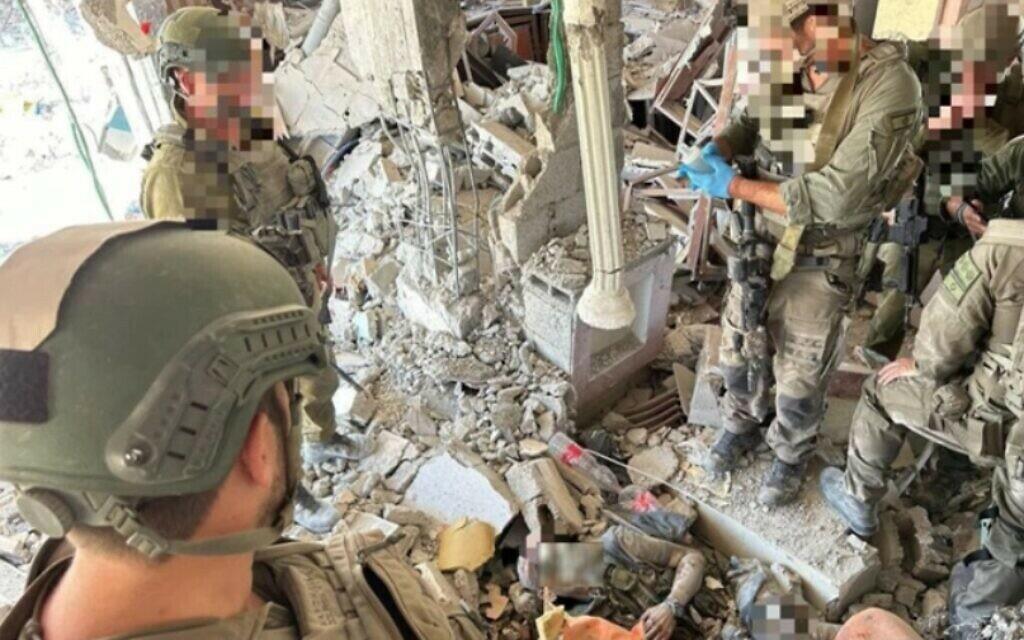
Below: graphic image issued by the IDF of Israeli troops standing over Sinwar’s body in Rafah…

* * *

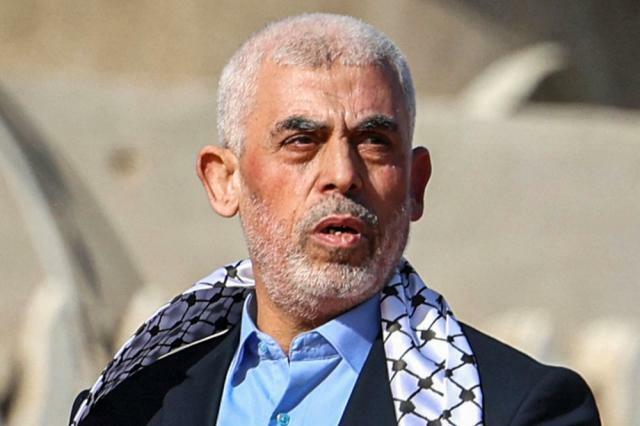
In a huge breaking development, Israeli officials believe that Hamas leader Yahya Sinwar is dead. His alleged death may have been the result of an Israeli army attack on a building in Rafah, in southern Gaza. He oversaw the terror attacks of October 7 of last year and has remained Israel’s target #1.

The Israel Defense Forces (IDF) which were operating in south Gaza were not specifically seeking to target him, but a body recovered at the scene suggests he may have been killed. Israeli sources and media are saying there is a “high likelihood” Sinwar has been killed.

“At this stage, the identity of the terrorists cannot be confirmed,” the Israeli army and air force said in a joint statement as speculation mounts, also as gruesome photographs of a badly mangled body circulate widely online.

The Washington Post writes that “A body, believed to be Sinwar’s, is being brought to Israel for DNA analysis, according to an Israeli official who spoke on the condition of anonymity because they were not authorized to speak publicly.” According to more details:

“We have his DNA from when he was in jail,” Israeli Ambassador to the United Nations Danny Danon said in an interview in September, at a previous moment when Israeli authorities believed they might have killed the Hamas leader. Danon said at the time that DNA analysis had been run on previous bodies, but that the testing had not been a match.

According to Israeli journalist Nadav Eyal, “A reserve IDF force operating near Rafah spotted three armed men in a building, which was then hit by a drone/tank shell.”

He describes that “A man resembling Sinwar and a Hamas regiment commander were found dead with a substantial amount of cash and weapons. This was part of the ongoing IDF operation, not a targeted assassination. No hostages are believed to have been present, but the ground is being inspected to confirm.”

While Israel’s military is urging caution and patience amid all the rumors, if confirmed it would be a huge win for Israel, and major setback for Hamas:

Army chief Lieutenant General Herzi Halevi vowed to “find him (Sinwar), attack him” and force Hamas to find another leader.

Sinwar — Hamas’s leader in Gaza since 2017 — has not been seen since the October 7 attack, the deadliest in Israel’s history.

It would certainly mark the biggest development of the conflict since the assassination of Hamas political leader Ismail Haniyeh in Tehran on July 31st of this year.

Israeli army publishes footage of what it says is the operation that “led to the assassination of Yahya Sinwar”…

A prominent open source analysis X account, OSINTdefender, writes that “One of the Images claimed to show the Body of Yahya Sinwar, following an Israeli Strike earlier today on Southern Gaza. With Facial Features as well as his Watch appearing to be an Exact Match to the Leader of Hamas.”

Strong rumors of his death have been circulating in Arabic media as well.

Below is a quick review of his bio, via Al Jazeera:

  • Yahya Sinwar was born in the Khan Younis refugee camp in southern Gaza in 1962.
  • His family were refugees from Majdal Askalan, or what became Ashkelon, after the creation of Israel in 1948.
  • Sinwar spent 22 years of his life in Israeli prisons, for allegedly planning the abduction and killing of two Israeli soldiers in 1988. He was freed in 2011 as part of a prisoner exchange deal.
  • An Israeli government assessment of his years in detention described him as “ruthless” and “powerful”.
  • He used his time in jail to become fluent in Hebrew.
  • Sinwar succeeded Ismail Haniyeh as Hamas’s leader in Gaza in 2017. He became the group’s leader after Israel assassinated Haniyeh in July.
  • After the October 7 attack in southern Israel, which he is accused of masterminding, the Israeli military described him as a “dead man walking”.

developing…

Tyler Durden
Thu, 10/17/2024 – 16:00

McKinsey Nears $500 Million Settlement With DOJ Over Opioid Probe

0
McKinsey Nears $500 Million Settlement With DOJ Over Opioid Probe

McKinsey is going to be paying “at least $500 million” to settle probes into the company about its role in helping opioid makers boost their sales. 

The settlement would add to penalties McKinsey has already paid to U.S. states for its work with opioid manufacturers, according to Bloomberg. 

In 2021, the firm agreed to pay hundreds of millions to settle claims it contributed to the opioid crisis through sales analysis and marketing advice. McKinsey, which reported $16 billion in revenue last year, denied wrongdoing, stating its work was legal and that it stopped consulting for opioid makers in 2019.

Last May, McKinsey said in a statement: “Our past work for opioid manufacturers, while lawful, fell short of the high standards we set for ourselves. We have implemented a rigorous client selection policy and spent approximately $1 billion building, enhancing, and operating our risk, legal, and compliance functions since 2018.”

The Bloomberg report says that Federal prosecutors in Boston, Roanoke, and Washington are leading the Justice Department’s investigation.

McKinsey recently proposed a $230 million settlement with cities and states, approved by a U.S. judge, though the firm still faces legal risks over its opioid-related work, Bloomberg Law reported. 

Since 1999, nearly 645,000 people have died from opioid overdoses, with deaths surging in the 2010s and accelerating further during the Covid-19 pandemic due to synthetic opioids.

Thousands of state and local governments are pursuing claims against opioid makers and distributors to recover billions in public funds spent addressing the crisis.

A settlement expected in the coming weeks would resolve the Justice Department’s criminal and civil investigations, though the terms remain confidential and subject to change.

Tyler Durden
Thu, 10/17/2024 – 15:25

Zelensky Unveils ‘Victory Plan’ But No Sign It Has Support From The West

0
Zelensky Unveils ‘Victory Plan’ But No Sign It Has Support From The West

Authored by Dave DeCamp via AntiWar.com,

Ukrainian President Volodymyr Zelensky addressed the Ukrainian parliament on Wednesday and unveiled his so-called “victory plan,” but there’s no sign any of Ukraine’s Western backers will support his proposals.

Zelensky’s plan includes five points and three classified sections that he did not make public. The plan is essentially a list of demands that Zelensky has been making of the US and NATO for months. He claimed that if the plan was implemented, Ukraine “may be able to end the war no later than next year.”

Zelensky addressing Ukrainian parliament (photo released by Zelensky’s office)

One point is for Ukraine to receive a formal invitation to join NATO, but there’s no sign the alliance will be willing to do that anytime in the near future, and Ukrainian neutrality will be a key Russian demand for any peace deal.

The plan calls for more air defenses and for NATO countries to help shoot down Russian missiles over Ukraine, which would mean direct NATO involvement in the war. NATO countries have previously rejected Ukrainian requests to intercept Russian missiles and drones.

Another point in the plan calls for support for Ukraine to use NATO-provided missiles to launch long-range strikes inside Russia, an escalation that would risk nuclear war. So far, the US and the UK have rejected Zelensky’s repeated request for help with long-range strikes.

Ukrainian MP Oleksii Honcharenko, a member of the European Solidarity party, criticized Zelensky’s plan. “First of all, it’s not a plan. Plan means something with concrete steps,” he said, according to The Associated Press. “It’s kind of a wish list from Ukraine for our partners, how they can and should support us. And it doesn’t look realistic. We were waiting for some real serious conversation about the situation and the strategy, and this is not that.”

Zelensky unveiled the plan as Russia continues to make advances in eastern Ukraine, a reality Honcharenko called “contradictory.”

Later on Wednesday, Zelensky spoke by phone with President Biden, but the White House showed no sign that it supported the “victory plan.” When asked about it, White House Press Secretary Karine Jean-Pierre said, “That’s their plan, and let them speak to it.”

Despite no clear path to Ukrainian victory, the US still continues to fuel the war, and a Zelenskey aide said Tuesday that American politicians are pressuring the Ukrainian government to lower the conscription age to 18.

During the call with Zelensky, Biden announced a new $425 million weapons package for Ukraine. According to the Pentagon, it includes the following:

  • Additional munitions for National Advanced Surface-to-Air Missile Systems (NASAMS)
  • RIM-7 missiles and support for air defense
  • Stinger anti-aircraft missiles
  • Ammunition for High Mobility Artillery Rocket Systems (HIMARS)
  • Air-to-ground munitions
  • 155mm and 105mm artillery ammunition
  • Tube-launched, Optically tracked, Wire-guided (TOW) missiles
  • Javelin and AT-4 anti-armor systems
  • High Mobility Multipurpose Wheeled Vehicles (HMMWVs)
  • Small arms and ammunition
  • Grenades, thermals, and training equipment
  • Demolitions equipment and munitions
  • Spare parts, ancillary equipment, services, training, and transportation 

Tyler Durden
Thu, 10/17/2024 – 13:45

SpaceX Sues California Over Political Targeting

0
SpaceX Sues California Over Political Targeting

Authored by Eric Lendrum via American Greatness,

On Tuesday, Elon Musk’s company SpaceX has filed a lawsuit against a California state agency over alleged political discrimination against the company.

As reported by Politico, the lawsuit stems from the California Coastal Commission’s (CCC) decision to reject SpaceX’s plans to increase the number of experimental rocket launches from the Space Force base in Santa Barbara County. Lawyers from the Los Angeles-based firm Venable LLP, which represents SpaceX, claimed that the CCC made its decision purely due to political differences with Musk, an outspoken supporter of former President Donald Trump and a vocal critic of Governor Gavin Newsom (D-Calif.).

The lawsuit, filed in a federal court in Los Angeles, asserts that the CCC and its 12 members “engaged in naked political discrimination” in last week’s debate over a proposal by the Department of Defense (DOD) to expand the number of SpaceX launches at Vandenberg Space Force Base. The proposal would have seen the number of launches increase from 36 to 50.

“Rarely has a government agency made so clear that it was exceeding its authorized mandate to punish a company for the political views and statements of its largest shareholder and CEO,” the lawsuit reads.

The lawsuit named all 12 members of the commission, as well as executive director Kate Huckelbridge and alternate commissioner Gretchen Newsom, as defendants.

The commissioners are appointed by the governor and the legislature. On Thursday, they voted 6-4 in favor of rejecting the DOD plan.

However, the debate over the motion prior to the vote quickly veered away from the specifics of the plan itself, and instead focused on Musk’s support for Trump.

“Elon Musk is hopping about the country, spewing and tweeting political falsehoods and attacking FEMA while claiming his desire to help the hurricane victims with free Starlink access to the internet,” said Commissioner Newsom, who bears no relation to Governor Newsom.

Newsom and Chairwoman Caryl Hart both criticized Musk’s political stances before voting against the deal.

“Many things are said in the course of meetings, whether it’s a Coastal Commission meeting, whether it’s a legislative meeting, whether it’s a planning department,” said Chairwoman Hart on Tuesday, in an attempt to justify her vote.

“The basis for this decision is the commission’s conclusion that SpaceX, as a private company engaged in private activities, needs to apply for a coastal development permit.”

Although Musk has generally remained a political moderate, he began expressing support for President Trump following the first assassination attempt against him on July 13th in Butler, Pennsylvania. Since then, Musk has launched the pro-Trump America Pac, which has donated $45 million to supporting Trump’s campaign every month since July.

Musk himself appeared onstage with President Trump at his return rally in Butler, just over two months after the assassination attempt; during his speech, he reaffirmed his support for freedom of speech, and urged the audience to get as many people as possible out to vote in the coming election.

Tyler Durden
Thu, 10/17/2024 – 13:05

Israel Confirms Death Of ‘October 7 Mastermind’, Hamas Leader Yahya Sinwar

0
Israel Confirms Death Of ‘October 7 Mastermind’, Hamas Leader Yahya Sinwar

Update(1250ET): Official confirmation is trickling in, ahead of a planned evening Netanyahu speech – where he’s expected to issue an official declaration of Hamas leader Yahya Sinwar’s death during fighting in southern Gaza:

ISRAEL FOREIGN MINISTER KATZ: HAMAS CHIEF SINWAR WAS KILLED IN GAZA

Katz’s message to foreign leaders likely means a DNA match was made:

In a message to dozens of foreign ministers around the world, Foreign Minister Israel Katz confirms that Hamas leader Yahya Sinwar was killed, becoming the first Israeli official to do so on the record.

“The mass murderer Yahya Sinwar, who is responsible for the massacre and atrocities of October 7, was killed today by IDF soldiers,” says Katz, according to his office. “This is a great military and moral achievement for Israel and a victory for the entire free world against the evil axis of radical Islam led by Iran,” he continues.

Katz says the killing “creates a possibility” for getting the hostages out immediately and for creating a Gaza free of Hamas and Iranian control.

The top diplomat concluded, “Israel needs your support and assistance now more than ever to advance these important goals together.” US Congressional leaders are hailing news of the Hamas chief’s death, as he was considered the mastermind of the Oct.7 terror attacks.

Axios correspondent Barak Ravid writes that “The IDF and Shin Bet confirm Sinwar’s body has been identified.”

Below: graphic image issued by the IDF of Israeli troops standing over Sinwar’s body in Rafah…

* * *

In a huge breaking development, Israeli officials believe that Hamas leader Yahya Sinwar is dead. His alleged death may have been the result of an Israeli army attack on a building in Rafah, in southern Gaza. He oversaw the terror attacks of October 7 of last year and has remained Israel’s target #1.

The Israel Defense Forces (IDF) which were operating in south Gaza were not specifically seeking to target him, but a body recovered at the scene suggests he may have been killed. Israeli sources and media are saying there is a “high likelihood” Sinwar has been killed.

“At this stage, the identity of the terrorists cannot be confirmed,” the Israeli army and air force said in a joint statement as speculation mounts, also as gruesome photographs of a badly mangled body circulate widely online.

The Washington Post writes that “A body, believed to be Sinwar’s, is being brought to Israel for DNA analysis, according to an Israeli official who spoke on the condition of anonymity because they were not authorized to speak publicly.” According to more details:

“We have his DNA from when he was in jail,” Israeli Ambassador to the United Nations Danny Danon said in an interview in September, at a previous moment when Israeli authorities believed they might have killed the Hamas leader. Danon said at the time that DNA analysis had been run on previous bodies, but that the testing had not been a match.

According to Israeli journalist Nadav Eyal, “A reserve IDF force operating near Rafah spotted three armed men in a building, which was then hit by a drone/tank shell.”

He describes that “A man resembling Sinwar and a Hamas regiment commander were found dead with a substantial amount of cash and weapons. This was part of the ongoing IDF operation, not a targeted assassination. No hostages are believed to have been present, but the ground is being inspected to confirm.”

While Israel’s military is urging caution and patience amid all the rumors, if confirmed it would be a huge win for Israel, and major setback for Hamas:

Army chief Lieutenant General Herzi Halevi vowed to “find him (Sinwar), attack him” and force Hamas to find another leader.

Sinwar — Hamas’s leader in Gaza since 2017 — has not been seen since the October 7 attack, the deadliest in Israel’s history.

It would certainly mark the biggest development of the conflict since the assassination of Hamas political leader Ismail Haniyeh in Tehran on July 31st of this year.

Israeli army publishes footage of what it says is the operation that “led to the assassination of Yahya Sinwar”…

A prominent open source analysis X account, OSINTdefender, writes that “One of the Images claimed to show the Body of Yahya Sinwar, following an Israeli Strike earlier today on Southern Gaza. With Facial Features as well as his Watch appearing to be an Exact Match to the Leader of Hamas.”

Strong rumors of his death have been circulating in Arabic media as well.

Below is a quick review of his bio, via Al Jazeera:

  • Yahya Sinwar was born in the Khan Younis refugee camp in southern Gaza in 1962.
  • His family were refugees from Majdal Askalan, or what became Ashkelon, after the creation of Israel in 1948.
  • Sinwar spent 22 years of his life in Israeli prisons, for allegedly planning the abduction and killing of two Israeli soldiers in 1988. He was freed in 2011 as part of a prisoner exchange deal.
  • An Israeli government assessment of his years in detention described him as “ruthless” and “powerful”.
  • He used his time in jail to become fluent in Hebrew.
  • Sinwar succeeded Ismail Haniyeh as Hamas’s leader in Gaza in 2017. He became the group’s leader after Israel assassinated Haniyeh in July.
  • After the October 7 attack in southern Israel, which he is accused of masterminding, the Israeli military described him as a “dead man walking”.

developing…

Tyler Durden
Thu, 10/17/2024 – 12:50

US Sends B-2 Stealth Bombers To Hit Houthi Underground Bunkers In War’s First

0
US Sends B-2 Stealth Bombers To Hit Houthi Underground Bunkers In War’s First

In the early morning hours of Thursday the US sent B-2 stealth bombers to launch major bombing raids on Houthi targets in Yemen. Was this a preview bombing run ahead of the expected major Israeli attack on Iran?

The warplanes hit underground bunkers used by the Houthis, and is the first known instance the B-2 stealth jets were deployed in combat over Yemen since the war on Red Sea shipping began more than a year ago.

Long-range B-2 stealth bomber. USAF/Sky News

The Associated Press called it a warning to Iran and noted that while the extent of damage is as yet unclear, “the attack appeared to be the first use of the B-2 in combat in years and the first time the flying wing targeted sites in Yemen.”

Any potential Israeli strikes on Iran are also expected to target underground bunkers which conceal ballistic missiles, possibly with US-supplied munitions such as bunker busting ordinance. US Defense Secretary Lloyd Austin in commenting on the fresh action over Yemen hinted at this.

“This was a unique demonstration of the United States’ ability to target facilities that our adversaries seek to keep out of reach, no matter how deeply buried underground, hardened or fortified,” he said.

Austin specified that targets were successfully struck at “five hardened underground weapons storage locations in Houthi-controlled areas of Yemen.”

According to more on this new attack against a group seen as Iran’s proxy on the Arabian peninsula, and how it sets up for potential further military action against Iran:

The B-2 would be used in any American attack on hardened Iranian nuclear facilities like Natanz or Fordo given it is the only aircraft in service that can drop the GBU-57, known as the “Massive Ordnance Penetrator.”

But the Pentagon’s anti-Houthi actions might still be seen as coming a bit late. The Houthis have for over a year held Red Sea shipping essentially hostage with its unrelenting campaign which has seen over 80 merchant vessels targeted with drones and missiles.

US warships have also been directly targeted, in what’s been called the largest US Navy battle at sea going back to World War II. There’s long been speculation that US military ships have actually been struck, but that the Pentagon has concealed it.

The B-2s which struck Yemen reportedly flew all the way from Whiteman Air Force Base in Missouri.

While there have been prior rounds of US and Israeli air offensives against the Houthis, this hasn’t set back Houthi capabilities in any significant or known way, but only appears to have deepened their resolve to punish Israel and its allies related to the Gaza war.

Independent journalist Michael Tracey observes of Thursday’s Pentagon strikes, “For 10 months, the US has been bombing Yemen on behalf of Israel with zero Congressional authorization — Congress actively refuses to take action either way — and as usual, it’s simply not an issue in the presidential campaign.”

Tyler Durden
Thu, 10/17/2024 – 12:45

Is “Peak Semi” The Real Deal

0
Is “Peak Semi” The Real Deal

By Russell Clark of the Capital Flows and Asset Markets Substack

As hard as it may seem now, peak oil was a big thing around 2007 or so, as the oil price surged.

The idea was that all the easy oil had been extracted, and that oil production was headed for a period of decline and high oil prices would be with us forever.

Of course, economics and finance suggests that high prices will attract capital and innovation, and eventually drive supply. This is exactly what happened as the US shale revolution turned the US into an energy exporter and flooded the market.

The best shorts are cyclical businesses that people believe in are secular stories. Cyclical businesses just need prices to rise high enough to attract competition. To my mind semiconductors and oil seem to have a lot in common. Essential for economic growth, but just need the occasional period of high prices to incentivise supply and capital investment. For me TSMC with its transparent pricing seemed to be a good place to look for signals. And in recent years, pricing has surged. I thought the surge would then see a period of decline like we saw from 2002 to 2011. Now I am not so sure.

Part of me put the recent surge in semi pricing down to the US effectively kneecapping Chinese semiconductor industry. Surely for an industry as innovative and competitive as semiconductors, surging pricing should soon turn to bust, as it did in 2001. However, reading a recent Economist briefing on semiconductors, I realised I was fooled. As a regular reader of TSMC quarterly reports, and the continual movement to lower and lower telemetry, I thought innovation in the semi industry was moving as it had always done. However as the Economist shows, the node names now longer match up with the actual improvements we are seeing. Unlike oil, there has been no breakthrough technology – we have been operating at peak semi since 2010.

And in contrast to the oil industry, the semiconductor sector has been the place to be.

There has been talk of some technological breakthroughs to drive more improvement- switching from silicone to nano carbon or quantum computing, but nothing so far. If peak semi is real, and it looks that way to me, and AI is real, and my interactions with Chat GPT are leaning that way, then absent a recession, semiconductors will continue to do well. What is similar to peak oil is that semiconductor industry requires a new technology to add capacity. While there is plenty of investment, so far no transformative breakthrough has occurred. Perhaps the most interesting thing about “peak semi” is that AI is driving increasing power usage. The performance of US utilities, and particularly nuclear focused utilities shows that a connection between computing and power prices is beginning to be established.

Can surging investment into AI eventually cause power prices to rise to a degree to force much tighter interest rates policy from central bankers? Maybe, but I don’t know. But what I have learnt is that if the best shorts are cyclical stocks that people believe are secular growth stocks, then the corollary is looking true – cyclical stocks that turn into secular growth stocks are the best longs. Nvidia and semiconductors are fitting that bill – and maybe now utilities too?

Tyler Durden
Thu, 10/17/2024 – 12:25

US Manufacturing Output Plunged In September

0
US Manufacturing Output Plunged In September

US Manufacturing contracted 0.4% MoM in September (dramatically worse than the 0.1% decline expected). This dragged Manufacturing output down 0.5% YoY…

Source: Bloomberg

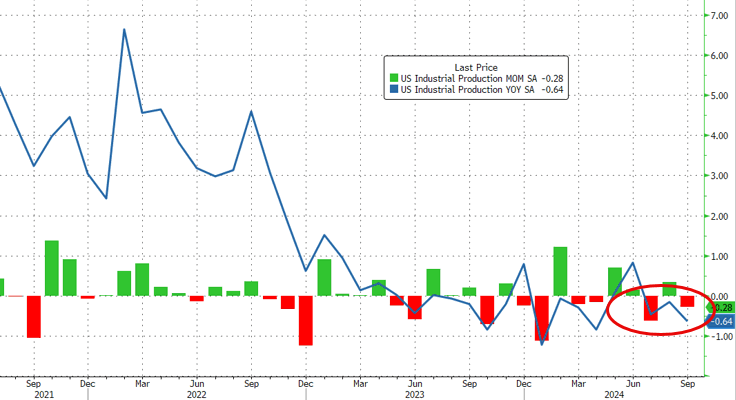
This helped drag US Industrial Production down 0.3% MoM and -0.6% YoY (the weakest since April) as August’s print was revised down…

Source: Bloomberg

A strike by aircraft machinists held down industrial production by an estimated 0.3%, while the effects of hurricanes Helene and Francine subtracted a similar amount, the Fed said.

Production of aerospace equipment tumbled 8.3% during the month.

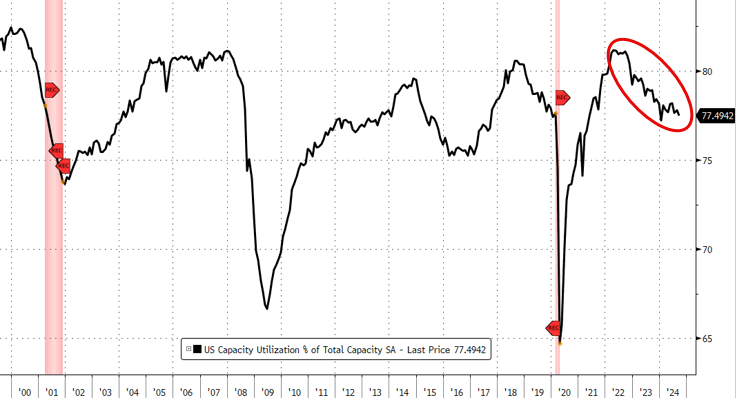
And this is all happening as Capacity Utilization tumbles to 77.5%

Source: Bloomberg

Mining and energy extraction slid 0.6%, while output at utilities increased for the first time in three months.

Does that looking a ‘no landing’ economy? Or is it all ‘transitory’ too?

Tyler Durden
Thu, 10/17/2024 – 09:28