58.1 F
Chicago
Monday, May 4, 2026
Home Blog Page 226

“The Plan Was To Kill Off Gold As Money…”

0
“The Plan Was To Kill Off Gold As Money…”

Authored by Alasdair Macleod via VonGreyerz.gold,

For years, bulls of gold and silver have complained about how derivatives have been used to suppress their prices. Their dreams of the practice ending could be coming true…

Introduction

If you think about it, there is a simple reason that derivatives for speculating or hedging gold is fatally flawed. It is because in nearly every nation’s common law, gold is money, and currencies are inferior credit, which is where payment risk actually lies. That the Western financial establishment is ignorant of this fact does not change the facts.

There is a good reason why this matters. Gold has lasted as legal money, and credit has been separately acknowledged to be deferred payment in money since Roman law. Since then, there have been many instances of governments denying these facts and promoting their currencies in the place of gold, which have always ended in their collapse.

In any price relationship involving a medium of exchange, there is an objective value and a subjective one. The objective value is always in the medium of exchange, and the subjective value is in the goods or services being exchanged. Put another way, the buyer and seller will both value money or its substitute the same, but the buyer values the goods or services more highly than the seller: otherwise, the exchange won’t take place. But if gold is the money, where does that leave a fiat currency?

Clearly, if the currency is not a credible gold substitute, then it should bear the subjective value relative to gold. That it is not regarded this way is partly due to government anti-gold propaganda, but mainly due to accounting in the government’s currency for tax purposes. Furthermore, while a gold standard is always defined as a currency being exchangeable for a given weight of gold, for convenience it is referred to as so many currency units per gramme or ounce. This gives the erroneous impression that gold is being priced in the subordinate currency.

This is as may be, but in the knowledge that a fiat currency always fails while gold as money never does, the recognition of this reality will eventually kill off any derivatives when fiat currencies collapse. And if some derivatives survive, it should then refer to fiat currencies in terms of gold-grammes, or better still, in a credible gold substitute instead if one exists. 

Gold derivatives should not exist in the first place, except perhaps for seasonal agricultural produce — the original function. It should be borne in mind in the context of this article.

The plan was to kill off gold as money 

Following the inflationary seventies, which almost destroyed the post-1971 dollar-based fiat currency system, there can be little doubt that the deep thinkers in the US Treasury thought long and hard as to how to drive inflation out of the economy while promoting the dollar to kill off gold as money. The solution chosen came in three distinct policies. 

  • The first and most obvious was to reform the financial system so that the banks would wrest control of financial securities from the brokerage industry: this resulted in London’s big-bang, implemented by the Thatcher government in the mid-eighties at the US Treasury’s behest. A capital-starved securities industry would become turbocharged by bank finance, ensuring a perpetual bull market in financial asset values, including government debt, and ensuring everlasting demand for dollars.

  • The second was to reform statistical calculation for key economic indicators, such as consumer price inflation and jobless figures, giving a measure of government control over them to create the illusion of currency stability. Not only was the indexation cost of pensions and welfare thereby contained, but interest rates were permitted to be lower than they would otherwise be. All economic statistics are produced by government agencies who control this information.

  • The third was to sanction and encourage derivative markets to expand, and by doing so divert speculative demand from physical markets for gold. This was to prevent gold prices from being driven higher, threatening the status of the dollar as a medium of exchange. It was the basis of the massive expansion of gold trading on the LBMA, and of gold futures under the control of the large US banks, which would occasionally act as agents for the Exchange Stabilisation Fund.

In London, 44 million ounces were cleared daily in 1998 on the London Bullion Market, valued at approximately $13 billion at that time. Last December, 17 million ounces were cleared, but at higher prices, they were valued at $71 billion. It should be noted that outstanding forward commitments measured by their average duration in days are unrecorded multiples of daily settlement. 

The falling settlement numbers in London from 44 million to 17 million, while the value of the settlement rose 4.5 times, illustrates the problem paper markets now face. On Comex, which has the same problem, this is demonstrated by the gross and net short position of the Swaps category, which is comprised mainly of bullion bank traders:

Between 2010 and 2018, the average gross short position was $15bn, compared with $112bn today. And the net position averaged $7bn, compared with $90bn currently.

This particularly matters because physical gold is now being drained out of London and New York directly or indirectly by a combination of central bank and wider Asian demand. While London faces a developing liquidity crisis of available gold bullion, Comex has a position which is proving impossible to contain, let alone from drifting into ever higher liabilities for bullion bank traders. 

In both markets, higher prices require increasing fiat capital to sustain positions. This fact alone is bound to restrict these markets’ ability to trade in the numbers demanded of them.

Hope that demand for physical gold will diminish, allowing the bullion establishment to initiate a raid on bullish speculators, is proving to be whistling into the wind, a wind blowing with increasing strength driven by a mixture of geopolitics and increasing credit risk facing the fiat dollar. In short, gold derivative markets are drifting towards the rocks of a crisis.

This matters because gold is central to everything, more so than the illusory dollar. Gold as money in possession has no counterparty risk, while the fiat dollar with increasing counterparty risk is of uncertain future value. The central banks accumulating bullion, as well as other Asian entities and individuals, are being motivated to rid themselves of this dollar uncertainty, choosing not to encash them for other currencies which are ultimately tied to the dollar’s credibility but for gold. 

The relationship between dollars and gold has been a conundrum for many since the suspension of the Bretton Woods Agreement in 1971. The western financial establishment has lost all compass as to which is money and which is credit, with most actors not even aware of gold’s central importance.

To illustrate this importance, the chart below shows average values for a range of industrial metals priced in dollars and gold, followed by a chart of oil similarly priced.

Priced in dollars, commodity and energy prices have risen multiple times and with great volatility, while they have been remarkably steady priced in gold. The point being made is that the approaching problems in paper gold contracts will almost certainly be transmitted into higher dollar prices for commodities generally, as paper hedging in the form of derivatives diminishes. And the catalyst for an implosion of commodity and energy derivatives is gold.

Just as derivatives have suppressed gold and other commodity values from the 1980s onwards, their ending is set to unleash an explosion of physical replacement demand. The contraction of outstanding commodity derivatives will not be without accidents. Banks will face enormous write-offs, and doubtless some rescues will have to be arranged by the authorities. And there’s no guarantee that other derivative markets, such as interest rate swaps and fore,x will go unscathed because of the commonality of derivative counterparties.

The rise in values for gold and commodities generally is the same thing as a decline in the value of the dollar for the purpose of dealing in commodities. Foreign holders of dollars will be acutely aware of the consequences, dumping dollars increasingly to hoard commodities.

Looking at oil and base metal values, they are already relatively cheaply priced in gold. Or put the other way, being moderately expensive gold appears to have begun to discount a wider currency crisis, while these commodities have not yet. 

Forced by global markets, as opposed to those under the control of the US authorities, the wisdom of ancient Roman lawmakers in framing the origin of all their successor nations’ common law is being reaffirmed. The error being corrected today is the accumulation of fiat currency distortions of the last fifty-five years, which looks like it is coming to a financially violent end.

Tyler Durden
Thu, 02/19/2026 – 08:05

Airbus Shares Hit Turbulence After Dismal Delivery Outlook

0
Airbus Shares Hit Turbulence After Dismal Delivery Outlook

Shares of Airbus SE plunged as much as 8% in Paris trading after the aerospace and defense group guided to 870 commercial aircraft deliveries for 2026, well below the Bloomberg Consensus estimate of 896. Airbus blamed the softer outlook on the lack of reliable engine supplies for its A320 family of jets.

UBS analyst Tricia Wright said fourth-quarter results were in line, but the 2026 guidance was at the low end of expectations, and long-term production targets were downgraded.

“While the possibility of a long-term production rate target downgrade had been discussed by investors, 2026 guidance is also below the expectations of most investors we spoke to—880 deliveries, €7.5–8 billion EBIT, and €5–5.5 billion FCF,” said UBS analyst Ian Douglas-Pennant. The analyst reiterated his “buy” rating on Airbus.

The lower guidance was largely due to what CEO Guillaume Faury called a “significant” shortage of engines from Pratt & Whitney. He said this forced the planemaker into a mad dash to meet last year’s delivery target, which was ultimately lowered in the final weeks of the year.

Pratt & Whitney’s failure to commit to the number of engines ordered by Airbus is negatively impacting this year’s guidance and the ramp-up trajectory,” Airbus wrote in a statement.

Here’s a snapshot of the 2026 full-year forecast (courtesy of Bloomberg):

  • Sees commercial aircraft deliveries of about 870 planes; estimate 895.74 (Bloomberg Consensus)

  • Sees adjusted EBIT of about €7.5 billion; estimate €8.19 billion

  • Sees adjusted free cash flow of about €4.5 billion; estimate €5.68 billion

Goldman analyst Jeremy Elster commented on bearish technicals developing for the planemaker:

AIRBUS trading down -8%, breaking 200dma and breaching lows of recent range –

Feedback: guide came in at lower end – per comment yesterday; at €200 I would argue the shares are pricing in an €~8bn ebit guide. At closer to €190 we had more fully priced >€7.5bn. Feedback is mostly arguing to defend this as yet another Airbus “clearing event”, but it is clear that conviction is fragile in the currently rather volatile tape.

In the numbers: headline item is ’26 guide at 870 aircraft, ebit “around 7.5bn”, and cash flow “around 4.5bn”. Implied consensus downgrade is m to hsd. The company cite continued “failure to commit” from Pratt as holding up engine deliveries. The ramp-up guide is tweaked to now assume rate 70-75 by the end of 2027 (previously 75) and to stabilise at rate 75 “thereafter” (consensus has rates reaching this cadence only in ’29/30).

After the call – a few more reasons for optimism than is typical from Airbus. Key soundbites:

  • “guidance does not reflect any concern on a per aircraft basis. the margins are healthy”.

  • “FCF main impact is Spirit now being worse because of late deal close leading to spill over into ’26”

  • Engines (the key topic) – “Pratt issues will mainly impact ’26 and to some extent ’27”. “we continue to pursue reaching rate 75 by end of next year, but due to uncertainty on engine volumes we changed the guide to 70-75″… “as we navigate the relationship with Pratt we want to preserve the possibility to have better news at a later stage”. 

Shares of Airbus in Paris tumbled as much as 8.1% following the downgraded full-year update on aircraft deliveries.

Elster noted, “Airbus looking technically fragile, despite an update that could / should have reassured…” 

Airbus deliveries in January fell to their lowest level since 2020, marking the weakest start to a year in at least a decade. By contrast, rival Boeing has continued to recover from yearslong 737 MAX crisis and recently posted its highest commercial aircraft deliveries since 2018.

Tyler Durden
Thu, 02/19/2026 – 07:45

Former Prince Andrew Arrested In UK Probe Into Suspected Epstein-Linked Misconduct In Public Office

0
Former Prince Andrew Arrested In UK Probe Into Suspected Epstein-Linked Misconduct In Public Office

BBC News reported that Andrew Mountbatten-Windsor, formerly known as Prince Andrew, was arrested early Thursday morning on suspicion of misconduct in public office, amid allegations he shared confidential government trade documents with the late Jeffrey Epstein. The Epstein fallout continues to spread by the day, rattling not just governments but also the corporate world.

Six unmarked police cars arrived at Wood Farm, Andrew’s new residence on King Charles’ Sandringham estate in Norfolk, eastern England, shortly after 0800 local time.

The Thames Valley Police released a statement shortly after the arrest, confirming that it “arrested a man in his sixties from Norfolk on suspicion of misconduct in public office and are carrying out searches at addresses in Berkshire and Norfolk.”


“As British law requires, the police did not name the suspect, but the details provided in the police report match what is known about the public misconduct allegations,” the New York Times noted.

BBC Radio 5 Live’s Danny Shaw said the longest Andrew can be held in police custody is 96 hours, noting that, in most cases, suspects are held for 12 to 24 hours.

Shaw said Andrew will be placed in “a cell in a custody suite” with just “a bed and a toilet”, where he will wait until his police interview, adding, “There’ll be no special treatment for him”.

Dal Babu, former Metropolitan Police Chief Superintendent, told BBC News that concerns had been “growing and growing” over the last few weeks regarding Andrew. This comes as the US Department of Justice has dumped millions of files related to Epstein – read the latest probe here.

Babu said the arrest means police will be “able to access computer equipment, files, photographs, and any other evidence” and “can carry out searches of any premises he owns or occupies, or any other premises he controls, so there may well be searches in other areas as well”.

BBC’s Lucy Manning provided more color on what the investigation centers around:

My understanding is that there’s been a very significant development in the investigation into the Epstein files. Andrew Mountbatten-Windsor has been arrested this morning on suspicion of misconduct in public office.

That goes back to documents from when he was a trade envoy, that are alleged to have been passed to Epstein.

. . .

It’s Thames Valley Police who have been looking into these allegations against Andrew Mountbatten-Windsor.

They have been looking into allegations of misconduct in public office and allegations that a second woman was sent to the UK by Jeffrey Epstein for a sexual encounter with Andrew Mountbatten-Windsor.

My understanding is that this arrest is just about the misconduct in public office and obviously a very significant moment that the former prince has been arrested.

He has previously strenuously denied any wrongdoing on any of these matters related to Epstein.

*Developing…

Tyler Durden
Thu, 02/19/2026 – 07:20

Epstein Ally Was Talking To Feds About Flip, Wanted $3 Million To Keep Quiet, Then Backed Off Deal

0
Epstein Ally Was Talking To Feds About Flip, Wanted $3 Million To Keep Quiet, Then Backed Off Deal

French modeling agent Jean-Luc Brunel – whose network delivered new girls from around the world to Jeffrey Epstein on a regular basis, was prepared in 2016 to tell U.S. prosecutors what he knew about Epstein’s sex-trafficking operation. According to newly released files from the DOJ, the now-deceased Brunel’s lawyer was negotiating with attorneys for Epstein’s victims about a possible meeting with federal prosecutors in New York in exchange for immunity – and Epstein knew it. And of course, Goldman Sachs (soon to be ex-) General Counsel Kathy Ruemmler is involved.

Jeffrey Epstein and Jean-Luc Brunel in an undated photo. Justice Department

According to handwritten notes taken by a federal prosecutor in February 2016 state: “One of Epstein’s bfs, Jean Luc Brunel, has helped get girls. He is wanting to cooperate.” The notes add: “Brunel is afraid of being prosecuted,” the Wall Street Journal reports.

Notes by a federal prosecutor in 2016 regarding potential testimony by Brunel. Justice Department

The discussions contemplated a date for Brunel to walk into the U.S. Attorney’s office in Manhattan. His lawyer said Brunel had recruited girls for Epstein and possessed incriminating photographs, according to the notes.

Then Brunel stopped communicating.

The files indicate that Epstein learned negotiations were underway. On May 3, 2016, Epstein emailed Ruemmler, a top Obama administration attorney who recently announced her resignation over the friendship. Epstein warned that Brunel planned to approach the U.S. Attorney’s office the following week – noting that one of Brunel’s friends had “asked for 3 million dollars so that Jean Luc would not go in.”

Epstein said Brunel feared arrest if he did not appear. “I want to know more,” he wrote, dismissing Brunel’s lawyer and friend as “scammers.”

Ruemmler replied hours later, asking Epstein to call and explain. The next day she wrote: “Awake now. Talking to Poe in 20 mins.” Gregory Poe was Epstein’s lawyer in Washington, D.C.

Poe claims he didn’t speak with Ruemmler or Epstein about Brunel “on May 4, 2016 or at any other time,” telling the Journal that he had a scheduled call that day with Ruemmler about his work on a motion to quash a subpoena directed at Epstein. “My engagement by Jeffrey Epstein was limited,” Poe said, adding that he terminated work for Epstein in August 2016.

It remains unclear why Brunel ultimately declined to cooperate, or whether Epstein gave him $3 million not to. What is clear from the files is that no investigation was opened at the time. A 2021 government court filing states that the prosecutor who took the February 2016 notes discussed the meeting with colleagues at the U.S. Attorney’s office and the FBI, but no probe was initiated. The notes referencing Brunel were redacted in that filing. A spokesman for the U.S. Attorney’s office in New York declined to comment.

Epstein and Brunel during a birthday party for Epstein. Justice Department

Epstein remained free for another three years, until his arrest in 2019. He died in a New York jail cell later that year in what the city’s medical examiner ruled a suicide.

“It set us back a couple of years,” said David Boies, an attorney who filed civil suits on behalf of Epstein victims, referring to Brunel’s decision not to cooperate. “We know from our lawsuits that there were more than 50 girls that were trafficked after this.

Brunel occupied a central place in Epstein’s orbit. As head of a U.S.-based modeling agency, he recruited foreign girls and young women, secured work visas and provided the appearance of legitimate employment, according to the files. He traveled on Epstein’s private jet, visited his private island and exchanged hundreds of emails with him.

Federal prosecutors in New York were briefed in 2016 on details of Epstein’s trafficking scheme, including allegations that Brunel, Ghislaine Maxwell and others recruited dozens of underage girls, the handwritten notes show. The Justice Department did not move on Epstein until after a Miami Herald investigation in late 2018 renewed scrutiny of his earlier plea agreement in Florida.

When Epstein was arrested in 2019, Brunel and Maxwell were identified as co-conspirators in the FBI investigative file, according to the documents. Maxwell was convicted in 2021 and is serving a 20-year prison sentence.

Joseph Titone, Brunel’s attorney, said he advised his client to cooperate with authorities and cut ties with Epstein. “I recommended and advised him to stop communicating with Epstein, but he never did,” Titone said.

Brunel was arrested in France in 2020 on allegations of rape and supplying girls to Epstein. He died in jail in 2022. Prosecutors in Paris said Saturday they would re-examine the case and create a special team to analyze evidence that could implicate French nationals.

Ruemmler has said she never represented Epstein and regretted her association with him. A spokeswoman, Jennifer Connelly, said, “This was another instance of Epstein attempting to engage Ms. Ruemmler on a matter about which she had no knowledge, and she appropriately directed him to his legal counsel.” Connelly declined to specify which counsel.

As details of Ruemmler’s communications with Epstein became public in the recent files, she said last week she would resign in June from her position as general counsel of Goldman Sachs.

A Modeling Agency as Pipeline

Brunel was always a creep, even before he met Epstein. In 1988, CBS’s “60 Minutes” aired an investigation featuring women who said they were drugged by Brunel and pressured to have sex with his associates to obtain modeling work. One woman alleged on camera that Brunel had drugged and raped her. No criminal charges were filed, and Brunel denied the allegations.

By the early 2000s, Brunel and Epstein had developed a close relationship. Flight logs show Brunel frequently traveled on Epstein’s private jet beginning around 2000.

In 2005, Epstein wired up to $1 million to help Brunel launch MC2 Model Management, which opened offices in New York and Miami. According to the report, the MC2 was an inside joke, referring to the equation E=MC², with the E referring to Epstein.

According to the new files, Epstein used the agency to procure women and as a payroll vehicle. Emails from July 2006 show Epstein instructing Brunel to put a woman “on your payroll” at a $50,000 annual salary. When Brunel asked whether the woman should scout models, Epstein replied: “Start salary as soon as possible.” He added that he would be in Paris the following week and “could see her then.”

After Epstein pleaded guilty in Florida in 2008 to procuring a minor for prostitution and served jail time, Brunel visited him nearly 70 times, according to jail logs.

Control Through Visas and Debt

Following his 2006 arrest in Florida, Epstein focused on recruiting women in their late teens and 20s from Europe and Russia, the files indicate. Dependent on work visas, housing and financial support, they were vulnerable to control.

In June 2012, Joshua Fink – son of BlackRock CEO Larry Fink – emailed Brunel about an MC2 invoice concerning a ‘model’ he was ‘dating’… Brunel said he would suspend billing. When Brunel forwarded the exchange to Epstein, Epstein replied: “Talk to me first please.”

The invoice related to a work visa through the agency. The woman had forwarded chat logs with Fink to Epstein, including messages in which Fink wrote: “And with your visa, I have no idea what it is I can do beyond pay your agency to supplent (sic) your income and theirs because you are not getting work as a model.”

Fink said he met the woman at a dinner party and had a romantic relationship lasting about a year. “I had no relationship with Epstein or Brunel,” he said. “I am totally shocked that she was forwarding electronic correspondence to Epstein.” He said he loaned her money to settle debts with the agency.

“It was a personal relationship, and personal things happen,” Fink added. 

The woman told the Journal she felt trapped in a web of abuse controlled by Epstein and Brunel. After signing with MC2 and obtaining a work visa, she said, modeling jobs dwindled while fees mounted. She described the relationship with Fink as consensual and a potential escape. She said Epstein blocked plans for Fink to meet her in Paris to discuss marriage, and the relationship ended.

Brad Edwards, a lawyer representing more than 200 Epstein victims, said, “Epstein’s wealth and power allowed him to infiltrate industries, perhaps most pervasively the modeling industry. He found in Jean-Luc a like-minded predator with whom he could conspire on a daily basis to recruit and control the lives of countless young women, including Jane Doe.”

Fracture and Reconciliation – a ruse?

In 2014, Virginia Roberts Giuffre filed a motion alleging Brunel trafficked girls as young as 12 to his associates, including Epstein. As public scrutiny intensified, Brunel and MC2 sued Epstein in Florida in January 2016 – claiming the agency’s value had collapsed due to notoriety surrounding Epstein. The suit alleged up to $10 million in lost profits and difficulty recruiting models.

Titone later contacted Edwards, suggesting Brunel might possess photographic evidence against Epstein. Victims’ attorneys, including Stan Pottinger and Boies, relayed information to federal prosecutors.

By early 2016, Brunel appeared ready to cooperate. The Feb. 29, 2016 notes state: “Titone says his client has photographic evidence.” They also note: “Brunel doesn’t want to implicate himself.

Epstein and Brunel with women whose faces have been redacted. Justice Department

On May 3, 2016, Pottinger wrote to a prosecutor referencing Daniel Siad, whom Brunel described as a recruiter for Epstein. Emails show Siad updating Epstein about potential recruits and writing, “please send me the details of the girls names etc.” In another message, Siad compared recruiting to fishing: “In This busyness I feel like fisherman some time I cache quick , some time no fish.” He itemized expenses of 2,700 euros.

Siad later said in a video broadcast in France that he introduced models to Epstein professionally. “With time, we have learnt that he committed atrocities,” he said.

The breach between Brunel and Epstein proved temporary (perhaps as designed). By April 2015, Brunel proposed mediation, and Epstein wrote: “I have some ideas. that I think you will like.” Titone said the lawsuit was eventually settled under confidential terms.

When Epstein was found dead in 2019, Brunel went into hiding. French police arrested him in December 2020 as he attempted to board a flight to Senegal. He was charged with sex crimes and, in February 2022, was found hanged in his prison cell.

The Justice Department files suggest that in 2016, a potential turning point slipped away. Brunel did not walk into the U.S. Attorney’s office. The investigation did not advance. And Epstein continued recruiting victims for years afterward.

Tyler Durden
Thu, 02/19/2026 – 06:55

IEA Chief Warns Fracturing Global Order Is Splintering Energy Policy

0
IEA Chief Warns Fracturing Global Order Is Splintering Energy Policy

By Irina Slav of OilPrice.com

A fracturing in the “global order” is threatening the harmony in energy policies, the head of the International Energy Agency has warned.

“We see a fracturing in the global political order in general, and there are, of course, reflections of that on the energy scene. Different countries are choosing different paths in terms of energy and climate change,” Birol told the Financial Times in an interview.

The warning follows the U.S. Environmental Protection Agency’s removal of the so-called endangerment finding, which served as the basis for climate change-focused policies passed in significant numbers during the Biden administration.

The finding stipulated that carbon dioxide, methane, and four other gases were harmful to people’s health and well-being.

This was the latest move by the Trump administration to dismantle Biden’s climate regulations and legislation as it prioritizes energy security—and energy dominance—over emission reduction.

Yet even the European Union, which consistently states emission reduction is still priority number-one, has been walking back some of its new regulations and commitments, under pressure from the business world, which has been bearing the cost of those commitments, alongside consumers.

The 2035 ban on internal combustion engine cars, for instance, has been renegotiated and is no longer a done deal, and now the authorities in Brussels are mulling over ways to reduce energy costs for industrial consumers in a bid to prevent the complete deindustrialization of the bloc.

A revision of emission permit trading is also on the agenda, with the chemicals industry calling for an urgent revamp of the system and a cancellation of the planned phaseout of free carbon permits.

Climate change was “moving down the international policy agenda,” Birol said this week, summarizing the latest trends in energy policies.

That move down the agenda has even reached China, which this year reduced subsidies for electric vehicles, which immediately affected sales, leading to a 20% monthly drop.

Tyler Durden
Thu, 02/19/2026 – 06:30

Waste Piles Up In Cuba, Blackouts Worsen, As Lavrov Pleads To US For ‘Brotherly Nation’

0
Waste Piles Up In Cuba, Blackouts Worsen, As Lavrov Pleads To US For ‘Brotherly Nation’

Speaking to reporters early this week, President Trump touted his tightened embargo on Cuba, pointing to moves to choke off Venezuelan oil flows and pressure Mexico to halt crude exports to the island – steps that have triggered acute fuel shortages and near total airline stoppages at Havana’s main international airport.

“Cuba is right now a failed nation, and they don’t even have jet fuel for airplanes to take off, clogging up their runway, Trump said aboard Air Force One. Trash is also piling up across cities in neighborhoods, as there’s literally not enough gas to power the trucks.

Trump added that his administration is engaged in discussions with Cuban officials, who are feeling the pressure. However, a recent report in Drop Site News has alleged that Secretary of State Marco Rubio is blocking those contacts while telling the president they are underway.

via Associated Press

Below is the heart of what was reported last week in Drop Site:

When it comes to Trump’s claims of those talks, it turns out he isn’t lying. Instead, sources tell Drop Site, he’s being lied to. “He’s saying that because that’s what Marco is telling him,” said a senior Trump official, referring to an internal effort by Secretary of State Marco Rubio to make Trump believe that the U.S. and Cuba are engaged in serious negotiations without ever doing so. The idea, the source said, is that in a few weeks or months, Rubio will be able to claim that the talks were futile because of Cuban intransigence. With diplomatic off-ramps being blocked, this would make Rubio’s vision of regime change the only path forward for an administration loath to reverse course on anything.

Asked about the fact that Rubio is misleading Trump about talks that aren’t going on, the State Department’s press office stood by the claim that such negotiations are indeed happening, forwarding along comment from an administration official: “As the President stated, we are talking to Cuba, whose leaders should make a deal. Cuba is a failing nation whose rulers have had a major setback with the loss of support from Venezuela and with Mexico ceasing to send them oil.” The statement offered no evidence the talks are taking place, named no officials participating, no dates of any meetings, nor did it identify a location where the supposed talks are happening.

But it’s clear that Cuba is in a very tight spot, after US accomplished Maduro’s overthrow nearby, and as the Pentagon’s military might is now threatening Iran in similar fashion. Cuba has few allies left standing, with one big exception.

Russia is urging that the United States abandon its naval blockade on the communist-run island, stressing that more room must be given for legitimate negotiations.

Russian Foreign Minister Sergei Lavrov told his Cuban counterpart Bruno Rodriguez on Wednesday that Cuba is “a brotherly nation” – according to Reuters.

The Cuban FM visited Moscow Wednesday. This as blackouts and severe fuel shortages have only been compounded by the US oil emargo.

“Together with most members of the international community, we call on the United States to show common sense and responsibility and refrain from plans for a naval blockade of the Island of Freedom,” said Lavrov. “We categorically reject the unfounded accusations against Russia and Cuba and our cooperation, which allegedly pose a threat to the interests of the United States or anyone else.”

Washington has indeed been hyping Cuba as a major threat, which going all the way back the Cold War has been brought to its knees after decades of sanctions. US officials have long warned of Russian and Chinese geostrategic and military inroads into America’s backyard via Cuba. Moscow is flatly denying that this is a reality, however.

Meanwhile, the embargo of the island is unleashing another big problem for the population: “The United States-imposed fuel crisis in Cuba is also turning into a waste and health crisis, as many collection trucks have been left with empty fuel tanks, causing refuse to pile up on the streets of the capital, Havana, and other cities and towns,” Al Jazeera reports.

Only 44 of Havana’s 106 rubbish trucks have been able to keep operating due to the fuel shortages, slowing rubbish collection, as waste piles up on Havana’s street corners, the Reuters news agency reported on Monday, citing state-run news outlet Cubadebate,” the outlet details.

Tyler Durden
Thu, 02/19/2026 – 05:45

UK Ad Banned For Showing Black Harasser; Multiple Ads With White Harassers Were Just Fine

0
UK Ad Banned For Showing Black Harasser; Multiple Ads With White Harassers Were Just Fine

Authored by Steve Watson via Modernity.news,

In a glaring display of selective outrage, Transport for London (TfL) has yanked an advert depicting a black teenager harassing a white girl on a bus – all because of a single complaint crying “racial stereotypes.” Meanwhile, multiple past ads, all featuring white men as the aggressors, were approved, exposing the double standards that shield uncomfortable realities from public view.

The controversial ad was part of TfL’s “Act Like a Friend” campaign, aimed at encouraging bystanders to intervene in cases of sexual harassment or ‘hate crimes’ on public transport.

In the short clip, a black teenage boy verbally harasses a young white girl, with his white friend sitting nearby, effectively boxing her in. But according to the Advertising Standards Authority (ASA), this portrayal – when viewed in isolation – “reinforced a negative racial stereotype” associating black males with threatening behavior.

The ASA’s ruling came after just one complaint, deeming the ad “irresponsible” and likely to cause “serious offence.”

They stated: “We understood there was a negative racial stereotype based on the association between black males, including teenagers, and threatening behaviour. […] The ad, when seen in isolation, had the effect of perpetuating a negative racial stereotype about black men as perpetrators of threatening behaviour.”

TfL was ordered to ensure future ads avoid such “harmful stereotypes.”

TfL even defended the campaign, noting it featured a diverse range of scenarios to reflect London’s population. Other cut-downs included a white male committing a hate crime against a black woman and another white male targeting a white male victim.

Ah yes, but any instance of a black person being the aggressor must be purged. That is not allowed, because clearly it NEVER happens in London and it’s racist. OK?

TfL issued a an apology, with a spokeswoman remarking “Our aim is to ensure that our advertising reflects London’s diverse population and does not perpetuate any stereotypes. […] We’re sorry that this social media advert […] falls below our usual high standards when viewed in isolation.”

Of course, similar government anti-harassment ads have repeatedly cast white men as the sole perpetrators, with diverse victims – and that seems to be just fine.

White villains are fair game, but anything else gets labeled a “negative racial stereotype.”

This episode underscores the woke stranglehold on media and advertising. In a city where harassment reports surge amid unchecked borders, honest campaigns should be encouraged, not censored. The left’s obsession with “equity” blinds them to actual threats, leaving women – especially native Brits – more vulnerable.

TfL’s quick capitulation to one complaint shows how easily truth is suppressed. If ads with white harassers face no backlash, why the uproar here? It’s a clear case of protecting narratives over people.

Your support is crucial in helping us defeat mass censorship. Please consider donating via Locals or check out our unique merch. Follow us on X @ModernityNews.

Tyler Durden
Thu, 02/19/2026 – 05:00

Beijing Blasts Trump After US Releases New Details On Alleged 2020 Chinese Nuclear Test

0
Beijing Blasts Trump After US Releases New Details On Alleged 2020 Chinese Nuclear Test

Update: Despite the Lunar New Year holiday, Beijing has made it known it is not best pleased with Washington digging up Nuke blasts from the past.

Issuing a statement via state mouthpiece (@HuXijin_GT), the CCP suggested an ulterior motive for the timing of this announcement:

Trump is eager to resume nuclear testing and needs a plausible reason, and accusing China of conducting nuclear tests is the perfect pretext.

Assistant Secretary of State Christopher Yeaw stated on Tuesday that the US is prepared to conduct low-yield nuclear tests in response to alleged secret nuclear tests by China and Russia.

The US is being far too hasty; having just fabricated rumors that China conducted an explosive nuclear test nearly six years ago, they are already announcing their own low-yield nuclear test.

Washington’s motives for spreading these rumors are too clear; they can’t even be bothered to feign it.”

Hard to disagree with the latter point.

*  *  *

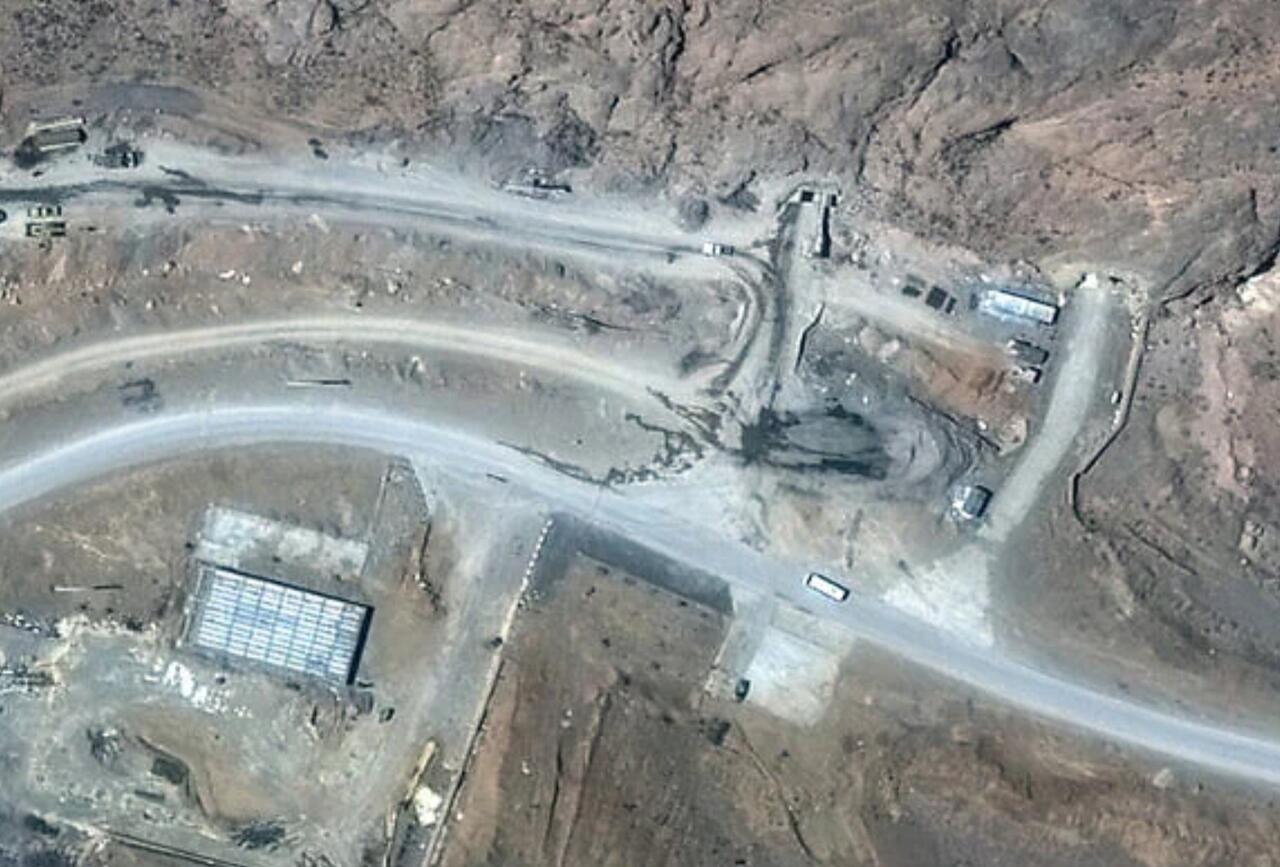
As Kimberley Hayek detailed earlier via The Epoch Times, a senior State Department official released additional evidence Tuesday in support of U.S. allegations that China conducted an underground nuclear test in June 2020, as global arms control frameworks unravel.

Assistant Secretary of State Christopher Yeaw, while speaking to a Hudson Institute meeting, discussed data from a remote seismic station in Kazakhstan that recorded a magnitude 2.75 “explosion” approximately 450 miles from China’s Lop Nur test grounds on June 22, 2020.

“I’ve looked at additional data since then. There is very little possibility I would say that it is anything but an explosion, a singular explosion,” Yeaw said, underscoring that the data were not consistent with blasts from mining.

“It’s also entirely not consistent with an earthquake,” said Yeaw, a former intelligence analyst and defense official who holds a doctorate in nuclear engineering. “It is … what you would expect with a nuclear explosive test.”

Yeaw argued that China tried to hide the event through decoupling, detonating the device in a spacious underground cavity to diminish seismic waves.

Under Secretary of State for Arms Control Thomas DiNanno earlier this month accused China of performing such secretive nuclear arms tests and implementing measures to restrict seismic evidence.

“Today, I can reveal that the U.S. Government is aware that China has conducted nuclear explosive tests, including preparing for tests with designated yields in the hundreds of tons,” DiNanno said.

These claims back up Yeaw’s assertions of concealment tactics.

The Comprehensive Nuclear-Test-Ban Treaty Organization, which monitors global explosions, noted that available data do not allow for firm conclusions.

Executive Secretary Robert Floyd said in a statement that the seismic monitoring station in Kazakhstan captured “two very small seismic events” 12 seconds apart on June 22, 2020.

The organization’s network detects events equivalent to 551 tons (500 metric tons) of TNT or more, according to Floyd.

“These two events were far below that level,” Floyd said. “As a result, with this data alone, it is not possible to assess the cause of these events with confidence.”

China, a signatory to the 1996 Comprehensive Nuclear-Test-Ban Treaty but not a ratifier, rejected the initial U.S. accusation at an international conference this month. Beijing’s last acknowledged underground test occurred in 1996.

The United States, which also signed but did not ratify the treaty, is legally bound to its terms under international norms. America’s final underground test was in 1992, with subsequent reliance on sophisticated simulations and supercomputers for warhead maintenance.

President Donald Trump recently called on China to take part in trilateral talks with Russia to support the New Strategic Arms Reduction Treaty (New START), which ended Feb. 5.

China refused the invitation, arguing that its arsenal is far smaller than those of the United States and Russia. The Pentagon estimates China’s current operational warheads at more than 600. The stockpile is expected to exceed 1,000 by 2030.

The Federation of American Scientists, an organization working to minimize the risks of nuclear threats, tracks Russia as currently having 5,459 warheads, while the United States has 5,177.

The New START accord expiration removes caps on deployed strategic warheads and delivery vehicles, potentially accelerating buildups. Russia and the United States said they would informally observe limits.

Tyler Durden
Thu, 02/19/2026 – 04:15

Eni Considers Return To Oil Trading As Rivals Reap Billions

0
Eni Considers Return To Oil Trading As Rivals Reap Billions

By Charles Kennedy of OilPrice.com,

Italy’s Eni is considering reopening its oil-trading business as it misses out on the profits that its fellow European supermajors are generating from selling the commodities they produce, the company’s chief executive told the Financial Times.

“I stopped trading in 2019, but the other big companies are all traders,” Claudio Descalzi told the publication in an interview. “BP, Shell, Total are big traders, and they make billions from that.”

Indeed, trading has been especially profitable for the other supermajors, so Eni is pivoting via partnerships.

Descalzi told the FT that Eni was in preliminary talks with a number of commodity trading houses, including Mercuria.

“It is not in our DNA. We are not very commercial,” Descalzi explained.

“So I thought to become commercial, we have to have a partnership to understand the business.”

“If we can offer physical hedging, that is a big advantage for them. We can complement each other,” the chief executive of the supermajor added, noting the amount of oil and gas that Eni produces should make it an attractive partner.

Despite oil trading being a major profit source for Big Oil, Shell, for one, flagged a weaker performance of its trading division ahead of its fourth-quarter results announcement. BP also said its trading business has weakened over the final three months of last year.

TotalEnergies, meanwhile, recently sealed a trading joint venture deal with Bahrain’s BapcoEnergies backed by production flows from Bapco Energies’ refinery. The new entity is positioned as a competitive regional trading player, designed to maximize downstream value and broaden access to international markets for Bahraini oil products.

Big Oil, and especially European Big Oil, has recently pivoted away from its low-carbon energy ventures and back to its core business of producing and refining oil and gas amid slowing energy transition momentum. Shareholders are now pushing for growth as predictions for peak oil move into the more distant future.

Tyler Durden
Thu, 02/19/2026 – 03:30

Chinese EVs Flood Europe, Signals Hollowing Out Of Bloc’s Industrial Core

0
Chinese EVs Flood Europe, Signals Hollowing Out Of Bloc’s Industrial Core

The rapid growth of China’s electric vehicles on Europe’s streets and highways isn’t just a market share story. In fact, it’s an industrial security threat for the bloc. When Chinese manufacturers undercut domestic car brands, the damage goes well beyond margin pressure and shuttered production lines. The much larger and alarming issue is the hollowing out of Europe’s industrial core.

Goldman analyst Christian Frenes released the latest Chinese OEM Competition Monitor, which covers January registrations of Chinese EVs across Europe.

Even though Chinese brand EV sales softened in January, volumes remain elevated at 31,000 units in Jan-26 versus 40,100 in Dec-25 and 8,700 a year earlier, representing a whopping 257% year-over-year growth.

In Europe’s Big 5 markets (Germany, the United Kingdom, France, Italy, Spain), Chinese domestic brands nearly topped 5% of market share in January, up from 3.64% one year ago.

Market share growth of Chinese domestic brands outpaces that of local car companies.

Heading into 2026, we expect Chinese OEMs to further intensify their European expansion plans, e.g., BYD offering c.30% price discounts while aiming to double its volume in Germany this year,” Frenes said.

Here’s the demand of Chinese and local car companies for January.

Where these Chinese car brands are invading Europe.

Frenes highlights several key developments of Chinese brand expansion across the bloc:

  • Chery & Jaguar Land Rover (JLR): Chery is reportedly exploring a manufacturing partnership with JLR that would leverage spare capacity at JLR’s Halewood plant in the UK (link). The plant, which has an annual capacity of c.200,000 units, was significantly underutilized in the past few years. We estimate the average utilization rate at c.60%. This initiative would build on the existing Chery–JLR relationship, as the two companies have operated a manufacturing joint venture in China since 2012. Discussions reportedly involve the UK government and JLR leadership, and Chery has publicly highlighted the UK as a potential production base as part of its localization strategy. No definitive agreement has been announced.

  • Geely & Ford: Both companies are reportedly in advanced discussions for a partnership under which Geely would utilize Ford’s manufacturing facilities in Valencia, Spain (link). We estimate the average ulilization rate of this factory to be at c.70% over the last 5 years. This approach is consistent with Geely’s established strategy of partnering with other automakers, such as its existing deal with Renault to leverage their factories in South Korea and Brazil. No definitive agreement has been announced.

  • Uncertainty over reported suspension of BYD’s Turkey plant: BYD has reportedly halted plans for its USD 1bn EV factory in Manisa, Turkey. Media cites that a dispute over core technology transfer requirements, along with parliamentary scrutiny, may have contributed to the investment being paused. The statement was rejected by the Turkish Trade Minister while the company has not issued any official confirmation.

BYD is planning for explosive demand across the bloc this year.

Our assessment here is much deeper than just market share; the fact that Brussels is allowing this invasion to occur in the first place puts severe pressure on European OEMs and suppliers.

Anduril Industries founder Palmer Luckey outlined exactly this threat in a recent Joe Rogan podcast.

“If you let them (US car manufacturers) freely compete, like if you let them go toe to toe, China would be thrilled if they could subsidise their way into destroying the American automotive apparatus, partly for economic reasons. But there’s another reason,” Luckey said.

He continued, “How did the United States win World War II … Manufacturing – some of it was new factories, but most of it was taking over old factories.”

“We took all of our farm implement factories, like John Deere and Caterpillar. They were building tanks and guns. We took all our automotive factories. We had them building aircraft, we had them building weapons, we had them building missiles,” he said.

He said, “In fact, we even designed those weapons so they could be manufactured by those plants … We won because we had all of this automotive and other industrial capacity.”

Luckey warned, “China would love to wipe out the American automotive industry, partly for economic reasons, because it also means we will never be able to fight a war against them. Imagine in America with like, we’ve lost a lot of manufacturing … If China could wipe out our industrial capacity entirely, they never need to worry about fighting a war with the US again because they know that we wouldn’t be able to get back in the game fast enough to matter.”

It’s as if Brussels is allowing its own decline, whether by letting a flood of Chinese EVs pour onto European streets or by pursuing climate policies that have weakened reliable power generation and eroded core industrial capacity.

However, we do think the bloc is starting to recognize where this trajectory ends and, as the world fractures and the war in Eastern Europe grinds on. That reality was reflected last week, when industrial leaders urged Brussels to dial back its carbon pricing regime to restore competitiveness. 

Professional subscribers can read the full note Goldman on our new Marketdesk.ai portal​​​​

Tyler Durden
Thu, 02/19/2026 – 02:45