61.8 F
Chicago
Monday, October 5, 2026
Home Blog Page 2260

USA Remains The World’s Strongest Superpower

0
USA Remains The World’s Strongest Superpower

The global economic order is stitched together by trade and economic collaboration, but these show signs of fraying.

With nationalism on the rise and cross-border trade flows stagnating, economies are growing more protectionist. At the same time, demographic shifts are driving economic growth and productivity in India and Asia, which could shift the global power balance.

This graphic, via Visual Capitalist’s Dorothy Neufeld, ranks world superpowers in 2024, based on analysis from Ray Dalio’s Great Powers Index 2024.

The Strength of Major Nations in 2024

Below, we show the total strength of world superpowers, based on a wide range of metrics including economic output, military strength, and trade. Additionally, we show per capita strength, indicating a country’s efficiency relative to its population:

The U.S. remains the world’s foremost superpower, bolstered by its dominance in global financial markets and technological innovation.

The U.S. dollar’s influence is widespread. Today, it involved in 85-90% of foreign currency exchange trades, accounting for 59% of foreign exchange reserves, and comprising around half of cross-border bank loans. Moreover, U.S. stock market capitalization represents 61% of the global total.

As the world’s largest exporter, China follows next, driven by its strength in trade and economic output. As one example, trade with Latin America has surged from $18 billion in 2022 to $450 billion in 2022. Strengthening its global position further is China’s growing military might. Today, the country has the world’s largest naval fleet and a highly modernized defense sector.

India, ranking in 7th, is projected to see the fastest real GDP growth over the next decade across major economies. Powering its growth is vast infrastructure spending and a young demographic. Yet on a per capita basis, India falls last, likely due to lower average per capita incomes and an uneven distribution of wealth.

By contrast, Singapore has the highest score on a per capita basis, illustrating that the nation’s power is the most evenly distributed across its population. The island country is a global hub for finance and trade, while foreign direct investment is a key driver of economic growth.

To learn more about this topic from an economic growth perspective, check out this graphic on real GDP projections by country over the next decade.

Tyler Durden
Wed, 09/25/2024 – 07:45

The Kamala Harris Plan To Create More Housing Shortages

0
The Kamala Harris Plan To Create More Housing Shortages

Authored by Mike Shedlock via MishTalk.com,

If you want more shortages, then artificially stimulate demand. That’s exactly what Harris proposes, following the lead of AOC.

The Kamala Harris Plan

The National Low Income Housing Coalition discusses the Harris Campaign Plans to Lower Housing Costs.

To address the housing shortage and bring down prices for renters and homeowners alike, the Harris campaign’s plan calls for a historic expansion of the Low-Income Housing Tax Credit (LIHTC) and the first-ever tax incentive for homebuilders who build starter homes sold to first-time homebuyers. Building upon the Biden-Harris administration’s proposed $20 billion innovation fund, the campaign proposes a $40 billion fund that would support local innovations in housing supply solutions, catalyze innovative methods of construction financing, and empower developers and homebuilders to design and build affordable homes.

The campaign plan cites the Biden-Harris administration’s ongoing actions to support the lowest-income renters, including its actions to expand rental assistance for veterans and other low-income renters, increase housing supply for people experiencing homelessness, enforce fair housing laws, and hold corporate landlords accountable.

To make homeownership attainable, Vice President Harris’s proposal would provide up to $25,000 in down payment assistance for first-time homebuyers who have paid their rent on time for two years. First-generation homeowners – those whose parents did not own homes – would receive more generous assistance.

A Wall Street Journal Rebuttal

Please consider The Kamala Harris Plan for More Housing Shortages

A signature feature of Kamala Harris’s housing plan is providing first-time home buyers with $25,000 in down-payment support, at a total cost of $100 billion over four years. Absent a severe recession, this policy is all but certain to lead to higher home prices. That’s because the four million program recipients would become price setters for all buyers in their neighborhoods.

According to the American Enterprise Institute’s Housing Center, 77% of all home purchases would be subject to this home buyer “tax,” causing the price of these homes to increase by 3.6%. Over four years the increase in home prices would total $175 billion, more than the $100 billion cost of the program. The price increase would show up in higher revenue for sellers, thus acting as a wealth transfer to them.

The plan’s defects don’t stop there. Ms. Harris’s proposed tax incentive for building starter homes is intended to increase housing supply substantially. This approach has led to significant market distortions on at least two occasions.

The Housing and Urban Development Act of 1968, with its easy credit terms and substantial subsidies, resulted in a surge of housing permits in 1971 and 1972. By 1975 the housing boom had reversed, leaving lasting scars on cities including Detroit, Chicago and Cleveland. Similarly, the Federal Housing Enterprises Financial Safety and Soundness Act of 1992, which set affordable-housing goals, combined with Bill Clinton’s National Homeownership Strategy, led to credit liberalization in the runup to the 2008-09 financial crisis. Housing permits doubled, from 1.1 million in 1992 to 2.2 million in 2005, but then collapsed by 73% in 2009. In the aftermath, millions faced foreclosure, and the resulting housing-supply deficit still afflicts us today.

Without such dangerous credit easing, it is likely that Ms. Harris’s proposal would provide incentives largely for new homes that would have been built anyway, with any incremental construction being unevenly distributed across the nation. This would cause further imbalances between supply and demand.

History offers a cautionary tale against such federal interference in the housing market: From the 1930s to 2008, at least 43 housing, urban-renewal and community-development programs were signed into law. Despite these laws’ lofty goals, these initiatives consistently failed to make housing more affordable.

An Idiot’s Proposal

It is economic idiocy to believe that Giving people $25,000 to buy a house will do anything but raise prices.

On the supply side, the houses would either have been built anyway or the new construction will be shoddy.

We have had dozens of “affordable housing” programs over the years and if we include state and local efforts the plans number in the hundreds if not thousands.

Everyone of those plans raised prices or caused an economic crash.

Let’s now discuss the Harris plan to “increase housing supply for people experiencing homelessness“

Harris did not put a cost to that. We can look no further than California for the reason, as well as the likelihood of success.

A New High-Rise Building Will House the LA Homeless in $600,000 Units

Please recall my June 19, post A New High-Rise Building Will House the LA Homeless in $600,000 Units

A grand opening of Weingart Tower will have 278 units to shelter the homeless. Hooray!?

Beyond Insane Math

NBC news reports There are 75,518 people are homeless in the county, and 46,260 in the city of Los Angeles, an increase from the 69,144 in the county, and 41,980 the city from 2022 as of Jan 23, 2023.

$600,000 * 278 = $166,800,000. That’s $166.8 million. And that does not include free property taxes, case workers, maintenance, utilities, insurance, food, police, clothes, doormen, or medical care.

If the county were to shelter the 75,518 homeless, the cost would be $45,310,800,000. That’s $45.3 billion, again excluding free property taxes, case workers, maintenance, utilities, insurance, food, police, clothes, doormen, or medical care.

And it would not stop there. Every homeless person in the state would move their tent to LA to participate.

Affordable Housing

This dear woke fans is what’s known as “affordable housing”.

Taxes have to rise to accommodate such stupidity. It makes me angry just thinking about this. For what? Does the city think this will cure the homeless problem?

Most of these people are some combination of drug addicts, alcoholics, mentally unstable, and physically unfit to ever work. And even if they did work, they would not be living in $600,000 units.

California Proposes Restraining Orders to Stop Thieves

More and more headlines look as if they are from the Babylon Bee.

On June 17,I commented Hoot of the Day: California Proposes Restraining Orders to Stop Thieves

What’s going on in California is beyond insane.

Also see Twenty Percent of California Lives in Poverty, What’s Going On?

On a cost-adjusted basis, California leads the nation in percentage living in poverty. Blame the Progressive oligarchs like Governor Newsom.

Green New Housing Deal

In case case you don’t see where this is headed, let me spell it out for you:

Harris has adopted AOC’s New Green Deal for Public Housing

My hoot of the day is AOC and Bernie Sanders have teamed up for a new green housing deal. I explain where we are and what’s on deck.

How Much Would This Cost?

AOC says the bill would invest up to $234 billion over a decade into “weatherizing, electrifying, and modernizing our public housing”.

Don’t kid yourself, the whole policy would cost many trillions of dollars.

The Harris sucker pitch is to start out small then add trillions of dollars more when she discovers free $25,000 down payments were not quite enough to reduce costs.


Tyler Durden
Wed, 09/25/2024 – 07:20

Visualizing The Extreme Cost Of Training AI Models

0
Visualizing The Extreme Cost Of Training AI Models

The cost of training AI models has exploded in just the past year, according to data released by the research firm Epoch AI. 

This development aptly shows how much more complex and capable AI models have gotten in a short time span.

Last year saw the release of ChatGPT-4 in March by OpenAI, which kickstarted the global AI hype. Google followed suit with its advanced AI model, Gemini, in December.

As Statista’s Katharina Buchholz reports, both systems have been much more expensive to train than previous AI models and their development has potentially cost hundreds of millions of dollars, according to the Epoch AI release.

Infographic: The Extreme Cost of Training AI Models | Statista

You will find more infographics at Statista

The cost of training Gemini, which is a large language model that can be inputted with text, voice commands and images, reportedly stood between $30 and $191 million even before taking staff salaries into consideration.

According to Epoch AI, these can make up 29 percent to 49 percent of the final price. ChatGPT-4, the latest edition, had a technical creation cost of $41 million to $78 million, according to the source. Sam Altman, CEO of OpenAI, has in the past said that the model has cost more than $100 million, confirming the calculations.

Looking back, the cost of earlier AI models was much lower. ChatGPT-3 cost only around $2 million to $4 million make in 2020, while Gemini’s precursor PaLM in 2022 took between $3 million and $12 million to train when only looking at the cost of computing.

Even at these price points, keeping up with cutting-edge AI development might have proved difficult for academic or other public institutions that have traditionally been active in AI research.

While it was updated to support voice and images in fall 2023, ChatGPT-4, like its name suggests, started out based around its central text input, while Gemini and its app have been designed as a multimodal LLM from the get-go.

This explains why ChatGPT’s initial training cost might have been lower.

On the other hand, Gemini’s general focus on app delivery – for example, prompting users to snap pictures with their smartphones, pick out features in them and have them analyzed – could have warranted a higher cost.

Tyler Durden
Wed, 09/25/2024 – 06:55

UK’s National Grid Admits It Doesn’t Have A Clue How To Reach Net Zero

0
UK’s National Grid Admits It Doesn’t Have A Clue How To Reach Net Zero

Authored by David Turver via Eigen Values substack,

A few weeks ago, Energy Secretary Ed Miliband and his Head of Mission Control, Chris Stark wrote a public letter to Fintan Slye of the National Grid ESO asking for practical advice on how to deliver a clean power grid by 2030.

The letter asked Slye to set out a range of pathways to enable a decarbonised power system by 2030. For each pathway they asked for the forecast energy generation and demand mix and the underlying assumptions that need to be met for these to be deliverable. They also asked for the key requirements for the transmission network and interconnectors and for a high-level assessment of the costs, benefits, opportunities, challenges and risks as well as the key actions to be taken by Government, NESO, Ofgem and industry to enable delivery of the pathways.

Recently, Fintan Slye took to X to announce his initial response. Strangely Slye’s letter is not addressed to Miliband or Stark, but takes the form of an open letter to industry.

The letter starts off with warm words announcing the formation of a “cross-cutting delivery unit” that will report back to Government by the end of Autumn 2024, less than three months away. It says its plan will be:

A whole systems spatial view of what is required to deliver a clean, secure, operable electricity system by 2030. The plan will consider possible clean energy generation mixes and their associated network, market and operability requirements, referred to as pathways.

That sounds good as far as it goes.

However, the letter then goes on to say that all pathways will “meet clean power in 2030 against a definition to be agreed with U.K. Government.”

In other words, there is no agreed definition of what a zero-carbon grid by 2030 actually means. It does not know what the target is. It seems that Miliband and Labour have set the country on a journey without properly defining the destination. And the initial request from Miliband and Stark reveals they don’t know how to get there. It’s the blind leading the blind to an unknown destination.

Slye’s letter then states that ESO recognises that accelerating the decarbonisation of the electricity system presents a “significant opportunity”. To capture this opportunity, it will engage with “industry and those with wider expertise” through two stakeholder forums aimed at industry and societal delivery partners. Those societal delivery partners sound quite ominous – are they going to bring out the nudge unit to shame us all into compliance?

Even more worrying is what Slye’s letter misses out. He was asked to provide a high-level assessment of the costs, benefits, opportunities, challenges and risks of delivering a Net Zero grid by 2030. Slye’s letter makes no mention of costs, benefits or risks. He is only focused on the “opportunity”.

In other words, Fintan has slyly moved the goalposts.

The work of NESO will not inform the Government or the public about the costs and risks of delivering the as-yet undefined Net Zero grid by 2030. This is now the blind leading the blind to an unknown destination without knowing the price of the ticket. Fintan Slye is ducking his responsibility and we are going to be short-changed again.

Tyler Durden
Wed, 09/25/2024 – 06:30

4 In 10 US Teens Admit Problems With Their Smartphone Usage

0
4 In 10 US Teens Admit Problems With Their Smartphone Usage

A recent Pew Research Center survey shows that most U.S. teens between 13 and 17 think they spend just the right amount or too little time on their smartphones and social media.

Conversely, as Statista’s Florian Zandt details below, 38 percent of all teenagers say they spend too much time on their smartphones and 27 percent claim that social media takes up too much of their time. However, the study also shows that even though this awareness exists, only a minority of respondents have cut back on using said devices and services.

The survey conducted in the fall of 2023 among 1,453 parent-teen-dyads or pairs also highlights significant differences in usage awareness between teenage boys and girls. A third of all surveyed boys and 44 percent of all surveyed girls said their smartphone use is too intense. Girls are also more likely to cut down on their screen time, with 41 percent saying they use their smartphone less, contrasted with 32 percent of all male teens participating in the survey.

Infographic: 4 in 10 U.S. Teens See Problems With Their Smartphone Usage | Statista

You will find more infographics at Statista

An analysis of the services young U.S. residents use regularly shows a clear preference for video-focused platforms like TikTok and YouTube. 17 percent of all respondents said they almost constantly use the former, while the share claiming the same about Alphabet’s video service stood at 16 percent. Overall, YouTube and TikTok were used at least once per day by 71 percent and 58 percent of survey participants, respectively. Facebook, a social network mostly mentioned in conjunction with older generations nowadays, was used at least once a day by 19 percent of teen respondents. Compared to a similar survey from 2014, the share of teens saying they’re online almost constantly has roughly doubled.

With this development in mind, tackling the issue of prolonged screen time has recently transcended the boundaries of parental guidance and control and has become an issue for state legislators. As ABC News reports, California Governor Gavin Newsom signed into law a new directive requiring schools to implement measures to ban or limit smartphone usage in schools by July 1, 2026. According to a statement by Newsom quoted by ABC, “this new law will help students focus on academics, social development, and the world in front of them, not their screens, when they’re in school.”

A summary by Education Week shows that Florida, Louisiana and South Carolina have wholesale bans of smartphone usage during school time in place, while five other states require the implementation of specific policies by their school districts and four additional states have issued policy recommendations. Most of these laws and recommendations were signed or issued in 2024 in what is likely a reaction to increased pressure on social media platforms to safeguard younger users from harm. For example, in June 2024, the U.S. Surgeon General suggested that said platforms should implement warning labels. However, it’s unlikely that U.S. teens will heed such warnings due to only a minority claiming that they indeed spend too much time on their phones and 70 percent of respondents to the cited Pew Research Center survey said using smartphones in their age bracket has more benefits than it does harm.

Tyler Durden
Wed, 09/25/2024 – 05:45

Italian PMI Honors Western Values In Atlantic Council Speech, Details Professional Ties With Elon Musk

0
Italian PMI Honors Western Values In Atlantic Council Speech, Details Professional Ties With Elon Musk

Authored by Thomas Brooke via Remix News,

Italian Prime Minister Giorgia Meloni delivered a powerful speech after receiving the Atlantic Council’s Global Citizen Award in New York, focusing on the importance of Western values, democracy, and the fight against authoritarianism.

The Brothers of Italy (FdI) leader was awarded the prize on Monday during a gala dinner at the United Nations for her “groundbreaking role as Italy’s first female prime minister, her strong support of the European Union and the transatlantic alliance, and her 2024 chairmanship of the G7.”

In her acceptance speech, Meloni urged the West to reject the idea of decline and instead reaffirm its moral and democratic foundations.

Meloni warned that authoritarian regimes were gaining ground by exploiting the perceived weakening of Western democracies.

“We must resist the lure of authoritarianism because the true strength of democracies lies in their values and freedoms, not in power alone,” Meloni stated. She invoked patriotism as a guiding principle and argued that embracing national identity is essential for preserving democratic institutions and progress.

The Italian premier reiterated her commitment to Ukraine and urged the West to stand firm against Russian aggression, warning that the current conflict represented a pivotal moment for the West in its defense of self-determination and freedom.

“We must not waver in our support for Ukraine. This is about more than borders — it’s about the future of global order and democracy,” she said.

One prominent admirer Giorgia Meloni has attracted is the CEO of Tesla and owner of X, Elon Musk, who described her as “someone who is even more beautiful on the inside than she is on the outside.”

“She’s also someone who is authentic, honest, truthful — and that can’t always be said about politicians,” Musk added.

The tech billionaire has been particularly complimentary about Meloni’s apparent hard stance on illegal immigration (although Italian conservatives may contest her success on that issue) and her commitment to pro-family policies.

In response, Meloni praised Musk’s visionary leadership, stating: “Elon Musk has changed the way we think about technology, energy, and the future. It is leaders like him who push the boundaries of what is possible, and we are eager to see how Italy can be part of that future.”

Read more here…

Tyler Durden
Wed, 09/25/2024 – 03:30

Israeli Missiles Intercepted Over Syrian Port City Which Hosts Russian Navy

0
Israeli Missiles Intercepted Over Syrian Port City Which Hosts Russian Navy

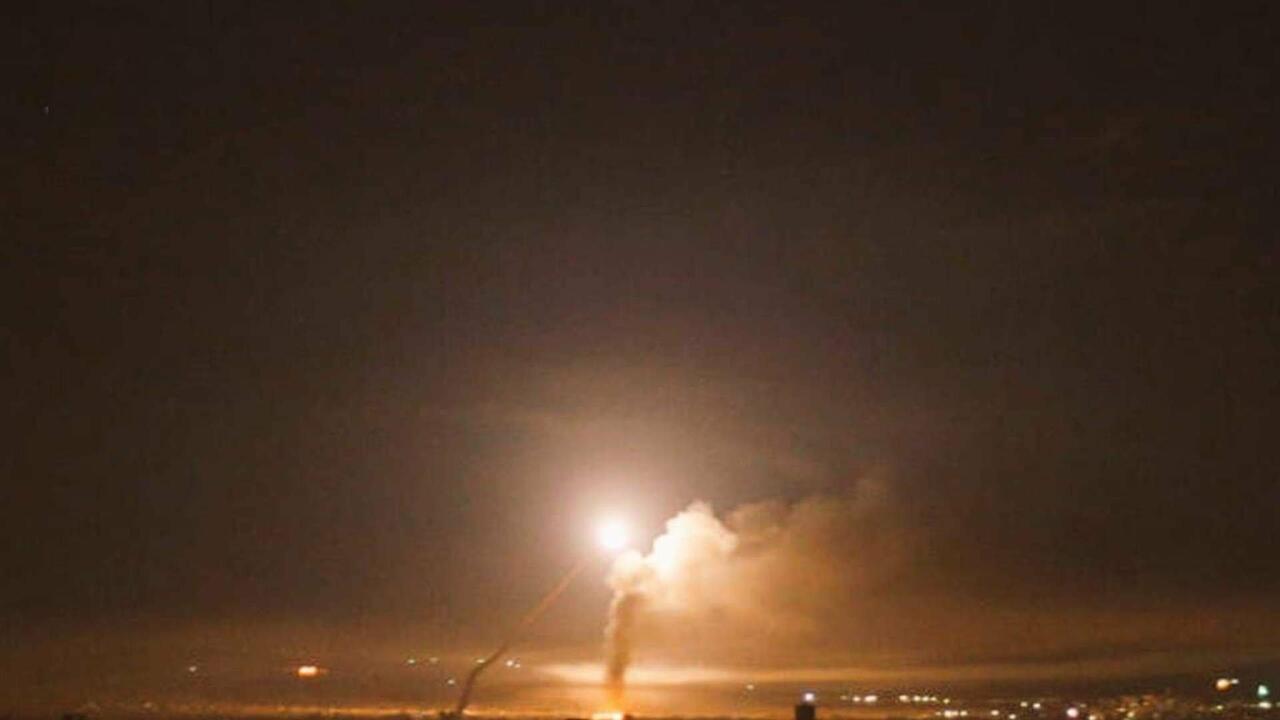
The Syrian Army has told Reuters that Israeli missiles have targeted the Syrian port city of Tartous shortly before midnight Tuesday evening (local time).

Syria’s air defenses reportedly intercepted the inbound missiles, with Al Mayadeen saying that at least two Israeli missiles were observed inbound. There are currently widespread reports of multiple explosions.

Illustrative: missile intercept over Syria

Tartous is Syria’s second largest coastal city. It lies just to the north of Lebanon, and Israeli attacks on it are very rare. Instead, most assaults have focused on Damascus and its environs over the past several years.

The staunchly pro-government stronghold didn’t even come under much Israeli fire throughout the totality of the Syrian proxy war.

Russian bases and assets are positioned in Tartous and nearby along the coast, a reality which has also ensured that Israeli strikes there remain relatively rare. The Russian Navy’s only deep water Mediterranean port is located in Tartous.

Israeli media has also picked up on the nighttime attack, and is writing that the Israeli Air Force was likely behind it.

Currently Israel is engaged in a new expanded anti-Hezbollah offensive in south Lebanon, which has resulted in over 550 Lebanese deaths and thousands of injuries.

There are fears that the fighting could spread through the region, if Shia paramilitary groups in Iraq and Syria get involved, and if Tehran directly enters the fighting in Lebanon. Damascus has always been a powerful state ally of Hezbollah.

So far, the Assad government has remained uncharacteristically quiet regarding what’s happening in Lebanon, even as some pro-Hezbollah Lebanese have questioned why Damascus hasn’t come to Hezbollah’s direct aid.

Tyler Durden
Wed, 09/25/2024 – 02:45

What Was A Japanese Spy Doing In Belarus?

0
What Was A Japanese Spy Doing In Belarus?

Authored by Andrew Korybko via Substack,

Belarusian media reported earlier this month that their security services busted a Japanese spy. He allegedly entered into a fictitious marriage that helped him legalize his stay in the country, after which he set up a business in Gomel to explain his travels, including to the border. He also taught Japanese. The spy allegedly had over 9,000 photos of roads, bridges, and military facilities and was actively in contact with his embassy. These reports raised a lot of eyebrows since few expected Japan to spy on Belarus.  

As it turns out, his home base of Gomel is in Ukraine’s crosshairs as explained last month here, and it’s possible that the security services’ additional scrutiny on all activities there as part of their precautionary measures resulted in them finally catching him. His interrogation also revealed that he was involved in the failed summer 2020 Color Revolution and had been monitoring the socio-economic situation as well, including the availability and prices of goods as well as locals’ reaction to this.

Considering the importance of his activities, especially in the context of the special operation, there’s no way that he’d be allowed to continue operating if anyone had picked up on what he was doing earlier. It’s therefore almost certainly the case that he only came on their radar recently as was speculated above. This means that he was transmitting highly sensitive information during the past two years of the New Cold War’s top proxy war, thus raising the question of why Japan would want to do this in the first place.

What might have been going on is that Japan was passing everything along to its Western partners in the implied hopes of them then supporting it more in its own part of the world. His most recent activities might also have played a role in Ukraine’s recent drone provocations in Belarus. In fact, he might have been pressured by his handlers into taking more risks than usual because the West demanded more information for Ukraine, which could have contributed to him finally getting caught.

This explanation is the most logical since Japan couldn’t act on its own with what that spy hadn’t uncovered this entire time. It was also reported that he was spying on China’s Belt & Road Initiative investments too, of which its primary one in Belarus is the “Great Stone” industrial park, which could have disguised his more nefarious activities had he been caught earlier under different circumstances. It’s much better, after all, to be busted for conducting “business intelligence” than military intelligence.

In retrospect, there’s not much that the security services could have done better to have stopped him ahead of time.

He was legally in Belarus, had his own business, and was also teaching Japanese at a local university, thus making him a model immigrant. Nobody could have plausibly suspected that he was up to no good.

If there’s any silver lining to this case, it’s that the spy was finally caught and will no longer be sharing information with his handlers to pass along to the West and their Ukrainian proxies.

Tyler Durden
Wed, 09/25/2024 – 02:00

Escobar: Will A BRICS Bretton Woods Take Place In Kazan?

0
Escobar: Will A BRICS Bretton Woods Take Place In Kazan?

Authored by Pepe Escobar,

With less than a month before the crucial BRICS annual summit in Kazan under the Russian presidency, serious informed discussions are raging in Moscow and other Eurasian capitals on what should be at the table in the de-dollarization and alternative payment system front.

Earlier this month Andrey Mikhailishin, head of the task force on financial services of the BRICS Business Council, detailed the list of top projects under consideration. They include:

  • A common unit of account – as in The Unit, whose contours were first revealed exclusively by Sputnik.

  • A platform for multilateral settlements and payments in BRICS digital currencies, connecting the financial markets of BRICS members: that’s BRICS Bridge, which bears similarities with the Bank of International Settlements-linked MBridge,  already in effect. That will complement intrabank systems already in action, as in Russia’s SPFS and Iran’s CPAM settling financial transactions – and 60% of their trade – in their own currencies.

  • A blockchain-based payment system that entirely bypasses the US dollar: BRICS Pay. Arguably 159 participants may be ready to adopt this sanction-evading, similar-to-SWIFT mechanism right away.

  • A settlement depository (Clear).

  • An insurance system.

  • And crucially a BRICS rating agency, independent from the Western giants.

What’s at stake is the extremely complex design of a brand-new financial system – decentralized and using digital technology. BRICS Clear, for instance, will be using blockchain to record securities and exchange them.

As for The Unit, the value of the common unit of account is pegged by 40% to gold and by 60% to a basket of BRICS member’s national currencies. The BRICS Business Council considers The Unit a “convenient and universal” instrument, since a unit can be converted into any national currency.

That would definitely solve the nagging problem of exchange rate volatility when cash balances accumulate from settlements in national currencies; for example, a mountain of Indian rupees used to pay for Russian energy.

Who Do I Call to Talk to BRICS?

I asked a very direct question to two Russian analysts, one of them a finance tech executive with vast experience across Europe, and the other the head of an investment fund with global reach. Considering the sensitivity of their posts, they prefer to remain anonymous.

The question: Is BRICS ready to become an actor in Kazan next month, and what should be on the table in terms of the strategy to establish an alternative payment system?

The Answers. Analyst 1:

“Time has come for BRICS to become a real actor. The world demands it. The leaders of BRICS countries clearly understand it. They have the moral power and the political will to set up an organization to provide a number for BRICS to be called in – that’s the best question for the upcoming summit.”

The analyst is referring to what could be dubbed “the Kissinger moment”, when Dr. K famously quipped, in the Cold War era, “when I want to talk to Europe, who do I call?”

Now to Analyst 2:

“For a BRICS agreement amongst countries to mean something, countries need to agree on a framework of action and that means accepting some responsibilities in exchange for certain rights. And it sounds there’s no better way to achieve that than to arrive at mutually agreed obligations on settlement of financial transactions.”

One of the analysts added a very important, specific point: “By now the situation is pretty clear, to properly address the issue of cross-border payments. The best mechanism should be based on the New Development Bank (NDB), given that Russia has a mandate to propose the new president of that organization. Whoever the candidate will be, cross-border payments should be at the top of his agenda.”

The NDB is the BRICS bank, based in Shanghai. The analyst hopes this decision on the future of the NDB will be made before the BRICS summit: “Given the diplomatic and political considerations, the candidate should be made known, formally or informally to the member countries.”

As it stands, the talk of the town in Moscow informed circles is that Alexey Mohzin, the IMF’s executive director for Russia, has a 60% chance to be appointed to the NDB. In parallel, Ksenia Yudaeva, a former G20 sherpa and former deputy of Russia Central Bank’s Elvira Nabiullina, may become the new representative with the IMF.

So what may be in the cards is a NDB/IMF reshuffle on the Russian front. The focus should be on the potential for future productive change – rather than missed opportunities; the NDB’s policies so far have not been exactly revolutionary – considering that the bank’s statutes are linked to the US dollar.

The new deal could place the NDB as leverage for a reform of the IMF, rather than an alternative to it.

The “Kissinger moment” does play a key role in this equation. It will highlight that until the moment turns into reality, the NDB should be the sole actor for effective changes in crucial matters like the stability of the financial infrastructure.

And from that perspective, as one of the analysts note, “The UNIT and all other similar projects may be presented as complementary risk management tools hedging against reckless monetary policies and Global Financial Crisis-2 risks.”

Time though is running out – fast. President Putin recently met with the Russian Union of Industrialists. They have sent a letter to the administration and the Russian Central Bank outlining what they consider the most promising ideas.

The Unit is one of them. Prime Minister Mishustin’s government is now on the final stages of deciding which projects to support: for the BRICS summit in Kazan, and one week before, for the annual summit of the BRICS Business Council in Moscow.

A BRICS Bretton Woods?

I posed the same BRICS question to the Russian analysts also to indispensable Prof. Michael Hudson – who actually provided a concise in-depth critique of what may be on the table, while offering a different solution.

For Prof. Hudson, “a new institution has to be created – a Central Bank empowered to issue credit to finance the trade and payments deficits of some countries, with an artificial bancor-type SDR [Special Drawing Rights].”

Prof. Hudson argues “this would be different (his italics) from a clearing house system for existing banks. It would be a BRICS’ IMF. Its bancors credit or balance sheet would only be for settlements among governments, not a generally traded currency. Indeed, making the bancor widely traded as a speculative vehicle (such as the UNIT is) would introduce major instability and have nothing to do with the needed bank transfer balance sheet.”

A reformed NDB, possibly next year under a new Russian presidency, should have all it takes to become a “BRICS’ IMF.”

Prof. Hudson adds that “to succeed, the Kazan conference should be a full-fledged BRICS Bretton Woods. Maybe it is too soon to actually introduce a fait accompli. Perhaps it would be a venue to throw open a set of alternatives — including what would happen by ‘doing nothing’ and going with the current IMF system. The fact that the IMF just cancelled its trip to analyze the Russian economy may be a catalyst.”

Prof. Hudson in fact refers directly to Executive Director for Russia, Alexey Mohzin, who confirmed that the IMF should have come to Russia for consultations, part of their annual review of the Russian economy, but cancelled it because of “technical unpreparedness”.

All that brings us once again to the “Kissinger moment”; it’s unclear whether Kazan will come up with a “BRICS number” anyone could call.

Prof. Hudson makes an essential last point on the Global South’s dollar debt: he stresses “how to handle BRICS members existing overhang of dollar debts” is a major problem.

What is clear is that “the BRICS bank [the NDB] should not finance deficits by member countries for such payments. In practice, there would have to be a moratorium on such payments – in view of the present weaponization of Western finance.”

Prof. Hudson recalls the chapter in his book Super Imperialism “on how the US moved against Britain in 1944 to get an agreement that it then presented as a pro-US fait accompli to Europe.” The book “reviews all the arguments that took place there.”

Prof. Hudson wishes he would be part of the new, ongoing process. Imagine if BRICS+ manages to pull it off: getting a Global Majority-approved agreement on a new, equitable, fair financial system then presented to the $35 trillion-indebted superpower as a fait accompli.

Tyler Durden
Tue, 09/24/2024 – 23:25

The Enormous Scale Of Global Food Waste

0
The Enormous Scale Of Global Food Waste

As more than one trillion U.S. dollars worth of food is thrown away each year, up to 783 million people are affected by hunger.

At the same time, Statista’s Anna Fleck reports that food waste generates an estimated 8-10 percent of global greenhouse gas emissions and takes up the equivalent of nearly 30 percent of the world’s agricultural land.

These are just some of the findings published in the United Nations Environment Programme’s Food Waste Report 2024.

Infographic: The Enormous Scale Of Global Food Waste | Statista

You will find more infographics at Statista

The UNEP estimates that in 2022, the world produced 1.05 billion tonnes of food waste across the retail, food service and household sectors.

The average amount of food waste per capita that year is estimated to be 132 kg, of which 79 kg was household waste. This equates to roughly 19 percent of food available to consumers being wasted across the retail, food services and household levels.

This is a problem seen across all levels of society, reflected in how the figure for household waste is broadly similar across country income groups at 81 kg per capita for high income, 88 kg per capita for upper middle, 86 kg for lower-mid income, while there was insufficient data for lower income countries.

When looking at the data on a country-by-country basis, the highest absolute figures for food waste were recorded in the two countries with populations of more than a billion people.

  • China wastes an estimated 108.7 million tonnes of food per year while India discards 78.1 million tonnes.

  • The United States creates 24.7 million tonnes of food waste annually, while in Europe, France and Germany produce between 3.9 and 6.5 million tonnes per year.

Things look rather different when it comes to waste produced per capita. For example, the average household in India discards 55 kg of food per year while for the United States the figure is 73 kg. By comparison, Russia’s total household waste comes to an estimated 4.8 million tonnes each year with waste per capita only coming to 33 kg.

Tyler Durden
Tue, 09/24/2024 – 23:00