

68.1 F
Chicago
Saturday, October 3, 2026
Home Blog Page 2294

Russia Informs UN Security Council ‘Direct War’ With NATO Assured If US Approves Long-Range Strikes

0
Russia Informs UN Security Council ‘Direct War’ With NATO Assured If US Approves Long-Range Strikes

Russian leadership has issued a follow-up statement to President Vladimir Putin’s Thursday brief video address warning that if the US and UK authorize Ukraine to pursue long-range strikes on Russian soil, then NATO and the Russian Federation will be in an official state of war.

On Friday Russia’s ambassador to the United Nations, Vassily Nebenzia, informed the UN Security council that NATO countries would “start an open war” in allowing Western long-range missiles to target Russia.

“If such a decision is made, that means NATO countries are starting an open war against Russia,” Moscow’s envoy introduced. “In that case, we will obviously be forced to make certain decisions, with all the attendant consequences for Western aggressors.”

Vassily Nebenzia, permanent representative of Russia to the United Nations, via AP

Nebenzia continued, “Our Western colleagues will not be able to dodge responsibility and blame Kiev for everything.” And he echoed some key talking points of Putin’s from the day prior in explaining to the UN body, per Russian media:

“Only NATO troops can program the flight solutions for those missile systems. Ukraine doesn’t have that capability. This is not about allowing Kiev to strike Russia with long-range weapons, but about the West making the targeting decisions.”

The Kremlin’s position is that if Western missiles staring raining down on Russian soil, it will consider no distinction between Kiev forces and their NATO backers supplying the munitions. It won’t matter who is pulling the trigger.

“NATO would become directly involved in military action against a nuclear power. I don’t think I have to explain what consequences that would have,” Nebenzia concluded.

To review of Putin’s firm words the day prior…

“So this is not about whether or not to allow the Ukrainian regime to strike Russia using these weapons, but of deciding whether or not NATO countries are directly involved in the military conflict or not. If such a decision is taken, it will mean nothing short of direct participation of NATO countries, the United States, European countries, in the war in Ukraine.

This would constitute their direct participation, and this, of course, changes the very essence, the very nature of the conflict. It will mean that NATO countries, the United States and European countries, are at war with Russia. And if this is so, bearing in mind the change in the very nature of the conflict, we will make appropriate decisions based on the threats that will be posed to us,” Putin said.

It is important to note that Putin used the word “war” – a word he typically doesn’t throw around lightly. The Kremlin still calls its actions in Ukraine a “special military operation” and has yet to launch a full-scale national mobilization of the country’s manpower and resources.

It appears a highly dangerous nuclear game of chicken (among nuclear super-powers!) is being played out on the world stage…

HARD TO TAKE ANYTHING FROM PUTIN AT HIS WORD: KIRBY

Below is more from breaking White House statements issued by spokesman John Kirby ahead of an afternoon press briefing. He appears to actually be downplaying Putin’s warning. 

Kirby: “If Mr. Putin is so concerned about the safety and security of Russian sites and cities, the easiest way to alleviate those concerns is to get his troops to hell out of Ukraine and the war.”

“…He starts brandishing the nuclear sword, for instance, yeah, we take that seriously. We constantly monitor that kind of activity. He obviously has proven capable of aggression. He’s obviously proven capable of escalation over the last now going on three years. So, yeah, we take these guns seriously, but it is not something that we haven’t heard before. So, we take note of it…. We have our own calculus for what we decide to divide to Ukraine and what not.”

If Washington and London do actually pull the trigger on long-range strikes even after Putin’s new red line warning, there are a couple of hugely escalatory things Moscow might do in response.

Russia could begin directly taking out Ukrainian government buildings in the capital, such as the Verkhovna Rada building or Zelensky’s offices. It’s areal forces control the skies but have refrained from such action up to this point. Putin could also declare a formal state of war along with full national mobilization, and this war could even be declared against NATO, which would likely be a point of no return.

Meanwhile, a reminder from a prior Putin speech on the topic of nuclear confrontation with the West: “There will be no winners…”

And cue Trudeau and Canada, an influential NATO member…

BREAKING – CANADA PM TRUDEAU SAYS CANADA FULLY SUPPORTS UKRAINE USING LONG-RANGE WEAPONRY IN WAR AGAINST RUSSIA

Tyler Durden
Fri, 09/13/2024 – 12:20
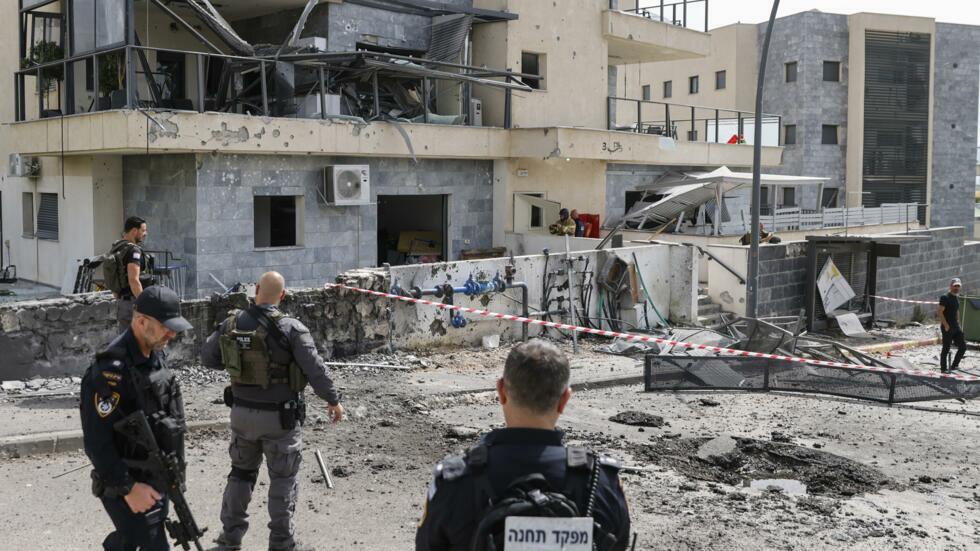
Hamas’ Sinwar Issues Rare Letter Thanking Hezbollah Chief For Sending Thousands Of Rockets Against Israel

0
Hamas’ Sinwar Issues Rare Letter Thanking Hezbollah Chief For Sending Thousands Of Rockets Against Israel

Hamas chief Yehya Sinwar, who is believed to be on the run in tunnels underneath Gaza, has taken the rare step of sending a letter to the leader of Lebanese Hezbollah’s Sayyed Hassan Nasrallah ‘thanking’ him for taking the fight to Israel in the north. At this point throughout the eleven-month conflict, Hezbollah has launched literally many thousands of rockets on northern Israel, and there’s been daily tit-for-tat exchanges with Israel.

“Your blessed actions have expressed your solidarity on the fronts of the Axis of Resistance, supporting and engaging in the battle,” Sinwar told Nasrallah in the letter, Lebanon’s al-Manar channel said. Sinwar further hailed the war as “one of the most honorable battles for the Palestinian people.” It’s clearly part of a defiant effort of Hamas to show Israel and the world that its leader is alive and well.

Illustrative: prior attack on settlement in northern Israel, via AFP

Hezbollah has reportedly lost more fighters than even in the 2006 war with Israel. At this point an estimated 500 of its members have been killed, including top military commander Fuad Shukr.

Wednesday through Thursday has witnessed another uptick in missiles waves, compared to the relative low number of missiles sent from Lebanon in the prior weeks. Starting Wednesday a barrage of 100 rockets pounded northern Israel, with 60 of them coming within a single hour, local reports said.

A Hezbollah anti-tank guided missile attack also wounded a 39-year old Israeli reservist who was guarding a kibbutz. Israel in response launched attacks on southern Lebanon with fighter jets and several drones.

And overnight and into the early morning of hours of Friday at least 20 more rockets were unleashed on the northern city of Safed, cause forest fires in the area. The Iron Dome appears to have intercepted many of the inbound projectiles.

Panic inside Safed prayer service during overnight rocket attack from Hezbollah:

The city of Safed is not often targeted and is somewhat distant from the border, and so it remains full of civilians:

Safed lies some 13 kilometers (eight miles) from the border with Lebanon, and unlike many communities nearer the frontier, the city of some 38,000 remains largely inhabited, with attacks that deep into Israel relatively uncommon.

In its statement claiming the attack, Hezbollah said that it had launched the barrage as revenge for what it said was an Israeli strike in the village of Kfarjouz on Thursday. The Iran-backed group claimed to have targeted a key air defense site north of Safed.

The uptick in fighting late this week also witnessed a drone entering Israel from Lebanon. It reportedly crashed in a non-inhabited area of the Upper Galilee in northern Israel.

Below is a summary of some of the latest key developments on Friday via Al Jazeera:

  • Gaza’s Civil Defence said four Palestinians were killed and others wounded in two separate Israeli strikes in central Gaza.
  • Hezbollah said it launched multiple attacks, using different weapons, on Israeli sites close to the Lebanese border, claiming direct hits.
  • The Israeli army confirmed the attacks, including a drone that was launched from Lebanon, without reporting any causalities.
  • The WHO chief repeated his “call for a ceasefire, which is critical for rebuilding the health system to cope with escalating needs” in Gaza.
  • Videos shared on social media showed Israelis blocking the Namir Road in Tel Aviv to denounce the way the government handles the war in Gaza.

Below: Missile intercepts over Safed overnight…

At least 80,000 to 100,000 Israeli citizens remain in a permanent state of evacuation from their homes due to the fighting with Hezbollah in the north, which has been constant since Oct.7. But so far the situation has not spiraled into a full war or Israeli invasion of Lebanon.

Tyler Durden
Fri, 09/13/2024 – 12:00

Cash Cow Clues: Can Dividend Yields Forecast Interest Rates?

0
Cash Cow Clues: Can Dividend Yields Forecast Interest Rates?

Authored by Michael Lebowitz via RealInvestmentAdvice.com,

We have written many articles and commentaries forecasting interest rates. The analysis has used prior and current inflation and economic activity. Additionally, we have looked at market data on inflation expectations, Fed Funds futures, and other factors that influence interest rates. Today, we add an unorthodox factor to the list: cash cows.

This article introduces a unique way to imply where dividend investors think interest rates will be in the future. The impetus for this article came from a recent SimpleVisor Friday Favorites article in which we reviewed the Campbell Soup Company (CPB). Friday Favorites typically analyzes a company’s fundamental and technical conditions and valuations.

This time, however, because the company was a cash cow, we took it further and studied its dividend yield. In the process, we arrived at an implied ten-year U.S. Treasury yield based on the current and historical spread between Campbell’s dividend yield and the ten-year U.S. Treasury yield.    

Implying future interest rates based on CPB is somewhat laughable. However, implying future interest rates on a larger population of cash cows may be more telling.

What Is A Cash Cow?

Cash cow is a term dairy farmers use to describe mature cows that generate milk regularly with minimum maintenance.

Wall Street adopted the term cash cow to label companies that deliver reliable cash flows (milk), require little investment (maintenance), and have little to no sales and earnings growth (mature).

CPB is a good example of a cash cow. Not surprisingly, the soup business is a low-growth venture; therefore, it has negligible earnings and sales growth. Moreover, it has consistently paid dividends since 1989 and produces plenty of excess cash flow that should ensure future dividend payments.

While CPB lives up to the definition of a cash cow, we do not analyze it in this article as its dividend yield is below our threshold dividend yield. However, we did find fifteen other cash cows, which we will share.

Screening For Cows

In this analysis, we used the following screening criteria:

  • Market Cap > $10 billion
  • Five-Year EPS Growth < 5%
  • Five-Year Sales Growth < 5%
  • Dividend Yield > 2.50%
  • Ten Years of Consecutive Dividend Payments

The table below shows the fifteen stocks that met the screening criteria.

What Can We Imply With Dividend Yields?

The following table shares our analysis of the fifteen companies.

After the ticker and name of each respective stock, we show the current dividend yield and the average dividend yield over the last five years. The next column, “Price Return to Avg. Div. Yield”, quantifies how much the stock price would have to change to bring the current dividend yield in line with the five-year average. Obviously, a company can increase its dividend or cut it, which would change the return.

The first set of analyses, which we just described, helps us compare the current dividend yield to recent yield history on an absolute basis.

Since some investors consider bonds a substitute for dividend stocks, we must also do a relative analysis of dividend yields. In other words, has the dividend yield risen accordingly with interest rates? To do this, we calculate the current dividend yield minus the current ten-year yield (“Spread to Tsy”). We also compute the average Spread to Tsy. for the last five years. With this data, we can calculate how much the stock price would have to change to make the dividend yield equal to its five-year average spread to Treasury yields.

Lastly, assuming the dividend yield reasonably predicts where rates are headed, we can imply where the ten-year U.S. Treasury yield may be in the near future. We share this in the column furthest to the right.

Cash Cow Conclusions

While there are many stories within the table, we focus on the averages of the fifteen stocks in this article. The current dividend yields are slightly higher than average. This is primarily a function of investors shunning dividend stocks in favor of higher-yielding bonds or stocks with better performance. Declining stock prices push the dividend yield higher, helping them stay competitive with bonds. Dividend yield is only one of many factors determining the price; however, it is a much more critical price determinant for cash cows than other stocks.

While the dividend yield may be higher than its norm for the last five years, it has not kept up with Treasury yields. Based solely on the yield spread, prices, on average, would need to fall by about 15% to bring the meager .41% spread over the 10-year UST back to normal.

But might stock investors be locking in higher dividend yields, anticipating a lower interest rate/yield environment? If so, our cash cows imply the 10-year UST yield would need to fall to 3.05%. Doing so will bring the average dividend yield spread versus Treasury yields back to its average.

Coincident or not, the market also thinks that the Fed Funds rate will trough at 2.87% when the coming rate-cutting cycle ends.  

Summary

Between our article Fed Funds Futures Offer Bond Market Insights and the cash cows we highlight, the Fed Funds futures market and stock market appear to be on the same page regarding future interest rates.

Some may find comfort in their similar predictions. However, caution is warranted. The bond market often underappreciates how much the Fed will cut interest rates. Furthermore, it has been proven to be a poor judge of where long-term Treasury bond yields will fall. Quite often, yields fall much more than anticipated. If this is again the case, some of our cash cows may see decent price appreciation if their dividend yield declines with lower bond yields.

Tyler Durden
Fri, 09/13/2024 – 11:40

Friday The 13th: The Cutting Cycle

0
Friday The 13th: The Cutting Cycle

By Philip Marey, Senior US strategist at Rabobank

Friday The 13th: The Cutting Cycle

Market speculation about a 50 bps rate cut by the Fed next week returned overnight after the Financial Times and the Wall Street Journal called the Fed’s rate choice between 25 and 50 bps a close call and former FOMC member Bill Dudley said there was a strong case for 50.

The rate slashers are back from hibernation. Inflation has kept them away for a few years, but now that central banks have their inflation targets in sight they are back to cutting. Yesterday, they struck in Europe. Next week, they’ll initiate the cutting cycle in the US.

As expected, the ECB cut the deposit facility rate by 25 basis points to 3.50% yesterday. As our ECB watcher Bas van Geffen noted in his ECB post-meeting comment, the 60bp cut to the main refinancing rate and marginal lending facility rate was merely a reflection of the technical adjustment to the policy rates corridor, communicated in advance. Inflation progress warranted yesterday’s rate cut, but the outlook remains highly uncertain. The staff projections are broadly unchanged from the June forecast. This does not warrant a change in pace. We continue to believe that the ECB will skip October, to cut again in December. Further out, the staff projections suggest a slightly lower terminal rate may be achieved in 2025. However, we maintain that the ECB overlooks geopolitical and trade risks next year.

The US PPI figures for August were slightly higher than expected, but at the same time there were downward revisions for July. The categories of the PPI that are used in the calculation of the PCE deflator were mild. The US initial and continuing jobless claims came in largely as expected and have been moving sideways at the turn of the month. In fact, the claims data suggest that the labor market is somewhat stronger than at the end of July.

Tyler Durden
Fri, 09/13/2024 – 11:00

Election Officials Warn Problems With US Mail Could Cause 2024 Voting Disruptions

0
Election Officials Warn Problems With US Mail Could Cause 2024 Voting Disruptions

Authored by Jack Phillips via The Epoch Times (emphasis ours),

A coalition representing state and local election officials across the United States warned that problems with the nation’s mail system could disrupt voting in some areas, with just weeks to go before the 2024 presidential election.

Mail-in ballots sit in trays before being sorted at the Santa Clara County registrar of voters office in San Jose, Calif., on Oct. 13, 2020. Justin Sullivan/Getty Images

In a Wednesday letter sent to the U.S. Postal Service’s postmaster, Louis DeJoy, the National Association of State Election Directors and the National Association of Secretaries of State said they have “ongoing concerns” about USPS’s ability to perform ahead of the Nov. 5 contest.

Over the past year, they warned, mailed ballots that were postmarked on time were received by local election offices days after the deadline to be counted. They also noted that properly addressed election mail was being returned to them as undeliverable, a problem that could automatically send voters to inactive status through no fault of their own, potentially creating chaos when those voters show up to cast a ballot.

In that time period, “election officials across the country have raised serious questions about processing facility operations, lost or delayed election mail, and front-line training deficiencies impacting USPS’s ability to deliver election mail in a timely and accurate manner,” the letter stated.

Further, officials have told the two associations that mail sent to voters is being deemed “undeliverable” at higher than normal rates, sometimes in instances where a “voter is known not to have moved.”

“This has affected a range of election mail, including informational mailers about critical election information and voter address confirmation cards, as well as ballots,” the letter said.

Despite the alleged issues, the groups said that repeated attempts to contact the USPS to resolve them did not result in changes, adding that the mail delivery problems result from “a pervasive lack of understanding and enforcement of USPS policies among its employees.”

“We implore you to take immediate and tangible corrective action to address the ongoing performance issues with USPS election mail service,” they said. “Failure to do so will risk limiting voter participation and trust in the election process.”

Responding to their letter, the USPS said that it is equipped to deal with mail-in ballots. But the Postal Service said that voters who wish to submit ballots through the mail should not procrastinate.

“We are ready to deliver. We were successful in 2020 delivering a historic volume of mail in ballots; also in 2022 and will do so again in November 2024,” Adrienne Marshall, director of Election Mail and Government Services, said in a statement.

In December, the Postal Service said in a news release that it has consistently delivered mail and packages to 98 percent of the U.S. population in fewer than three days during peak volume periods.

DeJoy responded to previous criticism of his handling of the USPS in a Washington Post opinion article published in July, also noting that 98 percent of Americans received their mail and packages within three days. However, he noted that the service has suffered in recent times due to what he called “degraded operating conditions.”

“Although we have slipped recently because of difficulties in overcoming our degraded operating conditions while opening new facilities, and remodeling and repositioning existing ones, we will soon be back to a performance level that can make the nation proud,” he said.

The National Association of State Election Directors, described as an organization of state election directors, and the National Association of Secretaries of State, a coalition of all U.S. secretaries of state, have not responded to an Epoch Times request for comment. The Epoch Times contacted USPS for additional comment on Wednesday but received no response by publication time.

During the 2020 election, due to the COVID-19 pandemic, election officials in multiple states expanded vote-by-mail efforts. After the conclusion of that election, former President Donald Trump said that mail-in ballots can lead to election fraud. However, in 2024, he has urged GOP voters to vote by mail, early in-person, or on Election Day itself.

The Associated Press contributed to this report.

Tyler Durden
Fri, 09/13/2024 – 10:20

Inflation Expectations Rebound In September As Partisan Gaps In Sentiment Surge

0
Inflation Expectations Rebound In September As Partisan Gaps In Sentiment Surge

After a hope-filled rebound in August, analysts expect UMich Sentiment in preliminary August data to show further improvements with inflation expectations flat. They were right in their prediction as the headline sentiment beat expectations (69.0 vs 68.5 exp), as did the current conditions and expectations sub-indices.

Source: Bloomberg

The gain was led by an improvement in buying conditions for durables, driven by more favorable prices as perceived by consumers.

Year-ahead expectations for personal finances and the economy both improved as well, despite a modest weakening in views of labor markets.

However, more notably, medium-term inflation expectations picked up (while short-dated expectations – which largely reflect oil prices – fell to their lowest since Dec 2020)…

Source: Bloomberg

…which suggests (on a lagged basis) that 10Y yields are going a lot lower…

Source: Bloomberg

Finally, we note that confidence continued to rise for Democrats, was flat for Independents, and slid further among Republicans…

Source: Bloomberg

Consistent with their divergent views of the implications of a Harris presidency for the economy, partisan gaps in sentiment inched up.

Note that interviews for this release concluded prior to Tuesday’s debate; a more comprehensive look at election expectations will be released next week.

Tyler Durden
Fri, 09/13/2024 – 10:09

Jeftovic: “That Trump-Backed Crypto Smells Like A PsyOp…”

0
Jeftovic: “That Trump-Backed Crypto Smells Like A PsyOp…”

Authored by Mark Jeftovic via BombThrower.com,

Serious glitch in the matrix if it’s real…

Sometime on September 11th I started noticing that there were tweets showing up in my timeline referencing some “Trump Crypto”, called “World Liberty Financial”, but I didn’t recognize any of the handles and didn’t really spend any time on them, mentally dismissing them as pushing one of the countless crypto scams, memecoins or otherwise flakey endeavours that may enjoy a brief “pop” before ultimately flaming out.

The emails from my Bitcoin Capitalist subscribers started rolling in on the 12th, asking me about it. One reader asks:

“Wondering if you will do a special on Trump entering  the fray of Crypto with worldlibertyfinancial[.]com and how this plays out on many different fronts.  Most importantly here in the States why he would do this at this time?  

We would love to know your insight.” 

Indeed. My off-the-cuff response:

Frankly, this has “shitcoin” written all over it and I can’t believe he’s doing this in the run up to the election.

I thought the entire thing was an celeb endorsement scam but it looks like the Trumps are really behind it.

Shaking my head, frankly.

That’s my first take. I’ll dig into it.

I’ve since done so and at first it really boggled my mind that this could possibly be something that is really backed by the Trumps. At first it looked like something his kids are mixed up in (Eric Trump and Don Jr are purportedly listed in a leaked white paper as the project’s “Web3 ambassadors”, and Baron, who is eighteen years old, is their “DeFi Visionary”).

On August 22, @realDonaldTrump and @DonaldTrumpJr Twitter accounts – tweeted a Telegram channel called Defiant1s  announcing the time to take back finance “from the elites”.

Then there is a tweet on August 29 where the @TheRealDonaldTrump account posts a video montage of Trump’s crypto plan for the US,  cribbed from prior speeches, including his keynote speech at the Bitcoin 2024 conference in Nashville in July – and that tweet also tags @worldlibertyfi – the “official” account for World Liberty Financial that was created in July.

Then on September 12th, the @realDonaldTrump account tweeted out an announcement of the coming token drop, which is purportedly happening on a Twitter space on September 16th:

The announcement was presented by “Rug Radio”(!) and “World Liberty Financial.

In the world of crypto the phrase “rugged”, “rug pull” and “rugging” has a very particular meaning: it’s the equivalent of a “pump-and-dump” in the stock world, where some garbage penny stock gets promoted and pushed and the insiders, who loaded up beforehand, unload at the top.

In the crypto version, a “rug pull” is when people are lured into some token project, like an ICO, the funds raised ostensibly to be used to carry out the project’s stated mission – but, what happens instead is the project founders either disappear with the funds, leaving the investors with now-worthless tokens – or they just sell the token itself into the hype-cycle, before the inevitable crash.

Even the WLFI tokenomics scream “rug-pull”

We don’t know much about the WLFI tokenomics. Coindesk apparently has a copy of a  “leaked” whitepaper but nobody else has seen it, and Coindesk hasn’t released it, nor have they even replicated any screengrabs or choice excerpts from it – which I’d expect if somebody had a copy of something like that.

The tokenomics behind WLFI – the governance token for World Liberty Financial are a throwback to the 2017 ICO boom, but even more egregious.

According to Coindesk:

“A whopping 70% of Trump-backed World Liberty Financial’s WLFI tokens will be reserved for the project’s insiders…Of the remaining 30% of the tokens distributed via a public sale, the founding team will also receive a portion of the proceeds”

and,

When asked if a 70% allocation to insiders is high, one source who advises projects on such matters replied, “LMAO. Nice joke, ser.”

Apparently the public tokens will also be locked indefinitely, meaning non-transferrable, and thus – it would appear, much harder to actually profit from selling (they could, in theory, earn protocol fees, but we’d have to actually see the white paper to know for sure).

The Coindesk article goes on to break out some of the principles behind World Liberty Financial, including a founder of a DeFi platform that got hacked in July and another that runs a competitor to OnlyFans.

It all just looks so really, obviously bad that I’m having a hard time believing it.

There are two possible scenarios: Shitcoin or Rat-fuck

When I sat down to research and write this piece, the entire angle was “I can’t believe Trump is pulling a shitcoin launch this close to the election”.

The original title was “Tump Backed Crypto Smells Like A Shitcoin”.

The more I started digging into it, the less sense any of this made.

Scenario #1) Trump really is the “Chief Crypto Ambassador” for World Liberty Financial

After winning over much of the Bitcoin space in Nashville just a couple months ago, this is the surest way to alienate them:

Pretty well sums it all up.

Let’s keep something else in mind:

Trump has already been fighting lawfare on all sides, the Dems are trying to block his path to the presidency any way they can – and now – after he just promised to fire SEC Chair Gary Gensler on day one if he wins in November, he’s going to hand the guy the perfect setup to indict him before the election?

The more I worked on this piece, the more something just feels off

Scenario #2) This is some sort of psyop

The worldlibertyfinancial[.]com domain was registered in June, and there isn’t much more than that Telegram channel. Nothing wrong with that, per se – but it’s also where 100% of the memecoins and 110% of the shitcoins and 1,000% of the scamcoins are run from.

It was created August 6th and started posting about the Trump DeFi project on August 15:

Donald Trump hasn’t mentioned any of this from his Truth Social account. Neither Donald Jr. nor Eric Trump have mentioned World Liberty Financial by name on Twitter.

In early September Lara Trump and Tiffany Trump also  tweeted about World Liberty Financial, but claimed they were hacked.

As weird as it may seem, those videos posted via @realDonaldTrump  tagging @WorldLibertyFi and together with the one from @DonaldTrumpJr promoting the Telegram channel would fit if those accounts were also compromised (tbh, the one from Sept 12 with Trump announcing the coming livestream could seem like a deepfake, the thumbnail looks photoshopped, who knows these days).

But if that were the case, why aren’t the Trumps or anybody else commenting on it or denying the affiliation or deleting those tweets?

If so many Trump family accounts were hacked, and limited to Twitter and no other social media platforms, one possibility could be a security weakness particular to twitter, or how the members of the Trump family interact with that platform, or perhaps a rogue operator within the company.

But even if this were the case, to what end? Is this just the mother of all shitcoin pumps? Or a more complex rat-fucking psyop to discredit Trump? I can’t believe I just typed that because it sounds like something straight out of the bowels of Qanon.

But Newsweek was quick to jump on the bandwagon, with one of the worst takes I’ve ever seen on how the domain name system actually works…

And Coindesk framed it thusly…

(Release the leaked whitepaper, please).

In their Telegram channel, World Liberty professes that multiple smart contract auditors are reviewing their code, and state the entire project is a fork of Aave, whom they are actively collaborating with.

None of those accounts have ever mentioned World Liberty or acknowledged the WLFI project.

But something doesn’t add up, and if this is just a pump-and-dump crypto scam and Trump the candidate is involved then it truly is mind-boggling.

I guess we’ll have a better idea come September 16th.

*  *  *

Sign up to the Bombthrower Mailing list today and get a free copy of the aforementioned Crypto Capitalist Manifesto – I’ll also send you my forthcoming e-book The CBDC Survival Guide when it drops this fall.

Follow me on Twitter here, or Nostr: npub1elwpzsul8d9k4tgxqdjuzxp0wa94ysr4zu9xeudrcxe2h3sazqkq5mehan

Tyler Durden
Fri, 09/13/2024 – 09:45

Urgent Salvage Operation Planned To Avert Environmental Disaster From Burning Houthi-Hit Oil Tanker

0
Urgent Salvage Operation Planned To Avert Environmental Disaster From Burning Houthi-Hit Oil Tanker

The European Union’s Operation Aspides naval force announced on X that a “new salvage operation” is set to begin in the coming days to tow the burning oil tanker Sounion in the Red Sea to safety, with hopes of preventing an environmental disaster. 

“On 12 September, the MV SOUNION remains on fire after it was attacked in the Red Sea. The vessel is currently anchored, not drifting and there are no signs of an oil spill from the main cargo hold,” the EU’s naval mission in the Red Sea, Aspides, wrote in a post. 

EU naval force continued, “To prevent an environmental disaster, it is essential that public, private organizations and actors work closely together. This is why EUNAVFOR ASPIDES stands ready to facilitate a new salvage operation in the coming days by providing protection to the commercially chartered ships that will tow the ship to a safe location.” 

EU naval forces shared images of the Greek-registered tanker currently on fire with about a million barrels of crude oil on board. The tanker currently has no power following an Iran-backed Houthi attack last month. 

One source told Reuters that two tugboats owned by a Greek-based salvage company are in the area and awaiting further instructions. 

“There is an action plan in place and there is progress,” another source said, adding, “The towing operation is expected to begin in the next two days.”

Since October, Houthi rebels have launched over 80 attacks on commercial ships in the critical maritime chokepoint in the southern Red Sea, sinking two ships and killing four sailors.

The chaos has sparked global supply chain snarls for the shipping industry as commercial vessels are rerouted around the Cape of Good Hope. 

Even more concerning is the Biden-Harris administration’s failure of ‘Operation Prosperity Guardian’ to ensure freedom of navigation and maritime security in the critical chokepoint.  

Former Navy Seal and Blackwater founder Erik Prince said this failure shows America’s “credibility and deterrence” has quickly eroded. 

Tyler Durden
Fri, 09/13/2024 – 09:25

Israel Inserted Elite Commandos Into Syria, Blew Up Secret Missile Base, Reports Say

0
Israel Inserted Elite Commandos Into Syria, Blew Up Secret Missile Base, Reports Say

The Sunday night major Israeli airstrikes in the central Syrian town of Masyaf which we reported on earlier in the week might have involved much more than what was initially known.

There was an unusually high death toll for such an attack, which targeted a highly secretive Syrian government facility known as the Syrian Military Scientific Studies and Research Center (SSRC). It left at least 16 people killed and another 40 injured.

But now both Axios and Israeli media are reporting it involved a ground component. “During major attack by jets earlier this week, IDF commandos said to have rappelled from helicopters to capture Iranians and remove materials before destroying site,” Times of Israel writes. However, other reports make no mention of captured Iranians.

The Thursday Axios report says the Sunday night Israeli operation in central Syria really involved the following: “An elite Israel Defense Forces unit conducted a highly unusual raid in Syria earlier this week and destroyed an underground precision missile factory that Israel and the U.S. claim was built by Iran, according to three sources briefed on the operation.” It was reported at the time that significant portions of the surrounding countryside caught on fire.

Axios further cites the following while reporting that the White House was briefed ahead of time and did not oppose the daring raid which apparently involved boots on the ground:

  • On Wednesday, a Syrian opposition television channel and Greek Middle East expert Eva J. Koulouriotis both reported the airstrikes were a cover for an Israeli ground operation in Masyaf.
  • Three sources with knowledge of the operation confirmed to Axios that the Israeli Air Force elite unit Shaldag conducted a raid and destroyed the facility.

The report further claims that the elite IDF commando team engaged in a firefight on the ground outside the facility during the operation, killing several Syrian guards.

Local images of the fires that erupted in central Syria following the Israeli raid, via JPost

The special forces team additionally rigged the underground missile facility with explosives and blew it up, according to the claims. Israeli airstrikes were unleashed on the area as a diversion, but also to prevent Syrian Army reinforcements to the area.

Times of Israel said that the Israeli team was able to recover sensitive documents as well before destroying the facility. The publication further noted that “the fresh reports were the first to claim that Israeli troops operated on the ground during the action at Masyaf, which lies about 200 kilometers (124 miles) north of Israel, though only about 30 kilometers (18 miles) from Syria’s western coastline.”

One question that remains is how a slow-moving helicopter (as in much slower moving than Israeli jets) was able to breach Syrian airspace for so long – and was able to insert ground forces – without triggering Syria’s Russian-made anti-air defenses. It could be that following so many Israeli Air Force attacks of late, Syria’s air defense are seriously degraded – or else regional batteries were successfully distracted, or there’s the possibility Israel used stealth technology and low altitudes. 

Israel has kept quiet about any details of a ground insertion, and Damascus is unlikely to confirm, given if Israel successfully pulled off something like that it would be a humiliation.

Tyler Durden
Fri, 09/13/2024 – 08:45

Gen Z Should Not Be Fooled by Kamala’s Sudden Seriousness

0
Gen Z Should Not Be Fooled by Kamala’s Sudden Seriousness

Authored by Ethan Watson via RealClearPolitics,

After yanking Joe Biden off the ticket with a giant vaudeville cane, Kamala Harris has breathed new life into the Democratic party. Kamala opened her campaign with the “politics of joy,” replete with twerking rappers, sassy X clapbacks, and quirky Doritos videos. But, after weeks of pressure from the media, Kamala has finally posted her stance on the issues facing America, and at the debate on Tuesday night, she dove deeper into her policies than ever before. Finally, Gen Z voters have the opportunity to do what everyone least expects from them: weigh each presidential candidate from a policy perspective.

Until now, I’ve been mystified as to why my generation, usually so quick to recognize inauthenticity, was falling for Kamala’s cotton candy campaign. But Gen Z voters were immediately smitten with Kamala, whose light, albeit vapid rhetoric provided a reprieve from the political mudslinging of the last eight years. She threw concerts and posted goofy videos. Instead of engaging in contentious discussions, Kamala supporters could quip “Brat Summer” while retweeting Mark Hamill. It was light and fun, and after years of ugly politics, even her blatant pandering was a nice change.

By spoon-feeding young voters inoffensive content, Harris deflected their attention from her flip-flopping on issues and pushing radical policies like an unrealized capital gains tax. Her proxies dodged questions on air, claiming that she was too busy to sit down for an interview. And most young voters supported Kamala, with 58.7% of voters 18-34 viewing her favorably after the DNC in August.

But Kamala’s actual ideas have been forced into the spotlight. As Harris gets serious, so should Gen Z.

I’ve seen firsthand my generation’s BS detectors in action. We know when we can skip a hokey motivational speaker at a company event or skim the “required” readings. We traverse career fairs, collecting swag and acting interested as phony recruiters try to convince us that their company isn’t a pyramid scheme. In other words, we don’t drink the Kool-Aid.

Now that Harris’ policies are in the open, we should treat her with the same scrutiny. If Gen Z is really dissatisfied with the direction the company is going, per a Spring 2024 Harvard Youth Poll, then perhaps we should consider the fact that portions of her brand new “Issues” page were copied from the Joe Biden campaign site. Remember him? He’s the one who was in charge – or at least who seemed in charge – when that Harvard poll was taken earlier this year. 

Additionally, 53% of Gen Z voters believe that there is a dire crisis happening on our southern border, a border that Kamala presided over as border czar. Do we really believe she’s the best candidate to solve that problem?

Another driving factor behind Gen Z’s discontent with the status quo is the economy. On that topic, Harris echoes Joe Biden’s policies. Harris proposes a $25,000 first-time homebuyer handout, doubling down on Biden’s $10,000 proposal. Harris’ policies also include expanding the Affordable Care Act, which has been the law of the land for the past 14 years (and passed while Joe Biden was Vice President). She touts her plan to raise the tax on long-term capital gains to 28% – in other words, 28% of what Gen Z makes in the stock market will go not to a home down payment but to the government. Do we really think that will help young people prosper?

I call on my generation to apply to Kamala Harris the same utility maximization we do in all areas of life. Now that she’s dropped the TikTok-and-vibes charade, we have the chance to think critically about whether Kamala represents the change to the status quo, or whether she’s just Joe Biden 2.0. It seems Kamala can buckle down to business when pressed. Can we?

Ethan Watson is a Young Voices contributor working towards a Master of Accounting degree at the University of Kansas. He holds dual undergraduate degrees in Accounting and Political Science with an eye toward law school in the near future. Follow him on X: @erwatson13.

Tyler Durden
Fri, 09/13/2024 – 06:30
