70.8 F
Chicago
Thursday, October 1, 2026
Home Blog Page 2323

Watch: US Soldiers Assaulted By Turkish Mob After Navy Ship Makes Port Call At Izmir 

0
Watch: US Soldiers Assaulted By Turkish Mob After Navy Ship Makes Port Call At Izmir 

On Monday a mob of Turkish men attacked American soldiers who had been walking the streets of Izmir in southern Turkey, apparently as the US personnel were on liberty after the USS Wasp which they are attached to made port call.

Social media video shows a group of men surrounding one US soldier and while violently constraining him. The Turkish men then stick a white bag over his head in an effort to humiliate and possibly kidnap the American and those with him. The brief clip then shows a couple more US troops jumping in to push the Turkish men off their fellow soldier. 

Reuters has confirmed of the incident, “A nationalist Turkish youth group on Monday physically assaulted two U.S. soldiers in western Turkey, the U.S. Embassy in Turkey and the local governor’s office said, adding that 15 assailants had been detained over the incident.”

The same report says that a total of five other US soldiers quickly came to their fellow servicemember’s aid to fight off the attackers, after which local police quickly intervened.

The US Embassy in Turkey has subsequently confirmed the American personnel are safe after the incident, “We can confirm reports that U.S. service members embarked aboard the USS Wasp were the victims of an assault in Izmir today, and are now safe,” it said on X. There was no mention of injuries.

The Izmir governor’s office identified that the attackers were part of an ultra-nationalist group called the Turkey Youth Union (TGB), which is associated with the opposition Vatan Party. The statement said that the Turkish group “physically attacked” two American soldiers who were in civilian clothes in the Konak district.

US Navy amphibious assault ship, USS Wasp. Image: US Embassy Turkey

The assaulting group reportedly chanted “Yankee, go home!” while detaining at least one of the Americans. It all happened in broad daylight. 

The UK Mirror details of the USS Wasp’s weekend port call:

The USS Wasp arrived in the port of Izmir on Sunday for a scheduled visit, with sailors and marines taken on tours organised by the ship’s Morale, Welfare, and Recreation team during while it is docked. Previously on a scheduled deployment to Europe, the Wasp was recently sent to the Mediterranean and Middle East amid rising tensions between Hezbollah and Israel along the border with Lebanon, and had made a stop in Turkey. It marked the first time that the Wasp had operated in the Mediterranean region since being moved back from Sasebo, Japan to Norfolk, Virginia in 2019.

Turkish journalist and regional correspondent Ragıp Soylu described that it was “A payback in their understanding for US soldiers placing sacks over Turkish soldiers operating in Northern Iraq almost 20 years ago.”

It appears that the whole incident then turned into an anti-American demonstration, and involved US Marines which the crowd tried to detain or essentially kidnap:

One commenter said that it is time to “kick Turkey out of NATO” and provided additional details as follows:

Second US soldier comes in trying to help his comrade but disengages shortly after receiving several punches – likely fearing an escalation, aware of the mob-mentality and readiness to use excessive violence by these elements of the Turkish society. Incident happened in the tourist area of Izmir close to the harbour where the USS Wasp aircraft carrier of the US navy is anchored.

However, Turkish investigators have yet to given an official motive. Likely it could also be connected with events in Gaza. Turkish-Israeli relations have of late reached a low point in modern history, and it is well understood in the region that US-supplied bombs and aircraft aid in Israel’s Gaza operations.

USS Wasp at port

Such an attack on a group of American service personnel is incredibly rare in Turkey, which is a NATO country, given also the presence of several US military installations attached to bases in the country, and frequent US Navy port calls. 

Tyler Durden
Mon, 09/02/2024 – 13:45

The Failure Of Economics Statistics

0
The Failure Of Economics Statistics

Authored by Jeffrey Tucker via The Epoch Times,

There is the reality all around us – restaurants struggling to survive, bills eating household income, jobs ever less secure, costs soaring for all enterprise, even the local dollar stores hitting hard times – and there are the macroeconomic statistics reported daily by the media. They seem to have ever less connection to each other.

Why do we have macroeconomic statistics? We all want to know more about the world outside of our direct experience. That is especially true for those whose livelihoods are bound up with knowing. For economics, that includes academics, investors, and just regular business people who are trying to make plans and would like to make sense of their prospects in a different market.

Starting about a century ago, a new market for data opened up. It was for government planners to exercise newly granted powers to plan the economy better than markets. The idea was that with better data, they could do a better job in adjusting outcomes in a way that would be more socially optimal.

The data collection industry was born. And it grew and grew, taking a huge leap in the 1930s during which time governments and central banks embarked upon a grand plan to tame business and trade cycles. They imagined themselves to have various levers in control rooms, with handles and names like “fiscal policy” and “monetary policy.” They would pull and push these levers to smooth out the recklessness of markets.

If you head to Washington, D.C. today and go to the Federal Trade Commision, you will see an impressive statue from the 1930s called “Man Controlling Trade.” It’s a muscular man representing government and a wild horse representing the market economy. The man is successfully keeping the market in check. That’s how it was imagined to work back then and still today.

To be sure, we’ve learned that the reality is otherwise. It is more like the horse is riding the man or actually the horse is pulling the man, depending on your perspective. The man only intervenes to get something for himself, not serve the public. If that outlook sounds dark, have a look at the operation of any sector of economic life and look at it honestly. You will see, if you look carefully, that the storied vision of how it is supposed to work contradicts the reality.

In any case, back to statistics. Consistent with the way in which our times have lost faith in so much of what is called “science,” the science of data collection for purposes of economic planning has not gone well. For instance, back in the 1960s, it was widely believed that there was a consistent tradeoff between inflation and unemployment. When one was up, the other was down. It was said to be possible to control each element by manipulating the other.

To some extent, the Fed’s Jerome Powell seems to believe something like this now. His idea of controlling inflation was not, at least overtly, to better manage the money stock but rather to “slow down” economic growth that is believed to be the underlying cause of inflation. At least that is what he said.

And yet when you think about this alleged tradeoff, it keeps being contradicted by reality. In the 1970s, we saw our first big bout of what was named stagflation, when both inflation and unemployment were high. At that point, the Fed had no idea what to do. And in our own time, we had low inflation and low unemployment for nearly two decades when suddenly they began to see-saw in strange ways with lockdowns. Unemployment soared but inflation stayed low, until inflation rose and unemployment went back down. Now we are seeing inflation still high and unemployment rising with it.

That’s a problem with the theory, but there’s an even more fundamental problem with the data collection itself. When we see numbers and charts, there is something in the modern human brain that suspends incredulity. We simply take it for granted that what we are seeing is true.

We saw this in COVID. The charts were everywhere: exposure, infection, cases, hospitalizations, and deaths, and they were presented in waves. We thought we were following the science. We were told to look at the data and follow the science. We heard it over and over like a mantra. But people rarely if ever stopped and wondered: is any of this even true?

Obviously the case and infection data is entirely contingent on testing, and the testing results were themselves contingent on accuracy, and the death data were contingent upon a judgment call concerning the cause of death. Put it all together with possible errors and what do you end up with? We came to realize that much of what we were being told was accurate was in fact complete gibberish.

Sadly, the same thing is happening in economics today. What the Bureau of Labor Statistics reports as true inflation does not comport with anything being pushed by industry. Groceries are a good example. The Consumer Price Index (CPI) lists them as up 20 percent over four years but industry puts the figure closer to 34 percent. It’s the same with cars: the rates of inflation are double what government reports. Meanwhile, many costs are not reported at all, such as taxes, interest, or home prices.

It reaches absurdity with home prices because government reports “Owners Equivalent Rent” rather than, you know, the actual home prices. We end up with figures that are twice as high as government reports.

(Data: Federal Reserve Economic Data (FRED), St. Louis Fed; Chart: Jeffrey A. Tucker)Data: Federal Reserve Economic Data (FRED

As for the Gross Domestic Product (GDP) numbers, take them with a grain of salt. That’s because some 17 percent of the number is attributable to increases in government spending. Take that away from the total and you turn numbers in the black to numbers in the red. And if you want to go further and adjust those by actual inflation numbers as versus BLS fictions, you end up with deep recessionary conditions.

We just learned that the jobs numbers have been overstated for two years by some 1.2 million jobs that really do not exist. In searching for a reason for such an egregious error, we come across a strange statistical adjustment deployed by the BLS called the “birth-death” rate—not of lives but of businesses.

What in the world is this? Well, the BLS has a model that estimates based on historical data how many businesses have formed vs how many have gone out of business. They smash this together with surveys and adjust the results. What you end up with is a complete fiction, some kind of cockamamie bureaucratic baloney that does not comport with any reality.

And keep in mind that they are running this model during times of epic business failure as lockdowns wrecked countless small businesses around the country. Extend your historical data far enough and you can pretend as if this never happened, which means that you can estimate jobs data in ways that entirely circumvent all existing business conditions. That is apparently what they did, which means that we are likely going to see dramatic downward revisions hit following the election in November.

Mark my words, come January we are going to get a backwards-dated recession that will extend six months at least but maybe even more. A fully honest reporting would likely revise the economic history all the way back to March 2020. I doubt they will go that far because doing so would be too much honesty too soon. We’ll likely have to wait decades for that kind of brazen transparency.

It’s bad enough that government collects all this data in order to “to plan, regulate, control, or reform various industries—or impose central planning and socialization on the entire economic system,” as Murray Rothbard wrote in 1961. It’s even worse when one discovers that no one can even trust the results. It’s garbage in, garbage out.

I’m hardly alone in feeling a sense of shock that we cannot actually believe the data coming out of these government agencies. Everyone depends on it. We don’t really have alternatives overall even if we have snippets from this or that industry. Mostly we are stuck with the data we have however fictional. That is quite the commentary on the Age of Science, isn’t it?

Views expressed in this article are opinions of the author and do not necessarily reflect the views of The Epoch Times or ZeroHedge.

Tyler Durden
Mon, 09/02/2024 – 13:10

Russia Updating Nuclear Weapon Doctrine Due To Western ‘Escalation’ Of Ukraine War

0
Russia Updating Nuclear Weapon Doctrine Due To Western ‘Escalation’ Of Ukraine War

In the latest worrisome saber-rattling sparked by the US-led proxy war in Ukraine, Russia announced it’s revising its doctrine on the use of nuclear weapons, saying a change has been necessitated by “escalation” initiated by the country’s Western adversaries. 

Russian Deputy Foreign Minister Sergey Ryabkov told TASS that the update was precipitated by an analysis of  “recent conflicts” including “Western adversaries’ escalation course” in the Ukraine war. The revision is “in the advanced stage,” but Ryabkov said it was too early to project when it would be completed, given “we are talking about the most important aspect of our national security.” While there’s been no indication of the specifics, any revision seems certain to lower the threshold for nuclear weapon use — and increase the potential for a global conflagration.  

A Yars ICBM is test-fired during a 2022 nuclear weapon drill in Plesetsk (AP via El Pais)

Per TASS, under current doctrine set forth in 2020, Russia may use nuclear weapons when:

  • An enemy uses a weapon of mass destruction against Russia or its allies
  • Russia has confirmation of a nuclear launch against it or its allies
  • An enemy attacks “facilities necessary for a response” to a nuclear attack 
  • Conventional warfare threatens the existence of the Russian state.  

That last condition of the current doctrine is particularly noteworthy in light of the Ukraine war. As foreign policy realist and University of Chicago Professor John Mearsheimer recently told UnHerd’s Freddie Sayers, 

“There is all sorts of talk in the West about defeating Russia inside Ukraine, wrecking its economy, causing regime change and maybe even breaking up Russia the way the Soviet Union was broken up. This is a country that has thousands of nuclear weapons. If its survival is threatened, it’s likely to use them. So we have this perverse paradox here that most people don’t seem to realize…which is that the more successful NATO and Ukraine are against Russia, the more likely it is that the Russians will use nuclear weapons.”   

Russia launched its so-called “special military operation” in Ukraine in February 2022 with stated goals of “protecting people [in the country’s eastern regions] who have been subjected to bullying and genocide” by the Ukrainian government since 2014, and precluding Ukraine’s joining the NATO military alliance. Over time, the West’s backing of Ukraine has been characterized by gradual escalation in which one previously-ruled-out ratcheting after another has been realized.

Those include the provision of increasingly sophisticated weapons and longer-range range weapons, and a relaxing of US restrictions against striking targets inside Russia. On August 6, Ukraine surprised the world with an invasion of the Russian territory of Kursk — which, in World War II, was the site of the largest tank battle in history and a pivotal victory over the German army. Given the history, the presence of Western-backed invaders in the territory is far more provocative than most people realize — and Ukrainian soldiers’ attire and conduct compounds the psychological impact: 

In late August, Ukrainian President Volodymyr Zelensky displayed an arrogant contempt for the notion that his Western-armed, Western-financed military should have to operate with Western-imposed restrictions. “We are witnessing a significant ideological shift: The naive, illusory concept of so-called red lines regarding Russia, which dominated the assessment of the war by some partners, has crumbled apart these days.”

Russia’s ongoing nuclear doctrine change was foreshadowed in June by President Vladimir Putin at the St Petersburg International Economic Forum. “[The nuclear] doctrine is a living instrument, and we are closely watching what is happening in the world around us. We do not rule out making some changes to this doctrine,” he said. In the same month, Russia announced that its army and navy were conducting tactical nuclear weapon drills in a military district bordering NATO members Norway, Finland, Poland, Estonia, Latvia and Lithuania.

Russian soldiers load an Iskander short-range ballistic missile onto a launcher. The SS-26/Iskander-M variant can reportedly carry a 50-kiloton nuclear warhead (Russian Defense Ministry Press Service)

Russia has approximately 5,500 nuclear warheads, with a diversified set of delivery systems, from heavy bombers to land-based and submarine-launched missiles, according to a detailed March 2024 assessment published by the Bulletin of the Atomic Scientists. “Russia is nearing the completion of a decades-long effort to replace all of its strategic and non-strategic nuclear-capable systems with newer versions,” the study’s authors noted. 

Russia’s arsenal should give Western policymakers pause, said Mearsheimer: 

“Most of my realist friends [and I] fully appreciate you have to be extremely careful when you’re dealing with a rival great power that is armed to the teeth with nuclear weapons that are aimed at you, and that you cannot back that great power into a corner. You cannot put it in a situation where it’s desperate. You cannot threaten its survival, because in those circumstances there is a reasonable chance that they’ll use nuclear weapons.” 

To the world’s enormous peril, the US national security establishment isn’t led by realists, but by reckless, blundering interventionists. 

Tyler Durden
Mon, 09/02/2024 – 12:35

Kerrisdale Offers Tongue-In-Cheek Disclaimer Updates On First Short Following Andrew Left Indictment

0
Kerrisdale Offers Tongue-In-Cheek Disclaimer Updates On First Short Following Andrew Left Indictment

Short seller Kerrisdale Capital raised eyebrows this past week, not just for a well reasoned take on why they were short Lumen Technologies, but also because of the disclaimer at the bottom of their report.

In the wake of short seller Andrew Left’s indictment, Bloomberg reports that activist short sellers are tweaking the disclaimer language they are using on their reports to increase transparency of how they trade around positions. 

Kerrisdale was the most widely noticed example last week, when they used the Lumen report as an opportunity to update their disclaimer, which in part references the SEC’s complaint against Left: “Prior to this complaint, Kerrisdale’s understanding of securities law was that by not releasing false or misleading information in one’s communications and by disclosing to the public that one is long or short a given security, and therefore biased, that there needed to be no restrictions on one’s trading of the covered security.”

Kerrisdale’s Sahm Adrangi

“Furthermore, as can be seen in the disclaimers above, Kerrisdale discloses that it will transact in the securities covered herein following any communication (i.e. we will buy or sell the security post publication), and may be long, short or neutral at any time after any communication.”

“But, in light of this complaint, and following its logic, perhaps it would help investors to just assume the following: assume we have shorted lots and lots of the stock of the Covered Issuer immediately prior to publication, and assume we will buy lots and lots of the stock of the Covered Issuer to cover our short position immediately subsequent to publication,” it continues.

“To us, providing a hypothetical but potentially inaccurate trading intention, upon each communication of opinion about a security, doesn’t make much sense. Rather, we think the longstanding standard of disclosing our directional bias, and avoiding false or misleading information in our fundamental arguments, is the appropriate standard opposed to communicating to readers a future trading intention that may not turn out to be accurate.”

It concludes: “So in the absence of second-by-second trading updates and so that investors don’t feel wronged that we may close out of a lot of a position very quickly after publishing, just assume that that is exactly what we’ll do. Then, you won’t be, er, defrauded. Or something like that.”

They then said cheekily on X last week, summoning Citron Research’s well known “Cautious Investing to All” tagline:

Meanwhile, Andrew Left’s lawyer, James Spertus, told Bloomberg this week: “The theory of the case is that the people who publish truthful information must also disclose their private trading intentions — that is going to cut off the flow of truthful information to the markets.”

“Prices don’t always move toward the target in a linear way and it could take a year or two before the target is reached,” he added. “The idea that someone has to hold on until their target price is reached or disclose their own trading intentions — that’s just going to stop the flow of information to the market.”

As Zero Hedge has had on our site for more than a decade now, our “full disclosure policy” states as follows: “Like David Einhorn, we think that talking about investing and investments is, in every case, a good thing™ and should be encouraged at every turn.  Even idiots should talk about investments.  It makes it much easier to identify and deal with them (and it keeps us writing about financial idiots).  As to writing about investments, we plan to do a lot of it.” 

“So how do we plan to handle conflicts? We don’t. You should assume that at all times we are so totally just talking our book it would shock and awe you like the unexpected, early-morning arrival of a cluster of BGM-109C Tomahawks (were you a believer in the importance of “optics” that is).”

As we said then, we’ve always wondered this: why would you want to read about a position so uncompelling that the author doesn’t have the stones to put their money where their keyboard is?  Even if you elected to read such material for entertainment value (what else is there anymore?) why on earth would you ever consider it “more credible.”

Tyler Durden
Mon, 09/02/2024 – 11:25

Key Events This Week: Payrolls, JOLTS, ISM And Fed Speakers Galore

0
Key Events This Week: Payrolls, JOLTS, ISM And Fed Speakers Galore

Welcome to September although as Jim Reid writes this morning, given the track record of recent years, perhaps we should say beware rather than welcome. For what it’s worth, the S&P 500 and the STOXX 600 have lost ground in each of the last 4 Septembers…

…  while the Nasdaq is a veritable September horror show.

And for those hoping to find cover in fixed income, there hasn’t been any there either. In fact, Bloomberg’s global bond aggregate is down in each of the last 7 Septembers according to Reid. So if we do manage to get some positivity this month, that would fly in the face of a succession of negative performances.

That said, August was more than a solid month especially after the shocking plunge at the start, so even a red September will hardly be a shock after the staggering rebound achieved after August 5, in no small part thanks to the latest dovish pivot by the Fed.

And speaking of the Fed, all roads this week lead to the US jobs report on Friday, which is going to be pivotal in terms of how much they cut rates by at their next meeting. As it stands, futures still see a 25bp move as more likely, but a 50bp move is being priced with a 31% probability this morning, so it’s in the balance as far as markets are concerned. And as we found out last month, an underwhelming jobs report can quickly shift expectations.

In terms of what to expect this time around, economists are forecasting that nonfarm payrolls will come in at +165k in August, a strong rebound from the shockingly bad 114K print in July. That assumes a rebound from potential weather-related disruptions in the July report, and they also see the unemployment rate ticking down a tenth to 4.2%. Of course, much of the focus will be on how Fed officials react, although they won’t have long to discuss the data, as the blackout period ahead of the September meeting begins the day after the jobs report. One final point: after the near record September negative payrolls revision, it wouldn’t be surprising to see a surge in payrolls now that we have had a kitchen sink reset of the fake numbers and the BLS can resume fabricating data from square one.

Although last month’s jobs report was underwhelming, it’s also worth noting that much of the data since then has looked more positive. The weekly initial jobless claims have fallen from their levels in late-July, the latest retail sales print was very strong as well, and the revisions to Q2 GDP growth saw it adjusted up to an annualized pace of +3.0%, which isn’t consistent with a recession (but it is consistent with pre-election propaganda meant to put lipstick on the economy). Moreover, Friday saw the Atlanta Fed’s GDPNow estimate for Q3 move up to +2.5%, so again pointing away from a recession.

This week we should get some more details on the August picture, as we’ll get the ISM manufacturing and services prints, which are coming out on Tuesday and Thursday respectively. The JOLTS report on Wednesday will also be worth looking at, although that’s a bit more backward-looking as it’s the July reading.

Aside from the US data, it’s a fairly subdued calendar this week, and US markets are closed today for the Labor Day holiday. One thing we will get though is the Bank of Canada’s latest policy decision on Wednesday, where they’re widely expected to cut rates by 25bps for a third consecutive meeting, which would take their policy rate down to 4.25%.

Courtesy of DB, here is a day-by-day calendar of events

Monday September 2

  • Data: China August Caixin manufacturing PMI, Japan Q2 capital spending, company sales, company profits, Italy August manufacturing PMI, new car registrations, budget balance, July PPI

Tuesday September 3

  • Data: US August ISM index, July construction spending, Japan August monetary base, France July budget balance, Canada August manufacturing PMI, Switzerland August CPI, Q2 GDP
  • Central banks: ECB’s Nagel speaks, BoE’s Breeden speaks

Wednesday September 4

  • Data: US July JOLTS report, trade balance, factory orders, August total vehicle sales, China August Caixin services PMI, UK August official reserve changes, Italy August services PMI, Eurozone July PPI, Canada July international merchandise trade, Australia Q2 GDP
  • Central banks: BoC decision, Fed’s Beige Book, ECB’s Villeroy speaks
  • Earnings: Dollar Tree

Thursday September 5

  • Data: US August ADP report, ISM services, initial jobless claims, UK August new car registrations, construction PMI, Japan July labor cash earnings, Germany August construction PMI, July factory orders, Eurozone July retail sales, Canada Q2 labor productivity, August services PMI
  • Central banks: BoJ’s Takata speaks, ECB’s Holzmann speaks, BoE’s August DMP survey
  • Earnings: Broadcom

Friday September 6

  • Data: US August jobs report, Japan July household spending, leading index, coincident index, Germany July trade balance, industrial production, June retail sales, France July industrial production, current account balance, trade balance, Italy July retail sales, Canada August jobs report
  • Central banks: Fed’s Williams and Waller speak

Finally, looking at just the US, Goldman writes that the key economic data releases this week are the ISM manufacturing index on Tuesday, the JOLTS job openings report on Wednesday, and the employment report on Friday. New York Fed President Williams and Fed Governor Waller will deliver speeches on Friday.

Monday, September 2

  • Labor Day holiday. There are no major economic data releases scheduled. NYSE will be closed. SIFMA recommends that bond markets also close.

 Tuesday, September 3

  • 09:45 AM S&P Global US manufacturing PMI, August final (consensus 48.0, last 48.0)
  • 10:00 AM Construction spending, July (GS +0.1%, consensus +0.1%, last -0.3%)
  • 10:00 AM ISM manufacturing index, August (GS 47.3, consensus 47.5, last 46.8): We estimate the ISM manufacturing index edged higher in August (+0.5pt to 47.3), reflecting partial convergence toward the level of other manufacturing surveys (GS manufacturing survey tracker -0.1pt to 47.9) and neutral seasonality.

Wednesday, September 4

  • 08:30 AM Trade balance, July (GS -$77.9bn, consensus -$78.9bn, last -$73.1bn)
  • 10:00 AM JOLTS job openings, July (GS 8,100k, consensus 8,100k, last 8,184k): We estimate that JOLTS job openings edged slightly lower in July (-0.1mn to 8.1mn), reflecting stabilization in online job postings.
  • 10:00 AM Factory orders, July (GS 5.0%, consensus 4.7%, last -3.3%); Durable goods orders, July final (consensus +9.9%, last +9.9%); Durable goods orders ex-transportation, July final (last -0.2%); Core capital goods orders, July final (last -0.1%); Core capital goods shipments, July final (last -0.4%)
  • 02:00 PM Beige Book, September meeting period: The Fed’s Beige Book is a summary of regional economic anecdotes from the 12 Federal Reserve districts. The Beige Book for the July FOMC meeting period noted that five districts had reported flat or declining activity, three more than in the June Beige Book, and that districts expected slower growth in the coming six months because of uncertainty related to the election, domestic policy, geopolitics, and inflation. In this month’s Beige Book, we look for anecdotes related to the evolution of labor demand and firms’ expectations of activity growth for the remainder of the year.
  • 05:00 PM Lightweight motor vehicle sales, July (GS 15.3mn, consensus 15.4mn, last 15.8mn): We estimate a 0.5mn decline in lightweight motor vehicle sales in August to 15.3mn (SAAR), reflecting moderation to a more normal level of sales after the prior month was boosted by the end of disruptions to dealer software systems from cyberattacks.

Thursday, September 5

  • 08:15 AM ADP employment change, August (GS +155k, consensus +140k, last +122k)
  • 08:30 AM Nonfarm productivity, Q2 final (GS +2.5%, consensus +2.5%, last +2.3%); Unit labor costs, Q2 final (GS +0.5%, consensus +0.8%, last +0.9%)
  • 08:30 AM Initial jobless claims, week ended August 31 (GS 225k, consensus 230k, last 231k): Continuing jobless claims, week ended August 24 (consensus 1,865k, last 1,868k)
  • 09:45 AM S&P Global US services PMI, August final (last 55.2)
  • 10:00 AM ISM services index, August (GS 51.4, consensus 51.1, last 51.4): We estimate that the ISM services index was roughly unchanged at 51.4 in August, reflecting potential convergence toward our non-manufacturing survey tracker (which stands at 52.5 for August) but a potential headwind from seasonality.

Friday, September 6

  • 08:30 AM Nonfarm payroll employment, August (GS +155k, consensus +165k, last +114k); Private payroll employment, August (GS +130k, consensus +140k, last +97k); Average hourly earnings (mom), August (GS +0.3%, consensus +0.3%, last +0.2%); Average hourly earnings (yoy), August (GS +3.7%, consensus +3.7%, last +3.6%); Unemployment rate, August (GS 4.2%, consensus 4.2%, last 4.3%); Labor force participation rate, August (GS 62.7%, consensus 62.7%, last 62.7%): We estimate nonfarm payrolls rose by 155k in August. Big Data indicators indicate a pace of job creation below the recent payrolls trend, and August payrolls have exhibited a consistent negative bias in initial prints over the last decade. We assume a modest rebound from severe weather in July and a still above-trend (albeit moderating) contribution from the recent surge in immigration. We estimate that the unemployment rate declined 0.1pp to 4.2% on a rounded basis (a low hurdle from an unrounded 4.25% in July), reflecting the reversal of some of the temporary layoffs that boosted the unemployment rate in July, especially those that appeared linked to summer auto plant retooling shutdowns or extreme heat. We estimate average hourly earnings rose 0.3% (mom sa), which would raise the year-on-year rate by 0.1pp to 3.7%, reflecting waning wage pressures but positive calendar effects.
  • 08:45 AM New York Fed President Williams (FOMC voter) speaks: New York Fed President John Williams will deliver a keynote speech at an event hosted by the Council on Foreign Relations. Text and Q&A are expected. Although President Williams voted in favor of keeping the fed funds rate unchanged at the FOMC’s July meeting, the minutes of the Fed Board’s July discount rate meetings showed that the New York Fed voted to lower the discount rate by 25bp. This suggests that President Williams was one of the “several” FOMC participants who said they could have supported a fed funds rate cut at the July meeting.
  • 10:00 AM Fed Governor Waller speaks: Fed Governor Christopher Waller will deliver a speech on the economic outlook followed by a Q&A session at the University of Notre Dame. Text and Q&A are expected. On July 17th, before the FOMC’s July meeting, Governor Waller noted that “current data are consistent with achieving a soft landing, and I will be looking for data over the next couple months to buttress this view,” noting that “while I don’t believe we have reached our final destination, I do believe we are getting closer to the time when a cut in the policy rate is warranted.”

Source: DB, Goldman

Tyler Durden
Mon, 09/02/2024 – 10:42

US Schools In Mad Dash To Spend COVID Cash As Deadline Looms

0
US Schools In Mad Dash To Spend COVID Cash As Deadline Looms

School districts across the country are in a mad dash to spend their remaining post-COVID relief grant money, or they have to return it to the US Treasury.

Kindergarteners wear masks while listening to their teacher amid the COVID-19 pandemic at Washington Elementary School in Lynwood, Calif., on Jan. 12, 2022. Marcio Jose Sanchez/AP Photo

The $122 billion program aimed at boosting learning recovery in the wake of the pandemic expires Sept. 30, leaving just 30 days.

According to Georgetown University’s Edunomics lab, which tracks how the American Rescue Plan Elementary and Secondary School Emergency Relief (ESSER) funds have been spent, nine districts have yet to submit more than $30 million of previously granted funds for reimbursement.

According to the Lab, most of the grant funds were spent on labor, including additional teachers, classroom aides, counselors, tutors, reading coaches, subject area specialists and administrators.

As the Epoch Times notes further, in an Aug. 30 email response to The Epoch Times, the U.S. Department of Education affirmed that it cannot extend the deadline for expenditure approvals past Sept. 30, and it will not allow them to transfer any leftover money to a “rainy day account.”

Districts can request additional time to spend down the money if the U.S. Department of Education approves the expenditure prior to Sept. 30. Liquidation extension requests are due Dec. 31.

The smallest of the nine districts on the $30 million plus unspent list, Syracuse city in New York, has used 68.4 percent of its allocation, or $74.45 million out of $108.86 million. The largest district, Clark County in Nevada (Las Vegas area), so far spent 95.4 percent of its ESSER money, or $1.15 billion out of $1.20 billion. Neither district replied to a request for comment from The Epoch Times.

Milwaukee Public Schools (MPS) in Wisconsin has spent $570.22 million of its total $786.41 million allocation, or 72.5 percent, according to the Edunomics Lab.

All told, MPS spent its ESSER money on providing Chromebooks for students, upgrading athletic facilities, tutoring services, learning camps that took place when school wasn’t in session, mental health services, afterschool clubs, free sports physicals, and free drivers’ education classes, said Stephen Davis, MPS media relations manager, in an Aug. 30 email response to The Epoch Times.

As for the amount currently listed as unspent, he added, contracts and purchase orders for goods and services have been approved, so the district is authorized to make final payments on those items several months from now.

“MPS is on track to spend the entire budget,” he said.

Hillsborough County Public Schools in Florida received $766.23 million. The data indicate that 85.3 percent of that amount has been spent. Tanya Arja, district chief of communications, said $24 million of the remaining money has gone to charter schools whose expenditures don’t require authorization from the district office.

Arja said the district’s current unallocated amount, $19 million, will go toward curriculum, school supplies, and information technology improvements that are expected to be approved by both the Board of Education and the U.S. Department of Education in the coming weeks.

“This will ensure all district funds will be obligated by Sept. 30 and liquidated by November. We do not plan on sending anything back,” Arja said in an Aug. 30 email response to The Epoch Times.

The Dallas Independent School District (DISD) has spent $566.15 million of its $846.78 million total allocation, or 66.9 percent, according to the data. However, unlike the other districts with unspent money, DISD’s remaining balance is attributed not to the last phase of ESSER but to the first two phases: $12.41 million of $61.98 million for phase one, and $49.32 million of $241.73 million for the second phase.

DISD officials replied to The Epoch Times’ request for comment and, noting that a new chief financial officer is still onboarding, said further information will be provided at a later date.

The other districts with remaining balances above $30 million include Minneapolis, with 62 percent of $249.40 million; Newark, New Jersey, with 83.4 percent of $277.08 million; DeKalb County, Georgia, with 76.7 percent of $486.57 million; and Stockton, California, with 79.6 percent of $241.56 million. Representatives from those districts did not respond to The Epoch Times’s request for comment.

In the prior ESSER rounds, there were a small number of school districts that failed to spend their grants on time and had to return the money, according to a news release on the Edunomics Lab website. For the program’s last phase, a far greater amount of money is at stake, considering the rapidly approaching deadline.

“With one month left on this 42-month grant, many districts are cutting it close,” the news release said. “Is it worth spending ESSER down to the final penny? Depends on who you ask. Spending for the sake of spending can seem wasteful. Besides, isn’t $1,000 just a rounding error in a budget of millions?” it said.

“Then again, try telling a kindergarten teacher that you send the money back instead of replacing that dirty old circle-time rug that little Sophia threw up on last week. Or the PTA chair who spent countless hours getting the kids to sell chocolate to pay for honor roll prizes.”

Tyler Durden
Mon, 09/02/2024 – 10:15

The Rise Of Global Conformism

0
The Rise Of Global Conformism

Authored by Bruce Davidson via The Brownstone Institute,

At a formal ceremony for retiring professors at my university, each retiree got an opportunity to make a short speech. In my own speech, I mentioned that my last few years coincided with the Covid panic. Far more than the disease itself, what shocked me was the worldwide mass mind that sprang into existence seemingly overnight.

All over the world, suddenly people were subjected to all-encompassing propaganda and pressures to conform to the same Covid policies. In contrast, a university should be a place to protect and encourage individual thinking, I maintained.

Aside from the Covid phenomenon, in recent years I have often observed the tendency for novel ideas to spread rapidly around the world and quickly become established orthodoxy that precludes debate and criticism. This amounts to a kind of toxic global conformism.

“Toxic conformism” can be defined as aggressively promoted compliance with evil and/or harmful behavior in order to remain in good standing with others. In response to Covid, the universal, rapid implementation of toxic conformity may be unique in history.

There is nothing wrong with conformity per se, as long as it represents adhering to the reasonable expectations of a sane society. For example, conformity to norms of politeness has great merit in most circumstances, as anyone can appreciate who participates in a civil society, such as Japan’s. Only the immature and maladjusted believe that defying reasonable norms of behavior is somehow always commendable.

However, the kind of conformity we currently observe on an international scale is not organic or reasonable. It is imposed by fiat from those with power and influence, despite the doubts and objections of many. It is not the product of wholesome social development and rational, willing acceptance.

These days a great problem for Japanese people–as well as for citizens of other nations–is not conformity to their own society and culture; it is mandatory conformity to powerful international organizations like the UN and the WEF. Since their agendas are often foolish and unreasonable, conforming to their expectations often causes great harm.

Whenever I hear about a new idea rapidly spreading in Western media and cultural circles–e.g., “People should eat bugs”–I know that in a matter of weeks or months, I will be hearing the same idea in the Japanese media and elsewhere. News stories about bug farms, recipes for preparing meals with bugs, and propaganda explaining that bugs are not repulsive but rather tasty and nutritious will soon be everywhere. Actually, this very thing is happening at present.

Obediently, most in Japan will think and do as they are told, or at least they will accept the superior wisdom and virtue of bug-eating, though they may not personally feel inclined to embrace a diet of bugs.

A few years later (or even sooner), the Gospel of Bug Eating will likely also be widespread in the religious world, especially among academic pundits and megachurch/parachurch leaders. They will go through the Bible and church history with a magnifying glass looking for texts and traditions to support insect consumption. Since he subsisted on a diet of locusts and honey (Mark 1:6), even John the Baptist will find himself on the bandwagon (more on this phenomenon later).

The pace of global conformism has been immeasurably amplified through the power of social media and the Internet. Therefore, international bodies like the WEF and the UN, along with national governments, are very anxious to control online communication. As the French thinker Jacques Ellul put it, “Propaganda must be total” or it fails in its goal of making people “psychologically unified.”

Long before the Internet, Ellul analyzed powerful modern influences tending to create a mass mind in his books Propaganda and The Technological Society. Instead of serious reading, which develops rational thought, in modern times people are often swayed by emotionally charged (but often misleading) visual images and verbal sloganeering from movies and TV. More recent technological innovations have made Ellul’s observations and warnings even more pertinent.

Largely as a result of social media, somehow it became “cool” to be a global conformist in the eyes of many. During the Covid experimental injection mania, many posted “I got my Covid 19 vaccine” on Facebook, even in their profile pictures.

Similarly, trendy buzzwords from abroad like diversity and sustainability were quickly adopted in business and educational circles in Japan, even though many native English speakers have found such terms to be vague and irrational. In regard to the “sustainability” bandwagon, one Japanese think-tank consultant commented to me recently about his business-world associates, “These people really believe putting SDG badges on their suits is such a cool thing to do–I think it’s embarrassing.”

Japanese adoption of the overseas term diversity seems especially odd in light of Japan’s obviously monocultural society. In reality, uniformity has often been their strength, for better or worse. Moreover, a fixation on diversity has been a pretext for discriminating against Japanese and other Asians in American university admissions.

In other unlikely places, one meets with striking examples of the new global conformism, such as the traditional religious world. As Meghan Basham reveals in her book Shepherds for Sale, the new globalism has even captured many evangelical Christian elites. Though the Apostle Paul urged in one of his letters “Do not be conformed to this world” (Romans 12:2), many evangelical leaders now eagerly align themselves with various globalist causes.

For instance, bestselling author and megachurch leader Rick Warren brags about his ties to the WEF and the UN. One incentive for these leaders has been to obtain funding from secular globalist institutions and wealthy influencers, such as George Soros and The Rockefeller Foundation.

Likewise, working with the CDC and the NIH, The Billy Graham Center at Wheaton College created the website “Coronavirus and the Church” to promote Covid 19 injections and other governmental Covid policies. Franklin Graham notably declared that Jesus would get a Covid shot.

In my view, such declarations by prominent religious figures and organizations are not only ignorant and foolish but also abusive. No one is under any moral obligation to be injected with experimental substances. Unsurprisingly, some wits lampooned statements like Graham’s with “Woke Jesus” memes depicting him insisting that his followers wear masks and get Covid shots.

Nevertheless, opposition to global conformism does not mean retreating into an attitude of suspicion and hostility to all things foreign, new, or unfamiliar. Even without pressure from the powerful to implement the desires of international elites, the world’s various peoples often influence each other by the attractions and achievements of their respective societies.

For example, Korean dramas and Japanese anime now have a multitude of fans all over the world. Furthermore, innovative, beneficial medical practices in the West eventually have been adopted by many Korean and Japanese doctors. However, nowadays aggressive global conformism often propagates detrimental practices and ideas around the world.

Tyler Durden
Mon, 09/02/2024 – 09:40

Kyle Bass Says ‘Green’ War To Blackball Oil Was Doomed To Fail 

0
Kyle Bass Says ‘Green’ War To Blackball Oil Was Doomed To Fail 

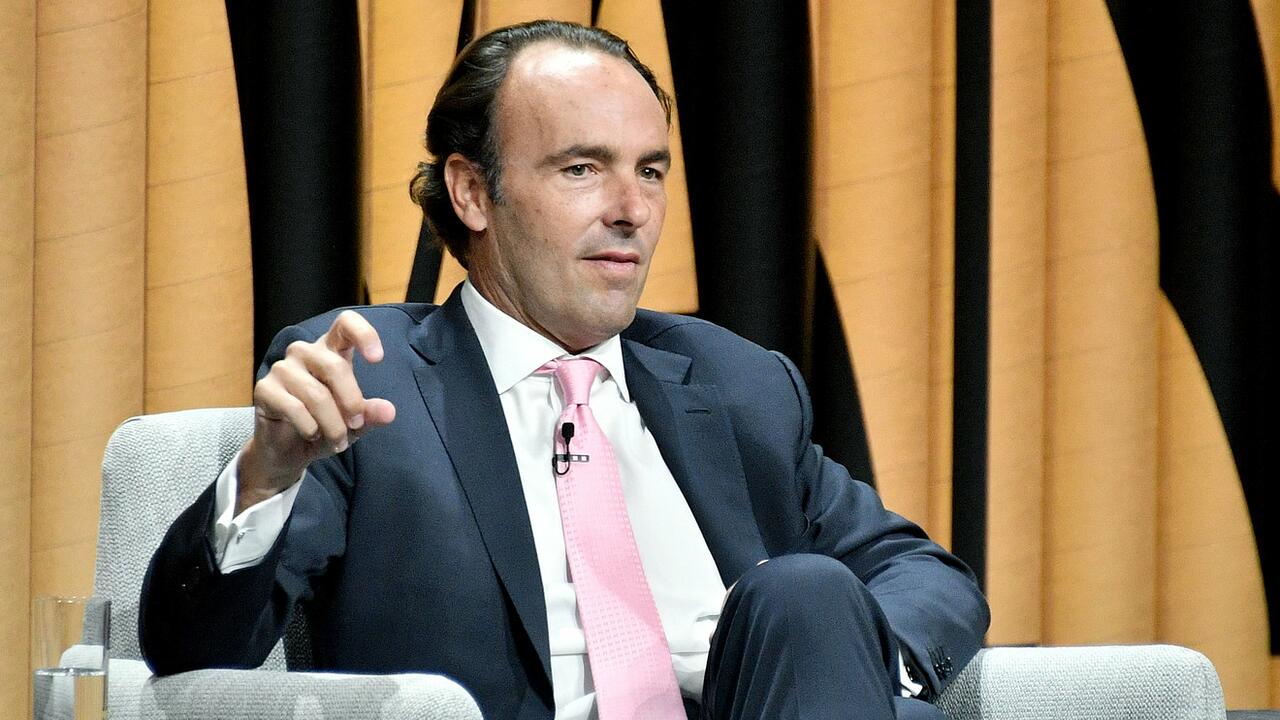
Hayman Capital Management founder and CIO Kyle Bass explained in a Bloomberg interview that the mounting backlash against environmental, social, and governance investing in recent years is primarily a response to the extreme demands of radical climate activists, or “green” defenders. Bass argued that these activists were so disconnected from reality that their uncompromising stance on blackballing the fossil fuel industry—without acknowledging that energy transitions can take upwards of half a century—has fueled the backlash. He said plans to moderate fossil fuel usage over decades from the start would’ve possibly prevented the backlash.

Bass said the ESG backlash derives from climate activists’ demands that fossil fuels be abandoned immediately. He said the demands were never realistic. 

“There were all of these idiots that were just saying, if anyone is doing hydrocarbons, we’re going to blackball them from doing business or from receiving capital,” Bass said, adding, “And so Texas lashed back and said, if you’re going to blackball someone that’s producing hydrocarbons, we’re not going to do business with you either.”

He said, “Energy transitions take 40 or 50 years,” pointing out that people “think we can just turn hydrocarbons off and turn on alternative power. But they have no idea how the grid works and no idea how business works.”

Bass said the focus should now be on efficiency and electrification. He said the long-term goal should be the energy transition to nuclear. Until then, he noted, fossil fuels and renewable energy sources are “going to coexist for decades and decades to come.” 

In a separate interview with CNBC’s “Squawk Box” in 2022, Bass said, “The desire for the world to engage in alternative energy is one that I think we all would love to see happen, but there are certain scientific realities, and there are certain narratives that get pushed by NGOs and teenagers. And I think we’ve been taking policy cues from NGOs and teenagers for a long time.”

Bass pointed out that a proper energy transition takes upwards of a half-century. In the interview with CNBC, he said, “The move from coal to natural gas took forty years. They take a very, very, very long time. We can’t just flip a switch.” 

In his most recent interview with Bloomberg, Bass said, “Skirting hydrocarbons is like bringing politics into investing,” adding, “If you’re willing to give up returns for that, then so be it. But I think that’s naive and it’s a breach of fiduciary duty.”

The latest Bloomberg data shows that about half of the US power grid is powered by natural gas generators. This summer, renewable energy power has slid, with coal now producing more power than wind and solar.

In recent years, ESG policies have discouraged investment by banks, funds, pensions, and other entities in the natural gas and coal industries. The problem with this is that unreliable solar and wind can’t power artificial data centers 24/7. We’ve noted that the financial industry’s initial rush to commit to net zero carbon footprints has hit a reality check in a note titled “ESG Frustration And Backlash In The Banking Sector Continues.” 

The big takeaway is that anyone who puts their climate crisis or woke religion first ahead of rational decision-making is doomed to fail.

Tyler Durden
Mon, 09/02/2024 – 09:05

Global Markets Slump, China Tumbles To 7 Month Low, In Ugly Start The Worst Month Of The Year

0
Global Markets Slump, China Tumbles To 7 Month Low, In Ugly Start The Worst Month Of The Year

Global equities began September on the back foot as investors prepared for what’s typically the worst month for stocks in general, and tech in particular.

After the S&P 500 came close to an all-time high on Friday, US equity futures were fractionally in the red ahead of today’s holiday closure in the cash session thanks to the Labor Day holiday. The Treasury market was also closed while the dollar was steady.

September has traditionally been a very ugly month for stocks over the past four years, while the dollar typically outperforms. The VIX has risen every September since 2021, a month which has proven to be the ugliest for the S&P over the past decade.

And if this Friday’s job report is ugly, the trend will likely continue, although now that nearly 1 million jobs have been “revised” away, it is much more likely that the payrolls print will come in well stronger than expected: after all, the BLS has to make sure it generates enough fake data to ensure that the deep state’s chosen candidate wins. Meanwhile, traders are pricing the US easing cycle will begin this month, with a roughly one-in-four chance of a 50 basis-point cut.

“I think the market is pretty well versed with what it thinks is going to happen — there will be some kind of cut,” Fiona Boal, global head of equities at S&P Dow Jones Indices, told Bloomberg Television. “As we move through autumn, we will see the VIX move more to thinking about the markets, thinking about political issues.”

Ahead of the Friday payrolls report we will get the latest figures on July job vacancies in Wednesday’s JOLTS report. The number of open positions, a measure of labor demand, is seen easing to a three-month low of 8.1 million — just above a more than three-year low.

Meanwhile, reprising the role of JPM’s favorite now-departed uber bear Marko Kolanovic, another Croat at the world’s largest bank, Mislav Matejka, wrote that the equity-market rally may stall even if the Fed starts its rate-cutting cycle as any policy easing would be in response to slowing growth, while the seasonal trend for September would be another impediment.  “We are not out of the woods yet,” Matejka said, reiterating his preference for defensive sectors against the backdrop of a pullback in bond yields. “Sentiment and positioning indicators look far from attractive, political and geopolitical uncertainty is elevated, and seasonals are more challenging.”

Elsewhere, as reported over the weekend, German Chancellor Olaf Scholz’s ruling coalition was punished in two regional elections on Sunday, with the far right clinching its first triumph in a state ballot since World War II. Still, political parties moved to block the Alternative for Germany from power in the eastern states of Thuringia and Saxony.

Taking a look at markets that are actually open, Europe’s Stoxx 600 fell 0.4% from Friday’s record high, with the automotive and consumer goods sectors particularly affected. This downturn followed data showing a fourth consecutive month of contraction in Chinese manufacturing activity, alongside a deepening slump in the country’s residential property market. Europe’s mining giants such as Rio Tinto and BHP Group slumped after iron ore prices dropped. In London, Rightmove surged more than 20% after Rupert Murdoch’s REA Group Ltd. said it’s exploring a possible cash and share offer.

Earlier in the session, most Asian stock markets started the new month under pressure following weak Chinese data over the weekend. Hang Seng dropped about 1.8% and H shares tumble almost 2%. Chinese equities had rallied on Friday after Bloomberg reported that the government is considering allowing homeowners to refinance as much as $5.4 trillion of mortgages to lower borrowing costs. But the benchmark gauge fell 1.7% on Monday, wiping out all of Friday’s gain, and tumbling to a seven-month low, helping to push the emerging-market benchmark lower for the fourth time in five days, as data showing weakness in the world’s second-biggest economy stoked concern Beijing’s stimulus plan isn’t working.

The Shanghai Shenzhen CSI 300 Index dropped to lowest level since Feb. 5, as mainland stocks that have erased $1.12 trillion since May extend losses.

Weekend releases showed factory activity contracted for fourth straight month, value of new-home sales fell almost 27% from year earlier and disappointing earnings from companies including China Vanke also soured sentiment.  With consumer demand already weak, data show industry also slowing, raising urgency for further stimulus.

“I think there’s a huge problem — by now everybody recognizes that,” Hao Ong, chief economist at Grow Investment Group, told Bloomberg’s David Ingles and Yvonne Man in an interview. “The government needs to do substantially more.”

Elsewhere in Asia, Japanese indexes reversed opening gains while those in Taiwan and Australia weaken.

In FX, the Bloomberg Dollar Spot Index is slightly higher in a quiet session while the yen resumes its plunge, and was last trading 147/USD while kiwi dollar underperforms G-10 peers.

In rates, TSY futures consolidate around 113-18 with cash Treasuries closed for US holiday. Australian yields rise 3-4bps across the curve. JGB futures remain better offered ahead of this week’s long-end supply.

In commodities, oil steadied as traders weigh a planned production increase from OPEC+ next month against currently lower output in Libya, while staying mindful of economic headwinds in China.

Top Overnight News

  • China has threatened severe economic retaliation against Japan if Tokyo further restricts sales and servicing of chipmaking equipment to Chinese firms, complicating US-led efforts to cut the world’s second-largest economy off from advanced technology.
  • Political parties in two eastern regions moved to block the Alternative for Germany from power after the far-right party won Sunday’s election in Thuringia and came a close second in neighboring Saxony.
  • Israel’s largest labor union led a nationwide strike on Monday in protest over the government’s failure to secure a hostage-release deal, after the killing by Hamas of six hostages in captivity spurred one of the largest mass demonstrations since the Oct. 7 attack that started the war in Gaza: WSJ
  • Super Micro Computer (SMCI) said it filed a non-timely 10-k with US SEC. Parties working diligently to complete review. Does not anticipate form 10-k NT will contain any material changes to results for FY and quarter ended June 30th, 2024.
  • Microsoft backed OpenAI is considering changes to its corporate structure amid latest funding talks. OpenAI named political veteran Chris Lehane as head of global policy, according to NYT.
  • Intel CEO is to present a plan to the board to sell off assets, according to Reuters source. CEO and executives will present plans at the mid-September board meeting, and plans could include selling Altera programmable chip unit, sources say. Sources added capital spending cuts may include a German factory which is expected to cost USD 32bln, but Intel has no current plans to sell its manufacturing business.
  • Hospitality union Unite Here said about 10k hotel workers across US are on strike at 24 hotels in eight cities: Reuters.
  • The equity market rally may stall near record highs even if the Federal Reserve starts a highly anticipated rate-cutting cycle: JPMorgan
  • China’s remaining growth engines are showing signs of sputtering while the property market continues to drag on the economy, highlighting the urgency of government intervention to keep an increasingly unlikely growth target in sight: BBG
  • September has traditionally been a terrible month for traders and risks being even harder to navigate in 2024 given lingering questions about the Federal Reserve’s anticipated interest-rate cut: BBG

A more detailed look at global markets courtesy of Newsquawk

APAC stocks traded mostly lower despite the gains seen on Wall Street on Friday, with the mood in the APAC region dampened by the continued decline in Chinese NBS Manufacturing PMI whilst traders look ahead to key risks this week including the US jobs report amid the Fed’s shifted focus on employment. ASX 200 opened with modest gains but quickly fell into the red, with the gold miners seeing the deepest losses following the USD-induced losses in the yellow metal on Friday. Nikkei 225 initially outperformed and was underpinned by the weaker JPY, although gains gradually faded throughout the session. Hang Seng and Shanghai Comp fell in which Hong Kong was the regional laggard with property name New World slumping double-digit percentages after it said on Friday it is to post its first annual loss in two decades. Furthermore, auto stocks are slipping after earnings. Meanwhile, the mainland was lower after seeing mixed PMI data in which the NBS manufacturing fell to a six-month low whilst the Caixin Manufacturing saw a revision to above 50.0.

Top Asian News

  • China reportedly warns Japan of retaliation over new potential new chip curbs, according to Bloomberg.
  • China’s Global Times, on the Caixin Manufacturing PMI, says “The data indicates a pickup in demand, steady employment levels, and improving business confidence.”
  • PBoC injected CNY 3.5bln via 7-day Reverse Repo at maintained rate of 1.70%.

FX

  • DXY resided in a tight 101.64-79 range after Friday’s rise from 101.24 lows to 101.78 highs, with the next level to the upside the 21 DMA (102.02).
  • EUR/USD was trading in tandem with the USD in a 1.1040-55 range vs Friday’s 1.1043-94 parameter, with the pair finding support near its 21 DMA (1.1042)
  • GBP/USD saw movement in-fitting with Dollar action, with the pair caged in a 1.3117-38 parameter and well within Friday’s bounds between 1.3106-1.3199.
  • USD/JPY experiencing modest upside as APAC traders react to Friday’s USD and bond movement. Little reaction was seen to Japanese data which included higher-than-prior Q2 Capex and a revision higher in August manufacturing PMI. USD/JPY resided in a 145.89-146.59 range after rising above its 21 DMA (145.97) on Friday
  • Antipodeans eventually fell with the NZD lagging and giving back some of last week’s gains, whilst the AUD fell in tandem with base metals but recovered off worst levels.
  • Yuan was weaker following the Chinese NBS Manufacturing figure over the weekend, with little reaction seen to the Caixin metric.
  • PBoC sets USD/CNY mid-point at 7.1027 vs exp. 7.1030 (prev. 7.1124); strongest CNY fixing since May 16th

Fixed Income

  • 10yr UST futures experienced uneventful trade after Friday’s selloff, with price action today likely to be limited amid the absence of US traders on account of the Labor Day holiday.
  • Bund futures was slightly softer and catching up to some of the UST losses on Friday, with sentiment across German bonds also somewhat dampened by German regional elections in which the AfD’s projected win in Thuringia “would mark the first time since the defeat of Nazi Germany in World War II that a far-right party has won a statewide election in the country”, dpa said.
  • 10yr JGB futures was subdued following price action in USTs on Friday with the contract in a 144.51-76 range thus far vs Friday’s 144.49-80 parameter.

Commodities

  • Crude futures traded lower amid a lack of major geopolitical escalations over the weekend coupled with the Chinese NBS Manufacturing PMI data falling to a six-month low, not boding well for the China-related demand side of the equation. Furthermore, APAC players reacted to OPEC sources from Friday which suggested OPEC+ is likely to proceed with a planned gradual oil production increase from October.
  • Spot gold gradually edged lower in-fitting with broader price action across commodities and dipped under the USD 2,500/oz mark.
  • Copper futures were subdued with upside capped by the disappointing Chinese NBS Manufacturing data which showed a decline to a six-month low.
  • Baker Hughes Rig Count: Oil unchanged at 483, Natgas -2 at 95, Total -2 at 583.
  • Libya’s NOC said recent oilfields closures have caused loss of approximately 63% of total oil production.
  • Iraq to offer 10 gas exploration blocks for US firms, according to the Iraqi oil minister.
  • Russian President Putin says preparatory works on construction of Russia’s gas pipeline to China via Mongolia are proceeding as scheduled, according to Reuters.

Geopolitics: Middle East

  • US President Biden is considering presenting Israel and Hamas a final proposal for a hostage-release and ceasefire in Gaza deal later this week, according to Axios sources.
  • Israel recovered the bodies of six hostages from a tunnel in Gaza, according to Sky News.
  • Israeli PM Netanyahu, following the weekend death of six hostages in Gaza, said Israel will not rest until it reaches those in Hamas who murdered the hostages. He added that he and his government are committed to achieving a deal to release remaining hostages and ensure Israel’s security, according to a statement.
  • Hamas official blamed Israel for the death of hostages, and said Israel is unwilling to reach a deal, according to Reuters.
  • Yemen’s Houthis said they targeted MV Groton vessel in Gulf of Aden for second time, according to Reuters.
  • UKMTO said it has received report of an incident 70NM northwest of Yemen’s Saleef, according to Reuters.
  • “US official: Washington will hold intensive contacts in the coming hours to see the possibility of reaching an agreement”, according to Sky News Arabia.
  • Israel union calls for general strike as protesters across country demand Gaza hostage deal, according to BBC.

Geopolitics: Ukraine

  • Russia will make changes to its nuclear doctrine, according to TASS citing the Deputy Foreign Minister.
  • A fire caused by an drone strike at the Moscow Oil Refinery has been contained, according to TASS.
  • Several blasts heard in Ukraine capital Kyiv, according to Reuters witnesses. “A series of explosions in Kyiv… as Russians attacked with a combination of cruise missiles, ballistic missiles and kamikaze drones.”, according to KyivPost.
  • Poland activated its aircraft to ensure airspace security, Polish Armed Forces said, following Russia’s air attack on Ukraine.

Geopolitics: Other

  • A China Coast Guard vessel deliberately collided three times with a Philippine Coast Guard vessel exercising its freedom of navigation in the Philippines, according to US State Department.

US Event Calendar

  • Labor Day holiday closure

DB’s Jim Reid concludes the overnight wrap

Welcome to September. Although given the track record of recent years, perhaps we should say beware rather than welcome. For what it’s worth, the S&P 500 and the STOXX 600 have lost ground in each of the last 4 Septembers. And if you’re hoping for respite in fixed income, there hasn’t been any there either. In fact, Bloomberg’s global bond aggregate is down in each of the last 7 Septembers. So if we do manage to get some positivity this month, that would fly in the face of a succession of negative performances.

Given it’s the start of the month, we’ve also just released our monthly performance review for August. Despite the turmoil at the start, which led to sharp losses across global markets, August was actually a pretty decent month overall in performance terms. For instance, both the S&P 500 and US Treasuries advanced for a 4th consecutive month. That said, there were points of weakness, and the Dollar index had its worst month since last November as investors priced in more aggressive rate cuts from the Fed.

Speaking of the Fed, all roads this week lead to the US jobs report on Friday, which is going to be pivotal in terms of how much they cut rates by at their next meeting. As it stands, futures still see a 25bp move as more likely, but a 50bp move is being priced with a 31% probability this morning, so it’s in the balance as far as markets are concerned. And as we found out last month, an underwhelming jobs report can quickly shift expectations.

In terms of what to expect this time around, DB’s US economists are forecasting that nonfarm payrolls will come in at +150k in August. That assumes a rebound from potential weather-related disruptions in the July report, and they also see the unemployment rate ticking down a tenth to 4.2%. Of course, much of the focus will be on how Fed officials react, although they won’t have long to discuss the data, as the blackout period ahead of the September meeting begins the day after the jobs report.
Although last month’s jobs report was underwhelming, it’s also worth noting that much of the data since then has looked more positive. The weekly initial jobless claims have fallen from their levels in late-July, the latest retail sales print was very strong as well, and the revisions to Q2 GDP growth saw it adjusted up to an annualised pace of +3.0%, which isn’t consistent with a recession. Moreover, Friday saw the Atlanta Fed’s GDPNow estimate for Q3 move up to +2.5%, so again pointing away from a recession. This week we should get some more details on the August picture, as we’ll get the ISM manufacturing and services prints, which are coming out on Tuesday and Thursday respectively. The JOLTS report on Wednesday will also be worth looking at, although that’s a bit more backward-looking as it’s the July reading.

Aside from the US data, it’s a fairly subdued calendar this week, and US markets are themselves closed today for the Labor Day holiday. One thing we will get though is the Bank of Canada’s latest policy decision on Wednesday, where they’re widely expected to cut rates by 25bps for a third consecutive meeting, which would take their policy rate down to 4.25%.

As the week begins, markets in Asia have got off to a weak start. In part, that’s been driven by concerns about the Chinese economy, and the official manufacturing PMI that came out on Saturday fell to a 6-month low of 49.1 in August (vs. 49.5 expected). The non-manufacturing PMI did pick up to 50.3 (vs. 50.1 expected), but this was barely above the 50.2 reading from the previous month, which had marked the lowest print so far this year. In light of this, Chinese equities have fallen back this morning, including the CSI 300 (-1.21%) and the Shanghai Comp (-0.62%). Elsewhere, things are a bit stronger though, with Japan’s Nikkei (+0.03%) seeing little change, while the KOSPI is up by +0.26%.

Meanwhile over the weekend, there were important political developments in Germany, where state elections took place in the eastern states of Thuringia and Saxony. In Thuringia, the far-right AfD came in first place with 32.8% of the vote on the preliminary results, which is the first time that the party have come first in a German state election. And in Saxony, the AfD were in second place on 30.6% of the vote, not far behind the CDU on 31.9%. At the same time, the results were poor for the three parties in the federal coalition, with Chancellor Scholz’s SPD scoring just 6.1% in Thuringia and 7.3% in Saxony. The Greens were even further behind, on just 3.2% in Thuringia and 5.1% in Saxony. And the FDP was on just 1.1% in Thuringia and 0.9% in Saxony. The next state election is taking place in Brandenburg on September 22.

Recapping last week now, markets put in a decent performance overall, with the S&P 500 climbing +0.24% last week (+1.01% Friday). That was its 3rd consecutive weekly gain, and it now leaves the index just -0.33% beneath its all-time high from mid-July. However, the index was held back by the Magnificent 7, which fell -1.89% over the week (+1.57% Friday), including a -7.73% decline for Nvidia (+1.51% Friday) amidst its latest earnings announcement. Aside from the weakness in US tech stocks though, several indices hit all-time records by Friday, including the equal-weighted S&P 500 and the Dow Jones. Meanwhile in Europe, the STOXX 600 closed at an all-time high as well, having posted a +1.34% gain last week (+0.09% Friday).

On Friday itself, the main development came from the latest US PCE inflation data for July, which is the measure the Fed officially target. That showed core PCE coming in at a monthly pace of +0.16%, which brought down the 3m annualised rate falling to +1.7%. The year-on-year rate also remained at +2.6% for a third consecutive month (vs. +2.7% expected). So the report was seen as confirming that the Fed would still be able to cut rates next month, and there were also some positive details in the components For instance, the core services ex housing measure, which Powell has cited in the past, fell to just +2.0% on a 3m annualised basis, which is the lowest it’s been since November 2020.

Friday also brought some inflation data from the Euro Area, where the flash CPI release for August came in at +2.2% as expected. That’s the lowest inflation for the Euro Area since July 2021, so that was seen as keeping the path open to another ECB rate cut at the September meeting. In addition, core inflation fell to +2.8% as expected.

With all that data in hand, investors remained confident that central banks would be delivering substantial rate cuts over the months ahead. In the US, they slightly dialled back the cuts priced in, with the chance of a 50bp move in September falling from 35% to 32% over the week. Similarly, the number of cuts priced in by December’s meeting fell back a bit from 103bps to 100bps. In response, the 2yr Treasury yield was little changed over the week, up just +0.1bp to 3.92%, whilst the 10yr yield saw a larger +10.5bps move to 3.90%. Meanwhile in Europe, yields on 10yr bunds ended the week up +7.4bps at 2.30%.


Tyler Durden
Mon, 09/02/2024 – 08:44

Ukraine Presents White House With List Of Targets Deep Inside Russia

0
Ukraine Presents White House With List Of Targets Deep Inside Russia

Ukrainian Defense Minister Rustem Umerov has revealed to CNN that the Zelensky government has presented a list of significant targets which lie deep inside Russia to the Biden White House for approval to strike.

His words in the new CNN interview come as Kiev is engaged in intensive lobbying with Washington to get President Biden to greenlight the use of US missiles for longer range attacks. Ukraine has also been begging to receive long-rage missiles toward that end.

Last year Zelensky installed Rustem Umerov as Defense Minister after he sacked Oleksii Reznikov.

“We have explained what kind of capabilities we need to protect the citizens against the Russian terror that Russians are causing us, so I hope we were heard,” Umerov told CNN’s Alex Marquardt on “The Situation Room.”

That’s when Umerov specified that the White House has been provided a list of desirable targets “deep” in Russian territory:

But Umerov pushed back on such assessments, saying Ukraine has presented the US a list of targets they would use ATACMS to strike.

“We are showing that the airfields that they are using to hit our cities are within the range of deep strikes,” Umerov said on CNN.

CNN says that the Biden administration is actively mulling the lifting of all restrictions. This comes dangerously as Ukraine’s Kursk offensive is approaching the one month mark (highly dangerous for the prospect of triggering WW3).

Kiev officials have described that part of the purpose of invading and holding Russian territory is to show NATO backers that Putin’s red lines are bluff. 

Zelensky is hoping that as a result the West can be convinced that there’s nothing to worry about in terms of escalation with nuclear-armed Russia.

Ukraine especially wants all current restrictions on ATACMS systems’ range and use to be lifted. It argues this is crucial for protecting Ukrainian civilians.

At this point in the war, Ukraine has been sending weekly and near daily drone strikes against Russia, targeting especially oil depots and energy facilities. Several more have been reported struck and damaged on Sunday, including sites in the Moscow region.

“They’re killing our citizens. That’s why we want to deter them, we want to stop them, we don’t want [to] allow their aviation to come closer to our borders to bomb the cities,” Umerov further told CNN.

Ukraine’s military has said it is still advancing in Kursk; however, in Donbass where the real front lines are is a very different story. There the Russians are regularly advancing, and have Kiev forces outmanned and outgunned.

But with these expanded cross-border strikes into Russia growing more bolder, and given the White House may openly come out and start supporting this, many analysts are waiting for President Putin to exact revenge in a major way which sends a strong ‘message’ that he is in fact willing to act on his red lines. It’s perhaps only a matter of time for such a massive new escalation from Moscow. This could include directly targeting the Ukrainian capital in a ‘shock and awe’ way, or possibly even a hit on Ukrainian parliament or government buildings.

Tyler Durden
Mon, 09/02/2024 – 07:55