Super Micro Anticipates No Material Changes In 2024 Form 10-K After Delay & Hindenburg Short Report
Server-maker Super Micro Computer, which has been among the biggest beneficiaries of the AI euphoria over the past two years, wrote in a filing Friday that its delayed 2024 Form 10-K will not contain material changes to results from its fiscal year and quarter ended June 30, which were reported in early August.
“Based upon the work done to date, the Company does not anticipate the 2024 Form 10-K will contain any material changes to its results for the fiscal year and quarter ended June 30, 2024, that were announced in the Company’s press release dated August 6, 2024,” SMCI wrote in a filing.
SMCI noted in the filing that the review of financial controls comes “in response to information that was brought to the attention” of its audit committee.
Troubles emerged for the computer server maker on August 6 after the company reported second-quarter earnings results that missed revenue and profit estimates tracked by Bloomberg. The company’s sliding profit margins outweighed its rosy sales outlook, which was billions above Wall Street estimates, and the 10-1 reverse stock split announcement.
Last Tuesday, short-seller Hindenburg Research, known most recently for its long-standing feud with Adani Enterprises, published a short report on SMCI, alleging the semiconductor/server company engaged in accounting manipulation and self-dealing among family members.
Then one day later, one Wednesday, SMCI announced it would delay its 10-K filing for FY 2024…
“Additional time is needed for SMCI’s management to complete its assessment of the design and operating effectiveness of its internal controls over financial reporting as of June 30, 2024,” a filing from the company read.
In markets, SMCI shares have plunged as much as 36% since the dismal earnings report on August 6. Shares peaked around $1,118 in mid-March and have tumbled into a nasty bear market of -63% since then. Following Friday’s filing, shares gained about 2% in after-hours trading.
SMCI was one of the most popular AI trades this year. Shares have nearly round-tripped the lows from the start of the year. For retail traders who bought the top, thank you for playing Wall Street’s AI pump-and-dump game.
A coalition of book publishers and individual authors have filed a lawsuit against the state of Florida over its law banning sexually explicit books from school libraries in the state.
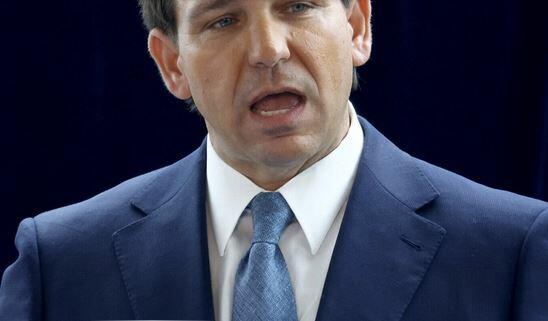
As the Daily Caller reports, the lawsuit was filed in the Orlando Federal Court on Thursday by a group of over a dozen publishers and authors, claiming that the bill signed into law in May of 2023 by Governor Ron DeSantis (R-Fla.) is a violation of both the First and 14th Amendments. The law, the plaintiffs claim, “interferes” with their ability to produce and distribute “constitutionally protected” books, insisting that the law is too vague in its description of “sexual conduct.”
Among the publishers involved in the lawsuit are Simon and Schuster, Penguin Random House, MacMillan Publishing Group, and Hachette Book Group.
“Books that are required to be removed under the prohibitions on content that describes sexual conduct or content that is ‘pornographic’ as construed by the State Board are stigmatized, without regard for their value as a whole or their literary, artistic, historical, medical, or educational value as the Supreme Court requires,” the complaint claims.
The plaintiffs demand that the court rule certain parts of the law as unconstitutional, while failing to list any specific examples of books that they believe should be allowed despite the law.
“Educators who are already afraid of official state action or action by vigilante members of the public fear the loss of their credentials and livelihood and even threats to their safety,” the lawsuit adds, without citing any evidence.
The law in question is House Bill 1069, which was first implemented on July 1st, 2023. The law bans all materials that are considered either sexually explicit or outright pornographic. Parents and conservative activists supported such a bill after it was discovered that numerous novels were in public school libraries featuring explicit descriptions of sexual intercourse, particularly between homosexual couples. One such book was a graphic novel with X-rated visual depictions of homosexual sex.
“Over the past year, parents have used their rights to object to pornographic and sexually explicit material they found in school libraries,” said DeSantis in a February statement. “We also know that some people have abused this process in an effort to score cheap political points. Today, I am calling on the Legislature to make necessary adjustments so that we can prevent abuses in the objection process and ensure that districts aren’t overwhelmed by frivolous challenges.”
UK Announces Partial Ban On Arms Exports To Israel
The United Kingdom has announced it will suspend a portion of its current arms and defense sales to Israel, citing a “clear risk” to civilians and that they could be used to violate international humanitarian law.
Foreign Secretary David Lammy informed parliament Monday that the suspension will impact of 30 of 350 arms export licenses to Israel. The partial ban covers supplies “which could be used in the current conflict in Gaza” against Hamas. However, parts for F-35 fighter jets are exempt from the ban. He emphasized that the country still backs Israel’s right to self-defense, and thus the UK is not enacting a blanket ban on all items.
“It is with regret that I inform the House [of Commons] today the assessment I have received leaves me unable to conclude anything other than that for certain UK arms exports to Israel, there does exist a clear risk that they might be used to commit or facilitate a serious violation of international humanitarian law,” Lammy said, after conducing a review of shipments to Israel.
“We recognize, of course, Israel’s need to defend itself against security threats, but we are deeply worried by the methods that Israel’s employed, and by reports of civilian casualties and the destruction of civilian infrastructure particularly,” he continued.
The Gaza Health Ministry has said that over 40,000 Palestinians have been killed in over ten months of war. Israel says a large percentage of the deceased are Hamas militants, while Palestinian sources assert the majority are women and children.
Analysts say this is not expected to have much of an impact on Israel’s operations given that British exports only make up less than one percent of total external arms sales Israel receives.
Israel reacted with disappointment, anger, dismay. Israeli Foreign Minister Israel Katz lashed out Monday in wake of the UK decision, saying it “sends a very problematic message” to terrorist groups like Hamas and its supporters in Iran.
But Lammy had sought to emphasize in his comments it doesn’t mean he believes Israel is guilty of war crimes or human rights abuses per se. “This is a forward looking evaluation, not a determination of innocence or guilt, and it does not prejudge any future determinations by the competent courts,” he said.
Meanwhile, pressure from Washington to wrap up Gaza operations also could be growing…
⚡️US President Joe Biden was asked if he thinks Netanyahu is doing enough to reach a hostage deal, he replied: “No” pic.twitter.com/EFMvkTZQBw
Large and growing pro-Palestine protests which have gripped parts of London over the last weeks and months have been increasing in size and intensity, and are perhaps having an impact on Labour politicians.
The D.C. Circuit Court on Tuesday ruled against approval of liquefied natural gas (LNG) export terminal and related pipeline projects at the Port of Brownsville, effectively canceling prior approval of three such projects by the Federal Energy Regulatory Commission.
The Sierra Club, in announcing the ruling, said this is the first time a court has vacated FERC approval of an LNG terminal. FERC approved Rio Grande LNG, Texas LNG and the Rio Bravo Pipeline “despite widespread concerns for the harm the projects would cause to the surrounding communities and the climate.”
A lawsuit was filed against FERC by the Sierra Club, the city of Port Isabel, Vecinos para el Bienestar de la Comunidad Costera and the Carrizo/Comecrudo Tribe of Texas, a Floreville-based nonprofit organization, claiming that FERC failed to “adequately consider the environmental justice impacts and greenhouse gas emissions of the three projects, as required by the National Environmental Policy Act and the Natural Gas Act.“
The D.C. court upheld the petitioners’ arguments, vacating FERC’s approvals, meaning the agency now has to reconsider the impacts of the three projects. This will require a new draft supplemental Environmental Impact Statements and public comment period before FERC decides whether to issue new project permits.
The court’s ruling follows two other rulings in July that “call into question the adequacy of FERC reviews,” according to the Sierra Club, which noted that last week the D.C. Circuit Court ruled FERC had failed to consider greenhouse gas emissions as well as market need for expansion of Real Energy Access, a Williams company pipeline project in the Northeast.
Also last month, the same court ruled that FERC failed to adequately assess Commonwealth LNG’s air pollution impacts and greenhouse gas emissions, the Sierra Club said, adding that “it is unacceptable for FERC to conduct insufficient environmental justice analysis and to decline to make determinations on the significance of climate-warming emissions.”
It was focused on regulating the rates charged by interstate natural gas transmission companies. In the years prior to the passage of the Act, concern arose about the monopolistic tendencies of the transmission companies and the fact that they were charging higher than competitive prices. The passage of the Act gave the Federal Power Commission (FPC) control over the regulation of interstate natural gas sales. Later on, the FPC was dissolved and became the Federal Energy Regulatory Commission (FERC) pursuant to a different act. FERC continues to regulate the natural gas industry to this day.
National Environmental Policy Act
The National Environmental Policy Act was passed by the U.S. Congress in December 1969 and signed into law by President Richard Nixon on January 1, 1970.
Since its passage, NEPA has been applied to any major project, whether on a federal, state, or local level, that involves federal funding, work performed by the federal government, or permits issued by a federal agency. Court decisions have expanded the requirement for NEPA-related environmental studies to include actions where permits issued by a federal agency are required regardless of whether federal funds are spent to implement the action, to include actions that are entirely funded and managed by private-sector entities where a federal permit is required. This legal interpretation is based on the rationale that obtaining a permit from a federal agency requires one or more federal employees (or contractors in some instances) to process and approve a permit application, inherently resulting in federal funds being expended to support the proposed action, even if no federal funds are directly allocated to finance the particular action.
Environmental Justice?!
The courts have further expanded the act beyond all recognition to include environmental justice.
Now, on three approved projects, with construction underway, in the name of “environmental justice”, the three projects “will require a new draft supplemental Environmental Impact Statements and public comment period before FERC decides whether to issue new project permits.”
Wikipedia notes the average time for a review is 4.5 years!
I strongly suggest the affected parties challenge this all the way to the Supreme Court. Hopefully the Supreme Court will put a permanent end to this regulatory madness.
Pennsylvania Are You Paying Attention?
Pennsylvania is the second largest natural gas exporter in the US, second only to Texas.
This explains Kamala Harris’ reversal on fracking. Anyone paying attention knows she is a liar.
CLAIM: In Thursday’s interview, Ms Harris said she would not ban fracking and maintained that she has “not changed that position”.
VERDICT: This needs context and could be misleading as Ms Harris has changed her public position on fracking. In 2019, she said she was “in favour of banning fracking.”
The following year, in the 2020 vice presidential debate when she was on the Biden ticket, Ms Harris said “Joe Biden will not end fracking” and: “I will repeat, and the American people know, that Joe Biden will not ban fracking.”
During the CNN interview on Thursday she was pressed on her 2019 statement, and Ms Harris responded: “I made that clear on the debate stage in 2020, that I would not ban fracking. As vice-president, I did not ban fracking. As president, I will not ban fracking.”
Has child poverty fallen by over 50%?
CLAIM: “When we do what we did in the first year of being in office to extend the child tax credit, so that we cut child poverty in America by over 50%.”
VERDICT: This is somewhat of an exaggeration and needs context. Child poverty rates did fall, but not by “over 50%” and they rose again the year after, so the impact was only temporary.
In Creampuff Interview, CNN Spoon Feeds Harris the Answers to its Questions
“How should voters look at some of the changes that you’ve made?” Bash asked Harris. “Is it because you have more experience now and you’ve learned more about the information? Is it because you were running for president in a Democratic primary? And should they feel comfortable and confident that what you’re saying now is going to be your policy moving forward?”
Nothing like giving the person interviewed the answer right in the question you ask in case they cannot figure out what to say.
“My values have not changed,” replied Harris, pretending to be pro- and anti-fracking simultaneously.
Robert F. Kennedy Jr. has said that individuals who engaged in “criminal” behaviour during the pandemic still need to be held accountable.
Kennedy, who is in line for a health related position in Donald Trump’s administration should he be elected, declared recently that there needs to be a “reckoning” brought upon those responsible.
Speaking at the Limitless Expo, Kennedy explicitly referenced Anthony Fauci, noting “I wrote a book about Fauci. It’s a great book. There are 2,200 footnotes in the book… I invited people to find problems with the book… And nobody ever told us any factual error in that book.”
He charged that Fauci and others used their positions during COVID to enforce “totalitarian controls that were not science-based.”
“It’s a story, really, of people involved in really terrible, immoral, homicidal criminal behavior,” Kennedy urged.
RFK Jr: “There still has to be a reckoning” for Covid
“The mainstream media hasn’t caught up with the science, but the science is out there now and it’s devastating.”
“Yesterday, the chief attorney for FDA admitted, because he lost a case in court against a doctor, that there… pic.twitter.com/dvLRD6tvAx
He noted that effective treatments were repressed, stating “Ivermectin was a very, very devastating cure for COVID. It literally obliterated COVID.”
“By depriving people of Ivermectin, many, many people, millions of people around the globe, died, and they didn’t need to,” Kennedy added, charging that Fauci and others pressured the FDA to discourage such treatments in favour of relentlessly pushing unproven and untested vaccines.
“There were cures for COVID from day one, very effective cures. But they didn’t want that. They wanted the vaccine only,” Kennedy posited, adding “if they admitted that any of [the treatments] were effective, the whole vaccine project would have fallen apart.”
Kennedy added that after the vaccines, myocarditis cases among young people, particularly athletes, exploded.
“On average, it was, I think, 29 a month globally, athletes who died on the field. We’re getting down to hundreds a month now,” Kennedy emphasised.
He concluded that “the science is out there now, and it’s devastating.”
After endorsing Donald Trump last month, RFK Jr. declared that he is ready to help “make America healthy again.”
Your support is crucial in helping us defeat mass censorship. Please consider donating via Locals or check out our unique merch. Follow us on X @ModernityNews.
Eric Weinstein: ‘I Don’t Know Whether Trump Will Be Allowed To Become President’
Eric Weinstein told Chris Williamson on the “Modern Wisdom” podcast that Donald Trump’s presidency has disrupted the old “rules-based international order,” which many view as an attempt to control global stability and wondered if the Republican nominee will “be allowed” to reenter the White House if elected in 2024. Weinstein argued that Trump’s unorthodox approach challenged the status quo, exposing flaws in the system and revealing that the impact of populist leaders on democracy and international agreements is more complex and significant than previously understood.
CHRIS WILLIAMSON: When we spoke at the start of the year, I said it was way too close to November to switch anybody out. Turns out that I was wrong.
ERIC WEINSTEIN: Beginner’s luck.
CHRIS WILLIAMSON: You said what are the odds that Joe Biden has a debilitating event between now and November including death, so he runs a one in 20 chance of dying in any given year or above that. I don’t think you know whether he’s even going to make it to November debilitating event could have been a debilitating public event
ERIC WEINSTEIN: I purposefully left it vague. I didn’t say the other part of it, which I now feel comfortable saying, which is…
CHRIS WILLIAMSON: What do you mean by that?
ERIC WEINSTEIN: I think there’s a remarkable story, and we’re in a funny game, which is: are we allowed to say what that story is? Because to say it, to analyze it, to name it, is to bring it into view. I think we don’t understand why the censorship is behaving the way it is. We don’t understand why it’s in the shadows or why our news is acting in a bizarre fashion. So let’s just set the stage, given that that was in February.
There is something that I think Mike Benz has just referred to as the rules-based international order. It’s an interlocking series of agreements, tacit understandings, explicit understandings, and clandestine understandings about how the most important structures keep the world free of war and keep markets open. There has been a system in place, whether understood explicitly or behind the scenes or implicitly, that says the purpose of the two American parties is to prune the field of populist candidatesso that whatever two candidates exist in a faceoff are both acceptable to that world order.
From the point of view of, say, the State Department, the intelligence community, the defense department, and major corporations involved in international issues—from arms trade to, oh, I don’t know, food—they have a series of agreements that are fragile and could be overturned if a president entered the Oval Office who didn’t agree with them. And if the mood of the country was, “Why do we pay taxes into these structures? Why are we hamstrung? Why aren’t we a free people?” So what the two parties would do is run primaries with populist candidates and pre-commit the populist candidates to support the candidates who won the primaries. As long as that took place and you had two candidates that were both acceptable to the international order—that is, they aren’t going to rethink NAFTA or NATO or what have you—we called that democracy. And so democracy was the illusion of choice, what’s called magician’s choice, where the choice is not actually, you know, “pick a card, any card,” but somehow the magician makes sure that the card that you pick is the one that he knows.
In that situation, you have magician’s choice in the primaries, and then you’d have the duopoly field: two candidates, either of which was acceptable, and you could actually afford to hold an election. That way, the international order wasn’t put at risk every four years because you can’t have alliances that are subject to the whim of the people in plebiscites.
Under that structure, everything was going fine until 2016, when the first candidate ever to not hold any position in the military nor any position in government in the history of the Republic, Donald Trump, broke through the primary structure. Then there was a full court press: “Okay, we only have one candidate that’s acceptable to the international order. Donald Trump will be under constant pressure—he’s a loser, he’s a wild man, he’s an idiot, and he’s under control of the Russians.” And then he was going to be, you know, a 20-to-1 underdog, and then he wins. There was no precedent for this. They learned their lesson: you cannot afford to have candidates who are not acceptable to the international order and continue to have these alliances. This is an unsolved problem.
I don’t have a particular dog in this fight. I believe in democracy; I also believe in international agreements. And it is the job of the State Department, the intelligence community, and the defense department to bring this problem in front of the American people and say, “We have a problem. You don’t know everything that’s going on, and if you start voting in populist candidates, you’re going to end up knocking out load-bearing walls that you don’t understand.”
Work defines us. It shapes our days, fills our hours, gives meaning to what we do and who we are.
For some, it’s a profession, a career, a calling. Others see a job as a necessity that allows them to do their most important work: raising a family, building a community, pitching in to help others.
This is the work that has built America. This Labor Day weekend, we pause to praise the American worker.
‘There Ain’t No Quit in Me’
Farrier Robb Hoffman thinks a lot about the state of America as he drives between commercial horse operations and backyard hobby farms throughout North Florida.
His “office” is a small, white pickup with a mobile workshop in the bed, filled with tools for trimming horses’ hooves and shaping horseshoes.
For job security and because he has five grandchildren, he hopes the next president will bring about “a good, strong economy and a strong border,” he told The Epoch Times. “That’s more conducive to business.”
Without those things, “the people start to suffer and they start to cut the fat. They start to do away with things they don’t need, like horses.”
Hoffman, 59, hopes the upcoming election will put someone in the White House who is “for the people, and for our country. They’re Americans first, and they’re politicians second.”
“I can tell you straight up, there’s been many a day that my wife and I have ate less, so our kids can eat more. And I think all families go through that.”
Horses’ hooves continuously grow and need to be trimmed and balanced about every 4-6 weeks. Some need shoes that must be customized for each hoof. Some need corrective or therapeutic shoeing in order to move freely and without pain.
Hoffman went to farrier school out West to become certified in his craft. Then he apprenticed with pros near Ocala, Florida, said to be the horse capital of the world.
To make ends meet, he often works 12- to 16-hour days, sometimes six days a week. It’s the kind of bent-over work that makes a guy’s back, legs, and arms ache.
Between each horse, he rests a bit and takes a few sips of water he keeps in his truck.
“If you don’t like hard work, and working when it’s 105 degrees, or working when it’s pouring down rain and all your tools are getting wet, it’s just not a career somebody would want to pursue.”
So why do it?
It’s simple, he told The Epoch Times.
“I love horses, and I love people.
“Plus, my dad instilled in me a work ethic that, no matter what, you don’t give up.
“He used to tell me all the time, that there’s nothing more important in your life than your job … you always provide for your family. You feed your kids, you clothe your kids, and you take care of your kids and your wife.”
Hoffman has had “a lot of health issues and a lot of debilitating things”… “but I just don’t quit. There ain’t no quit in me.”
He works wearing therapeutic shoes and leg braces.
“I just don’t look at it like a disability. I just look at it like, this is the cross that I bear, and I’m gonna do everything I can to do everything that I do well.
And he doesn’t see his work as just providing foot care for horses.
“I’ve tried to use this as a ministry. Sometimes that has to deal with Christianity, and sometimes people just need to talk, to get things off their chest, like therapy.”
One client calls him a “farr-apist.” It’s a moniker he’d like to put on a hat some day.
The Value of Work
Darryl Burkett doesn’t fit the stereotype of a CEO. With his ball cap cocked back on his head, he contemplates the grease under his nails, takes a break from restocking his truck with plumbing supplies, and opines about why he’s proud of his work in Durant, Oklahoma.
Since 2009, he’s owned and operated KD Plumbing & Construction, LLC., a business that has grown to employ 14 people in a warehouse near the airport. He figures the keys to his entrepreneurial success are his dedication to his family and his community and an education that extends beyond classrooms and lectures. His most skilled instructor, he says, was his father.
“My dad told me that if you learn how to do everything and you’re willing to do anything, you’ll always make a living. You make yourself valuable,” he told The Epoch Times.
Like most ranchers, tradesmen, and blue collar workers in this Southeast Oklahoma town, Burkett has amassed a variety of skills. He welds, fixes equipment, repairs plumbing, builds things, and operates all kinds of vehicles.
“There’s nothing that I’m scared to do.”
He played some baseball in college, then went to work at the Choctaw Casino & Resort-Durant. But realizing he “was not an inside guy,” he moved on to work with his father, who taught him valuable technical skills.
But more importantly, he said, his father taught him the value of work.
Eventually, he bought a truck, gathered his tools, and opened his own business. But it’s the work ethic, taught by his father, that has kept his company open and his family fed, he said.
“I like to work with my hands. I’ll get down in the hole like anyone else. If I have to keep my crew late, I’m right there with them.”
He likes knowing that others, far beyond his immediate family, depend on the jobs he provides. Few think about the workers who tend a city’s infrastructure … until the water stops.
“If [tradesmen] quit for a week, the country would fall apart,” he said.
Burkett wants his children to feel the same pride and satisfaction in their work, regardless of the career they choose. He’s less concerned about the kind of work they do and more focused on the type of workers they become.
“I want to teach them well enough to be my competitors someday.”
Blue Collar Skills Pay
Blue collar workers deserve the same respect as other professionals, some told The Epoch Times.
Nine years ago, Kevin Dougherty was a cybersecurity specialist with a company in Houston, Texas. Today, he prefers to wield a chainsaw from an elevated bucket mounted to a truck as part of a three-man tree-trimming crew in Bryan County, Oklahoma.
“I’m tired of working in an office,” said Dougherty, 39, foreman of Texoma Dirty Work Tree Service. “As much as I can, I like to get in the bucket.”
Along with co-workers DJ Henson and Billy Derryberry, he trims limbs away from roofs and electrical lines and removes trees that could fall on buildings or other property.
His coworker, Henson, left the loan department of a local bank about a year ago to trim trees. All three men in the crew agree: They find fulfillment and enjoyment in providing an essential service that protects their customers’ property.
“[Without us] trees would fall on houses,” Henson said.
Plus, running chainsaws and wood chippers pays better than shuffling papers and typing on computer keyboards, they said.
Henson spends about 55 hours a week raking tree debris and hauling away the limbs Dougherty drops to the ground from more than 20 feet above. Then he feeds them into a chipper.
“It’s harder work“ than at the bank, Henson said, ”but I make a lot more money.”
Dougherty said most of his coworkers were raised in politically and socially conservative homes. Most still lean that way, he said, and they base political preferences largely on policies affecting their work.
When it comes to who will inhabit the White House next, he said, issues such as the Keystone pipeline make the best barometers of blue collar sympathies.
“When they shut that down, a lot of blue collar guys started reaching [out to be] Republican. They’re deciding on [voting for] whoever will keep them at work.”
He believes salaries for blue collar vocations are rising because fewer people are willing to do physically demanding work. And despite what some may think, education matters, even in blue collar work. The more skills you master, the more you can earn, he said.
“You can make six figures easy.”
But, some things matter more than money.
“I get out here and do it because I love it,” he said. “People don’t realize that blue collar jobs are honorable.”
Every Shift Brings an Opportunity
Gina Rivera, 27, is filling shifts this Labor Day weekend as a server at a restaurant where patrons will be celebrating the holiday that honors workers.
She’s fine with that.
In fact, it’s an opportunity. Not only will the single mother earn some side-hustle cash, but she’ll also be able to market herself.
Rivera, of Lakeland, Florida, holds three jobs. She’s a licensed cosmetologist and a real estate agent, too. For her, each job blends into the others.
“I like networking. I like meeting new people, talking with people,” she told The Epoch Times.
Every diner, salon client, and prospective home buyer is a potential customer at one of her other businesses.
Those are Rivera’s jobs.
Her “work” is caring for her three children. At 7, her oldest, Malachi, is just starting second grade. Her middle child, Luca, is 4, and the youngest, Rosemar, is just 3 three months old.
It’s constant motion, a work in progress.
“It’s hard,” the Massachusetts native said. “I had to push myself. There were times I wanted to give up.”
If not for her mother—a fellow cosmetologist, who encouraged her to pursue that licensing—and a friend who watches her children, Rivera couldn’t support her family.
“It takes a village,” she said. “A lot of women don’t have a village.”
In my new book and prior columns I have described a “radical chic” in academia, faculty who thrill audiences with extremist rhetoric and calls for radical reforms, even revolution. The latest example comes from Arizona State University where professors laid out their dystopian vision of America, a vision that apparently can be avoided by “dismantl[ing] capitalism” and “elect[ing] a female president.”
At the outset, it is important to note two things. First, the program covered by the conservative site College Fix was a small event. Second, these faculty members have every right to espouse these views and it is good for students to have a wide variety of viewpoints on campus.
My objection in the past has not been the presence of far left faculty on campuses but the purging of conservative, moderate, and libertarian faculty.
It is also important to address what are becoming common and extreme arguments on our campuses, including a growing anticapitalist movement.
The event titled “Jenny Irish’s HATCH: A Speculative Future for Reproductive Rights” was held both in person and via Zoom. Jenny Irish, an ASU English professor, was joined by Angela Lober, director of the Academy of Lactation Programs at ASU’s Edson College of Nursing and Health Innovation.
Lober, who runs major programs at the school, offered some of the most extreme viewpoints, including the assertion that “the United States hates women and everything the female body does.”
It was a remarkable claim for a nation that has been a leader in the world in women’s rights for over a century and has long had major female leaders from the Vice President to the Speaker of the House of Representatives to cabinet members.
Not to be outdone, Irish expressed her fear that the United States could see “forced breeding camps” and “cannibalism.” She told the students and faculty that “so much of our reality points toward those futures.” She was less clear on what specifically is pointing to that future other than the Supreme Court’s decision to leave abortion to the states.
Lober was, however, clear about the solution in calling for the audience to help “dismantle capitalism” and “elect a female president.”
Putting the hyperbolic rhetoric to the side, the anti-capitalist calls have become ubiquitous on campuses. Socialism has become a rallying cry with polls showing that young people have a more positive view of socialism than capitalism.
There is an interesting dynamic to the push for socialism in the United States. Advocates may have a harder time convincing new migrants and citizens who fled socialist countries like Venezuela.
The draw of a “land of opportunity” has been due to not just our laws but also our economic system. The ability to sustain that growth (or support the existing social welfare systems) depends on a competitive economic system.
The irony is found in comments like those of Fidel Castro who declared that “my idea, as the whole world knows, is that the capitalist system now doesn’t work either for the United States or the world, driving it from crisis to crisis, which are each time more serious.” Cuba was (and continues to be decades later) an utter economic basket case without either liberty or prosperity.
Hugo Chavez made the same claim before driving his country into an economic tailspin.
As a student at the University of Chicago, I was fortunate enough to attend lectures by Milton Friedman and, despite being a liberal, I was convinced that there was a connection between capitalism and individual liberty. There are liberty-enhancing economic systems and those that are liberty-reducing. The freedom of economic choice in a capitalist system has historically reinforced individual liberty in my view.
The ASU event captures a rising call for dismantling an economic system that helped drive industrial innovation and massive wealth creation. It has also left great wealth disparities. We have sought to address poverty with social programs that offer greater opportunity for those who have not been able to escape cycles of poverty. We have much work to be done. However, the anti-capitalist movement often offers few specifics on the alternatives, as at the ASU event.
This is a debate that should be welcomed but not in this type of one-sided, jingoistic presentation. Imagine how much more substantive this panel would have been with an alternative viewpoint. Let’s have a discussion on the merits of capitalism and the record of alternative systems. That would offer educational and not merely emotive benefits to our academic community.
* * *
Jonathan Turley is a Fox News Media contributor and the Shapiro Professor of Public Interest Law at George Washington University. He is the author of “The Indispensable Right: Free Speech in an Age of Rage” (Simon & Schuster, June 18, 2024).
Oil Tanker & Merchant Ship Hit By Projectiles As Another Tanker Burns, Risking ‘Worst Spill This Century’
As the Greek-flagged oil tanker MV Sounion burns in the southern Red Sea, Iran-backed Houthi militants targeted two ships with missiles and drones in the critical maritime chokepoint on Monday.
Reuters reports projectiles hit a Panama-flagged oil tanker and a merchant vessel. Security firm Ambrey confirmed the oil tanker was hit by two missiles, with sources indicating the tanker is named “Blue Lagoon I.”
Ambrey and the United Kingdom Maritime Trade Operations (UKMTO) said the tanker was hit by missiles about 70 nautical miles northwest of Yemen’s port of Saleef. The merchant ship was hit about 50 nautical miles off Yemen’s Hodeidah.
The security firm said it “assessed that the tanker was targeted due to company affiliation with a vessel calling Israeli ports.”
Monday’s attack comes as the world braces for what could be one of the worst tanker spills this century. The Sounion tanker remains on fire and could be leaking oil.
Maritime news outlet Splash 247 noted the parallels between the Sounion and FSO Safer incidents. In recent years, a projected oil spill map for the FSO Safer was published due to the risk of a leak from the tanker anchored in the Red Sea. Fortunately, the tanker was emptied last year, averting a spill. However, that spill map could serve as a guide for assessing the potential impact if a leak from the Sounion materializes.
The Sounion is carrying 150,000 tons of crude oil from Iraq. The badly damaged ship risks spilling four times as much oil as the Exxon Valdez, arguably tanker shipping’s most famous casualty, potentially becoming the fifth worst oil spill of all time, according to statistics carried by the International Tanker Owners Pollution Federation (ITOPF).
The ship is carrying a similar amount of oil to the FSO Safer and is in a similar location to that vessel, leading shipping consultant Lars Jensen to highlight today the potential environmental catastrophe unfolding in the Red Sea.
Splash has repeatedly reported on the United Nations’ operation to remove the FSO Safer from Yemeni waters. Last year, the UN bought a Euronav tanker and was able to empty the rusting, abandoned FSO Safer’s cargo of 1.14m barrels of crude oil.
Carrying over 1.1m barrels of oil, the FSO Safer was abandoned off Yemen’s Red Sea port of Hudaydah after the civil war broke out in the country in 2015. Since then, the vessel deteriorated significantly in the absence of any servicing or maintenance, prompting fears of a major environmental disaster
To fund the FSO Safer operation the UN issued a report outlining the consequences if the FSO Safer situation was not resolved.
“Now that study can be seen as a reasonable proxy for the consequences of a major spill from the Sounion given that both the geographic location and the amount of oil involved is almost the same,” Jensen, who heads up Vespucci Maritime in Copenhagen, wrote in a LinkedIn post today.
According to the UN report, the FSO Safer oil spill impact would have devastated the fishing communities on Yemen’s Red Sea coast where 500,000 people make their living from the fishing industry with 1.7m dependents.
Desalination plants on the Red Sea coast could be closed, cutting off water supply for millions, the UN report warned, adding that oil could reach the shores of Saudi Arabia, Eritrea, Djibouti and Somalia.
The UN estimated the clean-up bill from a possible FSO Safer disaster could have reached $20bn, just $1bn shy of the annual GDP of Yemen.
“It does raise the question as to whether or not it is ethically prudent to operate major oil tankers through the area under the current circumstances,” Jensen mused.
Pictured below from the UN report on the FSO Safer, whose precarious circumstances were very similar to the Sounion’s, are maps showing the areas at risk by using colours to indicate how much oil is expected on the surface in different places and times. Ports are marked with black dots, and water treatment plants are marked with blue dots.
The Houthis have targeted more than 80 merchant ships with missiles and drones since Israel’s war on Hamas in Gaza started in October. This continued turmoil in the Red Sea shows how the West’s “credibility and deterrence” is quickly eroding.
Where is the rightful outrage from environmentalists? Thousands of tons of crude oil will now pour into the Red Sea.
This is a clear sign of the collapse of American credibility and deterrence. Letting the Iranian proxy Houthis shut off a major maritime seaway is an epic fail.… https://t.co/ThmzZ5FAED
America’s bubblicious economy will soon hit another milestone of sorts—-the $50 trillion mark with respect to the market value of owner-occupied residential real estate. At the present moment, this figure (purple line) stands at $46 trillion (Q1 2024), which is nearly 2X its pre-crisis level of $24 trillion in Q4 2006. It’s also 8X its level when Greenspan took the helm at the Fed ($5.6 trillion) after Q2 1987 and a staggering 51X the $900 billion value of all owner-occupied homes when Tricky Dick did the dirty deed at Camp David in August 1971.
Needless to say, neither household incomes nor the overall US economy have grown at anything near those magnitudes. For instance, nominal GDP is up by 24X or less than half the gain in housing values since Q2 1971. As a consequence, the value of owner-occupied housing relative to GDP has climbed steadily higher over the last 50 years:
Market-Value of Owner-Occupied Housing As % of GDP Since 1971:
Q2 1971: 79%.
Q2 1987: 117%.
Q4 2006: 172%.
Q1 2024: 175%.
Market Value of Owner-Occupied Real Estate And % Of GDP, 1970 to 2024
Here’s the thing. The US economy was downright healthy in 1971. During the 18 years between 1953 and 1971 real median family income rose from $38,400 to $62,700 or by a robust 2.8% per annum. So the fact that residential housing represented only 79% of GDP at that point was not indicative of some grave deficiency or structural malfunction in the US economy.
Indeed, when you note that real median family income rose by only 0.8% per annum during the most recent 18 year period, or by just 29% of the 1953-1971 rate, you might well conclude that it would have been wise to leave well enough alone. Not only was the main street economy prospering mightily, but it was being accomplished with honest interest rates owing to Fed policy that was constrained by the Breton Woods gold exchange standard and also by the sound money philosophy that prevailed in the Eccles Building during the William McChesney Martin era.
As shown below, the 10-year UST benchmark rate during that period exceeded the CPI inflation rate by more than 200 basis points most of the time, save for brief periods of recession. Yet the US economy thrived, real living standards rose steadily and the residential housing market literally boomed.
Inflation-Adjusted Yield On 10-Year UST, 1953 to 1971
The subsequent period between 1971 and 1987, of course, was racked first by the double digit inflation of the 1970s and then the brutally high nominal interest rates that issued from the Volcker Cure during the first half of the 1980s. But by 1986 consumer inflation was back to just below 2% and heading lower, thereby paving the way for interest rates to normalize to a low inflation economy.
But the new Fed chairman, Alan Greenspan, had other ideas. Namely, the notion that “disinflation” as opposed to no inflation was good enough for government work; and also that the Fed could actually improve upon the jobs and income performance of the main street economy via what he labeled the “wealth effects” doctrine. That is, if the Fed kept Wall Street percolating happily and the stock indices rising robustly, the increased wealth among households would kindle capitalist animal spirits, thereby fueling enhanced spending, investment, growth, jobs and incomes.
Notwithstanding Greenspan’s mumbling and opaque messaging, what he was doing actually amounted to monetary humbug as old as the hills. He launched an era in which real interest rates were pushed steadily and artificially lower to the zero bound and below on the theory that rates well below what would otherwise prevail under honest supply and demand conditions on the free market would elicit an enhanced level of economic growth and prosperity.
It never happened on a sustained basis, of course, because below market interest rates only cause an accumulation of above normal debt levels in the public and private sectors alike—along with widespread economic distortions and malinvestment on main street, unsustainable leveraged speculation on Wall Street and, at best, the swapping of more economic activity today for reduced activity and higher debt service tomorrow.
In any event, the inflation-adjusted benchmark US Treasury rate marched virtually downhill for the next three decades, ending deep in negative territory by the early 2020s. The ill-effects were widespread throughout the economy and in this instance turbo-charged by the deep tax preferences for home mortgages. So the inflow of cheap debt into the residential housing market was massive and sustained.
There is no mystery as to why: Economic law says that when you subsidize something heavily, you get more of it. And the implicit Fed subsidies depicted in the graph below were heavy indeed.
Inflation-Adjusted Yield On the 10-Year UST, 1987 to 2024
Needless to say, economic law had its way with the residential mortgage market. Big time. Household mortgage debt (black line) had stood at $325 billion or just 50% of household wage and salary income (purple line) back in 1971. But by the peak of the subprime borrowing spree in 2008-2009, mortgage debt had risen by 33X to nearly $11 trillion.
Consequently, the mortgage debt burden soared to 170% of household wage and salary income before abating modestly during the period since 2009. But the point is, the Fed’s severe interest rate repression during that period caused a financial arms race in the residential housing market—with ever more debt pushing housing prices ever higher.
In short, it wasn’t the free market or even steadily rising, albeit more slowly growing, GDP that caused residential housing values to go from 79% of GDP in 1971 to 175% of GDP at present. Instead, it was a sustained, fiat credit fueled tidal wave of housing price inflation—a financial torrent that bestowed large windfalls on earlier period buyers (i.e. Baby Boomers) while progressively squeezing later comers and income and credit-challenged households out of the so-called American Dream of home ownership.
Indeed, the housing inflation tsunami was by no means an equal opportunity benefactor. One study based on the Fed’s periodic survey of consumer finances, in fact, showed that between 2010 and 2020 upper income households, defined as those having an average income of $180,000, saw their collective housing investments rise from $4.5 trillion to $10.3 trillion. That was a 130% gain in just one decade!
By contrast, the housing investment value held by lower income households, defined as having an average income of $29,000, rose from $4.46 trillion to, well, $4.79 trillion. That’s a piddling gain of just 3.5%, which amounted to a double digit lost when you account for the 19% plus rise in the CPI during the same 10-year period.
Household Mortgage Debt and Mortgage % of Wage and Salary Income, 1971 to 2009
To be sure, the Fed heads were not explicitly trying to redistribute wealth to the top of the economic ladder, although that’s most surely what happened. Instead, the whole theory of interest rate repression was that it would stoke a higher level of spending and investment than would otherwise occur, and especially so in the residential housing sector.
Needless to say, no cigar on that front. Residential housing completions per capita and residential housing investment as a % of GDP have been heading relentlessly southward every since Nixon rug-pulled the dollar’s anchor to gold and unleashed the Federal Reserve to foist monetary central planning on the main street economy.
As depicted by the black line, for instance, residential housing investment as a percent of GDP dropped from 5.7% in 1972 to just 3.9% in 2023. The only deviation from this steady downward trend was in 2003-2006, which is to say the very interval during which Bernanke’s first experiment with 1% money fueled the subprime mortgage and house price inflation disaster.
In fact, the chart below paired with the first one above with respect to nearly $50 trillion value of homeowner occupied real estate tells you all you need to know about the folly of Keynesian central banking. To wit, artificially cheap money does not stimulate higher levels of real output and income over time; it merely causes existing assets to be bid-up and inflated in the secondary markets.
Per Capita Private Housing Units Completed and Residential Investment % of GDP, 1972 to 2023
In turn, the systematic and relentless inflation of existing assets confers windfall gains and losses on the public in an entirely capricious manner but with the perverse effect of redistributing wealth to the top of the economic ladder. The Fed’s entire financial repression model is therefore not only pointless and ineffective—it’s profoundly iniquitous, too.
* * *
The truth is, we’re on the cusp of an economic crisis that could eclipse anything we’ve seen before. And most people won’t be prepared for what’s coming. That’s exactly why bestselling author Doug Casey and his team just released a free report with all the details on how to survive an economic collapse. Click here to download the PDF now.