62.3 F
Chicago
Monday, September 21, 2026
Home Blog Page 2705

Homebuyer Payment Hits Record High As Mortgage Rates Climb Back Above 7% For The First Time In 2024

Homebuyer Payment Hits Record High As Mortgage Rates Climb Back Above 7% For The First Time In 2024

Mortgage rates in the United States climbed to the highest level since November 2023 last week, as higher-than-expected inflation readings have dashed hopes of the Fed starting to cut rates soon.

As Statista’s Felix Richter reports, according to Freddie Mac, the average rate for a 30-year fixed mortgage increased to 7.10 percent in the week ended April 18, making it difficult for many would-be homebuyers to afford a house.

Infographic: Mortgage Rates Climb Past 7% for the First Time in 2024 | Statista

You will find more infographics at Statista

Along with the Fed’s aggressive rate hikes, mortgage rates have climbed by almost 4 percentage points since the beginning of 2022, threatening to push more and more potential buyers out of the market, especially as high rents and other costs of living make it increasingly difficult to save for a significant down payment.

Making things even more difficult, high mortgage rates don’t just affect the demand side of the market.

Supply is also constrained as prospective sellers stay put to avoid taking out a new mortgage at a much higher rate than their current one.

Source: Bloomberg

This in turn has kept home prices elevated, or at least kept them from fully reflecting the significantly higher mortgage rates compared to two years ago.

“When rates go up, people hunker down and don’t spend,” mortgage broker Rocke Andrews told Realtor.com.

“They’ve been told for so long that rates are coming down, so they just postpone.”

And they made need a little more patience.

Last week, Fed chair Jerome Powell said that policymakers were in no rush to cut rates, making it unlikely for mortgage rates, which tend to follow the same trajectory as the Fed’s policy rate, to come down meaningfully anytime soon.

In fact, according to brokerage Redfin, U.S. homebuyers face the prospect of having to pay a “record” amount in monthly mortgage payments to buy a house amid extremely high prices and elevated mortgage rates.

“The median U.S. home-sale price increased 5 percent from a year earlier during the four weeks ending April 14, bringing it to $380,250 – just $3,095 shy of June 2022’s all-time high,” said an April 18 press release from Redfin.

“The average daily mortgage rate this week surpassed 7.4 percent, the highest level since last November, after a hotter-than-expected inflation report and the Fed’s confirmation that interest-rate cuts will be delayed.”

The 12-month inflation had jumped 0.3 percent, to 3.5 percent in March.

“The combination of high mortgage rates and prices have brought homebuyers’ median monthly housing payment to a record $2,775, up 11 percent year over year.”

According to a recent analysis by Bankrate, Americans now need an annual income of $110,871 to afford a median-priced home of $402,343. This is an almost 50 percent increase over a period of just four years.

A six-figure annual income is now mandatory to afford a median-priced home in 22 states and the District of Columbia.

Four years ago, only six states and the District of Columbia had such a high requirement.

Tyler Durden
Tue, 04/23/2024 – 06:55

If We Want Something As Good But More Reliable, It’ll Cost Much More Money

If We Want Something As Good But More Reliable, It’ll Cost Much More Money

By Eric Peters, CIO of One River Asset Management

Utopia?

“We added solar and wind like it was going out of style,” said the CIO of the well-regarded US fund. “We have ample land, wind in the middle of the country.” Federal subsidies make electricity almost free. “But it’s a Catch-22 where we’re adding capacity, but reliability is declining.” In Feb 2021 Texas suffered a catastrophic electrical grid failure. Renewables went offline when they were most needed. Gas turbines froze too. 4mm homes went without power. Hundreds died. “Now policymakers across the spectrum seem to be acknowledging the need for both renewables and hydrocarbons.”

“Back in 2018 there was a utopian vision,” continued the same CIO.

“The economics were there, the physics allowed it, all we needed was political will.”

Net zero could be achieved painlessly, while boosting growth.

“But we’ve learned wind turbines frequently break, and don’t recycle well. They kill lots of large birds. Electric cars take a year to repair when you crash them.”

The residual values are lousy when you sell them.

“So now we’re asking better questions and considering the true costs and benefits. The tradeoffs. We’re growing up.”

“Asking good questions is always better for society,” said the CIO.

There is pushback on the dogmatic view that the future of the world hangs in the balance, and those taking the most extreme positions on the matter have been undermined by an unwillingness to consider nuclear at any price,” he said.

“European banks will not fund hydrocarbons, it’s almost a religious belief at this point. But we will fund them because they’re a vital part of tomorrow’s energy mix and we can earn double-digit returns doing so.”

“If we want to build BMWs using windmills, it’s going to cost a lot to do it, and historically that’s the kind of thing the government must subsidize,” said the CIO. “It’s a societal good, like building parks in cities.” It is not a purely economic decision from the private sector’s standpoint. “A chip factory is being built in Taylor Texas with $6bln in Federal subsidies. Samsung is investing more than $30bln. That’s a societal good too. Because for security reasons, we may all sleep better at night buying some of our chips from Taylor instead of Taipei. But they may well cost more.”

Ultimately, these decisions are about whether we’re willing to settle for something less good in exchange for something more reliable,” continued the CIO.

“If we want something as good and more reliable, it’ll cost more money. A way to think about these increased costs is a form of insurance.”

Insuring our children’s futures against the risk of cataclysmic climate change. Insuring our access to advanced chips against military conflict over Taiwan.

Thinking through long-term risks is always a healthy exercise, and insuring against them sometimes requires government funding.”

“Europe made some naïve choices when they went through this exercise,” he said. “Germany shut all its nuclear power plants.” Which required it to increase its dependency on cheap Russian gas, strengthening Putin’s hand, which he then played in Ukraine. “They were going the opposite way; they were essentially selling insurance instead of buying it.”

This of course, is why it is vital that societies ask good questions and consider the true costs and benefits of big decisions.

And the consequence is that Europe is deindustrializing. It’s stunning.”

Tyler Durden
Tue, 04/23/2024 – 06:30

Are Americans Moving From Blue To Red States?

Are Americans Moving From Blue To Red States?

In the last couple of years, large U.S. states where a majority of voters support Democrats – so-called blue states – have been losing population, while some large red states, where there is majority support for Republicans, have gained residents.

An analysis of Census Bureau data shows that there are in fact some big movements of people from states currently defined as blue to those currently defined as red.

However, as Statista’s Katharina Buchholz reports, the situation is more accurately described as more people exiting certain blue states – for example New York and California – and heading to other states in general, may they be red or blue.

In 2005 and 2022 alike, those moving from blue states have been almost equally splitting up between blue and red states.

Only their total number has been increasing, from 3.7 million or 2.4 percent of blue states’ population to 4.6 million or 2.7 percent of population in the given years, boosting migration to both red and other blue states.

Infographic: Are Americans Moving From Blue to Red States? | Statista

You will find more infographics at Statista

At the same time, migration from red states has not changed as much – increasing only from 3.3 million in 2005 to 3.6 million in 2022. As in blue states, the split of destinations has stayed almost exactly constant over the years, with red staters choosing other red states 61-62 percent of the time and blue states only 38-39 percent of times.

This means that compared with the mid-2000s, blue states now transfer more than 500,000 more residents towards red states annually (and about as many within blue states). Inflows from red states to blue states have only increased by a little more than 100,000 per year in this time frame.

So while it might be true that a high cost of living and a (perceived) low quality of life is driving people away from certain blue states, this is not driving them towards red states more than in the past, relatively speaking.

Migration from abroad is also boosting U.S. populations.

In 2022, around 1 million more people immigrated into the United States than left the country. International migrants had traditionally chosen larger cities in both red and blue states, but this type of migration has diversified over the past decades.

While this leaves both states like Texas and New York with fewer (official) international arrivals, it has had a more detrimental effect in blue states that already suffer from domestic out-migration.

For the sake of this analysis, states are assigned the designation blue or red based on their vote in the last three presidential elections. For comparability, the definition of red states and blue states was not changed for 2005. Colorado, Virginia and Nevada – where domestic immigration has boomed recently – would technically be defined as red states, not blue, in 2005. However, patterns of migrations for these states are consistent between 2005 and 2022 instead of changing upon their reorientation, also supporting the hypothesis that U.S. migration flows are relatively constant and dependent on factors like location and proximity rather than politics.

Tyler Durden
Tue, 04/23/2024 – 05:45

Swiss Bitcoiners Renew Efforts To Orange-Pill The Country’s Central Bank

Swiss Bitcoiners Renew Efforts To Orange-Pill The Country’s Central Bank

Authored by Brayden Lindrea via CoinTelegraph.com,

Several Swiss-based Bitcoiners are renewing attempts to get the Swiss National Bank to hold Bitcoin in its reserves by holding a referendum to change the country’s constitution — but they will need to convince more than 100,000 locals to sign a petition first.

Adding Bitcoin to the central bank’s reserves would help protect the country’s “sovereignty and neutrality” in an increasingly uncertain world, said Yves Bennaïm, founder and chairman of 2B4CH, a nonprofit think tank leading the charge. 

“We are in the process of completing the organizational preparations for the committee and preparing the documents that must be submitted to the State Chancellery in order to start the process,” Bennaïm told Swiss news outlet Neue Zürcher Zeitung (NZZ) on April 20.

However, 100,000 signatures from Swiss nationals are needed within 18 months for a referendum to be held on issues brought about by Swiss nationals or groups — a threshold that plagued 2B4CH’s first attempt in October 2021.

2B4CH first launched the “Bitcoin Initiative” around that time, stating its mission was to add Bitcoin as a reserve currency to Article 99-3 of the Swiss Federal Constitution.

Switzerland boasts a population of 8.77 million, meaning about 1.15% of locals will need to sign the petition.

Source: Remo Uherek

“By including Bitcoin in its reserves, Switzerland would mark its independence from the European Central Bank. Such a step would strengthen our neutrality,” said Luzius Meisser, president of the Bitcoin-focused trading platform Bitcoin Suisse, who is assisting Bennaïm with the initiative.

Meisser will try to convince the Swiss National Bank about the benefits of adding Bitcoin to its balance sheet in an April 26 meeting. He’ll have three minutes to plead his case.

The executive previously tried to convince the central bank to buy 1 billion Swiss francs ($1.1 billion) of Bitcoin each month as an alternative to German government bonds in March 2022, according to NZZ.

However, Swiss National Bank Chair Thomas Jordan reportedly said Bitcoin didn’t meet the requirements for SNB to add it as a reserve currency in April 2022.

Meisser is now claiming that Switzerland would be 30 billion Swiss francs ($32.9 billion) richer had the central bank followed his suggestion in 2022 and that leaving it any later risks the chances of other central banks swooping in on Bitcoin, forcing Switzerland to buy at “significantly higher prices than everyone else,” he said.

However, Leon Curti, head of research at asset manager Digital Asset Solutions, is hopeful that the recent approvals of spot Bitcoin exchange-traded funds in the United States and Hong Kong will influence the Swiss National Bank to invest in Bitcoin.

The NZZ article brought about a positive response from Joana Cotar, a German politician and Bitcoin activist who strongly opposes a European Union-backed digital currency.

Cointelegraph reached out to 2B4CH but didn’t receive an immediate response.

Tyler Durden
Tue, 04/23/2024 – 05:00

Poland “Ready” To Host NATO Nuclear Weapons, President Duda Says

Poland “Ready” To Host NATO Nuclear Weapons, President Duda Says

Poland has upped the nuclear rhetoric with Russia, on Monday suggesting NATO nuclear warheads could soon be positioned on its territory. It comes amid general NATO euphoria in the wake of the US House finally passing Biden’s giant aid package for Ukraine, despite widespread acknowledgement that Ukrainian forces are being beaten by Russia.

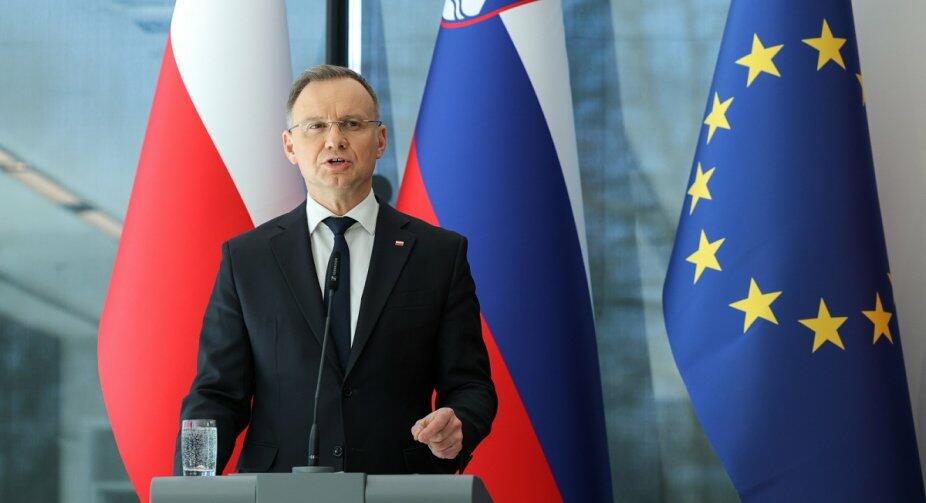
Polish President Andrzej Duda declared in a fresh and hugely provocative statement that Poland is “ready” to host nuclear weapons should NATO decide to do so as reinforcement of its eastern flank. The words were issued in an interview published Monday by Polish outlet Fakt.

President Andrzej Duda, file image

“Russia is increasingly militarizing the Königsberg oblast (Kaliningrad). Recently, it has been relocating its nuclear weapons to Belarus,” Duda continued, apparently wanting to match and mirror Russian moves.

If our allies decide to deploy nuclear weapons as part of nuclear sharing on our territory as well, in order to strengthen the security of NATO’s eastern flank, we are ready for it,” he added.

Duda additionally said while discussing the topic of NATO’s nuclear sharing program in the interview that Warsaw and Washington have been in talks “for some time.”

“I’ve already talked about it several times. I must admit that when asked about it, I declared our readiness,” he emphasized.

But the reality is Brussels and Washington are likely to be deeply hesitant based on the nuclear threats emanating from Moscow of late. Moving NATO warheads to Polish soil would most certainly greatly intensify the already somewhat high nuclear tensions, and at a moment the proxy war in Ukraine shows no sings of abating.

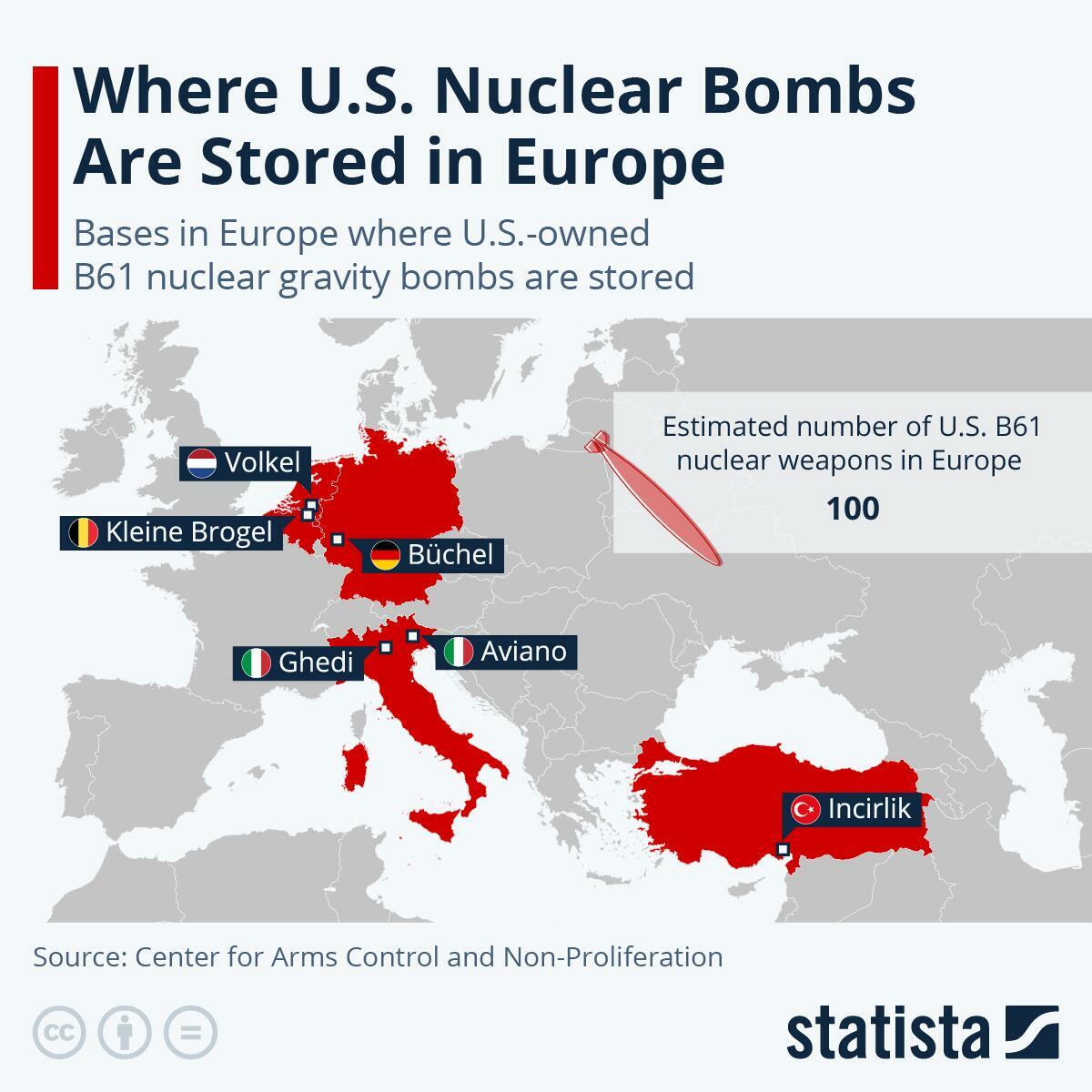
While three NATO members are officially nuclear weapons states – the United States, France and the United Kingdom – others are authorized to host nukes (typically ‘tactical’ nuclear weapons). They are Belgium, Germany, Italy, the Netherlands and Turkey.

Apparently Poland is now throwing its name in the hat for NATO’s nuclear-sharing program, which would expand Western nuke placement right up to Russia’s backyard

You will find more infographics at Statista

In the new Polish media interview, President Duda also addressed his positive relationship with Republican frontrunner and former President Donald Trump. He spoke fondly of Turmp, saying the two find agreement on “a lot of common topics.”

“He is a politician with whom I directly cooperated with the United States for four years when he was the president of the United States,” Duda said. “I want to emphasize very strongly that we have been friends since then. I really like talking to him, because he is an extremely interesting personality and has a lot of experience, both political and business.”

Tyler Durden
Tue, 04/23/2024 – 04:15

Sweden Wants EU To Sanction Russia’s Shadow Fleet And Ban Its LNG

Sweden Wants EU To Sanction Russia’s Shadow Fleet And Ban Its LNG

By Tsvetana Paraskova of OilPrice.com

The next round of EU sanctions against Russia over the invasion of Ukraine should include measures to address the shadow fleet of tankers helping Russia move its oil and a ban on EU imports of Russian LNG, Sweden’s foreign minister said on Monday.  

“Adopting the 14th sanctions package is one of the most important things,” Swedish Foreign Minister Tobias Billstrom said arriving at an EU foreign ministers’ meeting in Luxembourg, as carried by Reuters.

“We will see to it that we both include an import ban on liquefied natural gas as well as measures to curb the Russian shadow fleet,” the Swedish minister added.

The EU has just started discussions on the 14th package of sanctions and it is not expected to adopt the measure anytime soon.

EU member states are divided on a ban on LNG imports. Sweden and the Baltic countries press for a ban, but other member states and the EU energy regulator say Europe is now much more dependent on LNG to afford an immediate ban on imports of LNG from Russia.

The European Union should be careful in its efforts to ditch Russian LNG as it should protect its security of gas supply, the European Union Agency for the Cooperation of Energy Regulators, ACER, said in a report last week.

As the EU aims to completely end its reliance on Russian fossil fuels by 2027, “the reduction of Russian LNG imports should be considered in gradual steps starting with spot Russian LNG imports,” ACER said in its report.

“While such measures may target to reduce dependence on Russian gas, it’s important to note that substantial volumes have already been contracted under long-term LNG agreements before the Russian invasion of Ukraine,” the EU regulator said.

“Hence, reductions in Russian LNG imports should be approached with caution, particularly in light of the imminent expiration of the ship-or-pay transit contract for gas pipeline supply from Russia to Europe via Ukraine by the end of 2024.”

Tyler Durden
Tue, 04/23/2024 – 03:30

EU Leaders Trying To Convince Greece & Spain To ‘Sacrifice’ Their Own Anti-Air Defenses For Ukraine

EU Leaders Trying To Convince Greece & Spain To ‘Sacrifice’ Their Own Anti-Air Defenses For Ukraine

NATO and European Union leaders are literally pressuring member states to sacrifice their own national defense for the sake of Ukraine, part of the ongoing saga of desperation which has led some Western nations to deplete domestic arms and ammo stockpiles.

A disturbing report by Financial Times published Monday says Greece and Spain are under intensifying pressure from Western allies to give up what few Patriot anti-air defense systems that they possess.

Image via Greek City Times

Russia has continued to decimate Ukraine’s energy, logistics, and communications infrastructure via superior airpower – and Kiev has had few options, limiting its response. President Putin has said the stepped-up air attacks are in direct retaliation to Ukraine’s own cross-border drone attacks on Russian oil facilities. Drones have also frequently been sent over Crimea.

President Volodymyr Zelensky issued an urgent appeal Sunday on X, writing that “Patriots can only be called air defense systems if they work and save lives rather than standing immobile somewhere in storage bases.”

Commenting on Ukraine’s ongoing pleading, one Western official was cited in FT as saying, “We all know who has them, we all know where they are, and we all know who really needs them.”

Only Germany has so far answered the call by lately providing a single Patriot battery. FT reported on back-to-back meetings of EU foreign and defense ministers of the last days, where it’s been decided that Greece and Spain’s anti-air systems aren’t really crucial to their homeland defense:

Other EU leaders used a summit in Brussels last week to personally urge Spanish and Greek prime ministers Pedro Sánchez and Kyriakos Mitsotakis to donate some of their systems to Ukraine, according to people briefed on the discussions.

The two leaders, whose armed forces possess between them more than a dozen Patriot systems plus others such as S-300s, were told their need was not as great as Ukraine’s and that they did not face any imminent threat.

An EU diplomat said, “There are countries that are not in immediate need of their air defense systems, to be very honest.” This as “Each country is being asked to decide what it can spare,” according to the statement. Countries like Poland or those in the Baltics and Eastern Europe are considered too vulnerable at this moment to be asked to give up their defenses.

EU foreign policy chief Josep Borrell is also ramping up the pressure, saying “I don’t have Patriots in Brussels, they are in the capitals, and it is up to them to take decisions.”

So this is what it has come to: first European populations are dubiously told that Putin is eyeing expansion of the war deeper into Europe, and next Western countries are told to make drastic decisions which severely weaken their own national security

Greece in particular has faced long-running threats from Turkey, with the geopolitical rivals locked in a dispute over maritime territory which has at times very nearly resulted in a shooting war. This has happened on several occasions in the last couple of years. So certainly the Greek population is going to balk when EU leaders in faraway capitals lecture Greece about ‘not really needing’ anti-air protection. And if they are sent to Ukraine, there’s a chance they could be destroyed anyway. 

Tyler Durden
Tue, 04/23/2024 – 02:45

NATO’s Never-Ending War: The 75-Year-Old Bully Is Faltering

NATO’s Never-Ending War: The 75-Year-Old Bully Is Faltering

Authored by Ramzy Baroud via Counterpunch.org,

The western discourse on the circumstances behind the creation of the North Atlantic Treaty Organization (NATO), 75 years ago, is hardly convincing.

Yet, that over-simplified discourse must be examined in order for the current decline of the organization to be appreciated beyond the self-serving politics of NATO’s members.

The history records page of the US State Department speaks of the invention of NATO in a language suitable for a US high school history book.

“After the destruction of the Second World War, the nations of Europe struggled to rebuild their economies and ensure their security,” it reads, which compelled the US to take action: “(integrating) Europe as vital to the prevention of communist expansion across the continent.”

This is the typical logic of NATO’s early doctrine. It can be gleaned from most of the statements made by Western countries that established and continue to dominate the organization.

The language oscillates between a friendly discourse – for example, Harry Truman’s reference to NATO as a ‘neighborly act’ – and a threatening one, also Truman’s tough language against “those who might foster the criminal idea of having recourse to war.”

The reality, however, remains vastly different.

Indeed, the US did emerge much stronger, militarily and economically after WWII. That was reflected in the Marshall Plan, an ‘Economic Recovery Plan’, which was a strategic, not a charitable act. It engineered the economic recovery of selected countries who would become the US’ global allies for decades to come.

Upon its establishment, then Canadian Secretary of State Lester Pearson referred to the NATO ‘community’ as part of the ‘world community’, linking the strength of the former to “preserving the peace” for the latter.

As innocuous as such language may seem, it introduced a paternal relationship between the US-dominated NATO and the rest of the world. Thus, it allowed the powerful members of the organization to define, on behalf of the rest of the world – and often outside the umbrella of the United Nations – such notions as ‘peace’, ‘security’, ‘threat’, and, ultimately, ‘terrorism’.

A case in point is that the first major conflict instigated by NATO did not target external threats to Europe or US territories, but took place thousands of miles away, on the Korean Peninsula.

The west’s political discourse wanted to view the civil war in the Peninsula, prior to NATO’s intervention as an example of “communist aggression”. This ‘aggression’ supposedly forced NATO’s hands to react. Needless to say, the Korean War (1950-53) was a destructive one.

The 75 years since then proved the flimsiness of that argument. The Soviet Union has long been dismantled, and North Korea has been desperately fighting to break out of its isolation. Yet, a fractious state of no war-no peace remains in place. It could turn into an outright war at any time.

However, what the war has achieved is something entirely different. The constant state of non-peace provides a justification for the permanent US military presence in the region.

Similar outcomes followed most of NATO’s other interventions: Iraq (1991 and 2003), Yugoslavia (1999), Afghanistan (2001), Libya (2011) and so on.

Yet, the ability to start or exacerbate conflicts, and the inability, or perhaps unwillingness to permanently end wars, is not the real crisis at NATO, 75 years after its establishment.

In an article marking the anniversary, UK Secretary of Defense, Grant Shapps wrote in the Daily Telegraph that NATO must accept that it is now in a “pre-war world”.

He lashed out at those NATO members who were “still failing” to meet the minimally required spending on defense, which equals to two percent of total national GDPs. “We cannot afford to play Russian roulette with our future,” he wrote.

Shapps’ anxieties are often expressed by other top NATO leaders and officials, who are either warning of an imminent war with Russia or criticizing each other for the dwindling influence of the once-powerful organization.

Much of that blame was placed on former US President Donald Trump, who outright threatened to leave NATO during his only term in office.

Trump’s disparaging comments and threats, however, were hardly the instigator of the crisis.

They were symptoms of growing problems, which have continued for years after Trump’s dramatic exit from the White House.

NATO’s crisis can be summarized as this:

  • First, the geopolitical formations that existed following the collapse of the Soviet Union and its Warsaw Pact no longer exist.

  • Second, the main aspect of the new global competition cannot be reduced to military terms. Rather, it is economic.

  • Third, Europe is now largely dependent on energy sources, trade and even technological integration with countries that the US perceives as enemies: China, Russia and others. Therefore, if Europe allows itself to subscribe to the US polarized language on what constitutes enemies and allies it will pay a heavy price, especially as EU economies are already struggling under the weight of continued wars and constant disruption of energy supplies.

  • Fourth, fixing all of these challenges and more through the dropping of bombs is no longer an option. The ‘enemy’ is far too strong, and the changing nature of warfare makes traditional war largely ineffectual.

Though the world has greatly changed, NATO remains committed to a political doctrine from a bygone era. And even if the two percent threshold is met, the problem will not go away.

It is time for NATO to re-examine its 75-year-old legacy, and be courageous enough to change directions altogether – instead of opting for a state of non-peace, actually seeking real peace.

Tyler Durden
Tue, 04/23/2024 – 02:00

“What Kind Of American Are You?”

“What Kind Of American Are You?”

Authored by Jim Quinn via The Burning Platform blog,

War, What’s It Good For?

We have only seen a handful of movies in a theater over the last decade. Ever since the kids grew up, there hasn’t been a reason to spend too much for too little. Regal Cinemas in Oaks was the place to go in the old days. It had 24 theaters and was always packed. You could never get a parking spot close to the venue. The restaurant near the theater always had a line and you usually had to wait 30 minutes to get a seat.

We decided to go and see Civil War on Friday night, and boy times have changed. Regal Cinemas went bankrupt a few years ago after Covid, and the theater was taken over by some local businessmen. They now play four or five movies, but $10 per ticket is pretty reasonable compared to the chains. Instead of hundreds of cars in the parking lot, there were about 30 cars. We expected a long wait time at the PJ Whelihans, but there were dozens of seats at the bar and booths.

When we ventured over to the cinema, there was no one checking that we had tickets, and it was like a ghost town. A Friday night at the movies a decade ago was a big deal. The place would have been bustling. I can’t see this place making it over the long haul.

There were eight people there to see Civil War. The previews were so loud, we thought we were going to need ear plugs. The sound became more reasonable once the movie started.

I had read a few reviews of Civil War and they leaned negative, for a myriad of reasons. Some people seemed disappointed and angry that the director did not pick a side, or even make a single political statement.

My interest in this movie stemmed from the snippet shown in previews, where a guy holding some journalists at gunpoint asks them who they are, they respond “Americans”, and he asks them:

I think that is a profound question, as this country has already split into at least two enemy camps, with the leftists already fighting the war using any means necessary.

Laws and morality no longer matter during this time of coming conflict. Knowing we are in the back end of this Fourth Turning, there is a high likelihood of civil and/or global war in the next few years. Whenever I point this out, many scorn the possibility of civil war. Some think keyboard warriors will never actually have the guts to get into a shooting war with the government and/ or leftist fanatics.

I was hoping the movie would provide some thought provoking fodder giving me an inkling of what might be on the near term horizon. The movie is more about the journalist characters traveling from NYC to Washington DC in order to get an interview with the embattled president. There was no background regarding what started the civil war, who were the good guys, and whether the entire country was involved. The entire movie took place in the eastern U.S.

My observations are as follows:

  • The conflict was between the Western Forces versus the existing U.S. government forces. The Western Forces constituted Texas and California, with Florida leaning in their direction. It was not clear whether all the states chose a side. Since both sides had high tech military weapons, the assumption is the U.S. military split its allegiance. That means rogue generals did what southern generals did in 1860.

  • For most of the movie, you can’t tell who is fighting who. That seems realistic in a civil war scenario. The scene where the journalists are asked “What kind of American are you?” captures how confusing and chaotic it would be. I don’t think the guy dressed in military garb is on either side. They were dumping bodies into a hole. Without anyone to enforce laws, warlords will rise up and execute retribution on locals they consider enemies. Every local community will become a battleground. Neighbors versus neighbors, families versus families. With 300 million guns, there will be blood.

  • Two characters let it be known that their parents have stayed on their farms in Missouri and Colorado, pretending their is no civil war. They seemed dismayed that they wouldn’t choose sides. That made me wonder whether those who choose to not participate in the coming civil war will be able to work their farms in peace. Since modern society will come to a grinding halt, with shortages of fuel and food, I’m afraid small farmers will come under attack by the hungry masses. It will be essential for small communities of like minded folk to form militias to protect their farms and communities.

  • We all know our existing uni-party government is corrupt, evil and hates us. Whether we call it the Deep State, corrupt oligarchy, or corporate fascist totalitarians, it is clear they are our enemy. They are continuing to implement their Great Reset/Great Taking scheme, and will only be stopped through violent means. This movie did not take sides, but did imply the existing government will be defeated. The question is who or what takes their place. Sadly, it is unlikely that a republic will be reborn from the ashes of this empire of debt, delusion and decay.

Civil War was a sobering and depressing movie. I think it is a foreshadowing of what lies ahead.

Innocent people will die. Senseless slaughter will be the norm. The boundaries between good and evil will blur. Right and wrong will become meaningless. It will be unclear who are the good guys and who are the bad guys. Conflict is upon us. Will the cessation of our Constitution before the upcoming election be the spark that starts this civil war? Where and when will our Fort Sumter moment happen? I don’t know, but I fear it is close upon us.

“The tree of liberty must be refreshed from time to time with the blood of patriots and tyrants. It is it’s natural manure.” – Thomas Jefferson in a letter to John Adams

*  *  *

To donate to Jim’s blog via Stripe, click here.
 

Tyler Durden
Mon, 04/22/2024 – 23:40

US & Philippines Kick Off Largest Ever Joint Drills On ‘China’s Doorstep’

US & Philippines Kick Off Largest Ever Joint Drills On ‘China’s Doorstep’

Tensions are soaring in waters off China as the US and its close regional ally the Philippines launched expansive joint war drills Monday, not far from hotly disputed maritime areas.

At over 16,000 troops, the exercises called the “Balikatan” drills (or “shoulder to shoulder”) mark the largest ever conducted between the two allies. “The 2024 iteration is not only the largest but the most complex,” Newsweek confirmed of the annual exercise.

US Marine Corps image

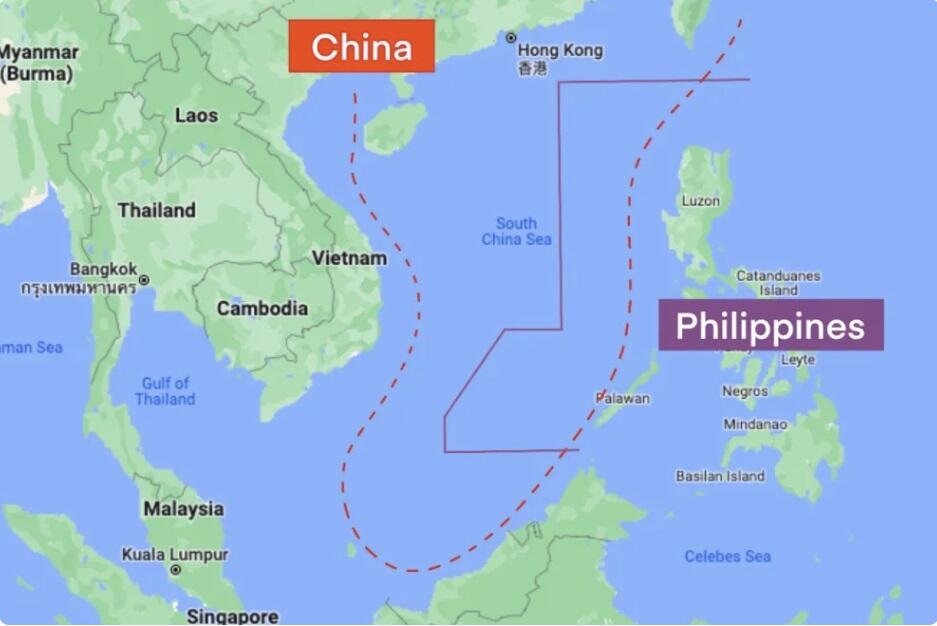
The joint exercises will focus on “seizing maritime terrain, HIMARS infiltrations, and coastal defense and maritime strike operations among others” — and are taking place around the the Philippine provinces of Palawan and Batanes, geographically near disputed China Sea areas as well as Taiwan.

A US Marine Corps statement described Balikatan as a “cornerstone event between the US and the Philippines, directly supporting the refinement and understanding of our shared Mutual Defense Treaty obligations.”

To be expected, Beijing has blasted the war games as a provocation, with Chinese Foreign Ministry spokesperson Lin Jian warning against the placement and deployment of US weapons systems “at China’s doorstep.” He further put the Philippines on notice, saying there will be “serious consequences of pandering to the United States.”

He further said Manilla “should understand that drawing in countries outside the South China Sea to flex their muscles and stoke confrontation in the region will only intensify tensions and undermine regional stability.” 

Russia’s Sputnik has the following details on the scope of the new drills:

  • Some of the drills will also involve other countries, such as Australia and France, in secondary roles.
  • 14 nations will reportedly act as observers, including India, Japan, as well as some ASEAN and European Union countries.
  • In a first, six Philippine Coast Guard (PCG) vessels will participate in the drills in an active role.
  • The drills will simulate seizing islands in the vicinity of Taiwan and South China Sea.
  • For the first time, the exercises will be held at multiple Philippine locations, 12 nautical miles offshore, outside of the country’s territorial waters, near the disputed South China Sea – waters that are claimed by both China and the Philippines.
  • The maiden deployment by the US military of the Mid-Range Capability missile system in the Philippines has been denounced as contributing to a regional arms race.

Recently, rival Chinese and Philippine coast guard patrols have directly clashed over maritime territory and fishing rights. Often these involve the firing of water canons well as dangerous ramming situations.

Washington and Manillas are defense treaty partners – meaning that if Philippine forces ever come under direct military attack, the United States is ‘obligated’ to intervene on their behalf.

Tyler Durden
Mon, 04/22/2024 – 23:20