69.5 F
Chicago
Friday, September 18, 2026
Home Blog Page 2970

These Are The Best-Selling Phones Of All Time

0
These Are The Best-Selling Phones Of All Time

In 2021, the world had 7.1 billion mobile phone users, roughly 90% of the global population. The mobile phone is now one of humanity’s most ubiquitous pieces of technology, and these sleek modern devices are a far cry from their hefty, brick-like predecessors.

But what are the most sold mobile phones of all time?

Using data from WikipediaYahoo Finance, and tech analyst firm Omdia, Visual Capitalist’s Pallavi Rao charts out the sales of the mobile phones that have enjoyed unmitigated success.

The Most Sold Mobile Phones of All Time

Heading the list of most sold phones ever is the much-beloved Nokia 1100, recording more than 250 million sales in six years before being discontinued in 2009.

Despite existing at the same time as the first mass-market smartphones (the Nokia E-series and then the iPhone), the 1100s’ price, focus on basic functionality, and pocket size made it a favorite in developing countries.

At second place, another variant of the same line, the Nokia 1110, sold 248 million units.

Rank Mobile Phone All-Time Sales
1 Nokia 1100 250M
2 Nokia 1110 248M
3 iPhone 6/6 Plus 222M
4 Nokia 105 Series 200M
5 iPhone 6S/6S Plus 174M
6 iPhone 5s 165M
7 Nokia 3210 161M
8 iPhone 7/7 Plus 160M
9 iPhone 11/11 Pro/
11 Pro Max
159M
10 iPhone XR/
XS/XS Max
151M
11T Nokia 6600 150M
11T Nokia 1200 150M
11T Nokia 5230 150M
11T Samsung E1100 150M
15 iPhone 5 146M
16 Nokia 2600/
2610/2626/2630
135M
17T Motorola RAZR V3 130M
17T Nokia 1600/
1650/1661
130M
19 Nokia 3310 126M
20 iPhone 8/8 Plus 125M

Ranked third is the iPhone 6 and 6 plus, with a combined 222 million units. Their 4.7 and 5.5-inch screens ushered in the era of large screen smartphones, and they remain Apple’s best-selling iPhones and the best-selling smartphones of all time. In fact, the iPhone 6 was so popular it was re-released in 2017 at a mid-range price level.

The next 17 ranks of the most sold phones are split between Nokias and iPhones, with only the Samsung E1100 (ranked 11th) and and the Motorola Razr V3 (ranked 17th) managing to break the duopoly.

Of course, Nokia and Apple have had very different fortunes in the last decade.

After riding telecom market deregulation, first in Europe, and then in Asia, Nokia failed the transition to smartphones and quickly lost ground to Apple, Google and Samsung.

Microsoft purchased Nokia’s mobile phone business in 2014 to boost their own Windows Phone, but when that failed, Nokia’s phone business was once again sold to HMD Global. Today, HMD Global still makes Nokia phones (including revamps of earlier models) which run on Android OS.

The Modern Mobile Phone Rivalry: Apple vs. Samsung

It’s hard to believe how quickly Apple’s core business has changed from personal computing to mobile phones.

In 2009 iPhone sales contributed about 25% to the company’s revenues. By 2023, half of Apple’s $383 billion revenue came from their phones.

The iPhone routinely dominates the top 10 best-selling phones every year, as evidenced from research by tech analysts Omdia.

2022 Best Sellers 2022 Sales 2023 Best Sellers 2023 Sales
iPhone 13 55M iPhone 14 Pro Max 31M
Galaxy A13 35M iPhone 14 26M
iPhone 13 Pro Max 29M iPhone 14 Pro 24M
iPhone 14 Pro Max 23M iPhone 13 22M
iPhone 11 21M Galaxy A14 20M
iPhone 13 Pro 19M Galaxy A14 5G 14M
iPhone 14 Pro 18M Galaxy A54 5G 14M
Galaxy A03 Core 18M Galaxy S23 Ultra 13M
iPhone 14 17M Galaxy A04e 11M
Galaxy A03 16M Redmi 12C 11M

Source: Data shared by OmdiaNote: 2023 numbers are current up to Q3, 2023.

However, Korean electronics behemoth Samsung’s sales figures aren’t exactly lackluster either. And while the two companies’ business models differ quite a bit, their flagship devices are routinely put up against each other: Samsung winning on battery life and mid and lower-range options, and Apple winning on optimization and security. Both brands have stellar cameras.

And while Apple rules the U.S. smartphone market (52% market share), Samsung edges them out globally with a 22% market share, compared to Apple’s 19%.

Tyler Durden
Sat, 01/27/2024 – 08:45

How The COVID Virus Defends Itself From The Human Immune System

0
How The COVID Virus Defends Itself From The Human Immune System

Authored by Amie Dahnke via The Epoch Times (emphasis ours),

Just how was the COVID-19 coronavirus so successful?

(Naeblys/Shutterstock)

The question has eluded scientists and medical professionals since the novel virus swept the globe in 2020, infecting over 700 million people and killing almost 7 million, according to official accounts.

Now, a German research team believes it has identified the mechanisms that allowed the SARS-CoV-2 virus to hold the title for being responsible for the most devastating pandemic in the 21st century. The researchers published their findings in Nature Communications in January.

Like an army commander developing strategies, the COVID virus defends itself by developing strategies against the human immune system in a molecular arms race, wrote professor Kai Tittmann, lead researcher of a team at the University of Göttingen and University Medical Center Göttingen that looked into how the coronavirus defends itself against the human body.

The virus is like a chameleon, constantly mutating, enabling it to infect human cells more effectively and rapidly. Despite some damage control afforded by medical efforts, this constant mutation has allowed the virus to morph into different strains, causing additional global outbreaks like the omicron outbreak of November 2021.

“It is fascinating to see how chemically elegant and effective the coronavirus is against the immune system,” Mr. Tittmann said in a press release. “Interestingly, a coronavirus discovered earlier—severe acute respiratory syndrome, also known as SARS-CoV-1—which triggered the 2002 to 2004 outbreak, also has these protective switches. This is the first this has been shown.”

Mr. Tittmann’s team found these processes possible due to protective switches within the virus that shield it from the human immune system’s attack systems. The switches are located within the virus’ main protease, a protein. The virus uses the protein to remove other viral proteins in infected cells. Consequently, the process—using the amino acid cysteine, a main protein-building block—enables the replication of SARS-CoV-2 within the body.

From a chemical point of view, this could be an Achilles heel for the coronavirus, as cysteines can be destroyed by highly reactive oxygen radicals, which our immune system uses to fight viruses,” Mr. Tittmann explained.

However, according to Mr. Tittmann, the virus’ switch prevents free radicals from destroying it. The switch will force the cysteine to bond with two sulfur atoms, creating a shield that prevents the cysteine from being destroyed by the immune system’s attack with free radicals. At the same time, the virus creates a secondary shield using sulfur and oxygen atoms and a single nitrogen atom, further preventing free radicals from damaging it.

Armed with the knowledge of how the switches work, Mr. Tittmann’s team went to work to determine if any molecules could bind to the protective switches, inhibiting the virus’ process. They identified such molecules in both test tubes and infected cells.

This type of molecule opens up the potential for new therapeutic interventions which will stop coronaviruses in their tracks,” said Lisa-Marie Funk, first author of the study.

Paxlovid, the most common drug used to treat COVID-19 symptoms, targets the protease protein. Paxlovid is an oral antiviral pill developed by Pfizer that helps keep high-risk patients from developing severe symptoms. It is available to individuals 12 and older who weigh at least 88 pounds. It has been the go-to treatment for high-risk individuals since its FDA approval in May 2023. In clinical trials, the drug showed an 89 percent reduction rate in the risk of hospitalization and death in unvaccinated people.

Tyler Durden
Sat, 01/27/2024 – 08:10

Shmmokin’

0
Shmmokin’

Globally, rates of tobacco use have been falling for decades.

Today, it is estimated that one-in-five people around the world use tobacco products, according to data from the World Health Organization (WHO).

That’s still enough people to have a sizable impact on both global healthcare and the environment. And the prevalence of tobacco use by country, and by sex, varies widely.

In the following chart, Visual Capitalist’s Nick Routley shows current tobacco use in selected countries around the world using WHO estimates for 2022.

Which People Smoke the Most?

Below we examine the entire dataset of global countries by 2022 tobacco use. Estimates are of people aged 15 years and older and include both smoked and smokeless tobacco (including vaping). Countries that had no data for 2022 have been omitted.

In almost every country, males use tobacco more than females. Globally, 36% of men are tobacco users compared to just 8% of women.

Country Total Prevalence (%) Male (%) Female (%)
🇦🇫 Afghanistan 22.1 38.3 5.9
🇦🇱 Albania 22.4 38.7 6.6
🇩🇿 Algeria 21.6 41.9 0.7
🇦🇩 Andorra 33.6 33.3 33.8
🇦🇷 Argentina 23.1 28.2 18.1
🇦🇲 Armenia 22.5 49.3 1.7
🇦🇺 Australia 12.5 14.8 10.3
🇦🇹 Austria 22.0 23.7 20.5
🇦🇿 Azerbaijan 19.3 39.6 0.1
🇧🇸 Bahamas 10.7 20.6 2.1
🇧🇭 Bahrain 18.1 25.7 4.9
🇧🇩 Bangladesh 31.1 48.9 14.2
🇧🇧 Barbados 6.5 11.7 1.7
🇧🇾 Belarus 27.9 47.2 12.0
🇧🇪 Belgium 24.7 27.4 22.1
🇧🇿 Belize 8.7 15.5 1.9
🇧🇯 Benin 5.5 9.5 1.7
🇧🇹 Bhutan 19.6 27.2 11.0
🇧🇴 Bolivia 12.2 20.4 4.1
🇧🇦 Bosnia and Herzegovina 35.1 41.0 29.5
🇧🇼 Botswana 18.1 30.2 6.5
🇧🇷 Brazil 12.3 15.7 9.1
🇧🇳 Brunei Darussalam 17.1 31.3 2.2
🇧🇬 Bulgaria 34.0 38.1 30.2
🇧🇫 Burkina Faso 13.5 21.7 5.5
🇧🇮 Burundi 10.0 15.2 5.0
🇨🇻 Cabo Verde 10.5 16.2 5.0
🇰🇭 Cambodia 16.1 27.3 5.5
🇨🇲 Cameroon 5.6 10.2 1.1
🇨🇦 Canada 11.4 13.7 9.2
🇹🇩 Chad 6.8 12.3 1.4
🇨🇱 Chile 28.2 30.6 25.8
🇨🇳 China 24.9 47.3 2.0
🇨🇴 Colombia 8.2 12.1 4.5
🇰🇲 Comoros 16.2 26.2 6.2
🇨🇬 Congo 15.0 28.2 2.0
🇨🇰 Cook Islands 25.5 30.3 21.4
🇨🇷 Costa Rica 8.8 13.2 4.5
🇨🇮 Cöte d’Ivoire 8.6 16.4 0.7
🇭🇷 Croatia 32.6 34.2 31.1
🇨🇺 Cuba 18.5 26.9 10.4
🇨🇾 Cyprus 34.0 46.0 22.1
🇨🇿 Czechia 27.5 31.7 23.3
🇨🇩 Democratic Republic of the Congo 11.1 19.9 2.6
🇩🇰 Denmark 16.2 16.4 16.0
🇩🇴 Dominican Republic 10.2 14.0 6.5
🇪🇨 Ecuador 10.1 17.6 2.6
🇪🇬 Egypt 24.7 48.9 0.3
🇸🇻 El Salvador 8.3 15.6 1.9
🇪🇪 Estonia 25.6 32.9 19.1
🇸🇿 Eswatini 8.6 16.2 1.4
🇪🇹 Ethiopia 4.6 7.8 1.4
🇫🇯 Fiji 27.3 41.7 13.1
🇫🇮 Finland 19.6 23.9 15.4
🇫🇷 France 29.2 31.3 27.3
🇬🇲 Gambia 9.6 18.7 0.6
🇬🇪 Georgia 29.0 54.7 7.1
🇩🇪 Germany 18.8 21.3 16.4
🇬🇭 Ghana 3.1 5.9 0.3
🇬🇷 Greece 29.6 33.1 26.3
🇬🇹 Guatemala 12.0 22.7 1.7
🇬🇼 Guinea-Bissau 7.5 14.8 0.6
🇬🇾 Guyana 10.5 19.3 2.2
🇭🇹 Haiti 7.3 12.6 2.3
🇭🇳 Honduras 12.2 22.7 1.7
🇭🇺 Hungary 29.4 34.7 24.5
🇮🇸 Iceland 9.4 9.4 9.4
🇮🇳 India 23.9 36.8 10.4
🇮🇩 Indonesia 38.5 73.6 3.4
🇮🇷 Iran (Islamic Republic of) 13.9 24.8 3.1
🇮🇶 Iraq 18.7 36.0 1.6
🇮🇪 Ireland 18.2 20.5 16.1
🇮🇱 Israel 19.8 26.4 13.3
🇮🇹 Italy 20.4 24.1 16.8
🇯🇲 Jamaica 9.5 15.8 3.5
🇯🇵 Japan 16.8 26.5 7.7
🇯🇴 Jordan 36.3 57.8 13.4
🇰🇿 Kazakhstan 21.7 38.2 6.9
🇰🇪 Kenya 9.2 16.6 2.1
🇰🇮 Kiribati 38.2 51.6 25.7
🇰🇼 Kuwait 22.7 35.6 2.1
🇰🇬 Kyrgyzstan 26.4 51.3 3.3
🇱🇦 Lao People’s Democratic Republic 25.8 43.2 8.4
🇱🇻 Latvia 30.3 45.6 17.2
🇱🇧 Lebanon 34.0 43.1 25.7
🇱🇸 Lesotho 22.9 42.0 4.8
🇱🇷 Liberia 7.1 12.5 1.7
🇱🇹 Lithuania 27.9 40.1 17.3
🇱🇺 Luxembourg 21.8 23.3 20.3
🇲🇬 Madagascar 25.7 41.7 9.9
🇲🇼 Malawi 7.1 13.0 1.7
🇲🇾 Malaysia 22.6 43.8 0.7
🇲🇻 Maldives 29.3 43.6 10.1
🇲🇱 Mali 7.6 14.4 0.7
🇲🇹 Malta 23.2 25.5 20.6
🇲🇭 Marshall Islands 30.4 51.8 8.6
🇲🇷 Mauritania 9.4 17.2 2.0
🇲🇺 Mauritius 20.0 38.1 2.8
🇲🇽 Mexico 14.6 23.1 6.9
🇲🇳 Mongolia 29.3 52.6 7.3
🇲🇪 Montenegro 32.1 30.9 33.2
🇲🇦 Morocco 13.1 25.3 1.0
🇲🇲 Myanmar 43.9 69.4 19.2
🇳🇦 Namibia 12.5 21.3 4.7
🇳🇷 Nauru 49.5 50.3 48.7
🇳🇵 Nepal 24.9 42.7 9.4
🇳🇱 Netherlands (Kingdom of the) 20.1 22.5 17.7
🇳🇿 New Zealand 11.4 12.7 10.2
🇳🇪 Niger 7.7 14.0 1.3
🇳🇬 Nigeria 2.9 5.4 0.4
🇳🇴 Norway 14.0 14.8 13.2
🇴🇲 Oman 11.0 17.4 0.4
🇵🇰 Pakistan 16.9 27.7 6.2
🇵🇼 Palau 17.0 26.3 7.3
🇵🇦 Panama 5.1 8.4 1.9
🇵🇬 Papua New Guinea 40.4 55.4 24.9
🇵🇾 Paraguay 10.6 17.4 3.8
🇵🇪 Peru 7.0 11.6 2.6
🇵🇭 Philippines 20.4 36.2 4.3
🇵🇱 Poland 23.2 27.6 19.1
🇵🇹 Portugal 20.9 27.1 15.5
🇶🇦 Qatar 18.8 24.6 2.3
🇰🇷 Republic of Korea 18.9 32.7 5.4
🇲🇩 Republic of Moldova 27.8 52.7 6.3
🇷🇴 Romania 27.5 37.4 18.5
🇷🇺 Russian Federation 27.2 42.0 14.8
🇷🇼 Rwanda 12.0 17.7 6.7
🇱🇨 Saint Lucia 13.6 24.8 3.0
🇼🇸 Samoa 22.2 31.0 13.2
🇸🇹 Sao Tome and Principe 7.1 12.6 1.8
🇸🇦 Saudi Arabia 17.4 28.4 2.1
🇸🇳 Senegal 6.0 11.7 0.6
🇷🇸 Serbia 36.6 38.8 34.6
🇸🇨 Seychelles 20.8 34.6 5.7
🇸🇱 Sierra Leone 11.4 17.3 5.5
🇸🇬 Singapore 16.4 27.9 4.0
🇸🇰 Slovakia 30.2 35.4 25.4
🇸🇮 Slovenia 18.1 20.2 15.9
🇸🇧 Solomon Islands 37.6 55.3 19.6
🇿🇦 South Africa 20.3 35.1 6.5
🇪🇸 Spain 24.9 27.5 22.5
🇱🇰 Sri Lanka 19.1 37.8 2.4
🇸🇪 Sweden 22.1 28.3 15.9
🇨🇭 Switzerland 23.3 26.3 20.4
🇹🇭 Thailand 18.9 37.7 1.8
🇹🇱 Timor-Leste 37.6 64.5 9.8
🇹🇬 Togo 5.6 10.2 0.9
🇹🇴 Tonga 30.7 46.8 15.5
🇹🇳 Tunisia 20.1 39.7 1.6
🇹🇷 Türkiye 30.7 41.9 19.6
🇹🇲 Turkmenistan 5.4 10.6 0.5
🇹🇻 Tuvalu 33.8 48.3 19.0
🇺🇬 Uganda 5.3 9.0 1.8
🇺🇦 Ukraine 22.0 38.3 8.5
🇦🇪 United Arab Emirates 11.7 15.5 2.5
🇬🇧 United Kingdom 13.1 15.0 11.4
🇹🇿 United Republic of Tanzania 7.5 13.1 2.2
🇺🇸 United States of America 23.0 28.6 17.5
🇺🇾 Uruguay 19.3 23.0 16.0
🇺🇿 Uzbekistan 16.2 31.8 1.0
🇻🇳 Viet Nam 22.8 44.3 2.2
🇾🇪 Yemen 20.8 33.7 7.9
🇿🇲 Zambia 12.0 21.8 2.7
🇿🇼 Zimbabwe 9.2 19.0 0.8

From a regional perspective, we can see many countries in Europe and Asia have higher rates of tobacco use. Indonesia and Myanmar specifically have some of the highest tobacco use rates in the world, with 73.6% of Indonesian men estimated to smoke or use tobacco.

In many Asian countries we also see a greater difference between male and female smokers compared to the rest of the world. In China for example, 47.3% of males are estimated to use tobacco compared to just 2.0% of females.

On the other hand, the Americas and especially Africa have a lower prevalence of tobacco use. Nigeria at 2.9% had the lowest rate of tobacco use in the world in 2022.

Tyler Durden
Sat, 01/27/2024 – 07:35

Davos, Dictators, & The Real “Threats To Our Democracy”

0
Davos, Dictators, & The Real “Threats To Our Democracy”

Authored by Laura Hollis via The Epoch Times,

Republican presidential candidate (and now presumptive nominee) Donald Trump won the Iowa caucus and the New Hampshire primary in the past week, breaking records in both contests.

In Iowa, Trump received an unprecedented 51 percent of votes cast—more than 30 percentage points ahead of the runner-up, Florida Gov. Ron DeSantis (who has since left the race and endorsed Trump).

In New Hampshire, Trump received a record 175,000-plus votes and beat former South Carolina Gov. Nikki Haley by 12-plus percentage points.

Predictably, the American Left is freaking out.

For months, their talking heads have been warning that Trump’s election will usher in a literal dictatorship. As I wrote last week, the baseless accusations are cast at both President Trump and the Americans supporting him. Democrats are ratcheting up this polarizing tactic, which they’ve used for years. In 2008, Barack Obama characterized Americans who opposed his candidacy for president as “bitter” people “clinging” to their “guns or religion or antipathy to people who aren’t like them.” During her 2016 presidential campaign, Hillary Clinton declared Trump supporters to be a “basket of deplorables.” In 2024, Democrats are accusing Trump voters of wanting authoritarianism and fascism.

This latest steaming pile of propaganda is inexcusably ignorant. Or perhaps it is yet another instance of projection.

The Americans who plan to vote for President Trump are not supporting him because they prefer his dictatorial inclinations to the other guy’s, but because they want someone in charge of the executive branch who does not see the government’s role as controlling every aspect of their lives.

This stands in stark contrast to the Democratic Party’s efforts to regulate entire industries out of existence, or the mad, anti-liberty, anti-human fever dreams of the globalists on display at the annual meeting of the World Economic Forum (WEF) in Davos, Switzerland.

In 2014, WEF speaker Yuval Harari informed a TEDx event audience that human rights don’t really exist; they are “like heaven or like God—just a fictional story we’ve invented and spread around.” At the 2022 WEF meeting, Alibaba President J. Michael Evans touted a developing “individual carbon footprint tracker” that would monitor where you travel, how you travel, what you eat and what you read on the internet. And the WEF’s 2016 predictions for 2030—including having to pay fines for emitting carbon dioxide (does that include exhaling?), restrictions on meat consumption and the end of private property (“You’ll own nothing and you’ll be happy”)—are infamous.

Americans who support President Trump understand that this country enjoys the prosperity it does, not because the “right” people control everything, but because no one does.

The more control one person or a small cadre of people have—politically or economically—the greater the risks to everyone.

Consider: If one company’s leadership makes a catastrophically bad decision, that company may fail. But in a free, entrepreneurially capitalist country, other companies will be available to provide the goods and services that the failed company can no longer produce. The risk of error is borne by a relative few.

However, if those making a catastrophically wrong decision are in control of an entire industry or an entire economy, then the whole system can collapse, with devastating consequences for millions—tens of millions—of people.

History is replete with examples. The former Soviet Union collapsed politically because its centrally planned economy suffered disaster after disaster. Government takeover of the Venezuelan economy destroyed that once-prosperous country, plunging its residents into abject poverty. When the president of Sri Lanka banned nitrogen-based fertilizer, the country’s agricultural sector collapsed, as did its exports, leaving Sri Lankans without adequate food, fuel, or oil to heat their homes.

Here in the United States, we have witnessed the nasty consequences of plenty of government policy failures: the health risks of COVID-19 shots; the spectacular failure of wind power in Texas during the 2021 winter storm; the inability of electric vehicles to start in the bitter temperatures across the northern U.S. two weeks ago; California’s water shortages and the struggling capacity of its electrical grid.

Egotists like WEF founder Klaus Schwab and his God-complex, like-minded cronies across the globe never consider that they could be wrong about anything.

But they are always wrong about something.

Trump voters do not want a dictator; they do not want an imperial presidency at all.

They want a president who understands that free and independent businesses operating in a minimally regulated environment are the lifeblood of American prosperity. They recognize that an executive branch that refuses to enforce federal laws is failing in its primary constitutional obligations to the American public. They understand that a justice system that picks and chooses whom to prosecute based upon their race, ethnicity, or political belief is no justice at all. They are tired of inflation caused by misguided energy, trade, and environmental policies. They are tired of our veterans suffering and dying with their physical and mental health needs unmet; tired of homeless people living in the streets; tired of open borders, of tens of thousands of Americans dying of fentanyl overdoses, and tired of unpunished crime, all while hundreds of billions of our hard-earned tax dollars get laundered through foreign wars into the pockets of multinational defense contractors, corruptocrat politicians, and warmongering toadies who never saw a foreign conflict they didn’t want to exploit.

These Americans reject the globalist overlords pushing their anti-human philosophies down everyone’s throats, and they fear being enslaved by governments infiltrated by mindless drones in thrall to the latest apocalyptic power grab.

The press and the Left can hand-wave and hyperventilate all they want about “threats to our democracy.” But American voters see where the threats of authoritarianism truly lie, and it isn’t with Donald Trump.

*  *  *

Views expressed in this article are opinions of the author and do not necessarily reflect the views of ZeroHedge

Tyler Durden
Sat, 01/27/2024 – 07:00

Escobar: Five Variables Defining Our Future

0
Escobar: Five Variables Defining Our Future

Authored by Pepe Escobar,

In the late 1930s, with WWII in motion, and only months before his assassination, Leon Trotsky already had a vision of what the future Empire of Chaos would be up to.

“For Germany it was a question of ‘organizing Europe’. The United States must ‘organize’ the world. History is bringing mankind face to face with the volcanic eruption of American imperialism…Under one or another pretext and slogan the United States will intervene in the tremendous clash in order to maintain its world dominion.”

We all know what happened next. Now we are under a new volcano that even Trotsky could not have identified: a declining United States faced with the Russia-China “threat”. And once again the entire planet is affected by major moves in the geopolitical chessboard.

The Straussian neocons in charge of US foreign policy could never accept Russia-China leading the way towards a multipolar world. For now we have NATO’s perpetual expansionism as their strategy to debilitate Russia, and Taiwan as their strategy to debilitate China.

Yet in these past two years, the vicious proxy war in Ukraine only accelerated the transition towards a multipolar, Eurasia-driven world order.

With the indispensable help of Prof. Michael Hudson, let’s briefly recap the 5 key variables that are conditioning the current transition.

Losers Don’t Dictate Terms

1.The stalemate:

That’s the new, obsessive US narrative on Ukraine – on steroids. Confronted with the upcoming, cosmic NATO humiliation in the battlefield, the White House and the State Dept. had to – literally – improvise.

Moscow though is unfazed. The Kremlin has set the terms a long time ago: total surrender, and no Ukraine as part of NATO. To “negotiate”, from the Russia point of view, is to accept these terms.

And if the deciding powers in Washington opt for turbo-charging the weaponization of Kiev, or to unleash “the most heinous provocations in order to change the course of events”, as asserted this week by the head of the SVR, Sergey Naryshkin, fine.

The road ahead will be bloody. In case the usual suspects sideline popular Zaluzhny and install Budanov as the head of the Armed Forces of Ukraine, the AFU will be under total control of the CIA – and not NATO generals, as it’s still the case.

This might prevent a military coup against the sweaty sweatshirt puppet in Kiev. Yet things will get much uglier. Ukraine will go Total Guerrilla, with only two objectives: to attack Russian civilians and civilian infrastructure. Moscow, of course, is fully aware of the dangers.

Meanwhile, chatterbox overdrive in several latitudes suggest that NATO may even be getting ready for a partition of Ukraine. Whatever form that might take, losers do not dictate conditions: Russia does.

As for EU politicos, predictably, they are in total panic, believing that after mopping up Ukraine, Russia will become even more of a “threat” to Europe. Nonsense. Not only Moscow couldn’t give a damn to what Europe “thinks”; the last thing Russia wants or needs is to annex Baltic or Eastern European hysteria. Moreover, even Jens Stoltenberg admitted “NATO sees no threat from Russia toward any of its territories.”

2.BRICS:

Since the start of 2024, this is The Big Picture: the Russian presidency of BRICS+ – which translates as a particle accelerator towards multipolarity. The Russia-China strategic partnership will be increasing actual production, in several fields, while Europe plunges into depression, unleashed by the Perfect Storm of sanctions blowback against Russia and German de-industrialization. And it’s far from over, as Washington is also ordering Brussels to sanction China across the spectrum.

As Prof. Michael Hudson frames it, we are right in the middle of “the whole split of the world and the turning towards China, Russia, Iran, BRICS”, united in “an attempt to reverse, undo, and roll back the whole colonial expansion that’s occurred over the last five centuries.”

Or, as Foreign Minister Sergei Lavrov defined at the UN Security Council this process of BRICS leaving Western bullies behind, the changing world order is like “a playground scuffle – which the West is losing.”

Bye Bye, Soft Power

3.The Lone Emperor:

The “stalemate” – actually losing a war – is directly linked to its compensation: the Empire squeezing and shrinking a vassalized Europe. But even as you exercise nearly total control over all these relatively wealthy vassals, you lose the Global South, for good: if not all their leaders, certainly the overwhelming majority of public opinion. The icing in the toxic cake is to support a genocide followed by the whole planet in real time. Bye bye, soft power.

4.De-dollarization:

All across the Global South, they did the math: if the Empire and its EU vassals can just steal over $300 billion in Russian foreign reserves – from a top nuclear/military power – they can do it to anyone, and they will.

The key reason Saudi Arabia, now a BRICS 10 member, is being so meek on the genocide in Gaza is because their hefty US dollar reserves are hostage to the Hegemon.

And yet the caravan moving away from the US dollar will only keep growing in 2024: that will depend on crucial crossover deliberations inside the Eurasia Economic Union (EAEU) and BRICS 10.

5.Garden and jungle:

What Putin and Xi have essentially been telling the Global South – including the energy-rich Arab world – is quite simple. If you want improved trade and economic growth, who’re you gonna link to?

So we’re back to the “garden and jungle” syndrome – first coined by imperial Britain orientalist Rudyard Kipling. Both the British concept of “white man’s burden” and the American concept of “Manifest Destiny” derive from the “garden and jungle” metaphor.

NATOstan, and hardly all of it, is supposed to be the garden. The Global South is the jungle. Michael Hudson again: as it stands, the jungle is growing, but the garden isn’t growing “because its philosophy is not industrialization. Its philosophy is to make monopoly rents, meaning rents that you make in your sleep without producing value. You just have a privilege of a right to collect money on a monopoly technology that you have.”

The difference now, compared to all those decades ago of an imperial free lunch, is “an immense shift of technological advance”, away from North America and the US, to China, Russia and selected nodes across Asia.

Forever Wars. And No Plan B

If we combine all these variants – stalemate; BRICS; the Lone Emperor; de-dollarization; garden and jungle – in search of the most probable scenario ahead, it’s easy to see that the only “way out” for a cornered Empire is, what else, the default modus operandi: Forever Wars.

And that brings us to the current American aircraft carrier in West Asia, totally out of control yet always supported by the Hegemon, aiming for a multi-front war against the whole Axis of Resistance: Palestine, Hezbollah, Syria, Iraqi militias, Ansarullah in Yemen, and Iran.

In a sense we’re back to the immediate post-9/11, when what the neocons really wanted was not Afghanistan, but the invasion of Iraq: not only to control the oil (which in the end they didn’t) but, in Michael Hudson’s analysis, “to essentially create America’s foreign legion in the form of ISIS and al-Qaeda in Iraq.” Now, “America has two armies that it’s using to fight in the Near East, the ISIS/al-Qaeda foreign legion (Arabic-speaking foreign legion) and the Israelis.”

Hudson’s intuition of ISIS and Israel as parallel armies is priceless: they both fight the Axis of Resistance, and never (italics mine) fight each other. The Straussian neocon plan, as tawdry as it gets, essentially is a variant of the “fight to the last Ukrainian”: to “fight to the last Israeli” on the way to the Holy Grail, which is to bomb, bomb, bomb Iran (copyright John McCain) and provoke regime change.

As much as the “plan” did not work in Iraq or Ukraine, it won’t work against the Axis of Resistance.

What Putin, Xi and Raisi have been explaining to the Global South, explicitly or in quite subtle ways, is that we are right in the crux of a civilizational war.

Michael Hudson has done a lot to bring down such an epic struggle to practical terms. Are we heading towards what I described as techno-feudalism – which is the AI format of rent-seeking turbo-neoliberalism? Or are we heading to something similar to the origins of industrial capitalism?

Michael Hudson characterizes an auspicious horizon as “raising living standards instead of imposing IMF financial austerity on the dollar block”: devising a system that Big Finance, Big Bank, Big Pharma and what Ray McGovern memorably coined as the MICIMATT (military-industrial-congressional-intelligence-media-academia-think tank complex) cannot control. Alea jacta est.

Tyler Durden
Fri, 01/26/2024 – 23:40

Here’s Every EV Qualified For US Tax Credits In 2024

0
Here’s Every EV Qualified For US Tax Credits In 2024

This year, the list of qualified electric vehicles (EVs) for U.S. tax credits is relatively small.

Many popular models like the Nissan Leaf, Ford Mustang Mach-E, and some Tesla Model 3s are missing largely due to new battery sourcing rules. With stricter rules coming into effect, the number of models is dropping from 43 to 13.

Visual Capitalist’s Marcus Lu created the following graphic to show the qualifying EV models in 2024, based on data from FuelEconomy.gov.

Which EVs Made the List?

Here are the EVs that are eligible for a U.S. tax credit of up to $7,500 at the point of sale:

Car Vehicle Type Credit Amount Manufacturer’s Suggested
Retail Price Limit
Chevrolet Bolt EUV EV $7,500 $55,000
Chevrolet Bolt EV EV $7,500 $55,000
Chrysler Pacifica PHEV Plug-in Hybrid $7,500 $80,000
Ford Escape PHEV Plug-in Hybrid $3,750 $80,000
F-150 Lightning* EV $7,500 $80,000
Jeep Grand Cherokee 4xe Plug-in Hybrid $3,750 $80,000
Jeep Wrangler 4xe Plug-in Hybrid $3,750 $80,000
Lincoln Corsair Grand Touring Plug-in Hybrid $3,750 $80,000
Rivian R1S* EV $3,750 $80,000
Rivian R1T* EV $3,750 $80,000
Tesla Model 3 Performance EV $7,500 $80,000
Tesla Model X Long Range EV $7,500 $80,000
Tesla Model Y* EV $7,500 $80,000

*F-150 Lightning includes Standard and Extended Range models. R1S includes Dual and Quad Motor models. R1T includes Dual, Performance Dual, and Quad Motor models. Model Y includes RWD, AWD, and Performance models.

The good news is that getting the discount is now easier for customers.

Instead of filling out tax paperwork to receive the tax credit, buyers will automatically get the discount at participating dealerships at the time of purchasing.

Additionally, models eligible for a partial credit of $3,750 include Rivian EVs along with plug-in hybrids from Jeep, Ford, and Lincoln.

Ultimately, the tax credit is designed to encourage people to switch to EVs and purchase models that are sourced in America. Overall, it is part of a wider plan to boost manufacturing and clean energy investment across the country.

U.S. EV Manufacturing Push

Several automakers are ramping up investment in American battery plants.

In October 2023, Toyota announced it was investing an additional $8 billion in its North Carolina battery plant, adding 3,000 new jobs.

Along with this, Ford is constructing a 3,600 acre facility for battery manufacturing and EV production, valued at $5.6 billion. By 2026, it is targeting to make 500,000 electric trucks annually. Located in Tennessee, the mega-campus is set to create 6,000 new jobs.

Still, Ford is scaling back EV investment, citing a reluctance among customers to pay a premium for electric models. The United Auto Workers deal, estimated to cost Ford $8.8 billion, likely impacted EV investment plans.

The cost of EV batteries can range from around $8,000 to over $22,000.

Automakers including Lucid, General Motors, Honda, Nissan, and Stellantis (Chrysler’s parent company) are all building, or plan to build, battery facilities in the country.

Tyler Durden
Fri, 01/26/2024 – 23:20

The Price Of Failed Wars

0
The Price Of Failed Wars

Authored by Simone Leeden via RealClear Wire,

A growing number of Americans grapple with a profound dilemma. This dilemma stems from our recent and painful history of interventions gone awry, and outcomes that diverged sharply from the intended goals. The conversation regarding the reasons for our current decline in military recruitment numbers, combined with Americans’ increasing isolationism, should include more than just the scourge of “wokeism.” We must scrutinize our failures, take the important lessons learned, and hold failed leaders accountable.

The scars from the Iraq War run deep in the American psyche. A war initiated under the pretense of eliminating weapons of mass destruction ultimately transformed Iraq into an Iranian satellite. The toll in blood and treasure was staggering. Our nation, me included, realized that the promised liberation had instead sown chaos and instability.

Similarly, the two-decade-long engagement in Afghanistan aimed to oust the Taliban and establish a stable government. Despite immense investments, our chaotic withdrawal and the subsequent collapse of the Afghan government and its armed forces, has raised questions about the efficacy of such prolonged wars when we have such fickle political leadership. Skepticism has taken root, with many Americans questioning the wisdom of sacrificing lives and resources for outcomes that seem elusive at best.

American reluctance to engage in wars is rooted in a distrust of political and military leadership, rather than a doubt in the military’s capabilities. This skepticism is fueled by the observation that, despite the military’s ability to achieve success, political decisions and a lack of long-term commitment often undermine these efforts. The experiences in Iraq and Afghanistan, where years of sacrifice and significant casualties ultimately led to withdrawal and diminished any chance of lasting success, exemplify this concern. People question why they should support wars when leadership decisions may negate the potential for enduring achievements.

One glaring issue is the short attention span exhibited on the global stage. While adversaries plan and act in terms of decades and generations, American foreign policy often succumbs to the volatility of short-term political cycles. The absence of a cohesive, long-term strategy that spans administrations weakens the nation’s position, allowing adversaries to exploit the inherent instability in U.S. foreign policy.

Furthermore, the demonization and alienation of potential military recruits exacerbate the problem. How can a government expect the public to rally behind its wars when it criticizes and ostracizes those who bear the burden of fighting? Americans want to win, and this desire for victory is palpable not only on the battlefield but also in the hearts of those considering military service. Yet, the disconnect between the government’s strategic failures and the aspirations of potential recruits creates an insurmountable gap.

A successful military requires the trust and support of its citizens, and this trust erodes when the government fails to appreciate the sacrifices made by the men and women in uniform. The burden of entering an arena where victory seems elusive becomes a heavy deterrent for those considering military service. Recruiters face an uphill battle, attempting to sell a vision of success when recent history is marred by missteps and questionable outcomes.

Equally troubling is the lack of accountability for failure. While soldiers face the consequences of failed missions, higher-ranking officials often escape scrutiny. Generals and admirals who preside over misguided campaigns receive a pass for their failures, fostering a culture of impunity that only perpetuates strategic missteps.

The concept of deterrence, once a cornerstone of U.S. foreign policy, has lost its effectiveness. Simply restoring deterrence is not tantamount to destroying the enemy; this requires a fundamental shift in strategic thinking.

In conclusion, the reluctance of many Americans to join the military and support further engagement in global conflicts doesn’t arise from a misguided sympathy for foreign adversaries or a desire for isolation. Instead, it is a response to decades of strategic failures, misguided interventions, and a lack of accountability. Rebuilding trust in the government’s ability to conduct successful military campaigns demands true introspection and accountability. Only then can the United States truly earn the support of its citizens and regain its standing as a global leader.

Simone Ledeen is an accomplished national security professional with expertise spanning defense policy, intelligence, counterterrorism, counter threat finance, and emerging technologies. As Deputy Assistant Secretary of Defense for Middle East Policy, Ms. Ledeen was responsible for US defense policy for Bahrain, Egypt, Israel, Iran, Iraq, Jordan, Kuwait, Lebanon, Oman, Palestinian Authority, Qatar, Saudi Arabia, Syria, United Arab Emirates and Yemen. She strengthened key U.S. defense relationships through close collaboration with foreign counterparts and oversaw the development and implementation of critical policies and initiatives including in counterterrorism, information operations, cybersecurity, and emerging technologies. Ms. Ledeen advises several venture capital and early-stage defense technology firms. Previously, Ms. Ledeen held various leadership roles across the U.S. Government, executing complex operations overseas and spearheading initiatives to counter extremist threats. She received her MBA from Bocconi University and her B.A. from Brandeis University.

Tyler Durden
Fri, 01/26/2024 – 23:00

Woke Maryland Private School Questions Young Boys About “Gender” & “Sexuality”

0
Woke Maryland Private School Questions Young Boys About “Gender” & “Sexuality”

Reversing the “woke” takeover of America’s education system will require a concerted effort from concerned parents who don’t want their children infected by the woke mind virus

The latest example of parents becoming infuriated with diversity, equity, and inclusion, or DEI being injected into the education curriculum, comes from an elite private school in Baltimore County, Maryland. 

Project Veritas posted on X this week that St. Paul’s, a private school that charges $38,000 or more per year, issued a questionnaire to 5th-grade boys, asking if they were “Cisgender” or “Transgender” or “Gender Non-Conforming” or “Agender.” 

The same questionnaire asked the boys about their “sexuality”…  

Why does the school need to know about the gender and sexuality of young boys? This seems quite unusual.

Meanwhile, the headmaster of the school threatened to expel two students whose parent complained about wokesim on social media. 

A parent at the school provided us with an internal memo from Patrick Walsh, Middle School Dean of Students, who told teachers: “We will not apologize” for being woke. 

Del. Nino Mangione, R-Baltimore County, said: 

This is a deeply concerning report and speaks to the ongoing crisis in the education of Maryland’s children.  The fact that a “survey” of this type could be distributed to 5th-grade students without the knowledge or permission of their parents is totally unacceptable. Once again, we see the liberal education establishment attempting to indoctrinate children rather than educate them. Now, we learn of the two largest teacher’s unions in the country training educators on how to include gender identity polices in their curriculum and classroom teaching practices. Parents are justifiably outraged by St. Paul’s “identity inventory survey,” and I support the parents in their outrage.” 

Last April, another elite private school down the street from St. Paul’s, called Gilman, went full-woke tard with the “Day of Dialogue” to enrich their students about “LGBTQ connections in our curriculum.” 

And let’s not forget another elite private school, Oldfields School, which was teetering on the edge of bankruptcy for years, dove down the woke rabbit hole on social media. 

Parents at these woke private schools should adopt a firm stance, similar to Bill Ackman’s move that ousted Claudine Gay as president of Harvard. If this proves ineffective, consider withdrawing from these schools, but then again, many private schools in the area are woke. Plus, many public schools have imploded. 

Maybe it’s time for homeschooling. Or perhaps, if enough parents band together, start a non-woke private school. 

Tyler Durden
Fri, 01/26/2024 – 22:40

DNI Investigation Reveals How CCP Interfered In US Election

0
DNI Investigation Reveals How CCP Interfered In US Election

Authored by Andrew Thornebrooke via The Epoch Times (emphasis ours),

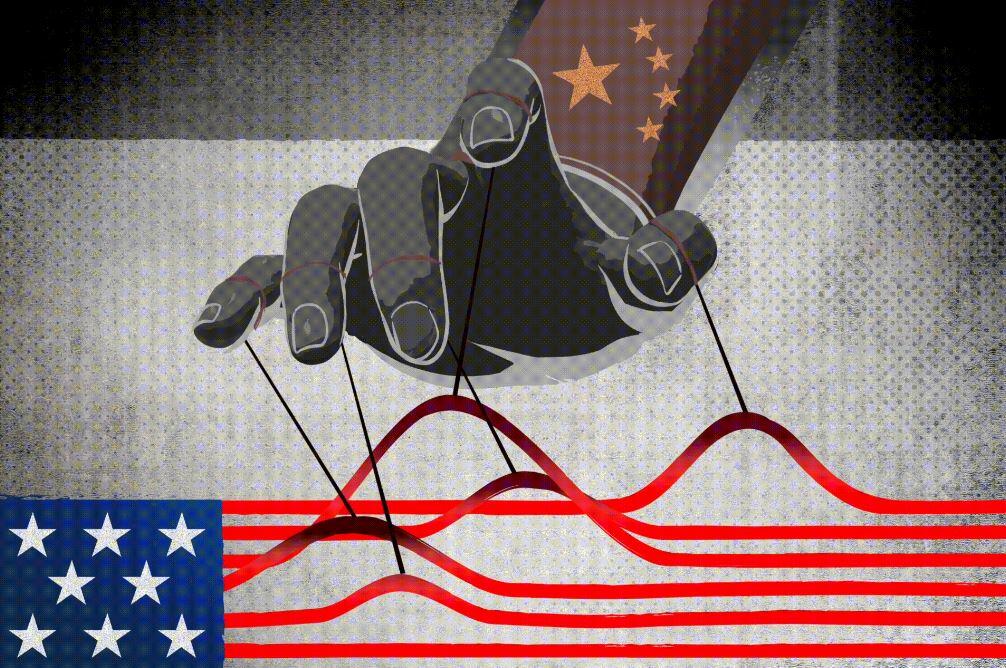
The Chinese regime interfered in the U.S. 2022 midterm elections through various means, according to a declassified intelligence report and multiple private-sector investigations.

(Illustration by The Epoch Times, Shutterstock)

The effort included a broad array of techniques orchestrated by the Chinese Communist Party (CCP), including retaliation against U.S. lawmakers, the promotion of divisive content, and the impersonation of American voters online.

Noted China hawk Rep. Tom Tiffany (R-Wis.) said the regime will continue its efforts to interfere in U.S. elections until the Biden administration deals more seriously with Beijing.

Communist China has shown time and time again that they will stop at nothing to interfere in America’s elections,” Mr. Tiffany told The Epoch Times.

“The Biden administration needs to take a harder line on PRC meddling and espionage.”

PRC is the acronym for communist China’s official name, the People’s Republic of China.

A declassified assessment published by the director of national intelligence (DNI) in December 2023 found that the regime tried to “influence” U.S. congressional elections involving both Democrats and Republicans who espoused tough-on-China policy stances.

The report also found that the scale and scope of foreign activity targeting the elections surpassed that of the prior midterms but remained below the level expected in presidential years.

The report assessed that the CCP had a “greater willingness to conduct election influence activities than in past cycles,” partly because it didn’t fear retaliation from the Biden administration.

The report states that CCP officials gave operatives more freedom to interfere in U.S. elections because the regime “believed that Beijing was under less scrutiny … and because they did not expect the current administration to retaliate as severely as they feared in 2020.”

CCP Eyes Members of Congress

The CCP targeted congressional races out of a belief that the legislative branch was more likely to take action against its “core interests,” the DNI report states.

As such, the regime hoped to ensure that pro-China candidates won their races, regardless of party affiliation, according to Sam Kessler, a geopolitical adviser at the North Star Support Group risk advisory firm.

The Chinese regime support congressional candidates who are thought to be “pro-China” and undermine considered to be “against-China.” (Samuel Corum/Getty Images)

“The CCP’s influence of the 2022 midterms illustrated the continuation of their larger geopolitical strategy to ensure pro-China politicians and thinkers are elected in Congress,” Mr. Kessler told The Epoch Times.

It is also used for painting a negative image of the U.S. democratic political system and election process in comparison to Beijing’s authoritarian-based system.

The regime took action “to punish [candidates] for their anti-China views and to reward [candidates] for their perceived support of Beijing,” the report states.

The regime also sought to sow discord among Americans but focused primarily on undermining “a small number of specific candidates based on their policy positions.”

The efforts since 2020 have been directed by senior Chinese leadership, the report found, and based on broad directives to undermine public opinion or congressional policies that could be detrimental to the CCP’s strategic goals.

Mr. Kessler described the effort as “part of a big picture CCP strategy to combat U.S. efforts that promote democracy abroad.”

To act so brazenly, he said, the regime likely “perceived themselves being under less scrutiny” since the 2020 election.

People cast their early ballots for the 2022 general election at the University of Michigan in Ann Arbor on Nov. 7, 2022. (Eff Kowalsky/AFP via Getty Images)

Chinese Law Enforcement

In addition to influencing elections, the regime also sought to covertly use social media accounts, proxy websites, paid influencers, and public relations firms to manipulate U.S. public opinion about China, according to the report.

Those findings align with reports published last year by tech giants Meta and Microsoft.

Meta announced in August 2023 that it had purged thousands of China-linked accounts from its platforms, which it stated were part of the world’s largest online influence operation.

That operation was connected to known individuals in Chinese law enforcement who sought to influence the 2022 midterm elections, according to Meta.

Casey Fleming, CEO of the risk advisory firm BlackOps Partners, said the initiative was part of the CCP’s wider strategy of unrestricted hybrid warfare.

“Ongoing CCP influence operations are one of many methods of unrestricted warfare where our enemy (the CCP) follows no rules intended in constant weakening [of] their primary adversary (the U.S.),” Mr. Fleming told The Epoch Times in an email.

Read more here…

Tyler Durden
Fri, 01/26/2024 – 22:20

Saudi Tankers Given Passage Through Red Sea By Houthis, Alongside Russia & China

0
Saudi Tankers Given Passage Through Red Sea By Houthis, Alongside Russia & China

China and Russia aren’t the only countries being given a “pass” from Yemen’s Houthi rebels, but Saudi Arabia is also exporting crude oil through the Red Sea as if in perfectly normal times (well, almost).

At a moment that especially Western and any and all Israeli-linked vessels are being targeted by rocket and drone attacks out of Yemen, the head of Aramco’s refining, oil trading and marketing division Mohammed Al Qahtani has confirmed to Bloomberg“We’re moving in the Red Sea with our oil and products cargoes.” He added that the risks remain “manageable”.

Illustrative file image, via Splash247

As we’ve been chronicling, a who’s who of major tanker and container shipping companies have halted their Red Sea transit, instead opting for the much longer journey around the Cape of Good Hope in Africa. This typically adds some $1 million to the total transport bill for a tanker, LSEG Shipping Research data shows.

Bloomberg’s analysis shows that even at this very moment in which US warships are coming under fire, Saudi transit through the vital waterway is alive and well

In the first half of January, Aramco shipped as much crude from its Red Sea terminal at Yanbu northwards toward Europe as it did in the whole of the previous month, vessel tracking data compiled by Bloomberg show.

“That is also giving us huge access and optionality,” Qahtani said. “We are assessing that almost on a daily basis.”

Still, like the rest of the industry, Aramco is having to deal with fewer vessels willing to travel into the Red Sea and higher insurance costs for doing so.

In what was no doubt meant as a message adding insult to injury to the Israel-friendly Western allies, the Iran-linked Houthis starting over a week ago declared that Chinese and Russian-flagged or owned vessels would not be attacked in the Red Sea.

On January 19 a senior Houthi official, Mohammed al-Bukhaiti, mentioned these US rivals by name in an interview with the Russian outlet Izvestia. “As for all other countries, including Russia and China, their shipping in the region is not threatened,” he said, stipulating this will remain in effect as long as they are not linked to Israel or its supporters.

Some of the vessels which have come under attack thus far actually have connection to various dozens of countries which aren’t necessarily backing Israel’s assault on Gaza (though these ships may have been headed toward Israeli ports), but ships with Russian or Chinese ownership, or deep ties, have yet to be attacked. 

The US-UK coalition patrolling the Red Sea has at this point launched at least eight or nine significant rounds of airstrikes against Houthi positions, but this appears to have only deepened Houthi resolve

As for Russia and China, they’ve been foremost among Washington’s powerful rivals to criticize Israel’s mass bombing of the Gaza Strip. They both have close ties with Iran, as well as with Assad’s Syria, and China is busy inking multi-billion dollar infrastructure and energy deals with Iraq. Of course, these ‘defiant’ countries (Syria and Iran) are under US sanctions as well.

Iran and Saudi Arabia recently achieved rapprochement and established diplomatic ties, which perhaps explains why Riyadh is now getting a ‘free pass’.

Tyler Durden
Fri, 01/26/2024 – 21:20