“This Is Unacceptable”: Blue States Blast Biden Over Border Blunders As Backlash Intensifies
Blue states buckling under the strain of hundreds of thousands of migrants bussed into their Democratic strongholds are blaming President Joe Biden for not doing enough to curb the influx of illegals.
The latest politician to blast Biden is Illinois Gov. J.B. Pritzker, who told Biden in a Monday letter that his state is in an “untenable situation,” and that the feds need to take “swift action.”
In August, New York Gov. Kathy Hochul (D) joined with business leaders to implore the administration to do something about the “humanitarian crisis” that’s overwhelmed New York City with more than 100,000 migrants.
Massachusetts Gov. Maura Healey (D), meanwhile, issued a state of emergency in August in response to the illegal migrant crisis, telling DHS Secretary Alejandro Mayorkas in a letter that her state has taken action “to address what sadly has been a federal crisis of inaction.”
White House officials are scrambling to respond– and have already fumbled the ball on the border wall. Earlier last week, reports emerged that Department of Homeland Security Secretary Alejandro Mayorkas said, in an official document, that there is “an acute and immediate need to construct physical barriers” along the US border- while the Biden administration waived 26 federal laws to build more border wall.
Two days later, he backpedaled furiously, claiming “There is no new administration policy with respect to the border wall,” adding “From day one, this Administration has made clear that a border wall is not the answer. That remains our position and our position has never wavered. The language in the Federal Register notice is being taken out of context and it does not signify any change in policy whatsoever,” the statement continues.
NEW: After quite literally saying there is an “immediate need to construct physical barriers” at the southern border, DHS Secretary Mayorkas says we are all taking him out of context.
The utter incompetence by this administration is astounding.
White House press secretary Karine Jean-Pierre tried to downplay the move, arguing that the government is following Trump-era laws but still does not believe in the wall’s effectiveness.
“We believe that we need border technology that is modernized and land ports of entry. And that’s what we want to see,” she told reporters on Thursday, adding that Biden “does not believe it is effective. He has been very clear about that.”
Jean-Pierre added that the wall funds were from a Trump-era border appropriations bill.
“We asked Congress to reappropriate the funds,” she said, “But they’ve refused, and so now we’re moving forward.”
Biden Trying to Appease Democratic Leaders: Border Experts
The White House is acting in accordance with the Impoundment Control Act of 1974, which forbids the President or other government officials from bypassing Congress in making funding decisions. This is not, however, the primary reason why the administration is restarting the construction of the wall, according to Andrew Arthur, resident fellow in law and policy for the Center for Immigration Studies, a Washington-based think tank.
The decision is clearly “driven by a need to respond to concerns voiced by Democratic-elected officials in northern U.S. cities,” Mr. Arthur told The Epoch Times.
“Barriers will help agents in the apprehension and processing of illegal entrants, but they will do nothing to discourage those migrants improper entries absent a concomitant policy shift—but at least the administration can claim that it is ‘doing something.’”
‘We’re Here Abandoned’
Last month, Mayor Rolando Salinas of Eagle Pass, Texas, a Democrat, criticized President Biden for the border crisis. In an interview with CNN, he complained that the White House had not communicated with him while thousands of illegal immigrants poured into his small city.
“We’re here abandoned. We’re on the border, we’re asking for help. This is unacceptable,” he said.
In a recent letter to the White House, Gov. Pritzker also raised a similar concern, urging that “there be one person in the federal government” who works directly for the president and is in charge of overseeing efforts at the border.
When asked about this request, Ms. Jean-Pierre said, “There are multiple folks” at the White House who have been in contact with governors across the country.
“Look, let’s not forget, we provided a billion dollars to those counties, states, cities who are dealing with this issue,” she said. “It is an issue that’s incredibly important to this president.”
Members of the United Nurses Associations of California/Union of Health Care Professionals and Service Employees International Union-United Healthcare Workers West are set to launch a strike Oct. 9 at four Prime Healthcare facilities in Southern California.
The unions represent about 2,400 workers at four Prime hospitals: St. Francis Medical Center in Lynwood, Centinela Hospital Medical Center in Inglewood, Garden Grove Hospital and Medical Center, and Encino Hospital Medical Center, according to union statements shared with Becker’s. Ontario, Calif.-based Prime Healthcare operates 45 hospitals and more than 300 outpatient locations in 14 states.
Members of both unions, which include registered nurses, licensed vocational nurses, certified nursing assistants, medical assistants, emergency room technicians, respiratory therapists and others, have been in negotiations with Prime for new contracts at the four facilities. Union members contend that during negotiations, management has not adequately addressed workers’ concerns about issues related to alleged unsafe staffing and high turnover.
“We are calling on Prime Healthcare to stop their unfair labor practices, bargain in good faith, and listen to the front-line healthcare workers that this community depends on,” Bernie Espinoza, an ultrasound tech at Prime Garden Grove Hospital, said in a statement. “Staffing has been so critically low that many caregivers have left. The remaining workers are stretched thin and rushed. We’re forced to take on more patients with less staff, which leaves much less time for quality one-on-one patient care.”
In its statement, UNAC/UHCP claimed that Prime cut nurse salaries when it bought St. Francis in 2020 and that registered nurse turnover has doubled to more than 50% since then, leaving the hospital “dangerously understaffed.”
Prime emphasized its commitment to bargain in good faith.
“Proposals have been delivered to the unions that would increase wages and provide comprehensive benefit programs, including healthcare, that is among the best in the nation at little to no cost to employees,” the health system said in a statement shared with Becker’s. “We believe the current proposal benefits all our employees and hope to reach an agreement so we can continue our mission of providing compassionate, quality care to patients.”
Prime also noted recognition its hospitals have received for care and service; efforts it has made to hire, recruit and retain staff; support and growth opportunities it offers through continuing education, tuition reimbursement, career development and other programs; and investments it has made in improvements to hospitals.
Regarding St. Francis specifically, Prime said the hospital “has a special story having been rescued from bankruptcy during the pandemic. After millions in investments to improve technology, systems and infrastructure, the hospital has achieved nationally recognized patient safety and quality awards while providing vital care for its community, earning commendation from local and state leaders. None of this would have been possible without our dedicated staff. We are committed to ensuring a workplace that honors their work and continues to provide lifesaving care for the most vulnerable.”
At St. Francis, registered nurses represented by UNAC/UHCP will join other healthcare workers for a five-day strike beginning Oct. 9. SEIU-UHW healthcare workers plan to strike at the three other Prime hospitals at the same time.
A strike could be averted if a deal is reached before Oct. 9.
As “Most Important Election Of Our Lives” Looms, Trump Blasts “Weak & Ineffective” Biden For Hamas Attack On Israel
During a campaign rally on Oct. 7 in Waterloo, Iowa, former President Trump responded to the surprise attack on Israeli towns by the terrorist group Hamas earlier in the day, criticizing President Biden for being a “weak leader”.
“We’re here today for a very important reason: to commit to caucus, we know what that means right, commit to caucus, exactly 100 days from now each and every one of you is going to cast the most important vote of your lives.
I believe that too. I believe that this will be the most important election of our lives because this country is headed in a horrible horrible direction and you so what took place today in Israel.
This country is just headed so badly [sic].”
Trump made it clear who was to blame for the attacks in Israel:
“The Israeli attack was made because we are perceived as being weak and ineffective and with a really weak leader and and uh the brutal murder of citizens is an act of savagery that must and will be crushed, has to be… It has to be dealt with very powerfully.
This is a time where the United States needs leadership – we don’t have leadership – but Israel is at War and the United States obviously is going to stick with Israel and strongly…”
Trump concluded with a pitch for his caucus:
“if we don’t take back our country, we’re not going to have a country. If we do take back our country, our country will be greater than ever before, I promise you that…”
Watch the clip below:
The Ron Paul Institute’s Adam Dick made an interesting point as Republican Party presidential candidates rushed out statements setting forth their related views, the statement of Donald Trump stood out as relatively noninterventionist.
While placing blame on Hamas, Trump refrained from promising support for the government of Israel in the conflict. This set him apart from the other prominent Republican candidates who made comments pledging support for Israel.
These Hamas attacks are a disgrace and Israel has every right to defend itself with overwhelming force. Sadly, American taxpayer dollars helped fund these attacks, which many reports are saying came from the Biden Administration. We brought so much peace to the Middle East through the Abraham Accords, only to see Biden whittle it away at a far more rapid pace than anyone thought possible. Here we go again.
So far so good. Trump is not endorsing in his statement the United States government supporting the Israel government in this conflict. But, there certainly is much pressure on him to make such an endorsement soon.
Other Republican presidential candidates, in contrast, jumped immediately at the opportunity to declare their support for aiding Israel in this new rising conflict. Tara Suter reported Saturday at The Hill on other prominent Republican candidates’ early statements on the matter. Every one of them took a step beyond Trump, pledging their support to the Israel government in the rising conflict.
Below are excerpts from those candidates’ statements presented in Suter’s article.
Doug Burgum: “Iran and its terror sponsors in Gaza are showing the world their true face: pure evil. Israel is at war with brutal terrorists and the United States must provide maximum support to our democratic ally.”
Chris Christie: “We must do whatever it takes to support the State of Israel in its time of grave danger, and we must end the scourge of Iran-backed terrorism.”
Ron DeSantis: “Israel not only has the right to defend itself against these attacks, it has a duty to respond with overwhelming force. I stand with Israel. America must stand with Israel.”
Nikki Haley: “Israel has every right to defend its citizens from terror. We must always stand with Israel and against this Iranian regime.”
Mike Pence: “Our prayers are with the families and soldiers of our most cherished ally. @netanyahu [Israel Prime Minister Benjamin Netanyahu)] says Israel is ‘at war’ America Stands With Israel[.]”
Vivek Ramaswamy: “Israel’s right to exist & defend itself should never be doubted and Iran-backed Hamas & Hezbollah cannot be allowed to prevail. I stand with Israel and the U.S. should too.”
Tim Scott: “Israel has a right to defend itself and the United States must stand in support of its steadfast ally.”
Can Trump continue to resist the pressure being put on him to declare that he does, and the US government should, “stand with Israel” in regard to this rising conflict?
We’ll see.
Taking a solitary course concerning this matter would be consistent with Trump’s apparent effort to run as the peace candidate among the contenders in the race for the Republican presidential nomination.
Iran Helped Hamas “Plot Israel Attack Over Several Weeks”, Gave Green Light, WSJ Reports
Readers may recall that we ended our first post-mortem to the war between Israel and Hamas by speculation if Iran would get dragged in:
Finally, there is some speculation that Iran may get dragged into what is rapidly emerging as the worst Middle-Eastern crisis in years, with various pro-Israeli hawks claiming that the Hamas attack would have only occurred with explicit Iranian backing. If Israel does indeed attack Iran, as it has hinted it would do for years, may we suggest you fill up your gas tank.
That speculation has been all but validated moments ago when the WSJ reported that “Iranian security officials helped plan Hamas’s Saturday surprise attack on Israel and gave the green light for the assault at a meeting in Beirut last Monday“, according to senior members of Hamas and Hezbollah, another Iran-backed militant group.
Officers of Iran’s Islamic Revolutionary Guard Corps had worked with Hamas since August to devise the air, land and sea incursions, the WSJ reported citing its Hamas and Hezbollah sources.
Details of the operation were refined during several meetings in Beirut attended by IRGC officers and representatives of four Iran-backed militant groups, including Hamas, which holds power in Gaza, and Hezbollah, a Shiite militant group and political faction in Lebanon, they said.
At the same time, officials from the deep state blob – who have been desperate to appease both Iran and Venezuela in recent months in hopes of getting sanctions against the Tehran regime lifted so that it can officially supply extra oil to the US ahead of the 2024 elections (instead of just unofficially shipping oil to China), with Biden terrified what high gas prices may do to his reelection chances – say they haven’t seen evidence of Tehran’s involvement. In an interview with CNN that aired Sunday, Secretary of State Antony Blinken said: “We have not yet seen evidence that Iran directed or was behind this particular attack, but there is certainly a long relationship.” This was echoed by an U.S. official of the meetings who said that “We don’t have any information at this time to corroborate this account.”
A European official and an adviser to the Syrian government, however, both of whom are not bound by the price of oil in Nov 2024, gave the same account of Iran’s involvement in the lead-up to the attack as the senior Hamas and Hezbollah members.
Some more details from the WSJ:
A direct Iranian role would take Tehran’s long-running conflict with Israel out of the shadows, raising the risk of broader conflict in the Middle East. Senior Israeli security officials have pledged to strike at Iran’s leadership if Tehran is found responsible for killing Israelis.
The IRGC’s broader plan is to create a multi-front threat that can strangle Israel from all sides—Hezbollah and the Popular Front for the Liberation of Palestine in the north and Palestinian Islamic Jihad and Hamas in Gaza and the West Bank, according to the senior Hamas and Hezbollah members and an Iranian official.
Whether or not Iran actually did help Hamas plan and execute the attack, and whether Mossad – the world’s best intelligence agency – was really completely unaware of what was going on, is – for the time being – irrelevant. What matters is that the narrative is now being shaped so that the mainstream media will cast blame on Iran alongside Hamas, just as a US aircraft carrier arrives in the Gulf to provide support to Israel.
The geopolitical implications are staggering, but once again we repeat our advice from Saturday morning: fill up your gas tank now.
* * *
Update(1345ET): For the first time since the Yom Kippur War of 1973, the government of Israel has issued a formal and legal “declaration of war” after Saturday’s devastating assault from Islamic militants out of Gaza, which according to the country’s health ministry has left over 700 Israelis dead and thousands injured. Strategic Affairs Minister Ron Dermer told CNN in a morning interview, “There will probably be more hundreds, several hundred more.”
At least 350 have been killed on the Palestinian side, as a large-scale Israeli bombing campaign over Gaza ensues. Israeli officials are expected to embark on some kind of hostage rescue operation. According to Israeli media there are foreigners, likely including Americans, among the kidnapped hostages being held by Hamas and Islamic Jihad:
The Government Press Office, a body that operates under the Israeli Prime Minister’s Office, said Sunday in a Facebook post that the number of hostages in Gaza was over 100.
Among the kidnapped were small children, the elderly, and foreign nationals including 11 Thais working on farms near the border. US Secretary of State Antony Blinken said the State Department was attempting to confirm reports that Americans had been killed or kidnapped.
Currently, there are reports that internecine gunfire has erupted in different parts of Israel and the West Bank. Overnight there were also reports of sporadic shelling and exchanges of fire in the north, between Hezbollah and Israel’s military.
Will a northern front open up? This would likely put Israel in an even greater state of panic as things spiral…
Video of Hezbollah attack on #Israel military position in Shebaa Farms.
Below is a brief review of major events over the last several hours, courtesy of Academy SITREP:
Early this morning, Hamas militants launched a surprise attack on Israel firing thousands of rockets in a coordinated air and land assault.
Israeli Prime Minister Benjamin Netanyahu said that his country was now “at war” and has retaliated with massive airstrikes on Hamas targets.
Hezbollah, the Lebanese Shiite militia organization that fought a war with Israel in 2006, said that it was monitoring the situation but has not yet pledged its support to join forces with Hamas in this attack on Israel.
An adviser to Iranian Supreme Leader Ali Khamenei said that Iran supported the cross-border operation by Hamas, which is not surprising and could partially be in response to the ongoing Saudi Arabia /Israel diplomatic talks.
Netanyahu has spoken with President Biden and Secretary of Defense Austin said that “The Department of Defense will work to ensure that Israel has what it needs to defend itself and protect civilians from indiscriminate violence and terrorism.”
While still early, initial reports are coming in indicting over 40 Israelis have been killed along with hundreds more injured.
Fighting along Israel’s southern border with the Gaza Strip is ongoing Sunday:
Police publish footage of forces battling Hamas terrorists in southern Israel. At least 30 officers have been killed in the fighting. pic.twitter.com/6mE0nH2HB7
Meanwhile, US Neocons clamoring for war and escalation by saying an attack on Israel is an attack on America…
NO, STOP IT. This was a barbaric, savage attack on ISRAEL, not America.
Glad you support Israel doing what it needs to do to defend itself—they’ll do it. That’s nice.
But stop universalizing every damn conflict and shoe-horning it into your basic ideological agenda. It’s… https://t.co/dnuwndYMLz
— David Reaboi, Late Republic Nonsense (@davereaboi) October 8, 2023
* * *
Among the most shocking images to come out of Saturday’s surprise deadly assault by Hamas and Palestinian Islamic Jihad (PIJ) out of Gaza was the scene of dozens of militants flying over the southern Israeli desert using motor-powered hang gliders.
Some of the first footage to go viral soon after the broader cross-border assault was of militants parachuting down into a crowd of thousands of unsuspecting young Israeli partiers who were enjoying a rave concert in the southern desert. Foreigners, including Europeans and possibly Americans were also in attendance. The surreal scene looks like something out of the 1980s movie “Red Dawn”…
NEW: Video shows Hamas terrorists paragliding into Israel during a festival.
The terrorist reportedly entered the festival and began shooting those in attendance.
In response to the attacks by Hamas, Israel PM Benjamin Netanyahu is vowing to “fight them to the bitter end.”… pic.twitter.com/w6doS5tA72
The above is being widely described as the moment it all started. The event was described as a “Music Festival for Peace” – ironically enough, but was very close to the Gaza border.
Possibly dozens of festival goers were abducted and others were killed. There were seen huddled in the back of large trucks and driven into Gaza by armed militants.
Others, more fortunate, later fled across the desert by foot – and made it to their vehicles, as the below additional footage shows…
Hamas militants paradropped with buggies right into southern Israel as an outdoor rave was going. pic.twitter.com/cL7ILigLv6
The whole paraglider aspect to the Hamas operation shows a high level of planning, coordination, and sophistication by the Gaza-based militant group. Many Western observers are questioning how Israel’s celebrated Mossad intelligence organization could have missed it, given clearly the operation was at least months or longer in planning.
Hamas subsequently published high quality footage of its ‘special ops’ units launching the motorized paragliders…
Later in the day, some of the captives – including apparently foreigners – were paraded by the Islamic terrorists in front of cameras. One particularly gruesome image included what looked like a young woman’s mangled, lifeless body face-down in the bed of a pick-up truck with a militant sitting on top of her (it’s as yet unknown whether she’s dead or alive).
There are reports that she may be a German national and her family is said to be seeking information on her whereabouts. She remains missing and is possibly deceased:
BREAKING:
The woman whose body was seen on video in the back of a pick-up truck driven by Palestinian terrorists to Gaza has been identified.
30-year-old Shani Louk was a German citizen visiting Israel to attend the music festival for peace held near the Gaza border fence. pic.twitter.com/sPIc8FRs8K
Americans were also likely among the captives. On Sunday Secretary of State Antony Blinken said, “We have reports that several Americans were killed. We are working overtime to verify that,” he told reporters. Here’s what the US top diplomat said:
“Does the administration know at this point if U.S. citizens were among the dead or those taken hostage?” NBC News’ Kristen Welker asked Blinken.
Blinken said: “So we have reports that several Americans may be among the dead. We are very actively working to verify those reports. Similarly, we’ve seen reports about hostages and they’re, again, we’re very actively trying to verify them, and nail that down.”
Pressed again on whether some U.S. citizens could have been taken hostage as well, Blinken replied: “That’s correct.”
Additionally Fox News correspondent Will Cain followed with, “Was just told by Israel’s Ambassador to the UN that there are dozens of American citizens among the hostages in Gaza.” He explained that many of these would be dual nationals.
BREAKING It is now being reported that DOZENS of Americans are being held hostage by the Iranian-backed Hamas terrorists in Gaza. pic.twitter.com/OEbduXVIvK
As more details emerge from the scene, there are unverified reports that multiple dozens of the festival attendees may have been killed or kidnapped – again among them international tourists and visitors.
The Irish Times on Sunday reported that 22-year-old dual citizen Kim Damti was among the many unaccounted for.
Ms Damti was attending an all-night outdoor rave with hundreds of others close to the Gaza border when the first rocket barrage hit close to 7am on Saturday, taking everyone by surprise.
In the last phone call made by Ms Damti, at 7am on Saturday, she was running with a friend towards a car in an attempt to flee the rocket barrage. That was the last contact with her.
More and more disturbing footage like the below has been trickling out.
This appears to be a video of scores of women who were captured at the outdoor rave by Hamas. pic.twitter.com/xkFVhtwecw
Argentinian presidential candidate Javier Milei – who could actually win in the general election later this month – has become famous for his fiery speeches and his libertarian views from central banking to government spending.
Milei’s proposed policies – if he’s able to actually implement them – would do much to help the Argentinian economy recover from decades of malaise caused by runaway government spending and monetary inflation.
Among Milei’s positions, however, is his call for the dollarization of the Argentinian economy. It is unclear if Milei seeks currency competition within Argentina or if he seeks “full-blown” dollarization. In the case of the former, the dollar would merely be permitted to openly compete with other currencies. Full-blown dollarization, on the other hand, would mean the complete abandonment of the Argentinian peso and the adoption of the US dollar as the state’s preferred currency.
Here at mises.org, authors Simon Wilson and Kristoffer Hansen have already addressed some of the economic problems presented by dollarization. There are geopolitical problems that come with full dollarization, as well. Dollarized countries open themselves up to more ready control by the US regime should Washington decide it wishes to impose economic sanctions on a dollarized country. The impact of sanctions within a dollarized economy can have especially devastating effects on ordinary people who must use dollars in everyday transactions.
At least, this is what happened in Panama in 1988 and 1989. The Panamanian economy had been fully dollarized for decades when the US government imposed economic sanctions on the country as part of the US government’s efforts to capture the Manuel Noriega. Full dollarization led in part to a severe economic contraction which did little to unseat Noriega but which impoverished ordinary dollar users in the country.
While Argentinians may think it’s unlikely that the US will seek to impose sanctions on the country—and thus such geopolitical concerns are irrelevant—the US in recent years has been increasingly enthusiastic about using economic sanctions against regimes Washington doesn’t like. Any regime considering dollarization would do well to at least consider how dollarization can increase the US’s potential for direct political control over dollarized economies.
Panama: A Case of Full Dollarization
The nominal Panamanian currency is the balboa, but it only circulates as coins and is pegged to the dollar in a 1:1 ratio. The US dollar is used in most transactions, Panama has never had its own central bank, and the dollar has functioned as legal tender for more than a century in Panama. This means the Panama economy is now—and has been since economic liberalization in the 1970s—fully integrated into the US financial system.
This comes with some undeniable benefits. As Juan Luis Moreno-Villalaz has noted,
The unified currency system eliminates foreign exchange risk, currency mismatches, and speculative attacks so common in other countries with central banks and “sovereign” money. The absence of “policy decisions” regarding monetary or exchange rate affairs reduces risk because less information is needed by outside investors.
Because of this relative stability and economic integration, however, the role of dollar-denominated US banks in Panama is unusually large, and ordinary consumers and business owners use US banks and dollars to carry out everyday transactions. Because the US government can directly regulate these US banks and their payment systems, this makes Panama’s economy more directly affected by US domestic policy, including executive orders from US presidents.
Not that non-dollarized economies are immune from this. In the modern world, even non-dollarized economies use dollars heavily. Dollars are key to the eurodollar economy—including petrodollars—and dollars are used extensively for international trade. Cutting off access to dollars can be used as a chokepoint against many countries should the US wish to impose economic sanctions against those countries. We have seen this phenomenon at work in recent years in the form of new US sanctions against Russia and Iran. Thus, one could reasonably conclude that the dollar can be weaponized against countries whether or not those countries have dollarized. This is true to an extent, but the Panama experience suggests that fulldollarization magnifies and extends a foreign economy’s susceptibility to US policy.
Dollarization and US Sanctions Against Panama
The problem of dollarization for Panama became acute in 1988 and 1989 when the United States engaged in efforts to arrest General Manuel Noriega and try him for a variety of drug-related crimes in the United States. From the late 1970s to the mid 1980s, Noriega had been a valued unofficial agent of the CIA and the US regime. He funneled resources to the Contras in Nicaragua at the behest of the US government and allowed the CIA to carry out spy operations from bases in Panama. As the de facto ruler of Panama throughout much of the 1980s, he was, in short, one of the US regime’s many “strongman” allies in Latin America. When Noriega began to assert more independence from Washington, however, the US regime turned against him and sought his extradition.
Economic sanctions were subsequently imposed in 1988. According to a 1989 report from the General Accounting Office, the State Department advised US banks “to not disburse funds to the Noriega regime.” The report continues: “On March 11, 1988, the President [Reagan] …announced a program to reduce the flow of U.S. dollars to Panama. This included requiring that all payments due to Panama from the operation of the Panama Canal Commission be deposited into an escrow account established at the Federal Reserve Bank of New York.” The US also assisted Noriega’s adversaries in Panama in an effort to “freez[e] Panamanian assets in the United States which ultimately led to the closure of domestic Panamanian banks in March 1988.”
The sanctions did not succeed in convincing Noriega to surrender, but they did damage the Panamanian economy considerably. As political scientist Benjamin J. Cohen describes it,
Panamanian assets in U.S. banks were frozen, and all payments and dollar transfers to Panama were prohibited, effectively demonetizing the economy. … The effect on the economy was devastating despite rushed efforts by the Panamanian authorities to create a substitute currency, mainly by issuing checks in standardized denominations that they hoped recipients would then treat as cash.
The sanctions may have reduced Panama’s economic output by as much as 20 percent, yet it is notable that the US did not even employ its full arsenal of economic sanctions. Given the extensive dollarization of the Panama economy, the US could have easily further destroyed the Panama economy by “curtailing … inter-bank transfers of US dollars.”
Some historians and economists have investigated to what extent Panama’s dollarization put it at the mercy of US sanctions. Cohen concludes “In political terms … Panama has been especially vulnerable in its relations with Washington.” In a study titled “Full Dollarization: The Case of Panama,” the authors conclude
the suspension of payments (resulting from the freezing of Panamanian accounts in New York) could be a risk associated mainly with a dollarized economy, given that the dollarization regime leads to a large presence of overseas bank accounts. … It is true that the United States cut off the supply of new paper currency and froze Panamanian bank accounts in New York. The first action had little real adverse economic impact, however, while the efficacy of the second derived not from dollarization per se but from the large role of New York banks in the economy. But the latter was in part the consequence of the former” [emphasis added.]
In other words, dollarization likely led to greater reliance on US banks which, in turn, increased the ability of the US to more effectively impose sanctions on Panama’s economy.
Perhaps one of the most notable effects of the sanctions in Panama’s dollarized economy was the fact the sanctions had such a large effect on ordinary Panamanians. In a non-dollarized economy, sanctions limiting access to dollars can take more time to be felt by the bulk of the population, especially those parts of the population not directly involved in international trade and finance. With dollars as the ordinary everyday currency, however, efforts to cut off the flow of dollars had a greater direct impact on the economy. In a 1990 study for the Army War College, Kay. B. Witt concludes “the average Panamanian bore the brunt of the sanctions,” and it might also be noted that the sanctions were most felt by law-abiding citizens who were not involved in the “informal” economy where dollars still flowed via illegal conduits. The Noriega regime had access to both the normal economy and the informal economy, however, and thus could continue to access dollars even as ordinary people greatly suffered at the hands of US policymakers. Witt concedes, “the sanctions had no significant effect on General Noriega and his loyal followers.”
Noriega, of course, was eventually captured in early 1990 in the wake of a US invasion, and the sanctions were lifted. It is instructive, however, to note the speed and ease with which the US was able to devastate the Panama economy by cutting off dollars.
Dollarization does indeed bring economic benefits, but Latin American policymakers might be well-advised to consider the geopolitical effects of dollarization as well.
We have been discussing shareholder and consumer opposition to companies like Disney and BudLight tying their brands to social agendas and political questions. Now a Gallup survey shows that public support for these companies is continuing to fall, even among Democrats who still overall favor corporate messaging on social and political issues. Only 41 percent now approve of such corporate campaigns. However, neither public support nor sales were the driving forces behind these campaigns.
The support for these corporate campaigns has dropped another seven percentage points since the last survey. Given the political alignment of companies like Disney, it is not surprising that they receive their greatest support among Democrats who would likely change their views if companies began to adopt opposing views. Currently 62% of Democrats believe businesses should take a public stance on current events. That is down from 75% just a year ago. Only 17% of Republicans and 36% of independents favor these corporate campaigns.
Yet, even with the drop, these companies knew beforehand that roughly half of their consumer base opposed their entry into social and political messaging. Indeed, after BudLight imploded over its promotion featuring transgender activist Dylan Mulvaney, other companies boldly moved forward with their own controversial commercials including shaving company Braun, clothing company North Face, shoe company Nike, and jeans company Levi’s.
Disney, however, shows how resistant executives can be to consumer backlash. For years, Disney’s controversial movies and policies have driven away many families — and reduced profits. Now, CEO Robert Iger is saying that he wants to “quiet the noise” with the company’s fight with Florida and take a less controversial public position.
Yet, earlier this year, I wrote that Disney would ultimately have to back down in a fight that it could not win in the long run. Instead, Iger moved aggressively against the state and threatened to pull out of major projects. At the same time, the company moved ahead with controversial retakes on classic movies. Revenues at the company have continued to fall and layoffs increased. Now, Iger apparently has had enough — at least in the fight with Florida.
She certainly succeeded in changing the entire view of the brand in less than a year on the job.Heinerscheid knew that the brand image sells the beer. That image is now unpalatable for many consumers. The social value of these campaigns is lost if consumers reject beer with the branding message.
The Gallup poll again raises the question of who these companies are selling to. Like many media outlets that have written off half of the country, these campaigns are slashing the market for products in order for companies to sell political or social positions. Even many Democrats now want companies to get back to just selling their products and stay out of politics.
“Go Back To Jersey, You Migrant-Hating Creep”: NYC Mayor Heckled In Unusual Trip To Colombia
New York City Mayor Eric Adams made an unusual trip to Mexico, Ecuador, and Colombia this weekend, attempting to dissuade migrants from coming to supposedly ‘sanctuary cities’ in the US. Democrat mayors, like Adams, who months ago welcomed migrants with open arms, have made drastic U-turns on their immigration politics amid a flood of migrants. Now, the progressive mayor wants the migrants out, as well as other Democrats.
During Adams’ visit to Central and South America, seemingly an effort by the Democrat party to address criticisms over their failed southern border policy – which many blame for the influx of undocumented immigrants and transforming some cities like NYC into a -world-like country, the mayor could not catch a break in Colombia and was heckled by protesters.
“Shame on you Eric Adams!” a man shouted in English at Adams in the port town of Necoclí, Colombia, according to New York Post.
The man continued shouting: “It will increase the amount of violence against migrants across the United States!” The man referenced Adams’ recent comments telling migrants they were not welcomed in the Big Apple.
A esta hora arriba Eric Adams, alcalde de Nueva York, al muelle principal de Necoclí donde entregará un balance de su visita al Urabá antioqueño en relación con crisis migratoria que afronta la región #VocesySonidospic.twitter.com/esaRPAJw4K
NYPost said a number of other protesters gathered at the port town with one person holding up a sign that read, “Go back to New Jersey, you migrant-hating creep.”
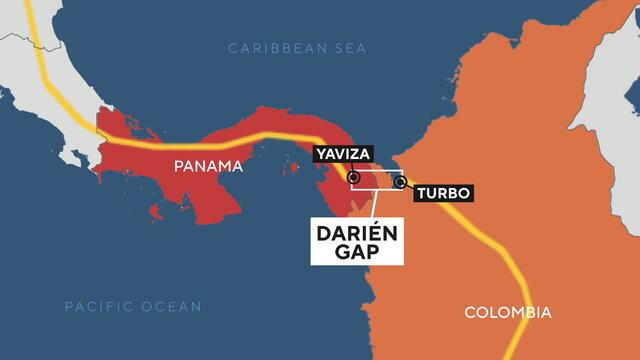
Adams told local media the migrant tour, led by Colombian officials and law enforcement, has given him a “true analysis” of the Darién Gap, a dangerous trail used by human smugglers to transport people from South America to the US.
A recent NBC News poll now finds voters favor Republicans over Democrats for dealing with immigrants.
Senate Majority Leader Chuck Schumer (D-N.Y.) met with Shanghai’s communist party boss in his first stop leading a bipartisan delegation to China, telling the latter he wants to see a level playing field as the two countries engage in economic competition.
The meeting took place shortly after the senators’ arrival in Shanghai on an overcast and windy Saturday afternoon, which marks the first day of a three-country tour that will also take them to South Korea and Japan.
“Many of our constituents feel that in instances China does not treat American companies fairly,” Mr. Schumer told Shanghai communist party secretary Chen Jining, adding that such feelings affect “America’s view of China.”
“We believe we need reciprocity allowing American companies to compete as freely in China as Chinese companies are able to compete here,” he said. “We are prepared to compete but we do not seek to conflict.”
The delegation is co-led by Sen. Mike Crapo (R-Idado). The four other senators on the trip are Sens. Bill Cassidy (R-La.), John Kennedy (R-La.), Maggie Hassan (D-N.H.), and Jon Ossoff (D-Ga.).
The Shanghai official in his public remarks avoided going into specific issues, stressing instead the importance of a stable China–U.S. relationship. Noting the over 5,600 U.S. companies in the Chinese city, he also offered windows to promote trade at the local level.
Mr. Schumer also raised the issue of fentanyl, noting the supply of fentanyl precursors enabling the opioid’s production in Mexico.
“They are fueling the fentanyl crisis that is poisoning communities across the United States,” he said. “Every one of us knows families who have lost young men and women to fentanyl.”
Last month, the American Chamber of Commerce in Shanghai found in its annual poll that U.S. firms’s China outlook was the worst in decades. Regulatory challenges facing U.S. firms included a lack of intellectual property protection, data localization, and other cybersecurity requirements.
The senators’ trip comes after Commerce Secretary Gina Raimondo’s visit to China in August. During her trip, she said American companies had complained to her that China has become “uninvestable,” citing changes to counterespionage laws, exorbitant fines without any explanation, and Chinese authorities’ raids on foreign firms.
In September, Ms. Raimondo told NBC in an interview that the United States was trying to “choke” China’s military capacity. “Certainly, on my watch, we are not going to sell the most sophisticated American chip to China that they want for their military capacity,” she said.
Secretary of State Antony Blinken, Treasury Secretary Janet Yellen, and John Kerry, President Joe Biden’s climate envoy, have all visited China this year.
White House press secretary Karine Jean-Pierre said on Oct. 5 that the Biden administration has been in touch with the senate delegation and “certainly support[s]” their visit to the region.
The China trip also took place amid bilateral tensions in the backdrop. On Saturday, China’s commerce ministry complained about the new U.S. restrictions on 42 Chinese companies that allegedly supplied parts to the Russian military, claiming it was “a typical act of economic coercion and unilateral bullying.”
‘Xi Is an Adversary’
Before the delegation arrived in China, several Republican senators took to X, formerly known as Twitter, to express doubts about engaging with Chinese Communist Party (CCP) officials.
“Nothing [Schumer] says will stop the CCP’s human rights abuses, shipping of deadly fentanyl to our border or theft of American resources,” Sen. Rick Scott (R-Fla.) wrote on Oct. 6.
Mexico cartels have been buying precursor chemicals from China to make fentanyl and ship finished products to the United States. On Oct. 3, the Treasury Department sanctioned more than 20 entities and individuals in China involved in a network for manufacturing and distributing fentanyl and other drugs.
On the same day, the Justice Department charged eight Chinese corporations and 12 Chinese nationals for allegedly illegally important fentanyl and related chemicals into the United States.
In a separate X post on Oct. 6, Mr. Scott urged Mr. Schumer to ask CCP officials why they had recently placed a floating barrier at the entrance to the lagoon at Scarborough Shoal, a rich fishing ground for Philippine fishermen.
“He could ask them why they’re putting up illegal barriers to impede navigation and harm the fishers,” Mr. Scott wrote. “It’s acts of aggression like this that tell us precisely who Xi is, an adversary.”
Also ahead of the delegation’s arrival in China, Sen. Marco Rubio (R-Fla.) released a short clip, explaining that he couldn’t be on the delegation because he had been sanctioned by China.
The CCP imposed sanctions on Mr. Rubio and several other lawmakers in 2020, in retaliation against U.S. sanctions against Chinese and Hong Kong officials for undermining Hong Kong’s autonomy and freedoms.
Also in his clip, Mr. Rubio warned that the United States cannot accommodate the CCP.
“In the end, [China’s] viewpoint is, no matter how much these politicians talk tough, they’re so addicted to what we can provide them, and in the end, they’re really limited to what they can do. And they will perceive these leadership trips as an indicator of us looking for an exit strategy and an accommodation on that front,” Mr. Rubio says in the video.
Sen. Bill Hagerty (R-Tenn.) said Mr. Schumer should not have traveled to China; instead, the Senate Majority leader should have canceled the Senate’s October recess and have the senators debate all 12 appropriations bills, to avert another government shutdown on Nov. 17.
“The last thing Chuck Schumer should be doing is going to China to try to secure a meeting with Xi Jinping with the appropriations process unfinished,” Mr. Hagerty wrote on Oct. 6.
Never in history has Hamas or Palestinian Islamic Jihad been able to kill and kidnap hundreds of Israelis in a single day. Saturday’s assault was clearly well-planned, highly coordinated, and well-armed, and very likely was in preparation for months or even years. The Times of Israel is reporting an Israeli death toll of over 600, with the military confirming over 100 now in Palestinian captivity.
Israeli officials and media pundits now want answers: how could Israel’s most celebrated and storied intelligence organization Mossad have missed it? How did the military not have any foreknowledge that it was coming? How did the Gaza jihadists overrun several IDF outposts so swiftly and easily?
Current and former Israeli officials are now decrying the “catastrophic” intelligence failure, and warn it may have serious lasting political ramifications. This whole war could even serve to destabilize the Netanyahu coalition government.
Chuck Freilich, Israel’s former deputy national security adviser, has told Politico:“This is a catastrophic failure in regards to Gaza.”
“It’s a failure in terms of intelligence, operationally,” Freilich said. “It’s clear we were caught totally unprepared by this. The divisional headquarters responsible for Gaza was occupied, they’re in disarray, and so the whole response has been delayed.”
“There’s always a short-term rallying around the flag. But once the dust settles we’ll have major political ramifications,” Freilich said. “After the Yom Kippur war, it took three and a half years for [then Israeli Prime Minister] Golda Meir’s government to be toppled — I don’t think it will take that long this time.”
Former IDF intelligence chief Amos Yadlin compared Saturday’s raids to the “intelligence failure” of the Yom Kippur War – which famously saw the Egyptian and Syrian armies mount a surprise attack on Tel Aviv forces.
The common Israeli public has been voicing outrage as well…
ex-IDF soldier explains that the events that took place today are impossible.
She was a boarder observer with the highest tech available.
“If a bird came close we knew”
“Even even a cockroach came to our fenced border we knew”
Military men are asking similar questions, with Eli Marom – the former head of the Israeli navy, stating in a national broadcast, “All of Israel is asking itself: Where is the IDF, where is the police, where is the security?… It’s a colossal failure; the hierarchies have simply failed, with vast consequences.”
And among Western pundits, an op-ed in The Guardian says it was “unthinkable” and an “intelligence failure for the ages.” Peter Beaumont writes:
Hamas’s surprise attack on Israel, on the 50th anniversary of the Yom Kippur war, will be remembered as an intelligence failure for the ages.
In the space of several hours, dozens of Gaza militants broke through the border fence into southern Israel, surprising local military positions.
Gunmen kidnapped and murdered Israelis in the southern border communities, filming their assault as they advanced in numerous locations. In one instance, a Gaza television journalist delivered a standup report about one attack from inside Israel, an almost unthinkable moment.
Some have gone so far as to speculate that the Netanyahu government may have had awareness that something was coming, but planned to exploit any assault as a justification to wipe out Gaza and to launch a major ground war against Hamas. As of Sunday, PM Netanyahu formally declared war.
“The war declaration was taken in accordance with Article 40 of Israel’s Basic Law, the Israeli government press office said,” according to CNN.
Will a fight at Israeli’s northern border be next?
🚨THREAD: DAY 2 of Gaza Uprising Against Israel❗️❗️
Yesterday’s surprise attack by Palestinian resistance fighters was a catastrophic intelligence and military failure on Israel’s part
This morning Hezbollah supported Hamas and PIJ by firing mortars from South Lebanon pic.twitter.com/jXMrl10tqs
That’s why only Central Banks can create digital currencies
The Fed recently put out a white paper, Data Privacy for Digital Asset Systems, which contends that the expectation of privacy in digital currencies (read: CBDCs) stems from misunderstanding how digital systems work.
“Concepts such as the desire for ‘cash-like anonymity’ are based on false underlying assumptions.”, is the crux of it (quick, somebody tell the Monero team, and everybody else already deploying anonymizing protocols and applications for digital assets).
The subtext is that there can be some privacy and confidentiality safeguards built into CBDCs, but at the end of the day those would still be subject to being overridden or dispensed with. The paper doesn’t come out and say that, but it does make oblique references:
“confidentiality implies that collected and stored data is protected from view in some manner, such as obfuscation or access restriction, and available only to authorized actors.”
Which of course makes you wonder who exactly will be authorized and what will their capabilities be? It truly is the trillion dollar question.
WEF: “Hold my beer”
If we keep this paper in mind while we consider the World Economic Forum’s recent article on digital currencies, privacy and freedom, which put a finer point on it, while paying lip service to the desire for privacy in those characteristic WEF-speak euphemisms:
“A digital cash replacement should not enable criminality, but there should be some freedom to transact with complete privacy.”
“Some freedom” implies that any freedom will be subject to approval, because either you have complete freedom, or you don’t.
“Some freedom” coming from the WEF especially, sounds a lot like their “Life in 2030” vision, which is mostly known for point #1: “You’ll own nothing and be happy”.
Point #4 is “You’ll eat much less meat. An occasional treat, not a staple. For the environment, and for your health”.
In other words, according to the WEF, digital currencies will afford some privacy and some freedom. Just like how in 2030 you’ll be able to eat some meat. (As long as you behave.)
Throughout the piece the impetus toward digital currencies is ascribed to consumer preferences for convenience – that nation states and NGOs (including the WEF) are relentlessly pushing us there, along with digital IDs and health passports, is never mentioned.
Through their preference for the convenience of electronic payments, we will inadvertently lose the historic freedom that only cash provides: to spend our money on what we want, with whom we choose.
It’s always amusing to watch the Davos-darlings pretend to grapple with thorny ethical issues:
As governments and central banks consider introducing retail central bank digital currencies (CBDC), they must therefore answer the following: Once the last cash payment is made, does this mean our historic right to make payments that are not observable or censorable by the state will end on the same day? Is that what we want?
The answer, of course, is a resounding “yes” if we’re to remember some of the more breathless pronouncements from their conclaves:
Alibaba Group president J. Michael Evans boasts at the World Economic Forum about the development of an “individual carbon footprint tracker” to monitor what you buy, what you eat, and where/how you travel. pic.twitter.com/sisSrUngDI
“We are developing, through technology, an ability for consumers to measure their own carbon footprint. What does that mean? That’s where are they travelling, how are they traveling? What are they eating? What are they consuming on the platform? So, individual – carbon – footprint – tracker. Stay tuned, we don’t have it operational yet, but it’s something we’re working on”.
The WEF article tackles the conundrum:
any system that allows people to make payments that cannot be traced or blocked is bound to attract criminals as well as facilitate personal liberty… A digital currency system should not mimic the “wild west”, but there should be some freedom to transact with complete privacy.
And while the article acknowledges that,
“if a CBDC doesn’t have some element of this capability, my prediction is it will fail in some major developed economies.”,
the entire framing is that Central Banks are the only game in town, and they need to get it right:
If the private sector could deliver a truly cash-like product itself, then we wouldn’t need this debate, but even a limited degree of cash-like behaviour would be incompatible with electronic payments laws. The reality is that only a central bank could deliver this type of product, thanks to the precedent set by their monopoly on the issuance of cash.
This paragraph would be the so-called “money-shot”. There is no mention of Bitcoin, or that crypto-currencies and stablecoins are already becoming ceded territory within the regulatory frameworks of nation states. There is no acknowledgement that many holders of wealth and capital will simply end-run CBDCs for the very reasons they articulate.
One of the WEF’s core tenets is that nation states are losing their position as the sole arbiters of power in this Fourth Industrial Revolution. That means they will have to coexist within a rubric of “Stakeholder Capitalism”, but what the WEF sending mixed messages:
On the one hand, governments are losing their primacy (and thus, monopoly on money issuance and supra-national initiatives like digital id’s and health passports), while on the other, only they have the authority to bless ascendent monetary systems. Which is it?
And how could you possibly publish an article like this without observing the elephant in the room: Bitcoin (and crypto-currencies, including stablecoins) have already entered the monetary landscape and have changed it in irreversible ways.
As expected when it comes to the World Economic Forum, it’s a display of truly breathtaking hubris and nescience.
* * *
My forthcoming ebook The CBDC Survival Guide will give you the tools and the knowledge to navigate coming era of Monetary Apartheid. Bombthrower subscribers will get free when it drops, sign up today.
Today’s post was an excerpt from the CBDC coverage section of the latest The Bitcoin Capitalist. TBC provides actionable intelligence on the macro forces shaping Late Stage Globalism and a tactical toolkit for preserving and growing your wealth as it plays out. Try it today here.