Russell Brand Demonetized After Sexual Assault Claims
YouTube has demonetized Russell Brand’s channel following allegations that the British comedian raped one woman and sexually assaulted three others between 2006 and 2013 – allegations which remained un-alleged for a decade, until Brand appeared on Tucker Carlson’s show six weeks ago.
In a video released before the Sunday Times published the allegations, Brand, 48, denied “serious criminal allegations” and said that while he has a history of promiscuity, all of his relationships “were absolutely, always consensual.”
According to YouTube, it stopped monetizing Brand’s channel because he violated their “creator responsibility policy.”
“If a creator’s off-platform behaviour harms our users, employees or ecosystem, we take action to protect the community,” a YouTube spokesperson told Deadline.
His content will remain on YouTube, but he will no longer be able to make money from the videos, which lean heavily into internet conspiracies about politics, Covid, and UFOs.
Sara McCorquodale, chief executive of social media analysis agency CORQ, told The Guardian that Brand makes an estimated £2,000 ($2,500) to £4,000 per video, which would equate to up to £1M a year if he published five a week. -Deadline
Brand’s channel has 6.6M subscribers. According to tech journalist Chris Stokel-Walker, Brand could make up to $1M per year from his YouTube videos.
The Metropolitan Police said on Monday that they had received a “report of sexual assault” in 2003 against Brand. His accuser alleges she was assaulted in Soho, London.
Meanwhile, the BBC has announced it’s launched an investigation into Brand.
“We’ve reviewed that content and made a considered decision to remove some of it, having assessed that it now falls below public expectations,” a spokesperson said.
Brand rose to fame in the early 2000s as a stand-up comedian and a host of shows, before moving on to Hollywood.
The curious timing of Brand’s #MeToo claims as his star rises on the right has led to a robust defense of the Brit.
Name any topic in the news that got more investigative energy from the press than Russell Brand’s sex life.
Russell Brand, a person I consider a friend, has been accused of rape, sexual assault, and abuse between 2006 to 2013 in a supposed “exposé” from the Sunday Times in the U.K.. I didn’t know Russell during that time, but the media did. They knew that Russell Brand was not only… pic.twitter.com/4zqSpJzaBP
If Russell Brand had just made the requisite celebrity pilgrimage to Zelensky and kept his mouth shut about the Covidians he would have dodged this bullet. Whatever the merits of the allegations might be, this much is obvious. pic.twitter.com/N9c3C080HE
Russell Brand dropped some facts on Bill Maher’s show about big pharma, the military industrial complex, and the banking industry. Was this when they decided he needed to be taken down? pic.twitter.com/QsovCc4T0c
Many may not remember this. Julian Assange was suddenly accused of rape after he began exposing government abuse of power, fraud and corruption via Wikileaks. One woman said she was ‘half asleep.’ Just like Russell Brand, the corrupt media convicted him before any court hearing.… pic.twitter.com/KfnZBplqcS
Stellantis Could Shutter 18 Facilities Under Latest Offer To UAW
If you’re looking for further proof that union extortion isn’t the greatest idea in history, behold Stellantis. In a recent bargaining move with the United Auto Workers union, the automaker has floated a contract proposal — that could result in the shuttering of 18 American facilities, according to CNBC, citing sources familiar with strike discussions.
The plan may also involve the rejuvenation of one dormant vehicle assembly plant in Illinois, hardly a silver lining for the planned “efficiency” cuts Stellantis is floating.
The proposal stands to impact thousands of unionized workers and reduce Stellantis’ operational reach in North America. Both sides of the negotiating table appear divided over the company’s ambition to modernize its parts and distribution network.
Central to the proposal is the idea to discontinue 10 existing “Mopar” distribution centers spread throughout the U.S., consolidating them into larger, Amazon-esque hubs. One such “Mega Hub” is being considered for the Belvidere Assembly plant, which has been inactive since last February.
“We continue to listen to the UAW to identify where we can work together and will continue to bargain in good faith until an agreement is reached. We look forward to getting everyone back to work as soon as possible,” said about ongoing talks, according to CNBC.
They described negotiations as “constructive and focused on where we can find common ground.”
In 2021, Stellantis expressed a desire to transition the majority of its salaried workforce—including approximately 17,000 employees in North America—to remote work for the greater part of their schedules. In line with this, the automaker confirmed it was “assessing the way we operate to maximize innovation, creativity, and efficiency among our teams, including possible changes to our property assets.”
The company reiterated, however, that its existing facilities would continue to serve as the North American headquarters and technical center.
The potential shutdown of 18 facilities was included in Stellantis’ most recent Thursday evening contract proposal to the UAW.
On Tuesday, the head of United Auto Workers, Shawn Fain, declared he will unleash additional strikes across manufacturing facilities of General Motors Co., Ford Motor Co., and Stellantis NV on Friday. This move is contingent on the three automakers not properly addressing the union’s demands for a new four-year labor contract for its 146,000 members.
“Either the Big Three get down to business and work with us to make progress in negotiations, or more locals will be called on to stand up and go out on strike,” UAW boss Fain said in a YouTube video published Monday evening.
Fain said, “We’re not waiting around, and we’re not messing around. So, noon on Friday, Sept. 22 is a new deadline.”
The union said Ford, General Motors, and Stellantis have “failed to put fair contract offers on the table.” A union representative told Bloomberg “no new offers” have come from the automakers “since the union made its latest proposals on Sept. 14, right before its strike began.”
A top NATO official warned that rising ammunition prices could mean that Western countries do not spend enough on the military to sufficiently arm Ukraine. Washington and its allies have pledged nearly $100 billion in weapons to Kiev since the Russian invasion last year.
On Saturday, the chair of NATO’s military committee, Dutch Admiral Rob Bauer said alliance members need to spend more on defense to account for the rising prices. “Prices for equipment and ammunition are shooting up. Right now, we are paying more and more for exactly the same,” he said. “That means that we cannot make sure that the increased defense spending actually leads to more security.”
Since the Russian invasion of Ukraine, the US has pledged over $43 billion in arms to Kiev. The increase in demand for arms has led to an increase in the stock prices of American weapons merchants.
Former Pentagon officials have warned that arms makers are exploiting the war in Ukraine to price gouge the Department of Defense. Shay Assad, who worked as a Pentagon contract negotiator for 40 years, told 60 Minutes that such firms overcharge the DoD for everything from “radar and missiles … helicopters … planes … submarines… down to the nuts and bolts.”
Atif Rashid, editor at Analyist News, observed, “In the weeks after Russia’s invasion, the market capitalization of Raytheon Technologies shot up to $155 billion from $128 billion at the start of the year. Lockheed Martin started 2022 worth $98 billion; by the end of year, it had reached $127 billion — its highest since records show.” He continued, “Northrop Grumman started the year on $61 billion and ended at $84 billion.”
However, Bauer instructed private investment funds and banks to support the arms industry’s effort to ramp up production. Washington is heavily subsidizing the arms industry to increase the rate of production for 155MM shells. The Pentagon is spending $1.5 billion in a year to ramp up the production of artillery rounds.
Still, the US is unable to produce the number of shells Ukraine needs. According to Pentagon Acquisition Chief Bill LaPlante, the weapons makers can produce 28,000 rounds per month, but Ukraine fires as many as 10,000 per day.
LaPlante says the arms industry is ahead of schedule and should be able to increase production to about 1.2 million rounds per year by 2025. However, that would still put the US well behind Russia, which is estimated to currently produce 2 million shells each year.
Visualizing The Exponential Growth In AI Computation
Electronic computers had barely been around for a decade in the 1940s, before experiments with AI began. Now we have AI models that can write poetry and generate images from textual prompts. But what’s led to such exponential growth in such a short time?
In the 1950s, American mathematician Claude Shannon trained a robotic mouse called Theseus to navigate a maze and remember its course—the first apparent artificial learning of any kind.
Theseus was built on 40 floating point operations (FLOPs), a unit of measurement used to count the number of basic arithmetic operations (addition, subtraction, multiplication, or division) that a computer or processor can perform in one second.
ℹ️ FLOPs are often used as a metric to measure the computational performance of computer hardware. The higher the FLOP count, the higher computation, the more powerful the system.
Computation power, availability of training data, and algorithms are the three main ingredients to AI progress. And for the first few decades of AI advances, compute, which is the computational power needed to train an AI model, grew according to Moore’s Law.
However, at the start of the Deep Learning Era, heralded by AlexNet (an image recognition AI) in 2012, that doubling timeframe shortened considerably to six months, as researchers invested more in computation and processors.
With the emergence of AlphaGo in 2015—a computer program that beat a human professional Go player—researchers have identified a third era: that of the large-scale AI models whose computation needs dwarf all previous AI systems.
Predicting AI Computation Progress
Looking back at the only the last decade itself, compute has grown so tremendously it’s difficult to comprehend.
For example, the compute used to train Minerva, an AI which can solve complex math problems, is nearly 6 million times that which was used to train AlexNet 10 years ago.
Here’s a list of important AI models through history and the amount of compute used to train them.
The result of this growth in computation, along with the availability of massive data sets and better algorithms, has yielded a lot of AI progress in seemingly very little time. Now AI doesn’t just match, but also beats human performance in many areas.
It’s difficult to say if the same pace of computation growth will be maintained. Large-scale models require increasingly more compute power to train, and if computation doesn’t continue to ramp up it could slow down progress. Exhausting all the data currently available for training AI models could also impede the development and implementation of new models.
However with all the funding poured into AI recently, perhaps more breakthroughs are around the corner—like matching the computation power of the human brain.
According to the Centers for Disease Control and Prevention (CDC), mRNA from COVID-19 vaccines is “broken down within a few days after vaccination and doesn’t last long in the body”—a position it has adhered to since the pandemic’s beginning, despite research suggesting otherwise (pdf). The CDC refers to mRNA as “messenger RNA,” whereas regulatory documents and Pfizer refer to the mRNA in COVID-19 vaccines as “modified RNA.”
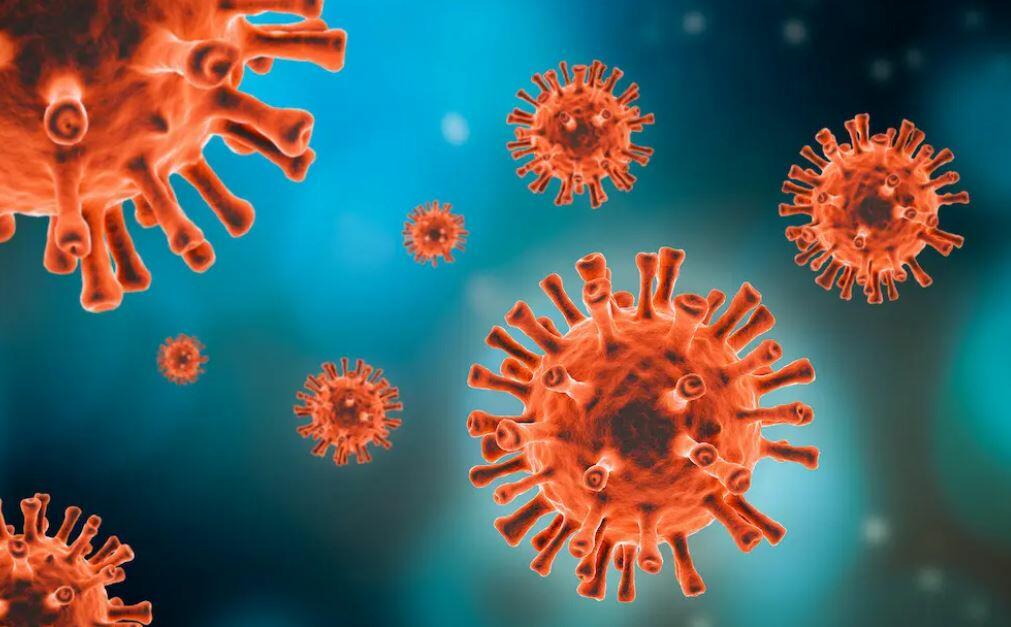
Yet a new study published on Aug. 31 in Proteomics Clinical Applications found spike protein in the biological fluids of people who received an mRNA COVID-19 vaccine six months after vaccination, suggesting mRNA may be integrated or retranscribed in some cells.
The study group included 20 subjects who received two doses of an mRNA COVID-19 vaccine, 20 who were unvaccinated and tested negative for COVID-19 or antibodies indicating they had previously been infected, and a control group of 20 unvaccinated participants who tested positive for COVID-19.
Researchers then tested to differentiate synthetic spike proteins originating from mRNA vaccines from natural spike proteins in biological fluids, such as blood, urine, saliva, and bronchoalveolar lavage fluids of study participants and monitored vaccine-induced spike protein following vaccination.
Spike Protein From mRNA Differs from Post-Infection Spike Protein
According to the study, spike proteins originating from the translation of mRNA vaccines differ from natural spike proteins that circulate in biological fluids post-infection because two proline amino acids replaced the amino acids lysine and valine to help stabilize the synthetic spike generated by vaccination. This double amino acid variation removed a tryptic digestion site (a necessary part of protein absorption) on the natural spike protein. Because of this, researchers said it is possible to differentiate between natural and synthetic spike protein in biological fluids using tryptic digestion followed by mass spectrometry analysis.
Utilizing these techniques, researchers detected specific fragments of synthetic spike protein in about 50 percent of subjects who received mRNA vaccines. The synthetic spike protein was detected from 69 to 187 days following vaccination. All samples from the unvaccinated control group were negative, including the 20 individuals who had tested positive after contracting COVID-19.
3 Hypotheses for Persistent Synthetic Spike Protein in Vaccinated
Based on the results of the study, researchers suggested three possible hypotheses to explain why synthetic spike protein persisted in the vaccinated:
The mRNA from COVID-19 vaccines may be integrated or retranscribed in some cells.
Pseudouridines at a particular sequence position may induce the formation of a spike protein, although the researchers stated this was a remote possibility.
The mRNA-containing nanoparticles may be picked up by bacteria ordinarily present at the basal level in the blood and produce spike protein.
Although researchers said all three hypotheses need further study, they concluded that their initial observations could aid in an individual’s decision about whether to take boosters.
Other Studies
In a recently published paper in Biomedicines, data show the design of the mRNA COVID-19 vaccines allows uncontrolled biodistribution, durability, and persistent bioavailability of the spike protein inside the body after vaccination.
“The lipid-nanoparticle matrix permits widespread biodistribution of mRNA gene codes to cells in most or all organs” and could potentially damage tissues and cause disease, researchers concluded.
A study published in November 2021 in the Journal of Immunology found exosomes expressing spike protein 14 days after vaccination with mRNA COVID-19 vaccines. A spike protein increase was observed four months following the second vaccine dose and increased following booster doses.
In a January 2023 study published in the Journal of Pathology, Microbiology, and Immunology, researchers found full-length or traces of SARS-CoV-2 spike mRNA in some patient samples up to 28 days after COVID-19 vaccination, indicating prolonged spike protein production.
A study published in March 2022 in Cell found vaccine mRNA in lymph nodes on days 7, 16, and 37 following vaccination, with lower but still appreciable levels at day 60. Immunohistochemical staining for spike antigen in mRNA-vaccinated patient lipid nanoparticles in some individuals showed an abundant amount of spike protein 16 days after the second dose, with spike antigen “still present as late as 60 days post-second dose,” researchers said.
A Pfizer Japanese biodistribution study showed COVID-19 vaccine spike protein can travel from the injection site through the blood and accumulate in organs and tissues, including the spleen, bone marrow, liver, adrenal glands, and ovaries. Vaccine mRNA was present from the day of vaccination and persisted in the bloodstream for weeks after vaccination.
CDC Says Vaccines Do Not Affect DNA, Despite Conflicting Evidence
The CDC, in addition to claiming mRNA from COVID-19 vaccines quickly break down within the body, also states on its website that these vaccines “do not affect or interact with our DNA”—the genetic material contained within the nucleus of cells—because these vaccines do not “enter the nucleus of the cell.”
The agency says “messenger RNA” COVID-19 vaccines work by “delivering instructions (genetical material) to our cells to start building protection” against SARS-CoV-2, and that the body discards all vaccine ingredients after producing an immune response just as it discards “any information cells no longer need.” According to the CDC, this process is a “part of normal body functioning.”
The current analysis and previous studies challenge this position. A February 2022 study published in Current Issues in Molecular Biology shows reverse transcription of vaccine mRNA into DNA using human liver cell lines. Additional studies have shown RNA from SARS-CoV-2 can be reverse-transcribed and integrated into the genome of cultured human cells—and expressed in patient-derived tissues or by virus-infected cells.
To date, pharmacokinetic and pharmacodynamic data on mRNA COVID-19 vaccines is limited. Pharmacokinetics is the study of how the body responds to administered substances throughout the entire duration of exposure. Pharmacodynamics assesses the drug’s effect on the body more closely. Understanding how long spike protein is produced by the body and how long it is present in biological tissues could explain the unprecedented number of adverse events that appear to be associated with the spike protein produced by vaccines.
London was the slowest city center to drive through last year, according to TomTom Traffic Index 2022.
As Statista’s Anna Fleck reports, on average, Londoners could expect to take 36 minutes and 20 seconds to travel just 10 kilometers, and to sit in traffic for an estimated 325 hours per year.
Two Indian cities also feature in the top eight roundup: Bengaluru with an average travel time of 29 minutes and 10 seconds per 10 km and Pune with an average of 27 minutes and 20 seconds.
In ninth and tenth position were Lima, Peru with 27 minutes and 10 seconds as well as Manila, the Philippines with 27 minutes per 10km.
TomTom reports that the rise in workers heading back to the office in 2022 was met with an increase in travel times across nearly two thirds of the analyzed cities.
With the year’s energy price hikes, the company also looked at how much drivers were paying throughout the year, finding that with congestion, fuel consumption increased too. Hong Kong was particularly hard hit, becoming the costliest city to drive in, with more than US$1000 ($1,023) calculated to be spent by a driver commuting every day at rush hour.
This year’s traffic index is based on trip data from anonymous drivers within the larger metropolitan area or a 5 km radius from the city center of 390 cities across 56 countries, throughout 2022.
September 18-22 marks National Pollution Prevention week, initiated by the U.S. Environmental Protection Agency.
Syrian President Bashar al-Assad will travel to China on September 21 to participate in a Syrian-Chinese summit at the official invitation of his counterpart Xi Jinping. According to Syrian state media, Assad will lead a high-level political and economic delegation for official meetings in the cities of Beijing and Guangzhou.
Syria’s official delegation will include Foreign Minister Faisal Mekdad and Finance Minister Samer al-Khalil. This will mark Assad’s first official visit to Beijing since 2004.
Analysts expect several bilateral agreements to be signed during Assad’s visit as part of China’s larger strategy to cement its position as a power broker in West Asia.
Beijing has already proved instrumental once this year in helping Syria come in from the cold after Chinese officials brokered the historic Iran-Saudi rapprochement that also saw a normalization of ties between Gulf states and Damascus.
In the weeks that followed the Saudi-Iran deal, Syria was also welcomed back into the Arab League, a development which China’s Foreign Ministry spokesman Wang Wenbin called evidence that “when the shadow of the US shrinks, the light of peace spreads.”
In March, Chinese officials urged the US to end its illegal military occupation of Syria and stop looting its resources, stressing that its continued presence has worsened Syria’s humanitarian crisis.
“China has throughout the years defended Syria’s territorial integrity and many times used its veto power at the UN Security Council to prevent interventions in the Arab country’s internal affairs,” Kosai Abido, a Syrian political analyst and author, told Press TVthis week.
“Since China is considered a friendly state for Syria and has significant economic power, cooperation agreements with this country should be expanded to include food, pharmaceutical, and technology sectors,” Abido added.
Syria demands UN hold Washington accountable for oil-theft operations
“US officials [must] be held accountable for the looting, and the US gov [must] be obliged to pay compensation,”
Last year, Chinese and Syrian officials signed a Memorandum of Understanding (MoU) welcoming Damascus into the Belt and Road Initiative (BRI), a mega-infrastructure project that seeks to bring capital and infrastructure to Global South countries while dramatically strengthening connectivity for commerce, finance, and culture.
Do not pray for an easy life, pray for the strength to endure a difficult one. -Bruce Lee
Over the past several years, a trend has emerged to label anything that deals with men, exercise, and masculinity as toxic.
In July of 2023, MSNBC reshared a year-old-tweet by extremism expert Cynthia Miller-Idrissthat she penned in March of 2022, sounding the alarm that young men were being radicalized and recruited through encrypted chat groups, they’re ‘lured with health tips and strategies for positive physical changes.’ Researchers reported this as “fascist fitness.”
The author goes on to mention that physical fitness has always been central to the far right, referencing Mein Kampf and Hitler’s fixation with boxing and jujitsu. The author goes on to claim that far-right groups are setting up mixed martial arts and boxing gyms in Ukraine, Canada, and France.
Mrs. Cynthia Miller-Idriss speaks of extremism and fitness as it connects to an obsession with the male body, training, masculinity, testosterone, strength, and competition. She talks of how combat sports are appealing to the far right because fighters are trained to accept physical pain, become warriors, and embrace solidarity, heroism, and brotherhood. I’m guessing she thinks that when a person, male or female, joins a CrossFit gym, a powerlifting gym, boxing, Muay Thai gym, or jujitsu school, a community from all walks of life, the bonds and confidence they build there is supposed to be a form of extremism.
She sums this up by going full-on crazy Charles-Manson-Helter-Skelter, saying, “It’s championed as a tool to help fight the ‘coming race war’ and the battles that will proceed it.”
The author’s article delivered backlash from the likes of Podcaster Joe Rogan, an avid strength trainer and jujitsu practitioner who tweeted, ‘Being healthy is “far right.” Holy fuck. Then, the comment section exploded.
Considering I’ve never been an avid gym member (I go to the local gym when I’m on vacation), but I’ve had a home gym, been strength training with Olympic weights and body weight calisthenics all of my life since age 11, as a kid I looked up to Arnold Schwarzenegger, Reg Park, Clint Eastwood, and Sylvester Stallone. I grew up on the pugilism of pro boxing, being motivated by everyone from Jack Johnson, James Braddock, Muhammad Ali, to Arturo Gatti. That doesn’t include my training in Martial Arts from age 12 until my mid-30s. Being influenced by men like Bruce Lee, Chuck Norris, and Jackie Chan. Men who overcame adversity through their chosen training. Why? One might ask, because fitness requires effort, goal setting, discipline, and a resilience of self. These guys didn’t get participation trophies. They earned their way in life while overlooking negativity.
Does that make me a racist? No, it does not. I’ve taught, studied, and trained in many disciplines throughout my life, including Korean Tae Known Do, Traditional Chinese Kung Fu, Western and Eastern Boxing, Brazilian Jujitsu, and Jeet Kune Do with all creeds and colors of people.
White supremacy was never part of the curriculum. Community, bonding, and hard work were front and center.
Fitness is the single most important daily endeavor that a person can embark upon. Movement molds a person into a better person. Creates discipline. Promotes health, mental and physical.
Examples from influencers/authors/podcasters such as Jocko Willink, Joe Rogan, Cameron Hanes, Mike Rowe, Joe DeSena, and David Goggins, though sometimes extreme, promote leadership, positivity, and goodwill. And no-nonsense motivation to be a little better each and every day. And they give back to their community.
Discussing what society has lost with retired Strength and Conditioning Coach Jim Steel from the University of PA, we narrowed it down to the simplistic: people have gotten away from the rewards of hard work. A stronger mind, a stronger body, and a positive attitude. In other words, society no longer realizes our country wouldn’t be where it is without overcoming negativity and putting in the hard work to create better men. Men who built roads, bridges, and infrastructure. Farmed land to produce food. Fought in wars. Battled racism. Every person who succeeds in life has had obstacles to overcome to get to where they’re at.
Sadly, in this day and age, we’re the one country that can complain and criticize how free we are. And about the men who fought for this freedom.
Why not consider this? Another friend, Strength and Conditioning coach Zach Even-Esh, writes a daily newsletter. They’re informative and inspirational; one of the issues he’s encountered over the past 10-plus years when training younger athletes is the average teenager can’t do 10 pull-ups or push-ups. As a people, we’re letting our kids proceed backward.
Competition is demonized. Victimhood and participation trophies have become the acceptable norm, and kids have become weaker.
This carries over to becoming an adult. Testosterone levels in men have declined. Gen Z and millennials have lower testosterone when compared to their predecessors. Declining about 1% per year since 1980. Why is this? Many factors. Eating too much processed/junk food (fast food, chips, soda, white sugar). Stress from jobs that require less movement than in the past, like sitting behind a desk and staring at a monitor for hours on end. Mental health issues. Tight underwear. Not smoking (nicotine raises T; I don’t condone smoking). Not getting enough sleep. Oh, and men don’t get enough movement throughout their day. They don’t exercise. And guess what could curb or even eliminate all of these issues and raise men’s testosterone: exercise. Lifting weights, calisthenics, or bodyweight movements. Getting outdoors and getting your Vitamin D from sunlight, from daily walks, sprints, or push mowing your lawn. Getting eight hours of sleep. And eating real food.
Look, men have egos, and they have testosterone; that’s what makes us men. But in this day and age, we’re constantly being labeled as toxic. No wonder there’s a decline in testosterone. It’s the pampering of culture, the removal of hard work and grit. Doing hard things.
Growing up in a blue-collar family, my father was constantly helping his in-laws on their farm, providing for my mother and me but also for his mother and his community of friends. He served in the Vietnam War as a Combat Engineer. He worked three jobs and took care of our home, and he was humble.
We’ve simplified life and removed effort and dedication. Commitment. Discipline. Work ethic. Goals. And most of all, pride. We’ve replaced it with excuses and weakness.
My advice to young men, stay off of social media and turn your phone off. Start journaling. Set daily goals. Read books. Learn a skill. Help others. Get outdoors. Go walking or hiking daily.
Lift weights, do bodyweight exercises, or join a gym. Quit making excuses. You’re not a victim.
Every man who’s succeeded in life did it by working hard and being dedicated. Regardless of how they were treated, shunned, or turned down, they did it by being resilient. It’s called being a man.
SOFREP and Frank Bill go together like ribs and BBQ sauce. Click on the links to check out more of his fantastic body of work: The Ravaged, with Norman Reedus; the novels Back to the Dirt (May 2023), The Savage and Donnybrook, the latter of which was turned into a film in 2018; and the story collection Crimes in Southern Indiana, one of GQ’s favorite books of 2011 and a Daily Beast best debut of 2011. – GDM
Cape Cod Residents Outraged At Democratic Governor’s Migrant Housing Plan
Earlier this month, Massachusetts Governor Maura Healey declared a state of emergency in response to the surging number of migrants in state-managed shelters. Then, last week, the governor mobilized the National Guard to assist with the migrant crisis. Now, residents are outraged with the governor’s decision to house the migrants as Biden’s southern border crisis spreads nationwide.
Local newspaper The Bourne Enterprise reports anger spreads across the Cape Cod peninsula as “residents turned out in force to express opposition to the state’s opting to provide temporary housing for migrant families who have been relocated to Massachusetts.”
“Protesters outside the building that evening held signs reading “Americans First”; inside, residents at the lectern cited potential board of health regulations, as well as concerns with whether the public school system can accommodate children from the immigrant families,” the paper said.
Dozens of residents attended the Bourne Select Board meeting at the Bourne Veterans Memorial Community Center earlier this month to voice their opposition to Gov. Healey’s plan to transform parts of the Joint Base Cape Cod and local area hotels into migrant shelters.
Gov. Healey recently asked US Secretary of Homeland Security Alejandro Mayorkas for help to combat the migrant crisis after her Democratic colleagues in the White House and on Capitol Hill have been determined to undermine Trump-era border policies for open border ones – that have led to millions of illegals pouring into the country over the last several years.
The governor has stated, “Massachusetts is in a state of emergency,” and commended the deployment of the National Guard to assist with the migrant crisis.
It’s all fun and games for Democrats until Biden’s disastrous open border policies flood progressive metro areas with illegals.
JUST IN: The ‘loving and tolerant’ co-hosts of The View say migrants need to be kicked out of New York City before blaming the migrant crisis on “global warming and climate change.”
Technopessimism is reaching a fever pitch, fueled by headlines like, “Meta’s AI internet chatbot starts spewing fake news,” “Self-driving Uber Car Kills Pedestrian in Arizona,” “Artificial Intelligence Has a Racial and Gender Bias Problem.” Artificial Intelligence can be sexist, racist, or just profoundly stupid. The knee-jerk reaction to these sensational headlines is to call for limits and constraints on AI. But we need to pause and realize that to err is both human and AI. Substitute a human for the AI in those headlines, and they become completely mundane. AI misconduct garners great attention, but that’s because human transgressions are taken for granted, not because technology is necessarily worse. In many cases, even the most egregious of AI errors can be audited and corrected. In extreme cases, AIs can be shut down. Society generally frowns on “shutting down” humans whose behavior is stupid or insulting.
Consider, for example, new NYC legislation that requires AI to be audited for bias before making hiring decisions. Proponents argue AI can be biased against certain classes of applicants. If these biases exist in the training set, it is because human agents have previously been biased. When an algorithm is a jerk, we can fix it, e.g. by changing the training data, and we can confirm that it is fixed before deploying into the wild. It’s very difficult to determine whether human biases have been remediated, especially given how deeply rooted they can be.
Similarly, people worry about a lack of transparency behind AI’s recommendations. Indeed, the best performing algorithms often offer little clarity in decision-making. But even black-box algorithms are extremely clear when compared to the mushy black boxes inside humans. Introspection illusion, a field of psychology, explains why humans are so bad at explaining their decision-making logic. On the other hand, suites of tools explain AI results, even for nontransparent algorithms. Given a resume, the AI response is deterministic. The same is rarely true of a human, who may not even respond consistently over a single day.
Manipulation by the social media algorithms is another popular source of apprehension. Social media platforms maximize the time that users spend on the platform by providing them content that interests them. Judgmental people argue that we should not want that content. However, these platforms are just the latest iteration of advertising manipulating us. Humans have manipulated other humans since time out of mind. Social media manipulates, but perhaps even less than forces like family, religion, government, and other media. We have mechanisms in place to try to minimize and mitigate these effects, and we should have similar remediations for AI.
Many people fear AI can’t understand ethics, regardless of whether it is actually acting ethically. A favorite meme is the Trolley Problem applied to self-driving cars, trying to decide whom to kill in an accident situation. But humans are most likely not applying utilitarianism, duty-based ethics, or any other deep thinking when they’re about to crash. On the contrary, they are thinking, “Holy crap, I’m about to hit that thing! Must swerve!” Or at the very best, “Seems like fewer people to the right.”
Sometimes the alternative to an AI isn’t a human, but nothing at all. In many cases, AI provides a service that simply couldn’t scale if provided by humans. For example, human translators couldn’t match the functionality of Google Translate. Likewise, humans cannot scan all credit card transactions looking for fraud. Even in areas of psychotherapy, where humans are clearly better equipped to provide the service, AI allows it to scale.
Often AI technologies are used both for evil and for good. Computer vision is used for surveillance, encroaching on privacy. But it is also employed in wildlife conservation, such as monitoring endangered species and preventing poaching. AI algorithms analyze images, acoustic data, and satellite imagery to identify and track animals, assess population dynamics, and detect illegal activities. We should judge the application, not the tool.
It can be difficult to put AI transgressions into perspective because people lack a deep technological understanding, and mysterious, complex systems scare people. The problem is exacerbated by sensationalized and deliberate misinformation on the part of Hollywood and the media. These factors lead many to believe the problem could be even worse than the headlines. Additionally, there is Frederic Bastiat’s “Seen vs. Unseen” distinction: A self-driving car hit a pole, but how many accidents by distracted humans would AI cars prevent? A racist AI sent the wrong person to jail, but how many errors are made by judges, some of whom have nefarious motives? Without comparing these AI misdeeds with the human alternatives, the default reaction is to hinder AI. In many cases, this is short-sighted and counterproductive. Our concerns with AI should always be viewed through the lens of comparison to human failings.
Rachel Lomasky is Chief Data Scientist at Flux, a company that help organizations do responsible AI. Throughout her career, she has helped scientists train and productionalize their machine learning algorithms.