69.4 F
Chicago
Thursday, August 27, 2026
Home Blog Page 3465

Visualizing How S&P 500 Sectors Perform Over The Business Cycle

Visualizing How S&P 500 Sectors Perform Over The Business Cycle

The business cycle fluctuates over time, from the highs of an expansion to the lows of a recession, and each phase impacts the performance of S&P 500 sectors differently.

And though affected sectors have different levels of average performance, any given period may see the outperformance of certain sectors due to external factors, such as technological advancements or high-impact global events (i.e. global pandemics, international conflicts, etc.)

In the graphic below, using data from SPDR Americas Research, Visual Capitalist’s Dorothy Neufeld and Sabrina Lam show the top performing sectors through the business cycle over almost 70 years.

The Business Cycle: Methodology

The dataset is based on the Conference Board’s Leading Economic Index, which assesses U.S. economic activity. This index includes 10 economic indicators that reveal typical turning points in the business cycle covering employment, consumer expectations, and financial conditions.

Overall from December 1, 1960 to November 30, 2019, the dataset covers:

  • 7 recessions

  • 7 recoveries

  • 12 expansions

  • 11 slowdowns

Returns are shown for all of the S&P 500 sectors with the exception of the communication services sector. This is because the sector was created relatively recently in 2018 and comprises previous technology, consumer discretionary, and telecommunication stocks already covered in the dataset.

1. Recession

Broadly speaking, a recession is a period of temporary economic decline characterized by two successive quarters of falling GDP.

During this period, consumer staples was the top performing S&P 500 sector, and the only one that has averaged a positive return. Utilities and health care, traditionally defensive sectors, followed next in line. Together, these sectors averaged 10% higher returns than the overall market during six of the seven recessions.

Rank S&P 500 Sector Average Period Return
1 Consumer Staples +1%
2 Utilities -2%
3 Health Care -3%
4 Energy -4%
5 Consumer Discretionary -12%
6 Materials -12%
7 Financials -13%
8 Industrials -15%
9 Technology -20%
10 Real Estate -22%

Real estate has been the worst performer during recessions, given its high sensitivity to discretionary spending as both household income and business activity tend to decline.

2. Recovery

A recovery is the phase following a recession where economic activity starts to increase and the economy begins to grow again.

Real estate outperformed all other sectors with an average 39% return. As monetary policy eases and interest rates fall historically after recessions, this makes purchasing real estate more affordable, in turn supporting the sector’s performance.

Rank S&P 500 Sector Average Period Return
1 Real Estate +39%
2 Consumer Discretionary +33%
3 Materials +29%
4 Technology +28%
5 Industrials +27%
6 Energy +27%
7 Financials +23%
8 Health Care +21%
9 Consumer Staples +18%
10 Utilities +15%

We can see in the above table that all sectors posted double-digit returns as consumer confidence and labor market conditions improved during recoveries.

3. Expansion

In this phase of the business cycle, the economy is growing beyond recovery. It is characterized by increased economic output, employment, and income.

Interestingly, market returns were the second-best overall after recoveries. Top sectors included technology (21%), financials (19%), and real estate (18%) as economic activity climbed to its peak.

Rank S&P 500 Sector Average Period Return
1 Technology +21%
2 Financials +19%
3 Real Estate +18%
4 Consumer Discretionary +17%
5 Industrials +16%
6 Energy +16%
7 Materials +13%
8 Consumer Staples +11%
9 Health Care +11%
10 Utilities +8%

The utilities sector has historically seen the slowest growth across all sectors as investors tend to favor cyclical S&P 500 sectors that rise with an expanding economy.

4. Slowdown

This phase is often considered a peak in the business cycle, where growth starts to decline, but the economy is not necessarily shrinking.

With 15% average returns, health care excelled during slowdowns. Often, investors reduce their exposure to cyclical sectors as they prepare for an economic downturn, looking for more defensive investments. Similarly, consumer staples saw strong performance on average.

Rank S&P 500 Sector Average Period Return
1 Health Care +15%
2 Consumer Staples +15%
3 Financials +14%
4 Utilities +12%
5 Industrials +12%
6 Technology +10%
7 Energy +9%
8 Materials +7%
9 Consumer Discretionary +6%
10 Real Estate +2%

Just as real estate saw a steep drop-off during recessions, it witnessed the lowest relative returns when the economy slows and costs tend to increase.

The Case for Diversification

The above data highlights how having a diversified portfolio of investments can help reduce sector-specific risk given the distinct performance trends of individual sectors over the business cycle.

Tyler Durden
Wed, 08/02/2023 – 06:55

Von Greyerz: It’s All About Economic Survival – Got Gold?

Von Greyerz: It’s All About Economic Survival – Got Gold?

Authored by Egon von Greyerz via GoldSwitzerland.com,

The Everything Bubble is about to turn to the Everything Collapse!

This is the inescapable outcome for the Western world.

The world economy should have collapsed in 2008 were it not for a massive Hocus Pocus exercise by Western central banks. At that time, global debt was $125 trillion plus derivatives. Today debt is $325 trillion plus quasi-debt or derivatives of probably $2+ quadrillion. 

The US is today running bigger deficits than ever at a time when:

  • The interest rate cycle is strongly up 

  • There is only one buyer of US debt – the Fed

  • Dedollarisation will lead to a rapid decline of the dollar. 

The financial system should have been allowed to collapse 15 years ago when the problem was 1/3 of today. But governments and central bankers prefer to postpone the inevitable and thus passing the batten to their successors thereby exacerbating the problem.

FALSEHOOD IS THE MOTTO

The world is now desperately clinging on to a false prosperity, based on false money, false moral values, false financial values, false politics and politicians, false media, false reporting of reality whether vaccines, climate, genders or history etc. 

Let’s look at some synonyms to false or falsehood according to Thesaurus:

Cover-up, deceit, deception, dishonesty, 

fabrication, fakery, perjury, sham etc.

Yes, all of the above fits today’s West and especially the US. But as I often point out, history repeats itself so this is nothing new. But since most major cycles can take 100 years from boom to bust and back again, very few people experience a severe depression in their lifetime. 

In the West, the last major depression was in the 1930s followed by WWII.  

Yes, I have repeated a similar message for quite a while. My purpose with this repetition is obvious. The world and in particular the Western economies are facing a wealth destruction never before seen in history and very few people are prepared for it.

As the Romans said: “Repetition is the mother of learning”.

Let’s just look at a couple of quotes from the Greek philosopher Plato 2,500 years ago. 

DEBT IS THE CONSEQUENCE NOT THE CAUSE

So nothing has changed but just as we have climate cycles, there are also well defined economic cycles of boom and bust.

Major economic cycles normally have a similar ending as von Mises said:  

“a final and total catastrophe of the currency system involved.”

Or as Voltaire expressed it: “Paper money eventually returns to its intrinsic value – ZERO.”

Debt is not the reason for the problems which the world is now facing. Instead debt is a consequence of the falsehood culture that that is toxifying the world. 

Unacceptable increases in sovereign debt arises when governments can no longer tell the truth, if they ever could!

So the end of the current economic cycle started when Nixon closed the gold window on August 15,1971. At that point, he realised that the US could no longer continue to run budget deficits as they had done since the early 1930s. To get rid of the disciplinary shackles of gold allowed the US government and most central banks to create “finger-snapping” money. This is what a Swedish Riksbank official called creating money out of thin air. 

When In 1971, global debt was a “mere” $4 trillion. In 2023 global debt is  $325T excluding derivatives. This is clearly a major timebomb as I wrote about recently. 

By 2030, debt could be as high as $3 quadrillion. This assumes that the quasi debt of global derivatives of $2 – $2.5 quadrillion has been “rescued” by central banks in order to stop the financial system from imploding.  

First we will obviously see major pressures in the on balance sheet credit market. Corporate bankruptcy filings are increasing in most countries. In the US it is on a 13 year high for example, up 53% from 2022. Moody expects global corporate defaults to keep surging as financial conditions tighten.

The US banks are grappling with deposit flight, higher rates and major risks in the property sector.

The pressures in the commercial property market and in housing will lead to a wave of defaults necessitating further money printing. S&P reports that 576 banks are at risk of overexposure to commercial property loans and surpassing regulatory guidelines.

BORROWERS WILL DEFAULT AND BANKS GO BANKRUPT

The bank failures in mid-March starting with Silicon Valley Bank were just a warning shot. 

Banks need high rates and a reduction in the loan portfolio to survive. 

But borrowers, both commercial and private, need lower rates and more credit to survive. 

This is a dilemma without solution. It will end up with both sides losing. Borrowers will default and banks will go bankrupt. 

Before that there will be the biggest debt feast in the history of the world. 

Luckily it requires no skill, no assets, no security to create the quadrillions of dollars which will temporarily defer the problem. 

All that is needed is a bit more finger-snapping. 

It will all happen first gradually and then suddenly as Hemingway described the process of going bankrupt. I have described this gradual/sudden process in previous articles, the first time I believe in 2017 when I talk about “Exponential moves as terminal”

Imagine a football stadium which is filled with water. Every minute one drop is added. The number of drops doubles every minute. Thus it goes from 1 to 2, 4, 8 16 etc. So how long would it take to fill the entire stadium? One day, one month or a year? No it would be a lot quicker and only take 50 minutes! That in itself is hard to understand but even more interestingly, how full is the stadium after 45 minutes? Most people would guess 75-90%. Totally wrong. After 45 minutes the stadium is only 7% full! In the final 5 minutes the stadium goes from 7% full to 100% full.

So if we take 1971 as the beginning of the debt explosion we can see that the real exponential phase happens in the final 5 minutes which are still to come. 

And this is how global debt can explode in the final phase of a credit boom. 

The hyperinflation in Weimar Germany in the early 1920s show a similar pattern:

As the graph above of the gold price in marks shows, the price of an ounce of gold  went from below 10,000 marks at the beginning of 1923 to over 1 trillion by the end of the year.

No one should expect gold to go to $1 trillion but everyone should expect the dollar and most currencies to fall precipitously. 

THE PERFECT WEALTH DESTRUCTION SCENARIO

So we now have a perfect setup for the coming wealth destruction scenario:

  • Global debt has gone up 80X between $4T in 1971 to $325 trillion in 2023

  • Bursting of the derivatives bubble could push debt to $3+ quadrillion

  • High interest rates and high inflation lead to sovereign and private defaults 

  • Bubble assets like stocks, bonds and property will fall dramatically in real terms

  • Major debasement of USD and most currencies  

  • Real assets – commodities, metals, oil, gas, uranium etc will rise strongly

  • Higher taxes, bail-ins, failure of pension and social security system

  • Central banks will fail to save the system leading to debt implosion and defaults

  • A deflationary depression will hit the West worst in a long term decline

  • The East and South (BRICS, SCO etc) will also suffer but emerge much stronger

So we now have a perfect vicious circle of debt eventual leading to default:

DESPERATE GOVERNMENTS TAKE DESPERATE ACTIONS

Yes, the West led by a bankrupt USA will try all tricks in the books. That will include CBDCs (Central Bank Digital Currencies), much higher taxes especially for the wealthy, bank bail-ins (forcing depositors to buy 10-30 year government bonds), martial law and many more measures to restrict people’s everyday lives.

These government bonds will have zero value since there will be no buyers. 

CBDCs will also soon become worthless as they are just another form of unlimited paper or finger-snapping money.   

I doubt ordinary people will accept these draconian measures. Thus there will be civil unrest which governments will be unable to control. Neither police nor the military will accept to turn against suffering fellow citizens.

PROTECTING RISK IS ESSENTIAL – TIMING IS NOT

I am obviously aware that the consequences I have outlined above of the biggest global debt bubble in history can be wrong. 

I have not specified the timing of these events. I have learnt that forecasting timing is a mug’s game.

 Interestingly mug comes from the Swedish MUGG which is a drinking cup with the alcohol turning you to a mug or fool.

Personally I believed that the system was ready to collapse after the 2006-9 subprime crisis but today 14 years later, the system is still standing but only JUST!

But since we are most probably in the final 5 minutes as I explained above, timing becomes irrelevant. We need to take all the measures we can before events start to unravel. 

We are now talking about financial survival and for many also physical survival.

In a world with financial and economic misery, high unemployment, a collapsing support system whether social security or pensions, a failing health system, social unrest and possibly war, we are all going to suffer. 

HOW TO PROTECT YOUR WEALTH

Since we can’t forecast when the greatest wealth destruction in history will start, we need to prepare today. As I often repeat, you can’t buy fire insurance after the fire has started. 

So now is the time to put your house in order. 

Forget about gluttony or greed. Forget about trying to get out of stocks at the top. Forget about the old axioms that stocks and property always go up. Forget about the notion that sovereign debt is always safe. 

Just remember one thing the next however many years is all about economic survival. 

If you haven’t made your money from ordinary investments in the last 20+ years, you are very unlikely to make it now. 

And if you hang on to your portfolio of conventional investments like stocks, bonds and investment properties, you are standing the risk of a severe decline of 50-90% of your portfolio for a very, very long period.

More safe investments in the current climate are commodities.

Look at the chart below showing Commodities versus Stocks (S&P) years. We are looking at a 50+ year low.  

Best stocks to hold would be in precious metals, oil, and uranium. 

The king of wealth preservation is gold. Silver is very undervalued and thus has more upside potential than gold but is much more volatile. 

For the best protection, gold and silver should be held in physical form directly by the investor and stored in the safest private vaults in the safest jurisdictions. 

After having organised our financial affairs, we must think about the people that need our help in whatever form. 

Then enjoy life with family, friends as well as nature, books, music etc which are all free pleasures.


Tyler Durden
Wed, 08/02/2023 – 06:30

New Boycott As UK Coffee Giant Celebrates Women Having Breasts Removed

New Boycott As UK Coffee Giant Celebrates Women Having Breasts Removed

Authored by Steve Watson via Summit News,

The UK’s biggest Coffee chain Costa is facing massive backlash and a new boycott after it used an animated image featuring a figure with mastectomy scars to celebrate “inclusivity and diversity”.

The Daily Mail reports:

The image, depicting an androgynous-looking character wearing long shorts with scars below each nipple, is taken from a mural designed by the chain for Brighton and Hove Pride last year.

Use of the image on a mobile coffee van used at events around the country was condemned by feminist campaigners and people who had breasts removed due to cancer.

Tanya Carter, spokeswoman for child safeguarding campaign group Safe Schools Alliance, said: “It’s almost unbelievable that Costa would do something so crass and irresponsible as to use this image.

“The executives clearly have no idea what message this conveys, that irreversible surgery on healthy female breasts is to be applauded. Is this really any way to sell coffee?”

Costa, which i downed by Coca Cola, issued a statement defending the use of the image, claiming “At Costa Coffee we celebrate the diversity of our customers, team members and partners. We want everyone that interacts with us to experience the inclusive environment that we create, to encourage people to feel welcomed, free and unashamedly proud to be themselves. The mural, in its entirety, showcases and celebrates inclusivity.”

Feminist writer Julie Bindel told the Mail “I remember stories about when a woman was thrown out of a Costa shop (in 2018) because she was discreetly breastfeeding.”

“Are we not allowed to breast feed but you are allowed to celebrate a woman having breasts removed for reasons of social contagion and vanity? It’s absolutely bonkers,” Bindel urged adding “What’s really scary about it is the actual mastectomy scars are seen as a badge of honour, as cool.”

“This dangerous ideology that you can mix and match your body by undergoing complex and dangerous surgery is horrific,” Bindel further asserted, adding “I want to see the surgeons, scientists, those who advocate and profiteer from healthy breast removal criminalised.”

Stephanie Davies-Arai, founder and director of Transgender Trend, an organisation that campaigns against glorifying gender dysphoria and trans surgeries on children, added “It’s caught up under the Pride flag, being inclusive and celebrating diversity but, actually, you are encouraging children to think they need to undergo unnecessary medical treatment affecting them for the rest of their lives.”

“Companies who want to appeal to young people are presenting trans as cool,” she continued, adding “This is being pushed on children as if having a major operation is just the same as changing your clothes.”

Another company currently facing boycott is shoe maker Dr Martens, who created a special pride shoe also featuring a character with mastectomy scars:

*  *  *

Brand new merch now available! Get it at https://www.pjwshop.com/

ALERT! In the age of mass Silicon Valley censorship It is crucial that we stay in touch.

We need you to sign up for our free newsletter here.

Support our sponsor – Turbo Force – a supercharged boost of clean energy without the comedown.

Also, we urgently need your financial support here.

Tyler Durden
Wed, 08/02/2023 – 03:30

Poland Builds Up Troops On Border In Response To Alleged Belarus Combat Helicopter Breach

Poland Builds Up Troops On Border In Response To Alleged Belarus Combat Helicopter Breach

NATO members Poland says it is building up troops along its border with Belarus following allegations that two Belarusian helicopters violated Poland’s airspace on Tuesday. 

Poland’s Ministry of Defence made the allegation, which Minsk quickly denied. “There was a violation of Polish airspace by two Belarusian helicopters that were training near the border,” Poland’s military said. Further, Warsaw says it has formally notified NATO of the alleged border violation, setting the stage for possible Article 5 discussion, portending future escalation.

Illustrative file image

The Belarusian Defense Ministry immediately denied Poland’s charge, suggesting that it’s a “far-fetched” provocation meant to justify a build-up of NATO forces near Belarus. 

“Accusations of a violation of the Polish border by Mi-24 and Mi-8 helicopters of the Belarusian Air Force and air defense forces are farfetched and made by the Polish military and political leadership to justify the build-up of forces and means at the Belarusian border,” the ministry said.

The Associated Press describes that there were witnesses (and video) to helicopters being operational along the border as part of training exercises this week:

Earlier Tuesday, Polish residents in an area near the border with Belarus reported seeing helicopters with Belarusian insignia which they said flew overhead. Some posted photos of the aircraft. Poland’s military initially denied that they had crossed into Polish airspace.

What’s more is that Belarus informed its NATO neighbor it would be conducting drills in a border region, so as there would be no misunderstanding between the rival countries which recently have had disputes over migrant crossings. 

Polish Defense Minister Mariusz Błaszczak announced a troop increase at the border, also bolstering a prior presence of elite counterterror police deployed in extra units last month in relation to the Wagner mutiny in Russia and their subsequently moving into Belarus. He said combat helicopters are also being moved for border defense, and other military assets.

As for NATO jitters over the closer Wagner presence in Eastern Europe, Polish Prime Minister Mateusz Morawiecki had announced Saturday that over 100 Wagner mercenaries had approached near Poland’s Suwalki Gap, considered a sensitive and strategic border area.

PM Morawiecki had gone so far as to claim PMC Wagner fighters “may try infiltrating Poland”—though there was no evidence of any hostile action by Wagner or border breaches.

But Poland is still making a lot of noise about the alleged ‘training exercise’ helicopter border breach incident. The chargé d’affaires of Belarus in Warsaw was “immediately summoned” by Poland’s Foreign Ministry on Tuesday, and it “issued a firm protest and called on the Belarusian side to immediately and in detail explain the incident.”

“The Polish side emphasized that the incident is perceived as another element of the escalation of tension on the Polish-Belarusian border. Poland expects Belarus to refrain from such activities,” the ministry said. Interestingly, it’s been the Russia-Belarus side (or ‘Union State’) which has long charged NATO powers with escalating the situation. This indeed could very well be the next major flashpoint connected with the Ukraine war.

Tyler Durden
Wed, 08/02/2023 – 02:45

Destruction Of Traditional Values Leads To The Hegemony Of Political Correctness, Says Senior Polish MEP

Destruction Of Traditional Values Leads To The Hegemony Of Political Correctness, Says Senior Polish MEP

Authored by Grzegorz Adamczyk via Remix News,

The destruction of traditional values and institutions in the name of freedom of pluralism is leading to the despotic rule of political correctness, guarded by liberal states, corporations and international organizations, a senior MEP for Poland’s governing party has claimed.

Professor Ryszard Legutko, a philosophy scholar and Law and Justice (PiS) MEP, told the Polish Press Agency (PAP) that mankind has a natural tendency for self-destruction because of its ability to change the world through technology, but these technological developments can be a force for good or ill.

It often leads man to hubris and pride, which, as the Greeks observed, always comes before a fall, he noted.

Legutko observed that hubris is dominant in today’s world with man feeling he can control the world, that he can experiment with gender, death, life, and family. The result is that man is becoming ridiculous in his fallibility. All systems of ethics always warn against hubris.

The professor believes that memory is crucial to overcome hubris, and the lack of memory leads to man’s downfall. Revolutions are a classic example of societies losing their memories and destroying their own experience and traditional institutions such as church, family and heritage. 

“We had hoped that communism might teach people to have respect for the experience of history. It has not. We are now moving in the direction of another revolution targeted at ending the traditional family, the nation-state and religion,” warned Legutko.

“The present cultural revolutionaries remind us of the ancient Greek shoemaker Herostratus, who burned down the Temple of Artemis in an effort to become significant by destroying something of value. “

He sees many such examples in modern society, people specializing in being offensive and blasphemous. They think they are special and on a mission to create a brave new world in which they will play God, but without memory and experience they fail to spot the long-term consequences of actions such as undermining parental control and family ties, he warned.

The paradox here is that the mania of liberation leads to slavery. The democratic liberal state is hyper-active and regulates everything; the way we behave, speak and even think. A repressive system is developing and those who do not conform are increasingly subject to punishment.

Corporations and international bodies such as the EU are actively engaged in assisting in the creation of the new despotism. 

According to Legutko, the more they say we are diverse, the more uniform we become in our behavior and thinking. It is a global fraud that spells doom for mankind.

“There is some resistance and pushback toward freedom and learning from experience, but it is not enough. Conformism and political correctness are still on the march,” the senior Polish MEP added.

Tyler Durden
Wed, 08/02/2023 – 02:00

Escobar: First We Go For Moscow, Then We Take Beijing

Escobar: First We Go For Moscow, Then We Take Beijing

Authored by Pepe Escobar,

The new multipolar order will of course not be without its own conflicts and growing pains…

The Global Majority is free to choose two different paths to counteract the rabid, cognitive dissonant Straussian neocon psychos in charge of imperial foreign policy; to relentlessly ridicule them, or to work hard on the long and winding road leading to a new multipolar reality.

Reality struck deep at the Russia-Africa summit in St. Petersburg, with its astonishing breadth and scope, reflected in the official declaration and key facts such as Russia writing off no less than $23 billion in African debt, and President Putin calling for Africa to enter the G20 and the UNSC (“It’s time to correct this historical injustice.”)

Three interventions in St. Petersburg summarize the pan-African drive to finally get rid of exploitative neocolonialism.

President of Eritrea Isaias Afwerki:

“They are printing money. They are not manufacturing anything at all, it’s printing money. This has been one of their weapons globally – the monetary system… sanctions here, sanctions there… We need a new financial architecture globally.”

President of Burkina Faso, Ibrahim Traoré, the face of a resurgent Global South and the world’s youngest leader:

“A slave that does not rebel does not deserve pity. The African Union (AU) must stop condemning Africans who decide to fight against their own puppet regimes of the West.”

President of Uganda Yoweri Museveni:

“One facet of neo-colonialism and colonialism was Africa being confined to producing only raw materials, crops, like coffee, and minerals (…) This issue is the biggest factor why the African economies are stunted; they do not grow, because all the value is taken by other people (…) So, what I want to propose to Russia and China is to discourage as a policy the importing of raw materials from Africa, to instead work with the Africans to add value at source.”

In a nutshell: pan-Africa should go all-out creating their own brands and value-added products, without waiting for “approval” from the West.

The South African drama

South Africa is an immensely complex case. Under extreme pressure from the usual suspects, Pretoria had already succumbed to the collective West hysteria related to Putin’s attendance of the upcoming BRICS summit, settling for the physical presence of Foreign Minister Lavrov and Putin via videoconference.

Then, during a personal meeting with Putin in St. Petersburg, President Cyril Ramaphosa decided to speak in the name of all African leaders, thanking Russia for the offer of free grain, but stressing they had not come to “receive gifts; Africa proposes the return of the grain deal.”

Translation: this is not about free grain offered for several African nations; this is about Pretoria wanting to cash in on the deal, which privileges globalist oligarchs and their Kiev vassal.

Now compare it with the Russian position. Putin once again made it very clear: fulfill our demands and we return to the grain deal. Meanwhile, Russia remains a leader in wheat production – as it was before; and while prices keep rising on global markets, Moscow will share the income with the poorest African nations.

Tensions inside BRICS, as illustrated in this case, are painfully real, and come from the weakest nodes. For all the devious rhetoric, the fact is India and Brazil prefer BRICS+ to proceed slowly, as sherpas confirm off the record.

Among the over 40 nations – and counting – which are dying to become part of the club, Indonesia and Saudi Arabia are very well positioned to be accepted in the first tier of BRICS+ members, unlike Argentina (which basically paid an IMF loan so it can continue to be paying IMF loans).

Reality is dictating the slow approach. Brasilia – under extreme pressure from the “Biden combo” – has a minimalistic margin of maneuver. And New Delhi is proposing first an “observer” status for prospective members, before full admission. Very much like in the Shanghai Cooperation Organization (SCO), whose recent summit was decided by New Delhi to be held online. For a very simple reason: India did not want to sit on the same table with China.

What’s worrying is that the practical, gargantuan work schedule for both BRICS and the SCO is being slowed down by a toxic mix of internal squabbles and foreign interference. Yet the Russia-China strategic partnership must have anticipated it – and there are contingencies in place.

Essentially, broader discussions are accelerated while minor partners get their act together (or not…) What’s clear is that, for instance, Indonesia, Iran and Saudi Arabia possibly being admitted to BRICS+ will immediately change the internal balance of power, and the weak links will necessarily have to catch up.

EAEU to the rescue

St. Petersburg also demonstrated something crucial in the evolving multilateral organization front: the renewed importance of the Eurasia Economic Union (EAEU). The EAEU is fast expanding beyond Central Asia towards Southeast Asia (a free trade agreement with Indonesia is imminent), Africa and crucially, the DPRK: that was discussed in detail during Defense Minister Shoigu’s rock star welcome in Pyongyang.

All that spells out a road map like this: the EAEU in the vanguard, in parallel to China’s BRI (crucial forum coming up in Beijing in October) until BRICS+ and SCO gridlock is solved.

Only one BRICS member without which is impossible to build Eurasia integration has serious problems with China: India (and that includes rivalry for influence in Africa, West Asia and Central Asia).

Simultaneously, there’s only one BRICS member capable of influencing India: Russia.

Now that’s a challenge for the ages. Yet Moscow does have the potential – and the competence – for regulating the whole new, emerging system of international relations. The timing for implementing what will be in fact a new world system is now, and immediately ahead: from 2025 to 2030.

So Russia-India relations will arguably become the key to fully unlock BRICS+. Issues will include an iron-clad Russian oil road to India via Rosneft; solving the Afghanistan riddle (with Moscow keeping Beijing and New Delhi in sync); a more muscular presence within the SCO; closer security deliberations among the three Ministries of Defense; including Chinese and Indian observers in the Russia-Africa process; and all of the above micro-managed by Putin himself.

If China-India competition is already a big deal, we should expect it to become even more complex after 2030. So here’s Russia facing yet another primordial historical/cultural mission. This goes way beyond the Himalayas. It spans the full arc of China-India competition.

And don’t forget to call the Steel Kitten

It’s always immensely enlightening to follow BRICS-related analyses by Sergey Glazyev, the Minister of Integration and Macroeconomics at the EAEU’s Economic Commission.

Glazyev, in two major interviews, has confirmed that a “sanction-proof” BRICS digital unit of account is under discussion, based not only on BRICS national currencies but also a basket of commodities.

He also confirmed that “we” are working to establish an internal BRICS group to design and establish the new system (by the way, these discussions within the EAEU are way more advanced).

According to Glazyev, a payments system outside of SWIFT can be set up through a network of state-run digital currencies – not to be confused with cryptocurrencies backed only by private speculators.

Glazyev also forcefully defends the adoption of the digital ruble. He argues that’s the way to track blockchain transactions and prevent non-intended use of funds – as in diversion into speculative markets.

Apart from all the huge challenges, the optimal path ahead spells out EAEU and BRICS+ observing international law and slowly but surely building the payments system capable of circumventing massive imperial choke points. A new BRICS currency can wait. What matters is the evolution of so many interconnections as the new system’s infrastructure is being built.

And that brings us once again to North Korea.

The Shoigu visit de facto cleared the path for the DPRK to totally align with the Russia-China strategic partnership in the massive Eurasian integration/development/mutual security process.

Oh, the ironies of “post-everything” History. The Hegemon may have actually been trapped into destroying NATO as a credible military force just as Russia-China reinvigorated a major ally in Northeast Asia and the Far East – complete with nuclear power, ballistic missiles, and a hyper-productive industrial military complex.

So the Straussian neocon psychos want to expand their unwinnable Forever War to rabid hyena Poland and the Baltic chihuahuas? As in first we go to Moscow, then we take Beijing? Be our guest. But first be sure to place a call to Global South powerhouse DPRK. Steel Kitten Kim Yo-jong, Kim Jong Un’s younger sister, will be delighted.

Tyler Durden
Tue, 08/01/2023 – 23:40

US Buyers Shy Away From China Inc. With No Regrets

US Buyers Shy Away From China Inc. With No Regrets

By George Lei, Bloomberg markets live reporter and strategist

Chinese equities in July posted their best returns in six months, yet US-based investors have refrained from chasing the rally, according to data tracking flows into exchange-traded funds. They instead have bolstered stock holdings in other emerging markets, in contrast to Hong Kong-based investors whose purchases of onshore equities have reached a 23-week high.

The MSCI China Index was up 9.3% last month and rallied a total of 12.7% between June and July, the kind of performance unseen since the heyday of the reopening trade. On a 20-day basis, total purchases of mainland stocks from Hong Kong-based investors reached 49.2 billion yuan ($6.85 billion), the highest since February 23.

US buyers, in contrast, have largely soured on China Inc. since February. On a 20-day basis, the iShares MSCI China ETF saw total outflows of $75 million as of July 31, despite stimulus bets and stock-market rallies over the past two months. Meanwhile, the iShares MSCI EM ex-China ETF received constant inflows throughout the year, with the 20-day total reaching $369 million as of July 31.

MSCI’s China ETF now has assets of around $8.4 billion, 70% above that of the other fund. If present trends continue, however, the ETF dedicated to EM ex-China will eventually exceed the China fund in terms of assets under management in the coming years.

Recent rallies in Chinese stocks appear to be “mostly driven by short covering” and few global funds are “buying into China in any meaningful way yet,” Michael J. Oh, a San Francisco-based portfolio manager at Matthews Asia, told Bloomberg. “Beijing has said a lot of positive things but there’s still a lack of actions,” Oh noted.

US sanctions on some Chinese firms and other forms of regulatory crackdowns may have also scared away American investors. This week, a US House committee demanded information from BlackRock about the inclusion of Chinese companies in its funds, alleging facilitation of American investment into parts of China Inc. blacklisted by the White House. Similar requests were also made to MSCI. As President Joe Biden is reportedly planning for new curbs on US tech investment in China, American appetite for companies in the world’s second largest economy will only wane further.

Tyler Durden
Tue, 08/01/2023 – 23:00

Hollywood Is Completely Freaked Out Over AI

Hollywood Is Completely Freaked Out Over AI

The rapid growth of artificial intelligence (AI) has put Hollywood creatives in a panic over fears that the technology will replace their jobs entirely.

AI has become a central issue as the Writers Guild of America (WGA) and the Screen Actors Guild-American Federation of Television and Radio Artists (SAG-AFTRA) enter into labor negotiations with studios, with the WGA asking studios to commit to not using AI for generating scripts or training large language models such as ChatGPT to produce variations of their work.

“They wouldn’t even discuss it with us, and that made us worried,” said LA comedian, Adam Conover, in a statement to Bloomberg. “It made me say, ‘Oh, these people actually are planning to use it to try to undermine us.’”

Conover picketing in front of Netflix headquarters in Los Angeles on July 17. Photographer: Sam Santos/Shutterstock

Creatives in the industry already say that they aren’t banking enough from streaming services and that technology companies exploit their labor. Now they fear AI will eliminate their jobs entirely, replacing their voices and faces with computer-generated renditions. AI is already being used to create marketing materials, eliminate swear words and reduce the cost of visual effects.

Studios, meanwhile, have been hesitant to commit to rules governing the technology.

Meanwhile, the potential for AI to replace human actors with CGI renditions has also become a major point of contention in the most significant labor dispute in 60 years, as both actors and writers strike at the same time, shutting down several TV and film productions.

Studio executives have dismissed the threat of AI as overstated, however they do acknowledge that it does offer cost savings amid declining revenue streams and efforts to cut costs. The technology can save costs in postproduction, while companies such as Flawless AI are offering AI-based solutions for ‘enhancing’ actor performances or dubbing dialogue in any language.

“Human performance will persist, but how we make content will change drastically,” said Tom Graham, co-founder of AI deepfake pros Metaphysic.

Almost every major studio already uses AI in some capacity, even if it’s not talked about. Many work with a company near the beach in Santa Monica called Flawless, which offers a suite of postproduction tools that save time and money.

DeepEditor, for example, lets filmmakers move an actor’s performance from one shot to another. If you have Margot Robbie talking behind a desk, say, you can decide to show her from a different angle without needing more takes. AI Reshoot lets filmmakers replace dialogue, as long as they have audio of the actor speaking the words. TrueSync allows for dubbing in any language; filmmakers can adjust the movement of an actor’s mouth to make it look as if they’re speaking the foreign words accurately. -Bloomberg

So with the industry shifting towards the use of AI, creatives are demanding guarantees on consent, control and compensation when it’s employed.

Another issue AI raises is that of copyrights and infringement. Both deepfake technology and generative AI (script writing) raise concerns over the unauthorized use of actors’ likenesses and intellectual property. Currently, Getty Images is suing Stability AI for allegedly using copyrighted works without permission.

Acording to Hillary Krane, chief legal officer at Hollywood talent agency CAA, people have rights to control the publicity of their name, image and likeness, but “the speed of technology is undermining our ability to effectively enforce those rights.

Tyler Durden
Tue, 08/01/2023 – 22:40

The Corruption Of Science By Politics

The Corruption Of Science By Politics

Authored by Jeffrey A. Tucker via The Epoch Times Newsletter,

Been to the movies lately? Maybe you are trying them out again. They seemed to have improved under the desperate desire to get audiences back.

I know there are reasonable criticisms but I found “Barbie” to be fun, if only because it completely ignored the last 20 years of gender dysphoria and asserted bracing but welcome sex binary.

“Mission Impossible” was a blast too but we’ve come to expect that from this franchise. Unexpected is “The Sound of Freedom” which is a terrifying expose of contemporary issues that, for reasons which are unclear, is a film utterly despised by the left.

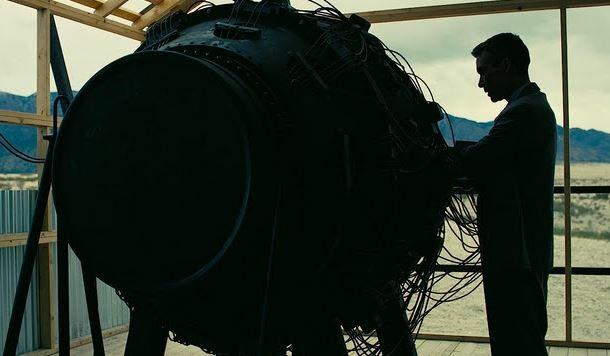
We should talk about “Oppenheimer.” It’s about many things but ultimately the theme concerns the use and abuse of science in service of state power.

The U.S. government tapped a promising physicist to build a better bomb. Once two years and $2 billion were consumed in the great project, it needed to be deployed, whether necessary to win the war or not. Germany was already defeated and Japan was ready to surrender but the chance to demonstrate to the world the superior military might of the United States was too good to pass up.

J. Robert Oppenheimer swallowed his moral scruples about the bombings in Japan—he thought the bomb would be used against Nazis—that cost hundreds of thousands of innocent lives. But he drew the line at pushing for the hydrogen bomb or building even more of the bombs he built. He became an advocate for arms control in order to avoid an escalation with the Soviet Union.

At this point, he was hounded by Washington for his personal Russian relationships that included dalliances with communists. So yes, his benefactor the state turned on him, exactly as the film depicts Albert Einstein predicting to him.

Later of course his reputation was restored. And this movie goes a very long way to memorialize him as a complicated but brilliant man.

One feature of the film I found particularly valuable was explaining the extremely strange relationship between the United States and the Soviet Union in these years. Following the Great War, there was a massive Red Scare in this country from 1918 to 1923, and that included Congressional hearings, censorship, and new sedition legislation that is today being used by the Biden administration against Trump and his supporters.

During the New Deal, which amounted to a rejection of free-enterprise dynamics of the American spirit, President Roosevelt brought into his administration many admirers of Soviet “achievements” in agriculture and housing. Among them was the hugely influential Rex Tugwell, an economist who embraced central planning and crafted much of the legislation in those years that cartelized industry, controlled prices, and embarked on Soviet-style projects.

This is one reason that champions of freedom in those days despised the New Deal. Reds were all over Washington. And despite the legend, their policies did not release the United States from the grip of depression but only prolonged it with controls, spending, regulation, and subsidies.

Yes, I know, we’ll never get rid of the myth that the New Deal saved us but the reality is that the Depression lasted through the next war and didn’t really end until peace came in 1945 and following.

But step back a few years in time. When the United States entered World War II, the U.S. and Russia became allies, and FDR and Stalin became fast friends in the effort to defeat the Nazis and Imperial Japan. It was “Roosevelt’s Road to Russia” that was completed in this alliance. During those days, there was no danger for scientists and others in having communist and Red connections but rather quite the reverse.

After the war, there was another switcheroo. President Harry Truman was facing party losses in Congress and cleverly triangulated by ramping up the Red Scare again. In 1948, the communists won an election in Greece, and this was highlighted in the United States as evidence of a growing imperialism under the influence of Moscow.

In the blink of an eye, Russia went from valiant ally to feared enemy. And this was a decade and a half after the United States went from feared enemy to valuable domestic influence. And this was only a decade and a half after Russia went from friend of the West to feared enemy. Yep, in the course of a half-century, the switch happened three times.

Did you ever wonder why George Orwell’s book “1984” was so named? It was a spin on 1948 when the Cold War began and within an instant the public mind flipped from celebrating to hating an entire nation. This is why in the book, international relations between Oceania, Eurasia, and East Asia were in continued flux. With each change, the announcement went out that we’ve always been at war with whomever the ruling class wanted war with next.

At the end of the Cold War, the United States celebrated emancipation in Russia and the demise of the Soviet Union and trade relations picked up. But sure enough, two and a half decades later, mainstream media—the same voices who once favored arms control and peace during the Cold War—is agitating for war with Russia. As in Orwell’s book, they tell us that we’ve always been at war with Russia.

The same crowd that agitated for decades for peace with Russia now wants all-out war!

In any case, this is the larger historical context in which Oppenheimer was grilled for his communist connections and why he went from friend to enemy so quickly. It was all about regime priorities. They have exerted more influence on science in modern times than we care to admit.

Let’s explore a case from the science of economics.

When the American Economic Association was founded in 1885, one of its first publications was an utterly vicious and disgraceful tract that favored segregation, white supremacy, eugenics, and much worse, not only for blacks but also for southern Italians, Jews, and Slavs, if you can believe it.

This deployment of fake science kept up for decades in all the mainstream economics textbooks and journals. It didn’t really end until after the Second World War. This is a tragic history because economics as a science began in the late Middle Ages with an emancipatory spirit. It was corrupted in the United States during the 20th century by state influence.

And so it has been throughout the century. This impacts every discipline from physics to economics to engineering to climatology.

Speaking of which, the founder of climatology in America is Harvard professor Robert DeCourcy Ward (1867–1931). He was a consummate member of the academic establishment. He was a founder of the American Restriction League, one of the first organizations to advocate a “scientific” approach to immigration rooted in Darwinian evolutionary theory and the policy of eugenics.

“Darwin and his followers laid the foundation of the science of eugenics,” Ward alleged in his manifesto published in the North American Review in July 1910. “Why,” Ward demanded, “should the breeding of man, the most important animal of all, alone be left to chance?”

By “chance,” of course, he meant choice. Ward explained that the United States had a “remarkably favorable opportunity for practicing eugenic principles.” And there was a desperate need to do so, because “already we have not hundreds of thousands, but millions of Italians and Slavs and Jews whose blood is going into the new American race.”

Thus are the thoughts of the earliest Harvard climatologist. And his successors have not distanced themselves from state priorities either, as you can easily discover by picking up today’s newspapers.

Read the rest here…

Tyler Durden
Tue, 08/01/2023 – 22:20

Watch: Jill Biden’s Ex-Husband Breaks Silence Over “Very Dangerous Biden Crime Family”

Watch: Jill Biden’s Ex-Husband Breaks Silence Over “Very Dangerous Biden Crime Family”

The ex-husband of First Lady Jill Biden has broken his silence to speak out against the “Biden crime family” for “targeting” he and Donald Trump.

Bill Stevenson, who was married to Jill Biden between 1970 and 1975, told Newsmax last week that the president’s brother, Frankie Biden, tried to intimidate him during his divorce with Jill, and claimed the family threatened him with repercussions.

“Frankie Biden of the Biden crime family comes up to me and he goes, “Give her the house or you’re going to have serious problems,”” Stevenson said. “I looked at Frankie and I said, “Are you threatening me?” and needless to say, about two months later, my brother and I were indicted for that tax charge for $8,200.”

When asked to clarify whether he thinks Joe Biden was behind the tax charge, Stevenson told host Greg Kelly: “I not only think it, but I know it,” adding that he “could not believe the power of Joe Biden and the Department of Justice. I couldn’t believe it.”

Kelly also noted the parallels between Stevenson’s case and Hunter Biden’s ongoing tax troubles – noting that Hunter was hit with just two misdemeanor counts for $2.2 million in unpaid taxes, while Stevenson and his brother were slapped with two felonies for just over $8,000 in unpaid taxes.

It’s hard to believe what they’re doing to President Trump right now, and that’s why I came to you,” said Stevenson, 75. “He is doing the exact same thing.”

I was on the wrong side of them, and they have literally come after me for 35 years in a row. One little thing after another,” he continued. “I can’t let them do this to a president that I love and respect. I can’t let them do this to our country.”

This is the only reason I’ve come forward. It’s like I said, nothing about the divorce, no bitterness, but Jimmy, Frankie, and President Biden are very dangerous, and it’s tragic. I can’t let them do what they did to me to President Trump. I can’t do it,” he added.

Tyler Durden
Tue, 08/01/2023 – 22:00