69.1 F
Chicago
Sunday, August 23, 2026
Home Blog Page 3517

Auto Insurers Hit By Worst Crisis In “30 Years,” Sends Premiums Skyrocketing

Auto Insurers Hit By Worst Crisis In “30 Years,” Sends Premiums Skyrocketing

On the inflation front, consumers have a reason to celebrate, as prices for used cars saw a significant drop in June. However, there’s a flip side to this as auto insurance rates soar, driven mainly by higher repair costs, larger medical bills, and soaring litigation fees. 

The Wall Street Journal found Allstate has jacked up car insurance premiums by 40% in Georgia, Nationwide Mutual Insurance has increased insurance rates by 32% in California, and State Farm has bumped rates in New York by 11%. The reason is that many of these insurers have experienced significant losses over the last several years, an indication premiums will continue to rise well into 2024. 

“Rates need to rise probably 5 to 10 percent in each of the next couple of years, because the loss trends have gone up so much,” said Dale Porfilio, chief insurance officer at industry group Insurance Information Institute.

On Wednesday, the Bureau of Labor Statistics published June’s latest Consumer Price Index data. While US annual inflation cooled to 3% last month, a subcomponent of the index, car insurance rates, soared 16.9% year-over-year, taking out pandemic highs. 

According to S&P Global, car insurers lost an average of 12 cents for every dollar of premium written. The main drivers were soaring repair bills, larger medical bills, and higher litigation costs. America’s largest insurer, State Farm, lost 28 cents for every premium written last year. It posted a $13 billion underwriting loss for its auto arm.

“It’s probably the worst period for auto insurers it’s been in 30 years at least,” said Neil Alldredge, chief executive of industry body National Association of Mutual Insurance Companies. 

Even though used car prices are coming off highs and tumbling, the cost of operating a vehicle remains elevated, if that’s filling up the gas tank, paying for insurance, and or repair costs, the whole American dream of affording a car and home is becoming more and more unattainable.

Tyler Durden
Thu, 07/13/2023 – 06:55

Jim Grant: We Could Be Heading Toward A Generational Bear Market In Bonds

Jim Grant: We Could Be Heading Toward A Generational Bear Market In Bonds

Via SchiffGold.com,

In a recent podcast, Peter Schiff warned that we could be on the verge of a further breakdown in the bond market and that a bear market in bonds could also maul US stocks and the dollar.

Financial commentator and investment guru Jim Grant has similar concerns. In a recent interview on Odd Lots Podcast, Grant said he thinks we’re at the beginning of a long-term trend of a weak bond market with higher interest rates that could last decades.

The Federal Reserve has pushed its fund rate to over 5% to fight inflation, but Grant called the central bank “dogmatic” and its inflation-fighting toolbox “rusty.”

There’s a bureaucratic dogmatism in the Fed. They’ve got these algebraic models, my goodness, how formidable they look on a blackboard, but they don’t actually function very well so far as the future’s concerned. And the Fed was in fact, dogmatic through 2021 into 2022 buying mortgages recently, I think up to March 2022. So you asked about their inflation-fighting tools? They’re rusty.”

Grant was asked why we haven’t seen interest rate hikes have more impact on the economy. Housing prices have dropped, but not substantially. Americans are still piling up credit card debt. The economy appears to be limping along just fine.

Grant said that he thinks something is going to break — it’s just a matter of time.

I was of the view that try as Jay Powell might to emulate Paul Volcker, Mr. Powell is not working with Paul Volcker’s economy. There is much more debt, therefore much more fragility.

Grant cited the big increase in private credit as an example.

People are head over heels over private credit. They contend that this is a not quite Nvidia-quality breakthrough in the history of finance. But it’s up there. And, but you know, private credit is a manifestation of the imperative to build leverage — whether it’s on the federal level or the corporate level, not quite so much, in recent years, on the individual level. So there’s a lot of leverage. And I would say Tracy with respect to the paradox of nothing breaking much yet, just be patient. I expected it might.

There are indeed signs of cracks in the bubble economy. The Fed’s interest rate hikes have already precipitated a financial crisis. The central bank managed to paper over that problem and get it out of the headlines with a bailout program. But it didn’t solve the problems. Banks continue to tap into the bailout loans as they struggle in this high-interest-rate environment. Meanwhile, there are big problems in the commercial real estate market, and economists at the Fed recently released a note revealing that an unprecedented number of distressed companies could collapse due to the recent increase in interest rates.

Grant pointed out that what is inevitable is always certain. But it’s not always punctual.

I look back on some of my work there and I was rather impatient for the inevitable difficulties and crises attending upon this credit creation jag. I thought certainly it was gonna happen like Tuesday or so. So it’s like the elapsed time between the first signs of house prices going way above trend on the one hand and the onset of the housing-related credit difficulties of 2007, 2008 and 2009. That period of six years was approximately 20 years in journalistic time if you were a little bit too insistent upon.”

Jim was asked when we hit a tipping point when financial solutions to financial problems are no longer viable. He said, “A tipping point was six years ago.”

It was a long time ago, but it did not tip. So why can’t it go on forever, I don’t know? They’re always these excesses that do crop up. They are met with additional stimulus intervention, manipulation. And still we go on. Who was it who said there is a deal of ruin in a country? I guess it was Adam Smith. And there’s a great deal of ruin, so to speak, in finance and manipulated finance. And one of the singularities of the present time is the American position in international finance. You know, this country emits the reserve currency, which means that we consume much more than we produce. We finance the difference with dollar bills that only we can lawfully print at a most reasonable price of like nothing. And we remit the dollars to our creditors, mainly in Asia, say, and those dollars don’t leave the country because they come back in the shape of Treasuries and mortgages purchased for the portfolio interests of our accreditors. So that is kind of a new thing in the long historical sweep. It’s not so new in terms of years, but in terms of phenomena, the reserve currency country being a chronic big debtor, that’s kind of a different thing. Reserve currency country living on the kindness of strangers, so to speak. That’s not exactly writ. The more one learns, the less dogmatic one becomes about timing, certainly.”

Grant addressed the recent run-up in stocks despite the high-interest rate environment and hawkish Fed rhetoric. He said it’s due to “the muscle memory of a generation of 0% interest rates and all-you-can-eat credit.”

The great all-you-can-eat credit buffet table was open for business for 10 years. Interest rates fell from 1981 until a couple of, actually a couple of weeks ago. It’s called 40 years. So that’s a lot of muscle memory. Central banks have intervened predictably until fairly recently when markets shuttered. Look what happened in 2019. You know, the repo market, this obscure recondite thing caught a head cold in September and the Fed resumes QE and said it’s not QE. Yeah, it was QE. So naturally people assume that the upside is the side to be on. It takes a true contrarian, almost a bloody-minded contrarianiess to butt one’s head against that. But it’s a living. So why do people do it? Because A) because cyclical memories are short and cycles are recurrent, and B) because it has ‘worked’ — that phrase ought to be in quotes.

Grant said he thinks we’re about to enter “a long cycle of rising interest rates” and a “generational” bear market in bonds.

The great question of whether rates are mean or reverting? So what characterizes interest rate movements is their generation length phasing, not necessarily cycles, but there are phases.

Interest rates fell for the last quarter of the 19th century, rose for the first 20 years of the 20th, fell from 1920, ‘46 rose in ‘46 to ‘81, fell from ‘81 to, call it, 2021. So at each juncture there was some mark of excess, some mark of speculative excess blow-off. Certainly in 1981, you know, a 20%+ funds rate seemed excessive. A 14% yield in 1984 in long bond when the CPI was printing at four or five, that seemed excessive. 10 percentage points of real yield — that seemed a lot.

So I speculate that we are embarked on a long cycle of rising rates. And I say that first of all, for reasons of pattern recognition, there’s no theory behind it. But I observe that in 2020 and ‘21, some unimaginably large number of debt securities were priced to yield less than nothing. Bloomberg keeps this particular figure. And I bet still, perhaps you could check me on this, I bet still there’s like a hundred billion of bonds priced to yield less than nothing worldwide. But there were $18 trillion, I think at the peak.

The most extraordinary expression of unqualified bullishness on an asset class because it had the name of “bonds” which had been falling in yield, rising in price. So no, it would not surprise me at all if we were embarked on something resembling a generation length bear market in bonds, meaning rising yields and falling prices that would fit the form.

Tyler Durden
Thu, 07/13/2023 – 06:30

“War Effort In Shambles As Hawks Turn On Each Other” At NATO Summit

“War Effort In Shambles As Hawks Turn On Each Other” At NATO Summit

Bloomberg is just out with a devastating behind-the-scenes account of a hot-headed Zelensky at the NATO summit in Vilnius, and the growing Western backlash in the face of his obvious frustration and what’s being seen as ingratitude for the steady flow of billions of dollars in arms to Kiev.

Apparently even the mainstream media agrees with our own assessment of the Ukrainian leader having thrown a “tantrum” as he complained about the “weak” and “absurd” NATO stance on Ukraine’s membership. The blistering tweet he issued in English while en route to Lithuania exposed cracks in the alliance, as Bloomberg highlights in the opening of its very revealing Wednesday piece

Volodymyr Zelenskiy was running hot ahead of his sit-down with NATO leaders on Tuesday evening. The Ukrainian president had been angered earlier in the day by what he said was an “absurd” reluctance to give his country a clear timeline on membership.

That outburst in turn riled the partners who have funneled billions of dollars of weaponry and aid into Ukraine’s defense against the Russian invasion — the US had been given no warning before Zelenskiy unleashed his attack on social media.

All day Wednesday, the above (very real) photo of an isolated and defeated-looking Zelensky standing amid NATO heads of state (with backs turned) circulated widely on social media.

And things were even more tense behind the scenes, as Bloomberg writes: “Over dinner in Vilnius, with US President Joe Biden back at his hotel, the other leaders delivered a clear message to Zelenskiy, according to one person who was present. You have to cool down and look at the full package, Zelenskiy was told.”

While it’s not quite yet a full on ‘hero to zero’ story… things are certainly sliding in that direction, given it’s unprecedented that the Ukrainian president who previously enjoyed rockstar status in Western capitals since the start of the invasion could be told to basically ‘cool it’!

Bloomberg continues in reference to Zelensky: “He had, after all, been given a renewed commitment to eventual membership and new security guarantees from the Group of Seven nations. By the next day, the message appeared to be sinking in.” The publication was privy to some key Western leaders’ exact words, presenting the rare dressing down as follows [emphasis ZH]: 

“Whether we like it or not, people want to see gratitude,” UK Defense Secretary Ben Wallace told reporters the following morning. “You’re persuading countries to give up their stock” of weapons and ammunition, he added.

This account of the behind-the-scenes wrangling is based on interviews with more than a dozen diplomats and officials involved in the summit who asked not to be named discussing private conversations. NATO leaders were trying to thread a needle on Ukraine’s membership bid when they arrived in Vilnius: They were seeking language that looked like progress and that Ukraine could sell as progress but fundamentally didn’t leave them any closer to getting dragged into a war with nuclear-armed Russia.

Ultimately the hawks (mainly among the Baltic and Eastern Europe states) have lost at Vilnius. Ukrainian Foreign Minister Dmytro Kuleba has admitted “There was a lack of political will.” Thus it appears that Zelensky’s angry, desperate tweet lashing out at Western partners was a last ditch effort at shaming NATO into conceding to its demands of being immediately fast-tracked to membership.

Bloomberg reveals further, that “Crucially, it was the US and Germany that insisted on dialing back the commitment to Ukraine joining the alliance. Earlier drafts of the communique offered a clearer pathway to Ukraine eventually joining, but Biden and Chancellor Olaf Scholz were wary of going too far.”

“Their teams demanded changes in the final days before the summit, upsetting lots of the other European nations, as well as the Ukrainians.” Indeed Biden in a CNN interview at the start of the week confessed the obvious: that Ukraine’s admission into NATO with the war still going would automatically unleash war between nuclear-armed powers – a WW3 doomsday scenario. Hence the West is now telling Kiev: just stop.

In Zelensky’s next big NATO summit appearance Wednesday following a no doubt awkward evening, things were different as he belatedly “got the message”

Ukrainian President Volodymyr Zelensky on Wednesday struck a more conciliatory tone on the subject of Ukraine joining NATO after he raised criticism this week over his country not being formally invited to join the alliance. 

Zelensky said at a joint press conference with NATO Secretary-General Jens Stoltenberg on Wednesday that Ukraine has already come a “long way in interoperability” with the organization and praised NATO’s decision to remove the need for procedural step — for Ukraine to have a Membership Action Plan — to join the alliance. 

More rare, awkward moments of Zelensky being on the receiving end of chastisement and humiliating sarcasm:

Just the day prior: Below is the much more confident Zelensky brimming with self-righteous rage, attempting to convince NATO leaders to change course on stating firm “conditions” for future possible membership. 

He demanded… Ukraine “deserves respect”

The New York Times’ summation of precisely what fell short in the NATO communique explains: “NATO declared on Tuesday that Ukraine would be invited to join the alliance, but did not say how or when, disappointing its president but reflecting the resolve by President Biden and other leaders not to be drawn directly into Ukraine’s war with Russia.”

Indeed it’s being widely  called more vague–and with greater possible restrictions, or “conditions”–than even what came out of the 2008 Bucharest summit.

Below is the offending part of the official Vilnius Summit Communiqué:

Issued by NATO Heads of State and Government participating in the meeting of the North Atlantic Council in Vilnius 11 July 2023:

11. We fully support Ukraine’s right to choose its own security arrangements. Ukraine’s future is in NATO. We reaffirm the commitment we made at the 2008 Summit in Bucharest that Ukraine will become a member of NATO, and today we recognise that Ukraine’s path to full Euro-Atlantic integration has moved beyond the need for the Membership Action Plan. Ukraine has become increasingly interoperable and politically integrated with the Alliance, and has made substantial progress on its reform path. In line with the 1997 Charter on a Distinctive Partnership between NATO and Ukraine and the 2009 Complement, Allies will continue to support and review Ukraine’s progress on interoperability as well as additional democratic and security sector reforms that are required. NATO Foreign Ministers will regularly assess progress through the adapted Annual National Programme. The Alliance will support Ukraine in making these reforms on its path towards future membership. We will be in a position to extend an invitation to Ukraine to join the Alliance when Allies agree and conditions are met.

But Zelensky is still holding out hope that one day

However, President Biden has remained unmoved, and responded by explaining before reporters that Ukraine “will not be in NATO for a while”.

* * *

The geopolitical analysis news site Moon of Alabama observes correctly

“Well. The little comedian seems disappointed. As if the whole play had not been obvious from the very beginning. Since 2008 the Ukraine was to be used as a tool to nag Russia. It is otherwise of little value. It will end up as a discarded rag while NATO will, in the end, again recognize the Russian Federation as the super power that that it is. NATO will have to relearn to listen to and negotiate with it.”

MofA then highlights the inevitable negative impact (to say the least) on Ukrainian morale: “Now lets wait and see what NATO’s climb down will do to the morale and motivations of the Ukrainian army and people.”

Update(1740): David Sacks agrees that for the hawks of NATO-land, the way things are going for the Ukrainian war effort and the West’s prior optimism and muscular support in general have reached a low-point.

Sacks writes below [emphasis ZH’s]…

Despite Biden’s best efforts to put a happy face on it, Vilnius will be remembered as the NATO Summit where tensions boiled over. Zelensky denounced the Alliance’s admission policy as “absurd” and disrespectful.

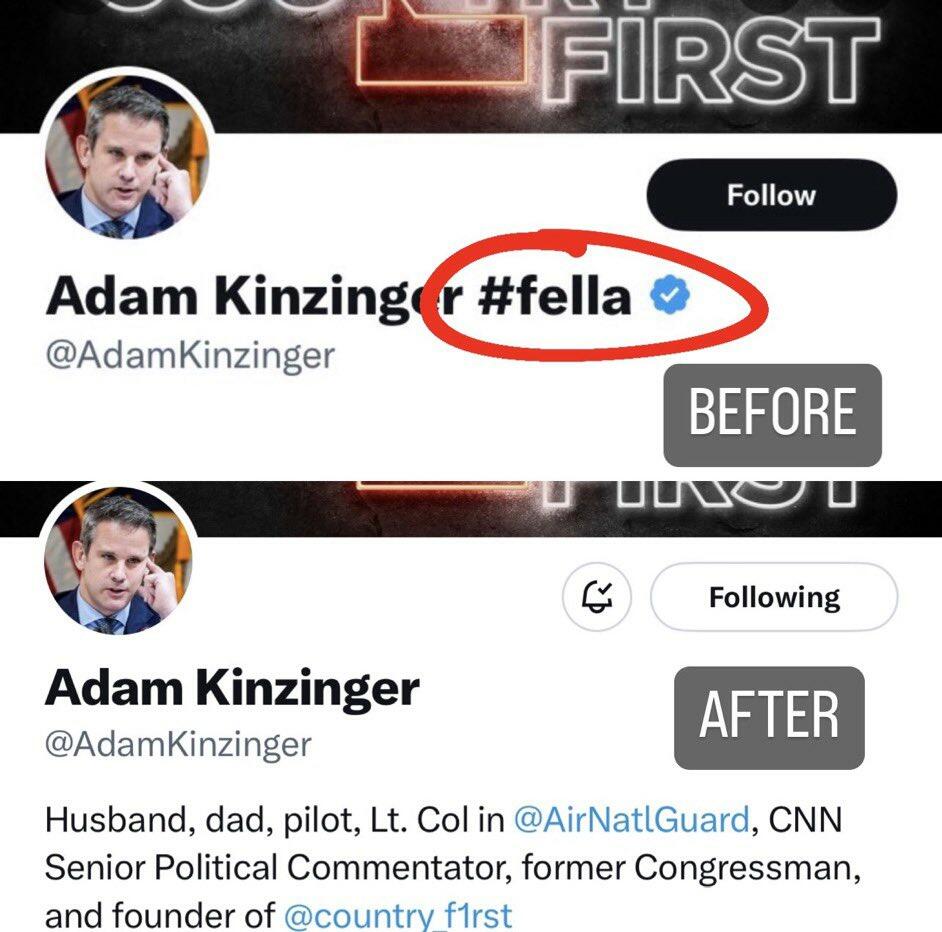
UK Secretary of Defense Ben Wallace chastised Zelensky for ingratitude. Lindsey Graham attacked the Biden administration for weakness. Ben Hodges criticized Jake Sullivan for lack of “strategic bravery.” Even NAFO mascot Adam Kinzinger no longer appears to be a “fella.”

The optics were even harsher than the words, with the NATO elites turning their backs on a frustrated Zelensky. Biden’s assurance that Zelensky is “stuck” with the U.S. may come as cold comfort to both nations now that the Ukrainian counteroffensive has failed to meet expectations, huge amounts of expensive Western armor lay in ruins smoldering on the battlefield, Ukrainian casualties are horrific, and the U.S. has run out of 155mm artillery shells to give, forcing America to debase itself by sending cluster bombs.

The war effort is increasingly a shambles and the War Party is starting to turn on each other.


Tyler Durden
Thu, 07/13/2023 – 06:11

Russian Oil Price At Key Port About To Breach Sanctions Cap, Would Lead To Sharp Drop In Supply

Russian Oil Price At Key Port About To Breach Sanctions Cap, Would Lead To Sharp Drop In Supply

The reason why oil traded above $100 for much of 2022, is due to fears that it would be effectively withdrawn from global markets as a result of Western sanctions, slashing global oil supply by millions of barrels every day. While that did not pan out in the past year, with every passing day we are getting closer to testing the resolve of western leaders to make sales of Russian oil above $60 illegal.

As Bloomberg reports, at a time when Russian oil exports are finally starting to decline, the price of Russian oil at one of its Western ports is the closest to the price cap set by Group of Seven nations since the measures came into effect late last year.

Urals crude at the port of Novorossiysk in the Black Sea rose to $59.98 on Tuesday, according to data from Argus Media (the pricing agency’s assessments are important in determining future caps). Argus’s figures are central to the price cap. Urals at the Baltic Sea port of Primorsk also gained, rallying to $59.38, the Argus data show.

The primary reason for the rising price – and lower Russian seaborne exports – was significantly reduced shipments from Russia’s western ports, as discussed yesterday.

Since the sanctions came into effect, oil from Russia’s has largely traded above the price cap — which prevents access to Western services including insurance — but prices in the West, which serves non-Asian markets, have yet to hit that level, Argus data show. That in part reflects a huge gap between the price at the ports of loading and delivery, almost all of which goes to middlemen.

US officials have long argued that the price cap is there to give buyers leverage while ensuring that, if Russia can’t transport its own barrels, there is no consequent oil supply shock. But a breaching of $60 for Urals would nonetheless suggest Russia’s ability to get its barrels delivered independently is growing.

Should the price of oil keep rising higher, and with Brent now above $80 and approaching YTD highs with OPEC+ supply cuts finally starting to bite…

… a big chunk of Russian oil that was formerly available for purchase to western nations is about to become non grata, leading to another violent repricing of global energy markets and leading to a price spike, one which comes at the worst possible time: just as the market is convinced the Fed is doing hiking. Only, a few more weeks of oil above $80 and headline inflation is about to head back over 5% in no time.

If Russia’s top export grade surpasses the $60 threshold, Bloomberg notes that it would allow Moscow to claim a win of sorts by showing Russia can get its barrels to buyers around the world without help from western firms. The price cap allows Russian oil to be transported with western ships and insurance only if it’s priced below the threshold.

But a vast shadow fleet of (mostly Indian and Greek) tankers has emerged since sanctions ratcheted up last year, helping to haul the nation’s oil and work around the cap. Yet in a potential twist, yesterday Bloomberg reported that the fleet of tankers that sprouted up out of nowhere to keep Russia’s oil moving has disbanded even faster than it emerged:

The “shadow fleet” of tankers, which was created to ensure the transportation of Russian oil, has shrunk tenfold.

Mumbai-based Gatik Ship Management now marshals a fleet of just four oil tankers, according to Equasis, an international maritime database set up to promote safe shipping. As recently as April it had 42, having amassed most of those carriers in under a year.

This development which would make delivering illicit Russian oil which traded above the price cap, much more difficult.

Tyler Durden
Thu, 07/13/2023 – 04:15

Nuclear Power’s Next Big Event

Nuclear Power’s Next Big Event

Authored by Robert Hargraves via RealClear Wire,

Two AP1400 nuclear power reactors are powering up in Georgia, and several ventures are developing new generation reactors. The outlook for more nuclear power seems bright. But will there be some future failure that leaks radioactive material out? Yes, perfection is impossible; airplanes crash.

Will such a radiation event kill off nuclear power, as did the harmless Three Mile Island accident? 

Yes, if we are guided by baseless fear. Regulators claim any radiation exposure is potentially harmful and so set unreasonably low limits. Media headlines frighten people about any radiation leaks, no matter how small. This article will contrast today’s regulatory limits with published, recommended protective actions to avoid harm to the public after a radiation release from a nuclear reactor accident.

Ionizing radiation harms by displacing electrons, breaking molecular bonds in cells. It is measured in Sieverts (Sv) or Grays, which are watt-seconds of energy absorbed, per kilogram of body weight. An intensive, brief 10 Sv dose is deadly, 1 Sv risks acute radiation sickness, and such a dose over 0.1 Sv can slightly increase future cancer risk.

U.S. regulations limit annual public radiation exposure from nuclear power to 0.001 Sv. The limit is 100X smaller than a brief, intensive dose that might cause cancer, and 1000X smaller than one requiring medical attention. This enormous safety margin was created politically by reducing limits in an attempt to reassure frightened people, but resulted in most people viewing 0.001 Sv as dangerous. Worse, regulators magnify fear with the ALARA rule (as low as reasonably achievable), claiming even lower exposures may cause cancer.

The regulators’ 0.001 Sv limit counts not just a single dose, but all radiation absorbed over an entire year, as if the harm were cumulative, without any biological repair during the year. In reality, repair takes place at DNA, cellular, and tissue levels in time scales of hours to days. DNA repair begins in seconds to minutes after exposure, and cellular repair within hours. How long does it take your cut finger to heal?

Radiation from the triple Fukushima nuclear reactor meltdown killed no public citizens, but Japan’s government killed over 1,600 people with unnecessary evacuations. To prevent such future mistakes, International Atomic Energy Agency (IAEA) published Actions to Protect the Public in an Emergency due to Severe Conditions at a Light Water Reactor to protect the public from physical radiation harm, avoiding harm from fear based on regulators’ limits. This IAEA documented advice is directed to accident site responders working to protect people’s lives and health, independent of radiation limits promulgated by bureaucrats.

Chart 1 helps guide the accident response team and the public. IAEA’s green SAFE FOR EVERYONE, year-long, dose rate is 25 microSv/hour. This radiation exposure dose rate over a whole year totals to 0.2 Sv, 200X the regulators limit of 0.001 Sv/year, but is safe because the body repairs damage much more rapidly than 25 microSv/hour damages it.

Jack Devanney’s substack article tabulates observed harms and radiation doses to actual people in many studies. He observes that dose rates under 0.01 Sv/day did not exhibit statistically significant, detectable harm. The body’s intrinsic repair rate exceeds the radiation damage rate. Using a 10:1 safety margin he suggests 0.001 Sv/day safety limit. This is 40 microSv/hour, close to the IAEA SAFE FOR EVERYONE rate of 25 microSv/hour.

  • CHERNOBYL. The Chernobyl accident was deadly; 30 onsite workers with intensive doses over 2 Sv died. Cleanup workers exposed up to 0.3 Sv or more had slightly higher rates of cancer. Radioactive iodine dispersed into the food chain caused over 1,400 thyroid cancers leading to the deaths of 15 children; no other increases in public cancer rates was observed. Perhaps 200,000 people were evacuated. Radiation rates in the Chernobyl exclusion zone are now under 10 microSv/hour, not harmful to the 1,000 stubborn babushkas and others who still live there.

  • FUKUSHIMA. Within the stricken Fukushima power plants site, radiation peaked at 10,000 microSv/hour, dropping 90% in 10 hours. Outside the plant IAEA reported peak measured radiation of 170 microSv/hour 30 km northwest of the site. By the next month radiation dropped to less than 91 microSv/hour everywhere, provisionally safe by Chart 1 except in spots where radiation may have still exceeded 25 microSv/hour. There was no need to evacuate 164,000 people, leading to the deaths of over 1,600 people, and there was certainly no need to do it hastily.

  • THREE MILE ISLAND. Around Three Mile Island reactor accident the cumulative dose averaged only 15 microSv (likely under 25 microSv/hour everywhere), so there was no need to evacuate anyone. Nevertheless the accident was a factor in ending nuclear power plants construction in the U.S.

  • NATURAL RADIATION. The back of Chart 1 states the average annual dose rate from natural sources of radiation exposure fluctuates around 0.2 microSv/hour, but in some locations it can be up to 15 microSv/hour.

It’s dose rate, not dose, that matters. Harm results when dose rate exceeds repair rate. Regulators and the multi billion dollar radiation protection industry overstate radiation harm by orders of magnitude:

100X: 0.001 Sv/year regulatory limit vs observed intensive 0.1 Sv cancer threshold.

52X: regulatory yearlong biological repair assumption vs typical healing time.

ALARA: unknown whim.

Regulators should abandon cumulative, yearlong dose limits, and instead set dose rate limits consistent with biological repair times. The ALARA rule should be dropped. What should be the limit?

IAEA’s Chart 1 shows a 25 microSv/hour dose rate limit. Jack Devanney’s article suggested 40 microSv/hour. In 1934, the NCRP (National Commission on Radiation Protection) advised 40 microSv/hour (0.1 R/day in old units). Nearly 50 years later, NCRP founder Lauriston Taylor wrote “No one has been identifiably injured by radiation while working within the first numerical standards set by the NCRP and the ICRP in 1934.” 

Nuclear power growth will end with the next radiation release unless we replace regulators with people who observe facts and consequences. The near century of concessions changing 1934 radiation limits from 40 microSv/hour to 0.001 Sv/year has not reduced harm one bit, but has increased public fear because the more restrictive limits have no evidential justification. Fear of nuclear power has killed many more people than radiation.

Nuclear power will be cheaper, ample, and less feared if regulators issue fact-based limits instead of conceding to protesters.

Dr. Hargraves teaches energy policy at Dartmouth’s Osher Lifelong Learning Institute and is a co-founder of a nuclear engineering company. 

Tyler Durden
Thu, 07/13/2023 – 03:30

Here’s Where NATO Is Seen In A Positive Light

Here’s Where NATO Is Seen In A Positive Light

While the existence of NATO is projected as a deterrent to Russia expanding its war effort to the countries bordering Ukraine, the military alliance is not unilaterally seen as a net positive.

As Statista’s Florian Zandt shows in the chart below, based on data from Pew Research Center, respondents from only seven out of 11 surveyed NATO member states have a favorable opinion of the security pact.

Infographic: Where NATO Is Seen in a Positive Light | Statista

You will find more infographics at Statista

For example, 93 percent of respondents in Poland claimed they view NATO in a favorable light. The country bore the brunt of border crossings by Ukrainian refugees since the start of the war and directly neighbors the Eastern European country. Some of the biggest economies in the world, among them the United Kingdom, Germany, and the United States, also see NATO as a net positive.

In France, Hungary, Spain and Greece respondents are more on the fence about the military pact, with a majority of Greek respondents having a somewhat or very unfavorable opinion of the security alliance. In Sweden, the country next in line for NATO membership, 78 percent of survey participants saw NATO as favorable.

Founded in 1949 by Belgium, Canada, Denmark, France, Iceland, Italy, Luxembourg, the Netherlands, Norway, Portugal, the United Kingdom and the United States as a counterpart to the USSR, the alliance’s eastward expansion beginning in 1999 with the accession of the former Warsaw Pact Countries Czechia, Hungary and Poland has been controversially discussed.

While some see it as a necessary bulwark against Russia and China, others view it as encroaching on the sovereignty of Russia.

Tyler Durden
Thu, 07/13/2023 – 02:45

The Death Games Of Ukraine

The Death Games Of Ukraine

Authored by David Patrikarakos via UnHerd,

Down in a bunker a little way back from the Ukraine frontline, I am watching a staple of modern warfare: a drone attack in real time.

The command centre is a small room with three TV monitors, two of which are divided into four screens. All are showing drone footage from different parts of the front’s 20 kilometres of trenches. Four men sit in front of the screens. Two men sit off at the side — one on a laptop, one manning a two-way radio. In the centre of the room stands Bereza, the Brigade commander, barking voicenotes into his phone.

Two of the screens go black and a message pops up: “Your livestream will play again as soon as it’s available. Get Ready!”  I’m told it happens all the time. The screens cut in and out for all manner of unpredictable reasons. But, then, the image reappears and we are looking at a forest. A Russian tank is on the move — changing direction and wheeling around. The men inside this room are trying to destroy it. Their constant banter —  about girls and weapons — doesn’t seem to affect the focus with which they pursue the tank. One man shouts into the radio; Bereza growls into his phone. A screen goes black again. “Your livestream will play again as soon as it’s available. Get Ready!”

A screen flashes with light. Then billowing smoke. The men whoop and cheer. I have just seen a successful strike. Dima grins. The atmosphere is electric but also strangely banal. The exclusively male cohort, the puerile jokes, the screens, the repeated invocation to “Get Ready!”. It’s like they are all playing a video game.

“This is modern war, David” says Dima. “The war online.”

In some respects, 21st-century warfare began the first time a US MQ-1 Predator UAV (that’s an unmanned Aerial Vehicle) drone flew over the Taliban’s positions to photograph the scene below. The Americans realised drones could be used for more than snooping. They could be modified for combat, armed with missiles and other incendiary devices. China, Iran and Turkey joined the arms race, and now they flood the market with their own cheap and effective drones.

For any state fighting without the wealth of the United States and China (which is everyone else), what is cheap and effective is also necessary. Out in Ukraine, the skies throng with Chinese-made DJI Mavics, Iranian Shaheds, Russian Orlan-10s and Turkish Bayraktar TB2s. Drones may not have the same payload or firepower as a fighter jet, but then again you can’t buy a fighter jet on the internet. For the price of one F-35, you can buy 55,000 DJI Mavic 3s. For less established militaries, drones offer the chance of levelling the field to at least some degree.

I spot a DJI Mavic 3 drone amid the scattered clothing, food and weaponry in the Dnipro 1 base. It’s not more than around 13×12 inches. This is a civilian camera drone — anyone can buy it online for around $3,000. If resource constraints breed creativity, then the Ukrainians are becoming artists. When I covered the battle of Bakhmut, an officer there explained to me how his unit could take out a multi-million-dollar T90 Russian tank by simply buying a Mavic online and fitting it with a small explosive. The Ukrainians have become masters of modifying consumer drones for conflict; of weaponising the everyday into something far more potent.

There is an atmosphere of relaxed watchfulness here. The sound of shells and rockets is distant but constant. The soldiers are fighting the Russians up close with tanks, rockets, artillery, sometimes even rifles. And always drones. Some, including the Iranian-made HESA Shahed 136 that the Russians use, are designed to directly strike targets. These are generally expensive — though the Shahed comes in at around $10,000 upwards, which makes it affordable enough to be expendable (only increasing their threat). But the Ukrainians mainly use drones as “eyes in the sky” — they use the cheaper camera ones to spot enemy targets and then call in their coordinates to other units, mainly artillery, to enable them to strike them more accurately. When ammunition and equipment stocks are low, firing must be accurate. On the front, there are few second chances.

“If I had had this technology in 2014, Putin would not have been able to occupy any of our territories. Fact,” says Dnipro 1 commander Yuriy Bereza. “The most important thing now is online comms. The most important thing is that I can see the reality on the ground.” He’s whittling a piece of cardboard with a knife, which he waves it around for emphasis as he makes his point. “When soldiers are on the front they are stressed and often give the wrong information, but with a drone I can see the situation calmly on the screen… I see the reality, the truth of it all — from above. It impacts how quickly I can make a decision. And whoever is quicker wins.

“It’s incredible how drones are changing the war. If I turn on my phone – a rocket will come out of the sky and land on me. The Russians can track it and they have orders to kill me. So many things in war now are about WhatsApp, Facetime, Signal — wars are being run out of phones. And if you leave a phone on in the wrong place you can die.”

The next morning after coffee, Bereza calls over a soldier who introduces himself as Oleksiy and who was part of the team last night. He is a studious-looking man who before the war was, like Dima, an IT engineer. Once those fighting here would have been the most physically impressive. Now they are recruited for their digital skills. Contemporary conflicts now require different types of soldiers — and they’re neither AI-generated nor Olympians.

He explains that what I had seen yesterday was part of a multi-pronged mission to stop two Russian tanks trying to destroy Ukrainians positions on the zero line while simultaneously trying to draw the unit’s attention away from an attack from the other side. “My role is to coordinate the direction of fire and to give tasks to the different units around me. Those who pilot the drone; those who analyse the coordinates; those who shoot — all of them I coordinate on the battlefield.”

He picks up a book from the table. “Look at this book on how to be a commander. It’s several years old, but we need to react to events as they are now. Military doctrine is like a computer program, it needs to be updated every six months. Drones are the best for choosing tactics, not tomorrow, but right now.”

And you need to be creative. Last night one of the tanks managed to get away but they got the other one by sending the drone up to follow it in real time and then send its coordinates to the artillery as it moved. They could direct their fire in such a way that while they didn’t hit it directly, they forced the tank onto a mine, blowing it up. The whole operation took about three minutes. How would they have done this operation without drones?  “Before drones,” he replies, “the only eyes we had were of the infantry. We sucked.”

What about the air force? He smiles. “Well, for a start the Russians also have more planes. But even so, maybe you can hear a tank from a plane, but you cannot work out where it is. Especially if the tank is hidden and then two minutes later comes out of its hiding place — and the Russians use jamming systems to disguise their movements, but we use drones from a big distance to get around this. Drones allow us to watch the battle in real time.” The benefits drones bring are more than just narrowly military. For a start, there is the question of morale. One of the unit’s key tasks, Oleksiy explains, is to aid their infantry. “When they see us over their heads, [they know] we are protecting them, so they are happier to stay on their frontlines positions, because they know we can be there in one minute,” he says. This, in the end, it’s what it’s all about in war: speed. And drones, if used properly, give you that. Right now, the Ukrainians are reaping the rewards.

The Russians are neither stupid nor technologically naive. According to reports, Ukraine is losing around 10,000 drones per month to Russian electronic warfare. When I spoke to Dima earlier in the year, he told me how much better the enemy was getting at jamming and disrupting his attacks and how much more advanced they were in medium-range drones. Now, 18 months on, despite all their problems, the Russians remain in the field and they are getting better. They have significant technological capabilities — and, crucially, they are learning from their mistakes.

The Ukrainians, meanwhile, are forced to crowdfund for drones (and indeed other equipment). The Russians, bereft of international or often popular domestic support, are reliant on Moscow to keep delivering. It does so inadequately and with little concern for its own men. But its artillery is still firing, and its drones are still in the air. And as the counteroffensive intensifies all the way up and down the line of contact, it is becoming clear that whoever wins the drone wars will come to hold the upper hand in the war — perhaps for good.


Tyler Durden
Thu, 07/13/2023 – 02:00

Here’s What’s Really Behind The Global Reset And Sustainable Development Agenda 2030

Here’s What’s Really Behind The Global Reset And Sustainable Development Agenda 2030

Authored by Chris Macintosh via InternationalMan.com,

Captive in the so-called 15-minute cities, eat bugs and no meat, immerse in the metaverse, and a never ending feed of pharmaceuticals, and all that by force, otherwise your universal basic income (UBI) gets cut off.

Energy? Dirty.

Lower motorway speeds and driving ban in plan to tackle oil reliance. Here’s an extract from Daily Echo article

Lowering motorway speed limits and introducing driving bans on Sunday are ideas being suggested to cut Britain’s reliance on oil.

The ideas are part of a ten-point plan proposed by the International Energy Agency in a bid to reduce global oil demand by 2.7 million barrels per day.

Motorway speed limits would be reduced by 6 mph across the country under the proposals, while the plan also suggests a ban on driving in cities every Sunday.

This is horseshit! It has nothing to do with “reducing reliance on oil” and everything to do with the WEF and UN “sustainable development Agenda 2030.”

You know what’s going to happen? The existing stream of folks leaving countries implementing these policies will turn into a flood (more on this in a minute). With it will come capital controls, because the sociopaths driving this agenda will never see their own policies as the problem. No, it’s always those silly peasants who are the problem.

In case you’re wondering… that’s you.

Meat? Dirty.

Irish considering massive cattle culling. We are flabbergasted that killing 200,000 head of cattle is even a consideration…

Wasn’t Ireland “famous” for its potato famine? You would think that people would learn from history. I am coming to the view that little/nothing is learnt by studying history.

When will folks wake up to this delusional stuff going on? Perhaps when their living standards take a bat to the knees.

In any event, the Irish merely considering the elimination of 10% of their cattle herd highlights just how strong this climate narrative is. But it’s not solely an Irish issue. This cancer has spread to all of the West.

Upcoming Steak Prohibition.

German authorities have advised residents of Germany to consume no more than 10 grams of meat per day, as discussed in an article published by Eastern Herald

The black market trade in steaks is going to be absolutely loco. When they told us we’d eat the bugs, they didn’t mention the word “willingly.”

Here’s how it works in case you’ve not figured it out or if you need to explain things to friends who have perhaps thus far been gullible enough to buy into the entire “the world is going through a climate crisis” and life itself will end in [pick your suitable date]” hogwash.

The financial considerations that need to be made in order to meet idiotic green energy targets mean that all things that currently sustain life itself (energy and food being at the top of the list) become uneconomical and are shut down.

This is creating the greatest convexity I’ve ever seen in my career. In fact, it is the greatest I’ve ever seen relative to my readings of history going back hundreds of years. What is obvious is the sectors coming under attack. What is more challenging is determining from an investment standpoint the jurisdictions/countries which will ultimately repudiate this Malthusian genocidal eugenic agenda.

More lies regarding the “renewable energy transition”.

We need ‘+330 mines in 12 years’ to feed battery demand according to Stockhead.

Yeah, it ain’t gonna happen. Simple math, which a 10-year-old should be able to do, reveals that this entire charade is not only going to fall short. It is not going to come anywhere near close, which begs the question: what is it that is planned?

The answer is that the sociopaths at the UN and in Washington have no real intent for the peasants to continue with their current standard of living. They intend for us all to live in our 15-minute cities, eating bugs, immersed in the metaverse, and hooked up to a neverending feed of pharmaceuticals, which we’ll be forced to take, otherwise your UBI (universal basic income) gets cut off.

That is their plan, and it is currently under implementation. It is surprisingly successful. The pushback is rather mediocre, and that is more easily understood by the 4th Turning. By and large, the West is in a fourth turning. People are fat, well fed, lazy physically and intellectually. Unprepared to sacrifice their relative comforts, they will be largely sacrificed. The next generation will have to come out stronger. This may happen in some places. We can certainly hope so. What is also possible and not discussed much is that a long dark age could take hold. Certainly it’s happened before.

What I do know is that nothing happens in a vacuum… and we are seeing this. The weakening of the entire Western middle class is being met with both emigration of the awake and typically wealthy class to pockets which are benefitting from the collapse.

*  *  *

The Western system is undergoing substantial changes, and the signs of moral decay, corruption, and increasing debt are impossible to ignore. With the Great Reset in motion, the United Nations, World Economic Forum, IMF, WHO, World Bank, and Davos man are all promoting a unified agenda that will affect us all. To get ahead of the chaos, download our free PDF report “Clash of the Systems: Thoughts on Investing at a Unique Point in Time” by clicking here.

Tyler Durden
Wed, 07/12/2023 – 23:40

Hong Kong Warns Of Japanese Seafood Ban If Fukushima Dumps Nuke Water Into Ocean

Hong Kong Warns Of Japanese Seafood Ban If Fukushima Dumps Nuke Water Into Ocean

Last week, the UN nuclear watchdog gave Japan the “greenlight” to dump ‘treated’ radioactive water from the crippled Fukushima plant into the ocean. The plan upset China, the biggest buyer of its seafood exports, and has since sparked concerns in Hong Kong. 

On Wednesday, Hong Kong’s Environment and ecology department head Tse Chin-wan warned if Japan discharges 500 Olympic swimming pools of treated water from the Fukushima Daiichi Nuclear Power Plant into the Pacific Ocean, that would trigger a ban on imports of all frozen, refrigerated, dried, or otherwise preserved aquatic products, sea salt, and unprocessed or processed seaweed, according to Reuters

The threat of a ban comes one day after Hong Kong leader John Lee said the city would ban seafood products from a “large number” of Japanese prefectures if Tokyo decided to discharge the treated radioactive water. 

Fukushima Nuke Plant Water Tanks 

Last week, the International Atomic Energy Agency (IAEA) concluded that Japan’s plans to release treated radioactive water from Fukushima into the Pacific Ocean are consistent with international safety standards. 

Almost immediately, that didn’t sit well with China, the largest buyer of Japan’s seafood exports, who said it would increase monitoring of edible products from Japan and continue bans on seafood imports from 10 prefectures. The General Administration of Customs said this was a move to prevent contaminated food from hitting Chinese supermarkets. 

Meanwhile, Chinese Foreign Ministry spokesman Wang Wenbin addressed the issue on Tuesday during a press briefing: 

“If some people think that the nuclear-contaminated water from Fukushima is safe to drink or swim in, we suggest that Japan save the nuclear-contaminated water for these people to drink or swim in instead of releasing it into the sea and causing widespread concerns internationally.” 

If Tokyo decides to dump the Fukushima water, and China and Hong Kong tighten restrictions on food imports from Japan, let’s hope none of this questionable seafood ends up in the US. 


Tyler Durden
Wed, 07/12/2023 – 23:20

Supreme Court Revives Whistleblowers’ Medicare, Medicaid Fraud Lawsuits

Supreme Court Revives Whistleblowers’ Medicare, Medicaid Fraud Lawsuits

Authored by Matthew Vadum via The Epoch Times (emphasis ours),

The Supreme Court resurrected two whistleblower lawsuits against companies for allegedly defrauding Medicare and Medicaid.

The U.S. Supreme Court building in Washington on June 7, 2023. (Madalina Vasiliu/The Epoch Times)

The cases concern the federal False Claims Act (FCA), a key tool the government uses to combat health care fraud, and “scienter,” a legal term meaning prior intent or knowledge of wrongdoing.

Sen. Charles Grassley (R-Iowa) has called the FCA “the centerpiece of the government’s anti-fraud arsenal.”

The new orders followed the court’s unanimous decision on June 1 to reinstate whistleblower actions against pharmacy operators SuperValu and Safeway for allegedly overcharging the government by filing false Medicare and Medicaid reimbursement claims for prescription drugs they sold.

That ruling, United States ex rel. Schutte v. SuperValu, held that the scienter requirement under the False Claims Act, which asks whether an accused party “knowingly” filed a “false” claim with the government, refers to the party’s knowledge and subjective beliefs, as opposed to what an objectively reasonable person may have believed.

Sometimes called the Lincoln Law, the FCA was enacted in 1863 to deal with defense contractor fraud during the Civil War.

The act currently provides that anyone who knowingly files false claims with the government is liable for triple damages plus a $2,000 penalty for each false claim.

The FCA allows the government to pursue perpetrators on its own and for private citizens to sue those who defraud the government on behalf of the government in what are known as qui tam suits. Such private citizens, who are called relators, may be awarded part of what the government recovers.

To prove scienter under the statute, the government or the whistleblower must demonstrate that the company acted “knowingly,” or with “reckless disregard,” or “deliberate ignorance” of the law in question.

On June 30, in Olhausen v. Arriva Medical LLC and United States ex rel. Sheldon v. Allergan Sales LLC, the Supreme Court summarily granted the petitions of two whistleblowers while at the same time skipping over the oral argument phase when the merits of the case would have been considered.

The court issued unsigned orders in the two cases in a flurry of eleventh-hour rulings as it wrapped up its regular term and recessed for the summer. The court did not explain why it made the two new decisions. No justices dissented.

At the same time, the court vacated the judgments of the U.S. Court of Appeals for the 11th Circuit in Olhausen and of the U.S. Court of Appeals for the 4th Circuit in Sheldon, remanding those respective cases to those lower courts in light of its decision last month in United States ex rel. Schutte v. SuperValu.

Read more here…

Tyler Durden
Wed, 07/12/2023 – 23:00