45.3 F
Chicago
Saturday, April 25, 2026
Home Blog Page 37

Mark Carney’s Tough Talk On The US Is Rooted In The Liberal Reset Agenda

Mark Carney’s Tough Talk On The US Is Rooted In The Liberal Reset Agenda

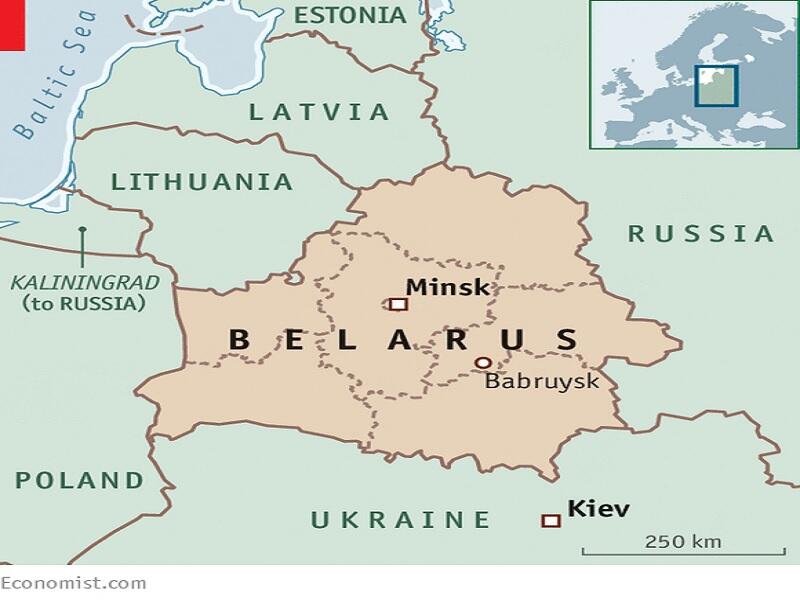
Are Canadians being primed for an open conflict with the US?  The rhetoric coming from the nation’s liberal government is sounding increasingly hostile, and not just in terms of economic separation.  Prime Minister and avid globalist Mark Carney recently took the stage at the Liberal Convention in Montreal; the event is being heralded as a “battle cry” for leftists and a disturbing joke by conservatives.

One of the biggest stories coming out of Canada this week was politician Leah Gazan desperately proclaiming that there was a “genocide” taking place against the country’s “MMIWG2SLGBTQQIA+” population.  

“When the budget was released, I was shocked to find out that Prime Minister Carney is cutting $7 billion between Indigenous Services Canada and Crown-Indigenous Relations,” Gazan said.   

“They provided zero to deal with the ongoing genocide of MMIWG2SLGBTQQIA+. This is abhorrent. This is callous.”

If you’re confused as to what any of this means, you’re not alone.  No one knows (or cares) what it really stands for.  The point is, Canada has lost it’s way in the darkness of leftist insanity. 


The story showcases not only the woke insanity that is overtaking Canada, but also the reality of the internal browbeating that leftists try to harness against each other as they virtue signal for attention and political power.  However, gay Wifi passwords aside, the real story from America’s northern neighbor is the escalation of economic and political posturing coming from the Liberal government.  

Carney’s statements in Montreal invariably wandered over to Donald Trump and the US, with the Prime Minister claiming that the “international order is crumbling” rapidly.  He insinuated that pulling back from the leftist vision of multiculturalism and woke “progress” is impossible.  In other words, conservatives that want to step back from the brink of societal madness are the enemy, and of course, the US is presented as the core of this disruption.  The full speech can be viewed HERE.

Keep in mind, Canada (and much of the western world) is facing its own anti-globalist movements after the draconian nightmare of the pandemic lockdowns, not to mention rampant inflation and open immigration which is crushing Canada’s housing market.  Canada’s federal government might seek to cut ties with the US, but provinces like Alberta are seeking to cut ties with Canada. 

The idea that the Canadian military sends “70 cents of every dollar” to the US is a misrepresentation of stats.  Canada does buy large amounts of US military hardware, largely because they are not capable of manufacturing next gen weapons for themselves.  While they do have the industry to produce around 50% of their own military logistics, this is only because their armed forces are incredibly small, with only 22,500 actual combat troops compared to 268,000 front line troops in the US.  

This may be why Canada’s Defense Chief, General Jennie Carginan, is now calling for an expansion of reserves to include 300,000 Canadian citizens.  Oddly, she suggests that recruitment focus on people with a “public services” background (police, federal law enforcement), leading some critics to suggest that the Canadian military is gearing up to control its own citizenry rather than fight a foreign enemy.

Carney mentions US “betrayal”, ostensibly referring to Trump’s tariff policies.  Canada has long benefited from lax trade regulations with the US, at one point generating the wealthiest middle class in the world due to ample and easy exports to US markets.  This, of course, was ruined by leftist policies under Justin Trudeau, including carbon controls and resource restrictions. 

Trump’s tariffs were a response to the parasitic liberal relationship between Canada and the US which was funding a government that, ultimately, despises free markets and freedom in general. 

Tough talk from NATO and European “allies” has been rampant lately, and it would seem globalist politicians in Canada got the memo.  The Trump Administration’s recent announcement of a naval blockade of the Hormuz to stop Iranian ships from Iranian ports has suddenly inspired the Europeans to take action…in favor of the Iranians. 

Though, none of these countries has the means to end a US blockade of Iran, it is interesting that they now want to get involved when they expressed no interest a month ago.  Their interest is clearly not based on principle; if it were then they would have expressed as much outrage over Iran trying to control the same vital international shipping lane.  Instead, it would appear that the multicultural “reset” agenda is more important to the liberal movements of the west than anything else.      

In the meantime, Mark Carney is acting like a crazy drunk girlfriend at a party, trying to get her boyfriend (Canada) into a bar fight, but his agenda is more calculated than it seems.

Tyler Durden
Mon, 04/13/2026 – 23:00

The 5 Places In America You Don’t Want To Be When Society Collapses…

The 5 Places In America You Don’t Want To Be When Society Collapses…

Authored by Milan Adams via preppgroup.home.blog,

There’s a strange kind of comfort people have when they think about disaster. Not the dramatic kind you see in movies, but something quieter, almost subconscious—the belief that if something really bad were to happen, there would still be time to react. Time to think. Time to leave. Time to make the right decisions.

The problem is, history doesn’t really support that idea.

When things begin to fail on a large scale, they don’t do it in a clean or predictable way. Systems don’t politely warn you before they collapse. They stall, they glitch, they slow down—and then suddenly, they stop. And in that moment, when what people assumed was permanent turns out to be fragile, the real danger begins. Not from the disaster itself, but from the reaction to it.

People don’t like uncertainty. And when uncertainty turns into fear, fear turns into something much harder to control.

Most conversations about collapse focus on causes. People argue about what would trigger it—a massive cyberattack, a coordinated terrorist event, an EMP that wipes out electronics, or an economic crash that spreads faster than anyone can contain it. All of those are possible, in their own way. But they all share one thing in common: they don’t need to destroy everything to create chaos. They only need to disrupt enough of the system for people to realize that normal life isn’t coming back anytime soon.

And when that realization spreads, it spreads faster in some places than others.

The uncomfortable truth is that the places most people feel safest today—the big, powerful, resource-rich cities—are often the ones that would deteriorate the fastest. Not because they’re weak, but because they are so heavily dependent on constant flow. Food, energy, transportation, law enforcement, communication—everything has to keep moving. And when it doesn’t, even briefly, the cracks start to show.

At first, it looks manageable. Maybe a power outage. Maybe empty shelves in a few stores. Maybe delayed services. Nothing that feels like the end of the world. But then the pattern becomes harder to ignore. Supplies don’t come back. Information becomes inconsistent. People start noticing the same small problems everywhere they go. And slowly, quietly, a kind of tension builds in the background.

It’s not panic yet. Not openly. But it’s there.

And once it reaches a certain point, it doesn’t stay contained.

That’s when the environment around you starts to matter more than anything else.

Because not all places break the same way.

Some collapse quickly, almost violently, as if the system holding them together was under pressure for too long. Others decay more slowly, stretching the crisis out over days or weeks until people wear down mentally and emotionally. But the outcome tends to be the same: resources become scarce, movement becomes difficult, and trust between people starts to erode.

When that happens, the difference between a survivable situation and a dangerous one often comes down to location.

Population density plays a bigger role than most people realize. In highly concentrated areas, everything accelerates—shortages, frustration, conflict. A grocery store that might serve a small town for weeks can be emptied in hours in a major city. Roads that seem efficient under normal conditions become completely unusable when everyone tries to leave at the same time. Even basic services, like access to clean water or medical care, can become limited far faster than expected.

But density isn’t the only factor. There are other, less obvious risks that tend to overlap in the worst possible places: dependence on external supply chains, limited natural resources, high living costs that leave people with little financial buffer, strict regulations that limit self-defense, and geography that works against you rather than for you.

When several of these factors exist in the same place, the result is something that looks stable on the surface—but is extremely vulnerable underneath.

And there are a few places in the United States where that vulnerability is hard to ignore.

1. New York City, New York — A System That Can’t Afford to Stop

New York City has always had a kind of energy that’s difficult to describe unless you’ve experienced it. Everything moves quickly, constantly, almost as if the city itself doesn’t really rest. There’s an underlying assumption built into that rhythm—that things will keep working, that the systems behind the scenes will continue to function no matter how much pressure they’re under.

But that assumption is exactly what makes the city so fragile in a crisis.

New York doesn’t produce what it consumes. It relies almost entirely on continuous inflow—food shipments arriving daily, fuel being transported in, goods moving through a tightly coordinated network that leaves very little room for disruption. Under normal conditions, that system works so efficiently that most people never think about it. But in a collapse scenario, efficiency becomes a liability.

If those supply lines are interrupted, even briefly, the effects would be immediate. Not catastrophic at first—just noticeable. Stores would still have food, but less of it. Certain items would disappear faster than others. People would begin to buy more than usual, not necessarily out of panic, but out of instinct. That instinct alone would accelerate the problem.

Within a very short period of time, the situation would shift from inconvenience to scarcity.

And scarcity changes behavior.

* * * Ahem…

In a city as densely populated as New York, even a small imbalance between supply and demand becomes amplified. There are simply too many people relying on too little space, too few resources, and too many assumptions about how things are supposed to work. When those assumptions break down, the psychological impact can be just as dangerous as the physical one.

Another factor that often gets overlooked is movement—or more accurately, the lack of it. People tend to believe that if things get bad, they can just leave. It’s a comforting idea, but in a place like New York, it’s not realistic. The city’s layout doesn’t allow for easy evacuation under pressure. Bridges and tunnels act as bottlenecks, and highways leading out can become congested within hours, if not sooner.

Once traffic stops moving, it doesn’t gradually improve—it locks in place. Cars become obstacles instead of transportation. And when people start abandoning them, the situation becomes even more chaotic. Movement shifts from organized to unpredictable, with thousands of individuals trying to find their own way out at the same time.

At that point, the city changes in a way that’s difficult to reverse.

It becomes quieter, but not in a peaceful sense. The usual background noise—traffic, conversation, music—fades, replaced by something more irregular and harder to interpret. Distant sounds carry further. Small disturbances feel larger. And the sense of anonymity that normally defines the city begins to disappear, replaced by a heightened awareness of everyone around you.

That’s often when the real tension begins.

Because once people understand that the system isn’t coming back quickly, priorities shift. Survival becomes more immediate, more personal. And in a place where millions of people are facing the same realization at the same time, even small conflicts can escalate faster than expected.

New York doesn’t need a catastrophic event to become dangerous. It only needs a disruption that lasts long enough for people to lose confidence in the system.

And once that confidence is gone, it’s very difficult to restore.

2. Los Angeles, California — Distance Becomes a Problem

If New York’s vulnerability comes from density, Los Angeles presents a different kind of risk—one that isn’t immediately obvious because it’s spread out over a much larger area. At first glance, that might seem like an advantage. More space, more routes, more options. But in reality, that distance is exactly what makes the city difficult to navigate in a crisis.

Los Angeles is built around movement. Not just casually, but fundamentally. Daily life depends on the ability to travel—often long distances—between home, work, and essential services. Without reliable transportation, the city doesn’t function the way it’s supposed to. It fragments.

In a collapse scenario, that fragmentation would happen quickly.

Fuel shortages alone would be enough to disrupt the entire system. Even before fuel runs out completely, the perception that it might become scarce would trigger a rush. Long lines at gas stations would form almost immediately, and within a short time, availability would become inconsistent. Some areas might still have access, while others would not, creating uneven conditions across the city.

That unevenness is where problems begin to grow.

Because when people don’t have equal access to resources, tension increases—not just between individuals, but between different parts of the same city. Movement becomes restricted, not by official barriers, but by practical limitations. And when people can’t move freely, their options start to narrow.

Water is another critical factor that adds pressure to the situation. Los Angeles depends heavily on imported water, transported from distant sources through a complex infrastructure system. If that system is disrupted, even partially, the consequences wouldn’t be immediate collapse—but a steady, escalating problem that becomes harder to manage over time.

Unlike food, which people might ration early, water tends to become urgent more quickly. And once access becomes uncertain, behavior shifts in a way that’s difficult to control.

What makes Los Angeles particularly concerning in a long-term scenario is the way time works against it. The city doesn’t necessarily break all at once. Instead, it deteriorates in stages. At first, people adapt. They adjust routines, conserve resources, find temporary solutions. But as the situation continues without resolution, those adjustments become harder to maintain.

Fatigue sets in.

And fatigue changes how people think.

Decisions become shorter-term, more reactive. Patience decreases. Cooperation becomes less reliable. And as more people reach that point, the overall stability of the environment begins to decline.

By the time the situation becomes openly dangerous, it often feels like it happened gradually—even though the underlying causes were present from the beginning.

Los Angeles doesn’t collapse in a dramatic way.

It wears down.

And by the time people realize how serious the situation has become, many of the options they thought they had are already gone.

If the first places on this list feel dangerous because of people, the next ones are different in a way that’s harder to ignore. Here, it’s not just density or infrastructure that works against you, but the environment itself—geography, climate, and the kind of risks that don’t wait for society to weaken before they become a problem. In these places, even in normal times, there’s already a quiet tension beneath the surface, a sense that things are being held together with more effort than most people realize.

And when that effort disappears, the situation doesn’t just become unstable—it becomes unforgiving.

3. New Orleans, Louisiana — A City That Can Disappear Overnight

There’s something about New Orleans that feels different even on a normal day. It’s not just the culture or the history, but the awareness—subtle, almost unspoken—that the city exists in a place where it probably shouldn’t. Much of it sits below sea level, protected not by natural elevation, but by systems that have to work perfectly to keep everything in place. Levees, pumps, barriers—structures that hold back something much stronger than themselves.

And as long as those systems function, life goes on.

But in a collapse scenario, the assumption that those systems will keep working becomes a risk in itself.

Unlike other cities where failure unfolds gradually, New Orleans carries the possibility of sudden, overwhelming change. A major storm doesn’t need much warning, and without reliable infrastructure or coordinated response, even a manageable event can escalate into something far more destructive. Water doesn’t negotiate. It doesn’t slow down out of consideration. When it comes in, it takes space immediately and completely.

What makes the situation more unsettling is how quickly familiar surroundings can become unrecognizable. Streets turn into channels, neighborhoods into isolated pockets, and movement becomes not just difficult, but dangerous. Even small changes in water levels can cut off entire areas, making escape routes unreliable or nonexistent.

In a functioning society, emergency services, coordinated evacuations, and resource distribution help manage these risks. But without that structure, individuals are left to navigate conditions that are constantly changing and increasingly hostile. The difference between a safe area and a dangerous one can shift in hours, sometimes minutes.

There’s also a psychological factor that often goes unnoticed until it’s too late. When people are surrounded by an environment that feels unstable, their sense of control begins to erode. Decisions become reactive rather than planned, and the margin for error becomes smaller with each passing hour. In a place like New Orleans, where the line between stability and disaster is already thin, that loss of control accelerates everything.

It’s not just about surviving the initial event. It’s about what comes after—limited clean water, damaged infrastructure, reduced access to supplies, and an environment that doesn’t return to normal quickly, if at all. Recovery, even under ideal conditions, takes time. Without support, that time stretches into something much more uncertain.

New Orleans isn’t just vulnerable.

It’s exposed.

4. San Francisco, California — When the Ground Itself Isn’t Stable

San Francisco presents a different kind of unease, one that doesn’t come from water or distance, but from something far less predictable. The ground beneath the city isn’t as stable as it appears, and that fact alone changes how you have to think about long-term safety. Earthquakes aren’t constant, but they don’t need to be. The possibility is always there, quiet and invisible, waiting for the right conditions.

In everyday life, it’s easy to ignore that risk. Buildings stand, roads function, and the city moves with its usual rhythm. But in a collapse scenario, the ability to respond to a major seismic event becomes severely limited. Infrastructure that might otherwise be repaired quickly remains damaged. Services that would normally be restored in hours or days stay offline indefinitely.

And when that happens, the city doesn’t just pause—it fractures.

San Francisco’s layout adds another layer of complexity. It’s a dense urban environment built on uneven terrain, with limited space and a high dependence on external resources. There’s very little room for expansion, very little flexibility in how the city can adapt under pressure. When systems fail, there aren’t many alternatives.

A significant earthquake in an already unstable situation wouldn’t just cause physical damage. It would disrupt everything that people rely on to maintain order—transportation, communication, access to basic necessities. Roads could become impassable, not just from debris, but from structural instability. Bridges, which connect the city to surrounding areas, could become unusable, effectively isolating large portions of the population.

Isolation, in that context, becomes more than just an inconvenience.

It becomes a serious risk.

Another factor that makes San Francisco particularly challenging is its cost of living. In normal times, that translates into economic pressure. In a collapse scenario, it means many people have fewer reserves—less stored food, fewer backup resources, less margin for unexpected disruption. When the system fails, there isn’t much of a buffer.

And then there’s the atmosphere itself. San Francisco often feels enclosed, not in a physical sense, but in a psychological one. The combination of dense development, surrounding water, and limited escape routes creates a subtle sense of containment. In normal conditions, it’s part of the city’s character. But in a crisis, that same feeling can become something else entirely.

Something more restrictive.

Because when movement becomes limited and the environment becomes unpredictable, the sense of being able to leave—of having options—starts to disappear.

And once that happens, people begin to act differently.

San Francisco doesn’t just face the risk of collapse.

It faces the risk of being cut off in the middle of it.

By the time you get to this point, a pattern starts to form. Not the kind that’s obvious at first glance, but something deeper—the realization that collapse doesn’t look the same everywhere, yet it always leads to the same kind of silence. Not peace, not calm… just the absence of what used to be normal.

And sometimes, the most unsettling places aren’t the ones that fall apart suddenly, but the ones that already feel like they’re halfway there.

5. Detroit, Michigan — When Collapse Isn’t Sudden… It’s Familiar

Detroit is different from the other places on this list in a way that’s difficult to ignore once you think about it long enough. It doesn’t rely on a single point of failure, or one overwhelming risk that could trigger everything at once. Instead, it carries something slower, something that has already been unfolding for years—a gradual weakening of systems, a steady loss of structure, a kind of quiet erosion that doesn’t attract attention until it becomes impossible to reverse.

In some areas, that process is already visible. Entire neighborhoods that feel disconnected from the rest of the city, buildings left empty long enough that they no longer look temporary, streets where movement is limited not because of traffic, but because there’s simply less reason for people to be there. It creates an atmosphere that’s hard to describe unless you’ve experienced it directly—something between absence and tension, as if the space itself remembers what used to exist there.

And that’s what makes Detroit unsettling in a collapse scenario.

Because when something is already weakened, it doesn’t take much to push it further.

Unlike cities that depend heavily on constant inflow, Detroit’s risks are tied more to what’s already missing. Economic instability, reduced infrastructure in certain areas, and a long-standing struggle to maintain consistency across the city create conditions where recovery is already uneven. In a full-scale collapse, that unevenness becomes more pronounced.

Some areas might hold together for a while. Others might deteriorate quickly.

And the gap between them becomes harder to navigate.

There’s also a psychological weight that comes with being in a place where decline isn’t entirely new. People adapt to difficult conditions over time, but that adaptation can work both ways. It can build resilience, but it can also normalize instability. When the line between “temporary problem” and “permanent change” has already blurred, it becomes harder to recognize when a situation has crossed into something more serious.

In Detroit, a collapse wouldn’t necessarily feel like a sudden break.

It would feel like a continuation.

A deepening of something that was already there.

And in some ways, that’s more dangerous than a rapid collapse, because it doesn’t trigger immediate action. It doesn’t create a clear moment where people decide to leave or change course. It lingers, stretches, and slowly removes options until there are very few left.

By the time it becomes undeniable, it’s often too late to react effectively.

Final Thoughts — The Places You Choose Matter More Than You Think

There’s a common idea that survival in a collapse scenario depends mostly on preparation—having supplies, having a plan, knowing what to do when things go wrong. And while all of that matters, it overlooks something more fundamental.

Where you are when it begins matters just as much, if not more.

Because no amount of preparation fully compensates for being in the wrong environment.

What all of these places have in common isn’t just risk. It’s dependency—on systems, on infrastructure, on conditions that have to remain stable for everything else to function. When those conditions disappear, the transition isn’t smooth. It’s abrupt, uneven, and often unpredictable.

New York shows how quickly density can turn pressure into chaos, how a system that feels powerful can become fragile the moment it stops moving. Los Angeles reveals how distance and dependency can isolate people, turning space into a barrier rather than an advantage. New Orleans stands as a reminder that nature doesn’t need permission to take over, and that some places exist on borrowed stability. San Francisco highlights how invisible risks—like the ground beneath your feet—can become decisive when there’s no capacity to respond. And Detroit, in its own way, demonstrates that collapse doesn’t always arrive suddenly. Sometimes, it’s already there, waiting to deepen.

The unsettling part is that none of these places feel dangerous in everyday life.

That’s what makes them so easy to overlook.

Because collapse doesn’t announce itself clearly. It doesn’t give you a perfect moment to act. It begins quietly, spreads unevenly, and only becomes obvious when enough has already changed that going back isn’t simple anymore.

And by then, your options are limited by where you started.

That doesn’t mean the situation is hopeless. It just means that awareness matters more than comfort, and realism matters more than assumption. The idea isn’t to live in fear, but to understand how different environments respond under pressure, and to think about what that means before it becomes necessary.

Because when everything else becomes uncertain, the one thing you can’t easily change… is your location.

And sometimes, that’s the difference between adapting to a situation—and being trapped inside it.

Tyler Durden
Mon, 04/13/2026 – 22:35

Marjorie Taylor Greene Predicts GOP “Slaughter” In November

Marjorie Taylor Greene Predicts GOP “Slaughter” In November

After six years as one of Donald Trump’s most reliable foot soldiers, Marjorie Taylor Greene has made it clear that she’s done – not just with Trump personally, but with what she believes the Republican Party is about to become, and is pretty much predicting disaster for them.

Republicans are going to get slaughtered in the midterms,” Greene told Politico in a new interview, warning the party stands to lose the House and possibly the Senate. She says she’s been making that prediction since early 2025, but that nobody wanted to hear it then. 

Greene resigned from Congress in late 2025, following a rather public break with Trump over the administration’s mishandling of the Epstein files. Reports also surfaced that Trump privately urged her not to pursue a Senate bid – something she denies. 

Whatever the backstory, the relationship between her and Trump has soured, and she now counts herself among Trump’s most persistent critics, often sounding more like a Democrat than a Republican.

Trump’s recent rhetoric on Iran appears to be the latest flashpoint.

When the president posted on Truth Social that “a complete civilization could perish tonight, never to be restored,” Greene reacted with alarm rather than applause. “I was so shocked by his statement of taking out an entire civilization of people,” she said. “To me, that displayed a severe mental state.” She went further than most – calling the rhetoric “evil and madness” and joining many in the Democratic Party expressing openness to invoking the 25th Amendment.

Trump’s approach, however, did produce results: Pakistan announced a two-week ceasefire in the aftermath. Whether that justifies the language is a matter Greene has already settled in her own mind.

Her critique extends beyond Iran. Greene argues that “MAGA” has become whatever Trump personally declares it to mean – a shifting standard with no fixed ideology. 

She describes the Republican base as fragmented, divided among “America First” voters, traditional conservatives, self-described MAGA Republicans, and more moderate voters increasingly disoriented by a party they no longer fully recognize. 

I’ll say this: This pro-war, the neocon, whatever this new gross version of MAGA is, it’s not going to last because the younger generations just don’t support it,” she claimed. 

The polling doesn’t yet support the civil war narrative — certainly not on Iran specifically.

CNN’s early-March survey found that 59% of all Americans disapproved of the Iran strikes. Democrats came in at 82% disapproval, and independents at 68%. Republicans, by contrast, approved at 77%. Among MAGA Republicans specifically, the numbers are even more striking — 30 points more “strongly approve” than non-MAGA GOP voters, 34 points more confident the strikes will neutralize Iran’s threat, and nearly 50 points more certain that Trump was right to use force. 83% of Republicans say they trust that Trump has a plan. That is a coalition holding together, not fracturing under the weight of Greene’s discontent.

In almost every way, Greene seems intent on amplifying Democratic Party messaging on various issues, even those not directly related to Trump, in the recent special election in Georgia for her former seat, which Republican Clay Fuller won by 12 points, a margin 25 points smaller than the one she had won by in 2024. She even suggested that Sen. Jon Ossoff (D) could survive reelection. 

Whatever her intentions, Greene has become the left’s favorite Republican — not because they respect her, but because she’s useful. When your sharpest attacks on a sitting Republican president are getting amplified by CNN and Democratic strategists, the label writes itself.

Tyler Durden
Mon, 04/13/2026 – 22:10

Virginia Governor Signs Law Banning ‘Ghost Guns’

Virginia Governor Signs Law Banning ‘Ghost Guns’

Authored by Michael Clements via The Epoch Times,

Virginia Gov. Abigail Spanberger signed a bill to ban so-called “ghost guns,” another making it easier to sue gunmakers and sellers, and two other bills concerning possession of firearms by persons under court orders.

The bills – signed on April 10 – are among more than two dozen gun control and gun safety bills that the Virginia General Assembly sent to Spanberger after its regular session ended on March 24.

“Preventing gun violence is an issue of public safety – both for the officers who protect our streets and the children and families they work to keep safe,” the governor said in a statement.

Spanberger signed Senate Bill 323, which bans the manufacture, sale, and possession of firearms without serial numbers.

The new law also outlaws any gun that “after removal of all parts other than a major component, … is not detectable as a firearm when subjected to inspection by the types of detection devices, including X-ray machines, commonly used at airports, government buildings, schools, correctional facilities, and other locations for security screening.”

Senate Bill 27, which Spanberger also signed, sets standards of “responsible conduct” for firearm manufacturers, distributors, and retailers.

It calls for “reasonable controls” over the manufacture, sale, distribution, use, and marketing of firearm-related products.

It also allows the attorney general, local government attorneys, or private citizens to sue firearm businesses for injunctions, damages, and costs.

Spanberger also signed two bills concerning the possession of firearms by those under court orders.

According to Spanberger’s office, Senate Bill 160 closes an “intimate partner loophole” by prohibiting intimate partners convicted of misdemeanor domestic violence crimes from possessing a firearm.

The law adds to the definition of “family or household member,” an individual who, “within the previous 12 months, was in a romantic, dating, or sexual relationship with the person.”

Senate Bill 38 allows a person subject to a protective order or convicted of misdemeanor domestic violence and prohibited from possessing a firearm, to transfer their firearm to a person who is age 21 or older, who does not live in their home, and can legally own a gun.

These bills are the first of a slate of gun control and gun safety laws to be signed after the most recent session.

The new gun laws become effective in the state on July 1.

Deadline Is April 13

Spanberger has until April 13 to sign, veto, or request amendments to the bills. If she takes no action, they will become law that day. The General Assembly will reconvene to consider Spanberger’s actions on April 22.

Democrats passed similar gun control packages over the past two years. But then-Gov. Glenn Youngkin, a Republican, vetoed them.

In November 2025, Democrats took control of both houses in addition to sending Spanberger to the governor’s office. Many of the freshman legislators, as well as the new governor, were active in the gun control movement.

One of the most anticipated of the new laws is Senate Bill 749, the so-called “assault weapon ban.”

People try out firearms at the National Rifle Association exhibits at the Kay Bailey Hutchison Convention Center in Dallas on May 18, 2024. Madalina Vasiliu/The Epoch Times

It defines an assault weapon as any semiautomatic rifle, shotgun, or pistol with a collapsible, telescoping, or thumbhole stock, a bayonet lug or grenade launcher, a magazine that holds more than 15 rounds, a second handgrip, or a threaded barrel to install a flash suppressor, muzzle brake, or compensator, among other things.

Rifles legally bought before July 1, 2026, are grandfathered in but can only be transferred to licensed gun dealers outside the state, or to family members through private sale, gifting, or inheritance.

Antique guns, guns that are permanently inoperable, and those operated by bolt, pump, lever, or slide action are legal.

A conviction under this law is a Class 1 misdemeanor. Those convicted would be barred from buying, possessing, or transporting a firearm for three years.

Tyler Durden
Mon, 04/13/2026 – 21:45

California Lawmakers Introduce The “Stop Nick Shirley Act”

California Lawmakers Introduce The “Stop Nick Shirley Act”

It would appear that independent journalist Nick Shirley’s expose on medical subsidies fraud in California, largely perpetrated by immigrants, was more devastating to Democrats than anyone could have guessed. 

After making waves in Minneapolis by revealing rampant daycare fraud run by Somali migrants feeding on millions in government subsidies (and likely funneling some of that cash to Democrat politicians), Nick Shirley traveled to the Golden State only to find more fraud, including voting scams and medical care scams. 

The investigation has apparently led to at least 21 arrests associated with medical fraud just after Shirley published his report, though no official sources have confirmed a direct connection.

This brand of taxpayer theft is an ever present problem within blue states where Democrats and migrants seem to work hand-in-hand.  But the real giveaway is the fact that Democrats, NGOs and leftist activist groups respond with such hostility to any efforts to expose migrant fraud.  

In Minnesota, the state government and NGOs enabled violent leftist mobs in order to distract from the Somali fraud issue and prevent ICE agents from making arrests.  This is how important these scam networks are to the political left.  

In California we find similar behavior, but this time lawmakers are actually pushing legislation that would help to prevent future journalists like Nick Shirley from identifying the locations tied to taxpayer theft schemes.

Shirley Responds

“California is trying to pass a bill that would criminalize investigative journalism with misdemeanors, $10,000 fines, imprisonment, and content takedown,” Shirley posted on X. “Under AB 2624, government-funded entities like the Somali “Learing” Daycare centers would be protected from being exposed if they operated inside California.”

Is the Bill Real and Current?

Yes – AB 2624 (2025-2026 session) is an active, real piece of legislation titled “Privacy for immigration support services providers.” It was introduced on February 20, 2026, by Assemblymember Mia Bonta (D), and it was amended on April 9, 2026. As of April 13, 2026, it has advanced through committee (read second time and amended) and remains in progress in the Assembly.

What the Bill Actually Does

The bill extends an existing address confidentiality program (modeled after protections for reproductive health care and gender-affirming care providers) to “designated immigration support services providers,” their employees, volunteers, and household members.

Key provisions include:

  • Prohibiting anyone from knowingly posting, displaying, disclosing, or distributing on the internet or social media the personal information or images of these individuals with the specific intent to incite violence, threaten harm, or enable a crime involving violence against them.
  • Banning soliciting, selling, or trading such information/images with the same harmful intent.
  • Penalties: Misdemeanor violations carry fines up to $10,000 per violation, imprisonment (typically up to 1 year), or both. It also creates civil remedies, including potential damages.
  • Confidentiality: It shields home addresses in public records and allows affected individuals to seek removal of threatening content.

Officially, the bill aims to protect workers at nonprofits and service providers (potentially including daycares serving immigrants) from doxxing and harassment amid rising threats of violence. It creates new crimes and state-mandated local programs but does not explicitly mention “journalism” or ban filming in public.

DeMaio Punches Back

Critics, led by Assemblymember Carl DeMaio (R), argue the bill is a direct response to Shirley’s viral investigations. Shirley has documented alleged widespread fraud in taxpayer-funded programs run by certain immigrant groups, including empty or minimally staffed daycares and hospices claiming millions in government reimbursements (one series alleged over $170 million in California fraud). His on-the-ground videos – often filmed publicly – have gone massively viral and prompted scrutiny.

During a recent Assembly committee hearing, DeMaio directly confronted the bill’s author, Mia Bonta, over language that would allow individuals affiliated with certain organizations to demand the removal of video recordings – even if taken in public – and even impose costly financial penalties against those who publish the videos online.

“California Democrats are trying to intimidate citizen watchdog journalists and protect waste and fraud happening in far-left-wing NGOs. AB 2624 can only be described as the ‘Stop Nick Shirley Act’ — a bill designed to silence citizen journalists exposing fraud and abuse of taxpayer dollars…”

DeMaio’s calls AB 2624 the “Stop Nick Shirley Act”:

“AB 2624 would allow activists and taxpayer-funded organizations to demand the removal of video evidence — even if it captures misconduct in plain view — and threatens journalists with massive financial penalties… If this bill becomes law, the message is clear to every journalist in California: expose corruption and you will be punished. AB 2624 is an unconstitutional direct attack on transparency and the First Amendment.”

The law would be a direct violation of the 1st Amendment, which is why Democrats included language of “violence and threats”, giving them a legal loophole which they hope will help them to circumvent freedom of speech protections.  If passed, it would allow any organization or fraud group involved in taxpayer theft to simply declare that they “feel threatened” or “have been threatened” and ostensibly force a citizen journalist to censor videos and articles that discuss the group’s criminal activities. 

In other words, Democrats are creating laws designed to protect criminals and criminalize free speech, but what else is new. They didn’t seem to have a problem with CNN harassing MAGA grannies. 

Tyler Durden
Mon, 04/13/2026 – 21:20

New York Versus The Nuns: The Dominican Sisters Face Penalties For Refusing To Yield On Religious Values

New York Versus The Nuns: The Dominican Sisters Face Penalties For Refusing To Yield On Religious Values

Authored by Jonathan Turley via jonathanturley.org,

New York has been a godsend for gun rights in passing a series of unconstitutional limits on Second Amendment rights only to result in major adverse rulings. It may soon do the same for the free exercise of religion. New York is now going head-to-head with a group of Dominican nuns over a law challenged as unconstitutional. New York Gov. Kathy Hochul and the state are being sued over a law that forces religious organizations to adhere to LGBTQ policies.  

Mother Marie Edward, O.P., explained to Fox News Digital that they will not set their faith aside under the threat of fines, loss of licensing and even jail time. She noted that they ask nothing from the state and ask to be allowed to offer charity without abandoning their religious principles:

We are consecrated religious Sisters and have one mission. It is to provide comfort and skilled care to persons dying of cancer who cannot afford nursing care. We do not take insurance or government funds or money from our patients or families. The care is totally free…

We are supported by the goodness of our benefactors. We do this without discriminating on the basis of race, religion, or sex. We do it because Jesus taught us that, when the least among us are sick, we should care for them, as if they were Christ himself.”

The Dominican Sisters of Hawthorne, who run Rosary Hill Home in Hawthorne, New York, objected that the law requires them to assign rooms by gender identity, not biological sex; allow access to opposite-sex bathrooms and coerce speech recognizing identities and relationships that violate Catholic values. It would also require staff training on gender ideology and the posting a public notice stating compliance with these demands.

According to a press release from the Catholic Benefits Association, the  New York State Department of Health sent the first in a series of “Dear Administrator” letters to the Hawthorne Dominicans’ Rosary Hill Home demanding compliance despite their religious objections. The nuns note that they have never had a single complaint filed over the treatment of its residents.

If they do not comply, the nuns face fines up to $2,000 per violation that increase up to $10,000 as well as the loss of licensing and up to one year in prison.

Hochul remains committed to compelling the nuns to comply — a position that may prove costly with Catholic voters in the upcoming election.

The Supreme Court has repeatedly struck down anti-discrimination laws compelling speech or conduct in violation of religious values.

For example, in Little Sisters of the Poor Saints Peter and Paul Home v. Pennsylvania (2020), the Supreme Court ruled 7-2 in favor of the Little Sisters of the Poor, allowing the Catholic nuns to refuse to provide contraceptive coverage in their health plans.

Tyler Durden
Mon, 04/13/2026 – 20:55

Federal Judge Dismisses Trump’s Defamation Lawsuit Against The Wall Street Journal Over Epstein Birthday Letter Report

Federal Judge Dismisses Trump’s Defamation Lawsuit Against The Wall Street Journal Over Epstein Birthday Letter Report

A federal judge in Miami dismissed President Donald Trump’s defamation lawsuit against The Wall Street Journal (and related defendants including its parent company Dow Jones and Rupert Murdoch) on April 13, 2026, ruling that the complaint failed to adequately plead the “actual malice” standard required for public figures.

President Donald Trump departs the White House on March 11, 2026. Madalina Kilroy/The Epoch Times

U.S. District Judge Darrin P. Gayles issued a 17-page order dismissing the case without prejudice, meaning Trump’s legal team can file an amended complaint by April 27, 2026. The judge emphasized that the original filing relied on “conclusory” and “formulaic” allegations of malice and fell short of the high legal bar established by New York Times v. Sullivan.

Trump’s Response on Truth Social In a post on Truth Social shortly after the ruling, President Trump stated:

Our powerful case against The Wall Street Journal, and other defendants, was asked to be re-filed by the Judge. It is not a termination, it is a suggested re-filing, and we will be, as per the Order, re-filing an updated lawsuit on or before April 27th.”

A spokesman for Trump’s legal team echoed this, saying:

“President Trump will follow Judge Gayles’s ruling and guidance to refile this powerhouse lawsuit against the Wall Street Journal and all of the other Defendants. The President will continue to hold accountable those who traffic in Fake News to mislead the American People.”

Background on the Lawsuit Trump filed the roughly $10 billion lawsuit in July 2025, shortly after The Wall Street Journal published its July 17, 2025, article. The story reported on a leather-bound birthday album compiled by Ghislaine Maxwell for Jeffrey Epstein’s 50th birthday in 2003. It included a sexually suggestive letter – allegedly bearing Trump’s signature and featuring a drawing of a naked woman – that reportedly contained typewritten text ending with “Happy Birthday – and may every day be another wonderful secret.”

Trump has consistently denied authoring or signing the letter, calling it fake. White House officials, including press secretary Karoline Leavitt and deputy chief of staff Taylor Budowich, publicly rejected the story in September 2025 after additional materials surfaced.

Judge’s Reasoning Judge Gayles noted that The Wall Street Journal had sought comment from Trump (who denied involvement), the Justice Department (no response), and the FBI (declined to comment) before publication. The article itself included Trump’s denial. The judge wrote that these facts undermined claims that the newspaper ignored contradictory evidence or acted with reckless disregard for the truth—the core elements of actual malice.

The court declined at this stage to rule on whether the statements in the article were actually true or false, calling those factual disputes better suited for later proceedings if an amended complaint is filed.

A Dow Jones spokesperson told multiple outlets: “We are pleased with the judge’s decision to dismiss this complaint. We stand behind the reliability, rigor and accuracy of The Wall Street Journal’s reporting.”

The case remains ongoing pending any amended filing. This dismissal is procedural and does not resolve the underlying factual dispute over the authenticity of the 2003 letter.

Tyler Durden
Mon, 04/13/2026 – 19:40

Biden FDA Knew About COVID Vaccine Stroke Risk And Kept Americans In The Dark

Biden FDA Knew About COVID Vaccine Stroke Risk And Kept Americans In The Dark

Senate investigators spent months reviewing roughly 2,000 pages of federal records. What they found is damning. FDA and CDC officials under the Biden administration identified a significant stroke risk tied to Pfizer’s COVID-19 bivalent booster in seniors – and never breathed a word to the public.

Sen. Ron Johnson (R-WI), chairman of the Senate’s Permanent Subcommittee on Investigations, sent a formal letter to HHS Secretary Robert F. Kennedy Jr. laying out the evidence. He wasn’t speculating. He was citing the government’s own files.

“HHS records show that as early as October 2022, federal health officials identified a potential connection between the Pfizer-BioNTech COVID-19 bivalent booster and ischemic stroke for individuals over the age of 65,” Johnson wrote.

An ischemic stroke means a blockage of blood to the brain. Between November 2022 and March 2023, seven separate analyses of incoming data flagged the same stroke signal — specifically in adults over 65. CDC data cited by Johnson shows 226 stroke cases reported between August 2022 and February 2023, with additional cases surfacing throughout 2023 and 2024.

Despite the risk, the Biden administration issued no formal warnings. No Health Alert Network message. No changes to booster recommendations for seniors. Nothing.

Instead, in February 2023, HHS quietly hired a private contractor, Lukos LLC, to conduct a deeper internal investigation, dubbed “The Stroke Project.” Publicly, officials kept insisting the vaccines were safe.

“From the initial detection of the safety signal in late 2022 … health officials continued to say the vaccine was safe while simultaneously searching for evidence to support that assertion,” Johnson said.

It gets worse. Federal officials drafted a communications plan about the stroke risk that included a “Tough Questions and Answers” section prepared for President-ish Biden and his White House team. During final edits, the description of the stroke signal was quietly changed from “moderately elevated” to “slightly elevated.” Who made that change? Nobody knows. The language softened, the edit went unattributed, and the public remained in the dark.

The pattern is consistent. Senate investigators previously established that Biden officials also downplayed the risk of vaccine-induced myocarditis and kept that from the public. This wasn’t a one-time failure. It was a system.

Here’s what makes this cover-up even more infuriating. The Biden administration showed it was more than willing to pull the plug on a vaccine when it wanted to. 

In April 2021, officials paused the Johnson & Johnson (Janssen) vaccine due to blood clot concerns. The controversial move was pitched as proof of the administration’s commitment to safety. At the time of the pause, six cases of severe blood clots had been reported out of nearly 7 million doses administered. So when 226 stroke cases surfaced tied to Pfizer’s bivalent booster in the most vulnerable seniors, the same administration did nothing. That double standard wasn’t accidental; it was deliberate.

The fallout from that kind of institutional betrayal is hard to overstate. According to the Kaiser Family Foundation, fewer than half of all Americans now trust the CDC and FDA to operate free from political or special-interest influence. 

Tyler Durden
Mon, 04/13/2026 – 18:50

The Case Against Public-Sector Unions

The Case Against Public-Sector Unions

Authored by Aaron White via RealClearPolicy,

America’s public-sector unions have a problem they can’t explain away: Workers are leaving.

Ask a public employee when they joined their union and most couldn’t tell you. Because they didn’t join. The dues just started coming out of their check.

That’s not a membership, and for decades nobody told workers they could opt out.

That changed in 2018, when the U.S. Supreme Court affirmed in Janus v. AFSCME that no government employee can be forced to join or pay dues to a labor union.

Hundreds of thousands opted out the moment they found out— the Freedom Foundation alone has helped more than 265,000 workers exercise their First Amendment rights since the ruling was issued.

Union leaders don’t talk about that number.

For decades, public-sector unions ran on automatic – automatic dues collection, automatic membership, automatic political spending – whether the worker wanted it or not.

The National Education Association confiscated $390 million in dues revenue during the most recent fiscal year from nearly 2.9 million members – most of it seized directly from taxpayer-funded paychecks before the workers could even see it.

In California alone, public education unions are estimated to collect more than $800 million per year. That money doesn’t come from convincing workers the union is worth it. It comes from a system designed so workers never had to be asked.

When the Supreme Court exposed their scheme in Janus, unions had to find other ways to keep the cash spigot open — including literally criminalizing their opposition.

Oregon, for example, effectively passed a law last year making it illegal to send public employees a mailer explaining their right to opt out. In theory, the law only bans marketing materials whose sender attempts to deceive the recipient into believing it was sent by their union. But in practice, the legislation is written so broadly that a left-leaning judge could easily construe nearly any outreach to union members as such an impersonation, subjecting the sender to potentially hundreds of thousands of dollars in fines.

To be clear, the law is specifically intended to thwart the Freedom Foundation, which has helped thousands of public-sector union members in Oregon opt out of their union. And other blue states are following suit.

New York lawmakers are currently considering an identical bill. In Hawaii, a similar measure has already cleared its second legislative committee.

The bills use the same language because the same people are writing them. Union-backed legislators, coordinating across state lines, are abusing their power to impose laws designed to prevent workers from understanding their First Amendment rights.

If you have to pass a law to stop people from finding out they can leave, you’ve already lost the argument.

This is Big Labor’s playbook. Unions are forging worker signatures on membership applications, signing people up without asking them, then taking dues from their paychecks. When workers try to resign, the union hands them documents they’d never seen, let alone signed.

Chaquan May, a California caregiver and mother, described what happened when she first encountered SEIU 2015 representatives at an orientation for newly hired in-home healthcare providers. “They locked us in a room,” she said. “One of the head union workers hovered over me at the table and stood there and told me, ‘What are you waiting for? Just sign it.’ I honestly felt scared and just went ahead and signed it out of fear.”

The Freedom Foundation has filed a class-action lawsuit against SEIU 2015 on behalf of May and a dozen other workers like her.

Meanwhile, the NEA’s president pulled in more than $514,000 in salary last year — a pay raise of $80,000 since she took office.

The union reported more than $51 million in disbursements for political activities and lobbying in the same period. The NEA and the American Federation of Teachers have together put $43.5 million into political organizations since 2022.

This is what the dues are for. Not the worker, the machine.

The reforms are commonsense:

  • make re-enrollment annual and affirmative — if a worker wants to belong, they sign up every year
  • end automatic payroll deductions so dues are a visible, conscious transaction
  • require unions to disclose political spending the same way corporations have to 

These are exactly the kinds of reforms Oregon, New York and Hawaii are working to prevent — not by defeating them in debate, but by making it illegal to tell workers such options exist.

Unions that fight every one of those reforms are telling you the membership numbers don’t hold up if workers get a real vote. The hundreds of thousands of workers who left after Janus proved it.

The fight now is making sure that choice stays real, and that the people trying to take it away don’t succeed one forged signature, one locked room and one state legislature at a time.

Aaron Withe is the CEO of the Freedom Foundation, a nonprofit organization dedicated to protecting workers’ rights and advancing employee freedom across America.

Tyler Durden
Mon, 04/13/2026 – 18:25

Swalwell Admits “Mistakes”, Plans To Resign From Congress

Swalwell Admits “Mistakes”, Plans To Resign From Congress

Summary (in reverse chronological order)

  • Eric Swalwell’s California governor campaign collapsed after sexual assault allegations.
  • Former staffer alleged harassment plus two assaults while she was intoxicated.
  • Four women total have accused Swalwell of sexual misconduct.
  • Swalwell denies all claims as false and politically motivated.
  • Major Democratic allies withdrew support and called for him to exit the race.
  • Swalwell suspends Gubernatorial campaign
  • Swallwell announces he will resign from Congress

Given all that, it appears Trump-hating billionaire, Tom Steyer is now the runaway favorite to become the next California Governor:

Source: Polymarket

*  *  *

Swalwell to Resign from Congress

California Democratic Rep. Eric Swalwell announced via a statement on X that he will be resigning from the House, a day after he suspended his gubernatorial campaign in the wake of sexual misconduct allegations.

“I am deeply sorry to my family, staff, and constituents for mistakes in judgment I’ve made in my past. I will fight the serious, false allegation made against me. However, I must take responsibility and ownership for the mistakes I did make.”

Swalwell has strongly denied the allegations of rape. In a social-media message late Sunday, in which Swalwell announced that he was suspending his campaign in the California governor’s race, the lawmaker said he “will fight the serious, false allegations that have been made.” And yet, in his resignation tweet he admits “mistakes” but is still going to fight the allegations.

Well, better to quit than get fired:

I am aware of efforts to bring an immediate expulsion vote against me and other members. Expelling anyone in Congress without due process, within days of an allegation being made, is wrong. But it’s also wrong for my constituents to have me distracted from my duties. Therefore, I plan to resign my seat in Congress.

It was not immediately clear when the lawmaker would formally leave his role, but Swalwell said he would work with his staff to ensure they are able to still help constituents in his absence. 

Ahead of Swalwell’s announcement, the WSJ reported that lawmakers had coalesced around the idea of an even trade – one Democrat for one Republican – to spread the ignominy across both parties and preserve the fragile balance of power in the House, where Republicans have a tiny majority. Expelling a member requires a two-thirds vote, needing overwhelming support from both parties.

Rep. Anna Paulina Luna (R., Fla.) said she would file a motion to expel Swalwell, while exploring whether she can pair that with a motion to expel Gonzales. Rep. Byron Donalds (R., Fla.) is among the Republicans who said they would vote to expel both Swalwell and Gonzales, while Reps. Jared Huffman (D., Calif.) and Pramila Jayapal (D., Wash.) are advocating for the move on the Democratic side.

Swalwell Suspends Gubernatorial Campaign

Update: Swalwell suspended his California gubernatorial campaign on Sunday as furor over his sex assault allegations reached a fever pitch.

“To my family, staff, friends, and supporters, I am deeply sorry for mistakes in judgment I’ve made in my past,” he wrote on X. “I will fight the serious, false allegations that have been made — but that’s my fight, not a campaign’s.” 

Swalwell’s decision came after a firehose of Democrats pulled their support and told him to quit. 

* * *

Swalwell Denies Allegations, Staff & Backers Abandon Congressman

Since the San Francisco Chronicle story and initial fallout (including Hakeem Jeffries’ call for Swalwell to step down), Swalwell released a video across social media strongly denying the allegations as “flat false” and confirming he is not dropping out of the governor’s race. In the video Swalwell specifically referred to the accusations as coming from “anonymous” people, even though at least one woman (the primary accuser) has come forward publicly and given an on-camera interview to CNN.

CNN’s follow-up confirmed four women total have now alleged misconduct – including the named Chronicle/CNN accuser (former staffer) plus three others citing unwanted touching, intoxicated encounters, and unsolicited explicit messages or nude photos. Additional prominent Democrats (Sen. Adam Schiff, campaign co-chairs Reps. Jimmy Gomez and Adam Gray) withdrew endorsements and joined calls for Swalwell to exit the race and resign from Congress. More unions and rival candidates echoed those demands.

The campaign saw continued staff departures, quietly removed its endorsements page (now a 404 error), and faces legal threats against accusers. Prediction markets price his win odds at roughly 4-5% and show ~86%+ odds he drops out before the June primary. Republicans (including Rep. Anna Paulina Luna) have filed motions to expel him from the House. No formal investigations or lawsuits have been publicly filed yet, but the political damage appears severe and possibly irreversible.

Eric Swalwell’s chances of becoming California’s next corrupt governor cratered on Friday after detailed sexual assault allegations from a former district-office staffer were published in the San Francisco Chronicle

Polymarket odds of becoming California’s next governor are at 4% as of this writing…

Will Eric Swalwell win the California Governor Election in 2026?
Yes 5% · No 96%
View full market & trade on Polymarket

* * *

The stunning drop – visible in real time on platforms such as Polymarket, where “Yes” contracts on Swalwell’s victory traded as high as $1,100 earlier in the day before cratering to pennies – reflects a campaign that appears to be in free fall just weeks before ballots drop in the June primary. Traders piled into the “No” side at 96 cents, effectively pricing in the congressman’s political demise in the nation’s largest state.

The Allegations

A woman who worked in Swalwell’s Castro Valley district office for nearly two years, beginning around 2019 when she was 21, alleged that Swalwell sexually harassed her as soon as she started, that they had some consensual encounters while she was on staff, and that he twice sexually assaulted her when she was too intoxicated to consent – once in a 2019 hotel room and again in 2024 after she had left his office. The woman, who is not named in the story, told the Chronicle she felt pressured by his position of power and has lived in fear of coming forward.

“She said Swalwell, who is married and 17 years her senior, tried to kiss her in her car when she drove him home from a donor meeting one night. Driving him to another event weeks later, she said Swalwell pulled out his penis in the car and asked her to perform oral sex on him. She said she did so in a parking lot.

In September 2019, the woman said, Swalwell invited her out for drinks and she became so severely intoxicated that she does not remember the rest of the night. She said she woke up naked in Swalwell’s hotel bed and could feel the effect of vaginal intercourse. She said Swalwell distanced himself from her afterward and the relationship faded.” -The Chronicle

Swalwell immediately rejected the claims as “false” …hang on… 

…and politically motivated, calling them a last-ditch effort to kneecap the Democratic primary leader. “For nearly 20 years, I have served the public — as a prosecutor and a congressman – and have always protected women,” he said in a statement. “I will defend myself with the facts and where necessary bring legal action.” His attorney sent a cease-and-desist letter to the accuser’s counsel threatening defamation litigation.

The allegations landed as the campaign was already reeling from weeks of unverified social-media rumors about inappropriate conduct with female staffers. By Friday, the fallout was swift and brutal.

At least four senior aides had resigned in anticipation of the story, according to multiple Democratic sources familiar with the situation. Unions that had endorsed Swalwell, including the powerful UFCW Western States Council, withdrew their support and called on him to suspend his campaign. “The allegations … are extremely detailed, troubling, and gut-wrenching,” the union said in a statement.

Even longtime ally Rep. Ted Lieu (D-Calif.) publicly withdrew his endorsement. House Speaker Emerita Nancy Pelosi, who had been neutral in the race, issued a carefully worded statement Friday night: “This extremely sensitive matter must be appropriately investigated with full transparency and accountability. As I discussed with Congressman Swalwell, it is clear that is best done outside of a gubernatorial campaign.”

* * * UpdateHouse Speaker Hakeem Jeffries has called for Swalwell to step down, as well as for an investigation.

Swalwell’s campaign manager, Yardena Wolf – his longtime chief of staff who moved over to run the gubernatorial operation – had personally briefed a small group of online influencers earlier in the week on the initial rumors, sticking to the campaign’s line that the claims were “false, outrageous” and that no NDAs or ethics complaints existed. Wolf has not issued a new public statement since the Chronicle story dropped, and a campaign spokesperson was unreachable Friday night amid the staff exodus.

The political math in California has shifted overnight. Just weeks ago, Emerson College polling showed Swalwell leading a fragmented Democratic field with 17 percent support and 25 percent undecided. Prediction markets briefly pegged his chances above 60 percent. He had positioned himself as the Democrat best equipped to counter the Trump administration from Sacramento, leveraging his national profile and prosecutorial background.

Now the race is wide open. Rivals who once struggled for attention are suddenly the story, while progressive voices that once gave Swalwell the benefit of the doubt are demanding full investigations – or his immediate exit from the race and even Congress.

The timing has fueled intense partisan finger-pointing. Swalwell allies describe the allegations as a coordinated hit job engineered by flailing opponents and amplified by conservative voices. Supporters of the accuser counter that the details are credible, long-suppressed and too serious to ignore for a candidate seeking the state’s highest office.

Whatever the ultimate legal or electoral verdict, the market verdict is already in. The blue line on the betting charts has turned into a cliff – and Eric Swalwell’s path to the governor’s mansion has all but vanished.

Needless to say, not even Chinese spies will be interested in Eric after this.

Tyler Durden
Mon, 04/13/2026 – 18:05